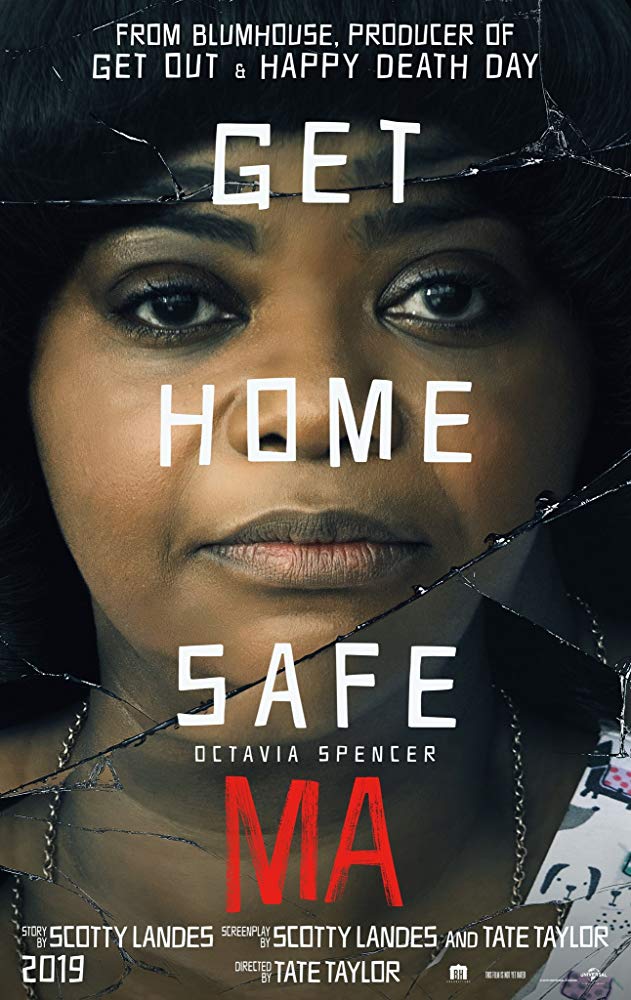
“MA” Horror Movie Review

A delightfully disturbing and thought-provoking Carrie meets Misery horror movie. Oscar-winner Octavia Spencer delivers an outstanding performance; however, the movie is unfortunately hampered by a weak screenplay with flat characters. In short, the reason to watch this movie is for the terrifying performance by Spencer, solid world-building, and commentary on high school bullying and teen sexual assault. Tonally, MA is a throwback to 70s and 80s slasher horror complete with the slow-burn windup, off-beat comedic schticks, and a descent into gnarly violence. Not all the kills cause you to wince as the screen holds your eyes hostage in the pleasurable unpleasure, one of the kills will leave you cheering–no seriously, it will. Built upon the premise of the sins of the parents will be visited upon the children, the screenplay does not hold back when taking us to some very dark places that fester with anger, fear, and resentment. With so much going for it, it’s unfortunate that the movie suffers from on-the-nose dialogue, leaving little room for subtext. Furthermore, most of the characters lack significant dimension that could have propped up this movie. Some interesting relationship dynamics and backstory are touched on, but never followed through in a meaningful way. While Spencer is truly the glue holding this movie together, there are some highlights worth discussing.

A lonely middle-aged woman befriends some teenagers and decides to let them party in the basement of her home. But there are some house rules: One of the kids has to stay sober, don’t take the Lord’s name in vain, and never go upstairs. They must also refer to her as Ma. But as Ma’s hospitality starts to curdle into obsession, what began as a teenage dream turns into a terrorizing nightmare, and Ma’s place goes from the best place in town to the worst place on Earth. (IMDb)

While most of the characters lack any true dimension (except Ma), the ensemble cast is comprised of some highly relatable characters. At the forefront of the cast is our title character of Sue Ann (or Ma). If you are coming to this movie as a single individual over 30, then you will likely identify with her by empathizing with her backstory and understanding what it’s like to feel that life is a parade passing as you wave it by. Furthermore, Sue Ann suffered repeated bullying, rejection, and even teen sexual assault that left a lasting psychological trauma. Or maybe you are the former popular high school Erica who moved away from her jerkwater town to Los Angeles, lived a wealthy life, just to wind up a divorcee and back in your hometown as a cocktail waitress. Perhaps you are the new girl at school Maggie, who grew up in Los Angeles but now is back in dismal Ohio during your junior or senior year of high school because your dad left your mom (Erica) for another woman. You could be the Regina of your group of friends, the dude bro, or the all American boy with a touch of geek. Whatever your high school experience or how it affected your adulthood, there is likely a character with whom you can identify.

Although the film could have commented more on the PTSD associated with high school bullying in a more meaningful way, and derived even more horror from it, it does serve as an exploration of the real, lasting effects on the psyche. A brief character analysis of Sue Ann reveals someone who is trying to capture that which evaded her in high school: the parties, the romance, the care-free friends. Because of the abominable treatment of Sue Ann by many of her classmates in high school, she suffered a trauma that mitigated her ability to socialize properly and psychologically mature. Therefore, as she grew older, she was constantly reminded of that which she could not experience in high school. So, when she saw a moment to reconnect with her youthful self in being needed by the group of teens outside of the gas station to buy alcohol, she seized the opportunity. Of course, the fact that our all American boy Andy is the son of the guy she crushed on in high school, definitely helped her make the decision to help. Unfortunately, her high school crush was responsible for the sexual assault she endured. A sin for which both father and son would pay. It doesn’t take long for the teens to see the cracks in Sue Ann’s fragile veneer. While the teens enjoyed Sue Ann’s party house and the charismatic Ma, things were fine. When they rejected her, things took a grave turn for the worst. And just like that, she was reminded of the torment from their parents in high school and began to plot her revenge on both the teens and their parents. In this respect, she is a little like Freddy Krueger because in A Nightmare on Elm Street we have the concept of the sins of the parents will be visited upon the children.

If you went or are going into Ma with the desire to see a terrifying horror movie from start to finish, then I need to warn you that this is a slow burn horror movie. Not, that slow burn is without its intrigue and suspense, after all, this is where the world and relationship building happens. However, this movie does not reach its horror status until the third act. But once the horror hits, it hits hard–gnarly even. Even the kills/tortures that you saw in the trailer still pack a powerful punch. Most of kills are nightmarishly real. Very little visual effects here; you get the benefit of some highly authentic practical effects. Yes, even the lip sewing scene. Probably one of the most disturbing torture and kills involves animal blood; this moment is nice homage to both Misery and Carrie, but not a copy of either. There is a poetry to the tortures and kills. No one is targeted out of sheer happenstance, but targeted because of whom or what they represent. The sins by which Sue Ann judges the teens or parents are directly connect to or represented in the manner in which they meet their demise. More than the creativity in the actions of Sue Ann, the reasons why she feels the way she does are the most interesting. Even though we should be disgusted at the actions of Sue Ann, we cannot help but empathize with her because of her troubled history and past trauma. She wants what any of us want: to love, have our love returned, and be accepted.

Is it a great horror movie? No. But is is a solidly good one? Yes. If for no other reason, you watch Ma for the outstanding performance by Octavia Spencer! She is absolutely captivating and will leave you with many WTF moments. Interestingly, this is not Spencer’s first time in a horror movie; she was in Rob Zombie’s Halloween II. I hope that we get to see her in more horror movies in the future because she did such a fantastic job with this one. If you’re looking for a fun, popcorn horror movie that–to its credit–does have some thought-provoking content, then you’ll enjoy Ma.

You can catch Ryan most weeks at Studio Movie Grill Tampa, so if you’re in the area, let him know and you can join him at the cinema.

Ryan teaches screenwriting at the University of Tampa. If you like this article, check out the others and FOLLOW this blog! Interested in Ryan making a guest appearance on your podcast or contributing to your website? Send him a DM on Twitter!

Follow him!

Twitter: RLTerry1

Instagram: RL_Terry

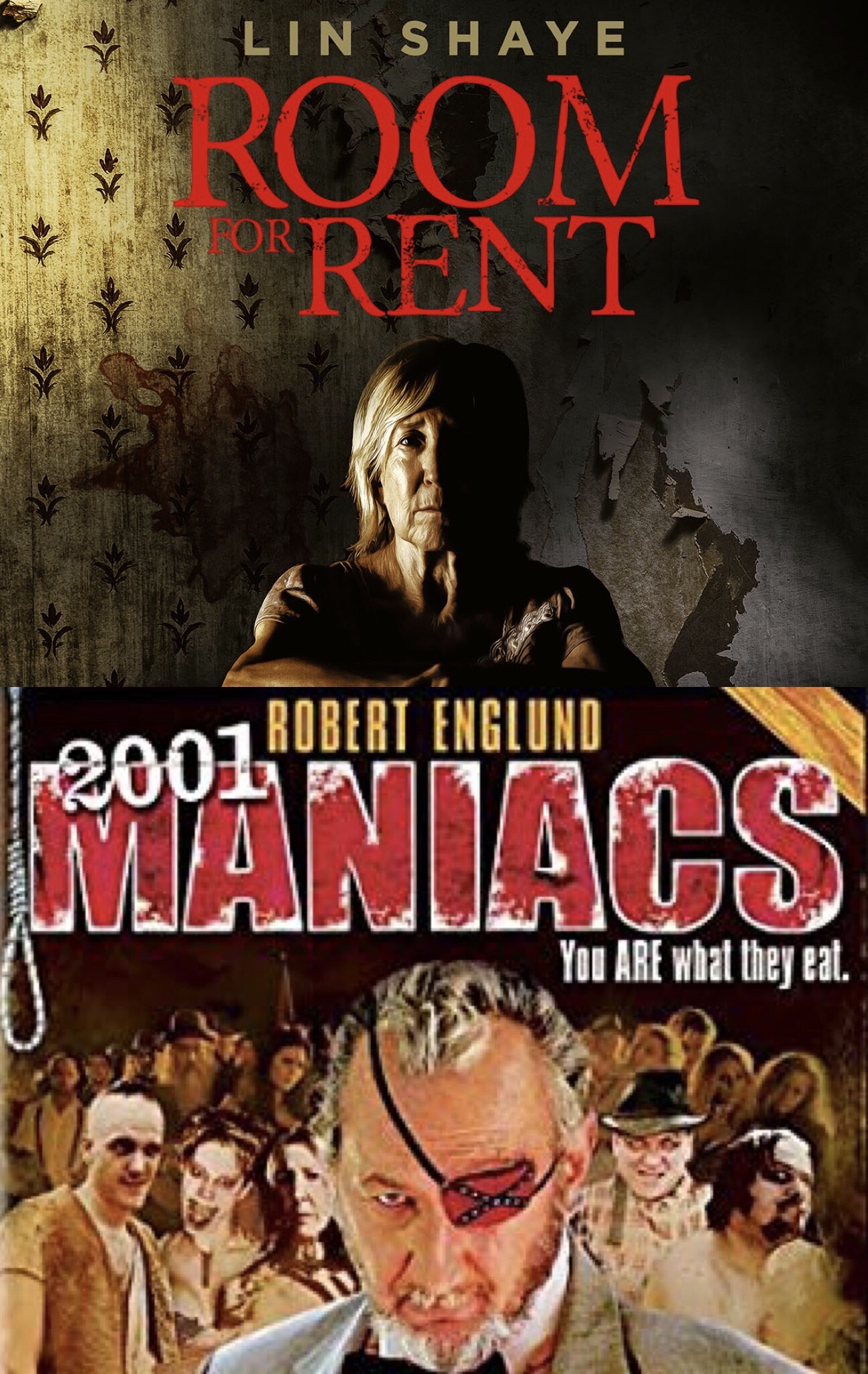
“Room for Rent” (2019) and “2001 Maniacs” Horror Review

Lin Shaye double feature! Traveling over the Memorial Day weekend, I heard The Final Boys review of 2001 Maniacs and Let’s Watch Horror Pod‘s review of Room for Rent (2019). Both reviews instantly prompted me to watch these movies. So, last night, instead of going to the cinema to watch Brightburn, I decided to have a “late night, double feature, picture show” to quote one of my favorite movies. Aside from both of the movies featuring the horror queen Lin Shaye, there is little similarity between them, yet they are excellent companion pieces. Instead of individual reviews, I decided to combine both of them in one article, and talk a little about each. Shaye delivers an outstanding, dynamic performance in Room for Rent and horror legend Robert Englund is terrifyingly entertaining in 2001 Maniacs. Both movies are completely different tonally, but work very well together. I recommend starting with Room for Rent, then watch 2001 Maniacs, because the former shares a lot in common with a dark drama whereas the the latter is a horror comedy. With Lin Shaye in both movies, I would have loved to have seen an Englund cameo in Room for Rent, perhaps as one of the delivery guys. In short, I highly recommend both of these movies as they were so much fun to watch and feature some noteworthy performances from Shaye and Englund.

Room for Rent (2019)

She’d kill to find a decent man. Directed by Stuart Flack and written by Tommy Stovall, Room for Rent takes you on a journey into the twisted mind of a grieving widow and her delusional methods to cope with her loneliness. Joyce Smith’s (Lin Shaye) husband suddenly passes away, and leaves her with a mountain of debt, an empty money market account, and an anemic checking account. After an attempted sexual assault by a group of teenage boys, she is left in an increasingly dark place. Following reading an article on how to passively make money, she decides to turn her big house into a bed and breakfast with longterm rental options. When her first group of tenants doesn’t work out for her, she meets a young drifter at the supermarket and interests him in her room. Joyce instantly becomes obsessed with her much younger man, making him the object of her deepest, darkest romantic and sexual fantasies. When a friend’s betrayal derails Joyce’s delusional fantasy, she seizes control of her circumstances, and sets out on a deadly mission to secure that which she deserves to have in her life.

After the birds-eye-view shot of Sedona (reminiscent of the opening shot from Psycho in Phoenix) you are plunged into the midst of death in a nice middle-class neighborhood. From the moment that Joyce Smith (Shaye) appears on screen, it is clear that Shaye is completely immersed in the character, much as we have come to expect from her more than 90 feature length films (many of which are horror). The first several minutes of the movie gives us the opportunity to witness the immense, diverse talent of Shaye as she is playing a character unlike the ones with which we are most familiar. She takes complete command of the screen and delivers an outstanding performance as a grieving widow whom is also likely suffering from some form of PTSD. The level of empathy I felt for her was incredibly high. Her performance as Joyce is compelling and organic. The degree to which she can effectively and seamlessly transition from sinister to friendly is fantastic. Even when she begins a scene with a smile, as she enjoys watching the skater boys, she transitions to absolute fear as she is terrified by the boys yelling obscenities at her that eventually devolve into attempted sexual assault while laughing at Joyce. But we witness her strength when she, pushes one of the boys off her and loudly threatens to kick his ass. Beyond self-defense, this is the first glimse into just how incredibly complex the character of Joyce is, not to mention a notable performance by Shaye. She carries this phenomenal quality through the entire film in each and every scene, which is even more notable because she is in nearly every scene. She sets the bar high in the first act, and carries it through Acts two and three.

While there isn’t much to spoil, as the obsession plot is one that we have seen before, there are some fun twists and turns in this story that keep the interpretation of this premise interesting and fresh. There are three elements at play in the plot (1) grief (2) older women in love with a younger man (3) and obsession. All three of these work together to provide audiences with more than an arthouse horror film (and yes, this film has far more in common with arthouse horror than commercial horror); they work together to deliver a plot that is simple on the surface, but the complex central character affects the story in such a way that it is thought-provoking and terrifying. A tremendous amount of depth exists in this story if you look beyond the surface. Unlike many slasher or psychotic killer movies, in which the plot or characters are not realistic, the entire plot is stepped in realism and Joyce is a believable central character. Moreover, the tenants and neighbor are also believable. Perhaps what makes this movie frightening is the notion that this could very well happen. It will at least make you think twice before renting a room from an elderly woman off Craigslist or AirBnB.

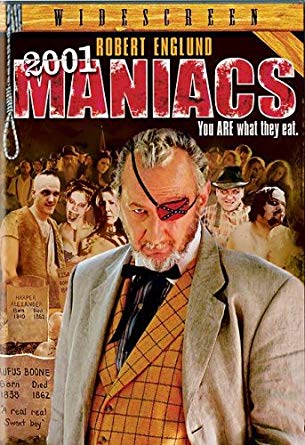
2001 Maniacs

You are what THEY eat. Co-written and directed by Tim Sullivan, 2001 Maniacs is an absolutely entertainingly fun horror comedy! And surprisingly, it is a remake of Gordon Lewis’ 2000 Maniacs (1964). While many (if not most, IMO) remakes are not on par with the original and take what made the original so special and fun and suck out the life in exchange for special effects or popular actors, from everything I’ve read, Sullivan’s 2001 Maniacs is superior to the original in every way. And I am not just talking the production quality; I am talking about the story, cast, characters, setting, and of course kills! While I have not seen the original, I read a few articles that were unanimous in the praise of this remake. So next time you are asked for horror remakes that are better than the original–now you have an additional response and don’t have to use The Thing all the time. Not to oversimplify, but it is more accurate to state that this movie is a reimagination of the original, but for all intents and purposes, it is often regarded as a remake. One of the reasons for the cult success of 2001 Maniacs is that it doesn’t try to improve upon the original, but takes what made the original work and interpret it for a new generation. Everything you want to see is there: cannibal confederates, rednecks, an eccentric mayor (played by horror legend Robert Englund), horny attractive college students (both straight and gay), and cliche virginal stereotypes.

This campy, gory movie features a group of college boys on a road trip bound for the sun and fun of Florida from a university in the northeast. Of course between New York and Florida lies the deep south (as Florida is really an extension of New York haha). Spring beak fever sets in as the boys finish up their last class before hitting the road with nothing but booze, love, and sex on the brain. After losing time on the road due to hitting an armadillo and a chance encounter with another group of equally horny college students heading for Florida, all the students take an unexpected shortcut that lands them in the (laughably inappropriately named) town of Pleasant Valley. A decision that will forever change their spring break plans. When the enthusiastic, overzealous town mayor invites the yankees to stay for the annual jubilee and BBQ, both the boys and girls accept the invitation and enjoy everything that Pleasant Valley has to offer. While on their respective sexual conquests, the students begin to disappear one by one in the most gruesome, yet creative fashions.

Robert Englund shines as the bombastic one-eyed confederate mayor that could make a living selling ice in Antarctica. Although he may not be playing his iconic role of Freddy Krueger, the same charisma is channeled into the mayor. I cannot think of anyone else who could have brought this character to life as successfully as he did. The mayor’s counterpart of Granny Boone is played by fellow horror icon Lin Shaye. She is so much fun to watch in this role that takes her from kind-hearted grandma to sadistic executioner. Perhaps she isn’t the lead in this movie, but she steals the screen every moment she gets. Englund and Shaye truly kick the performances up several notches! Everyone in this movie looks as if they are having the time of their lives playing these ridiculous characters. The central ensemble cast is a lot of fun to watch too! Whereas it would be too easy and boring to have an ensemble cast of flat college student characters, there is a little depth to each of them. Amongst the ensemble cast of college students is a gay character (Ricky) whom I applaud for not being a stereotype as he looks, talks, and acts like just one of the guys (who happens to have a different sexual preference). And another character I want to highlight is Cory. He certainly looks and acts like a nerd, but he is just as accepted as a sexual object as his more frat-boy looking counterparts. Each of the college students acts uniquely, so it never feels that any one character’s actions and dialogue could be given to another character and it play out the same.

This is not a horror movie that is produced to make you think. It is produced for horror fans to have a fun time with a campy, gory horror movie that delivers precisely what it promises. These characters are highly memorable, enjoyable to watch, and will keep you entertained for the entire movie.

You can catch Ryan most weeks at Studio Movie Grill Tampa, so if you’re in the area, let him know and you can join him at the cinema.

Ryan teaches screenwriting at the University of Tampa. If you like this article, check out the others and FOLLOW this blog! Interested in Ryan making a guest appearance on your podcast or contributing to your website? Send him a DM on Twitter!

Follow him!

Twitter: RLTerry1

Instagram: RL_Terry

“Office Killer” Throwback Thursday movie review

Ever see one of those indie horror-comedies that was panned by the critics when it came out a couple decades ago just to realize that if it was released today that it would be the talk of the horror community? Well, that is 1997’s Office Killer starring Carol Kane (When a Stranger Calls), Molly Ringwald, and directed by famed photographer Cindy Sherman. Kane delivers an outstandingly bananas performance that is a combination of Norman Bates and Patrick Bateman. Sherman certainly displays her adoration for the cinematography of Hitchcock’s films in many of the scenes in how the shots are framed and blocked. You’re hard-pressed to find many reviews of this horror-comedy even on LetterBoxd. It’s baffling to me why this movie hasn’t received more attention from the horror community on Twitter, blogs, and podcasts. Perhaps it’s because it is no incredibly obscure that you have a hard time even finding it on DVD, let alone streaming. A friend of mine had to order his copy of the movie from Spain. That is how difficult it is to find this movie. Even the few reviews I found were not flattering–except a couple that write about what I witness in this movie. The title works in two ways (1) it’s a description of how even in the 90s there was a fear that computers would kill the traditional office environment and (2) the literal description of a slasher in the office. Furthermore, there are plenty of moments and kills that serve as a freudian commentary on the American workplace. So I suppose it’s up to me to direct attention to this horror gem!

From the beginning, I had a feeling that I was in store for a highly artistic indie darling of a movie as soon as I saw the fantastically creative opening credits accompanied by a creepy score. Following the opening credits, there was a very Hitchcock shot that intrigued me and tipped its hat to Sherman channeling her award-winning photography into the moving images on the screen. Typically, horror movies don’t have narration but we begin with a narration. Not knowing anything about this movie, I was completely unsure of what to expect. Even the first kill didn’t tell me that I was about to watch a slasher. But as I learned more about Dorine (Kane), the more I was sucked into her world and completely intrigued by her choices and lack of social awareness. Playing opposite Kane is the indelible Molly Ringwald as the bitchy, judgy coworker Kim. Her performance is great! Not great in that it’s a phenomenal performance, but great in that she showed that she can play a character that is in stark contrast to most of the characters she has played throughout her longstanding career. Most of the performances are caricatures of various people found in a typical office. In fact, I’m curious if The Office ever parodied Office Killer because it seems like a missed opportunity if not. If you are aware of an episode that pays homage to Office Killer, let me know!

Perhaps the strength of this movie is not the acting (albeit, Kane is fantastic), but the strength is in the production design, costuming, plot, and Freudian themes. On the plot. Yes, the plot. You may be scratching your head because most reviews have slammed the plot. But I feel that 1997 critics and even those who come across this film today largely missed the point of the plot. It’s not supposed to be a compelling story with thought provoking imagery and characters, it’s supposed to be a 70/80s horror movie that is darkly funny! It’s just happens to be taking place in the mid 1990s. Perhaps this movie came out too close to the 70s/80s and thus felt old and cheesy. I posit that if this movie came out today, that it would be praised for its embrace of what we love about 70s/80s slasher movies! We don’t watch and rewatch these movies because they have incredible plots. We watch them because they are lots of fun! And Office Killer is incredibly fun to watch. While we may not know precisely why Dorine’s switch flipped and she went full–what I’ll call–Norman Bateman, we are given indicators of her unstable psyche through her flashbacks to her sexually abusive father and complacent mother, and of course the present story of most of her coworkers bullying her. Those three elements, plus the opportunity, work together to set her up to be a total psycho. Her actual kills may not be creative–that is, the method by which she kills–but the creativity comes into play afterwards with the corpses piling up in her house. She talks to them, plays with them, articulates them in such a manner that they become her action figures so to speak. It’s incredibly creepy but in a comedic way.

Now for those Freudian elements. This is what I find most fascinating about the movie; and what should provoke conversations amongst cinephiles and horror enthusiasts. One of the earliest shots in the movie is an extreme closeup (or ECU) of a staff member’s mouth as she is on the phone. Her red lipstick accentuates her mouth and points to the Freudian oral fixation. The scenes that follow depict female office staff members in a variety of different capacities and situations. It appears as though Sherman was painting a portrait of the male gaze over the female body. Moreover, what this movie appears to comment on and depict is Freud’s study on Fetishism. According to Freud’s study, and not to over simplify, fetishism is a fixation on an object or physiological practice of a substitution for intercourse following a sexual desire awakening in the body and mind. In more contemporary terms, the definition of fetish has evolved beyond just sexuality, but is generally still associated with sexual practices. Since likely paternal sexual abuse happened to and her mother turned her head to the allegations, in an effort to deal with the trauma, Dorine substituted what she wanted to do to her parents and others who abuse or bully her by engaging in slasher-style killings.

Each of the kills is a warped poetic justice based upon what Dorine saw as wrong with the victim. A great example of this is the attempted strangling of Kim. Since Kim ran her mouth constantly, Dorine sought to silence her voice. This same idea can be applied to the other kills too, and even in how the corpses are treated in Dorine’s basement. There is a playful nature in Dorine’s approach to the kills and even more so with her interactions with them afterwards. The depths of her psychosis are revealed one layer at a time. Even when you think that Dorine is about to get caught, she gets away with it; she alludes her would-be captors by searching the want ads and heading for another job in an office–perhaps your office! With each kill, Dorine integrated an element of that victim into her own life. She goes from mousy, frumpy to stylish and seductive. Her office underwent a transition and so did she. Dorine killed her former self to become the self that she wants to be. There is so much to enjoy about this horror comedy, and it baffles me that more horror fans and cinephiles have not talked about this movie. If you can somehow get ahold of a copy, then I highly recommend it if you enjoy slasher movies with a tough of style and laughter.


You can catch Ryan most weeks at Studio Movie Grill Tampa, so if you’re in the area, let him know and you can join him at the cinema.

Ryan teaches screenwriting at the University of Tampa. If you like this article, check out the others and FOLLOW this blog! Interested in Ryan making a guest appearance on your podcast or contributing to your website? Send him a DM on Twitter!

Follow him!

Twitter: RLTerry1

Instagram: RL_Terry
Jordan Peele’s “The Twilight Zone” Season 1 Review

You’re about to enter a dimension, not only of sight and sound, but of mind. That’s the signpost up ahead. Next stop, Jordan Peele’s The Twilight Zone. Debuting on April 1st, the revival of the classic anthology series The Twilight Zone, created by Rod Sterling, hit CBS All Access. For many resisters to paying for a “broadcast” channel’s streaming app (whereas most apps are free or included with a cable/satellite subscription), CBS finally figured out how to force wallets. Between TZ and the new Star Trek featuring the highly anticipated return of Patrick Stewart as his most famous character of all time Captain Picard, CBS knows precisely how to get you to subscribe to its service. I’d love to see difference in subscribers before Peele’s Twilight Zone and after. Have you seen the new series?

Although TZ has been revived before, it never quite took off the way the original did, and still commands an audience. Regularly ranked as one of the best written shows of all time by the WGA, IMDb, and other respected organizations and sites, this show left an indelible mark on television. Furthermore, it has even influenced recent cinema and television as evident in shows/movies such as Black MirrorUsAre You Afraid of the DarkEx Machina, and more. Rod Sterling’s groundbreaking show creatively tackled complex issues such as conformity, the uncanny, human frailty, fear of the unknown, self-destruction, faith and lack thereof, paranormal/supernatural, and more. Specifically, it was a welcoming place for all kinds of people to explore these topics. No matter how the central character’s tragic flaw affected him/her, whether for the positive or negative, you could always count on the episode’s moral compass pointing north and a closing monologue from Sterling to tie everything up.

Right out the gate, I feel that the series premiere was on the weak side, but it made up for the sluggish start in episode 1 with episode 2 (released with E1), an adaptation of one of the most popular episodes in the original series Nightmare at 20,000 Feet. I thought it would be fun to analyze and review each episode in the seasons of this show. The challenge of this new series is to deliver the same powerful, memorable stories as the original. Since this is an anthology series, and therefore each episode is a complete story in and of itself, it is not fair, at this early stage, to generalize a review of the show–not yet anyway. So, you’ll find reviews of each episode in this blog. For the sake of readability, I’ve limited each episode to one paragraph. Simply click an episode to jump to that part of this running review.

Season One Evaluation

In short, this premiere season fell flat until Episode 10. It’s thanks to that single episode that we have hope that Peele’s series can perhaps overcome the plethora of struggles it has demonstrated it has in the future seasons. Pacing is a big issue, not to mention largely missing that Twilight Zone magic in most of the episodes. With the exception of Episode 10, the rest of the episodes do not justify their “hour long” runtimes. The plots that we have witnessed are better suited for a half-hour runtime. Striving to not be so on-the-nose or polarizing is something else that I would like to see moving forward. Some of the episodes this season depict unfair representations of groups of people that do not help facilitate progressive and beneficial discussions. Instead of being concerned with perpetuating ill-informed or prejudicial representations of types of characters, this episodes need to place focus on the root cause not the symptoms. Moreover, the future episodes should place more value in allowing the audience to make up their minds on how they view a conflict, allegory, or situation more than the episode telling you how to think, feel, or behave. Episode 10 gives us reason to look forward to season 2.

Episodes

  1. The Comedian
  2. Nightmare at 30,000 Feet
  3. Replay
  4. A Traveler
  5. The Wunderkind
  6. Six Degrees of Freedom
  7. Not All Men
  8. Point of Origin
  9. The Blue Scorpion
  10. Blurryman

The Comedian

If you haven’t watched either E1 or E2 yet, I recommend starting with E2 because this first episode drags as it searches for its dimension. At its core, this episode is about the perils of fame, treating people as disposable commodities, and be careful what you wish for. Solid themes around which to build a show. Despite Peele having a shared writing credit on this first episode, the Sterling-esque monologue/narration and plot do not appear to have a singular unifying voice. Much like his recent Us struggles to tell a singular, coherent story. It’s an ambitious interpretation of Faust, but the episode isn’t capable of following up the ambition with effective delivery. If you recall, the majority of the original TZ episodes were half-hour shows. The original series wasn’t produced simply to entertain, but was written to tackle socio-political, religious, and psycho-social topics. This was accomplished through thought-provoking stories with am emphasis on the writing more so than the visual design. Now that I have the negative out of the way, I would be remiss to not highlight what it did well. The performances by lead Kumail Nanjiani and supporting cast Diarra Kilpatrick, and Tracy Morgan were fantastic! Additionally, the cinematography and editing were on point. One of the key differences between the original series and Peele’s new one is the production quality. Even though I have no issues with the production value and design of the OG, I do greatly appreciate this new one for the cinematic quality to the story. Had The Comedian been a 30min episode, I think that it would have been better executed.

Return to the top

Nightmare at 30,000 Feet

Parks and Rec‘s Adam Scott figuratively steps into the shoes and sits in the airline seat of William Shatner in an adaptation of one of the most popular, recognizable and oft parodied episodes of the original Twilight Zone. Completely grounded in the premise of the original, but writers find a way to provide us with a new interpretation that brings the iconic plot into the 21st century. If you’re wondering if it’s an unnecessary, pretentious remake in the vein of Psycho (1998) or The Lion King (2019), then you can exercise relief as this episode will have you on the edge of your airline seat. Without going into spoilers, you’ll likely not think of podcasts or aircrafts in the same way next time you travel. Unlike the previous episode, this one is much stronger. I wish the series had launched with this as the premiere instead of The Comedian. When you think of the bizarre, uncanny nature of many of the original series episodes, you think of that intersection of shadow and substance a which these stories occur. And this reimagination of Nightmare at 20,000 Feet holds moderately strong to the pacing, tone, and structure of the original. Although the writing of episode 2 is tighter than episode 1, it still falls a little shy of the exemplary writing of the source material. For example, the original at 22mins delivers a more powerful punch with all the character and plot development therein than this new one does in nearly 1hr. That’s not to say that episode 2 is not effective and enjoyable–it is. But just not AS effective or memorable as the original. At the core, this story is about the worldview of having people think you’re crazy is almost worse than actually being crazy; furthermore, it also touches on the fear of terrorism. The windup is a little slow, but then as soon as he sits in his seat, you are in for the flight of your life. That is, until the final scene and closing words from Peele confuse instead of clarify (much like Us).

Return to the top

Replay

After the fantastic second episode in Jordan Peele’s revival of The Twilight Zone, the third episode gets bogged down in politics instead of focussing on the moral or thought-provoking message. The science-fiction element of the now-retro camcorder that rewinds time gets overshadowed by the message of remembering one’s roots, but that theme gets lost when the plot chooses to divert attention to the relationship between white law enforcement and the black community. Taking its inspiration from another classic original episode, this one perpetuates and reinforces a real division that exists in some areas of the country between two groups of people. Although this episode could have been used as an allegory that could be applied to many different issues of prejudice and unfair treatment, it chooses to focus on one particular socio-political issue that runs the risk of further alienating audiences than unifying them. At its core, it is not about any particular theme but instead highlights the issue of white law enforcement brutality against black individuals. Replay could have been a powerful episode that inspires productive, positive change; but in lieu of a call-to-action, it reinforces the idea that most white law enforcement officers treat black individuals grossly unfairly. Statistically speaking, that is simply not true. But due to media attention and high profile cases that do show mistreatment that needs to be condemned, there is a growing idea that this is the state of affairs in general. Yes, this is a real issue that has been highlighted in the news for years now, but I am afraid an episode like this seeks to divide instead of mend or evoke constructive change. In terms of the plot, the episode executes its setup quite well, but feels stretched to fill the “hour” much like the previous two episodes. Our lead characters are developed effectively and we even get a backstory that is strategically revealed as we work our way through the story. Like with the first two episodes, we also witness excellent performances by the three lead characters in this episode. I appreciate Peele’s desire and ambition to approach this series like Sterling did; but it needs to deliver episodes that can be applied more generally to present-day audiences that can stand the test of time instead of focussing on message delivery that makes it a time capsule.

Return to the top

A Traveler

It’s Christmastime in the Twilight Zone. More so than any of the previous three episodes of Jordan Peele’s Twilight Zone, this episode sets up its characters and plot more effectively than any other. The beginning truly feels like a Sterling-inspired episode. Whereas the previous stories in this new anthology series struggle to find their respective places within the library of Twilight Zone episodes, this one starts out as close to the pacing, tone, and feel of the original series as we have seen so far. The setup is so effective, that we don’t even need the opening commentary by Peele in his brilliant Sterling-fashion. Although this episode, like all previous ones, feels stretched for time, it attempts to follow the “joke” structure of the original series closely. I don’t mean joke as in funny-haha, I mean joke in that the OG episodes quite regularly setup the plot/characters in Act I, reinforced the plot/characters in Act II, then disrupts that pattern with a twist in Act III. If this were a typical joke, then that twist would be the punchline (“I’ll have 3 chili dogs, salt & vinegar french fries, and a diet soda”). In the case of A Traveler, Acts I and II are outstanding, but then the twist in Act III is a let down. The payoff does not equal the windup. Instead of adapting or reimagining any single classic episode for the new series, this episode channels several classic episodes in order to repackage into a new story. Like with the previous three episodes, this one takes a classic approach and attempts to comment on ethnocentrism, appropriation of property, and forcing a native people out of its land if it doesn’t conform to the “superior” group, but this analogy never quite solidifies. Without spoiling the twist, it is a twist that would have worked very well during the run of the original series, but doesn’t work as well in 2019. I appreciate the reason for the mysterious traveler’s sudden appearance, but just doesn’t do it for me. One of the best parts of the original series is that the end often prompts the audience to vicariously interact with the story by deciding what they would do. But that power is withheld by the audience by allowing a character to voice what should come from the audience. Moving forward, I hope to see future episodes that stick close to the pacing and tone of the original, but still provide the audience with the ability to interact with the story.

Return to the top

The Wunderkind

Aside from episode two which was a direct adaptation from the OG, this is the episode that feels more like Sterling’s Twilight Zone than any of the others in terms of tone and substance. Parts of the plot of this episode feel like they are inspired by the famous It’s a Good Life episode about the boy whom wishes you out into the cornfield or kills you in front of him if you disagree with anything he says or feels. It’s his way or the highway. Clearly, this episode is a commentary on a child-like spoiled president, so it doesn’t take a political analyst to pinpoint the inspiration for the character of Oliver. Although many, if not most, of the most memorable TZ episodes contain a strong science-fiction or supernatural element, this one is a political satire. Unfortunately, that means that it may not sit as well with many TZ fans; however, I am a lifelong fan of the OG (the jury is still out on this one) and I enjoyed it. Albeit foreshadowed, the twist at the end is still very Twilight Zoney. Where this episode shows weakness is in the writing (again). I know that I mention the writing often, but it does seem to be this iteration’s Achilles heal. Like with previous episodes in Peele’s TZ, this one is also stretched to fill the nearly hour run time. Had this been a half-hour episode, then I feel that it would have exhibited better pacing. It starts out quite well, but get’s incredibly sluggish in the middle, then finishes strong enough. What I find particularly interesting about this episode is the commentary, not only on the president, but on the American public that despite knowing presidential politicians are manipulative, still readily believe whomever the newest or perhaps most unique candidate is. The takeaway from this episode is to be ever vigilant of the nature of those whom seek your vote or approval because it is likely that there is a significant self-serving angle to serving the public.

Return to the top

Six Degrees of Freedom

Heavily inspired by classic Twilight Zone stories, this episode never truly leaves the launchpad. Six Degrees of Freedom features a six-man spacecraft crew on a mission to lay the groundwork for a colonization of Mars since Earth is nearly destroyed. After a reported impending nuclear attack, the crew decides to launch instead of a more conventional evacuation. With Mars nearly 300 days away and a presumed destroyed Earth behind them, they embark on the mission. The crew has a lot of time to ponder the tragic events they narrowly escaped and the overwhelming responsibility of what to do on Mars. The setup in this episode is classic Sterling, and works incredibly well. In fact, I was excited that this episode was going to feel like a 21st century interpretation of previous plot–the soul of the plot remaining in tact, but with an updated setting and more diverse characters. Abort. This episode does not deliver what it promises in the opening. We may have a more diverse cast, but all of the characters are flat, lacking in any substantive dimension. Unlike the crew of the Nostromo, this crew comes off as lacking in training and preparation for this mission. I get that the pressure of a doomed mission, lengthy periods in space, and the trauma of the alleged destroyed Earth are brilliant plot tools to wear down the rational, disciplined mindsets of the crew; and the breakdown, manifest itself in an undesirable human trait that contributes to the psycho-social breakdown of the crew, but these crew don’t seem like they are qualified for their respective jobs to begin with. Perhaps the goal of the teleplay was to showcase this crew of six (interestingly, six is the Biblical number of man) as a microcosm for out present society, but that analogy is lost in the vapid dialogue and lack of context for the interpersonal conflict. This launch never truly reaches the orbit of Sterling’s Twilight Zone.

Return to the top

Not All Men

Loosely based on the classic Twilight Zone episode A Good Man is Hard to Find, this episode of Peele’s show is built around the idea of personal choice. Unfortunately, it lacks the power it could have had by only focussing on the idea of toxic masculinity. Whereas the show could have packed a more powerful punch by showing both men and women grappling with a refusal to give in to primal behaviors and violence, it just shows one group effected by the meteor. I know why; toxic masculinity is constantly in the news and on social media; but the truth is that both men and women can exhibit toxic behaviors that have a negative impact upon society. The twist of the meteor acting as a kind of placebo was a nice TZ touch that I appreciated immensely, but wish the episode truly drove home the point that we ALL have toxic behaviors and thoughts that could significantly impact our outward actions unless we make the intentional choice not to act upon them. Case and point: revenge. Revenge can become an all-consuming monster unless it’s checked. We have to weigh our selfish or self-centered tendencies against the greater good of society and more personal relationships. I love the idea of the plot of this episode, but wish the execution had been more effective. As has been the pattern established so far, this episode boasts excellent acting, cinematography, and direction.

Return to the top

Point of Origin

An apt title for an episode that truly feels grounded in the original Sterling series. Instead of feeling like a sermon, the original series often depicted a story that didn’t answer some posited philosophical or sociological question but ended just before a directed action was requested of the audience. The main idea of most of the episodes (much in the same way Black Mirror does) was to confront the audience with a thought-provoking question and leave it at that. Allow the audience to decide what they are going to do with the story and commentary therein. Although this episode is clearly on immigration, it moves the conversation from the familiar to the unfamiliar–to another dimension altogether. Although the character of eve is completely unlikable (problematic in my mind), she is the vessel though which we experience what it would be like if you were accused of being an illegal immigrant, brought here as a child with no memory of life before. While we are never given a full explanation WHY the interdimensional beings fled their home to make a new life in ours, it is ultimately unimportant. The stark contrast from the life Eve built for herself to the soul crushing surroundings she finds herself in, works well to depict what it must feel like to be forcibly extracted from all you’ve ever truly known and thrown into a frightening situation. Elements of this episode are incredibly terrifying.

Return to the top

The Blue Scorpion

Probably the least enjoyable of all the Season 1 episodes. The Blue Scorpion wants so much to comment on gun control–and not in a subtextual way. It is way too obvious. When providing social commentary, Rod Sterling’s original Twilight Zone was seldom on the nose. From the opening scene, this episode is up front and center with its topic. All that’s missing is a Powerpoint presentation to accompany this episode. Not to mention it struggles with the same pacing problems that all the episodes have–taking what might work well in 30mins, and stretching it to fill the “hour long” runtime. Had the episode taken a more creative approach to the obsession with and lack of legislation regarding firearm access and use in the United States, then perhaps this episode would have played out much stronger. As it is, the sledgehammer approach is not only polarizing but shows a lack of understanding of why the original series worked so well. While it is common knowledge–also demonstrably evident in this series itself–that Peele displays a great admiration for the legendary show, he seems to have missed the whole point of why it worked and still works so well. Thankfully there are comedic elements in the episode in order for it not to be entirely depressing.

Return to the top

Blurryman

While most of the season has been lackluster and continues to provide evidence that Netflix’ Black Mirror is the more thoughtful “new” Twilight Zone, episode 10 of Peele’s series is the most Twilight Zone of the first season; furthermore, this single episode provides hope for the otherwise forgettable series. Until Ep10, if I was to attribute an over all title to Season 1, I would have called it “Twilight Zone: Failure to Launch,” but thanks to this single episode, the series leaves us with a glimmer of hope for the subsequent seasons. If you select just one episode of this series to watch, make sure it is this one. Not only does it provide excellent technical elements and a fantastic cast, the writing is exemplary. Even though from an editing perspective the final scene is wonky, a bit clunky if you will, this teleplay is the best of the season. It nearly overcomes the pacing problem as well. More than any other episode, this one almost justifies its “hour long” runtime. Of all the twists that we have encountered this season, Blurryman has the best one. With meta horror and meta science-fiction being popular storytelling methods nowadays, I was waiting for this season to deliver a meta episode. And sure enough, this is it! All the way down to Jordan Peele playing himself and the writer of some of the episodes visiting the sets of her episodes (i.e. the bar from The Comedian). Zazie Beetz plays a teleplay writer for The Twilight Zone and she begins to see and get stalked by a blurryman on the set of the show. The episode follows her on her descent into madness as the entity, primarily visible to her except at the very beginning, pushes her to question her reality. Unlike the previous episodes, wherein there is no need to worry about talking about spoiler content, this is one that needs to be experienced without any knowledge of the twists and turns after the first act. The only negative critique I really have of the episode is failing to achieve what the Twilight Zone Tower of Terror at Disney’s Hollywood Studios was able to accomplish when the iconic attraction opened in 1994. Once you watch this episode, you will know precisely what I am talking about.

Return to the top

You can catch Ryan most weeks at Studio Movie Grill Tampa, so if you’re in the area, let him know and you can join him at the cinema.

Ryan teaches screenwriting at the University of Tampa. If you like this article, check out the others and FOLLOW this blog! Interested in Ryan making a guest appearance on your podcast or contributing to your website? Send him a DM on Twitter!

Follow him!

Twitter: RLTerry1

Instagram: RL_Terry
“Pet Sematary” (2019) horror film review

“Sometimes dead is better.” Unless you’re back from the dead with a vengeance! Brace yourself for the spine-chilling, immensely terrifying 2019 adaptation of the best-selling novel Pet Sematary by the legendary Stephen King. Whereas many remakes/reboots of earlier horror films often suffer, this one emerges from the soured soil as a force to be reckoned with. Directors Kevin Kolsch and Dennis Widmyer deliver a heartpounding rollercoaster of a nightmarish experience as Pet Sematary opens everywhere this weekend. Instead of a direct from page to screen adaptation, much like the fantastic 1989 original version (and yes, it still holds up), this version takes some creative liberties; however, the soul of the novel and even the 1989 version is clearly there. This creative latitude enabled the film to deliver new, surprising scares that are sure to frighten you. If you haven’t seen the extended trailers–DON’T–cannot say that enough. It’s best to go into this film with only the name and the initial teaser trailer in your mind. Not a spoiler, because it’s well known this this horror film and novel deals with loss, grief, and the uncanny (i.e. the return of the repressed), so the challenge of this adaptation was to force the conflict to derive from those issues and inspire the hellish events for which the story is well known. 2019’s Pet Sematary delivers in spades–quite literally. You will feel the ominous sense of dread from the moment the Creeds move into their new house and that feeling will stay with you as you are buried in a nightmare. This plot is solid.

I joined the popular podcast Mike Mike and Oscar to discuss this film, so click below to listen to the show. You are also invited to continue reading my written review.

Dr. Louis Creed (Jason Clarke) and his wife, Rachel, relocate from Boston to rural Maine with their two young children. The couple soon discover a mysterious burial ground hidden deep in the woods near their new home. When tragedy strikes, Louis turns to his neighbor Jud Crandall (John Lithgow), setting off a perilous chain reaction that unleashes an unspeakable evil with horrific consequences (IMDb summary). Sometimes dead is better

Let’s address the white ‘el’ephant in the room first. And I don’t mean the major plot twist changed from the novel and 1989 film that we saw in the trailer (c’mon, this is a well-known story and trailer at this point)–I mean the dialogue. Is the dialogue horribly bad? No. But it’s definitely the weak element in the script. Fortunately, this movie makes up for that with incredible windup, excellent deliveries, and the fact it is nightmarishly creepy. The pacing and tone are excellently crafted, and the visuals are fantastic. Never one does this film attempt to prove that it’s better than the original; in fact, it takes what many of us love about the original and use those moments as expertly designed fake-outs and false setups that are followed with something new and fun. So, it acknowledges the original without remaking it. Furthermore, it integrates many elements from the novel and original into the plot seamlessly. Achieving an overwhelming sense of dread from the very beginning of a horror film is quite difficult. That sense of unease is a combination of the atmosphere, setting, and ominous visual elements. Not five minutes into this movie, you are feeling that sense that something is definitely not right about this place. Yes, this is in part because many of us know what is to come; but even for new folks, the evil of this place can be felt all over your body. One of the creepiest scenes features the warped mirror image of an earlier cheerful moment, but it has been affected by the sour soil of the ancient burial ground.

While there isn’t much time to develop these characters, the writers were challenged with developing them enough for the story, and it works pretty well. The script isn’t quite as well-written as IT, but the margin of difference is not tremendously wide wither. As much of a fan of the original version as I am, there are areas that this version got better. For instance, the Zelda subplot–much more organically integrated into the main plot of Pet Sematary and even drives the main plot forward by revealing aspects to Rachel’s character. Two things for sure, these are two bad parents and Jud is an irresponsible neighbor. We don’t spend much time in the campus hospital where Luis Creed works, but we still get the big event of the passing of Pascow. Pascow’s character, whereas his harbinger of death or Jacob Marley (as so eloquently put by Mike Mike and Oscar) character isn’t as integral to the plot of this version, he looks more terrifying and doesn’t take a turn for the humorous. Of all the characters, I was most curious about John Lithgow’s performance as Jud. I was cautiously optimistic because Lithgow often has a way of delivering memorable performances, no matter how minor the role. His expression of Jud differs from that of Fred Gwynne’s but he still stays true to the character of Jud. And there are even moments that he channels Gwynne’s interpretation of the infamous neighbor. Just wish he had a Maine accent since he is still a local boy in this village (which is very close to Derry, according to a road sign). One of the best scenes in the movie take place as Lousi and Jud sit around a campfire, drinking, smoking and having an ill–fated heart-to-heart.

Contemporary remakes of earlier horror films often rely upon CGI versus practical effects. Cast that worry away because other than a few moments of CG, there are lots of fantastic practical effects from set design to the kills. There is such a high level of authenticity in everything the camera allows us to see, and even those moments that lie just off screen. Yes, there is still the inescapable supernatural factor in this story, but everything else is pretty well grounded in reality. From the parents building a fence to the proximity of the ancient burial ground, everything works to craft an authentic setting and characters. And yes, your Achilles tendon will still hurt in that famous kill. The directors truly seem to take into account that you cannot replace the way real light bounces off real objects and into the camera lens. Out two houses, the characters, and Church the cat exist in the time and space of each and every scene. With the exception a couple scenes that were not necessary or drawn out too far, they all work quite well to setup the following scene and point to the end of the film. There are moments that will cause you to look under beds, under stairs, and even analyze your pet more when you get home. For young audience members, watching this story for the first time, I imagine that they will be terrified just like I was when I saw the 89 one as a kid.

While I’ve read reviews claiming that this is the best Stephen Kind page to screen adaptation, I feel that other films have been more effective. Off the top of my head, I’d say that Misery is a better film both in terms of its cinematic critical value and faithfulness to the novel. Not to mention the Oscar-winning performance by Kathy Bates as Annie Wilkes! No mistaking it, 2019’s Pet Sematary is a good horror movie and one that has a moderate level of rewatchability. Highly recommend for horror fans!

You can catch Ryan most weeks at Studio Movie Grill Tampa, so if you’re in the area, let him know and you can join him at the cinema.

Ryan teaches screenwriting at the University of Tampa. If you like this article, check out the others and FOLLOW this blog! Interested in Ryan making a guest appearance on your podcast or contributing to your website? Send him a DM on Twitter!

Follow him!

Twitter: RLTerry1

Instagram: RL_Terry