CLUE 40th Anniversary

40 Years Later, It’s Still One of the Smartest Comedies Ever Made From One of the Dumbest Possible Premises.

Clue (1985) somehow caught lightning in a bottle, and has held onto it for four decade; this same lightning was then shaken and thrown against the silver screen in the most delightfully chaotic ways imaginable. Forty years later, this all-star murder mystery based on the classic boardgame remains sharper, funnier, and more lovingly crafted than most prestige comedies released today. What should have been a disposable novelty became a masterpiece of comedic architecture, tonal discipline, and ensemble chemistry. I first discovered it on VHS from my local public library, and even then I knew I had stumbled onto something special. My sister loves it as much as I do. It’s a movie that works on you—and then keeps working every time you revisit it.

For my show ReelTalk on WKGC Public Media this week, I invited returning guest and friend of the show, film critic Sean Boelman to join me in our celebration of Clue‘s 40th anniversary. You can listen to the show by clicking the appropriate link below. While my article captures the highlights of what Sean and I discuss, listening to the show after reading the article, you’ll have a much more robust experience!

At its core, Clue commits fully to three things most comedic mysteries never attempt at the same time: total absurdity, airtight plotting, and theatrical precision. Most films in the genre pick one lane—either slapstick, or clever mystery, or witty farce—but Clue weaves them together with an elegance that belies how frantic the movie feels moment to moment. Unlike many modern adaptations drowning in CGI, brand synergy, or self-aware winking, Clue treats its ludicrous premise with the sincere craftsmanship of an Agatha Christie play–yet–Clue’s apparatus is actually more closely related to the boardgame play than to the typical Christie literary apparatus. The humor is character-driven, rooted in rhythm, timing, and razor-sharp verbal dexterity. That sincerity, combined with its unhinged heart, is why the film remains timeless.

Much of Clue’s durability stems from how it uses language as a weapon. This is not a movie relying on boardgame nostalgia or shallow references; it is powered by dense wordplay, screwball pacing, and overlapping exchanges that feel plucked from a stage farce running at espresso speed. Every performer is asked to treat their lines with theatrical precision. The jokes arrive in layers, often stacked on top of each other, rewarding audiences who pay attention and enhancing the comedy with every rewatch. By grounding the absurdity in craft—rather than irony—the film avoids collapsing into randomness. It feels smart, not silly; intentional, not accidental. Humor this tightly constructed simply does not age.

Another reason the film works: it respects the genre it’s parodying. Clue doesn’t mock murder mysteries from a distance. It commits to the melodrama, the red herrings, the stakes—even as it gleefully skewers them. Parody only works when sincerity lies beneath the joke. Modern adaptations often fail because they either drown in self-awareness or cling to seriousness so tightly the comedy feels bolted on. Clue threads the needle by honoring the mechanics of a whodunit while joyfully stretching them to the breaking point. It loves the sandbox it’s playing in, and the audience can feel that affection.

Of course, the film’s most unforgettable asset is its ensemble cast, which may be one of the best comedic troupes ever assembled on screen. These are character actors trained in theater, sketch, and improv—who understand timing and ensemble harmony better than any star-studded ensemble today. Tim Curry’s manic precision, Madeline Kahn’s volcanic eccentricity, Michael McKean’s brilliant awkwardness, Lesley Ann Warren’s slinky aloofness—every actor is distinct, yet completely in tune with the film’s wavelength. No one competes for the spotlight; instead, every moment becomes a relay race of comedic energy. Modern ensemble films often feel like stitched-together “bits.” Clue feels alive, reactive, and musical. It is an ensemble in the purest sense.

And then, of course, there are the multiple endings—a theatrical gamble so audacious it could have sunk the film entirely. Instead, it became an iconic part of its identity. In 1985, you never knew which ending you’d get in theaters, a cheeky nod to the board game’s replayability. Instead of feeling gimmicky, it felt organic to the world of the film—a natural extension of its playful tone and farcical structure. Today, a studio would almost certainly turn the idea into a marketing ploy or streaming bonus feature, but in Clue, the endings are crafted with sincerity and precision, not cynicism. They’re not content strategy; they’re punchlines.

The film’s simplicity is another key to its longevity. Where modern game adaptations inflate themselves into lore-heavy franchises, Clue keeps everything contained in one house with one group of increasingly frantic characters. The mansion becomes a pressure cooker where personality collisions become the main spectacle. No elaborate world-building, no digital spectacle—just smart writing, sharp performances, and a commitment to letting the humor build naturally. The film’s scale is its strength.

Would Clue still find an audience today? Absolutely—although probably through a different path. Theatrical comedy has become a rare species, and a film this verbally dense might struggle to secure screen space. But word of mouth would spread like wildfire, and social media would turn its most quotable lines into instant memes. If anything, its intelligence, compact scope, and genuine ensemble work would feel refreshingly rebellious in today’s IP-heavy landscape.

What ultimately makes Clue endlessly rewatchable—more than contemporaries like Knives Out—is that it’s a comedy first and a mystery second. The joy doesn’t hinge on solving the puzzle; it hinges on watching these characters unravel in the most glorious fashion. Puzzles fade with familiarity. Brilliant performances only deepen. The more you watch Clue, the funnier it becomes.

So what is Clue’s greatest legacy? It proved something rare: that a film can be wildly silly and intellectually sharp at the same time. It’s a miracle of tonal balance, ensemble synchronicity, and writerly discipline. A movie that treats its audience with respect even as it descends into delightful chaos. A movie that should have been forgotten…yet became unforgettable.

Forty years later, Clue remains the gold standard—not because it adapts a board game faithfully, but because it transcends one. It is lightning in a bottle. And every time we open that bottle, the spark still flies.

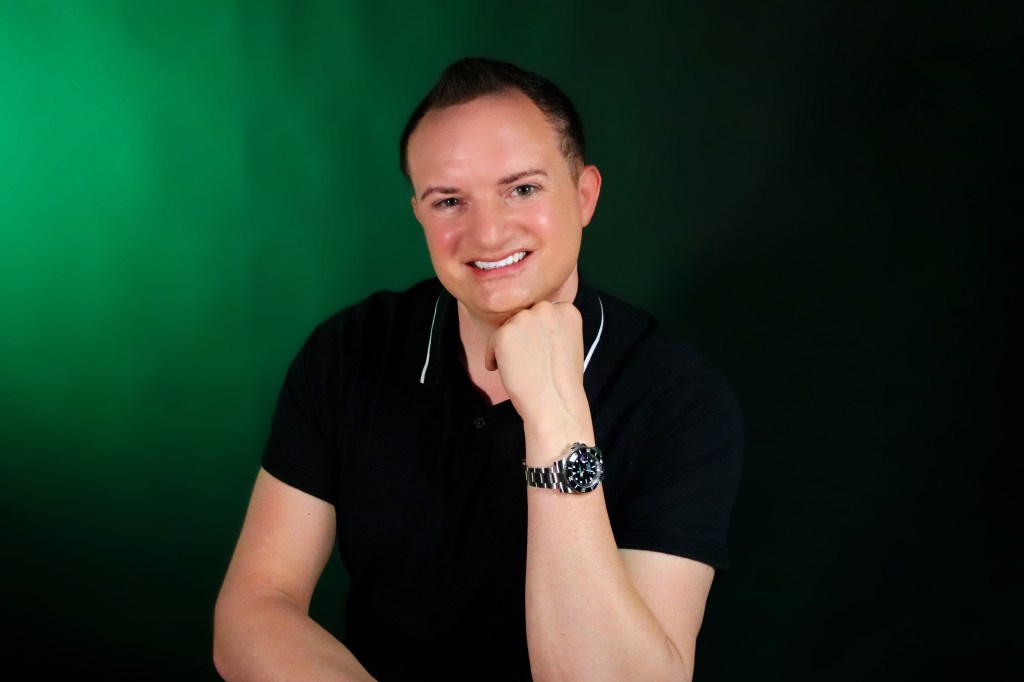
Ryan is the general manager for 90.7 WKGC Public Media and host of the show ReelTalk “where you can join the cinematic conversations frame by frame each week.” Additionally, he is the author of the upcoming film studies book titled Monsters, Madness, and Mayhem: Why People Love Horror. After teaching film studies for over eight years at the University of Tampa, he transitioned from the classroom to public media. He is a member of the Critics Association of Central Florida and Indie Film Critics of America. If you like this article, check out the others and FOLLOW this blog! Follow him on Twitter: RLTerry1 and LetterBoxd: RLTerry
SHELBY OAKS horror movie review

A cautionary tale of when YouTubers confuse content with cinema.

Chris Stuckmann’s Shelby Oaks arrives with all the makings of a breakthrough: (1) it’s one of the most successful Kickstarter-funded indie films ever, and (2) it’s directed by one of YouTube’s most popular influencer-critics. In fact, I’ve used some of his videos in my own classroom—good material: informative, engaging, and accessible for budding cinephiles. But therein lies the rub: informative and engaging does not a motion picture make. The premise, though, is undeniably intriguing—a reimagining of familiar horror tropes with contemporary urgency. Stuckmann delivers a film that has the bones of something potent—think The Blair Witch Project meets Rosemary’s Baby: paranoia, obsession, and the horror of the unseen, all wrapped in a missing-person mystery and topped with a bow of supernatural dread.

Shelby Oaks is about Mia’s search for her long-lost sister and paranormal investigator Riley becomes an obsession when she realizes an event from her past may have opened the door to something far more sinister than she could have ever imagined.

Like many contemporary filmmakers–particularly those that got their start on YouTube–Shelby Oaks excels in technical achievement and marketing. The cinematography is confident and atmospheric, drenched in moody lighting that evokes gothic horror. There is little doubt that Stuckmann clearly understands shot composition, pacing within the frame, even editing in-camera and the importance of visual tone. All the technical elements are quite impressive for a debut feature. And if all a motion picture was–was the visual elements–it’d be easy to admire. But it isn’t. Even Hitchcock knew that. Which is why Hitch never wrote his own screenplays–he generated the idea, even outlined entire scenes and sequences–but he knew that he needed to work with a screenwriter, that understood the material, in order to fully realize his movie idea for the screen. What is greatly lacking in contemporary cinema is an understanding of what makes a great story–plot structure, mechanics, and the emotional substructure.

But Shelby Oaks falters where too many YouTube-born filmmakers stumble—storytelling. Shelby Oaks has a great idea for a movie, but not a fully realized narrative. At its core, the narrative never builds sufficient momentum. Why? Simple–because there’s no real opposition. “Evil,” in the abstract, isn’t conflict. Opposition must manifest into something tangible between the character and his or her external goal, whether that’s a person, a system, or her own inner demons. For all the supernatural activity in the film, there never truly emerges a character of opposition. The result is a macabre mystery that depicts scenes and sequences wherein Mia’s pursuit unfolds, but without the benefit of a tangible sense of escalation or even revelation. Shelby Oaks is more of a proof of concept rather than a complete story.

Stuckmann, for all his film knowledge, seems more comfortable replicating tone and texture than constructing narrative architecture. His background in reviewing movies gives him an eye for what looks right—but not yet the discipline to shape what feels right. He understands what sells, what gets views, and even genre conventions. But sadly, none of the characters, including Mia, possess real dimension or agency. She and the rest of the characters are vehicles for mood rather than emotional engagement.

What works on YouTube—enthusiasm, charisma, and technical dissection—doesn’t automatically translate to cinema. His channel reveals a deep love of horror and a commendable understanding of its visual language, yet Shelby Oaks exposes the gap between appreciating a genre and authoring it. The film lacks what isn’t needed in (and can even get in the way of) YouTube content: storytelling mechanics, structure, and the discipline of narrative design. It’s one thing to analyze story beats; it’s another to build them, to shape character arcs, rhythm, and tension through the grammar of storytelling rather than the syntax of spectacle. Often, YouTube videos have great hooks, but they lack the narrative substance behind the hook.

What’s most frustrating is how close Shelby Oaks comes to working. The concept is rich, and the craftsmanship is undeniably strong. Stuckmann clearly loves cinema, and there’s passion behind every frame. But cinema isn’t content creation—it’s storytelling. And storytelling requires more than aesthetic confidence; it demands structure, development, and resolution.

The YouTube garden is flourishing with emerging directors, cinematographers, and editors—talented creators who’ve mastered the language of cameras, lighting, and cutting for attention. But what it’s not producing are writers. The art—and science—of writing seems to be withering in the age of influencer cinema. Many creators know how to make something look good but not why it should matter. Storytelling requires patience, discipline, and a willingness to think beyond the thumbnail and algorithm. In a culture where speed and spectacle drive engagement, screenwriting—the slow, deliberate architecture of character, conflict, and change—feels almost antiquated. And yet, it remains the soul of cinema. Without writers, we get films that resemble content: sleek, competent, and hollow.

Shelby Oaks stands as a cautionary tale of when YouTubers confuse content with cinema. Furthermore, this movie is an example of the hollowness of contemporary cinema, how cinema is feeling more and more disposable as the months and years pass the silver screen. The tools are there, the ambition is there, but without mastery of story, all that remains are haunting images in search of a heartbeat.

Ryan is the general manager for 90.7 WKGC Public Media in Panama City and host of the public radio show ReelTalk “where you can join the cinematic conversations frame by frame each week.” Additionally, he is the author of the upcoming film studies book titled Monsters, Madness, and Mayhem: Why People Love Horror. After teaching film studies for over eight years at the University of Tampa, he transitioned from the classroom to public media. He is a member of the Critics Association of Central Florida and Indie Film Critics of America. If you like this article, check out the others and FOLLOW this blog! Follow him on Twitter: RLTerry1 and LetterBoxd: RLTerry
BLACK PHONE 2 horror movie review

Don’t answer the call—best to let go to voicemail.

Atmospheric but empty. Black Phone 2 may ring with eerie potential, but what you’ll hear on the other end is mostly static. You just as soon use a telegraph service to form a connection between the big screen and audience than the calls this movie desperately makes. Derrickson demonstrates that he can certainly direct the heck out of a horror movie, but it might be time for someone else to write the next call–or at the very least, he should perhaps stop hiring his friend as a writing partner. While the film succeeds in delivering a chilling, oppressive atmosphere, reminding us that Derrickson remains one of horror’s more visually articulate directors, it also reinforces the unfortunate truth that he’s a far better director than writer. What we have here is another casualty of the writer-director syndrome; which is to suggest that one can be a stylistic filmmaker or even auteur without need to wear both hats. Some filmmakers are better directors, some better writers–and that’s okay! While Black Phone 2 begins with promise, it quickly devolves into a frustrating exercise in squandered ideas, tonal inconsistency, and narrative disarray.

Bad dreams haunt 15-year-old Gwen as she receives calls from the black phone and sees disturbing visions of three boys being stalked at a winter camp. Accompanied by her brother, Finn, they head to the camp to solve the mystery, only to confront the Grabber — a killer who’s grown even more powerful in death.

The film ambitiously sets out to expand upon the supernatural mythology introduced in the 2022 original. Derrickson clearly wants to explore the dream world as a deeper psychological battleground—echoing the meta-horror energy of A Nightmare on Elm Street III: Dream Warriors. But instead of capturing that sequel’s inspired creativity and emotional cohesion, Black Phone 2 feels more like a discount version of a superior brand. The screenplay introduces a fascinating set of “rules” for how this dream realm operates, only to immediately ignore or contradict them, leaving the audience confused rather than intrigued. Internal logic is sacrificed for jump scares and contrived character beats that go nowhere.

And speaking of characters—if you can call them that—most are little more than human wallpaper. Half the ensemble feels like a collection of movie people consisting of broadly sketched types that serve a single plot function before fading into irrelevance. Others border on offensive caricature, perpetuating inaccurate and disparaging stereotypes. For all intents and purposes, about three-and-a-half characters can be removed from the movie, and the story play out much the same. Why that half-character? Because, they do help develop the plot in a measurable way–albeit a modicum of development. When a film’s supporting cast functions more like furniture versus people, no amount of spooky atmosphere can save it. The best written and developed character was Demián Bichir’s Armando.

Still, there are moments, scenes, and even entire sequences that remind us of Derrickson’s undeniable craftsmanship. His camera captures dread beautifully; his sense of timing and space within the frame conjures genuine unease. There are glimpses of a haunting, emotionally resonant movie buried somewhere beneath the fractured structure and incoherent script. Unfortunately, those glimpses are fleeting. And that’s the great tragedy here—not just for Black Phone 2, but for a growing trend in contemporary filmmaking: the writer-director who insists on doing it all, in the name of authorship.

Once upon a time, filmmakers understood that collaboration was the lifeblood of cinema. Directors directed. Writers wrote. And when both crafts worked in harmony, we got films that not only looked great but meant something. Somewhere along the line, “auteur” became synonymous with “solo act,” and too many directors convinced themselves that to have a voice, they had to pen the script too. The result? Movies that look immaculate but feel hollow—visual symphonies built on shaky foundations.

Derrickson is a perfect example (another is Jordan Peele). As a director, his command of tone and atmosphere is nearly peerless; his work in horror often hums with intelligence and mood. But Black Phone 2 exposes the limits of his pen. The foundation for a compelling story is here—the bones of something rich and psychologically resonant—but the film never benefits from a writer who truly cares about character, motivation, or thematic depth. It’s as though Derrickson fell so in love with his own concept and craft that he forgot to ask whether the story itself deserved that devotion.

A gifted director needn’t be the writer to be an auteur. In fact, some of the greatest auteurs—Hitchcock, Spielberg, even Fincher–are those who know the value of letting a skilled screenwriter shape the clay before they bring it to life. Black Phone 2 might have been a haunting triumph had Derrickson trusted someone else, other than his friend, to write the words for the world he so clearly knows how to visualize. Instead, we’re left with a reminder that even the most talented filmmaker can’t build a cathedral on a cracked foundation.

By the time the credits roll, Black Phone 2 feels like a series of individually thoughtful scenes strung together by a story that never quite finds its pulse. It’s a patchwork of ideas that might have worked—had they been developed, connected, or earned. The result is a film that looks and sounds like a horror movie, but never feels like one worth the cost of time.

Ryan is the general manager for 90.7 WKGC Public Media in Panama City and host of the public radio show ReelTalk “where you can join the cinematic conversations frame by frame each week.” Additionally, he is the author of the upcoming film studies book titled Monsters, Madness, and Mayhem: Why People Love Horror. After teaching film studies for over eight years at the University of Tampa, he transitioned from the classroom to public media. He is a member of the Critics Association of Central Florida and Indie Film Critics of America. If you like this article, check out the others and FOLLOW this blog! Follow him on Twitter: RLTerry1 and LetterBoxd: RLTerry
TOP 10 FILM SCORES OF THE 1970s: AN ECLECTIC DECADE OF TRANSFORMATION

Film scoring in the 1970s was nothing short of revolutionary. This was a decade in which composers and filmmakers experimented with sound in bold, unprecedented ways. Sweeping orchestras still had their place, but they now shared the stage with eerie minimalism, jazz-infused soundscapes, synthesizers, and even progressive rock. The result was a period of extraordinary breadth and innovation—one that gave us some of the most iconic film music ever written.

At the heart of this decade stood John Williams and Jerry Goldsmith, two composers who dominated in very different ways. Williams revived the lush, symphonic tradition and brought it back to the masses with scores that became cultural phenomena. Goldsmith, meanwhile, was the chameleon—endlessly inventive, prolific, and daring, whether working with avant-garde techniques, electronic experimentation, or lyrical orchestrations. Yet the decade was not defined by them alone. Outsiders like Goblin, with their phantasmagorical score for Suspiria, or directors such as John Carpenter, who electrified horror with nothing more than a chilling piano rhythm in Halloween, proved that iconic film music could be born outside the studio system. Jazz, soul, and early R&B also found their way into major works, mirroring the diverse cultural pulse of the era.

The soundscape of the 1970s was one where tradition collided with innovation. Bernard Hermann closed out his legendary career with Taxi Driver, a jazz-infused urban nightmare that distilled both character and city into sound. Jerry Goldsmith, the consummate innovator, moved effortlessly from the operatic choral terror of The Omen to the avant-garde dissonance of Alien and the melancholy trumpet of Chinatown—not to mention his enduring Star Trek theme, launched in The Motion Picture. Mike Oldfield’s Tubular Bells, adapted for The Exorcist, demonstrated that minimalist rock could chill as deeply as any orchestra. And Williams resurrected the grand symphonic tradition with Jaws and Star Wars, reintroducing sweeping themes and leitmotifs to a new generation. Taken together, these works made the 1970s both a bridge and a launchpad: honoring the past while daring to explore the future.

Audiences witnessed a resurgence of the full-bodied symphonic score, reviving the golden-age practice of leitmotif-driven composition. But while many scores channeled old Hollywood, these same scores were blazing new trails–trails that future filmmakers would tread and further develop in their own voices. Yet the 1970s were hardly a return to tradition alone. From fragmented jazz and abrasive brass to minimalist repetition that conveyed inevitability, film scores proved that music could disturb and destabilize as effectively as it could uplift. Musical expressions across a wide spectrum were represented and fused throughout the decade. This eclecticism was witnessed in the integration of jazz, rock, and popular styles into film scoring. Jazz, long associated with improvisation and urban grit, seeped into dramas and thrillers, while progressive rock and folk elements brought an otherworldly quality to European cinema.

This embrace of contemporary genres reflected the cultural currents of the 1970s, when popular music increasingly shaped the everyday soundscape. Although electronic instruments are often associated with the 1980s, experimentation with synthesizers truly began in the 1970s. By blending traditional compositional techniques with new technology, composers created atmospheres that felt immense, uncanny, and otherworldly. Horror, in particular, became the proving ground for these sonic experiments. From the satanic choral grandeur of The Omen to the eerie repetition of The Exorcist, the avant-garde unease of Alien, and the surrealism of Suspiria, horror films became laboratories for innovation—setting trends that rippled across genres.

The eclecticism of 1970s film scoring mirrored the turbulence and transformation of American life during that same decade. The United States was navigating a shifting cultural landscape—post-Vietnam disillusionment, Watergate’s erosion of political trust, an energy crisis, and social movements that challenged the norms of race, gender, and identity. Just as the nation was renegotiating its sense of self, film music was renegotiating its role in storytelling. The return of grand symphonic scores reflected a yearning for stability, heroism, and mythmaking in a time of uncertainty. At the same time, the rise of dissonance, minimalism, and electronic experimentation resonated with audiences living through an era of anxiety and rapid change. Just as the decade was defined by eclectic fashion, political unrest, and artistic upheaval, so too was its film music characterized by hybridity, boldness, and the breaking of old rules. The cinema became a cultural mirror, wherein the nation’s contradictions—fear and hope, nostalgia and progress, tradition and innovation—were set to music.

The 1970s also reasserted film scores as cultural touchstones, in ways not witnessed since Herrmann’s Psycho. John Williams work and name became instantly recognizable beyond the movie theatre, entering the cultural lexicon in a way few film scores had before. Jerry Goldsmith pushed the boundaries of what film music could evoke, Nino Rota created hauntingly elegant themes with operatic weight. Meanwhile, Mike Oldfield’s Tubular Bells proved that a minimalist rock piece could achieve global recognition and forever alter the sound of horror. Collectively, these works and more reestablished film music not merely as background support, but as a defining element of a film’s identity—inseparable from its success and enduring in the popular imagination.

The 1970s forever changed how we would hear cinema.

This week, on my show ReelTalk on WKGC Public Media, I sat down with music professor Dr. Steven DiBlasi to countdown our Top Ten Film Scores of the 1970s. Our respective lists both aligned and diverged, covering the wide spectrum of great, memorable film music that was the 1970s. Below, you will find our respective Top 10 lists, but for the full conversation (approx 1hr), you’ll want to listen to the episode!

Listen

Top 10 Film Scores of the 1970s

Mine (Ryan’s)

Dr. DiBlasi’s

  • 10. Taxi Driver (Bernard Herrmann, 1976)
  • 9. The Godfather (Nino Rota, 1972)
  • 8. Chinatown (Jerry Goldsmith, 1974)
  • 7. The Omen (Jerry Goldsmith, 1976)
  • 6. Alien (Jerry Goldsmith, 1979)
  • 5. Star Wars (John Williams, 1977)
  • 4. Jaws (John Williams, 1975)
  • 3. Suspiria (Goblin, 1977)
  • 2. Halloween (John Carpenter, 1978)
  • 1. The Exorcist (Mike Oldfield, 1973)
  • 10. The Petrified Forest (Toro Takemitsu, 1973)
  • 9. Days of Heaven (Ennio Morricone, 1978)
  • 8. Space is the Place (Sun Ra, 1974)
  • 7. A Clockwork Orange (Wendy Carlos, 1971)
  • 6. Don’t Look Now (Pino Donaggio, 1973)
  • 5. Shaft (Isaac Hayes, 1971)
  • 4. Taxi Driver (Bernard Hermann, 1976)
  • 3. Chinatown (Jerry Goldsmith, 1974)
  • 2. Hurricane (Nino Rota, 1979)
  • 1. Star Trek: TMP (Jerry Goldsmith, 1979)

Ultimately, the 1970s was a transformative decade of film music, both a bridge and a launchpad. It bridged the golden age of orchestral scoring with the bold experimentation of the modern era, while launching the blockbuster tradition and electronic innovation that would dominate the decades to come. The eclecticism of 1970s film music remains its hallmark, and its influence can still be heard in how cinema sounds today.

Ryan is the general manager for 90.7 WKGC Public Media in Panama City and host of the public radio show ReelTalk “where you can join the cinematic conversations frame by frame each week.” Additionally, he is the author of the upcoming film studies book titled Monsters, Madness, and Mayhem: Why People Love Horror. After teaching film studies for over eight years at the University of Tampa, he transitioned from the classroom to public media. He is a member of the Critics Association of Central Florida and Indie Film Critics of America. If you like this article, check out the others and FOLLOW this blog! Follow him on Twitter: RLTerry1 and LetterBoxd: RLTerry
THE CONJURING: LAST RITES horror film review

The screenplay should be exercised of the demons plaguing the narrative. While The Conjuring: Last Rites offers initial intrigue and a moderately compelling performative dimension, what substance the story had was undercut by a proliferation of monstrous encounters.

In 1986, paranormal investigators Ed and Lorraine Warren travel to Pennsylvania to vanquish a demon from a family’s home. This case would prove to be their last.

At its outset, the film suggests a promising return to the roots of this dozen-year-old horror franchise that began in 2013, hinting at a chilling and intimate confrontation with the supernatural. The mood is suitably dark, and the premise—while familiar—has just enough mystery to draw the viewer in for what would appear to be tapping into its desire to be in the same vein as The Exorcist. For a time, it even teases the prospect of a measured, atmospheric entry into the Warrens’ saga. Unfortunately, the promise of the first act quickly gives way to a chaotic barrage of hollow frights and set-piece monsters that smother any narrative tension the film might have cultivated.

The greatest asset in the film is, without question, the lead casting of (returning) Patrick Wilson and Vera Farmiga and the addition of Mia Tomlinson as daughter Judy Warren and Ben Hardy as her fiancé Tony. Farmiga and Wilson remain the heart of the franchise–they are the soul reason this franchise continued for as long as it did. Their impeccable chemistry continues to play a vital role in lending credibility and weight to this story and the others in the franchise that would otherwise struggles to stay grounded. Combining Farmiga and Wilson with Tomlinson and Hardy, their collective performances carry an emotional authenticity that suggests a deeper, more resonant film lurking beneath the surface–too bad it was largely kept beneath the surface of the picture. Additionally, the supporting players, too, offer moderately compelling turns, doing what they can with material that rarely allows for nuance.

Where Last Rites falters most egregiously is in its writing—particularly in the second and third acts. What begins with threads of intrigue quickly unravels into a tangle of formulaic plot beats, ill-defined stakes, and a near-total abandonment of narrative discipline. The dialogue oscillates between expositional over-explaining and perfunctory banter, never achieving the kind of earnestness that made earlier entries memorable. By the climax, the story feels more like a theme park attraction than a descent into the occult. (Speaking of which, The Conjuring-verse would make for a fantastic Halloween Horror Nights House if an agreement between New Line Cinema and Universal Parks and Resorts could ever be reached).

Equally troubling is the film’s shallow and often misguided treatment of spiritual warfare. While The Conjuring-verse has historically dabbled in theological and metaphysical ideas, this installment offers only a cursory exploration—at times bordering on ignorance. Themes of faith, redemption, and evil are reduced to ornamental set dressing rather than being woven meaningfully into the narrative. Fundamental tenets of spiritual warfare are neglected: Scripture teaches that “demons tremble at His name” and that they cannot force a person, calling on the Lord, to take their own life or that of another—tempt, yes; coerce, no. This misunderstanding undercuts the stakes, turning spiritual conflict into spectacle rather than a profound struggle. Even William Friedkin’s The Exorcist handled these dimensions with reverence and gravity, whereas here they are clumsily exploited for empty shocks.

From a film craft perspective, the overreliance on CGI monsters is perhaps the final nail in the coffin for this horror franchise and universe. Where practical effects could have imbued the film with texture, tangibility, and dread, we are instead subjected to a parade of vapid, weightless apparitions. Without giving way to spoilers too much, there is a scene in which Lorraine is staring in to a sink that overflows with blood–CGI blood. If Kubrick could pull off the bloody elevator scene in The Shining then this movie could have used practical effects for this scene. I am not suggesting that practical effects alone would have “saved” the soul of this movies, but an increase in the degree to which practical and mechanical effects were integrated into the narrative certainly would’ve helped the movie feel more tangible. The jump scares—frequent and rarely earned—feel like mechanical interruptions rather than organic outgrowths of fear. It is horror by checklist, and it shows. By the time we arrive at the third act, nearly every scene or sequence has a series of jump scares that are predictable at best and lazy at worst. More character-driven moments and dramatic conflict would’ve been a great tool for emotional resets and plot/character development.

In the end, The Conjuring: Last Rites is neither the triumphant sendoff nor the atmospheric chiller it aspires to be. It is a film at war with its own instincts: part haunted house, part monster mash, and ultimately, part missed opportunity. All that said, it’s not a bad movie–it’s better than many of the other installments. But a franchise that needed to end with an Annabelle: Creation would up ending with an Annabelle.

Ryan is the general manager for 90.7 WKGC Public Media in Panama City and host of the public radio show ReelTalk “where you can join the cinematic conversations frame by frame each week.” Additionally, he is the author of the upcoming film studies book titled Monsters, Madness, and Mayhem: Why People Love Horror. After teaching film studies for over eight years at the University of Tampa, he transitioned from the classroom to public media. He is a member of the Critics Association of Central Florida and Indie Film Critics of America. If you like this article, check out the others and FOLLOW this blog! Follow him on Twitter: RLTerry1 and LetterBoxd: RLTerry