One Movie Punch “Glass” Full Review

Not a total train wreck, but the plot is full of cracks nevertheless.

After the success of 2017’s Split, M. Night Shyamalan’s Glass was the highly anticipated conclusion to the macabre take on the superhero genre. Unfortunately, the film fails to deliver the intense plot that audiences wanted. After the big reveal that Split was connected to Unbreakable (2000), the audience was predisposed to anticipating the same level of suspense and thrill that was found in the aforementioned two films. Plot twist. The plot misses the mark. Glass is the final installment in this superhero universe trilogy that postulates that comic book characters are, albeit exaggerated, inspired by real-life super humans. Out of left field, this movie was completely unexpected until the uncredited cameo of Bruce Willis’ character of David Dunn from Unbreakable. Despite the lackluster narrative, the film is not without its entertainment value. It is sufficiently enjoyable, but leaves you with a feeling of “meh.”

For the full review, visit the One Movie Punch website for the audio review and transcript! And if you don’t do so, follow One Movie Punch on Twitter and subscribe with your podcast service.

Ryan teaches screenwriting at the University of Tampa. If you like this article, check out the others and FOLLOW this blog!

Follow him!

Twitter: RLTerry1

Instagram: RL_Terry

Thrillz (theme parks): Thrillz.co

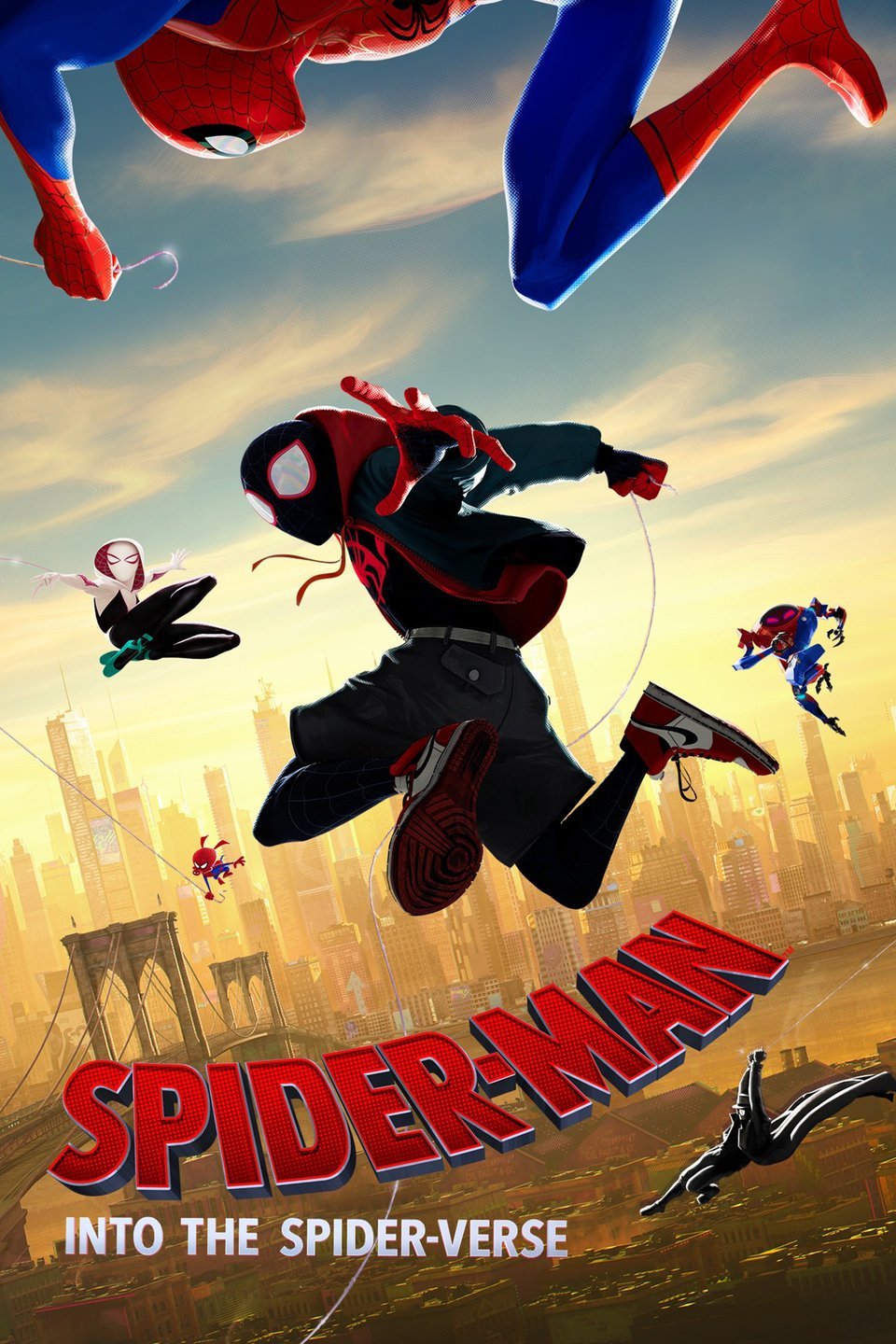
“Spider-Man: Into the Spider-Verse” brief film review

Now THIS is the amazing Spiderman! Eat your heart out Tom Holland and move over Incredibles and Ralph for the best animated feature of 2018. Even if you do not care for comic book or superhero movies, by in large, but love excellent motion pictures (animated or live-action), then I can almost guarantee that you will thoroughly enjoy and greatly appreciate Sony’s Spider-Man: Into the Spider-Verse. Although there have been a handful of animated films that I have liked in recent years, I have not felt emotionally and physiologically engaged with an animated feature to this degree since Kubo and the Two Strings. What both these animated features have in common is groundbreaking artistic precision that typifies the art of animated visual storytelling. Not only does Spider-Verse blow all other animated films out of the water this year, in terms of its contribution to the art and science of motion pictures, I put it on par with Kubo. The attention to production design details and mindblowing editing set the bar incredibly high for animated features moving forward. While the visuals have been likened to an acid trip, do not allow that to dissuade you because never once did I find the avant-garde artistic expression dizzying or obnoxious. It was completely immersive. There was genuine, tangible emotion felt in every frame. And the Stan Lee cameo was priceless. Underscoring everything on screen is the phenomenal screenplay upon which this mesmerizing animated feature is built. Undoubtedly, you will find yourself emotionally invested in the central character of Miles and the chief supporting cast, including the fantastic villain King Pin. There is so many layers to this story, and it works on several levels such as: family, love, self-sacrifice, and more. Highly recommend this film!

Ryan teaches screenwriting at the University of Tampa. If you like this article, check out the others and FOLLOW this blog! Interested in Ryan making a guest appearance on your podcast or contributing to your website? Send him a DM on Twitter or email him at RLTerry1@gmail.com! You can catch Ryan most weeks at Studio Movie Grill Tampa, so if you’re in the area, feel free to catch a movie with him!

Follow him!

Twitter: RLTerry1

Instagram: RL_Terry

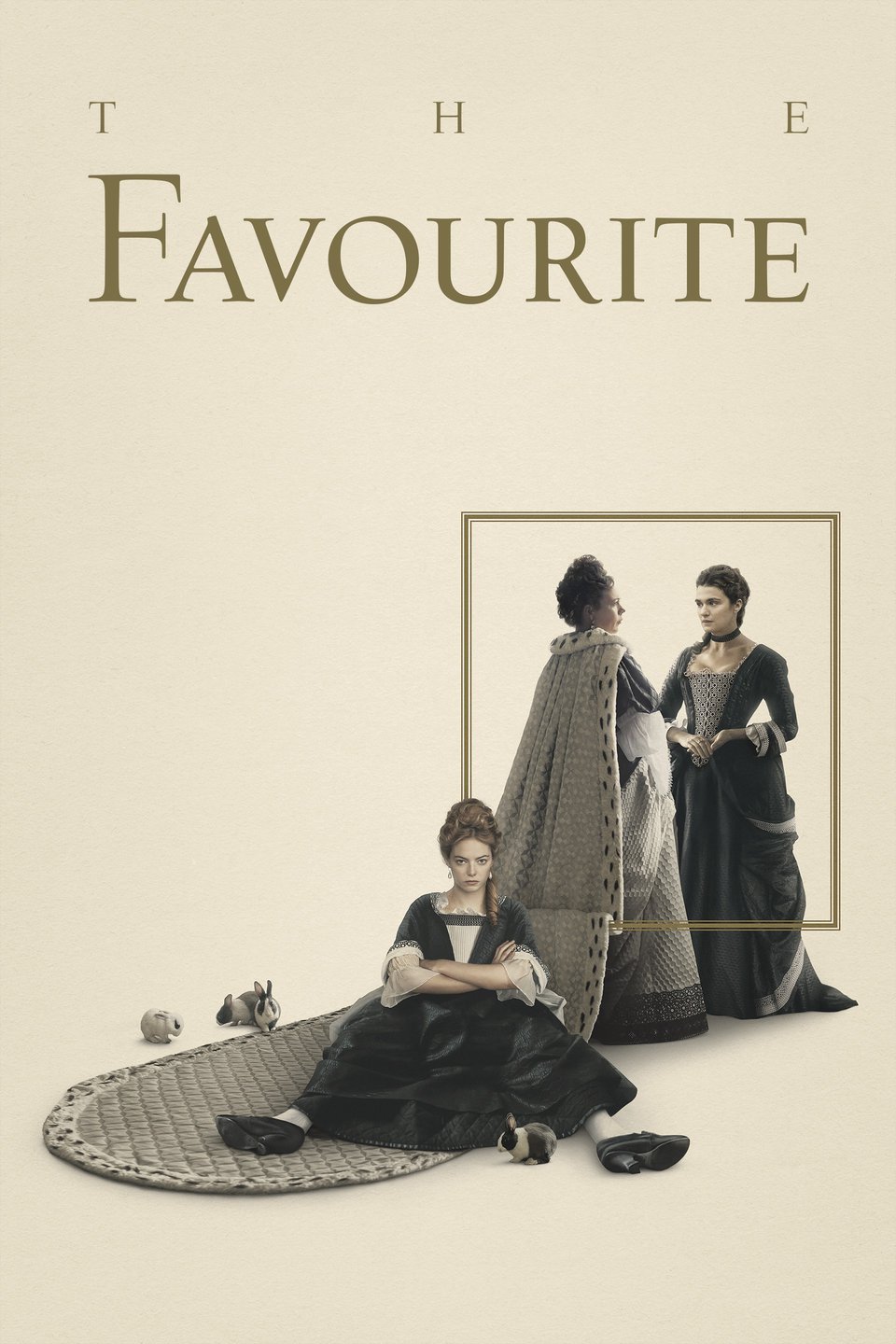
“The Favourite” full film review

A brilliantly entertaining satirical dramedy! Not your history channel biopic. Yorgos Lanthimos’ The Favourite is a motion picture inspired by the reign of 18th century Queen Anne of England. Even if Lanthimos has not previously won you over with his renown commitment to auteur filmmaking, The Favourite may just be the film to draw you into his penchant for dark dramedies that mock the absurdities of the world in which the story exists. Personally, I did not care for either Lanthimos’ The Lobster or Killing of a Sacred Dear, nor did I like last year’s highly stylized artistic film Phantom Thread directed by Paul Thomas Anderson. However, I truly enjoyed every second of The Favourite. A screenwriter’s dream, this film is built upon one of the year’s (if not THE) best screenplays, and brought to life by an incredible lead and supporting cast. And the degree to which this outstanding film impresses the audiences does not stop there. The costumes, locations, and set design are incredible. Upon watching this film, I was reminded of another worldclass period drama where each scene felt like it was an oil painting. I am talking about Stanley Kubrick’s Barry Lyndon. Never before have I seen a film come so close to delivering the experience that the Kubrick masterpiece did. Another film of note that this one reminds me of is All About Eve. When you’re comparing a film to some of the best films to ever be made, you know that is a good sign. This no-holds-barred dramedy provides audiences with a story about a twisted love triangle within the royal court of Queen Anne that is anything but prim and proper. You will be instantly sucked into just how bizarre and brilliant this film is because of the seductive visuals and razor-sharp wit.

In the early 18th century, England is at war with the French. Nevertheless, duck racing and pineapple eating are thriving. A frail Queen Anne occupies the throne, and her close friend Lady Sarah governs the country in her stead while tending to Anne’s ill health and mercurial temper. When a new servant, Abigail, arrives, her charm endears her to Sarah. Sarah takes Abigail under her wing, and Abigail sees a chance to return to her aristocratic roots. (IMDb)

With so much to love about this film, it is difficult to know precisely where to begin. Visually, this film is stunning. Between the cinematography executed with impeccable precision and the set design lit with a combination of natural lighting and candles, each scene is as if it was a commissioned painting by a Baroque artist. Not quite to the levels of Barry Lyndon but certainly encroaches upon that territory. The use of wide angle and fish eye lenses, the creative use of camera positioning to convey the tone of a scene or a subjective view of a character was masterfully directed. While the palace where we spend most of the time is already immense, the camera makes everything look even larger to convey the relationship between a character and the royal court or the emotion of a scene. Under most circumstances, it’s difficult to pull off a fish eye lens but Lanthimos does so excellently! The unconventional camera placement and angles reflect the emotional beat or warped nature of the scene. While this film is heavy on the dialogue, it is also equally heavy in the visual storytelling. There are moments in the movie that assault the eyes and others that are so hilariously candid that you are glad the camera allows us to get a glimpse into the twisted world of 18th century royal England. More than any other film I’ve seen this year, this one exemplifies the ability for the camera to be an extension of our own eyes to bring us even closer–intimately close–to the narrative.

A screenwriter’s dream! The writing in The Favourite is some of the best that I have seen in a long time. We’ve had many great screenplays this year, but there are usually flaws here and there–something that could have been streamlines, expanded upon, or reworked in order to make better. However, there is literally nothing about this screenplay that I would change. Every scene of a screenplay should begin as close to the end of the scene as possible and every scene needs to point to the realization at the diegetic conclusion. And this screenplay does precisely that. Even the development of the characters can be witnessed through the physical movement and dialogue of the characters. Not that commitment to the guidelines of screenwriting means the screenplay lacks imagination–definitely not. There is plenty of imagination in this story but it delivers every emotional beat, every turning point, every action with a powerful punch. The characters contain multiple layers and each scene reveals something new to add to these multidimensional characters. Sometimes it may be a subtle nuance that we learn about a character or it could be a big reveal that was hinted at earlier in the story. At times, your senses are assaulted with a sequence of actions that are wildly erotic or offensively contemptible. It’s that oscillation between extremes that keeps this drama titillating.

More than a satire on the 18th century British royal court, this film is about the lengths one goes to change one’s life or situation and all the costs associated with that. Screenwriter Tony McNamara worked with Lanthimos to adapt Deborah Davis’ original script into the outstanding script that serves as the foundation for this film. It’s also a grim reminder that you can change your surroundings, title, clothes, and job but you may still be selfish, power-hungry, lonely, and unfulfilled on the inside. Perhaps you think you’ve won one game, but you were completely unaware of all the rules or that you were actually playing a difference game altogether. Perhaps you are trying to rise up in a capitalist company or culture, and when you almost reach the top, you are reminded that you are just a lowly pawn in a greater scheme or plan. So many ways to read this film. There is depth to this film that Phantom Thread did not have (hence why I did not like it). It’s not just pretty to look at and listen to, but there is diegetic depth and dimension to this narrative brought to the screen. One of the most brilliant aspects to the story is how you feel about Abigail, Queen Anne, and Sarah. Because you will definitely change how you feel as the story unfolds. No spoilers, but you will witness a course of events that truly reveal who these characters are, what motivates them, and where allegiances lie. The character whom you think you should be rooting for, may actually be the very one who is the most deceptive of all. It’s been a long time since I’ve heard dialogue that is this vicious and beautiful all at the same time. And yet, nothing ever feels forced, fake, or annoyingly on-the-nose. The subtext of what is being said is rich and intriguing. Not only do these characters do and say some of the very things that we either do or imagine we would do but they execute it with razor sharp precision and in an organic manner. You will see it all and hear it all–that is certain. Be prepared to gasp, laugh, cringe, and more. Never before has cruelty, power, and desire been so delicious.

Yorgos couldn’t have asked for a better cast. The ensemble that makes up The Favourite is stellar. And there is lots of eye candy to go around. Whether we are talking the royal court, parliament, or even the servants, there are lots of pretty guy and gals whom make up this phenomenal cast. Beyond the look of the cast, the talent is breathtakingly good. Delivering figuratively sucker-punches one moment and conveying something seductive through the use of subtlety the next, the breadth of talent on display in this film is remarkable. Heavy dramedies like this one require chemistry levels near perfection. Because it is a character driven story that is supplemented by actions; therefore, it’s imperative that the actors work well together in order to never allow the audience to slip out of the story. Everything about this film works flawlessly.

Now that you’ve watched Bird Box, you need to head to your local cinema to experience one of the most audacious motion pictures of the year. You are certain to be entertained by the witty dialogue, picturesque locations and production design, and magnificent cast. Not your typical Jane Austen-esque period drama; it artistically pushes the envelop and holds nothing back. This film definitely ranks within my Top 10 films of 2018, and look forward to see how well it does at the major award shows coming up.

Ryan is a screenwriting professor at the University of Tampa. If you like this article, check out the others and FOLLOW this blog!

Follow him!

Twitter: RLTerry1

Instagram: RL_Terry

Thrillz (theme parks): Thrillz.co

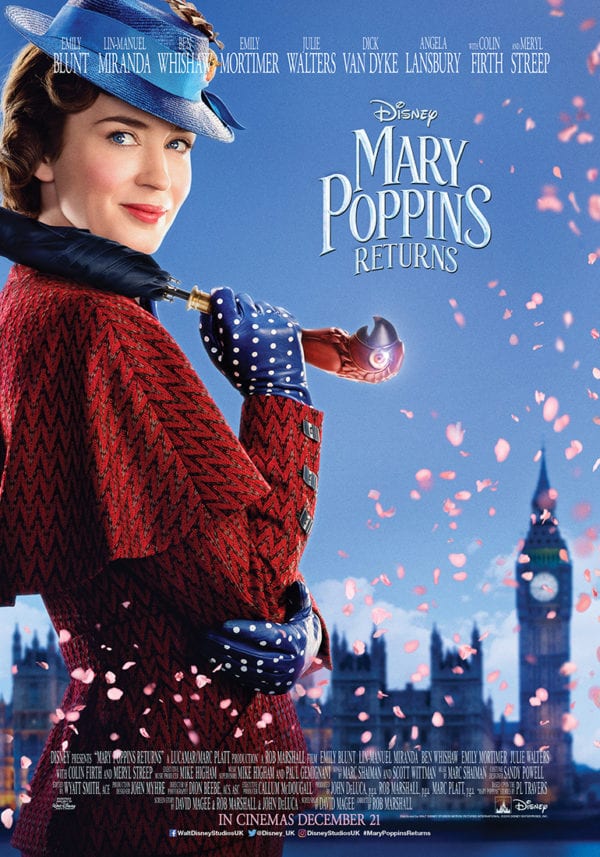
“Mary Poppins Returns” full film review

A spoonful of nostalgia isn’t enough to make the narrative go down. The highly anticipated Mary Poppins Returns hits theatres this week. Unfortunately, this film gets lost in nostalgia, neglecting the need to tell a new story. Instead, we get more than half a movie full of frivolity that lacks any coherent meaning or substance that is more concerned with hitting the same plot beats with similar songs at the same moments in this version as it was with the original. Visually, the movie is flawless and the animation sequences were a welcomed visit from the past. Reminded me of, if the animation from Bedknobs and Broomsticks and Mary Poppins got together, this is what you’d get. When creating a sequel that doubles as a remake, connections to the original are important but should not be at the diegetic forefront. Mary Poppins Returns exists in a gray area that is neither a sequel nor a remake. Had Mary Poppins Returns been a full-on sequel or remake, then perhaps the narrative would have faired better. As it stands, it sits uncomfortably in the middle and suffers from a bit of an identity crisis. Perhaps this version is lacking in critical value and complex characters, but it ranks highly in entertainment value. There isn’t anything particularly memorable about it except for the special appearances by Dick Van Dyke and Angela Lansbury, but the movie offers a couple hours of whimsical fun.

In depression-era London, the Banks family faces one of the greatest hardships a family can face–losing their home. Compounding the present state of affairs, the family is also coping with the recent loss of Michael Banks’ wife and mother of their three children. With help from the family’s longtime maid/cook Ellen and Michael’s sister Jane, the family hopes for the best while planning for the worst. With only five days until the house is repossessed, Michael remembers that his father left him shares of that infamous bank from his childhood; but when certificates of shares in the Fidelity Fiduciary Bank turn out to be missing, all hope seems lost until Michael, his children, and Jane get the surprise of a lifetime. Mary Poppins returns! Michael and Jane’s beloved nanny from their childhood returns to look after the family during this crisis. In true Mary Poppins fashion and accompanied by the lamplighter Jack, she whisks Michael’s children into a fun-filled adventure through the streets of London and into a world of imagination.

At the bedrock of the original are these lessons that must be learned. In many ways, Mary Poppins was a teacher to both Jane, Michael, and George. Although the lessons varied by character, they had one common denominator: life’s priorities. And there were no true villains–that is–evil or villainous out of malcontent or cruelty. And the songs had strong meaning, not just fun, creative lyrics to a show-stopping accompaniment. Furthermore, there was strong character development in the central characters. The character arcs of George and the kids were measurable. Even Mr. Dawes Sr. demonstrated measurable change. There are the elements of substance that make the original a timeless classic that transcends the decades and generations to remain a beloved film. Mary Poppins Returns fails to deliver any of these elements to the audience. Instead, chooses to get lost in the nostalgia of the original. Relying on the abstract of nostalgia to carry this remake-sequel.

While Michael’s lesson is clearly to learn to be a child again, his children learn the lesson to be quasi adults by teaching their father and working to solve the family’s financial crisis. Those two idea are in direct contradiction. Mary Poppins is no longer acting like a teacher but she seems more concerned with being an actual nanny moreso than the governess that was the original. If the lesson to be learned was to have the imagination or hope of a child, then that should have been taught, not two different lessons in direct contrast. George Banks may have been had his priorities in the wrong place, but he was not evil, nor was Mr. Dawes Sr. evil–he too had his priorities all askew. In Mary Poppins Returns, Colin Firth’s Mr. Wilkins is downright cruel for no reason other than simplistic greed. Simple motivators are a good place to start but should be developed to be more complex to add to the conflict. Firth’s character is completely uninteresting.

Talk about memorable songs in the original; I imagine you can recite most lyrics by memory, unlike this version with lyrics so convoluted and complex that they are largely forgettable. At the time of listening, the lyrics are poignant and work at the given emotional or plot beat, but then they are mostly forgotten. The songs in this one seem to exist only for the amusement of the audience. And the vaudeville number. Let’s talk about that for a moment. For starters, I love Mary’s wig that she borrowed from Catherine Zeta Jone’s Chicago costume. The music and lyrics in that number were incredibly entertaining–but–these same lyrics are quite risque in places. I was shocked that they were in a movie aimed at kids (despite the PG rating). And comparing the songs from the original to the ones in this version, each and every song in Mary Poppins Returns sounds similar AND comes at precisely the same beat as they did in the original. Each and every song in this one is an answer to the counterpart in the original. With one conspicuous exception, there is no equivalent for the Sister Suffragette. With Jane’s heavy involvement in workers’ rights (much like her mother’s women’s rights), it seems odd that she was not given a song since were were giving everyone else songs equivalent to the original. Yes, I am aware that Sister Suffragette is not in the Broadway musical, but it should have had a place in Mary Poppins Returns.

Structurally, the first two acts are all over the place. Fortunately, the film finishes with a strong third act. Everything seems so forced, rushed. Pacing matched the original. It’s as if the emotional beats and plot points from the original were mapped out and a “new” story was conformed to fit the old diegesis. There are even moments that can be completely removed from the story and not effect the outcome. For example, the entire Meryl Street scene has no impact on the realization of the narrative. Screenwriting 101 teaches us that each and every scene should point the audience toward the end–each scene should culminate in something important. Think of each scene as a paragraph in a larger story and each line of dialogue as a sentence in a larger paragraph. Each paragraph has a beginning, middle, and end; just like a story has a beginning, middle, and end. If a scene does not advance the plot, then it should be reworked or removed. We never revisit the cracked pot or truly embrace the idea of giving oneself a new perspective from which to view life. The song is fun, but that is all I can say about that scene. And there are other scenes in the movie that do little to advance the plot, but this is the most obvious one.

The movie is not without its entertainment value. If you are looking to escape reality for a couple of hours, then you are in the right place. You will be delighted with the whimsy and magic of this story. Perhaps the screenplay is poorly conceived, but everything else (from a technical perspective and performance perspective) works very well. If you enter the film with a heavy heart or some degree of sadness, the movie will help you forget your troubles for a moment and put a smile on your face and maybe even a tear or two in your eyes. Emily Blunt may not be a perfect Mary Poppins but she is practically perfect as the beloved nanny.

Ryan is a screenwriting professor at the University of Tampa. If you like this article, check out the others and FOLLOW this blog!

Follow him!

Twitter: RLTerry1

Instagram: RL_Terry

Thrillz (theme parks): Thrillz.co

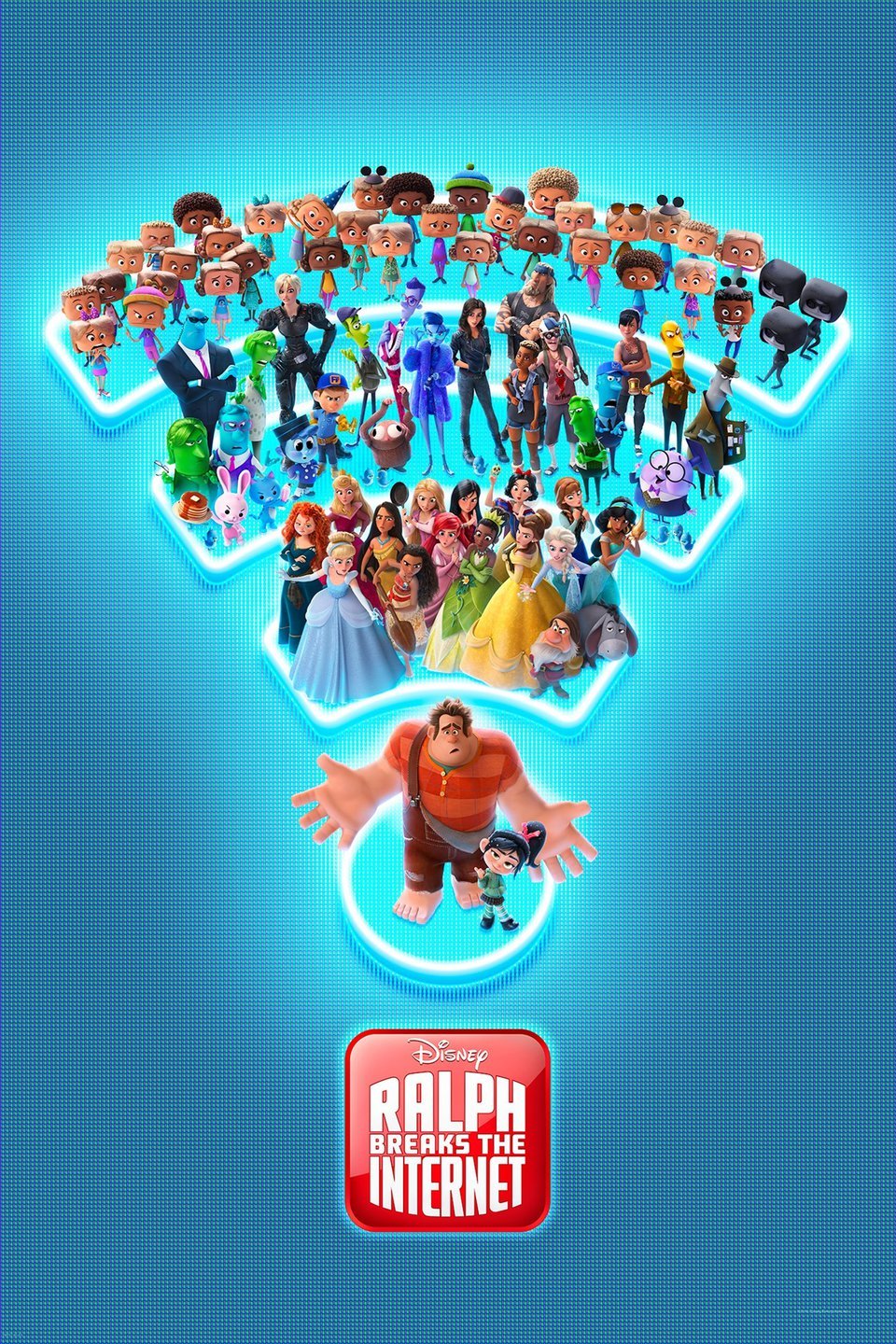
“Ralph Breaks the Internet” Full Review

It’s cute and entertaining. The highly anticipated sequel to the Oscar-nominated Wreck It Ralph hits theatres everywhere today. Much like the first film, this sequel relies heavily upon nostalgia and familiarity with pop culture more than it it does a strong narrative. All too often, it’s more concerned with making you laugh than it is delivering a meaningful narrative. However, no mistaking it, you’ll have a fun time watching this film. And sometimes an entertaining story for the whole family is all that is needed to accompany your holidays. Ralph Breaks the Internet took what the Emoji Movie attempted to do, but failed, and delivered a heartwarming story that comments on our usage of and fascination with the internet. Return to the brightly colorful animated world of Ralph and Vanellope for a highspeed adventure that takes them from the 8bit world of 80s video games to the immersive world of a visualized, stylized internet. If it’s gone viral on the internet, then you’ll likely find it in this movie. What we see in terms of abstracts or constructs, this film creatively translates that which only exists in 0s and 1s into something far more tangible. For all that Ralph Breaks the Internet did right, and that constitutes a lot aesthetically, it appears as though the writers were far more concerned with cramming every bit of Disney, pop culture, and digital media into the movie than developing a compelling narrative. And that was the part that I found obnoxious, the amount of time we spent on the Disney brands. It became self-serving instead of plot-serving. That being said, this uplifting movie accomplished what other animated films attempted, making what users do on the internet interesting. Must in the same way that Searching brilliantly captured screen-life, Ralph delivers a sensory explosion of what a visualization of the internet may look like. But who would’ve known that we were all POP Vinyls???

Vanellope is bored with her game Sugar Rush. In order to change the tracks up and give Vanellope a new experience to revive her love of her game, he builds a new track! Unfortunately, this means that Vanellope ostensibly takes control of the game’s steering wheel causing the user to break it off when trying to correct Vanellope’s car. When the arcade owner is unable to find a replacement steering wheel on eBay within his budget, he decides to shutter the game. Unbeknownst to him, he forcibly displaces the citizens of Sugar Rush. With no home to return to, the citizens of Sugar Rush are relocated to other games and the racers are adopted by Felix and Sgt. Calhoun. Ralph and Vanellope are determined to replace the steering wheel by exploring the unknown world of the internet where eBay is located. Upon arrival, it is clear that both of them are way in over their heads. They must rely upon intuition, wit, and the citizens of the internet to help them on their quest to make enough money to buy the steering wheel. Their journey soon leads them to Yesss, the head of the algorithm of BuzzTube, the most popular video sharing site, to guide them through turning likes into cash.

Central to this film are the (1) theme of friendship (2) one’s identity with home or work and (3) commentary on one’s insecurities. A nice trifecta of themes and concepts upon which to build the plot. But there is something missing. Something that is a fundamental to any screenplay. And that is clearly defined opposition to the goal represented or manifested by a character. In other words, there lacks a “villain” in this story. The villain in this story is the friendship shared by Ralph and Vanellope. Suffice it to say, it is not a requirement to have a physical villain (or more precisely, a character of opposition), but when abstracts, constructs, or concepts are the villain, it is advisable to select a character from the story to represent the true enemy. Take Jaws for example. The villain is NOT the shark; it is the folly of man. And in order to visualize this opposition, the screenplay uses the character of the mayor to personify it. Looking at Ralph Breaks the Internet, we go nearly the entire movie before we have a true character of opposition. A central character(s) is only as interesting as the character of opposition. Sometimes, the character of opposition is even more interesting than the central character.

There is also very little struggle experienced by Ralph and Vanellope. Vanellope nearly out races Shank of Slaughter Race the first time and Ralph’s first video and all his subsequent videos go viral. Not having a well-denied villain paves the way for Mary Sue characters. Just good at everything. This ease of success takes away from the ability to empathize with the struggle. That being said, after Ralph and Vanellope have their falling out over Ralph’s obsession with what he feels is best for Vanellope, their friendship is called into question and forced to face the fact that their friendship is evolving. And fighting with friends is something with which we can all identify. When Ralph’s insecurities manifest themselves in the form of a virus that takes over the internet, the movie finally has a villain that we can see, hear, and experience. The lack of a villain in this story affects the ability for the story to be as compelling or interesting as it could have been. One of the dangers of not having a villain in a story such as this one is the risk of disjoined subplots. Without a villain, the central characters have to work exponentially harder to get the audience interested in them. As it is, the audience is far more likely to find the internet setting, product placement, and mentions more interesting than our two central characters. The takeaway: make sure your screenplay has a CHARACTER of opposition.

But Ralph Breaks the Internet is not without well-developed characters. More specifically, a well-developed character in Ralph. Two of the film’s themes are manifested in Ralph. The themes of personal/interpersonal insecurities and evolution of friendship are witnessed in the actions of Ralph and Vanellope, but Ralph in particular. Audiences of all ages easily identify with him because they can observe traits, characteristics, and idiosyncrasies that have likely been experienced by each and every member of the audience at one time or another. How many among us do not depend on some sort of external validation in order for us to feel confident in what we do, what we wear, or where we go. We empathize with Ralph when his demonstrably gentle, generous soul gives way to self-destructive behaviors that form a wedge in the friendship between him and Vanellope. And that leads us into the third main theme of this film, and that is the theme of the evolution of friendship. There is no questioning the strength and loyalty of the six-year-long friendship between Ralph and Vanellope. There have been many movies that comment on the state of or evolution of our best friendships, but none quite so creative as this one. However the plot may be lacking in its ability to be truly compelling, the mountains and valleys of the central friendship are ones that many of us can identify with. It’s also a great opportunity to teach kids how their lives may go in different directions from their friends but that doesn’t mean that the friendship has to die or become burdensome. Children (and all of us, really) learn that sometimes when you love someone so much that you have to let them go to pursue their own dreams because that’s what friends do–selflessly support one another’s dreams.

Despite the inundation of recognizable brands and incessant, obnoxious Disney product placement, Ralph Breaks the Internet is an entertaining animated movie that finds a way through the underwhelming plot and constant reminders that we are in a visualized world of the internet into our hearts to brighten our holiday weekend.

Ryan is a screenwriting professor at the University of Tampa. If you like this article, check out the others and FOLLOW this blog!

Follow him!

Twitter: RLTerry1

Instagram: RL_Terry

Thrillz (theme parks): Thrillz.co