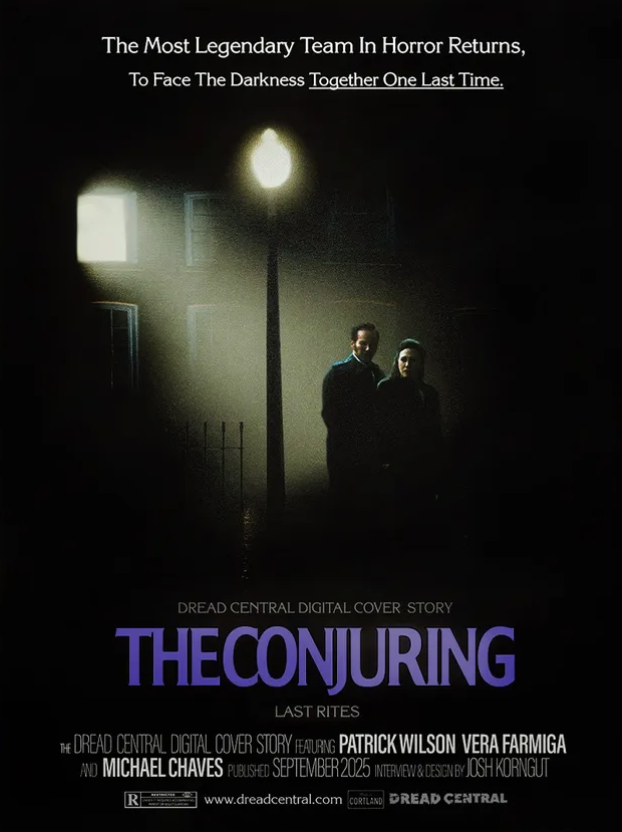
JURASSIC WORLD: REBIRTH movie review

Possesses dino DNA, but missing strands and sequences, leaving an uneven and forgettable movie. Jurassic World: Rebirth begins with an intriguing enough premise, but the characters are poorly written, which is then amplified by way of a subplot that only serves to clutter the story. After a rough first two acts–except for a thrilling and fantastically written T-Rex chase scene (that was part of Crichton’s original novel and script for Jurassic Park)–the third act is surprisingly exciting and suspenseful, and at times terrifying.

Zora Bennett (Scarlet Johansson) leads a team of skilled operatives to the most dangerous place on Earth, an island research facility for Jurassic World. Their mission is to secure genetic material from dinosaurs whose DNA can provide life-saving benefits to mankind. As the top-secret expedition becomes more and more risky, they soon make a sinister, shocking discovery that’s been hidden from the world for decades.

Perhaps Koepp’s screenwriting works best when the original version of a script is written by the novel’s author (which, I know wasn’t possible for this movie in more ways than one), and he then crafts the original version to be more effective for the screen. To put it simply, no one knows what is going on or when/where they are. Harsh? Not really, when the movie opens with lazy exposition through on screen text describing an event that happened 17 years ago…keep that in mind, 17 years (placing it in line with Jurassic World not Jurassic Park). But then the characters talk about the research and development facility as if it was connected to the original park–not possible. Even popcorn movies should adhere to the logic of their own world building. It’s as if no one thought about the events that unfold in this movie, and how they relate to the previous movies. Kind of basic storytelling logic.

There are many elements of this movie that fail to make any logical sense (and again, that is the logic setup by the movie itself) or are setup, and never developed or connected to any motivation or stakes. To go into them, would take too much time.

Aside from logic problems, the movie is plagued by poorly written characters, an extraneous, shoehorned subplot, and weak first and second acts (with one exception in the second act that was thrilling). While I appreciate the minimalistic cast of characters compared to the cast of characters in all the Jurassic World movies, there are two competing groups that are pretty much independent of one another and could have each been in their own movie altogether. Yet, somehow, they are sloppily fused together in this movie. For argument’s sake, we’ll call them the Mercenaries and the Family. The Mercenaries and their outside/action plot are fine–I’d even go so far as to say ‘that’ story is sufficiently interesting. The Family and their plot felt extraneous and ultimately of little importance to anything that happened. It’s as if there were two different movie ideas (1) centered on the Harvesters and (2) the Family. And I think either by itself would have made for a better movie than putting them together. These decisions left the movie feeling muddled and crowded.

There is a T-Rex sequence in the second act that is fantastic! It very much harkens back to the sci-fi horror-adjacency of the original movie. Of course it helps that Crichton’s original Jurassic Park novel and screenplay thereof contained a similar sequence. Fun fact: this sequence in the novel and original Crichton screenplay served as the inspiration for Jurassic Park: The Ride at Universal Studios parks. It plays out wonderfully in this movie, like a short film in and of itself, because it’s setup well, developed strategically, and resolved thrillingly.

Even though there are a couple of characters that are almost fun or compelling to watch (almost), the rest are more disposable than a red solo cup at a frat party. You’ll find yourself rooting for the dinosaurs to win. Of all the characters, there is one particularly so annoying and deplorably behaved, that you’ll want the first dinosaur you see to pick him off, (and question why on earth his girlfriend would be with him and why the dad would let the boyfriend walk all over him–answer, bad writing). Other characters are one-dimensional or the casting choice never sells the character. All around, there are many character and casting problems, resulting in a movie wherein you’ll hope the next dino attack happens soon–and preferably ends with one less character.

Where the movie “finds a way” to leave you on a high note, is in the third act. Despite the slapdash screenwriting throughout the first and second acts, the third act is wildly entertaining and even at times, terrifying! It almost compensates for the first hour and forty-five minutes. The (weird) dinos are “monsters” again, and the various chase sequences each offer something different (even though one is a recreation of the Kitchen Scene from the original movie). The stakes are raised and the level of terror leaps off the screen. So often, movies start well and fail to stick the landing; with this one, it fails to stick the launch but definitely sticks the landing.

SUffice it to say, if you took the first two acts from The Lost World: Jurassic Park, and paired them with the third act from Jurassic World: Rebirth, then you’d actually have a pretty good, memorable movie.

As an OG Jurassic Park fan (and Lost World apologist, except for the third act), I hate having to write reviews such as this one for a franchise installment. But, the more I thought about this movie, the more stupid it became. I suppose it’ll make for a fun enough 4th of July weekend watch, but doesn’t do much beyond that.

Perhaps, these movies will “find a way” back to greatness one day–doubtful as it seems.

Ryan is the general manager for 90.7 WKGC Public Media in Panama City and host of the public radio show ReelTalk “where you can join the cinematic conversations frame by frame each week.” Additionally, he is the author of the upcoming film studies book titled Monsters, Madness, and Mayhem: Why People Love Horror. After teaching film studies for over eight years at the University of Tampa, he transitioned from the classroom to public media. He is a member of the Critics Association of Central Florida and Indie Film Critics of America. If you like this article, check out the others and FOLLOW this blog! Follow him on Twitter: RLTerry1 and LetterBoxd: RLTerry
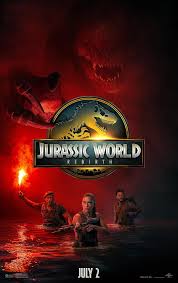
DANGEROUS ANIMALS (2025) horror movie mini review

Sufficiently fun. Dangerous Animals is the kind of horror movie that is sufficiently fun and entertaining once, but not a movie that commands a rewatch. The premise is fantastic: a serial killer that kidnaps young tourists (usually young women) and feeds them to sharks as he uses a old VHS camcorder to capture the victim’s demise. Dangerous Animals takes inspiration from other movies such as Shark Night (2011), Cabin by the Lake. and even The Silence of the Lambs. Between truncated first and third acts, is a protracted second act that foils any suspense, tension, or proper pacing setup in the first act. Performatively, the film is quite good; had it not been for the compelling and entertaining performances, the movie would’ve fallen quite flat for me. Like with many indie films, the cinematography and editing outclass the screenwriting. The evidence of thoughtful directing is there, but its potential is hampered by the poorly paced and structured screenplay. This feels like a short film idea that was augmented to fit a feature length runtime. Without giving it away, there is a particular scene about a third of the way through the movie that is straight-up an homage to an iconic scene from Silence of the Lambs, which I really appreciated. Releasing on the 6th of June, if you enjoy shark and/or horror movies, then its worth checking out. But like I said, for me, as sufficiently entertaining as it was, it isn’t one that I am going to rewatch anytime soon.

Ryan is the general manager for 90.7 WKGC Public Media in Panama City and host of the public radio show ReelTalk about all things cinema. Additionally, he is the author of the upcoming film studies book titled Monsters, Madness, and Mayhem: Why People Love Horror. After teaching film studies for over eight years at the University of Tampa, he transitioned from the classroom to public media. He is a member of the Critics Association of Central Florida and Indie Film Critics of America. If you like this article, check out the others and FOLLOW this blog! Follow him on Twitter: RLTerry1 and LetterBoxd: RLTerry
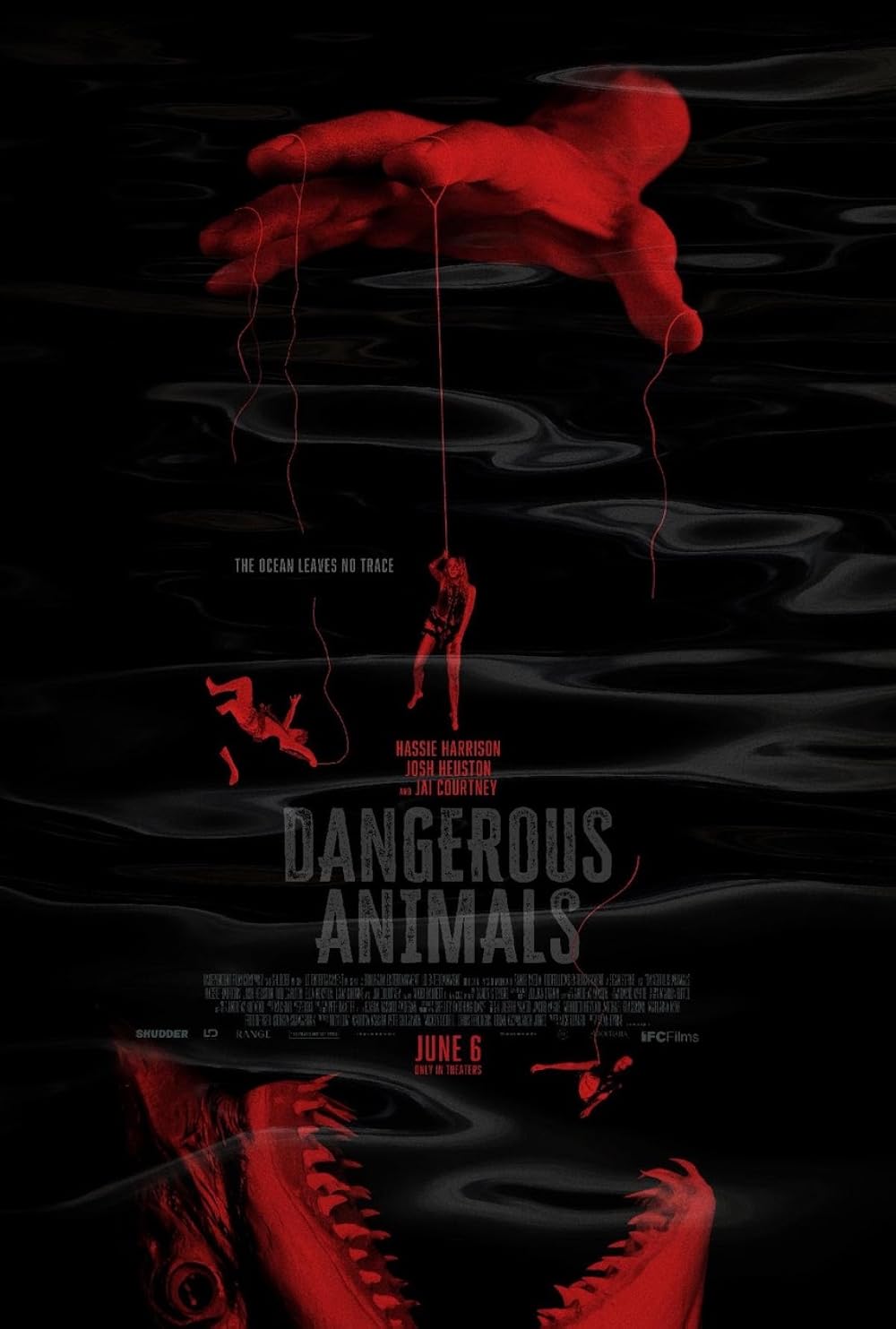
THE WILD ROBOT movie review

Wildly heartfelt and uplifting! Universal and DreamWorks Animation’s The Wild Robot is among the best films of the year, period. Director Chris Sanders delivers a truly compelling and smartly written fish-out-of-water story about found family and being more than the sum of our parts–or programming. Easily on track to make my Top 10 Films of the Year list. Based on the book by the same name, DreamWorks Animation hits a homerun with this outstanding animated motion picture that will challenge you, thrill you, and tug at your heartstrings.

Shipwrecked on a deserted island, a robot named Roz must learn to adapt to its new surroundings. Building relationships with the native animals, Roz soon develops a parental bond with an orphaned gosling.

I’ll admit it up front, I cried. It really is such a beautiful animated motion picture that likely rocketed its way into my best films of the year list. Not since The Iron Giant have we had an animated motion picture with such gravitas. While I still feel that 2016’s Kubo and the Two Strings remains the best animated motion picture in the last ten years, I must say that The Wild Robot is solidly my No.2 pick. The strength of this picture is in the compelling story, relatable characters, and efficient plotting (sometimes a little too efficient). My only real negative criticism of the film is the pacing in the first act; while refreshingly lean, some scenes and sequences needed a little more room to develop and breathe. Even though The Wild Robot shares little in common with The Iron Giant‘s plot, it shares Iron Giant‘s heart and soul.

Fish-out-of-water premises have been a staple of cinema for nearly as long as films have been around. So the real challenge for writers and directors is to find original ways of expressing these foundational ideas. And what is precisely what we have in this film. There are actually three fish-out-of-water narratives within the film, and the film is better for them because each of these layers adds personal and interpersonal complexities to character relationships with the world in which they finds themselves and amongst each other. The films provides thoughtful commentary on what it is like to both be in a world that is unfamiliar and have unfamiliar tasks thrust upon oneself.

Furthermore, this film depicts the importance of adapting to one’s environment and overcoming obstacles, even those that are innate. I also appreciate what the film has to say about self-determination and taking personal responsibility for one’s circumstances and one’s mistakes. Fish-out-of-water stories are some of the most relatable, because we have all been placed in an unfamiliar environment, and know how that can feel. It’s a terrifying prospect to be dropped into a world that is alien to us, and the film does not shy away from the challenges, joys, and even the tragedies that can befall us.

Another narrative area of strength in the film is challenging us not to quickly pass judgment on that fish-out-of-water when they find themselves in your world. Or to presume that one’s past behavior is always an indication of how that person (or animal, as it were) will always behave. Yes, past behavior can indicate predisposition to moral and ethical aberrations, but that does not mean that redemption is not to be considered a possibility. I love how the film paints a portrait that we can change, if we have the will and support to do so. It rarely comes naturally, we have to work at it. We have to work at overcoming natural behaviors that may not be constructive and ultimately selfish. We are more than the sum of our parts–or our programming.

To a lesser extent, there is come social commentary on the relationships between the work place and the employee and even cultures that decry the individual in exchange for group think. Without getting into spoilers, the film depicts imagery of how some, if not many, companies treat and feel about their employees. How a company does not view the employee as an individual; rather, as a means to an end, just another cog in the machine that will be disciplined for any individuality or unique expression. But not before the company assimilates the knowledge of that employee, particularly those that do think outside the box. Difference will not be tolerated. That is the feeling of many companies and even governmental systems. The film challenges these ideas by showing cooperation between diverse groups, even groups that are naturally enemies. Furthermore, the film demonstrates how differences can be overcome or even set to the side in order to serve, protect, and survive.

Lastly I’d be remiss not to touch on the global idea of the film, which is the concept of found family. Throughout the entire film there are images of the important role one’s found family fills in life. Found family is that family-like unit that may not be blood-related, but very much fill the same role as a more traditional family in one’s life. It’s a group of friends that have a relationship that goes beyond typical friendship, and includes family-like dynamics. Sometimes these are formed because someone feels rejected or neglected by their real family, and find family with a close group of friends. Other times, and I’d venture say most of the time, a found family can be formed out of the significant distance between you and your family of origin. So when in a new place because of school, work, or even military transfer, it’s important to form a strong bond with friends (or a friend’s family) to fill that important role even when separated from one’s family of origin. We are creatures that have an innate need for connection and companionship.

I cannot recommend The Wild Robot enough! Don’t miss seeing this incredible animated motion picture on the big screen.

Ryan teaches Film Studies and Screenwriting at the University of Tampa and is a member of the Critics Association of Central Florida and Indie Film Critics of America. If you like this article, check out the others and FOLLOW this blog! Interested in Ryan making a guest appearance on your podcast or contributing to your website? Send him a DM on Twitter. If you’re ever in Tampa or Orlando, feel free to catch a movie with him.

Follow him on Twitter: RLTerry1 and LetterBoxd: RLTerry
SPEAK NO EVIL horror movie review

An entertaining and terrifying thrill ride. Blumhouse and Universal’s Speak No Evil, starring James McAvoy, excels in plotting and atmosphere but falters in character building and development. Based on the Danish film by the same name, director James Watkins’ version is a methodical and spellbinding descent from dream to nightmare. The highlight of the film is McAvoy’s completely manic performance that is simultaneously comedic and unsettling. Whilst Watkins attempts to bestow upon the high concept narrative thoughtful social commentary on image, isolation, and identity, the commentary is inconsistent and lacks the gravitas to truly be compelling or provocative.

A dream holiday turns into a living nightmare when an American couple and their daughter spend the weekend at a British family’s idyllic country estate.

That which is most personal is most relatable, and can be the most terrifying. And what can be more personal and relatable than the need for a relaxing vacation in the peaceful countryside? That is precisely where this decent into a nightmare begins. Speak No Evil may take its time (albeit justified) in setting up the conflict, but once that second act kicks into gear, it is a nonstop thrill ride into isolation and violation. Keep the cast small, the film is able to spend sufficient time in developing the plot and keeping with proper pacing for the tight storytelling. From the very beginning, the piping is laid for everything that audiences will encounter in the second and third acts, with every shot, scene, and sequence pointing towards the shocking conclusion.

Violence on screen is minimal; however, when it hits, it HITS. But that hit isn’t always visual; many times it is psychological in nature, which in many ways, is even more terrifying. Throughout this film, the terror on screen is transferred into the minds of the audience. Part of that is because of the degree of relatability in this story. Many of us have been on vacation in a new place or even moved to a new place unfamiliar to us–perhaps in or to another country–and we are often desperate for friendship or companionship of any kind in order to begin to feel more at home. Therefore, the setup of this film is one to which many of us can relate–and that’s what makes it particularly terrifying. The thought that we could unwittingly befriend a monster.

While the social commentary on isolation, identity, and image is inconsistent and weak, I appreciate what Watkins was trying to do; although, there is one aspect of the film that was screaming for a redemption arc that was so obviously squandered (and actually hurt the quality of the film). Speak No Evil depicts many expressions of isolation. Isolation from friends and family, isolation from the urban core, isolation within one’s family. And it’s this isolation that greatly heightens the level of suspense and terror.

Additionally, the film depicts the identities (or facades) that we project to the world when we are hiding something or feel insecure because we wield it like a sort of armor. Moreover, this identity can also harbor inconsistencies that lead to a lack of authenticity and meaningful motivation. Perhaps this identity is merely a facade that is intended to make others feel uncomfortable or to project an image that sets one apart simply out of fear of being found out as little more than keeping up with what’s trending on social media. Furthermore, the attempted commentary on image is depicted in a variety of ways throughout the film.

The weakness in the film is found in the character building and development. Not with all the characters, but enough that it mitigates the potential of the film to deliver a compelling story. Without getting into spoilers, I want to discuss where the film had an opportunity an an effective character redemption arc, but pandered to what’s presently trending in movies instead of providing a constructive character arc that would’ve benefitted the film by adding a since of compelling meaning. Strong characters are not strong because those around them are weak; to craft a strong character through that methodology makes for a weakened (and less compelling) character because ostensibly standards have been lowered.

Strong characters are at their strongest when other characters are strong, complete with dimension as well. There is a character in the movie that lost their job, and have been personally struggling with feelings of anger, inadequacy, and failure–that is completely relatable as it is very much a human response to losing ones income and livelihood. Where the film fails is setting this character up to overcome the feeling of failing their family and at life, but never doing anything with it, and merely reinforce weakness. I imagine this was done to make their counterpart appear stronger. But it amounts to lazy storytelling that reinforces negative imagery.

The character that is the most entertaining is James McAvoy’s Paddy. I cannot think of any other actor working today that could’ve brought this character to life nearly as well as McAvoy. In an otherwise par for the course performative dimension in the film, he brings a kinetic energy that draws audiences into the macabre, twisted tale. From the very beginning, we can tell that there is something a little off about his character, but never enough to know precisely where he stands. When he goes full-on manic mode, we are in for the ride because he makes us laugh and gasp in horror all at the same time.

Everything about this movie would make for a fantastic house at next year’s Halloween Horror Nights at Universal Orlando and Hollywood. The farmhouse at the center of the movie is a labyrinth and hints at a variation of the hillbilly horror aesthetic. I can see how this film’s characters and setting could adapt well to an HHN house, so I would not be surprised if we see this intellectual property featured at next year’s HHN.

Speak No Evil may lack dimension that could’ve made it a more compelling narrative than what we received; however, it’s still an entertaining thrill ride that will have you laughing and screaming. A solid popcorn horror movie that has some degree of rewatchability.

Ryan teaches Film Studies and Screenwriting at the University of Tampa and is a member of the Critics Association of Central Florida and Indie Film Critics of America. If you like this article, check out the others and FOLLOW this blog! Interested in Ryan making a guest appearance on your podcast or contributing to your website? Send him a DM on Twitter. If you’re ever in Tampa or Orlando, feel free to catch a movie with him.

Follow him on Twitter: RLTerry1 and LetterBoxd: RLTerry
THE FALL GUY action movie review

Explosive fun! Universal Pictures The Fall Guy is one wild ride that connects with audiences! The thoughtful blend of self-referential humor and over-the-top, if not cheesy, action sequences work in tandem to entertain and thrill audiences. At the heart of this movie is a throwback-style romcom that is destined to warm even the most cynical of hearts. Moreover, this action-picked motion picture serves to spotlight the unsung heroes of many movies, the stunt performers, without whom we would not have the high stakes, death defying action sequences that we have today. And not just today, stunt performers have played a significant role in filmmaking since the beginning. The Fall Guy is a lively movie that whisks you off for the ride of your life that stumbles a little along the way, but sticks the landing.

After leaving the business one year earlier, battle-scarred stuntman Colt Seavers springs back into action when the star of a big studio movie suddenly disappears. As the mystery surrounding the missing actor deepens, Colt soon finds himself ensnared in a sinister plot that pushes him to the edge of a fall more dangerous than any stunt.

Such a crowd-pleasing cinematic spectacle! The summer blockbuster season is off to a strong start with this bombastic movie. Since I rarely watch trailers, I was unsure of what to expect, but I had a delightful time with this movie. The humor is mostly character-driven, but there are slapstick moments and almost camp-levels of action sequences that also serve as fuel for laughter. It’s a fun, popcorn flick that makes you laugh and smile all while being enthralled by the high-octane action. Some action movies that are devoid of humor or a romantic subplot can feel exhausting or shallow. Not the case with this one! This is both due to the strong writing and performative dimension.

More than an action/romcom, it also serves as a backstage movie, because of being set on a film set. And even more specifically, the technical achievement by camera operators, special effects technicians, and stunt performers. The movie spotlights the real danger that stunt performers face on set and the innate risks that come with this under-appreciated line of work. There is a human dimension to stunt work that so often goes overlooked, and The Fall Guy demonstrates the intrinsic value of stunt work and the real people that push their bodies to the limit to achieve action with dimension instead of simulated action in a computer.

The characters and the performances thereof elevate the entertainment value of the movie. Which is an important element because the screenplay does falter here and there from poor pacing. Some scenes are a little longer than they need to be while others are perhaps a little shorter than what they ought to be, which impacts the effectiveness of the exposition. But where the screenplay struggled, the cast makes up for the shortcomings! That’s not to say it’s a poorly written movie; quite the contrary, it’s mostly solidly written, just stumbles here and there. Emily Blunt and Ryan Gosling demonstrate excellent chemistry, and their relationship mountains and valleys feel genuine. They both share fantastic comedic and dramatic timing that crafts characters with dimension.

There is one particular line, that many may interpret as a throwaway or lacking in significant value, that I feel compelled to highlight. A character at a club states something to the effect of “movies try to be real, whilst cartoons know they aren’t real.” And the character prefers cartoons for that reason. This line was smartly written and delivers a important if not self-referential (or meta) message. Very little about The Fall Guy is supposed to feel real; it’s supposed to look like a fantasy set in the real world. What the movie is, is naturalistic. Everything happening in this film feels at home within the world of the movie. And yes, many, if not most, contemporary movies try so hard to not look fake or unbelievable. When movies should feel comfortable to take us to unbelievable heights to thrill us with entertaining, heart-warming, or scary stories. Being realistic is vastly overrated. There is a time and a place for it, but movies like The Fall Guy remind us of the value of a good story, regardless if it feels realistic in the real world.

Ryan teaches Film Studies and Screenwriting at the University of Tampa and is a member of the Critics Association of Central Florida and Indie Film Critics of America. If you like this article, check out the others and FOLLOW this blog! Interested in Ryan making a guest appearance on your podcast or contributing to your website? Send him a DM on Twitter. If you’re ever in Tampa or Orlando, feel free to catch a movie with him.

Follow him on Twitter: RLTerry1 and LetterBoxd: RLTerry