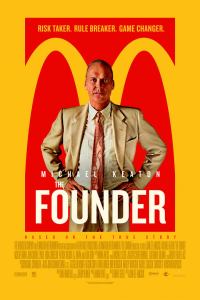
 Outstanding biopic that typifies what the American dream actually looks like–but that’s the scary part. Michael Keaton’s portrayal of Ray Kroc, the (self-proclaimed) “founder” of McDonald’s, is positively brilliant! Comparing his look and performance to the real Ray Kroc seen before the credits roll, there is no doubt that director John Lee Hancock (known for The Rookie and The Blind Side) made the right choice. The Founder takes us on a journey from Southern California to Illinois and beyond as we follow the course of events that radically revolutionized an entire industry and gave birth to one of the most recognized brands in the world as well as the very concept of modern franchising. What Henry Ford did for American motorcars, Kroc did for American “speeedee” service food. Ray Kroc realized the American dream by stopping at nothing until he built his empire, even if it meant stealing from a business and breaking up a marriage–all within the confines of the law. We’ve all heard about “the American dream;” well, The Founder depicts what it takes for that dream to come true. If you’re willing to be a cut-throat bully with few if any inhibitions, then you can build an empire and claim to be the founder of another’s company or even run a country.
This biopic drama tells the story of how Ray Kroc (Keaton), a 55 year-old milkshake machine salesman from Illinois, met Mac (John Carroll Lynch) and Dick (Nick Offerman) McDonald in San Bernardino, CA during a sales transaction that would start something big. Who would’ve guessed that a man who was the definitive door-to-door salesman would see great potential in a small-town burger joint. Recognizing the great potential for a successful franchise, Kroc entered into a business proposition that would change the quick service food industry forever and essentially perfect the business practice of franchising. Over a relatively short amount of time, Kroc maneuvered himself into a position of power and dominance over the brothers, and eventually took the very company they founded away and never looked back. Kroc stopped at nothing when appropriating the intellectual property of the McDonald brothers to build a vast empire that would find its way into thousands of towns and become just an American an icon as the flag, churches, or the eagle.
Although the film is presently foundering in box offices, it is definitely worth a watch because of depicting the story of one man’s American dream that would essentially steal the laurels from baseball and apple pie to become a larger than life symbol of America recognized throughout the world. It’s unfortunate that this film is not garnering more attention because the writing, directing, and acting are absolutely brilliant. Full of irony and ambiguity, The Founder could have easily been called or at least subtitled Birth of a Salesman. While watching the movie, I could not help but compare the plot of this film with the iconic play Death of a Salesman by Arthur Miller. Both tell stories of salesman but the end result is vastly different. Both Willy Loman and Ray Kroc were dedicated to their respective craft of salesmanship; however, Kroc took the practice of sales and pitches to the next level–in fact he created his own game in which only he could win. Where else have we seen a bully play by his own rules and build an empire into a brand in and of itself? I’ll allow you to draw that conclusion. Further irony can be seen in Ray Kroc’s surname. His sheer cunning, predatory ways of conducting business can easily be likened to the crocodile itself. Despite receiving credit for inventing the fast food assembly line, much like Ford did for American car manufacturers, the “speedee” service was invented by Dick and Mac McDonald of San Bernardino. Thankfully, the brothers are receiving the credit that they deserve–albeit posthumously.
It’s difficult not to root for the villain in this film. Even though you tell yourself that he was a monster and a complete leach to the McDonald brothers, his first wife, and other friends, you may still find yourself in his corner because of McDonald’s being the American icon that it is. The cognitive dissonance that many will experience during diegesis of this film is fascinating in and of itself. Early on, you will find yourself rooting for Ray Kroc because he comes off as an underdog. He is able to provide decently for him and his wife, but it is evident that his business is in the process of collapsing. Even after striking the proverbial deal with the McDonald brothers, you may still root for him because the brothers make it difficult for Kroc to actually engage in successful franchising. The tide begins to subtly shift when the chain begins to take off. When the brothers deny Kroc a request to renegotiate the terms of the contract in order to boost capital and revenue, Kroc hires a new business partner who provides the knowhow to shift the focus from running a burger chain to being a real estate mogul. That shift from only burgers to real estate is what truly built McDonald’s Corporation into the giant that it is today. Interestingly, when confronted by the brothers on a break in the contract, Kroc points out that they could take him to court and probably win, but by the time he would drag them through hearing after hearing, and trial after trial, the brothers would be completely bankrupt. Much like the milkshake substitute that boosted revenue and mitigated refrigeration costs, but contained no milk, a handshake deal with Kroc is just as fake.
The set designs and costumes in The Founder are impressive and so incredibly well executed that audiences will be transported from 2017 to 1950s America. From the cars to the architecture to the print advertising and marketing, this movie boasts an authenticity that is on par with larger budget period films. The supporting players in the film are equally captivating too. Parks and Rec‘s Nick Offerman and John Carroll Lynch are absolutely perfect as the McDonald brothers, and I cannot think of two better actors to bring these “hidden figures” of fast foot history to life. It’s unfortunate that Laura Dern is underutilized as Ethel, Kroc’s first wife, because she is a dynamic actress capable of adding significantly to a film. Although not featured on screen a lot, Patrick Wilson plays Rollie Smith, an early investor, but his acting excellence is still showcased well. Finally, Linda Gardellini is captivating as the future Mrs. Ray Kroc–problem is, that she is married to Rollie Smith at the time they meet. It’s her suggestion to switch from real ice cream and milk to instant milkshake powder that sets the final dominos in motion to topple the McDonald brothers. In continued irony, the story of McDonald’s contains people who are excited about fake food product. But those were the times the characters lived in. The chemistry between the characters helps to reinforce the authenticity of this biographical motion picture.
Ray and Joan Kroc are well known philanthropists–in their later years. In fact, Joan Kroc left most of her vast fortune to many charities. The most well-known recipient of the inheritance is NPR. Even today, if you listen to the programming, you will hear the Estate of Joan Kroc mentioned as a supporter of the public radio organization. Whether you appreciate NPR or not, one cannot help but think that all the philanthropy of the Kroc (namely Joan) is a result of easing the conscience since the Kroc fortune can be likened to blood money. It’s entirely plausible that much like Marion Crane figuratively cleanses her spirit in the infamous Psycho shower after having stolen the money from her employer, Joan may have very well given her fortune away in an effort to ease her conscience and do good with the figuratively ill-gotten money.
Such an incredibly fascinating movie! If you enjoy historical dramas about American icons, then you will definitely enjoy The Founder. It may prompt you to grab a McDonald’s burger and fries after the movie or perhaps never go there again after learning the company’s history. Whatever the case, it cannot be denied that the story of McDonald’s is incredibly interesting and IS the product of persistence and business ingenuity. If there is anything inspirational to take away from this film, it is the power of that persistence and looking for potential in the most unlikely of places.
Written by R.L. Terry
Edited by J.M. Wead

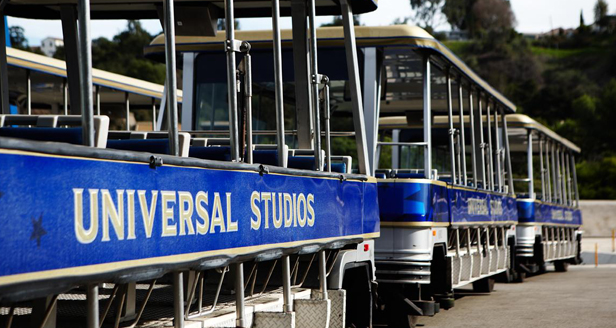
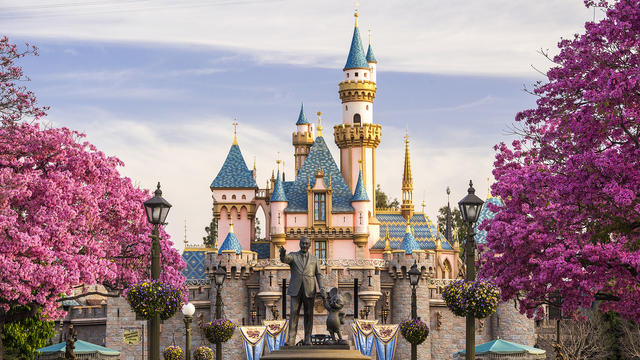 Following the ending of the Studio System, the now bankrupt motion picture studios were purchased by various conglomerates looking for new sources of income. One of the sources of income that studios began investing into was the concept of movie-based theme parks. With the opening of Walter Elias Disney’s Disneyland in 1955, Universal Studios made the decision to incorporate stand-alone attractions into its newly reopened studio tour. Both Disneyland and the future Universal Studios used their intellectual property (IP) as the basis for creating theme park rides, shows, and attractions. Although movie studios as a “park” began with Laemmle, in its current incarnation, the convergence of cinema and theme park began with Disneyland, and later was perfected by Walt Disney World and Universal Studios Florida. Since the movie studios already had dedicated movie-going audiences, it made sense to capitalize on the idea of incorporating the concepts from the movies into attractions that the general public could enjoy and be immersed in. This action both acts as advertising for the respective studios and generates income for the movies and park improvements…


 R.L. Terry ReelView