
“The Lodge” Horror Film Review

Immersive and utterly terrifying! After a dismal start to 2020 horror, The Lodge redeems the genre in a nightmarishly masterful story that will haunt you long after you leave the cinema. And you know you are in store for a wild ride with the Hammer Films logo at the beginning! This film’s ominous feeling of dread isn’t the result of any violence or gore, but in just how uncomfortable you will feel in virtually every scene thanks to the brilliant atmosphere crafted by  directors Veronika Franz and Severin Fiala along with their cinematographer Thimios Bakatakis and the haunting score by Danny Bensi and Saunder Jurriaans. With all the “hands in the pot,” so to speak, one might think that the soup might get spoiled as the old maxim suggests–not so. All the technical elements work together seamlessly to bring this story of the far-reaching effects of trauma, guilt, and isolation to life when one loses a parent. While Wes Craven’s horror masterpiece Scream still ranks the highest for me in terms of the most shocking and effective openings of all time, in not only horror, but in cinema period, the opening of The Lodge culminates in something big and scaring! And it’s that moment that sets our cast of characters on a journey that will test the limits of their sanity. The exploration of the limits of sanity through the lenses of loss and trauma is visualized in a very Shining manner, with influences from Hereditary as well. Both of these films clearly influenced the feeling and look of this film. Thankfully, these influences never take the focus away from The Lodge‘s original story. The American horror film is the best genre for forcing us to face our most primal fears and those that are created by traumatic experiences in our past. Ghosts of the past have a way of never truly going away.

During a family retreat to a remote winter cabin over the holidays, a father (Richard Armitage) is forced to abruptly depart for work, leaving his Aiden (Jaeden Martell) and Mia (Lia McHugh), his two children, in the care of his new girlfriend Grace (Riley Keough). Isolated and alone, a blizzard traps them inside the lodge as terrifying events summon specters from Grace’s dark past (IMDb). 

The production design and cinematography are truly standout technical elements in this incredibly uneasy experience. If you were to combine the lines and angles of The Shining with the mood and camera movement of Hereditary, then the product would be the aesthetic of The Lodge. I absolutely love the wide shots accentuating the high ceilings, creatively breaking the “rule of thirds,” and closeups of the miniature cabin and figurines. By blocking the scenes so that the architectural and interior design lines of the house frame out the characters and locations, our focus is naturally drawn to a particular element in the scene that the camera often lingers on as unsettling music plays. Those lingering moments contribute to the rising tension and create a hyperawareness that assaults our very senses. I love how the feeling of claustrophobia is crafted out of the large houses and wide sweeping landscape of the mountain retreat. So much attention was paid to the stylistic approach to realizing this story for the screen. You could remove all the dialogue, and understand everything that is happening, and exhibit the emotional reaction that the writers and directors intended. That is the mark of superb visual storytelling.

Catholic iconography adorns many of the walls of the the family’s main house as well as the isolated vacation lodge. We spend most of our time in the lodge, but the houses at the beginning of the film also contain much of the same decor. Without need of exposition through dialogue, the various iconography paints an image of a Catholic family that has been split. Tho, we are never given the details of the separation between the father and the mother of his children (played by Alicia Silverstone), infidelity is hinted at because of the father’s girlfriend that he is planning to marry even before his divorce is finalized. It’s this urge to hasten the divorce that nullifies any hope of reconciliation between Richard (the father) and Laura (the first wife), and ultimately drives Laura to respond in a–how should I say–rash and irreversible manner that is seen as the unpardonable sin by the Catholic church. Her decision is like a rock tossed in a still, glass-like pond that is the catalyst for ripples that radiate for hundreds of yards. It’s no secret that divorce is also highly frowned upon by the Catholic church, so the domestic struggles and the fallout therein creates strife within the minds of the family. A disconnect, if you will, between what they believe and what they are experiencing. Interestingly, suicide is never referred to as an unpardonable sin in the Bible, nor is any one sin greater than another. But Jaeden and Mia suffer from the misleading interpretation many leaders in the Catholic church preach to their congregations. The symptoms of trauma exhibited by Aiden and Mia stem from the void that the loss of a parent and the disruption of life often causes. So, the decorations in the houses serve as a contrast to what is going on. And in more ways than one.

The soon to be fiance Grace is left to care for the two children at the family lodge after Richard has to return to the city for work. And she arrives with a lot of religious baggage of her own caused by a destructive cult masquerading around as a form of Christianity that she “escaped” when she was a child. The religious iconography in the lodge ignites a constant barrage of flashbacks to the psychological abuse during her childhood by her father, the leader of the cult that warped the Bible and belief therein for sadistic purposes. These masochistic and sadistic practices included misinterpreting the Bible in such a way that her father engaged in guilting and forcing people into experiencing physical pain and mental anguish over sin in order to be forgiven. Talk about trauma on the mind and soul. In addition to the emotional baggage of her past, Grace is also dealing with the hatred of the children directed towards her in rather sadistic fashion because they blame her for the divorce that led to the sudden death of their mother. We are often predisposed to thinking of step mothers as villains, thanks to Cinderella. But in this case, the tables are turned for much of the film. To talk about just why this is, would get into spoiler territory, and it’s best to go into this movie as blind as possible.

You will be in a suspended state of unease and high tension the entire time. Just when the tension releases, another moment drives it back up again. The horror of this film does not come from the raw imagery but from the psychological games on display that suck you in to vicariously experience the utterly terrifying, mentally scaring conflict displayed on screen. The Lodge is highly disturbing and will continue to haunt you long after the credits role.

Ryan teaches screenwriting at the University of Tampa. If you like this article, check out the others and FOLLOW this blog! Interested in Ryan making a guest appearance on your podcast or contributing to your website? Send him a DM on Twitter or email him at RLTerry1@gmail.com! You can catch Ryan most weeks at Studio Movie Grill Tampa, so if you’re in the area, feel free to catch a movie with him!

Follow him!

Twitter: RLTerry1

Instagram: RL_Terry
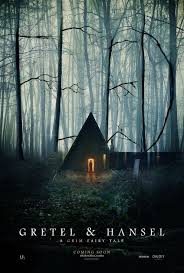
“Gretel and Hansel” Horror Film Mini Review

Don’t go into the A-frame house in the middle of the woods, should you see it; it’s a hard pass. Orion Pictures’ Gretel and Hansel directed by Oz Perkins (son of horror legend Anthony Perkins of Psycho) delivers a horror film with an outstanding atmosphere and ominous tone paired with a creepy score and beautiful cinematography, BUT the plot is abominable. Not only is it a slow burn, but it is incredibly abstract with no real diegetic direction for the snoozefest of a screenplay. However, this film seems to resonate with fans of The Witch and Mandy. Although so many fans and critics praise The Witch, it is not one that I have ever cared for. So take this mini review with a grain of salt, if you must. While I often appreciate (and sometimes even love) arthouse horror (Midsommar is a great example of one that I praise highly), I am in the minority on The Witch. Which could explain why I did not care for this adaptation of the Grimm fairy tale Hansel and Gretel. If you’re wondering why the name was transposed, it’s because Gretel is our central character. And you know what? I like her character a lot; I just wish she was given more to do. Although the plot barely exists, it is clear that this was intended to be a creepy, empowering coming-of-age story; however, it’s unfortunate that it was poorly executed, to the point that it works better than Ambien. My favorite character in this adaptation is Alice Krige’s (Borg Queen from the StarTrek series and movies) witch! Everything from her look to overall delivery was excellent! While I am a huge fan of Perkins’ The Blackcoat’s Daughter, I am not a fan of many of his other films because he doesn’t work with strong enough screenwriters. If he could somehow pair his brilliant visual, immersive direction with stronger screenwriters that can deliver a coherent story, then we could be talking more about him, as we do Ari Aster. I want to reiterate tho–the cinematography, production design, score, and editing are exceptionally good! So, if you are okay with a meh plot, then you may still find this one enjoyable.

Ryan teaches screenwriting at the University of Tampa. If you like this article, check out the others and FOLLOW this blog! Interested in Ryan making a guest appearance on your podcast or contributing to your website? Send him a DM on Twitter or email him at RLTerry1@gmail.com! You can catch Ryan most weeks at Studio Movie Grill Tampa, so if you’re in the area, feel free to catch a movie with him!

Follow him!

Twitter: RLTerry1

Instagram: RL_Terry
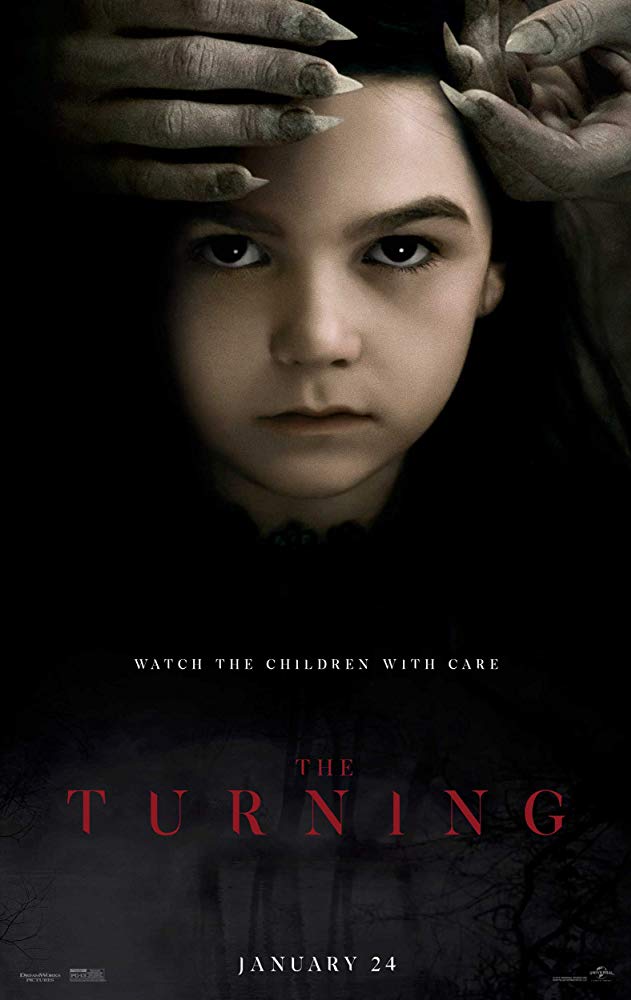
“The Turning” Horror Movie Mini Review

Turn around, every now and then I get a little discouraged at the January movies. Seriously tho, watch something else. My friend Derek had the perfect analogy for this quintessential January release horror movie. “The Turning is like having two gorgeous puzzles–only you have half of each puzzle–then you force all the pieces together.” Quite the apt analogy for this newest big screen adaptation of the Henry James novel The Turn of the Screw. With names like Universal, Amblin, and Dreamworks behind it, I haven’t a clue where things took a turn for the abysmal in the process from page to set to screen. Either the screenplay is to blame or–for whatever reason–the film couldn’t be finished properly in time for the release. That’s right, there is practically no ending. I mean, there is, but it’s so abrupt and confusing that it’s as if the film threw an ending on there because time or money ran out. Prior to the uncomfortably ambiguous ending, the movie had so much going for it. However, all the elements that were working so well never went anywhere. If I can point to a couple elements that were outstanding, it’s the brilliantly unsettling, creepy, ominous setting and production design. The gothic mansion and grounds are very much characters in and of themselves. Combining these two elements gave the film an excellent atmosphere for Henry James’ story. And the acting wasn’t bad either. No real stand out moments, but fairly solid performances all the way around. Perhaps what this movie is most guilty of (aside from the non-ending) is disregarding any rules of horror (or even logic) that it establishes for itself. So much happened out of sheer convenience, with no real consistent consequences. The conflicts and devices that were introduced were interesting, and I was looking forward to seeing how they were going to influence the action and characters. Unfortunately, nothing that was “foreshadowed,” alluded to, setup, or dangled as plot bait was ever revisited. Much like with Underwater, this movie also feels more like a series of plot points than it does a–even poorly developed–screenplay. While the trailers gave the impression that this was going to be an arthouse horror film, one with lots of ominous nuance and intrigue, it is simply just another January horror movie that was released here to die or serve as a tax write-off. One last item of mention: once you see a photo of Quint, you will be mind-blown as to how or why any parent would even think that this guy would be safe around kids–seriously–he is creepy alive. Still, how Universal, Dreamworks, and Amblin allowed this to happen, baffles me.

Ryan teaches screenwriting at the University of Tampa. If you like this article, check out the others and FOLLOW this blog! Interested in Ryan making a guest appearance on your podcast or contributing to your website? Send him a DM on Twitter or email him at RLTerry1@gmail.com! You can catch Ryan most weeks at Studio Movie Grill Tampa, so if you’re in the area, feel free to catch a movie with him!

Follow him!

Twitter: RLTerry1

Instagram: RL_Terry

Netflix “YOU” Season 2 Review

Wow! That was bonkers good! I don’t know about you, but I binged the entire series in two nights. Simply couldn’t put it down, a fitting bibliophile metaphor as it were. Your favorite book-loving serial killer is back–and he’s moved. Now living in LA, a city he repeatedly detests, Joe (now Will) has his eyes set on a new object of his undying affection, appropriately named Love. He fled Brooklyn to LA to reinvent himself and find a new life–as so many people so when they movie to Los Angeles. But his eyes are not on the silver screen, they are on a hipster organic grocery store and book shoppe. Once he begins his job there, the hijinx are in high gear! After the critical success and highly positive audience reception of Season One, I honestly didn’t expect Season Two to hit the bar that the first one did–I was wrong. After being informed on the Bingeables Podcast during our recording of Don’t Trust the B in Apt 23 that Season Two was even better than Season One, I was intrigued! While it was already on my list of shows to watch, I quickly moved it to the front of the queue. In order to talk about how and why this season works as well, if not better, than the first, it will be necessary for me to go into spoilers. So consider this your spoiler warning. If you plan to see it, and have not, stop here, go binge the show, then come back. Believe me, you’ll want to binge it because it is just that good!

One of the main characteristics of the experience watching YOU that was such a staple in season one was just how much we rooted for our antihero Joe Goldberg, despite him being a sadistic, book thumping, stalker. Perhaps it’s his good looks, oddly loving heart (and I do mean odd), and authenticity. While we may find his behaviors detestable, contemptible, and reprehensible, there is a refreshing since of authenticity that we seldom witness anymore in an age of social media facades and social pretenses. It’s this fascinating dichotomy that we love about Joe/Will. For purposes of this article, I will refer to him as Will, as that is his name for most of this season. Whereas in Season One, Will was lacking an equally intelligent and cunning character of opposition, he has met his match in Candace–yes–that Candace. You can’t outrun murder, or in this case, attempted murder. Candice is back, and she is pissed.

We pickup at the tail end of Season One when Candace surprises Joe at the bookstore. Only this time, she is in control of the situation. But does she turn him into the police? No, that would be too easy. Her goal is to ruin him and make him as scared as she was. She prefers executing a slow, painful defeat. He decides to flee to the one city that he hates more than any other: Los Angeles. Where else do you go to reinvent yourself and hide from the world? Once Will relocates to LA, the hijinks and prolific number of crimes ensue!

All those thrills and chills from season one are back with vengeance in season two. Furthermore, the series continues positing the questions and making observations about masculinity, femininity, friendships, romantic relationships, and social media. One of the biggest differences between this season and the last is that we now have the stalker becoming the stalked. So there is the stalking between Love and Will, but then Will is being stocked by Candice. And even Candice is being stalked during the season. So many layers! Don’t worry, all these layers are not confusing. There is plenty of exposition laying pipeline along the way to understand the various dynamics. While Will goes even darker than in the previous season, you will undoubtedly still root for this antihero. The added complexity of Candace gives way to a more intriguing plot that will have you on the edge of your seat. In addition to the present story, you also get to learn more details about how the relationship between Candace and Joe ended. And you will be blown away! No wonder why Joe was so shocked to see her at the end of Season One.

At first, Will recognizes his psychological problems and refuses to engage in romantic thoughts or behaviors with Love, but soon he falls into his old ways but approached them differently. There is far more rationalization than before, and that makes everything so much more frightening. It doesn’t take long for Will to give up on keeping Love at arm’s length, he’s soon back into his old ways as she is now the object of his affection. More so than in the first season in which Will targeted people that came between him and Beck, this time, he targets those who seek to blow the cover on his darker side that could end his friendship turned relationship with Love. Unlike Beck, Love genuinely returns Will’s affections, which actually complicates things. In addition to his romantic affections, Will also quasi adopts a teenage girl in his apartment complex because he feels that she needs someone to talk to and look after her since her sister (her guardian) is off chasing stories a lot of the time. This friendship adds in another relationship that Will has to protect at all costs. Not only must he not disappoint Love (and her brother, with whom she has a co-dependent relationship) but he must not disappoint his neighbor.

Although I saw the big twist coming shortly before it was revealed, it was still a pleasant surprise! It was the perfect way to end this absolutely bonkers season. While Will thought he was alone in his personal struggles, he now knows that others share his same penchant for stalking and “protecting” loved ones. But therein lies the conflict and a newfound fear for Will, he now knows that he may become someone whom needs You’s special blend of stalking and protecting. He goes from apex predator, if you will, to being knocked down a rung on the food chain.

I appreciate You‘s commentary on modern relationships, masculinity, and femininity. A lot has changed in dating over the last 10-20 years, and You has a way of creatively exploring all the added complexities that social media and the re-defining of traditional gender roles in relationships. You also depicts different kinds of relationships. We have the warped-yet-traditional romantic relationship between Will and Love, the bro-mantic friendship between Forty and Will, the lesbian relationship between Love’s best friends, and the quasi-parent-child relationship between Will and Ellie (his neighbor’s kid sister). Each of the aforementioned relationships contain their own respective set of unique dynamics that Will must navigate in order to keep his dark secret hidden from those whom he legitimately loves. Of course, with a devoted love like his, you may be better off with enemies. Beyond friendship and romantic relationships, You also provides commentary on sexuality and the expression of it. This season plays around with the various ways people express their sexuality and personalities. Characters that you first think are heterosexual are, in fact, homosexual, and those whom you first think are homosexual are, in fact, heterosexual. It’s fascinating to see characters refusing to comply with the de facto rules society has for both groups of people, and express themselves however they like regardless of sexual orientation.

We witness much more of the Dexter side to Will. And, the wildly popular show gets referenced in this season. Like Dexter, Will has a quality about him that we just cannot seem to help but root for. Not in the same way as Dexter, because he primarily only killed those whom were criminals in some form or fashion. Although Will demonstrates some of the same habits, he also regularly kills innocent people that find out his secret, and that’s the different between the two anti-heroes. But not all the killing is due to Will’s penchant for forcibly creating relationships. Love joins in on the action when she realizes that Will is not unlike herself. Interestingly, it is not Will whom has the highest body count, it’s Love. The one kill that Will does have is technically accidental, whereas Love’s are completely intentional crimes of passion. Simply stated, Love and Will are made for one another.

What a fantastic season! And a third season has been greenlit, so we may get to see what Will makes of his new next door neighbor.

Ryan teaches screenwriting at the University of Tampa. If you like this article, check out the others and FOLLOW this blog! Interested in Ryan making a guest appearance on your podcast or contributing to your website? Send him a DM on Twitter or email him at RLTerry1@gmail.com! You can catch Ryan most weeks at Studio Movie Grill Tampa, so if you’re in the area, feel free to catch a movie with him!

Follow him!

Twitter: RLTerry1

Instagram: RL_Terry
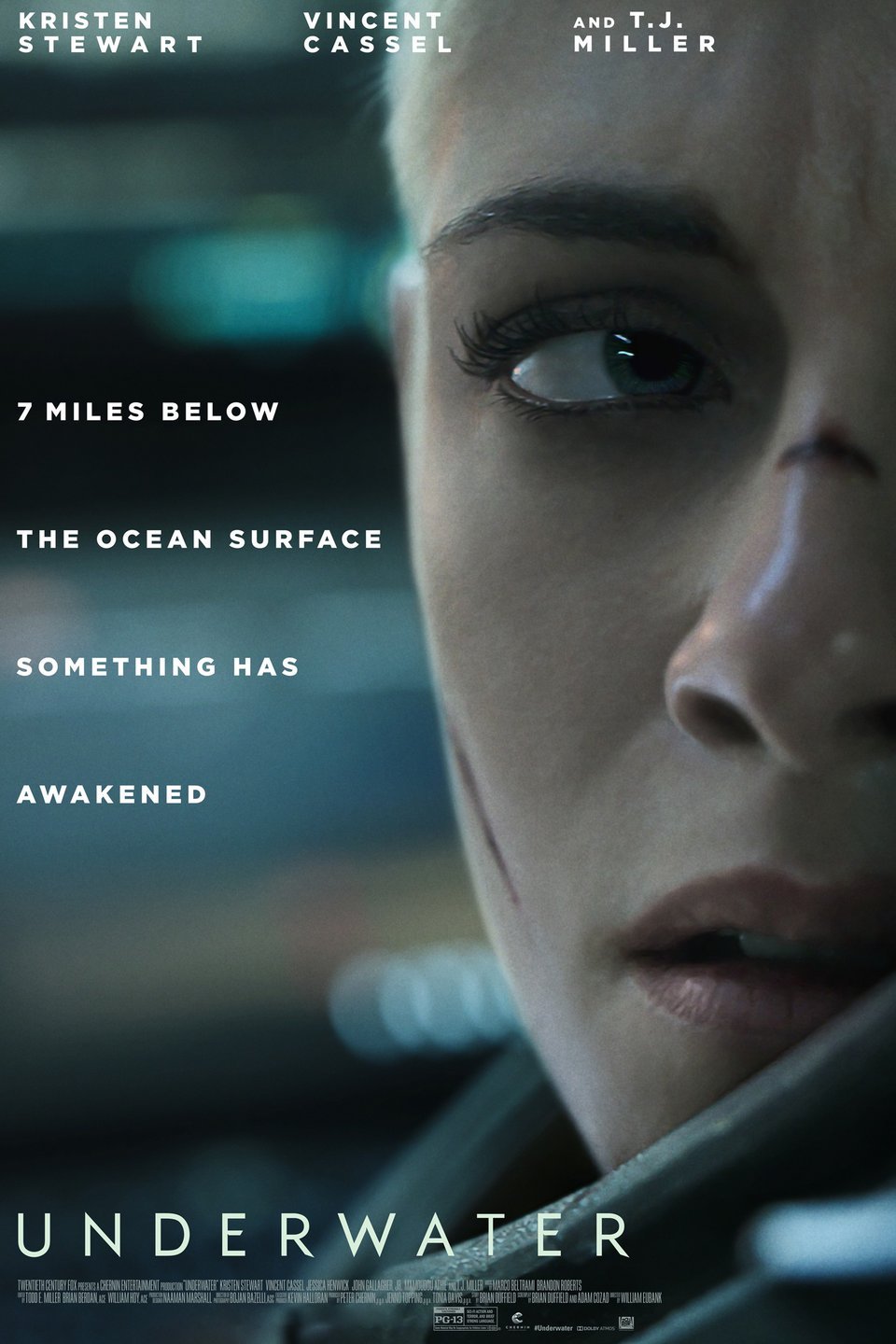
“Underwater” Horror Movie Mini Review

I nearly suffocated from the lack of exposition. Underwater is the kind of horror movie that begins with a solid (albeit common) premise, attaches lots of talent to make it look good (including the cinematographer from A Cure for Wellness), but forgets that the movie needs a story that is more than a series of bullet points. It’s no surprise that it’s clearly an Alien knockoff with heavy influences from Deep Blue Sea and The Poseidon Adventure, but it’s only that in premise and look only. Even Deep Blue Sea has a better plot and characters than this movie. What Alien and Deep Blue Sea have in common that Underwater should have done, but didn’t, is establishing the world and characters in normal settings before the big event upsets everything. It’s not a spoiler when it happens within the first few minutes–the giant facility in which the characters work explodes. We no sooner meet our central character then the facility blows up. We have nearly zero frame of reference for anything that is going on. And the confusion won’t stop there. For most of the movie, you will be lost in the questions you have that should be answered by the film. For instance, why are there just a handful of people in a facility that is literally miles deep and wide? For what and why are they drilling? And what exactly are the areas of specialization of the cast (we only know one). Underwater is teetering between two genres: disaster and monster movies, but it should have committed to one or the other. This mishmash of tropes and plot devices just makes for a convoluted mess. A mess that some exposition could have helped clear up. Although the direction is fairly solid, it cannot make up for a poorly written story. I feel that everyone involved was doing their best to make something of the anemic script they were delivered. It’s my advice not to take the plunge into Underwater.

Ryan teaches screenwriting at the University of Tampa. If you like this article, check out the others and FOLLOW this blog! Interested in Ryan making a guest appearance on your podcast or contributing to your website? Send him a DM on Twitter or email him at RLTerry1@gmail.com! You can catch Ryan most weeks at Studio Movie Grill Tampa, so if you’re in the area, feel free to catch a movie with him!

Follow him!

Twitter: RLTerry1

Instagram: RL_Terry