Cinecittà World & Movie Park Germany: Placing Guests in the Magic of Movie Making

cinecittaworld1The overall theme of movie-based theme parks has gone from exposure and education to simulation and immersion—much more experiential. Instead of seeing how Harry Pottermovies are made, guests at Universal Studios (FL and CA) and other studio-parks want to feel like they are Harry and his friends. And, this is not something that could be achieved by the former models of the original concepts for Universal Studios Parks or Disney’s Hollywood Studios. So, the parks have to change in order to remain relevant and viable tourist destinations. Concurrently, movie and television studios are going through their own evolutionary process. In many ways, a careful examination of modern cinema compared to its predecessors reveals that storytelling has been removed from its pedestal to play second fiddle to salesmanship.

Spectacle and visceral thrills are the principal drive for the modern (1990s-present) cinema-based theme park attractions; and, for some, they confirm the worst tendencies identified within the Hollywood blockbuster: the epitome of apparently vacuous rollercoaster experiences. According to researcher Geoff King, “the label ‘thrill ride’ is a term often used approvingly in Hollywood publicity and by some film reviewers in the press, presumably because a thrill ride is precisely what many viewers want from modern cinema.” The late 1980s and the 1990s saw the arrival of theme park attractions that claim to allow the park guest to ride the movies; movies became theme park attractions. But now, theme park attractions are inspiring films. Beyond being the inspiration for films, the idea of being able to market a horror, action, or epic film or film franchise or the ability to create themed attractions from the narrative is at the forefront of studio executives’ minds, as cross-promotion is an important financial strategy.

Creating attractions from cinema is not unique to the United States. The former Italian cinema powerhouse, from the early to mid twentieth century, Cinecittá Studios, known as the “Hollywood on the Tiber” is following suit with its American counterparts and converting the production lot(s) into a movie-based theme park. Located outside Rome, Cinecittá Studios, Italian for “Cinema City,” opened its gates in 2014 to the public to experience the magic of movies on this side of the screen. President of Cinecitta World Emmanuel Gout states, “Here, the idea is that people will also enter not only sets, but the confusion of a place where we are shooting movie. Everything will be illusion…the visitor will become a protagonist of the day, becoming a star, becoming involved in some fake movie.”

The model of this theme park appears to be more reminiscent of how the classic American movie-based theme parks were setup; however, there is one big difference. At the new Cinecitta Studios (theme park), park guests will actually don costumes and take hold of props to act in scenes from movies. So, in many ways, this park differs from its American counterparts because it is not defaulting to digital simulations and special visual effects; instead, it’s using practical technologies to create the illusion that the guest is actually on the set in the movie as a character in a given scene. Still, three-time Academy Award® winning production designer Dante Ferretti knows that audiences and guests want more than an immersive experience into movies, but want thrills as well. So, there are rollercoasters and water slides, amidst Roman and Egyptian ruins, to accommodate those guests seeking more conventional amusement park attractions.

Away from hustle and bustle and bright lights of Hollywood, past the palm treelined streets and white sand beaches of Florida, and beyond the Roman ruins on a century-old Italian studio lot is another example of the convergence of cinema and theme parks. Movie Park Germany is a cinema-based theme park in Bottrop-Kirchhellen. It “is a unique theme park, which is devoted entirely to movies. The former Warner Bros Movie World has six theme areas and more than 40 attractions and shows. It will not take long before you feel like a movie star or cartoon hero!.”

Much in the vein of Universal Studios Florida, Movie Park Germany blends both the benefits of an amusement park with movie-based themes throughout the whole park. Its motto is “Wow! I’m in the Movies.” According to the website, “Our visitors will not only have the opportunity to meet well-known series Heroes but also get to enjoy first class entertainment like an action-packed stunt show as well as two song and dance shows. For those guests who like it a bit more spooky, the park transforms itself at sunset into an extraordinaire chamber of horrors. In short: There’s a personal highlight for everyone!.” Unlike Universal Studios parks which have a Halloween theme for two months a year, Movie Park Germany holds on to the very cinema theory that birthed out of Germany and found its way to Hollywood—German Expressionism. Some of the first movies were horror movies, and it is refreshing to see that this park is holding on to its horror heritage throughout the year.

Although many theme park enthusiasts first think of Florida and California, it is clear that there are many beautifully conceived and designed parks all around the world that are just beckoning for adventure to be had.

“Arrival” movie review

arrivalposterYou’ll want to see it again. Prepare yourself for an extraordinary cinematic journey in this science-fiction thriller complete with commentary on the human condition. From the exhilarating cinematography to the incredible awe-inspiring visual effects, Arrival will have you hooked from the very beginning. Based on the book Story of Your Life and Directed by Denis Villeneuve (SicarioPrisoners), Arrival boasts an outstanding cinematic experience that is as much cerebral as it is visceral. Your very perceptions of time and memory will be questioned and force you to open your mind to endless possibilities. Poignantly, this film takes you on a journey that will show you that we need to change and that we can change. On the verge of avant-garde, Arrival pushes the limits of traditional visual storytelling and creates an innovative method for conveying social commentary within the science-fiction genre. Following the final fade to black, you’ll want to discuss this film with your friends. Reignite your sense of wonder. Arrival is more than a story; it’s an experience!

After twelve egg-like unidentified objects land on earth, the U.S. Government calls upon expert linguist Dr. Louise Banks (Amy Adams) and theoretical physicist Ian Donnelly (Jeremy Renner) to crack the mystery and develop a means of communication with the homogenous alien species. While much of the world is on the brink of an all-out assault on the aliens, Banks is determined to establish a rapport and open communications with the species. Starting with basic words and working up to complex sentences, Banks knows she has to learn the aliens’ language in order to better understand why they have come. When things take a turn for the worst, Banks and Donnelly have precious little time to stop countries from engaging in battle with risk of war. With so little time to unravel the mystery of why the aliens are here and what they want, Banks will find herself on a mind-blowing journey of her own.

You’ve just got to see it. There is so much that I want to talk about, but it would spoil so much of the film. I’ve mentioned before that there are great ‘movies’ that are mediocre ‘films,’ but this is a prime example of an excellent movie AND brilliant film. The brilliance of this film is not in the stunning visuals, although that is certainly part of it; the brilliance lies within the cinematic and experiential storytelling. During the big reveal at the end of the film, your mind will be blown. You’ll find yourself wanting to watch it again to more clearly understand the strategic placement of the pieces of the puzzle. During a time in which the country appears so incredibly fractured, this film will provide audiences with a renewed sense of wonder and appreciation for that which one may not fully understand. Making the tough calls and putting one’s life at risk of what is right is also woven throughout this story. The theme of Arrival is not fully realized until the latter half of the film. More than a surface-level story about that which I cannot mention without giving it away, this film possesses a dynamic range of themes just beckoning for interpretation. As this film bares much similarity to avant-garde cinema in the reimagining of traditional storytelling, it will evoke a powerful emotional response.

Amy Adams and Jeremy Renner deliver outstanding performances in the lead roles. Taking center stage for most of the film, Adams breaks new ground as an actor in this role that is nearly a complete departure from most of her other roles. Both Adams and Renner display excellent chemistry in their respective characters. Although Adams is the central character and responsible for the drive of the plot, Renner is strategically placed to reinforce the affects Adams’ character has upon the plot. Forest Whitaker also plays a strong colonel and was an excellent choice for his role as well. The success of the cast can be attributed to both the outstanding direction from Villeneuve and the incredible screenplay by Eric Heisserer. Bradford Young’s cinematography is so simple but yet so beautiful and profound. It is of no surprise that this film is being touted as one of the best movies of the year and has a nearly unprecedented 100% on Rotten Tomatoes.

Whether you are a linguist yourself or just enjoy an exhilarating cinematic journey, Arrival is definitely the film to catch this weekend. For the Star Trek TNG or Voyager fans out there, you will find that Arrival possesses some of the same great content that sets Star Trek apart from other science-fiction shows due to the human condition being central to the overall plot. If you enjoy movies that prompt you to revisit how you perceive your life, time, or space, then you will not be disappointed. There are so many levels to this film. You’ll likely find yourself wanting to see it again after fully realizing the innovative plot. Hopefully this film receives some Oscar noms in the upcoming award season.

“Doctor Strange” movie review

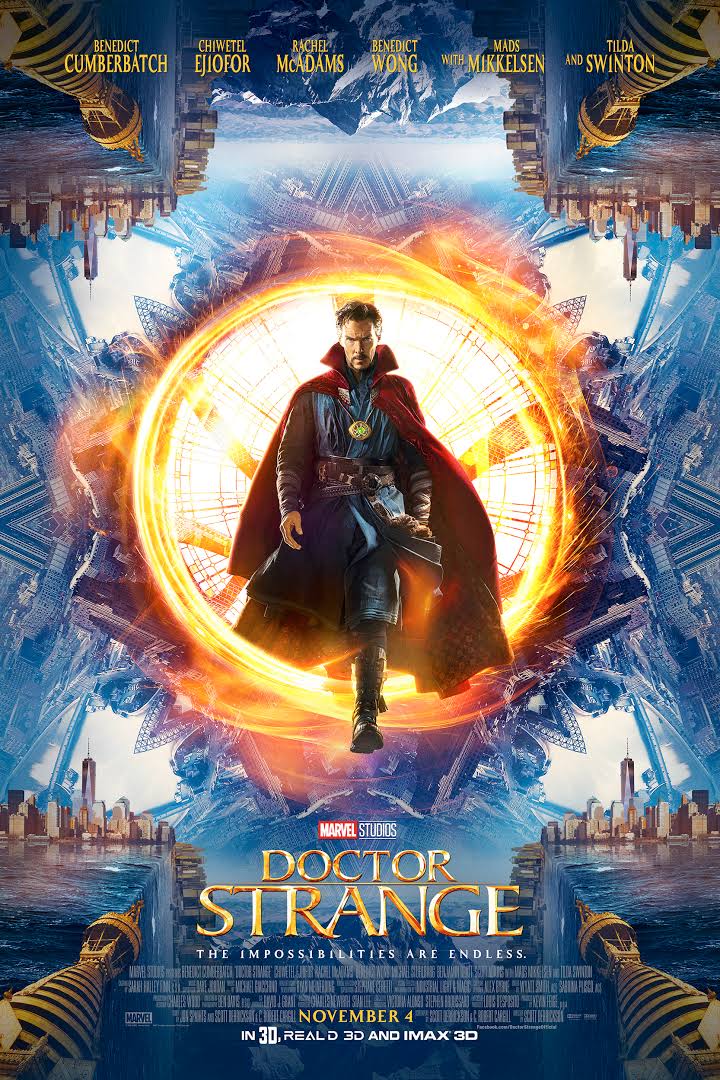
drstrangeA perfect blend of stunning visual effects, character development, and even a hint of the avant-garde in this strange superhero film of East-meets-West. Unpredictable. That is definitely not a word typically associated with superhero genre movies. Not that the plot was entirely unpredictable, but Benedict Cumberbatch delivers a very Patrick Stewart-esque performance as the neurosurgeon turned mystic Dr. Strange in the film that bares his name. This is a superhero film that strikes a strategic balance between traditional superhero storytelling and social commentary. Not without the trademark explosions and dynamic action sequences, Doctor Strange is clearly concerned with and focusses on the character development of Dr. Strange. In a film that could have so easily rested its laurels upon the innovative, intriguing, and exquisite visual effects, it chose to place more emphasis on the drama between characters. Ordinarily, if you follow my blog, you know that I do not typically write positively about superhero films, with some exceptions such as: Batman ReturnsDeadpoolX-Men: Days of Future Past, or Guardians of the Galaxy; however, Marvel/Disney’s Doctor Strange was incredibly enjoyable as both a movie AND film (and yes, there is a difference). For those in the audience who perhaps struggle with being self-centered, the plot and character development in Doctor Strange will likely ring true and act as a mirror of how you may actually come across to people; and furthermore, how to break the cycle. Although this is clearly a typical blockbuster movie, there are trace-amounts of many elements often found in art house films in the stylistic way some of the sequences are shot. Doctor Strange, a truly multidimensional experience.

From Italian sports cars, European watches, and Armani suits to a rundown far eastern temple, famous neurosurgeon Dr. Stephen Strange’s life radically changes after a severe car accident leaves him without full use of his hands. As an expert in the field of bio-medical science, Dr. Strange seeks assistance from traditional western medicine. Convinced that no one except he alone can repair the nerve damage in his hands, Dr. Strange turns to eastern medicine following an encounter with someone who now walks who was paralyzed. Learning that the mysterious enclave of monk-like mystics is a front to a battle beyond the plains of normal existence, Dr. Strange is faced with the decision to use his newly acquired abilities to help fight against the evil seeking to rip the fabric-work of the earth from beneath the feet of millions of innocent citizens or use his powers to regain full use of his hands. With such a deep desire to go back to his successful life in western medicine and to repair a relationship he squandered (Rachel McAdams), he is faced with a monumental decision.

No slow wind up here. Doctor Strange‘s prologue is a breathtaking array of choreography and a dizzying spectacle of Inception-like folding of matter and energy visual effects. Instead of wondering why or who, the audience will be in sheer amazement at the beauty of it all. Opening with a prologue like this was critically important for this comic book icon that many had not heard of prior to the announcement of the movie (‘many’ as in those who are unfamiliar with the comics). Director Scott Derrickson (Exorcism of Emily Rose and Sinister) has clearly approached the Marvel universe from a different direction that most others, and it shows just how perfect a decision it was of Marvel/Disney to select him for the job. Although I was greatly impressed with the visual effects and fight choreography, I was worried that I was going to need to take a dramamine to make it through the majority of the movie. But then, it happened. A veritable bait-and-switch. From an action-packed Matrix-y sequence through a view of Manhattan as seen through a kaleidoscope of shapes and distortions to an operating table, I did not know the direction this film was going. Perfect. So often superhero movies are basic–fun–but basic. I also appreciated the humorous juxtaposition between the seriousness of surgery against the backdrop of late 1970’s rock music. Just within the first few minutes of this film, I was convince that this movie was going to be unconventional but strangely enjoyable.

Such a great cast! Part of the success of any movie is the cast and the respective roles they deliver. Not merely selected for their respective appearances, the main cast of Doctor Strange each brings a unique blend of talent into the mix. Cumberbatch plays an eccentric ego-maniacal self-centered high on himself doctor extremely well. So well that his development was quite convincing on his journey from selfishness to selflessness. Playing opposite him most of the movie is Tilda Swinton (Wes Anderson veteran actress seen in movies such as The Grand Budapest HotelMoonrise Kingdom, and more recently in the Cohen brothers’ Hail, Caesar!) as the Ancient One. She provides the ideal counterbalance to Strange’s over-inflated ego. Difficult to read, I was never quite sure which team she was on, and you’ll have to watch the movie to find out. Her performance was dynamic and convincing. Cast in the role of spurned lover Dr. Christine Palmer, Rachel McAdams does her McAdams thing so incredibly well. I also greatly appreciate how even when dressed in hospital scrubs she still graces the screen with her beauty. She may have bet spurned by Strange, but she gives it right back to him. Each and every member of the principle and supporting cast truly contributed to the success of the storytelling in this film.

At the core of this film is solid writing. The characters are multidimensional and the writing contains a bountiful buffet of bright, brisk entertainment that typically seems to do justice to the feel of the comics. Not saying the all the Marvel Movies (whether Disney or Fox) are better comic book adaptations than D.C. (Warner Bros), but they operate on a tried and true method of delivering a visually driven story that appeals to general audiences. Due to the fact that Doctor Strange and other Marvel movies DO rely upon tried and true methods of cinematic storytelling, there is little to no risk for the production and distribution companies. On that note, the D.C. movies are typically more edgy and riskier. Despite the rather dark plot of Doctor Strange, there is sufficient humor here and there to keep the audience from entering into a stagnate emotional state.

Whether you are familiar with the comic book series Doctor Strange or not, this is definitely a movie and film worth watching. Even if you have not seen the other Marvel movies (which is doubtful but possible), you can watch this one and not feel lost at all. That is likely due to the fact that Disney/Marvel knew that most people were unfamiliar with this character and needed to be introduced to him and his universe. If you’re into innovative visual effects, then you will be in awe at the effects and editing of Doctor Strange as well.

“Inferno” movie review

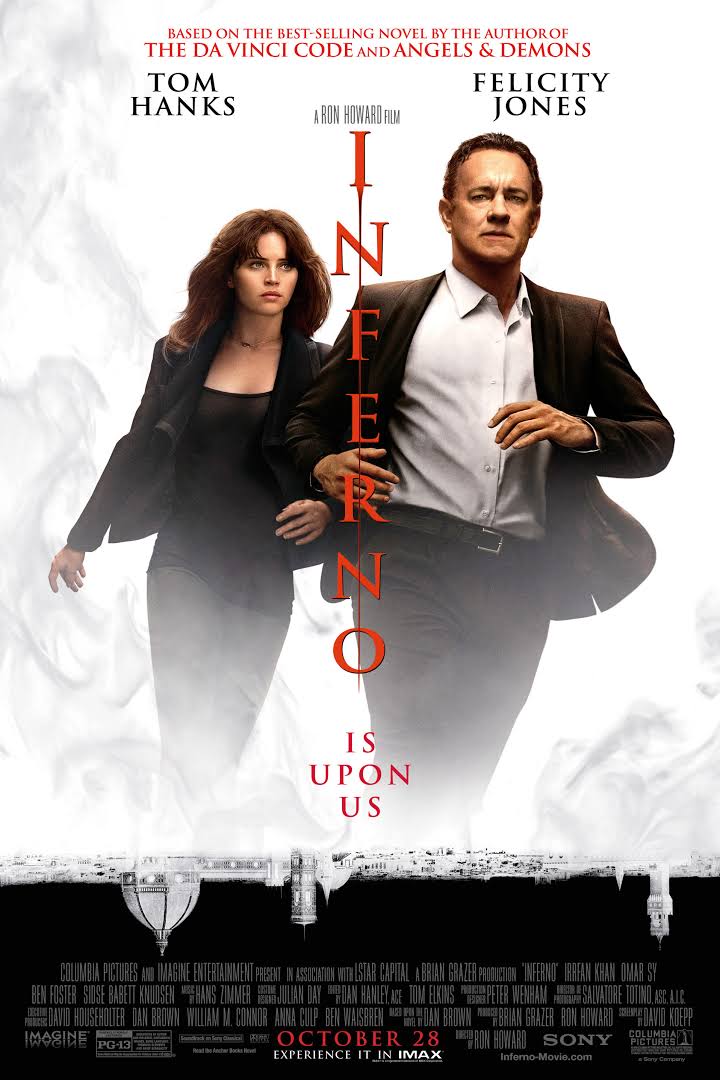
infernoFamed symbologist Robert Langdon is back in a fiery installment in the franchise that bears his name. Sony Pictures and Imagine Entertainment’s Inferno is a non-stop rollercoaster of an adventure film that combines art, history, literature, bio-medical science, and weapons of mass destruction in a heart-pounding thriller that makes academia and public health look sexy. As expected, Tom Hanks delivers an outstanding performance as the Indiana Jones of symbols and puzzles and the visual storytelling is excellent. From the moment the film opens with incoherent subjective flashes through the eyes of Langdon suffering from amnesia, shaky camera movements, and glimpses of disturbing apocalyptic imagery to the final showdown beneath Instanbul’s Hagia Sophia, Inferno will command your attention for the two-hour runtime. Unlike the two previous installments in the Langdon franchise, there is a conspicuous lack of commentary on organized religion by deciphering puzzles and revealing coverups and more of a focus on art history and rhetoric. This focus provides a far more believable plot than found in The Da Vinci Code and lesser so in Angels and Demons. With bio-medical warfare being at the center of this film, the movie paints a realistic portrait of how a Dante-spouting sociopath might try to fix the world’s problems by wiping out half the population with a destructive plague.

Waking up in a state of incoherency and amnesia in an Italian hospital in Florence, Robert Langdon (Hanks) is thrust into running–or hobbling, rather–for his life. Under the guidance and protection of a beautiful ER doctor (Felicity Jones), Langdon barely escapes with his life. Dazed and confused, Langdon must concentrate on piecing together a puzzle–no surprise there–but this time, the puzzle begins with how he got to Italy and why he is carrying a bio-medical tube. From puzzle to mystery, Langdon and Dr. Brooks (Jones) are forced into an adventure that blind-sided them. After discovering a connection between a dead sociopathic billionaire madman and the Italian poet Dante (The Divine Comedy), Langdon and Brooks race across Europe to stop a devastating plague from killing off more than half of the world’s population. Between stopping the plague and constantly under siege by the WHO (World Health Organization) and a private security firm, Langdon is truly racing against the clock to piece together his own life while making the connections in the puzzle left by the deceased sociopath to save the world.

Although in previous installments in the Langdon franchise have the symbologist traversing across Europe and even the world, this film’s plot is mostly concentrated in Florence. Home to some of the most notable works of art in the world, Inferno might work as an unconventional travel guide for the tourism industry in Italy. Far less cerebral than The Da Vinci Code and to a lesser extent Angels and DemonsInferno is far more visceral, exciting, and thrilling. The lack of religious/historic irony will definitely stick out to those who either read the books and/or watch the movies (I am the latte); however, that does not hinder the film’s delivery of an action-adventure taking place within the worlds of the arts and medical science. With the previous installment Angels and Demons being released in 2009, the high-impact feeling of Inferno is incredibly important because there has been such a long gap between the films. Still, the plot of Inferno does not have the finesse that both previous films have. Although this installment is incredibly enjoyable and entertaining, it lacks the opportunity to question, think, and analyze the mystery at hand.

Another contrast between this present installment and the previous two is the character-heavy plot. Occasionally, the film felt overrun with characters. Albeit, most of the characters are interesting and also possess brilliant minds, at times the plot is overcrowded. Perhaps that was intentional since the billionaire madman claims that the population should be reduced because of overcrowding the earth; however, it’s more likely that writer David Koepp and director Ron Howard were attempting to get as much of the novel on screen as possible. Not having read the novel, I am unable to comment on the translation from page to screen beyond inference. Despite the character-heavy plot, the film is not without the trademark art, history, literature, and enigmas that are synonymous with the Langdon series of books/films. Beginning with a reimagined map of Hell based on the one described by Dante in The Divine Comedy and illustrated by Botticelli, the film’s plot does come back to the puzzles but most of the time is spent being chased by nearly everyone.

The best part about this film is just how exciting it is. If you are even remotely interested in it, you won’t be disappointed. As this is a franchise, and franchises tend to have intentional or unintentional patterns of behavior within the cast of characters or similarly functioning plot devices, there are definitely elements in this installment that are found in the previous two. There is one plot twist that bares a striking resemblance to one in The Da Vinci Code. The non-stop action will likely kindle an interest in pursuing a career as an academic or official with the WHO. Perhaps, the study of symbols, numbers, and taxonomy, will be of greater interest to current students. There are just enough loose ends and unanswered questions that keep the film from being too predictable.

Looking for an exciting cinematic adventure for the weekend? That is, when you are not either at or recovering from a Halloween party. Check out Inferno! Not Halloween-themed at all, but it is a fun adventure full of excitement and you’ll learn a thing or two about art, history, and literature.

“Jack Reacher: Never Go Back” movie review

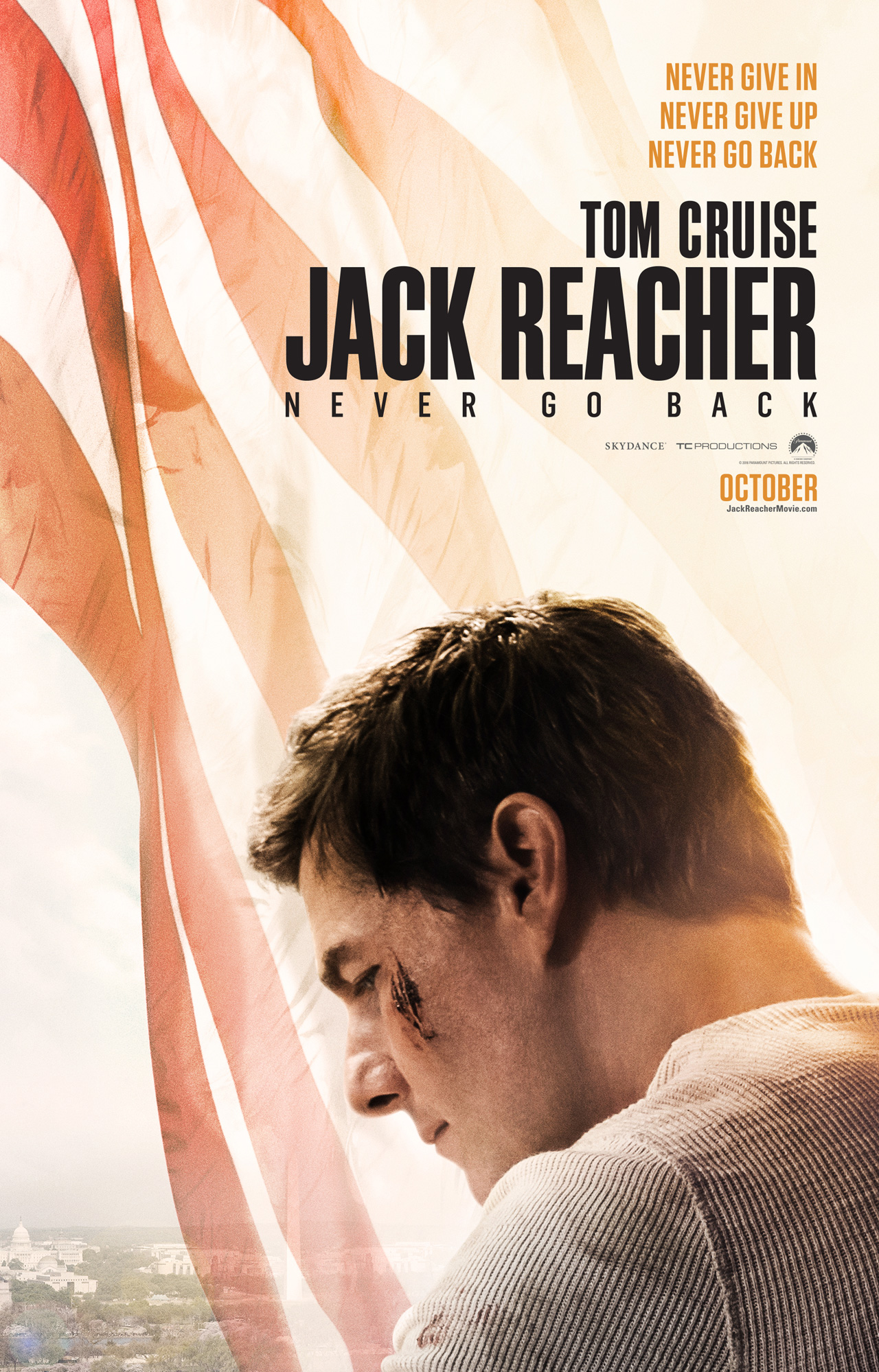
jackreacherposterOutstanding action movie! Paramount Pictures and Skydance’s Jack Reacher: Never Go Back simply does not disappoint. Jack Reacher may never become a household name like James Bond or Jason Bourne, but Tom Cruise proves once again that he truly is an action hero. Furthermore, Cruise is probably the best example of a movie star in the classical sense. You know an actor is truly a movie star when the public refers to his or her movies as “the new Tom Cruise movie.” Even the Bourne and Bond movies are not referred to by the respective actors. Lee Childs’ best-seller makes for an excellent cinematic military conspiracy action thriller! Separating this Reacher installment from the previous one and the Bond and Bourne movies is the fact that Childs and writer-director Edward Zwick give Reacher a pseudo-nuclear family. Although action movies are the epitome of high concept films, by adding a pseudo-nuclear family, a very human element is added to the story that adds some depth and allows for humor that otherwise wouldn’t work. Never Go Back comes complete with equal amounts of bad ass action and levity. Not terribly cerebral, this action-thriller provides audiences with a couple hours of high impact cinematic entertainment at which you can sit back, take your mind off life outside of the auditorium, and enjoy the action that only Tom Cruise can bring to the screen.

The Clint Eastwood-esque action hero is back. After busting a corrupt sheriff’s office in Oklahoma, Reacher (Cruise) finds himself amidst a conspiracy and coverup involving the C.O. (commanding officer) who took over his previous position. Mgr. Susan Turner (Cobie Smulders) is arrested on charges of espionage. Believing strongly that Turner is being setup, Reacher doesn’t hold back in solving the mystery and taking out those who would stand in his way. Crossing paths with the military police himself, Reacher soon finds out that the corruption runs deeper than he first thought. When faced with not only the dilemma of Turner but also the possibility that he may have fathered a child, Reacher must fight two concurrent battles. With mind and body under attack, Reacher stops at nothing to exonerate Turner and provide protection for his possible daughter.

Upon watching this film, I couldn’t help but notice the similarities between Never Go Back and Eastwood’s The Outlaw Josey Wales, by all accounts a masterpiece by the legendary actor and filmmaker. Both stories are about a renegade/loner who acquires a family of sorts. Although the film is very well produced, there is a flaw in that it is apparent that Reacher wants to ‘reach’ further and delve deeper than the superficial plot allows for. Evidence of this is in his dialog that suggests that he wants to be a more dynamic individual who is capable of love and devotion but gets stuck being the action hero all the time because violence is the only thing at which he excels. One of the most prominent themes in the movie is the juxtaposition between high intensity fight scenes and deadpan humorous family drama. By including contrasting elements, the film provides a real opportunity to love the protagonists and hate the antagonists.

Cruise definitely displays some of the best acting of his career in this installment of the Jack Reacher series. He does an excellent job of communicating the difficulty in balancing both the defensive and offensive in terms of protecting his “family” and providing empathetic nurture. I suppose one could infer that the film contains a reimagined “nature vs. nurture” quandary. His reaction to his possible daughter is classic. Throughout the dialog and blocking, it is clear that Reacher is struggling with how to be a dad-like figure but also keep his focus on solving the mystery. Just like any Eastwood-esque story about a loner who has a taste of what being part of a family  is like, the movie ends with a fated goodbye scene between his ‘daughter’ Samantha (Danika Yarosh) and himself. But just before it get too heartbreaking, Zwick throws in a pleasant twist.

If you are in the mood for a good old-fashioned military conspiracy action drama, then look no further. Jack Reacher: Never Go Back strikes a fun balance between kung-fu movies and quirky family dramas. Cruise will definitely not disappoint in this film He does what he always does. Provides us with solid action-star acting coupled with some humor along the way.