
“Dunkirk” film review

Journalism meets cinematic visual storytelling. Christopher Nolan’s war epic Dunkirk provides audiences with a different kind of war movie experience. Different in that the narrative is nonlinear and highly experimental. From a technical perspective, the film is flawless. The cinematography, sound design, and score all work together to create an immersive experience in which that fourth wall is nearly removed. One of my friends that I saw the film with last night described it as being a fly on the wall within each timeline. With little dialog, the focus is on the various groups of the army, air force, and civilians. The stylistic film reminds me of photo/video journalism. Dunkirk demonstrates that an emotionally satisfying experience can be delivered without conventional storytelling. In many ways Norma Desmond would be proud of Nolan’s film because “[he] didn’t need dialog, [he] had faces.” Dunkirk invites audiences in for a rare glimpse into the reality of war, and the reality of not only the armed forces but the civilian assistance that truly made the difference and just why this particular war story is so remarkable. Be sure to brush up on your knowledge of the events of Dunkirk before watching the film. You’re definitely going to need to have a base of knowledge of the theatre before becoming the proverbial fly on the wall.

Instead of a plot synopsis, here is what Wikipedia has as a summary of the history of Dunkirk Evacuation. This is definitely going to be helpful prior to watching the film.

During the Second World War (1939–1945), in the May 1940 Battle of France, the British Expeditionary Force (BEF) in France aiding the French, was cut off from the rest of the French Army by the German advance. Encircled by the Germans they retreated to the area around the port of Dunkirk. For years, it was assumed that Adolf Hitler ordered the German Army to stop the attack, favouring bombardment by the Luftwaffe. However, according to the Official War Diary of Army Group A, its commander, Generaloberst Gerd von Rundstedt, ordered the halt. Hitler merely validated the order several hours after the fact. This lull in the action gave the British a few days to evacuate by sea and fortify defences. Winston Churchill, the British Prime Minister, ordered any ship or boat available, large or small, to collect the stranded soldiers. 338,226 men (including 123,000 French soldiers) were evacuated – the miracle of Dunkirk, as Churchill called it. It took over 900 vessels to evacuate the Allied forces and although over two-thirds of those rescued embarked via the harbour, almost 100,000 were taken off the beaches. More than 40,000 vehicles as well as massive amounts of other military equipment and supplies were left behind, their value being less than that of trained fighting men. The British evacuation of Dunkirk through the English Channel was codenamed Operation Dynamo. Forty thousand Allied soldiers (some who carried on fighting after the official evacuation) were captured or forced to make their own way home through a variety of routes including via neutral Spain.

If you are approaching Dunkirk from a desire to see a Saving Private Ryan, then you may want to rethink going to see this film. With little convention in the storytelling, this film puts you on the beach, in the air, or on the sea alongside the civilians, pilots, soldiers, and officers. The focus is not on the characters, special effects, or the bloody atrocities of war, but focussed on highlighting a significant event in WWII history that has largely gone unknown except for those in France and the UK. You are very much like a journalist who is capturing the imagery with your camera. It’s a snapshot of war, not necessarily the story of war. War history buffs, this IS a film for you!

Of Mice and Movies

Twitter is a’buzz with the latest from the 2017 D23 Expo. Not to be outdone, Facebook, Instagram, and the theme park blogosphere are all but fully consumed with the big announcements for Walt Disney World out of D23 in Anaheim. BIG changes are coming, and will radically modify the existing attraction offerings at Epcot and Disney’s Hollywood Studios (DHS). While there were many announcements, the biggest ones are arguably the detailed look at the new Star Wars Land, the update on Toy Story Land (opening next summer), Ellen’s Energy Adventure (Epcot) getting replaced by Guardians of the Galaxy. Lastly, the final big announcement that will really hit close to home for many who have been going to DHS for a large portion of his or her life–the announcement of the closure of The Great Movie Ride (GMR) to make way for Mickey and Minnie’s first [dark] ride at Walt Disney World. And it’s that last announcement that speaks volumes regarding the direction that the Walt Disney Company is moving.

Although it’s been fairly common knowledge that the Ellen attraction was going to be replaced with something more contemporary and relevant, the announcement of the closure of GMR came as a shock to many (note: this change WAS hinted at within the last few months). Fortunately, the Grauman’s Chinese Theatre facade is slated to be largely untouched, so it will remain the icon of the park; however, GMR will go by way of The Streets of America. On the plus side, this change paves the way for Mickey and Minnie’s first [dark] ride in the parks period. That’s right. Neither Mickey nor Minnie had a ride based off their respective characters. Strange, right? Since “it all started with a Mouse.” Yes, Mickey has been included in other attractions (i.e. Philharmagic, Fantasmic, etc), but this presents the first time that he will have an actual ride in the parks. Of all the changes coming to Walt Disney World, this represents the most symbolic, and some might argue, the most significant. In order to understand just why this particular change is so important, and to many controversial, we have to look back at a brief history of The Great Movie Ride and by extension DHS itself. If you have read my article entitled A Theme Park in Flux, published back in September 2016, you may be familiar with the following. For all others, let’s hop in the wayback machine!

It’s the mid 1980s. And Disney Imagineers are pictching the idea to add an attraction that explores iconic films to Epcot’s Wonders of Life pavilion. The name of that attraction: The Great Movie Ride. At the same time, Disney is working with MGM/UA to build movie and television production facilities to be the Florida counterparts to the California operations. Concurrent to Disney, Universal Studios and Nickelodeon are doing the same thing just up the road from Disney. Anyway. Led by Michael Eisner at the time, he made the executive decision to–instead of adding a movie-based attraction to Epcot–to build an entire theme park with a filmmaking or film industry theme. Long story short, in 1989 then Disney-MGM Studios opened up with facility tours and two attractions: GMR and the former Studio Backlot Tour inclusive of Streets of America and Residential Street. After the licensing deal with MGM was ended, the park changed its name to Disney’s Hollywood Studios in 2008 and removed all the MGM branding. Shortly thereafter, Residential Street was removed and Lights Motors Action was added. Since that time, all attractions in that area of the park have been closed to make way for Star Wars and Toy Story Lands.

Speeding up to present day. The decision to remove GMR from DHS represents the end of an era. With the closure of that iconic attraction, the park’s original concept, original idea, the very soul of the park is being rewritten. What was once material for waxing nostalgic at the parks–nostalgia being a significant draw to theme parks–will now merely be a distant memory. It’s not that theme parks should avoid evolving to remain relevant–quite the contrary. They need to! But to remove an attraction that represents the original identity of the park, stirs up quite a lot of emotions. Many might argue that this is the equivalent of closing Epcot’s iconic Spaceship Earth because Epcot’s direction has shifted from an educational component to food and thrills. More than riding the movies, DHS (much like Universal Studios) was a park that immersed park guests into filmmaking itself. Granted, the filmmaking process is not as magical as it once was, given that most of the magic exists within a computer and is comprised of 0s and 1s; still, there was a magic to the whole thing that park guests found fascinating, and enjoyed approaching films from a different perspective. If GMR isn’t safe, if the tides of time wash this park-opener attraction off the maps, then is any attraction safe???

Keeping roots in the original concept of a park is truly important, but it seems the powers that be do not feel that any connection to the soul of the park, the history of the park, is important. Not that I don’t think Mickey and Minnie deserve a ride. Of course they do! And there are likely other places where their new attraction could have gone. Take One Man’s Dream for instance. If you’ve been to DHS, you know this as the Walt Disney museum with a focus his early filmmaking days as well as the plans for Disneyland and Walt Disney World. It’s a biographical museum, of sorts. Great attraction. Does it need to be at DHS? No. It’s an example of an attraction that can be moved to another location without a negative impact left by its absence. Disney Springs would be a great location for the museum, and would probably see more guests than it does now. The present One Man’s Dream location could be retrofitted and remodeled for a new attraction. In fact, that area of the park is referred to as the Animation Courtyard. Therefore, it’s best suited for a new attraction where Mickey and Minnie are the stars! For years, I’ve thought that GMR needed to be refurbished. So, I am fully aware that many of the scenes lack sufficient relevance to the kids and teens today–even some young adults. But, because the attraction needed a massive refurbishment does not mean that it should be removed altogether.

It is clear from the announcements at D23 that Disney’s Hollywood Studios will see a complete departure from its founding theme and concept–old Hollywood and the magic of the movies–and move to a sort of diegetic immersion. Instead of learning about the movies, the guests will feel as if they are IN the movies. Instead of celebrating movies, Star Wars and Toy Story will provide guests with a complete escape from the outside world and into the world of these popular franchises. The addition of these properties and lands is exciting! They look beautiful and will offer some fascinating attractions; but, I wish it had not come at the expense of losing the very foundational idea that inspired Disney’s Hollywood Studios.

The best laid plans…

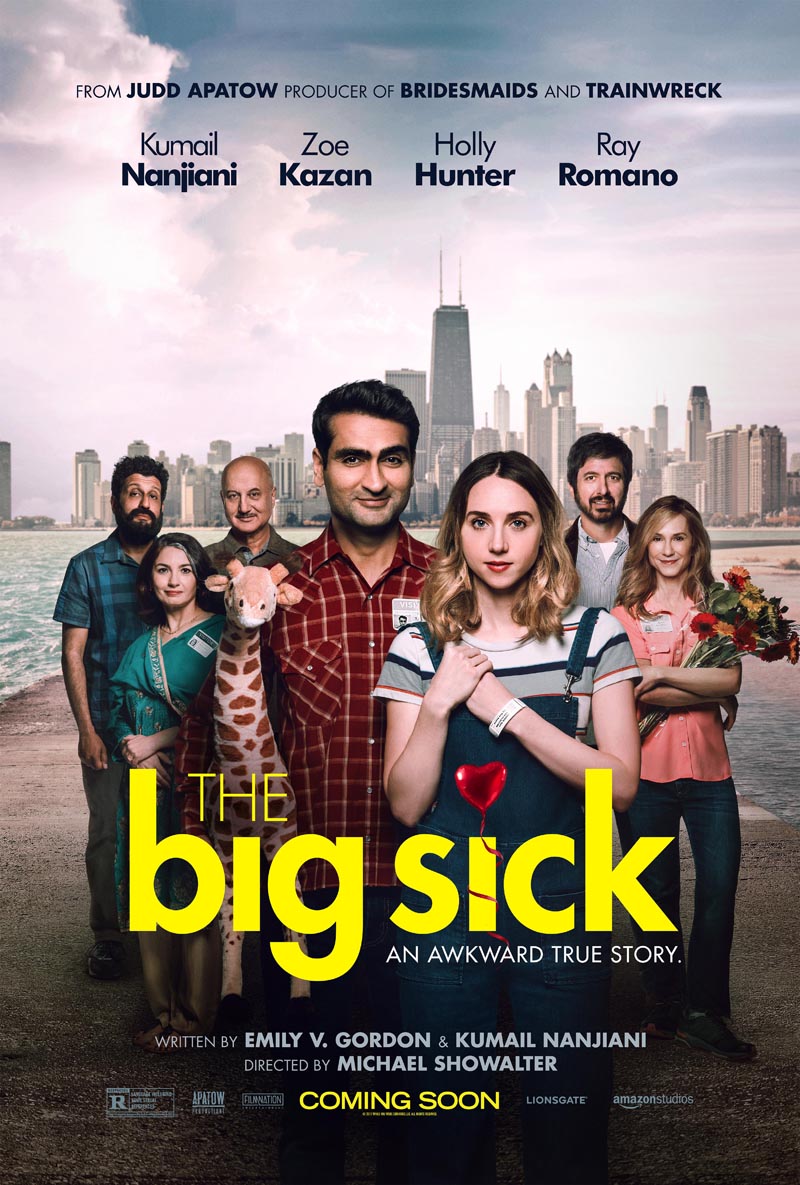
“The Big Sick” movie review

Organic and relatable. From Amazon Studios and Lionsgate comes Judd Apatow’s The Big Sick directed by Michael Showalter. Despite being billed as a romantic comedy (romcom), it is more like a family drama with comedic moments. What makes the plot of The Big Sick so incredibly relatable is its central focus on two star-cross’d lovers caught between two seemingly incompatible worlds. Beyond featuring two people who fall in love quickly, then realize how there is little chance of a future in which they are together, this story has little in common with Romeo & Juliet. No feuding families or riots here, just two 20-somethings who are trying to make it in this world, and by sheer happenstance fall for each other. However, much like the families from which Romeo and Juliet came, there are two opposing forces at work in this love story. It is clear from the screenplay and cast that all the elements are at work to generate a response from the audiences that would make this an endearing classic in the vein of Terms of Endearment. The relatability and organicness of this film comes from the fact that the entire cast–not just the lead characters–are every-day 21st century Americans who are facing the real mountains and pitfalls of romance, acceptance, honesty, and devotion.

The Big Sick tells the true-life story of the courtship between Pakistani-American Kumail (Kumail Nanjiani) and Chicago native Emily (Zoe Kazan). Kumail is a stand-up comic–or rather–he is desperately trying to be. He’s good enough for a small venue but he dreams of performing at the Montreal Comedy Festival. Emily is a graduate student at the University of Chicago studying psychology. Between family backgrounds and professional interests, the two of them could not be more different. When Kumail and Emily fall in love with each other, everything seems to be going so incredibly well over the next few months; but when Emily learns that Kumail cannot take the next step from dating to engagement because of his Pakistani family’s traditions regarding arranged marriage to a Pakistani girl, their relationship falls apart. As circumstance would have it, Emily must be placed under a medically-induced coma in order to stabilize after her health takes an acute turn downward. With Emily’s parents (Holly Hunter and Ray Romano) in town, Kumail must deal with his ex-girlfriend’s health condition and the fact that her her parents despise Kumail after he led their daughter on. Realizing that he cannot allow his family to determine his fate, Kumail is determined to win over Emilys parents and show Emily that he can be who she needs him to be.

What sets The Big Sick apart from a typical par-for-the-course romcom is the dimension and depth of the plot and characters. Ordinarily, a romcom contains a lighthearted story that requires little critical thinking and analysis because it is meant to be simply entertaining with a little heart along the way. Great for date nights and girls nights. Often times, in a traditionally structures romcom, the female character is the most interesting with the rest of the cast playing a lesser role. However, in this film, the most interesting character is the male love interest. Furthermore, the character chemistry and plot are greatly helped by Kumail and Emily being interesting respectively. The underdog trope is often applied to romcoms, and it certainly played a role in this film. In addition to the character and plot development on screen, the audience also goes through some soul-searching. Incidentally, the movie opens the door of discussion regarding the predisposition to how Pakistani and Americans view marriage and dating. Just like past films that commentated on marriage or dating between the black and white communities–which is what was needed in the not so distant past–this film raises awareness regarding marriage and dating as it relates to middle-eastern and American relationships. A timeless plot told through a contemporary setting.