
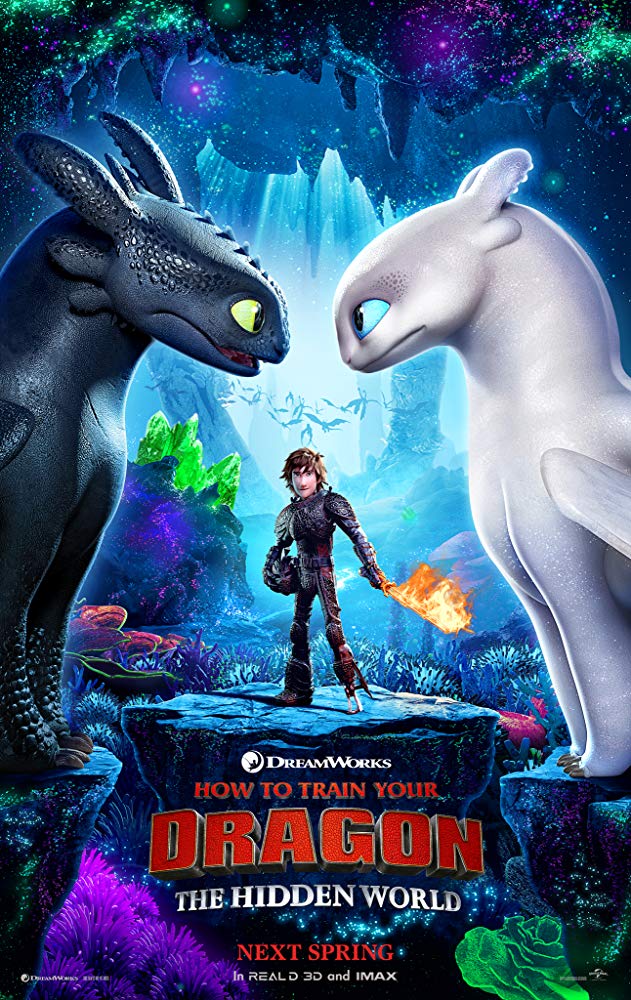
“How to Train Your Dragon: the Hidden World” review

Outstanding finale for the beloved franchise! Bring your tissues because you’re going to need them. Return to the colorful, immersive world of dragons for the final chapter in the How to Train Your Dragon trilogy. We were first introduced to Hiccup and his cat-like dragon Toothless–probably the most adorable dragon ever–nearly a decade ago, and Hidden World delivers a beautiful story that takes full advantage of Dean DeBlois’ epic fantasy world of highflying adventure and heart. Unlike franchises in the cinema or on television that depict the key characters the same age in perpetuity, HTTYD allows its characters to mature and grow in complexity. This growth enables the audience to identify and empathize with the animal and human characters thus giving the film incredible emotional weight. Not only do the characters demonstrate personal growth over the nine years we’ve been enjoy Berk and all its wonders, they exhibit tangible evidence of interpersonal societal growth as this Viking kingdom learns to love and cherish creatures they once feared. Toothless takes center stage as he too, along with our friends from Berk, must grow up. Both Toothless and Hiccup experience the powerful dynamic of love as it greatly affects one’s actions. While many were wondering if this trilogy could pull off a Toy Story 3, after the immense success of the first two, especially HTTYD2, suffice it to say, DreamWorks Animation delivers a superlative animated motion picture complete with all the feels.

IMDb Summary: What began as an unlikely friendship between an adolescent Viking and a fearsome Night Fury dragon has become an epic adventure spanning their lives. Welcome to the most astonishing chapter of one of the most beloved animated franchises in film history. Now chief and ruler of Berk alongside Astrid, Hiccup has created a gloriously chaotic dragon utopia. When the sudden appearance of female Light Fury coincides with the darkest threat their village has ever faced, Hiccup and Toothless must leave the only home they’ve known and journey to a hidden world thought only to exist in myth. As their true destinies are revealed, dragon and rider will fight together—to the very ends of the Earth—to protect everything they’ve grown to treasure.

As immersive and excellent as the film’s visuals are, the characters are even more complex and deep. In fact, the film depicts one of the best friendships of any film ever. The key characters, and even the supporting cast, demonstrate love, loss, maturity, growth, and more. Although this is the final installment in the franchise, the characters are still treated with finesse and given room to grow within the movie and to complete the arcs for the trilogy. Often, Toothless and Hiccup parallel one another; they possess traits that complement one another. This added complexity to their respective characters gives them so much depth. Making an emotional connection with and evoking empathy from the audience is such an important element of the character development process. Hidden World builds upon the previous stories of finding one’s destiny in a friendship with the most unlikely of creatures (chapter 1), external and internal complexities with the new friendship and changing familial dynamics (chapter 2), and coming of age by learning from the past and letting go of that which hinders freedom (chapter 3 Hidden World).

More than a commentary on independence or freedom, this film chooses to depict complex emotions such as love between friends, family, and romantic love. And these subjects are not just talked about–exposition would be too easy and lazy–there are many moments that are visually driven, thus increasing the level of emotional impact. One of my favorite moments that deals with both the letting go of the past in order to bloom and grow is the courtship dance scene between Toothless and the Light Fury. Love is not without sacrifice. And in the exploration of relationships and independence, we are reminded of the emotional cost associated with these concepts. Paralleling this exploration of relationships between lovers, family, and friends is the journey of rising to the call and becoming a leader of one’s people. It’s the ideal journey for this final installment because it completes the hero’s journey for Hiccup and Toothless. In the first movie, both Hiccup and Toothless are outcasts, nerdy, and childlike. In the secondary film, they go through both physical and emotional growth learning the complexities of life. And the tertiary film Hidden World builds upon the previous two films by us watching this teen and young dragon grow up to realize their respective places in the world to become the leaders of their people (or dragons). We go from kid to king. So simple, but so perfect.

It’s easy to get swept up into this epic fantasy because we spend so much time with these characters. Not only do we spend movie time with the key characters, but we spend some intimate time with them as well. We see these characters at their best and worst. The individual stories of the three films and the overarching story that exemplifies the three-act structure are not afraid to bloody your characters. As real like people and dragons are not perfect, neither are the characters in the How to Train Your Dragon trilogy. We are drawn to their flaws, the majority of which are in the second chapter but we continue this high level of humanity in the third film. Change is a big part of life, and the theme of change is witnessed in the individual lives plus in the Berkian and Dragonian communities. Utopia is not without its negative impacts. One of those for Berk is overcrowding with the side effects of being more of a target to those who are still hunting dragons. Hiccup must decide whether Berk is a place or a state of mind. But he must also consider the safety and future of the dragons. More complexity. There is no one solution that will benefit everyone. So sacrifices must be made. This motif of chance incorporates the overall theme of love and sacrifice.

The visuals are breathtaking! While some animated trilogies suffer the longer the franchise goes on, the quality of the animation in this film is outstanding! In many ways, it out-Pixars Pixar. Like with other films, if this one had a Pixar logo on it instead of DreamWorks, then more people would be singing its praises. With more dragons, there was certainly room to cut corners and for the quality of the visuals to suffer. Not true with this film! The attention to detail is superb! As beautiful as the dragon flight scenes were in the first and second movies, Hidden World delivers an even more epic flight scene in this film. Wish I had seen this movie in IMAX. During the flight sequence into the Hidden World of dragons, I was reminded of Navi River Journey and Flight of Passage in Pandora: the World of Avatar at Disney’s Animal Kingdom. Never felt like a ripoff, but certainly feels inspired by the attraction. We encounter three worlds in this film: Berk, the new island, and the hidden world of dragons. Each of these worlds is designed completely differently from the rest. And the commitment to the art of animated world creation reaches incredible heights! Every scene, every moment, every setting is completely immersive.

Ryan teaches screenwriting at the University of Tampa. If you like this article, check out the others and FOLLOW this blog! Interested in Ryan making a guest appearance on your podcast or contributing to your website? Send him a DM on Twitter!

Follow him!

Twitter: RLTerry1

Instagram: RL_Terry

2018 in Review Plus My 10 Best and Worst Films

I’ve read everything from 2018 has been the best year for cinema in recent years to the worst. Aside from the valid argument that “best” or “worst” are highly subjective when basing it on a qualitative criteria, there is no doubt that it has certainly been a year with a lot of variety. There have been some great films and complete dumpster fires. If I were to evaluate 2018 cinema, I would say that this year’s selections skew much closer to best than worst in recent years. Personally, I feel that it has been an exciting year! This observation is evident through the plethora of dynamic conversations on #FilmTwitter. While I do not feel that there is any singular standout film in 2018, there are ones that I feel help to make this a banner year, a truly memorable time in cinema for blockbusters, auteur, and indie films. The combination of new releases in the theatre, through streaming services at home, or sometimes both concurrently, provides audiences with an unprecedented ability to access a wide assortment of movies and films to satisfy even the most discerning cinematic palate.

While it is certainly up for debate how 2018 performed compared to past years, there is little debate that the horror (and horror adjacent) genre has become increasingly mainstream. But is that what the horror community wants? As a longtime fan of the American horror film, I gotta be honest with you that I am not a huge fan of how popular this genre has become. For the longest time, to be a fan of the horror genre was something niche. It was seen as this weird or macabre subculture to which outcasts, geeks, and goths, for example, belonged. Without writing an entire research paper on the subject (which, now that I think about it, may be a good idea), the horror community felt like a family or perhaps a neighborhood. Now it’s getting to the point that it feels like a city. Horror has always been popular and bankable, but it hasn’t been until the last couple of years that it has exploded among a wide array of movie lovers. With the growing affinity among general audiences, that sense of family is slowly fading.

Perhaps it’s the idea that our attraction to the repulsive, the “pleasurable unpleasure” as Freud would say, does not feel as special as it once did. If there is a positive side to more and more people looking to be entertained by horror, it is the number of horror films and shows released. Standout movies and shows from 2018 are A Quiet Place, Hereditary, Halloween, The Haunting of Hill House, American Horror Story: Apocalypse, and The Chilling Adventures of Sabrina. All highly successful and extremely well made, a few award-nominated and winning even! For 2019, many of us are eagerly awaiting the remake of Pet Sematary, IT: Chapter 2, Us, and others. I love how there seems to be new horror movies and films coming out all the time. Gives me new movies to watch! But the tradeoff is a lot of “new fans” who think they know the genre in the same way as us lifers; furthermore, flock to, not only the cinema, but to Halloween Horror Nights at Universal Studios to create 2-3hr waits for the world-class haunted mazes/houses, many of which are based on horror films and shows. HHN28 was the most crowded that I’ve ever seen it. Maybe it will be up to us lifelong fans of the horror genre to stick together to discuss what we’ve loved and have demonstrated an appreciation for a long time.

Horror isn’t the only genre or subject that has received a lot of attention in 2018, we also had some incredibly strong “non straight white male” writers, directors, central characters, and actors. From incredible performances delivered by Toni Collette, Viola Davis, Glenn Close, and Olivia Colman to films such as Blindspotting, Widows, Boy Erased, and Can You Ever Forgive Me?, just to name a few, we have certainly seen a much-needed increase in representation from those whose stories had more difficulty making it to the silver screen. There are many other fine examples of this shift in cinema, and I hope that this trend continues into 2019 and beyond. With all the outlets for storytellers now, it’s a great time to have the money and resources to bring hidden stories to life for all the world to see.

Okay, enough with some of my 2018 observations, here is my Top 10 Films of 2018 list followed by my most disappointing films list. If I wrote a formal review on my blog, I added the link to the title. Some films are so bad that I don’t even bother reviewing them on here. Haha.

Top 10

Honorable Mention: Annihilation

10. Halloween

9. Tully

8. Widows

7. Green Book

6. A Simple Favor

5. A Quiet Place

4. Won’t You Be My Neighbor?

3. A Star Is Born

2. Hereditary

  1. The Favourite* After a lot of thought as I’ve been reviewing 2018, and when I was selecting my picks for the Oscars, I realized that I actually liked The Favourite a little more then ASIB. So, I’ve updated my blog to reflect that. (01/22/19).

Bottom 10

10. Christopher Robin

9. Happy Time Murders

8. 15:17 to Paris

7. Rampage

6. Skyscraper

5. AXL

4. Death Wish

3. Truth or Dare

2. Slender Man

  1. KIN

Check to see if I’ve reviewed a movie from 2018 that you are interested in by typing the title into the search bar at the top of the page. There are 44 reviewed NEW 2018 films on my blog plus more than 250 other films! For horror fans, checkout my All The Horror blog from October that has 31 brief reviews of horror and Halloween movies. Odds are, you’ll find some for which you are looking!

Ryan is a screenwriting professor at the University of Tampa. If you like this article, check out the others and FOLLOW this blog!

Follow him!

Twitter: RLTerry1

Instagram: RL_Terry

Thrillz (theme parks): Thrillz.co

Theme Park or IP Park?

With all the recent, present, and future changes coming to the legacy theme parks of Central Florida and Southern California, are we witnessing the next evolution in theme parks? I’ve been tossing around the idea of exploring this trend, and those same feelings were echoed recently on the No Midnight Podcast (a Disney-centric podcast that unpacks history and discusses current happenings in the parks). After listening to the episode, it’s become clear that this anecdotal observation I’ve made is shared by others. As I love exploring the history of the parks from a scholarly perspective (as evident in my past articles and book), this is a topic that deserves consideration.

In order to truly explore this trend that some of us in the theme park blog and podcast communities have observed, it’s important to take a brief look at the development of the very concept of a theme park. And before you think that Disneyland was the first theme park concept, think again. Contrary to popular belief, Universal Studios Hollywood was the first to pioneer the idea of a theme park. More than 40 years before Disneyland was opened, the founder of Universal Studios (studio) German immigrant Carl Laemmle, opened his 250-acre-movie-making ranch, just north of Los Angeles, to the public for a mere $0.25. More than side income for the trailblazing studio, most well-known for its pioneering of the horror film, the original studio tour began on the outdoor backlot in March 1915. Laemmle desired to immerse guests into the magic behind the screen. The happy marriage, however, was not to last very long. Upon the introduction of cinema sound, Laemmle was forced to close the studio “park” to the not-so-quiet guests in order to facilitate appropriate recording sound for the motion pictures. The Universal Studios tour would remain closed to the general public for over 30 years. But, in 1961, the studio would once again open its gates to a new generation of movie lovers through the still world famous studio tram tour.

Combining inspiration from what Laemmle began 40 years prior, visionary Walt Disney made the decision to create an entire land that would immerse guests into the world (or land) of Disney. More than an amusement park, Walt Disney set out to create a multi-dimensional experience complete with continuous coherent storytelling from the architecture to the attractions and restaurants themselves. Even before the park would open its doors in 1955, Walt Disney produced a television special that sought to energize enthusiasm for the groundbreaking concept that took the stories, settings, and characters from the screen and translated them to exist in the real world. Disneyland was so popular that Walt began to develop an idea that would forever change the theme park business forever. The “Florida Project,” as it was called, would eventually become Walt Disney World. Sadly, Walt passed away before the park would open, but Walt Disney World is the manifestation of Walt’s ultimate dream. Disneyland was first and is the park that Walt built, but Disney World is truly what Walt envisioned when he dreamt his innovative idea inspired by his imagination.

In the mid 20th century, Universal Studios Hollywood, Knott’s Berry Farm, Busch Gardens parks, SeaWorld parks, and later in the 20th century Universal Studios Florida were all opened to eager crowds! Each of these parks had a distinct theme, a specific story into which guests were immersed. With the cases of Busch Gardens and SeaWorld parks, the storytelling was also accompanied by a conservation message. Attractions were built that matched well with the theme of the respective land. It’s important to note that, for the most part, there was significant thought put into an attraction fitting into the design (architecture) of the land in order to never take the park guest out of the overarching theme of the area FIRST and the whether or not a particular intellectual property (IP) works in that land second. Make the attraction fit the theme, not retheme the area to match the attraction. Whereas I am oversimplifying this practice or concept, the point is to get you thinking of how theme parks processed new attractions for the longest time; that is, until Universal Studios Islands of Adventure redefined themed entertainment.

Entire volumes of articles could be written on how Islands of Adventure (IOA) redefined themed entertainment; but for the sake of argument, the impact will be streamlined. Prior to IOA, theme parks, including Disney and Universal, were largely built with theme first and properties second. Now, themed entertainment designers are busy taking major IPs, placing them in the park, and then rethemeing around it. Each land or area is themed to the attraction versus the attraction designed to fit the theme of the park area. But in doing so, does this negate the very concept of a theme park, traditionally speaking? What happens when the movie is no longer relevant?

Unlike the other theme parks, at the time, Universal’s IoA was different in that it took popular IPs with entire universes (or worlds) if you will, and built vast lands in which there are attractions based on the movies/books represented. Prior to this, the closest examples were Disney-MGM Studios and Universal Studios. But even with the two aforementioned examples, they weren’t concerned with lands of the movies, but integrating the movie properties into the backlot look and feel of the park. With Disney-MGM (now Hollywood Studios, until it changes again) and Universal Studios Florida, the theme was a combination of Hollywood and the magic of motion pictures. So individual movie or TV properties were included as part of the them park experience, and guests were prevued to studio audience opportunities or the ability to audition to be on a show (think Nickelodeon Studios). The theme was “the movies” or “Hollywood.” From the architecture, to street names, to real-life locations, both of these parks that incorporated different movies or TV shows into the layout and design. The location was largely Hollywood, but could include New York City, San Francisco, a canyon in Arizona, or Amity Island. The attractions were built into the existing landscape versus selecting a property then changing the environment to match the IP. As these “movie parks” have been moving away from the magic of moviemaking to more immersive experiential environments, the “theme” has been changing rapidly. One could draw the conclusion that the “theme” of these parks is now an anti-theme. An anti-theme in that there are a variety of experiences that do not exist within a themed landscape that connects them together.

The theme of Islands of Adventure was just that, islands of adventure. Each island around the lagoon was a different land inspired by a different IP. Personally, Jurassic Park, Harry Potter, and Seuss Landing are my favorite islands! Arguably, Jurassic Park was the centerpiece of the then-innovative concept as it was the biggest fandom represented. Today, that crown rests on the Wizarding World of Harry Potter (since 2010). Not only was IoA the first to pioneer this concept of individual themes within the park, it was the first to create an immersive world in extreme detail. And it was the Wizarding World of Harry Potter that completely changed the theme park game, rewrote the rules, and began the trend away from “theme” parks to IP parks. Instead of a collection of attractions around a shared theme (or collection of themes), now parks are trending toward a park that is a collection of disconnected IPs. While Magic Kingdom has the different themed lands, the overall theme of magic kingdom was largely fantasy and adventure not connected to any specific singular IP. And in each of the lands, there were attractions that fit the theme of the lands, some of which had movie counterparts. But the focus was not on the individual movies as much as it was the idea of escaping to, being transported to a world of high flying adventure or whimsical fantasy.

Ever since the Wizarding World of Harry Potter opened, Disney and Universal parks (mainly) but also joined by Movie Park Germany and MotionGate Dubai are principally concerned with attaching movie and literary IPs to the park for the guests. Reminiscent of the space race between the US and Russia of the mid 20th century, the race for theme parks is for IPs for the parks. This pattern continues into the film distribution and production company interests for new content–content that will lend itself to successful translation from screen to park. It’s more important than ever for media conglomerates and umbrella companies that have theme park and distribution interests to know what movies or entire franchises make for viable theme park lands and attractions. I cover this very topic in my study and book On the Convergence of Cinema and Theme Parks, which you can buy an Amazon! Just because a movie or entire franchise is popular, does not mean that it is material for a theme park. For more on that topic, checkout the book.

While building entire lands based upon a popularly established IP to create an immersive environment looks and sounds like a great idea to draw the enthusiastic crowds and significantly increase revenue, there is a darker side to this that will not be realized or observed for years down the road. With the more traditional theme park design, attractions can be changed out of the show buildings far more easily than having to retheme and rebuild an entire land. But why would thinking about the ability to change a land be important? Because it is not unreasonable to arrive at the conclusion that a particular IP may not continue to be popular after an IP has had its run. Although not as big as Star Wars or Harry Potter, the former A Bug’s Life is an example of the lengths a park has to go to to remove and rebuild. Razing to the ground and rebuilding is always more costly than building a’fresh. But this does not seem to detour the parks from moving from the traditional theme park concept to an IP park. A collection of IPs that a company either owns or licenses. In the concept of a collection of IPs, is there actually an over all theme? There appears to be more evidence to suggest that theme, in the traditional sense, is lost when focusing on attaching IPs.

With the continuing trend to focus on IP acquisition instead of original themes, it would appear that the traditional theme park may be dying in exchange for IP park. Take Disney’s Hollywood Studios for example. The theme was “Hollywood” or movie-making. What is the theme now? Well, to be honest, the answer that query is vague at best. You’ve Star Wars land on one side of the park, Toy Story in the middle, and a little bit of Hollywood in the front. No consistency in theme. With the Twilight Zone Tower of Terror and Aerosmith being licensed from CBS (Sony), and the facade of the Chinese Theatre licensed from TCL, the theme is NOT Disney IPs. Same with Universal Studios, the theme is not Universal IP because other than the first two installments, all others are Paramount. Not to mention that Simpsons is Fox. Even the headliner Wizarding World of Harry Potter is Warner Brothers (AT&T). Looking at the Disney and Universal parks, I am left in a state of confusion when attempting to understand the theme of the respective parks. So, since a consistent and coherent theme cannot be identified, I am left with the conclusion that there is no theme–just a collection of original and licensed IPs.

While many may not see the differences between the concepts of a theme and IP park because, on the surface, they both look indifferent from one another, the difference seems to be the story or the diegesis of the park, as a whole, from entry gate to back of the park. So, it’s not a matter of semantics. Going from IP to IP, the experience is disrupted, and reminds you that you have not actually been transported to any of these worlds. Part of what makes the traditional theme park a powerful conduit of creating an experiential continuous story is the ability for the park to consistently suspend your disbelief. To understand the difference a little better, think of it this way: the trending IP park concept is a series of “theme parks” joined together by a unifying gate. Instead of the overarching unifying theme that connects all the areas of the park together in one coherent, continuous story, the IP park is a concourse that takes you to different themed lands. So, the importance is not in the theming of the park as a whole, but in the individual lands within the gate. Think of it as a mall. A mall is a “single gate” structure (whether indoor or outdoor mall) that has many different stores. No two stores are the same (even if carrying similar products). The entryways and hallways/concourses are glorified conduits for transportation to and from the various anchor and supporting stores. That’s not unlike the IP park. Wizarding World of Harry Potter Diagon Alley and Hogsmeade, Toy Story, Pandora, and Star Wars lands are examples of your anchor stores with the other areas as supporting stores.

There is a magic that is lost in transitioning from the theme to IP park. Not that the newly emerging IP heavy lands are lacking in a great experiential factor–obviously, that is not the case–but the park as a whole demonstrates a perpetual identity confusion. If you cannot state the theme of a park in a single statement (much like the logline of a movie), then it is does not have a theme, but a collection of IPs with individual themes. Each of the IPs (whether original or licensed) are incredibly fun, immersive, and innovative, but just because you have a collection of IPs does not mean they make a theme park. More like a theme mall. Whatever the case, it appears that there is a trend away from the conventional theme park to the emerging IP park and any studio-based theme park is transitioning away from any connection to Hollywood or the magic of moviemaking. We are at a transitional stage in themed entertainment, and we will see an increasing number of separate IPs housed around a series of concourses to each experience.\

Ryan is a screenwriting professor at the University of Tampa and works in creative services in live themed entertainment. He’s also published prolifically on theme parks and produced a peer-reviewed study. If you like this article, check out the others and FOLLOW this blog!

Follow him!

Twitter: RLTerry1

Instagram: RL_Terry

Thrillz (theme parks): Thrillz.co

“Dr. Seuss’ The Grinch” (2018) movie review

Seuss’ beloved Christmas classic gets a brightly animated treatment. Universal and Illumination Entertainment’s The Grinch starring Benedict Cumberbatch as the furry green Christmas-hater with a loyal dog named Max. Dr. Seuss’ works are no strangers to screen adaptations. Many of his books have been adapted to animated successful TV specials and movies, including my favorite adaptation How the Grinch Stole Christmas (1966). We have the original award-winning 1966 version narrated by Boris Karloff and animated by Chuck Jones, the moderately entertaining live-action 2000 version, and the one we are reviewing today, a truly watch-worthy feature-length animated feature that has the soul of the original with some heartwarming additions. Needless to say, as much as there is to like about this new version, it does not rise to the same level as the Jones’ original, but is certainly superior to the Jim Carrey version. In addition to the main plot points from the book, this film takes some creative liberties to introduce new scenes and provide additional character development for the Grinch, Cindi Lou Who, and Cindi’s mom. Much like with the previous feature length animated and live-action films, this one too contains the quintessential Seussian architecture that lacks any straight lines (incidentally, this same concept is embraced at Seuss Landing at Universal Orlando’s Islands of Adventure). From the top of Mount Crumpit to Whoville town square, if you are a fan of the book and original, then you will certainly enjoy this one and may even add it to your holidays this season. Oh yeah, Angela Lansbury has a cameo as the Whoville mayor!

Ordinarily this is where I summarize the plot, but we all know the story, so let’s jump right into this particular version. Arguably, two of the greatest, profound, and most celebrated Christmas stories feature a central character who hates Christmas; of course, one is an old British miser and the other is furry and green. Collectively, Charles Dickens’ Scrooge from A Christmas Carol and Dr. Seuss’ Grinch from How he Grinch Stole Christmas confront the commercialism, greed, loneliness, and the results of hardening one’s heart to friends, family, and the spirit of generosity. Themes that are just as relevant today as they were when first penned. The plots are so simple, yet so incredibly profound and inspirational. Both these stories benefit from simple plots and complex characters. Many of us have been either a Grinch or a Scrooge in our lives, or perhaps you know of one now; and it’s because of the relatability that we can identify with the characters. Taking the tentpole elements of the original animated version and adding a modern touch, 2018’s The Grinch seeks to capture the imagination of young audiences but concurrently providing a wonderful experience for adult audiences too.

One of the most memorable elements in the production design of the original animated classic is the stark contrast between the warm Whovillian homes and the cold, dankness of the Grinch’s lair. One is full of smiling faces while the other is solitary. Anyone who’s read Dr. Seuss’ books notices that there is something incredibly unique to his designs. As pointed out in the opening remarks, there are no straight lines anywhere in a Seuss book or even at Seuss Landing at Islands of Adventure. While this may not seem like a big deal–it is. Truly, it’s one of the illustrated elements that gives the images their trademark look. I greatly appreciate the Illumination Entertainment artists for successfully carrying this over to the film. Even down to the drinking glasses, there are no straight lines anywhere to be found. Another highlight from the original is the music! More specifically, the songs. Instead of simply including the original songs in this feature length adaptation, they were reimagined for a new generation. Although I feel You’re a Mean One Mr. Grinch suffered in the translation, the rest of the songs worked really well, and were a lot of fun! In addition to songs inspired by the original, there are song numbers integrated that you may recognize from today’s Christmas music. The new number that was the most fun was the Whovillian Christmas carolers played by Pentatonix singing God Rest Ye Merry Gentlemen. Not just the song itself, but the choreography of that number was perfect! It combined the stereotypical “annoying caroler” trope with slapstick comedy in a chase scene of sorts.

Because of the feature length runtime of the movie, the writers have the ability to provide subtext that is often more difficult in short films. Not that the original is lacking–certainly not–that’s why it stands the test of time and continues to be adored by millions. Chuck Jones’ animated masterpiece is still teaching us today. That being said, with the additional storytelling time, we learn a bit more about the Grinch and Cindy Lou’s parallels to one another. Both of them have a stated mission and external goal at Christmas. The Grinch wants to steel Christmas away disguised as Santa Claus, and Cindy Lou wants to capture Santa in order to give her mom a Christmas well-deserved since she is a single mother raising a family. Giving and steeling Christmas. That contrast provides a lot of opportunity to play around with the meaning and value of Christmas to the hopeful and the jaded. Both the Grinch and Cindy Lou start their missions with the same two words: Santa Claus. But what they do with those words couldn’t be more polar opposite than the North and South Poles. Further parallels between these two iconic characters is the method executed to achieve their respective goals. Both of them plan and assemble a team, equipment, and traps without anyone finding out. And like each other, both are successful at achieving their goal. The Grinch does steel (what he thinks is) Christmas and Cindy Lou does capture (whom she thinks is) Santa Claus. It’s that chance encounter between faux Santa and Cindy Lou that alters the course of the evening and Christmas morning. Two completely separate plans intersecting in providence that teaches that Christmas “doesn’t come from a store…maybe Christmas…perhaps…means a little bit more!”

Much like with the live-action version, we have new characters introduced in this one too. However, the focus is never off primarily the Grinch followed by Cindy Lou. It’s important to note that keeping your central and opposition characters the focus enables the internal needs and external goals to be developed more effectively than shifting focus between too many characters and subplots. Speaking of which, who are the central and opposition characters? Contrary to the “good guy” being the typical protagonist and the “bad guy” being the typical antagonist, this story flips that script and it works beautifully! In The Grinch, the Grinch is our central character and Cindy Lou is actually the character of opposition. The “good guy” is not always your central character. The Grinch has the external goal to steel Christmas from Whoville accompanied by the internal need to make other suffer as he has; opposing his goal is Cindy Lou who also had her own set of internal and external goals. But in this story, the character opposing the central character’s goal/need is actually the “good guy.” Interesting stuff, right?!? Think of main characters in terms of central and opposition, not protagonist and antagonist.

Outside of the Grinch and Cindy Lou, there are important supporting players. Our favorite dog is back, and endearing as ever! Max is even given a bit more screen time and substance in this version. He is truly the Grinch’s only friend, and although gets taken advantaged of, it’s clear that the Grinch does care for him. There is a story of loyalty here, and it’s an element that cannot be overlooked. If the Grinch was completely evil, then Max would likely not stay with him. So, the fact that Max remains by his master’s side teaches us that there must be some good in the Grinch somewhere. We are told that his heart is two sizes too small–not non-existent. How’s about that character of Fred?!? I fell in love with him instantly. Fred, the plus-sized reindeer, plays an important role in the story that I cannot go into without revealing a spoiler. However, I can tell you that he is adorable; and he, Max, and the Grinch form a non-traditional family that works incredibly well in this film and plays into the Grinch realizing that there is value in love, friendship, and community.

Perhaps this animated feature is not as magical as the original; but you now what, it is still incredibly well directed, written, acted, and animated. I am someone who watches the original every year and even have the book. Still, I am able to find tremendous value in this version, and will likely add it to the list of movies that I watch every November and December. There is something for everyone in this movie, and you may even find your heart growing three sizes as a result of this new take on the timeless charming tale of How the Grinch Stole Christmas. Echoing the end of Seuss’ The Cat in the Hat, what does Christmas mean to you? What would you say if the Grinch asked you?

Merry Christmas!

Ryan is a screenwriting professor at the University of Tampa. If you like this article, check out the others and FOLLOW this blog!

Follow him!

Twitter: RLTerry1

Instagram: RL_Terry
Thrillz (theme parks): Thrillz.co

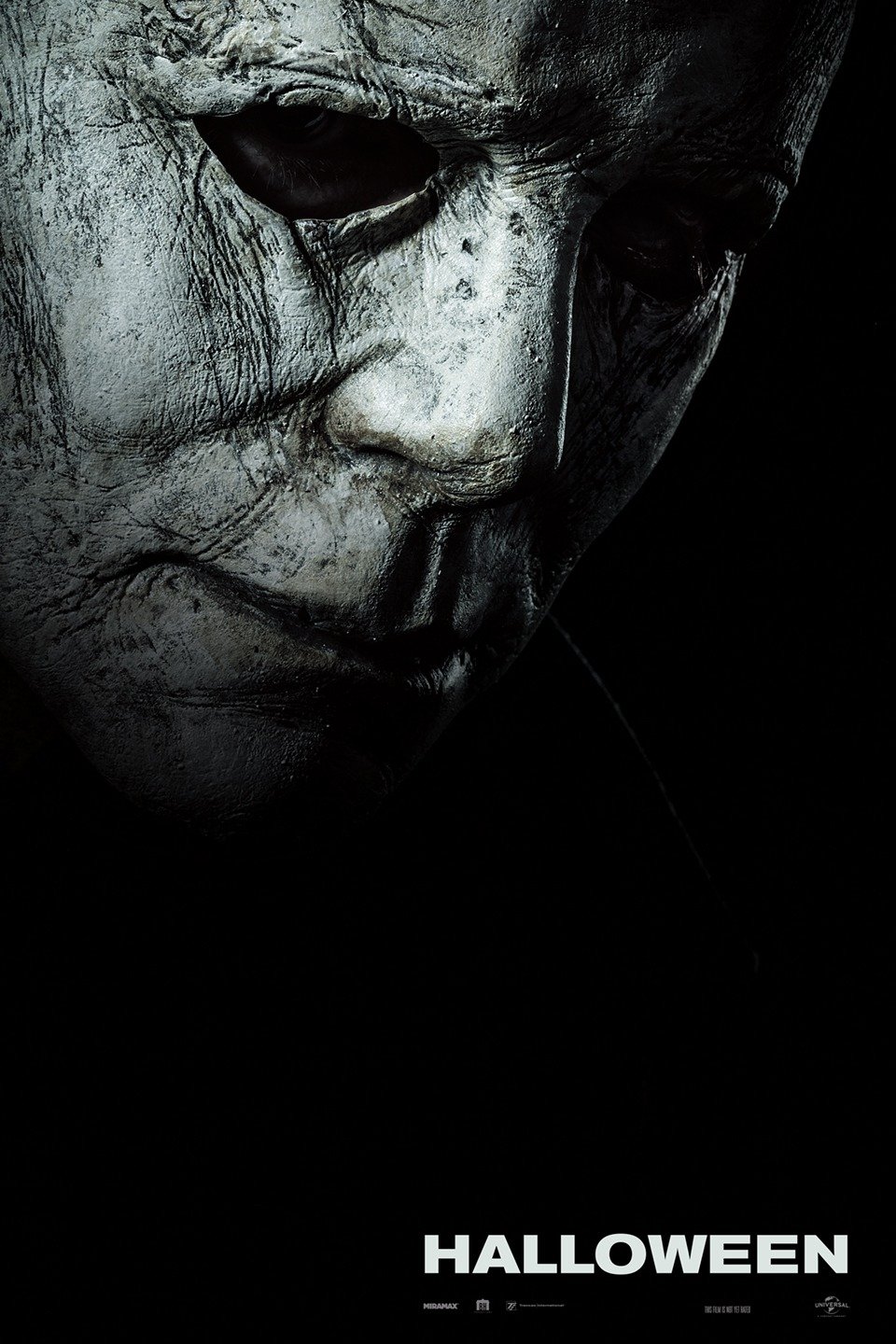
Halloween (2018) Full Horror Film Review

Happy Halloween Michael! David Gordon Green’s Halloween truly is the sequel that we have been waiting for in the Halloween franchise. Green set out to direct a Halloween movie that he desired to work both as an homage to the original whilst crafting an original story that could do more than be a great horror film, but be a great film period. And suffice it to say, he delivered in spades (or knives, as it were haha). Words cannot even begin to capture the energy of the auditorium last night. From screen to entrance Studio Movie Grill Tampa (my regular cinema) was filled with a level of energy that I’ve only ever witnessed at Jurassic, Avengers, and Star Wars movies. Twitter is all a’buzz this morning with those who saw it at pre-screenings and those of us who saw it at 7 o’clock last night. When I’ve been asked what I think, I am quick to respond that you need to throw out the rule book because Michael is writing this story. From echoes of the original (and some of Halloween 2) it still succeeds in providing longtime fans and those newly discovering the franchise with an original story that will hook you from the very beginning when you realize that all bets are off because no one is safe. It’s thrilling, engaging, and fun. It may lack Dean Cundey’s brilliant cinematography from the original (he was also the cinematographer for Jurassic Park, Carpenter’s The Thing and Back to the Future), but visually the film has those quintessential moments that act as a throwback to Carpenter’s original groundbreaking slasher. From the vintage opening title sequence accompanied by that iconic score to the showdown, Blum House’s Halloween is a brilliant addition to the franchise and is destined to be a future classic.

For my conversation about Halloween with the guys across the pond at the Movie Drone Podcast, be sure to watch for that episode dropping on Sunday wherever you get your pods.

It’s been 40 years to the day that Michael Myers (James Jude Courtney), the boogeyman, committed the infamous Haddonfield Halloween murders and 55 years since Judith Myers was stabbed to death. On Halloween night, Michael escapes from a bus that was transferring him from Smith Grove to a maximum security prison when the transfer goes horribly wrong. News of this escape puts Laurie Strode (Jamie Lee Curtis) on high alert as she knows he is heading for Haddonfield. Only this time, she is ready for him. Laurie is challenged with protecting herself while also protecting her daughter’s family. More than protecting herself and her family, Laurie is out for blood. With it being so long since the infamous murders, the town has largely let its guard down. History has faded into myth. But Laurie knew that Michael would be back one day, and she is fully prepared to face-off with the real-life boogeyman.

From the moment the film cuts to the vintage titles and the smashed jack-o-lantern becoming whole again, after the prologue, I knew that I was in for a real treat. That music is so incredibly iconic; those familiar chords are enough to strike fear in those who listen. Although many in the general audience may overlook the power of an opening title sequence, the typeface, transitions, music, and jack-o-lantern work together in order to communicate to the audience that David Gordon Green recognizes and respects the original and knows that you will love this installment that goes back to what made the first one work so well. It’s as if he is stating to the audience “I’ve heard you and I love the original too.” Instead of falling in line with current trends in horror films, Green is communicating to the audience that he is taking this franchise back to the roots. and back to the roots, he did. For fans of the franchise, you will undoubtedly recognize some easter eggs and other moments in the plot and kills that are nods to the original. Nods with a slight twist. I love the moments that connected me to the original. Same may call it shallow fan service, but I call that branding. Branding is important to a franchise, because those are the moments that are quintessential to the experience. And these moments in the film, that I see as branding, connect us to the original. Holding back on that branding would inhibit the nostalgia from shining briefly here and there. So much of Michael and Laurie’s identities are connected to those branding moments. However, don’t allow the return to channeling what made the first one work so well lead you to believe that you have it all figured out. While the soul of the original is there, the plot is full of twists and turns because just as Laurie was ready for Michael, he was ready for all of us sitting out there in the dark.

Written by Green, Danny McBride, and Jeff Fragley, this installment in the Halloween franchise was written to be a true continuation of the original story, ignoring everything that came after it. On that note, I like Halloween 2 and Halloween H20 but I am also equally pleased that this one essentially takes all the sequels and chalks them up to fan fiction. Could H2 and H20 have been included and the film still play out just as original and powerful? I think so, but at the same time, I did not find myself missing those installments. By placing this story 40 years after the original, it was able to remove all the absurdities of most of the others and start afresh. Missing from many of the other sequels was the playful nature of the original. Horror movies are supposed to be fun! Scary but fun. Even though there is murder and mayhem in a horror movie, that does not mean that it should be without those humorous moments. Fortunately for Green’s Halloween, the screenplay provides us with a simple revenge plot with a fantastically complex cast of principal characters. There is this refreshing exuberance I felt in the experience of this film. It was almost the same feeling that I got when I watched the original Halloween for the first time. The reason horror is used in events like Halloween Horror Nights and Howl-O-Scream is because there is a high level of amusement in it. And the screenplay of this film has perfect levels of horror and humor to keep you hooked and entertained for the whole time. Beyond the excellent direction Green provided, Jamie Lee looks so incredibly satisfying reprising her breakout role, we get a throwback Michael, and more. The key to the success of this film is the solid screenwriting. Moreover, this is not only a fantastic horror movie, it’s a solid film with no clarifier needed.

Before getting into content that requires me to talk spoilers, I want to explore the characters of Michael and Laurie specifically. Entire theses could be written on this subject, but let’s look at some of the main points. You may have asked yourself “what makes Michael tick?” The short answer: we do not know enough about his psychology, sociology, or physiology to know for sure. And that is a good thing! Why? Because if we knew too much about his mind and body, he would cease to be the boogeyman. And being the boogeyman is so important to, not only this franchise, but horror in general. That little bit of mystery and fantasy allow him to remain a monster to be feared and never truly understood. You see what happens to people in the film who seek to understand Michael better–hint–it’s not good. But since we are voyeurs who are obsessed with knowing, here is the long and short of what we know. According to Casandra Dodge (Ph.D. in criminology candidate at the University of South Florida), Michael likely suffers from and displays signs of a combination of antisocial personality disorder, schizophrenia, and obsessive compulsive disorder. We do not know enough to draw these conclusions, but there are signs of a combination of these psycho-social disorders.

Laurie is even more fascinating in this film than she was in the original. In many ways, she takes on some of the characteristics of Dr. Loomis from the first movie. He warned everyone about Michael’s violent behavior and would not be swayed into thinking that he could be rehabilitated. He was ready to kill Michael at every turn. Like Michael likely suffers from OCD, Laurie and Dr. Loomis also show signs of this disorder. Moreover, Laurie also displays signs of being a psychopath herself. Loomis, Laurie, and Michael could all be psychopaths. But contrary to popular belief, very few psychopaths are violent. In fact, careers for people that could be classified as psychopaths include: lawyers, surgeons, law enforcement, professors, artists, and more. Albeit I am overly simplifying, psychopathy means that you are predisposed to thrill-seeking behaviors and tend to be self-centered (among other characteristics). Laurie is less the final girl in this movie than she was in the original because she is very masculine and protective from the very beginning. There is no one defining moment that she sheds her (heteronormatively speaking) feminine self and takes on the traditional role of a man in stories to save the day and ultimately survive the killer. She is out for revenge the whole movie. I also appreciate how her character provides commentary on the realness of PTSD, and and the affects it has upon the whole body. On the note of revenge, the plot of this film aligns more closely with a revenge plot than a morality play. No mistaking it, Laurie Strode is back, and more phenomenal than ever! I love her character.

(spoilers ahead)

Substance and commentary. The original slashers such as Halloween, Friday the 13th, A Nightmare on Elm Street, and other horror films (that do not fall into the slasher genre) hold up so incredibly well because there is a high degree of subtext that provides a solid foundation upon which to build the more superficial elements of the plot. At its core, the traditional slasher and is a morality play. And this morality goes beyond have casual sex and die or do drugs and die. But the aforementioned are recurring themes in these films. What I appreciate about the new Halloween is not following that approach–at least, not in the same way. It would be all too easy to pick-out the murders based upon that theoretical framework, and Michael is not about to have that. Characters you think will die do not, and other characters that you may not think will die, wind up another Haddonfield victim. The best example of this abandonment of the more traditional approach to slashers is the first kills. One of the past tropes of horror films is that if you are a kid or gay (or queer) you don’t die. Guess again, the 12yo boy who happens upon Michael’s transport bus who prefers dancing to hunting (tipping the hand to the fact he is likely gay) becomes one of Michael’s first victims. This is an indicator that all bets are off–no one is safe. Furthermore, the babysitter that is killed is someone whom is rather likable. She’s a good babysitter–loves her kid–and even when with her boyfriend comes over to the house, they do not engage in anything beyond “dry humping” and some weed smoking. No sex or hardcore drug usage here. Such a great approach because we like the babysitter; however, she winds up a victim anyhow. And Allison’s (Laurie’s grand-daughter) boyfriend kisses another girl at the school dance, but he does not wind up a victim. Although I would have preferred that he died, I like the fact that the rule book is thrown out.

The film also toys around with the idea of the Final Girl by playing around with the hard definition that we’ve recognized for all these years. And it pays off! Furthermore, we have some excellent commentary on and foreshadowing of the role Allison will play later on in the film. She and her boyfriend go to the high school Halloween dance as Bonnie and Clyde–with a twist! They gender bent the costumes. Showing Allison in the pants, foreshadows that she has that same androgynous image that Laurie had in the first film, tipping the hat that she is our final girl. However, she is not the only final girl. We have final girls in this movie. But this concept runs deeper than just the simple fact that we have a trifecta of female heroines. There is pattern established in the movie that when one faces Michael alone that he cannot be defeated. While the journalists at the beginning may seem like mere plot devices through which Michael gets his mask returned, they are so much more. They start the pattern because by themselves, they cannot defeat Michael, and die. The babysitter couldn’t defeat him alone, and her boyfriend died trying to protect his girlfriend. All of them on their own. Even Laurie, though being a solid match for Michael, cannot defeat him on her own either. It’s only when Laurie teams up with her daughter and grand-daughter that Michael can be taken down. Love this!

We also have some poetic justice kills. Loomis’ protege who seeks to use Michael for his own personal gain in the fields of science and academia. He is so incredibly prideful in the capabilities of his brain that his kill is symbolic that Michael will not be used to further his pretentious intellect. He stomps on his head like a pumpkin and the brain matter explodes like pumpkin seeds n a flash on screen (note: this is the most graphic kill). Likewise, the journalists who were using Michael to further their own careers by attempting to be smarter than Michael and even patronizing, wind up dead with primarily injuries to the head. Incredibly symbolic! Furthermore, there are other kills that serve purposes to comment on behavior and intention as well. In addition to symbolic kills and homages to the original, there is a recurring pumpkin and jack-o-lantern motif in the film. I need to watch again, but I believe we have a jack-o-lantern in nearly every scene like we do in the original. In fact, two of the heads of victims are turned into jack-o-lanterns with a flashlight shining out through the decapitated heads. While much of what I have described sounds grossly violent, there is far more violence off screen than what we actually see. Even the kills that are on the screen do not linger. This is important because lingering violence detracts from the narrative and becomes shallow spectacle. Green has a nice balance between narrative and spectacle. He truly showcases he art of storytelling all through Halloween.

Do yourself a favor and go see this movie! It was everything that I wanted it to be. Not only is it a great horror film, it’s a great film period. From the writing to the direction, production design, music and more. It is destined to be a future horror classic worthy of many rewatches.

Profile_PicRyan teaches screenwriting at the University of Tampa. If you like this article, check out the others and FOLLOW this blog! Interested in Ryan making a guest appearance on your podcast or contributing to your website? Send him a DM on Twitter or email him at RLTerry1@gmail.com! If you’re ever in the Tampa area, feel free to catch a movie with him!

Follow him!

Twitter: RLTerry1

Instagram: RL_Terry