“Dr. Seuss’ The Grinch” (2018) movie review

Seuss’ beloved Christmas classic gets a brightly animated treatment. Universal and Illumination Entertainment’s The Grinch starring Benedict Cumberbatch as the furry green Christmas-hater with a loyal dog named Max. Dr. Seuss’ works are no strangers to screen adaptations. Many of his books have been adapted to animated successful TV specials and movies, including my favorite adaptation How the Grinch Stole Christmas (1966). We have the original award-winning 1966 version narrated by Boris Karloff and animated by Chuck Jones, the moderately entertaining live-action 2000 version, and the one we are reviewing today, a truly watch-worthy feature-length animated feature that has the soul of the original with some heartwarming additions. Needless to say, as much as there is to like about this new version, it does not rise to the same level as the Jones’ original, but is certainly superior to the Jim Carrey version. In addition to the main plot points from the book, this film takes some creative liberties to introduce new scenes and provide additional character development for the Grinch, Cindi Lou Who, and Cindi’s mom. Much like with the previous feature length animated and live-action films, this one too contains the quintessential Seussian architecture that lacks any straight lines (incidentally, this same concept is embraced at Seuss Landing at Universal Orlando’s Islands of Adventure). From the top of Mount Crumpit to Whoville town square, if you are a fan of the book and original, then you will certainly enjoy this one and may even add it to your holidays this season. Oh yeah, Angela Lansbury has a cameo as the Whoville mayor!

Ordinarily this is where I summarize the plot, but we all know the story, so let’s jump right into this particular version. Arguably, two of the greatest, profound, and most celebrated Christmas stories feature a central character who hates Christmas; of course, one is an old British miser and the other is furry and green. Collectively, Charles Dickens’ Scrooge from A Christmas Carol and Dr. Seuss’ Grinch from How he Grinch Stole Christmas confront the commercialism, greed, loneliness, and the results of hardening one’s heart to friends, family, and the spirit of generosity. Themes that are just as relevant today as they were when first penned. The plots are so simple, yet so incredibly profound and inspirational. Both these stories benefit from simple plots and complex characters. Many of us have been either a Grinch or a Scrooge in our lives, or perhaps you know of one now; and it’s because of the relatability that we can identify with the characters. Taking the tentpole elements of the original animated version and adding a modern touch, 2018’s The Grinch seeks to capture the imagination of young audiences but concurrently providing a wonderful experience for adult audiences too.

One of the most memorable elements in the production design of the original animated classic is the stark contrast between the warm Whovillian homes and the cold, dankness of the Grinch’s lair. One is full of smiling faces while the other is solitary. Anyone who’s read Dr. Seuss’ books notices that there is something incredibly unique to his designs. As pointed out in the opening remarks, there are no straight lines anywhere in a Seuss book or even at Seuss Landing at Islands of Adventure. While this may not seem like a big deal–it is. Truly, it’s one of the illustrated elements that gives the images their trademark look. I greatly appreciate the Illumination Entertainment artists for successfully carrying this over to the film. Even down to the drinking glasses, there are no straight lines anywhere to be found. Another highlight from the original is the music! More specifically, the songs. Instead of simply including the original songs in this feature length adaptation, they were reimagined for a new generation. Although I feel You’re a Mean One Mr. Grinch suffered in the translation, the rest of the songs worked really well, and were a lot of fun! In addition to songs inspired by the original, there are song numbers integrated that you may recognize from today’s Christmas music. The new number that was the most fun was the Whovillian Christmas carolers played by Pentatonix singing God Rest Ye Merry Gentlemen. Not just the song itself, but the choreography of that number was perfect! It combined the stereotypical “annoying caroler” trope with slapstick comedy in a chase scene of sorts.

Because of the feature length runtime of the movie, the writers have the ability to provide subtext that is often more difficult in short films. Not that the original is lacking–certainly not–that’s why it stands the test of time and continues to be adored by millions. Chuck Jones’ animated masterpiece is still teaching us today. That being said, with the additional storytelling time, we learn a bit more about the Grinch and Cindy Lou’s parallels to one another. Both of them have a stated mission and external goal at Christmas. The Grinch wants to steel Christmas away disguised as Santa Claus, and Cindy Lou wants to capture Santa in order to give her mom a Christmas well-deserved since she is a single mother raising a family. Giving and steeling Christmas. That contrast provides a lot of opportunity to play around with the meaning and value of Christmas to the hopeful and the jaded. Both the Grinch and Cindy Lou start their missions with the same two words: Santa Claus. But what they do with those words couldn’t be more polar opposite than the North and South Poles. Further parallels between these two iconic characters is the method executed to achieve their respective goals. Both of them plan and assemble a team, equipment, and traps without anyone finding out. And like each other, both are successful at achieving their goal. The Grinch does steel (what he thinks is) Christmas and Cindy Lou does capture (whom she thinks is) Santa Claus. It’s that chance encounter between faux Santa and Cindy Lou that alters the course of the evening and Christmas morning. Two completely separate plans intersecting in providence that teaches that Christmas “doesn’t come from a store…maybe Christmas…perhaps…means a little bit more!”

Much like with the live-action version, we have new characters introduced in this one too. However, the focus is never off primarily the Grinch followed by Cindy Lou. It’s important to note that keeping your central and opposition characters the focus enables the internal needs and external goals to be developed more effectively than shifting focus between too many characters and subplots. Speaking of which, who are the central and opposition characters? Contrary to the “good guy” being the typical protagonist and the “bad guy” being the typical antagonist, this story flips that script and it works beautifully! In The Grinch, the Grinch is our central character and Cindy Lou is actually the character of opposition. The “good guy” is not always your central character. The Grinch has the external goal to steel Christmas from Whoville accompanied by the internal need to make other suffer as he has; opposing his goal is Cindy Lou who also had her own set of internal and external goals. But in this story, the character opposing the central character’s goal/need is actually the “good guy.” Interesting stuff, right?!? Think of main characters in terms of central and opposition, not protagonist and antagonist.

Outside of the Grinch and Cindy Lou, there are important supporting players. Our favorite dog is back, and endearing as ever! Max is even given a bit more screen time and substance in this version. He is truly the Grinch’s only friend, and although gets taken advantaged of, it’s clear that the Grinch does care for him. There is a story of loyalty here, and it’s an element that cannot be overlooked. If the Grinch was completely evil, then Max would likely not stay with him. So, the fact that Max remains by his master’s side teaches us that there must be some good in the Grinch somewhere. We are told that his heart is two sizes too small–not non-existent. How’s about that character of Fred?!? I fell in love with him instantly. Fred, the plus-sized reindeer, plays an important role in the story that I cannot go into without revealing a spoiler. However, I can tell you that he is adorable; and he, Max, and the Grinch form a non-traditional family that works incredibly well in this film and plays into the Grinch realizing that there is value in love, friendship, and community.

Perhaps this animated feature is not as magical as the original; but you now what, it is still incredibly well directed, written, acted, and animated. I am someone who watches the original every year and even have the book. Still, I am able to find tremendous value in this version, and will likely add it to the list of movies that I watch every November and December. There is something for everyone in this movie, and you may even find your heart growing three sizes as a result of this new take on the timeless charming tale of How the Grinch Stole Christmas. Echoing the end of Seuss’ The Cat in the Hat, what does Christmas mean to you? What would you say if the Grinch asked you?

Merry Christmas!

Ryan is a screenwriting professor at the University of Tampa. If you like this article, check out the others and FOLLOW this blog!

Follow him!

Twitter: RLTerry1

Instagram: RL_Terry

Thrillz (theme parks): Thrillz.co
Halloween (2018) Full Horror Film Review

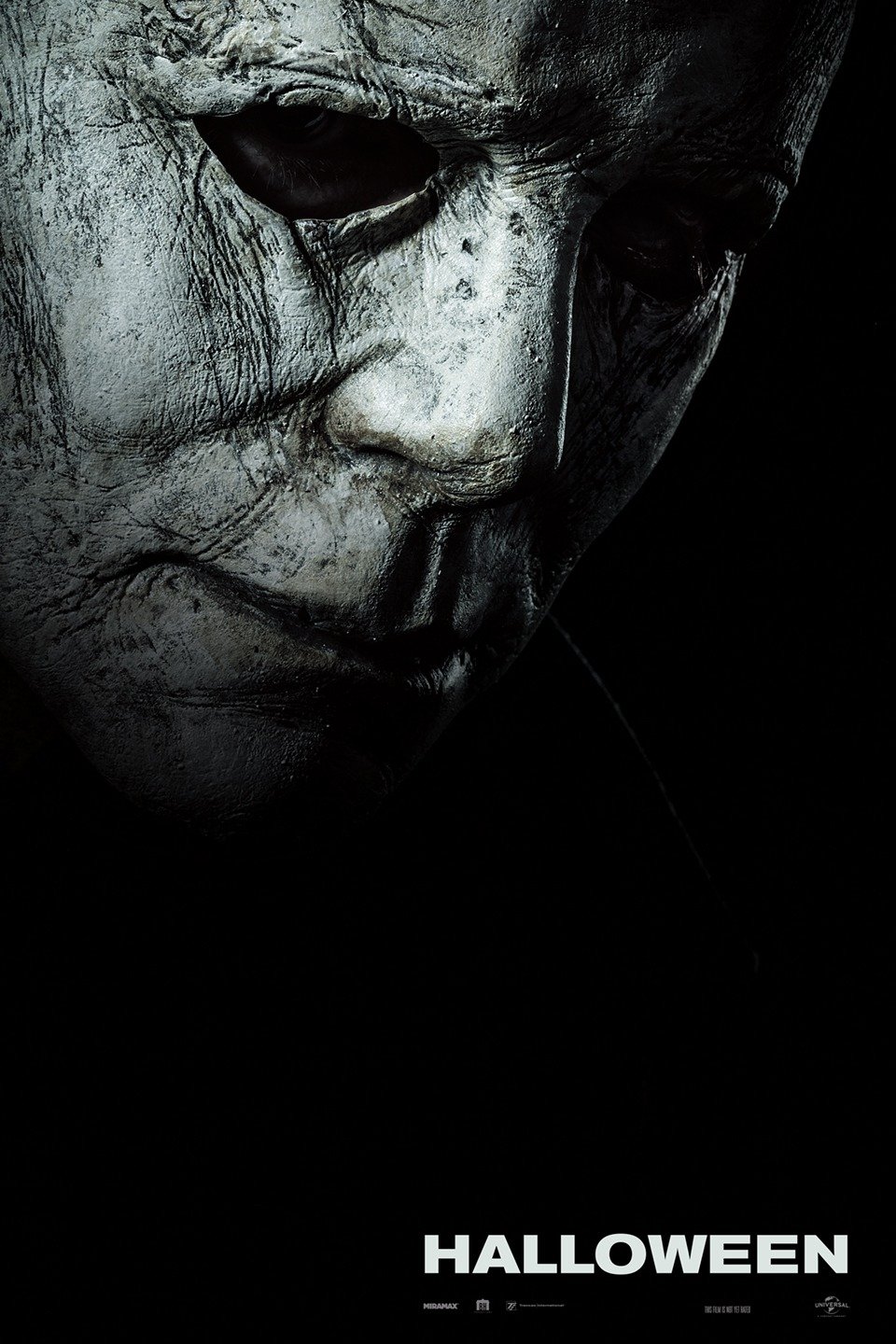
Happy Halloween Michael! David Gordon Green’s Halloween truly is the sequel that we have been waiting for in the Halloween franchise. Green set out to direct a Halloween movie that he desired to work both as an homage to the original whilst crafting an original story that could do more than be a great horror film, but be a great film period. And suffice it to say, he delivered in spades (or knives, as it were haha). Words cannot even begin to capture the energy of the auditorium last night. From screen to entrance Studio Movie Grill Tampa (my regular cinema) was filled with a level of energy that I’ve only ever witnessed at JurassicAvengers, and Star Wars movies. Twitter is all a’buzz this morning with those who saw it at pre-screenings and those of us who saw it at 7 o’clock last night. When I’ve been asked what I think, I am quick to respond that you need to throw out the rule book because Michael is writing this story. From echoes of the original (and some of Halloween 2) it still succeeds in providing longtime fans and those newly discovering the franchise with an original story that will hook you from the very beginning when you realize that all bets are off because no one is safe. It’s thrilling, engaging, and fun. It may lack Dean Cundey’s brilliant cinematography from the original (he was also the cinematographer for Jurassic Park, Carpenter’s The Thing and Back to the Future), but visually the film has those quintessential moments that act as a throwback to Carpenter’s original groundbreaking slasher. From the vintage opening title sequence accompanied by that iconic score to the showdown, Blum House’s Halloween is a brilliant addition to the franchise and is destined to be a future classic.

For my conversation about Halloween with the guys across the pond at the Movie Drone Podcast, be sure to watch for that episode dropping on Sunday wherever you get your pods.

It’s been 40 years to the day that Michael Myers (James Jude Courtney), the boogeyman, committed the infamous Haddonfield Halloween murders and 55 years since Judith Myers was stabbed to death. On Halloween night, Michael escapes from a bus that was transferring him from Smith Grove to a maximum security prison when the transfer goes horribly wrong. News of this escape puts Laurie Strode (Jamie Lee Curtis) on high alert as she knows he is heading for Haddonfield. Only this time, she is ready for him. Laurie is challenged with protecting herself while also protecting her daughter’s family. More than protecting herself and her family, Laurie is out for blood. With it being so long since the infamous murders, the town has largely let its guard down. History has faded into myth. But Laurie knew that Michael would be back one day, and she is fully prepared to face-off with the real-life boogeyman.

From the moment the film cuts to the vintage titles and the smashed jack-o-lantern becoming whole again, after the prologue, I knew that I was in for a real treat. That music is so incredibly iconic; those familiar chords are enough to strike fear in those who listen. Although many in the general audience may overlook the power of an opening title sequence, the typeface, transitions, music, and jack-o-lantern work together in order to communicate to the audience that David Gordon Green recognizes and respects the original and knows that you will love this installment that goes back to what made the first one work so well. It’s as if he is stating to the audience “I’ve heard you and I love the original too.” Instead of falling in line with current trends in horror films, Green is communicating to the audience that he is taking this franchise back to the roots. and back to the roots, he did. For fans of the franchise, you will undoubtedly recognize some easter eggs and other moments in the plot and kills that are nods to the original. Nods with a slight twist. I love the moments that connected me to the original. Same may call it shallow fan service, but I call that branding. Branding is important to a franchise, because those are the moments that are quintessential to the experience. And these moments in the film, that I see as branding, connect us to the original. Holding back on that branding would inhibit the nostalgia from shining briefly here and there. So much of Michael and Laurie’s identities are connected to those branding moments. However, don’t allow the return to channeling what made the first one work so well lead you to believe that you have it all figured out. While the soul of the original is there, the plot is full of twists and turns because just as Laurie was ready for Michael, he was ready for all of us sitting out there in the dark.

Written by Green, Danny McBride, and Jeff Fragley, this installment in the Halloween franchise was written to be a true continuation of the original story, ignoring everything that came after it. On that note, I like Halloween 2 and Halloween H20 but I am also equally pleased that this one essentially takes all the sequels and chalks them up to fan fiction. Could H2 and H20 have been included and the film still play out just as original and powerful? I think so, but at the same time, I did not find myself missing those installments. By placing this story 40 years after the original, it was able to remove all the absurdities of most of the others and start afresh. Missing from many of the other sequels was the playful nature of the original. Horror movies are supposed to be fun! Scary but fun. Even though there is murder and mayhem in a horror movie, that does not mean that it should be without those humorous moments. Fortunately for Green’s Halloween, the screenplay provides us with a simple revenge plot with a fantastically complex cast of principal characters. There is this refreshing exuberance I felt in the experience of this film. It was almost the same feeling that I got when I watched the original Halloween for the first time. The reason horror is used in events like Halloween Horror Nights and Howl-O-Scream is because there is a high level of amusement in it. And the screenplay of this film has perfect levels of horror and humor to keep you hooked and entertained for the whole time. Beyond the excellent direction Green provided, Jamie Lee looks so incredibly satisfying reprising her breakout role, we get a throwback Michael, and more. The key to the success of this film is the solid screenwriting. Moreover, this is not only a fantastic horror movie, it’s a solid film with no clarifier needed.

Before getting into content that requires me to talk spoilers, I want to explore the characters of Michael and Laurie specifically. Entire theses could be written on this subject, but let’s look at some of the main points. You may have asked yourself “what makes Michael tick?” The short answer: we do not know enough about his psychology, sociology, or physiology to know for sure. And that is a good thing! Why? Because if we knew too much about his mind and body, he would cease to be the boogeyman. And being the boogeyman is so important to, not only this franchise, but horror in general. That little bit of mystery and fantasy allow him to remain a monster to be feared and never truly understood. You see what happens to people in the film who seek to understand Michael better–hint–it’s not good. But since we are voyeurs who are obsessed with knowing, here is the long and short of what we know. According to Casandra Dodge (Ph.D. in criminology candidate at the University of South Florida), Michael likely suffers from and displays signs of a combination of antisocial personality disorder, schizophrenia, and obsessive compulsive disorder. We do not know enough to draw these conclusions, but there are signs of a combination of these psycho-social disorders.

Laurie is even more fascinating in this film than she was in the original. In many ways, she takes on some of the characteristics of Dr. Loomis from the first movie. He warned everyone about Michael’s violent behavior and would not be swayed into thinking that he could be rehabilitated. He was ready to kill Michael at every turn. Like Michael likely suffers from OCD, Laurie and Dr. Loomis also show signs of this disorder. Moreover, Laurie also displays signs of being a psychopath herself. Loomis, Laurie, and Michael could all be psychopaths. But contrary to popular belief, very few psychopaths are violent. In fact, careers for people that could be classified as psychopaths include: lawyers, surgeons, law enforcement, professors, artists, and more. Albeit I am overly simplifying, psychopathy means that you are predisposed to thrill-seeking behaviors and tend to be self-centered (among other characteristics). Laurie is less the final girl in this movie than she was in the original because she is very masculine and protective from the very beginning. There is no one defining moment that she sheds her (heteronormatively speaking) feminine self and takes on the traditional role of a man in stories to save the day and ultimately survive the killer. She is out for revenge the whole movie. I also appreciate how her character provides commentary on the realness of PTSD, and and the affects it has upon the whole body. On the note of revenge, the plot of this film aligns more closely with a revenge plot than a morality play. No mistaking it, Laurie Strode is back, and more phenomenal than ever! I love her character.

(spoilers ahead)

Substance and commentary. The original slashers such as HalloweenFriday the 13thA Nightmare on Elm Street, and other horror films (that do not fall into the slasher genre) hold up so incredibly well because there is a high degree of subtext that provides a solid foundation upon which to build the more superficial elements of the plot. At its core, the traditional slasher and is a morality play. And this morality goes beyond have casual sex and die or do drugs and die. But the aforementioned are recurring themes in these films. What I appreciate about the new Halloween is not following that approach–at least, not in the same way. It would be all too easy to pick-out the murders based upon that theoretical framework, and Michael is not about to have that. Characters you think will die do not, and other characters that you may not think will die, wind up another Haddonfield victim. The best example of this abandonment of the more traditional approach to slashers is the first kills. One of the past tropes of horror films is that if you are a kid or gay (or queer) you don’t die. Guess again, the 12yo boy who happens upon Michael’s transport bus who prefers dancing to hunting (tipping the hand to the fact he is likely gay) becomes one of Michael’s first victims. This is an indicator that all bets are off–no one is safe. Furthermore, the babysitter that is killed is someone whom is rather likable. She’s a good babysitter–loves her kid–and even when with her boyfriend comes over to the house, they do not engage in anything beyond “dry humping” and some weed smoking. No sex or hardcore drug usage here. Such a great approach because we like the babysitter; however, she winds up a victim anyhow. And Allison’s (Laurie’s grand-daughter) boyfriend kisses another girl at the school dance, but he does not wind up a victim. Although I would have preferred that he died, I like the fact that the rule book is thrown out.

The film also toys around with the idea of the Final Girl by playing around with the hard definition that we’ve recognized for all these years. And it pays off! Furthermore, we have some excellent commentary on and foreshadowing of the role Allison will play later on in the film. She and her boyfriend go to the high school Halloween dance as Bonnie and Clyde–with a twist! They gender bent the costumes. Showing Allison in the pants, foreshadows that she has that same androgynous image that Laurie had in the first film, tipping the hat that she is our final girl. However, she is not the only final girl. We have final girls in this movie. But this concept runs deeper than just the simple fact that we have a trifecta of female heroines. There is pattern established in the movie that when one faces Michael alone that he cannot be defeated. While the journalists at the beginning may seem like mere plot devices through which Michael gets his mask returned, they are so much more. They start the pattern because by themselves, they cannot defeat Michael, and die. The babysitter couldn’t defeat him alone, and her boyfriend died trying to protect his girlfriend. All of them on their own. Even Laurie, though being a solid match for Michael, cannot defeat him on her own either. It’s only when Laurie teams up with her daughter and grand-daughter that Michael can be taken down. Love this!

We also have some poetic justice kills. Loomis’ protege who seeks to use Michael for his own personal gain in the fields of science and academia. He is so incredibly prideful in the capabilities of his brain that his kill is symbolic that Michael will not be used to further his pretentious intellect. He stomps on his head like a pumpkin and the brain matter explodes like pumpkin seeds n a flash on screen (note: this is the most graphic kill). Likewise, the journalists who were using Michael to further their own careers by attempting to be smarter than Michael and even patronizing, wind up dead with primarily injuries to the head. Incredibly symbolic! Furthermore, there are other kills that serve purposes to comment on behavior and intention as well. In addition to symbolic kills and homages to the original, there is a recurring pumpkin and jack-o-lantern motif in the film. I need to watch again, but I believe we have a jack-o-lantern in nearly every scene like we do in the original. In fact, two of the heads of victims are turned into jack-o-lanterns with a flashlight shining out through the decapitated heads. While much of what I have described sounds grossly violent, there is far more violence off screen than what we actually see. Even the kills that are on the screen do not linger. This is important because lingering violence detracts from the narrative and becomes shallow spectacle. Green has a nice balance between narrative and spectacle. He truly showcases he art of storytelling all through Halloween.

Do yourself a favor and go see this movie! It was everything that I wanted it to be. Not only is it a great horror film, it’s a great film period. From the writing to the direction, production design, music and more. It is destined to be a future horror classic worthy of many rewatches.

Profile_PicRyan teaches screenwriting at the University of Tampa. If you like this article, check out the others and FOLLOW this blog! Interested in Ryan making a guest appearance on your podcast or contributing to your website? Send him a DM on Twitter or email him at RLTerry1@gmail.com! If you’re ever in the Tampa area, feel free to catch a movie with him!

Follow him!

Twitter: RLTerry1

Instagram: RL_Terry

“The House with a Clock in its Walls” full movie review

Whimsical and terrifying. A departure for the maestro of gory horror movies, Eli Roth’s foray into children’s horror-lite cinema is a hit! The House with a Clock in its Walls is the film adaptation of the 1973 novel, by the same name, written by John Bellairs. While there is a childlike wonder about the film, Roth’s trademark stylistic direction is clearly seen in brief glimpses into the movie’s much darker and disturbing moments. Already a rumored house for next year’s Halloween Horror Nights at Universal Studios Hollywood and Florida, this film provides many opportunities to adapt the house and its inhabitants into a fantastic haunted house maze. Jack Black and Cate Blanchett are incredibly entertaining, and offer an incredible banter that will leave you wanting a friendship like the one shared by these two characters. Our leading young star Owen Vaccaro is less interesting to watch and displays terrible crying skills; however, he does deliver a performance that shows he has potential to grow as a child actor. Although the movie largely takes place within the victorian mansion, it never feels limiting or redundantly boring. Eli Roth’s expertise for visual storytelling makes every room just an interesting as the previous one. For a children’s horror movie (what I’m calling horror lite), it has some scares and twisted moments that are actually terrifying if you stop to think about it. Roth takes this PG movie as close to a PG-13 movie without ever crossing that line. Never evoking strong emotion, you will still find moments that you will laugh and jump!

When Lewis’ parents are killed in a tragic accident, his estranged uncle Jonathan (Black) send for him to move to his mansion in Michigan as he is the only family Lewis has. After Jonathan uncouthly picks him up on the bus, Lewis begins to wonder what he’s gotten himself into. Nothing could have prepared him for what he was about to encounter in the mysterious mansion. In very little time, Lewis learns that his uncle and their intelligent, feisty neighbor Mrs. Zimmerman (Blanchett) are practitioners of of the magical arts, to the highest degree! With his eyes now opened to the fascinating world of magic, Lewis expresses an interest to learn magic himself. Struggling to make friends in his new school and neighborhood, Lewis tries to impress the student council president by raising the dead; but unbeknownst to him, Lewis unleashes an evil warlock who seeks to bring an end to humanity. It’s a race against the mysterious, hidden clock within the walls of the mansion to stop the warlock from destroying the world and all its inhabitants.

A perfect way to introduce kids to horror films, Eli Roth’s The House with a Clock in its Walls strikes a perfect balance between maintaining a kid-friendly plot while strategically including terrifying imagery. Although I watched Alfred Hitchcock Presents and The Twilight Zone with my mom growing up, it would be a while before I truly found that I absolutely loved horror films. Fortunately, kids of the 90s had more options for gateway horror than kids today. When I was a kid, I had Nickelodeon’s Are You Afraid of the Dark? and Goosebumps to introduce me to horror. Sadly, there do not seem to be nearly as many options for today’s kids to discover a love of horror early on. Mainly, that’s because filmmakers are more concerned with creating horror movies and TV shows for teens and adults due to  the increased gory, sexual, and disturbing content. Thankfully, one of the masters of horror took it upon himself to channel his 10yo self in order to adapt his penchant for popular, cult classic horror to provide a great experience for kids. And Roth did a superb job! Perhaps Roth does not bring his trademark torture porn and queasy horror to the screen in this children’s movie, but he does apply that same ability to scare us to the macabre puppets, man-eating topiaries, and demonic hand licking. That tongue was soooo Roth. Love it.

The production design is brilliant! Instead of relying upon digitally conjured terrifying or whimsical effects, this film largely delivers practical effects against the backdrop of a tangible set. That’s not saying that there isn’t CGI in the film, there is quite a lot. But it never takes me out of the world that Roth created for the screen. As I am not knowledgeable in architectural design, I am not sure if the setting is more Baroque or Victorian, but it’s gorgeous! The setting was quite immersive for a children’s movie, and gives the film a sense of dimension that is so often lost in 21st century movies. Editors and graphics designers are so preoccupied with whether or not they can achieve the effect that they don’t stop to think it is will detract from the believability of the setting and set-builds.

With Roth directing, this film benefits from its emotional beats, turning points, and moments of shock and terror being placed and executed with precision. Whereas a gateway children’s horror film cannot have much, if any, true body horror, it can include imagery that lends itself to more conventional horror such as evil Jack-o-lanterns, clown puppets, and ventriloquist dolls. Think of this film as introducing young audiences to those same tropes, that adults love about horror films, but in innocuous ways that may be just above a kid’s head but close enough that it may ignite an interest in horror films. Sometimes Roth’s more horrific elements of this film are witnessed as lurking in the shadows. Sort of a nod to his legacy but everything is still masquerading around as a family-friendly horror movie. In addition to talking about the horror and magical elements of the film, the plot is pretty simple and is ostensibly about the true sprit of family. Although each of our three main characters could, in many ways, not be any more different from one another, they all have a love of magic, education, and loyalty. Furthermore, each of them has suffered the loss of loved ones that leaves an empty hole in their respective hearts. Through these common interests, Jonathan, Mrs. Zimmerman, and Lewis form a bond that enables them to form a new family. If there is something conspicusoly missing from the plot, it is more of an exploration of post WWII trauma.

If you’re looking for a family-friendly gateway horror movie to watch, then definitely check this one out. The House with a Clock in its Walls proves that there is a need for more TV and film programming that is suitable for younger audiences who want a good thrill just like you and me. One thing is for sure, this film sill undoubtedly prompt young audiences to open their minds to the amazing world of horror movies, or perhaps scare them away.

Ryan is a screenwriting professor at the University of Tampa. If you like this article, check out the others and FOLLOW this blog!

Follow him!

Twitter: RLTerry1

Instagram: RL_Terry

Thrillz (theme parks): Thrillz.co

Halloween Horror Nights XXVIII Full Review

What an opening weekend! This past weekend saw the grand opening of Universal Orlando’s Halloween Horror Nights 28, and it has got to be the busiest weekend that I can remember in the last several years. Headlining this year’s HHN is Stranger Things and Poltergeist followed by eight other licensed and original IP houses. Boasting more houses than ever, HHN28 has got to be one of the best years yet. Although there is some disagreement on whether Stranger Things or Poltergeist is the best IP house or Slaughter Sinema or Scary Tales is the best original house this year, there is little (if any) disagreement on the level of attendance reaching epic proportions! Wait times for Stranger Things reached 150mins, and many other houses also had extreme wait times. Often, opening weekend tends to be less busy than the following weekends, but HHN fans were turning out in droves to attend Friday and/or Saturday nights. The energy level was incredible! Fans from all different age groups were all excited to enter the gates as the theme music from Stranger Things, Halloween, and Poltergeist filled the air. Armed with my Express Pass for Friday night and Rush of Fear HHN ticket, I was excited to meet up with my annual HHN crew for a night of frights and fun set to the beat of 1980s music and horror. One might even go so far as to say that this year’s HHN is an entertaining love letter to everything we loved about the 80s.

Prior to arriving at the archway, I just had get to the park. A lot easier said than done. There were so many horror fiends heading to HHN that the exit ramp from the 4 to the park was backed up to the driving lane. Not to mention the 40mph traffic all along I-4EB for miles and miles that I drove through. Once I finally got to the auto toll plaza for parking, I thought everything would move a little more smoothly. Nope. Although each of the toll booth holds two team members, from what I could tell, each booth had ONE–yes one–team member. After I finally parked, I looked at my watch and realized that nearly 45mins past from the exit ramp to the parking spot. Tip to Universal: please fully staff the booths to move cars through the plaza more efficiently. Once I made it to the archway, I had to pickup my tickets from the will-call kiosk. And just like usual, at the kiosk, neither liked my QR code nor my confirmation number. I encounter this problem every year. Any tips from those of you who do not have problems with the kiosk would be appreciated!

Finally, I was at HHN! Phew, what a process. But it was all worth it! One of my favorite things to observe is the variety of horror graphic T’s. So many different horror movies and fandoms represented. There is truly a sense of community at HHN. Maybe you don’t think about that at first because of the long standby (and even Express) wait times this year; but for those of us who love horror, this is the time of year (and the event) that we feel that we are not weird as characterized by popular culture at large. Even before I arrived, I had many fellow #FilmTwitter #Tweeps who hoped to see me, and I them, at the event. Unfortunately, I didn’t run into any of my Twitter followers at HHN this year, but I had a lot of fun following them, and reading what they thought about the different houses. Even though I did not end up meeting up with any of those I follow (or follow me) on Twitter, I felt connected to them through exchanging comments as we were all experiencing HHN at the same time. What I would like to see emerge from the Twitter and blogging communities as well as the #PodernFamily (podcasters) is to make an effort to connect in person as much as digitally. Perhaps many of us are covering HHN for our various media outlets; but at the end of the day, we are all there to have fun and should exhibit that same sense of community in person as we do through social media. Be social in real life!

(Twisted Tater has sense been added to the event)

Before I get into my brief review of each house, there is one other item of mention that I greatly missed at this year’s HHN. Twisted Tater. Yes. That spirally, starchy, fried goodness that has been a staple of HHN for what seems like forever. It was nowhere to be found. At least, I never found it nor did I see anyone post about it. Thankfully, my friend Dani and I had Twited Tater back during Mardi Gras, but we were both saddened that it was not part of HHN this year. Speaking of food, I do not feel that the selection of HHN food was as strong this year as it has been in the past. Yes, that Stranger Things cookie-like treat was popular on social media, but most of the HHN food seemed to skew towards sweets moreso than savory or starchy. In the future, aside from Twisted Tater returning, a nice balance of foods for any fix that an HHN guest may have, should be added. Oh yeah, Pizza-dogs need to return too! The fries just don’t do it. Speaking of fries, fresh cut fries would be a great addition to the food lineup!

Although it’s the houses that typically get the most attention running up to and during the event, after last year’s success of the elaborately immersive Trick ‘r Treat scare zone, the scare zones have begun to get an increased level of attention. Like with last year’s Trick ‘r Treat, it stands to reason that scare zones can definitely be used as a testing ground for future houses. The concept of testing an IP or concept for a house in a scare zone the previous year is not new, but it seems to be becoming more of the case over the last couple years. Scare zones this year are: The Harvest, Vamp ’85, Killer Clowns from Outer Space, Twisted Traditions, Revenge of Chucky, and I also count the annual chainsaw wielding clowns in Springfield.

The Harvest: Here you’ll encounter all the horrors you have ever feared were in your grandparents’ barn. I feel that this scare zone was a little weak compared to what is typically in this same area, but still a fun scare zone to get you in the mood for your night of horror. One of the best parts of the scare zone are the variety and amount of jack-o-lanterns! They are everywhere. It feels very much like Halloween!

Vamp ’85: Ring in the new year with 1980s vampires and music! Loved the small stage show! With many of the houses having roots in the 80s, this zone worked extremely well to continue that immersive love letter to the 1980s. Make sure to stay for the countdown but watch out for big haired vampires in flashy clothes!

Killer Clowns from Outer Space: My pick for favorite scare zone! Absolutely loved this scare zone, and I know you will to. Based on the cult classic, this scare zone has the best costumes and atmosphere. It successfully strikes that balance between horror and comedy, and works as a fun way to cleanse the pallet from the much darker areas of the rest of the park.

Twisted Traditions: Best part of this scare zone is the creepy church building! I walked though this scare zone a couple times, but unfortunately, I never felt that it actually accomplished what it set out to do. Only the church building is memorable. Couldn’t name one unique costume.

Revenge of Chucky: I was pretty hyped for this scare zone because I like the movies so much, but it was a bit disappointing. However, the interactive Good Guys display with Chucky was great! And that man baby you’ve probably seen on Twitter of IG was truly disturbing. I think it could have used a little more scare factor. Maybe even a Chucky jumping out at guests or something. It was okay, just not quite what I expected.

Now for what you really want to know about–the houses!

GET THE EXPRESS PASS even if just for one night, which is what I did. It is definitely worth the cost.

Poltergeist: MY FAVORITE HOUSE at HHN28! Such a successful translation from screen to live experience. All the moments from the movie that you want to see and experience are there! I wonder if real skeletons were used in the HHN house like in the movie, hence the curse and lore that follows Hooper and Spielberg’s movie to this day. You start in the back of the house in the pool then make your way through the infamous suburban home. The scares are perfectly effective and the production design is right out of the movie.

Stranger Things: This is likely the house that you may be looking forward to experiencing the most, as it is the other headliner house this year. The demogorgon will chase you throughout the house. All the scenes and locations from the show that you want to see are in the HHN28 house. And the lighting and special effects are spot on. From the living room with the Christmas lights to the Upside Dows, you will feel completely immersed in the world of Hawkins! The only negative criticism I have is the lack of live cast members. Yes, much has to do with an inability to cast kids in a house, but the absence was noticeable.

Halloween 4: With the highly anticipated Halloween (2018) releasing next month, Michael Myers once again returns to HHN! This is the third Michael house in the last few years with Halloween 1 and 2 with 3 being skipped since Michael is not actually in it. It’s a fun house for sure! And you get lots and lots of Michael. It’s been a while since I’ve seen H4; but from what I remember, this house does capture many scenes and elements of the movie. However, ultimately I feel that this house feels like more of a Michael Myers tribute than a “Halloween 4” house. This may be the case because HHN will be going on a Michael break for a while.

Trick ‘r Treat: In short, it works better as a scare zone than a house. That being said, it’s still a solid house with many of the scenes you want to see recreated. You’ll encounter Sam several times and you’ll get to see some of your favorite kills from the movie.

The Horrors of Blumhouse: If you need to skip a house for the sake of time, skip this one. Better than last year, but still (and according to most polls and reviews I’ve seen on Twitter) the least liked house at HHN28. At this house, you walk through Happy Death Day and First Purge. HDD was repetitive. Yes, I realize that is the point because the movie is a twisted Groundhog Day, but as a house it gets old quickly. And then The Purge movies just don’t translate well to a house, with the exception of the first one, which was more of a home invasion.

Scary Tales: My pick for best original house! From the moment you enter the Wicked Witch’s castle as she flies overhead, you will be completely immersed in the absolutely impressive production design that works perfectly around every corner. Each and every fairy tale was twisted beautifully. The effects were fantastic and the attention to detail was unlike anything I’ve seen in an original house before. What I find most interesting about the experience is that this house actually gets back to the original idea behind these tales in that most fairy tales were darkly cautionary stories told to influence a child’s behavior. Many are quite scary! So, this feels like an exaggerated version of how these tales were received back when originally written.

Slaughter Sinema: Close runner up to Scary Tales. Ever wanted to visit the world of those schlocky horror films of the 1980s??? Now is your opportunity to get inside the screen. Such a great house! While waiting in queue, you’ll get to watch trailers of some terrible, great horror movies. My personal favorite is Attack of the Swamp Yeti. The movies are so bad that I want to see each of them. Too bad that they are completely made up for this event. You’ll enter this house through an old drive in movie theatre then walk through each of the movies. There are some excellent kills and the production design is impressive!

Seeds of Extinction: Life after people! Visit an Arizona that is overrun by predatory plants and see you as their next dinner. A post-apocalyptic house is not entirely new, but this is a new twist on a past concept. We are used to being chased by zombies or creatures, but now you must fear plants. Some will eat you whole and others will shoot you with poisonous darts like the plants in Jumanji.

Carnival Graveyard: What is more terrifying than an abandoned carnival inhabited by hillbillies and killer clowns? Not much, haha. This house successfully combines the best of circus and hillbilly horror for one nightmarish house. Of all the original houses, this one is probably the most detailed. Even more than Scary Tales. The scares are so good! I like how the characters are extensions of the setting itself instead of feeling like their are just stuck in there to frighten us.

Dead Exposure: Ehh. This is a concept that has been done before, and like before, it fails to ever be truly scary. The idea is that you have been given an inoculation to prevent you from turning into a zombie after an outbreak at a facility. This shot is said to have nasty side effects such as disorientation. And on that, the house delivers in spades. The lighting design and special effects were so disorienting that I legitimately had trouble walking around to the point that is was annoying and not playful.

I did not experience Academy of Villains. And that is by choice. I felt like Harry Potter talking to Snape when he exclaims “how dare you stand where he stood…” That is how I felt because it’s now located in the stadium where Bill & Ted used to be. A horror comedy show that is built upon satire and parody is missing from the HHN28 lineup. If for no other reason, this show served as a means to take a break from the macabre and cleanse the pallet for more frights! I hope to see a show along these lines return one day.

Well, there you have it folks! A comprehensive review of Universal Orlando’s Halloween Horror Nights XXVIII. You definitely need to get out to HHN while it is going on. Fortunately for you, it just opened so you have several more weeks of HHN on select nights. With a variety of tickets and passes to choose from, there is a ticket for nearly every budget. If you can only go one night, I highly recommend getting the Express Pass. Otherwise, you may only make it to 2-3 or at the most 4 houses during your night.

Follow me on

The R.L. Terry ReelView (for films)

Twitter: RLTerry1

Instagram: RL_Terry

Checkout my book On the Convergence of Cinema and Theme Parks


Sinister Summer: “Jaws” Retrospective Horror Film Review

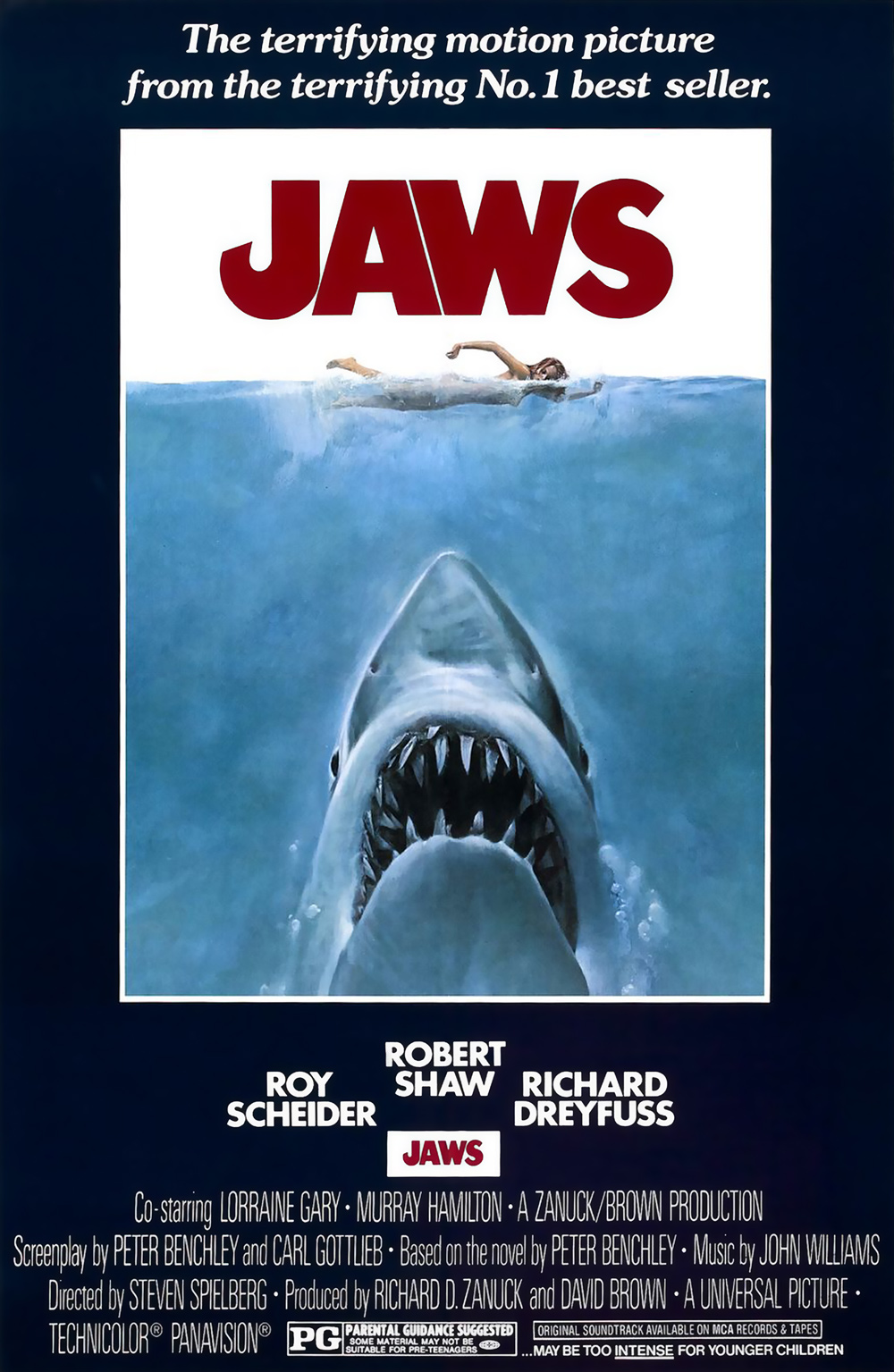
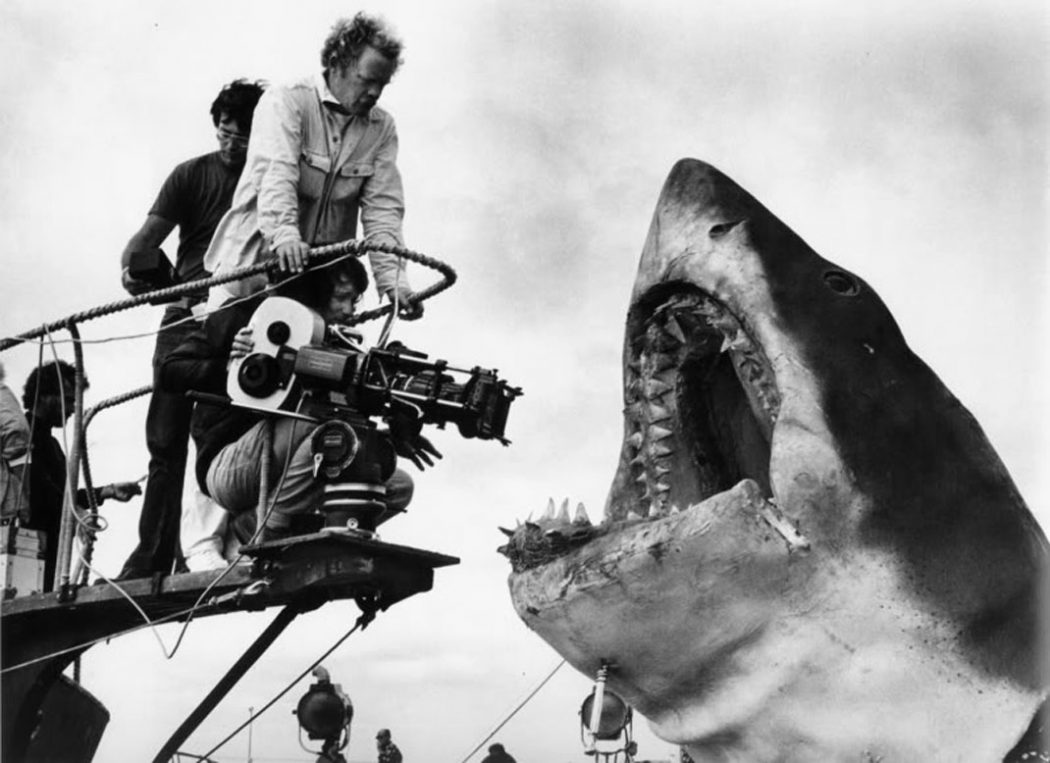
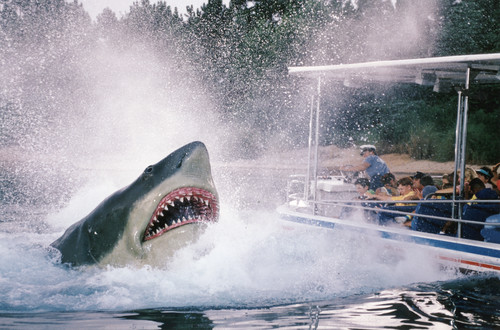
The original blockbuster! With The Meg opening tonight, the next article in my Sinister Summer series is a retrospective on Jaws (1975). And, we still “need a bigger boat” after all these years. Beginning with the iconic minimalistic score by John Williams, Steven Spielberg’s Jaws is still keeping people out of the water more than forty years later. Beyond the film, you can still face off with the most famous shark in cinema history at Universal Studios Hollywood. A favorite for folks to watch on July 4th each year (as I do), this film became the standard for the modern horror creature feature. And at only four minutes on screen, Bruce (Jaws’ nickname), successfully terrified audiences then and continues to frighten beachgoers today. For all intents and purposes, this iconic film set the bar for and essentially created this subgenre of horror movies featuring man-eating monsters from the natural world that exist in places where we typically find joy and relaxation. The ocean, theme parks, rivers, lakes–these innocent places become the setting for unimaginable terror.

If you are old enough to have watched it in theatres in 1975 or fortunate enough to have attended the special 40th Anniversary screenings back in 2015, then you can attest to the film’s evergreen ability to scare you out of your wits. When I watched it on the big screen in 2015, the auditorium was filled nearly to capacity with kids, teenagers, and adults. To see this iconic film on the big screen was truly a memorable experience. Especially so around where I live, since the gulf beaches are just down the road. The atmosphere was incredibly fun. All of these fans, most of which had likely seen Jaws before, were gathered together to relive the terrifying experience of a man-eating shark terrorizing a small New England town during the July 4th holiday season. But why would so many people pay to see a film that they had seen at no additional cost on TV or watched on DVD/BluRay?

Much in the same way Alfred Hitchcock’s Psycho is often credited, and rightly so, for being the first modern horror film and forerunner to the classic slasher; likewise, Spielberg’s adaptation of Peter Benchley’s novel Jaws is credited as the first modern creature feature horror film and forerunner to the blockbuster (or event movie). I am not negating King Kong, Creature from the Black Lagoon, or other predecessors; it’s important to take note of the word modern. Aside from excellent, visionary direction, both Psycho and Jaws have three important elements in common (1) powerhouse cast (2) strategic suspense and (3) a brilliant, oft-parodied, burned in your mind musical score.

It probably seems like you were born with John William’s two-note Jaws theme in your head, much like Bernard Hermann’s Psycho screeches. The terrifying suspense of Jaws comes in the form of a PG movie. That’s right, Jaws is rated PG. But this film delivers a bigger and more memorable punch than any gory torture porn horror film ever could. The groundbreaking structure of both these legendary films are the prototypes from which their respective branches of horror films are derived. They are the blueprint, if you will, for suspense and horror. The manner in which the suspense is drawn out for most of the movie assists in the ability to enjoy it over and over again, without it ever feeling like a B movie. The drawn out suspense engages you emotionally and psychologically. The feeling of dread lingers and lingers. In fact, you don’t truly see Bruce until the third act of the film when he jumps out of the water in an attempt to bite off the arm of Chief Brody. This intentional drawing out of suspense makes the delivery of that moment pack a powerful punch, an assault on the eyes and mind. Both Psycho and Jaws benefit from an excellent cast. The respective casts could not have been any better. Interestingly, in order to not allow the cast to overpower the story or shark, Spielberg didn’t choose actors with an instant command presence. But they displayed a strong presence nevertheless. It never feels as if they are acting, but truly become the characters they are portraying. The relatability of the characters is partly due to the screenplays, but it takes phenomenal actors to successfully bring these characters to life. Spielberg would repeat this same successful approach to creating blockbusters E.T. the Extra Terrestrial and Jurassic Park.

For more on suspense, checkout this video featuring Hitchcock himself.

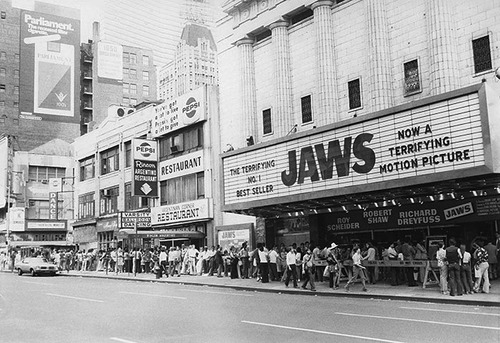
When Jaws is referred to as the original blockbuster, it’s not simply due to being the first film to break the $100mil box office sales mark, toppling the records previously set and held by The Exorcist and The Godfather. That is a valid observation, but is ultimately incidental. Reasoning behind this thriller’s ability to create the concept of a blockbuster movie is the fact Jaws was seen as an event not to be missed. Looking back at the original crowds of 1975, you’d think the movie was a one-night-only big event. Hence the term blockbuster. The common adjective attributed to big summer movies literally derives from the fact that queues for the box office wrapped around city blocks. It busted the block, so to speak. And the rest is history! Coupled with the summer release date and ticket sales, the allure of Jaws generated levels of enthusiasm and interest never seen before. The film took in so much money at its opening, that it nearly made up the entire production budget by the end of the first week. Furthermore, distribution and marketing companies began to use Jaws as a model for future marketing efforts in order to attempt to generate another blockbuster effect. After Jaws in 1975, the next big blockbuster would be George Lucas’ Star Wars IV: A New Hope in 1977. All these factors contribute to the iconic status of Jaws in terms of its contribution to film business.

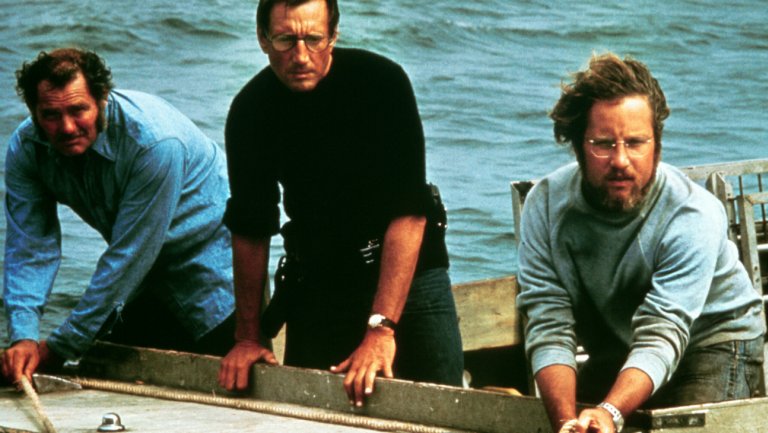
Instead of building a thriller on shock value, disturbing imagery, or jump scares, author Peter Benchley’s screenplay for Jaws focussed on crafting a cinematic atmosphere that had an intimate, claustrophobic feel built upon well-crafted drama through character development and conflict, at the center of which is a little heart. Different from contemporary creature features, Jaws picks off swimmers in the single digits and those attacks all happen at a single beach on a small island off the coast of Massachusetts. And instead of an entire agency hunting down the man-killer shark, three unlikely men are forcibly thrown together in order to track down and eliminate the terror from the waters off Amity Island. Keeping the principle cast and environment small, enabled the drama to perform strongly. Big things do come in small packages. Coupled with the strong performances from the entire leading cast, this brilliant combination of cinematic elements works together to give us some of the most memorable lines, scenes, and cinematography in movie history. Furthermore, real people swept up into an impossible situation and foolish decisions enable the audience to identify with the characters and the setting in ways that make the terror feel all the more real and close to home–or the beach.

While Bruce is often thought to be the villain of Jaws–and no mistaking it, he is definitely an antagonist–I argue that the true opposition to the goal in the plot is Amity’s mayor. If we accept the goal is to apprehend or kill the man-eating shark, then Vaughn serves as opposing that action. Perhaps you’ve never though of the true villain of Jaws being Mayor Larry Vaughn. A close analysis of the plot reveals that Jaws (Bruce) functions more as a catalyst for the principle conflict between Chief Brody and Vaughn. Other than the death at the beginning of the film, the Mayor is indirectly responsible for the remaining deaths. After all, it’s due to his utter complacency, negligence, and classic greed that led to the other deaths. For most of the film, we spend far more time with Chief Brody’s continued conflict dealing with the social pressures, desires, and ill-fated decisions of his boss than we do with shark attacks. Mayor Vaughn fails to acknowledge the sheer gravity of the dangerous situation, and close Amity’s beaches in order to keep his citizens safe. In effect, he fed them to the shark. Seems like a villainous action to me. Bruce was being a shark, Vaughn was the villain.

Often the central character’s development hinges on the direct and indirect conflict with the opposition to the goal of the plot. In this scenario, Mayor Vaughn stands between Brody and Bruce. The moments in which Brody demonstrates measurable growth in his character arc are when he attempts to stand up to the Mayor showcasing a contrast between public safety and a combination of politics and economics. Unfortunately, we never witness Brody truly standing up to the Mayor to enact measurable change per se; however, it isn’t needed because we witness several moments of Brody shouldering the responsibility of protecting the citizens of Amity as a civil servant. By contrast, Vaughn is more preoccupied with a warped view of  civic responsibility that places more importance on increasing the bottom line of the local businesses than public safety. He rationalizes his position opposing the advice of Brody by engaging in classic psychological defense mechanisms such as denial, displacement, and projection. Vaughn’s actions throughout the film depict an elected leader with misplaced priorities in order to better his own career.

The success of Jaws and reasons why it continues to stand the test of time has more to do with the beauty in simplicity and strategic marketing than Spielberg’s filmmaking. Don’t get me wrong, Spielberg is an excellent storyteller and directed many of our favorite films such as this one, Jurassic ParkE.T.Poltergeist (with Tobe Hooper), and more, but it’s the strong screenplay and innovative marketing efforts that give Jaws the chutzpah it has. Jaws quite literally changed the way studios market “blockbuster” films. Prior to Jaws‘ release, the only films to get wide, general releases were B-movies and exploitation films, but Universal Pictures took the chance at cramming Jaws into as many screens as possible, and it paid off in spades! Jaws wasn’t the first film to book theatres in this was, but it was the first to be well-received by by critics and fans. The film was an instant success!

Even if you trust the statistics that you are more likely to be injured or die in a car accident than be attacked by a shark, Jaws still leaves you wondering what may lurk in the depths of the ocean, and by extension lakes and rivers (thanks in part to Animal Planet’s River Monsters). There is a lingering feeling, even if in the back of your mind, that a man-eating shark could live in our oceans. That is the power of this film and why it has continued to pervade popular culture for more than 40 years. Its influence on popular culture is certainly not limited to the dozens or imitations such as Lake PlacidPiranha, Deep Blue Sea, or parodies like Sharknado, but it serves as the inspiration for Discovery Channel’s Shark Week, the Monster Jam monster truck Megalodon, theme park attractions, and the music is often used in unrelated TV shows and movies. Lines, imagery, music, and characters are permanently embedded in the psyche of the general public.