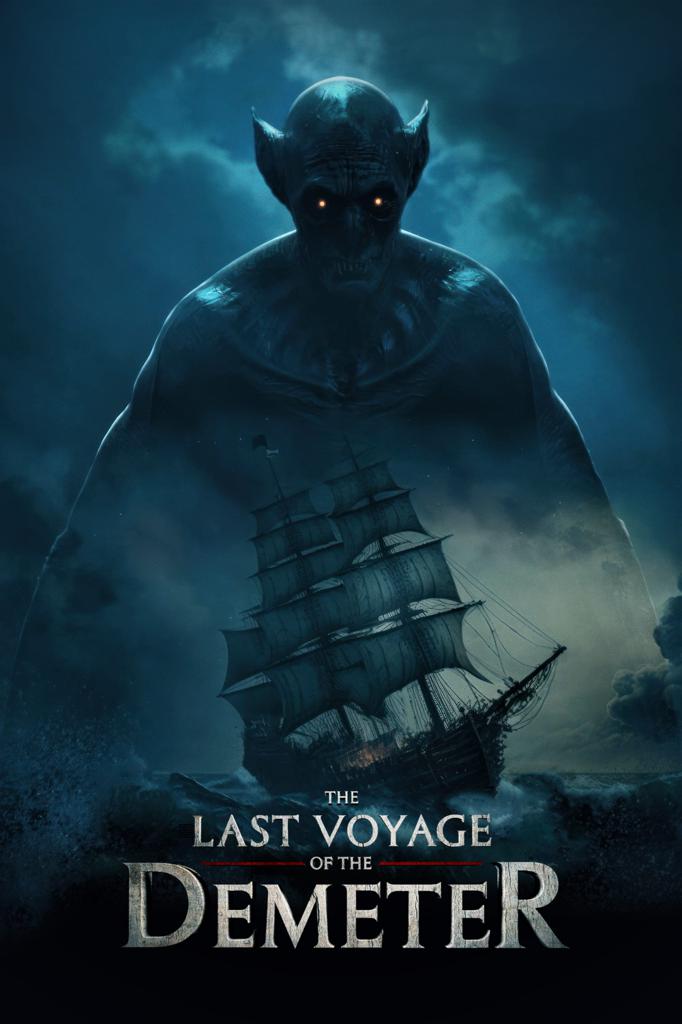
THE LAST VOYAGE OF THE DEMETER horror movie review

Fangtastic! Universal meets Hammer horror in a gothic tale that explores what may have happened on the domed Demeter carrying one thirsty passenger. While seemingly most contemporary horror movies take place in the real world, The Last Voyage of the Demeter transports us back in time to a fantastical world full of sailing vessels, ominous castles, and terrifying folklore. More than a backdrop on which the story unfolds, the atmosphere and sets are characters in and of themselves. If the gothic setting wasn’t enough, the score will certainly wrap you in the nightmare of this movie. If you love classic horror, this is right up your alley as it’s in the same ‘vein’ as such foundational early to mid 20th century horror motions pictures including Nosferatu and Dracula and even late 20th century horror pictures like the original Alien. While it remains to be seen if this is Universal’s second attempt at the defunct Dark Universe, between this movie and the Universal Monsters last at Epic Universe theme park (still under construction), the manner in which this movie ends certainly lends credence to an attempt to revive the dead Dark Universe.

After accepting mysterious cargo from an anonymous customer, the crew of The Demeter experience horrific events aboard the doomed sailing vessel as it makes it way from the harbors beneath the Carpathian Mountains to London.

Neither Bram Stoker, F.W. Murnau, nor Carl Laemmle included much information on the doomed voyage of the Demeter after it left the harbor beneath the Carpathian Mountains. All we know is that mysterious cargo (which we know is the coffin and/or dirt belonging to Count Dracula/Orlak) is dropped off and only the ghost of a ship arrives in London. And that’s the beauty of this movie, the filmmakers only needed to begin and end in the right places. Therefore, everything that unfolds on the ship is pure speculation and imagination. When adapting an existing IP, this is how it should be done. And while this is the best example in recent years of how to find new stories within an existing IP, Disney did something similar with Rogue One, which is my favorite in the Disney Wars movie universe.

We already know The Demeter and crew aboard are doomed, so the charm or terror in this movie isn’t what’s ultimately going to happen–rather–how is it going to happen. And director André Øvredal and writer Bragi Schut Jr. do an excellent job at making the events captivating and even surprising. No one is safe on the sailing cargo vessel, and I do mean no one. Our storytellers craft a narrative that is completely inspired by the past writings and movies yet it takes the story of Dracula to new levels, most of which I appreciate, though there are some elements of the story that I feel are not in line with established vampire lore.

Without getting into spoilers, it’s difficult to discuss what I would like to bring to to the discourse; however, I’d be remiss if I didn’t convey that there is a character we know from nearly all iterations of Dracule or Nosferatu that appears to be setup, but it’s never delivered. Without knowing the direction Universal is going with this movie, I must say that this was a missed opportunity to organically bring this character into what appears to be a relaunch of the Dark Universe.

Both Universal and Hammer horror are being channeled in this newest Dracula movie! You have the gothic stylings of early Universal horror coupled with the amped violence of Hammer horror. Working together, this two distinctly stylistic expressions of horror are used effectively in the crafting of the aesthetic and tone of this movie. Further evidence of the inspiration taken from early Universal and Hammer horror can be witnessed in the haunted house upon the sea concept. I am also reminded of Alien when I think of the setting, the claustrophobia, and the no escape dynamics of this movie. In Alien, it was a Xenomorph in space where “no one can hear you scream,” except we are in a sailing vessel at sea where no one can hear you scream.

As a huge horror fan, especially of the classics, I am eager to see where this movie takes Universal horror. Usually, I am not a fan of starting a franchise (when it is intentionally started), but this movie demonstrates that Universal may have learned its lesson from the failed launch of the last Dark Universe. I definitely see potential in this return to classic Universal monsters, and am along for the ride.

Ryan teaches Film Studies and Screenwriting at the University of Tampa and is a member of the Critics Association of Central Florida and Indie Film Critics of America. If you like this article, check out the others and FOLLOW this blog! Interested in Ryan making a guest appearance on your podcast or contributing to your website? Send him a DM on Twitter. If you’re ever in Tampa or Orlando, feel free to catch a movie with him.

Follow him on Twitter: RLTerry1 and LetterBoxd: RLTerry

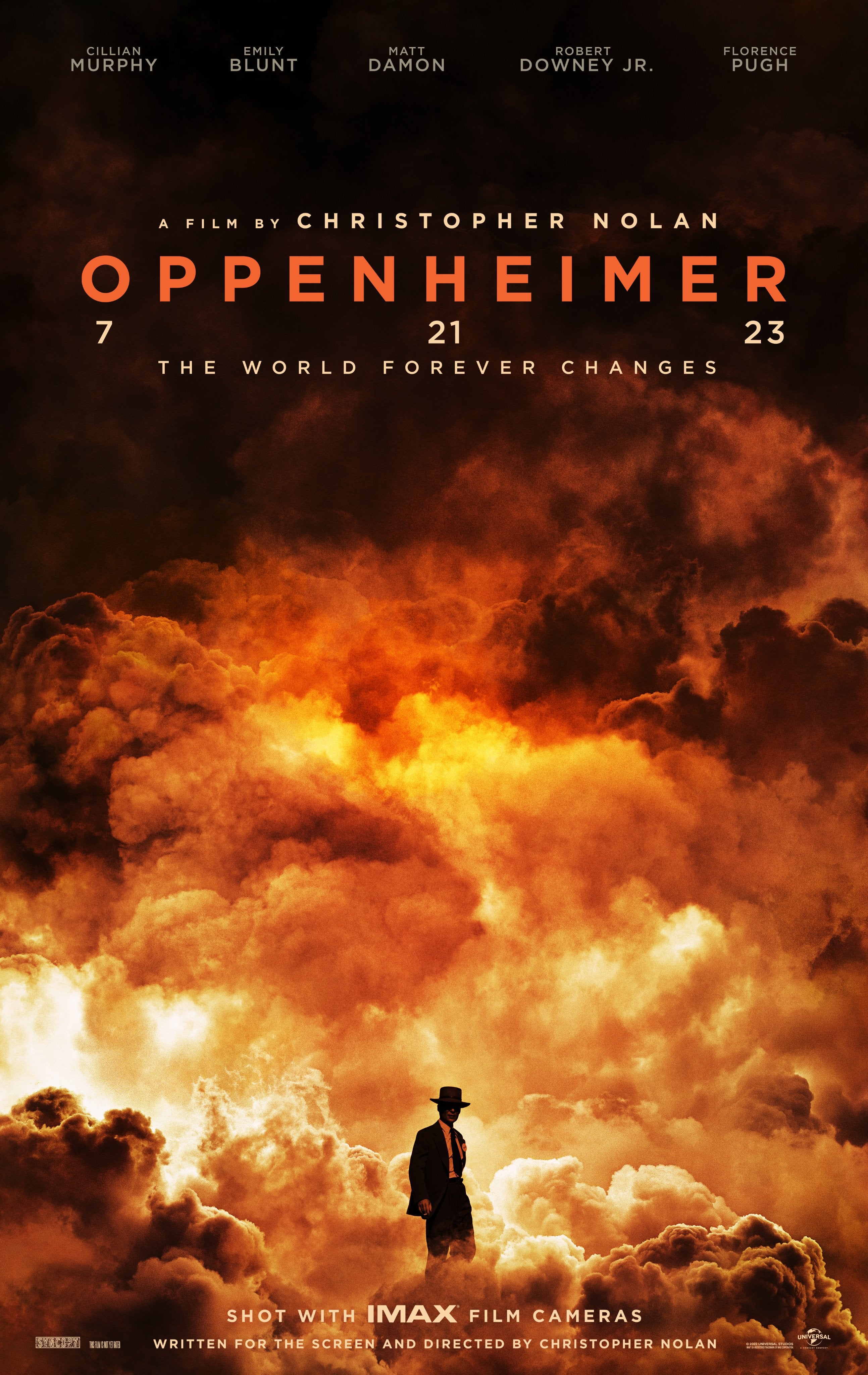
OPPENHEIMER film review

Sensational! Christopher Nolan’s highly anticipated cinematic spectacular Oppenheimer is an extraordinary motion picture that delivers a story as explosive as the subject matter. Not since Nolan’s earlier work on pictures such as Memento and The Prestige have I enjoyed both the form and function of his stylistic brand of filmmaking. Although the film chronicles the development, use of, and subsequent scientific and sociological affects of the A-Bomb, the story it really about the rise and fall of J. Robert Oppenheimer. Moreover, the subtext of the story is one that carries with it such commentary as the true cost of notoriety and serving one’s country and the destructive nature of unsubstantiated witch hunts. It’s a character-driven story more than it is a plot-driven story about the creation of the A-Bomb.

Oppenheimer is the story of American scientist J. Robert Oppenheimer and his role in the development of the atomic bomb. The film explores how one man’s brilliance, hubris, and relentless drive changed the nature of war forever, led to the deaths of hundreds of thousands of people and unleashed mass hysteria, and how, subsequently, the same man’s attempts to end one World War began a Cold War that would last for nearly fifty years.

While I have some reservations in the structural integrity of Nolan’s plotting in this film, which no strangers to my blog should know since that is often where I am hardest on films, his plotting and characterization hasn’t been this strong since Memento and The Prestige.

It should come of no surprise that Nolan’s latest motion picture excels in technical achievement. And I am not mentioning that to in anyway detract from that achievement; but, I mention that because had the film simply been an exercise in pushing the boundaries of filmmaking, then it would be another intentionally avant-garde vanity project. Which, it is not. Oppenheimer excels in both form and function; it shows care for both how the motion picture is montaged and presented and for the function of both plot and character.

With few exceptions, whether the plotting of a film is linear or non-linear, the plot should still follow foundational storytelling conventions to achieve the full impact it desires. Contrary to a postmodernist view of rules of art, just because one breaks the rules does not mean that a work of art or endeavor is somehow more substantive or meaningful in value. Nolan strikes a fantastic balance between form and function in this picture to completely transport audiences to the world of Los Alamos, NM in the mid-20th century.

Not since Dario Argento’s masterpiece Suspiria have I witnessed a motion picture employ the use of lighting, color (or lack thereof), and score to such a fantastical and effective level. These visual and auditory elements combine to immerse audiences in both the narrative and emotive dimensions of Oppenheimer’s story. Never overshadowing the story, but working in tandem with it, the visual and audible elements of the mise-en-scene craft a picture that simultaneously feels part of our world and yet somehow other worldly. Moreover, the story of Oppenheimer is told through both subjective and objective camera placement. In less experienced hands, this could have proven to be disastrous, but Nolan demonstrates his command of the screen in the uncanny combination of both.

One of the most stylistic montage and editing devices used is the black and white (more accurately described as grayscale) imagery for a specific timeline. And it would appear to my observation that it is indeed grayscale stock film–not desaturated in post-production. This observation is in part gleaned by way of the effects of lighting on the film stock. From a story organization perspective, this use of grayscale film stock helps in understanding the part of the non-linear timeline in which we find ourselves.

Where Nolan often struggles is in character authenticity. More times than not, the characters in his films are often lacking in believability, relatability, and vulnerability. Not that his characters are generally flawless, but they have demonstrated a lack in that which makes us most human. Each and every character in this film feels incredibly human–true to life. Whether or not the film is an accurate representation of the real-life counterparts, is not something on which I can comment. But, the characters, as presented, are relatable and feel authentic within their world. On the topic of characters, Nolan also injects humor into this film, which isn’t characteristic of his past films; and that use of humor helps to provide tension relief as an emotional reset between dramatic beats or scenes.

The central theme in the film is the true cost of notoriety and serving one’s country. And this is expressed primarily through Oppenheimer’s relationship with the development of the A-Bomb, but supplemented by his interactions with Albert Einstein, and therein Einstein’s relationship with his Theory of Relativity and success as the greatest scientific mind of all time. Or, as Oppenheimer puts it, “the greatest scientific mind of his day.” The story has to be seen to truly felt, but Oppenheimer spotlights how when one’s usefulness is seen as exhausted or no longer relevant to one’s country, that one is disposable.

We not only witness this in the film, but in real life as well. To this day, there are those that fought for their country that are not treated with the dignity and respect they both earned and deserve. The film paints a rather negative portrait of federal government operations as it relates to international and domestic policies. Suffice it to say, after Oppenheimer delivered the A-Bomb, he was soon thereafter cast aside as his (objectively reasonable) opposition to further development of weapons of mass destruction began to influence policy decisions. And this rise and fall story isn’t relatable to merely the government, but can be said of any company or organization that hails one as a visionary one minute, but after the project is realized, the same company or organization moves on. Fame is fleeting.

While many brilliant scientists were undoubtedly envious of Oppenheimer’s commercial success (except for Einstein, whom was a soothsayer of sorts), perhaps the rise and fall of Oppenheimer serves as a reminder that there are many whom have had notoriety forced upon them, but the oft infamy that follows can create a figurative prison out of which there is no escape.

Another observation I make, into the film’s themes and motifs, is the depiction of communism vs capitalism. Unfortunately, the loudest on social media do not likely have an accurate interpretation of what communism and capitalism are. And without getting into details, suffice it to say, the film does not accurately portray either communism or capitalism. So, I worry that many will watch the movie and begin to make connections and associations that are not accurate. On the topic, I’ll leave you with this: destructive ideologies that devalue individuality, based in universal truth and logic, in exchange for group identity based on emotions and impossible utopias is still an enemy of the people today.

This film is not to be missed on the biggest screen AND on 70mm film. Seeing a picture on film is truly magical. The depth lighting and shadow and richness of the color spectrum will always be expressed the best on celluloid. A chemical reaction beats 0s and 1s any day. Oh, and there is no reported use of CGI in this motion picture.

Ryan teaches Film Studies and Screenwriting at the University of Tampa and is a member of the Critics Association of Central Florida and Indie Film Critics of America. If you like this article, check out the others and FOLLOW this blog! Interested in Ryan making a guest appearance on your podcast or contributing to your website? Send him a DM on Twitter. If you’re ever in Tampa or Orlando, feel free to catch a movie with him.

Follow him on Twitter: RLTerry1 and LetterBoxd: RLTerry
JURASSIC PARK 30TH ANNIVERSARY retrospective analysis

Timeless and terrifying! In honor of Jurassic Park‘s 30th Anniversary, I want to revisit why the film works so incredibly well, and never gets old. Simply stated, it’s the original’s connection to and foundation in horror, which was largely abandoned after the first installment in the decades long franchise.

Just like Dr. Alan Grant states at the beginning of the film, “raptors have far more in common with present day birds than they do with reptiles,” that same analogy can be drawn with the original Jurassic Park and its proximity to horror compared to action-adventure. Borrowing from Dr. Grant, the original Jurassic Park has far more in common with sci-fi/horror than it does with action-adventure, hence why it has held up over the years and continues to be a favorite film for many cinephiles and fans alike.

While all the sequels, including Jurassic World are far more action-adventure than the original, Jurassic Park can be likened to Ridley Scott’s Alien. The latter is a quintessential space sci-fi/horror with action-adventure sequels just like the former. And like Jurassic Park, the original Alien is considered far superior to that of the sequels. But why is this? There are many reasons from script to director to cinematography; but at the end of the day, it’s the fact that both these critically acclaimed and admired films have their respective roots in the American horror film and not action-adventure movies. More so than any other genre, horror is (1) uniquely American and (2) the most time tested, given it can trace its roots back to the 1890s and was perfected by Universal Pictures in the 1920s and 30s.

So what separates Jurassic Park from the sequels? Both have life-threatening dinosaurs, both have action, both have adventure, etc. But, only the original carries with it social commentary, rich subtext, and well-developed themes told through a brilliant combination of horrific frights and believable sciences taking place within a world of fiction grounded in reality. Furthermore, the focus in both Jurassic Park and Alien is largely on the drama between the characters and the oppositional forces in the film. The sequels in both franchises place far less emphasis on well-developed conflict and drama, and instead sacrifice those golden elements of cinematic storytelling for high-concept CGI-filled adventure movies with lots of dinosaurs or aliens. The proliferation of gimmicks and effects is often used to hide a weak story. Fortunately, Jurassic Park provides audiences with a strong plot told through exceptional cinematic storytelling.

Jurassic Park‘s screenplay benefitted from being penned by the award-winning author Michael Crichton who also wrote the novel by the same name. Often times, when the author of the novel also writes the screenplay, the screenplay forms a stronger foundation upon which the technical elements can be build. A more recent example of a brilliant screenplay adaptation of a novel is Gone Girl, the author of the novel was the screenwriter. Although a screenplay is visually driven whereas a novel is internally driven, when a novelist with a penchant for visual storytelling writes the screenplay for the movie adaptation, the screenplay tends to contain better developed characters, strong subtext, effective conflict, and excellent dialogue.

Crichton created incredibly memorable characters who each spoke with their own voice. Casting the right actors to portray the characters is obviously important–and the cast for Jurassic Park is exemplary–but even before the actor steps into the character’s shoes, the character has to be created. Each character in Jurassic Park possesses unique traits, strengths, weaknesses, dialect, and behaviors. Instead of the conflict being arbitrary, the conflict develops through the interpersonal relationships between the characters and the relationship between the characters and the opposition–human and nature.

I was in elementary school when the movie hit theatres in the summer of 1993; and although under 13, my parents allowed me to go see the movie. It was my second PG-13 film, with Batman Returns being the first, and what an experience! Not unlike Dr. Grant’s reaction to his first encounter with a dinosaur in the film, my reaction to Spielberg’s masterpiece was eyes-wide-open, mouth gaping wide, and racing endorphins. And then comes the macabre contrast in Acts II and III. “Ooo, ahh–that’s how it begins, and then there’s running and screaming” (Dr. Ian Malcolm, The Lost World). Aptly stated.

The opening scene hooks the audience with a disaster, but does not reveal much about the dinosaur in the secured transport–brilliant. Because this scene did not show a dinosaur, the audience’s curiosity is pricked which creates an eagerness to see a dinosaur and a degree of nervousness or apprehension accompanying that curiosity. We wanted to see more. If you’re familiar with Hitchcock’s bomb theory, he states “you must never let the bomb go off.” More than simply shock audiences with the death of that employee at the beginning of the movie, this scene serves as information more than a glimpse at that which would be horrific in real life.

This delay of seeing a dinosaur forces the audiences to pay more attention to the characters, dialogue, and conflict than looking for the next dino. Furthermore, the delay in seeing a dinosaur, perfectly setup audiences for the grand reveal on the way from the helipad to the Visitors Center. Interestingly, if you add up all the screen time that dinosaurs receive in the film, you’ll find that they are only on screen for about 20-minutes. Just like Hitchcock transferred the terror from the screen into the minds of the audience after the Psycho “shower scene,” Crichton and Spielberg did the same with Jurassic Park.

It’s the soft introduction to the man-made dinosaurs that makes the horror of the dinosaurs feel so much more intense later on in the film–and make you scream! In terms of the type of science-fiction horror film Jurassic Park could be classified as, it shares many commonalities with man vs nature and man vs technology horror films. Crichton is known for his believable science within his works of fiction. It is obvious that genetics and paleontology were researched enough to use real, hard science to inspire a fictional science that feels just out of reach of the current trends in the science, technology, and engineering fields. Pair that with horror, and you have a solid cinematic film.

The brilliance of horror films is how they can creatively comment on or provide a different perfective on a anthropological or psychological observation; moreover, it can be helpful when exploring philosophical questions. And these topics are visually explored through the movie and externalize the themes. One area that separates popcorn action-adventure movies from horror films is the cultural significance of the subtext and themes. Typically, action adventure movies do not carry with them social commentary nor significantly pull on our emotions and tap into our most primal fears. Jurassic Park contains all of this.

There is something about horror films that beckons the audiences to find enjoyment in, that which in real life, would not be enjoyable—and not only see it once, but repeat it. And furthermore, find the unfamiliar and grotesque fascinating to behold as what should remain hidden comes to light. Certainly the dinosaurs in the movie should have remained “extinct,” but were brought back to life and engaged in violence in which we find enjoyment. 

Some of the themes found in Jurassic Park that are told through the visceral horror and tense dramatic moments are: man vs nature, foolishness and folly, greed, wisdom vs knowledge, man vs technology, and parenting. Why don’t the Jurassic films have the chache that the original does? You try to find to find rich themes such as these in the subsequent films. They don’t exist. Why? Because it is far more difficult to explore what it means to be human and social constructs in a scifi action movie than in scifi horror. An action movie would be ill-equipped to tackle questions of a philosophical nature because the focus is largely on the action itself and not necessarily the characters, and almost never the subtext and theme.

For an action film to delve into that which causes the film to take on an intellectual nature, it would lose the attention of those who simply want a good popcorn movie. Don’t get me wrong, there are excellent action-adventure movies that contribute to the world of cinema in exceptional ways. Indiana Jones Raiders, Doom, and Last Crusade do that. Obviously, the inability to reconcile nature’s resistance to control is one of the most important themes of Jurassic Park.

Dr. Ian Malcolm tells the group that “life finds a way,” and it immediately becomes the film’s mantra (and a quotable line), true in every demonstrable, measurable way; the dinosaurs survive outside their design and engineering, the lost children survive with the help of a kid-averted paleontologist who discovers his parental side, humanity survives despite meddling in the natural order of things by playing God because that’s what we do–we survive. Every character in the film either understands or is reminded of this–some of them, by force when it’s too late–through the course of events.

Jurassic Park uses horror film techniques in a brilliant fashion to force its audience into considering the larger philosophical questions mentioned in the previous paragraph. It reinforces those questions with clever parallels: Dr Grant’s way of paleontology is about to go “extinct” due to the rise of computer technology (the line “don’t you mean extinct” came from a comment behind-the-scenes regarding CGI encroaching upon animatronics, puppetry, and special effects); the power of the natural world is exponentially magnified when the park’s technology failure is combined with a disastrous tropical storm; money causes literally every ill in the film, even when it is being used for supposedly admirable purposes; and “you were so pre-occupied with whether or not you could, you didn’t stop to think if you should.”

The inability to reconcile nature’s resistance to control is one of the most important themes of the film, of course. Ian Malcolm tells the group that “life finds a way,” and it abruptly becomes the tale’s rallying cry, true in every conceivable way; the dinosaurs survive outside their engineering, the lost children survive with the help of a paleontologist who discovers his paternal side, humanity survives despite its meddling because it’s what we do. Every character in the film either understands this, or is made to by the course of events. Interestingly, we are cued into the theme of life finding a way early on in the film, in the idea foreshadowed on the helicopter ride to the park. Remember when Dr. Grant tied the two female ends of the seatbelt together in order to make it function? “Well, there it is.”

Beyond exploring themes, it’s the intent of the film that determines whether is a thriller (suspense) or horror film. The films speak for themselves. If the intent is to horrify, then it’s a horror film; if the intent is to thrill, then it is a thriller. In all fairness, Jurassic Park is borderline; but it’s the level of shock, fear, and dread that may just be enough to tip the scale toward horror instead of thriller, and certainly evidence enough to prove that it is NOT simply a dark action-adventure movie. Much like Stanley Kubrick’s The Shining and Scott’s Alien, Spielberg’s Jurassic Park is also an intellectual film.

Whereas an action-adventure movie would have provided audiences with a few minutes collectively of some surface-level chit-chat above ethics in order to technically give the film a theme, Jurassic Park provides audiences with an entire film about ethics that will have them talking about the various dilemmas and challenges facing the characters throughout the film. It’s brilliant! And quite the rarity these days. The hand of Spielberg’s penchant for horror (Jaws and Poltergeist) is seen in Jurassic Park from requesting that Crichton rewrite the original screenplay to be more cinematic and less internally driven because Spielberg desired to take the novel and adapt it to screen as a Jaws on land. If his intent was to make a sequel to Jaws, then we have to conclude that his intention was to horrify audiences in some measurable amount.

With a film as dynamic as Jurassic Park, it may be nearly impossible to prove that it is a horror film at its roots; but, the body of information provided in this article help to support the thesis that it is a horror film based upon the intention, conflict, themes, and visceral terror. “Well, there is it.”

And don’t miss the Jurassic Park 30th Anniversary celebration going on at Universal Orlando Resort! If you’ve never been to the Jurassic Park area, then you need to!

Ryan teaches Film Studies and Screenwriting at the University of Tampa and is a member of the Critics Association of Central Florida and Indie Film Critics of America. If you like this article, check out the others and FOLLOW this blog! Interested in Ryan making a guest appearance on your podcast or contributing to your website? Send him a DM on Twitter. If you’re ever in Tampa or Orlando, feel free to catch a movie with him.

Follow him on Twitter: RLTerry1 and LetterBoxd: RLTerry

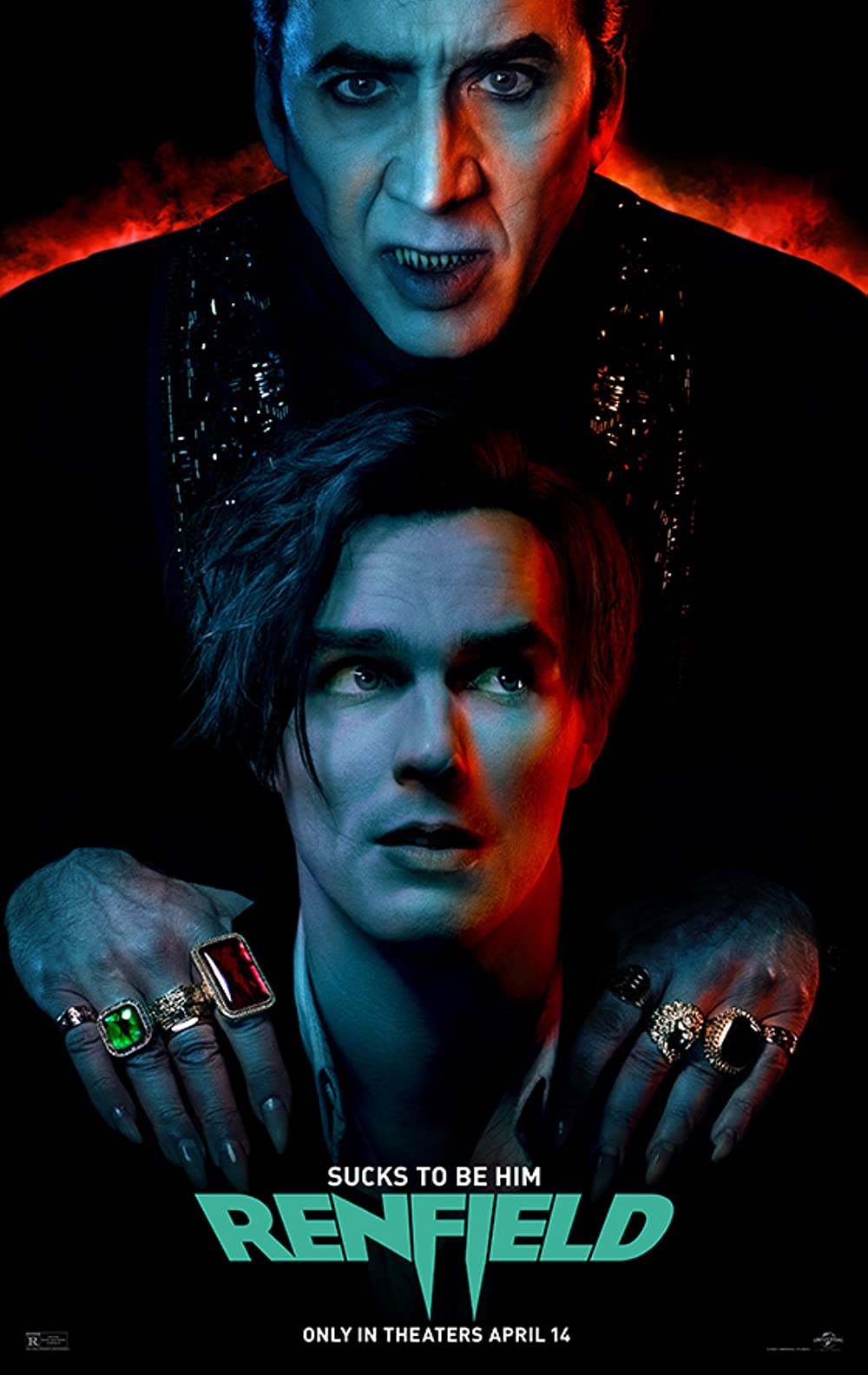
RENFIELD horror comedy review

Fangtastic! John Wick meets Van Helsing meets Warm Bodies in this imaginary adaptation of the Dracula mythos inspired by the original Universal Monster classic. While that may sound like the most unusual combination of movies, it works surprisingly well in Renfield from the birthplace of the American horror film.

Renfield, the tortured aide to his narcissistic boss, Dracula, is forced to procure his master’s prey and do his every bidding. However, after centuries of servitude, he’s ready to see if there’s a life outside the shadow of the Prince of Darkness.

Just like Dracula and Renfield, in the original Dracula, metaphorically exist in two realms simultaneously, this movie also exists in two realms: horror and comedy. And these two genres are both satisfied in the characterization and conflicts of this highly entertaining movie. Suffice it to say, it’s a really good movie–shocking–I know.

After the questionable trailers (which I try to avoid as much as possible; a practice of mine since marketing companies don’t usually know when to hold the cards back), I went into this movie with tempered expectations at best. Moreover, I honestly went in with low expectations for what I thought was going to be a ‘we set out to make a movie that is so bad that it’s good.’ The problem with that is that a filmmaker cannot intentionally create a so bad it’s good movie. It’s lightning in a bottle when it happens because the intention was to create a good movie, that just happened to turn out (to usually be) campy.

Spiritual sequels often struggle to find that place wherein the legacy film and new, reimagined approach intersect in ways that don’t rewrite or retcon the past yet provide a new experience. There have been countless official and unofficial adaptations of Bram Stoker’s Dracula, not to mention, hundreds of vampire movies that are directly inspired by the Dracula mythos. Therein lies the challenge: how to craft something new from that which is proliferated. Renfield works because the writers selected a character that factors significantly into the original material, yet has never been truly explored as a character following the events of Dracula.

Oh yeah, the recreations of the original Dracula, complete with (what looks to be) non-CGI gothic sets and lighting, made for a fantastic way to open the film.

Nicolas Cage, Nicholas Hoult, and Awkwafina were excellent casting choices, especially Cage’s Dracula, whom resembles Bela Lugosi even more than Walter Matthou’s in Ed Wood. Cage and Hoult demonstrate fantastic chemistry, and they scenes are among the best in the film. Hoult and Awkwafina may not have the chemistry that he has with Cage, but they still manage to play off one another well enough. Hoult not only looks like our original Renfield, but he finds an exemplary balance between tragedy and comedy. This film certainly provides him with a vessel to showcase his outstanding acting chops. Awkwafina brings a subdued version of her comedic brand, and it works great! Often times, her characters have annoyed me because they are often obnoxious, but not this time.

The violence is amped up to the nth degree! And it is wildly campy! I was reminded of the level of laughable violence and gore in Tucker and Dale vs Evil! While it could have been so easy for the violence and gore to be tasteless and gratuitous, it never crosses that line. Why? Because it is on a comic levels that is designed to elicit laugher instead of wincing, visceral, uncomfortable pain. Every sequence with kills is going for a laugh and not a scare or provocation. And the kills are wonderfully creative and on-brand for the tone of the film.

Renfield successfully connects the original film to this new adaptation in ways that pay respectful homage to the original but craft new expressions that are sure to please audiences. Perhaps the original isn’t a prerequisite for this one, BUT you will have far greater appreciation for the flashbacks and references to the original. If you’re a horror fan, particularly of the original Universal Monsters, then you definitely don’t want to miss Renfield!

Ryan teaches Film Studies and Screenwriting at the University of Tampa and is a member of the Critics Association of Central Florida and Indie Film Critics of America. If you like this article, check out the others and FOLLOW this blog! Interested in Ryan making a guest appearance on your podcast or contributing to your website? Send him a DM on Twitter. If you’re ever in Tampa or Orlando, feel free to catch a movie with him.

Follow him on Twitter: RLTerry1 and LetterBoxd: RLTerry
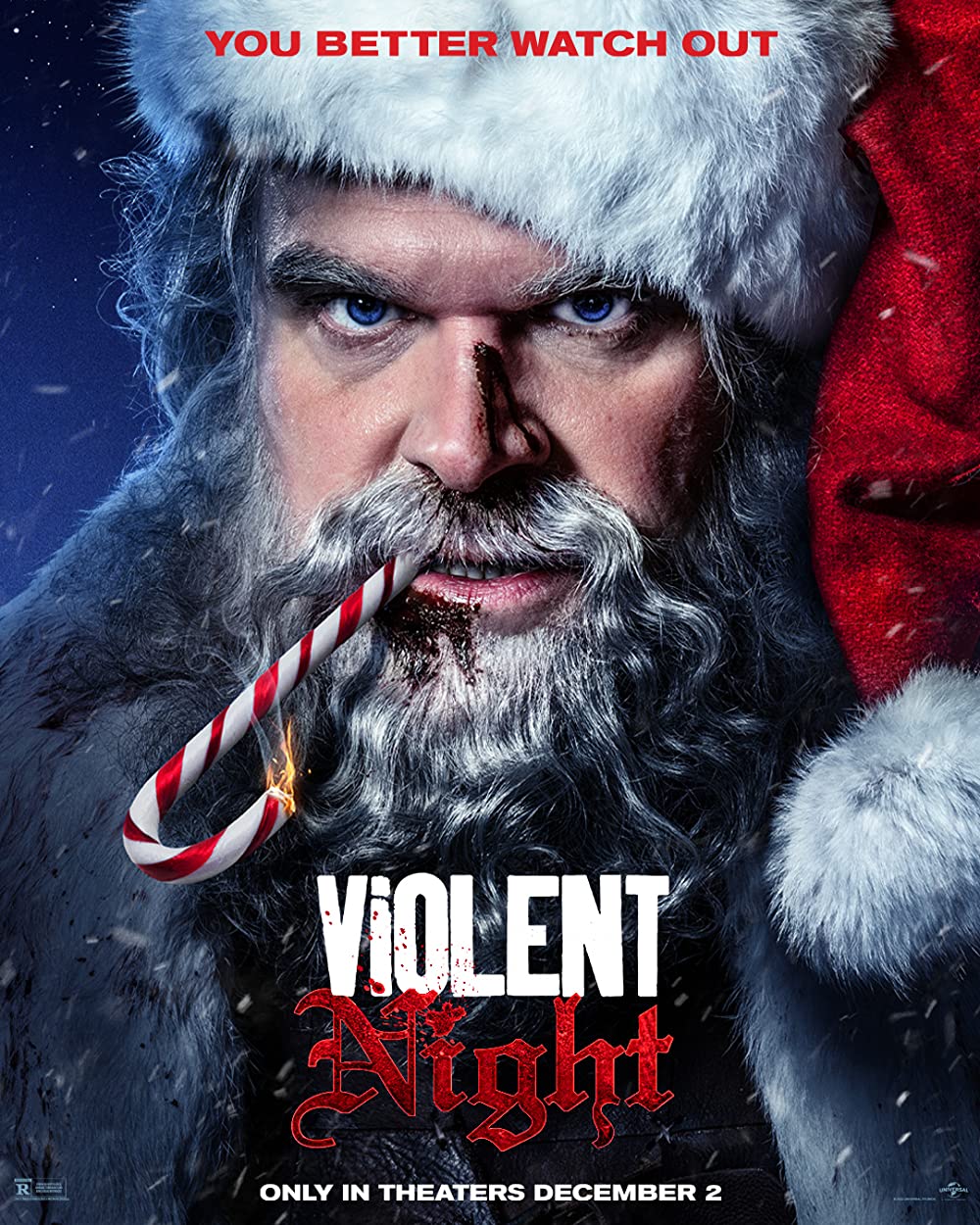
VIOLENT NIGHT Christmas movie review

Highly entertaining and hilarious! Better watch out burglars, Santa’s coming to town. Universal Pictures’ Violent Night hits theatres this week. And you don’t want to miss this fantastically fun horror-adjacent Christmas action movie, which is equal parts Die Hard and Home Alone with some Krampus thrown in for good measure–and it that still has plenty of Christmas spirit! Not since Krampus have we had such unconventional Christmas movie in cinemas. Not quite unsettling enough to be a horror movie, but gorier than a typical action movie, Violent Night sits comfortably in the middle (but a little closer to action). One of the things that makes both Gremlins and Krampus work so well is that the violence is played for laughs, and audiences will find that to also be true in this movie. Even though the violence is prolific, it is schlocky and even campy, at times. Despite the creative, gory kills and pulse-pounding action sequences, Violent Night takes times to impart valuable lessons in family, hope, and even redemption. It simultaneously acknowledges how hard the holidays can be on folks that have become disillusioned with Christmas and yet manages to show the importance of never losing hope in the magic of Christmastime. Even though we may not know how it works; it’s important not to allow cynicism of this world to overpower the optimism of hope the holidays bring. With a solid screenplay, effective direction, and entertaining kills, Violent Night is an instant modern classic that is sure to find its way onto annual watch-lists every December.

An elite team of mercenaries breaks into the Lightstone family compound on Christmas Eve, taking everyone hostage inside. However, they aren’t prepared for a surprise combatant: Santa Claus is on the grounds, and he’s about to show why this Nick is no saint.

I often remark that some of the best movies are those with a simple plot and complex character, and that is what we have here! On the surface, it may be a horror-adjacent heist movie, but beneath the creative kills and campy characters lies a movie that has a lot to say about the various feelings about Christmas (and the holidays in general).

Before you dismiss this movie as just a schlockfest, there is discernible depth to this story that will resonate with audiences of all walks of life and opinions on the magic of Christmas. The commentary on the Christmas season is witnessed in the characters, specifically Santa, Trudy, and Scrooge. By extension, other manifestations of holiday feelings are expressed through the rest of the cast of Lightstones and mercenaries. Santa has become a Christmas cynic himself, because of the rampant entitlement and greed of the world, Trudy holds true to the magic of Christmas despite the negative stressors of her family, and Scrooge represents the idea that Christmas is nonsensical and worthless. All real feelings. Furthermore, the film does not shy away from discussing the gross consumerism that is so often, yet unfortunately, at the forefront of Christmas.

A growing trend for films that aim to be character studies is to neglect the plot. Not true with Violent Night! Again, the surface is a gory action movie, but at its core, it is a character study on reactions to Christmas. Even character studies need to have a well-structured plot, because the outside/action story is a visualization of the inside/emotional story. We get both in this fantastically fun movie! Santa must reconcile his purpose with the state of the world, Trudy must reconcile her belief in the magic of Christmas within her dysfunctional family, and Scrooge (more specifically pre-Christmas Eve Scrooge) gets his just desserts for reining terror. Moreover, I appreciate how the movie provides thoughtful commentary on some of the worst people–and I am not talking about the mercenaries (tho they are deplorable people), but the Lighthouse family members represent people we know from our own lives.

Much like Krampus (but far more violent and a little less scary), Violent Night is a cautionary tale on the dangers of selfishness, greed, and toxic celebrity-ism. We’ve all been Santa, Trudy, or one of the other characters in the movie. Don’t miss the schlock, hijinks, and heart of the action-packed Violent Night this Christmas season.

Ryan teaches Film Studies and Screenwriting at the University of Tampa and is a member of the Critics Association of Central Florida. If you like this article, check out the others and FOLLOW this blog! Interested in Ryan making a guest appearance on your podcast or contributing to your website? Send him a DM on Twitter. If you’re ever in Tampa or Orlando, feel free to catch a movie with him.

Follow him on Twitter: RLTerry1