2019: the Year of the Park

2019 is shaping up to be quite the year for U.S. theme parks in Florida and California. Many major theme parks have made announcements in the last few weeks that are of out-of-this-world Jurassic proportions! Looking to history, it feels as if we are in a “space race” of sorts. Except, instead of the United States and Russia vying to be the first in space or one the moon, major US theme parks are breaking new ground, pushing boundaries, and innovating new experiences to vie for your money. Arguably, the biggest expansion is Galaxy’s Edge at Disney’s Hollywood Studios (DHS) and Disneyland, followed by Lego Movie World and Sesame Street Land at Legoland Florida and SeaWorld Orlando respectively, the new Harry Potter themed rollercoaster at Universal Orlando’s Islands of Adventure, Jurassic World replacing Jurassic Park at Universal Studios Hollywood, and lastly Mickey & Minnie’s Runaway Railway also at DHS. Just one of any of the aforementioned announcements would be big news, but collectively it is quite possibly the most massive collection of openings at any given time in recent years.

The sheer economic impact of these attractions on each of their respective parks will be of epic proportions. Beginning with Universal’s Islands of Adventure (IOA) in 1999, the last decade has seen a colossal convergence of cinema and theme parks like no other! And even more so since the opening of the Wizarding World of Harry Potter (WWoHP) at IOA in 2010. From the original concept of the movie park immersing guests into the magic of filmmaking to creating immersive environments that place the park guest into the world of the movie itself, the movie park has grown by leaps and bounds. As the process to make a film became less magical, the parks compensated by wowing guests with the ability to feel as if they are characters in the film itself. Attendance at theme parks took a dramatic downturn after the housing collapse and financial crash of 2007; and with theme parks being a vacation destination or luxury for many, they had to innovate new ways to attract guests–give them new reasons to return to the parks. By creating new experiences that were unlike any other, the parks knew they could increase their bottom line and share of the marketplace. Universal’s addition of Harry Potter and Disney’s addition of Pandora were major impacts. Moreover, the addition of Galaxy’s Edge (Star Wars land) at Disney’s Hollywood Studios & Disneyland Resort and the eventual Nintendo expansion at Universal Orlando Resort will each likely bring unprecedented numbers of guests into the parks.

News from Disney and Universal on new lands is not exactly groundbreaking–the news anyway–but when SeaWorld and Legoland are tossing their hats in, for a piece of the 2019 action, then you know that a wave of innovation is sweeping through the parks of Florida and California. California is interesting. For the longest time, the majority of the big theme park news came out of Florida but more recently the California Disney and Universal parks have made big expansions and announcements. Most recently, Radiator Springs at Disney’s California Adventure and WWoHP at Universal Hollywood opened to rave reviews and dramatically increased park attendance. Next year is bringing about an unprecedented number of additions to theme parks that will even more greatly increase the revenue and attendance than we’ve seen in the last several years. And it’s not just the parks that are going to feel the impact of all the 2019 openings. The local hotels, resorts, beaches, and secondary attractions (zoos, aquariums, museums, etc) will also feel a huge boost from the new theme park lands and rides.

More people than ever will be flocking to the parks next year. And let’s face it, the majority of those numbers will be boarding the Millennium Falcon and Mickey & Minnie’s very first attraction, but the numbers heading to experience their favorite Lego movies, Harry Potter, or your furriest friends at Sesame Street land will be impressive. Local hotels and resorts need to start planning on the massive influx of theme park guests, some of which may be visiting for the first time in a long time or for the first time ever. Although a tourist may spend most of their time at the parks, beach, etc when coming to Florida, the hotel stay can play an important role in the over all experience of the trip. Often times, it’s the hotel (whether on or off property) that sets the initial tone of the trip. So, I hope that non-Universal/Disney/Lego hotels are keeping up with the news because they are about to see crowds likely never seen in any other year, except for when a new park opens.

So far, we’ve heard big news from most the major theme parks of Florida and California, but Busch Gardens Tampa seems to be the wallflower this time around. It’s entirely possible that we will hear of a new attraction offering at Busch Gardens in 2019 but so far there do not seem to be any indicators for that. Fortunately, Busch Gardens may continue the complimentary beer promotion in order to not get completely left behind in 2019. But who knows, 2018 is only about halfway done, so there is still time for Busch to make a 2019 announcement as well. If so, hopefully it will revolve around the space occupied by the former Gwazi wooden coaster.

Okay so here’s a breakdown of what’s coming to theme parks in 2019, so far.

Walt Disney World

Star Wars Galaxy’s Edge– a new land with a 14 acres expansion, transporting guests to a never-before-seen planet, a remote trading port and one of the last stops before wild space where Star Wars characters and their stories come to life. And yes, you’ll be able to fly the Millennium Falcon!

Mickey & Minnie’s Runaway Railway– After screening an exclusive cartoon in the theatre, Mickey & Minnie’s Runaway Railway will put you inside the wacky and unpredictable world of a Mickey Mouse Cartoon Short where you’re the star and anything can happen.

Universal Studios Florida

Harry Potter rollercoaster– The all-new attraction will take guests on a journey that incorporates the characters, creatures and transportative adventures of the wildly successful book and movie series when it opens in 2019. In its announcement, Universal positioned the ride as one of the most “highly-themed coaster experiences” they’ve ever created — which is major, considering The Wizarding World of Harry Potter is already known for immersive attractions utilizing ride systems and technology in ways rarely seen at other theme parks.

SeaWorld Orlando

Sesame Street Land– “We are excited to transport our guests into the colorful and creative world of Sesame Street through immersive theming, character interactions and interactive play,” said SeaWorld Orlando President Jim Dean in a statement. Sesame StreetLland also brings with it SeaWorld’s firs daily parade!

Legoland Florida

Lego Movie World– Based on “The LEGO Movie” and the upcoming sequel, the new world puts guests in the middle of Bricksburg, the city where Emmet lives in the movie. The area will feature two new rides, character meet-and-greets, and a giant themed playscape.

Universal Studios Hollywood

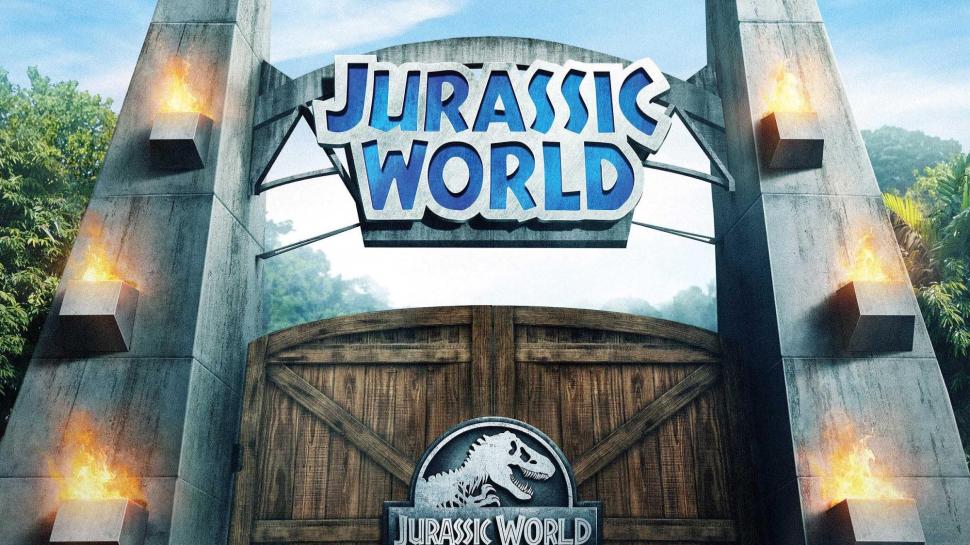
Jurassic World the Ride– Details of the “Jurassic World Ride” are being kept under wraps. But a press release release describes the plans as “epic,” featuring “never-before-seen dinosaurs, enhanced storytelling, lush scenic design, an entirely new color scheme and unparalleled state-of the art technology.”

Disneyland Resort

Star Wars Galaxy’s Edge– As of now, there are only two new rides in development. There’s the Millennium Falcon ride, where players are ranked on how well they perform their mission (if you bang up the ship, expect trouble at the cantina). There’s also one in the works where guests are inside a Star Destroyer hanger bay during a major battle between the First Order and the Resistance, though there isn’t a lot of information available on that one yet.
“Tully” film review

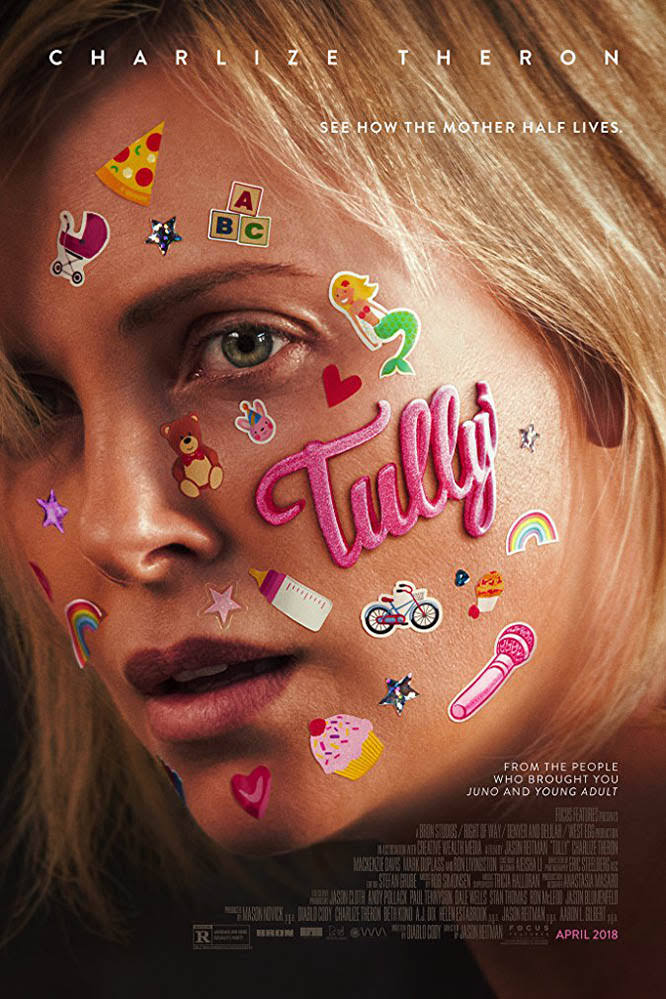
A no holds barred, unapologetic story of the realities of motherhood. Focus Features’ Tully starring Charlize Theron is a brilliant film that shies not away from what being a mom is truly about during postpartum depression, a subject seldom touched on in film or TV. Directed and written by Juno’s Jason Reitman and Diablo Cody respectively, this film represents the best work of Reitman and Cody since the groundbreaking Juno which was followed up by the outstanding Young Adult, and showcases just how incredibly diverse an actor Theron is. See her in a role unlike her typical roles as she so incredibly authentically brings to life a middle-class working mother who is faced with many obstacles as she rears her three kids, one of which is a newborn. As a male, I cannot begin to fathom just how difficult it is to be a mother (or by extension, a single father); but after watching this film, I have a whole new respect for the many hats that a mom has to wear in order to manage a household. Some might even say that this film is so incredibly effective at laying out the hardships of being a mom, that it may work better than more conventional birth control. However, the film is not only about the trials of motherhood, but it also spends time on the joys. Tully is what I characterize as a dark comedy that has some truly terrifying moments.

Already the working mother of two kids, one of which displays signs of a developmental disorder, Marlo (Charlize Theron) is not pregnant with baby number three, in what her brother identifies as an “unplanned pregnancy.” Marlo’s wealthy brother desires to help his sister by gifting her a night nanny in order to help Marlo through the rough transition of a newborn in an already chaotic house. Marlo’s husband is hardworking, makes lunches, and assists his oldest daughter with her homework, but fails to understand that Marlo needs to be taken care of as well. In order to not go completely insane during postpartum depression, Marlo reluctantly decides that she could use the night nanny that her brother offered to pay for. Hesitant to the extravagance of having a nanny at first, Marlo forms an unexpected bond with the unconventional, challenging hipster Mary Poppins named Tully.

No pretense about this story of motherhood. Cody’s brilliant penchant for self-deprecation, dry humor, and stark naked emotion is witnessed once again in Tully. I cannot think of a present screenwriter that could have created such a compelling story. Unlike her timeless modern classic Juno, Cody shies away from the comedy you may be accustomed to seeing from her, and focus on the darker side of being a mother. And it works superbly. I laughed, cringed, and cheered during the film, and so did many of the others in the audience. There is an authenticity in this story that is seldom seen in other melodramas. Possessing a raw, gritty narrative, Tully will have you empathizing quickly with the struggles Marlo continues to face throughout the film. There is so much that is praiseworthy in this story; but unfortunately the sharp, precision that supports the first two acts becomes a little dull during the realization (or resolution) on the third act–the same chutzpah that was in the DNA of the majority of the movie is not as apparent at the end. What Tully lacks is a well-defined external goal. The weak end game is uncharacteristic of Cody, as both Juno and Young Adult had solid realizations. As I tell my screenwriting students, dealing with life is not a goal (it’s incidental). Still, everything else about this film is effectively compelling.

Theron displays a genuine, uncompromising commitment to character in this motion picture. Aside from the fact she literally put on 50lbs for the role (that’s right, no fat suit), she provides audiences with a fearless portrayal that is both vulnerable and fiery. Coupled with waves of mania, anger, and complete exhaustion, Theron delivers a razor-sharp performance that will leave you breathless and bleeding from the unbridled intensity and emotional rawness. In this slice of life story, there was certainly the room to demonize Marlo’s husband, the sister-in-law, the former roommate, and school principal, but Cody includes these individuals that many moms actually have in their lives but chooses to focus on the physiological and emotional struggle of Marlo as she recovers from her unplanned pregnancy. Of course, there is a brilliantly funny scene of Marlo confronting the pretentious private school principal. It’s the kind of encounter that many of us want to have with those who refuse to shoot straight and annoyingly avoid confrontation because they are so afraid to be candid, and it just comes off as a facade. Theron’s ability to completely sell a mother on the verge of a breakdown who’s constantly facing situations in which she asks herself how-the-hell-am-I-going-to-get-through-this is unparalleled. I cannot think of another movie that has a character quite like Marlo in Tully.

The film’s title character is a Mary Poppins of sorts that comes to the aid of Marlo when she is at her wits’ end. You may be wondering why the film is named after the night nanny instead of Marlo. For the same reason Mary Poppins is the name of the story that is really about Mr. Banks. Marlo may be the central character, but Tully (Mackenzie Davis) is so incredibly instrumental in supporting Marlo through this time. Furthermore, she opens her mind to new possibilities and the joys of being a mom, even when Marlo isn’t feeling it. Tully embodies that free spirit that many of us have or had in our 20s that somehow gets lost as we get older. Tully enables Marlo to channel her younger self in an effort to be emotionally healthier for her kids. Taking care of yourself first so you can be there for your kids, is one of Tully’s many messages to Marlo. There is a whimsy about Tully that is contagious, and will put smiles on the audience’s faces amidst the majority of the film’s darker moments.

You’ll encounter all the different kinds of people that an emotionally struggling mom has to deal with on a regular basis. From an out-of-touch snobby sister-in-law to a husband who just doesn’t get you, from a pretentious and absurdly conflict aversive school principal to a former roommate, the film provides commentary on how each of these kinds of relationships affect a mom who’s trying her best to keep sane and not murder everyone. The film even touches on how having a kid with a developmental disability is physiologically and psychologically draining, even though you love your kid unconditionally. It’s important to note that Marlo’s husband is shown to be an active participant in his family by way of, not only his financial support, but being there for his kids in the evening and helping to make lunches. However, he does withdraw to playing video games after the kids have gone to bed; but that’s because he is like many fathers that are unaware that their spouses need to be comforted, cared for, and shown appreciation during this rough transitional time. Hopefully, after watching this movie, fathers will have a better idea of what their spouse may be going through. One of the strongest themes one can write into a film is a commentary on what it means to be human–the human condition–but seldom has a film been so specific to comment on what it means to be a mother. In this respect, Tully is provocatively groundbreaking.

Such a perfect film for the upcoming Mothers Day weekend. Even if you are not a mom or (let’s not forget) single father, there is something to learn from this film because you may have a mom or single father in your circle of friends or family. Never before has a film stripped away all the magic of motherhood at the time when your kids are little. No frivolous, ostentatious gender reveal parties, gym moms-to-be, or ridiculously lavish baby showers for this mom. Why? Because those are events and experiences typically found on Pinterest, in the movies, or reserved for upperclass society that is hasn’t a clue what it’s like to be a struggling mother balancing her full-time career and being a full-time mom. Tully tells it like it is for so many, and why it is such an outstanding motion picture.

Ryan is a screenwriting professor at the University of Tampa. If you like this article, check out the others and FOLLOW this blog!

Follow him!

Twitter: RLTerry1

Instagram: RL_Terry

Thrillz (theme parks): Thrillz.co

Star Wars and Nintendo: Battle of the Parks

The big question is which will be the bigger draw??? Although it first debuts in Tokyo for the 2020 Summer Olympics, Universal Studios Japan’s Super Nintendo World is one of the most highly anticipated theme park expansions, rivaled only by Star Wars: Galaxy’s Edge (Star Wars Land) at Disney parks in the US debuting next year! Two enormous intellectual properties (IPs) that will undoubtedly drive up guest attendance by exponential amounts. But which will prove to be the more popular expansion? Arguably, both lands will significantly impact the attendance of, character meet-and-greets in, and merchandise of the parks. The competition is heating up between Universal and Disney parks and resorts–reminds me of the US and Russian space race of the mid-1900s. While there is no doubt that both lands will be major successes, therein lies a question of which one will prove to be more popular. Not that it truly matters in the grand scheme of things, but it’s one of those things that is interesting to talk about and synthesize some research.

After the opening of both Wizarding World of Harry Potter (WWoHP) lands at Universal Studios Florida (and subsequently the Hollywood expansion), it was no surprise that Disney World was running to catch up, hence the opening of Pandora: the World of Avatar. As amazingly beautiful and detailed as Pandora is, it has not managed to draw the continued crowds and fandom that the WWoHP has been doing since 2010. According to the website Touring Plans, the increase from 2015 to 2017 attendance at Animal Kingdom rose marginally on the average whereas the Miami Herald reports that the increase at Universal Orlando during this same time period was more significant, and the forthcoming TEA Connect and AECOM reports are predicted to show greater growth at Universal than Disney World. Suffice it to say, the fanbase for Harry Potter far exceeds that of Avatar; however, the great battle for the crowds is currently between Star Wars: Galaxy’s Edge combined with Toy Story Land and Super Nintendo World with further Harry Potter/Fantastic Beasts developments in the worksTo understand which is likely to out-perform the other, one has to delve into the individual fanbases and economic impact of both properties primarily in question–Star Wars and Nintendo.

Unfortunately, there is little to no empirical way to quantify the number of fans either property has because of all the variables. Furthermore, movie ticket DVD/BluRay/VOD sales cannot be weighed against video game console and interactive media (video games) sales to determine fanbase size because it would not be an equitable means of measurement. Understanding the fanbase is crucial to predicting which property will be the bigger draw, which will have the biggest economic impact on its respective park. At the end of the day, both expansions are winners. Both will prove to provide vast positive affects upon the parks. Still, the friendly competition gives rise to the question which will be the bigger success. While the number of fans cannot be realistically quantified, the amount of revenue generated by Star Wars and Nintendo CAN be quantified, and that is precisely what Statista does. According to Statista (and the more than 18K sources from which the company compiles the information), Star Wars has generated $7.5B in revenue compared to Nintendo‘s $75B. What??? Yes, that’s right. Nintendo exceeds Star Wars in revenue 10x. While Nintendo may far exceed Star Wars in revenue generation, it’s important to note that Star Wars is the leading movie franchise in terms of merchandise sales. Yes, more than Harry Potter (and I’m house Ravenclaw). And merchandise sales is a HUGE component of theme park operations and sales.

Since park guests base their visit on more than just a single land, the presence of Toy Story Land at Disney World and Wizarding World of Harry Potter should also be taken into account when determining whether Disney World or Universal Orlando will see the bigger boost to attendance and increase in revenue. Arguably, Harry Potter (inclusive of Fantastic Beasts) is the bigger franchise family based on book sales, ticket sales, current theme park attractions, etc. Therefore, Star Wars land has to be big enough to not only compete against Nintendo World but also Harry Potter. One of the biggest advantages that Star Wars has over Nintendo and Harry Potter is merchandise sales and collections. Star Wars has exponentially more memorabilia and collectors than Nintendo, mostly because of the success of the films and the fact that Star Wars predates Nintendo by several years. But I imagine that Universal will continue to rely upon WWoHP for the bulk of the merchandise sales at the park since it can compete with Star Wars Land on that playing field. Analyzing the fandom of Nintendo is a little more difficult than that of Star Wars because Star Wars is the big umbrella under which all the movies, video games, and merchandise fall. Fans identify themselves as a Star Wars fan, whereas the fans of Nintendo’s product line are more prone to identify with a particular game franchise (Mario, Pokemon, Zelda, etc) more so than identifying with Nintendo proper. All evidence points to both brands being strong, viable candidates that will provide a close competition.

Both Star Wars and Nintendo are worldwide phenomena–no question. Combine Star Wars with Toy Story and conversely Nintendo with Harry Potter, and you have two powerhouse destinations for theme park fans. With the recent expansions at Universal Studios Florida and Hollywood, Disney World/Disneyland needs to ramp up their game–go into hyperspeed. Star Wars: Galaxy’s Edge pulls into space dock in 2019 just in time for episode IX. We are still a few years away from a domestic Super Nintendo World, and do not know much about it; however, we do have an idea of what to expect at the Universal Studios Tokyo and can by extension apply that knowledge to Universal Orlando. From what we know so far, Star Wars land will be a completely immersive environment that will essentially transport park guests to a “galaxy far far away.” If the WWoHP is the best example of the successful translation from book to screen to theme park for a world of fantasy, then Star Wars land will be on par with the best.

An interesting element to think about is the future of both Star Wars and Nintendo. It’s old news at this point that the most recent Star Wars movie The Last Jedi was not popular with longtime fans–new fans, yes–longtime fans, no. Nintendo is successfully holding onto both the old and new fans because the video games and consoles continue to appeal to those who had an NES as a kid or just bought last year’s Switch. Even legacy properties are holding onto what made them popular, but incorporating trends in interactive media (the term now often used to define that which was formerly video games). Mario Builder is an example of the aforementioned concept. If Star Wars continues to lose its longtime fans, abandons them for the new fans, then the new land may not fair as well as Nintendo World. Fantastic Beasts and Where to Find Them was a new generation Harry Potter movie that largely appealed to BOTH the old and newer fans. Therefore, it could be said that Universal Orlando’s most popular themed lands may have a longer life than Star Wars if the movies keep dropping the older fans. Just something to think about.

The Battle of the Parks is hot, and will just keep getting hotter! Fortunately, healthy competition breeds innovation, so whether or not Universal or Disney has the better new land expansions, the real winner in this battle is the consumer! Both parks will greatly benefit from the expansions and only time will be able to tell which one wins this race to be the best.

Are the Slow Times a Thing of the Past?

Remember when there were some select weekends each year, like clockwork, that the central Florida theme parks were slow? Yeah, well so do those who run the parks. Over the last few years, there have been a number of new specialty events from A Celebration of Harry Potter to RunDisney, Food & Wine Festivals and more to fill those used-to-be slow weekends. Prior to the addition of many of these events, January and February were typically slow, same with August and September. Even Busch Gardens and SeaWorld have cashed in on eliminating the slow times that locals counted on to enjoy the parks without the bulk of tourists. Fortunately for locals, Super Bowl Sunday (after 3pm anyway), Mothers Day, and Labor Day are still the slowest three days (on average) but that may change in the future too. Moreover, while these events bring in thousands that would otherwise have waited until Springtime, Summer, or the Holidays to visit the parks, these events have a downside too. Think local. The annual passholders that, by in large, provide the regular cash flow that is typically unaffected by the economy, find that it’s getting more and more difficult to enjoy the parks without the constant heavy crowds.

Just a few years ago, there was an ebb and flow to the park attendance. Waves of tourists would come in usually over the Summer months, followed by the holidays at Thanksgiving and Christmastime, then the Spring Break weeks of March and April. When you live, say within an hour or two of the parks, you pick the weekends or weeks (if you work weekends) that don’t fall within those times. Or, perhaps you used to. With the increase in the number of RunDisney events, special celebrations, and festivals, there is far less of an ebb and flow–now it’s constantly busy. If we look at this as a mathematical equation, then perhaps we can develop a solution that not only provides the specialty/seasonal events aimed mostly at tourists but also integrate some local-centric events too. What you do to one side of the equals mark, do to the other side. The yin and yang.

A solution to the increasing issue with locals losing the times that used to be slow could be adding more annual passholder exclusive events. Universal has done this before, but it greatly limited the number of passholders that could take advantage of it, and the slots filled up nearly as quickly as the RunDisney events. An easy event to offer annual passholders at the theme parks to show how much the parks appreciate the dedication (and the money on a regular basis) is a time that the park is closed to day-ticket holders. Even twice a year. And for the parks not to place a cap on the number of annual passholders that could attend. No special musical guests, special merchandise, nor special shows need to be added. Just keep the park operating as normal but close at an early time to day guests, and remain open for six hours for annual passholders.

Disney could close Magic Kingdom to day guests at 7 as it usually does for the other hard ticketed events, Universal Studios and Islands of Adventure could close at 5 as with other events, and Busch Gardens & SeaWorld could close at 6 as they do for special events. Then keep the parks open for the next six hours. Showing appreciation for annual passholders in this fashion will reaffirm to those who are thinking of canceling to renew their passes. Furthermore, it will also compensate for the lack of slow times that used to exist–the times that passholders counted on. Furthermore, passholders of all socio-economic classes could enjoy the exclusive operating hours because many hard ticketed events are out of the price range for those who already spend a large sum of income on passes, food, and the occasional stay-cation at a resort. Moreover, with some parks, there has been a mitigation of passholder appreciation. Overall, Universal, Busch Gardens, and SeaWorld show regular appreciation through events, “bucks” for in-park purchases, BOGO ticket offers, and more; however, there is a selection of parks that feel buttons are an adequate form of appreciation beyond complementary park admission. A’chem.

With the disappearing slow times, if the theme parks show appreciation to passholders by having the parks open only exclusively for passholders–even if just 6hrs on a Friday or Saturday–then passholders would feel that there are still a few times a year (collectively between the parks) that they can enjoy them without the wall-to-wall crowds and 60+ min waits in queue for an attraction.

Review of Halloween Horror Nights XXVII at Universal Orlando

“Here’s Johnny!” Experience some of your favorite horror films and television shows as Halloween Horror Nights 27 (HHN27) at Universal Studios Florida showcases the iconic and contemporary in one terrifyingly fantastic celebration of the macabre. Be sure to catch Bill and Ted’s Excellent Halloween Adventure‘s final tour as they riff pop culture and relive some of the best moments in the popular comedy show for the last time. This year’s houses include a selection of movie-based houses and original concepts; furthermore, be sure to visit the scare zones as well! The movie or TV-based houses are: The Shining as the big headliner this year, American Horror Story (Asylum, Coven,  & Roanoke), Saw, The Horrors of Blumhouse, and Ash v. Evil Dead; the original IPs are: The FallenDead WaterScarecrow: the Reaping, & Hive. You’ll also find scare zones featuring familiar elements and scenes from The Purge and Trick’r Treat in the lineup as well as a nod to classic alien films from the 1930s-50s. From several park guests, the general consensus was that this year was solid, offered precisely what most were looking for and successfully brought nightmares to life.

For the full review, please visit Thrillz!