DROP (2025) movie mini-review

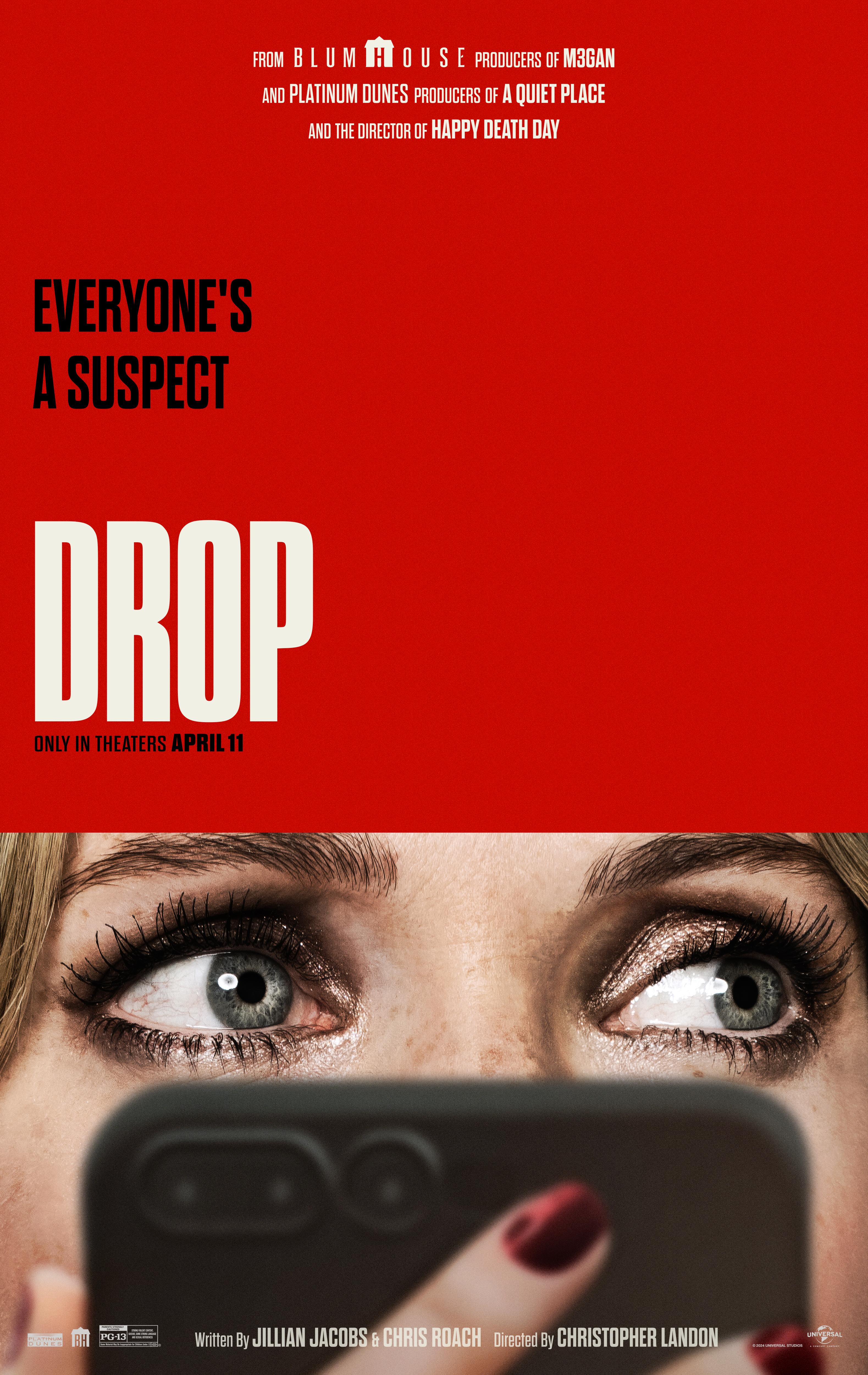
“Drop” in on a lot of fun at the cinema. Universal and Blumhouse’s Drop is a highly entertaining Lifetime-esque thriller that requires a prescription-strength dosage of suspension of disbelief. With a charming cast and adrenaline pumping suspense and tension, Christopher Landon’s latest movie delivers an engaging time at the cinema.

Violet is a widowed mother who goes to an upscale restaurant to meet Henry, her charming and handsome date. However, her pleasant evening soon turns into a living nightmare when she receives phone messages from a mysterious, hooded figure who threatens to kill her young son and sister unless she kills Henry.

If you enjoy the Lifetime movies of the 2000s, then this is right up your alley. The stakes are high and you’ll empathize with our central character of Violet, and root for her and her family’s survival. Because the lead cast quickly makes a meaningful connection with the audience, the plot holes (and there are many) almost feel irrelevant because the movie’s strength isn’t so much in the realism of the plot as much as it is in the naturalism of the plot. The movie is disconnected sufficiently enough from reality that it functions as an escapist picture, therefore the fact that there is little to no way this plot could ever happen due to the ridiculous nature. Between the high camp, high stakes, and charming cast, Drop blends the aesthetics of a high-budget thriller with the emotional pitch of a Lifetime movie—often to hilarious and unexpectedly entertaining results.

From writer-director Christopher Landon, Drop is directed with the kind of slick, over-serious tone that almost dares you not to laugh, Drop thrives in that uncanny cinematic space where implausibility meets irresistible entertainment (a.k.a. the Lifetime movie formula). The film is not so much interested in realism as it is in emotional immediacy—and it serves it with gusto. What makes Drop work is the sheet Oscar-level commitment. In an era wherein movies that typically fall in the vein of this one, wink at the audience to cue them in on the joke, this movie never acknowledges the absurdity of the premise. Which proves to be the winning hand, because the audience’s experience is surprisingly immersive. The stakes may be inflated, but the emotions feel real in the moment, and that’s what keeps viewers engaged. it to be consumed by its tornado of drama.

Even though the movie never becomes self-aware of its absurdity, that isn’t to say that the campy levels of plot devices and drama don’t play a role–on the contrary–the movie’s absurdity is its strength. Whether you’re watching in genuine suspense or howling with friends at the sheer audacity of it all, Drop delivers. And it’s way more fun than it has any right to be. Solid as the plot is from a storytelling mechanics perspective, it definitely defies conventional logic. But the movie completely surpasses any expectations I had going into the movie. Drop is a deliciously unhinged suspense thriller that feels like a Lifetime movie on a Red Bull bender—highly recommended for fans of unintentional camp and cathartic chaos.

Ryan is the general manager for 90.7 WKGC Public Media in Panama City and host of the public radio show ReelTalk about all things cinema. Additionally, he is the author of the upcoming film studies book titled Monsters, Madness, and Mayhem: Why People Love Horror. After teaching film studies for over eight years at the University of Tampa, he transitioned from the classroom to public media. He is a member of the Critics Association of Central Florida and Indie Film Critics of America. If you like this article, check out the others and FOLLOW this blog! Follow him on Twitter: RLTerry1 and LetterBoxd: RLTerry

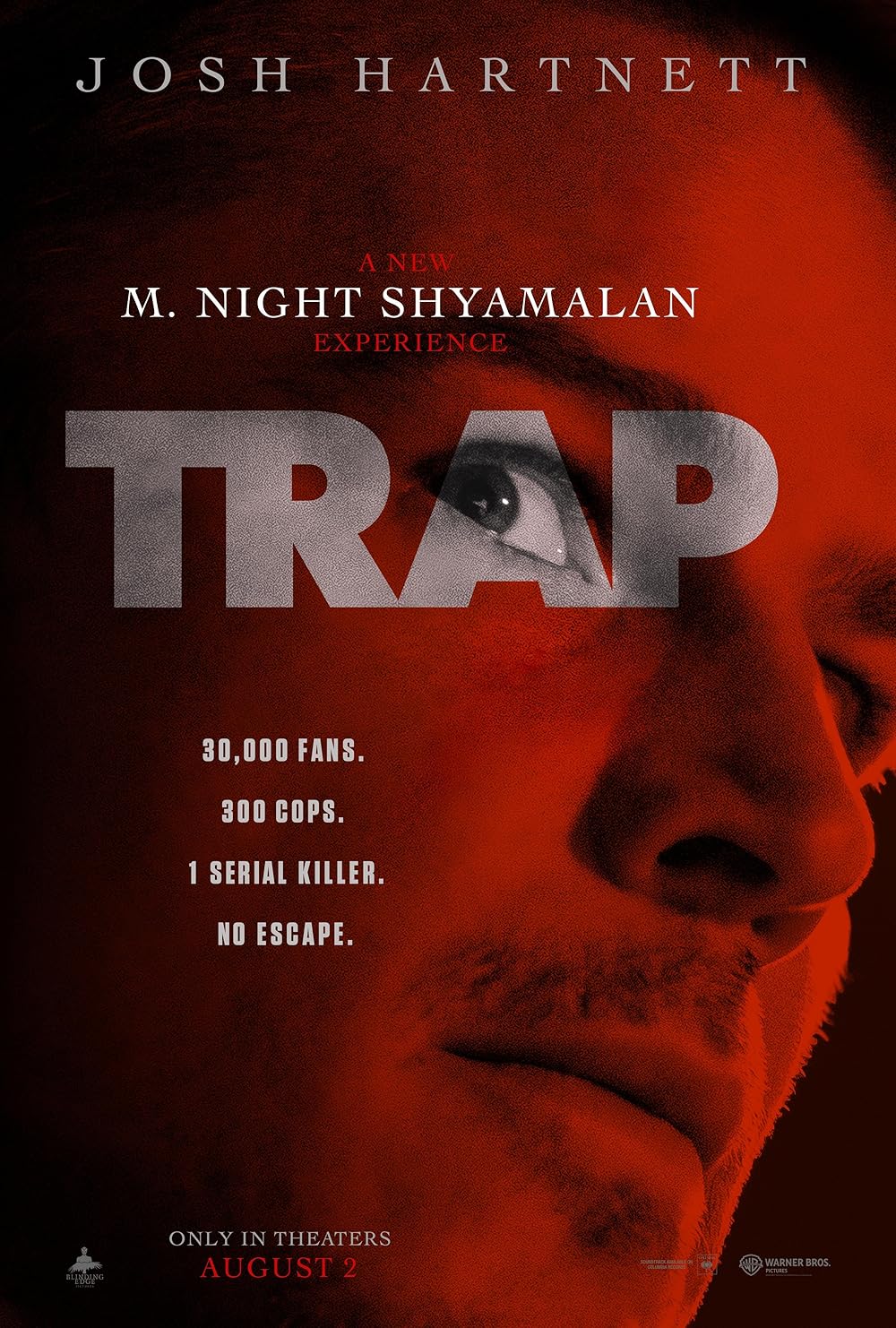
TRAP movie mini-review

A mediocre thriller that is sufficiently enjoyable. M. Night Shyamalan’s TRAP, starring nineties heartthrob Josh Hartnett, is a perfectly satisfying way to spend a rainy afternoon. The most enjoyable aspect of the movie is the performative dimension. Hartnett delivers a chilling performance as the serial killer The Butcher. Before you @ me, his identity is revealed early in the movie. But that’s the point, it’s not a movie that builds its suspense on the identity of the killer; rather, the suspense is built upon how he is going to escape the FBI after being tracked to the Lady Raven concert in Philadelphia. Hartnett’s performance is completely unsettling from the beginning when we sense that there is something a little off about his character. There is a side-plot that goes nowhere, that feels superfluous, but otherwise, it is a tightly written script with thoughtful pacing and a nice payoff. I appreciate this vehicle that allows Hartnett to showcase the range of his talent. Because he pulls off warm and charming and completely unnerving. The cameo by screen legend Hayley Mills was a nice touch, and Shyamalan’s daughter also delivered a solid performance as the trusting daughter. While I cannot say that I was particularly wowed by this movie, I can say that I enjoyed my time well enough. It’s a fun movie that provides a thrilling ride for the relatively brief runtime.

Ryan teaches Film Studies and Screenwriting at the University of Tampa and is a member of the Critics Association of Central Florida and Indie Film Critics of America. If you like this article, check out the others and FOLLOW this blog! Interested in Ryan making a guest appearance on your podcast or contributing to your website? Send him a DM on Twitter. If you’re ever in Tampa or Orlando, feel free to catch a movie with him.

Follow him on Twitter: RLTerry1 and LetterBoxd: RLTerry

BASIC INSTINCT (1992) a Throwback Thursday review

Still suspenseful and seductive! The Paul Verhoeven hypnotic neo-noir thriller continues to entertain and fascinate us more than three decades later. Exemplary direction, writing, and acting. Every storytelling element works flawlessly together to craft a film that was a cultural phenomenon and made Sharon Stone a household name. The heavily Hitchcockian-inspired film also contains characteristics of giallo that assault the senses and add a cloak and dagger quality to the string of mysterious, gruesome crimes. The effective use of red herrings and misdirection adds to the tension, keeping audiences guessing until the final reveal. Recently, I used this film in class, and my students, none of whom had seen it before, found it to be captivating, thoughtful, and provocative.

The mysterious Catherine Tramell (Sharon Stone), a beautiful crime novelist, becomes a suspect when she is linked to the brutal death of a rock star. Investigated by homicide detective Nick Curran (Michael Douglas), Catherine seduces him into an intense relationship. Meanwhile, the murder case becomes increasingly complicated when more seemingly connected deaths occur and Nick’s psychologist and lover, Beth Garner (Jeanne Tripplehorn), appears to be another suspect.

Basic Instinct both pays homage to and yet subverts expectations and tropes we have of film noir. This psychosexual suspense thriller draws inspiration from the works of Alfred Hitchcock and Dario Argento, particularly Vertigo, Psycho, and Suspiria in its exploration of manipulation, sexuality, and obsession. The use of shadowy lighting, ominous music, and morally ambiguous characters all contribute to the film’s rich noir aesthetic. That, coupled with unraveling the alluring mystery of the ice pic wielding killer, makes this a gripping sensory explosion motion picture tour de force.

Jerry Goldsmith’s phenomenal score plays a vital role in shaping the film’s atmosphere, mood, and emotional impact. Through its seductive melodies, tense rhythms, and character motifs, the music enhances the storytelling and helps to create a compelling and immersive cinematic experience. Whether accompanying intimate moments or intense suspense and violence, the music enhances the audience’s experience and adds an immersion to the storytelling. Goldsmith is an underrated composer because, not only did he deliver this seductive score, but he also wrote themes and music for Gremlins, Alien, Star Trek: the Next Generation, The Omen, and more. In addition to a prolific library of work in cinema and television, his compositions also demonstrate a wide rage of styles, unlike most other composers. When discussing great composers of the music of cinema, he should definitely be in the conversation.

At its core, this seductive film explores themes of obsession, desire, power, and manipulation. The film delves into the darker aspects of human psychology, particularly the blurred lines between love, lust, and violence. It also examines the idea of control, both in personal relationships and within the criminal justice system. In an analysis of the film, one of my students described it as a chess game, with Tramell being the white pieces and Nick being black. After all these years, I never thought to read the film as a chess match, each character attempting to out maneuver the other. While the film has long sense been thought of as an elaborate cat and mouse game, I feel my student offers a much more precise reading of the film as a chess game.

Sharon Stone’s iconic career-defining role as Catherine Tramell is characterized by her magnetic presence and undeniable charisma. From the moment we meet her lounging at her beach house by the waterside, she exudes confidence and allure, drawing others into her orbit with ease. Her character subverts stereotypes, presenting a complex and empowered female character of opposition whom is both alluring and dangerous. In every scene in which she appears, she delivers her performance with incredible gravitas. And it’s this performance by which the film owes so much of its enduring legacy. That interrogation scene alone, wherein she is simultaneously in complete control of the interview whilst embracing her sexuality is still one of the best single scenes of all time, especially when exploring feminist cinema.

She isn’t a strong female character because the men around her are weak or incompetent at their jobs, she is a strong character–period–because those that surround her are smart and driven. Yet, Catherine Tramell continually proves herself throughout the film to be cunning, calm, confident, and in control of any situation in which she finds herself. Suffice it to say, Stone’s Tramell is a complex and enigmatic character who embodies the archetype of the femme fatale, a seductive and dangerous woman who manipulates those around her for her own gain. The femme fatale represents a beautiful symphony of duality that continually draws us into the story.

Tramell’s sexuality is a central aspect of her character, and Stone portrays her with a sense of agency and empowerment. She is unabashedly sexual, embracing her desires without apology or shame. Stone’s performance balances Tramell’s overt sexuality with a sense of control and autonomy, challenging traditional gender norms and expectations. Tramell is a complex character that defies social norms and mores, wielding her sexuality as a means of empowerment in a male-dominated world.

In the film’s exploration of the darker aspects of the human psyche, both Nick and Catherine become completely consumed by their mutual attraction and psychological gamesmanship, blurring the lines between lust and danger. In many ways, they are mirror images of one another, which may explain the instant fascination each has with the other. The film explores the consequences of unchecked desire and the destructive nature of obsession. Moreover, the film explores heteronormative gender norms and that liminal space between personal and professional boundaries.

Tramell’s overt sexuality challenges Nick’s masculinity and authority, leading to a complex dynamic characterized by dominance and submission. This exploration of heteronormative gender dynamics adds dimension to their relationship and underscores the film’s themes of control and manipulation. One can even take this further to read the ice pic itself as a phallic weapon that Tramell has commandeered. She exerts control over the penetrative ice pic just as she has exerted control over Nick, or at least Nick’s perception of her. Concerning the manipulation of perception, this aspect to the plot and characters is a fantastic homage to Vertigo.

Michael Douglas’ performance of the deeply flawed detective Nick Curran may not get the attention that Stone’s Catherine Tramell does, but he delivers an incredibly strong performance of the recovering alcoholic and struggling sex-addict. Nick, a man whose moral and ethical compass is constantly being tested, struggles with his past and his predisposition to impulsive behavior. His vulnerabilities and inner demons make him a compelling character, as he navigates a dangerous world while battling his personal demons.

His attraction to Tramell blurs the lines between his personal desires and professional duties, compromising his judgment and objectivity. This vulnerability adds depth to his character, showcasing his susceptibility to manipulation. Throughout the film, Nick seeks redemption for his past mistakes, making his character journey one of self-discovery and catharsis. Nick’s experiences in the roller-coaster of an investigation provide him with the tools to confront his inner turmoil and ultimately finds closure. This character arc adds emotional depth to the narrative and allows the audience to empathize with his struggles.

Basic Instinct simultaneously checks all the boxes for neo-noir, and still manages to break ground! It’s a mind-bending, mesmerizing thrill ride from start to finish that continues to age beautifully like a fine wine. It’s a bold and controversial thriller that continues to captivate audiences with its exploration of sexuality, heteronormative roles, power, and psychological intrigue.

Ryan teaches Film Studies and Screenwriting at the University of Tampa and is a member of the Critics Association of Central Florida and Indie Film Critics of America. If you like this article, check out the others and FOLLOW this blog! Interested in Ryan making a guest appearance on your podcast or contributing to your website? Send him a DM on Twitter. If you’re ever in Tampa or Orlando, feel free to catch a movie with him.

Follow him on Twitter: RLTerry1 and LetterBoxd: RLTerry
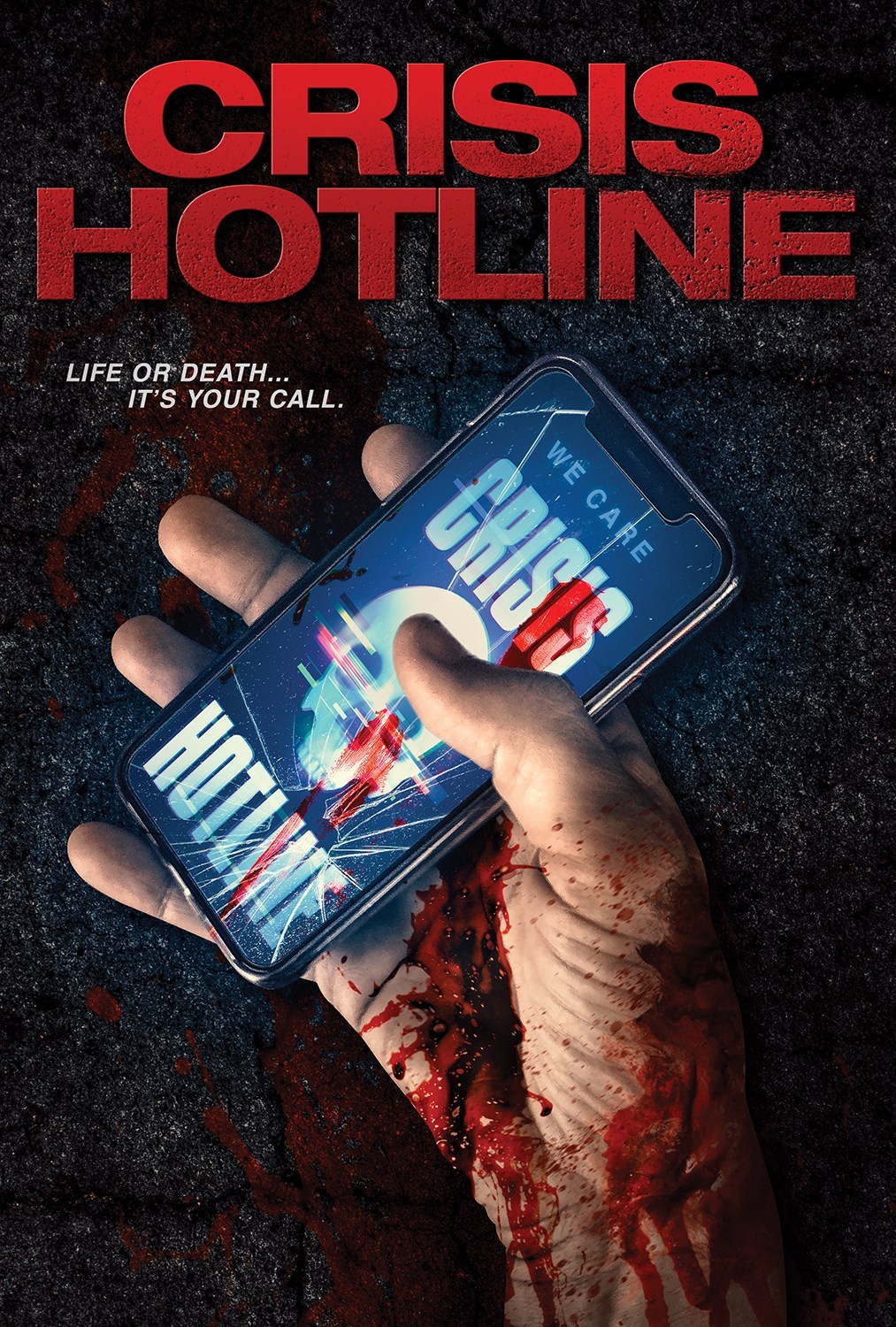
“Crisis Hotline” (2019) Indie Film Review

Erotic thriller with a shocking twist. Mark Schwab’s Crisis Hotline is an indie film that is reminiscent of Psycho IV, yet is budding with originality. It’s not often that we see fresh or original interpretations of past premises, but this film provides audiences with a new lens through which to explore heartbreak, guilt, and abuse of power. The small cast and two primary locations allow audiences to focus on the conflict between the crisis hotline operator and the caller. But down the rabbit hole the audience goes as the caller elaborates on why he is making a decision to harm himself and others. Despite the excellent hook provided by the opening scenes that setup the intriguing premise, the tone of the film shifts back and forth from heavy drama to psychological thriller to an erotic love story. Thus, leaving the film searching for what it wants to be. The screenwriting suggests that the writer was experimenting with genre, but didn’t commit to any one to a signifiant level, so there are tropes of all the aforementioned. What sets this film a part from many others that possess some of the same characteristics is that it features a predominantly gay male cast. What I appreciate about the characters is that their sexuality isn’t the focus of the story; truthfully, you could replace this cast with a heteronormative cast, and the story could play out similarly. However, the choice to make the characters gay does allow Schwab to explore relationship dynamics not often seen in films. While the premise may be intriguing, the execution lacks precision brought on by the underdeveloped plot and mostly flat characters.

A race-against-time thriller that highlights the potentially darkest sides of the social media phenomenon. Jaded by the job of managing an LGBT crisis line, Simon (Corey Jackson) finds that most of his callers are using the service for reasons that would qualify as being certainly less than a crisis. That all changes when he gets a call from Danny (Christian Gabriel) who says he is in the process of killing himself. Instantly gripped by his first real case, Simon does his best to connect with Danny and find out why he has come to consider such a drastic action. As the tale of Danny’s journey is unraveled through the use of flashback sequences, we discover a young romance, a troubling network of individuals, and a dark secret. (IMDb)

Although the characters are mostly flat, that doesn’t mean that they lack relatability. In fact, the characters of Simon and Danny are highly relatable. We’ve all been jaded over something in our lives. Maybe it’s failed relationships or perhaps it’s work related. Whatever the case, we’ve all been there. Simon goes into this shift with the same feelings that some of us may have experienced in our own jobs. Those in the service industry can definitely relate to that. Maybe you’re a Danny; you know what it’s like to be the new guy in town without a system of established friends and trying to date. Or you’ve been betrayed by someone you loved after having gone a long time just going through the motions of dating to the point you can provide an analytical breakdown of the steps, rises, and pitfalls. When Danny calls Simon to explain why he is intending to do himself and others harm, we can place ourselves in Danny’s shoes because perhaps we have been extremely heartbroken over a terminated relationship. He is our conduit through which we experience the plot of the film. He is a de facto narrator, and as such, because he is expressing suicidal and homicidal ideas, he is established as an unreliable narrator. But we have no choice but to listen to him because he must provide “the context” for Simon to process the severity of the call. Simon must establish the legitimacy of the call before contacting the authorities because there have been many false crisis claims in the past. In many ways, we are like Simon, listening to every word and trying to piece together the puzzle. There is no dramatic irony in this film, so we learn as Simon learns. The scenes of Simon listening to Danny are the scenes that I feel work best because that is when tension is at its highest.

Without getting into spoiler territory, I want to touch on how the film explores heartbreak, guilt, and abuse of power. Heartbreak is evident from the onset because the caller speaks to his broken relationship with Kyle. But when Simon suggests that the caller is going to extremes over a bad breakup, the caller draws Simon in closer to reveal the sordid, disturbing context of the broken relationship. Though Simon listens to a soft spoken Danny on the phone, it is clear that he is experiencing immense psychological pain. The heartbreak is more than sadness over a relationship that is over, it goes much deeper because of the sadistic betrayal that is slowly revealed over the phone call exposition. In addition to the exhibited heartbreak, the caller hints at the guilt he feels for some of his decisions, but the full extent of the guilt is not realized until the end of the film. I appreciate the film exploring not only the heartbreak of relationship loss, but the guilt parties feel in the aftermath. Lastly, the film comments on gross abuse of power. Through the conversation on the phone, Simon learns that Kyle’s employment may not be on the up and up, despite Kyle explaining to Danny that his employers were not involved in anything illegal–just sleazy. But Danny slowly begins to understand the degree to which Kyle’s employers hold him a captive employee. While the focus is on Danny and Simon, the film provides context for the audience to realize that the love of money is the root of all evil, and can reduce people to zeros and ones. Evaluating persons as a commodity is a dangerous slope that can lead to one’s destruction.

Thematically, the film works very well. The premise feels fresh, and the character setups are interesting. The weakness in this film falls on the screenplay that lacks direction. Although the plot is initially interesting and starts out gripping, it was stretched too thin to fill a 90min run time. Thankfully, the twist at the end helps to justify having sat through the poorly paced scenes. Not that this needed to be a quickly paced film; on the contrary, this is a story that needed to be a slow burn. But a slow burn does not mean that scenes should be poorly paced or longer than they need to be. Alfred Hitchcock stated, “start your scene as close to the end as possible.” And to Crisis Hotline’s credit, some scenes are tight and effective. But there are many that feel like they could have moved the plot along more efficiently. While I may be coming down hard on this film for it’s weak plot and lack of character development (when there was such an opportunity to explore these characters further), it provides audiences with a some great atmospheric scenes, a believable love story, and some rather suspenseful moments. I appreciate the film for not including explicit sex scenes, because then it’s entirely possible that it may have felt too close to a porno with a loose storyline. It has a good story idea with relatable characters and an intriguing premise.

You can catch Ryan most weeks at Studio Movie Grill Tampa, so if you’re in the area, let him know and you can join him at the cinema.

Ryan teaches screenwriting at the University of Tampa. If you like this article, check out the others and FOLLOW this blog! Interested in Ryan making a guest appearance on your podcast or contributing to your website? Send him a DM on Twitter!

Follow him!

Twitter: RLTerry1

Instagram: RL_Terry

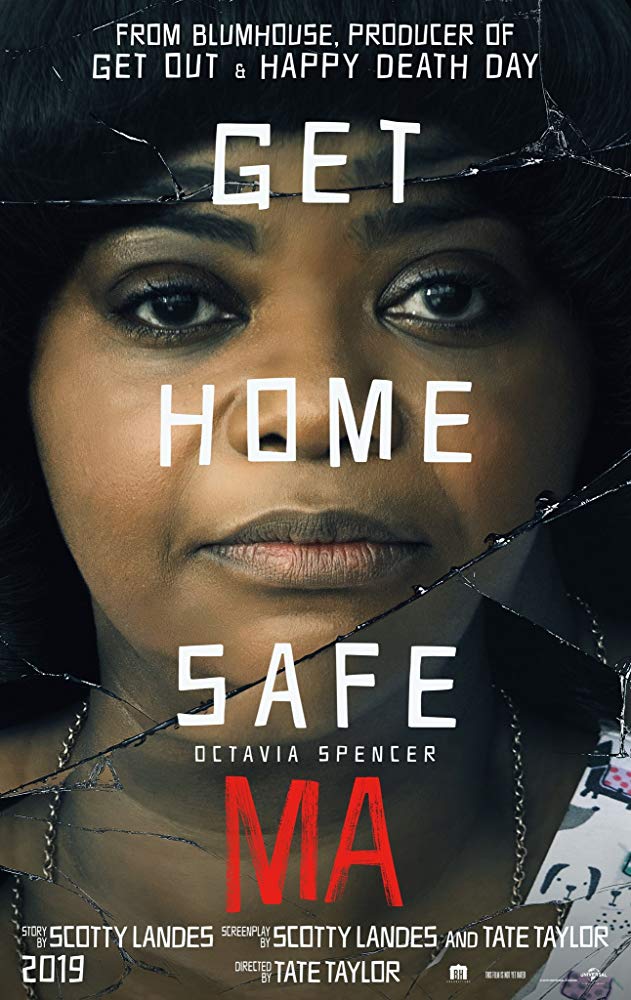
“MA” Horror Movie Review

A delightfully disturbing and thought-provoking Carrie meets Misery horror movie. Oscar-winner Octavia Spencer delivers an outstanding performance; however, the movie is unfortunately hampered by a weak screenplay with flat characters. In short, the reason to watch this movie is for the terrifying performance by Spencer, solid world-building, and commentary on high school bullying and teen sexual assault. Tonally, MA is a throwback to 70s and 80s slasher horror complete with the slow-burn windup, off-beat comedic schticks, and a descent into gnarly violence. Not all the kills cause you to wince as the screen holds your eyes hostage in the pleasurable unpleasure, one of the kills will leave you cheering–no seriously, it will. Built upon the premise of the sins of the parents will be visited upon the children, the screenplay does not hold back when taking us to some very dark places that fester with anger, fear, and resentment. With so much going for it, it’s unfortunate that the movie suffers from on-the-nose dialogue, leaving little room for subtext. Furthermore, most of the characters lack significant dimension that could have propped up this movie. Some interesting relationship dynamics and backstory are touched on, but never followed through in a meaningful way. While Spencer is truly the glue holding this movie together, there are some highlights worth discussing.

A lonely middle-aged woman befriends some teenagers and decides to let them party in the basement of her home. But there are some house rules: One of the kids has to stay sober, don’t take the Lord’s name in vain, and never go upstairs. They must also refer to her as Ma. But as Ma’s hospitality starts to curdle into obsession, what began as a teenage dream turns into a terrorizing nightmare, and Ma’s place goes from the best place in town to the worst place on Earth. (IMDb)

While most of the characters lack any true dimension (except Ma), the ensemble cast is comprised of some highly relatable characters. At the forefront of the cast is our title character of Sue Ann (or Ma). If you are coming to this movie as a single individual over 30, then you will likely identify with her by empathizing with her backstory and understanding what it’s like to feel that life is a parade passing as you wave it by. Furthermore, Sue Ann suffered repeated bullying, rejection, and even teen sexual assault that left a lasting psychological trauma. Or maybe you are the former popular high school Erica who moved away from her jerkwater town to Los Angeles, lived a wealthy life, just to wind up a divorcee and back in your hometown as a cocktail waitress. Perhaps you are the new girl at school Maggie, who grew up in Los Angeles but now is back in dismal Ohio during your junior or senior year of high school because your dad left your mom (Erica) for another woman. You could be the Regina of your group of friends, the dude bro, or the all American boy with a touch of geek. Whatever your high school experience or how it affected your adulthood, there is likely a character with whom you can identify.

Although the film could have commented more on the PTSD associated with high school bullying in a more meaningful way, and derived even more horror from it, it does serve as an exploration of the real, lasting effects on the psyche. A brief character analysis of Sue Ann reveals someone who is trying to capture that which evaded her in high school: the parties, the romance, the care-free friends. Because of the abominable treatment of Sue Ann by many of her classmates in high school, she suffered a trauma that mitigated her ability to socialize properly and psychologically mature. Therefore, as she grew older, she was constantly reminded of that which she could not experience in high school. So, when she saw a moment to reconnect with her youthful self in being needed by the group of teens outside of the gas station to buy alcohol, she seized the opportunity. Of course, the fact that our all American boy Andy is the son of the guy she crushed on in high school, definitely helped her make the decision to help. Unfortunately, her high school crush was responsible for the sexual assault she endured. A sin for which both father and son would pay. It doesn’t take long for the teens to see the cracks in Sue Ann’s fragile veneer. While the teens enjoyed Sue Ann’s party house and the charismatic Ma, things were fine. When they rejected her, things took a grave turn for the worst. And just like that, she was reminded of the torment from their parents in high school and began to plot her revenge on both the teens and their parents. In this respect, she is a little like Freddy Krueger because in A Nightmare on Elm Street we have the concept of the sins of the parents will be visited upon the children.

If you went or are going into Ma with the desire to see a terrifying horror movie from start to finish, then I need to warn you that this is a slow burn horror movie. Not, that slow burn is without its intrigue and suspense, after all, this is where the world and relationship building happens. However, this movie does not reach its horror status until the third act. But once the horror hits, it hits hard–gnarly even. Even the kills/tortures that you saw in the trailer still pack a powerful punch. Most of kills are nightmarishly real. Very little visual effects here; you get the benefit of some highly authentic practical effects. Yes, even the lip sewing scene. Probably one of the most disturbing torture and kills involves animal blood; this moment is nice homage to both Misery and Carrie, but not a copy of either. There is a poetry to the tortures and kills. No one is targeted out of sheer happenstance, but targeted because of whom or what they represent. The sins by which Sue Ann judges the teens or parents are directly connect to or represented in the manner in which they meet their demise. More than the creativity in the actions of Sue Ann, the reasons why she feels the way she does are the most interesting. Even though we should be disgusted at the actions of Sue Ann, we cannot help but empathize with her because of her troubled history and past trauma. She wants what any of us want: to love, have our love returned, and be accepted.

Is it a great horror movie? No. But is is a solidly good one? Yes. If for no other reason, you watch Ma for the outstanding performance by Octavia Spencer! She is absolutely captivating and will leave you with many WTF moments. Interestingly, this is not Spencer’s first time in a horror movie; she was in Rob Zombie’s Halloween II. I hope that we get to see her in more horror movies in the future because she did such a fantastic job with this one. If you’re looking for a fun, popcorn horror movie that–to its credit–does have some thought-provoking content, then you’ll enjoy Ma.

You can catch Ryan most weeks at Studio Movie Grill Tampa, so if you’re in the area, let him know and you can join him at the cinema.

Ryan teaches screenwriting at the University of Tampa. If you like this article, check out the others and FOLLOW this blog! Interested in Ryan making a guest appearance on your podcast or contributing to your website? Send him a DM on Twitter!

Follow him!

Twitter: RLTerry1

Instagram: RL_Terry