“Passengers” movie review

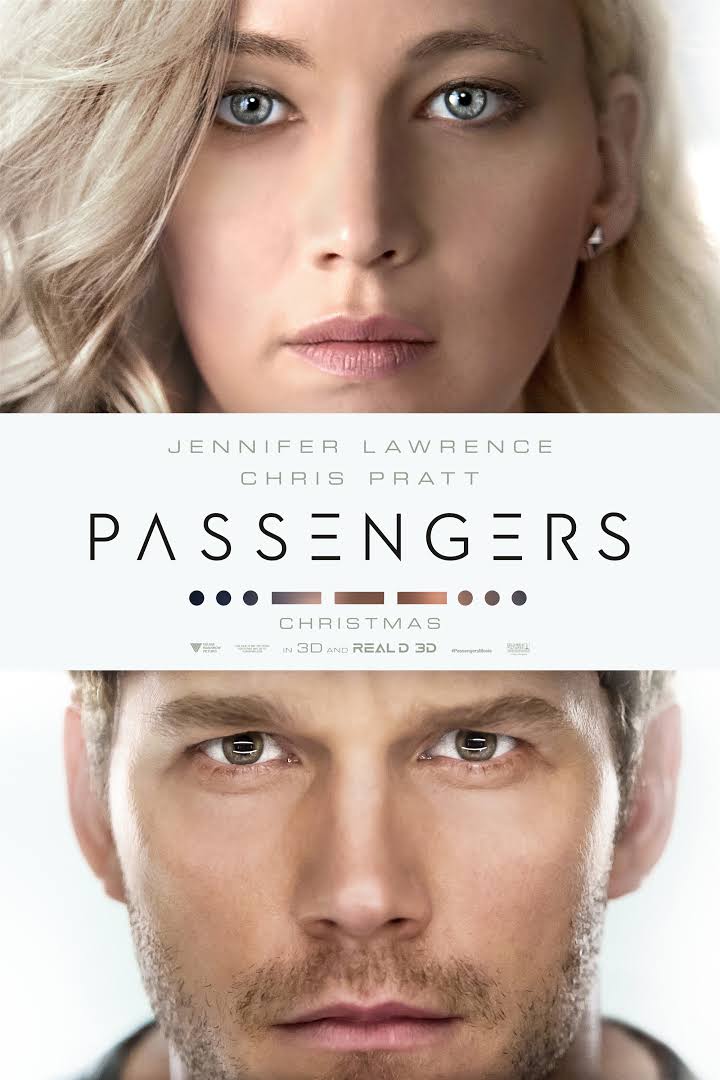
passengersAn intriguing journey with lots of potential but ultimately fails to pull into the space dock. The highly anticipated visually stunning science-fiction film starring Jennifer Lawrence and Chris Pratt proves one thing: Pratt and Lawrence have excellent on screen chemistry and play off each other very well. With films like this one, it’s hard to know where the fault lies. Typically, a film with such potential and a powerful cast is weakened by either the writing or directing. Since the director principally works with the cast, it can be concluded that the writing lacked the drive that this film needed. On a more positive note, this film depicts deep space travel how it could likely be in the not-so-distant future. From the centrifugal force created by the rotating space craft to simulate how artificial gravity could be generated to the onboard technology to the sickbay, this film does a fantastic job of providing audiences with a science-fiction that is almost tangible. Having such a limited cast in one location can spell disaster for cinematic storytelling; but, the film is quite interesting to watch and sufficiently keeps the audience’s attention. Furthermore, the audience mostly connects with Aurora (Lawrence) and Jim (Pratt) well enough. But, the film fails to truly provide audiences with a new adventure because it amounts to a glorified Castaway set in the Disney Springs of shopping malls in outer space–just completely empty of scooters, strollers, and other park guests. Lack of surprise pretty well sums it up.

Welcome aboard The Avalon on the Homestead Company’s routine transport to Homestead II, a new earth colony. All is going well until two passengers find themselves awakened from suspended animation about 90 years too early during a cascade of ship wide malfunctions. Faced with living the rest of their respective lives on board and only the company of an AI bartender (Michael Sheen), Jim and Aurora must cope with the challenges of living together in a world that is merely 1000 meters from stem to stern. When the ship begins to increasingly malfunction and life support at risk, Jim and Aurora much solve the mystery of what originally caused the problem that began the cascade. Just as the ship is keeping a secret, there are other dark secrets on board the ship as well. Meeting with psychological, emotional, and engineering challenges, Jim and Aurora have 5000 other passengers and crew to save while maintaining their own sanity and psycho-social health.

As the movie faded to black, I began discussing it with the friends who accompanied me to the cinema last night. And we shared a mutual reaction of hmm, not exactly sure what this was or how to read it but it had some interesting components. And that pretty well covers it. The film will likely keep you entertained but with few surprises, it lacks anything to make it memorable in a positive way. Forgettable is what this movie will become in the no-so-distant future. Essentially, Passengers is what you would get if Gravity and Titanic were to have a baby. Star-crossed lovers on a ship that is self-destructing in the vacuum of space. One of the most intriguing components in the plot of the film is also highly disturbing. While love and infatuation causes many to go to great lengths in order to see desire become reality, it is a double-edged sword that can cause one to behave selfishly if not displaying signs of sociopathy. While Pratt’s performance is what is to be expected from one of the most bankable actors in Hollywood who is equally a dedicated family man, his performance is never quite on par with his Castaway counterpart. However, Lawrence delivers an intense performance as she plays off Pratt,the bartender, and The Avalon itself.

The cinematography and editing are excellent. In fact, the technical elements of the film are impressive! Not quite as groundbreaking as Gravity or Interstellar but still outstanding. There is one scene in particular that still has me puzzled as to how it was able to be achieved so flawlessly. The set design, albeit spartan, is beautifully sleek and functional. As film is a visually driven medium of storytelling, the camera often pulls in close to characters to establish intimacy but juxtaposes that against pulling back to reveal the oppressive loneliness of being alone on a massive ship in space. For a brief moment, I experienced the dread that is created in Kubrick’s The Shining when Jim meets Arthur the bartender. Interestingly, the music (composed by Thomas Newman), camera direction, dialog, blocking, an set design all work together seamlessly to establish that unparalleled sense of dread, loneliness, and self-destructive despair that are so iconic to The Shining. Unfortunately, that powerful sense of dread is lost in weak writing. Had the film embraced the potential to channel The Shining, it may have played out more memorably. But, this is a love story so the horror plot devices that could have helped the film were not integrated into the plot. Although there are may significant contributors to a film’s success, the success of a film often relies upon the direction, writing, and cast. As briefly mentioned in my opening paragraph, the director (Morten Tyldum) of a film principally works with the cast and is responsible for blocking, delivery of dialog, and perception; so, it is likely the screenplay by Jon Spaihts that is responsible for the weak story. A director and cast can work hard to makeup for a weak screenplay, but in this case, the lack of developed story showed through.

Despite sharing the screen with Aurora, this truly is Jim’s movie and others simply happen to appear in it when necessary. As a side note, I could easily see how this film could be translated into a stage production. Perhaps on stage, the story could evolve to leave more of an impact on the audience.
“Inferno” movie review

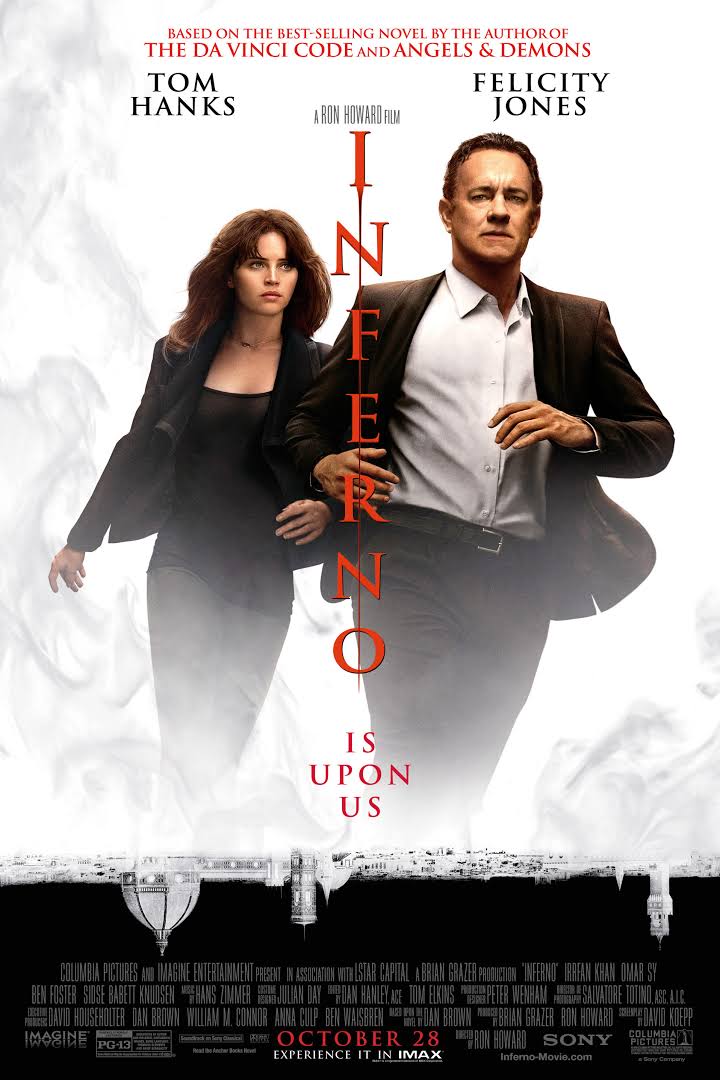
infernoFamed symbologist Robert Langdon is back in a fiery installment in the franchise that bears his name. Sony Pictures and Imagine Entertainment’s Inferno is a non-stop rollercoaster of an adventure film that combines art, history, literature, bio-medical science, and weapons of mass destruction in a heart-pounding thriller that makes academia and public health look sexy. As expected, Tom Hanks delivers an outstanding performance as the Indiana Jones of symbols and puzzles and the visual storytelling is excellent. From the moment the film opens with incoherent subjective flashes through the eyes of Langdon suffering from amnesia, shaky camera movements, and glimpses of disturbing apocalyptic imagery to the final showdown beneath Instanbul’s Hagia Sophia, Inferno will command your attention for the two-hour runtime. Unlike the two previous installments in the Langdon franchise, there is a conspicuous lack of commentary on organized religion by deciphering puzzles and revealing coverups and more of a focus on art history and rhetoric. This focus provides a far more believable plot than found in The Da Vinci Code and lesser so in Angels and Demons. With bio-medical warfare being at the center of this film, the movie paints a realistic portrait of how a Dante-spouting sociopath might try to fix the world’s problems by wiping out half the population with a destructive plague.

Waking up in a state of incoherency and amnesia in an Italian hospital in Florence, Robert Langdon (Hanks) is thrust into running–or hobbling, rather–for his life. Under the guidance and protection of a beautiful ER doctor (Felicity Jones), Langdon barely escapes with his life. Dazed and confused, Langdon must concentrate on piecing together a puzzle–no surprise there–but this time, the puzzle begins with how he got to Italy and why he is carrying a bio-medical tube. From puzzle to mystery, Langdon and Dr. Brooks (Jones) are forced into an adventure that blind-sided them. After discovering a connection between a dead sociopathic billionaire madman and the Italian poet Dante (The Divine Comedy), Langdon and Brooks race across Europe to stop a devastating plague from killing off more than half of the world’s population. Between stopping the plague and constantly under siege by the WHO (World Health Organization) and a private security firm, Langdon is truly racing against the clock to piece together his own life while making the connections in the puzzle left by the deceased sociopath to save the world.

Although in previous installments in the Langdon franchise have the symbologist traversing across Europe and even the world, this film’s plot is mostly concentrated in Florence. Home to some of the most notable works of art in the world, Inferno might work as an unconventional travel guide for the tourism industry in Italy. Far less cerebral than The Da Vinci Code and to a lesser extent Angels and DemonsInferno is far more visceral, exciting, and thrilling. The lack of religious/historic irony will definitely stick out to those who either read the books and/or watch the movies (I am the latte); however, that does not hinder the film’s delivery of an action-adventure taking place within the worlds of the arts and medical science. With the previous installment Angels and Demons being released in 2009, the high-impact feeling of Inferno is incredibly important because there has been such a long gap between the films. Still, the plot of Inferno does not have the finesse that both previous films have. Although this installment is incredibly enjoyable and entertaining, it lacks the opportunity to question, think, and analyze the mystery at hand.

Another contrast between this present installment and the previous two is the character-heavy plot. Occasionally, the film felt overrun with characters. Albeit, most of the characters are interesting and also possess brilliant minds, at times the plot is overcrowded. Perhaps that was intentional since the billionaire madman claims that the population should be reduced because of overcrowding the earth; however, it’s more likely that writer David Koepp and director Ron Howard were attempting to get as much of the novel on screen as possible. Not having read the novel, I am unable to comment on the translation from page to screen beyond inference. Despite the character-heavy plot, the film is not without the trademark art, history, literature, and enigmas that are synonymous with the Langdon series of books/films. Beginning with a reimagined map of Hell based on the one described by Dante in The Divine Comedy and illustrated by Botticelli, the film’s plot does come back to the puzzles but most of the time is spent being chased by nearly everyone.

The best part about this film is just how exciting it is. If you are even remotely interested in it, you won’t be disappointed. As this is a franchise, and franchises tend to have intentional or unintentional patterns of behavior within the cast of characters or similarly functioning plot devices, there are definitely elements in this installment that are found in the previous two. There is one plot twist that bares a striking resemblance to one in The Da Vinci Code. The non-stop action will likely kindle an interest in pursuing a career as an academic or official with the WHO. Perhaps, the study of symbols, numbers, and taxonomy, will be of greater interest to current students. There are just enough loose ends and unanswered questions that keep the film from being too predictable.

Looking for an exciting cinematic adventure for the weekend? That is, when you are not either at or recovering from a Halloween party. Check out Inferno! Not Halloween-themed at all, but it is a fun adventure full of excitement and you’ll learn a thing or two about art, history, and literature.

“Don’t Breathe” movie review

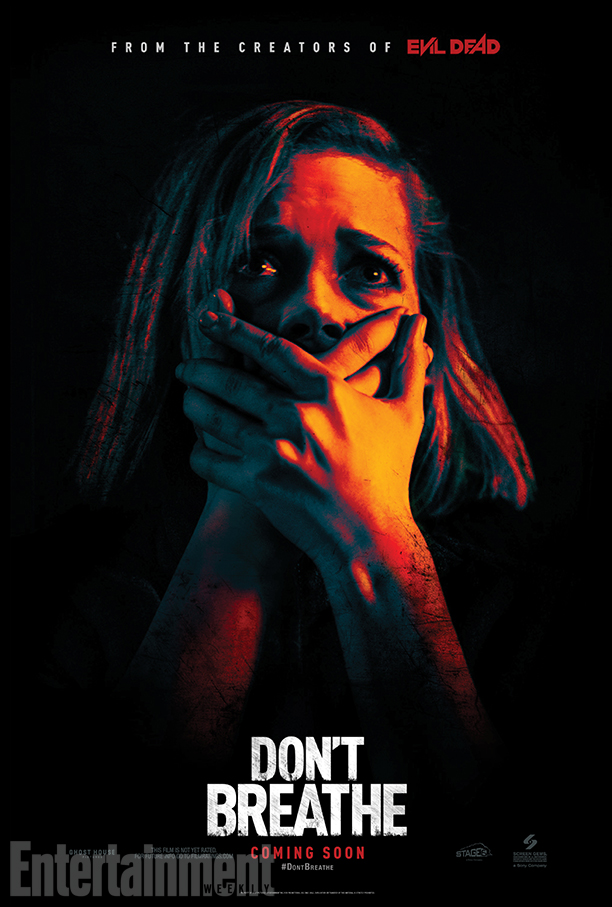
DontBreatheDon’t visit Detroit. Don’t Breathe is a brilliant horror film that will keep your adrenaline pumping and keep you guessing from the beginning of Act II to the final cut to black. Crossing into different sub-genres of horror, this movie will capture your attention every moment and catch you off guard every chance it gets. Although there is no scientific evidence for the collective belief that when one sense is removed that the others take over, it does make for a fantastic plot device that will greatly heighten your own senses while watching this efficiently ruthless movie. This is definitely a horror film to experience on the big screen–don’t wait for Prime, Play, RedBox, or HBONow. The most terrifying element of this movie is the feeling of being trapped in the dark. Just as the characters are experiencing the labyrinth that is the home of the intended robbery victim, you will also feel helpless as the terror unfolds in front of your eyes and you have nowhere to hide. Going into this film, you may think it simply a new twist on the home invasion sub-genre of horror, but you will soon find out that there is so much more to this movie than meets the eye. While some films–horror or not–are often guilty of wasting time, especially in the first acts respectively, Sony-Screen Gems’ Don’t Breath is a cinematic claustrophobic rollercoaster that includes one terrifying turn after another. In other news, if you’re looking to buy a house, this film includes some great shots of your next neighborhood in Detroit.

With all their friends gone, three young people are desperately trying to leave the city they once called home. Turning to petty theft and larceny, Money (Daniel Zovatto), Rocky (Jane Levy), and Alex (Dylan Minnette) receive a tip from a local crime boss that there is a house with enough money to get them all out the city. After learning that the home is inhabited by a blind old man (Stephen Lang), the small band of thieves conclude that this will be an easy gig. With the aid of security codes and keys from Alex’s father’s security business, who manages the few inhabited homes in Detroit, Alex, Money, and Rocky plan the heist. After the robbery goes 180 degrees in the opposite direction, this supposedly easy target now has them trapped. And a terrifying realization will have them holding their breath as to not get caught or worse. Two parts home invasion, one part heist, and three parts horror, this terrifying movie will have you on the edge of your seat.

For the sake of not giving anything away in the movie, I am going to keep this review on the shorter side. Sometimes the best horror movies are those that have a very simple premise. And this is definitely one of those. The heist genre is one of the oldest in the cinematic handbook. After all The Great Train Robbery (1903) was the first American film to pioneer composite editing, on-location shooting, and dynamic camera movement. Although not the very first motion picture, it is among the first and considered by many to be the first commercially successful motion picture. Early on in the dawn of commercial cinema, horror was quite prominent, thanks to Carl Laemmle who founded Universal Pictures. Don’t Breathe includes elements from many different films in the official sub-genres of horror; but to explore each of those would give away some terrifyingly morbid plot twists in the movie. The point is, this film borrows from both horror and non-horror films that helped to forge the foundation of commercially successful cinema. It’s of no surprise, after watching it, that is will likely do very well this weekend. Given that it has an August release date, I was concerned that–as good as it looked in the trailers–that it would not play out very well because the best horror films, this time of year, are released in latter September and October to make way for Halloween! But, I was totally wrong; I thoroughly enjoyed the experience. Speaking of Halloween, this movie would make an absolutely perfect addition to Universal’s Halloween Horror Nights next year if they can secure the rights from Sony Pictures.

Regarding the location of the film, this is just the latest in horror films (as well as other genres) to use the motor city as the backdrop for a violent story. As a producer, myself, I realize that part of the draw to that location is the simple fact that it is incredibly cheap to shoot there. The other part is that it effortlessly sets up a feeling of uneasiness from an aerial shot of the city or suburbs. Not entirely sure that having horror films and other violent movies set in your city, now in ruins, will do much for inspiring entrepreneurs or other professionals to relocate; but it does showcase the city as a welcoming place for filmmakers who seek to pursue their respective dreams of success at visual storytelling. Ghost towns have often been used in westerns, horror, and treasure hunt movies; and without having to go to a foreign country, there really is a perfect modern ghost town right here in the US. Whether it needs to serve as a location that symbolizes greatness in ruins or to instantly prompt apprehension or unbalance, it is a diverse landscape upon which to build a story.

Just when you think the film is over, it will throw you for a loop! Looking for a fantastic film to watch on a date or with your friends this weekend, then I highly recommend Don’t Breathe. It’s the perfect film to usher in this most macabre time of year. Not defaulting to gore and jump scares, this movie is a beautifully and meticulously crafted work of cinema that will genuinely cause your blood to race and keep your senses on edge.

License to Create: Theme Parks and Intellectual Property

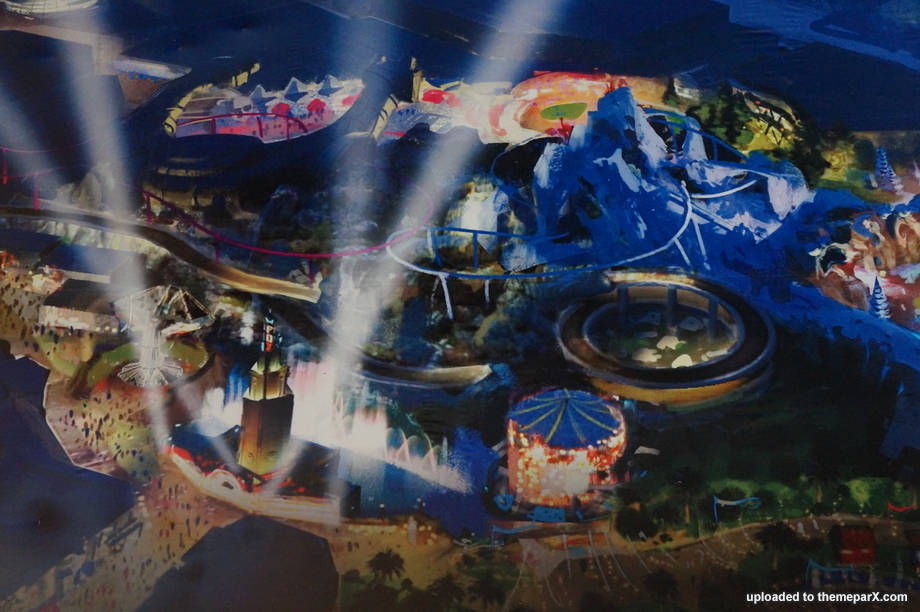
ThemeParkHighAngleLicense and registration please. With 20th Century Fox, Sony Entertainment, and Paramount Pictures entering the themed entertainment game as potential heavy hitters, and to some extent Warner Bros. as well, questions about cinema, television, and video game intellectual property (IP) begin to rise. Only having really had two main players in the industry for the last couple of decades, unless you count CBS/Paramount before selling off the amusement park investments to Cedar Fair, Disney and Comcast (parent company to NBC Universal) utilize their own respective IP libraries as well as licensed properties from other media companies. Not having as vast an IP library as Disney, many of Universal’s theme park properties have come from companies like TimeWarner, Viacom, and Fox. Whereas Disney primarily uses their own extensive library, they too have licensed other companies’ IP such as MGM Holdings, 20th Century Fox, and CBS. Although some of the once-licensed properties by either Disney or Universal have now been officially procured (i.e. Disney’s LucasFilm and Universal’s DreamWorks Animation), a common practice in the themed entertainment industry is to license, borrow, barter, trade, etc. But, with these new players demanding a slice of the hospitality and tourism pie, could we see more original television programming or movies?

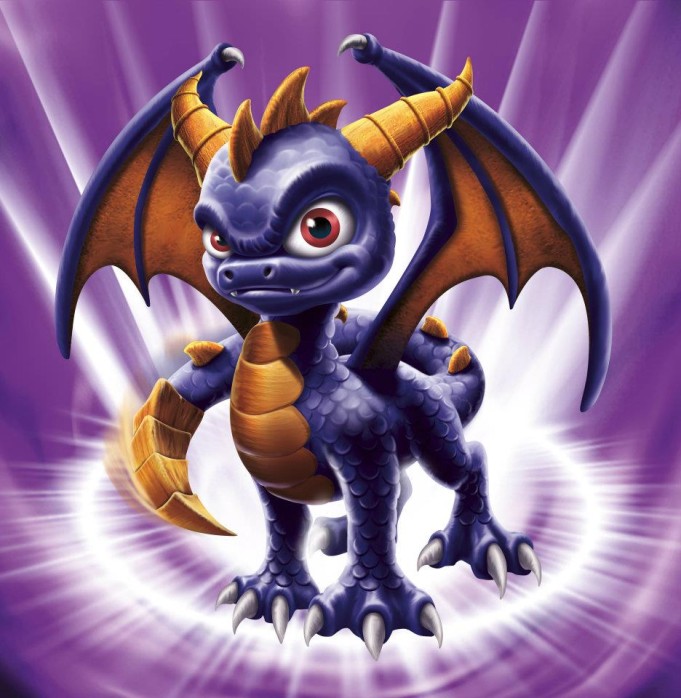
SpyroThink about it for a moment. Let’s look at some of the most well-known IPs from Sony, Fox, Paramount, and Warner Bros. Although there is a mild to moderate degree of subjectivity in what constitutes “well known,” I am going to go with commonly thought of properties. Starting with Sony. In no particular order, some of the most popular Sony properties include: James Bond (formerly MGM), Spider-Man, Men in Black, Smurfs, Terminator, Silence of the Lambs, Hotel Transylvania, Spyro, The Nanny, Wheel of Fortune, Jeopardy, Price is Right, Final Fantasy, and Crash Bandicoot. Switching gears to Fox. Some of the most well-known Fox properties include: Avatar, The Simpsons, Rocky Horror Picture Show, The X-Men, Bones, New Girl, American Horror Story, Alien, X-Files, Die Hard, Futurama, and Family Guy. Although not well known in the US, Warner Bros. operates a theme park in Australia and what is now called Movie Park Germany. Some of the most popular Warner Bros., IP are: Harry Potter, Game of Thrones, Looney Tunes, DC Entertainment, Lord of the Rings, A Nightmare on Elm Street, Friday the 13th, and Lego Entertainment. Viacom, parent company to Paramount Pictures, is one of the original Hollywood studios and owns IP such as: Mission Impossible, Titanic (partnership with Fox), Star Trek (films and TV shows), Forrest Gump, and the valuable Nickelodeon. Obviously the aforementioned lists are not exhaustive, but I wanted to try to paint as brief but effective a picture as possible to understand why IP is a hot topic.

JamesBondLogoRecognize some of those titles? You probably recognize most, if not all of them. Unfortunately, these companies have already licensed out some of those properties to Universal, Disney, and Six Flags. Avatar and Alien are licensed by Disney. Marvel Entertainment, Harry Potter, and Nintendo are licensed to Universal, DC Entertainment and Looney Tunes are licensed to Six Flags Parks, and the Nickelodeon IPs are split amongst different entities. Of course, when the licensing agreements were drawn up, it is unlikely that either Sony, Fox, Paramount, and to a lesser extent Warner Bros., thought that they would enter or re-enter into the themed entertainment industry. Now that this part of the tourism and hospitality (and live entertainment) is exploding, Sony, Fox, Paramount, and Warner Bros. need to rethink how to play catchup–and FAST. But, when you have licensed out some of your most valuable properties, how do you make up for it? The short answer is (1) refuse renewal when the license expires or (2) develop original content. Since some licenses run for decades, the former isn’t really an option unless the license is coming up for renewal in the next few years; so, we are left with one logical conclusion: pump out original content that is adaptable to a live experience. This is where research like mine comes into play since I have studied the relationship between cinema and theme parks, and moreover how to successfully translate a movie or TV show into an attraction. It’d be nice if one of these companies would snatch me up. But, I digress.

Film Strip BoardIt is entirely possible that Sony, Fox, Paramount, and Warner Bros. will be forced to generate new ideas for movies, tv shows, and video games. More specifically, original creative media content that can and needs to be able to be translated from the screen into a theme park near you. When developing original content that has the ability to be translated to a live experience, companies need to keep in mind that a high-concept plot with unique settings, characters, and action sequences are necessary for a movie turned attraction. There is a lot more to it than that, but at least this gives you an idea what is required and backed by empirical evidence. Although blockbusters are typically the sourced content for theme park attractions, not every blockbuster is appropriate. Take Titanic for example. It is a movie about the 20th century’s worst and most infamous maritime disaster. So, I don’t think Paramount or Fox will add “Titanic: Ride it Out” to its parks. The ability to cross-promote intellectual property is of great importance for the strategic exhibition and integration of movies, tv shows, or video games. One of the reasons why the Disney parks are so successful is because the Disney movies can be (1) seen in the cinema (2) character meet and greets in the parks (3) the platform for a video game (3) used in theming on the cruise line (4) A-list artists can record covers of the songs from musicals (and broadway musicals can be produced) and (5) the platform for attractions in the parks. Sony, Fox, Paramount, and Warner Bros. need to concentrate on producing movies and TV shows (and by extension video games) that can be used in strategic and creative cross-promotion.

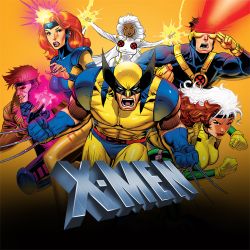
X-Men TASReturning to the present state of IP in the parks. Fortunately, some of those companies still–at least to the best of my knowledge–retain the theme park licensing for a few of the properties that were mentioned earlier; but for the most part, the most well-known movies, video games, and TV shows are already licensed by other companies. Viacom/Paramount operates the Nick Hotel near Disney in Orlando, so it still retains some licensing to its Nick IPs. However, since other parks use some of the Nick characters, there is probably some red tape to go through in order to fully use them in the Paramount park in the United Kingdom near London that is under development. Just like Disney wants to get their hands on Universal’s Marvel properties, Fox really needs to work on getting the X-Men back. On that note: since The Avengers is Disney’s heaviest of hitters and the same for Fox and the X-Men, perhaps eventually we will see that Disney has access to The Avengers and Fox the X-Men. Disney doesn’t really need The Avengers as much as Fox needs the X-Men. The X-Men is arguably Fox’s most successful film franchise in the last couple of decades and it is still going strong. Another Fox property that is licensed by Disney is James Cameron’s Avatar. As for Sony, they have not licensed out as many of their properties to themed entertainment companies, with the obvious exceptions of Terminator and Men in Black. Another area to explore is the reason why non Disney and Universal parks are mostly being built overseas. But that is the topic for another article; however, it is directly linked to IP and copyright.

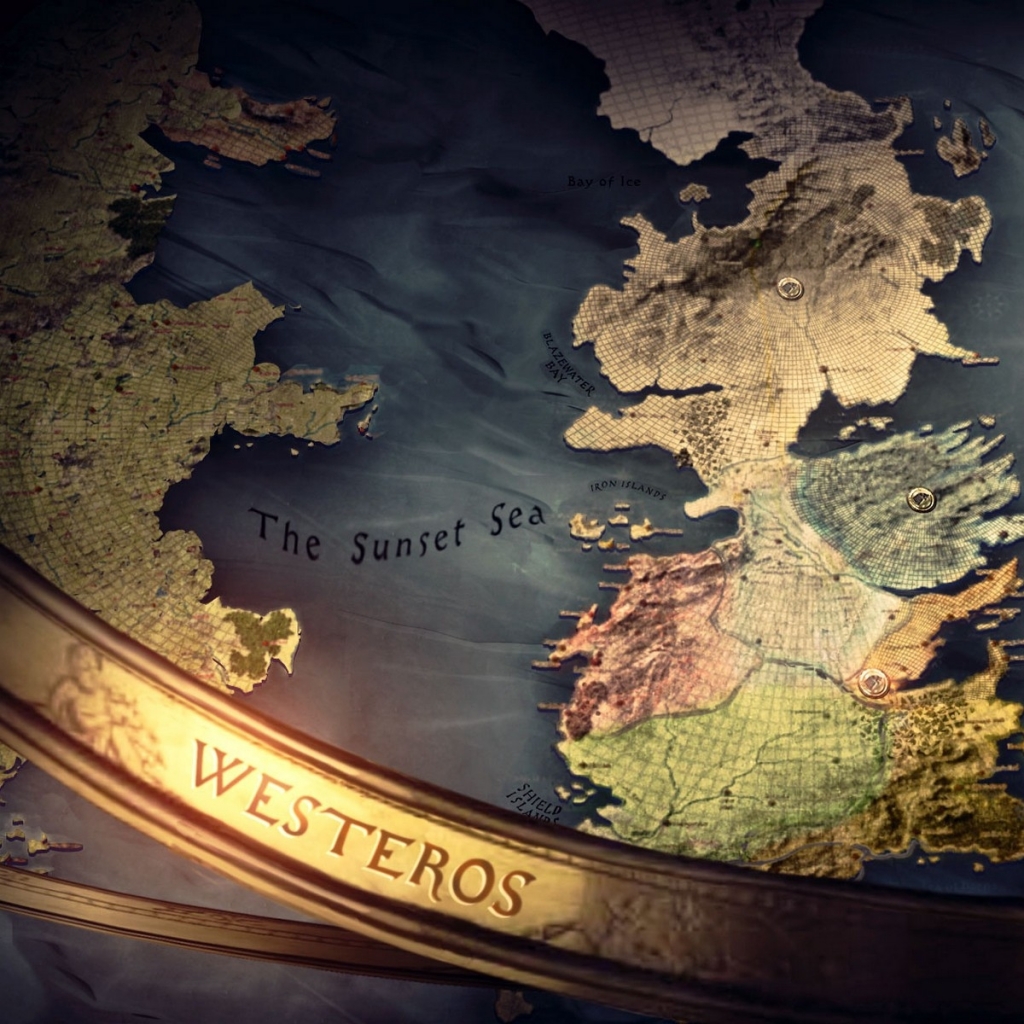
maps_game_of_thrones_a_song_of_1024x1024_wallpaperfo.comCurrent IPs that would make for great attractions in a U.S. Sony, Warner Bros., Paramount, or Fox theme park would be Game of Thrones, American Horror Story, X-Files, James Bond, Lord of the Rings (but that is a whole other discussion in and of itself), Hotel Transylvania, Spyro the Dragon, Maze Runner, Hunger Games (need to be licensed from Lionsgate), Ice Age, or Mission Impossible. Content is king. More innovative and original content from the big studios who also have theme park investments means that there will be more movies to see each year!! It will also open the door for new ideas from comics, literature, history, and legend. Instead of reboots and remakes, you will enjoy new ideas and narratives. So, the long and short of it is that media conglomerates with movie studio and theme park investments are at a crossroads. They can either not go full-force into themed entertainment and play around with the current IP in their respective libraries or can rise up to the challenge to develop original movies and tv shows that can also find their ways into theme parks in the U.S. and around the world.