OPUS (2025) film review

An enigmatic puzzle with missing pieces. What starts as a fascinating psychological mystery quickly devolves into a series of disjointed, cryptic sequences that offer more questions than answers. Opus is certainly a haunting experience that delivers striking visuals, but the stylistic storytelling lacks substance, resulting in a film that is ultimately hollow. Like with so many A24 and Neon films, Opus is rich in atmosphere, but lacks strategic plotting, proper pacing, and demonstrable working knowledge of screenwriting mechanics. Moreover, it falls into an all too familiar trap of prioritizing aesthetic over storytelling. Opus is yet another example of modern arthouse cinema mistaking ambiguity for depth. The film posits many otherwise thoughtful questions, but leaves you wondering why you should even care about what you just watched.

Journalist Ariel (Ayo Edebiri) works for an acclaimed music magazine but has grown tired of her arrogant boss Stan (Murray Bartlett) assigning her good pitches to more senior writers. But following the reclusive, visionary pop star Alfred Moretti (John Malkovich) emerging from hiding after more than thirty years, Ariel’s boss is invited to his secluded, remote compound where he will be releasing a new album. Ariel and her boss are invited to attend as press. But not long after arriving, Ariel deduces that the compound’s collection of ardent admirers of Alfred are actually a cult with deadly plans for the guests.

Most of the film’s problems can be traced back to its screenplay. Like with many (if not most, in my opinion) writer-directors, this story likely made much more sense in Mark Anthony Green’s head, than it did on paper. I find that writer-directors often have excellent movie ideas and eyes for shot composition, but lack a working knowledge of screenwriting mechanics. Had Green collaborated with a more established screenwriter, then the film may not have had the plotting issues that plagued it the whole time.

Adding to the film’s plotting issues is its reliance on repetition rather than escalation. Scenes blend into one another with minimal variation, creating a sense of stagnation rather than rising tension. Ariel’s, our central character’s, journey is more about cycling through eerie encounters and vague hallucinations than actually uncovering deeper truths. Without a clearly defined external goal for Ariel, Opus feels like a film more concerned with its own mystique than engaging its audience. The goal could’ve been something as simple as getting the article published, but the film never quite has a throughline on which to land the diegetic plane.

While strong, the performative dimension of the film is underscored with style over substance. Ayo Edebiri’s performance is layered and emotionally compelling. Unfortunately, the film gives her little to work with beyond surface-level tension. John Malkovich, always a commanding presence, delivers an eerie gravitas, but his role feels more like a cryptic device than a fully developed character.

One of the biggest shortcomings in character development is the lack of meaningful relationships. While Opus teases conflicts between Ariel and her boss Stan, these tensions never evolve into anything substantial. All around, the film’s characters never form real, emotional connections, leaving their interactions feeling hollow. Without compelling relationships, the film struggles make us care about any of the characters, much less the central character of Ariel.

Opus seems content to let its themes remain vague, as though interpretation itself is the art. This approach works in moderation but ultimately leaves the film feeling like an unfinished composition—beautiful in pieces but lacking a resonant core.

A24 has perfected the art of marketing “prestige horror” films that emphasize mood over traditional storytelling. While this approach has resulted in some modern masterpieces such as “The Blackcoat’s Daughter,” “Hereditary,” and “Midsommar,” it has also encouraged a wave of films that mistake ambiguity for intelligence. Opus is a prime example of this trend, prioritizing its hypnotic cinematography and eerie sound design over a screenplay that provides emotional or intellectual engagement.

This raises the question: Has arthouse cinema become so obsessed with being enigmatic that it has lost sight of storytelling? Moreover, has the proliferation of “arthouse” films become the very thing they opposed: the mainstream? Films like Opus appear to be forcing audiences to assign meaning where there may be none, and delivering a film that looks great but is ultimately forgettable. The present trajectory of many arthouse film is trending is becoming the new cinematic fast food: tasty but forgettable and lacking in nutrition. In striving for profundity, these films, risk alienating viewers who crave narrative satisfaction alongside visual artistry.

There’s no denying Opus is visually arresting and technically impressive. Mark Anthony Green’s direction is meticulous, and Ayo Edebiri delivers a gripping performance. But beneath its meticulously crafted atmosphere lies a film that lacks emotional weight or thematic clarity. For fans of slow-burn psychological horror and puzzle-box storytelling, Opus may still be a rewarding experience. For others, it’s yet another reminder that style, no matter how dazzling, can never replace substance or sheer entertainment value.

Ryan is the general manager for 90.7 WKGC Public Media in Panama City and host of the public radio show ReelTalk about all things cinema. Additionally, he is the author of the upcoming film studies book titled Monsters, Madness, and Mayhem: Why People Love Horror. After teaching film studies for over eight years at the University of Tampa, he transitioned from the classroom to public media. He is a member of the Critics Association of Central Florida and Indie Film Critics of America. If you like this article, check out the others and FOLLOW this blog! Follow him on Twitter: RLTerry1 and LetterBoxd: RLTerry
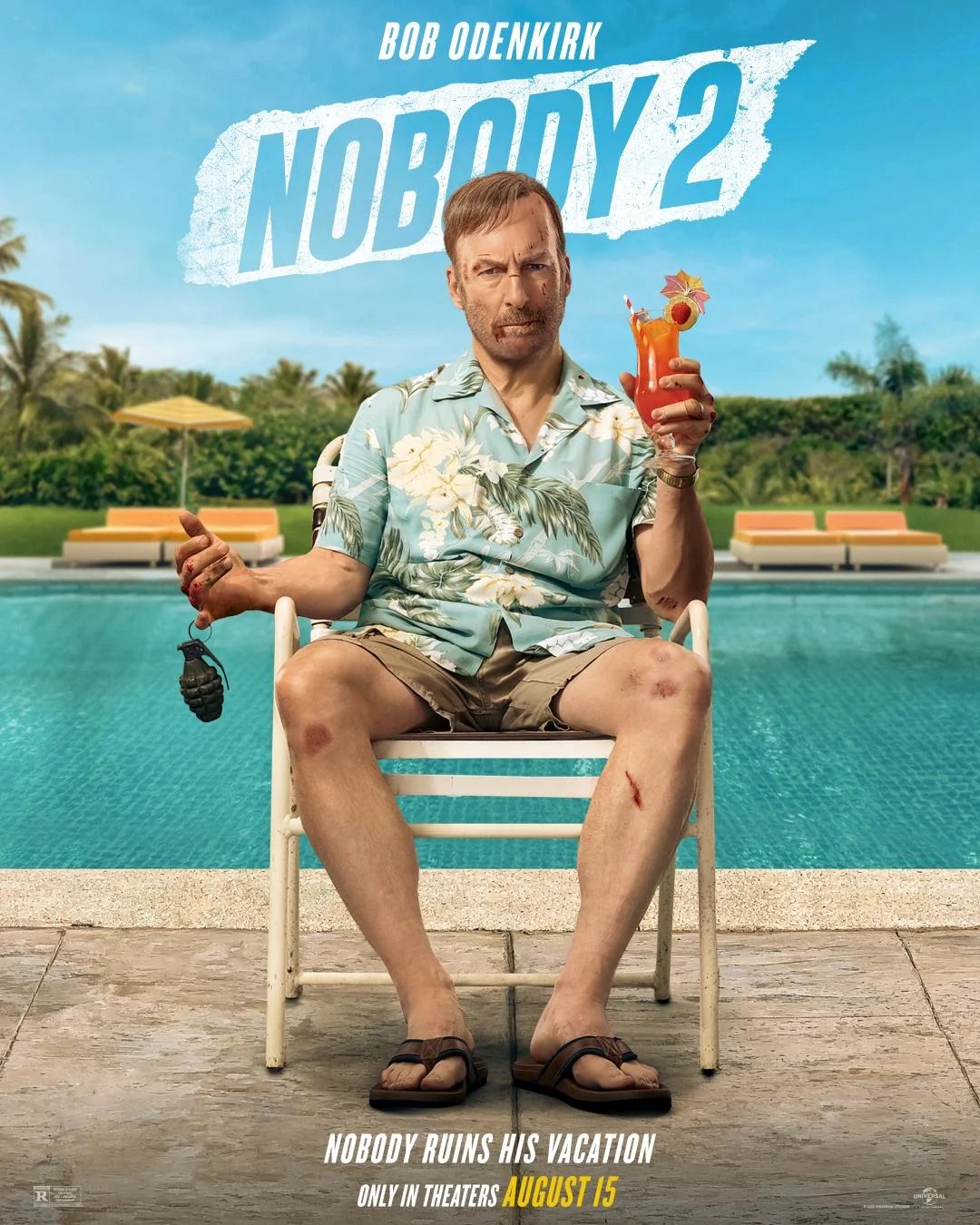
MICKEY 17 film review

Ambitious but disjointed. Bong Joon-ho’s newest film Mickey 17 excels in technical achievement but the full impact of the story demonstrates greater concern for its satire, message, and world building than it does its plotting and structure. Blending multiple genre conventions, Joon-ho’s science-fiction, dark comedy begins with an intriguing premise underscores with existential questions, but ultimately doesn’t feel cohesive from beginning to end. Despite the exhaustive satire–which is entertaining at first–the film works excellently as a critique of the prolific mediation of society, obsession with the idea of self-made celebrity, and the camera fame. Additionally, it presents an exploration of humanity’s fixation on replication and surveillance. Perhaps the film doesn’t call out any particular app or platform, it certainly drives home the point that a monster can be created through obsession with one’s image, control, and manipulation of others.

Mickey Barnes (Robert Pattinson), a disposable employee, is sent on a human expedition to colonize the ice world Niflheim. After one iteration dies, a new body is regenerated with most of his memories intact.

Despite an intriguing premise, the narrative often succumbs to prolonged scenes and sequences, subplots that lack meaningful purpose, and over-explanation in come places whilst lack of purpose exists elsewhere. While the third act is strong and completely engaging, the first act is protracted and the second act is plagued by poor pacing brought on by a wandering direction. The protracted first act delays audience immersion into the core narrative. What would’ve served the plot better as a brief prologue, turns into most of the first act. Even though the film maintains a modicum of innovation and freshness, it struggles to sustain momentum, resulting in a clunky and disposable experience.

The film delivers a relatively strong performative dimension, which helps to keep the audience engaged–however weak the engagement–in the story. And, Robert Pattinson performance strikes a nice balance between nuanced and manic, which mimics the film’s darkly comedic tone. Between his and the other leading actors performances, collectively they add a rolling punchline to the monotony of many scenes and sequences in the film. Mark Ruffalo’s depiction of the authoritarian leader, Kenneth Marshall, is audacious and campy, but doesn’t take long for this performance to become exhaustive–a little goes a long way with Marshall. Playing Marshall’s wife is horror-fan favorite Toni Collette, and even her character overstays her welcome in most of the scenes in which she appears.

Both the plotting and character issues can be connected to the screenwriting, which lacks direction, purpose, and refinement. Mickey 17 is another example of a director with a great, even innovative movie idea, but should work with a screenwriter with a command of proper screenwriting conventions and mechanics to craft the story for the page, and eventually the screen. This issue is not unique to Joon-ho, but a recurring problem I find with many (if not most) writer-directors. Few directors can write as well as they direct; and the inverse is also true–few screenwriters can direct as well as they can write.

Mickey 17 serves as a critique of the mediation of society, wherein informative, entertaining, and surveilling media technologies devalue the individual resulting in individuality with dimension being reduced to a character or commodity to be traded and exploited for the sake of ratings and celebrity. Mickey’s existential crisis of repeatedly dying and being reprinted underscores the alienation experienced in a society that commodifies human existence. Furthermore, Keneth Marshall’s obsession with control and his self-made celebrity mirrors the obsession many have, in the real world, with their “celluloid” self–or more accurately today–their digital self.

Everything Marshall said or did was ran through an image consultant and production crew on how it would look on camera. Looking at the real world, each of those squared images on Instagram or vertical video on SnapChat or Tik Tok, only show an edited version of the subject–the framing and editing is specifically manipulated and articulated to shape the audience’s perception. While this is to be expected in motion pictures and television shows, many of these self-made celebrities and influencers on social media want the audience believe they are being authentic, when it’s all a facade. In this obsession with the camera and “framed” image, society is exchanging that which is real with a projected authenticity; furthermore, the lines between what which is real and that which is fictionalized (or augmented) are becoming increasingly blurred.

Bong Joon-ho’s Mickey 17 blends satire with science fiction but the film’s underdeveloped plot and uneven character portrayals prevent it from reaching the potential this film demonstrably had with the talent behind it.

Ryan is the general manager for 90.7 WKGC Public Media in Panama City and host of the public radio show ReelTalk about all things cinema. Additionally, he is the author of the upcoming film studies book titled Monsters, Madness, and Mayhem: Why People Love Horror. After teaching film studies for over eight years at the University of Tampa, he transitioned from the classroom to public media. He is a member of the Critics Association of Central Florida and Indie Film Critics of America. If you like this article, check out the others and FOLLOW this blog! Follow him on Twitter: RLTerry1 and LetterBoxd: RLTerry
THE LAST SHOWGIRL film review

Anderson dazzles in spite of lackluster screenplay. Pamela Anderson’s captivating performance in The Last Showgirl is truly compelling. Gia Coppola’s film may lack strong, cohesive plotting, but serves as a fantastic character study that remains with you long after you leave the theatre. This is particularly true for anyone that has ever worked in live entertainment or felt left behind due to being perceived as irrelevant or outdated due to changing times and shifting audience taste. This film unapologetically explores universal fears and anxieties associated with change, relevance, and identity. It’s only flaw, which is a biggie, is that I wish the screenplay had been a better vessel for the performative dimension to showcase the talent and passion on screen.

Written by Kate Gersten, the film follows iconic Vegas showgirl Shelly (Pamela Anderson) after her legendary Las Vegas showgirl spectacular is coming to an abrupt end after more than thirty years. Now, she much grapple with the uncertainty of her future because of the extinction of the Vegas showgirl shows.

The Vegas showgirl used to be an institution, but unfortunately shifts in audience taste have all but made the iconic showgirl an obsolete fixture of live entertainment. The idea of the Vegas showgirl in all her sequined and feathered glory is still alive, but that’s all it is anymore–an idea that exists only in our collective memories of a bygone era. Anderson’s performance is particularly compelling because of her effortless ability to oscillate between vulnerability and strength without the end result ever feeling fabricated or unrelatable. In retrospect, I cannot think of a better actor to have brought this character to life than Pamela Anderson, because a signifiant portion of the gravitas she is able to bring to the character is inspired by channeling the energy of her own past glory days, which she infuses into each step and gesture. Anderson’s charisma shines in the scenes where the character performs, even if only in the solitude of her own living room. Delivering a gritty, raw honesty to the role, the former Baywatch megastar relinquishes glamor in exchange for authenticity in a role that feels achingly real and profoundly human.

Shelly represents all those that have worked on stage in live entertainment, whether that is in a theatre or at a theme park. While the focus is on the stage talent, many of the ideas that the film posits can be connected to work backstage as well, as entertainment changes. Shelly is not only haunted by the loss of relevance, but also by the deeper, existential terror of becoming invisible–something we all fear. As such, Anderson’s character connects to us on both a personal level and to society at large. Whether on the Vegas stage, at the cinema, on the television, or even at the theme park (looking at you, Universal Orlando), this film comments on the broader idea of how cultural shifts in audience tastes can be destructive to dreams, experiences, and careers.

Coppola’s film delves provides audiences a candid portrait of a former starlet from the golden age of Vegas entertainment, now struggling to find her way in an unfamiliar world that is all but alien to her. What Shelly is going through is not unlike what some (if not many) of us go through–or fear we will go through during the course of our professional careers or interests. While the film takes place in Vegas, many parallels can be drawn to changes in cinema, theme parks, and television. As shown in the film, the Vegas audience of today has drifted away from the opulent, theatrical traditions that were a staple of Las Vegas toward minimalism, concerts, and new media. And while there is nothing innately damaging about any of those, collectively they rendered the classic Vegas experience obsolete. The audience Shelly once captivated, no longer values or finds enjoyment in that which she represents.

I recently learned this when I found that I will be attending the NAB convention in Las Vegas. And the first thing I did was look to find a classic Vegas showgirl show–like from Show Girls. Didn’t take long to learn that those shows do not exist anymore. So, this film was all the more relevant and even poignant because Shelly represents something that I had hoped to experience, but can only find in, as I gather, Vegas: the Show and films and television from decades past. I was saddened, really. To think that something that was a Vegas mainstay for decades, inspiring movies, songs, and playing a signifiant role in the whole Rat Pack aesthetic, was just a faded memory. Originality was exchanged for an extension of what you could find on Broadway or a concert venue near you.

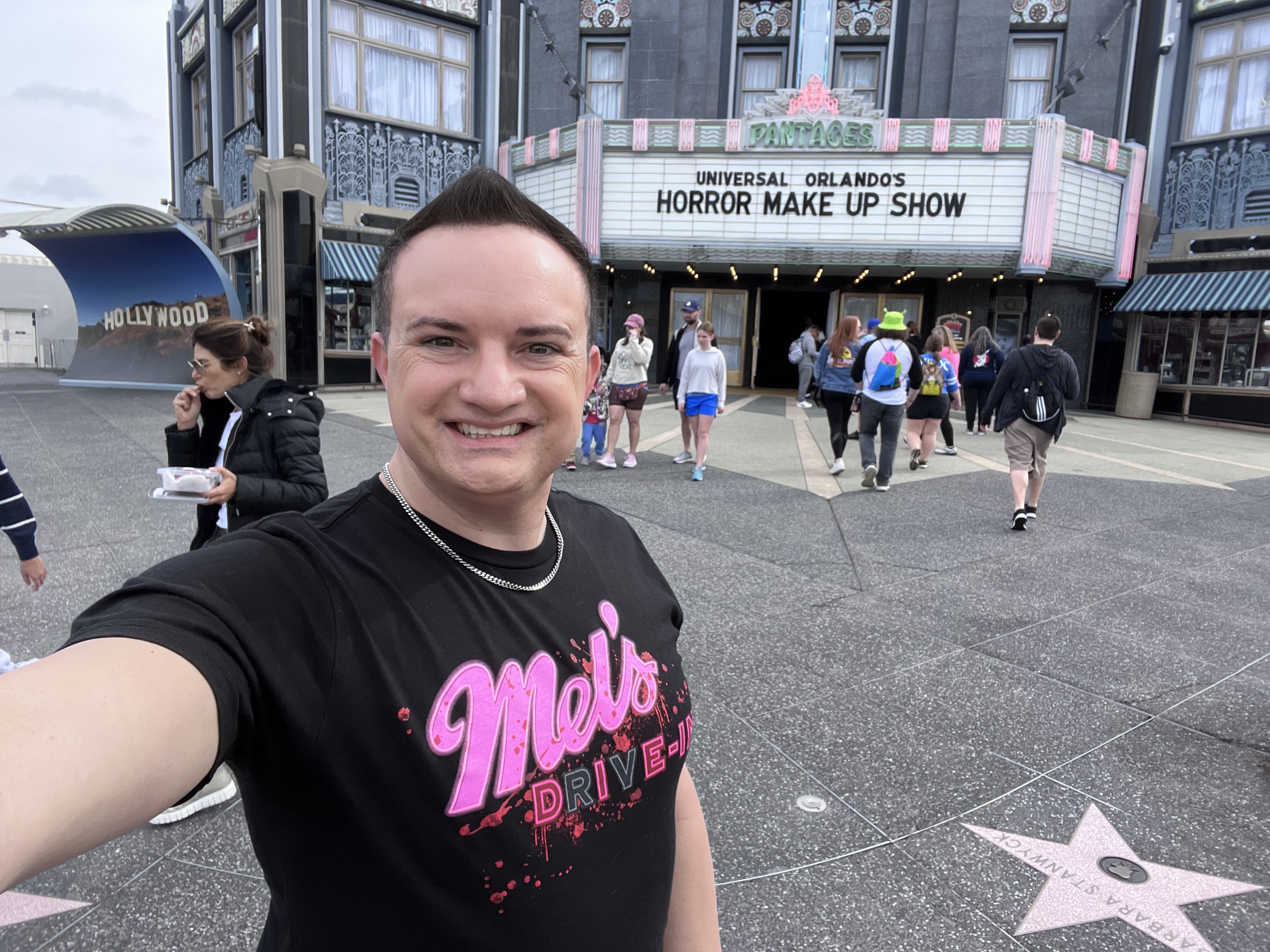
Something else that hit me was how Shelly and events of the film prompted me to think about my own career and professional aspirations, because the Hollywood that I fell in love with as a kid is nearly a distant memory. Just like the Universal Studios Florida that I fell in love with as a kid no longer exists except for the Horror Makeup Show and the E.T. Adventure. Sitcoms and non-serialized drama and horror programs are nearly an entertainment medium of television past and the slasher film has largely fallen out of favor with mainstream audiences. Even film criticism–it’s no longer about applying a critical lens to motion picture arts and sciences; rather, it’s now about your means of garnering attention on YouTube or Instagram matters more than what you have to say. Even blogging has nearly become a thing of the past. Scary to think that you can become obsolete in the very field in which you’ve worked do diligently, smartly, and hard.

Through this character study film, we learn that there is a quiet, enduring value in the traditions and artistry Shelly represents, even in an age of social media influencer, superficial trends, and fleeting attention spans. Perhaps we are drawn to films like this because, for example, the Vegas showgirl is truly timeless. Maybe she isn’t on the stage any longer, and the last remnants of French Lido culture are extinct except for Moulin Rouge in Paris and (in a manner of speaking) the Rockettes at Radio City Music Hall, but her legacy will live on, if only in our memories.

I highly recommend watching this film if you enjoy compelling character studies. I wish it was more than a character study, but that’s no fault of the actors or director. The weakness in the storytelling of this film is found in the vapid screenwriting and lack of following proper screenwriting mechanics that require, at minimum, a well-defined central character with a well-defined external goal opposed by a well-defined character of opposition.

Ryan is the general manager for 90.7 WKGC Public Media in Panama City and host of the public radio show ReelTalk about all things cinema. Additionally, he is the author of the upcoming film studies book titled Monsters, Madness, and Mayhem: Why People Love Horror. After teaching film studies for over eight years at the University of Tampa, he transitioned from the classroom to public media. He is a member of the Critics Association of Central Florida and Indie Film Critics of America. If you like this article, check out the others and FOLLOW this blog! Follow him on Twitter: RLTerry1 and LetterBoxd: RLTerry

SPEAK NO EVIL horror movie review

An entertaining and terrifying thrill ride. Blumhouse and Universal’s Speak No Evil, starring James McAvoy, excels in plotting and atmosphere but falters in character building and development. Based on the Danish film by the same name, director James Watkins’ version is a methodical and spellbinding descent from dream to nightmare. The highlight of the film is McAvoy’s completely manic performance that is simultaneously comedic and unsettling. Whilst Watkins attempts to bestow upon the high concept narrative thoughtful social commentary on image, isolation, and identity, the commentary is inconsistent and lacks the gravitas to truly be compelling or provocative.

A dream holiday turns into a living nightmare when an American couple and their daughter spend the weekend at a British family’s idyllic country estate.

That which is most personal is most relatable, and can be the most terrifying. And what can be more personal and relatable than the need for a relaxing vacation in the peaceful countryside? That is precisely where this decent into a nightmare begins. Speak No Evil may take its time (albeit justified) in setting up the conflict, but once that second act kicks into gear, it is a nonstop thrill ride into isolation and violation. Keep the cast small, the film is able to spend sufficient time in developing the plot and keeping with proper pacing for the tight storytelling. From the very beginning, the piping is laid for everything that audiences will encounter in the second and third acts, with every shot, scene, and sequence pointing towards the shocking conclusion.

Violence on screen is minimal; however, when it hits, it HITS. But that hit isn’t always visual; many times it is psychological in nature, which in many ways, is even more terrifying. Throughout this film, the terror on screen is transferred into the minds of the audience. Part of that is because of the degree of relatability in this story. Many of us have been on vacation in a new place or even moved to a new place unfamiliar to us–perhaps in or to another country–and we are often desperate for friendship or companionship of any kind in order to begin to feel more at home. Therefore, the setup of this film is one to which many of us can relate–and that’s what makes it particularly terrifying. The thought that we could unwittingly befriend a monster.

While the social commentary on isolation, identity, and image is inconsistent and weak, I appreciate what Watkins was trying to do; although, there is one aspect of the film that was screaming for a redemption arc that was so obviously squandered (and actually hurt the quality of the film). Speak No Evil depicts many expressions of isolation. Isolation from friends and family, isolation from the urban core, isolation within one’s family. And it’s this isolation that greatly heightens the level of suspense and terror.

Additionally, the film depicts the identities (or facades) that we project to the world when we are hiding something or feel insecure because we wield it like a sort of armor. Moreover, this identity can also harbor inconsistencies that lead to a lack of authenticity and meaningful motivation. Perhaps this identity is merely a facade that is intended to make others feel uncomfortable or to project an image that sets one apart simply out of fear of being found out as little more than keeping up with what’s trending on social media. Furthermore, the attempted commentary on image is depicted in a variety of ways throughout the film.

The weakness in the film is found in the character building and development. Not with all the characters, but enough that it mitigates the potential of the film to deliver a compelling story. Without getting into spoilers, I want to discuss where the film had an opportunity an an effective character redemption arc, but pandered to what’s presently trending in movies instead of providing a constructive character arc that would’ve benefitted the film by adding a since of compelling meaning. Strong characters are not strong because those around them are weak; to craft a strong character through that methodology makes for a weakened (and less compelling) character because ostensibly standards have been lowered.

Strong characters are at their strongest when other characters are strong, complete with dimension as well. There is a character in the movie that lost their job, and have been personally struggling with feelings of anger, inadequacy, and failure–that is completely relatable as it is very much a human response to losing ones income and livelihood. Where the film fails is setting this character up to overcome the feeling of failing their family and at life, but never doing anything with it, and merely reinforce weakness. I imagine this was done to make their counterpart appear stronger. But it amounts to lazy storytelling that reinforces negative imagery.

The character that is the most entertaining is James McAvoy’s Paddy. I cannot think of any other actor working today that could’ve brought this character to life nearly as well as McAvoy. In an otherwise par for the course performative dimension in the film, he brings a kinetic energy that draws audiences into the macabre, twisted tale. From the very beginning, we can tell that there is something a little off about his character, but never enough to know precisely where he stands. When he goes full-on manic mode, we are in for the ride because he makes us laugh and gasp in horror all at the same time.

Everything about this movie would make for a fantastic house at next year’s Halloween Horror Nights at Universal Orlando and Hollywood. The farmhouse at the center of the movie is a labyrinth and hints at a variation of the hillbilly horror aesthetic. I can see how this film’s characters and setting could adapt well to an HHN house, so I would not be surprised if we see this intellectual property featured at next year’s HHN.

Speak No Evil may lack dimension that could’ve made it a more compelling narrative than what we received; however, it’s still an entertaining thrill ride that will have you laughing and screaming. A solid popcorn horror movie that has some degree of rewatchability.

Ryan teaches Film Studies and Screenwriting at the University of Tampa and is a member of the Critics Association of Central Florida and Indie Film Critics of America. If you like this article, check out the others and FOLLOW this blog! Interested in Ryan making a guest appearance on your podcast or contributing to your website? Send him a DM on Twitter. If you’re ever in Tampa or Orlando, feel free to catch a movie with him.

Follow him on Twitter: RLTerry1 and LetterBoxd: RLTerry
INVASION OF THE BODY SNATCHERS (1956) Throwback Thursday Review

A timeless, terrifying motion picture! Based on the Collier’s magazine serial turned book The Body Snatchers by Jack Finney, directed by Don Siegel, and produced by Walter Wanger (of Cleopatra infamy), this Allied Artists’ motion picture is the single best representation of the fears and anxieties of the 1950s. But the beauty of this particular picture is that its themes including the fear of conformity, loss of identity, dehumanization, loss of individuality, and even vulnerability are still relevant today, perhaps even more so than they were at the time this seminal horror film was released. 

In Santa Mira, California, Dr. Miles Bennell (Kevin McCarthy) is baffled when all his patients come to him with the same complaint: their loved ones seem to have been replaced by emotionless impostors. Despite others’ dismissive denials, Dr. Bennell, his former girlfriend Becky (Dana Wynter) and his friend Jack (King Donovan) soon discover that the patients’ suspicions are true: an alien species of human duplicates, grown from plant-like pods, is taking over the small town.

While this film sits comfortably in the horror/sci-fi subgenre, it shares a lot of characteristics in common with film noir. Between the recurring narration, a central character in over his head, and the fact events do not turn out favorably for the central character, it pulls on the best of the film noir apparatus to craft a highly unnerving cinematic story that prompts one to think about the state of the world around him or her. 

Perhaps in its day, Invasion of the Body Snatchers was a commentary on the threat of communism/socialism on the American republic, but that is not the only subject to which this film can speak to us decades later. Could it still be read as a warning against the threat of communism today? Sure. But, communism doesn’t look or act like it did back in the 1950s. That’s the danger inherent with famous allegorical films such as this one; the well-known danger is pigeonholing it into only ever meaning what it meant back during the days of the Cold War. When in fact, this film can be read as a commentary on a variety of topics, depending on the worldview of the audience member. 

Whatever the form the existential enemy takes, whether you choose to read it as a commentary on communism, socialism, nationalism, or woke-ism (more accurately defined as applied/reified postmodernism), this film speaks to that which is defined as a threat to one’s present existence. When we label what this film is about, we limit its potential to speak to us. So, it’s better to read the film through its various themes versus defining what the enemy is. From beginning to end, the film depicts events and behaviors that rob individuals of expression, identity, competition, entrepreneurship, and choice in exchange for homogeneity, group think, forced societal roles, and emotion. Ostensibly, this film is about an enemy that seeks to dehumanize and force conformity upon everyone—a world in which everyone is equal and exactly the same versus a world in which we are all equal but definitely not the same. The film demonstrates what happens when we are asleep to the threat of the enemy, and it comes in like a thief in the night. And when we finally recognize the threat, it’s all but too late for us, for humanity, for freedom.

The film begins laying the pipe for the second act reveal of the pod people all the way at the beginning. It’s a scene to which many may not pay particular attention; it’s the scene wherein Miles notices that the Grimaldi vegetable stand is no longer open. One of the characteristics of a society that demonstrates a lack of support or simply opposes free enterprise (or by extension the marketplace of ideas), is manifested in this imagery. Farmer Grimaldi abandoned his private farming business in exchange for supporting the planting and harvesting of the alien pods. Other disturbing imagery is the crisis between the second and third acts wherein Miles and Becky are told that the pod people (replicants of their human counterparts) mean them no harm and want to provide a peaceful existence. The real horror here is that the peaceful existence comes at the cost of freedom and one’s unique identity (all the traits that make one a unique man or woman). These pod people are devoid of any genuine emotion, only exhibit the pretense of it, and see individualism as a threat to their existence.

Invasion of the Body Snatchers is a call to action; it’s a wakeup call to all those that watch it to stand vigilant against tyranny, to stand guard against threats both seen and unseen that seek to undermine what it means to be human. Furthermore, the film posits the idea that the deadliest enemy may not be the one that can be viewed with the naked eye; rather, the deadliest enemy is the one that sneaks in unbeknownst to most individuals. Or maybe it comes disguised as something that sounds great on the surface, but only seeks the destruction of uniqueness, freedom of expression, the marketplace of ideas, and the human dimension of existence. 

Due to the timelessness of the message of this terrifying film, we are drawn back to it time and time again. We are reminded to stand guard against an enemy that seeks to destroy our very way of life. It’s a story of survival and the great cost of freedom. A recurring theme throughout the horror genre is the theme of survival, and Invasion of the Body Snatchers is a brilliant exploration of how to survive against mounting odds that appear unstoppable. Horror films have a way of causing us to rally, causing us to come together in support of our right to survive. There is no other genre that inspires us to fight the enemy like a horror film.

Ryan teaches Film Studies and Screenwriting at the University of Tampa and is a member of the Critics Association of Central Florida and Indie Film Critics of America. If you like this article, check out the others and FOLLOW this blog! Interested in Ryan making a guest appearance on your podcast or contributing to your website? Send him a DM on Twitter. If you’re ever in Tampa or Orlando, feel free to catch a movie with him.

Follow him on Twitter: RLTerry1 and LetterBoxd: RLTerry