 If you haven’t figured out by now, my favorite genre is horror! During the month of October, I am planning to watch, and I challenge you to watch, 31 horror movies. Each day, I will add a movie with a brief (and yes, I know I am not known for being brief) analysis. Instead of a separate blog entry for each of the 31 movies, I am going to add to this entry then post what I watched/reviewed on my Twitter (RLTerry1). So, if you’re not following me on Twitter, now would be a great time! Remember to use the hashtag #AllTheHorror #31HorrorMoviesChallenge or #31HorrorFilms31Days when you post about your horror movies this month! As I am someone who enjoys order and a method to accomplishing a movie challenge, I am dedicating each 5-7 days to a different subgenre of horror. My plan is to begin with its German expressionism origins and work my way up to more recent movies and trends. Although the idea is to dedicate a whole week to the selected subgenres, I may switch it up every five days in order to get six different kinds of horror films. To my podcast friends, I would love to join the #AllTheHorror conversations this month. Send me an email or direct message on Twitter to setup a time for me to join your next horror discussion. Let’s begin!
First Group (1920-30s German expressionism, French surrealism, and early horror)
Movie 1 (10/01)
 Nosferatu (1922). Directed by F.W. Murnau, Nosferatu is widely considered the first vampire movie and direct forerunner to Universal Studios’ Dracula. This early horror movie is so incredibly good that you forget that there is no spoken dialogue in the film. One of the most impactful elements of the experience of watching this beautiful example of the best of horror, is the film’s argument that vampires are real. In essence, I feel strongly that this film wants us to believe that “Dracula-like” vampires are real and must be feared. Steeped in German expressionistic cinematic stylings, this film typifies the stylistic technique by using exaggerated gothic architecture and harsh shadows. In this cinematic movement, directors used symbolic acting, events, and architecture to tell the story. Although this film IS based on Bram Stoker’s iconic gothic novel, Murnau changed the names because the Stoker estate felt it was being ripped off. Beyond the contributions to the American horror film, this film is also considered to be the first to include a montage. Now commonplace, this was an innovative decision for Murnau. The symbolism in the imagery is beautifully executed and truly creates a macabre atmosphere. While there are many ways of reading this film, some of the more common metaphors boil down to the content of our nightmares or what wakes you with trouble at the witching hour of 3am. War, disease, cancer, security, and love are certainly visible in the imagery and production design. As most of the film is covered in shadows, think of this as the dark corners of your mind. A highly visual means of storytelling, Nosferatu captures the imagination through the setting and characters.
Movie 2 (10/02)
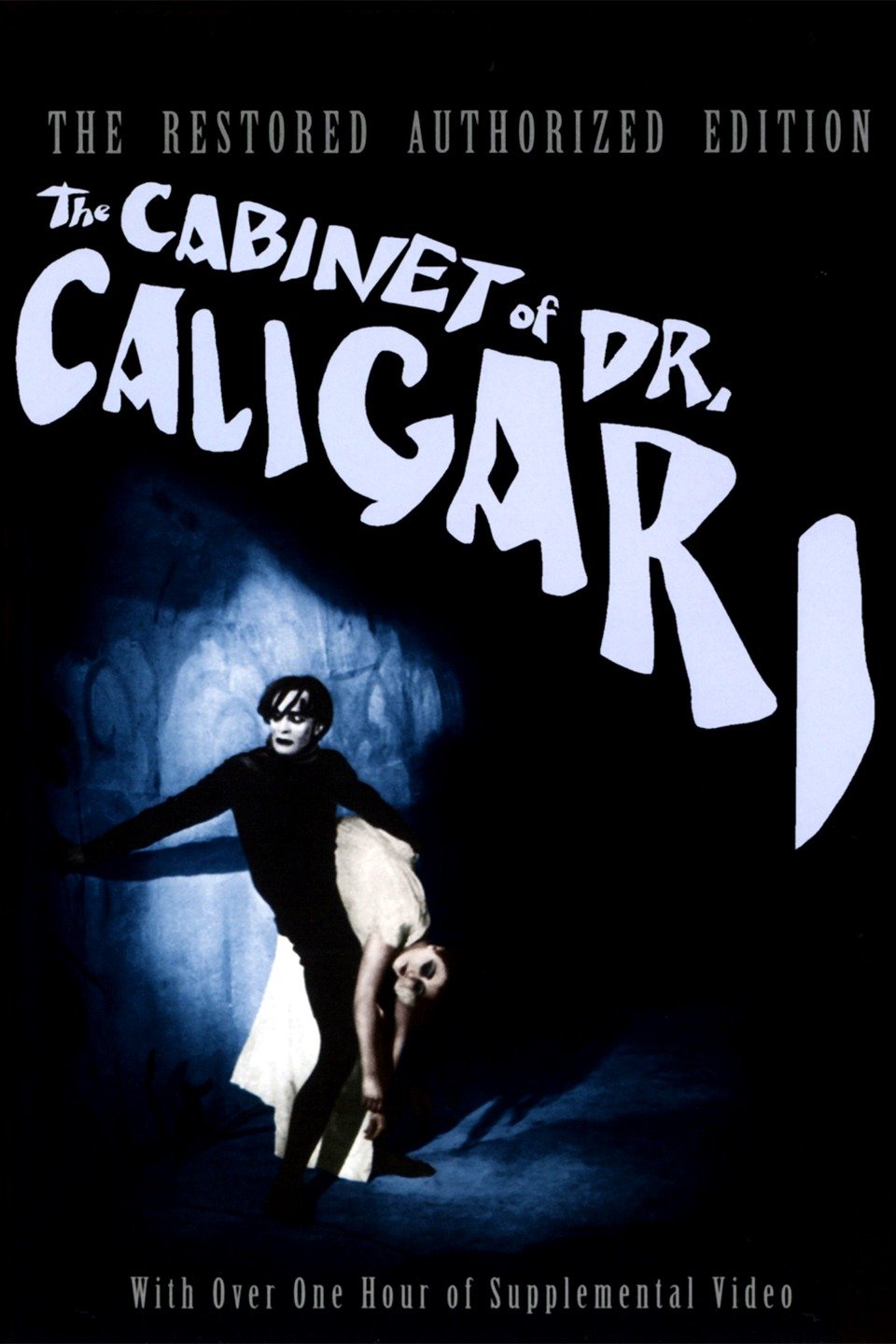 The Cabinet of Dr. Caligari (1921). Often cited as the first feature length film to incorporate the twist ending, director Robert Wiene’s German expressionism masterpiece contributed significantly to the development of the American horror film. Like something straight out of a macabre tale from Edgar Allan Poe, this early work of cinema was the first to truly depict–visually–the inner workings of a disturbed and depraved mind–a fractured psyche. The production design is brilliant. With its skewed perspectives, warped imagery, imaginative lines, shadows, and more, this film provides audiences with a glimpse into what Freud calls the uncanny. Uncanny being a chief component of the American horror film. Like with many horror films, the central conflict revolves around a mysterious death, and a bizarre investigation ensues. Whereas the plot itself may not be horror by today’s understanding, many scholars including myself, consider it to be the first true horror film. Furthermore, this film’s visual stylings inspired some of what Universal used in their early works of horror from Phantom of the Opera to Wolfman. It has it all! An ominous villain, extremes of emotions, tensions increase and release, and here is visual terror. Preceding Nosferatu by one year, this film set the foundation for German expressionistic cinema, followed by many directors. Even to this day, many horror films include exaggerated shapes, shadows, and symbolism. Although the plots of horror films have changes since this film, the visual elements it established are still very much a part of the American horror film.
Movie 3 (10/03)
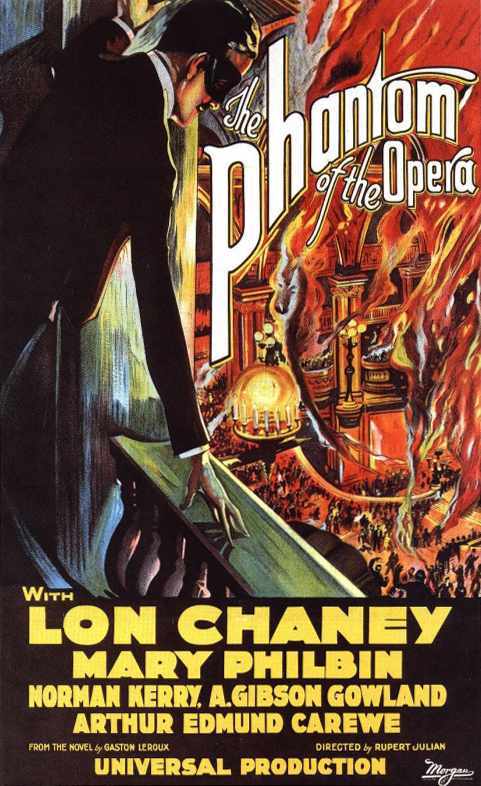 The Phantom of the Opera (1925). Before the Andrew Lloyd Webber musical, there was the quintessential Lon Chaney cinematic masterpiece Universal Pictures’ The Phantom of the Opera. The second horror film to be released by Universal (with the Hunchback of Notre Dame being the first), this film defined the capabilities of special effects makeup. In fact, Lon Chaney took most of his secrets to his grave (I learned that at the Horror Makeup Show at Universal Orlando). Having just watched Nosferatu three days ago, it is clear to me that Chaney was channeling his impressions of the Max Schreck performance. Far different from its more modern adaptations, wether is the 2004 film or the original Webber musical, this film has a macabre, ominous atmosphere about it. It is creepy from the onset. One of the traits of a horror film is its innate ability to be pervasive, to question popular culture and provide us with different perspectives on cultural norms, traditions, sociology, or institutions. And this film does precisely that! Prior to Dracula, this is considered by many to be the first gothic romance (although you can also argue Hunchback was first). But in terms of the lighting, production design, and performances, this film became the standard that many others would follow in order to inject romance into horror. Phantom of the Opera is rich with themes! As horror often is. We have the classic romance of unrequited love, beauty vs the beast (and we have different types of beasts in the story), the very concept of a ghoul, and more. This film contributed vastly to the horror foundational library upon which many tales would be developed. Beautiful horror.
Movie 4 (10/04)
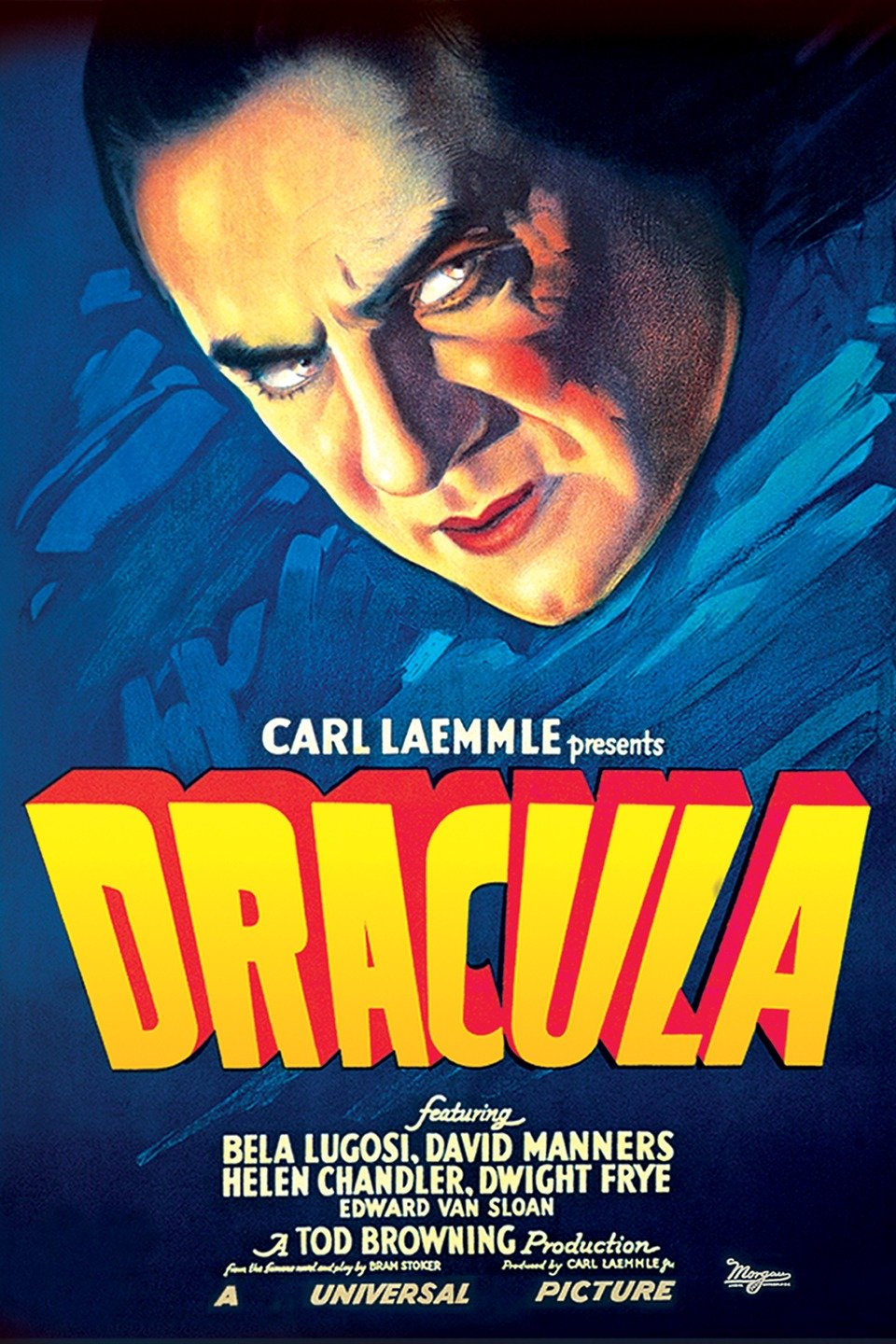 Dracula (1931). Universal continues strong into the horror genre with an adaptation of Bram Stoker’s Dracula! Bela Lugosi, who many consider to be the definitive Dracula, stars in this gothic romance that’s incredibly foundational in the American horror film. This hypnotic horror movie is both beautiful and terrifying. You may wonder why Lon Chaney did not play this iconic role since he had a winning streak with The Hunchback and The Phantom of the Opera, well unfortunately Mr. Chaney passed away as Dracula was going into production. Lugosi was not unknown to the world of showbusiness; he was the star of the Broadway show Dracula in 1927. The most memorable parts of this film are Lugosi’s performance and the brilliant cinematography by Karl Freund that give the unmistakable look and feel of the film. Not taking away from director Tod Browning, but he benefited greatly from the talent of the aforementioned gentlemen. To his credit though, Browning looked to Murnau’s Nosferatu for the overall production of his take on Dracula. Although the production design, lighting, and tone of the film are quite similar to Nosferatu, the biggest difference is the addition of sound. Drawing your attention in almost the same way Lugosi hypnotizes his victims, his background in live theatre enabled him to capture your imagination and gaze with his highly stylized mannerisms and vocal inflections. Perhaps what fascinates us with the act of vampirism is that is it like an elegant, slow-motion assault, executed with precision and politeness by a beautiful creature who charms you into giving yourself completely over to them.
Movie 5 (10/05)
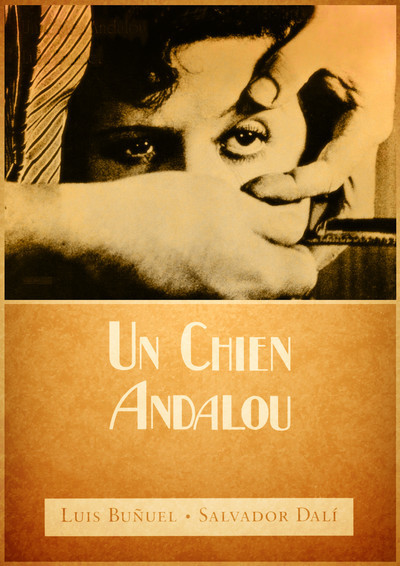 Un Chien Andalou (1929). You may be wondering why this film is part of my #31HorrorFilms31Days. After all, it is not ordinarily a film that you think of when watching horror movies. However, this film in conjunction with other early works from the 1920s and 30s provided the very foundation upon which the horror film was built. At its roots, the American horror film is comprised of German expressionism, French surrealism, and Freud’s uncanny. Un Chien Andalou, directed by none other than Salvador Dali, is the definitive surrealist film. Famous for its opening scene that still evokes shock, awe, and makes you queasy to this day, this film is full of outstanding imagery that is collectively some of the most searing and memorable ever to appear on the silver screen. Just from that brief description, it should become clear as to why this film is foundational in creating the imagery of a horror movie. If expressionism sought to depict subjective emotions through architecture, lighting, and symbolism, then surrealism countered that movement by creating a super reality that destroyed rationalism in exchange for the hidden, underlying laws of our world. Releasing the creative potential of the unconscious mind was the goal. There is very little story in this film, but rather a series of sequences that demonstrate Not only is this film influential in the evolution of the American horror film, but it’s arguably the single most famous short film in history. I wish I could provide you with an analysis of the story, but there simply isn’t one. Lots and lots of surrealist images that are purely an artform meant to shock, terrorize, indulge, and humor audiences. Ars Gratia Artis (latin: art for art’s sake).r
Movie 6 (10/06)
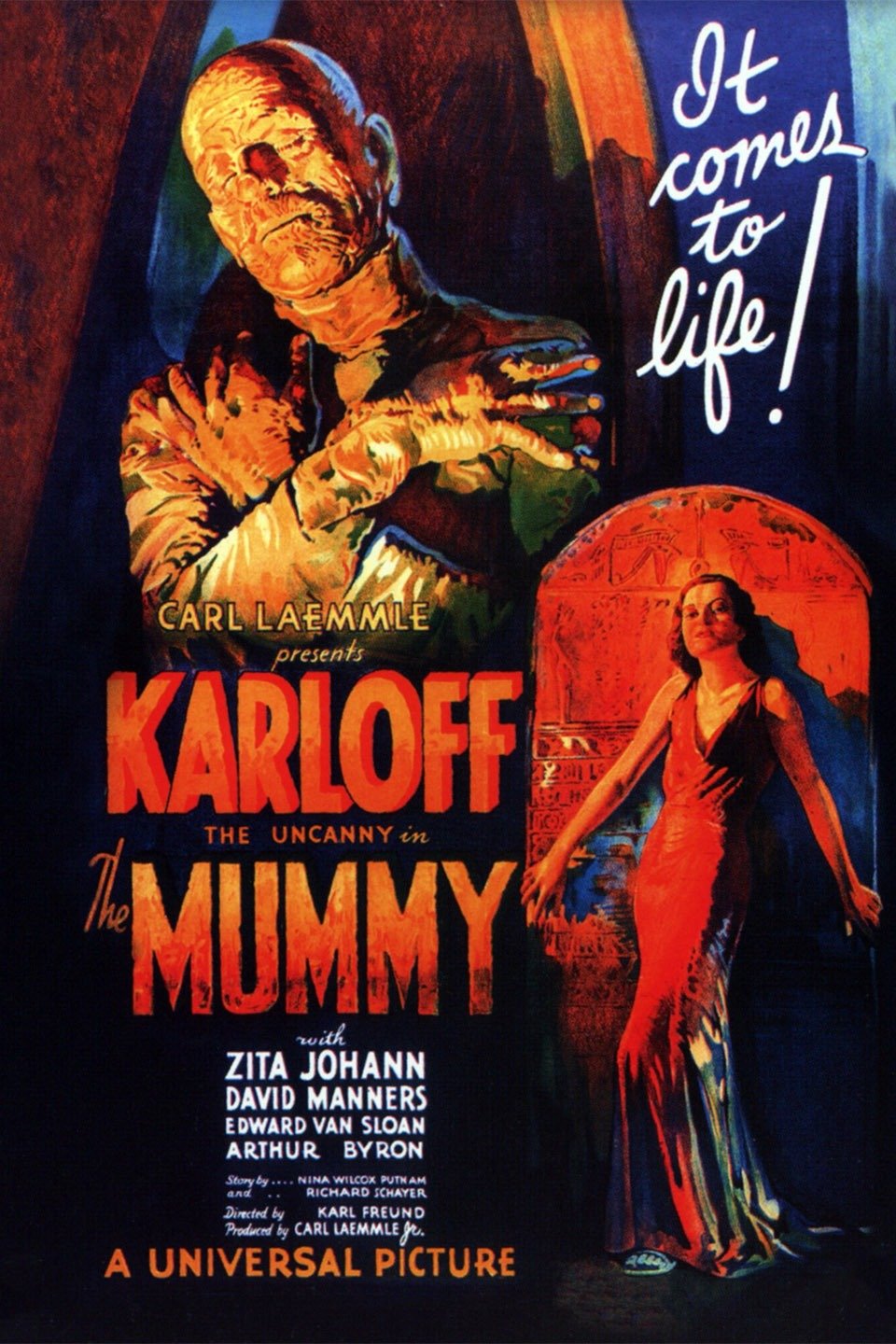 The Mummy (1932). From the same writer who brought us 1931’s Dracula, The Mummy provides the horror genre with a foundation in creepy existential romanticism. Interestingly, Boris Karloff’s mummy costume may be instantly recognizable; however, he only spends a few minutes wrapped up as the mummy. The rest of the movie, he is dressed pretty snazzy. His makeup is incredible, not because it’s flashy but because it’s just the right amount of texture to give us the impression that he could potentially return to the sarcophagus from which he came. What The Mummy contributes to the development of the American horror film is more than the creepy romance; it provides audiences with more than an hour (yes, just 70mins) of affective atmospheric terror and dread. While both Dracula and Frankenstein have impressive creatures and effects, the Mummy demonstrates an exemplary commitment to recreating Egypt. In so many scenes, we have beautiful artifacts and decorations that transport us from our (now) living rooms to Cairo. This film may be a combination of shots on a sound stage and in the Mojave desert, but the composite on film convinces me that I am in Egypt. We may only see Karloff in his mummy wrappings for a few minutes and that terrifying face with the penetrating gaze, but his performance was so effective that these images are ingrained in our mind’s eye to this day.
Second group (1950s science-fiction, haunting, and proto-slasher)
Movie 7 (10/07)
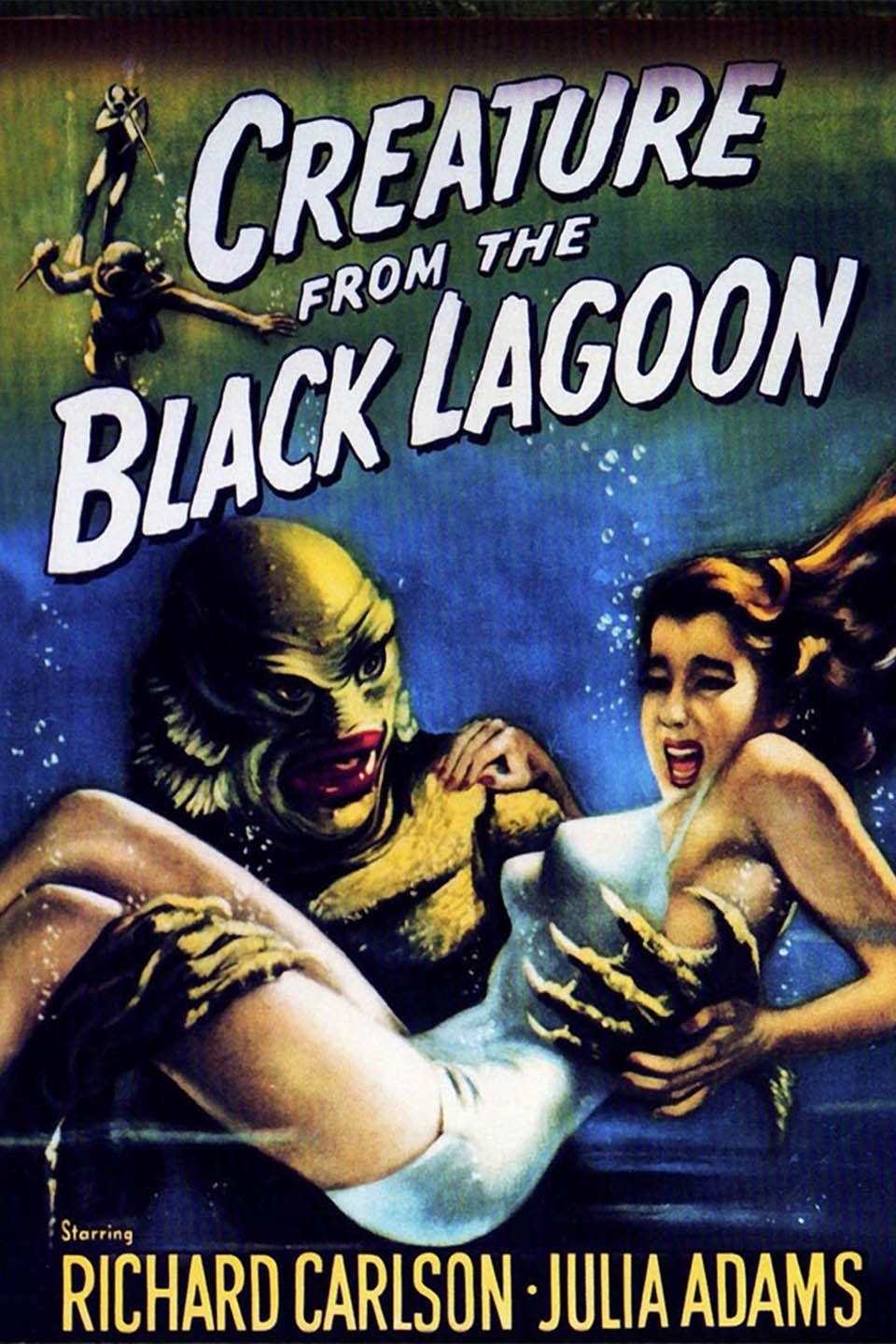 Creature from the Black Lagoon (1954). Universal delivers audiences another monster, but this time it is in a tropical lagoon instead of a cold, dark crypt. The 1950s was a time that horror was transitioning from far away lands and long ago times to other worldly destinations in the present and future. Nestled nicely in between The Thing from Another World and Forbidden Planet, Jack Arnold’s Creature from the Black Lagoon countered the common science-fiction movies of the day with a brilliant science-fiction horror that was equal parts terrifying and impressive. While space and distant planets could be replicated on a sound stage, this film chose the difficult task of shooting on top of and underwater. I am so incredibly impressed by the costuming of the gill-man and the amount of time spent shooting underwater. By all measurable accounts, Arnold is one of the greatest science-fiction horror directors of all time. In fact, two of his movies are forever inshrined in the opening song from Rocky Horror Picture Show. Whereas the earlier Universal monsters were largely the subjects of gothic or creepy romances, this was a solid horror film that paved the way for the modern film in 1960 with Psycho. The 1950s were a highly transitional time for horror and this film successfully bridges the gap between the stories of the 1920s and 30s and adds in additional kills and scary moments to provide audiences with a fantastic experience. The plot of this film is also exceptional! It has razor-sharp pacing and culminates in an exciting showdown. Little known fact, this film played in 3D in theatres of the day! While many of the scenes were shot on Universal’s backlot, the above water and under water scenes were shot in Florida. From the writing to costuming and production design, this science-fiction horror movie played such an important role in the development of horror films.
Movie 8 (10/08)
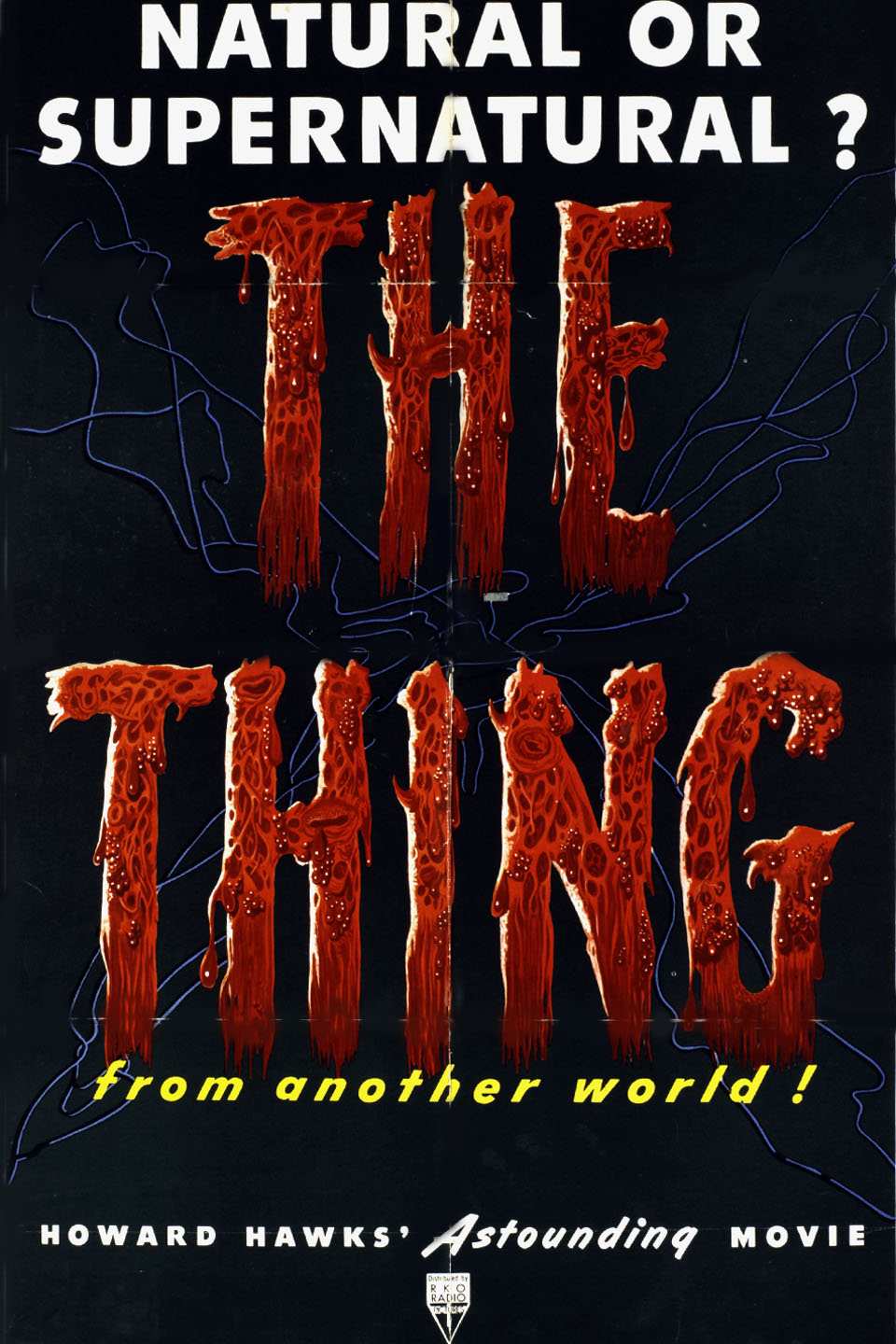 The Thing from Another World (1951). During the 1950s, horror takes a turn to the science-fiction realm. Whereas monsters were a stable of the 20s and 30s, science, space, and oceans became the settings and subjects of the films. Interestingly, this can be seen as an extension of the early monsters era because we still encounter monsters in these other worldly stories. In the 1980s, John Carpenter would remake this iconic sci-fi horror film. Although I am typically a fan of originals most, I must confess that I prefer Carpenter’s The Thing to the original. However, no mistaking it, I really like The Thing from Another World. What I respect most about this film and what I feel that it contributes significantly to the horror genre is the power and terror evoked from that which is unseen. This film demonstrates a mastery of that which we cannot see. Hitchcock once stated that there is “nothing more terrifying than an unopened door.” One of the running themes in this movement of the American horror film is the concept of being rescued by institutional, scientific, or governmental authorities. Plot wise, to be honest, I feel that the original has a stronger story; however, the visceral horror was definitely increased in the Carpenter remake.
Movie 9 (10/09)
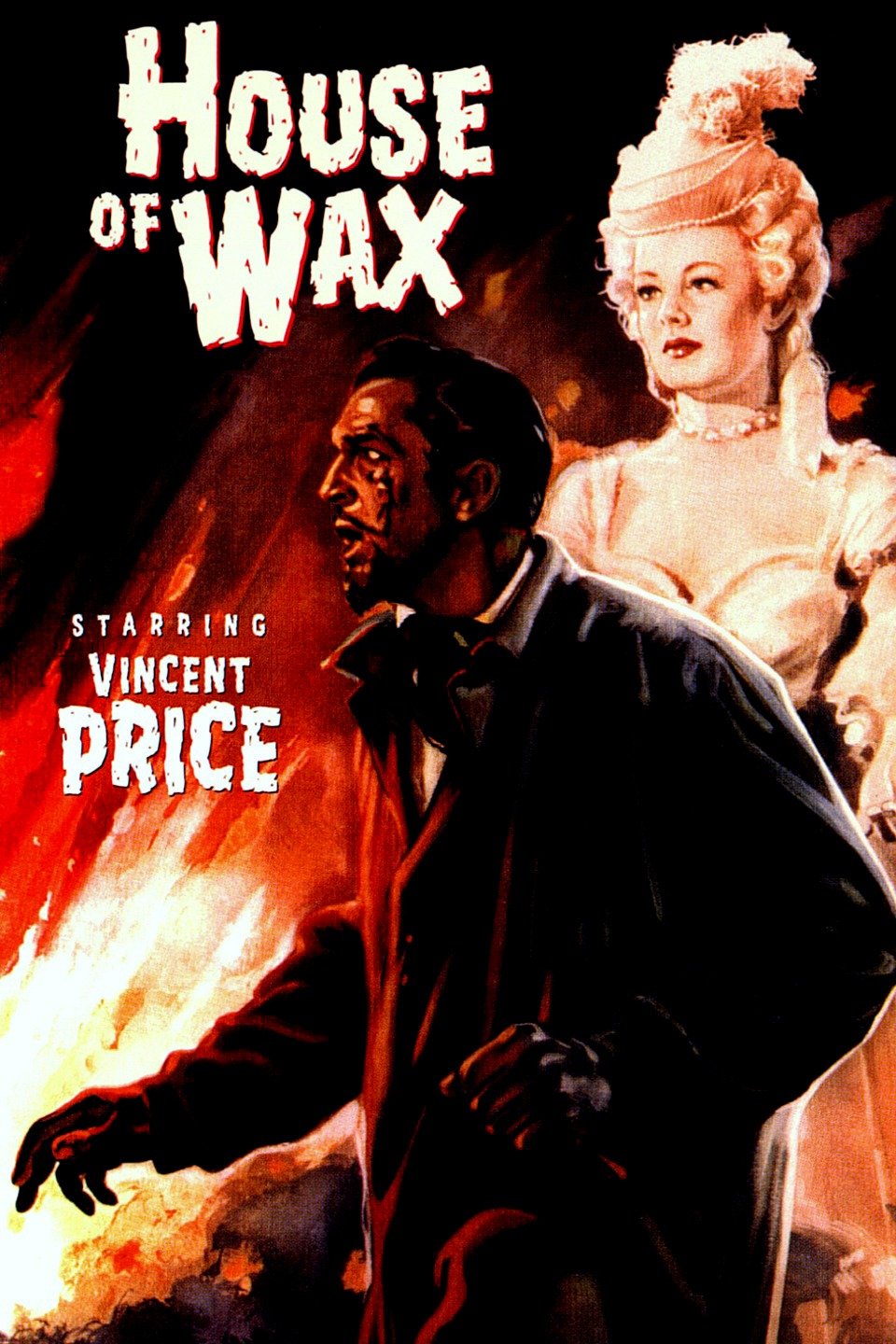 House of Wax (1953). Vincent Price jumpstarts his career in horror in the classic House of Wax. A little known fact is that, while many think of this as the original, it was actually a remake of the earlier Mystery of the Wax Museum (1933). This visually stunning horror film still holds up well today. Although the 2005 remake is more horrific in terms of the visceral horror, the 1953 version’s plot is more sound and the characters far more interesting–especially the character of Professor Jarrod (Price). Even by today’s standards, this film is highly disturbing and assaults the eye at every turn. From the melting life-like faces of wax figures to a vat that’s designed to pour molten wax over human bodies. Many argue that Price’s Prof. Jarrod is a prototype for the slasher that would be perfected by Hitchcock in Psycho. Price’s performance in this film is highly memorable. He may be recognized first and foremost by his unparalleled creepy voice, but his acting is top notch as well. Interestingly House of Wax is in color whereas his most famous role of Loren in 1959’s House on Haunted Hill would be in grayscale. Between Jarrod skulking about and stalking his prey wearing a black “Jack the Ripper” coat and hat and composer David Buttolph’s haunting score, the atmosphere in this film is exceptionally macabre. If you are frightened or creeped out by wax figures, then you are in for a treat because the cinematography in this film provides many lingering shots of wax figures seemingly staring at you. Perhaps they are crying out for help because they are a prisoner of the museum.Unlike 2005’s House of Wax, this one may not be a cut-and-dry horror film, but that is to its advantage. It’s the whodunit element to the plot that gives this film more substance than its future counterpart.
Movie 10 (10/10)
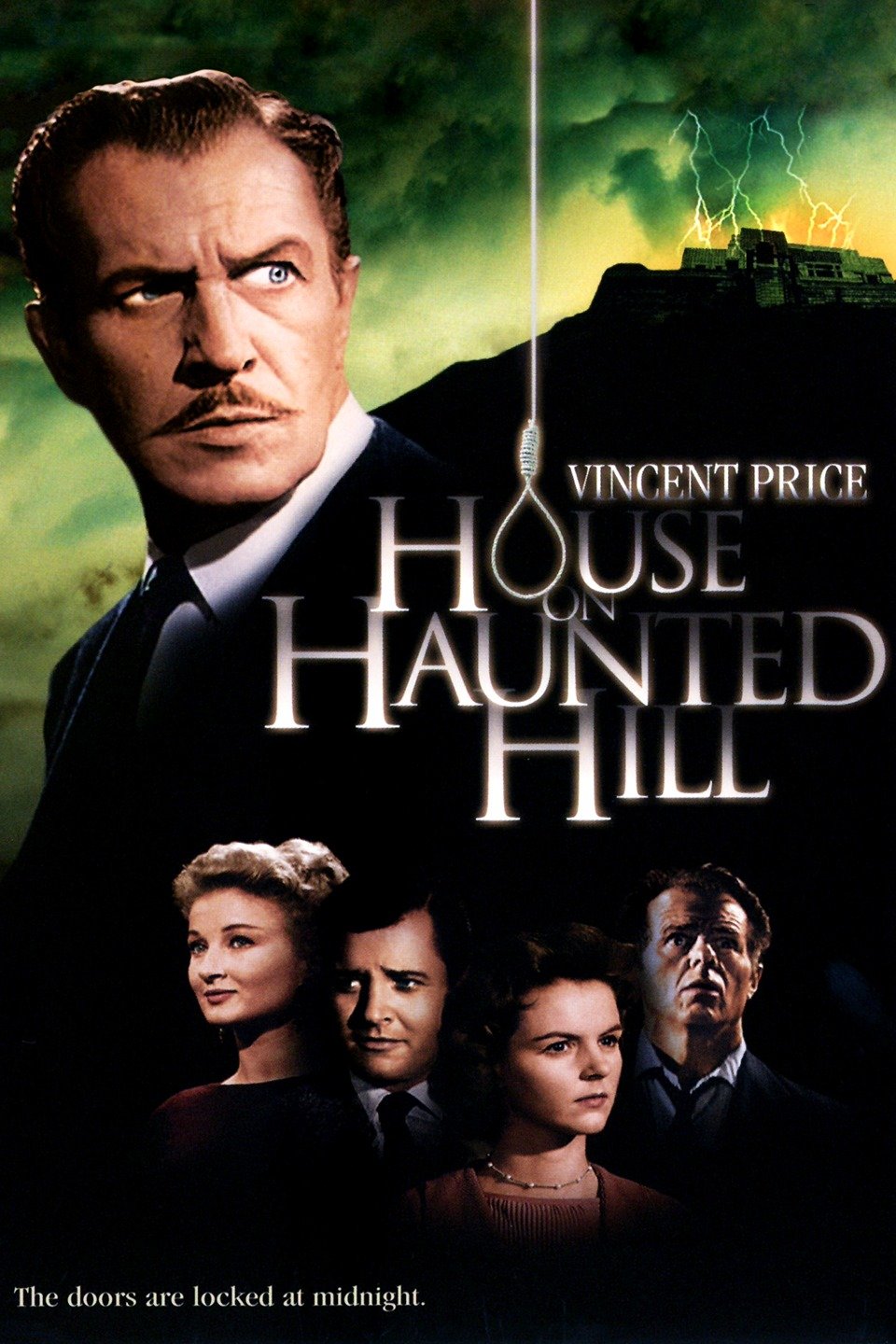 House on Haunted Hill (1959). Prior to Vincent Price’s House on Haunted Hill there weren’t many movies about haunted house movies. At least, none that have stood the test of time in the way that this film has. While this isn’t a true haunting movie, it certainly contains many of the plot elements and scares used in today’s haunted house movies. Much like the whodunit concept provided House of Wax with a more substantive plot, it also did the same for the plot here. In terms of practical effects, House on Haunted Hill was one of the first to use a pulley system in order to make a skeleton dance across the floor. If you had the pleasure of watching this film when it was first released, you may have been in a theatre where a similar system was rigged up for a skeleton to fly over the audience during that scene. While this may not be a “scary” movie, it is still an important horror movie in the evolution of the American horror film. It came at a pivotal time as screenwriters and directors were slowly transitioning from the classical horror film to the modern. It wouldn’t be until the following year that Alfred Hitchcock would give us the first modern horror film in Psycho. Most memorable in this film is the performance of Vincent Price! From his smirks to macabre gestures to terrifying voice, he is the strongest actor and demonstrates the ability to carry the film. Back stabbings, twists, turns, and a haunting atmosphere give this film brilliant production design and action points. It truly set the standard for the haunted house concept even though it has a whodunit element to it. Future haunting movies would borrow from House on Haunted Hill in order to achieve their desired effects.
Movie 11 (10/11)
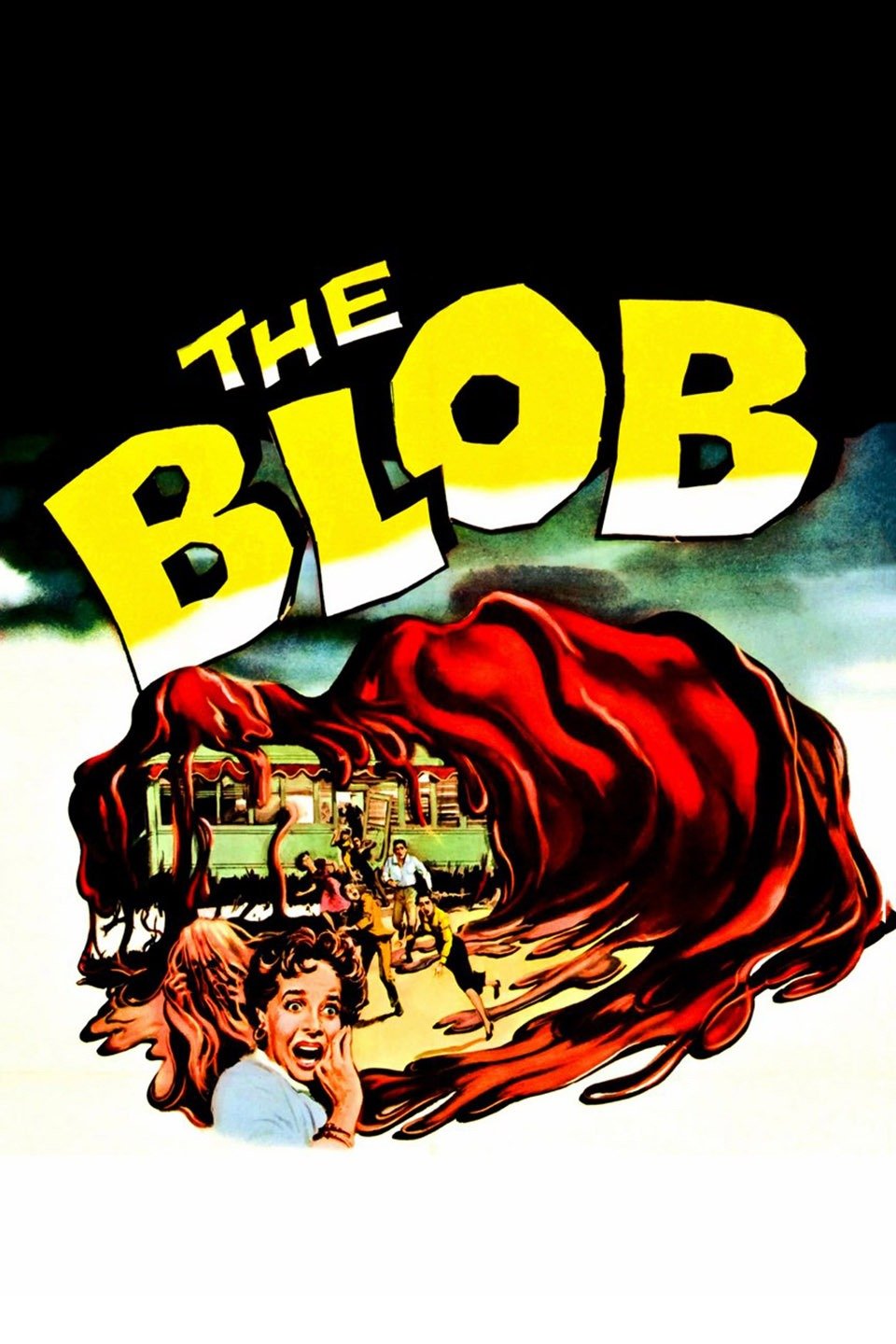 The Blob (1958). Happy 60th birthday! This classic 1950s science-fiction horror B-movie has everything that you want in a film of this era. And it’s not just Steve McQueen in the lead role, the whole movie is grossly underrated for it’s entertainment value and contribution to the horror library. Whereas there is little in this film that will induce nightmares. the film is incredibly successful at building up suspense and generating tension through the various levels of conflict. I love the practical effects in this movie. Although the movements of the blob are mostly jerky, it is highly effective at increasing the level of the very disturbing nature of the movie. Interestingly, The Blob was the first movie to specifically target the teenage audience. It was made to provide a great experience in a traditional cinema and drive-ins. There is also some meta aspects to the movie as there is a scene with a horror movie within a horror movie. I loved that! I would totally watch the movie that they were watching at the town cinema. Even for its day, this movie knows precisely what it is, schlock and all. Unlike many modern horror movies, this one does not take itself too seriously yet never stoops to gimmicky plot devices. There is an intangible fun factor with this movie that enables it to be enjoyable 60 years later.
Third group (1960s emergence of the slasher, psychological horror, and the modern zombie)
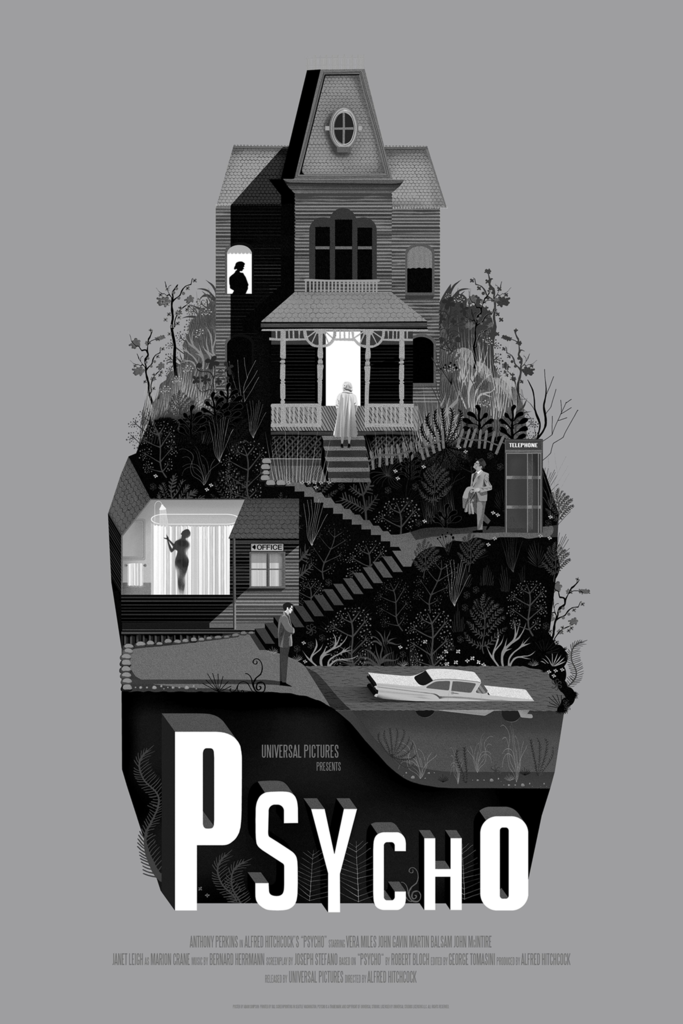
For an article on the first modern horror film, Alfred Hitchcock’s Psycho, click here. I am not covering it for #AllTheHorror because I’ve written many articles on it.
Movie 12 (10/13)
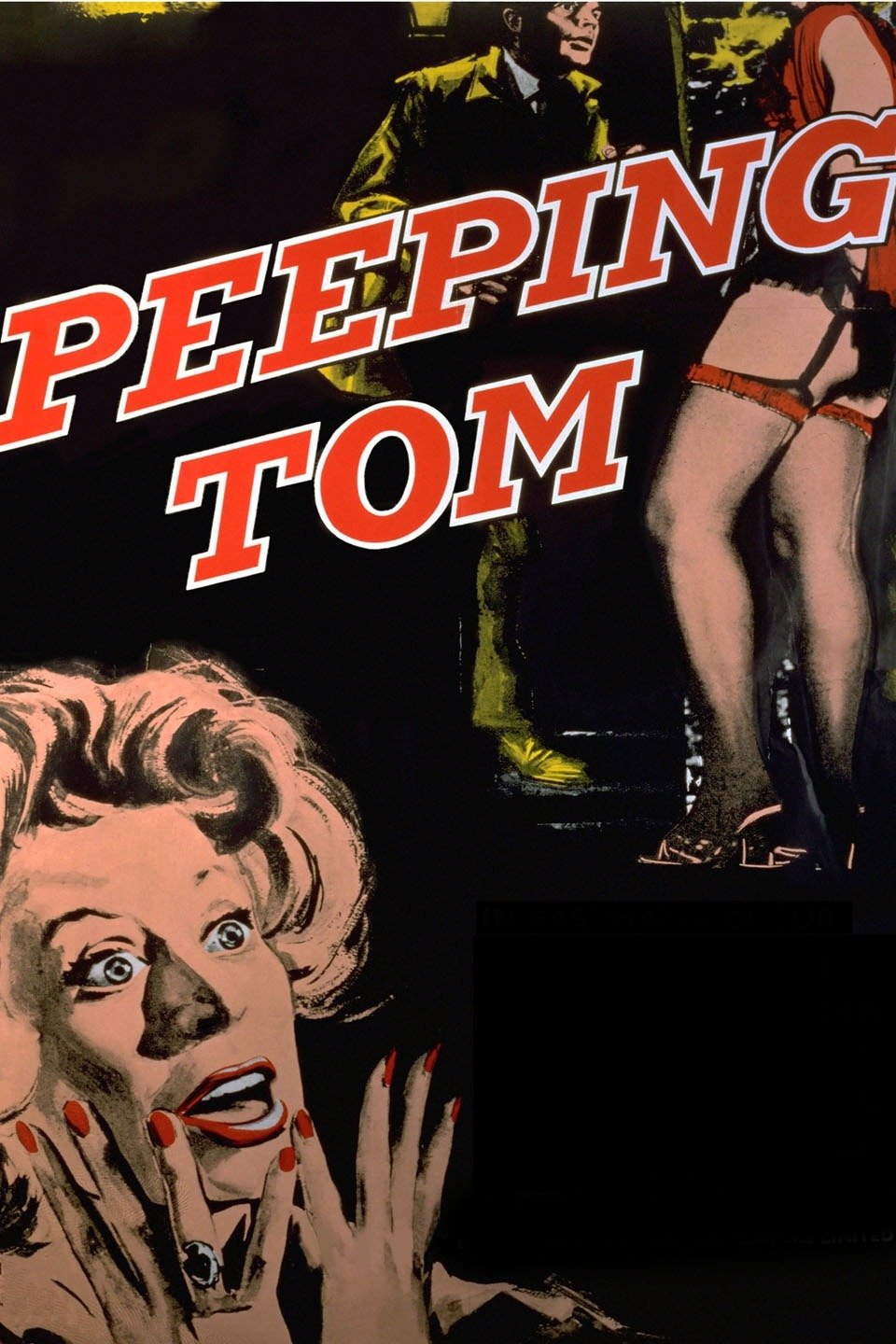 Peeping Tom (1960). Released the same year as Hitchcock’s Psycho, this voyeuristic horror film was met with a gross amount of negative press, so much so that it completely derailed the career of director Michael Powell. Perhaps this film was ahead of its time. Had it been received more favorably by critics then, it’s entirely possible that it could have earned the moniker “the first modern horror film” instead of Psycho since it was released a month prior. It’s highly disturbing and will give you chills as the victims look into the mirror, watching their faces as they are stabbed to death. It reminds me of a precursor to the torture porn movies that would not appear commercially until the first Saw. Much like Psycho, this film also contains a psychological trauma element in it. Mark, our peeping tom, was forced to watch terrifying experiments that his father would conduct. Whereas this film may have been thought to be shocking for shock-value alone, it is not without its depth. I appreciate this film for its commentary on the theory that we are all voyeurs. Not only is the audience fixated on the actions inside the cinematic window, but they are also enamored by the director who is crafting the story.
Movie 13 (10/14)
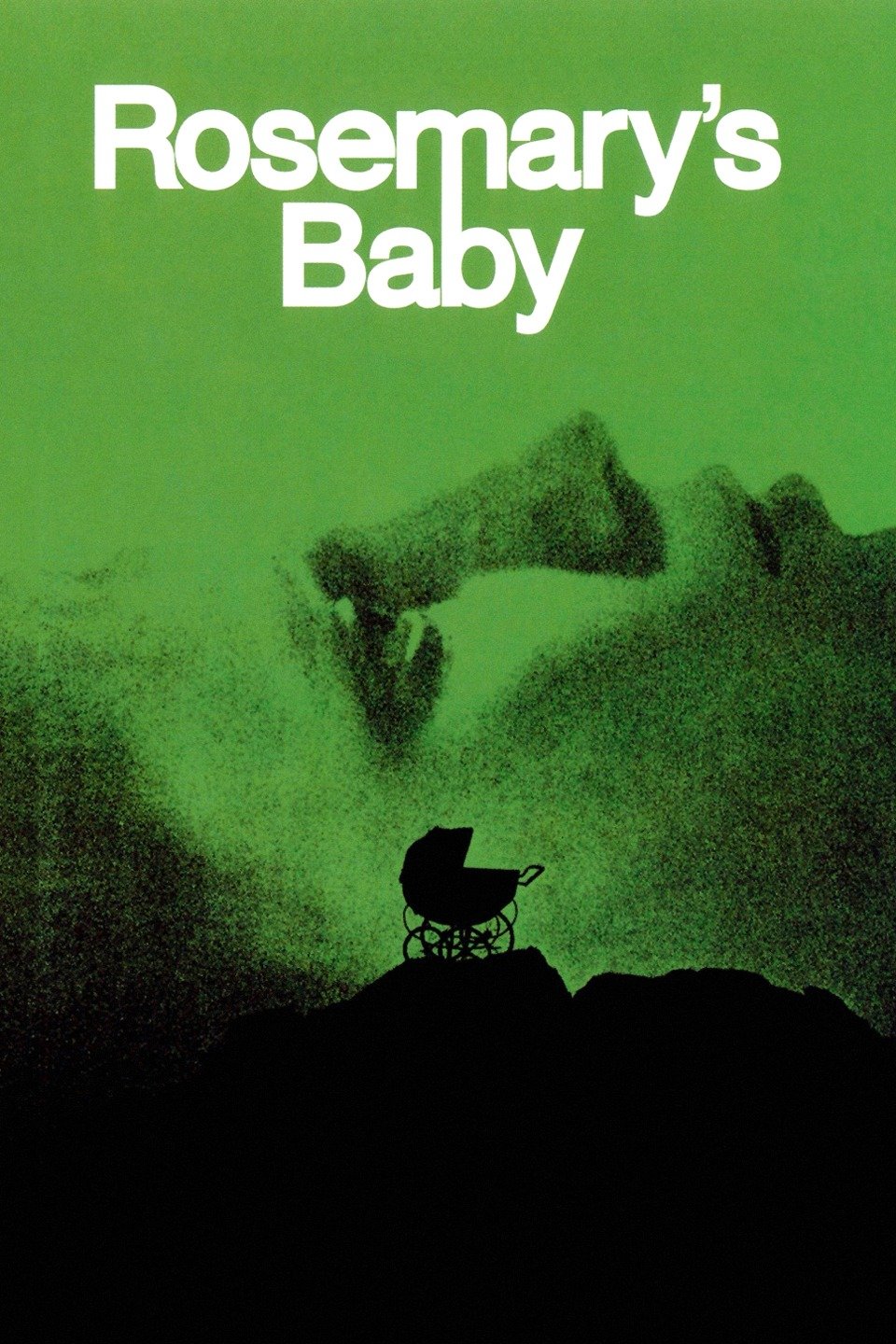 Rosemary’s Baby (1968). Happy 50th birthday! Controversial director Roman Polanski’s cinematic horror masterpiece Rosemary’s Baby is just as horrifying today as it was when it was released. The tension, suspense, and psychological terror still haunt audiences today just like it did 50 years ago. Inducted into the Criterion Collection, this film was groundbreaking for horror cinema and paved the way for later supernatural horror films like The Exorcist. What I appreciate most about this film is the power to frighten audiences without ever giving the audience something on screen to be frightened of. In fact, we never see Satan’s child. There is unthinkable danger around each corner of this brilliant motion picture. While many post-modern horror films rely primarily upon shock, this film uses the power of that which is horrifyingly inevitable to thrill the audience. Polanski provides lots of exposition in the first act that carries audiences through the rest of the film. Countering the approach from Hitchcock, in which the characters are at the mercy of the plot, Polanski’s characters emerge as real people in a situation that feels incredibly real. This film artfully depicts allegory on rape culture and concerns of what consent means, resulting in a uniquely horrifying story about bodily autonomy and the looming threat of strong and unknown forces. It isn isn’t a rape revenge tale so much as a chilling reminder of the very real threats of assault that women and men face every day. In a masterful fashion, Polanski’s direction enables the characters and plot to transcend the story. It’s that realness that increases the terror felt in the film exponentially.
Movie 14 (10/14)
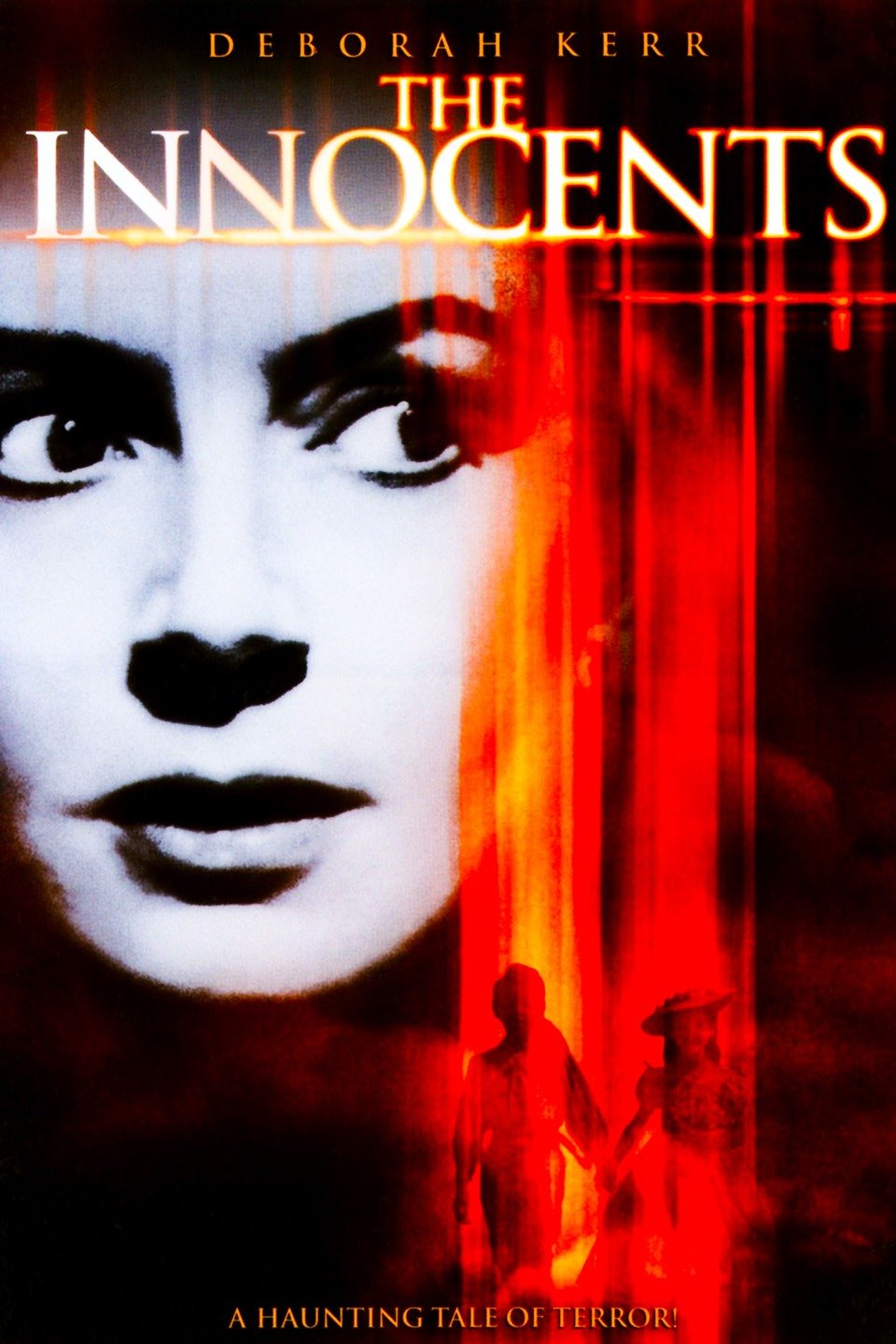 The Innocents (1961). Based on Henry James’ story The Turn of the Screw, the 1961 The Innocents is a heart-pounding psychological horror film that successfully adds in elements of hauntings and possessions. The film instantly draws you into this seemingly innocent world of gardens, English countryside estates, and orphan children. If you like Rosemary’s Baby and The Exorcist, then you will definitely enjoy this film. While some stories suffer in the translation from page to screen, the film cleared up some of the ambiguities from the novel. Unlike many horror films in which most of the most disturbing or frightening moments take place in the dark, director Jack Clayton crafts terrifying moments during the day. The combination of stylistic editing and fantastic cinematography enabled Clayton to provide audiences with an atmosphere of dread during the second and third acts. While the first act may seem as though it starts out slowly, it quickly begins to ramp up the suspense and the anticipation of the dread that is about to befall our central character of Miss Giddens. You may be wondering why the title of this film is The Innocents instead of the novella’s The Turn of the Screw, and that’s because there was a stage adaptation titled The Innocents before the movie. The central theme in this film is the loss of innocence, and it is left up to the audience to conclude whether the phantoms are real or figments of Miss Giddens’ imagination. That being the case, it gives the film a realness that can easily serve as material to discuss in a film studies class. Contributing to the evolution of the horror film, it demonstrably clear that this film provides the horror library with a model of excellence in the haunting and possession sub-genre. Cocktail Party Massacre highlights the film’s subtext of sexual repression and projection. Themes such as human sexuality and past trauma are recurring themes in the American horror film. In fact, many horror films are similar to morality plays. But these plays are told through creative, frightening ways.
Movie 15 (10/15)
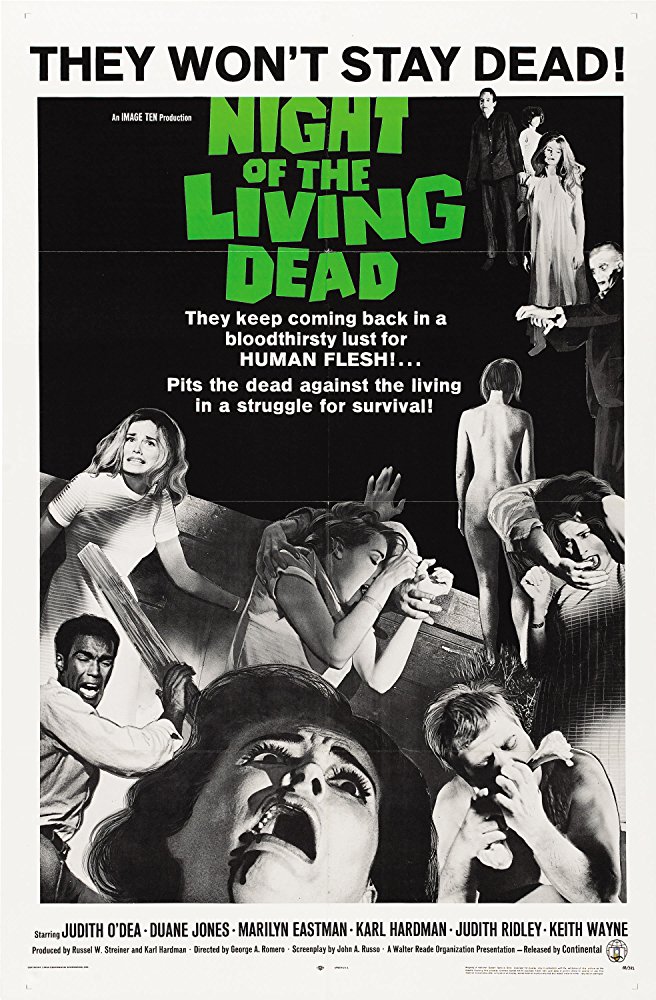 Night of the Living Dead (1968). George A. Romero’s timeless horror classic Night of the Living Dead was a groundbreaking masterpiece in 1968 and continues to inspire today. Although it is not the first zombie movie (that would be White Zombies followed by I Walked with a Zombie), it is the first modern zombie film. Every zombie movie made ever since can trace its roots back to this iconic horror film. When you think of a zombie, this is perhaps what you think of. Place yourself in the seats of 1968 cinema. Eight years prior, Hitchcock gave you the first modern horror film, and other directors began to emerge to craft their horror stories for the screen. While slashers were beginning to develop, hauntings, and possessions also began to emerge, George A. Romero took a shoestring budget and decided to shock audiences with something never seen before (and thankfully before the new MPAA rating system took full-effect). He didn’t invent the zombie, but he did invent THE zombie movie. Since most of us horror fans have seen this multiples times, reviewed it, and even watched documentaries about it, I thought I would talk about the sociological themes found in the film. Themes in Night of the Living Dead include alienation, cannibalism, racism, and identity. Furthermore, there is an interesting question one could ask: who is the true enemy? Understanding the sociological implications of this film come into full view when exploring when the film was released. What was happening at the time? The US was emerging from the height of the civil rights era and the aftermath of the Vietnam war. One of the common theoretical approaches to understanding the themes of this film is to view it as analogy of the US in Vietnam. Moreover, the zombies can be seen as racial, ethnic, religious, and sexual orientation minorities in the US. There are so many approaches to studying this film. Beyond the groundbreaking content and story within the film, Romero also broke ground by making the strong leading man black, which was against the norm of Hollywood at the time (and to some extent today). There is so much to understanding the significance of this film, the power of its storytelling. Entire articles and books have been written on it, but I hope this brief paragraph inspires you to open your mind to the phenomenal nature of Night of the Living Dead.
Movie 23 (10/21) Nope, you’re not counting wrong, I watched this on Oct 21st but it fits in better with this group. Was introduced to this movie by my cinephile penpal in Germany for our weekly concurrent film screening.
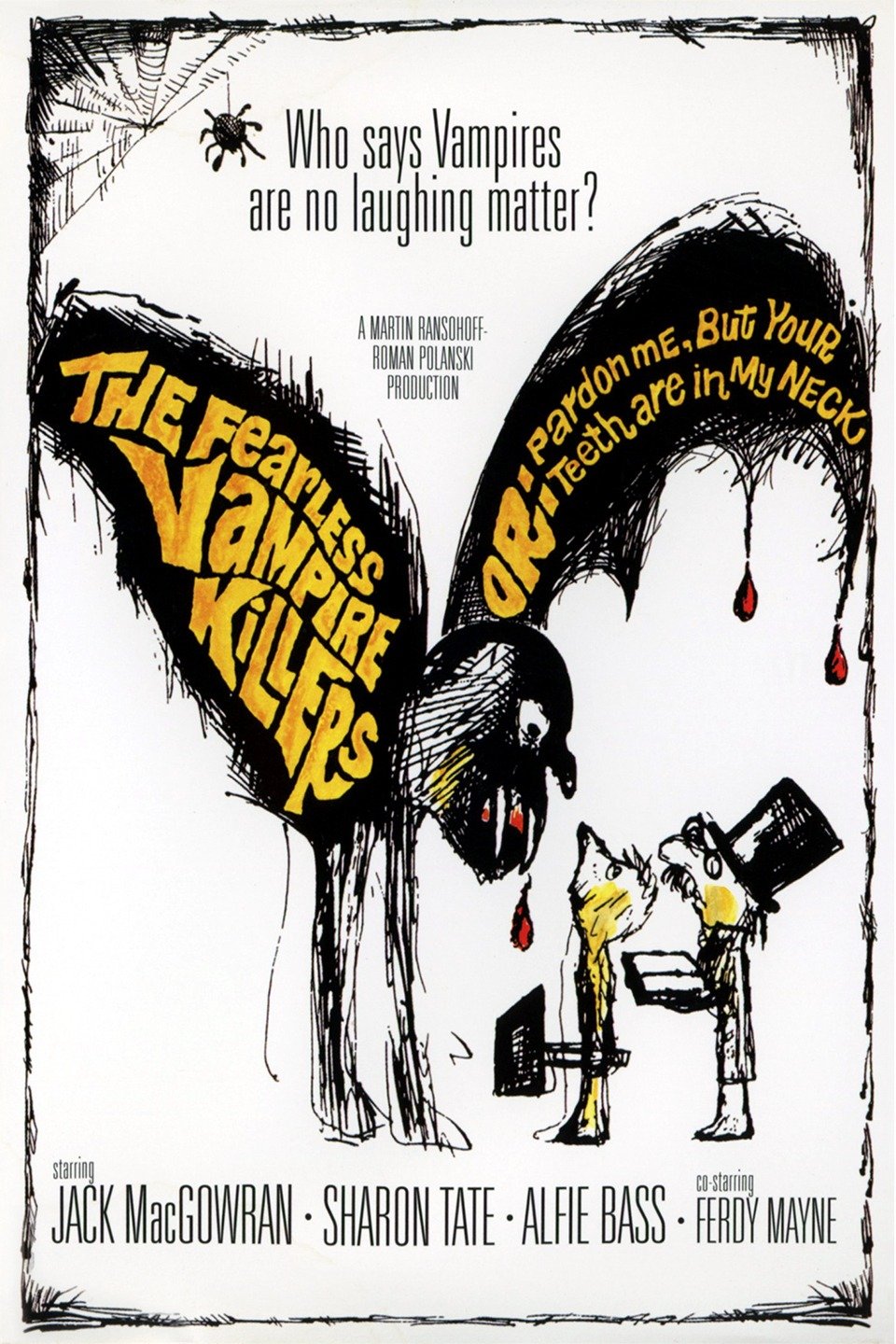 Fearless Vampire Killers (1967). Even before satires and parodies of the horror genre because popular, Roman Polanski set out to direct a satire on Hammer films. This amusing film takes the tropes of Hammer and vampire films but does it in such a way that it walks a fine line between total satire and parody. Contrary to many satirical and parody films, this one is not entirely laugh out loud funny. In fact, most of the humor is dependent on the audience’s familiarity with Hammer Films. More than a satire though, this is clearly a Roman Polanski film based upon the production design and cinematography. The sets are beautiful and incredibly well used. One may even go so far as to suggest that the Count’s castle is a character in and of itself. Despite being visually stunning, the film is not one that is well-known or familiar to even horror audiences. Hammer Films became famous in the 1950-70s by taking the classic “Universal” monsters and filming them in vivid color for the first time. Most of these films took place in gothic atmospheres and increased the violence compared to the original films in the 1930s. Polanski takes the tropes established by the Hammer monster films and combines it with an approach to comment on the absurdity of the actions in those films. It’s a dark comedy that feels very much ahead of its time. Perhaps had the film been made 20yrs later, then it would be more familiar to general horror audiences. More then the content of this film, because this is one of the last films to star Sharon Tate and the fact that she and her husband Roman are in it together, there is a disconcerting spectre about the film. As you may know, Tate and others were brutally murdered by the Manson cult in 1969. That fact alone makes this film eerie. From the sets to the characters, this is a remarkably entertaining film that is one part whimsical and the other part macabre.
Fourth group (1970s/80s horror, slashers and possessions reign, franchises are born)
Movie 16 (10/16)
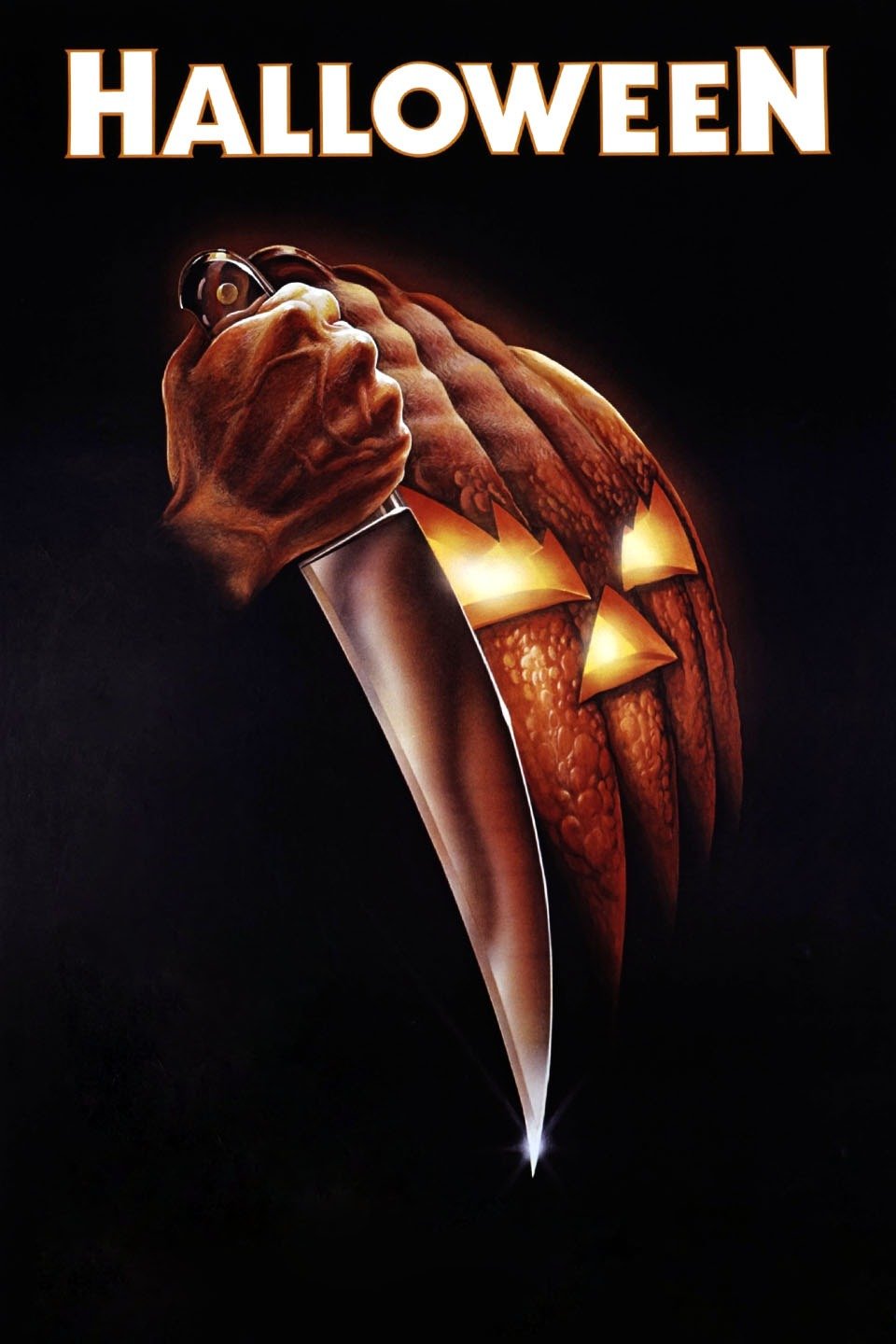 Halloween (1978). That music, tho! With a Jack-O-Lantern in almost every scene and a mysterious POV of the killer following by a shocking reveal at the beginning, John Carpenter’s nerve-wrecking thriller Halloween terrified audiences with its home invasion meets slasher to redefine what a horror film could do! In fact, this film is widely regarded as the definitive slasher and was the highest grossing independent film of all time when it was released. Furthermore, Halloween also provides us with the archetype final girl Laurie Strode played by Jamie Lee Curtis (the daughter of Psycho‘s Janet Leigh). There is so much to love about this film that entire books could be written and classes taught on it. It’s funny, exciting, terrifying, and more. It was directed with as much attention to the art of the story as the visceral horror of the action. Much like with Night of the Living Dead, I don’t seek to review this iconic film per se, but instead want to do a brief film analysis. Heavily influenced by Bulgarian philosopher Tzvetan Todorov who wrote prolifically on a character arc that was comprised of five stages: equilibrium –> big event upsets the order –> an acknowledgment of what is going on –> begins the path to resolution –> through a showdown, resolution is reached and order is restored. There is a strong feminism theme in the film evident by the strong, independent Laurie who stands her ground and protects herself and the kids. She is never objectified nor painted to be helpless. She typifies the final girl through her androgynous clothing, studious behavior, and the fact she fights with the main villain and survives. With minimal dialogue, Carpenter focused this film on the powerful, memorable visual storytelling told through the creative and effective use of substantive cinematography. Instead of stooping to the inclusion of frame upon frame of gore, Carpenter chooses suspense and tension for these elements provide a film with substance and narrative. Although Texas Chainsaw Massacre was released prior to Halloween, this film truly understood the emerging slasher genre, and perfected it! It is the model on which so many other films are based.
Movie 17 (10/17)
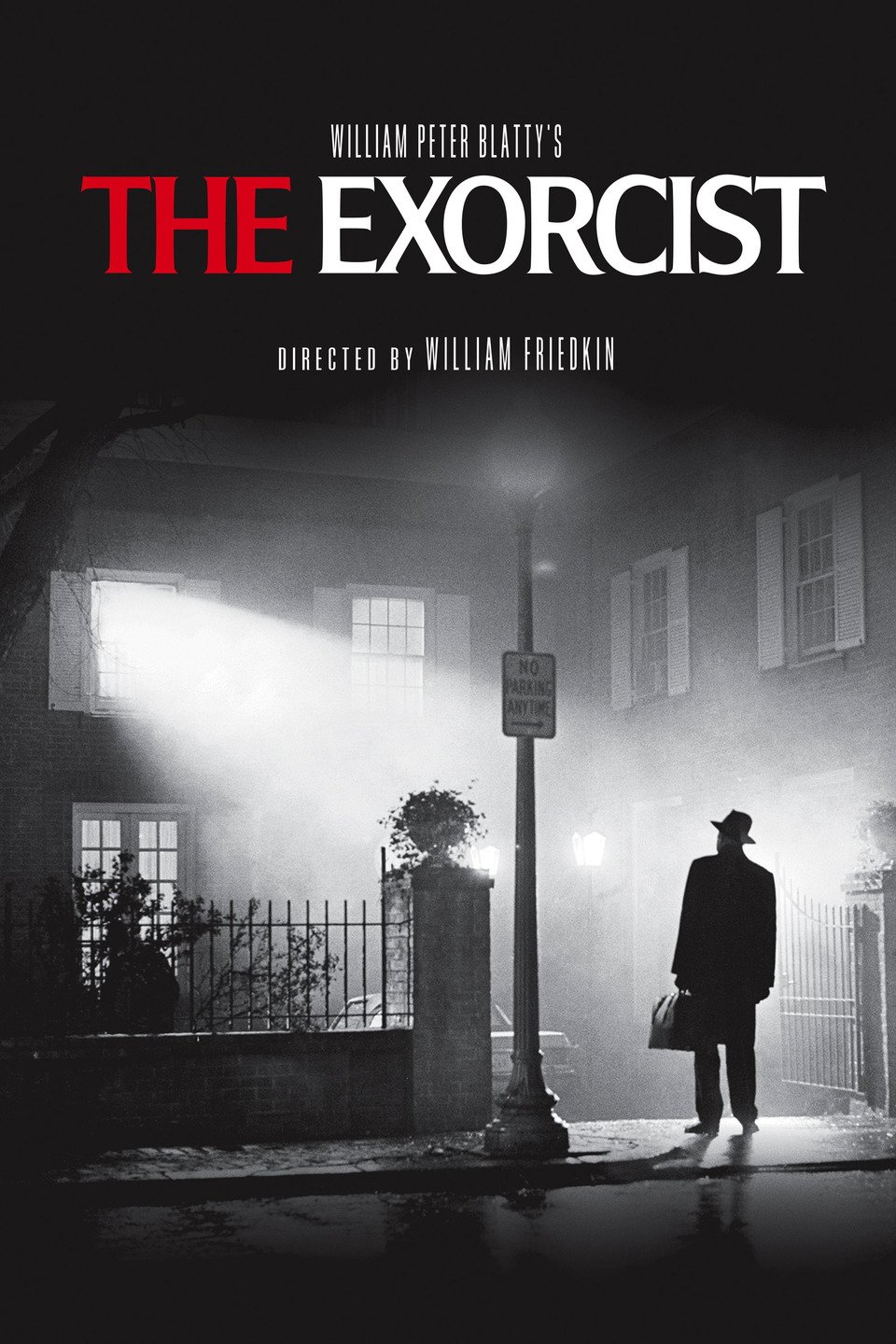 The Exorcist (1973). You’ll never look at pea soup the same way again. Not only one of the most profitable horror films of all time, William Friedkin’s The Exorcist remains timeless. Coming up on its 45th anniversary, this is the definitive possession horror film. Thematically, this film is pivotal in the evolution of the American horror library because it takes the concept of the external “monster” and moves it into the mind and body. In many ways, Linda Blair’s Regan takes the psycho-social horror of Psycho and combines it with a classic monster and adds in a Rosemary’s Baby. This trifecta of excellence works together in order to provide the plot and characters of The Exorcist with substance. Much like Psycho was the first modern horror film and proto-slasher, The Exorcist is widely regarded as the first modern possession film. There are elements of possession in Rosemary’s Baby, but I don’t technically consider it a possession film. This film also takes the idea of the “home invasion” to the next level by having the innocent Regan’s body invaded. While many films prior to The Exorcist depicted the occult, few (if any) have endured like this icon of horror has. Perhaps what frightens us most about this film is the fact of how close to home it hits. The MacNeil family could be our own or our neighbors. By default, the very setting and atmosphere of the film is relatable and realistic. There is a high degree of vulnerability on display. Not only can our homes be invaded, but our bodies can too. Whereas some may only see the effects of the demonic possession and focus on them (the vomiting, masochistic behaviors, or focussed vulgar profanity), these are all incidental. The point of The Exorcist is to provide social commentary on dehumanization and how evil forces and behaviors can affect us in such a way that we feel like animals unworthy of God’s love. But no matter how dark times get, redemption is possible. Whereas demonic possessions are not a daily part of our lives, by extension, this can be explored as a metaphor for the dehumanization witnessed today such as sexual assault, physical/emotional abuse, and other ways in which people are devalued.
Movie 18 (10/18)
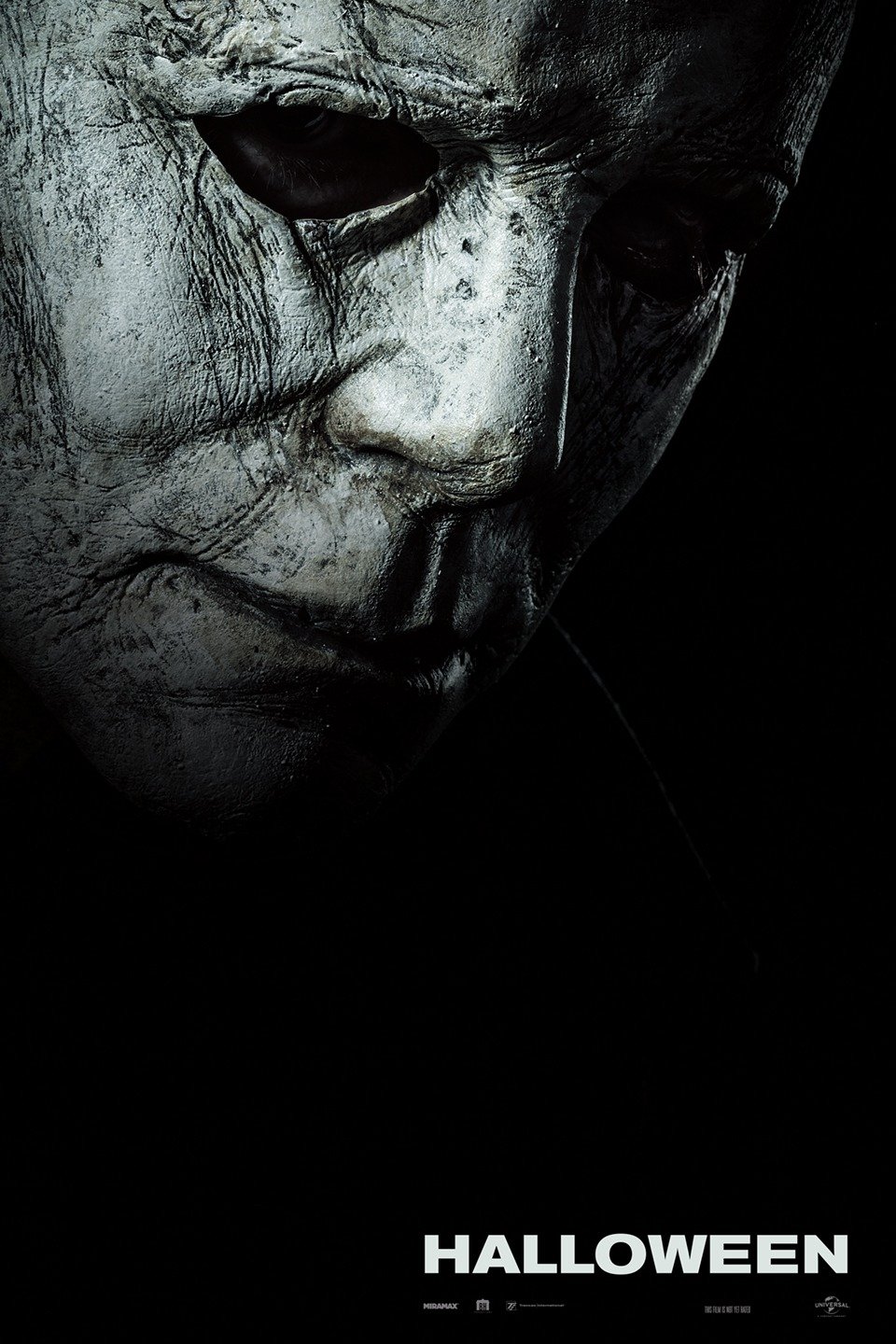 Halloween (2018). Happy Halloween Michael! David Gordon Green’s Halloween truly is the sequel that we have been waiting for in the Halloween franchise. Green set out to direct a Halloween movie that he desired to work both as an homage to the original whilst crafting an original story that could do more than be a great horror film, but be a great film period. And suffice it to say, he delivered in spades (or knives, as it were haha). Words cannot even begin to capture the energy of the auditorium last night. From screen to entrance Studio Movie Grill Tampa (my regular cinema) was filled with a level of energy that I’ve only ever witnessed at Jurassic, Avengers, and Star Wars movies. Twitter is all a’buzz this morning with those who saw it at pre-screenings and those of us who saw it at 7 o’clock last night. When I’ve been asked what I think, I am quick to respond that you need to throw out the rule book because Michael is writing this story. From echoes of the original (and some of Halloween 2) it still succeeds in providing longtime fans and those newly discovering the franchise with an original story that will hook you from the very beginning when you realize that all bets are off because no one is safe. It’s thrilling, engaging, and fun. It may lack Dean Cundey’s brilliant cinematography from the original (he was also the cinematographer for Jurassic Park, Carpenter’s The Thing and Back to the Future), but visually the film has those quintessential moments that act as a throwback to Carpenter’s original groundbreaking slasher. From the vintage opening title sequence accompanied by that iconic score to the showdown, Blum House’s Halloween is a brilliant addition to the franchise and is destined to be a future classic. Click here for my full review!
Movie 19 (10/20)
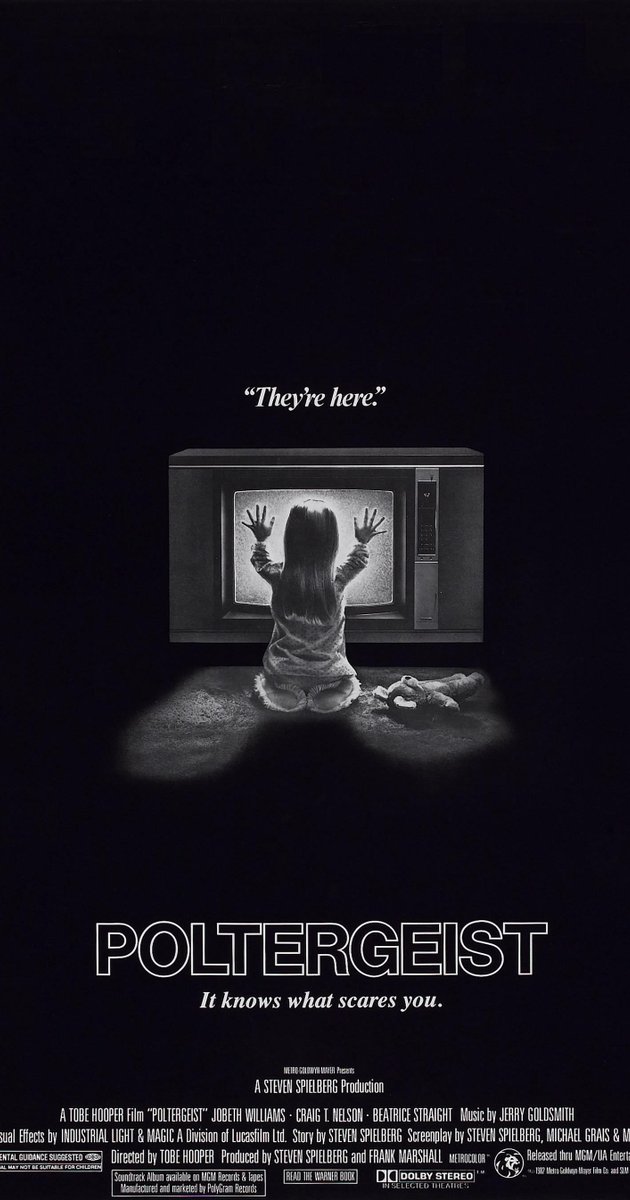 Poltergeist (1982). “They’re [still] here!” More than 35 years later, Stephen Spielberg and Tobe Hooper’s Poltergeist still terrifies audiences today. Coming off the successes of Spielberg’s Jaws & Close Encounters of the Third Kind and Hooper’s Texas Chainsaw Massacre, this powerhouse producer-director team (note: Hooper received the official director credit) crafted a horror film that became an instant classic then, and still holds up today. With Spielberg heading up the story and Hooper in the director’s chair, both cinematic geniuses combined their talent for generating material for nightmares to take the “haunted” house film sub-genre of horror to the next level. Storytelling and cinematic elements aside, another primary reason the film still haunts and intrigues audiences today is the lore of a legendary curse attached to this film. For audiences back in 1982, and possibly still to this day, following watching the film, friends may have found themselves only venturing by an alleged haunted house on a dare. The film’s impressive ability to take the haunted house concept up to a level never seen before–in fact–it essentially created the modern haunted house genre seen in today’s horror films. In short, Poltergeist is an icon, and stands alongside films such as Psycho, The Exorcist, and The Shining. Probably the most terrifying element of all is the setting–mundane upper middle class America suburbia. No longer where “haunted” houses confided to old mansions or hotels, but could be located next door to you. That is, if your neighborhood is also built upon a burial ground. Don’t forget to experience the house at Universal Studios Halloween Horror Nights (CA/FL)! For my full retrospective review of this iconic film, click HERE!
Movie 20 (10/20)
 Friday the 13th (1980). Ch ch ch, ah ah ah. The sleepaway summer camp experience was forever changed in the summer of 1980 when a slasher slaughtered a bunch of horny teenagers along the shores of Crystal Lake. Spanning more than three decades and a dozen feature films (too bad it’s not a baker’s dozen, wink), the Friday the 13th franchise made us never look at a hockey mask in the same way after Part 3. This iconic franchise has also found its way back into the headlines with the legal battle over the rights to the Friday the 13th name between the original screenwriter Victor Miller and producer/director Sean S. Cunningham. I recently ran a Twitter poll to determine which is the crowd favorite in the series, and the majority of respondents voted for the original movie, followed by Jason Lives. Like the majority of the 80 respondents in the poll, the original is also my favorite, although it is not a “Jason” movie per se. Releasing in 1980, Friday the 13th helped shape the modern slasher along side Texas Chainsaw Massacre and Halloween. A Nightmare on Elm Street would arrive in 1984. With his trademark hockey mask and machete, very few have lived to tell the tale of their encounter with one of the most terrifying slashers to ever appear on the silver screen. His body count is in the triple digits! From screen to screen, Jason has gone from the cineplex to your TV and computer by way of interactive media. Unlike the campy-ness of Freddy or more focussed kills of Michael, Jason is by far the scariest of his iconic counterparts. My friend Dani is a diehard Jason girl, while I am Freddy and our friend Derek is Leatherface. Let’s take a stab at exploring why this franchise continues to be a favorite! For my full retrospective review, click HERE!
Movie 21 (10/20)
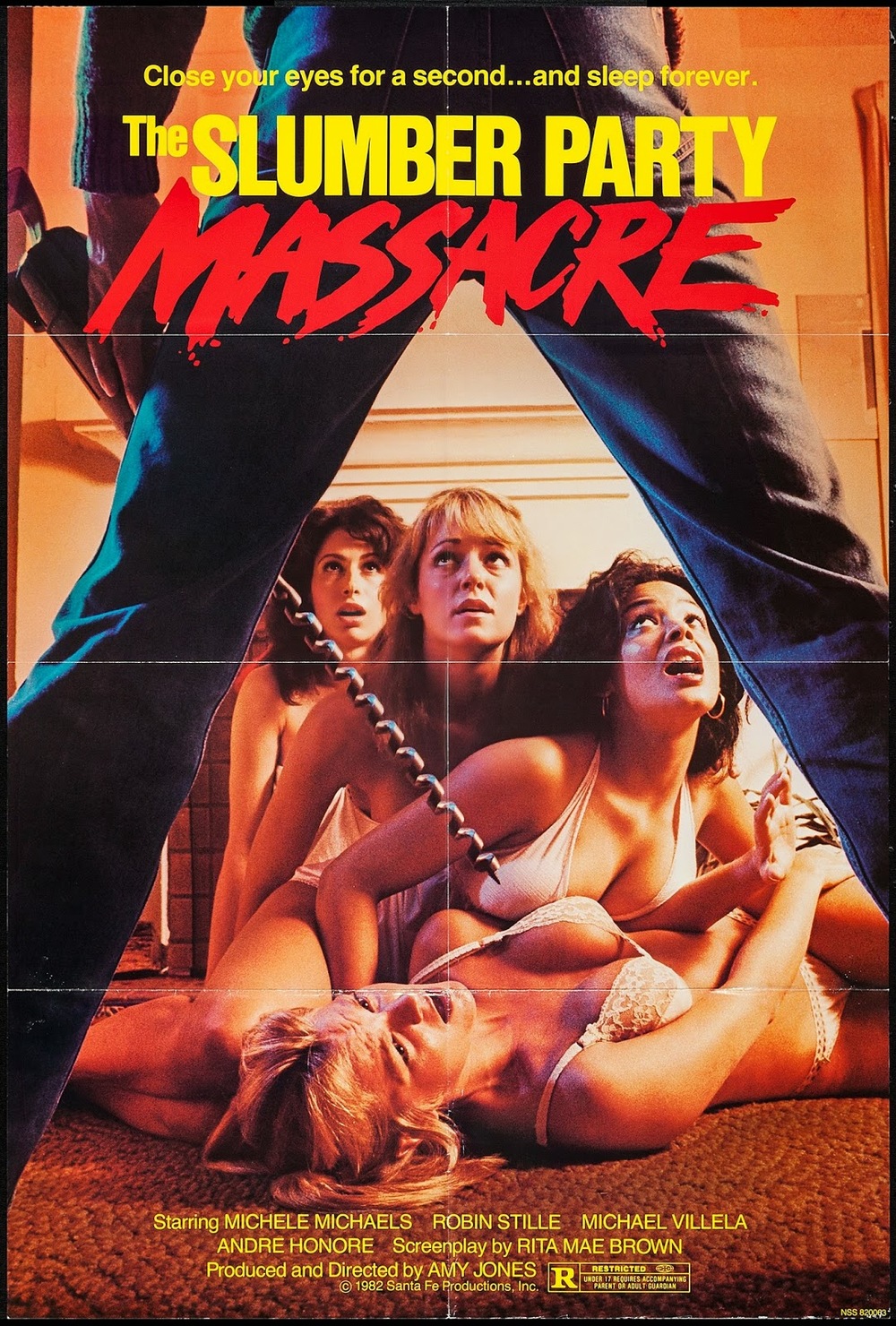 Slumber Party Massacre (1982). Upon several recommendations from podcasters that I follow, I added this to my 31 Horror Movies this month. Slumber Party Massacre knows precisely what it is–a B-movie slasher–it wastes no time in getting to the kills. Because this movie comes on the heels of Halloween and Friday the 13th, there are clearly shots and even sequences taken from those movies. Despite borrowing from those two iconic slasher films, the one key element that it did not borrow is the masked villain. Unfortunately, the fact that our killer did not wear a mask nor costume, disappointed me. I did not find him terrifying, in the same way I do Michael, Jason, and Freddy. However, in the third act of the movie, the killer speaks, and he does become quite frightening. Unlike the classic villains I’ve mentioned that are more conventionally scary, this killer is incredibly creepy. It didn’t take long for movies to take on the tropes established in Halloween and Friday the 13th, this film came out just two years after we were first introduced to Camp Crystal Lake and Haddonfield, IL and two years before we would meet my personal favorite horror icon Freddy. The producers, director, and writer of Slumber Party Massacre knew precisely how to get teenagers and 20-30-somethings into the movie theatre, and capitalized on it. With a run time of little more than an hour, it doesn’t try too hard to develop the characters or spend time on subtext or the hero’s journey, it just provides audiences with funny dialogue, over-the-top acting, and an all around fun popcorn horror movie. It plays the camp card close to hokey without ever crossing that line. The movie takes itself seriously enough to enjoy the murder and mayhem without it feeling like a colossal joke. Truth is, there is a quite the degree of social commentary on sex and gender roles. And that drill is totally a phallic symbol. Interestingly, Slumber Party Massacre was written, produced, and directed by women! So yes Mr. Blum, there are female directors interested in the horror genre out there!
Movie 22 (10/20)
 A Nightmare on Elm Street (1984). 1, 2 Freddy’s coming for you; 3, 4 better lock your door, 5, 6 grab your crucifix, 7, 8 gonna stay up late, 9, 10 never sleep again. If that jingle still sends chills down your spine, you’re not alone. My favorite horror icon is Freddy Krueger. Unlike with other slasher icons who hide behind masks and never speak, I consider Freddy to be the most terrifying because he can talk to his victims and attack you in your sleep–a time in which you are most vulnerable. Moreover, dreams are a private time and he invades that sacred space. Robert Englund is synonymous with Freddy because we get to appreciate the actor’s performance, charisma, and enthusiasm as he is not hidden by a mask. Writer-director Wes Craven’s nightmare on screen has been terrifying audiences for more than 30yrs. Inspired by a series of articles in the LA Times; three small articles about men from Southeast Asia, who were from immigrant families, who died in the middle of nightmares—and the paper never correlated them, never said, ‘Hey, we’ve had another story like this.” From that short series of articles came the movie (turned franchise) that we know and love today. But there is so much more to NoES than the fact it was inspired by truly unexplained deaths during nightmares. On the surface, it appears that the only motivation of Freddy’s kills and trauma-inducing actions is revenge–plain and simple. After all, he was burned alive by the parents of the Elm Street teens. And so he takes his revenge out on the teens and occasionally their parents. Albeit revenge is a classic motivator, it lacks substance; however, there is much more to Freddy than revenge. What truly separates classic Englund Freddy from remake Freddy and from Michael and Jason is his sick commitment to showmanship. It’s just about the kills, it’s about putting on a show for his own amusement. I’ve written before that the horror genre is the best genre for creatively exploring the human condition, questioning standards and observations, providing different perspectives on sociologically, exploring psychology, heteronormativity, and more, often in terrifying ways to get you to think, and NoES certainly gives us lots of material to talk about. At its core, NoES provides ample opportunity to discuss the distinction between dreams and real life, manifesting in the actions of the teens in the film; furthermore, the events of the film transgress the boundary between imagination and reality that provocatively toy with the audience’s perceptions of the real and imagined. It’s like an episode of The Twilight Zone on crack. For my full retrospective, click HERE.
Movie 24 (10/22)
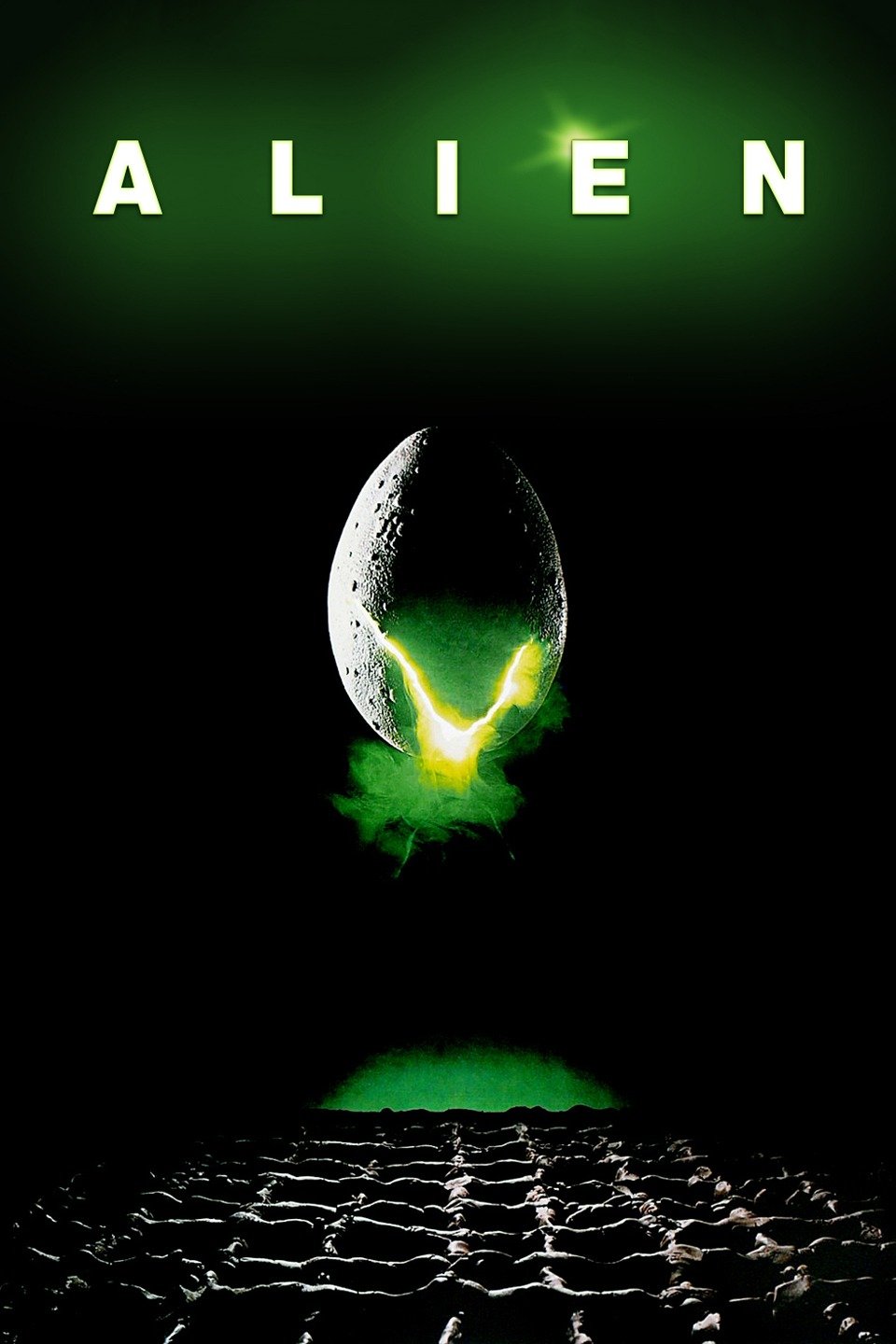 Alien (1979). “This. Is. Alien. You are with. Sigourney Weaver. Aboard the space ship Nostromo. Caution. The a-rea you are entering is extremely dan-ger-ous.” If you get the reference, then we are kindred theme park and horror spirits! Ridley Scott’s science-fiction horror masterpiece that convinced you that “in space, no one can hear you scream” is still the definitive science-fiction/space horror film after reinventing what we had in the 1950/60s. Sitting between Halloween and Friday the 13th, this film came as a surprise for the horror genre because it countered the direction that the horror genre was going by reimagining the emerging slasher genre in a setting that is more terrifying and limiting than a house or town in which a serial killer is slaughtering teenagers. Just 10 years after the Apollo moon landing, this film takes on characteristics of that which is frightening about this new frontier that we are exploring. What if there is a killing machine monster out there? Scary stuff. Beyond taking the horror genre into space and integrating some of the psychological horror and slasher elements outlined in Psycho, Halloween, and others, Scott’s Alien also provided horror audiences with a new type of final girl, social commentary on gender roles, heteronormativity, and human sexuality. Much like the Freudian components of Hitchcock’s Psycho, this horror film also explores the deep fears and desires that are often suppressed by the subconscious. Furthermore, the film also explores the fears associated with child birth by “impregnating” men resulting in body horror trauma. The counterarguments to heteronormativity is manifested in Ellen Ripley as an androgynous female who behaves in a very masculine way, the film provides an opportunity to talk about gender roles. Like Clarice Starling in Silence of the Lambs, Ridley is also someone who is equal parts female and male. In fact, you could argue that she takes on more masculine characteristics as the narrative plays. This playing with the roles of men, women, and their respective bodies and minds can be realized when viewing the character of the xenomorph as the “monstrous feminine.” The monstrous-feminine is a psychological construction generated by male anxieties about the female body and sexuality. Scott’s Alien depicts the maternal body as monstrous. More specifically, the film repeatedly examines the scene of birth or origin. Interestingly, there are three different representations of the concept of birth in the film. In terms of the production design, Alien can be likened to a gothic horror set in space. Scott’s brilliant design conveys to the audience the extreme isolation and claustrophobia. There is also an fascinating dichotomy in the worlds that are represented in this film by pitting the mechanization and technology of the organization for which our explorers work and the monstrous origin world of the alien, which we learn more about (whether you like the films or not in the prequels). In case you’re wondering, my quote at the beginning was taken from the former Great Movie Ride attraction at Disney’s Hollywood Studios.
Movie 25 (10/23)
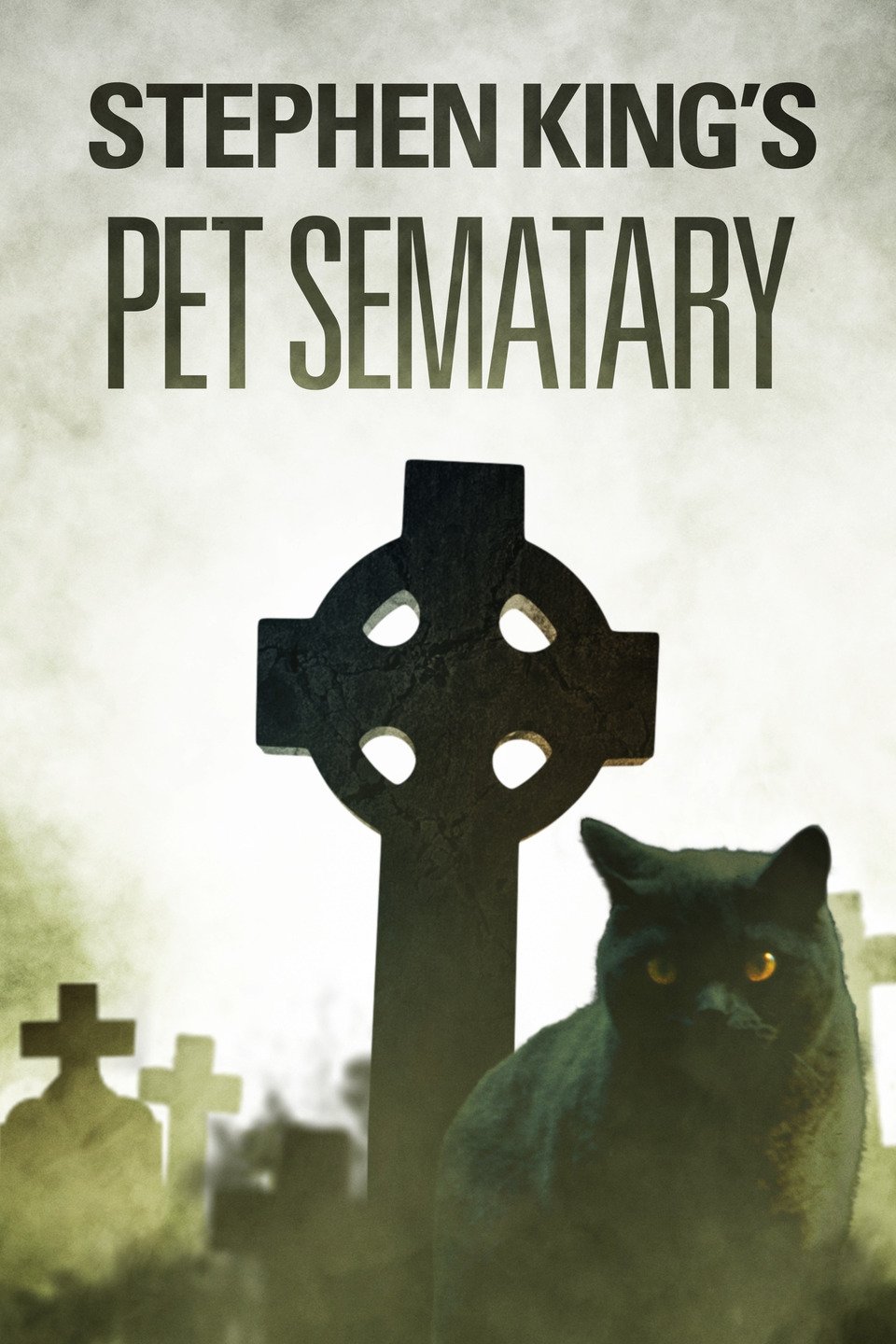 Pet Sematary (1989). “Sometimes dead is better.” Finishing out my decade of 1970s/80s slashers and possessions that play around with the concepts of internal and external monsters, morality, sex, heteronormativity, and even grief, is the terrifying classic Pet Sematary based on the best-selling Stephen King novel. From the moment the movie opens with shots of a cemetery underscored by an incredibly creepy song, you know that you are in for a horrifying experience that will pit you face to face with death and grief. In addition to the highly effective imagery and song setting the atmosphere of dread that instantly creates this ominous unsettling feeling, there are several shots of the fast-moving semi-trucks that foreshadow the infamous tragic event plunging the characters into crisis. For some reason, this film seems to get lost in horror conversations (that is until more recently with the trailer of the 2019 remake). Fortunately, there appears to be a resurgence in the popularity of the original, so naturally I rewatched it for #AllTheHorror this month. At it’s core, this film deals with the tragic loss of a child and juxtaposes that against the return of that same child. Return of the repressed, or uncanny as defined by Sigmund Freud. Credit to the success of this film goes to King and Mary Lambert–see Mr. Blum–a female horror director). Not to mention the fantastic cast including Herman Munster (Fred Gwynne). Horror movies often creatively (and sometimes viscerally) deal with societal taboos. And that practice is quite evident in this film’s depiction of how parents handle the concept of death around their kids. Like many parents, Rachel (Denise Crosby–yes StarTrek TNG) avoids the topic around her children. In order to make true on the promise to protect the kids and cat, this avoidance of death leads Louis to his eventual misguided decision to test the powers of the ancient pet cemetery. Another element that is often overlooked is the angelic/demonic dichotomy between Pascow, the good angel, and Jud, the bad angel (or demon). Both are practically sitting on the shoulders of Louis, directing him what to do. Is there anything more terrifying than a baby on a slaughterous rampage? With only a little violence and gore (compared to the rest of the movie), Lambert was able to craft a nightmare-inducing horror film that forced us to face the concept of death.
Movie 26 (10/28)
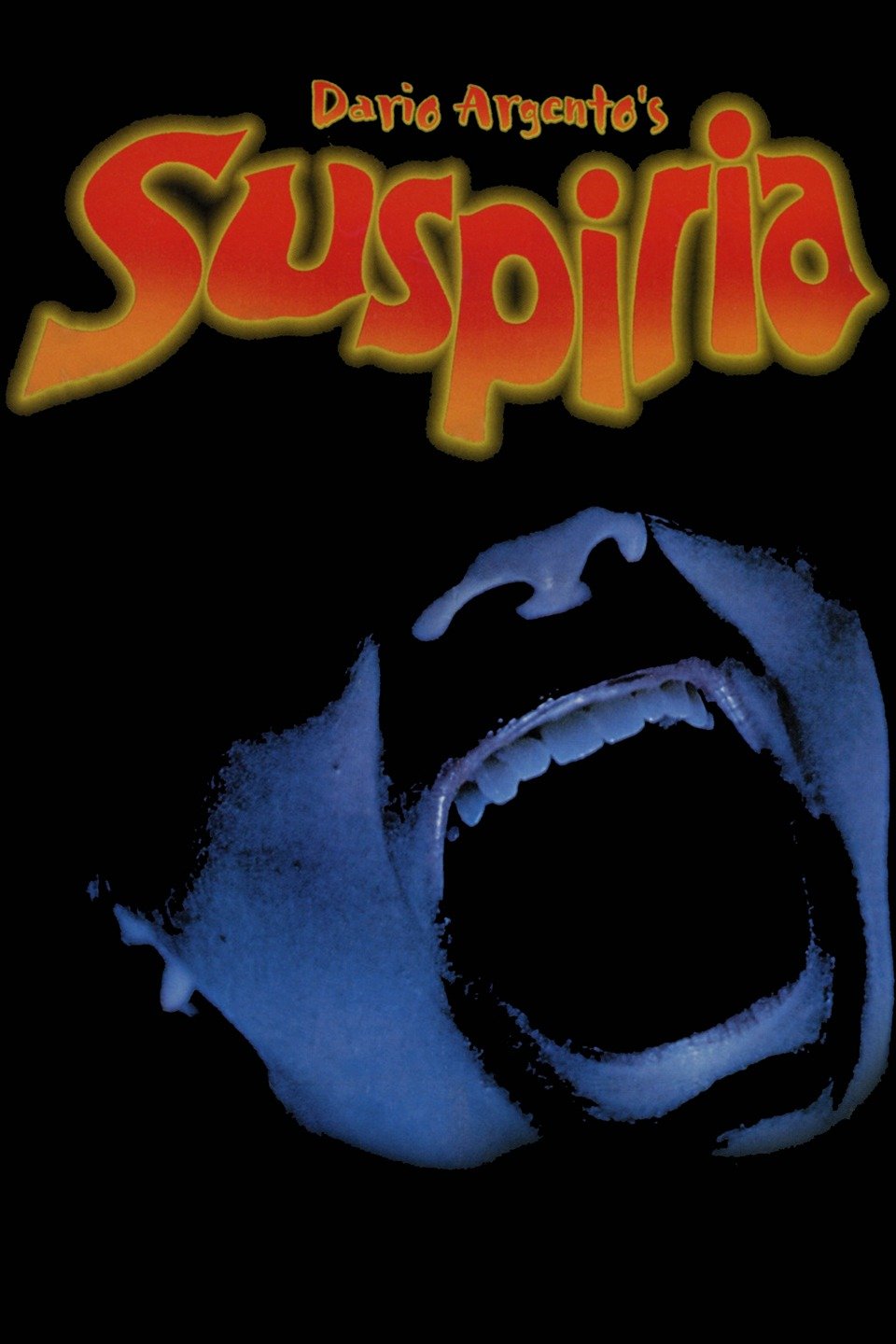 Suspiria (1977). In preparation for the remake of the Dario Argento visual horror masterpiece, I watched the original with my cinephile friend and penpal in Germany. So much to love here! It’s hard to know even where to begin. From the angles, framing, and colors, I knew from the opening scene that I was in store for a masterful work of art. Not to mention that haunting score! While I’ve long thought that the beginning to Scream was one of the most intense and brilliant horror film openings, I am now left with Suspiria having the most intense opening! It was a non-stop rollercoaster that was bloody and beautiful. While American 70s horror contained far more off screen violence than on, this film broke the mold and gave us closeups of stabbings and plate glass window slicing and more. It was shocking and mesmerizing. There is a deeply unnerving experience that leaves an impact that remains with you for the rest of the movie. Stylistically, Argento displays a keen eye and penchant for long, sustained shots that truly immerses the audience into the story. Where this film lacks plot–and it does–it makes up for in Salvador Dali surreal moments that evoke heightened senses through hyper-sensitive sequences of visual horror. It’s not enough to attempt to capture into the words the film as it is more of an experience than coherent narrative. Argento’s use of deep primary colors and sharp angles provides the film with this almost hallucinatory effect that is reinforced by the pioneering electronic score by himself and performed by the electronica band Goblin. One of the things that I picked up on while watching this movie was the connection to German expressionism. While it was certainly instrumental in the development of the American horror film, the production design and lighting largely became less pronounce in more modern movies. However, this Italian horror film still holds true to the designs and lighting that greatly shaped the horror films we love today.
Fifth group 90s horror (rise of psychological and meta horror, horror in everyday situations, and nightmares manifested)
Movie 27 (10/28)
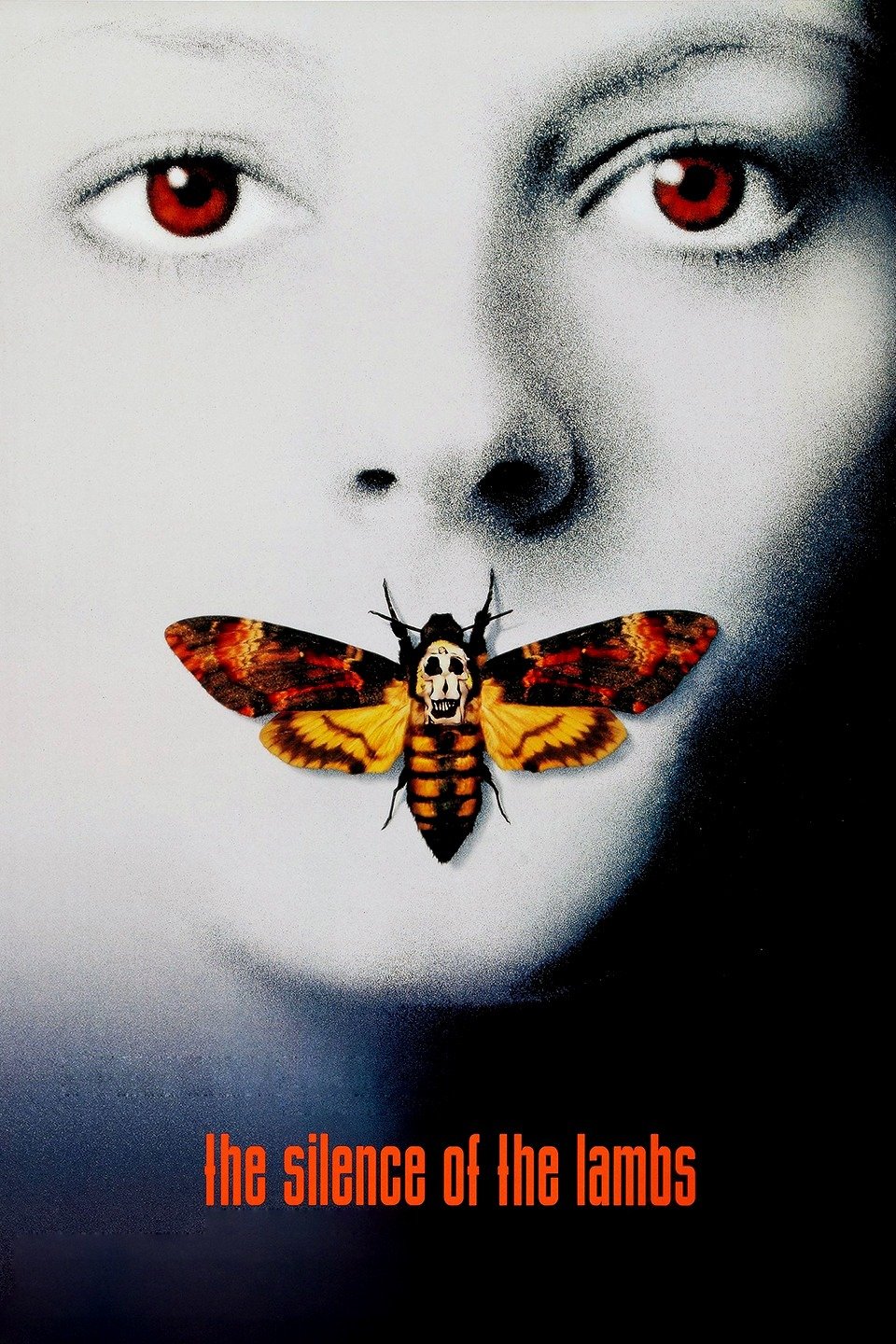 The Silence of the Lambs (1991). “Good evening, Clarice.” How many of you have never thought of fava beans and chianti in the same way since then? Quite literally inventing a new genre that combines elements of horror, suspense, and crime to create the crime thriller, The Silence of the Lambs remains the motion picture that typifies the genre. More than 27 years later, Silence still holds up and continues to terrify audiences today. Whereas this iconic film may not be considered horror, by today’s understanding and expectation by many, it was certainly widely considered horror when it was released in 1991. A sleepy success, I might add. Essentially, Silence is an indie film that flew in under the radar but soon grew to be immensely popular and critically acclaimed. Silence is also one of only three films to win “the big five” Academy Awards (picture, director, lead actor, lead actress, and screenplay). This, in and of itself, serves as demonstrable evidence that The Silence of the Lambs is one of the most influential and profound films of all time–across all genres. Furthermore, there is not one single moment that I would change because it is cinematically perfect just the way it is. It is arguably a dark crime-thriller, but it is also very much a horror film. When asked which category I put it in, I respond with horror. Why? Because there is certainly intent to horrify audiences during particular scenes in the film; whereas, a crime-thriller tends to not overly concern itself with the intent to horrify. The intent to horrify is what defines it as a horror film first and crime-thriller as a very close second. Jonathan Demme’s The Silence of the Lambs remains one of the most iconic films in cinema history and will continue to have an evergreen shelf-life. It’s a multidimensional motion picture that frightens and intrigues. It is an arthouse film that achieved commercial success. From the buildup to the introduction of Dr. Lecter to the trademark moth cocoon in the throat of the original victim. Furthermore, Demme continues to drive up the suspense and tension that create frightening thoughts and imagery through the use of interiors and exteriors of houses and buildings that represent the minds of characters (i.e. Buffalo Bill’s house and lair). We continue to seek this film out for its ability to manipulate our minds and eyes through strategic and artistic use of story and image. And you know what? We love these characters. We like and can identify with Clarice, have an unconventional respect and even like Dr. Lecter, and are completely intrigued and disgusted by Buffalo Bill.
Movie 28 (10/29)
 Misery (1990). Do your ankles still hurt when you think of this film? Following the successful adaptation of Pet Sematary, the next book to receive a screen translation is the terrifying Misery. Starring Kathy Bates, James Caan, with a supporting role by the incomparable Lauren Bacall, this film reminds me of a King film directed by Hitchcock. But, it’s not directed by Hitch; it’s directed by Rob Reiner whom also directed the wildly successful and definitive coming of age film Stand By Me. Clearly, Reiner studied Alfred Hitchcock’s methods for shooting a thriller. Evidence of this tone is witnessed in the framing, character blocking, and lingering shots. In fact, I argue that if you were to replace Reiner’s name with Hitchcock’s, it would be easy to convince (non cinephile’s) that it was in fact directed by the Master of Suspense. Reiner provides audiences with one of the most iconic horror films from the 90s that holds up incredibly well. Even with the typewriter, the sheer terror that Caan’s character of Paul Sheldon felt as he was kept prisoner by his sadistic No.1 fan Annie Wilkes (Bates). One of the biggest differences between the book and movie is the famous and painful hobbling scene. The book depicts Annie chopping off one of Paul’s feet versus the crippling of the ankles in the movie. I think this was a good choice because I feel strongly that this sledgehammer scene is far more painful than the former. I mean, every time I see a sledgehammer, I am reminded of this scene even to this day. Misery also takes a minimalistic approach to the American horror film, much in the same way Hitch crafted a brilliant suspense film in Dial M for Murder. Much like the Hitch classic, Reiner’s Misery is also one that largely takes place in one location (only flanked by quick moments in others). The combination of truly appalling, gut wrenching, darkly humorous, and sadistically amusing nature of this film enables it to hold up incredibly well and boasts one of the single most horrific scenes in horror cinema history.
Movie 29 (10/29)
 New Nightmare (1994). Before “meta horror” became commonplace to the point that the once innovative concept has become all too cliche, Wes Craven wrote and directed his triumphant return to the Nightmare on Elm Street franchise (although, he did co-write Dream Warriors). Made, not only for horror fans but also for general horror audiences, New Nightmare is a horror film within a horror film that successfully dances the line between reality and fantasy. One can easily liken that to the very character of Freddy Krueger who exists in our dreams but can inflect real pain. A fascinating parallel! Craven’s revolutionary approach to one of the most iconic franchises in horror history begs the question asked of horror filmmakers whether the effects of the diegesis on screen cross over into the real world, affecting the actions and thoughts of people who love to watch horror films. Beyond the meta nature of the plot of New Nightmare, there is also a self-reflexive element to the plot because the story, lore, and movies of Freddy loops back on itself by confronting the creators of A Nightmare on Elm Street. Wes, Robert “Bob” Shaye, Robert Englund, Heather Langenkamp, and even future horror star Lin Shaye (Robert’s sister) are all playing themselves, and even referencing the Nightmare movies in the same way we do. Heather even references all the movies in the franchise, not just the one’s she’s in. While other franchises force a reboot or revival in order to bring back an iconic horror icon–by way of just chalking the return up to being a superhuman, resurrected, or supernatural with little to no reasoning–New Nightmare provides evidence (albeit supernatural) for why more Freddy films need to be made. Therefore, Freddy will appear in one more movie (two more, if you count this one). One more, because we do not count the 2010 remake (it does not exist). While few will dispute that the original A Nightmare on Elm Street is the best, it is quite possible that this self-reflexive entry is the second best. During graduate school, when studying horror films, I used Carol Clover’s pleasurable unpleasure and Freud’s uncanny often when exploring the subtext and themes of horror. Both of these theoretical approaches to reading and understanding horror films are clearly visible in this brilliant story. We get pleasure out of and attracted to that which should repulse us. Therefore, we do not want Freddy to be dead. In many ways, we need Freddy to live, and New Nightmare brings Freddy back for an encore in the present story and Freddy vs Jason. Of course, we’ve had the first appearance of Robert Englund as Freddy in last week’s Halloween episode of The Goldbergs and there is massive social media support for Englund to play Freddy one last time.
Movie 30 (10/30)
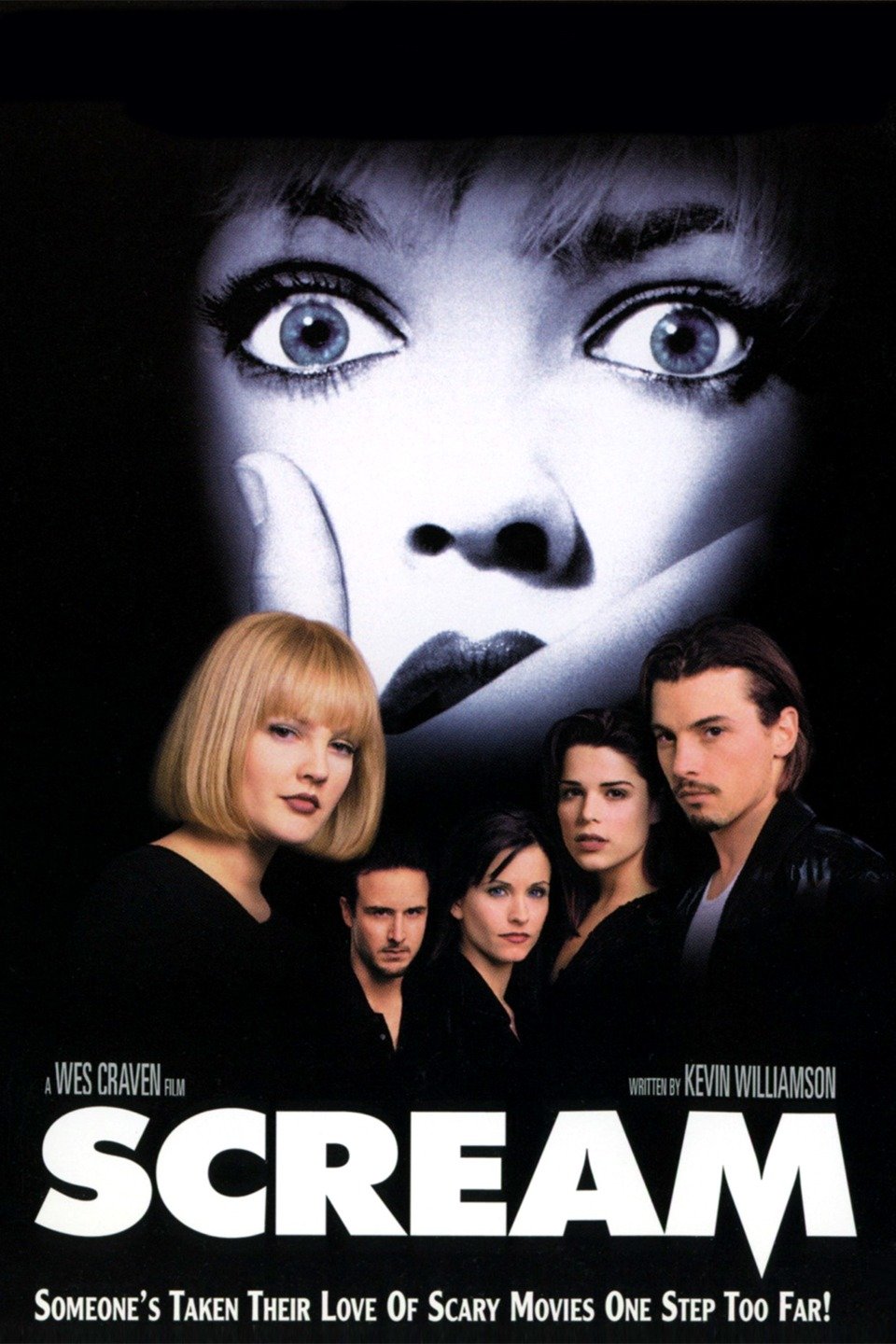 Scream (1996). What’s your favorite scary movie? Master of Horror Wes Craven redefined meta horror with what many argue is the definitive example Scream. Although I prefer New Nightmare to Scream, there is no doubt that Scream is the more popular and truly more meta horror film that not only comments on itself but the slasher genre in general. And I also really like Scream. If for no other reason than the most brilliant, shocking opening to a horror movie ever. Craven took what Hitch pioneered in Psycho and amped up the speed at which a popular actress is killed. Whereas Marion Crane was killed off within the first act. Craven kills off American darling Drew Barrymore in the prologue of the film! Still to this day, the opening scene in Scream is still the most terrifying opening ever. However, after recently watching Suspiria for the first time, I’d like to compare the two in the future to see which is more frightening and effective. With the general public, let alone horror fans, becoming all too knowledgable of the rules of horror films thus possessing the ability to predict the outcome and plot turning points, Kevin Williamson and Wes Craven crafted a horror ilm to change the rules by using them as a plot device to completely deconstruct the American horror film slasher genre. By killing off Drew Barrymore at the beginning, this communicated to the audience that all bets are off. But more than a satirical horror film, this film is equally scary. Whereas Scary Movie (the original title to Scream) would do similar things but through parody, slapstick and dark comedy, Scream maintains a serious tone throughout the film and never falls into parody. This serious approach is one of the reasons why this innovative film performed incredibly well then and still holds up today. Highly entertaining! This film holds your attention from beginning to end through an incredibly well-developed plot, complex characters, and conflict driven by the actions of the characters. This plot is simple–brilliant–but simple. By relying upon the characters to carry the story, the movie contains more subtext and substance than many others. When you have a character-driven plot, you need solid actors to bring it to life. And all the performances by the principal characters are absolutely perfect for the film. Everyone is so committed to their respective characters. Like bookends, the ending and beginning answer one another.Just as shockingly intense the opening scene is, the climax of the film is surprisingly noteworthy as well, and threw audiences for a loop as it abandons more conventional endings.
Movie 31 (10/30)
Hocus Pocus (1993).
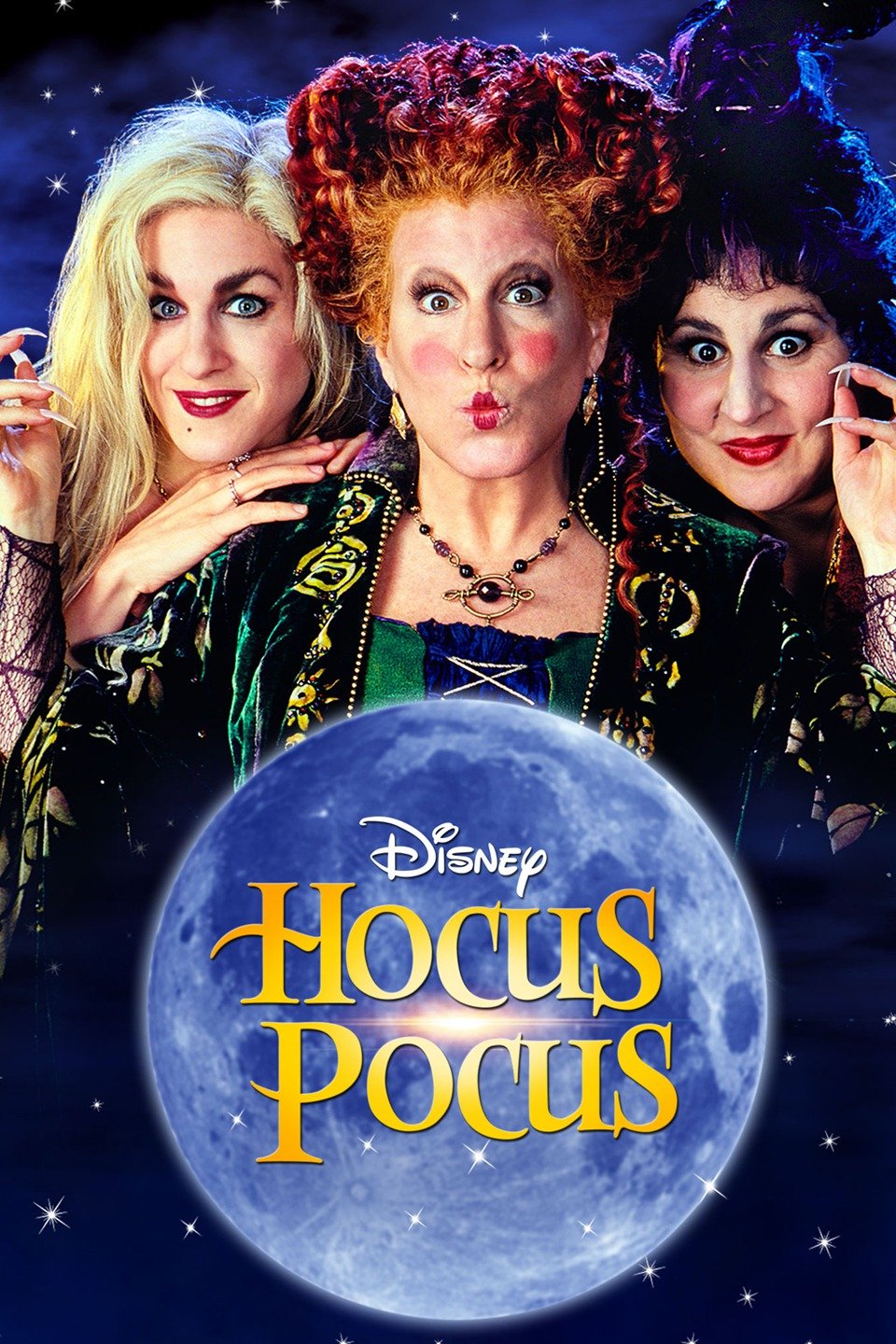 SISTA’S! Tis time! Originally, I was planning to see the new Suspiria on Halloween night, but when I got to the one cinema that was showing it, it was sold out. So, I decided to write up my 31st review on Hocus Pocus, which I saw on Halloween Eve. I am so glad that Disney decided to release my favorite Disney Halloween movie back in cinemas for a limited run in celebration of this cult classic’s 25th anniversary. I don’t know about you, but I don’t think a Halloween season goes by that I do not watch this incredibly funny movie. The first time I saw it, I was in late elementary or early middle school; and ever since then, I’ve watched it every year (and often in April too, because it’s halfway to Halloween). Receiving top billing for this Disney classic is the Divine Miss M Bette Midler as Winnifred Sanderson! Supporting Midler is the endearing Kathy Najimy as Mary and Sarah Jessica Parker as Sarah. When the film was released in summer of 1993, it was pretty much panned by most of the critics. I’m still baffled why Disney chose to release this 100% Halloween movie in the middle of the same summer that Jurassic Park was released. Despite the negative reviews, this simple film may have first been perceived as an ugly ducking, but over the years, it has become a beautiful swan! It found its place quickly amongst the Disney and LGBTQ communities. I am hard pressed to find a member of either community that does not like the film except for Brock of Cocktail Party Massacre who HATES this film. At the end of the day, this is a FUN, magical film! There is literally nothing that I do not like about it. I even dressed as Winnie a few Halloweens ago and received rave reviews. In many ways, our three witches can be viewed as drag queens, and perhaps that’s why these characters resonate with the queer community. The practical effects are great. And I don’t mean great in that the effects in that they were oh so realistic. But they were FUN, they were creative, they were believable within the world that director Kenny Ortega created on screen. This film knew that it was campy, and it went full camp! I love it. Keeping it entertaining and sexy, there is physical comedy, witty humor, two incredible cameos from TV/film royalty and material for kids and adults. And that “I Put a Spell on You” number is among my favorite Disney songs. I had the phenomenal opportunity to hear Bette Midler perform that song in her Divine Intervention concert tour in 2015 tribute to Hocus Pocus. Hearing that song live, in full costume, is a memory that I will have for a lifetime.
Here’s to the 31 horror/Halloween movies that I rewatched or watched for the first time during October. Next year, I will begin with the mid 90s and work my way to present day.
Ryan is a screenwriting professor at the University of Tampa and works in creative services in live themed entertainment. If you like this article, check out the others and FOLLOW this blog!
Follow him!
Twitter: RLTerry1
Instagram: RL_Terry
Thrillz (theme parks): Thrillz.co