“Friday the 13th” Celebrates 40 Years

Ch ch ch, ah ah ah. Celebrating 40 years of terror! The sleepaway summer camp experience was forever changed in the summer of 1980 when a slasher slaughtered a bunch of horny teenagers along the shores of Crystal Lake. Spanning more than three decades and a dozen feature films (too bad it’s not a baker’s dozen, wink), the Friday the 13th franchise made us never look at a hockey mask in the same way after Part 3. Releasing in 1980, Friday the 13th helped shape the modern slasher along side Texas Chainsaw Massacre and HalloweenA Nightmare on Elm Street would arrive in 1984. With his trademark hockey mask and machete, very few have lived to tell the tale of their encounter with one of the most terrifying slashers to ever appear on the silver screen. His body count is in the triple digits! From screen to screen, Jason has gone from the cineplex to your TV and computer by way of interactive media. Unlike the campy-ness of Freddy or more focussed kills of Michael, Jason is by far the scariest of his iconic counterparts.

Variety! That is what you get with Jason as opposed to Michael. Although Leatherface and Michael began the teen slasher genre, it was Jason who revolutionized it by his variety of gruesome methods of killing his victims. Whereas Freddy, much like a cat, loves to toy with his victims before going in for the final kill, Jason is a death machine who wastes no time in taking out all those who stand in his way. Motivated by his death brought about by teenage lifeguards making love while he drown in the murky waters of Crystal Lake, Jason typically murders those who are engaging in promiscuous activities. Sometimes, he will throw you for a loop by taking out someone in a wheelchair or another passerby. He is relentless. And before universe crossovers were commonplace between franchises, Freddy vs Jason got together for a terrifyingly good time in 2003, and then again at Halloween Horror Nights in 2016. While installments 2–12 feature the mask-wearing (burlap sack followed by goalie mask) machete yielding hulking man, the first film features Mrs. Pamela Voorhees (Jason’s mom) as the killer. It’s because of this that the original film feels much different than the others. But it certainly inspired the rest of the franchise. Think of the first one as Hitchcock’s Psycho in reverse,  precisely how Norman thought it was happening. A killer mother who’s overprotective of her son. Although it’s not a “Jason” movie, it did lay the groundwork for the rest of the series and the ending of the film provides the haunting moment that gave birth to the lore and legend of Jason that would carry through the remainder of the films.

Keeping the identity of the killer a secret, until the very end of the film, sets this movie apart from its predecessors Halloween, Texas Chainsaw Massacre, and Jaws. Furthermore, Friday the 13th adds more gore, kills, and gruesome makeup effects that look cheesy today but were quite shocking, back in ’80, to up the ante against the competition. The news of the gruesome effects was so intriguing that horror fans turned out in masses to see the film. By all accounts the characters are not terribly memorable–we certainly don’t have a Laurie Strode–and the killer’s identity isn’t revealed long enough to truly form an opinion; but it’s that jump scare/twist at the end that gave birth to a mammoth of a franchise that has lasted for over thirty years on big and little screens alike.

The perspective of the killer. One of the most memorable elements from the original Friday the 13th is being in the shoes of our mysterious killer. Unlike other slashers that preceded, the identity is kept secret as I mention in the previous paragraph. But it’s HOW this is accomplished that still fascinates horror fans today. We are the killer, or at least, we see through the eyes of the slasher. By Miller writing this element into the screenplay, we are forced to see things from the killer’s perspective in order to relate to and empathize with the killer. Brilliant, really. Although we sometimes assume an objective position just before or during a kill, we spend enough time as the killer’s eyes that we begin to identify with the killer. Not only can we identify with the killer, but because the main characters are teenagers, and slasher horror films are particularly of interest to teens, teenagers can easily relate to the characters in the movie. Essentially, we have a perfect combination of relatability in this film. Audience members are forced, at times, to view characters and events from the killer’s perspective but many in the audience can and will concurrently identify with the main characters. A great way to scare the audience is to place them in a situation that is close enough to reality that the prospect of something similar happening is terrifying.

First appearing in Part II but not fully taking his iconic form until Part III, Jason Voorhees has endured as one of the most recognizable horror villains who still terrifies people today. Furthermore, he has evolved to represent various thematic symbols that provide ample opportunity for analyses and close readings. While Freddy’s motivation is clear–revenge, plain and simple but still solid–Jason’s motivation(s) is a bit more complex. His mother’s motivation is clear; much like Freddy, her motivation is revenge against the camp and those who represent the horny teenagers who allowed her son Jason to drown while “getting it on,” so to speak. Jason, on the other hand, demonstrates motivations that must reach beyond classic revenge. For starters, we cannot ignore his physiological deformities that undoubtedly affected his emotional and psychological health, predisposing him to atypical or abnormal behavior prior to his untimely drowning. Judging from the misty flashbacks in the original Friday the 13th while Mrs. Voorhees is delivering rushed exposition, we can gather from Jason’s shadowed body that he is likely afflicted with hydrocephalus, a condition that traps excess fluid in the cranial cavity that compresses the brain causing a significant loss of neural activity (essentially, born with brain damage). Beyond the internal problems from hydrocephalus, this abnormally developed cranium often causes the eyes to be widely spaced and the subject typically has an enlarged skull.

Now that we have established his cognitive and physiological disabilities, we can explore just how the aforementioned plus the persistent taunting, teasing, and physical abuse from the other campers in 1957 all formed the perfect storm to motivate Jason to be the unstoppable slasher we know today. If we follow the lore of the later films, we are prevued to Jason being forcibly thrown into the lake where he eventually drown while the camp counselors were engaging in the horizontal mamba. There is sufficient evidence from the cannon of Jason films that he likely suffers from schizophrenia. As many of us are aware, this emotionally and cognitively debilitating disease causes sufferers to hallucinate imagery and voices that are controlling their mind. Jason’s ability to communicate with his mother and Mrs. Voorhees’ ability to communicate with her son, is also evidence that the schizophrenia was passed from mother to son. In real life, this disease can be hereditary. So, it is not a far reaching plausible idea to hypothesize that Mrs. Voorhees passed her schizophrenia on to Jason. But unlike mother, Jason suffered from additional disabilities that increased the intensity of the cognitive disease.

Formerly known as multiple personality syndrome, dissociative identity disorder (DID) is another affliction that Jason demonstrates through his abnormal behavior. DID is a severe psychological disorder that fragments an individual’s personality into two or more distinct personalities (or identities) coexisting, switching from one to another. Think of it as two or more people inhabiting the same body. Although one can be predisposed to DID, as Jason likely was, this disorder is often brought on by repetitive childhood trauma (which Jason experienced). Perhaps sometimes “a cigar may only be a cigar” but in this case, a mask is more than a mask. The trademark hockey goalie mask! What is it? It’s a mechanism or tool that enables Jason to disconnect himself from the murders he commits. By wearing the mask, he figuratively dissociates himself from the gruesome murders. The wearing of the mask is a direct result of DID because the mind processes the mask as conduit through which to engage in abnormal behavior because the abnormal behavior cannot be reconciled against the true self. In a sense, the mask allows for active cognitive dissonance because the behavior is opposite of how the brain wants to process information or experiences. This dissociation with the violent behaviors, enables Jason to continue on his murderous campaigns without his conscience ever prompting him to question his choices. Without the mask, he is vulnerable and may even question what he is doing; but with the mask, he is a killing machine.

The setting of Friday the 13th is also something of note. Much like Hitchcock did with the privacy of one’s bathroom in Psycho, Miller set the events of the original at a summer camp in order to shock the mind because it’s an innocent place that is about to play host to something traumatic and uncanny. Kids and teenagers attend sleepaway summer camps every year. They are traditionally seen as places where you form platonic or romantic relationships with your fellow campers or counselors. They are places of innocence that get a violent treatment in this film. Unlike Psycho where we are not prevued to the violent past of the iconic location and thus proceed through the story with our guard down, we are immediately introduced to Camp Crystal Lake’s violent past between the opening scene and the townsfolk. So, we are primed to expect something macabre at the camp. This does one very important thing. The camp immediately possesses an eerie feel, a feeling of dread of what is about to happen. The once popular summer camp falls prey to something sinister that makes the grounds incredibly creepy. Loss of innocence can be read as a theme throughout the films because we have an innocent camp that is plunged into violence, camp counselors losing their virginity, or campers engaging in dangerous behaviors. When innocence is lost, that’s when the violence begins.

Violence and gore are commonplace today (perhaps to the detriment of horror films as it has become cliche), but back in 1980, most audiences were not expecting to see closeups of murderous acts, even after Halloween and Texas Chainsaw Massacre. Despite the cheesy nature of the practical effects with blood bags and prosthetics, the violence in Friday the 13th was unexpected. In many ways, this film revolutionized the genre. But the F13 franchise didn’t start out with overstuffing itself with gore. The body count in the original is the least of the series, but it is certainly the favorite in the series by a moderately wide margin, according to my personal poll and other polls online. Therefore, we have to draw the conclusion that it’s not Jason’s kills or the gore that prompt audiences to like one over the other. If seeing Jason kill people was what audiences were looking for, then the original would not be the favorite. Now, don’t get me wrong, Jason has some pretty awesome kills and he’s fun to watch; however, don’t assume that it’s the kills or violence themselves that make a horror movie a favorite. Interestingly, the original is quite tame compared to the rest, but it’s still regarded as the crowd favorite.

If you follow the horror community on #FilmTwitter and #HorrorTwitter, you’ve likely heard of the fight over the rights to the Friday the 13th name between the original writer Victor Miller and Sean S. Cunningham. As to not complicate this story with the details, the long and short of it is the copyright on the Friday the 13th title is expiring in 2020, and according to “Mickey’s Law” (an unofficial name for what I am about to describe because it was started by the Walt Disney Company in order to continually retain the rights to Mickey), it is time for the rights to be renegotiated or the name and original plot fall into the public domain. That’s right. This iconic name Friday the 13th is on the verge of belonging to the public. Miller urges that he has the rights to the name because the title along with the story was his original concept. Cunningham argues that Miller’s screenplay was work-for-hire. Under work-for-hire, Cunningham retains the rights and is able to make decisions with it. This is a classic IP lawsuit. But one that has major implications. Essentially, Miller wants to be (and in my opinion, rightly so) compensated for using the names Friday the 13th and Jason in future films and interactive media. While he does not have the rights to Jason’s trademark look, he could own the name itself. This legal battle surfaced after the launch of the recent Friday the 13th video game, and caused the next installment in the long-running franchise to be put on hold. The decision will likely boil down to whether Miller was hired to write the original screenplay or he developed it himself then sold/optioned it to Cunningham.

It’s been 40 years since we were first introduced to Camp Crystal Lake, and the horror landscape was forever changed. Mrs. Voorhees and Jason have been terrifying audiences since before I was born, and will continue to cause you or your kids to think twice about going to summer camp. I think summer camp was made more fun because there is a little piece of you that thinks Jason could be lurking outside your cabin. I don’t always ch, ch, ch but when I do, I always ah, ah, ah.

Happy Friday the 13th!
This image has an empty alt attribute; its file name is profile_pic.jpg

Ryan teaches screenwriting and film studies at the University of Tampa. If you like this article, check out the others and FOLLOW this blog! Interested in Ryan making a guest appearance on your podcast or contributing to your website? Send him a DM on Twitter or email him at RLTerry1@gmail.com! If you’re ever in Tampa or Orlando, feel free to catch a movie with or meet him in the theme parks!

Follow him on Twitter: RLTerry1

“Wendy” mini movie review

Visually stunning, but narratively confused. From Benh Zeitlin, the writer-director of the Beasts of the Southern Wild, comes Wendy, a reimagining of Wendy from the J.M. Barrie classic Peter Pan. While this film does touch on and integrate the beloved themes of the story of the boy who wouldn’t grow up, the themes lack consistency because the plot is all over the place. Clearly this film is a passion project of Zeitlin’s that undoubtedly contains ample meaning behind every scene; unfortunately, that meaning and purpose are largely lost upon the audience due to the complete chaos that unfolds from beginning to end, a chaos for which you will likely need a dramamine. You still get the exploration of the idea of neverending childhood, but the plot and dialogue posit far too many questions that seldom get answered through diegetic exposition. The references to the Peter Pan, with which we are far more familiar, will bring a smile to your face and serve as motivation to keep going on this journey, but those are few and far between. And when we do get a familiar reference, it’s completely changed. For example, “when the first child laughed for the very first time, the laugh broke into a thousand pieces, and that was the beginning of Mother.” No, you didn’t misread that quote from the movie, instead of the laugh being the origin of faeries, it is the origin of the protector of the unnamed island that serves as our Never Neverland. In some ways, Mother is a Tinkerbell like character, but in the form of a giant fish-like creature. Ultimately, this film appears to be confused as to what it wants to be. A lot of heart-felt ideas, but poorly executed.

Just who is the audience of this film? It’s too edgy for kids but not edgy enough for adults; furthermore, the allegorical themes are difficult for adults to understand, let alone children. Adults will be able to identify the commentary on what’s lost and gained on the journey from child to adult, but everything else is lost in the wandering plot and story. So what does work? The cinematography and score are both outstanding! Truly this is a beautiful film that contains thoughtful artistic elements that will capture your imagination–but then give it nothing to do. In terms of the child actors, every performance is great! I was thoroughly impressed with the level of actor talent across the board. In particularly, our two lead characters Wendy (Devin France) and Peter Yashua Mack) deliver excellent performances. One thing is for sure, there is a lot for audiences to unpack here, but this reimagining of Wendy and Peter Pan will likely leave most audiences unsatisfied and disappointed.

Ryan teaches screenwriting at the University of Tampa. If you like this article, check out the others and FOLLOW this blog! Interested in Ryan making a guest appearance on your podcast or contributing to your website? Send him a DM on Twitter or email him at RLTerry1@gmail.com! If you’re ever in the Tampa area, feel free to catch a movie with him!

Follow him!

Twitter: RLTerry1

Instagram: RL_Terry

Disney-Pixar’s “Onward” Movie Review

You are going to catch feels! Disney-Pixar’s Onward is a powerful animated motion picture that will take you on an exciting and emotionally charged journey. There is such a tremendous beauty in the simple storytelling that explores familial relationships through the conduit of a fantastical quest. Onward reminds me of a classic Spielberg-like coming-of-age action-adventure movie with heart. Interestingly, I am reminded of many DreamWorks movies, including How to Train Your Dragon, in the overall look of the movie. It’s almost as if Pixar saw what DreamWorks was doing right, and in a very Apple way, set out to do it better. Onward is what you get when you take the visual design and themes of DreamWorks movies and pair them with a quintessential Pixar story. Much like Coco provided us with a compelling story that would forever change how we view family tradition and history, this movie explores the relationship between brothers on their quest to bring their dad back from the dead for one day. In a day and age in which relationships between brothers or sons and fathers seem to be largely absent from themes in movies, this is a refreshing look at these relationships in a positive, healthy light. While this is an animated motion picture, it is every bit pure cinema as a live-action counterpart. The great Cecil B. DeMille stated, “the greatest art in the world is the art of storytelling,” and Onward is a great story for the whole family! You will encounter joy and warmth in the plot and characters as you set forward and press onward in your adventure along with Ian and Barley. Unlike a typical action-adventure movie, this one does take a little while to get up to speed. But once that second act kicks into gear, you will experience a thrilling good time that will have you laughing and crying in true Pixar fashion.

Two teenage elf brothers, Ian (Tom Holland) and Barley (Chris Pratt) Lightfoot, go on a journey to discover if there is still a little magic left out there, after receiving a mysterious gift from their mother on Ian’s birthday, in order to spend one last day with their father, who died when Barley was little and before Ian was born (IMDb).

Not your usual fantasy movie! While Onward starts out with a voiceover narration providing exposition against the backdrop of a fantastical world of elves, wizards, mythological creatures and more, the prologue lays out the historical piping to provide important context for the modern story that is about to unfold. We are told that the world was once full of magic, but over time, the industrial revolution and invention of technology took the place of magic. Eventually the world simply forgot about its very existence. I love this setup, because it’s a mirror of our own world in which technology has radically altered how we interact with the world around us and even each other. When we rewrite or forget the past, it has a profound impact upon our present and future. I appreciate how this film highlights the importance of not forgetting the past, not forgetting where we came from. Looking to the past, even recent past, can help to shift our focus from ourselves to others. Sometimes we can even find a whole new appreciation of the present by stepping back and realizing the indirect meaning behind actions that have impacted our growth and development. One can even read this as a commentary on art versus commercialization. For the sake of cost and simplicity, much that was once crafted is now churned out on an assembly line. We forget the importance of personal investment of time and energy into everyday elements. Perhaps we can even liken this to film versus digital. Many different ways of reading this analogy!

I often comment in my screenwriting class at the University of Tampa that some of the best movies out there have simple plots and complex characters. For a visualization of what that looks like, think of that little black dress or classic black suit that lives in many of our closets. Those simple outfits can be accessorized in so many different ways to make a lasting statement or impression. There is a beauty in the simplicity. Same with the story in Onward. At its core, this movie is about a quest to find the long lost Phoenix stone in order to bring Ian and Barley’s dad back to life for one day. But along the way, our two central characters encounter conflict after conflict that reveals to us the various layers of our characters. We learn so much about their history, goals, needs, and more in how they each uniquely respond to the same obstacles. Lasting conflict can often be achieved by giving two characters the same goal, but they each have vastly different methods for achieving the goal. This concept is played out over and over again throughout the movie, and it works incredibly well! I also appreciate this movie for just how funny it is! Honestly, this is probably one of Pixar’s funniest movies in a long time! All the action and emotional elements of the Onward are superbly satisfying and work completely in sync, just like all the section of a symphony playing in perfect harmony!

Each and every obstacle that creates conflict between our two brothers moves the story forward; never once do we reach a point in the plot in which we are spinning our figurative wheels. Representing a microcosm of a larger plot structure, each and every scene in a movie is made up of a setup, conflict, and resolution. And the resolution (be it negative or positive) points to the next scene, and the following scene does the very same. Every scene is a piece of the track that points to the end of the movie. With a tight script, Onward is consistently moving us forward to the showdown and realization of this movie. What makes the conflict we witness in the movie all the more relatable is just how common, everyday much of it is. We may be in a world of fantasy, but the problems experienced by the brothers are the same as the ones we experience in real life. Most of us with siblings don’t always get along–certainly in our growing up years, it can be that way–but this movie is a testament to the importance of connecting and appreciating our siblings for what they teach us and how they impact our lives even when we don’t realize it. For those whom may have lost a parent, often times, you can find your parent in the life of your sibling and vice versa. Loving parents leave a legacy in their children.

Visually, the movie is stunning! I love just how “not” Pixar it looks. Ever since Pixar started striving for quasi photorealism, I’ve not been as impressed with the animation. For example, I prefer the look of Toy Story 3 to Toy Story 4. The production design and animation in Onward reminds me of much of what DreamWorks has produced over the years in terms of themes and design. Perhaps DreamWorks will see Onward and think to themselves, “gee, they took a page from our playbook and did it better.” The plot is tighter, the comedy is better developed, and the characters more fleshed out. Essentially, this movie indirectly highlights what is missing in many DreamWorks movies, and that is stronger screenplays. Onward delivers an animation design that is rich with everything that you want to see in a world of fantasy! So many fantastical creatures that feel right at home within their world. And this world feels incredibly believable. In many ways, it looks just like our world in which the modern can be right up next to the ancient, where sometimes historical buildings are at risk for being torn down to make way for something new. Looking across the landscape, you will be delighted at the attention paid to effective world building and the little things that make such a difference.

Don’t think of this as Pixar’s throwaway movie, as some have, this is an outstanding animated motion picture that delivers an engaging adventure paired with an emotional roller coaster that will have you laughing and crying.

Ryan teaches screenwriting at the University of Tampa. If you like this article, check out the others and FOLLOW this blog! Interested in Ryan making a guest appearance on your podcast or contributing to your website? Send him a DM on Twitter or email him at RLTerry1@gmail.com! If you’re ever in the Tampa area, feel free to catch a movie with him!

Follow him!

Twitter: RLTerry1

Instagram: RL_Terry

Brahms: The Assistant 2 mini movie reviews

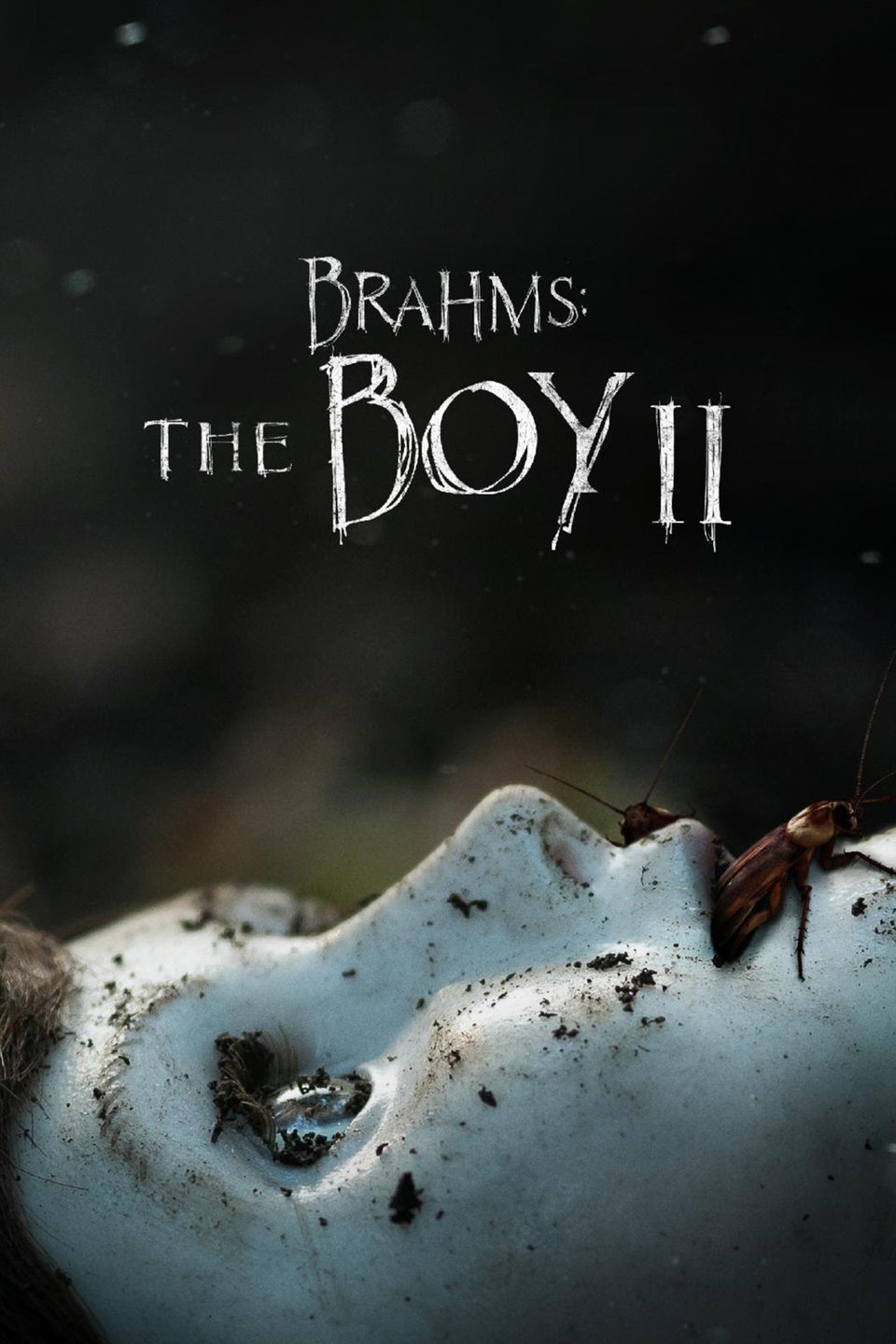
While the ending of Brahms: the Boy II may ruin the rest of the movie for you, at least you can make it to the end, because The Assistant will put you to sleep faster than Ambien. Much like with the first The Boy, this one also has a fantastic setup, but the outlandish, from-out-of-left-field, bizarre showdown will undo any and everything done well in the first two acts. The scariest part of the movie is the very beginning when the catalyst for the entire story occurs. Even though horror sequels do not tend to be as strong or as appealing as the original–and that’s assuming the original IS good, which The Boy is not–there are surprises such as Ouija: Origin of Evil and Annabelle: Creation, both of which were far superior to the original. The aforementioned are excellent horror films! This is important to know because that is why I was cautiously optimistic for Brahms: the Boy II. Even though the first one was bad, there was hope that the sequel would be good, especially after the trailer wasn’t half bad. Needless to say, I was completely wrong. The same problems that plagued the first one, plague this one too. The writer certainly knows how to setup a story, even deliver some tension-filled conflict, but then drops the ball and get lazy in the third act. I don’t think anyone truly went into this movie wanting a compelling story, thoughtful social commentary, or anything along those lines, but it billed itself as a fun movie. And it was not. If your movie isn’t going to be “good,” then it at least needs to be entertaining all the way through. Although, this movie was far more entertaining and engaging than The Assistant. And that’s not saying much.

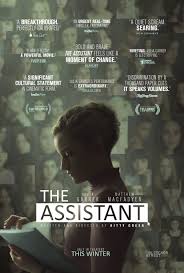
The Assistant is one of those intimate dramas that undoubtedly began with the intention to explore the sexist nature of office culture, the film industry, and why whistle blowers are afraid to come forward. There is a thoughtful, relevant, timely topic in this film that needs to be dramatized more, but instead this one seeks to put you to sleep instead because the screenplay gives these characters nothing to do, no goals, or any meaning behind the action plot. Not much of a plot to begin with. With such an opportunity to craft a thought-provoking film WITH a compelling plot, I wonder why it wound up just feeling like a “day in the life of” and that’s pretty well it. As I tell my student, “a day int he life of” is not a plot in and of itself. Interestingly, the trailer made this one look like Office Killer, but it’s definitely not horror nor even horror-adjacent, in the conventional sense. This same story would have worked so much better had it gone the horror route to comment on office culture like the neo cult classic Office Killer. Thankfully, I watched The Lodge before these two movies the week they all released, and that film helps to make up for the time spent with these two.

Ryan teaches screenwriting at the University of Tampa. If you like this article, check out the others and FOLLOW this blog! Interested in Ryan making a guest appearance on your podcast or contributing to your website? Send him a DM on Twitter or email him at RLTerry1@gmail.com! You can catch Ryan most weeks at Studio Movie Grill Tampa, so if you’re in the area, feel free to catch a movie with him!

Follow him!

Twitter: RLTerry1

Instagram: RL_Terry

“The Lodge” Horror Film Review

Immersive and utterly terrifying! After a dismal start to 2020 horror, The Lodge redeems the genre in a nightmarishly masterful story that will haunt you long after you leave the cinema. And you know you are in store for a wild ride with the Hammer Films logo at the beginning! This film’s ominous feeling of dread isn’t the result of any violence or gore, but in just how uncomfortable you will feel in virtually every scene thanks to the brilliant atmosphere crafted by  directors Veronika Franz and Severin Fiala along with their cinematographer Thimios Bakatakis and the haunting score by Danny Bensi and Saunder Jurriaans. With all the “hands in the pot,” so to speak, one might think that the soup might get spoiled as the old maxim suggests–not so. All the technical elements work together seamlessly to bring this story of the far-reaching effects of trauma, guilt, and isolation to life when one loses a parent. While Wes Craven’s horror masterpiece Scream still ranks the highest for me in terms of the most shocking and effective openings of all time, in not only horror, but in cinema period, the opening of The Lodge culminates in something big and scaring! And it’s that moment that sets our cast of characters on a journey that will test the limits of their sanity. The exploration of the limits of sanity through the lenses of loss and trauma is visualized in a very Shining manner, with influences from Hereditary as well. Both of these films clearly influenced the feeling and look of this film. Thankfully, these influences never take the focus away from The Lodge‘s original story. The American horror film is the best genre for forcing us to face our most primal fears and those that are created by traumatic experiences in our past. Ghosts of the past have a way of never truly going away.

During a family retreat to a remote winter cabin over the holidays, a father (Richard Armitage) is forced to abruptly depart for work, leaving his Aiden (Jaeden Martell) and Mia (Lia McHugh), his two children, in the care of his new girlfriend Grace (Riley Keough). Isolated and alone, a blizzard traps them inside the lodge as terrifying events summon specters from Grace’s dark past (IMDb). 

The production design and cinematography are truly standout technical elements in this incredibly uneasy experience. If you were to combine the lines and angles of The Shining with the mood and camera movement of Hereditary, then the product would be the aesthetic of The Lodge. I absolutely love the wide shots accentuating the high ceilings, creatively breaking the “rule of thirds,” and closeups of the miniature cabin and figurines. By blocking the scenes so that the architectural and interior design lines of the house frame out the characters and locations, our focus is naturally drawn to a particular element in the scene that the camera often lingers on as unsettling music plays. Those lingering moments contribute to the rising tension and create a hyperawareness that assaults our very senses. I love how the feeling of claustrophobia is crafted out of the large houses and wide sweeping landscape of the mountain retreat. So much attention was paid to the stylistic approach to realizing this story for the screen. You could remove all the dialogue, and understand everything that is happening, and exhibit the emotional reaction that the writers and directors intended. That is the mark of superb visual storytelling.

Catholic iconography adorns many of the walls of the the family’s main house as well as the isolated vacation lodge. We spend most of our time in the lodge, but the houses at the beginning of the film also contain much of the same decor. Without need of exposition through dialogue, the various iconography paints an image of a Catholic family that has been split. Tho, we are never given the details of the separation between the father and the mother of his children (played by Alicia Silverstone), infidelity is hinted at because of the father’s girlfriend that he is planning to marry even before his divorce is finalized. It’s this urge to hasten the divorce that nullifies any hope of reconciliation between Richard (the father) and Laura (the first wife), and ultimately drives Laura to respond in a–how should I say–rash and irreversible manner that is seen as the unpardonable sin by the Catholic church. Her decision is like a rock tossed in a still, glass-like pond that is the catalyst for ripples that radiate for hundreds of yards. It’s no secret that divorce is also highly frowned upon by the Catholic church, so the domestic struggles and the fallout therein creates strife within the minds of the family. A disconnect, if you will, between what they believe and what they are experiencing. Interestingly, suicide is never referred to as an unpardonable sin in the Bible, nor is any one sin greater than another. But Jaeden and Mia suffer from the misleading interpretation many leaders in the Catholic church preach to their congregations. The symptoms of trauma exhibited by Aiden and Mia stem from the void that the loss of a parent and the disruption of life often causes. So, the decorations in the houses serve as a contrast to what is going on. And in more ways than one.

The soon to be fiance Grace is left to care for the two children at the family lodge after Richard has to return to the city for work. And she arrives with a lot of religious baggage of her own caused by a destructive cult masquerading around as a form of Christianity that she “escaped” when she was a child. The religious iconography in the lodge ignites a constant barrage of flashbacks to the psychological abuse during her childhood by her father, the leader of the cult that warped the Bible and belief therein for sadistic purposes. These masochistic and sadistic practices included misinterpreting the Bible in such a way that her father engaged in guilting and forcing people into experiencing physical pain and mental anguish over sin in order to be forgiven. Talk about trauma on the mind and soul. In addition to the emotional baggage of her past, Grace is also dealing with the hatred of the children directed towards her in rather sadistic fashion because they blame her for the divorce that led to the sudden death of their mother. We are often predisposed to thinking of step mothers as villains, thanks to Cinderella. But in this case, the tables are turned for much of the film. To talk about just why this is, would get into spoiler territory, and it’s best to go into this movie as blind as possible.

You will be in a suspended state of unease and high tension the entire time. Just when the tension releases, another moment drives it back up again. The horror of this film does not come from the raw imagery but from the psychological games on display that suck you in to vicariously experience the utterly terrifying, mentally scaring conflict displayed on screen. The Lodge is highly disturbing and will continue to haunt you long after the credits role.

Ryan teaches screenwriting at the University of Tampa. If you like this article, check out the others and FOLLOW this blog! Interested in Ryan making a guest appearance on your podcast or contributing to your website? Send him a DM on Twitter or email him at RLTerry1@gmail.com! You can catch Ryan most weeks at Studio Movie Grill Tampa, so if you’re in the area, feel free to catch a movie with him!

Follow him!

Twitter: RLTerry1

Instagram: RL_Terry