Surprisingly gr80! (Okay, I’ll see myself out now, haha). No, seriously, 80 for Brady is way better than it had any right to be. That’s not to say I expected it to be bad–quite the contrary–I expected it to be cute and mildly entertaining. But in a twist (much like the showdown in the movie), it delivered a terrific, highly entertaining story with heart in the vein of 9 to 5 and Barb and Star Go to Vista Del Mar. One could even liken it to a feature length episode of The Golden Girls. And you know what? It’s inspired by a true story!
Four best friends live life to the fullest when they embark on a wild trip to see their hero, Tom Brady, play in the 2017 Super Bowl.
In a cinematic landscape of bloated, poorly paced, or intentionally pretentious films, 80 for Brady is a refreshing respite from the proliferation of 2.5+ hour pictures that so often forget simple plot, complex characters. The plot for 80 for Brady is simple, but the cast makes this one that will earn rewatches for years to come. While there is much to praise, the movie is not without its diegetic shortcomings. Where the movie could have been stronger is in the stakes and crises. The stakes and never quite high enough, despite some heavy material or consequences being hinted at, and the crises are never hopeless enough. There should always be that moment or two in which it looks as if the central characters are going to lose or the movie depicts them going to extraordinary or painstaking lengths to achieve the goal. In other words, the fabulous ensemble cast of characters needed greater opposition between them and their goal.
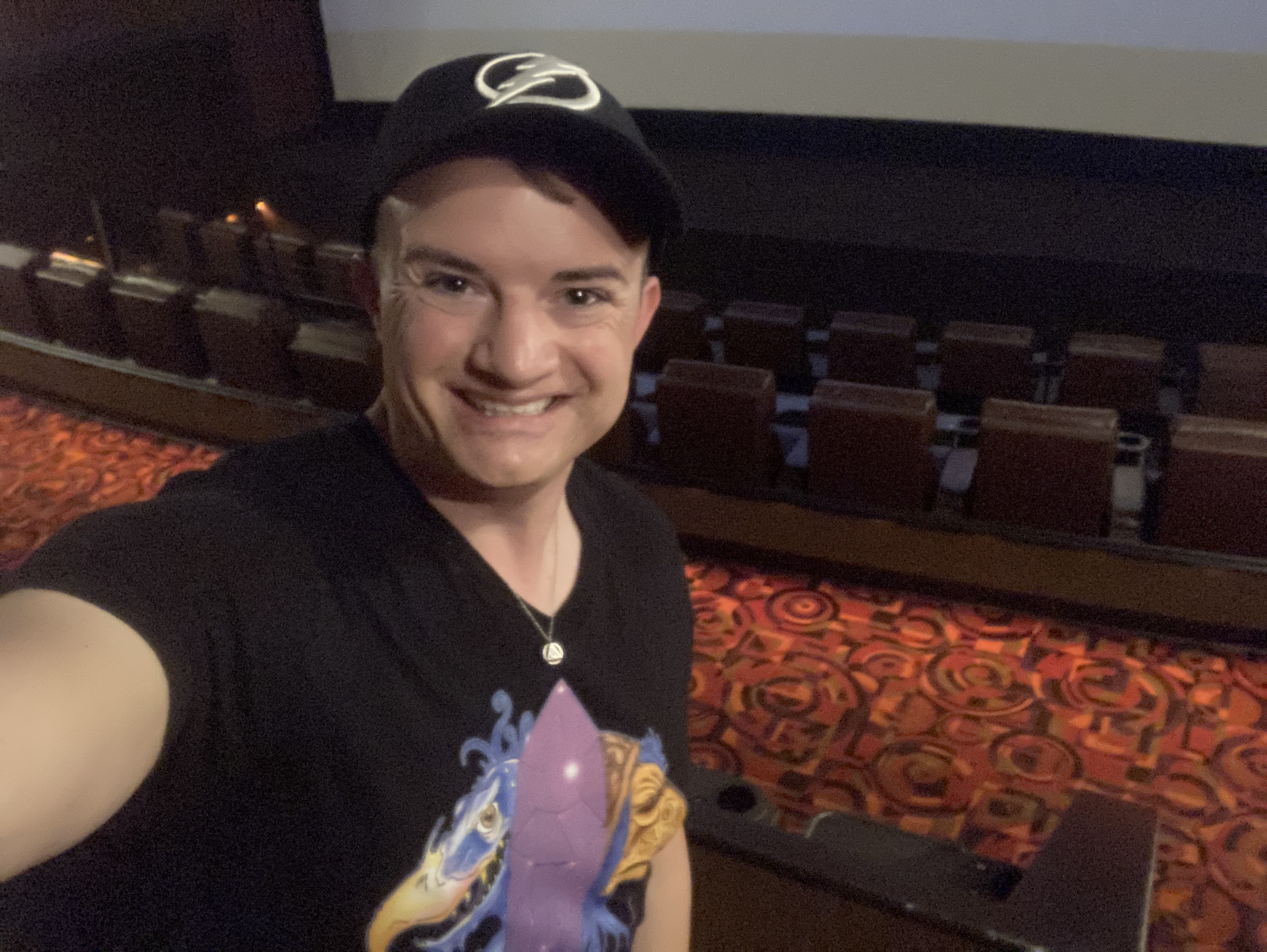
At the screening I attended, there was an audience member that was over 100 years old and she and her friends from the retirement home just had to see this movie! In fact, they are Tom Brady and Rob Gronkowski fangirls. Many of them has not been to a movie theatre in decades. But this movie inspired them to enjoy the cinematic experience once again.
Ryan teaches Film Studies and Screenwriting at the University of Tampa and is a member of the Critics Association of Central Florida and Indie Film Critics of America. If you like this article, check out the others and FOLLOW this blog! Interested in Ryan making a guest appearance on your podcast or contributing to your website? Send him a DM on Twitter. If you’re ever in Tampa or Orlando, feel free to catch a movie with him.
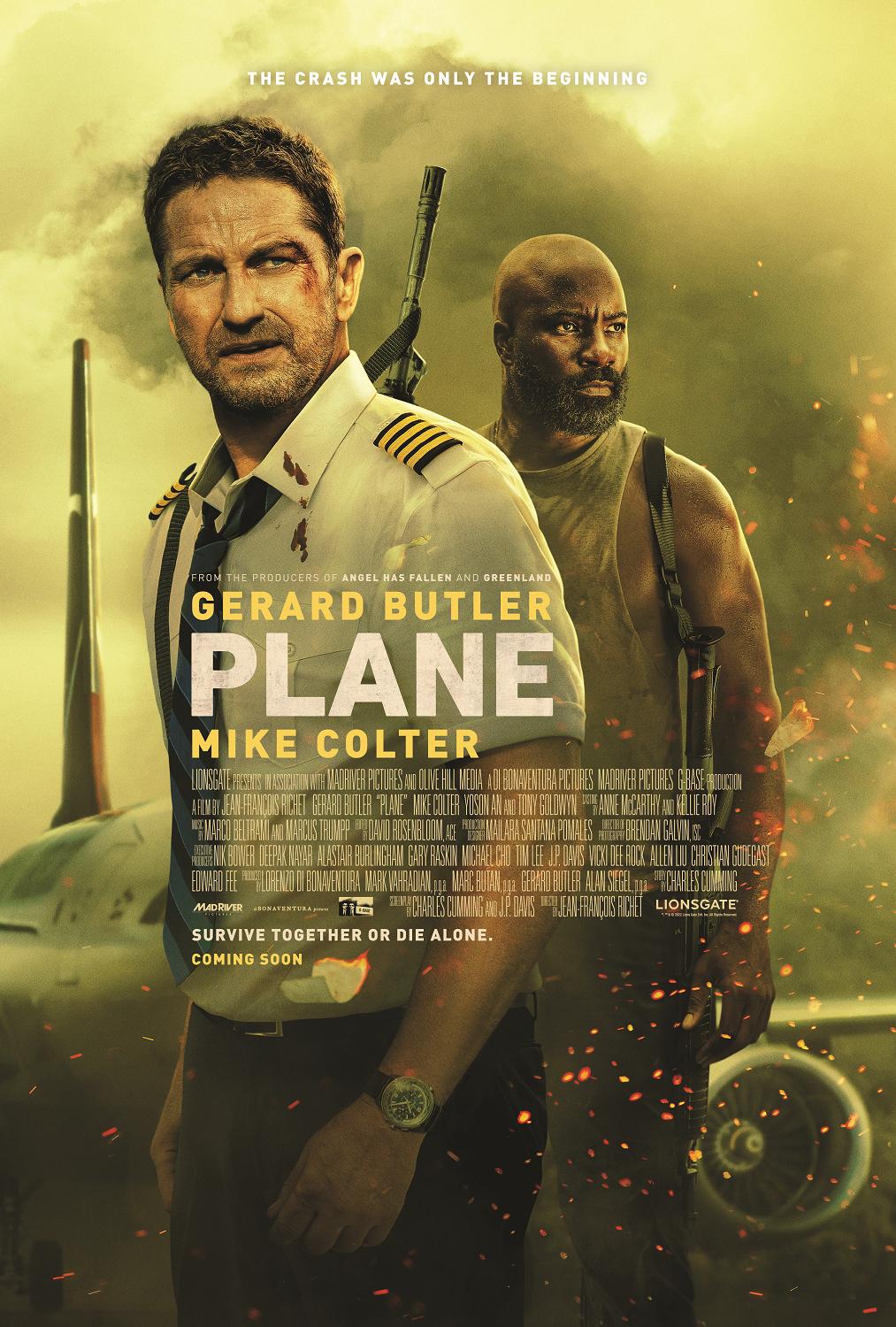
Not too plane; this non-stop action-adventure has some flavor. Received my annual dose of mindless disaster movie fun in the Gerard Butler captained Plane. Schlocky movies work best when they know precisely what they are, and rock it. Which is precisely what we have here, a sufficiently entertaining over-the-top disaster/rescue movie that understood its flight plan, and stuck to it.
Pilot Brodie Torrance (Butler) saves passengers from a lightning strike by making a risky landing on a war-torn island — only to find that surviving the landing was just the beginning. When dangerous rebels take most of the passengers hostage, the only person Torrance can count on for help is Louis Gaspare (Mike Colter), an accused murderer who was being transported by the FBI.
From takeoff to landing, Plane is exactly what you need to reset your cinema palate from the awards contender-heavy autumn to prepping for what 2023 cinema has in store for us. Strap in for Gerard Butler and Mike Colter to take you on a white knuckle adventure filled with CG squibs and death defying action. To be honest, as moderately enjoyable as the movie was, with some Die Hard dialogue and one-liners thrown in there, it would have increased the entertainment value significantly. All you need to know is that the movie is fun! Also, never forget that it’s perfectly fine for a movie to be entertaining for an hour-and-a-half and that’s it. Not everything needs to be deep, inspirational, thoughtful, avant-garde, or provocative. It’s when movies that are clearly schlocky try to be something grander, that they crash and burn. Think of Plane as some good ol’ junkfood. Perfect for one of those weekends wherein the weather is cold, snowy, or rainy.
Ryan teaches Film Studies and Screenwriting at the University of Tampa and is a member of the Critics Association of Central Florida and Indie Critics of America. If you like this article, check out the others and FOLLOW this blog! Interested in Ryan making a guest appearance on your podcast or contributing to your website? Send him a DM on Twitter. If you’re ever in Tampa or Orlando, feel free to catch a movie with him.
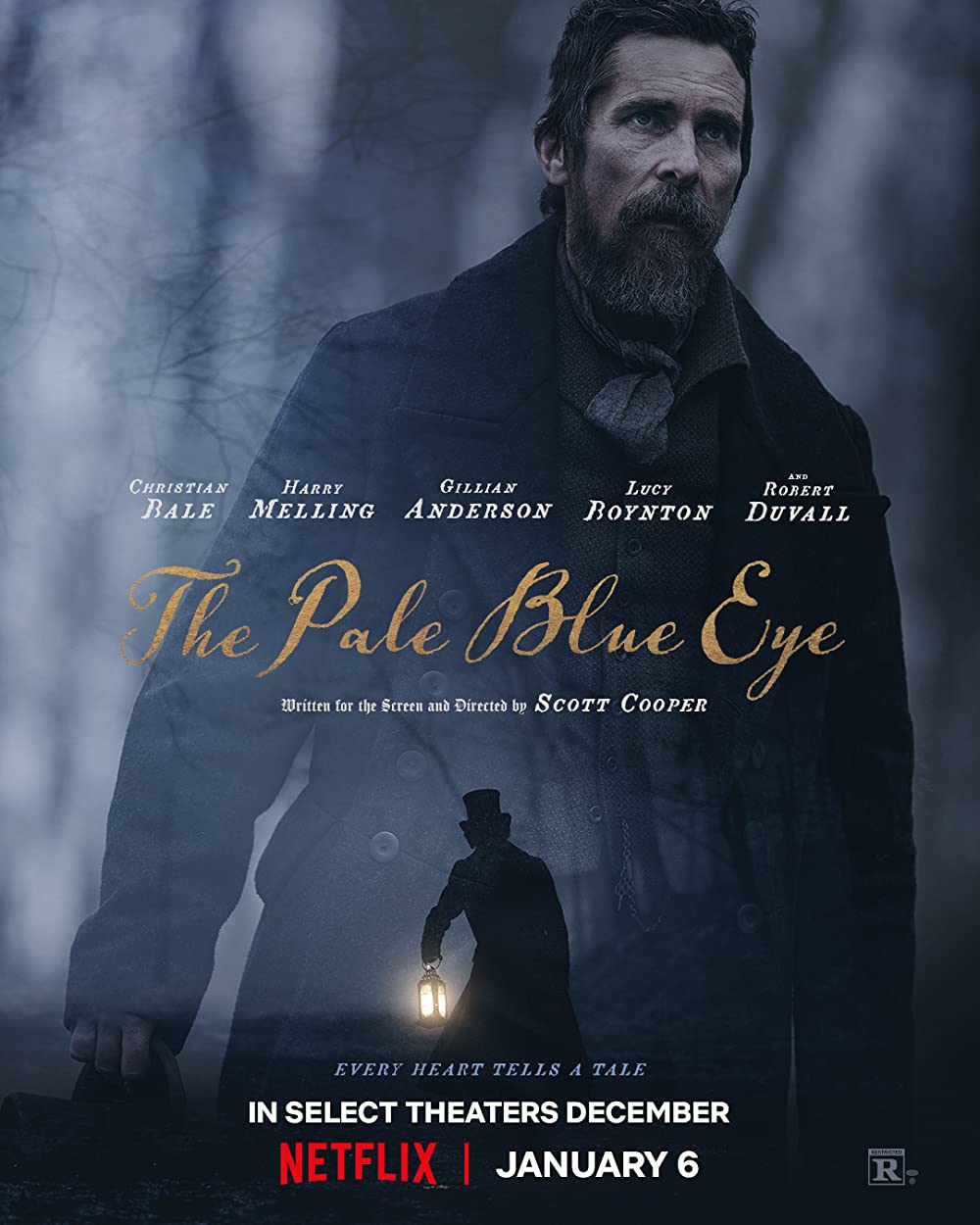
The unsettling atmosphere will transport, while the macabre mystery intrigues. Scott Cooper’s The Pale Blue Eye is both a period murder-mystery drama and serves as an imaginative origin story for Edgar Allan Poe. With skeletons in every character’s closet, the enigma of a mystery will beckon audiences to solve the mystery along with Christian Bale’s character. Based on the novel by the same name, the film adaptation is in the same vein as The Cursed from earlier this year and Antlers from last year. Both of which are among my favorites of the last two years. So, if you liked either of those films, you will mostly likely enjoy this one as well. In addition to the aforementioned, the film also reminds me a little of Tim Burton’s Sleepy Hollow (1999). Unlike the film’s to which I have likened this one, The Pale Blue Eye is heavier on mystery than it is horror. While Edgar Allan Poe’s short stories and poems have been the inspiration for hundreds of films, and his writing itself, foundational in the development of the American Horror Film (expressionism+surrealism+Freud+Poe), this is one of few films that feature Poe himself–or rather–a fictionalized version of the towering literary figure. What I appreciate about this imaginative origin story is showing a different side to Poe–a side that is actually funny and quirky. Because this is a mystery, I am unable to discuss details as that could spoil important plot points. But it’s important to note that this film’s mise-en-scene strikes a balance between one that is concerned with atmosphere and proper plotting. So often, films that are heavy on atmosphere are lacking in the story-structure department, but not this one. Despite the runtime of 2-hours, no scene ever lingers too long. If you enjoy period murder-mysteries, then you’ll undoubtedly enjoy this film. The Pale Blue Eye hits cinemas on December 23rd and Netflix on January 6th.
Ryan teaches Film Studies and Screenwriting at the University of Tampa and is a member of the Critics Association of Central Florida. If you like this article, check out the others and FOLLOW this blog! Interested in Ryan making a guest appearance on your podcast or contributing to your website? Send him a DM on Twitter. If you’re ever in Tampa or Orlando, feel free to catch a movie with him.
Whoa, that’s a lot of movie. Damien Chazelle’s decadent film of bombastic proportions is simultaneously mesmerizing and repulsive, coherent and incoherent, thoughtful and thoughtless. Suffice it to say, it’s interesting to behold. This overstuffed fever dream collage of 1920s and 1930s Hollywood is trying to tell so many stories, that it winds up not telling any of them effectively enough. There are competing A-stories (outside/action plots), each vying for to be the story about which the audience empathizes with the most. To dramatize these ideas, Chazelle assembles a mise-en-scene that’s ostensibly a combination of Singin’ in the Rain, Boogie Nights, Sunset Boulevard, and Once Upon a Time in Hollywood, with a little Caligula and Wolf of Wall Street thrown in to provocative proportions. Ultimately, what we have here is more of an exercise in montage–the assembly of a motion picture–more so than we have a clearly defined narrative. Undoubtedly, this will become a film that is shown in film studies classes in the future, and will be used for close reading discussions, much like I show Boogie Nights in my American Cinema class. There is a prolific amount of imagery to analyze, as the film follows four different Hollywood stories that all intersect one another. Just for whom was the film created? Certainly not general audiences. It is likely going to be most appreciated by Chazelle himself and with some critics and scholars (tho, not this scholar nor the majority of the critics with whom I screened this film).
Decadence, depravity, and outrageous excess lead to the rise and fall of several ambitious dreamers in 1920s Hollywood.
One thing is clear, Chazelle’s intention was to craft a boisterous love letter to the allure and power of cinema whilst negatively critiquing the Hollywood system that creates and destroys careers on a whim. Furthermore, the film seeks to provide thoughtful commentary (just how thoughtful? that is for you to decide) on the superficial, fleeting nature of fame and celebrity. Where the film excels is in the both the performative dimension and Chazelle’s direction. Unfortunately, Chazelle’s screenplay is all over the place.
While audiences may not remember the four individual story threads that make up the outside/action plot, audiences will definitely remember the prologue and final scene. Chazelle certainly captures the unbridled decadence that is probably not unlike the level of debauchery that ran rampant after the great movie people migration from Europe (mostly Germany and France) and eastern U.S. (avoiding Edison’s motion picture patent policing) after the first World War. It was certainly the wild west with a seemingly unending source of money (coupled with massive debt). To borrow from Outback’s former slogan no rules, just right, that describes the atmosphere of the greater Los Angeles area. No order, only chaos. Which is not unlike this film–lots of chaotic images and plot points.
The prologue to Babylon is truly a spectacle that words simply cannot capture accurately. That’s not to say that all of the creative decisions were plot or character-driven–I’ve said it before–that even provocative imagery can be used to further the plot or character; and therefore, that which would otherwise be evaluated as gratuitous, is actually purposeful. However, much of what goes on in the opening scenes is simply gratuitous for the sake of shocking the audience–for an extended period of runtime. I am reminded of the opening to Boogie Nights, and how at first glance it may seem gratuitous, but actually the opening scene is needed for plot and character development. It’s not so much shocking as it is crafted for a strategic purpose.
While elements of the prologue are justifiable, in the relationship to plot and character, there are many moments that are no more than prolific debauchery simply because Chazelle could. Now, what I did find most interesting–and to the point that I greatly appreciate the prologue–is that much of the deplorable chaos is underscored by the score from Fritz Lang’s masterpiece Metropolis in the Babylon scene with MechaMaria. Something Chazelle wove into the scene for the film scholars in the crowd.
Jumping to the end of the film, there is a–what amounts to a–clip show featuring iconic films from the 100+ years of cinema history we have. I get it, Chazelle is communicating to audiences that being part of filmmaking means that you’re part of something bigger than yourself, something that will live on decades and (by extension) centuries after you pass away. It’s this artform that will continually be rediscovered and influence people and cultures (good, bad, or indifferent). While it’s clearly designed to be an emotionally moving moment in the film, as indicated by the tears in the character in that scene, it comes off as lazy, derivative montage that does little more than remind the audience of better films for the rather long sequence of imagery. Instead of being a deeply, moving scene, it’s rather vapid.
The four competing A-stories depict four different (but not too dissimilar in substance) Hollywood stories. (1) an A-list star that feels the pain as he watches his star fade with changing times (2) An up and comer that is thrust into the spotlight for a brief time, just to continue to fall due to tragic flaws and a talent that simply didn’t transition to talkies (3) an immensely talented individual subject to the prejudices of the general public and Hollywood executives and (4) and an animal wrangler turned studio executive by being in the right place at the right time, but even that level of fame and success is not invincible to human error and poor judgment. Any one of these stories would have made for a great A-story, with others falling in line thereafter. But each one of them feels like it’s vying for the main outside/action story. This is where Chazelle should have worked with a screenwriter that could have taken his concepts and ideas, and fashioned them into a much better structured and plotted narrative.
Perhaps it’s a film ahead of its time, or perhaps, it truly is the Heavens Gate of 2022. Maybe it will see success on down the road like Boogie Nights and Showgirls has, but only time will tell. Presently, it’s a wild, bloated film that lacks basic storytelling.
Ryan teaches Film Studies and Screenwriting at the University of Tampa and is a member of the Critics Association of Central Florida. If you like this article, check out the others and FOLLOW this blog! Interested in Ryan making a guest appearance on your podcast or contributing to your website? Send him a DM on Twitter. If you’re ever in Tampa or Orlando, feel free to catch a movie with him.
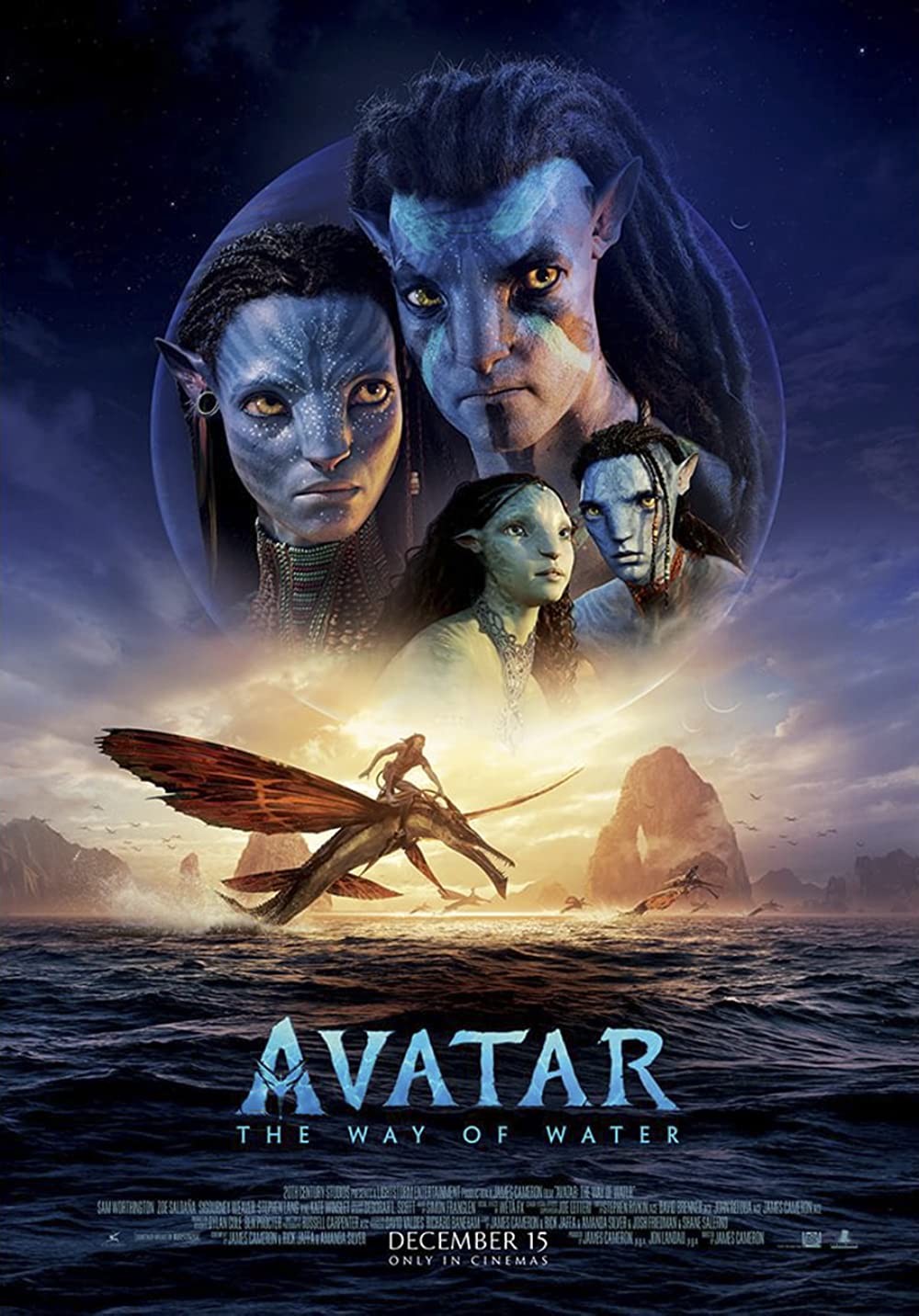
AKA The Way of Woker. James Cameron’s highly anticipated followup to Avatar (2009) is an ambitious world-building visual effects extravaganza that is a predictable, poorly paced and plotted movie, which is plagued by many problematic elements in both substance and form. Moreover, it’s a 3-hour movie that feels like a 3-hour movie, for which no amount of impressive visual displays can compensate. Often times, a filmmaker’s ideology can be interpreted through a critical analysis (or close reading), but the blatantly anti-west (or pro applied postmodernism) sentiment is right there on the surface of this troublesome movie. Suffice it to say, all the themes can be summarized as the destruction of modernity, which is manifested in various motifs. From beginning to end, Cameron’s Avatar: the Way of Water is anti-military (literally uses Marines “semper fi”), anti-western medicine, and propagates postcolonial theory (which I write about in my review of Black Panther: Wakanda Forever). It’s one thing to critique or question a societal observation; it’s another to actively work to completely deconstruct and shame entire groups of people and cultures. Cinema is a powerful tool because film is a reflection of life and can help us better understand the human experience; however, Cameron’s latest movie is a reflection of his disdain for the west (by extension, modernity), and wielded more like an offensive weapon than clever storytelling tool. The themes, reeking of applied postmodernism, aren’t the only problematic issues plaguing this 3-hour epic, but the story structure itself suffers from poor pacing and a proliferation of subplots that fail to work together to craft a compelling narrative.
Jake Sully and Ney’tiri have formed a family and are doing everything to stay together. However, they must leave their home and explore the regions of Pandora. When an ancient threat resurfaces, Jake must fight a difficult war against the humans.
Overstuffed with one-dimensional characters devoid of character arcs, Cameron appears to be more concerned with his ideology than creating thoughtful characters. Heroes that are projected as nearly flawless and invincible seldom connect with audiences because it is often our flaws, failings, and lessons-learned that connect us to one another. When villains fail to display any likable qualities, the villain fails to connect with audiences, thus erasing any possible entertainment value. More specifically, central and opposition characters should share similar goals; however, what makes villains and heroes different is HOW they express their methodologies to reach the goal(s). The most interesting characters of opposition are those with human dimension and characteristics that can be appreciated; likewise, the most interesting central characters are those with flaws and weaknesses that make them relatable. Our heroes are flawless and our villians utterly detestable. That is NOT a good character mix or balance.
Moreover, the film’s characters demonstrate a gross representation problem. Nearly all the human characters are white men–not one person of color and only one prominent female character. In a day and age in which reasonable, fair representation in media is important (again, as film is a reflection of life, it should look like real life), Cameron ignores fairness in representation. While some may find this to be a coincidence, it is not. Every diegetic element of the mise-en-scene montaged into a film is intentional. Because of the clear manifestation of postcolonial theory, this can be read as Cameron’s method for perpetuating the sentiment that white people (particularly men) are toxic by nature. Before you say I am extreme in this interpretation, in a recent interview, Cameron stated, “testosterone is a toxin that must be worked out of the system.” Not only is this a shameful statement, it’s grossly inaccurate. Neither testosterone nor estrogen are problems that need solved. Both are biology, plain and simple. Each respectively amoral.
Cameron’s anti-military sentiment is the most provocative of all his themes concerning the complete destruction of modernity (the goal of applied postmodernism). Where he crosses the line, is referencing the para-military presence as Marines, and evoking the rallying cry of semper fi. Undoubtedly, this is not going to sit well with the U.S. military and general public (nor should it). Ostensibly painting one’s country/military in a negative, inaccurate light is inexcusable. Again, it’s one thing to critique, it’s another to actively shame and attack. If he wanted to use a para-military force, he would have been better off crafting this one to be FORMER military that have been privatized for exploratory and extraction purposes. Sell swords as Game of Thrones would put it. Even that may have painted the military in a negative light, but it wouldn’t have been so blatant and aimed at a particular branch of the U.S. armed forces.
With all the themes, symbols, and motifs Cameron includes in the movie, the plotting is insufficient to support such a mess of ideas and stories. Perhaps he should revisit the screenwriting tenants of writing lean or starting a scene as close to the end as possible, and ending it as soon as possible. These tenants of screenwriting help to prevent a bloated, fatty screenplay. As it stands, the storytelling in Avatar: the Way of Water is clunky and forced. Often times the reason for something happening is simply because the plot needed it. This makes for a predictable story, one that is devoid of anything remotely constructive, fun, or inspirational.
Lastly, I’d be remiss if I failed to mention the many references to Flight of Passage in the World of Pandora at Disney’s Animal Kingdom. Many of the creatures from the flagship attraction and surrounding area are found within this movie. I rather enjoyed identifying elements that were lifted from the hugely popular and impressive attraction. If you do see this movie and have been to Pandora, then look to see if you can find some of the land and sea creatures from the attraction.
At the end of the day, this movie is a reminder that spectacular visual effects does not a great movie make.
Ryan teaches Film Studies and Screenwriting at the University of Tampa and is a member of the Critics Association of Central Florida. If you like this article, check out the others and FOLLOW this blog! Interested in Ryan making a guest appearance on your podcast or contributing to your website? Send him a DM on Twitter. If you’re ever in Tampa or Orlando, feel free to catch a movie with him.