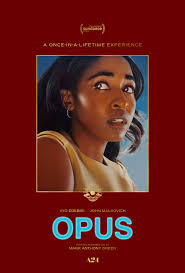
OPUS (2025) film review

An enigmatic puzzle with missing pieces. What starts as a fascinating psychological mystery quickly devolves into a series of disjointed, cryptic sequences that offer more questions than answers. Opus is certainly a haunting experience that delivers striking visuals, but the stylistic storytelling lacks substance, resulting in a film that is ultimately hollow. Like with so many A24 and Neon films, Opus is rich in atmosphere, but lacks strategic plotting, proper pacing, and demonstrable working knowledge of screenwriting mechanics. Moreover, it falls into an all too familiar trap of prioritizing aesthetic over storytelling. Opus is yet another example of modern arthouse cinema mistaking ambiguity for depth. The film posits many otherwise thoughtful questions, but leaves you wondering why you should even care about what you just watched.

Journalist Ariel (Ayo Edebiri) works for an acclaimed music magazine but has grown tired of her arrogant boss Stan (Murray Bartlett) assigning her good pitches to more senior writers. But following the reclusive, visionary pop star Alfred Moretti (John Malkovich) emerging from hiding after more than thirty years, Ariel’s boss is invited to his secluded, remote compound where he will be releasing a new album. Ariel and her boss are invited to attend as press. But not long after arriving, Ariel deduces that the compound’s collection of ardent admirers of Alfred are actually a cult with deadly plans for the guests.

Most of the film’s problems can be traced back to its screenplay. Like with many (if not most, in my opinion) writer-directors, this story likely made much more sense in Mark Anthony Green’s head, than it did on paper. I find that writer-directors often have excellent movie ideas and eyes for shot composition, but lack a working knowledge of screenwriting mechanics. Had Green collaborated with a more established screenwriter, then the film may not have had the plotting issues that plagued it the whole time.

Adding to the film’s plotting issues is its reliance on repetition rather than escalation. Scenes blend into one another with minimal variation, creating a sense of stagnation rather than rising tension. Ariel’s, our central character’s, journey is more about cycling through eerie encounters and vague hallucinations than actually uncovering deeper truths. Without a clearly defined external goal for Ariel, Opus feels like a film more concerned with its own mystique than engaging its audience. The goal could’ve been something as simple as getting the article published, but the film never quite has a throughline on which to land the diegetic plane.

While strong, the performative dimension of the film is underscored with style over substance. Ayo Edebiri’s performance is layered and emotionally compelling. Unfortunately, the film gives her little to work with beyond surface-level tension. John Malkovich, always a commanding presence, delivers an eerie gravitas, but his role feels more like a cryptic device than a fully developed character.

One of the biggest shortcomings in character development is the lack of meaningful relationships. While Opus teases conflicts between Ariel and her boss Stan, these tensions never evolve into anything substantial. All around, the film’s characters never form real, emotional connections, leaving their interactions feeling hollow. Without compelling relationships, the film struggles make us care about any of the characters, much less the central character of Ariel.

Opus seems content to let its themes remain vague, as though interpretation itself is the art. This approach works in moderation but ultimately leaves the film feeling like an unfinished composition—beautiful in pieces but lacking a resonant core.

A24 has perfected the art of marketing “prestige horror” films that emphasize mood over traditional storytelling. While this approach has resulted in some modern masterpieces such as “The Blackcoat’s Daughter,” “Hereditary,” and “Midsommar,” it has also encouraged a wave of films that mistake ambiguity for intelligence. Opus is a prime example of this trend, prioritizing its hypnotic cinematography and eerie sound design over a screenplay that provides emotional or intellectual engagement.

This raises the question: Has arthouse cinema become so obsessed with being enigmatic that it has lost sight of storytelling? Moreover, has the proliferation of “arthouse” films become the very thing they opposed: the mainstream? Films like Opus appear to be forcing audiences to assign meaning where there may be none, and delivering a film that looks great but is ultimately forgettable. The present trajectory of many arthouse film is trending is becoming the new cinematic fast food: tasty but forgettable and lacking in nutrition. In striving for profundity, these films, risk alienating viewers who crave narrative satisfaction alongside visual artistry.

There’s no denying Opus is visually arresting and technically impressive. Mark Anthony Green’s direction is meticulous, and Ayo Edebiri delivers a gripping performance. But beneath its meticulously crafted atmosphere lies a film that lacks emotional weight or thematic clarity. For fans of slow-burn psychological horror and puzzle-box storytelling, Opus may still be a rewarding experience. For others, it’s yet another reminder that style, no matter how dazzling, can never replace substance or sheer entertainment value.

Ryan is the general manager for 90.7 WKGC Public Media in Panama City and host of the public radio show ReelTalk about all things cinema. Additionally, he is the author of the upcoming film studies book titled Monsters, Madness, and Mayhem: Why People Love Horror. After teaching film studies for over eight years at the University of Tampa, he transitioned from the classroom to public media. He is a member of the Critics Association of Central Florida and Indie Film Critics of America. If you like this article, check out the others and FOLLOW this blog! Follow him on Twitter: RLTerry1 and LetterBoxd: RLTerry
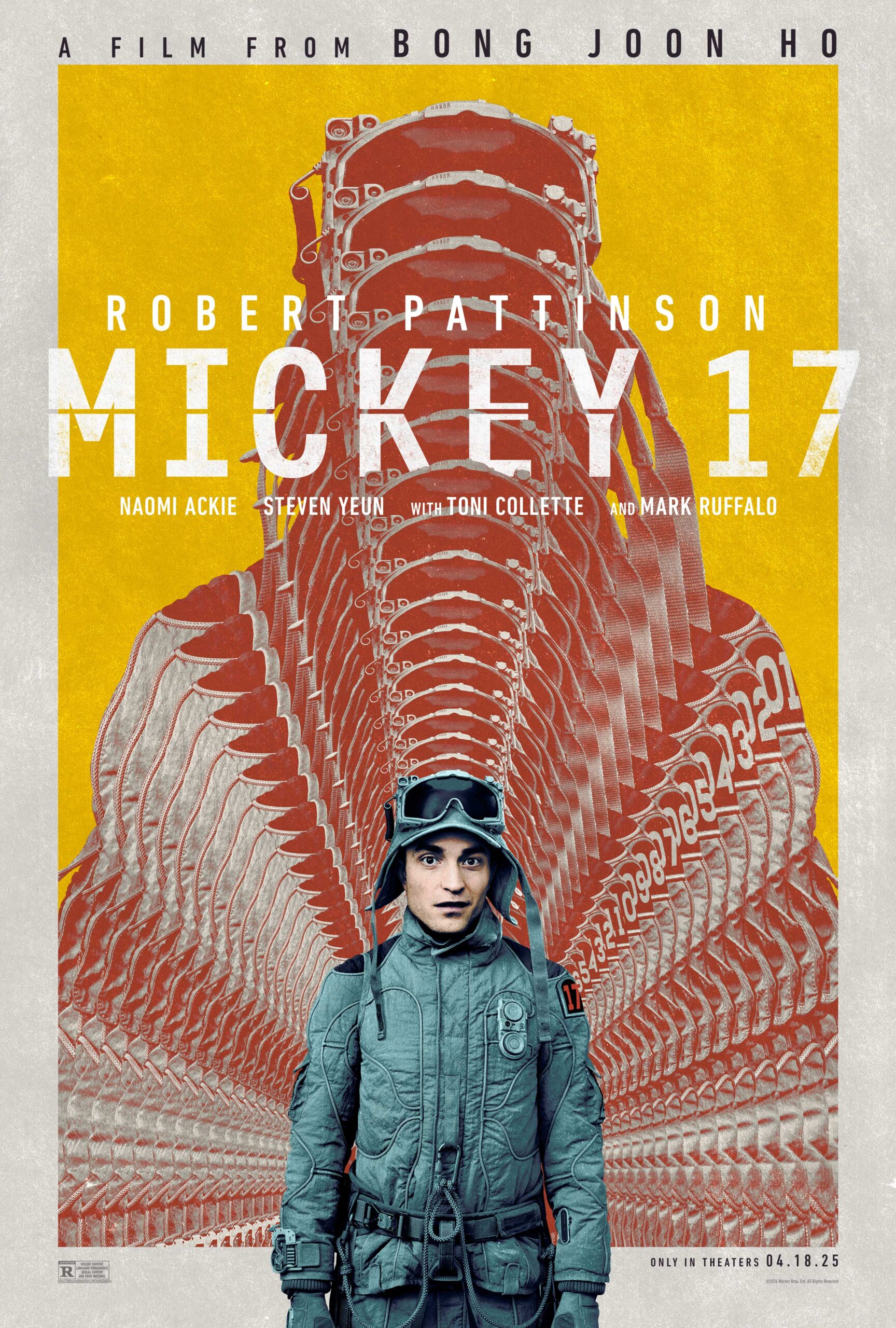
MICKEY 17 film review

Ambitious but disjointed. Bong Joon-ho’s newest film Mickey 17 excels in technical achievement but the full impact of the story demonstrates greater concern for its satire, message, and world building than it does its plotting and structure. Blending multiple genre conventions, Joon-ho’s science-fiction, dark comedy begins with an intriguing premise underscores with existential questions, but ultimately doesn’t feel cohesive from beginning to end. Despite the exhaustive satire–which is entertaining at first–the film works excellently as a critique of the prolific mediation of society, obsession with the idea of self-made celebrity, and the camera fame. Additionally, it presents an exploration of humanity’s fixation on replication and surveillance. Perhaps the film doesn’t call out any particular app or platform, it certainly drives home the point that a monster can be created through obsession with one’s image, control, and manipulation of others.

Mickey Barnes (Robert Pattinson), a disposable employee, is sent on a human expedition to colonize the ice world Niflheim. After one iteration dies, a new body is regenerated with most of his memories intact.

Despite an intriguing premise, the narrative often succumbs to prolonged scenes and sequences, subplots that lack meaningful purpose, and over-explanation in come places whilst lack of purpose exists elsewhere. While the third act is strong and completely engaging, the first act is protracted and the second act is plagued by poor pacing brought on by a wandering direction. The protracted first act delays audience immersion into the core narrative. What would’ve served the plot better as a brief prologue, turns into most of the first act. Even though the film maintains a modicum of innovation and freshness, it struggles to sustain momentum, resulting in a clunky and disposable experience.

The film delivers a relatively strong performative dimension, which helps to keep the audience engaged–however weak the engagement–in the story. And, Robert Pattinson performance strikes a nice balance between nuanced and manic, which mimics the film’s darkly comedic tone. Between his and the other leading actors performances, collectively they add a rolling punchline to the monotony of many scenes and sequences in the film. Mark Ruffalo’s depiction of the authoritarian leader, Kenneth Marshall, is audacious and campy, but doesn’t take long for this performance to become exhaustive–a little goes a long way with Marshall. Playing Marshall’s wife is horror-fan favorite Toni Collette, and even her character overstays her welcome in most of the scenes in which she appears.

Both the plotting and character issues can be connected to the screenwriting, which lacks direction, purpose, and refinement. Mickey 17 is another example of a director with a great, even innovative movie idea, but should work with a screenwriter with a command of proper screenwriting conventions and mechanics to craft the story for the page, and eventually the screen. This issue is not unique to Joon-ho, but a recurring problem I find with many (if not most) writer-directors. Few directors can write as well as they direct; and the inverse is also true–few screenwriters can direct as well as they can write.

Mickey 17 serves as a critique of the mediation of society, wherein informative, entertaining, and surveilling media technologies devalue the individual resulting in individuality with dimension being reduced to a character or commodity to be traded and exploited for the sake of ratings and celebrity. Mickey’s existential crisis of repeatedly dying and being reprinted underscores the alienation experienced in a society that commodifies human existence. Furthermore, Keneth Marshall’s obsession with control and his self-made celebrity mirrors the obsession many have, in the real world, with their “celluloid” self–or more accurately today–their digital self.

Everything Marshall said or did was ran through an image consultant and production crew on how it would look on camera. Looking at the real world, each of those squared images on Instagram or vertical video on SnapChat or Tik Tok, only show an edited version of the subject–the framing and editing is specifically manipulated and articulated to shape the audience’s perception. While this is to be expected in motion pictures and television shows, many of these self-made celebrities and influencers on social media want the audience believe they are being authentic, when it’s all a facade. In this obsession with the camera and “framed” image, society is exchanging that which is real with a projected authenticity; furthermore, the lines between what which is real and that which is fictionalized (or augmented) are becoming increasingly blurred.

Bong Joon-ho’s Mickey 17 blends satire with science fiction but the film’s underdeveloped plot and uneven character portrayals prevent it from reaching the potential this film demonstrably had with the talent behind it.

Ryan is the general manager for 90.7 WKGC Public Media in Panama City and host of the public radio show ReelTalk about all things cinema. Additionally, he is the author of the upcoming film studies book titled Monsters, Madness, and Mayhem: Why People Love Horror. After teaching film studies for over eight years at the University of Tampa, he transitioned from the classroom to public media. He is a member of the Critics Association of Central Florida and Indie Film Critics of America. If you like this article, check out the others and FOLLOW this blog! Follow him on Twitter: RLTerry1 and LetterBoxd: RLTerry
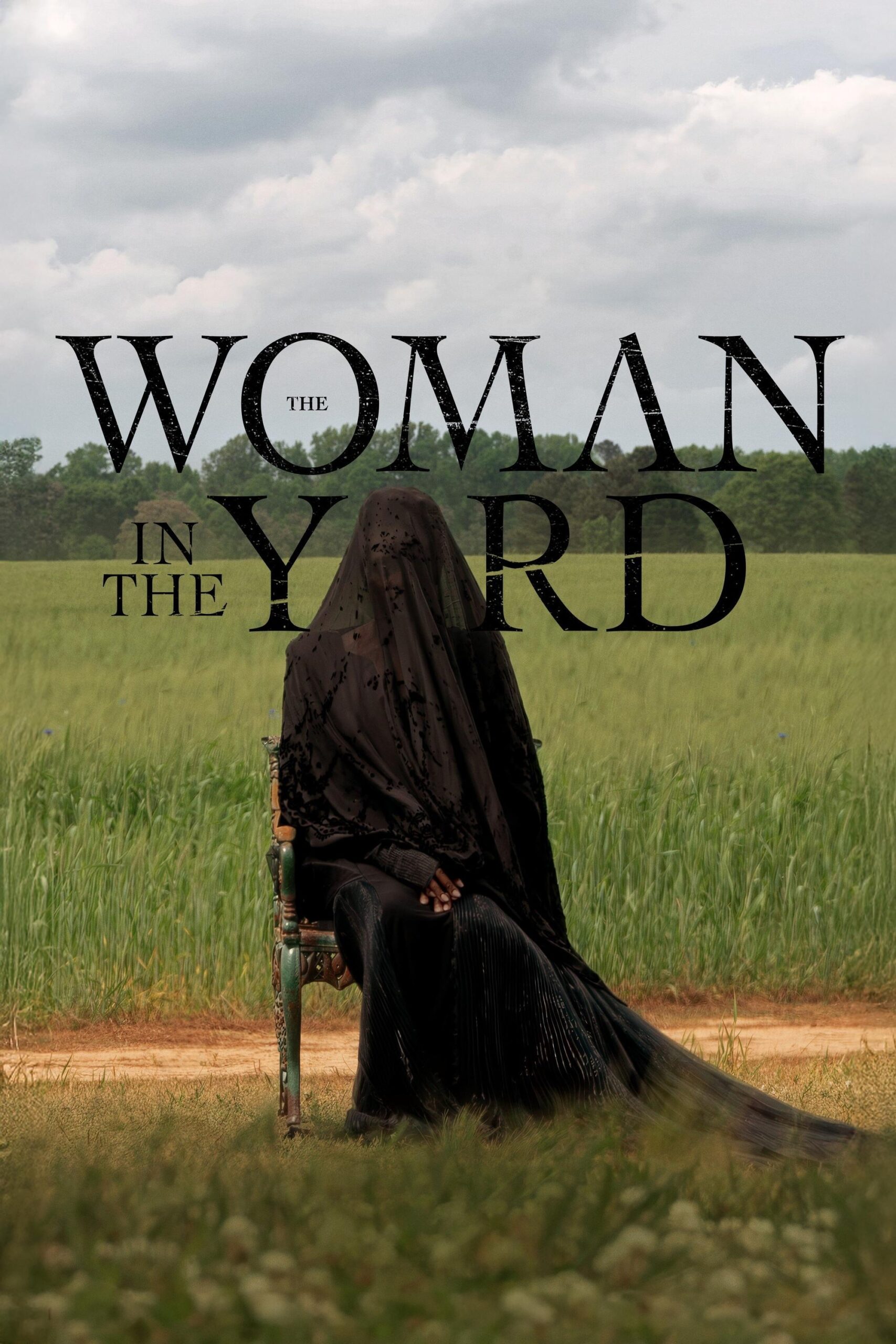
CAPTAIN AMERICA: BRAVE NEW WORLD movie review

Disney+: the Movie. The latest installment in the MCU feels like a Disney+ episode or show idea that was artificially inflated into a feature film. Captain America: Brave New World neither has the intrigue of an espionage thriller nor the excitement of a superhero movie. The plotting unfolds in a manner reminiscent of a serialized television series, evidenced by disjointed scenes that could very well function as individual episodes respectively. The movie is also plagued with gross levels of slapdash, uninspiring CGI that take an already vapid story and reinforce the one-dimensional delivery. From beginning to end, the pacing issues are evidenced by the diegetic momentum that ramps up then fizzles repeatedly causing any modicum of suspense or urgency to diminish as soon as it forms, resulting in a mitigation any potential of a cinematic spectacular.

Sam finds himself in the middle of an international incident after meeting with President Thaddeus Ross. He must soon discover the reason behind a nefarious global plot before the true mastermind has the entire world seeing red.

Captain America: Brave New World exemplifies the trend of blurring the lines between television and cinema. The long and short of it is: the significant influence the MCU TV shows have had upon the theatrical releases. This observation is two-fold (1) screenwriting and (2) technical achievement. While the former is the more significant problem, the latter is the easiest to identify. Specifically, the movie’s color grading, shot composition, and digital effects are nearly indistinguishable from MCU streaming series on Disney+. Unfortunately, this blurring of the lines between cinema and television results in a lack of the grandeur typically associated with MCU theatrical releases.

The latter could be more forgivable is the former was of a higher caliber. While writer Rob Edwards has certainly demonstrated his gift for screenwriting in previous Disney films (the Academy Award nominated Treasure Planet, being one), the other two writers have primarily worked in Disney+ television–and it shows–in spades. The plotting, pacing, character development (or lack thereof, as it were) is straight out of Disney+. The lack of urgency and stakes are also problematic, as well as the near absence of the “fun” factor. I will be the first to acknowledge that I don’t typically care for comic book or superhero movies; that said, even I will admit that the the first two phases of the MCU were (mostly, anyway) fun popcorn movies. Not the case with this latest installment. If the movie wasn’t going to be fun, then it should’ve been intriguing or spellbinding–not the case either. It’s pretty average all the way around.

I will forever be a champion for practical effects–even practical effects that are supplemented with CGI. But this movie screams TV-budget CGI the whole time. This is particularly true in the rather anticlimactic showdown. You cannot replace the way real light bounces off real objects into the camera lens, and this movie demonstrates the danger in relying heavily on CGI in an attempt to wow the audience. The strength of a picture should be in the plotting, subtext, and character development–not in the CGI. Since the movie was not going to lean into the fun factor, the CGI should’ve been dialed way back.

Even though it was wonderful to see Harrison Ford on the big screen again, he appeared to have been experience little fun while making this movie; furthermore, the performance was pretty well phoned in. Likewise, Anthony Mackie was not himself as Sam. This Sam was greatly lacking in charisma and wit. While his performance may not have been as phoned-in as Ford’s, there was still a flatness to the performative dimension. Danny Ramirez, however, did appear to be having fun on this movie, and I would’ve liked to have seen him given more to do in order to draw me into the story.

Captain America: Brave New World struggles to distinguish itself as a cinematic experience, with its disjoined plot, production quality, and lack of meaningful character development, resulting in a movie that appears to have far more in common with a Disney+ television series than with a feature motion picture.

Ryan is the general manager for 90.7 WKGC Public Media in Panama City and host of the public radio show ReelTalk about all things cinema. Additionally, he is the author of the upcoming film studies book titled Monsters, Madness, and Mayhem: Why People Love Horror. After teaching film studies for over eight years at the University of Tampa, he transitioned from the classroom to public media. He is a member of the Critics Association of Central Florida and Indie Film Critics of America. If you like this article, check out the others and FOLLOW this blog! Follow him on Twitter: RLTerry1 and LetterBoxd: RLTerry
HEART EYES horror movie review

Slashtastic! Heart Eyes is the don’t miss holiday horror movie this Valentine’s season. Whether you’re a romantic or a cynic, there is something in here for everyone. The blend of romance and horror will, like Cupid’s arrow, find its way to the heart of slasher fans. Move over Coal Miner to make room for a new killer on the Valentine’s scene. Directed by CollegeHumor’s Josh Ruben and written by Christopher Landon (Happy Death Day), Michael Kennedy (Freaky), and Phillip Murphy (Hitman’s Wife’s Bodyguard), Heart Eyes seamlessly blends cliches from both romcoms and slashers, resulting in a movie that is sure to find its way onto rewatch lists every Valentine’s Day.

A masked maniac with glowing, red heart-shaped eyes returns every Valentine’s Day to terrorize unsuspecting couples.

The screenwriting is efficient and effective, and wastes no time in drawing audiences into this properly paced story. The kills are over-the-top–almost campy–and the romanic comedy bits are cheesy–in all the best ways possible. But this movie isn’t just about thrills and kills, because the central characters are surprisingly well-developed, and you’ll be rooting for their survival. So sure, some of the plot beats are formulaic, but this is a formula that has worked for over four decades, and demonstrates that genre movies have a timeless quality–a charm–about them that keeps us coming back for more screams.

Much like we saw with 2023’s Thanksgiving, Heart Eyes does the slasher right. Not only does it check off all the boxes for a classically written slasher, it also checks off boxes for a romantic comedy. Perhaps the movie leans more into its horror genes than it does its romcom genes, but it still strikes a well balanced genetic sequence for your entertainment pleasure. Starting with a classic romantic comedy opening, but as soon as it steeps for just the right amount of time, then upending it with a campy and gruesome slasher sequence, informs audiences precisely that for which they are in store for the rest of the movie. It sets the tone right up front, so you’re willing to buy everything else the movie throws at you.

The plotting is both sound as does the slasher reveal right. Yes, in hind sight you can make the observations that Heart Eyes took from this or that slasher, but that’s the beauty–it follows the formula but still keeps it engaging. Never once did I feel that it failed to keep my interest–even when I called the identity of HEK. I liked that this movie felt like classic slasher. We get it all: a big event that kicks everything into gear, a central character with a well-defined external goal driven by an internal need, and a character of opposition. This movie benefits from solid screenwriting and a director that seeks to entertain first and underscores the superstructure with thoughtful material for conversations about romance and relationships in the subtext. The stakes are high: survival! And throughout the movie, the stakes are raised, reminding us that no one is safe and even our final girl can be injured or killed.

Both of our central characters are well-developed. Olivia Holt’s Ally and Mason Gooding’s Jay are relatable and compelling. Are the characters particularly deep? No. But are they sufficiently developed to give these slasher characters human dimension? Yes. Both are strong and vulnerable. Furthermore, Ally feels like an “everyman” that is thrown into a situation in way over her head, but the setup is quite believable. I also like comedic irony in that she works for a jewelry company but has grown disillusioned by romance after being dumped by her boyfriend. Perhaps you work for a company that advocates for or sells something of which you are now cynical. Alternatively, Jay may come off overly optimistic and idealistic, but through that, we also learn that he as fears and vulnerabilities too. My point is, the principle players in this slasher are written with dimension, so you are rooting for their survival.

The most memorable slashers have a trademark mask, weapon, or sometimes both, which is the case with the Heart Eyes Killer (HEK). I’ve no doubt that HEK will find a place amongst the pantheon of slasher icons. After a long time of no new entries into that circle, we had John Carver added in 2023 and now HEK. Heart Eyes is a horror movie made by slasher fans for slasher fans, and its refreshing to see that the horror staple is still alive and well. Through movies like Thanksgiving and Heart Eyes, modern audiences are reminded that genre movies can be just as entertaining or thoughtful as the arthouse movies that are slowly becoming the mainstream. Funny–the movies that used to be the mainstream (i.e. slashers) are slowly finding their way into the arthouse cinemas, while the prestige pictures that used to be confined to the arthouse cinemas are slowly becoming the new mainstream.

Thematically, the movie explores disillusionment in and with romance. From an opening scene that underscores the realization that images captured by a camera are not always reflexive of reality to the cynicism that can grow out of broken relationships to accepting that an idyllic romance may just be possible, it’s all in this movie. Through the apparatus of the slasher, the writers and director are able to explore love and romance in a variety of ways that are rather poignant.

If your idea of a Valentine’s date is dinner followed by a scary movie, then this movie fits the bill! It works as both. Happy Valentine’s Day!

Ryan is the general manager for 90.7 WKGC Public Media in Panama City and host of the public radio show ReelTalk about all things cinema. Additionally, he is the author of the upcoming film studies book titled Monsters, Madness, and Mayhem: Why People Love Horror. After teaching film studies for over eight years at the University of Tampa, he transitioned from the classroom to public media. He is a member of the Critics Association of Central Florida and Indie Film Critics of America. If you like this article, check out the others and FOLLOW this blog! Follow him on Twitter: RLTerry1 and LetterBoxd: RLTerry
COMPANION horror movie review

A wild, albeit predictable ride. New Line Cinema’s Companion, written and directed by Drew Hancock, is an entertaining cautionary tale on how ultimate control, ultimately corrupts. Moreover, the film provides a thoughtful critique on the (in this case) deadly consequences of attempting to exert that desire for ultimate control over an individual, thus rendering mute their unique individuality. The film also paints a provocative portrait of the relationship between humanity and artificial intelligence (and androids) by establishing a seemingly controlled environment that then devolves into one of chaos. This progression reflects the overarching theme of attempts at ultimate control by underscoring the illusion of the ability to exert ultimate control over the human spirit, even if that “humanity” is housed within an artificial intelligence. Hancock’s screenplay is lean and mean, and nicely balances the horror elements with both lighthearted and dark comedy. Even though many of the plot beats were predictable, the movie still succeeded in remaining engaging and fun–just goes to show that there is a beauty to genre movies.

A weekend getaway turns bloody and violent when a subservient android that’s built for human companionship goes haywire.

Hancock’s film effectively blends elements of horror and comedy to explore contemporary anxieties surrounding individualism, artificial intelligence, and the ethical implications of control for the purposes of subjugation. Audiences are challenged by the plot and characters to reflect on the moral responsibilities involved in the creation and control of artificial-sentient beings. By prompting the audience to consider the consequences, the film is positing questions concerning the very nature of humanity and the desire and limits of control. Furthermore, the film demonstrates that when given seemingly ultimate control, that primal desires for ultimate control surface, thus reminding us that we have to learn to be generous, kindly, and altruistic because we are naturally born rather selfish and self-centered. Ultimate control, ultimately corrupts. Without reasonable checks and balances, the results of absolute control can be negative and quite possibly even deadly to the human spirit.

As artificial intelligence increases in human-like problem solving and expression, we have to ask ourselves how far will be go to both create and control artificial intelligence as it slowly approaches android-like technology. Will androids be controlled like a typical robot or mindless automaton or will they be granted sentient status like Data on Star Trek: the Next Generation‘s critically acclaimed episode “The Measure of a Man”? Without derailing from my review of Companion too much, I am reminded of this outstanding Trek episode that actually does a much better job of addressing topics of autonomy and control than Hancock’s film. The episode critiques the idea that beings created for a (even at one time, pre-determined) purpose (especially artificial ones) can be controlled or owned. Data’s ability to choose his own destiny is at stake. Captain Picard argues, in the trial that is convened to determine Data’s humanity, that intelligence, self-awareness, and consciousness make someone a sentient individual, not merely their biological nature.

Where I feel that Hancock’s film falls short is in its social commentary is the limitations it places on itself in its expression of the themes with which it underscores the plotting and characters. For the greatest impact, it should have been more consistent in the exploration of ultimate control over a seemingly sentient individual. Instead of crafting a film that could be more broadly applied, Hancock’s story falls into the trap of being too focuses on a overly generalized stereotype of particular individuals versus crafting a narrative that was more broadly concerning itself with depicting robbing sentient beings of their individualistic humanity–their free will. The sharpest criticism is clearly aimed at one particular character (and the demographic they represent). But eventually the idea of control over an individual snares another group. And for a moment, there was hope that Hancock was extending his critique to be more inclusive, but it returns to being focused on the original demographic group. This extension would have been a reminder that anyone can find themselves drawn to how far one can push the limits of control over a lover, friend, or other platonic, professional, or romantic relationship. It’s a trait that runs through everyone, and we have to learn to control our innate selfish and self-centered behaviors with which we are born.

While I have some reservations in the consistency and accuracy of theming in the film, Companion remains a solid horror films that serves as a reminder of the consequences of exerting ultimate control over an individual. The pacing, plotting, character development, and technical elements work together very well to keep the audience entertained on this wild ride.

Ryan is the general manager for 90.7 WKGC Public Media in Panama City and host of the public radio show ReelTalk about all things cinema. Additionally, he is the author of the upcoming film studies book titled Monsters, Madness, and Mayhem: Why People Love Horror. After teaching film studies for over eight years at the University of Tampa, he transitioned from the classroom to public media. He is a member of the Critics Association of Central Florida and Indie Film Critics of America. If you like this article, check out the others and FOLLOW this blog! Follow him on Twitter: RLTerry1 and LetterBoxd: RLTerry