PROJECT HAIL MARY motion picture review

A triumphant return to classical Hollywood storytelling.
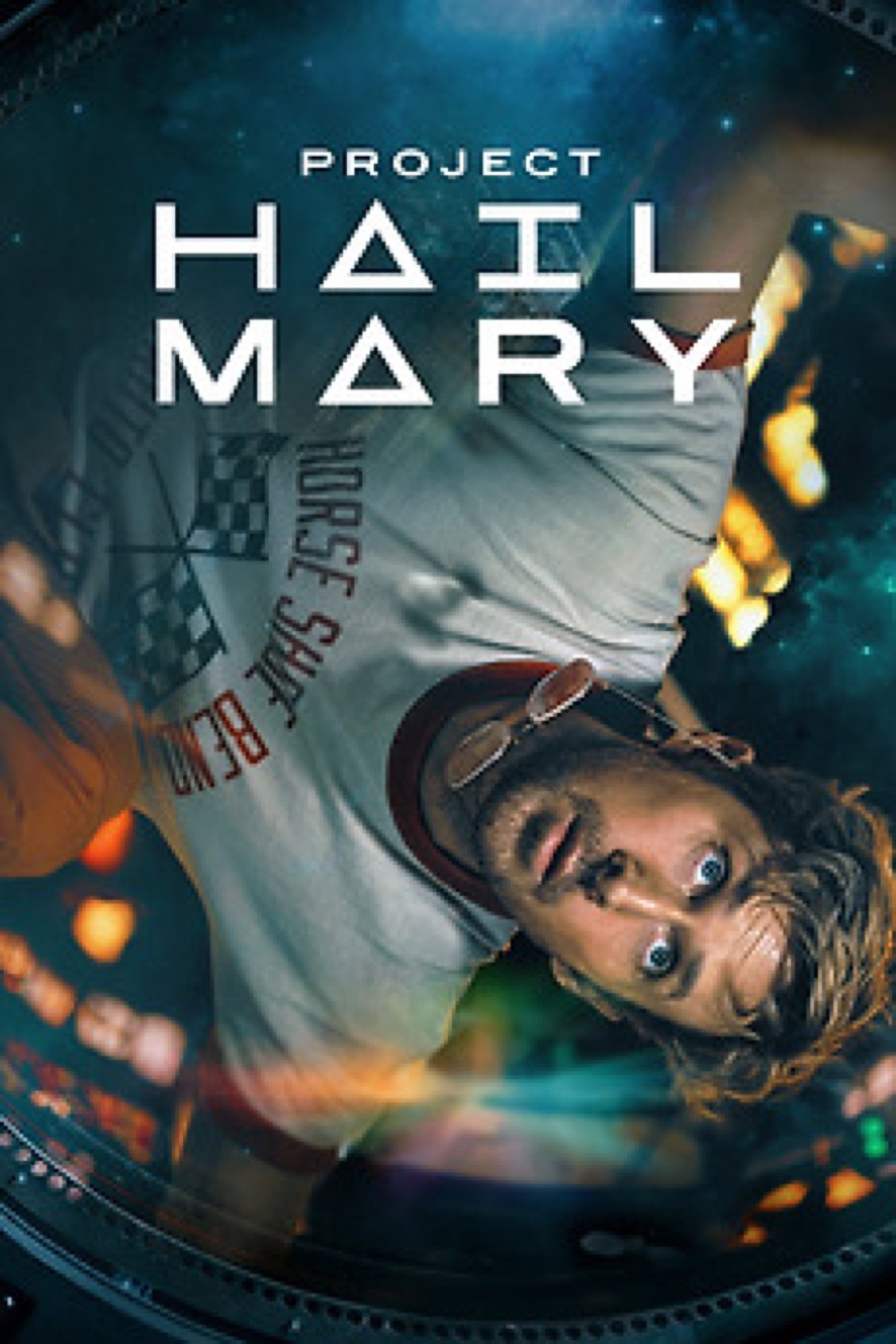
There is something refreshingly old-fashioned about Project Hail Mary. Not old in the sense of dated, but old in the sense of dependable—like a well-built machine designed to do exactly what it promises. It embraces the kind of classical Hollywood storytelling that has quietly fallen out of favor in an era increasingly defined by irony, cynicism, and ideological sorting. This is a film that wants to entertain first, inspire second, and lecture not at all. And in today’s cinematic climate, that alone feels almost radical.

Based on the Andy Weir novel, science teacher Dr. Ryland Grace (Ryan Gosling) wakes up on a spaceship with no recollection of who he is or how he got there. As his memory slowly returns, he soon discovers he must solve the riddle behind a mysterious substance that’s causing the sun to die out. As details of the mission unravel, he calls on his scientific training and sheer ingenuity–but he may not have to do it alone.

Project Hail Mary functions simultaneously as a robust science-fiction adventure and a genuinely compelling motion picture about responsibility, sacrifice, and cooperation. It understands that spectacle is most meaningful when tethered to character, and that the audience’s emotional investment—not the complexity of the plot—is what ultimately determines whether a story lands.

And while I am quite high on this film, it isn’t without its shortcomings–particularly when it comes to plotting and pacing. But, in its defense, where plot mechanics falter, the emotive and performative dimensions cary the load. To be sure, the screenplay is not airtight. There are moments where the finer points of the science become a little vague, and occasional plot turns feel more convenient than convincing. The narrative relies on a few leaps of logic that may cause scientifically minded viewers to raise an eyebrow. And structurally, the pacing occasionally sags—particularly in the flashback sequences, which linger longer than necessary and could easily have been trimmed by twenty minutes without sacrificing clarity.

But here is the crucial distinction:

The film earns its emotional beats. And when a movie earns those beats, audiences are willing to forgive a surprising number of narrative imperfections.

At the center of Project Hail Mary lies one of the most unexpectedly affecting friendships in recent science fiction: the bond between Dr. Ryland Grace and the alien known as Rocky. What begins as a pragmatic partnership evolves into something deeper—something recognizably human, despite the interspecies divide. Their relationship is built not on ideology, identity, or tribal affiliation, but on mutual trust and shared purpose. That simplicity is precisely what gives it power. Their friendship resonates because it taps into a fundamental truth about storytelling. Ultimately, it underscores that meaningful connection is more compelling than conflict.

As I survey contemporary movies, in a cinematic landscape that often frames difference as division, Project Hail Mary instead frames difference as collaboration. It suggests that survival, both literal and cultural, depends less on asserting dominance and more on extending cooperation. And that message lands without a trace of sanctimony.

Perhaps the film’s most striking quality is its tone.

At a time when many contemporary movies lean into cynicism—often dividing characters into moral camps or ideological tribes—Project Hail Mary takes a different path. It offers a story built on cooperation, empathy, and shared responsibility. It reminds us that our actions ripple outward. That survival is collective. That progress requires partnership. And that, sometimes the most heroic act is simply choosing to help someone else. In an industry increasingly drawn to provocation and polarization, this film dares to be earnest. And that sincerity is its greatest strength.

Ryan Gosling’s Dr. Grace embodies one of Hollywood’s most enduring archetypes: the reluctant hero. He is not fearless. He is not morally pristine. He is not even particularly eager to save the world. He’s simply a man confronted with responsibility—and forced to rise to meet it. That arc feels deeply relatable because it reflects the way real courage often works. Heroism is rarely the absence of fear; it is the decision to act despite it. The film understands this intuitively, allowing Grace’s transformation to unfold gradually rather than through grand speeches or sudden epiphanies. In doing so, it restores dignity to the idea of ordinary people doing extraordinary things.

On a purely technical level, Project Hail Mary is an impressive achievement. The visual effects are sophisticated without becoming overwhelming. The production design conveys scale without sacrificing intimacy. The sound design—particularly in the depiction of Rocky’s communication—demonstrates a level of creativity that enhances rather than distracts from the narrative. Most importantly, the film uses technology in service of storytelling rather than spectacle for its own sake. That discipline is increasingly rare.

For my fellow Star Trek fans out there, this film reminded me of one of the best episodes of The Next Generation, and that is the Darmok episode where in we get the overcoming of language barriers to form collaboration between Captain Picard and an alien creature (a Tamarian) that only communicates in metaphor. It’s a powerful episode (watch it). And of course we get the memorable quote (and one for which I have a t-shirt) “Darmok and Jalad at Tanagra.” Perhaps we could say, for this movie, “Darmok and Grace at Tau Ceti.”

Project Hail Mary may stumble occasionally in its plotting and pacing, but its emotional core remains remarkably strong. It is a film that trusts audiences to care about characters, to invest in relationships, and to believe—however briefly—that cooperation is still possible. It is not a perfect movie; but it is a deeply satisfying one.

And in a world of cynical storytelling, that feels like a small miracle–a Hail Mary.

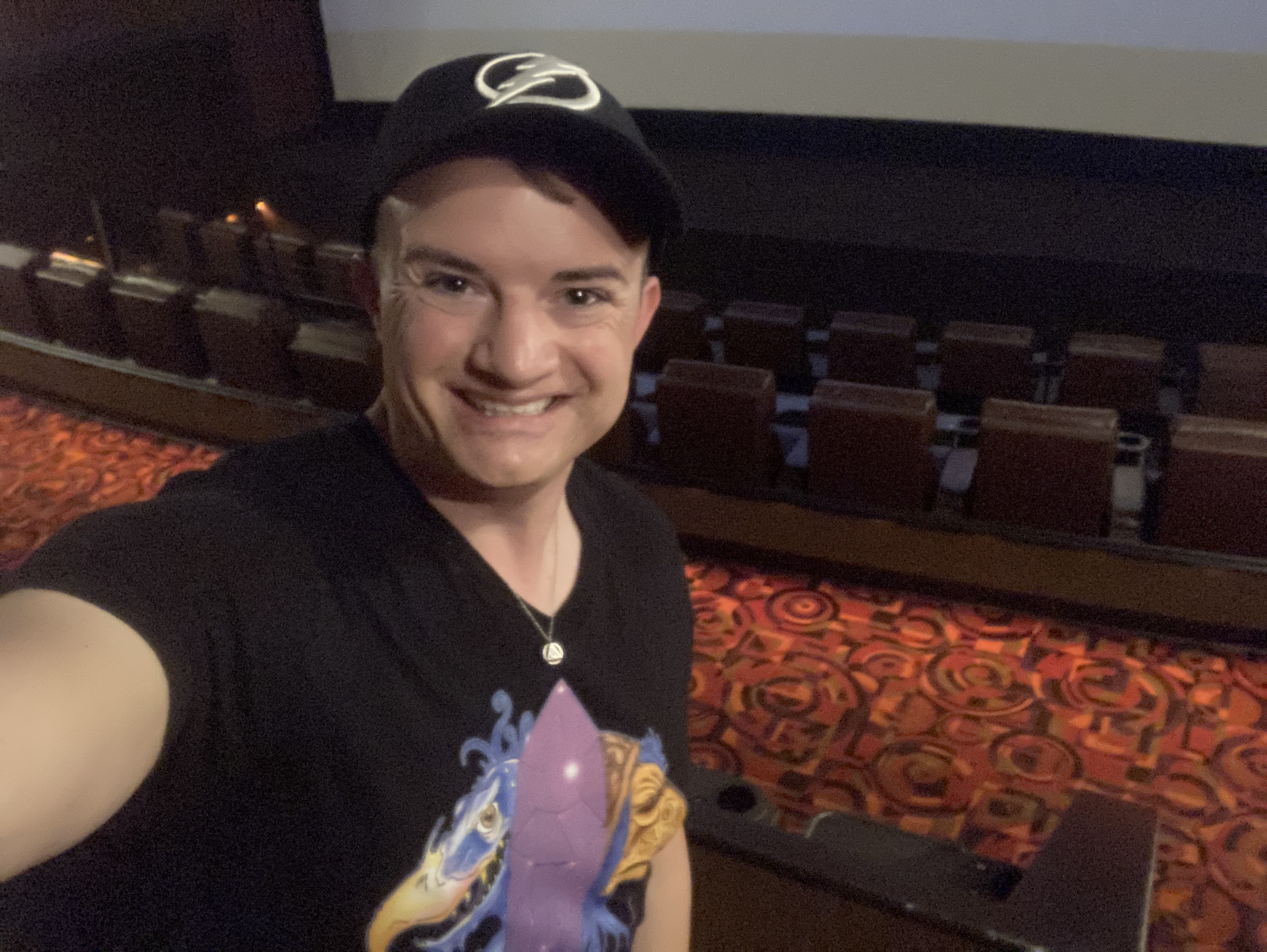
Ryan is the general manager for 90.7 WKGC Public Media and host of the show ReelTalk “where you can join the cinematic conversations frame by frame each week.” Additionally, he is the author of the upcoming film studies book titled Monsters, Madness, and Mayhem: Why People Love Horror. After teaching film studies for over eight years at the University of Tampa, he transitioned from the classroom to public media. He is a member of the Critics Association of Central Florida and Indie Film Critics of America. If you like this article, check out the others and FOLLOW this blog! Follow him on Twitter: RLTerry1 and LetterBoxd: RLTerry
THE BRIDE! (2026) movie review

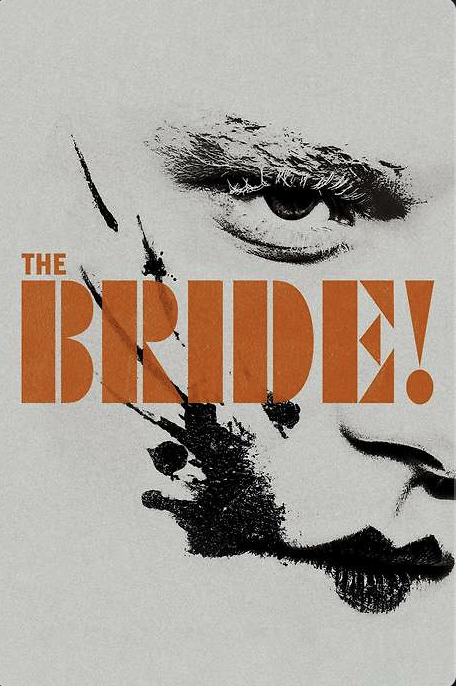
There’s a good movie somewhere inside The Bride!—perhaps several.

There’s a good movie somewhere inside The Bride!—perhaps several. The irony is that the film itself feels as Frankensteined together as the titular creation at its center. Maggie Gyllenhaal’s ambitious reinterpretation of Mary Shelley’s Frankenstein and James Whale’s immortal Bride of Frankenstein (1935) clearly springs from a place of imaginative vision. The problem is not the ideas. The problem is that too many of them are stitched together without the narrative cohesion necessary to bring the creature fully to life. What emerges is a fascinating but uneven cinematic experiment: a film whose strongest parts often struggle against the whole.

In 1930s Chicago, groundbreaking scientist Dr. Euphronious (Annette Bening) brings a murdered young woman Ida (Jessie Buckley) back to life to be a companion for Frankenstein’s monster (Christian Bale). What happens next is beyond what either of them could ever have imagined.

There is little doubt that Gyllenhaal set out to craft an imaginative and thought-provoking reexamination of Frankenstein mythology. The ambition is evident in nearly every frame. Yet the screenplay and editing lack the discipline required to shape that ambition into something structurally coherent. In an ironic parallel to Frankenstein’s own creation, the film is assembled from intriguing narrative parts—each compelling in isolation—but collectively they never quite form a unified organism. Any one of those narrative threads might have served as a more stable foundation than the combination presented here.

It is possible that The Bride! may one day find a second life as a cult curiosity. Cinema history is filled with examples of films—The Rocky Horror Picture Show and even Showgirls—that were initially met with confusion before later audiences embraced their eccentricities. But both of those films possessed an essential ingredient that this one struggles to sustain: entertainment. Each of them understood its own satirical target and leaned confidently into the theatricality of its premise. The Bride! gestures toward satire but never fully commits to it. The result is a tonal tug-of-war between melodrama and camp. Had the film embraced the latter more confidently, the experience might have been far more exhilarating. Intentional camp signals to the audience that the filmmakers are in on the joke; here, the film often takes its own eccentricities too seriously.

Narratively, the film wanders. Yet the performative dimension proves far sturdier. Jessie Buckley and Christian Bale share a compelling chemistry that anchors the film whenever the plot threatens to drift. Annette Bening brings welcome gravitas to her doctor, while Penélope Cruz’s detective—though played with conviction—is underserved by a character that ultimately has too little to do. Indeed, the performances are what keep the audience invested when the narrative itself begins to lose its footing.

Visually, however, Gyllenhaal demonstrates undeniable directorial confidence. Her eye for composition yields moments of striking cinematic beauty. The cinematography and production design elegantly bridge old and new interpretations of the mad scientist mythos. Laboratories glow with stylized menace while the broader world of the film evokes both classical Hollywood romanticism and contemporary visual flair. Particularly during the musical interludes, lighting and camera movement become expressive tools rather than mere ornamentation.

One of the film’s most charming creative flourishes lies in its affectionate nods to classic romantic melodramas and golden-age song-and-dance spectacles. Busby Berkeley’s Footlight Parade, Gold Diggers of 1933, and other Warner Bros. musical traditions echo throughout the film, not merely as nostalgic references but as narrative devices that illuminate the emotional worlds of the characters. The moments when Frank (Bale), Ida (Buckley), and the camera operator drift into choreographed reverie feel as though they have stepped directly off a 1930s soundstage. In these sequences, the film’s imagination briefly achieves the synthesis the rest of the narrative seeks.

Yet structurally the film remains overburdened. Elements of Romeo and Juliet, Bonnie and Clyde, and The Bride of Frankenstein all compete for narrative dominance, while the shadow of Mary Shelley herself looms as an interpretive framework. Any one of these inspirations could have produced a compelling through-line with traces of the others woven in. Instead, the film attempts to juggle all of them simultaneously. The result is a narrative compass that spins without settling on a clear direction.

This imbalance points toward a broader issue increasingly visible in contemporary cinema: the challenge of the writer-director auteur. Gyllenhaal clearly possesses a strong visual sensibility and a director’s instinct for atmosphere and composition. But here the screenplay does not display the same level of discipline as the filmmaking. The modern industry often encourages directors to function simultaneously as writers and producers, yet history demonstrates that some of the greatest films emerge from collaboration rather than singular authorship. There are exceptional writer-directors—but they remain the exception rather than the rule. In this case, Gyllenhaal’s imaginative vision might have benefited enormously from the partnership of a dedicated screenwriter capable of translating those ideas into a tighter narrative structure.

None of this diminishes the ambition behind The Bride!. The film is imaginative, visually striking, and intermittently electrifying. It simply struggles to unify its many inspirations into a cohesive whole. With a stronger narrative foundation, Gyllenhaal’s directorial instincts might have produced something truly extraordinary.

Instead, we are left with a fascinating creature assembled from promising parts—alive, perhaps, but never quite fully formed. And like Frankenstein’s creation itself, the result inspires equal parts admiration and frustration.

Ryan is the general manager for 90.7 WKGC Public Media and host of the show ReelTalk “where you can join the cinematic conversations frame by frame each week.” Additionally, he is the author of the upcoming film studies book titled Monsters, Madness, and Mayhem: Why People Love Horror. After teaching film studies for over eight years at the University of Tampa, he transitioned from the classroom to public media. He is a member of the Critics Association of Central Florida and Indie Film Critics of America. If you like this article, check out the others and FOLLOW this blog! Follow him on Twitter: RLTerry1 and LetterBoxd: RLTerry
SCREAM 7 horror movie review

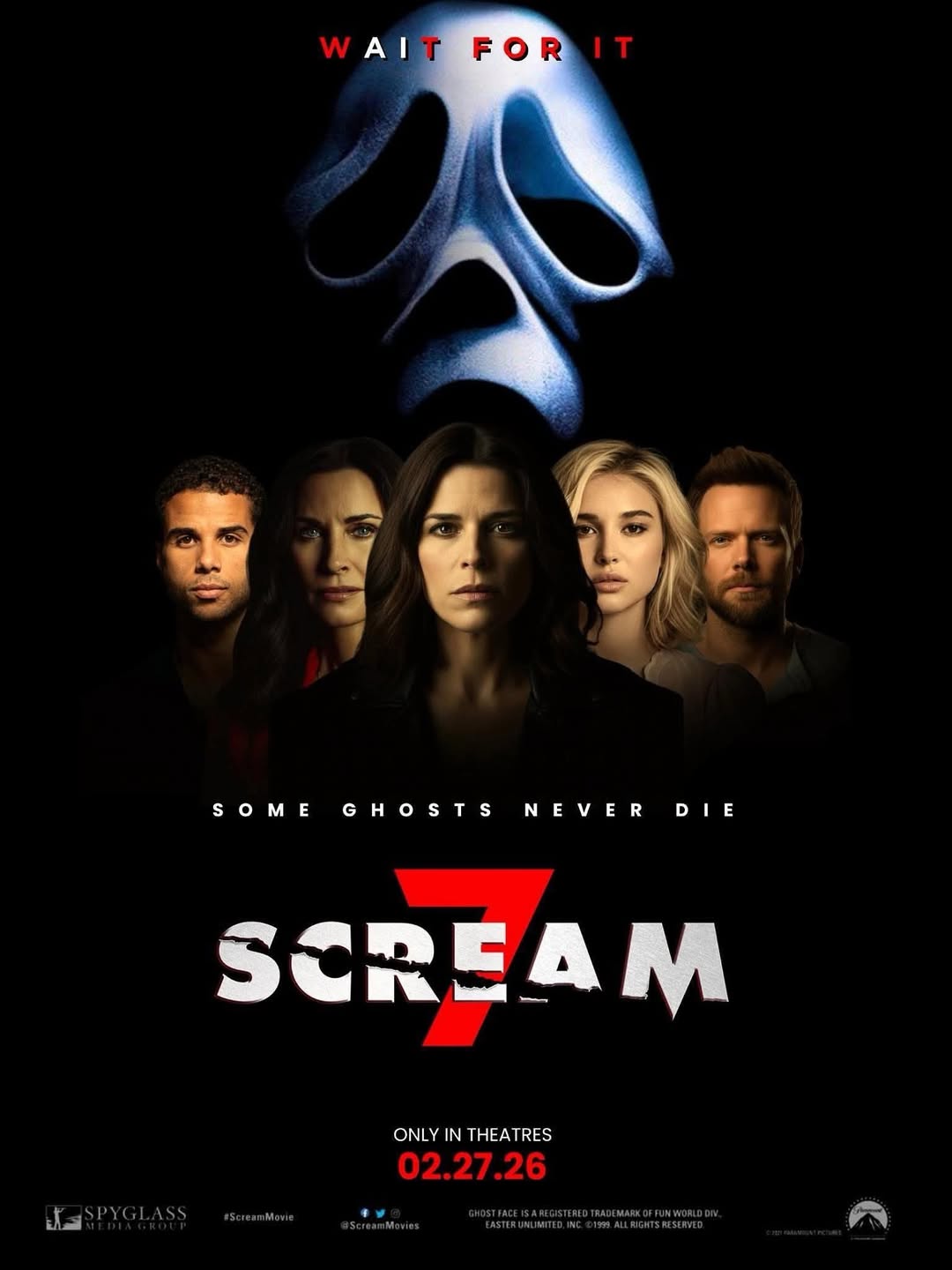
There is a difference between resurrecting a franchise and reviving its pulse. Scream 7 understands that distinction.

There is a difference between resurrecting a franchise and reviving its pulse. Scream 7 understands that distinction. This seventh installment aligns far more closely with Scream 2–4—with the 1996 original remaining peerless—than with the tonal divergence of entries five and six. It is not an attempt to eclipse the original nor to extend the reboot-era mythology. Instead, it is a recalibration: a deliberate return to the structural mechanics and tonal balance that once defined the series—brutal yet playful, self-aware yet grounded, meta without collapsing into parody. It restores the rudimentary whodunit spine, re-centers the franchise’s emotional trinity, and reasserts consequence in a narrative space that had begun to flirt with immunity. It may not reinvent the mask, but it remembers how to make it frightening—and fun—again.

The premise is straightforward: a new Ghostface emerges in the quiet Indiana town where Sidney Prescott has built a life beyond trauma. When her daughter becomes the next target, Sidney is pulled back into the cycle she has spent decades surviving. The simplicity is intentional. This is not a mythology-expanding installment. It is a structural restoration.

When I wrote about the original Scream in 2020, I emphasized how Wes Craven and Kevin Williamson fused satire and sincerity—how the film functioned simultaneously as genre critique and legitimately tense mystery. And in reflecting on Scream 4, I argued that the franchise’s survival depended on maintaining that balance between irony and genuine stakes. Scream 7 understands that lineage. It does not reinvent the formula; it reasserts it.

The humor is sharper than in the previous two entries, and the dialogue once again flirts with meta-awareness without dissolving into self-congratulation. More importantly, the whodunit framework returns to prominence. Scream has always been more mystery than massacre—a slasher disguised as a parlor game. Here, suspicion lingers. Motives matter. The audience is invited to participate again rather than merely observe. That interactive quality—so essential to the original—has been restored.

The kills are similarly recalibrated. They are decisive, occasionally shocking, and refreshingly unwilling to protect characters based on audience expectation. Supporting players are bloodied. Familiar faces are not insulated by nostalgia. The film reinstates a fundamental rule: no one is safe. In doing so, it restores tension that had softened in recent installments.

At the center of this recalibration is the reaffirmation of the franchise’s trinity: Sidney Prescott, Gale Weathers, and a classically-derived Ghostface presence that evokes the psychological intimacy of earlier entries. Strip Scream to its essentials and it has always revolved around those pillars. When they are foregrounded, the franchise regains coherence.

If Scream 4 was the franchise’s first major recalibration, Scream 7 feels like its long-delayed mirror. The fourth installment ushered Scream into the digital revolution—interrogating self-made celebrity, the commodification of trauma, and the toxic symbiosis between violence and visibility. It marked the franchise’s pivot from analog to digital, from landline terror to algorithmic notoriety.

Scream 7, by contrast, gestures toward cultural correction. In a late-2020s climate increasingly skeptical of hyper-digital performativity and increasingly nostalgic for tactile authenticity, this installment feels almost deliberately analog in spirit. The satire is restrained. The violence has weight. The mystery mechanics are foregrounded. If Scream 4 bridged the franchise into the digital age, Scream 7 gently guides it back toward its roots. Both are recalibrations—but pulling in opposite technological directions.

It would be naïve to ignore the production context that shaped this film. Melissa Barrera’s departure following her public political statements altered the series’ trajectory and necessitated a creative reset, with Kevin Williamson returning to write and direct. Freedom of speech is foundational—but not without professional consequence within corporate filmmaking. The result is a film structurally distinct from what entries five and six were building toward.

More concerning than the controversy itself is the critical climate surrounding the film’s release. Its unusually low Rotten Tomatoes score reads less like a measured assessment of craft and more like a referendum on production politics. Evaluated on narrative mechanics, tonal discipline, and franchise coherence, Scream 7 is far from a failure. It is focused, structurally sound, and far more aligned with the franchise’s DNA than its aggregate score suggests.

This return to form may also be more culturally resonant than some critics assume. There is a growing appetite—particularly among younger audiences—for analog aesthetics and classical genre storytelling. Eli Roth’s Thanksgiving proved that an original slasher can thrive in the 2020s. Scream 7 demonstrates that a legacy slasher can endure by remembering what made it compelling in the first place.

In retrospect, Scream 7 may not be the boldest chapter in the franchise—but it may prove to be one of the most necessary. It restores the mystery spine. It reinstates consequence. It reminds us that Ghostface works best when the blade cuts both ways—satire and sincerity, humor and horror. The original remains untouchable. But longevity in horror does not come from constant reinvention. It comes from understanding when to sharpen the knife rather than redesign it.

And sometimes, survival is less about evolution than about reclaiming your identity.

Ryan is the general manager for 90.7 WKGC Public Media and host of the show ReelTalk “where you can join the cinematic conversations frame by frame each week.” Additionally, he is the author of the upcoming film studies book titled Monsters, Madness, and Mayhem: Why People Love Horror. After teaching film studies for over eight years at the University of Tampa, he transitioned from the classroom to public media. He is a member of the Critics Association of Central Florida and Indie Film Critics of America. If you like this article, check out the others and FOLLOW this blog! Follow him on Twitter: RLTerry1 and LetterBoxd: RLTerry
HOW TO MAKE A KILLING movie review

A darkly comedic commentary on when ambition becomes obsession and obsession begins to rationalize itself as virtue.

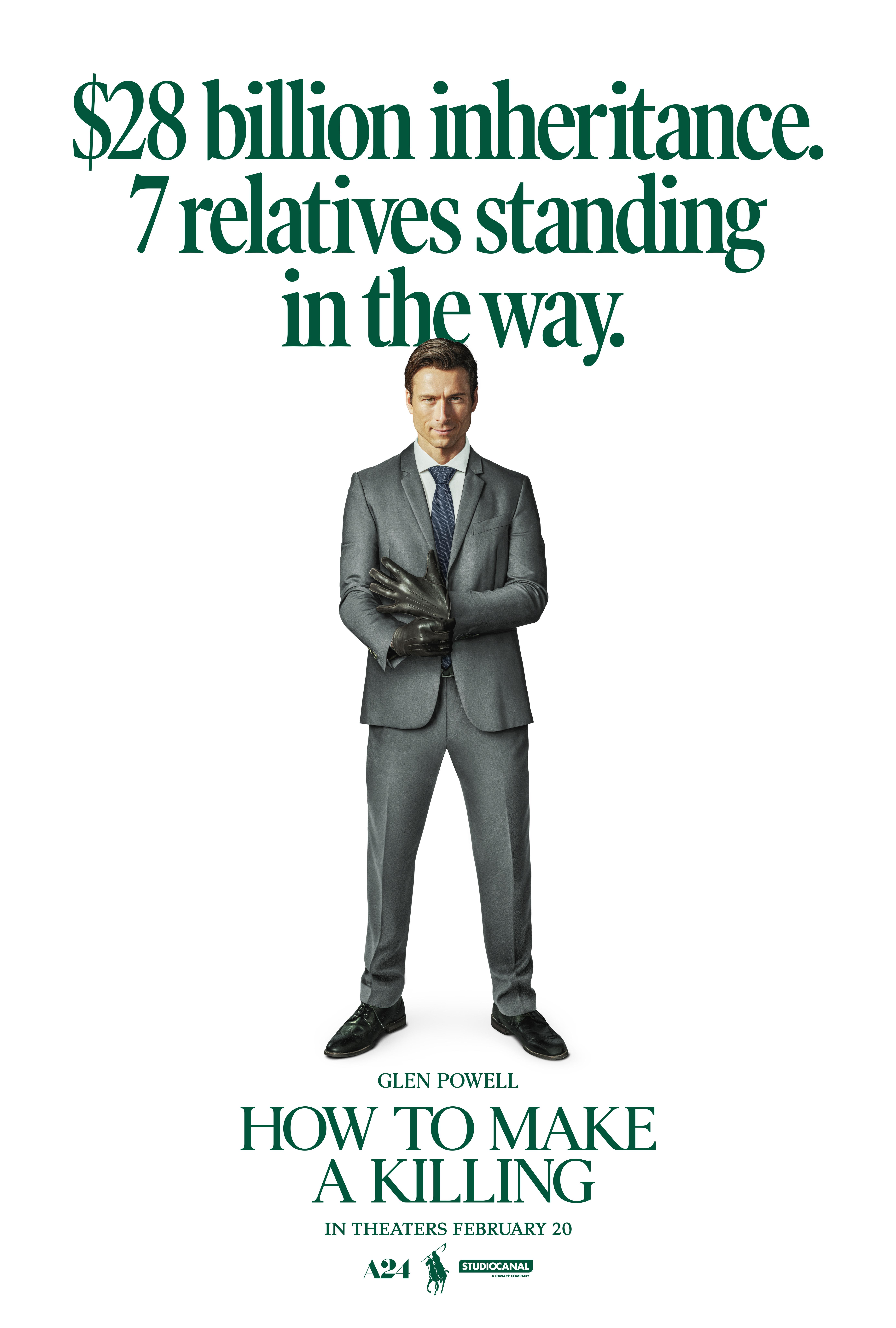
There is a fine line between genius and insanity—and How to Make a Killing lives in that narrow corridor where ambition becomes obsession and obsession begins to rationalize itself as virtue. Writer-director John Patton Ford delivers a smart, sophisticated dark comedy that feels as if it has the soul of a 1940s/50s film noir but expresses itself through more contemporary cinematic means. From the moment the movie opens, you are invested in the fascinating confession of the central character of Becket.

Disowned at birth by his wealthy family, Becket Redfellow (Glen Powell) will stop at nothing to reclaim his inheritance, no matter how many relatives stand in his way.

At its heart, the film reminds us that obsession rarely announces itself as corruption. It presents as vision. As discipline. As genius. Only later do we recognize the erosion of ethics beneath it. Read superficially, the film is a crime drama about financial manipulation and moral compromise. Read more carefully, it is a character study about how the love of money—so often misquoted, so rarely understood—can metastasize into something corrosive. “The love of money is the root of all kinds of evil” is not a condemnation of wealth itself, but of fixation. It is obsession, not currency, that corrupts. And this film understands that distinction with unsettling clarity.

Based upon an early 1900s novel, Ford’s film aligns with and falls within the vein of The Big Short in subject matter but not in spirit. Both explore financial ambition as a moral gamble, but where McKay’s film is kinetic and self-aware—almost gleefully explanatory—How to Make a Killing plays like a contemporary noir stripped of voiceover and venetian blinds. It shares The Big Short’s suspicion of capitalism’s ethical elasticity, yet rejects its comedic distance. Instead, it sinks into fatalism. If McKay’s film feels journalistic—an exposé delivered with sardonic flair—this one feels like a cautionary tale whispered from a holding cell. The satire is muted. The consequences are personal. The system may be flawed, but the focus here is the individual who chooses to exploit it. Tonally, the film feels spiritually aligned with 1940s and 50s film noir. One could easily imagine this plot transposed to postwar America—smoke-filled offices, whispered deals, fatalistic narration. Though not shot as neo-noir, its moral architecture is noir to the core: ambition curdling into self-destruction, intelligence weaponized against itself, inevitability closing in with quiet precision.

Becket is not written as a villain–which is to say that he isn’t written as a classical villain from the outset. But that is the point. He is written as intelligent, disciplined, and—crucially—persuasive to himself. Each unethical decision is internally justified. Each moral line crossed is reframed as strategic necessity. The film traces how obsession reorders one’s moral hierarchy: legality becomes negotiable, relationships transactional, consequences theoretical. It is not greed in caricature form—it is incremental self-deception. Ignoring one’s conscious repeatedly will eventually mitigate the decibel to little more than a whisper before being muted altogether. However, what keeps him from turning completely from sympathetic victim to full-bodied sociopath is that Becket’s conscious does persuade him that there is a line that even he won’t cross.

We, the audience, find ourselves in an uncomfortable position. We root for Becket because we recognize his drive. We admire his focus. We even understand his resentment. Yet we simultaneously want him to stop—to walk away before the inevitable collapse. The film’s framing device, opening where his journey will likely end, casts the entire narrative under the shadow of consequence. It is not a question of whether the fall will come, but how long denial can postpone it and we are held in suspense as to what is going to eventually bring about his downfall. What distinguishes How to Make a Killing from lesser character studies is its restraint. The writer-director demonstrates equal competence in both disciplines—an increasingly rare balance. Nothing feels indulgent. Nothing feels didactic. The film never moralizes overtly; it trusts the narrative arc to indict the behavior. The pacing is clean and deliberate. The plot is simple—but the characters are complex. That is the formula for enduring storytelling.

The film also explores the many faces of wealth—and the different kinds of monstrosity it can produce. There are those who flaunt their prosperity with vulgar bravado, mistaking excess for authority. There are others who manipulate and exploit with a polished smile, weaponizing charm and access as currency. And then there are those who inflate their own sense of importance, confusing proximity to power with moral superiority. Yet the film wisely tempers its critique. Not all wealth is predatory. There are figures of means who genuinely open doors, who extend opportunity—even if their motivations are tinged with ego or paternalism. This nuance prevents the story from collapsing into caricature. The danger, the film suggests, is not wealth itself, but the moral distortion that can accompany its pursuit—or its performance.

Becket’s love interest represents the one thing in his life that isn’t transactional. She falls for him before the money enters the frame—before the inheritance becomes a possibility, before ambition curdles into obsession. He loves her too, in his way. What she offers him is not leverage, not access, not advancement—but something rarer: affection without calculation and companionship without contingency. In another life—or perhaps in another genre—that might have been enough. But noir rarely permits redemption. His compulsion, his fixation on the promise of sudden elevation, becomes the crack in the foundation. The inheritance is not necessity; it is temptation. And temptation, once entertained, demands escalation. The tragic irony is that he already possesses what he claims to be chasing—love, validation, belonging—but he cannot recognize it because he has convinced himself that worth must be quantified. In reaching for more, he loosens his grip on the one relationship capable of saving him. And in true noir fashion, the loss will not feel dramatic when it happens—only inevitable.

There is also a pointed commentary on relationships built upon status, influence, and net worth. The film suggests that when affection is contingent upon achievement—when love materializes only after measurable success—it is less love than leverage. Becket’s romantic entanglement is not merely subplot; it is thematic reinforcement. In the second and third acts especially, he is not simply pursuing someone—he is being pursued by someone whose interest aligns conspicuously with his rising value. That dynamic becomes the first step toward moral descent. Toxic relationships here are not explosive; they are aspirational. And that makes them more insidious. The film quietly warns that those who crave financial or social influence often exploit weakness and tragic flaw, convincing their target that they are both reward and refuge. The toxin may look exquisite—may even taste intoxicating—but it corrodes judgment long before its damage is visible.

How to Make a Killing is not a loud film. It is a steady one. And in tracing the psychology of a man who convinces himself he is justified, it offers a sobering reminder: the most dangerous moral collapses are the ones that make perfect sense to the person committing them–that is, until the pattern is difficult to reverse.

Ryan is the general manager for 90.7 WKGC Public Media and host of the show ReelTalk “where you can join the cinematic conversations frame by frame each week.” Additionally, he is the author of the upcoming film studies book titled Monsters, Madness, and Mayhem: Why People Love Horror. After teaching film studies for over eight years at the University of Tampa, he transitioned from the classroom to public media. He is a member of the Critics Association of Central Florida and Indie Film Critics of America. If you like this article, check out the others and FOLLOW this blog! Follow him on Twitter: RLTerry1 and LetterBoxd: RLTerry
Love-themed Film Scores

Valentine’s Special 2026

With Valentine’s Day approaching, it felt like the right moment to step away from jump scares, body counts, and box office noise—and spend an hour with something far more enduring: love, as expressed through film music.

Cinema has always struggled to say what love feels like. Dialogue often collapses under the weight of it—becoming either too poetic or painfully banal. Film scores, on the other hand, have an uncanny ability to articulate what words cannot: longing, ecstasy, restraint, obsession, memory, and heartbreak. Sometimes all at once.

This episode’s juried selections are not simply “romantic” scores in the conventional sense. These are works that understand love as complicated and often uncomfortable—love that consumes, love that lingers, love that is sacrificed or denied. From classic Hollywood to modern cinema, these scores don’t just underscore romance; they interrogate it.

Some of these films are sweeping and operatic. Others are quiet, restrained, almost painfully intimate. But what they share is an emotional honesty—music that trusts the listener to feel deeply without being told how.

So settle in. Let the music guide the conversation. This is ReelTalk—and today, we’re listening to what love sounds like.

Ryan is the general manager for 90.7 WKGC Public Media and host of the show ReelTalk “where you can join the cinematic conversations frame by frame each week.” Additionally, he is the author of the upcoming film studies book titled Monsters, Madness, and Mayhem: Why People Love Horror. After teaching film studies for over eight years at the University of Tampa, he transitioned from the classroom to public media. He is a member of the Critics Association of Central Florida and Indie Film Critics of America. If you like this article, check out the others and FOLLOW this blog! Follow him on Twitter: RLTerry1 and LetterBoxd: RLTerry