
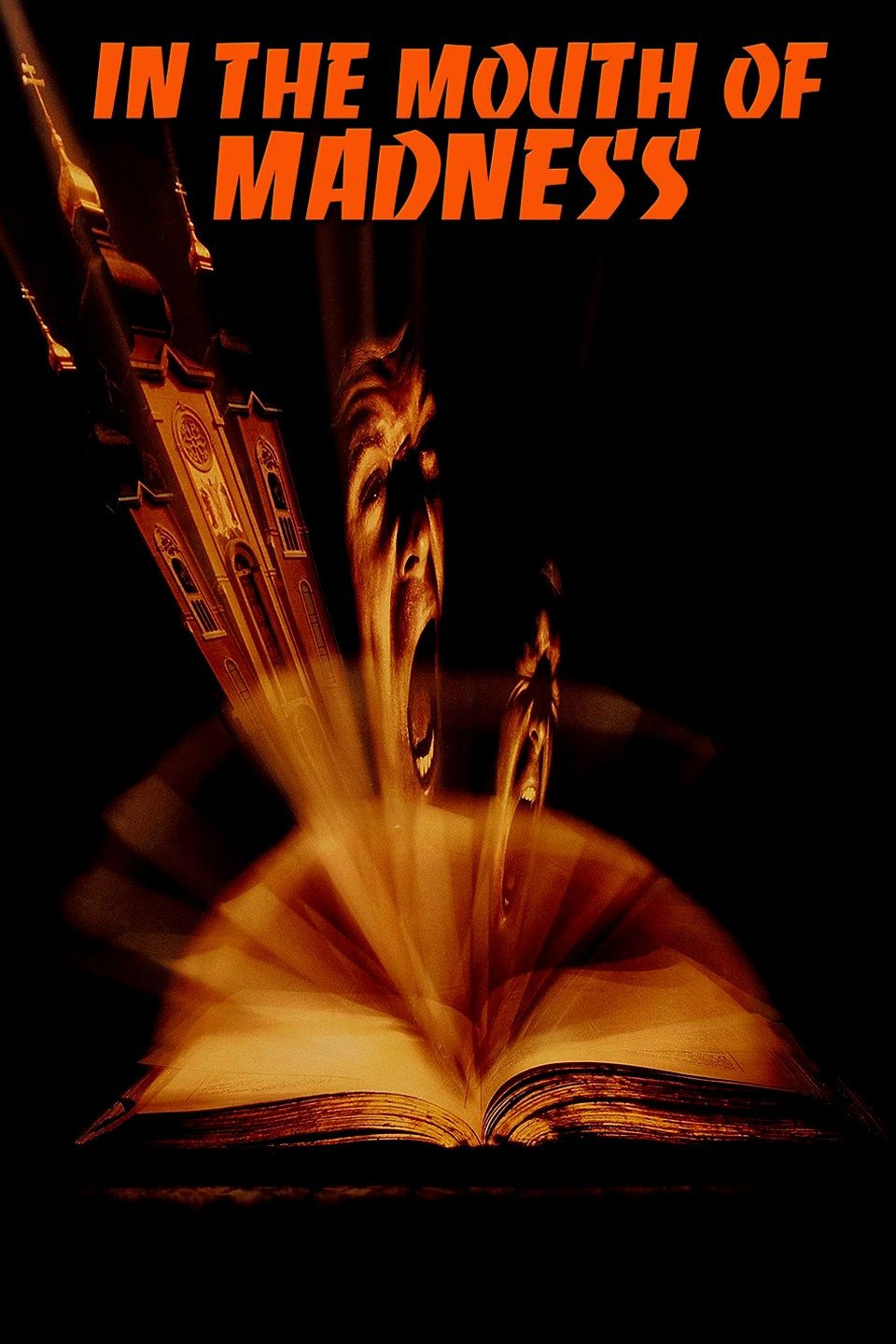
John Carpenter’s “In the Mouth of Madness” full review

Stephen King meets The Twilight Zone in this underrated Carpenter film! It isn’t often that I am introduced to a, what should be a well-known, horror film that is completely unknown by me. There are certainly many indie and obscure horror films that I am unfamiliar with; but because this is a Carpenter film in my lifetime, I should have known about it! Thankfully my penpal, fellow cinephile, and friend Leon in Germany selected this gem for our weekly film screening. Each week we take turns selecting a different film for us to watch. Sometimes it’s a movie that one of us likes and wants to share, other time, it’s a film that neither of us have seen but want to. This was the former. When Leon asked if I’ve seen In the Mouth of Madness, I replied with I haven’t even heard of it. When he told me it was John Carpenter in 1994, I was shocked! And is stars Dr. Alan Grant and Damian himself, Sam Neil! You may be wondering why you have not heard of this film, and that is most likely because it performed poorly at the box office and was panned by critics. Fortunately, a small cult following has developed over the years, but it’s largely still an obscure mid-90s horror film. The reason for this is likely because the film has been accused of difficult to follow, but I do not believe that to be true. It’s true if you need to be held by the hand through the plot, but this film is one of those that has so much depth that you will want to be fully engaged in every minute, every frame. In the Mouth of Madness contains many Stephen King, and Twilight Zone elements that truly make this incredibly rewatchable. The cinematography and score are beautiful, and I find the screenwriting fascinating! I’d even venture to conclude that this is Carpenter’s final masterpiece. Carpenter’s vision of John Trent’s (Neil) descent into madness is terrifyingly spine-chilling.

Summary: When horror novelist Sutter Kane (Jürgen Prochnow) goes missing, insurance investigator John Trent (Sam Neill) scrutinizes the claim made by his publisher, Jackson Harglow (Charlton Heston), and endeavors to retrieve a yet-to-be-released manuscript and ascertain the writer’s whereabouts. Accompanied by the novelist’s editor, Linda Styles (Julie Carmen), and disturbed by nightmares from reading Kane’s other novels, Trent makes an eerie nighttime trek to a supernatural town in New Hampshire. (IMDb)

Go into this movie with an open mind. I highly recommend this because I still do not fully understand everything. But. That is the beauty of this film. There are so many layers that you can peel back and do a close reading. Perhaps this film was ahead of its time in that there is a meta nature to the experience of watching this film. The central character of Trent must discern what is fantasy and what is reality; and by extension, we are challenged, as the audience, to very much the same task. We must decide if the imagery before our eyes is reality or fantasy, to be taken literally or figuratively. While meta films are much more popular now, it was highly experimental back in 1994/95. The beauty of horror is its ability to force us into uncomfortable places in which we come face to face with that which terrifies us–sometimes to our very core. And what is more terrifying than the possibility you may be crazy or a hoax is attempting to gaslight you? When our very psyche feels under attack, it’s fight or flight.

We are drawn into the story because we are naturally drawn to the repulsive, because there is a subconscious masochistic desire to experience a pleasurable unpleasure. Much like in Sunset Boulevard where we are not concerned or preoccupied with what happens to Joe Gillis (since we know he’s dead from the opening scene), we are profoundly curious about HOW he winds up floating facedown in a swimming pool. We can liken that to In the Mouth of Madness because we know Trent, whether sane or insane (though, that is a legal term), is institutionalized and placed in the padded room. Once we flash back to a few weeks earlier, we are morbidly curious as to how this otherwise intelligent, rational man winds up a prisoner of his own mind.

Another question that the film confronts us with is the power of literature. Is it possible for a writer to be so incredibly popular, and enough people become engrossed in the words that the line between fantasy and reality becomes blurred to the point that people begin to believe that the “fictional” characters and setting are a real place? That is certainly a powerful concept to tackle in a low-budget horror film. But Carpenter was never one to shy away from a bold concept or statement. It’s clear that the film is a commentary on the prolific writing and power of the words of authors like King or Lovecraft. Furthermore, the film suggests that there is a transcending power of the text to nest in the subconscious to tap into primal fears and carnal actions. Trent slowly comes to realize that the readers of Kane’s works have been placed under a spell, of sorts, that predisposes them to taking on the characteristics of the literary characters and giving themselves over to behaving like the monsters that are written about in Kane’s novels.

Kane likens his books to the Bible in a sacrilegious attempt to prove that if you convince enough people to read your books that you can control them, and ostensibly become a god. Kane certainly displays signs of a god-complex; he seeks to be in control over not only his fictional Hobbs End but the whole world. And instead of taking over the world by physical force, he seeks to take over the world through the power of the written word. It’s a fascinating concept to think about, and perhaps you can think of books that have greatly influenced society to the point that behavior changed. Can a book truly spark widespread delusions and paranoia? Trent certainly believes so. I love how this feels like an episode of the Twilight Zone on crack. The power and success of The Twilight Zone is due in large part to the show’s ability to comment on societal behavior through the use of bizarre or shocking imagery. Pose a big question grounded in reality, then use science-fiction, fantasy, or horror as a vehicle to explore various perspectives and possible outcomes.

John Carpenter provide us with a fantastic score that will penetrate you all the way down to the bone. It’s both shocking and beautiful all at the same time. Originally Carpenter desired to have Metalica score the film, but the combination of not fitting into the budget and an unwillingness to license the rights left John to compose his own score that mimicked what he wanted from Metalica. The score of In the Mouth of Madness was not intended to be spooky but to keep the audience ever so slightly off-balance. The cinematography is also an element to take note of when analyzing this film. The lighting, camera movement, and shot selections convey a neo-noir tone. Similar tones can be found in Mulholland Drive and Pulp Fiction. Although there are many horror elements in this movie, it bares a lot of similarities to neo-noir in how it handles the central character and the conflict he’s been thrown into that leaves him in over his head. And of course, it ends badly for Trent.

I am surprised that not more horror fans know of, much less, like this movie. It really seems to have two camps: one that loves this film and the other that hates it. Honestly, it appears to be one of the more polarizing films within the horror library. It’s one that I will certainly rewatch because of the highly intellectual component. There is tremendous depth to the narrative and it strikes me as the type of film that will give the viewer something different to think about every watch. It’s visually stunning and the imagery is macabre. Definitely one that I will recommend to fellow horror fiends like me.

Ryan teaches screenwriting at the University of Tampa. If you like this article, check out the others and FOLLOW this blog! Interested in Ryan making a guest appearance on your podcast or contributing to your website? Send him a DM on Twitter or email him at RLTerry1@gmail.com! If you’re ever in the Tampa area, feel free to catch a movie with him!

Follow him!

Twitter: RLTerry1

Instagram: RL_Terry

2018 in Review Plus My 10 Best and Worst Films

I’ve read everything from 2018 has been the best year for cinema in recent years to the worst. Aside from the valid argument that “best” or “worst” are highly subjective when basing it on a qualitative criteria, there is no doubt that it has certainly been a year with a lot of variety. There have been some great films and complete dumpster fires. If I were to evaluate 2018 cinema, I would say that this year’s selections skew much closer to best than worst in recent years. Personally, I feel that it has been an exciting year! This observation is evident through the plethora of dynamic conversations on #FilmTwitter. While I do not feel that there is any singular standout film in 2018, there are ones that I feel help to make this a banner year, a truly memorable time in cinema for blockbusters, auteur, and indie films. The combination of new releases in the theatre, through streaming services at home, or sometimes both concurrently, provides audiences with an unprecedented ability to access a wide assortment of movies and films to satisfy even the most discerning cinematic palate.

While it is certainly up for debate how 2018 performed compared to past years, there is little debate that the horror (and horror adjacent) genre has become increasingly mainstream. But is that what the horror community wants? As a longtime fan of the American horror film, I gotta be honest with you that I am not a huge fan of how popular this genre has become. For the longest time, to be a fan of the horror genre was something niche. It was seen as this weird or macabre subculture to which outcasts, geeks, and goths, for example, belonged. Without writing an entire research paper on the subject (which, now that I think about it, may be a good idea), the horror community felt like a family or perhaps a neighborhood. Now it’s getting to the point that it feels like a city. Horror has always been popular and bankable, but it hasn’t been until the last couple of years that it has exploded among a wide array of movie lovers. With the growing affinity among general audiences, that sense of family is slowly fading.

Perhaps it’s the idea that our attraction to the repulsive, the “pleasurable unpleasure” as Freud would say, does not feel as special as it once did. If there is a positive side to more and more people looking to be entertained by horror, it is the number of horror films and shows released. Standout movies and shows from 2018 are A Quiet PlaceHereditaryHalloweenThe Haunting of Hill HouseAmerican Horror Story: Apocalypse, and The Chilling Adventures of Sabrina. All highly successful and extremely well made, a few award-nominated and winning even! For 2019, many of us are eagerly awaiting the remake of Pet SemataryIT: Chapter 2Us, and others. I love how there seems to be new horror movies and films coming out all the time. Gives me new movies to watch! But the tradeoff is a lot of “new fans” who think they know the genre in the same way as us lifers; furthermore, flock to, not only the cinema, but to Halloween Horror Nights at Universal Studios to create 2-3hr waits for the world-class haunted mazes/houses, many of which are based on horror films and shows. HHN28 was the most crowded that I’ve ever seen it. Maybe it will be up to us lifelong fans of the horror genre to stick together to discuss what we’ve loved and have demonstrated an appreciation for a long time.

Horror isn’t the only genre or subject that has received a lot of attention in 2018, we also had some incredibly strong “non straight white male” writers, directors, central characters, and actors. From incredible performances delivered by Toni Collette, Viola Davis, Glenn Close, and Olivia Colman to films such as BlindspottingWidows, Boy Erased, and Can You Ever Forgive Me?, just to name a few, we have certainly seen a much-needed increase in representation from those whose stories had more difficulty making it to the silver screen. There are many other fine examples of this shift in cinema, and I hope that this trend continues into 2019 and beyond. With all the outlets for storytellers now, it’s a great time to have the money and resources to bring hidden stories to life for all the world to see.

Okay, enough with some of my 2018 observations, here is my Top 10 Films of 2018 list followed by my most disappointing films list. If I wrote a formal review on my blog, I added the link to the title. Some films are so bad that I don’t even bother reviewing them on here. Haha.

Top 10

Honorable Mention: Annihilation

10. Halloween

9. Tully

8. Widows

7. Green Book

6. A Simple Favor

5. A Quiet Place

4. Won’t You Be My Neighbor?

3. A Star Is Born

2. Hereditary

  1. The Favourite* After a lot of thought as I’ve been reviewing 2018, and when I was selecting my picks for the Oscars, I realized that I actually liked The Favourite a little more then ASIB. So, I’ve updated my blog to reflect that. (01/22/19).

Bottom 10

10. Christopher Robin

9. Happy Time Murders

8. 15:17 to Paris

7. Rampage

6. Skyscraper

5. AXL

4. Death Wish

3. Truth or Dare

2. Slender Man

  1. KIN

Check to see if I’ve reviewed a movie from 2018 that you are interested in by typing the title into the search bar at the top of the page. There are 44 reviewed NEW 2018 films on my blog plus more than 250 other films! For horror fans, checkout my All The Horror blog from October that has 31 brief reviews of horror and Halloween movies. Odds are, you’ll find some for which you are looking!

Ryan is a screenwriting professor at the University of Tampa. If you like this article, check out the others and FOLLOW this blog!

Follow him!

Twitter: RLTerry1

Instagram: RL_Terry
Thrillz (theme parks): Thrillz.co

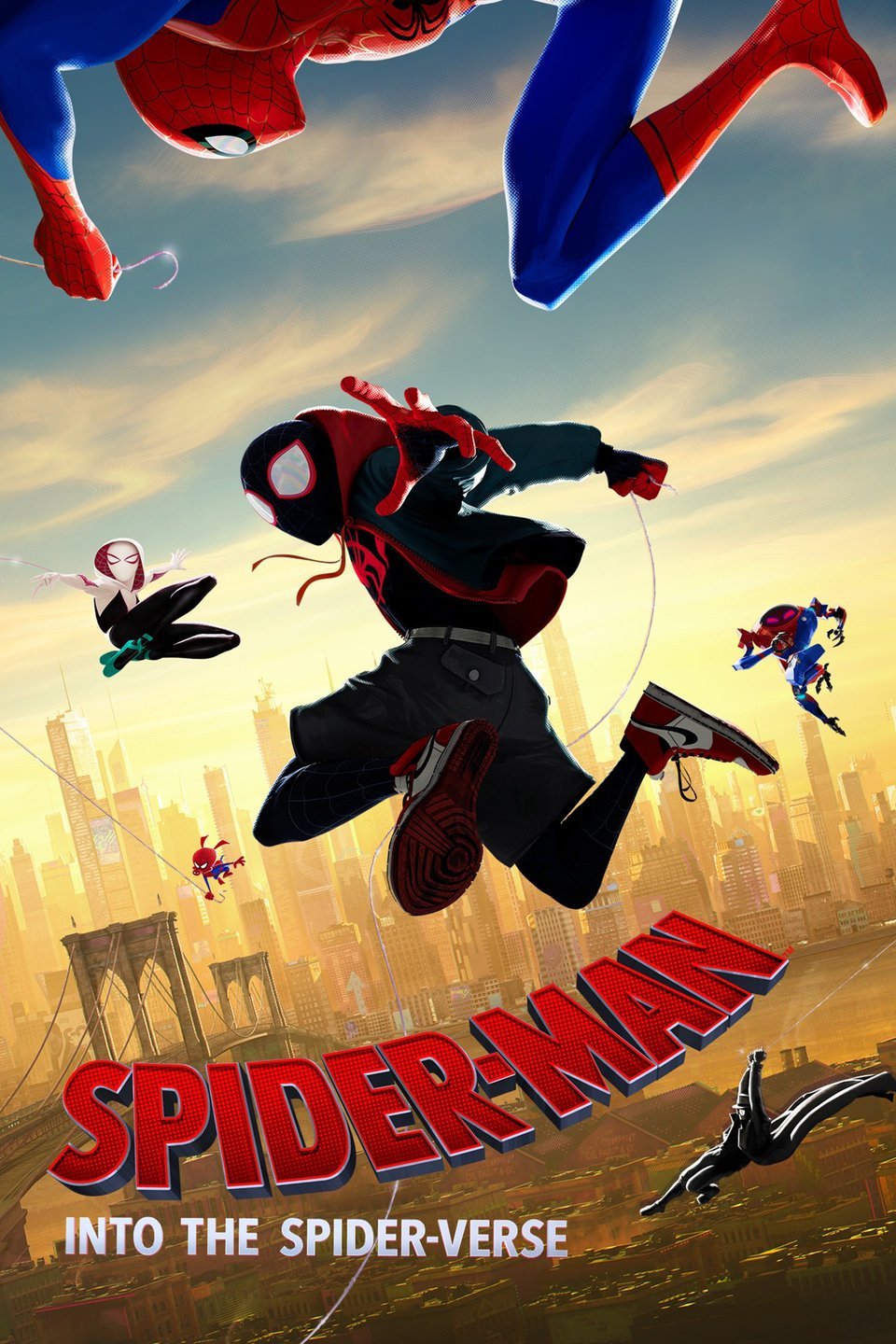
“Spider-Man: Into the Spider-Verse” brief film review

Now THIS is the amazing Spiderman! Eat your heart out Tom Holland and move over Incredibles and Ralph for the best animated feature of 2018. Even if you do not care for comic book or superhero movies, by in large, but love excellent motion pictures (animated or live-action), then I can almost guarantee that you will thoroughly enjoy and greatly appreciate Sony’s Spider-Man: Into the Spider-Verse. Although there have been a handful of animated films that I have liked in recent years, I have not felt emotionally and physiologically engaged with an animated feature to this degree since Kubo and the Two Strings. What both these animated features have in common is groundbreaking artistic precision that typifies the art of animated visual storytelling. Not only does Spider-Verse blow all other animated films out of the water this year, in terms of its contribution to the art and science of motion pictures, I put it on par with Kubo. The attention to production design details and mindblowing editing set the bar incredibly high for animated features moving forward. While the visuals have been likened to an acid trip, do not allow that to dissuade you because never once did I find the avant-garde artistic expression dizzying or obnoxious. It was completely immersive. There was genuine, tangible emotion felt in every frame. And the Stan Lee cameo was priceless. Underscoring everything on screen is the phenomenal screenplay upon which this mesmerizing animated feature is built. Undoubtedly, you will find yourself emotionally invested in the central character of Miles and the chief supporting cast, including the fantastic villain King Pin. There is so many layers to this story, and it works on several levels such as: family, love, self-sacrifice, and more. Highly recommend this film!

Ryan teaches screenwriting at the University of Tampa. If you like this article, check out the others and FOLLOW this blog! Interested in Ryan making a guest appearance on your podcast or contributing to your website? Send him a DM on Twitter or email him at RLTerry1@gmail.com! You can catch Ryan most weeks at Studio Movie Grill Tampa, so if you’re in the area, feel free to catch a movie with him!

Follow him!

Twitter: RLTerry1

Instagram: RL_Terry

“Black Christmas” full horror film review

Move over Ralphie for Bob Clark’s original Christmas story. Released in 1974 and predating John Carpenter’s Halloween by four years, Clark’s Black Christmas is actually the the first modern slasher film. In fact, many have argued that Carpenter’s iconic holiday horror film, that made Michael Myers a household name, is an unofficial sequel to Black Christmas. Bob Clark laid the groundwork for Michael to terrorize Haddonfield; but, both Black Christmas and Halloween along with 1979’s When a Stranger Calls collectively created the foundation upon which the 1980s slashers were built. Although I had heard of this film prior to this year, I did not make time to watch it until many of my podcast friends talked about it. So, for the weekly film screening with my cinephile penpal a couple of weeks ago. Originally, I had not intended to review it since so many others have covered it this Christmas season; however, after being encouraged to review it by a few of my friends in the #PodernFamily community, I’m going to talk about my opinions on this film. In short, it is one of the most terrifying horror films that I have ever watched. And it’s not because it’s particularly violent or gory, but because of its incredibly unsettling atmosphere caused by the mysterious, vulgar phone calls and the creepy POV of the slasher entering the sorority house during the Christmas party. That bit of dramatic irony paired with the sequence of disturbing events, work together to generate nightmare-inducing thoughts and imagery in the mind of the audience.

Now for the IMDb summary before we dive deeper! As winter break begins, a group of sorority sisters, including Jess (Olivia Hussey) and the often inebriated Barb (Margot Kidder), begin to receive anonymous, lascivious phone calls. Initially, Barb eggs the caller on, but stops when he responds threateningly. Soon, Barb’s friend Claire (Lynne Griffin) goes missing from the sorority house, and a local adolescent girl is murdered, leading the girls to suspect a serial killer is on the loose. But no one realizes just how near the culprit is.

The first moment in the movie to truly catch my attention was the POV of the serial killer. Before watching this, I was under the impression that the first horror film to open with a POV in this fashion was Carpenter’s Halloween. It was at that moment that I looked up the release year and shocked to find that Black Christmas was released four years prior. The unnerving atmosphere of dread is generated in part by the dramatic irony of the killer being in the house and the vulgar mysterious phone calls that consistently plague the sorority girls. Although there are scenes that take place outside of the house, the horrific events largely take place inside a house. A house–more specifically–a home–where you should be and feel safe. The invasion, the penetration of safety is a terrifying prospect for anyone who has ever walked into their home alone wondering if someone may be there. The idea that someone may be in your house sticks with you long after the movie ends. And that is the power of the unnerving horror of Black Christmas. I argue that the level of terror is higher in this movie than Halloween because of just when this story takes place. Both Halloween and Black Christmas concern themselves with a serial killer sneaking inside the home unbeknownst to the owners but Black Christmas takes place at the time of year that we should feel the warmest and safest. It’s that stark contrast between the magic of Christmas and the horror befalling the sorority house that impacts us more than the events in Haddonfield on Halloween. Halloween is a time that we expect to be scared, whereas Christmas is a time that we expect to be warm and safe.

Unlike the merciless or meta-kills of Jason or Freddy, the killer only known as Billy specializes in psychological horror. Although there is more to Jason than just killing teens and college students, he essentially seeks to rack up as many kills as possible. Much in the same way, Freddy enjoys increasing his kill count too. However, Billy stands in contrast because he is not merely concerned with racking up a body count as he is truly terrifying the girls and their house mom. The actions of Billy are a vehicle for the fears of the audience. His victims and methods of execution, if you will, comment on the character types that he’s going after. Moreover, the beauty of Billy’s true identity remaining mysterious is that he can be whomever you want him to be. Furthermore, the victims can be whomever you want them to be. It’s the type of horror film that provides the audience with the ability to place themselves in the shoes of the killer. But Billy isn’t the only star of the film, we spend sufficient time with each of the characters to understand their personalities and desires. This makes them more than just eye candy for Billy or the audience. We can empathize with each of the victims and those with him they have friendships or a relationship. There are few moments that we get to see Billy. For the most part, we are always looking through Billy’s eyes. Billy has nothing distinct about him. No motive, mask, backstory, proprietary weapon–nothing. And it works so incredibly well! It’s this lack of anything in particular that would make him out to be someone unique that terrifies us. He can literally be anyone who is simply terrifying these girls because “they were home” (where have we heard that before?) or they left the door unlocked or a window open.

Hitchcock stated stated on more than one occasion that (and I am paraphrasing) there is no greater fear than that of an opened door. Bob Clark takes a queue from Hitch in that he relies heavily upon that which in unseen or unknown. Relying upon that which is unseen forces the audience to engage the film on a personal level by creating scenarios for the violence off screen. Another quote of Hitchcock is related to Clark’s approach in this film, “always make the audience suffer as much as possible.” And there are plenty of scenes in Black Christmas that will induce suffering in the minds of the audience. We aren’t given a backstory on or motives of the killer, but evidence suggests that he has a preoccupation with the idea of pregnancy or motherhood. Moreover, there are different types of mothers or maternity examples in the film from a sorority house mother to a knocked-up college student contemplating an abortion. Interestingly, this is where Black Christmas refuses to conform to the morality play underscoring many horror films in which teen and college students engaging in deviant or indiscriminate sexual behaviors are the ones killed off. The point-of-view movements and kills take you out of your seat and into the narrative as a quasi accomplice to the murders. Of course, we are not prevued to all the murders as there is a rape and murder in the same area that is said to be linked to Billy but we never truly learn the origin of these murders or even the true identity of Billy.

Although Black Christmas is a serious slasher, it is not without its comedic moments. The sorority mom and her booze will keep you laughing while one of the police officers will have you rolling over in your chair with his complete incompetence and lack of knowledge of fellatio. The film never falls into the area of self-aware or parody, but it does successfully balance out the dark narrative with the more lighthearted elements.

If you’re looking for another holiday horror movie to add to your list of Christmas films to watch, then you definitely want to add this one to your lineup. It’s perfectly dark and sinister, takes place in an ominous sorority house that provides us with an incredibly creepy atmosphere, and infamous ending. Instead of shelving it until the holiday season each year, it should be treated like Halloween and other slashers. It’s good year-round! It’s an important film in the horror library because it was the first to give us so many of the tropes that would show up later, and even thought to be originally attributed to later films.

Ryan is a screenwriting professor at the University of Tampa. If you like this article, check out the others and FOLLOW this blog!

Follow him!

Twitter: RLTerry1

Instagram: RL_Terry

Thrillz (theme parks): Thrillz.co

“Instant Family” brief movie review

Surprisingly good! You’ll want to adopt this movie into your heart. Have you ever seen a trailer for a new theatrical release and just assumed it was another generic Hallmark or Lifetime movie making its debut on the big screen? That is precisely what I thought of Mark Wahlberg’s Instant Family. In fact, the only reason I watched it last night was because there wasn’t anything else (and I didn’t want to see the neutered Deadpool cash grab). But, I am glad that I decided to watch it! Not for reasons that it’s a “great film,” but because it was a heartwarming, inspirational story told effectively! There is a refreshing unapologetic approach to familial conflict that holds nothing back. It’s a no-holds-barred dramedy that addresses the mountains and valleys of fostering/adoption, specifically sibling fostering/adoption. If I was to liken this movie to one that we are largely familiar with, I would compare it to Parenthood, but one that is for the 21st century and concerns itself with the foster system. The movie, through the trailers, sets itself up to be an over-the-top comedy, but it was far from being a farce or slapstick comedy. When Instant Family comes from the same director of Daddy’s Home and Daddy’s Home 2, you already have preconceived notions of what the experience of this movie is going to be. Fortunately for audiences, this movie is far from the former two. And why is that? The short answer is that there is a sort of flawed humanity underscoring everything. No pretense about any of the characters. If you’re looking for authenticity, a realness about true-to-life characters, situations, and conflict, then you will definitely want to catch Instant Family.

When Pete and Ellie decide to start a family, they stumble into the world of foster care adoption. They hope to take in one small child, but when they meet three siblings, including a rebellious 15-year-old girl, they find themselves speeding from zero to three kids overnight. Now, Pete and Ellie must try to learn the ropes of instant parenthood in the hope of becoming a family. (IMDb)

While there is a lot of satire in the movie, there is never a moment that you lose your empathy for Pete and Ellie. They come from families that could very well be your own, with all the jabs, competition, and patronization that comes along with them. Even the adoption center and fair scenes, there are elements of the conversations and experiences that may be exaggerated for comedic purposes, but they are all still very much grounded in reality. Pete and Ellie are extremely eager to do a good job, and even employ some of the same approaches they use for flipping houses, but in stead use them to flip people. Some of the irreverent jokes are hilarious! There is one about rebranding foster children as rescue children like the pound for animals was rebranded rescue. The movie also takes audiences behind the faces at the adoption center to reveal the tragic, hard lives that the children and teens come from. Truly highlights the importance of looking at becoming a foster or adoptive family in order to give a child a nice home. Beyond the social commentary on the adoption and foster system, there is also a lesson to be learned that can apply to any number of areas of our lives. Such as knowing precisely why you want to do something, not just the fact you feel it’s what is supposed to be done. The movie will hit you with thought-provoking moments that will force you to face what you think of foster kids and the foster system. I also appreciate the movie for depicting difference kinds of parents–quite the modern bunch! So much diversity is represented, and each prospective parent(s) is inspired by ones encountered by the writer-director Sean Anders’ own journey as he and his wife adopted three siblings.

This is a shorter review because I am getting busy with the end of the semester, but I wanted to provide some brief thoughts on it anyhow. After this week, I’ll be back to my regular article entries.

Ryan is a screenwriting professor at the University of Tampa. If you like this article, check out the others and FOLLOW this blog!

Follow him!

Twitter: RLTerry1

Instagram: RL_Terry

Thrillz (theme parks): Thrillz.co