
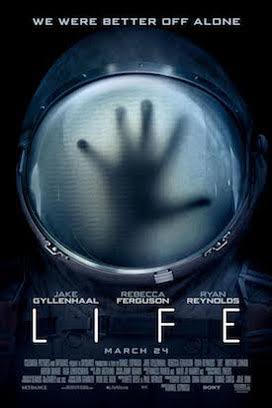
“LIFE” movie review

Chilling! In space, no one can hear you scream. Although that tagline is associated with Ridley Scott’s groundbreaking space-horror Alien, director Daniel Espinosa’s LIFE delivers an intensely dark thriller that will have you screaming and cringing from the moment life on Mars is discovered. In the same vein as AlienLIFE is a science-fiction horror that may look like Gravity and might even have the strong orchestral sounds of Interstellar, but provides audiences with an entirely different experience. Borrowing from Alien and Gravity, Sony and Columbia Pictures craft a new space-horror narrative that can sufficiently serve as a standalone film–and be great in that–but also has potential for a sequel or two. Interestingly, there are parallels to Ridley Scott’s Alien beyond the premise; LIFE also features the same number of crew members and other more subtle elements. That being said, LIFE is definitely not a knockoff Alien nor is it trying to be Ridley Scott’s critically claimed film as it does not contain the social commentary on gender, sex, and family. However, imitation is the highest form of flattery, and LIFE pays both homage to the film that likely inspired it but delivers a comprehensive science-fiction horror experience that provides ample twists, turns, and even some emotional connection along the way.

A group comprised of engineers and researchers on board the International Space Station (ISS) are on the brink of one of the most important discoveries in human civilization: life on Mars. Rory Adams (Ryan Reynolds), David Jordan (Jake Gyllenhaal), Miranda North (Rebecca Ferguson), Sho Murkami (Hiroyuki Sandana), Hugh Derry (Ariyon Baker), and Ekaterina Golovkina (Olga Dihovichnaya) represent several different counties, all working in cooperation on this groundbreaking mission. After the satellite, carrying the Martian sample, is retrieved from spiraling out of control towards the ISS is secured, the group of astronauts are faced with the crisis and task of retrieving it. After a daring retrieval, what should be a joyous discovery–something out of a scientists dreams–soon becomes a living nightmarish game of hide and seek. When the specimen from Mars begins to grow rapidly and become more and more intelligent, it stops at nothing to continue to feed the alien’s insatiable appetite and its goal to find a new home.

Initial impressions of LIFE leave you with noticing just how much like Alien it feels. It’s been nearly forty years since the Ridley Scott cinematic masterpiece, but in that time, no other science-fiction/horror film has come this close to delivering a similar (note: not as high on the cinematic totem pole as its predecessor) experience to that which first terrified audiences in 1979. One of the primary differences between Alien and LIFE is just how much closer to home this horrifying experience occurs. Whereas with the former, the alien encounter takes place hundreds of lightyears away, the latter’s narrative takes place just outside of our atmosphere on the ISS. Not that LIFE feels more intimate than Alien–it doesn’t–but the proximity of this story might add a little something more to the edge that you’re already sitting on as the horrific events unfold on the space station. Pacing is similar to Alien in that LIFE has a slow burn during the first act. To balance this slow burn or to keep audiences from thinking that it’s taking forever for the movie to really get started, the film begins with the “big event” right at the very beginning. The “big event” being the apprehension of the satellite carrying the Martian specimen. But for all it’s similarities, this movie provides a different experience that can certainly stand on its own. LIFE may have been inspired by Alien, but it is certainly not a ripoff.

I’ve been quite critical of the CGI-effects of films in more recent years, but the brilliance of the alien life form in LIFE is the degree to which it feels organic. In the beginning, the life form is little more than a single-celled organism; however, as the plot thickens, the organism begins to take a more chilling form and shape. Eventually, the alien develops a frightening grin and a mysterious-like form. One of the scariest parts of Ridley Scott’s Alien was the degree to which the Xenomorph feels so real that, even in your seat, you could feel the acidic slime and your body likely felt the excruciating pains of that iconic moment when the alien shoots out of the stomach. Part of that can be attributed to the use of pneumatics, animatronics, miniatures, and other practical effects standards. Yes, the alien life form in LIFE is computer-generated, but it also has a very real nature to it. Instead of focussing on how to make the alien as impressive as possible, it would appear that the special effects artists (whose work can be seen in the Transformers movies) focussed more on the small details that ordinarily give a CGI character away. Just like with the brilliant visual effects work in Ex Machina, the visual effects of the alien are flawless.

There is an inherent level of unpredictability in LIFE even after the unavoidable similarities to AlienLIFE plays around with the final girl trope and the killings have a strategy or method to their madness. Conspicuously missing from the characters of LIFE in a comparison to Alien is a Ripley-like character. Does the film portray strong female characters? Certainly. But LIFE keeps you guessing because the order of the deaths do not follow any predictable pattern. Do not allow yourself to fall into the trap of being predisposed to the order of the killings to be based up on star billing. Speaking of the characters, effectively managing an ensemble cast is always difficult. So often, some characters in the ensemble get lost or do not receive nearly as much development as the more obvious leaders. Not true with LIFE. True that there is not a large degree of character development all the way around, but each of the characters is treated with equal screen time and emphasis. That is, until death occurs. The excellent handling of this ensemble gives LIFE an extra dynamic that lacks in other ensemble cast films, thus helping this science-fiction horror to stand out from others that are similar in premise or plot. This movie has a “life” of its own.

2017 seems to be shaping up to be a year of excellent movies! We are just about to finish the first quarter of the year, and already there have been some great motion pictures. Furthermore, 2017 seems to be the year of the horror film because so many have made the theatrical distribution circuit. For those who love a good science-fiction thriller, you will not be disappointed with LIFE. Albeit the film may not be able to sustain the magic and horror for the entire runtime, it successfully delivers a terrifying experience for most of the film. If you don’t mind some cringeworthy moments and the dark tone of the film, then this is definitely one to see this weekend.

PS. I saw Power Rangers this week as well, and it was a delightful film! Yeah, it’s a little campy, but that’s to be expected. Definitely the best Power Rangers motion picture. All-in-all, it sufficiently pays homage to the 90s show but provides audiences with a new story. Go-go see it too!

Written by R.L. Terry

Edited by J.M. Wead
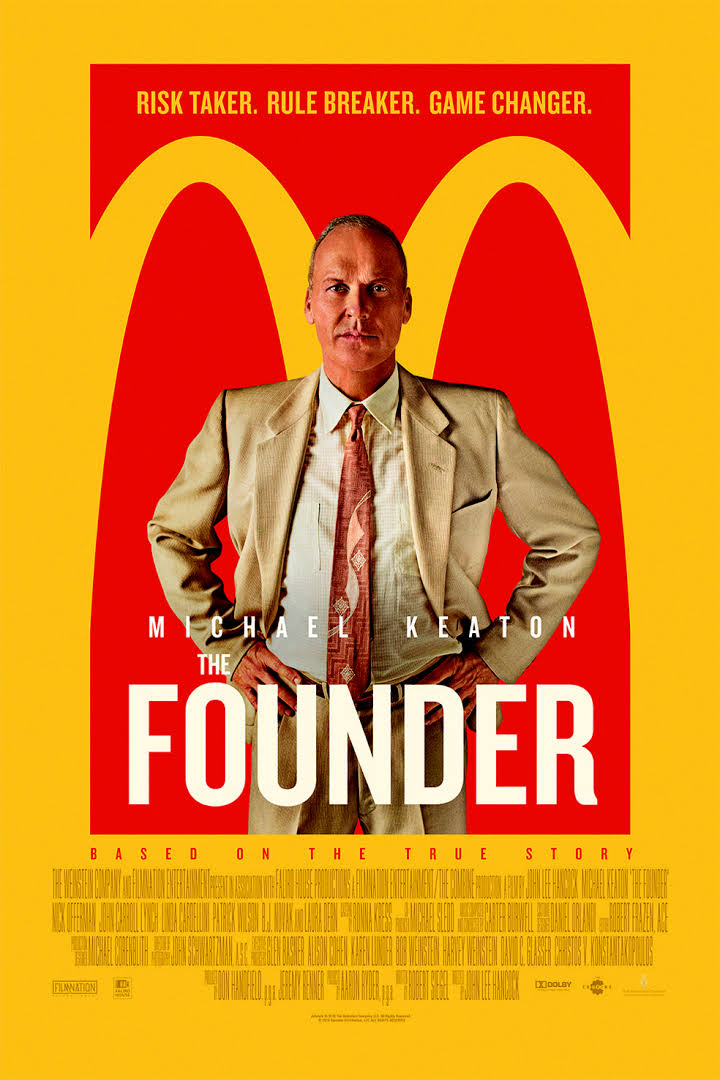
“The Founder” movie review

thefounderOutstanding biopic that typifies what the American dream actually looks like–but that’s the scary part. Michael Keaton’s portrayal of Ray Kroc, the (self-proclaimed) “founder” of McDonald’s, is positively brilliant! Comparing his look and performance to the real Ray Kroc seen before the credits roll, there is no doubt that director John Lee Hancock (known for The Rookie and The Blind Side) made the right choice. The Founder takes us on a journey from Southern California to Illinois and beyond as we follow the course of events that radically revolutionized an entire industry and gave birth to one of the most recognized brands in the world as well as the very concept of modern franchising. What Henry Ford did for American motorcars, Kroc did for American “speeedee” service food. Ray Kroc realized the American dream by stopping at nothing until he built his empire, even if it meant stealing from a business and breaking up a marriage–all within the confines of the law. We’ve all heard about “the American dream;” well, The Founder depicts what it takes for that dream to come true. If you’re willing to be a cut-throat bully with few if any inhibitions, then you can build an empire and claim to be the founder of another’s company or even run a country.

This biopic drama tells the story of how Ray Kroc (Keaton), a 55 year-old milkshake machine salesman from Illinois, met Mac (John Carroll Lynch) and Dick (Nick Offerman) McDonald in San Bernardino, CA during a sales transaction that would start something big. Who would’ve guessed that a man who was the definitive door-to-door salesman would see great potential in a small-town burger joint. Recognizing the great potential for a successful franchise, Kroc entered into a business proposition that would change the quick service food industry forever and essentially perfect the business practice of franchising. Over a relatively short amount of time, Kroc maneuvered himself into a position of power and dominance over the brothers, and eventually took the very company they founded away and never looked back. Kroc stopped at nothing when appropriating the intellectual property of the McDonald brothers to build a vast empire that would find its way into thousands of towns and become just an American an icon as the flag, churches, or the eagle.

Although the film is presently foundering in box offices, it is definitely worth a watch because of depicting the story of one man’s American dream that would essentially steal the laurels from baseball and apple pie to become a larger than life symbol of America recognized throughout the world. It’s unfortunate that this film is not garnering more attention because the writing, directing, and acting are absolutely brilliant. Full of irony and ambiguity, The Founder could have easily been called or at least subtitled Birth of a Salesman. While watching the movie, I could not help but compare the plot of this film with the iconic play Death of a Salesman by Arthur Miller. Both tell stories of salesman but the end result is vastly different. Both Willy Loman and Ray Kroc were dedicated to their respective craft of salesmanship; however, Kroc took the practice of sales and pitches to the next level–in fact he created his own game in which only he could win. Where else have we seen a bully play by his own rules and build an empire into a brand in and of itself? I’ll allow you to draw that conclusion. Further irony can be seen in Ray Kroc’s surname. His sheer cunning, predatory ways of conducting business can easily be likened to the crocodile itself. Despite receiving credit for inventing the fast food assembly line, much like Ford did for American car manufacturers, the “speedee” service was invented by Dick and Mac McDonald of San Bernardino. Thankfully, the brothers are receiving the credit that they deserve–albeit posthumously.

It’s difficult not to root for the villain in this film. Even though you tell yourself that he was a monster and a complete leach to the McDonald brothers, his first wife, and other friends, you may still find yourself in his corner because of McDonald’s being the American icon that it is. The cognitive dissonance that many will experience during diegesis of this film is fascinating in and of itself. Early on, you will find yourself rooting for Ray Kroc because he comes off as an underdog. He is able to provide decently for him and his wife, but it is evident that his business is in the process of collapsing. Even after striking the proverbial deal with the McDonald brothers, you may still root for him because the brothers make it difficult for Kroc to actually engage in successful franchising. The tide begins to subtly shift when the chain begins to take off. When the brothers deny Kroc a request to renegotiate the terms of the contract in order to boost capital and revenue, Kroc hires a new business partner who provides the knowhow to shift the focus from running a burger chain to being a real estate mogul. That shift from only burgers to real estate is what truly built McDonald’s Corporation into the giant that it is today. Interestingly, when confronted by the brothers on a break in the contract, Kroc points out that they could take him to court and probably win, but by the time he would drag them through hearing after hearing, and trial after trial, the brothers would be completely bankrupt. Much like the milkshake substitute that boosted revenue and mitigated refrigeration costs, but contained no milk, a handshake deal with Kroc is just as fake.

The set designs and costumes in The Founder are impressive and so incredibly well executed that audiences will be transported from 2017 to 1950s America. From the cars to the architecture to the print advertising and marketing, this movie boasts an authenticity that is on par with larger budget period films. The supporting players in the film are equally captivating too. Parks and Rec‘s Nick Offerman and John Carroll Lynch are absolutely perfect as the McDonald brothers, and I cannot think of two better actors to bring these “hidden figures” of fast foot history to life. It’s unfortunate that Laura Dern is underutilized as Ethel, Kroc’s first wife, because she is a dynamic actress capable of adding significantly to a film. Although not featured on screen a lot, Patrick Wilson plays Rollie Smith, an early investor, but his acting excellence is still showcased well. Finally, Linda Gardellini is captivating as the future Mrs. Ray Kroc–problem is, that she is married to Rollie Smith at the time they meet. It’s her suggestion to switch from real ice cream and milk to instant milkshake powder that sets the final dominos in motion to topple the McDonald brothers. In continued irony, the story of McDonald’s contains people who are excited about fake food product. But those were the times the characters lived in. The chemistry between the characters helps to reinforce the authenticity of this biographical motion picture.

Ray and Joan Kroc are well known philanthropists–in their later years. In fact, Joan Kroc left most of her vast fortune to many charities. The most well-known recipient of the inheritance is NPR. Even today, if you listen to the programming, you will hear the Estate of Joan Kroc mentioned as a supporter of the public radio organization. Whether you appreciate NPR or not, one cannot help but think that all the philanthropy of the Kroc (namely Joan) is a result of easing the conscience since the Kroc fortune can be likened to blood money. It’s entirely plausible that much like Marion Crane figuratively cleanses her spirit in the infamous Psycho shower after having stolen the money from her employer, Joan may have very well given her fortune away in an effort to ease her conscience and do good with the figuratively ill-gotten money.

Such an incredibly fascinating movie! If you enjoy historical dramas about American icons, then you will definitely enjoy The Founder. It may prompt you to grab a McDonald’s burger and fries after the movie or perhaps never go there again after learning the company’s history. Whatever the case, it cannot be denied that the story of McDonald’s is incredibly interesting and IS the product of persistence and business ingenuity. If there is anything inspirational to take away from this film, it is the power of that persistence and looking for potential in the most unlikely of places.

Written by R.L. Terry

Edited by J.M. Wead

“Split” movie review

splitIntensely captivating! M. Night Shyamalan stages a successful return to the horror-thriller genre in the brilliantly intriguing motion picture Split. When Universal Pictures, arguably the king of the American horror film, Blumhouse Productions, and Shyamalan combine their respective visual storytelling skills, the result is a dynamic thriller full of outstanding twists and turns. Shyamalan, long known for surprise or bizarre endings, provides audiences with the biggest surprise of all: he is back, and it’s a completely satisfying cinematic experience! Beginning with 2015’s The Visit, Shyamalan has been working on a comeback; and Split is the final evidence needed to support his successful return to the silver screen. James McAvoy delivers an outstanding performance–or should I say performances–every minute of the film. Although the concept of building a suspense-thriller around a character with dissociative identify disorder (DID), formerly known as multiple personality disorder, is not a new one–after all Norman Bates is the most iconic example. M. Night Shyamalan puts his own spin on the character-type by adding his special blend of what can only be referred to as “shyamalan-ness.” You’ll definitely want to see it again in order to catch everything that you missed the first time.

A film that many psych majors will find fascinating! While the mental divisions of those with dissociative identity disorder have long fascinated and eluded science, it is believed that some can also manifest unique physical attributes for each personality, a cognitive and physiological prism within a single being. Though Kevin (McAvoy) has evidenced 23 personalities to his trusted psychiatrist, Dr. Fletcher (Betty Buckley), there remains one still submerged who is set to materialize and dominate all the others. Compelled to abduct three teenage girls led by the willful, observant Casey (Anya Taylor-Joy), Kevin reaches a war for survival among all of those contained within him – as well as everyone around him – as the walls between his compartments shatter apart. (IMDb).

Just when you think the movie is going one direction, it throws you for an unpredictable loop. Split provides audiences with the same level of captivation as M. Night delivered in Signs or even in The Visit. Very much character-driven, this film could have easily taken a turn for the campy or par-for-the-course approach to a central character with DID; but Shyamalan proves that a familiar premise can be crafted into a whole new experience. After the incredible success of 1999’s The Sixth Sense, audiences everywhere set the bar for Shyamalan quite high–in fact he was prematurely compared to a 21st century Alfred Hitchcock. While it is highly unlikely that any director will reach the iconic status of Hitchcock, Shyamalan was seen as a director who would provide a similar experience to that which earned Hitchcock the moniker the master of suspense. Evidence of his admiration of Hitchcock can be been in the title sequence of Split. It bares a striking resemblance to the opening title sequence from Psycho. 

However, the danger in prematurely setting expectations too high is that you may likely be setting yourself up for disappointment. And that is precisely what happened with Shyamalan. From killer plants to invisible supernatural entities, he began to lose the cache he earned in the early 2000s. M. Night would spend years disappointing audiences to the point that he became a joke–a parody–perfect material for Family Guy. Then just when all hope for Shyamalan to regain the admiration of movie patrons–especially those who enjoy horror/suspense/thrillers–he gives us The Visit in 2015. That film was the glimmer of hope he needed to begin to rebuild his status as a thriller/suspense/horror filmmaker. And with the incredibly satisfying Split, M. Night Shyamalan is BACK!

Films like Psycho and Split only work as well as their respective director and cast–primarily the villain. Obviously, Psycho stands up to the test of time and will forever be a favorite of many cinephiles and a testament to the power of visual storytelling, Split had to be a new experience while still channeling the director that Shyamalan admires and patterns himself after. The success of Split rested upon the performance of McAvoy as Kevin (and the 23 others with a 24th on the horizon). McAvoy’s performance in this film is quite possibly the best of his career. Each identity is clearly seen as individuals. From his facial expressions to his gait to the manner in which he carries himself, every identity is unique in voice and appearance. Even in the middle of a conversation, one identity goes away while another surfaces into “the light.” Although there are only a few identities that have prominence in the diegesis, the others give audiences just enough nuance to register them as having a presence in the subconscious of Kevin.

For all the excellence in cinematic storytelling Split has to offer, there is no denying that it may be controversial in that it uses DID to construct a “beast.” There are already members of the mental-illness community who have expressed disdain for the subject matter and context of the film. However, prematurely dismissing this film as offensive to those suffering from cognitive disorders would be ill-conceived. After screening the film, it is clear that the focus is not on DID itself (or any other cognitive disorder that Kevin may have), nor is Kevin crafted to be an unredeemable monster; but, this film uses DID and the character of Casey (one of the young ladies who is captured at the beginning of the film) as tools through which to explore childhood trauma, abuse, and coping mechanisms. Isn’t that what films do? Push the envelop in an effort to provide a different perspective on an issue, problem, or circumstance? Horror is often concerned with “other” scenes–revealing that which should remain hidden–and Shyamalan does precisely that in Split.

If you enjoy horror, suspense, or thriller films, then you are definitely going to enjoy Split. There is so much to take in, that you may want to watch it again in order to catch everything that you may have missed the first time. Even if you are skeptical or think the content may be offensive to the mental-illness community, you may be surprised that there is a lot that can be gleaned from the narrative. With brilliant performances, excellent writing, and outstanding direction, Split should be on your radar of films to watch this weekend.

Written by R.L. Terry

Edited by J.M. Wead
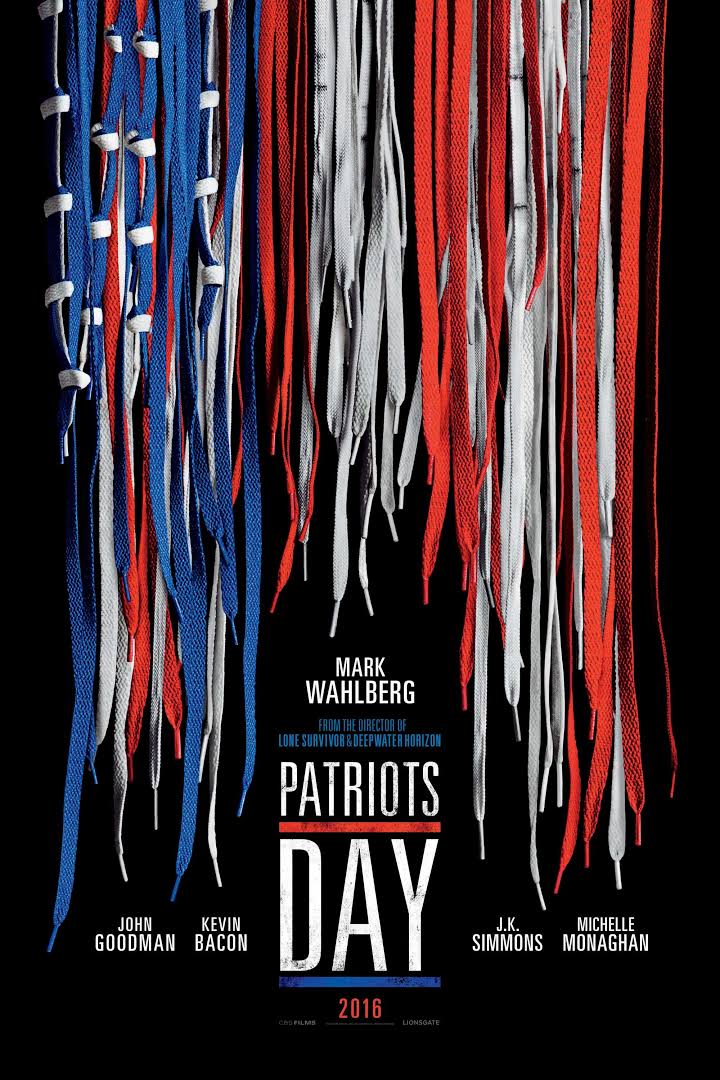
“Patriots Day” movie review

patriotsdayEmotionally intense–not for the faint of heart. Patriots Day is the dramatic account of the Boston Marathon Bombing and manhunt for Dzhokhar Tsarnaev and his brother Tamerlan Tsarnaev. Starring a powerhouse cast on top of extensive research, this film couldn’t come at a better time when there exists such a low general public opinion of law enforcement. Boston Police Department (BPD) shines as it shows that law enforcement officers and officials truly care about the city they are responsible for protecting. Although tragedies often are more conducive for a documentary film, writer-director Peter Berg combines the information found in a doc film with cinematic storytelling techniques to successfully construct a narrative that will rock you to the core and keep you on the edge of your seat. With the inclusion of first person, news, and surveillance footage, Patriots Day does not shy away from the visceral horror that befell the City of Boston and surrounding areas. You think you may know the story, as I did, but nothing will prepare you for coming face to face with one of the most tragic events in modern U.S. history.

Ordinarily, this is where I summarize the plot; but the plot is mostly known all too well. Fortunately, this film goes beyond the news reports and constructs a diegesis (story/narrative) around the stories of eye-witnesses, victims, the wounded, medical first responders, and law enforcement–both local and federal.

Mark Wahlberg, John Goodman, Kevin Bacon, J.K. Simmons, and the rest of the principle and supporting cast deliver outstanding portrayals of the real men and women who were instrumental in the response to and apprehension of the bombers as well as those who fell victim to the arson and shrapnel. It isn’t often that films depicting tragedies are produced this close to the events contained therein. Occasionally, there are films about tragedies that are truly better suited for a documentary; but, in order to convert it to a cinematic motion picture, a love story is added for diegetic affect. That is not the case with Patriots Day. The focus is on the BPD, FBI, and medical first response to the bombing and massive manhunt that ensued immediately after the explosions. There are certainly romantic relationships indirectly connected to the narrative, but they are mostly included to juxtapose the everyday life that everyone thought they were going to have on April 15, 2013 against the horrifying events that transpired at America’s longest running marathon, which has become such an iconic event each year.

Logistically and diegetically, there is a simple answer as to how this tragedy was so successfully translated to the silver screen so close to the day it occurred whereas other tragic events (mass shootings, bombings, aero-spacial, maritime, etc) are more conducive for and translate to a documentary better. This tragic event is a combination of (1) the explosions themselves (2) the manhunt afterwards and (3) the impressive work of law enforcement. There is more to this story than the bombing itself. Certainly the bombing was the catalyst for the events that ensured afterwards, but the real story is of the incredible actions of law enforcement and other first responders. While there seems to be a general focus in broadcast news media on the negative actions–whether perceived or otherwise–of law enforcement officers, this powerful film shows police officers in a positive light–shows them as individuals who love the city under their protection and stop at nothing to protect the innocent. This is so important in today’s climate of scrutiny of public safety officials.

The cinematography, visual effects, and production design are flawless. So incredibly realistic that you will likely feel transported from your seat into the film itself. To my surprise, the film included interviews with key figures directly involved with or affected by the Boston Marathon Bombing. It’s not uncommon to include photos with textual exposition on the lives of central figures in a historical film; but this film goes beyond telling you “where they are now” or what happened after the events in the film. It includes video footage of interviews–you get to hear from the individuals upon whom the characters were based. I could not think of a better ending to a film such as this one. Patriots Day works because it is the best of what a documentary offers with the brilliance of cinematic storytelling techniques.

For those of you who appreciate historical films depicting tragic events, then this is one that you need to watch. It is not a film to be enjoyed in the conventional sense, but one that packs a powerful message and neither glorifies nor undermines the real historic event. Such a visceral film. Rated R for adult language.

Written by R.L. Terry

Edited by J.M. Wead
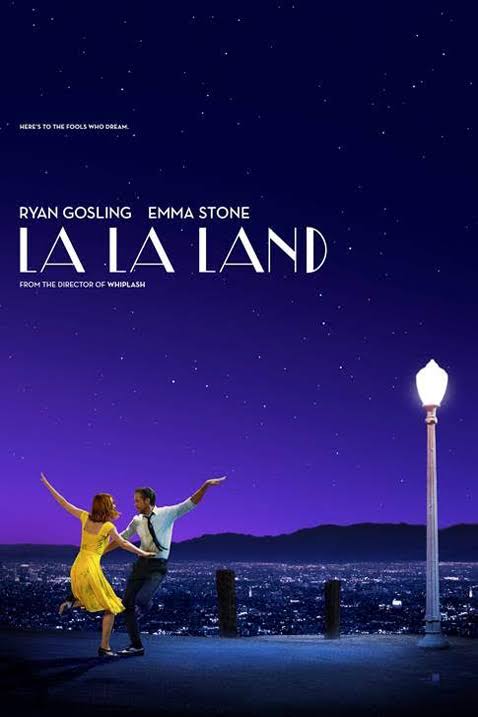
“La La Land” movie review

lalalandSimply dazzling! A beautifully produced motion picture musical that is sure to delight audiences around the world. Ryan Gosling (Sebastian) and Emma Stone (Mia) shine brightly in this self-reflexive modern romantic film set on the backdrop of a classically composed movie musical echoing the song and dance numbers that Busby Berkeley brought to the silver screen through Hollywood studio system powerhouse Warner Bros. Summit Entertainment’s La La Land will have you laughing one moment and crying the next in this roller coaster of emotions. Every aspiring professional who has the dream of a substantive career as an artist in the visual and performing arts–or just an artist in general–needs to watch this film. If you have ever been discouraged on your career path, or lack thereof, this film will aid in reigniting the flame that fuels your dreams of writing, acting, playing, or whatever your passion happens to be. Whereas many films similar to this one would have shot it as a period OR modern piece, this film is nothing short of a masterpiece that harnesses the nostalgic appeal of the classic musical with the power of modern cinematic storytelling.

Stories of struggling to reach your dreams are nothing new, but there is so much more to the story of Mia (Stone) and Sebastian’s (Gosling) respective goals of successful careers in the city of angels. Following a chance meeting at a night club in LA where Sebastian was playing a set list of traditional Christmas carols, Mia and Sebastian continue to bump into each other at parties and in the work place. The focus of this musical is on the everyday life of two struggling artists trying to make it in a city notorious for shattering dreams and breaking hearts. Mia and Sebastian must learn what is more important: chasing dreams of being in the spotlight or a once-in-a-lifetime opportunity for a beautiful love unmatched by any other.

Best part about Damien Chazelle’s La La Land? The old-school movie musical feel from the moment the film opens. From set pieces to matte paintings to the manner in which the cameras capture the story as the drama unfolds, this is both a modern story of romance and conflict and classic Hollywood musical. While some may find the cinematography, lighting, and editing to be nothing remarkable, the fact of the matter is that it required great skill and hundreds of hours of effort to capture the essence of an old Hollywood musical. To recreate a nearly extinct film genre, is an outstanding achievement in cinematic storytelling and deserves all the 9s and 10s this film is receiving from critics and fans alike. La La Land takes pages right out of the books of Busby Berkeley (Footlight Parade) and Gene Kelly (Singin’ in the Rain). Such a gorgeous combination of a classically structured and choreographed musical within a modern Hollywood. And the film could have easily rested its laurels on the technical and artistic achievements alone, but the film also possesses an incredibly beautiful love story between two aspiring artists.

In a modern studio system who appears all too often to be more concerned with franchise building, merchandising, theme park integration, and rebooting, this film is fresh, real, gritty, and endearing. In a climate so predisposed to the Star WarsesHarry PottersJurassic Parks, and Avengerses, this film brings with is a breath of fresh air that is nearly unmatched by any other film this year. While many are concerned with the lack of original stories coming out of Hollywood, may this film be a testament that masterpieces can still make their way into cinemas nationwide and not simply the art house theatre of the US’ largest metro areas. Although film is a visual medium and should not rely upon the score or songs to carry the bulk of the film (i.e. Frozen), this film is very much about the music. However, unlike films that integrate music in order to cover up poorly structured and developed writing, La La Land embraces the music as much a part of the story as the writing itself. In many ways, the film plays out like music and flows like a musical score. The way the cameras moves, the editor cut, and the blocking of the characters is very much like a musical staff, like the way music is composed and performed. But at the same time, the movie is not simply about the music but about the relationship between Mia and Sebastian; and furthermore, about their aspirations for the spotlight. Solid writing and a solid score.

The casting of La La Land could not have been more brilliant! Both Stone and Gosling successfully bring about that 1940s feel in a modern story. That could be due to the successes of both in 1940s era films prior. Stone in Magic in the Moonlight and Gosling in The Notebook. While both can successfully carry a period piece on their own respectively, together they are a powerhouse couple like Fred Astaire and Ginger Rogers. Their performances in this film were so incredibly natural, so real, and believable. At the same time, the actors are also very much contemporary–just like the film: classic yet contemporary. Even though the audience is well aware that Stone and Gosling are anything but struggling artists, they play their respective parts so convincingly that you’d swear that we were actually watching a pair of struggling artists who do desperately want a substantive piece of that Hollywood pie. A great screenplay possesses protagonists that the audience will love or love to hate, and the characters in La La Land connect so incredibly well with classic and contemporary audiences.

Inspirational. This film will help to inspire those who have a talent for storytelling, music, or writing to continue to work hard and remain dedicated to one’s craft because that is the only way that a career can pay off. The moment you stop trying is the moment that the dream dies along with settling for less. Not that day-jobs aren’t important. Certainly the importance of a day job is shown in the film, but it’s imperative that the day job never cause an artist to sell out or give up on the dream. Day jobs should fund imaginative dreams not eclipse them. There is much to love about this film; so much so that you will likely find yourself with a desire to watch it again. This IS definitely my pick for Best Picture as we head into award season with the holidays coming to a close.