The magic of Sunset Boulevard is still capturing the “eyes of the world” from all those “wonderful people out there in the dark” seventy-five years later.
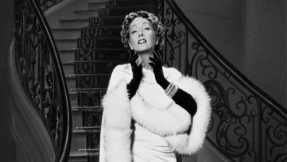
There is little question that Billy Wilder’s masterpiece Sunset Boulevard still captures the eyes, hearts, minds, and souls of audiences seventy-five years later. It continues to stare unblinking into the soul of Hollywood—and, perhaps uncomfortably, into the faces of all those people out there in the dark. Billy Wilder’s mordant masterpiece starring Gloria Swanson as Norma Desmond endures not only because of its sharp wit, noir elegance, and unforgettable performances, but because it remains a mirror for an industry—and an audience—forever tempted to trade substance for novelty. Its barbed satire of fading stars, disposable talent, and a studio system eager to discard the past feels eerily prescient in an era when algorithms decide what stories are worth telling and studios recycle intellectual property like celluloid scraps. Watching it now, one realizes the film is not merely a relic of old Hollywood’s cynicism—it is an indictment of the complacency of contemporary audiences and the short-term greed of the modern industry. Sunset Boulevard has not grown old; it’s the world around it that has refused to grow up.
Since its release on 10th of August in 1950, it has been the inspiration to countless films. But what does it mean to you? What makes it special or stand out to you? Perhaps you just see it as an iconic film; or just maybe, you see it as representing something personal to you. From classic noir cinematography to some of the most quoted lines of all time, Norma Desmond’s spirit lives on. So much for Joe Gillis’ line about her “still waving proudly to a parade that has long since passed her by;” she is still as alive today as she ever was. Serving as a mirror to the current state of Hollywood, Billy Wilder’s film shed light on the darker side of celebrity that still haunts to this very day. This timeless movie provoked Hollywood to take a cynical and honest look at itself, and the dangerous price of stardom–especially when the star is fading into obscurity. Poignantly arriving near the end of the Golden Era (or Studio System), this cinematic masterpiece continues to be the epitome of a Hollywood and anti-Hollywood film for all eternity. Beyond what it meant historically or industry-wise, it holds meaning and significance for many who watch it. One of its strengths to withstand the test of time is the fact is its ability to connect with people visuals and emotionally. That, combined with solid technical aspects, makes for a dynamic cinema experience.
Part of what still beckons the “eyes of the world” is the movie’s ability to tell the story within a story. Gloria Swanson’s performance as Norma Desmond is so perfectly calibrated that audiences sometimes forget she was playing a role at all. Billy Wilder and Charles Brackett deliberately wove elements of Gloria Swanson’s real life into Norma’s backstory, yet the parallels are only part of the truth. Swanson was both exactly Norma Desmond and nothing like her—especially when you consider her remarkable adaptability and forward-thinking nature. She saw greatness in the character and the film, and saw this as her triumphant return to the screen in an important picture. In many ways, Gloria took a role that was essentially making a mockery of everything she once stood for. Like Norma Desmond, Swanson was one of Hollywood’s highest paid performers from the teens until the early 1930s. Following the advent of talkies in 1927 and the changes in the studio system thereafter, her career floundered. Yet, she carried herself with poise, theatricality, and unapologetic glamour—qualities that translated naturally into Norma’s imperious, otherworldly presence. If you’re looking for a real life “Norma Desmond,” then look to silent film actress May Murray—she did live in the past after her star faded, and was reported to have been rather eccentric. Gloria, however, proved that those ghosts didn’t have to haunt you if you kept moving forward. Which she did—in radio, television, theatre, fashion, and even technology.
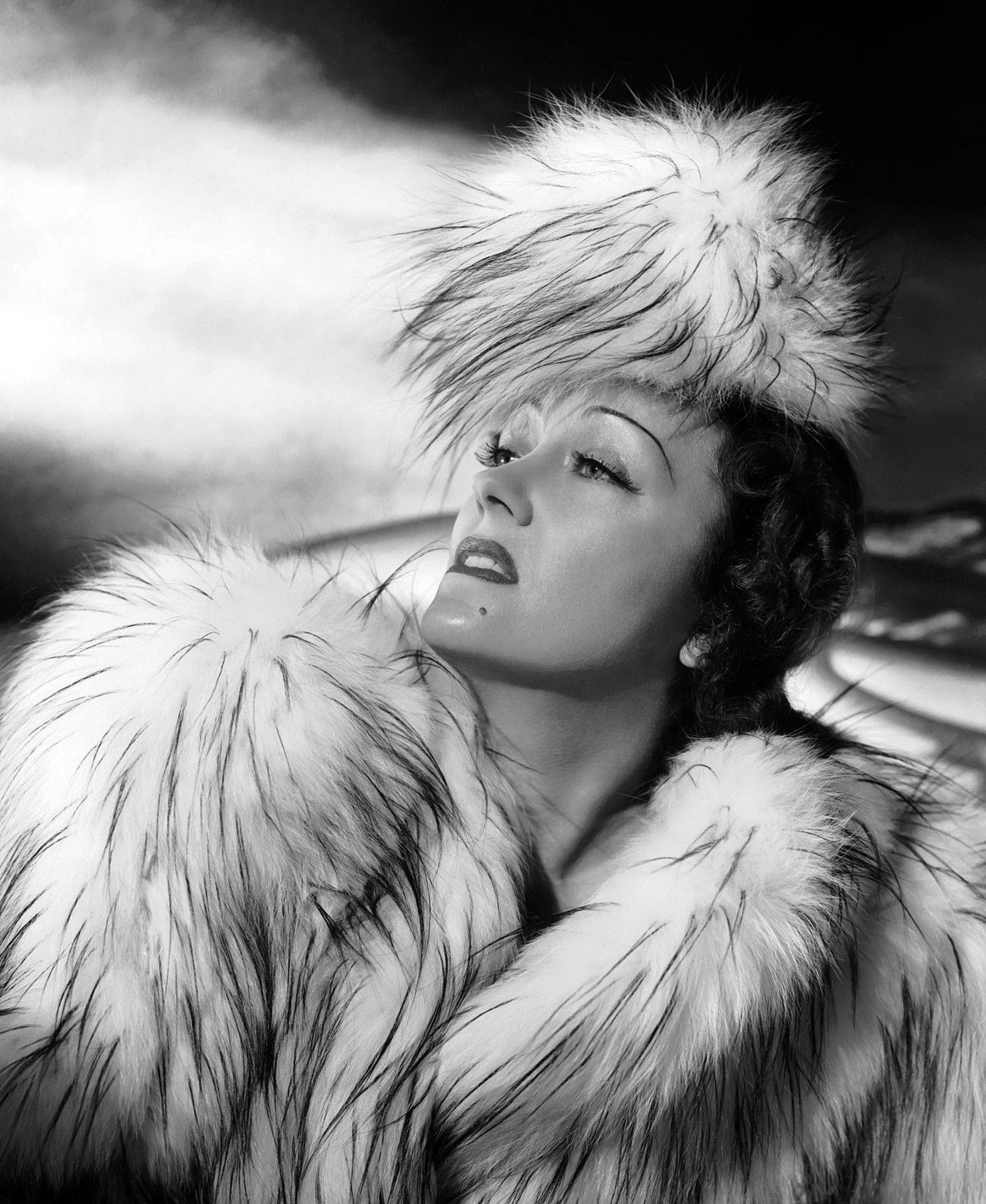
The role of Norma Desmond was originally offered to Mae West and then Mary Pickford, but both turned it down. Pickford recommended Gloria. Suffice to say, the role cannot be imagined to have been brought to life by anyone else. No one could capture the character of Norma Desmond like Gloria Swanson. Throughout the movie, we witness the psychological breakdown of a woman who is already seriously afflicted with chronic depression and even agoraphobia. I feel as though many actors, and even some industry professionals who are not performers, can truly understand what must have been going through the mind of Norma Desmond. Actually, even for those who are not involved in entertainment or media can still see someone who felt betrayed and left alone to drift away. We’ve all been there. Feeling like we have so much to give the world, our community, or to the arts, and no one to take or acknowledge it. Norma isn’t going through anything that we have not been through. Essentially, Norma’s significant other, or partner, was her celluloid self, the studio, the industry. And when her partner left her, never to return, she developed serious psychological and cognitive disorders. Each person who chooses to watch her downward spiral into insanity, should be able to identify with her on some level regarding something in their life. For Norma, it was being back on screen again. For you, it may be something else.
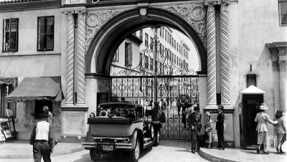
Fascinating elements of this story include the bewildering world of what lies between the glory and the fall of a celebrity who feels as though she built Hollywood, more specifically Paramount Studios. Never before had there been a movie that was developed around the idea of what happens to a star after they are rejected by the very business that created them. Serving as the inspiration to the opening scene of American Beauty nearly 50 years prior, Wilder set the standard in the dead body of the protagonist narrating the film. Like the fog over London, Gillis’ spirit hovers over the entire movie, narrating the course of events that lead to his demise. Joe gets to do what any of us would enjoy doing–getting to observe what happens after we die and how everyone reacts. Just like having a soundtrack to your life would be amazing, getting to narrate your story after you die would be equally, if not more so, enamoring.
William (Bill) Holden’s character of Joe Gillis is the prime representation of a starving artist. He lives in a tiny apartment, has a few credits to his name and is in danger of having his car repossessed. That describes many artists today, thus allowing other aspiring screenwriters and filmmakers to identify with his frustrations. Like a true film noir, the ending is tragic for the protagonist. Part of the suspense is wondering just when will he meet his end and why. For those who are trying to make it in the industry as a screenwriter, the grief and depression Joe must been feeling is something with which aspiring screenwriters can empathize.
Sunset Boulevard contains something for everyone: elements of mystery, action, romance, and deceit are woven meticulously throughout the film. This allows for the story to transcend decades of movie evolution and maintain such a high regard in the minds of all the “people out there in the dark.” And, even land a spot on the Great White Way in Andrew Lloyd Webber’s Sunset Boulevard Broadway musical. It’s been rumored that Paramount plans to make a movie version of the Broadway show, but that rumor has been floating around Hollywood for years. As much as the the musical is a tribute to the original, the movie will always be more impactful because the stage simply cannot bring you as close to eyes of the actor as the screen can. And, Norma “can say anything with [her] eyes.” But, thanks to Barbra Streisand keeping the songs alive, “With One look” and “As if We Never Said Goodbye” are brilliantly written to capture the feelings and state of mind of Norma.
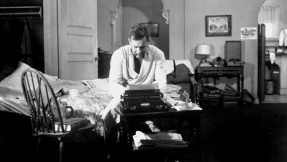
Regarding the screenplay itself, it is not a matter of what’s going to happen as much as it is how’s it going to happen. This pioneering non-linear structure served as yet inspiration for another film that would not be produced for nearly 60 years. Along with All About Eve and Citizen Kane, Sunset Boulevard played an instrumental role in the development of the 1994 blockbuster Pulp Fiction. A lesser known 2001 movie borrows many plot points from Sunset Boulevard including the movie title being a street name, entitled Muholland Drive starring Naomi Watts, Justin Theroux, and Laura Harring. Sort of a neo-noir, this is a more modern twist on the foundation Wilder laid with his masterpiece. On that note, now-a-days, non-linear films aren’t necessarily anything special, but at the time, Sunset Boulevard broke ground that would be the standard in abandoning traditional story structure. To me, the screenplay was written in such a way that many people can find his or her own story in the screenplay. Perhaps, someone feels like they are Norma–all but forgotten. Perhaps, there is a starving artist out there who can understand the predicament Joe Gillis was in–just trying to get ahead. To a lesser extent, there may be Betty Schaefer’s watching the movie who feel they have a lot of talent, but very little is recognized and want to find a creative outlet.
Unlike previous films, this movie was also ahead of its time in terms of including dark sarcasm and humor as chief elements in the film. Other aspects that capture the ears of the world, to Miss Desmond’s disapproval, are the famous lines from the movie. Ironically, Desmond despised dialog; however, her movie possesses the coveted numbers 7 and 24 spots on AFI’s Top Movie Quotes list. At number 24, “…I am big! It’s the pictures that got small;” and at number 7, ranking above “Louis, I think this is the beginning of a beautiful friendship” and “what we have here, is a failure to communicate” is the often misquoted “Alright Mr. DeMille, I’m ready for my closeup.” There are many other more obscure, yet brilliant lines of dialog and exchanges between characters, landing the screenplay in the WGA’s Best Screenplays of All Time list at number 7! It’s important to now only appreciate the movie as a movie, but to appreciate the story itself. Let us never forget that “someone sits down to write a picture” and fool ourselves into thinking that most of the time the “actors make it up as they go along.” Part of what makes this a timeless classic, and even a sort of Bible if you will, is the brilliant writing.
“[Cinema] is BIG. It’s the [movies} that got small.” In Sunset Boulevard, Norma Desmond’s defiant declaration—“I am big. It’s the pictures that got small”—was meant as a lament for the silent era’s fall to talkies; but in 2025, it resonates as a prophecy for cinema in the age of streaming. Norma wasn’t just talking about herself; she was articulating a truth about the grandeur, spectacle, and communal magic of the movies—an art form designed for towering screens and shared gasps in the dark. Today, as streaming platforms flood audiences with bite-sized content, algorithm-churned thrillers, and disposable franchise spin-offs, the scope of cinema has been compressed to fit living rooms and phone screens. Norma was right: cinema is big, but it’s the movies that have been miniaturized—scaled down in ambition, craft, and cultural weight—until they often feel like little more than moving thumbnails. The tragedy isn’t Norma’s inability to adapt, but that the industry has stopped aspiring to be as big as she was.
One of the elements that stands out in the movie is the meticulous placement of lighting. Film Noirs are one of the best examples of how effective lighting can be in playing an intricate part of the storytelling process. Lighting can show us whether or not someone may have two personalities, whether someone is dark and sinister. Since films did not have access to color, in the same way we do today, lighting in a grayscale movie was very important. Since colors could not be distinguished, lighting played that role. In many ways, the lighting in a film noir is like the Norma of the movie itself. Color has caused lighting to be used in a different way. For more practical reasons that aren’t always artistic in nature. Furthermore, another element that makes a film noir a film noir is the cinematography. After all, the term noir is French for dark. So, essentially film noir simply means dark film. It holds up to the definition due to the physically dark scenes; and furthermore, the state of being psychologically dark. The 9-time Academy Award nominated cinematographer John F. Seitz is responsible for creating the haunting visuals and shadows that dominate most of the movie.
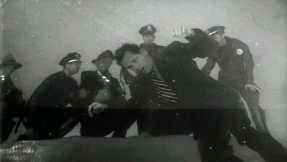
One of the shots that is the most puzzling is how Wilder was able to shoot Joe Gillis’ floating body in the pool. Now-a-days, that is simple enough–even YouTubers do it–but in 1950, how does one accomplish such a special effect? The use of mirrors in the film went beyond macabre and haunting set pieces; a mirror was also used to shoot this scene. Seitz placed a mirror at the bottom of the pool and shot facing down towards the mirror while Holden floated in the water with the police officers around the deck. This gave the illusion the camera was in the water facing up.Thanks to the iconic cinematography, the mansion “stricken with a creeping paralysis” appeared lonely and massive. There is no better example of this than when Gillis descends the grand staircase to a party where he and Desmond are the only guests on an expansive tile dance floor recommended by Rudolph Valentino.
“Alright, Mr. DeMille, I’m ready for my closeup.”
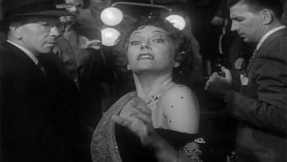
Some of the most memorable cinematography comes at the end of the movie. Wilder and Seitz chose to shoot parts of the finale in slow motion to create an uneasy feeling in the minds of the audience. As Norma begins to descend the grand staircase one final time, she is shot in slow motion, as if it were Norma’s dream coming to life–her big come-back. Pardon, she never left; the pictures left her. In her mind, she is playing princess Salome entering the palace; when in all reality, it’s not movie cameras, but news cameras documenting her psychological decline into insanity. With her famous line “I’m ready for my closeup,” she encroaches upon the camera operator determined to get the closeup she wants, even though it is fixed at a medium shot. The audience, she is so desperate to connect with again, is tragically out of her reach.
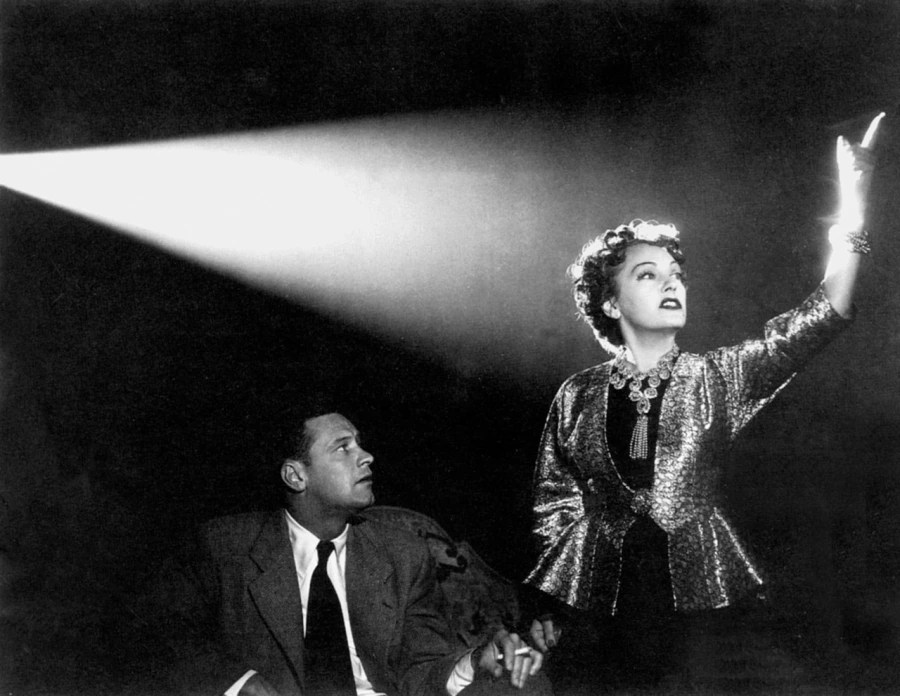
Sunset Boulevard serves as a haunting reminder that cinema’s survival depends on more than novelty—it thrives on depth, craft, and stories that demand to be remembered. Wilder’s film shows us a Hollywood already willing to discard its own history for the next marketable thing, a cycle that feels alarmingly familiar in an age of streaming debuts and algorithm-curated “originals” designed for convenience over impact. Norma Desmond’s tragic insistence that she is still “big” speaks not just to her own faded glory, but to the enduring power of cinema when it aspires to grandeur rather than pandering to trends. The film urges today’s audiences to resist the allure of quick, disposable entertainment and to champion works that challenge, inspire, entertain, and linger in the mind. If we let convenience replace artistry, aesthetics to replace great storytelling, we risk playing our own part in the slow fade-out of the movies we claim to love.
Sunset Boulevard means a lot of things to a lot of people. And, each person may have their own respective reasons as to why this film holds a special place in the minds and heart of those who love cinematic art. This movie truly embodies the latin inscription around Leo the Lion in MGM’s logo “Ars Gratia Artis.” Art for Art’s Sake. To me, it is one of the purest examples of artistic cinema. It also served as a mirror, to the dismay of the big producers of its day, highlighting the state of the industry at that time. People still remain mesmerized at this timeless feature because of all it has to offer. This is partly due to the fact that it as relevant today as it was in 1950. It’s entirely possible that there are Norma Desmonds today in their decaying estates watching their movies on TCM or AMC under the delusion that they remain stars that command the attention of the world.
Regardless if you are a filmmaker or a connoisseur of movies, Sunset Boulevard captures the eyes of the world today. And, it will continue to be a source of inspiration and entertainment for decades to come.
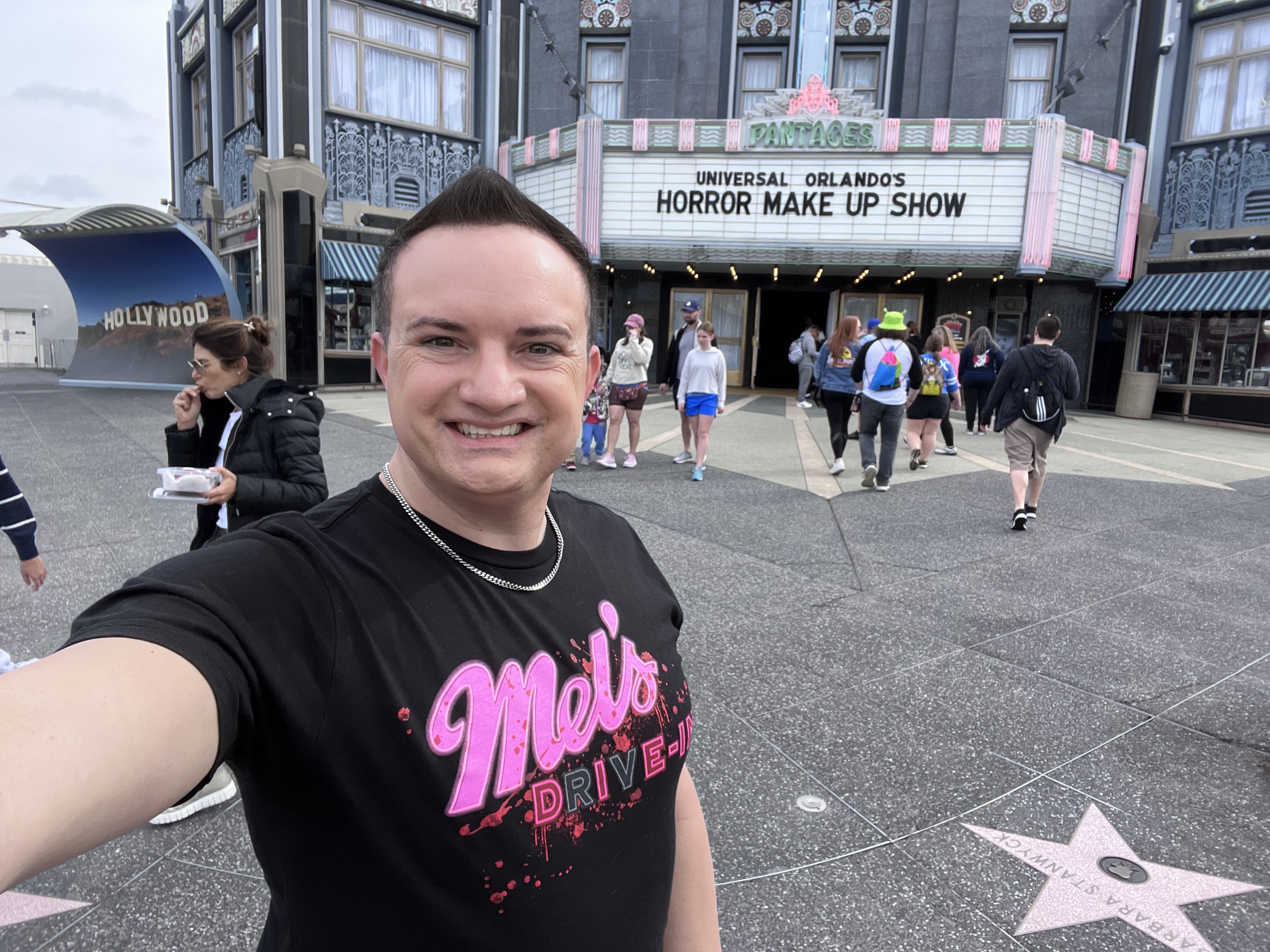
Ryan is the general manager for 90.7 WKGC Public Media in Panama City and host of the public radio show ReelTalk “where you can join the cinematic conversations frame by frame each week.” Additionally, he is the author of the upcoming film studies book titled Monsters, Madness, and Mayhem: Why People Love Horror. After teaching film studies for over eight years at the University of Tampa, he transitioned from the classroom to public media. He is a member of the Critics Association of Central Florida and Indie Film Critics of America. If you like this article, check out the others and FOLLOW this blog! Follow him on Twitter: RLTerry1 and LetterBoxd: RLTerry


 R.L. Terry ReelView