CAPTAIN AMERICA: BRAVE NEW WORLD movie review

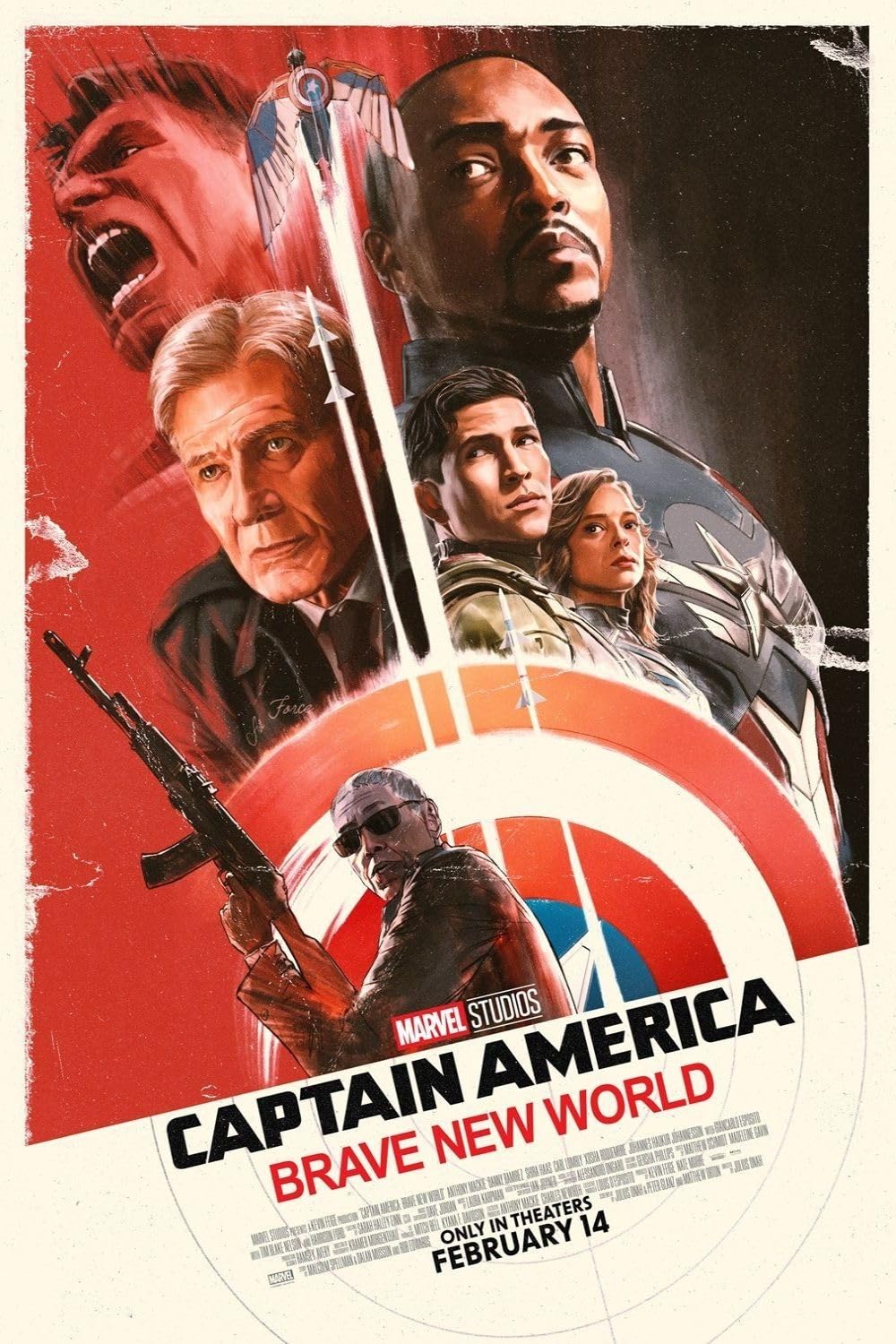
Disney+: the Movie. The latest installment in the MCU feels like a Disney+ episode or show idea that was artificially inflated into a feature film. Captain America: Brave New World neither has the intrigue of an espionage thriller nor the excitement of a superhero movie. The plotting unfolds in a manner reminiscent of a serialized television series, evidenced by disjointed scenes that could very well function as individual episodes respectively. The movie is also plagued with gross levels of slapdash, uninspiring CGI that take an already vapid story and reinforce the one-dimensional delivery. From beginning to end, the pacing issues are evidenced by the diegetic momentum that ramps up then fizzles repeatedly causing any modicum of suspense or urgency to diminish as soon as it forms, resulting in a mitigation any potential of a cinematic spectacular.

Sam finds himself in the middle of an international incident after meeting with President Thaddeus Ross. He must soon discover the reason behind a nefarious global plot before the true mastermind has the entire world seeing red.

Captain America: Brave New World exemplifies the trend of blurring the lines between television and cinema. The long and short of it is: the significant influence the MCU TV shows have had upon the theatrical releases. This observation is two-fold (1) screenwriting and (2) technical achievement. While the former is the more significant problem, the latter is the easiest to identify. Specifically, the movie’s color grading, shot composition, and digital effects are nearly indistinguishable from MCU streaming series on Disney+. Unfortunately, this blurring of the lines between cinema and television results in a lack of the grandeur typically associated with MCU theatrical releases.

The latter could be more forgivable is the former was of a higher caliber. While writer Rob Edwards has certainly demonstrated his gift for screenwriting in previous Disney films (the Academy Award nominated Treasure Planet, being one), the other two writers have primarily worked in Disney+ television–and it shows–in spades. The plotting, pacing, character development (or lack thereof, as it were) is straight out of Disney+. The lack of urgency and stakes are also problematic, as well as the near absence of the “fun” factor. I will be the first to acknowledge that I don’t typically care for comic book or superhero movies; that said, even I will admit that the the first two phases of the MCU were (mostly, anyway) fun popcorn movies. Not the case with this latest installment. If the movie wasn’t going to be fun, then it should’ve been intriguing or spellbinding–not the case either. It’s pretty average all the way around.

I will forever be a champion for practical effects–even practical effects that are supplemented with CGI. But this movie screams TV-budget CGI the whole time. This is particularly true in the rather anticlimactic showdown. You cannot replace the way real light bounces off real objects into the camera lens, and this movie demonstrates the danger in relying heavily on CGI in an attempt to wow the audience. The strength of a picture should be in the plotting, subtext, and character development–not in the CGI. Since the movie was not going to lean into the fun factor, the CGI should’ve been dialed way back.

Even though it was wonderful to see Harrison Ford on the big screen again, he appeared to have been experience little fun while making this movie; furthermore, the performance was pretty well phoned in. Likewise, Anthony Mackie was not himself as Sam. This Sam was greatly lacking in charisma and wit. While his performance may not have been as phoned-in as Ford’s, there was still a flatness to the performative dimension. Danny Ramirez, however, did appear to be having fun on this movie, and I would’ve liked to have seen him given more to do in order to draw me into the story.

Captain America: Brave New World struggles to distinguish itself as a cinematic experience, with its disjoined plot, production quality, and lack of meaningful character development, resulting in a movie that appears to have far more in common with a Disney+ television series than with a feature motion picture.
Ryan is the general manager for 90.7 WKGC Public Media in Panama City and host of the public radio show ReelTalk about all things cinema. Additionally, he is the author of the upcoming film studies book titled Monsters, Madness, and Mayhem: Why People Love Horror. After teaching film studies for over eight years at the University of Tampa, he transitioned from the classroom to public media. He is a member of the Critics Association of Central Florida and Indie Film Critics of America. If you like this article, check out the others and FOLLOW this blog! Follow him on Twitter: RLTerry1 and LetterBoxd: RLTerry
INDIANA JONES: AND THE DIAL OF DESTINY movie review

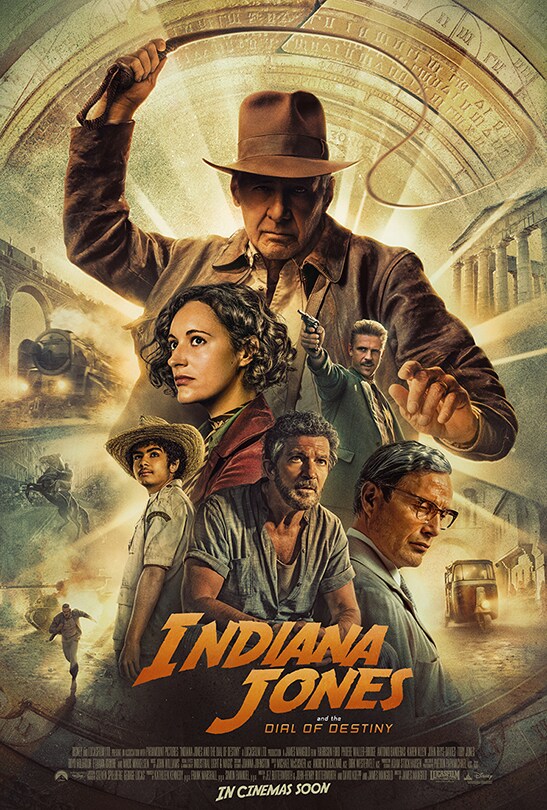
And the dial of mediocrity. While the movie’s charm lies in the classical action-adventure premise and tone, Harrison Ford’s final performance as the titular adventurous scholar ends with a forgettable movie devoid of the humor, tension, scale and scope of the first three Indiana Jones movies. Moreover, the screenplay suffers from poor pacing and lack of character-building. However, it’d be unfair to characterize the movie as being completely uninteresting. In fact, Indiana Jones: and the Dial of Destiny is a fun enough throwback movie for the whole family to enjoy.

Daredevil archaeologist Indiana Jones races against time to retrieve a legendary dial that can change the course of history. Accompanied by his goddaughter, he soon finds himself squaring off against Jürgen Voller, a former Nazi who works for NASA.

The James Mangold helmed fifth and final installment in the Indiana Jones franchise is neither bad nor good enough to be memorable. Moreover, neither does the movie deliver in setting nor technical achievement.

Speaking of technical achievement, any overly negative reports of the de-aging of Ford, in the protracted prologue, are greatly exaggerated, nor does the CGI in the rest of the movie feel obtuse or too overt. On the contrary, I was greatly concerned for the exchange of practical effects for CGI on the levels of being distracting. While I noticed here and there, it wasn’t what I would characterize as highly conspicuous.

Gone is the grand scale and scope of the first three Indiana Jones movies in exchange for a world that feels as if it could fit in a space the size of Guam. For an action-adventure movie, it struggles to deliver on either. If we boil it down to its storytelling DNA, does it check off the basic requirements of an action-adventure movie? Sure. I won’t take that away from the movie. But does it excel at any one of those elements? Aside from remaining clean enough for the whole family to enjoy, no, it does not. While it is certainly a better story than Crystal Skull, unfortunately, Crystal Skull is more memorable than this installment (albeit, for all the wrong reasons). Dial of Destiny certainly feels way closer to the first three Jones movies than Crystal Skull ever will. It is of the same DNA, but not expressed nearly as thoughtfully or charismatically as the original trilogy.

As I’ve stated countless times before, (except for rare occasions) when a movie’s writer (or editor) and director are the same person(s), then there fails to be a sufficient check and balance system narratively. Mangold has shown that he is capable of both, I cite Logan, but that was perhaps the exception while Dial is the rule. There is a good story in this movie, but nothing was executed by storytellers that truly cared. I was shocked to see David Koepp’s name attached to this movie, because he took Michael Crichton’s original Jurassic Park screenplay and shaped it into the masterful story we’ve been enjoying for three decades. Crichton provided the novel and screenplay bones and circulatory system, but Koepp crafted the muscle and skin. Dial of Destiny does not feel like a Koepp screenplay, but perhaps Mangold flexed his directorial muscles too much and Koepp’s genius was lost.

Oh, as an aside, no Helena, that’s just called stealing. Perhaps go back to school and take an economics class. Come to think of it, that would have been a funny Jones line in the movie. And the movie was in desperate need of comedic relief.

The movie opens with plundering Nazis, in classic Jones fashion, and we are introduced to a 30, 40-something Dr. Henry Jones Jr. The prologue (which makes up most of Act I) delivers all the trappings of a classic Indiana Jones movie, but it goes on, and on, and on for nearly a half-hour. And it wouldn’t’ be so bad if this half-an-hour significantly impacted events in Acts II and III, but it ultimately sets up very little. Is it a fun and somewhat exciting method for returning audiences to the 1930s and 40s world of Indiana Jones, definitely. But does it fail to justify its protracted sequence of events? Also yes. The movie’s pacing would have beeb greatly helped by cutting the prologue down to 10–15-minutes. Think: opening of Indiana Jones: and the Last Crusade. I’ve a feeling that’s what Mangold was going for in this movie.

There is one plot device that this prologue does foreshadow, and if you think it’s never going to go there, guess again. I’ll leave it at that to avoid spoilers.

I’d be remiss not to comment on the charm of the movie. While it may suffer from many problems that hold it back from reaching beyond mediocrity, there is no doubt that it delivers the throwback premise and tone we love about these classical action-adventure movies. I just wish it had more action and adventure in the storytelling mix. I appreciate the movie for remaining true to form (in its most simplistic form, but form nevertheless), and not increasing adult visual content or language in order to be perceived as with it. Increased adult content is not the mark of a franchise maturing over time, in fact, it’s a cheap gimmick that devalues. There are certainly times and places for it, but an Indiana Jones. movie was not it. So it can be praised for keeping the content, tone, and form of classical action-adventure alive–on life support–but alive.

Not sure why Disney is releasing this for the week of July the 4th, because it works much better as a Father’s Day movie.

Ryan teaches Film Studies and Screenwriting at the University of Tampa and is a member of the Critics Association of Central Florida and Indie Film Critics of America. If you like this article, check out the others and FOLLOW this blog! Interested in Ryan making a guest appearance on your podcast or contributing to your website? Send him a DM on Twitter. If you’re ever in Tampa or Orlando, feel free to catch a movie with him.

Follow him on Twitter: RLTerry1 and LetterBoxd: RLTerry
“Blade Runner 2049” film review

Just as mesmerizing as the original! Denis Villeneuve’s Blade Runner 2049 is nothing short of a future classic that demonstrably possesses the soul of the original and pairs it with a new plot brought to life by a fantastic cast. Every minute is filled with beautiful cinematography that is perfect in every way and a haunting score that penetrates down to the bone. At its core, Blade Runner 2049 wrestles with this one central question: what does it mean to be human? A question that can spawn hours of debates or an exquisite nearly three-hour motion picture. Considering that Ridley Scott has not delivered the same quality for which he provided precise and poignant direction, it was a solid decision to attach Villeneuve as the director. This sequel 35 years in the making may not have had the classic Ridley Scott at the helm, but Villeneuve channels his inner Scott to provide audiences with the same profound cinematic experience today as Scott did when Blade Runner first released. From the color palette to the lighting to the sound design, this motion picture is one that typifies the power of the art of motion pictures and one that will surely be regarded as iconic as the years more along, very much in the same way that the original has been regarded over time.

Officer K (Ryan Gosling) is tracking down the remaining legacy Replicant models created by the infamous Tyrell Corporation, and his latest mission takes him to an obscure farm in the middle of dessert California. After retiring the replicant at the farm, K uncovers what will become a metaphor for Pandora’s Box, as it opens a mystery that law enforcement and the Wallace Corp. seek to solve. The secret contained within the box is one that could potentially plunge all “humanity” into complete chaos, not there there isn’t enough of that already for those left on earth. K’s journey takes him from the gritty, grimy streets of Greater Los Angeles to the dust bowl that was once Fabulous Las Vegas. There, he meets former Blade Runner Deckard  (Harrison Ford) who has been hiding from law enforcement and the Wallace Corporation for three decades. Together, they must work to locate the miracle that no one ever could have thought would happen–or could happen.

Despite not pulling the numbers that Blade Runner 2049 was forecasted to bring in over its October opening weekend, the film did what fans wanted–it kept the very essence of the original movie alive and well. For all the artificial intelligence in the film, there is nothing artificial about this long-awaited and highly anticipated sequel to the Ridley Scott classic. The reason for not pulling the numbers that it was predicted to do can likely be attributed to the tone of the film and the stylistic filmmaking approach that borders on neo-noir meets the avant-garde. Although not completely necessary, it is incredibly helpful to have seen the first film. And seeing the first film gives an appreciation for the sequel that cannot be experiences without having knowledge of the first. The slow-pace and dark atmosphere may be some of the reasons why more people did not wish out to see it as the weekend moved along. Looking at the two films side by side, this film is a direct extension of the original so the authenticity of this universe and story is genuine and almost visceral. For those who prefer more dialog or higher concept plots, the film may not strike the same level of enthusiasm because of the heavy visuals and dark themes in addition to the profound questions. This combination is not one that will attract the general populous in doves; however, this film IS what it needed to be. Sometimes a long-awaited sequel has to be made to remain true to its soul because that is what the fans want to see, and it’s the true fans who continue to visit the cinema year after year. Blade Runner 2049 may not win over new fans, but it keeps the diehard ones happy.

At the heart of Villeneuve’s cinematic masterpiece are existential questions that drive the plot forward. A plot driven by such questions told through a sedated pace is one that is not as easy to digest as one that is more superficial and more rapidly paced. Still, these questions are profound and cause one to think hard about what it means to be human. What sets this film apart from other science-fiction rapid fire blockbusters is the commitment to visual storytelling and the art of creating a motion picture. Blade Runner 2049 mirrors its predecessor and remains true to the experience of the first. Cinephiles will especially appreciate this film for it harkens back to a time when German expressionism was at the foundation of the set design and lighting. There are many exaggerated and elongated shapes that exist in a world of harsh shadows and dimly lit alleys throughout the film. Although the look of the future world in the original was one that audiences may not have believed would come true or could come true is seen differently by today’s audience that can easily see just how accurate the world of the Blade Runner movies actually is–the mediation of society today seems to be not that far off from this not-so-distant future.

Cinematographer Roger Deakins captures a wold through the lens that seems to go on forever in a world of greys and beiges. The only color to be found is in the prolific advertising on the sides of buildings. Deakins further extends the artistic approach to the cinematography by paying homage to Stanley Kubrick’s The Shining in a shot that was actually added to one of the more recent recuts of Scott’s Blade Runner. That score, though. The sound design and score are an audible extension of the visual landscape. Composers Benjamin Wallfisch and Hans Zimmer have created one of the most haunting scores to ever be heard in the cinema. The combination of ghostly groans and blood curdling howls echo the very look and feel of the landscape. I’ve rarely encountered such an immersive sound design and score in a film. Just as the world on screen is an uneasy place to live and one that contains faint images of the grandeur of a world that once was, the score accompanying this motion picture places you in the midst of this post-apocaltyic world that most natural-born humans have left.

Definitely a film that I want to watch for a second time in order to appreciate this film, boasting with artistic achievement, even more than I already do. Although most of the themes and subtext are centered in and around “what it means to be human,” there is a real message regarding the importance of bees. An important visual statement in the film because the populations of bees, the most prolific pollinators, are dwindling. Not for the casual movie-goer, this film is for those who want to experience a sequel in the vein of the original that shows the artistic side of the creation of motion pictures.

“Blade Runner” (1982) movie review

BadeRunnerStill a visionary masterpiece? On the rare occasion that I do not feel compelled to see one of the weekly new releases, I enjoy taking my Thursday night and watching an older movie that would be fun to review. As it turns out, it dawned on me that I had never seen Ridley Scott’s Neo-Noir Blade Runner despite the fact that it it a critically acclaimed film and highly regarded by many of my contemporaries. I have found that sometimes you have seen clips, heard people reference it, and simply hear the title so much that you think you have seen it. Then you realize that you’re familiar with the ideas, concept, or story but not the movie itself. So, I decided to watch it for Throwback Thursday and review it today. Unfortunately, I have been struggling with connecting with the film as so many other filmmakers and film lovers have. When watching a movie from 30+ years ago, I do my best to place myself in the shoes of the audience then. But, I am having difficulty this time. As a peer-reviewed cinema researcher, I believe that no matter how old a film is that it should still be relevant and impact audiences many decades down the road. Truthfully, I am not entirely seeing why it is such a regarded film still to this day. However, it is definitely an artistic masterpiece due to the technical elements of the production. So in many ways, yes, it still IS an iconic visionary masterpiece; but, fails to connect or resonate with audiences today.

Travel to a dystopian Los Angeles in the year 2020, or present day Detroit; take your pick. Many have fled the city for colonies on other planets or to the far north of the city to escape the rampant chaos. In the early to mid 2010s, Tyrell Corporation invented Replicants (or human-like androids) to carry out menial tasks and hard labor in a modern slavery fashion. Each unit was programmed to last for a specific amount of time (4yrs +/-). When a small band of Replicants decided that they wanted to take their lives into their own hands, they return to earth from the planet they were slaving way on and are determined to force Tyrell Corp to fix them. These Replicants led by Roy (Rutger Hauer) will stop at nothing. Over the years, when the Replicants began to pose a threat to humanity, special operations forces known as Blade Runners were trained to “retire” the androids. Former Blade Runner Rick Deckard (Harrison Ford) has been reactivated and forced to retire the small band of Replicants that pose a threat in the already dystopian Los Angeles. Follow Deckard as he conducts an investigation and is fearful of his own life as he attempts to track down and “retire” the remaining Replicants before they achieve long-lasting life. All seems pretty routine until he encounters a special Replicant named Rachael (Sean Young) at Tyrell Corp.

It doesn’t take long to understand that this film is a neo-noir detective movie that takes place in a dystopian future. Neo-noir is regarded as a film noir style movie produced after the classic film noir period (which was relatively short (~1940s-50s). This genre [although, technically, there is sufficient evidence to suggest that film noir is more of a style not a true genre] follows many of the same tropes and elements found in film noir (think Billy Wilder’s Sunset Blvd, Double Indemnity, classic detective movies, or Orson Welles). Often, the protagonist is a solitary individual who finds him or herself in over his or her head who faces or exhibits perpetual pessimism, fatality, or menace in a plot consisting of cynical attitudes and sexual motivations. From a technical perspective, film noir (or neo-noir) is stylistically dark, high contrast, low key lighting, contains strategic shadows, and shots filled with symbolism and dichotomy. The plots are usually slow burning and contain social commentary or a self-reflexive narrative. Once analyzing this movie as a neo-noir, it becomes more fascinating but still lacks that timelessness that can be found in some of the examples mentioned earlier in this paragraph. As a artistic film, I am impressed with the vision of Ridley Scott. As a classically-regarded and praised film, I am not very impressed. Although, I find that it is an excellent example of how many in the early 1980s viewed the future and that is is a fantastic example of neo-noir style filmmaking.

One of the biggest problems I had with the film is the fact that I had trouble loving the protagonist or hating the antagonist, or feeling sympathy for either of the aforementioned. In screenwriting, it is imperative that the audience make a firm connection with either the protagonist or the antagonist. Note: the antagonist in a film/neo-noir is not always the “bad guy.” Whereas even Gloria Swanson’s Norma Desmond in Sunset Blvd made a strong connection with the audience in that we feel great sympathy for her plight, yet she is the antagonist in the story–or many agree as such. Harrison Ford’s Deckard in Blade Runner never quite garnered strong support from me in the same way his nemesis Roy failed to elicit disdain. Both Deckard and Roy are fairly static characters–meaning they lack dynamic development. There is, however, an indirect glimmer of character development in Roy at the very end that plays significantly into the plot for a brief but strategic moment. As regularly reoccurring throughout the narrative the character of Rachael is, she can almost be removed from the film and change little in the overarching story. For the most part, she simply exists and pays into Deckard’s motivation, but mildly so. She neither causes him to view Replicants differently or becomes his sole goal. It is clear from early on in the plot that Deckard already had reservations in retiring Replicants. Rachael simply amplifies or intensifies the feelings that were already brewing.

Looking back at movies from the mid to late 20th century that take place in the early to mid 21st century can be quite entertaining. Sometimes the future portrayed in the film, in one form or another, has actually come to pass. Although, other times, the future is incredibly inaccurate. The dystopian Los Angeles in Blade Runner is definitely the latter. Yes, there are themes of unchecked immigration, authoritarian power, and capitalism that can be read as not so different from today; but, for all intents and purposes, the future is much more grim in the movie than in today’s reality. Perhaps that’s why it can be difficult to connect with this movie. It takes place in a “future” that never happened, and probably won’t happen in the now near future. I think that’s the danger when writing or directing a movie set in a future that relies heavily upon technology directly related to the plot. Some movies can pull it off. Take Back to the Future for instance. It works because the technology in the culture of the future isn’t significantly integrated into the essence of the plot or are solely responsible for some dystopian world. The futuristic technology merely exists and helps to move the plot along. In Blade Runner, the whole reason for the plot is because futuristic technology in our present day has turned on its creators and became the catalyst for a world drowning in chaos.

If you have never seen Ridley Scott’s Blade Runner, I definitely encourage you to do so, especially if you enjoy film or neo-noir movies. It provides us with a glimpse into how the world viewed a possible future in the early 1980s; and prompts us to think about life and how we might behave if we knew that we only had a few years to live. Survival of the fittest maybe? Or, fight or flight? If I was a psychologist, I think that this would be fascinating to analyze from a psycho-social perspective. At the end of the day, the film was quite the visionary masterpiece for its day and still remains a favorite of many filmmakers, scholars, and just film lovers alike.

*This review is in reference to the original theatrical release

“Star Wars VII: The Force Awakens” movie review

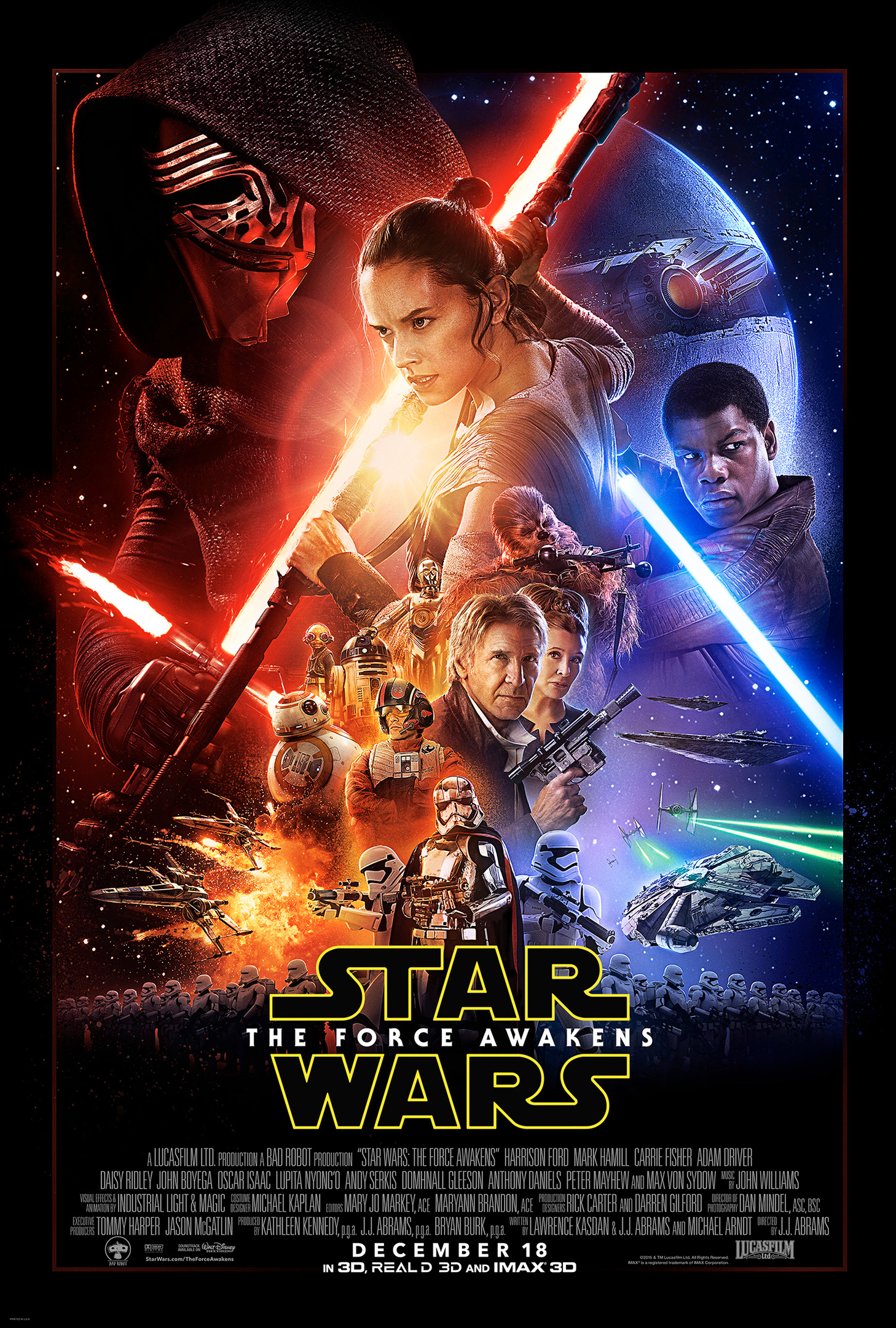
Star Wars VIIThe force awakens…then realizes it’s done this all before and should’ve stayed in bed. Return to that time long ago in a galaxy far, far away. Relive that first moment you saw Star Wars IV and fell in love with the franchise, because you are pretty much getting a plot so similar that you may wonder if the rest of this new trilogy will just continue to rehash and polish what’s all been said and done before. A more appropriate title for this visually stunning film would have been Star Wars: DejaVu or Star Wars: Revisited. No doubt that this film will indeed perform well this weekend; but that has a lot to do with the fact that so many people will view this film through an augmented reality and perceive it to be better than it actually is. The Big D can do no wrong, right??? All that being said, J.J. Abrams once again proves that he is a master at visual storytelling and his films are of a high caliber from a technical achievement perspective. The cinematography and editing are nearly flawless and really help to mesmerize the audience and impress even those who are generally not impressed by visual graphics and sound design. Watching the screen as familiar faces reprise the roles that cemented them in cinema history is nostalgic and heartwarming. Unfortunately, the writers should have spent more time developing a NEW story versus relying upon nostalgia.

With Luke Skywalker (Mark Hamill) in hiding, the Resistance, which has birthed out of the old rebellion, needs to find him in order to defeat the The First Order, a new world empire developed out of the ashes of the old Empire. In an effort to avoid capture, BB8 meets Finn (John Boyega) and Rey (Daisy Ridley). Through a series of events, this small band of rebels encounters the legendary general and smuggler Han Solo (Harrison Form). Working together, they need to get the information in this BB unit to the resistance so that The First Order may be stopped. Leading The First Order is Kylo Ren, a masked, dark, and menacing Sith under the direction of the Supreme Leader. Follow familiar and new faces on a journey through the galaxies to stop this new empire from destroying all that is good.

Put simply, this film relies too heavily on the previous movies, thus prohibiting a new story to “awaken.” It was made known early on that Abrams desired to create a new old-school Star Wars sequel to the original trilogy. And in many ways, he did just that. The problem is that it is way too old school and forgets that this movie was also responsible for relaunching the dormant (as far as theatrically released movies) franchise and introducing something truly new. He was so concerned with pleasing everyone–old fans and new ones alike–that he ended up not pleasing anyone who is willing to step back and actually examine the film as a film. All this film did was reuse past plots and forget to give the eager audience and fanbase something legitimately new after waiting so long. The overall plot, locations, and characters lack anything newly appealing. The movie even begins on a desert planet and ends with the destruction of a “not” Death Star–but it basically is–just larger.

With more than half of the movie consisting of space travel and battle sequences, you will wonder if you are actually playing Star Wars: Battlefront. Why? Because it looks and feels very similar to a highly developed video game that includes film sequences to transition to the different chapters or levels. Just pick one of the characters in the film and you can almost feel yourself moving them with your controller. One of the most memorable elements to the original trilogy is the nearly unparalleled cinematic villain–and the one who many try to be but fail–Darth Vader. Don’t worry, “there is another” as Yoda put it in Empire Strikes Back. However, this new “Vader” will leave you wondering how the writers thought he (Kylo Ren) could even come close to filling Vader’s boots and mask. From the mask to the red lightsaber, Kylo Ren appears to be just as menacing as Lord Vader. And there was some promise there. Unfortunately, the writers took any potential of a comparable sinister villain and essentially emasculated him when he removes his mask to reveal a guy in his 30s with luscious wavy hair. After that, it is impossible to take Kylo Ren seriously as a villain for the remainder of the movie.

Before you jump to the conclusion that the writing in general was poorly developed and executed, just wait a moment. Actually, the writing includes some comedic relief, moderately intense moments, with some pretty decent rushed character development, and sufficient exposition. The problem with the writing lies in the overly used plot elements and past Star Wars tropes. The script essentially lives in the past even though there are parts of it that want to live in the present. Leaving the audience thinking that they’ve seen this all before, the writers fail to include anything new and interesting. Instead of coming across as a much-needed sequel or revival, the film plays out as a reboot. There isn’t anything innately wrong with reboots of old, beloved franchises; but Disney and Abrams indirectly promised the sequel that never was but should have been after Return of the Jedi. Sequels are required to advance the story, introduce significantly new material, and move the plot along. The Force Awakens can easily be interpreted as 3/4 reboot and 1/4 sequel.

Visually, the film is cinematically brilliant! The sound design is also incredibly well executed. Even the score is beautiful. What one can appreciate about the score is that there is familiar music wrapped in a completely new score. Too bad the plot didn’t takes notes from John Williams on how to include the old but advance the new. There is no doubt that this movie will be nominated, if not win the Academy Awards in the technical achievement areas–and it deserves them. Honestly, I think some of the editing and graphics team from this movie should work on improving the graphics in the next Jurassic installment. Abrams promised that he would go back to practical effects and merely enhance them with digital effects, and he did just that. The combination played out very well and impressed me. He may not have delivered the movie that Star Wars fans wanted to see, but he did keep his promise to not rely on cheap digital effects as a large part of the design.

If you want to relive the first time you saw A New Hope, then here is your opportunity. It’s basically the same movie, but looks way more impressive. For those who wanted an actual sequel to resurrect this piece of Americana, then you may be disappointed. I really hope the next installment will give me something new. At the end of the day, the movie is certainly entertaining; and seeing Carrie Fischer, Harrison Ford, Mark Hamill, C3PO, and R2D2 on screen again, in their most iconic roles, is just plain cool and heartwarming. The nostalgia will certainly bring some to tears. And I also want to point out that this IS a fantastic film for a family, whether diehard fans or not, to spend some time together over the holidays at the movies.