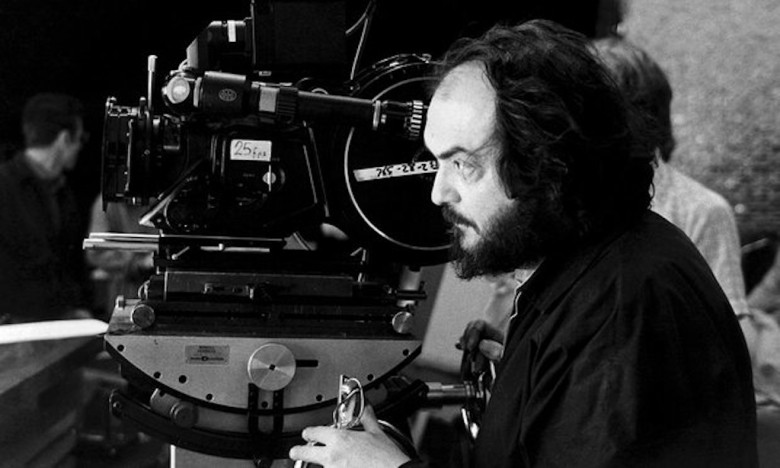
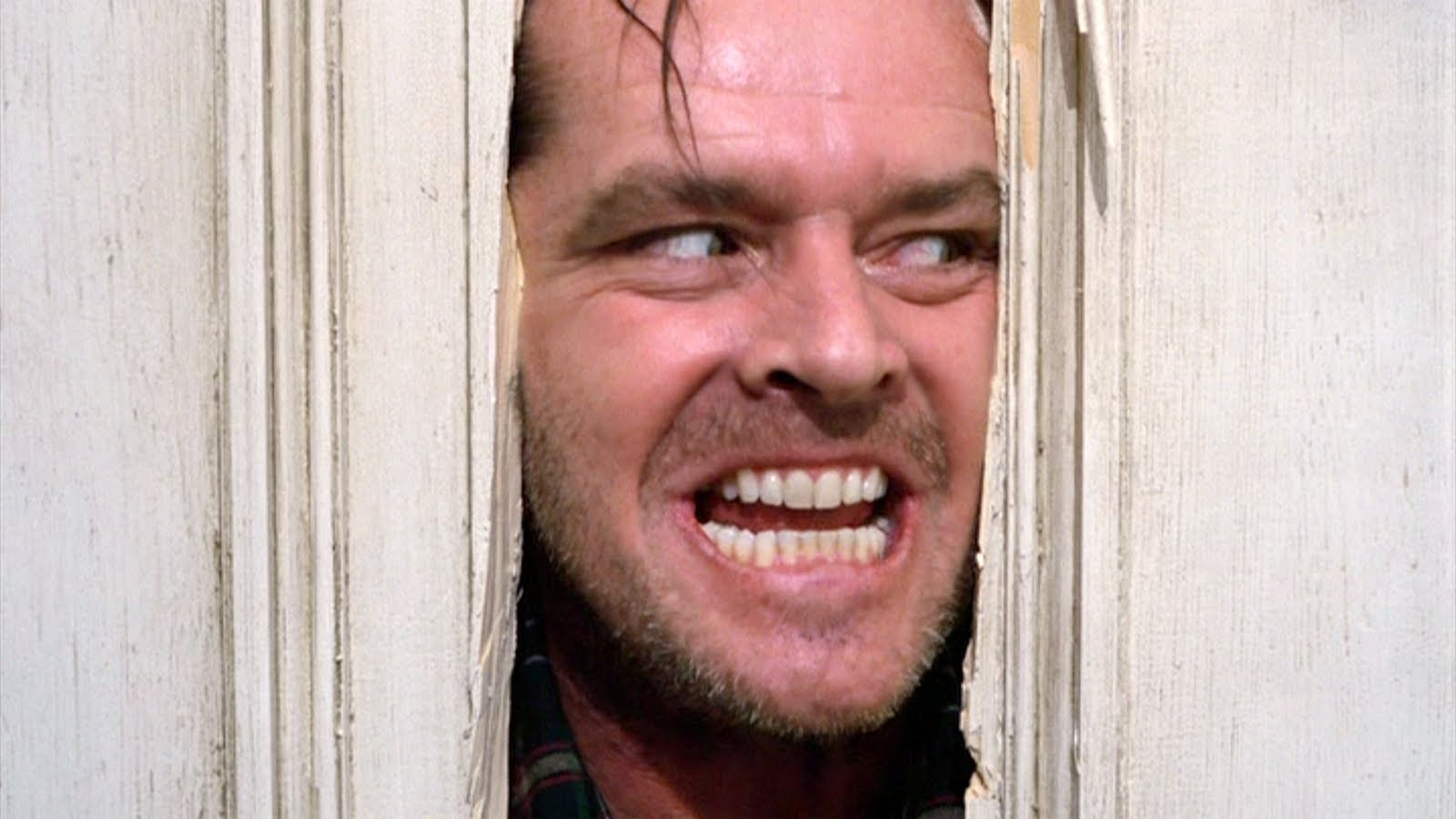
“Here’s Johnny!” Arguably one of the most quoted lines in, not only the horror genre, but in all of cinema! Widely considered one of the greatest horror films of all time, it stands as a testament to what an innovative, pioneering director can do with the genre. Stanley Kubrick’s The Shining based upon the best-selling novel by Stephen King is a cinematic masterpiece that continues to be studied and terrify audiences today. You’ll find TV shows and even movies paying homage to it through clever references to famous scenes in the film. The Shining is an incredible source of inspiration for visual storytelling and the horror genre. Much like Hitchcock radically altered the landscape of suspense and horror, Kubrick is regarded as a director who also dramatically changed filmmaking and broke ground for directing, cinematography, editing, and more! He took the medium of film to new levels that are still studied today. He is infamous for his acute perfectionism that often required dozens of retakes for the same scene, which made him a terror to work with. He was giving his best, so he demanded that you give your best in turn. It’s this approach that has made his films withstand the test of time. Beyond the silver screen, last year Universal Studios Halloween Horror Nights made it possible for you to check into the infamous Overlook to face your fears as you meander the corridors lined with the famous carpet that leads to bloody elevators, terrifying twins, and Jack Torrance wielding his fire axe (although it’s supposed to be a croquet mallet). As part of my Sinister Summer series, this article explores just what makes The Shining such a timeless horror film and example of excellence in the art and science of motion pictures.
 With the recent news regarding the casting and upcoming production of the sequel to The Shining titled Doctor Sleep, I thought that an analysis of this iconic film was appropriate! Although the 1997 3-part mini-series was a closer screen interpretation of the novel and took place in the very hotel (The Stanley in Estes Park, CO) that inspired Kubrick to write the terrifying tale, it’s the Kubrick film that continues to be the favorite among cinephiles and horror fans. Furthermore, it’s the film that is a testament to the power of visual storytelling and ability to evoke strong emotion, and is simply more memorable because of the depth and complexity of the film that begs for analysis. As a member of the audience, you are forcibly pulled into the story; you can feel the trauma, tension, and emotion of the characters. While Kubrick’s The Shining is one of the greatest horror films of all time, it is not and should not be thought of one of the scariest movies of all time. For one, Kubrick never stated that The Shining was a scary movie nor did he, through his control of the public relations and marketing material, imply that it was a scary movie. However, he did imply that it was more of a conventional horror film in order to capitalize on the popularity of the genre; but initial responses to the film were not overly positive because some interpreted the publicity as a bait’n switch. It does a lot of things, but “scaring” the audience is not one of them.
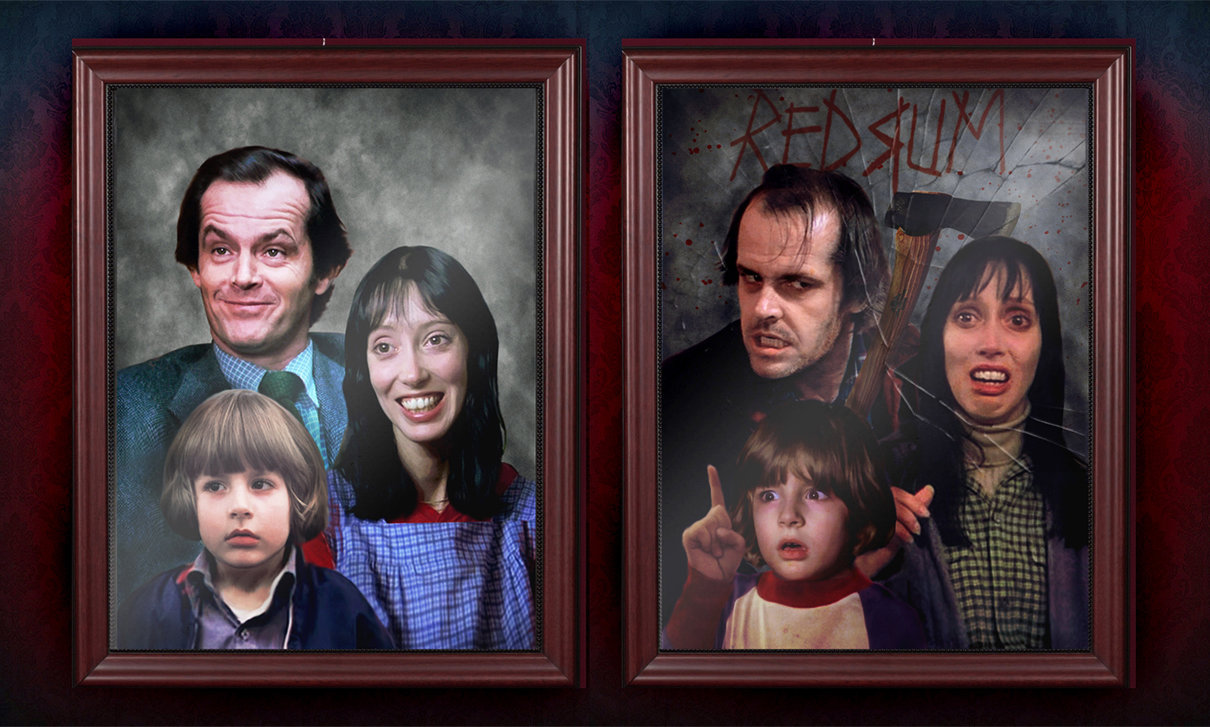 As I’ve written before, horror films are not synonymous with scary movies. Are many, if not most, horror films also scary? Yes. But some of the best ones focus more on the drama, themes, and subtext. That focus gives the film depth. And through the drama and cinematography, tension is built, suspense is drawn out, and strategically placed glimpses of visceral horror, nightmare-inducing imagery, and uncanny moments are revealed that generate terror in the mind that evokes a physiological response to the motion picture. Beyond the physiological realm, The Shining also taps into the psychology of the audience as the events unfold through the various traumas on screen. In retrospect, The Shining is a dark, traumatic family drama disguised as a horror film. The action sequences in the film certainly lend themselves to the horror genre, but the family drama paired with the brilliant cinematography and editing is what gives the film critical value. On the surface, it is very much a horror film, but beneath beats the heart of a dark melodrama with terrifying glimpses into psychotic breakdowns and schizophrenic delusions.
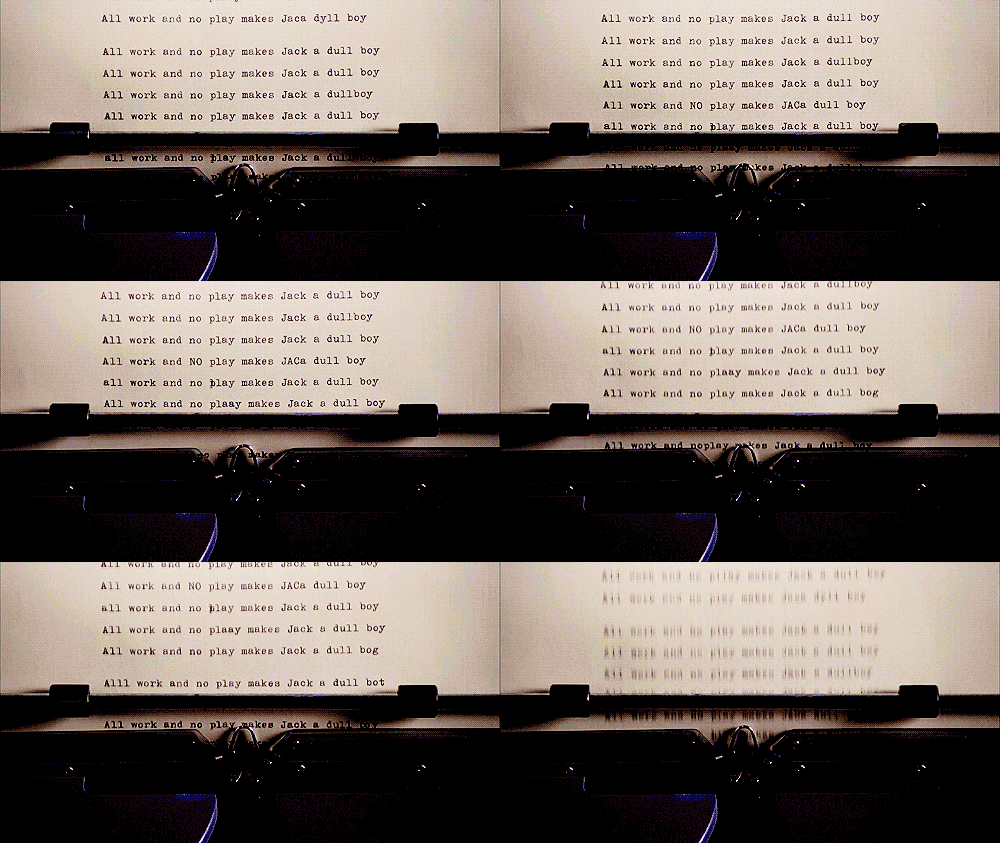 The Shining is one of those films that has been and continues to be analyzed to discern the meaning behind the images and writing. In addition to directing, Kubrick also co-wrote the screenplay with Diane Johnson. As one of the writers, he was often asked about the meaning of the various sequences or moment in the film, and in mysterious fashion, he was reluctant to clarify the meaning. Instead, he preferred to leave it up to the individual audience members to decide. If you’ve read the novel, you’ll note that there are many differences between the Kubrick film and book. Most notably the weapon of choice for Jack. A axe in the movie and a croquet mallet in the novel. There are also character traits that were lost in translation. In the book, Wendy is a strong female whereas in the film she is incredibly mousey. And the hotel itself.
  The hotel described in the novel is clearly The Stanley in Estes Park, CO but it was the Timberline Lodge in Oregon that was used for the exterior shots. Why would Kubrick make these obvious changes? Not limited to The Shining, Kubrick often–in Kubrick fashion–adapted novels to screenplays in a manner that it made them more cinematic and less literary. The film certainly has a literary quality about it, but the changes implemented were in an effort–and successfully so–to make the story more cinematic. One visual way Kubrick adapted the novel in order to make the film memorable was to invert colors from the novel (i.e. yellow VW bug instead of the red one from the novel). Furthermore, he looked at the meaning behind the hotel’s design in the novel, and interpreted the meaning for the screen, not the objects themselves. It’s this cinematic quality that contributes to the masterpiece status of the film.
 More than a ghost story in an isolated location, more than haunted magnificent hotel with a sordid, tragic past, The Shining derives its brand of horror through the twisted, dark family drama with a touch of the supernatural. I love how Kubrick uses what may appear to be beautiful imagery and juxtapose it against the macabre. Often there are innocent or majestic images used in the film that are undercut by dark subtext, uncomfortable music, or superimposed on that which removes any positive potential from the sequence. It keeps you from being too comfortable or perhaps it pains your mind. While one may expect a haunted hotel to appear in a more conventional or traditional fashion (gothic, rundown, tired, antiquated), this hotel is brightly lit, well-kept, and modern. But through Kubrick’s brilliant direction, despite the hotel’s outward appearance, it also feels evil from the onset. Frame by frame, Kubrick paints an entire portrait, writes an entire story. Each scene is as though it is a word in a larger paragraph. Much like the scenes in Barry Lyndon are ostensibly taken directly from an oil painting, the shapes, colors, and frames of The Shining communicate through extensively showing that which would have lost critical value if it was told. Show don’t tell (I say to my students all the time). Visually, the film builds tension throughout every moment from the beginning to the end. Because Kubrick exerted extreme perfectionism in direction, cinematography, and editing, one could remove all the dialogue from the film, and it would still play out just as powerfully. But of course, we would lose that famous line as Jack comes crashing through the apartment door.
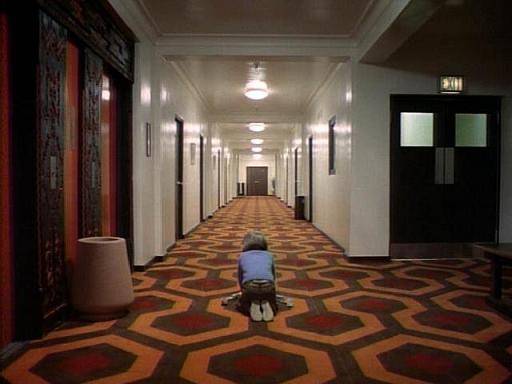 Some of what Kubrick left out of the novel was due to logistical reasons. Visual FX that would allow for increased ectoplasmic apparitions, menacing hedge animals, and more was still limited. At least, limited to the extent that they did not meet the demands of Kubrick. He exchanged the more traditional horror imagery for something with far more intrinsic value–and thankfully so. Let’s concentrate on the three principle characters for a moment. Just like the Overlook Hotel is one location, one building with many spaces or rooms, we can apply that illustration to the Torrance family. Imagine the Torrance family as one unit, one unit with three different spaces. Perhaps this is a bit of an abstract thought, but the film’s content supports the focus on the central three as abstract spaces within the larger whole more so than the haunts around them. When analyzing the family in such a manner, the viewer can then see how elements of the hotel are extensions of the individual family members.
  You can read the family like you read the hotel. I also liken The Shining to Edgar Allan Pot’s The Fall of the House of Usher because the Overlook is a direct representation of the psyche of Jack, just like the house in Poe’s story. On one hand, the hotel is exquisite and expansive but on the other, it’s a claustrophobic prison, a grave. It exists on a serene landscape of beautiful snow-capped mountains but it also exists in a state of hell. It’s that identify crisis that mirrors Jack’s duality of mind and behavior. The famous carpet pattern, arrangement of corridors, impossible windows, lonely hallways with skeletons in the closets–or bathtub in this case–are all representative of the bizarre, bewildering mazes of Jacks mind that slowly drive him insane.
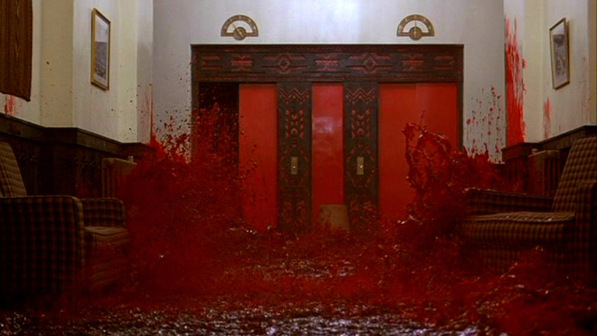
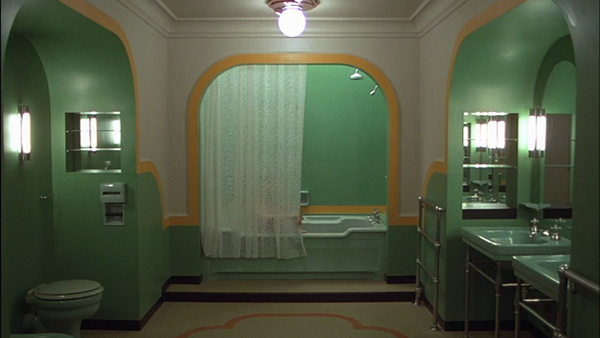 Kubrick also plays around with the idea of time, repressed memories, the uncanny through the revealing of that which should have remained hidden or buried. In my article The Psychology of Horror: An Exploration of Freud’s Uncanny through Psycho, I explain that the uncanny is The word uncanny comes from the German word unheimlich, which is literally translated as something unfamiliar. However, that which is unfamiliar is not necessarily uncanny. By the same toke, that which is uncanny is not necessarily completely unfamiliar either. In particular, he was interested in the return of the repressed. And, in this return of the repressed, “other” scenes, to which we do not have direct access, would reveal themselves. It is this revelation that is what Freud terms the uncanny. According to Freud, “unheimlich is the name for everything that ought to have remained…secret and hidden, but has come into the light.” The famous bathroom scene with the ghoulish bathing beauty, the bloody elevator (which Universal achieved so brilliantly at last year’s Halloween Horror Nights), and the twins that beg Danny to play with them forever, these are all repressed memories of the hotel’s past that have come into the present to disrupt the natural order of time, space, and dimension. It’s this disorder that directly impacts the ability for the family to function normally. And therefore contributes to the psychological breakdown of Jack, Wendy, and even Danny. These images and experiences distort reality, causing those of weak minds (Jack) to question everything around them, to behave hostilely in the face of an inability to discern reality from imagination.
 Many critics and fans have written that the chief theme of The Shining is an exploration of America and her troubled, violent past. Mainly the massacre and displacement of the natives but can be applied to slavery, the Civil War, and where I’m choosing to go: socioeconomic class. I find that this is an important theme to discuss and may provide further insight into the meanings of the film because we learn that Jack is unemployed but finds himself in the grandest of hotels. Evidence of socioeconomic class can be seen through Jack’s words and behavior. Although he’s issued the title caretaker, he quickly asserts himself as a writer during his interview. How many of us have modified our profession or self image to impress more. It’s out defensive pretense to make ourself appear more successful or more intellectual than we actually are, for fear of what others may think. We are our own caretakers and public relations professionals.
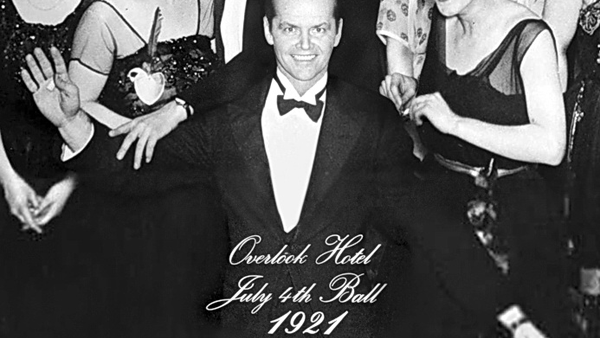
 Jack quickly associates the hotel with luxury, but is reminded of his lowly status during the course of his interview. He can temporarily live like the elite, but knows that he is still a working class schlub. Seeing this position at The Overlook as a way to gain prestige, he takes the position. I imagine he took the position so he could say to his friends that he spent the winter at the Overlook in order to write on his novel. During the tour, Wendy often remarks that they’ve never been anywhere like this before, drawing attention to the family’s provincial status. Several times during the film, Wendy urges Jack to resign as caretaker and return to Boulder. He refuses, stating that if he went back, he would be reduced to working menial jobs. The irony is that he is already working a menial job as a caretaker at a shuttered hotel. He exists in a perpetual state of cognitive dissonance, demonstrated an inability to reconcile what his role actually is. Again, we witness the film displaying someone who cannot discern reality from imagination.
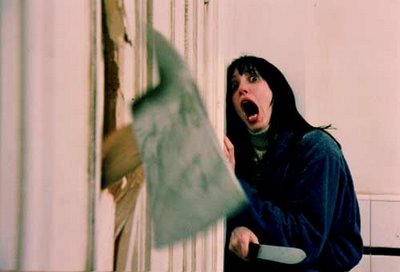 And on the topic of the real versus imagined, another theme I’d like to highlight in the film is madness versus possession. We may never truly now if Jack was simply mad or was truly possessed by the spirits in the hotel. In the TV version, it is far easier to surmise that Jack IS possessed by the hotel, not so much in the more artistic film. We know that Jack has a violent history of alcoholism that led to Danny’s arm breaking and that he resents Wendy for refusing to forgive him for the accident. Furthermore, Jack demonstrates anger and resentment for Wendy not fully supporting his aspirations for a writing career. The presence of ghosts and other evils lends support to the possible possession of Jack. He certainly does change during his short tenure as the caretaker. Perhaps it’s a combination. Danny’s ability to shine and Jack’s sensitivity to objects and people who shine creates quite the conundrum. It’s entirely possible that Danny insisting that Jack is possessed drives him mad. There is evidence in the film that Jack may be legitimately schizophrenic because of his visions of Lloyd, the Gold Room bartender and the New Years party guests. But because Wendy eventually sees these same ghosts, that supports the hypothesis that Jack is possessed by the hotel. Does Jack have free will or is he fated to a pre-determined destiny? You be the judge.
 That’s what makes the writing and visuals of this film so great! There are many interpretations, and I feel strongly that is what Kubrick wanted. This film causes us to think and discuss. So, I am glad it doesn’t just have one metaphor or meaning. Stanley Kubrick’s The Shining is a masterpiece of a film that deserves all the accolades that it has ever received. The supporting evidence outlined in this article merely touch the surface of the depth and breadth of discussions that can be had about this film. The bar set by the atmosphere of dread in this film is incredibly high, and few films even encroach upon the level of cinematic excellence.
Follow me on

Follow Me!