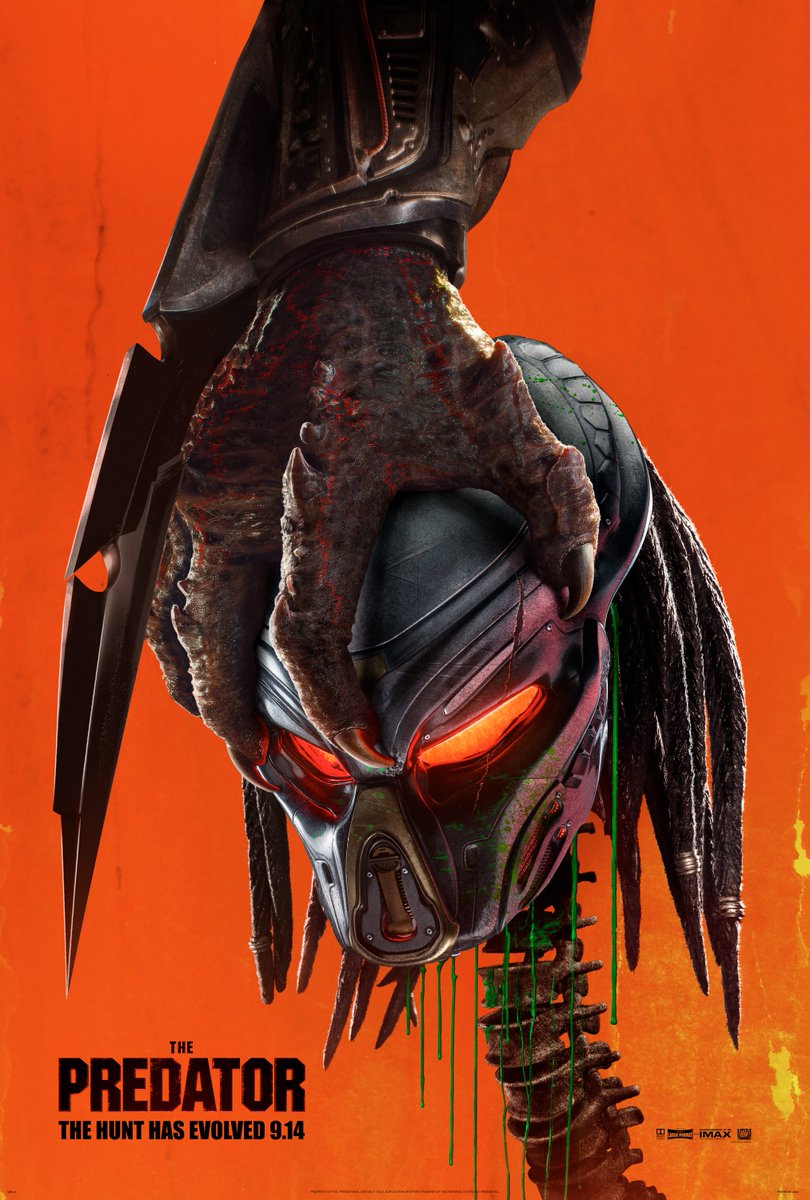
A solid reboot/sequel for the Predator franchise! Don’t pay attention to the plethora of reviews from critics who are hating on Shane Black’s The Predator. With an entertaining action-horror plot, fantastic cast, and excellent pacing, this is the Predator that we wanted and got! And I am not alone in this, several podcasts and even the Roger Ebert site agree on Black’s Predator. The tone of the movie feels like a throwback to the original, while acknowledging the other movies to maintain just enough continuity where you don’t question where this film falls of what has happened prior. I went into this movie with moderately low expectations because of what I read in the initial reviews, but I was completely surprised by how much I enjoyed it. And not only me, all of my friends who were with me between Rounds 1 and 2 of Halloween Horror Nights opening weekend. You get it all, grizzly action, humor, and entertaining kills. Unlike past movies that tried to “improve” on their 80s predecessors, this quintessential action-horror takes us back to what made the 80s horror endure the test of time. Instead of building the movie around the title character, it builds it around the lead human cast. And a memorable cast of characters, at that. Where some reviewers have found irreverence or offensiveness in the fact that many of the characters demonstrate cognitive and emotional disabilities, this is actually what works well for the film. Furthermore, it highlights how emotional, physiological, or cognitive disabilities do not determine someone’s degree of courage, determination, empathy, or sense of humor. Each of the lead and supporting characters in the ensemble cast overcome any obstacles that stand in their way, whether the obstacle comes from within or from the outside. It is a fun, exhilarating horror movie that will keep you entertained!
“From the outer reaches of space to the small-town streets of suburbia, the hunt comes home. The universe’s most lethal hunters are stronger, smarter and deadlier than ever before, having genetically upgraded themselves with DNA from other species” (IMDb). When US Ranger McKenna (Boyd Holbrook) discovers a crashed space ship and loses his crew to a mysterious alien with futuristic weaponry, he salvages what he can find from the wreckage and mails–in Dr. Henry Jones fashion–it in order for it to not be confiscated by the US government. Unbeknownst to McKenna, the US government is aware of these Predators, and has one sedated for testing in a secret facility. When the US government gaslights McKenna and believes him to be maliciously upholding an investigation, he is thrown onto a bus of other veterans, whom the government does not want to deal with, to be taken to a mental hospital. When the Predator escapes the facility, McKenna teams up with his fellow soldiers on the bus to take down the alien killer before more harm can be done. Meanwhile, the situation is complicated when a boy accidentally triggers the return to Earth of an even bigger Predator, and only McKennas’ ragtag crew of ex-soldiers and an evolutionary biologist can prevent the end of the human race.
Since there isn’t much to analyze here, I am going to keep this one short. What I find most interesting about The Predator, is what it was NOT more so than what it was. It wasn’t another reboot of a past franchise that overly injects vapid dialogue and self-aware humor or a complex plot. The Predator heeds the maxim “simple plot, complex characters.” Moreover, it also wasn’t a parody or satirical piece that was making fun of the genre or source material as if it was no longer relevant to audiences. It would have been far too easy for Black to have made a mockery of this franchise or wrote-directed something that was just complete schlock; but he did what many thought was impossible with this horror creature feature. He revived what we loved about the original, made a few tweaks, and gave us a strong reboot/sequel that was incredibly entertaining to watch.
After watching the movie, I am left with the conclusion that Black was able to recapture what made the first one work so well and actually repeat it, with some exchanges of grizzly violence for humor. But why does this movie work so well? Black started with characters, then derived a plot from those characters with incredible precision and strategic pacing. The tone and rhythm of this movie are remarkable. Yes, remarkable. Black was able to achieve what fans of great action movies love and take for granted, but is highly difficult to pull off effectively. The placement of dramatic beats. The reason the plot of this movie works so well is because Black knew where to place the emotional and action beats, and how to build up to them, and drive them home. He connects to these beats through character-driven development through which plot is derived.
For fans of the franchise, this truly IS the Predator movie that you were hoping for. Even those who are new to the franchise will enjoy the movie because it works as both an homage to and a pioneer in rediscovering the attraction of this iconic creature feature.
Ryan is a screenwriting professor at the University of Tampa. If you like this article, check out the others and FOLLOW this blog!
More than an instantly recognizable silhouette. Before the idea of a director branding him or herself became as common a goal as it is today, Alfred Hitchcock pioneered the very concept of a director developing a brand that would instantly be recognizable by millions. Not only was Hitch the Master of Suspense, and still is, but he was also a master of marketing. Unknown to many, Hitchcock worked in sales and marketing before he became one of, if not the, most recognizable name in cinematic history. Between his experience in marketing and with silent filmmaking, he was a master of captivating visual storytelling way before his most well known works of cinema. I teach media and screenwriting at the University of Tampa, and I’ve often told my students that writing a compelling, memorable, effective thirty-second commercial can be more difficult than writing a two-hour film. I realize that illustration overly simplifies the respective concepts; however, the idea is that if you can proficiently tell an intriguing or impactful story in thirty-seconds, then you can proficiently write a two-hour movie. Taking what worked well in advertising and marketing, and adapting it to a cinematic diegetic structure, Hitchcock was able to capitalize on his penchant for visual storytelling and ability to prompt desired physiological and emotional responses from the audience. The American Marketing Association defines a brand as “a name, term, design, symbol, or any other feature that identifies one seller’s good or service as distinct from those of other sellers.” The fact that Hitch’s name and silhouette have instant meaning, definition attached to them, is evidence enough that he was a master of branding.
Prior to understanding just how Hitchcock became the first director to brand himself, it is paramount to understand how a brand–more specifically brand recognition–comes to exist in the first place. A simplistic method of understanding what defines a brand takes the form of a relationship between an image (or idea) and the individual. Relationship is key. There is an emotion attached to the relationship between the image and the products or services that it represents; moreover, this relationship is not without a practical component such as cozy fur-lined boots or an automobile with consistent impeccable quality. By extension, the relationship between an individual and a brand can create a sense of importance, safety, or class. Once a relationship is formed, then the individual experiences both physiological and emotional reactions to the sight or sound of the image or idea. Think of that feeling you get when you see the Disney castle or hear “Wish Upon a Star.” Or perhaps, imagine how you feel or react when you see a BMW or wear a Rolex. These are iconic brands that mean something to many individuals. The mere exposure to the sight, sound, or message will prompt a comprehensive response within the mind and body. As the maxim goes, “imitation is the highest form of flattery;” therefore a quality, successful product or service will be copied but never fully replicated because there is always a secret ingredient that makes the original unique. In addition to the aforementioned, when an image or idea becomes a recognizable brand, then there is a power endowed upon that image that gives that company (that owns the image, product, or service) a kind of soft power that cannot easily be quantified but it’s quite real and figuratively measurable.
Not unlike Rolex, BMW, and Disney, Alfred Hitchcock was and is also a brand–and a powerful one at that. He was the first director to become a brand; and since then, others have tried to brand themselves as well. Some with success and others with defeat. One of the keys to Hitchcock’s ability to combine the words of marketing and filmmaking in order to not only develop a reputation but become a brand, Hitchcock recognized early in his career (especially after coming to the United States) the importance of promoting himself–his actual image–in conjunction with the promotion of a particular film. He demonstrated a clearly intentional desire to ensure that his name was at the forefront of the conscious of the American public. When a particular director, who consistently delivers quality or groundbreaking films, links the outstanding performance of the films with his or her image, then the mere sight of or name of that director carries priceless value. Following the breakup of the studio system over the late 1940s through the 50s, there arose an increased opportunity for to claim authorship of a motion picture. Prior to the decentralization of Hollywood, most movies were completely packaged by the Studio/distribution company, with the director playing a minor role. With the new opportunities to connect a motion picture to the director during marketing, it paved the way for directors to advance their own careers as well as the success of the movie. As studio authorship decreased, individual (director or producer) authorship increased!
According to Janet Staiger in her essay Creating the Brand: the Hitchcock Touch, she outlines four significant criterion that apply to image or brand as it relates to showbusiness. (1) the character persona that is created by selection of performances in film, tv, web media, etc (2) the performer (acting ability) in those mediums (3) the worker/laborer that develops from what is learned about the individual’s professional life in respect to business dealings and (4) the private persona that derives from the individual’s off-camera personal life. Whereas these criteria are more aligned with an actor or actress, these elements can be applied, by extension, to understanding Hitchcock as a brand. Hitchcock’s character can be seen through his genre selection–the types of films that a director authors. Think of his genre selection as the equivalent of the types of characters an actor or actress chooses to play. We recognize the performer element in Hitchcock’s consistent ability to direct the motion pictures with incredible precision and innovate programming for then-new mediums like television. Hitch’s worker/laborer attribute is found in what we know about his behind-the-scenes work on set and in the business offices. Most famously is his near-departure from Paramount when he went to make Psycho, for which they earmarked zero funding. He self-financed the iconic film and used his Alfred Hitchcock Presents crew. Passion, determination, and commitment witnessed. In terms of his private persona, Hitch was famously a practical joker and a family man. In fact, his daughter appeared in multiple episodes of Presents. All these elements together combine to create Hitchcock’s image.
But there is more to branding oneself than crafting an figurative or metaphysical image. There is the physical image that is recognized by the naked eye. After injecting himself into film social circles comprised of well-established directors, screenwriters, and even critics and journalists, he had a well-known name. And even though a name can carry power, it needs a tangible representation. Although one may assess that Hitchcock came up with that trademark minimalistic nine stroke silhouette, the inspiration came from a series of director sketches that appeared in The Motion Picture Studio journal in 1923. There, we have a group of then and now famous directors with Hitch appearing sideways with his famous belly out and hands in his pockets. By the 1930, Hitchcock was being heralded as a master of suspense. And that description of Hitch’s work continued until the moniker stuck in perpetuity.
In addition to the soon-to-be-moniker, film magazines took notice of his notable weight. By the late 1930s, it is said that Hitch already weighed in excess of 300lbs. As the maxim goes, “there is no bad publicity,” and that can definitely be witnessed in how Hitch’s brand continued to develop during his early days in America. The constant articles about his weight, the unprecedented success of his films, his cameos in those films, and sketched of Hitch, all those elements together created Hitch’s image. You can very much liken the evolution of the Hitchcock figurative image and physical logo to the evolution of Walt Disney’s image and either the Mickey ears or castle logo. Whereas the content of the motion pictures that both produced/directed respectively are quite different, they share one important element in common. They both injected themselves into the production and marketing of their work as much as possible. Although Walt Disney made himself into a brand (most solidly after Snow White), it was Hitchcock who was the pioneer in the very idea of a director creating his (or her) recognizable brand. In many ways, Walt follow Hitch’s direction to make his brand. But where did the famous nine stroke sketch come from? Well, according to author Robert Kapsis in his book Hitchcock: the Making of a Reputation, he drew the sketch himself in 1927 for the purpose of making it into a gift for his friends and colleagues. He created a wooden jigsaw puzzle with the iconic image an placed it in a small linen bag. I cannot think of anything more Hitchcock. This parallels how Hitch injected himself into his cinematic work both in the story itself, as a cameo, and in the marketing of his films.
Hitchcock knew that to create a brand–as everything he has accomplished for this result has been completely intentional–he needed to make a connection between his films and himself, and then himself to his name, and his name to the abstract profile. Then when someone sees the logo, they are immediately predisposed to feeling a certain way about Hitch and his films. It’s a bi-directional highway, so to speak.
Well, it’s not the worst horror movie ever. Universes are popping up everywhere, and why should The Conjuring not follow in suit? Based on the real-life paranormal work of Ed and Lorraine Warren, there is certainly enough material from which to build a universe; but if this is a universe and the movies are planets, then perhaps The Nun will go by way of Pluto. Sometimes it’s included, sometimes it’s not. One may even go so far as to say that The Nun is truly unholy–an unholy hot mess of a movie. That’s not to say that it isn’t fun to watch. Like with horror movies, in general, it is a fun watch with a large group of people all reacting at the same time. While recent horror films focus on creating an atmosphere of dread and developing characters that the audience cares about, and then crafting twisted moments of terror such as A Quiet Place or Hereditary, this movie follows bad horror movie tropes that may aid in getting you to jump here and there, but ultimately fail at delivering anything truly scary or horrific. With German expressionism being at the very roots of the American horror film, as seen in Nosferatu, Phantom of the Opera, and Dracula, The Nun seems like such a missed opportunity to produce a terrifying gothic horror movie.
When a nun at a cloistered abby in the hills of Romania is discovered as having committed suicide by hanging, the Vatican calls upon the service of Father Burke (Birchir) to investigate the occurrence to determine if there is any unholy work at play. Under the advisement of the Vatican, Father Burke is asked to work with Irene, a young nun from a Catholic school because she has the gift of visions that may aid in their mission. Although Irene has yet to take her final vows, she agrees to accompany Father Burke to Romania to uncover why one of her sisters would commit suicide. Father Burke and Sister Irene soon discover that a most unholy spirit lives within the castle, and that the abby’s convent of nuns were protecting the world against a malevolent demon who must be sent back to the depths of hell.
Like many of you, I too was initially optimistic for this origin story as the glimpses of The Nun in the Conjuring movies are terrifying. Partly, these glimpses are creepy because we see very little of the nun. The demon nun suffers from some of the same problems that are witnessed in the Insidious movies. When the demon was shadowed, barely visible–but just enough to frighten you–he was scary; but then he turns into Darth Maul and loses that level of fright he had through most of the first movie. Simply stated, we saw too much of him. To the point that he almost became a parody of his former self. Likewise, the nun’s exaggerated features, yellow eyes, and jagged teeth quickly transition from scary to almost funny. Funny in that it felt campy or over the top. Director Corin Hardy obviously does not know the power of subtlety. Diegetically, the plot of The Nun plays out as incredibly predictable. The nun or another ghoulish apparition appears right when and where you expect it to happen. No surprises here. In an era that arthouse horror is attracting mainstream audiences–and making bank at the box office–it’s quite upsetting that a movie that had the setting and characters for arthouse horror decided to go the “paint by the numbers” route instead of joining other trailblazers.
A grossly underused setting. The movie begins in candle-lit hallways in a medieval castle in the foggy hills of Romania. Visually, the movie appeared to be setting up a story and setting that would have that beautifully dark gothic feel and look; however, it quickly turns into another generic haunted house movie. We begin with an incredibly effective foreboding atmosphere complete with everything you want to see in a gothic horror film, then scrap it for unimaginative rooms and cheap exploitation. Gothic horror films possessed an ability to depict terrifying stories with minimal dialogue. Dialogue was an extension of the plot; it did not force the plot. The Nun had all the right elements for a frightening horror film but failed to deliver the Conjuring universe movie we wanted or expected. It’s like, you can buy all the ingredients to make an exquisitely delicious dish you had at a French restaurant; but if you do not know or choose to ignore the proper amounts and order of the ingredients, then your dish will most likely fail to meet your expectations. Moreover, there were many moments that felt gimmicky, felt forced.
With such an amazing setting, the german expressionistic and gothic roots should have ben channeled more effectively. Whether you are familiar with the term or not, you are likely familiar with what it looks like–especially if you are a horror junkie like myself. The antithesis of French impressionism (art displaying authentic life), German expressionism sought to reflect real life but through metaphor, allegory, and symbolism. An indirect representation of observations of real-life. Expressionism allows the filmmaker to visually explore themes such as death, life, sex, institutions, religion, and more. The beauty is its ability to provide social commentary without being overt. Examples of German expressionism can be found in older films such as Nosferatu and The Cabinet, Dr. Caligari, mid-century films like Psycho and The Exorcist, but also found in newer films such as Batman Returns and Crimson Peak. Mostly associated with film noir, german expressionism is foundational to the looks and feel of horror films as well. Visually, German expressionism is characterized by exaggerated architecture, shadows, twisted landscapes, and sharp edges. The very look of it is creepy. German expressionism takes many visual queues from gothic architecture. It’s that gothic looks and feel that was mostly ignored in the setting and actions of The Nun even though it was a perfect candidate for it.
This movie will undoubtedly do well at the box office over the next couple of weekends as even “ehh” horror is bankable. Before I allow myself to get too discouraged, I look to how the sequel to Annabelle was fantastic after the first installment was a let down. If Annabelle Creation can improve upon its predecessor, then the forthcoming Nun sequel can do the same thing under the right direction with the right screenplay.
Remarkably spellbinding! Searching takes the concept of “screen life” movies to impeccable levels. Although the concept of a film relying entirely on computer screens is not new, this is the first time that it has been executed perfectly. The first wide-release film to take this approach was 2015’s Unfriended, and it was quite the pioneer in its approach to essentially adapting Agatha Christie’s And Then There Were None, with the end result being pretty good. The following films to take the approach, including the more recent Unfriended: Dark Web, failed to tell a coherent story. Learning from the successes and failures of this cinematic concept of the past “computer screen” films, writer-director Aneesh Chaganty, along with co-writer/producer Sev Ohanian, crafts a suspenseful thriller that truly understands the power of the internet and how it enables and affects our actions. There is genuine emotion felt in this film. You will truly care about the lead characters and remain hooked for the entire film. Chaganty seems to have taken a page right out of the Alfred Hitchcock playbook for suspenseful storytelling that relies upon character development, twists of the everyday, and only use on-screen violence or graphic details to supplement the story. This tension-filled voyeuristic crime drama is successfully created–not through viruses, the supernatural, dark web or illegal activities–but through the mundane things we do everyday. Perhaps this film uses modern technologies to tell the story, but the soul of this film is brilliant old-fashioned suspense. And that solid foundation is why this film will do incredibly well.
Following the tragic death of wife and mother Pam, David (John Cho) and his daughter Margot are forced to move on with their lives, doing their best to cope with the loss of their loved one. Over the couple of years since his wife’s death, David and his daughter have drifted apart but still maintain a relationship. Loss of a mother and wife has a major impact upon a family. After Margot fails to return home after a study group session at a classmate’s house and repeated unreturned texts and phone calls, David fears that something terrible has happened to his daughter. When another classmate informs David that Margot never showed for a trip on which she was invited, David reports her as missing to the police. Detective Vick (Debra Messing) heads up the investigation into the whereabouts of Margot that immediately leads nowhere. Lead after lead leads the investigation to believe that Margot may have simply ran away. Convinced that his daughter did not run away, because of so many elements of the investigation not adding up, David turns to the one piece of evidence that was initially overlooked by the police, Margot’s laptop. Following the cookie crumbs left in the seemingly mundane websites visited by Margot, David begins to connect the dots that will hopefully lead him to what happened to his daughter.
No spoilers here. In fact, I urge those who have seen it to NOT spoil it for everyone else. In a manner of speaking, this film feels very much like Psycho must’ve felt when it was released. Hitchcock mandated that no one be allowed to enter the auditorium after the movie began; and furthermore, he insisted on an adherence to strict show times. In fact, much of how our modern cineplexes are run today are a product, in part, by the release of Psycho. The closest I will get to spoiling is informing you that there is an amazing twist ending. Just when you think the story is coming to a close, watch out! Taking what Unfriended (the original, not crappy indirect sequel) did well, and learning from what Dark Web failed to do, Chaganty’s Searching provides audiences with a fantastic experience visually, and anchors the plot with strategic, effective emotional beats.
The story is just as much emotional as it is visual. Possibly even more emotionally and psychologically-driven than the images the frame can capture. Whereas other films that rely upon what we do on our computers fail to have genuine, authentic characters, Searching depicts everyday, real life people doing what millions of others do. How often have many of us been able to talk to complete strangers about something that we are uncomfortable talking to our family or closest friends about? That is precisely what Margot does. Providing additional commentary on the mediation of society through digital media, Chaganty highlights our digital selves versus our actual selves. This is evident in the healthy social life Margot was leading her dad to believe she was experiencing; when in actuality, she was quite alone and simply focussed on school work and little else. David realizes that he didn’t know his daughter at all.
Previous “computer screen” concept movies pretty much involved never leaving the primary computer screen–easily becoming visually exhausting. Chaganty’s thriller chooses to switch from iMac, to iPhone, to PC (with Windows XP), to online news footage. These changes prohibit the setting from ever becoming too familiar or boring. The minor changes keep the senses heightened. Hitchcock earned his moniker by consistently delivering suspenseful cinematic excellence; and this suspense was executed with visual precision coupled with strong emotion. Chaganty very much patterns his modern suspenseful crime drama after the exemplary work of Hitchcock. Different from previous films using real-time on a computer to allow the plot to unfold, this film takes place over a week–closer to more traditional “movie time.” One may be inclined to conclude that the tension feel less intense because of not watching the plot unfold in real time, but that is definitely not true with Searching.
From the moment Margot’s missed facetime and phone calls fail to waken her father to the heart-pounding conclusion, the tension is in high gear. Hitchcock describes suspense as the having to do with the audience having sympathy for the characters and an intense need for something dramatic or shocking to happen. While the audience does not want something bad to happen to the lead characters, they are still at the movie in hopes that something terrible happens. Ironic, isn’t’ it? Much like Hitch delivered suspense through information, Chaganty does the very much the same with Searching. Another way Hitch delivered and ensured a suspenseful atmosphere in his films was having two important events happing concurrently. With David and Vick very much leading their own investigations respectively, we often experience this dichotomy. And Hitch is certainly famous for his twits, and this film contains some fantastic red herrings and twists to the tension-filled plot.
Presently in a limited release, with the film opening everywhere August 31st, Searching is a phenomenal whodunit build upon effective suspense and visceral tension. You will be glued to the plot and feel the emotional rollercoaster experienced by David as he searches for his daughter. Chaganty has proven himself through demonstrable evidence that he understands suspenseful storytelling. Because the film exists in the everyday world we live in, it may get you thinking twice about the degree to which your own life is mediated by technology. The social commentary in the movie also reminds us to be ever vigilant who we correspond with through live video and chats. For you never know to whim you are really speaking.
If you’ve enjoyed this article, be sure to check out all my past ones! You can search for a film by title to see if I’ve written on it. Don’t forget to follow my blog by clicking the blue button in the upper left!
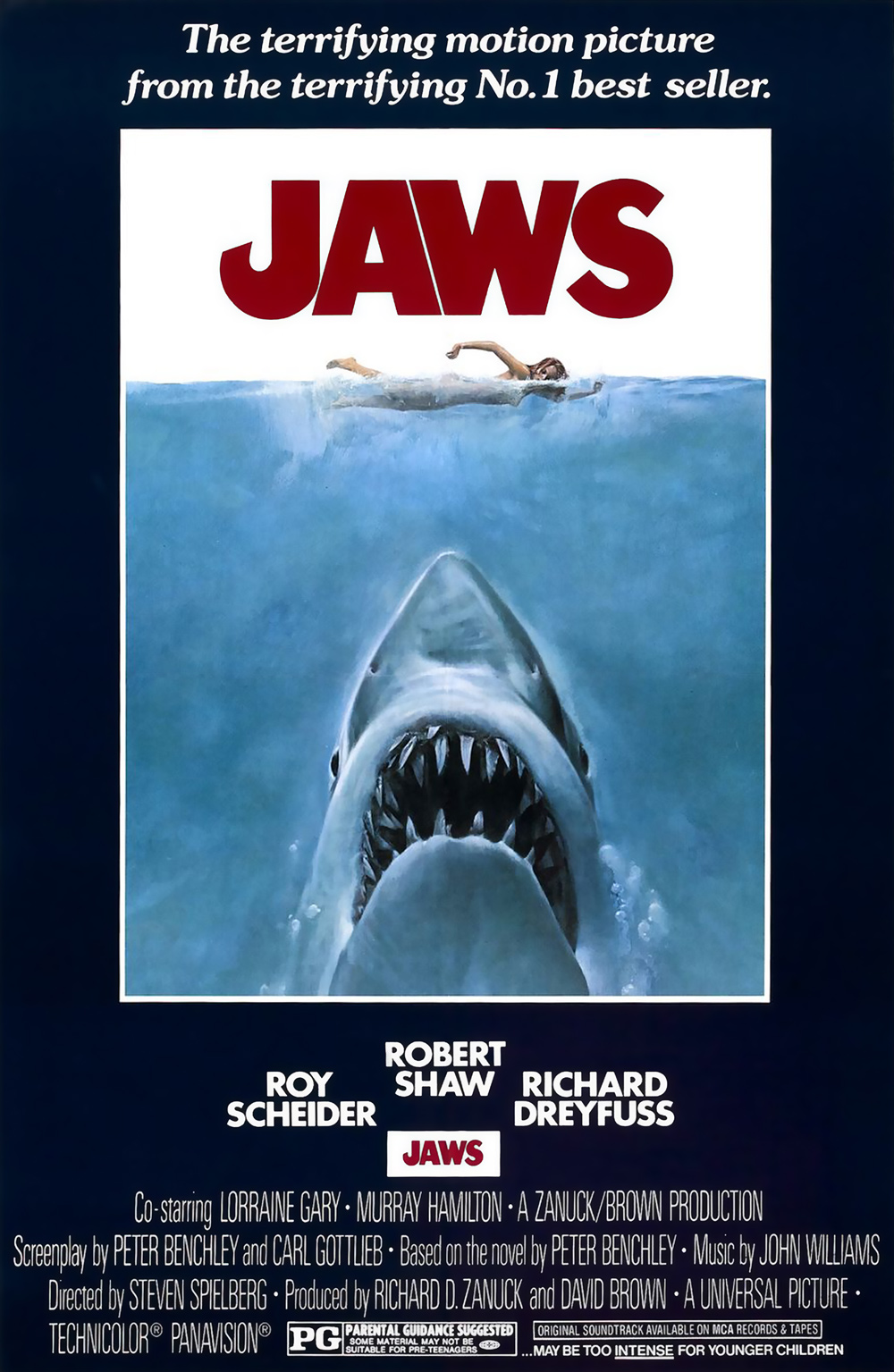
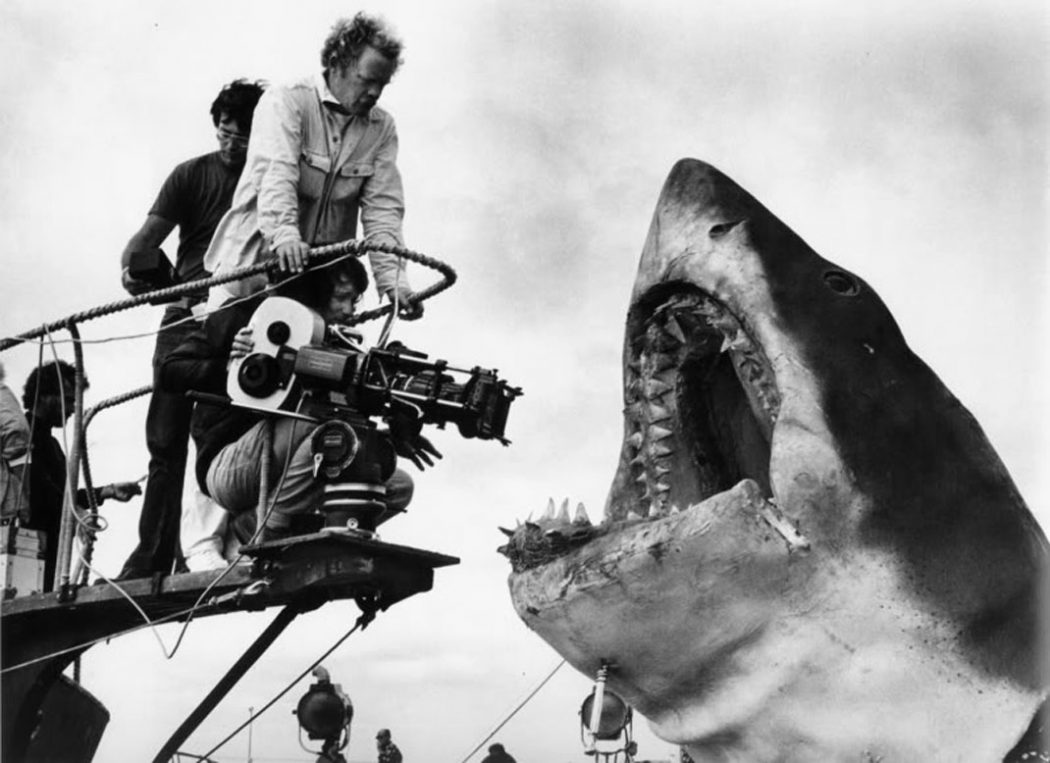
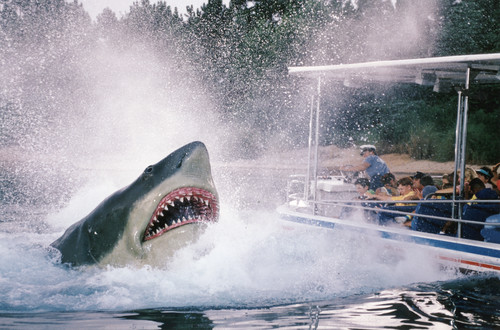
The original blockbuster! With The Meg opening tonight, the next article in my Sinister Summer series is a retrospective on Jaws (1975). And, we still “need a bigger boat” after all these years. Beginning with the iconic minimalistic score by John Williams, Steven Spielberg’s Jaws is still keeping people out of the water more than forty years later. Beyond the film, you can still face off with the most famous shark in cinema history at Universal Studios Hollywood. A favorite for folks to watch on July 4th each year (as I do), this film became the standard for the modern horror creature feature. And at only four minutes on screen, Bruce (Jaws’ nickname), successfully terrified audiences then and continues to frighten beachgoers today. For all intents and purposes, this iconic film set the bar for and essentially created this subgenre of horror movies featuring man-eating monsters from the natural world that exist in places where we typically find joy and relaxation. The ocean, theme parks, rivers, lakes–these innocent places become the setting for unimaginable terror.
If you are old enough to have watched it in theatres in 1975 or fortunate enough to have attended the special 40th Anniversary screenings back in 2015, then you can attest to the film’s evergreen ability to scare you out of your wits. When I watched it on the big screen in 2015, the auditorium was filled nearly to capacity with kids, teenagers, and adults. To see this iconic film on the big screen was truly a memorable experience. Especially so around where I live, since the gulf beaches are just down the road. The atmosphere was incredibly fun. All of these fans, most of which had likely seen Jaws before, were gathered together to relive the terrifying experience of a man-eating shark terrorizing a small New England town during the July 4th holiday season. But why would so many people pay to see a film that they had seen at no additional cost on TV or watched on DVD/BluRay?
Much in the same way Alfred Hitchcock’s Psycho is often credited, and rightly so, for being the first modern horror film and forerunner to the classic slasher; likewise, Spielberg’s adaptation of Peter Benchley’s novel Jaws is credited as the first modern creature feature horror film and forerunner to the blockbuster (or event movie). I am not negating King Kong, Creature from the Black Lagoon, or other predecessors; it’s important to take note of the word modern. Aside from excellent, visionary direction, both Psycho and Jaws have three important elements in common (1) powerhouse cast (2) strategic suspense and (3) a brilliant, oft-parodied, burned in your mind musical score.
It probably seems like you were born with John William’s two-note Jaws theme in your head, much like Bernard Hermann’s Psycho screeches. The terrifying suspense of Jaws comes in the form of a PG movie. That’s right, Jaws is rated PG. But this film delivers a bigger and more memorable punch than any gory torture porn horror film ever could. The groundbreaking structure of both these legendary films are the prototypes from which their respective branches of horror films are derived. They are the blueprint, if you will, for suspense and horror. The manner in which the suspense is drawn out for most of the movie assists in the ability to enjoy it over and over again, without it ever feeling like a B movie. The drawn out suspense engages you emotionally and psychologically. The feeling of dread lingers and lingers. In fact, you don’t truly see Bruce until the third act of the film when he jumps out of the water in an attempt to bite off the arm of Chief Brody. This intentional drawing out of suspense makes the delivery of that moment pack a powerful punch, an assault on the eyes and mind. Both Psycho and Jaws benefit from an excellent cast. The respective casts could not have been any better. Interestingly, in order to not allow the cast to overpower the story or shark, Spielberg didn’t choose actors with an instant command presence. But they displayed a strong presence nevertheless. It never feels as if they are acting, but truly become the characters they are portraying. The relatability of the characters is partly due to the screenplays, but it takes phenomenal actors to successfully bring these characters to life. Spielberg would repeat this same successful approach to creating blockbusters E.T. the Extra Terrestrial and Jurassic Park.
For more on suspense, checkout this video featuring Hitchcock himself.
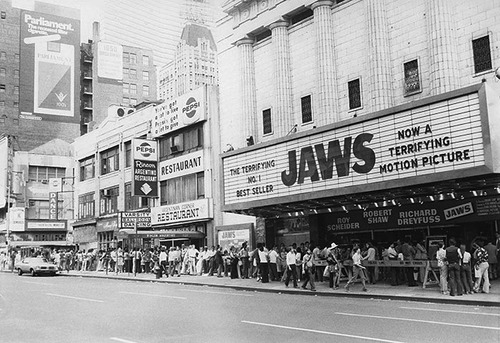
When Jaws is referred to as the original blockbuster, it’s not simply due to being the first film to break the $100mil box office sales mark, toppling the records previously set and held by The Exorcist and The Godfather. That is a valid observation, but is ultimately incidental. Reasoning behind this thriller’s ability to create the concept of a blockbuster movie is the fact Jaws was seen as an event not to be missed. Looking back at the original crowds of 1975, you’d think the movie was a one-night-only big event. Hence the term blockbuster. The common adjective attributed to big summer movies literally derives from the fact that queues for the box office wrapped around city blocks. It busted the block, so to speak. And the rest is history! Coupled with the summer release date and ticket sales, the allure of Jaws generated levels of enthusiasm and interest never seen before. The film took in so much money at its opening, that it nearly made up the entire production budget by the end of the first week. Furthermore, distribution and marketing companies began to use Jaws as a model for future marketing efforts in order to attempt to generate another blockbuster effect. After Jaws in 1975, the next big blockbuster would be George Lucas’ Star Wars IV: A New Hope in 1977. All these factors contribute to the iconic status of Jaws in terms of its contribution to film business.
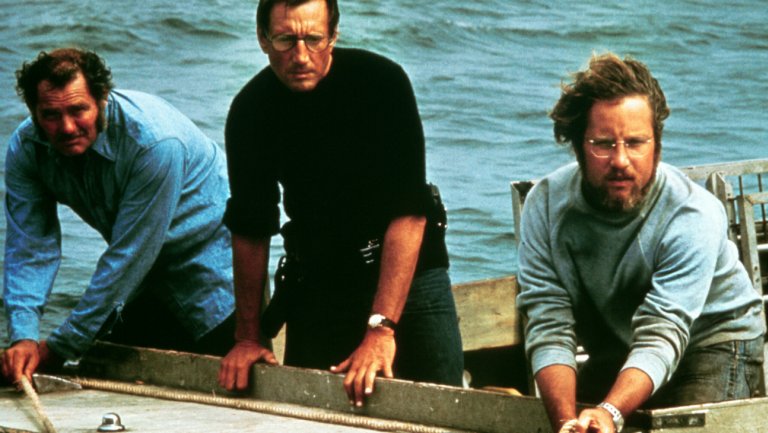
Instead of building a thriller on shock value, disturbing imagery, or jump scares, author Peter Benchley’s screenplay for Jaws focussed on crafting a cinematic atmosphere that had an intimate, claustrophobic feel built upon well-crafted drama through character development and conflict, at the center of which is a little heart. Different from contemporary creature features, Jaws picks off swimmers in the single digits and those attacks all happen at a single beach on a small island off the coast of Massachusetts. And instead of an entire agency hunting down the man-killer shark, three unlikely men are forcibly thrown together in order to track down and eliminate the terror from the waters off Amity Island. Keeping the principle cast and environment small, enabled the drama to perform strongly. Big things do come in small packages. Coupled with the strong performances from the entire leading cast, this brilliant combination of cinematic elements works together to give us some of the most memorable lines, scenes, and cinematography in movie history. Furthermore, real people swept up into an impossible situation and foolish decisions enable the audience to identify with the characters and the setting in ways that make the terror feel all the more real and close to home–or the beach.
While Bruce is often thought to be the villain of Jaws–and no mistaking it, he is definitely an antagonist–I argue that the true opposition to the goal in the plot is Amity’s mayor. If we accept the goal is to apprehend or kill the man-eating shark, then Vaughn serves as opposing that action. Perhaps you’ve never though of the true villain of Jaws being Mayor Larry Vaughn. A close analysis of the plot reveals that Jaws (Bruce) functions more as a catalyst for the principle conflict between Chief Brody and Vaughn. Other than the death at the beginning of the film, the Mayor is indirectly responsible for the remaining deaths. After all, it’s due to his utter complacency, negligence, and classic greed that led to the other deaths. For most of the film, we spend far more time with Chief Brody’s continued conflict dealing with the social pressures, desires, and ill-fated decisions of his boss than we do with shark attacks. Mayor Vaughn fails to acknowledge the sheer gravity of the dangerous situation, and close Amity’s beaches in order to keep his citizens safe. In effect, he fed them to the shark. Seems like a villainous action to me. Bruce was being a shark, Vaughn was the villain.
Often the central character’s development hinges on the direct and indirect conflict with the opposition to the goal of the plot. In this scenario, Mayor Vaughn stands between Brody and Bruce. The moments in which Brody demonstrates measurable growth in his character arc are when he attempts to stand up to the Mayor showcasing a contrast between public safety and a combination of politics and economics. Unfortunately, we never witness Brody truly standing up to the Mayor to enact measurable change per se; however, it isn’t needed because we witness several moments of Brody shouldering the responsibility of protecting the citizens of Amity as a civil servant. By contrast, Vaughn is more preoccupied with a warped view of civic responsibility that places more importance on increasing the bottom line of the local businesses than public safety. He rationalizes his position opposing the advice of Brody by engaging in classic psychological defense mechanisms such as denial, displacement, and projection. Vaughn’s actions throughout the film depict an elected leader with misplaced priorities in order to better his own career.
The success of Jaws and reasons why it continues to stand the test of time has more to do with the beauty in simplicity and strategic marketing than Spielberg’s filmmaking. Don’t get me wrong, Spielberg is an excellent storyteller and directed many of our favorite films such as this one, Jurassic Park, E.T., Poltergeist (with Tobe Hooper), and more, but it’s the strong screenplay and innovative marketing efforts that give Jaws the chutzpah it has. Jaws quite literally changed the way studios market “blockbuster” films. Prior to Jaws‘ release, the only films to get wide, general releases were B-movies and exploitation films, but Universal Pictures took the chance at cramming Jaws into as many screens as possible, and it paid off in spades! Jaws wasn’t the first film to book theatres in this was, but it was the first to be well-received by by critics and fans. The film was an instant success!
Even if you trust the statistics that you are more likely to be injured or die in a car accident than be attacked by a shark, Jaws still leaves you wondering what may lurk in the depths of the ocean, and by extension lakes and rivers (thanks in part to Animal Planet’s River Monsters). There is a lingering feeling, even if in the back of your mind, that a man-eating shark could live in our oceans. That is the power of this film and why it has continued to pervade popular culture for more than 40 years. Its influence on popular culture is certainly not limited to the dozens or imitations such as Lake Placid, Piranha, Deep Blue Sea, or parodies like Sharknado, but it serves as the inspiration for Discovery Channel’s Shark Week, the Monster Jam monster truck Megalodon, theme park attractions, and the music is often used in unrelated TV shows and movies. Lines, imagery, music, and characters are permanently embedded in the psyche of the general public.

 A solid reboot/sequel for the Predator franchise! Don’t pay attention to the plethora of reviews from critics who are hating on Shane Black’s The Predator. With an entertaining action-horror plot, fantastic cast, and excellent pacing, this is the Predator that we wanted and got! And I am not alone in this, several podcasts and even the Roger Ebert site agree on Black’s Predator. The tone of the movie feels like a throwback to the original, while acknowledging the other movies to maintain just enough continuity where you don’t question where this film falls of what has happened prior. I went into this movie with moderately low expectations because of what I read in the initial reviews, but I was completely surprised by how much I enjoyed it. And not only me, all of my friends who were with me between Rounds 1 and 2 of Halloween Horror Nights opening weekend. You get it all, grizzly action, humor, and entertaining kills. Unlike past movies that tried to “improve” on their 80s predecessors, this quintessential action-horror takes us back to what made the 80s horror endure the test of time. Instead of building the movie around the title character, it builds it around the lead human cast. And a memorable cast of characters, at that. Where some reviewers have found irreverence or offensiveness in the fact that many of the characters demonstrate cognitive and emotional disabilities, this is actually what works well for the film. Furthermore, it highlights how emotional, physiological, or cognitive disabilities do not determine someone’s degree of courage, determination, empathy, or sense of humor. Each of the lead and supporting characters in the ensemble cast overcome any obstacles that stand in their way, whether the obstacle comes from within or from the outside. It is a fun, exhilarating horror movie that will keep you entertained!




 R.L. Terry ReelView