CIVIL WAR (2024) film review

A gripping, thought-provoking motion picture about the power and cost of capturing the human experience in a single frame during war. While it would be easy to describe Alex Garland’s Civil War as a thoughtful, if not painful, graphic warning of what happens when society is completely deconstructed and humanity is lost, this film is actually about the power of storytelling through a single frame. Specifically, the state of what remains of humanity and the cost thereof amidst war. Not for the faint of heart, this film takes you only where imbedded journalists have been during a war, complete with all the death and destruction. The film reminds us of the human cost on the battlefield, in the neighborhood, and those that are capturing the images that will tell the story of societies darkest days.

In a dystopian future America, a team of military-embedded journalists races against time to reach Washington, D.C., before rebel factions descend upon the White House.

A picture is worth a thousand words, or so we hold true, but a picture can come at great cost, particularly during wartimes. Instead of focussing on the backstory or who is fighting for whom and for what principles, Garland uses the apparatus of a dystopian warn-torn United States to explore the human dimension and cost of a polarizing, grizzly domestic war. And he does this through a group of imbedded journalists played by Kirsten Dunst, Wagner Maura, Cailee Spaney, and Stephen McKinley Henderson. Together, they face certain death as they strive to cover the war and reach the President for a one-on-one interview.

We aren’t given enough information about the reason for the Western Front (California+Texas) and Florida Alliance secession from the rest of the country, but that’s because Garland wants us to focus on a different story, the human story told through the power of a single frame and the lives that bring these photos before our eyes. Perhaps you’ve never thought of how these photos get from the battlefield to online and traditional magazines and newspapers, but you’ll think twice the next time you are viewing photographs from current or past wars.

But it isn’t simply a motion picture depicting the difficulties in working as a wartime imbedded journalist–that is incidental–this is a picture of the human lives on the battlefield and the places seemingly removed from the atrocities of war. We seldom think of all the different human reactions to war, and this film brings us face to face with those that are fighting for their respective causes, those documenting the various campaigns, and those that go about their daily lives as though the country isn’t ripping apart at the seems a few hundred miles away. Garland doesn’t offer any particular slant, neither does he steer the audience in agreement or disagreement with any faction involved in the war; rather, he crafts a mosaic, if you will, of a collection of metaphoric still images that capture each type of reaction to the war.

I often talk about the emotive difference between film and digital in my classes, and this film is a great example of that argument. It’s the argument that film is superior to digital because with film, there is a tangible relationship between the filmmaker and the film stock, and by extension, a relationship is developed between the editor and film stock. We particularly witness this relationship in Civil War between Jessie (Spaney) and her classic Nikon SLR (film) camera. Whether as depicted in this movie or in real life, there is far more value placed on and discernment in using film to capture people and events, because the photographer/filmmaker is limited to the number on frames on each roll/reel. Therefore, the photos won’t be of just anything, the artist is only going to take a photo that has meaning. Granted, the keeper may still be 1/30, but each was taken with explicit intent, creating immense value in each still frame.

Even after the shutter has opened and closed, imprinting the image on the 35mm frame, the relationship continues through the development process because the developer sends the film through a chemical process that reveals the full spectrum of light–something tangible, that the developed can see, touch, and feel. Digital cannot capture the full spectrum of light the way film can: one is a replicated process that actually cuts off the whitest of whites and blackest of blacks, whilst the other is a chemical process that captures the full range and spectrum of light as imprinted on the film cell. Film photography (or cinematography) creates an emotive dimension between the artist and image, there is a tangible relationship, so everything is done with immense care, consideration, and discernment.

Why is any of this important in discussing Alex Garland’s Civil War? Because to gain the full appreciation of the story he is telling, it is imperative that we understand the relationship between the photojournalist and tragic, devastating events in which they are working to capture the human dimension behind the atrocities of war. Neither Jessie nor Lee (Dunst) will take photos of just anything, every move is thoughtful, the people and events being captured by their respective cameras carry meaning, they carry the human story. That story is made up of those fighting for the Western Front, Florida Alliance (which we don’t see in the movie), or what’s left of the (former) United States’ armed forces.

Beyond what emerges as the main story, Garland’s film does contain a graphic warning of a possible future in which the United States becomes embroiled in domestic warfare (civil war) due to whatever the reasons were that lead to the secession by California, Texas, and Florida (the three most populous states, by the way). It’s to the film’s credit that Garland does leave the backstory vague, as it’s less important what led to this point, but rather the importance is found in the reactions to the war. Both sides of this war are being fought by those that believe they are right, and will fight for the principles in which they believe. The problem isn’t simply the divergence of opinion and belief as it is in the complete disregard or sacrifice of humanity in exchange for a manmade or arbitrary identity.

This is witnessed in an exchange between our journalists and a group of paramilitary civilians, led by Jesse Plemons). Our journalists state they are American journalists, and Plemons’ character reacts by demanding to know what kind of American. This represents those that discriminate or hold prejudice against those that don’t look or sound like they are originally from the United States. In his mind, being from the United States looks and sounds like a particular type, and if one does not fit into that type, then they are not welcomed and ultimately expendable.

Other reactions to the war are also witnessed by our journalists. Such as the lack of reaction to that which is tearing the country to shreds. On their way from New York City to Washington, D.C., our central characters stop in a West Virginia town that is seemingly removed from the war. When the citizens of this town are asked how can they behave as though a few hundred miles away that the very foundations of the country are being shattered, the town reacts in apathy to the war. They are certainly knowledgeable that there is a war, but they choose to stay out of it. Just as the front lines are a reaction to war, this too is a reaction that bares consideration. Garland leaves it up to each audience member where they fall along the full spectrum of the human dimension in war.

In addition to the writing, directing, and technical achievement demonstrated in the film, the performative dimension is outstanding. The genuine reactions to and emotions on display are dripping with authenticity. You will feel what these actors’ characters are feeling throughout the movie. And not just the gut-wrenching parts, the strategically placed moments of humor will stir your soul as well.

Garland crafts a motion picture that serves as cautionary tale of what happens when we stop thinking about one another as unique individuals, as children of God, and instead treat those that are different in some way as a threat to our very existence. What happens when we care more about someone’s identity (with whatever the ideal or principle) than we do about them as a person. There is a time to defend that in which one believes or when one’s life is in danger, but left unchecked, that defense can turn into an offense due to primal fears, anxieties, obsession, and selfishness. Perhaps this film will serve as a reminder of what can happen when we stop treating one another with respect as fellow humans (as fellow Americans) and instead merely treat one another as threats to our very existence. Treatment with respect and dignity does not equate to endorsement or agreement, but it does leave an opportunity to change open. We’ve seen throughout history that there is sometimes a cause for war, but it should always be the last resort.

Often times, I am negatively critical of the writing in the film’s A24 produces or distributes, because I find many of these films are poorly written; however, this film demonstrates the power of acknowledging storytelling/screenwriting conventions and guidelines. Why? Because they work! At first I was wondering why with such a fantastically written screenplay was the realization missing at the end. Then I realized that it is there in character, plot, and in myself. You’ll just have to watch the film to fully understand that which I am attempting to describe without giving away any spoilers.

Garland’s Civil War is unlike anything I expected. I expected a movie dripping with overt socio-political ideology and commentary, but what I got was an incredibly thoughtful motion picture about the human dimension of war, particularly a domestic war between the states. Garland does not hold back on the violence, so those with PTSD from war or uncomfortable with violent movies should be cautioned before watching this film.

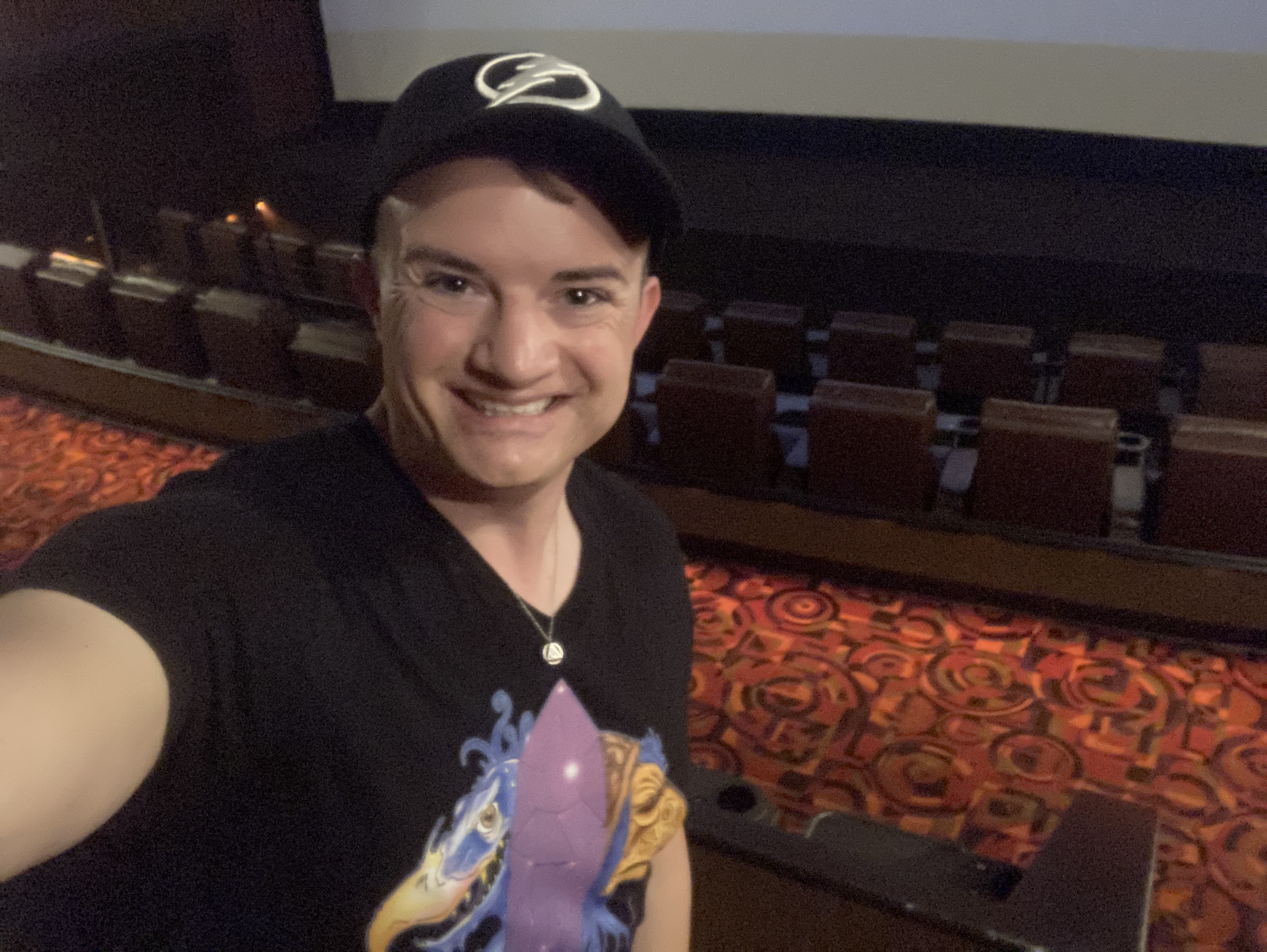
Ryan teaches Film Studies and Screenwriting at the University of Tampa and is a member of the Critics Association of Central Florida and Indie Film Critics of America. If you like this article, check out the others and FOLLOW this blog! Interested in Ryan making a guest appearance on your podcast or contributing to your website? Send him a DM on Twitter. If you’re ever in Tampa or Orlando, feel free to catch a movie with him.


Follow him on Twitter: RLTerry1 and LetterBoxd: RLTerry

GHOSTBUSTERS: FROZEN EMPIRE movie review

Spooktacular! Nonstop action and laughs from beginning to end. Nicely written and directed with a fantastic mix of legacy and new Ghostbusters elements. Demonstrates connective tissue the soul of the original two Ghostbusters movies whilst delivering plenty of new ideas! With a cast of lead and supporting players that share fantastic chemistry, both legacy and new characters are completely at home in and part of the world of the Ghostbusters. The character dynamics are as sharp and engaging as ever, with moments of humor and camaraderie that work collaboratively to balance the tension with the supernatural threats. With its sleek storytelling and spectacular visuals, you don’t want to miss seeing this movie on the BIG screen.

The Spengler family returns to the iconic New York City firehouse where the original Ghostbusters have taken ghost-busting to the next level. When the discovery of an ancient artifact unleashes an evil force, Ghostbusters new and old must unite to protect their home and save the world from a second ice age.

The rich world-building combined with the well-developed characters and meaningful conflict, Ghostbusters: Frozen Empire will whisk you away to an immersive world of frozen landscapes and ancient ruins. Relying, not only on CGI, but incorporating practical effects gives the movie a sense of depth and naturalism. Concerning the practical effects–which I wish it had relied upon more–but I digress, I loved the moments with Slimer (and another bookish apparition) because Slimer was back in all his optical effects glory (for the most part anyway). It was like being transported back to the original Ghostbusters to greet the lovable menace. While not practical, we do get moments with the Staypuff marshmallowies too!

A surprising narrative strength demonstrated by the movie is its thematic depth. Through interpersonal conflict, the movie explores rich themes such as redemption, the challenges of growing up, and hubris. While the outside/action plot is a classic good vs evil setup, the inside/emotional story delivers many substantive layers that enrich the humanity of the characters and the story itself. The movie’s deceptively simplistic packaging surrounds a complex narrative that keeps the audience engaged.

One of the character-driven subplots of the movie provides a great opportunity to explore isolation and loneliness even when surrounded by people. Humans are designed to desire companionship, whether that companionship is romantic or platonic. And I appreciate the movie exploring what it’s like to feel alone within your on family. On the topic of family, the movie also provides an exploration on one’s family of origin and one’s found family.

For all it’s spooky hilarity, Ghostbusters: Frozen Empire is a family melodrama that touches your heart whilst the more thrilling elements of the movie seek to wildly entertain you.

Ryan teaches Film Studies and Screenwriting at the University of Tampa and is a member of the Critics Association of Central Florida and Indie Film Critics of America. If you like this article, check out the others and FOLLOW this blog! Interested in Ryan making a guest appearance on your podcast or contributing to your website? Send him a DM on Twitter. If you’re ever in Tampa or Orlando, feel free to catch a movie with him.

Follow him on Twitter: RLTerry1 and LetterBoxd: RLTerry

BASIC INSTINCT (1992) a Throwback Thursday review

Still suspenseful and seductive! The Paul Verhoeven hypnotic neo-noir thriller continues to entertain and fascinate us more than three decades later. Exemplary direction, writing, and acting. Every storytelling element works flawlessly together to craft a film that was a cultural phenomenon and made Sharon Stone a household name. The heavily Hitchcockian-inspired film also contains characteristics of giallo that assault the senses and add a cloak and dagger quality to the string of mysterious, gruesome crimes. The effective use of red herrings and misdirection adds to the tension, keeping audiences guessing until the final reveal. Recently, I used this film in class, and my students, none of whom had seen it before, found it to be captivating, thoughtful, and provocative.

The mysterious Catherine Tramell (Sharon Stone), a beautiful crime novelist, becomes a suspect when she is linked to the brutal death of a rock star. Investigated by homicide detective Nick Curran (Michael Douglas), Catherine seduces him into an intense relationship. Meanwhile, the murder case becomes increasingly complicated when more seemingly connected deaths occur and Nick’s psychologist and lover, Beth Garner (Jeanne Tripplehorn), appears to be another suspect.

Basic Instinct both pays homage to and yet subverts expectations and tropes we have of film noir. This psychosexual suspense thriller draws inspiration from the works of Alfred Hitchcock and Dario Argento, particularly Vertigo, Psycho, and Suspiria in its exploration of manipulation, sexuality, and obsession. The use of shadowy lighting, ominous music, and morally ambiguous characters all contribute to the film’s rich noir aesthetic. That, coupled with unraveling the alluring mystery of the ice pic wielding killer, makes this a gripping sensory explosion motion picture tour de force.

Jerry Goldsmith’s phenomenal score plays a vital role in shaping the film’s atmosphere, mood, and emotional impact. Through its seductive melodies, tense rhythms, and character motifs, the music enhances the storytelling and helps to create a compelling and immersive cinematic experience. Whether accompanying intimate moments or intense suspense and violence, the music enhances the audience’s experience and adds an immersion to the storytelling. Goldsmith is an underrated composer because, not only did he deliver this seductive score, but he also wrote themes and music for Gremlins, Alien, Star Trek: the Next Generation, The Omen, and more. In addition to a prolific library of work in cinema and television, his compositions also demonstrate a wide rage of styles, unlike most other composers. When discussing great composers of the music of cinema, he should definitely be in the conversation.

At its core, this seductive film explores themes of obsession, desire, power, and manipulation. The film delves into the darker aspects of human psychology, particularly the blurred lines between love, lust, and violence. It also examines the idea of control, both in personal relationships and within the criminal justice system. In an analysis of the film, one of my students described it as a chess game, with Tramell being the white pieces and Nick being black. After all these years, I never thought to read the film as a chess match, each character attempting to out maneuver the other. While the film has long sense been thought of as an elaborate cat and mouse game, I feel my student offers a much more precise reading of the film as a chess game.

Sharon Stone’s iconic career-defining role as Catherine Tramell is characterized by her magnetic presence and undeniable charisma. From the moment we meet her lounging at her beach house by the waterside, she exudes confidence and allure, drawing others into her orbit with ease. Her character subverts stereotypes, presenting a complex and empowered female character of opposition whom is both alluring and dangerous. In every scene in which she appears, she delivers her performance with incredible gravitas. And it’s this performance by which the film owes so much of its enduring legacy. That interrogation scene alone, wherein she is simultaneously in complete control of the interview whilst embracing her sexuality is still one of the best single scenes of all time, especially when exploring feminist cinema.

She isn’t a strong female character because the men around her are weak or incompetent at their jobs, she is a strong character–period–because those that surround her are smart and driven. Yet, Catherine Tramell continually proves herself throughout the film to be cunning, calm, confident, and in control of any situation in which she finds herself. Suffice it to say, Stone’s Tramell is a complex and enigmatic character who embodies the archetype of the femme fatale, a seductive and dangerous woman who manipulates those around her for her own gain. The femme fatale represents a beautiful symphony of duality that continually draws us into the story.

Tramell’s sexuality is a central aspect of her character, and Stone portrays her with a sense of agency and empowerment. She is unabashedly sexual, embracing her desires without apology or shame. Stone’s performance balances Tramell’s overt sexuality with a sense of control and autonomy, challenging traditional gender norms and expectations. Tramell is a complex character that defies social norms and mores, wielding her sexuality as a means of empowerment in a male-dominated world.

In the film’s exploration of the darker aspects of the human psyche, both Nick and Catherine become completely consumed by their mutual attraction and psychological gamesmanship, blurring the lines between lust and danger. In many ways, they are mirror images of one another, which may explain the instant fascination each has with the other. The film explores the consequences of unchecked desire and the destructive nature of obsession. Moreover, the film explores heteronormative gender norms and that liminal space between personal and professional boundaries.

Tramell’s overt sexuality challenges Nick’s masculinity and authority, leading to a complex dynamic characterized by dominance and submission. This exploration of heteronormative gender dynamics adds dimension to their relationship and underscores the film’s themes of control and manipulation. One can even take this further to read the ice pic itself as a phallic weapon that Tramell has commandeered. She exerts control over the penetrative ice pic just as she has exerted control over Nick, or at least Nick’s perception of her. Concerning the manipulation of perception, this aspect to the plot and characters is a fantastic homage to Vertigo.

Michael Douglas’ performance of the deeply flawed detective Nick Curran may not get the attention that Stone’s Catherine Tramell does, but he delivers an incredibly strong performance of the recovering alcoholic and struggling sex-addict. Nick, a man whose moral and ethical compass is constantly being tested, struggles with his past and his predisposition to impulsive behavior. His vulnerabilities and inner demons make him a compelling character, as he navigates a dangerous world while battling his personal demons.

His attraction to Tramell blurs the lines between his personal desires and professional duties, compromising his judgment and objectivity. This vulnerability adds depth to his character, showcasing his susceptibility to manipulation. Throughout the film, Nick seeks redemption for his past mistakes, making his character journey one of self-discovery and catharsis. Nick’s experiences in the roller-coaster of an investigation provide him with the tools to confront his inner turmoil and ultimately finds closure. This character arc adds emotional depth to the narrative and allows the audience to empathize with his struggles.

Basic Instinct simultaneously checks all the boxes for neo-noir, and still manages to break ground! It’s a mind-bending, mesmerizing thrill ride from start to finish that continues to age beautifully like a fine wine. It’s a bold and controversial thriller that continues to captivate audiences with its exploration of sexuality, heteronormative roles, power, and psychological intrigue.

Ryan teaches Film Studies and Screenwriting at the University of Tampa and is a member of the Critics Association of Central Florida and Indie Film Critics of America. If you like this article, check out the others and FOLLOW this blog! Interested in Ryan making a guest appearance on your podcast or contributing to your website? Send him a DM on Twitter. If you’re ever in Tampa or Orlando, feel free to catch a movie with him.
Follow him on Twitter: RLTerry1 and LetterBoxd: RLTerry

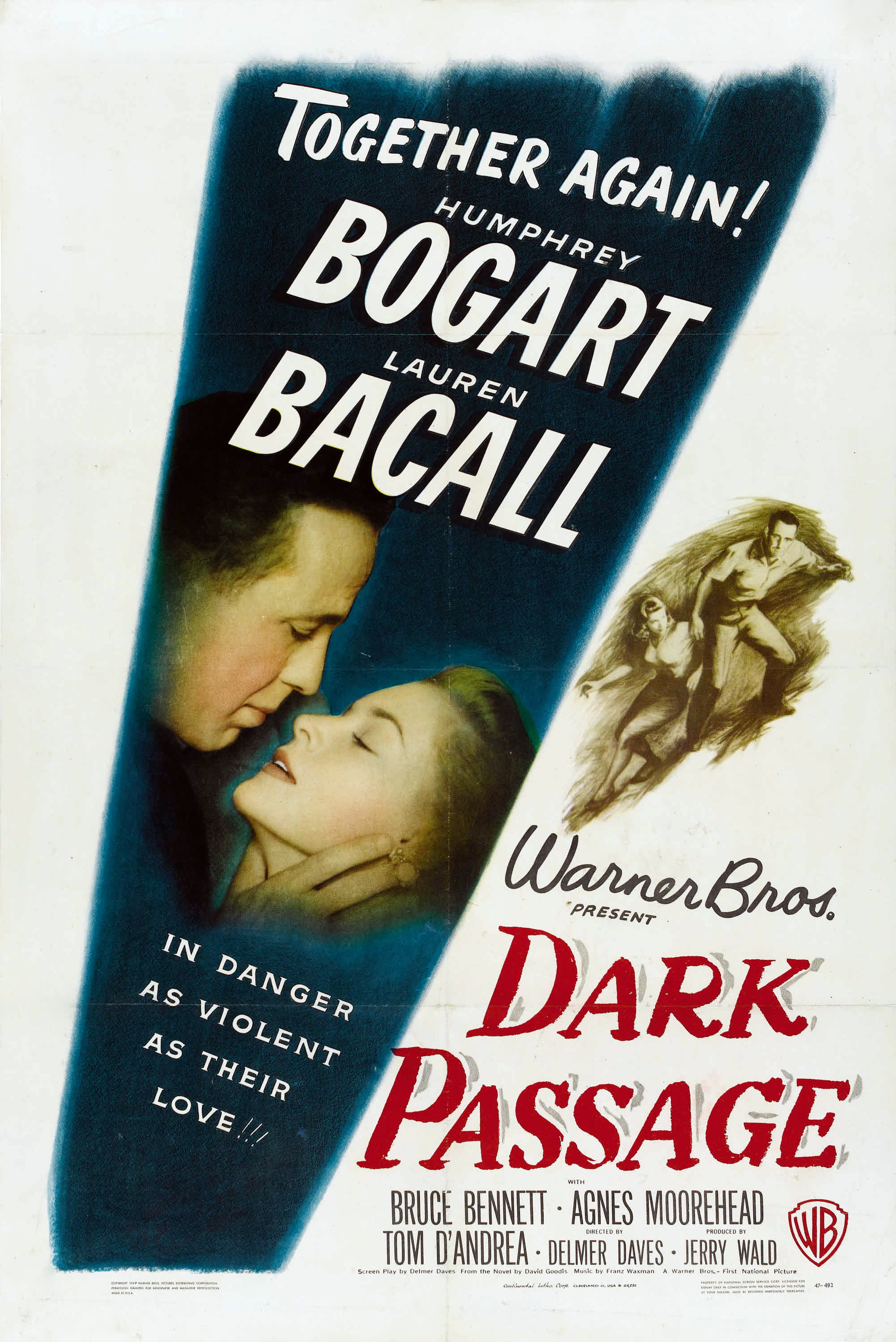
DARK PASSAGE (1947) throwback Thursday review

Spectacular and immersive! Dark Passage is the outstanding Bogie-Bacall film noir that you’ve likely never seen or even heard of, but you’ll want to change that. From beginning to end, this motion picture never ceases to draw you into its mysterious, seductive atmosphere. Bogie delivers a noteworthy performance through his dynamic facial expressions and body language, but it’s Bacall that steals the show through her sultry, smart, and sensational screen presence and performance. Dark Passage simultaneously checks all the film noir boxes whilst delivering something fresh and exciting.

Vincent Parry (Bogart) has just escaped from prison after being locked up for a crime he did not commit–murdering his wife. Vincent finds that his face is betraying him, literally, so he finds a plastic surgeon to give him new features. After getting a ride out of town from a stranger, Vincent crosses paths with Irene Jansen (Lauren Bacall), who believes in his innocence and helps him unravel the mystery surrounding his wife’s murder.

The most striking production element of Dark Passage is its innovative use of motivated camera framing and movement, which provides a unique and immersive perspective for the audience. By presenting the action from Vincent’s point of view (POV), the audience is drawn into his experiences and emotions, creating a sense of empathy and connection with the character. This technique adds a layer of suspense and tension to the film, as the audience is kept in the dark about Vincent’s true identity until later in the story. While POV camera is commonplace today, in the 1940s it was almost unheard of, which may have contributed to the reception of the film. But, if you’re searching for an excellent example of emotive POV camera, then definitely add this movie to your watch list.

Thematically, the film concerns itself with exploring concepts such as identity, justice, and redemption. Vincent’s transformation through plastic surgery raises questions about the nature of identity and whether changing one’s appearance can truly alter who they are on psychological, physiological, and emotional levels. As Vincent searches for his late wife’s real killer in order to clear his name, he grapples with issues of morality and the quest for justice in a corrupt world.

Underscoring the aforementioned themes is the compelling and complex relationship between Vincent and Irene. Irene’s unwavering belief in Vincent’s innocence provides him with hope and motivation to continue his search for the truth. Their growing bond adds depth to the story and serves as a contrast to the darker elements of the plot, because of the humor generated by their conflicting personalities. Film noir isn’t characterized merely by grayscale images (commonly referred to as black and white), but specifically the high contrast between light and dark. The high contrast isn’t only communicated visually, but is communicated thematically as well. In Dark Passage, the humor in Vincent and Irene’s relationship is the light to the film’s dark elements. 

Lauren Bacall delivers a captivating performance as the determined Irene Jansen, Bacall’s portrayal of Irene is both alluring and sympathetic, adding depth to the character and serving as a crucial counterpart to Humphrey Bogart’s Vincent. Bacall’s performance exudes confidence and intelligence, traits that are essential for Irene as she navigates the morally ambiguous world of the film noir genre.

Perhaps the very definition and embodiment of femme fatale, Bacall communicates strength and cunning whilst never at the expense of sensuality and seduction. Moreover, she simultaneously conveys both fortitude and vulnerability beneath her character’s poised exterior. Bacall authentically portrays a relatable human dimension, allowing the audience to empathize with Irene’s plight and unwavering support for Vincent.

Furthermore, Bacall brings a sense of sophistication and glamour to the role, seamlessly fitting into the noir aesthetic. Her distinctive voice and sultry demeanor add to Irene’s allure, making her a memorable presence in every scene in which she appears. Humphrey Bogart delivers a compelling and nuanced performance in the film, even when we do not see him. Even his voice work is outstanding. His portrayal of Vincent is a masterclass in film noir acting, showcasing his ability to convey complex emotions and inner conflict.

Bogart’s performance is particularly noteworthy for his use of facial expressions and body language to convey Vincent’s emotions. Even when his face is hidden from view during the first part of the film, Bogart manages to convey a wide range of emotions through his voice and physical presence alone. His expressive eyes, in particular, become a focal point for conveying Vincent’s inner turmoil and determination.

Bogie’s performance is a truly an underrated performance in his illustrious career. With his skillful portrayal of Vincent Parry, Bogart elevates the film beyond its genre trappings, creating a compelling and unforgettable character that lingers in the minds of audiences long after the credits roll.

On an aesthetic level, one of film noir’s most striking elements is the high contrast grayscale imagery. The moody grayscale cinematography brilliantly captures the shadowy streets of San Francisco, thus crafting an atmosphere of dread. Beyond mere aesthetics, however, the lighting and camera movement communicate a sense of unease and mystery, mirroring Vincent’s (and by extension film noir’s) emotional journey through this murky world of crime and deception.

Why isn’t this brilliant picture more well-known? Most likely the reasons are three fold (1) competition from other better-known Bogie-Bacall collaborations like The Big Sleep (2) overt subjective camera framing and movement and (3) availability on broadcast/cable TV and home video.

Points one and three are somewhat interlinked because other Bogie-Bacall pictures like A Gentleman’s Agreement and The Big Sleep are much better known because they received higher praise from critics and audiences (even though Dark Passage received mostly positive reviews at the time of its release). And because of this, other Bogie-Bacall pictures received more airtime on broadcast and cable TV and were more widely available to own on home video and DVD. The second point, which may have led to the mixed-positive reception, concerns the (what would’ve been interpreted at the time as experimental) subjective camera techniques. In retrospect, the POV shots are an outstanding use of motivated camera movement that simultaneously conveys the film’s theme of identity and advances the plot. 

While not as well-known as it should be, Dark Passage holds significance within the film noir genre and remains appreciated by cinephiles for its innovative cinematography, compelling performances from Bogie and Bacall, and atmospheric storytelling. And underscoring the technical and performative achievement is the film’s exploration of identity and injustice. It remains a captivating and influential motion picture.

Ryan teaches Film Studies and Screenwriting at the University of Tampa and is a member of the Critics Association of Central Florida and Indie Film Critics of America. If you like this article, check out the others and FOLLOW this blog! Interested in Ryan making a guest appearance on your podcast or contributing to your website? Send him a DM on Twitter. If you’re ever in Tampa or Orlando, feel free to catch a movie with him.

Follow him on Twitter: RLTerry1 and LetterBoxd: RLTerry

ORDINARY ANGELS movie review

Warms the most cynical of hearts. Two-time Academy Award-winning Hilary Swank makes a triumphant return to the silver screen in Ordinary Angels. Her outstanding performance in this remarkable true story will stir your soul, and remind us that with all the conflict and self-centeredness in the world, that there are still those that strive to make it a better place, even if it’s just helping one person. Despite some pacing issues, most notably in the second act, and some forced dialogue here and there, Ordinary Angels genuinely surprised me by how well it was written and directed. Moreover, there is a discernible emotive dimension to the editing and cinematography as well. Many movies based on true stories can feel like an extension of a Wikipedia article, but not so with this film. From beginning to end, it is a moving story that provides hope for humanity even when we feel broken.

Sharon (Swank), a struggling hairdresser, finds a renewed sense of purpose when she meets Ed (Alan Ritchson), a widowed father, working hard to care for his two daughters. With his youngest critically ill and waiting for a liver transplant, the fierce woman single-handedly rallies an entire community to help.

Okay, let’s address the white elephant (for many) in the room, and get it out of the way. Yes, Ordinary Angels is a motion picture from a faith-based production company. And even I have written how those types of movies are often poorly written and acted. Generally, the technical aspects of production are on par with more mainstream studios; but the writing and acting usually suffer. Suffice it to say, that is not the case here. I was shocked by how much I enjoyed the story and how the story was crafted.

The conflict is real, relatable, and raw. The characters feel like real people, flaws and all, especially Sharon and Ed. Whether it’s a true or fictional story, I always strive to find a character(s) with whom I can identify with his or her struggles and goals, because it’s our flaws and dreams that bring us together.

Why? Relatability. Characters in motion pictures need to feel relatable. Sometimes that relatability is identified in paralleling struggles or conflicts in our own lives to that which we observe on the screen. That which is most personal is most relatable. Furthermore, often times the best heroes are those that are just as broken as those around them, but it’s the overcoming of emotional or psychological baggage that greatly resonates with us.

It’s been a while since we’ve seen Hilary Swank on the silver screen, and it was so refreshing to see her once again. She brings such gravitas to every scene in which she is featured in Ordinary Angels. Throughout this performance, there are hints of the indelible quality she brought to us in Boys Don’t Cry and Million Dollar Baby. Sharon feels like your hairdresser or your friend or neighbor. She’s the perfect every man because there is neither pretense nor anything particularly special about her, save her infectious, brassy energy. And as much fun as she’s having on the outside, she is broken on the inside. That is, until she reads of the story of the little girl who needs a liver transplant and lost her mother the year prior.

And before you begin thinking this otherwise self-centered alcoholic mother with a son from whom she is estranged does everything without care for herself, you learn that she is using her philanthropic skills to help fill a void in her own life. Yes, she cares deeply for the little girl and her family; however, deep down, Sharon is also hoping to makeup for her failures as a mother. But through her journey helping this little girl, Sharon learns how to acknowledge the demons in her own life, and to grow from them instead of always compensating for or excusing them. True healing begins in the heart.

The character of Ed is also incredibly relatable. He represents an every man whom is angry at the world, angry at God, angry with himself, and full of stubborn pride. After losing his wife, five years after she gave birth to our dying little girl, he feels abandoned by the faith he once held dear. And how many of us wouldn’t feel exactly the same after losing a loved one, and on the verge of losing another, all while trying to manage a household on a shoestring budget with medical bills mounting? His response is a very human response. I particularly like his behavior after there is a light at the end of the tunnel–he is still wrestling with all those same anger issues, but demonstrates the beginning of recapturing his faith in God and humanity.

While the subject matter is rather dark–the dire straights in which the little girl’s family finds themselves–and the fact without a liver, the little girl will most certainly die, there are moments of levity that serve as emotional resets. My biggest problem with the writing is the second act in which pacing is rather sluggish. There is about 10-15mins that could’ve easily been carved out of the second act in order to maintain proper pacing throughout the entirety of the movie. Furthermore, there are moments in which the dialogue feels more plot-driven than character-driven. Not to the point it turns into a melodrama, but some lines feel a trifle artificial.

If you’re looking for a motion picture that shows that there is still hope for humanity, hope that we can–despite differences–help one another, help our neighbor, then this is a picture to check out while it is still in cinemas.

Ryan teaches Film Studies and Screenwriting at the University of Tampa and is a member of the Critics Association of Central Florida and Indie Film Critics of America. If you like this article, check out the others and FOLLOW this blog! Interested in Ryan making a guest appearance on your podcast or contributing to your website? Send him a DM on Twitter. If you’re ever in Tampa or Orlando, feel free to catch a movie with him.

Follow him on Twitter: RLTerry1 and LetterBoxd: RLTerry