BASIC INSTINCT (1992) a Throwback Thursday review

Still suspenseful and seductive! The Paul Verhoeven hypnotic neo-noir thriller continues to entertain and fascinate us more than three decades later. Exemplary direction, writing, and acting. Every storytelling element works flawlessly together to craft a film that was a cultural phenomenon and made Sharon Stone a household name. The heavily Hitchcockian-inspired film also contains characteristics of giallo that assault the senses and add a cloak and dagger quality to the string of mysterious, gruesome crimes. The effective use of red herrings and misdirection adds to the tension, keeping audiences guessing until the final reveal. Recently, I used this film in class, and my students, none of whom had seen it before, found it to be captivating, thoughtful, and provocative.

The mysterious Catherine Tramell (Sharon Stone), a beautiful crime novelist, becomes a suspect when she is linked to the brutal death of a rock star. Investigated by homicide detective Nick Curran (Michael Douglas), Catherine seduces him into an intense relationship. Meanwhile, the murder case becomes increasingly complicated when more seemingly connected deaths occur and Nick’s psychologist and lover, Beth Garner (Jeanne Tripplehorn), appears to be another suspect.

Basic Instinct both pays homage to and yet subverts expectations and tropes we have of film noir. This psychosexual suspense thriller draws inspiration from the works of Alfred Hitchcock and Dario Argento, particularly Vertigo, Psycho, and Suspiria in its exploration of manipulation, sexuality, and obsession. The use of shadowy lighting, ominous music, and morally ambiguous characters all contribute to the film’s rich noir aesthetic. That, coupled with unraveling the alluring mystery of the ice pic wielding killer, makes this a gripping sensory explosion motion picture tour de force.

Jerry Goldsmith’s phenomenal score plays a vital role in shaping the film’s atmosphere, mood, and emotional impact. Through its seductive melodies, tense rhythms, and character motifs, the music enhances the storytelling and helps to create a compelling and immersive cinematic experience. Whether accompanying intimate moments or intense suspense and violence, the music enhances the audience’s experience and adds an immersion to the storytelling. Goldsmith is an underrated composer because, not only did he deliver this seductive score, but he also wrote themes and music for Gremlins, Alien, Star Trek: the Next Generation, The Omen, and more. In addition to a prolific library of work in cinema and television, his compositions also demonstrate a wide rage of styles, unlike most other composers. When discussing great composers of the music of cinema, he should definitely be in the conversation.

At its core, this seductive film explores themes of obsession, desire, power, and manipulation. The film delves into the darker aspects of human psychology, particularly the blurred lines between love, lust, and violence. It also examines the idea of control, both in personal relationships and within the criminal justice system. In an analysis of the film, one of my students described it as a chess game, with Tramell being the white pieces and Nick being black. After all these years, I never thought to read the film as a chess match, each character attempting to out maneuver the other. While the film has long sense been thought of as an elaborate cat and mouse game, I feel my student offers a much more precise reading of the film as a chess game.

Sharon Stone’s iconic career-defining role as Catherine Tramell is characterized by her magnetic presence and undeniable charisma. From the moment we meet her lounging at her beach house by the waterside, she exudes confidence and allure, drawing others into her orbit with ease. Her character subverts stereotypes, presenting a complex and empowered female character of opposition whom is both alluring and dangerous. In every scene in which she appears, she delivers her performance with incredible gravitas. And it’s this performance by which the film owes so much of its enduring legacy. That interrogation scene alone, wherein she is simultaneously in complete control of the interview whilst embracing her sexuality is still one of the best single scenes of all time, especially when exploring feminist cinema.

She isn’t a strong female character because the men around her are weak or incompetent at their jobs, she is a strong character–period–because those that surround her are smart and driven. Yet, Catherine Tramell continually proves herself throughout the film to be cunning, calm, confident, and in control of any situation in which she finds herself. Suffice it to say, Stone’s Tramell is a complex and enigmatic character who embodies the archetype of the femme fatale, a seductive and dangerous woman who manipulates those around her for her own gain. The femme fatale represents a beautiful symphony of duality that continually draws us into the story.

Tramell’s sexuality is a central aspect of her character, and Stone portrays her with a sense of agency and empowerment. She is unabashedly sexual, embracing her desires without apology or shame. Stone’s performance balances Tramell’s overt sexuality with a sense of control and autonomy, challenging traditional gender norms and expectations. Tramell is a complex character that defies social norms and mores, wielding her sexuality as a means of empowerment in a male-dominated world.

In the film’s exploration of the darker aspects of the human psyche, both Nick and Catherine become completely consumed by their mutual attraction and psychological gamesmanship, blurring the lines between lust and danger. In many ways, they are mirror images of one another, which may explain the instant fascination each has with the other. The film explores the consequences of unchecked desire and the destructive nature of obsession. Moreover, the film explores heteronormative gender norms and that liminal space between personal and professional boundaries.

Tramell’s overt sexuality challenges Nick’s masculinity and authority, leading to a complex dynamic characterized by dominance and submission. This exploration of heteronormative gender dynamics adds dimension to their relationship and underscores the film’s themes of control and manipulation. One can even take this further to read the ice pic itself as a phallic weapon that Tramell has commandeered. She exerts control over the penetrative ice pic just as she has exerted control over Nick, or at least Nick’s perception of her. Concerning the manipulation of perception, this aspect to the plot and characters is a fantastic homage to Vertigo.

Michael Douglas’ performance of the deeply flawed detective Nick Curran may not get the attention that Stone’s Catherine Tramell does, but he delivers an incredibly strong performance of the recovering alcoholic and struggling sex-addict. Nick, a man whose moral and ethical compass is constantly being tested, struggles with his past and his predisposition to impulsive behavior. His vulnerabilities and inner demons make him a compelling character, as he navigates a dangerous world while battling his personal demons.

His attraction to Tramell blurs the lines between his personal desires and professional duties, compromising his judgment and objectivity. This vulnerability adds depth to his character, showcasing his susceptibility to manipulation. Throughout the film, Nick seeks redemption for his past mistakes, making his character journey one of self-discovery and catharsis. Nick’s experiences in the roller-coaster of an investigation provide him with the tools to confront his inner turmoil and ultimately finds closure. This character arc adds emotional depth to the narrative and allows the audience to empathize with his struggles.

Basic Instinct simultaneously checks all the boxes for neo-noir, and still manages to break ground! It’s a mind-bending, mesmerizing thrill ride from start to finish that continues to age beautifully like a fine wine. It’s a bold and controversial thriller that continues to captivate audiences with its exploration of sexuality, heteronormative roles, power, and psychological intrigue.

Ryan teaches Film Studies and Screenwriting at the University of Tampa and is a member of the Critics Association of Central Florida and Indie Film Critics of America. If you like this article, check out the others and FOLLOW this blog! Interested in Ryan making a guest appearance on your podcast or contributing to your website? Send him a DM on Twitter. If you’re ever in Tampa or Orlando, feel free to catch a movie with him.
Follow him on Twitter: RLTerry1 and LetterBoxd: RLTerry

Sinister Summer: “The Silence of the Lambs” retrospective

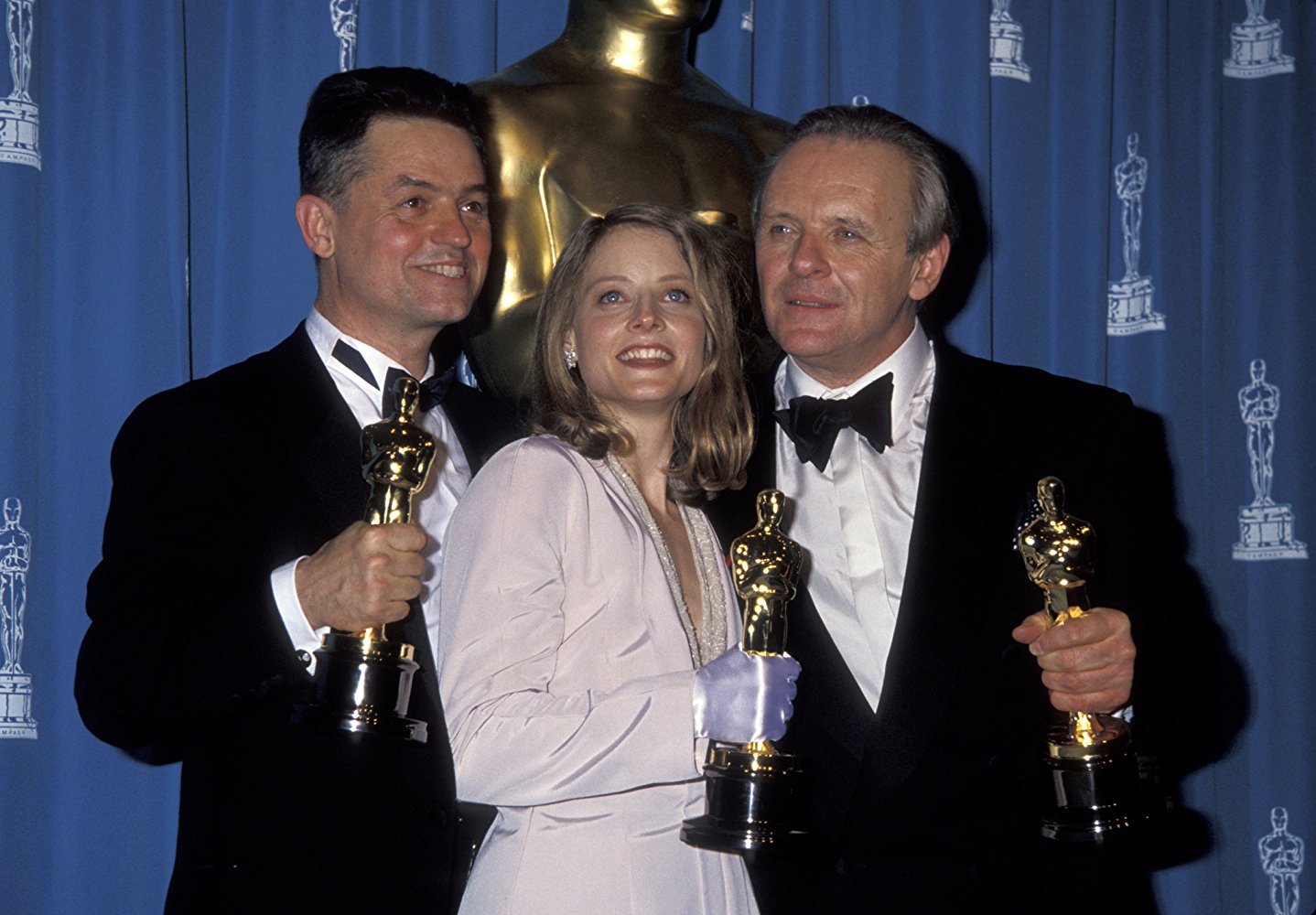
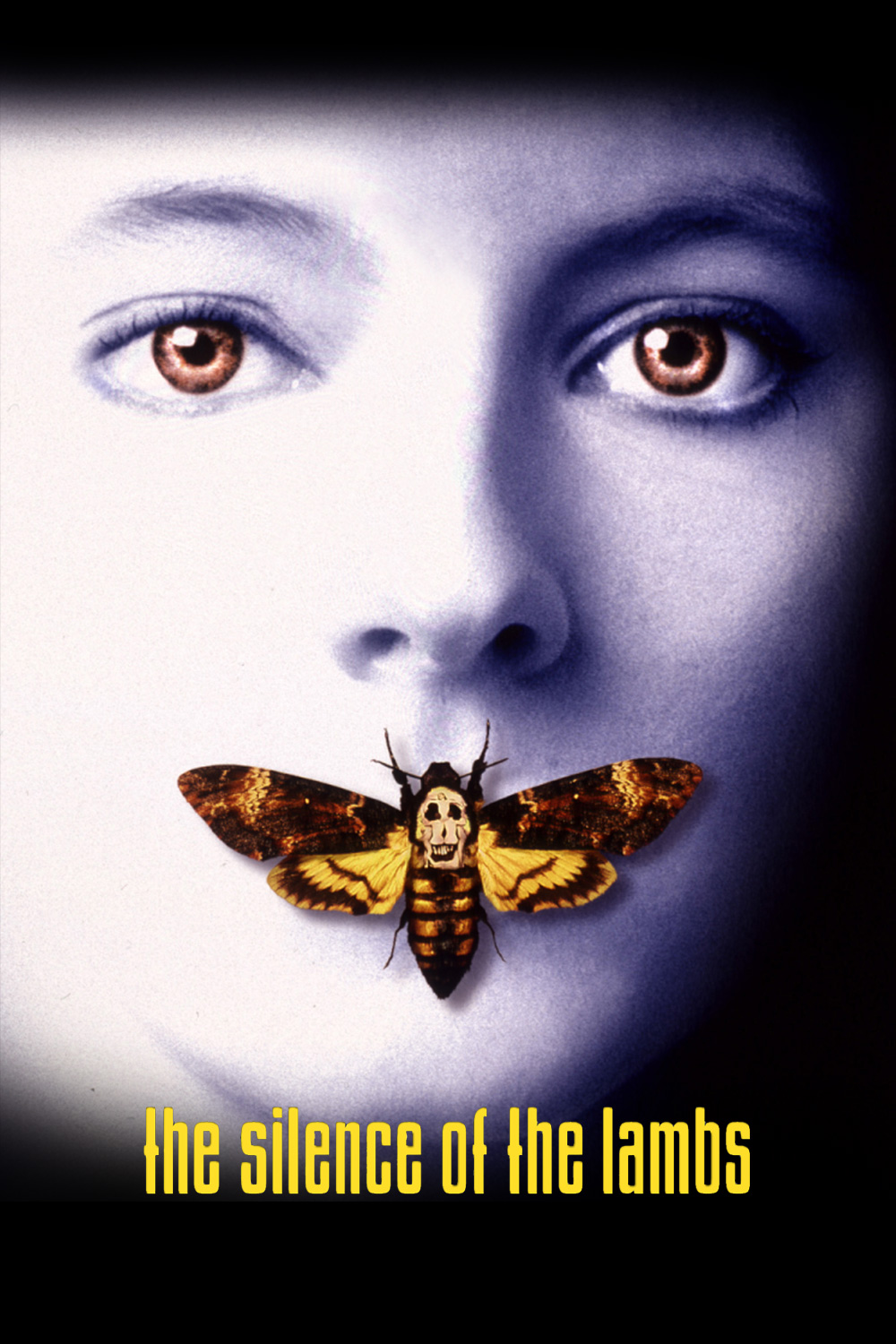
“Good evening, Clarice.” How many of you have never thought of fava beans and chianti in the same way since then? Quite literally inventing a new genre that combines elements of horror, suspense, and crime to create the crime thriller, The Silence of the Lambs remains the motion picture that typifies the genre. More than 27 years later, Silence still holds up and continues to terrify audiences today. Whereas this iconic film may not be considered horror, by today’s understanding and expectation by many, it was certainly widely considered horror when it was released in 1991. A sleepy success, I might add. Essentially, Silence is an indie film that flew in under the radar but soon grew to be immensely popular and critically acclaimed. Silence is also one of only three films to win “the big five” Academy Awards (picture, director, lead actor, lead actress, and screenplay). This, in and of itself, serves as demonstrable evidence that The Silence of the Lambs is one of the most influential and profound films of all time–across all genres. Furthermore, there is not one single moment that I would change because it is cinematically perfect just the way it is. It is arguably a dark crime-thriller, but it is also very much a horror film. When asked which category I put it in, I respond with horror. Why? Because there is certainly intent to horrify audiences during particular scenes in the film; whereas, a crime-thriller tends to not overly concern itself with the intent to horrify. The intent to horrify is what defines it as a horror film first and crime-thriller as a very close second.

A senator’s daughter is kidnapped, and it is believed to be the work of a serial killer. After serial killer “Buffalo Bill” (Levine) leaves a trail of mutilated bodies of female victims behind, FBI forensic psychology director Jack Crawford recruits Clarice Starling (Foster), a sharp cadette, to interview famed psychiatrist, cannibal, and psychopath Dr. Hannibal Lecter (Hopkins). Crawford hopes that Lecter can provide insight into the case in order to apprehend Buffalo Bill. While tracking down Buffalo Bill with assistance from Lecter, Starling must confront her own internal fears in order to overcome all obstacles to catching Buffalo Bill before he kills again.

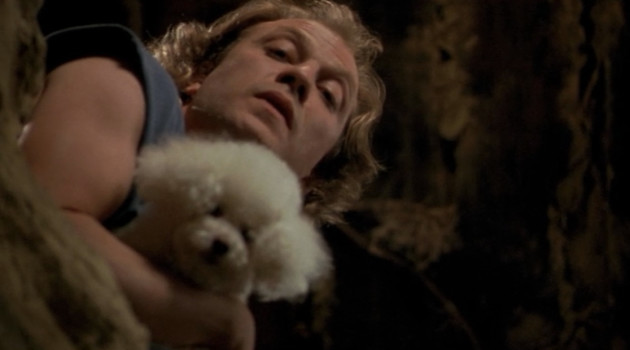
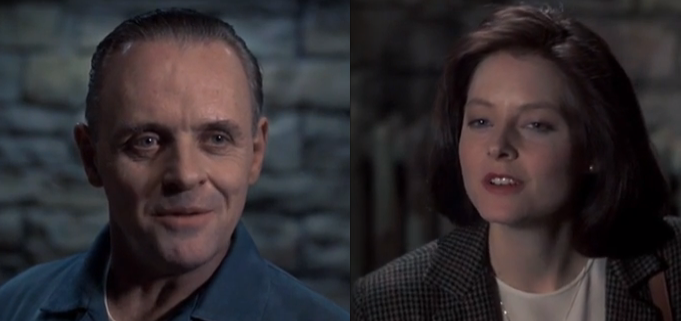
Most notable in Silence of the Lambs are the performances of Anthony Hopkins, Jodie Foster, and don’t forget Ted Levine. While Hopkins and Foster get most of the attention, Levine delivers a command performance as Buffalo Bill. Delivering a spine-chilling and exhilarating performance as Dr. Hannibal Lecter is Sir Anthony Hopkins. The performance was so intensely perfect that he won his Oscar for male actor in a leading role with fewer than 15mins on screen. Hopkins gave us an uncompromising performance that caused audiences to be frightened and yet love him at the same time. Furthermore, this performance ushered him into the company of the likes of Jason, Freddy, and other icons of horror. Foster’s Academy Award winning role as Clarice Starling was gripping, engaging and pivotal. Her phenomenal performance gave a much-needed voice to feminism–a voice that was sorely missing at the time–and is still needed today. She was strong, feminine, smart, vulnerable, and clever all at the same time. Not nearly receiving the accolades he should, Ted Levine’s Buffalo Bill is masterfully delivered. His terrifying portrayal of this character was dark, twisted, and mesmerizing. In fact, his oft quoted line “it rubs the lotion on its skin or else it gets the hose again” appears in memes, parodies, and other media. His character was even used in an episode of Family Guy. Levin’s Buffalo Bill, much like Lecter and Starling, was instantly iconic. What is the common element found in each of these performances? Uncompromising devotion to the character that brings about a believability that few actors have been able to encroach upon.

What a screenplay! One of the foundational parts of visual storytelling that I feel is largely missing from many modern horror films is a solid screenplay. Adapted from the novel written by Thomas Harris, Ted Tally’s Oscar-winning screenplay for Silence is incredible. Although there are some differences between the screenplay and the novel, the screenplay is widely seen as an excellent adaptation and even praised for its more unnerving ending compared to the novel. While some negatively criticize the screenplay for portraying transgendered (or more broadly queer) individuals as being predisposed to abnormal or violent behaviors, Tally’s screenplay comes to the defense by including dialogue that transgendered individuals are prone to pacificity plus no scientific correlation between, what we would now call the LGBTQ community, and violence. Starling is never objectified by Lecter; and any other character objectifying or patronizing her, she quickly diverts attention back to the case. She isn’t modeled as a sex symbol; funnily enough, Lecter refers to her clothes as frumpy, cheap, and her entire persona is barely beyond her background as “poor white trash” from West Virginia. The screenplay contains a healthy, progressive message for feminism–more specifically–women working in a man’s world. Foster’s Starling gave a voice to those women who are working diligently to prove that they are just as capable (and in some cases maybe even moreso) as any man in a given profession. Some film scholars and critics have referred to Silence of the Lambs as one of the most feminist films of all time. Prior to Silence, there were few horror, crime, or film noir motion pictures with strong female protagonists (Ridley Scott’s Alien being another example).

Executing his impeccable vision for this iconic film, the late director Jonathan Demme guided this film from screenplay to screen, blazing new trails for a genre not typically known for high caliber, excellent motion pictures. Moreover, the film was so successful that junior executives at studios would pitch other screenplays as “the next Silence of the Lambs.” Most remarkably about the direction of the film is the success at overcoming prejudices held against visually and psychologically disturbing stories that involve graphic language, cannibalism, nightmarish serial killers, nudity, self-mutilation, and (although mostly off-screen) violence. There are Hitchcockian tones in the suspense and violence that can be seen in the off-screen violence, framing, lighting, and angles. That which is in the mind is more frightening than what the naked eye can see. Demme’s Silence is arguably seen as a model for other horror and thriller filmmakers, and is often imitated but never has been replicated. The power of subtlety. Demme communicated so much emotion through subtle movements and strategic dialogue rich with subtext. One element that is common amongst Best Picture winners is the ability to take what was then “present day” and make it timeless. The plot, characters, and setting feel ageless. Genuine fear can be felt throughout the film because Demme channeled that which terrifies him in real life. It’s authenticity is uncanny. Much like Psycho was groundbreaking for modern horror films featuring psychopaths and twist endings, Silence of the Lambs was groundbreaking in that it relied upon the everyday world rather than supernatural forces to shock with unbelievable credibility and realism.

While the director, screenwriter, and actors are the principle forces behind the success and timelessness of Silence, the film would not have won best picture without amazing editing, music, cinematography, and other technical elements. The best editing and cinematography occurs when you don’t see the seams or think about camera placement or angle. Superior editing and cinematography enable the characters and plot to maintain center stage. The world Demme desires to portray in the motion picture was to be as real as possible. Hence why you won’t find lengthy shadows, set decoration that stands out from the world that it inhabits, and music that enhances but never overpowers a scene. Demme and his director of photography Tak Fujimoto worked together to strategically include a motif of birds that are literal and metaphoric. This is evident in not only Clarice “Starling” but in the crows at the beginning, stuffed owl in the Your Self Storage unit, and even in the line at the crucial turning point, “it’ll be terns for us too.” Birds are an important element in films, not limited to horror films. Specifically terns was used in place of turns because terms are a protected bird species, much like the mind of Dr. Lecter. Birds are a common motif or symbol in films, and can be used to represent different concepts or ideals.

Thematically, Silence is incredibly rich. These themes are brought out through the strange relationship shared by Lecter and Starling. There is a high level of respect mutually expressed by both characters, albeit unconventional. This strained relationship is observed in the similarities between Lecter and Starling. Examples of the parallels between Starling and Lecter include the feeling, they both experience, of being ostracized by the world in which they respectively live and work. Lecter from the human race, for his psychopathy and cannibalism; and Starling by the law enforcement profession because she is a women in a time that women were not commonly pursuing careers in law enforcement. They both occupy a prison. Whereas Lecter’s prison is a literal one, Clarice’s is a metaphoric one because of the men that literally and figuratively tower over her, establishing her boundaries. Clarice may not have a doctorate but she can easily match wits with Lecter in the shared power they both have to manipulate and persuade with cunning. Less obvious is the shared past they both have as victims of abnormal upbringings. Lecter was a victim of child abuse, and this ca be inferred in his dialogue with Clarice (note: Demme should have underscored this a little more) with Clarice being left an unloved orphan to be raised by distant relatives. Shared childhood trauma. These similarities are what forge the bond between these two strong characters. Demme and Fujimoto reinforced these themes and relationships with visual storytelling elements in order to personify and manifest in dynamic ways that hook and mind and eye.

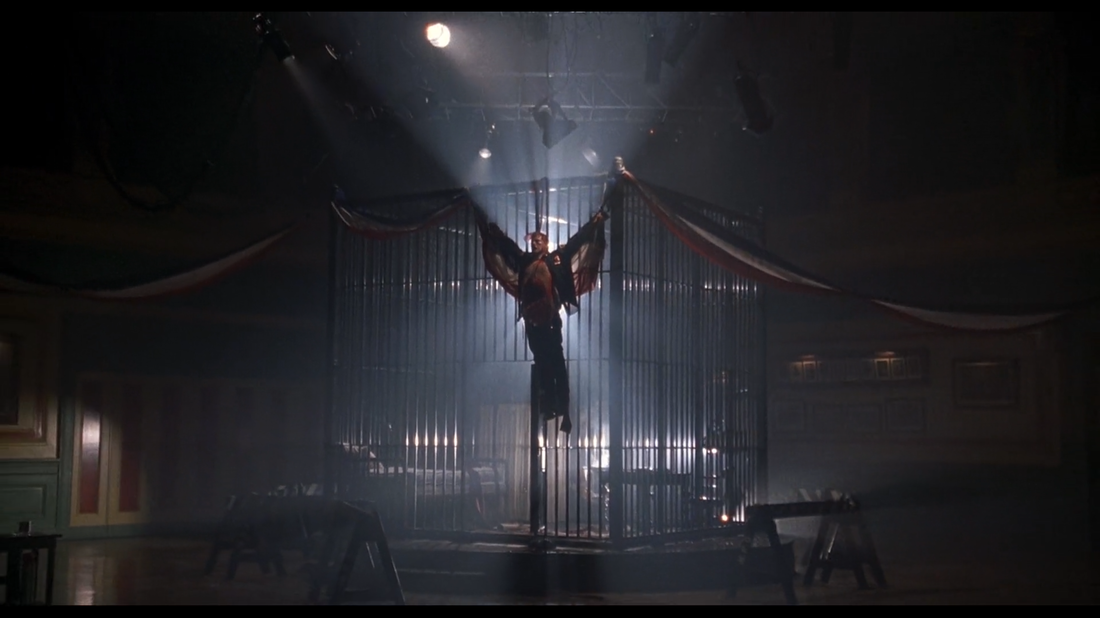
Jonathan Demme’s The Silence of the Lambs remains one of the most iconic films in cinema history and will continue to have an evergreen shelf-life. It’s a multidimensional motion picture that frightens and intrigues. It is an arthouse film that achieved commercial success. Perhaps Red Dragon and Hannibal do not live up to the quality of experience of Silence but they by no means infringe on the ability for Silence to terrify us today. From the buildup to the introduction of Dr. Lecter to the trademark moth cocoon in the throat of the original victim. Furthermore, Demme continues to drive up the suspense and tension that create frightening thoughts and imagery through the use of interiors and exteriors of houses and buildings that represent the minds of characters (i.e. Buffalo Bill’s house and lair). We continue to seek this film out for its ability to manipulate our minds and eyes through strategic and artistic use of story and image. And you know what? We love these characters. We like and can identify with Clarice, have an unconventional respect and even like Dr. Lecter, and are completely intrigued and disgusted by Buffalo Bill.


Ryan teaches screenwriting at the University of Tampa. If you like this article, check out the others and FOLLOW this blog! Interested in Ryan making a guest appearance on your podcast or contributing to your website? Send him a DM on Twitter!

Follow him!

Twitter: RLTerry1

Instagram: RL_Terry

Thrillz (theme parks): Thrillz.co