MISSION: IMPOSSIBLE–THE FINAL RECKONING film review

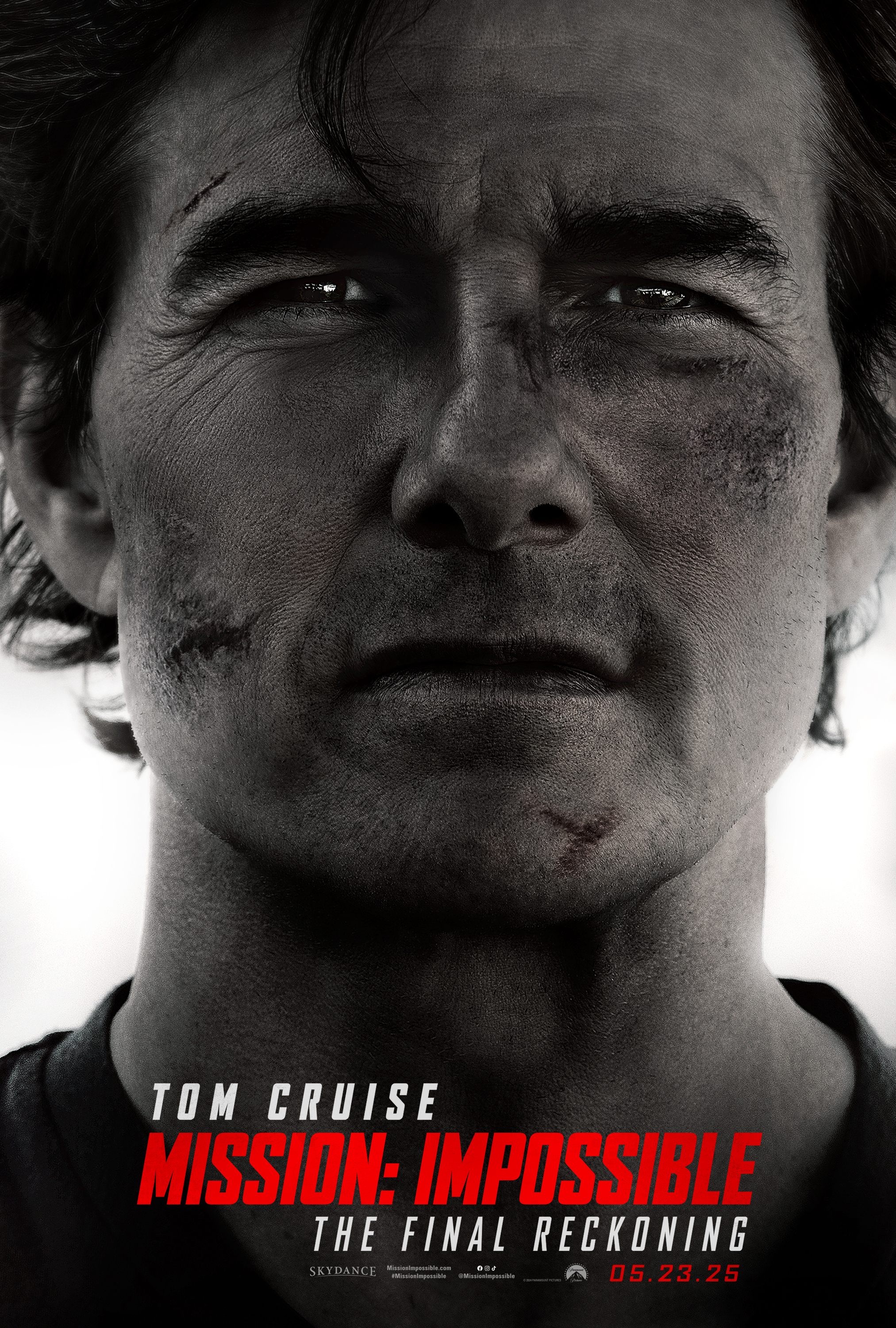
What a picture! Mission: Impossible–The Final Reckoning is an exhilarating end to a 29 year old journey. The scale and scope of the final chapter in Tom Cruise’s tenure as Ethan Hunt is out of this world. Beyond any shadow of a doubt, the cast and crew of this film delivered their best to “all those that [they] will never meet.” That’s us–the audience–we are those they will likely never meet. Such a fitting climax to one of the biggest franchises ever to hit the big screen. For everything the movie did right and excellent, it’s not without some shortcomings in the screenwriting. While the first act starts off a little clunky, it does eventually falls into place during the first act. Additionally, fans of the franchise will love the narrative connections to the preceding films, particularly Mission: Impossible and Mission: Impossible III. This is truly a cinematic spectacle deserving of every second on that big silver screen. Tom Cruise proves that he is still the definitive movie star.

Ethan Hunt and the IMF team race against time to find the Entity, a rogue artificial intelligence that can destroy mankind.

Writer-director Christopher McQuarrie brings Mission: Impossible (in its current incarnation) to a climactic close after 29 years. More than delivering a bombastic conclusion to the genre-defining franchise, he connects this film to all the preceding M:I films through both plot and character. Every moment feels earned–this movie and the cast and crew thereof–spare no expense of time or money in providing audiences with a spectacular cinematic experience that reminds us why big screen stories need the BIG SCREEN. Even though I do take issue with McQuarrie’s screenwriting in the first act–the first 15 minutes, or so, do feel a little disjoined and rushed–thankfully the remainder of the first act does fall into place. Not only do the characters have heart underscoring all the electrifying action sequences, the filmmakers involved in this have a heart for the audiences around the globe.

The IMF (Impossible Mission Force) oath reads, “We live and die in the shadows, for those we hold close, and for those we never meet.” And, in this movie, I don’t think that it merely means that the covert operatives and spycraft engineers carry out their missions behind the scenes of life, the way in which the line is delivered, I am all but certain that it’s a wink or nod to the audience indicating that McQuarrie, Cruise, and everyone involved make motion pictures for those they know, their friends and family, and everyone else out in the world that they may likely never meet. There is probably no other working actor out there that so vocally champions cinema like Tom Cruise. This is particularly true during and after COVID with his release of Top Gun: Maverick. Even in a press conference wherein Cruise was asked about the proposed international filmmaking tariffs by a reporter, and he redirected them to The Final Reckoning, because “we’re here to talk about the movie.” The trademark charisma, physics-defying stuntwork, and charm that Cruise brings to the screen serves as evidence why he truly is the definitive movie star working today.

Picking up in the months following the train incident from Dead Reckoning, The Final Reckoning thrusts audiences right into the middle of a world on the brink of WWIII. The entity has infected the internet and it looks like the end of the world, as we know it. Once again, Hunt is being hunted down by his government (and probably other governments too) because he refuses to let the United States have the key that would potentially give them control of the entity’s source code, because no one should be entrusted with that level of power or responsibility–not even Hunt and his IMF team. Ethan Hunt continues to stand up for what is right, the greater good even when it is the most unpopular stance or opinion to hold. Hunt and his team desire to destroy the entity so no one has access to its power and the entity cannot destroy the world so it and Gabriel can remake it in their image. The Final Reckoning forces us to look inward, and ask ourselves how we would react when faced with a world on the brink of disaster. Could we resist giving into our innate self-centered nature, even when disguised as the most logical choice? This movie is a challenge to humanity to always hold onto hope even when it appears to be impossible.

After the clunky start to the movie, the narrative begins to find its tone, pacing, and direction. I wouldn’t be surprised if there is a “McQuarrie Cut” that adds in cut scenes at the beginning. Other than the stars themselves, the star of this movie is practical effects and filmmaking themselves. The CGI is minimal, and is rarely front and center. McQuarrie and Cruise lean into practical effects, mechanical magic, and other elements that give the film a tangible dimension. You cannot replace the way real light bounces off real objects and into the camera lens in this outstanding motion picture. The Final Reckoning is as much a celebration of the decades-old franchise (and TV show even before the original movie in 1996) as it is a celebration of classical filmmaking. Even the scenes and sequences that felt a little too death-defying or unrealistic, they certainly feel naturalistic within the world on screen (though, I’d be lying if I said that some came a little close to being even unbelievable in a Mission: Impossible movie). Even thought he aerial stuntwork in this movie is the most intense we’ve seen, this movie also includes a lot of underwater stuntwork and action sequences. And I must say that is’t he dark, claustrophobic underwater sequences that had me on the edge of my seat. It really is nothing short of incredible what McQuarrie, Cruise, and their teams were able to do in this motion picture.

For fans of the franchise, particularly those that have rewatched the whole franchise leading up to this moment, there are characters from the past that appear in substantive ways and even plot points that were never fully explored int eh past are brought full circle. Few, if any, characters feel like one-dimensional space-fillers–which can easily happen in an action movie–every character has a purpose, has a motivation. We care about our central characters’ survival, we experienced a gut-wrenching death in Dead Reckoning, so we know that these IMF agents are human, they can die. All the more reason why we are completely invested in their survival.

Even though we may get a Mission: Impossible movie in the future, maybe even one with one or more of the IMF team members from this original run of movies, Cruise has stated, in not so many words, that this movie represents his final Mission: Impossible movie in which he is the star. If we have future M:I movies, I’d like to see him make an appearance or play a supporting role, because Tom Cruise IS Mission: Impossible. What I love about these movies is that they seek to entertain first and include any more thoughtful ideas or questions in the subtext or emotional drivers of characters. Entertainment first. So many movies nowadays have such a cynical view of life and traditional values, but here is franchise built on that which brings us all together as a community. High concept? Sure, but that high concept nature of the M:I movies has never meant a meaningless or vapid experience. These movies, and others like them (regardless of genre), are what cinema is all about. And I am sure going to miss looking forward to the next Mission: Impossible movie.

Thank you Tom. And thank you McQuarrie and past writers and directors for 29 years of unparalleled thrills and excitement on the silver screen.
Ryan is the general manager for 90.7 WKGC Public Media in Panama City and host of the public radio show ReelTalk about all things cinema. Additionally, he is the author of the upcoming film studies book titled Monsters, Madness, and Mayhem: Why People Love Horror. After teaching film studies for over eight years at the University of Tampa, he transitioned from the classroom to public media. He is a member of the Critics Association of Central Florida and Indie Film Critics of America. If you like this article, check out the others and FOLLOW this blog! Follow him on Twitter: RLTerry1 and LetterBoxd: RLTerry
BLACK BAG film review

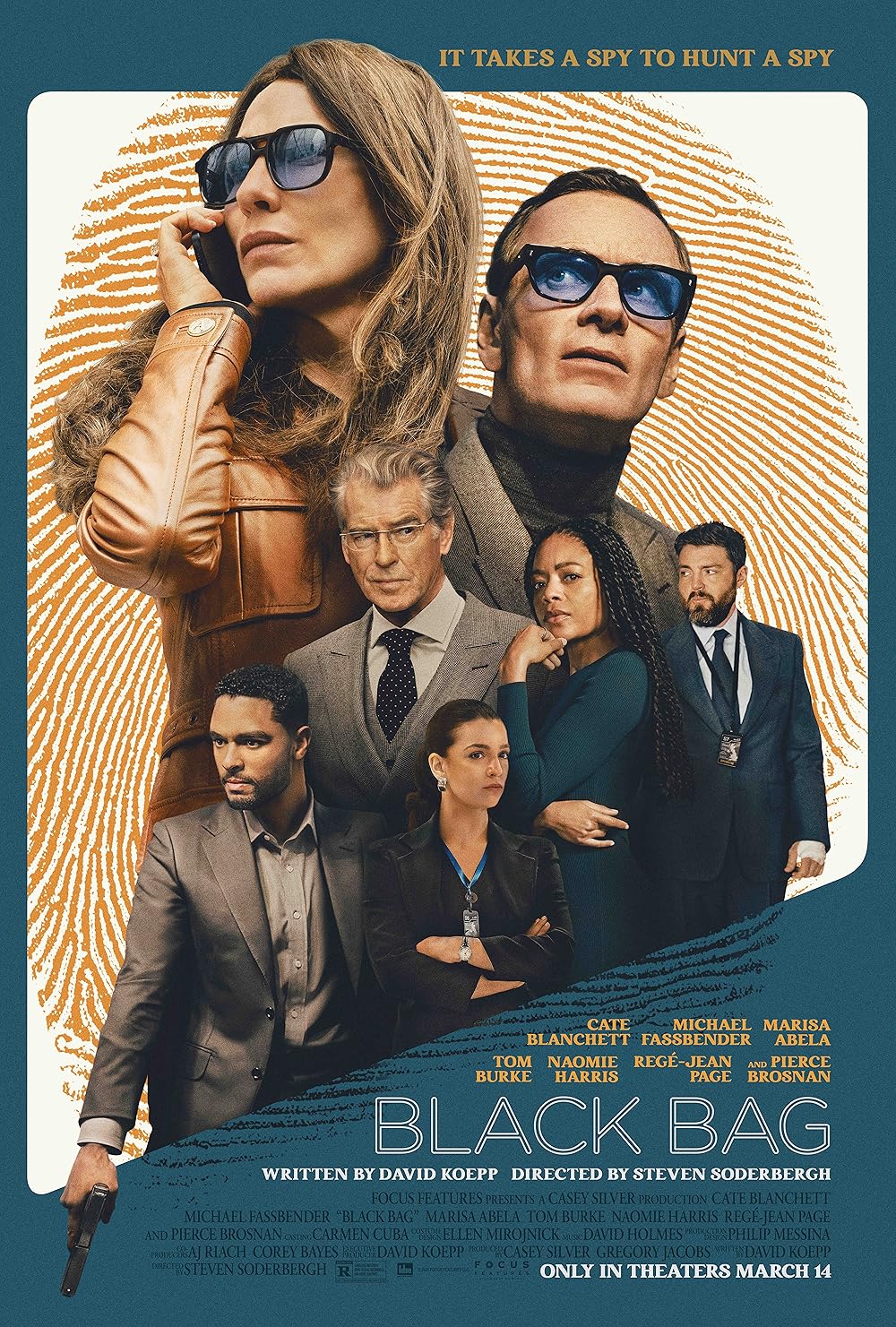
A sleek and suspenseful espionage thriller. Steven Soderbergh teams up with screenwriter David Koepp to craft a cinematic world of intrigue and deception in Black Bag. The duplicitous nature of the film is witnessed in the gripping marital drama that underscores the covert spy activity. Rooted in themes of trust, betrayal, and the cost of secrecy, this film places audiences deep within the labyrinthine world of British intelligence, where loyalty is as much a weapon as it is a liability.

When his beloved wife, Kathryn, is suspected of betraying the nation, intelligence agent George Woodhouse faces the ultimate test — loyalty to his marriage or his country.

Michael Fassbender and Cate Blanchett lead the charge as George Woodhouse and Kathryn St. Jean, a married couple whose bond is tested when George is tasked with unmasking a mole inside the British National Cyber Security Centre (although not stated, the Centre is reminiscent of MI6). When suspicion falls on Kathryn, the mission becomes personal, forcing the couple into a high-stakes psychological chess match where every move could be their last. David Koepp’s screenplay strikes a deft balance between razor-sharp dialogue and simmering tension, drawing audiences into a narrative that is as much about human connection as it is about spycraft.

Fassbender delivers a layered performance, portraying a man caught between duty and devotion, while Blanchett’s enigmatic presence keeps audiences guessing until the final frame. Their electric chemistry brings an emotional weight to the thriller, grounding the high-stakes espionage with raw, personal stakes.

Adding depth to the intrigue is an exceptional supporting cast, including Naomie Harris as a perceptive psychiatrist and Regé-Jean Page as a brash but brilliant operative. Each performance contributes to the film’s palpable atmosphere of uncertainty, where shifting alliances and hidden motives drive the tension ever higher.

Soderbergh’s signature directorial style is on full display, with dynamic camerawork, crisp editing, and a refined aesthetic that gives Black Bag an effortlessly cool veneer. Complemented by David Holmes’s pulsating, jazz-infused score, the film moves with a rhythmic intensity that keeps the tension taut from start to finish.

David Koepp’s screenplay is a masterclass in taut, intelligent storytelling, seamlessly blending espionage thrills with deeply personal stakes. The interplay between George and Kathryn is laced with suspicion and longing, making every conversation feel like a battle of wits. Koepp’s ability to navigate shifting alliances and hidden motives ensures that no scene feels wasted, keeping audiences engaged in a labyrinth of deception. While the plot’s complexity demands careful attention, the payoff is both satisfying and thematically rich, cementing Black Bag as a sleek and sophisticated entry in the spy thriller genre. My only negative critique of the screenwriting is that Koepp’s screenplay does suffer from some poor pacing in the first act. 

While he doesn’t play a prominent role in the film, seeing former Bond Pierce Brosnan return to (what we may as well call) MI6 was a nice treat and nod to his tenure as the definitive fictional British spy.

While some may find the intricate plotting requires a close watch, the payoff is worth the investment. More than just a spy thriller, Black Bag is a stylish, smart, and suspenseful exploration of trust in a world where deception reigns supreme. A must-watch for fans of sophisticated espionage cinema.

Ryan is the general manager for 90.7 WKGC Public Media in Panama City and host of the public radio show ReelTalk about all things cinema. Additionally, he is the author of the upcoming film studies book titled Monsters, Madness, and Mayhem: Why People Love Horror. After teaching film studies for over eight years at the University of Tampa, he transitioned from the classroom to public media. He is a member of the Critics Association of Central Florida and Indie Film Critics of America. If you like this article, check out the others and FOLLOW this blog! Follow him on Twitter: RLTerry1 and LetterBoxd: RLTerry

ARGYLLE movie review

A perfectly choreographed espionage action movie with a dash of whimsy! Matthew Vaughn delivers a wildly entertaining genre-bending spy movie that simultaneously subverts and satisfies expectations for enigmatic espionage movies. Written by Jason Fuchs, Argylle delivers that metaphoric roller coaster ride that we love in this genre-blend. Bryce Dallas Howard shines opposite the gritty-charm of Sam Rockwell in the lead roles, and they are surrounded by an all-star cast of supporting characters. And that technicolor-spectacular sequence at the end is clearly inspired by the dance scenes from Romy and Michele’s High School Reunion and Dirty Dancing. One part fish-out-of-water and another part reluctant hero, this movie is just the thing to start February off with a blast at the cinema.

Reclusive author Elly Conway (Howard) writes best-selling espionage novels about a secret agent named Argylle who’s on a mission to unravel a global spy syndicate. However, when the plots of her books start to mirror the covert actions of a real-life spy organization, the line between fiction and reality begin to blur.

As entertaining as the movie is, we do not actually know the significance of the content in the secret file(s) nor do we know why our heroes must send the files to the former head of the CIA; however, the movie is so much fun to watch, that it almost doesn’t matter–though, I am a little bothered that I was not informed as to the point of the whole sequence of missions, duplicitous relationships, and endless masquerades. But ultimately, Vaughn uses the power of declaration to state that the object to be retrieved is in fact important. And for what it’s worth, that’s all that really matters in this light-hearted espionage action movie.

Much of the movie exists in that liminal space between reality and fantasy, wherein so many authors find themselves as they create compelling characters and craft enigmatic plots to thrill the reader. A well-written character speaks with their own voice and metaphorically take on a life of their own. I appreciate how we are placed in a subjective point of view throughout the move so we can experience the unfolding story from Elly Conway’s perspective. Moreover, the film also has something substantive to say on art as a reflection of life. Writers of all types often take inspiration from their own lives, and mold it to fit the type of story they want to write. We also see this in subject matter experts as authors of fictional stories based on their real life work or inspired by the nature of their work. Whether or not Vaughn and Fuchs intentionally gave Argylle this depth is neither here nor there, the point is that there are opportunities here to closely read the film as a commentary on an artists relationship with their art.

Without getting into spoilers, it’s difficult to talk about too much (this is a spy movie after all) of the plot. Suffice it to say, this movie has some wild twists and turns, reversals, and reveals, but they all feel grounded in the reality of the world that has been created for us on the screen. I appreciate the movie’s foundation in classical story structure, because it allows for character complexities to be revealed through simple plotting–simple plot, complex characters.

If you enjoyed The Beekeeper, then you will also enjoy Argylle. While the former is the stronger movie, I must say that Argylle‘s whimsical nature makes it equally as entertaining.

Ryan teaches Film Studies and Screenwriting at the University of Tampa and is a member of the Critics Association of Central Florida and Indie Film Critics of America. If you like this article, check out the others and FOLLOW this blog! Interested in Ryan making a guest appearance on your podcast or contributing to your website? Send him a DM on Twitter. If you’re ever in Tampa or Orlando, feel free to catch a movie with him.

Follow him on Twitter: RLTerry1 and LetterBoxd: RLTerry
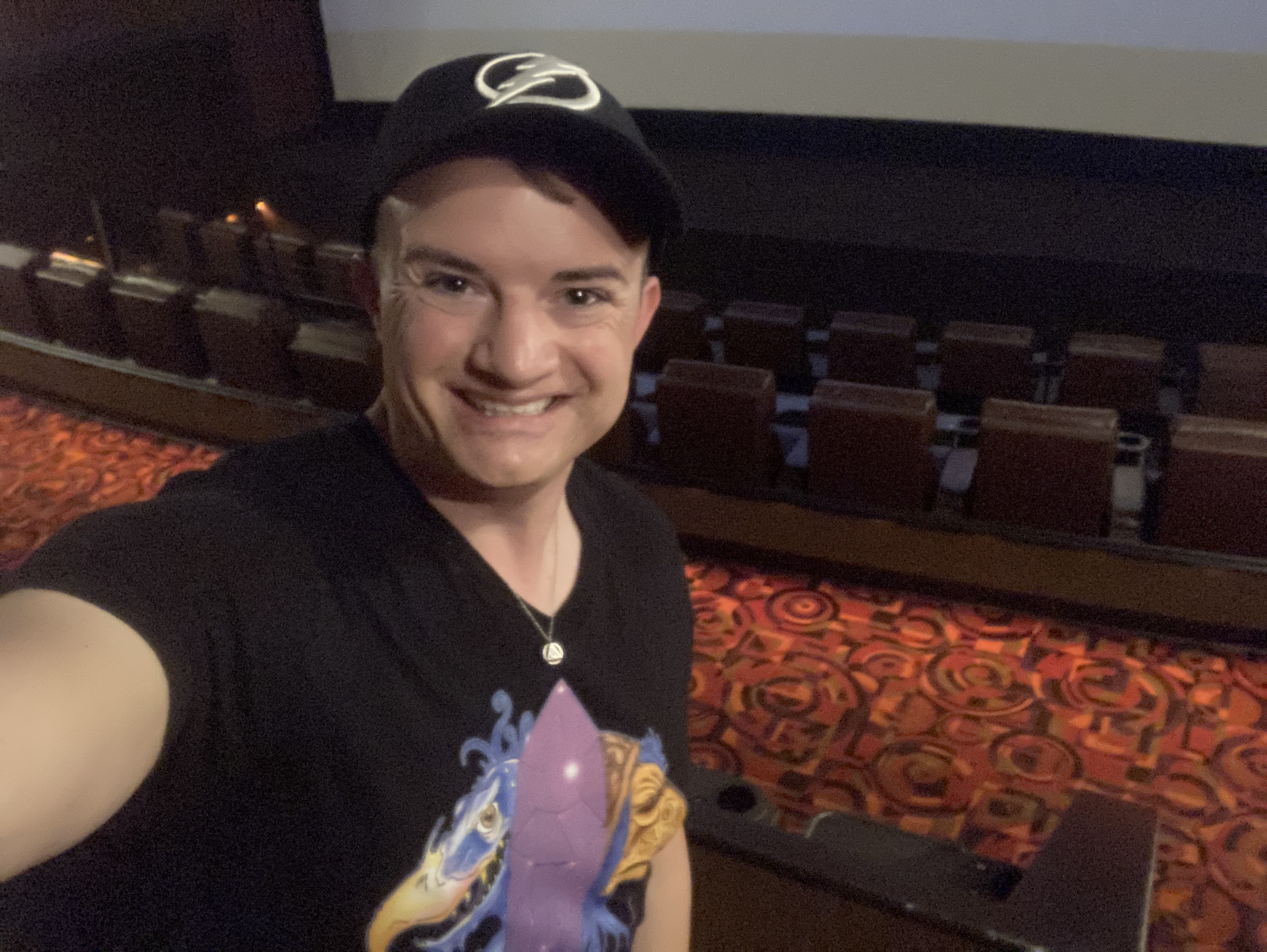
MISSION: IMPOSSIBLE–DEAD RECKONING PART 1 movie review

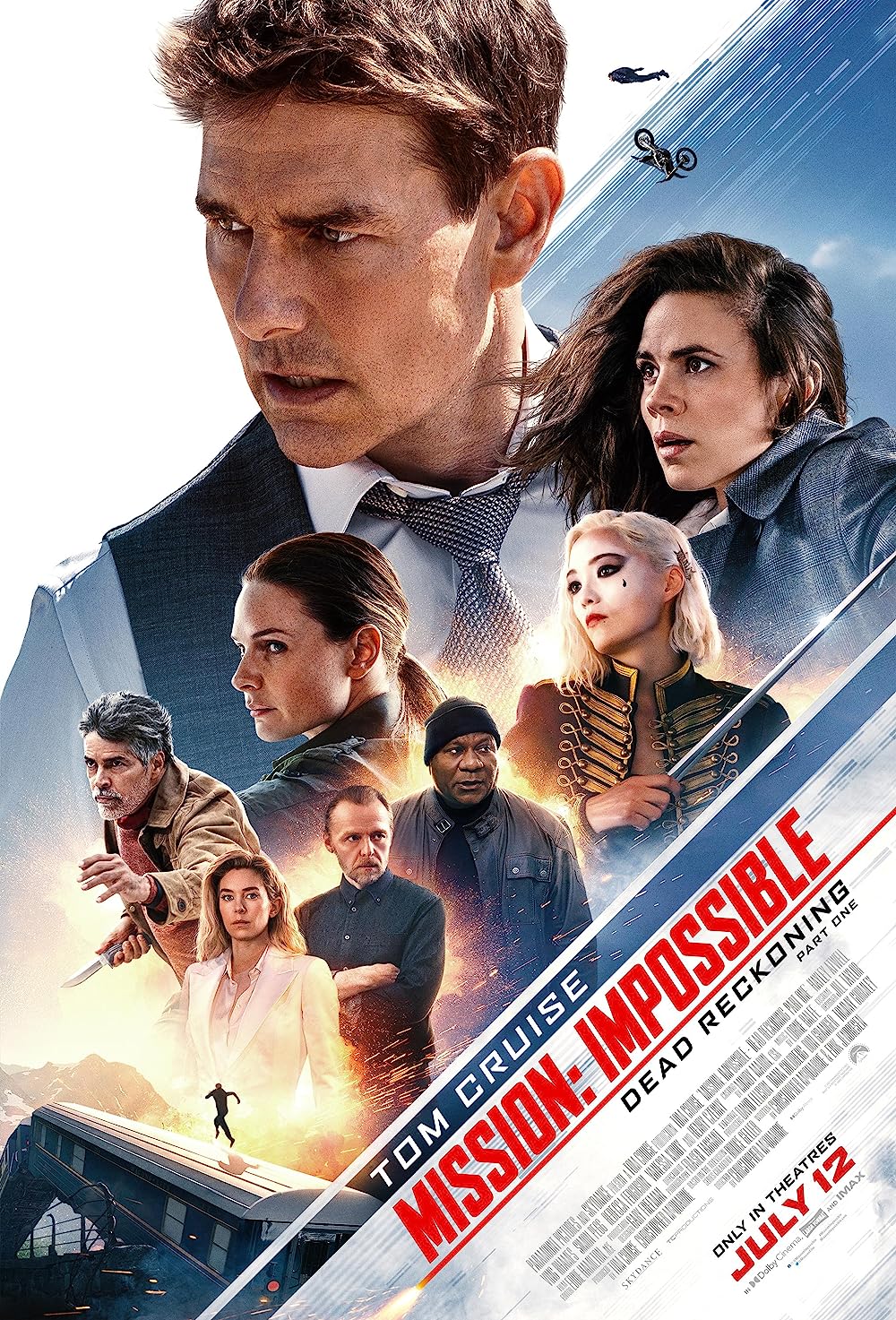
Exhilarating! Pure, unadulterated cinema! Tom Cruise and the whole Mission Impossible team deliver what is likely the most epic movie of the year!! It’s thrilling, funny, and suspenseful from beginning to explosive ending! Part 1 is both a complete story and sets up Part 2 exceptionally well. If I am to be objective, Mission: Impossible III delivers the best story; however, audiences are still going to love this movie because feels like cinema in every measurable way. Move over James Cameron, Christopher Nolan, and yes even Martin Scorsese, for it is Tom Cruise whom knows how to deliver cinema to audiences.

Ethan Hunt (Cruise) and the IMF team must track down a terrifying new weapon that threatens all of humanity if it falls into the wrong hands. With control of the future and the fate of the world at stake, a deadly race around the globe begins. Confronted by a mysterious, all-powerful enemy, Ethan is forced to consider that nothing can matter more than the mission — not even the lives of those he cares about most.

After the massive success, both critically and financially, of Top Gun: Maverick I was curious to witness whether or not Cruise would pull off another cinematic hit. Suffice it to say, he did just that! The last remaining movie star, in the classical sense, Tom Cruise continues to deliver entertaining and thoughtful cinema. In an era overridden by form over function motion pictures (though, there is certainly a place for those stylistic films), Mission Impossible: Dead Reckoning Part 1 (MI7) proves that cinema is should generally concern itself with both the form and function equally. By sticking to foundational screenwriting conventions, pairing it with sequences that make the most of every square inch of that big silver screen, the entire MI team demonstrate why cinema is not only about the art of the narrative but also in a larger-than-life experience.

The entire auditorium was electric at the screening I attended. I don’t think I felt the level of kinetic energy at the cinema since Top Gun: Maverick. It even surpassed the high-energy of the more recent The Flash. Perhaps it is the combination of classical espionage/action plotting and epic-sized set pieces and locations. While MI7 feels very much contemporary, it also never forgets its roots in both the previous MI movies or in the original TV show. Of course there are those that will overly critique the dialogue, more specifically its lack of subtext, but I argue that it is on brand with and perfectly appropriate for this genre movie. Does that mean writers and directors should simply aim for status quo? No, MI3 proved that MI movies can be exciting and full of heart, complete with characters rich with dimension. But the dialogue should not significantly impact the overall experience of this movie.

Without getting into spoilers, the mission, should you choose to accept it, is to stop the character of opposition from unleashing a destructive artificial intelligence (AI) on the world. Talk about timely social and tech commentary. The film broaches topics such as truth (subjective/interpretive truth) and truth (as in universal truth). By extension, this same idea is carried over into fact vs opinion and predictive decisions (in the vein of Minority Report). In short, the crisis that Ethan is attempting to prevent is one that would completely disrupt, retcon, and violate the very informational fabric of life. Think Skynet. While I wouldn’t characterize MI7 as being inordinately deep or thoughtful, concerning truth and AI, it does posit these questions and subjects, which provides opportunities for more discerning audiences to discuss the advantages and disadvantages of AI. More specifically, the dangers of AI falling into the wrong hands.

The set pieces and locations are cinematic in both scale and scope. From the beginning of the movie on a submarine in the Bearing Sea to the Alpine vistas of Austria, the best way to experience this motion picture is in a premium format at your local cinema. Moreover, the biggest screen with best sound possible will make the car chases and Tom Cruise’s stunts all the more outstanding! Even though we’ve all seen that stunt in which Cruise launches himself off the mountain on a motorcycle in various promotional content for this movie, watching it in the third act of the film was still so incredibly impressive!

While Cruise performing most of his own death-defying stunts is unparalleled and impressive enough, what makes these car chases and stunts even more adrenaline-pumping is the fact so little CGI is used. Tom Cruise is literally launching himself off a mountain, and he (and others) are literally driving cars through the streets of Rome. The lack of overt CGI or relying upon it to take the real danger out of the stunt sequences removes just that–the danger. These stunt sequences are all the more exciting because they are real–there is little to no simulation employed. Not to over simplify, but the dimension of real beats the flat, lifeless CGI sequences every time. Real>artificial.

And that’s precisely what we have here real cinema! On a personal note, I am so incredibly grateful for Tom Cruise keeping cinema alive! He has demonstrated through Maverick and now with MI7 that he understands what it means to craft cinematic stories for the silver screen! Before you @ me, I am fully aware that cinema takes various forms, form intimate character studies to the avant-garde, but the power of a genre movie that follows screenwriting conventions should never be devalued. Genre movies are what helped build cinema, and folkslike Tom Cruise keep them coming to entertain and thrill us.

Ryan teaches Film Studies and Screenwriting at the University of Tampa and is a member of the Critics Association of Central Florida and Indie Film Critics of America. If you like this article, check out the others and FOLLOW this blog! Interested in Ryan making a guest appearance on your podcast or contributing to your website? Send him a DM on Twitter. If you’re ever in Tampa or Orlando, feel free to catch a movie with him.

Follow him on Twitter: RLTerry1 and LetterBoxd: RLTerry
THE KING’S MAN movie review

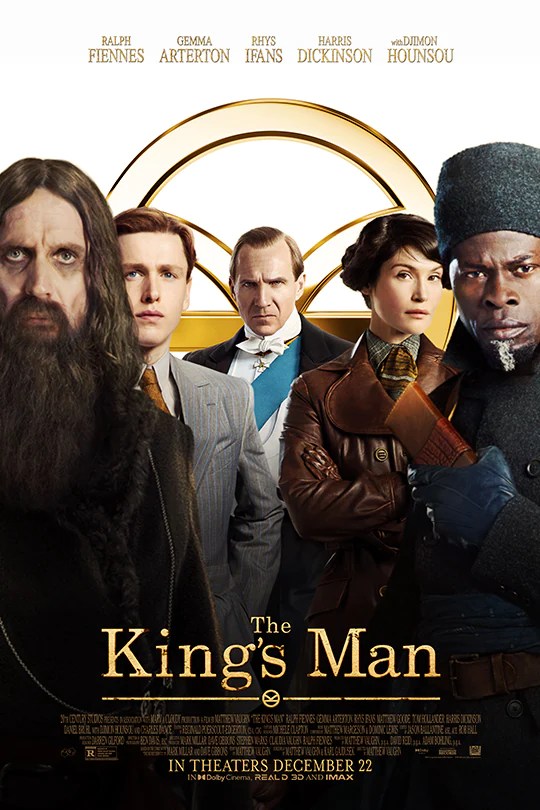
Highly entertaining! This film can be read as a commentary on the necessities and atrocities of war and the emotional cost of freedom. After the disappointing sequel to the outstanding Kingsman: the Secret Service, I was unsure what to expect from this prequel-sequel. So often, prequels simply do not capture the magic of the original. While the original is still the best in this franchise, this prequel taking us back to the origins of the secret agency operating at the most extreme discretion, will keep you engaged as it parallels world history leading up to World War I. The movie is well-paced and structured, and will keep your eyes and ears glued to the screen for the duration of the movie that surprisingly exceeds two hours; you will not feel like you’ve sat there for over two hours. Teaching World Cinema, I spend a lot of time each semester discussing the historical events that helped to shape the content therein and direction of cinema, so I was particularly interested in how closely this film would follow the Russian Revolution and the preamble to the Third Reich in Germany. Even though this film is not intended to recreate all the actual events that plunged the Western world into World War I, there are quite a number of nods and references to major turning points in the revolutions and wars. Most notably in this film, is the subplot of Rasputin and the Romanov family. Ralph Fiennes’ role as the Duke of Oxford (founder of Kingsman) finds a nice balance between serious and campy. Tonally, the original still strikes the best balance, but this one is certainly aiming for that balance between serious espionage movie and camp; perhaps the landing is a little bumpy, but never does it detract away from the experience. If you enjoy spy movies that are exciting and take place within real world history, then you will undoubtedly enjoy this film!

One man must race against time to stop history’s worst tyrants and criminal masterminds as they get together to plot a war that could wipe out millions of people and destroy humanity.

Decades prior to the events of the original, Kingsman was formed, but only after the Western world was plunged into World War I, inclusive of the Russian Revolution and preamble to the Third Reich. While we know from history that there wasn’t an organization of villains who’s goal was to overthrow democracy and monarchy in exchange for socialism and totalitarianism, the film does a good job of applying some fiction to the real historical events. In terms of history, the months leading up to the Russian Revolution provide the bulk of the historic context. Yes, that means the infamous Rasputin plays a major role in the film. And the film plays it close to history, because unlike the Rasputin we get in Anastasia, this one isn’t a sorcerer; however, it does hint at him possessing some dark magic (but that mythos is grounded in reality). The real life Rasputin was a dark priest, alchemist, healer, and advisor to Tsar Nicholas Romanov II, the last emperor of Russia. One prominent historical theory suggests that the British Secret Service was involved in Rasputin’s assassination, and this film leans into that theory in order to motivate the founding of Kingsman. For a while, I thought that the legend of Anastasia (which lasted about 90 years) was going to factor into this movie, which would give rise to a plot point in its sequel. But sadly, I don’t think we will be searching for Anastasia in the next movie (if there is one, which there probably will be).

What I appreciate most about this film is the commentary on the atrocities and necessities of war and the emotional cost of victory. This isn’t really a spoiler because it happens in the first few minutes of the film, but we open on the death of the Duke of Oxford’s (Fiennes) wife, and it’s this death that radically alters his opinions on getting involved in war and fighting for your country. Moreover, his radical ideological shift was exhibited through his rearing of his son, whom he (over)protected and kept from entering into military service. Understandably, the Duke did not want to lose his son on the war front, in the same way he lost his wife and son’s mother. Without spoiling the plot, the Duke goes through a redemption arc and through various conflict, his pacifist ideology is challenged, and he must decide what he’s going to do about it, as the world is crumbling around him. Sometimes, war is necessary to fight for what is right. But even the most justified wars come as a cost. That cost may be emotional, psychological, or relational; yet, the cost is worth it because it may have saved tens of thousands or even millions of lives in the long run. The King’s Man challenges our views on war, by placing us in the family units and in the trenches along No Man’s Land (and no, Wonder Woman does not show up). Some things in life are truly worth fighting for, and fights are not always going to be debates on a stage. Furthermore, if you’re a parent, perhaps you will be challenged to be the kind of man or women your child would be.

You’ll want to add The King’s Man to your list of movies to watch in cinemas over Christmas! You get a little of everything: some classic espionage, a World War I film, and commentary that is applicable to our own lives.

Ryan teaches American and World Cinema at the University of Tampa. If you like this article, check out the others and FOLLOW this blog! Interested in Ryan making a guest appearance on your podcast or contributing to your website? Send him a DM on Twitter or email him at RLTerry1@gmail.com! If you’re ever in Tampa or Orlando, feel free to catch a movie with him.

Follow him on Twitter: RLTerry1