Universal Orlando’s Cinematic Celebration Nighttime Spectacular

Last night saw the first official Cinematic Celebration at Universal Orlando Resort. Although the show has been in technical rehearsals since the beginning of the month, the official debut was Monday evening. Fortunately, the biggest difference between the show in rehearsal and the official opening is the opening narration. An excellent touch! Replacing the previous version of this show, the new iteration focusses on intellectual properties that have a presence in the parks versus a tribute to Universal Pictures’ cinematic legacy. In terms of the show technology, water fountains, and special/pyro effects, the new show is a major win!

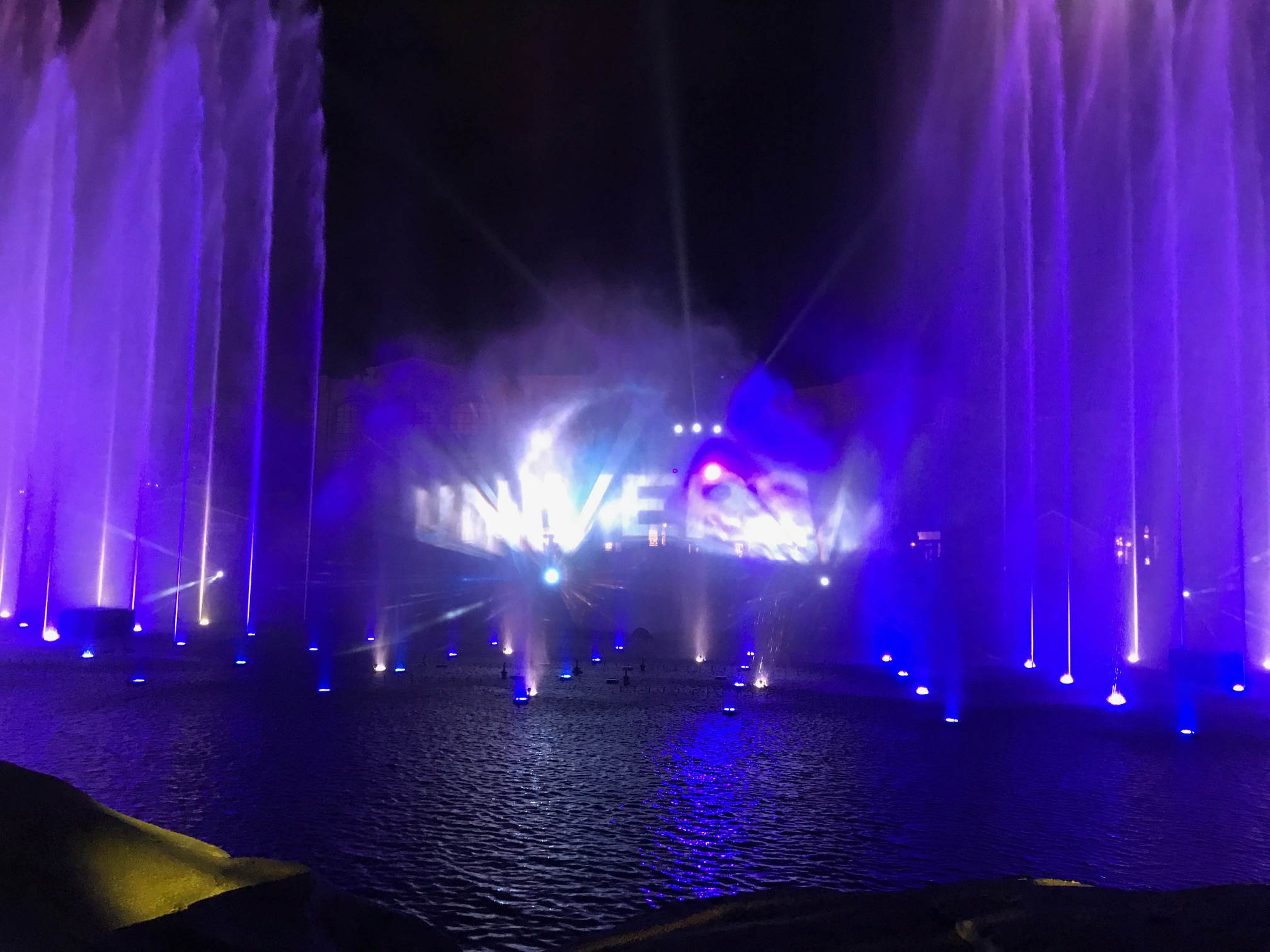
From the moment the show begins with an excellent narration setting the context for the show to the breathtaking dancing fountains, you will be awestruck by the sheer spectacle of it all! The combination of water, pyro, laser, and projection effects is outstanding. It truly feels like a cinematic experience! There is something for everyone in this show. My favorite parts were Jurassic World and E.T. the Extraterrestrial. You’ll also find clips and scenes from Trolls, Transformers (which includes scenes from the attraction), Fast and Furious, Despicable MeHarry PotterHow to Train Your Dragon, Sing, Secret Life of Pets, and Kung Fu Panda. In addition to the water screen projections, the buildings on the opposite side of the lagoon are also integrated into the show. Incredibly immersive. My sister was impressed! Which was important to me because we have been going to Universal since the early 90s, and like to experience new attractions and shows together whenever possible. She lives out of state, so we try to time it just right when new offerings open! Helps to create lasting #UniversalMoments.

Beginning with last year’s Magic of Hogwarts Castle show, Universal Orlando has been stepping up its game in the nighttime spectacular competition amongst Florida theme parks. For years, it has largely been thought, and accurately so, that Disney World was the king of nighttime shows. With the introduction of the Hogwarts Castle show and the new Cinematic Celebration, Universal shows that it is a formidable opponent in the arena of nighttime shows. Not only is the show impressive from a technological perspective, the music is fantastic and the combination of water screens, projections, and pyrotechnics is top notch. You will certainly be wowed by the dazzling array of lights, movie clips, water effects, and more. Whereas the previous nighttime show had some water effects (and of course the water screens), this show makes the famous one in front of the Bellagio in Las Vegas look like something you put together in your back yard. The water fountains beautifully dance along with the music and accompanying images from the film selections. Whereas some shows with many fantastical effects and elements can feel like many separate parts thrown together in a tossed salad, so to speak, this show seamlessly blends all the elements together to generate one show, one experience. The manner in which the show is designed allows for Universal Orlando to update it with different films as the interests of the park guests change.

Of all that this show has going for it–and it IS a great show–I cannot help but wonder why Universal fails to include any mention of its history, the fact that it essentially birthed the American horror film, and other iconic properties of the entertainment giant. Obviously, the goal was to connect the show to the in-park IPs, but the show like it was nearly all spectacle and little narrative to speak of. Thankfully, the narration at the beginning does help to add context, but the experience of watching the show leaves me wanting more. Leaves me wanting more, in that I was looking for something with more emotion behind it. In my opinion, she shows lacks a strong ability to make an emotional connection with the audience. This is often the result of a themed attraction or show that focuses so much on the spectacle of the show, that it falls short of containing a strong narrative. One of my favorite quotes is, “the greatest art is the art of storytelling” (C.B. DeMille); but unfortunately, the new Cinematic Spectacular does not live up to the art of storytelling, but instead concentrates on the spectacle of show.

Although I have highlighted some elements of the show that I am disappointed in, don’t get me wrong, it is a fun show that is well-worth the time to find a great place from which to watch. You should definitely make the time to see the show during your visit to Universal Orlando. The best place to view the show is from the Central Park area of Universal Studios. I watched it from the waterside behind the big boulders. Presently, the show begins at 9:45 in the evening and guests begin to select viewing locations about 30-45mins before showtime. As the show just officially began, you may want to allow for an hour to find a great spot from which to watch the show. Definitely a show that you don’t want to miss.

For some highlights from the show, please see our video!
Now Playing: Netflix at a Theatre Near You?

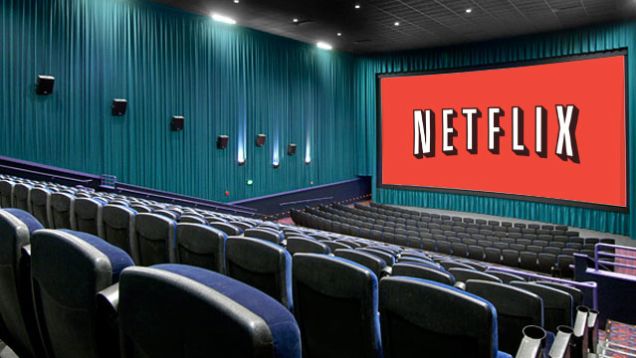
After pioneering the streaming service, is Netflix aiming to revolutionize the multiplex experience? Recently, the Twittersphere and blogosphere has been all abuzz regarding Netflix’ possible acquisition of multiplex cinemas. But what does that mean for the customer and for Netflix? Those questions have prompted me to explore the idea of a Netflix-owned chain of movie theatres. Who would’ve ever thought that the DVDs delivered-to-your-home distribution company would go on to essentially invent the streaming service concept, produce wildly popular original programming, would now possibly be in a position to own and operate multiplex cinemas. The irony here is that the company that tore down the brick-and-mortar walls of Blockbuster and whose system of delivering content put a huge dent into the bottom line of movie theatres would now look to build the walls it so effectively razed to the ground. Perhaps in how it completely demolished the legacy way of home video and original television content distribution for a more efficient system, it seeks to build a more cost-effective model of movie theatres to truly create a big screen experience for a Web2.0 universe.

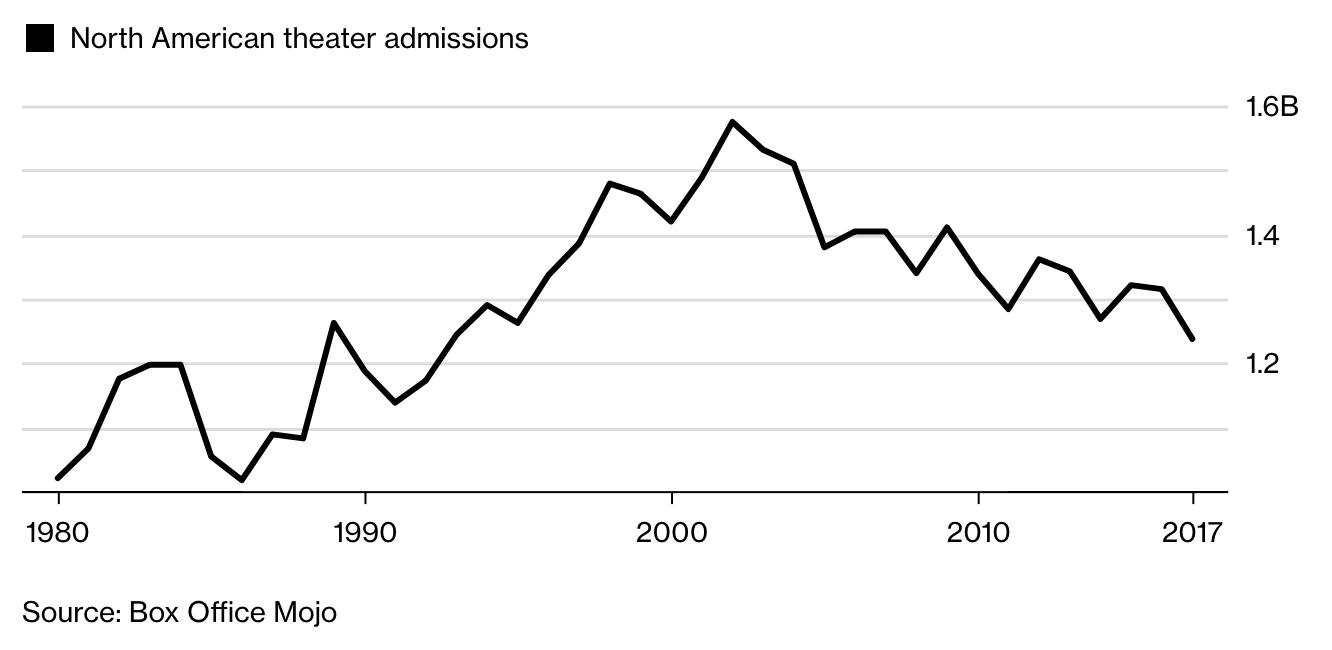
But, is going back to the brick-and-mortar model going to be lucrative for the entertainment giant? After all, Netflix virtually has no conventional overhead, in terms of how it now delivers content; but the addition of brick-and-mortar movie theatres would significantly increase the overhead cost of its business model. Just because there will be an increase does not necessarily mean that’s this may be a bad move for the company. However, it does beg for exploration of the effects of a decision like this. It’s no secret that fewer people attend the cinema now than before streaming became so prevalent. According to the Bloomberg Report citing a statistic from Box Office Mojo, movie theatre ticket sales have hit a 25 year low. After a high in the early 2000s, the number of ticket sales has overall been on a moderately steep decline. Although the the initial drastic drop could be contributed the tremendous growth of home theatre surround sound DVD systems and some recession from the aftermath of 9/11, the remaining downward trend from 2010 to today can be attributed to Netflix, Hulu, and other streaming services. Furthermore, many TV channels began allowing subscribed users to watch current and recent content on demand over the last few years.

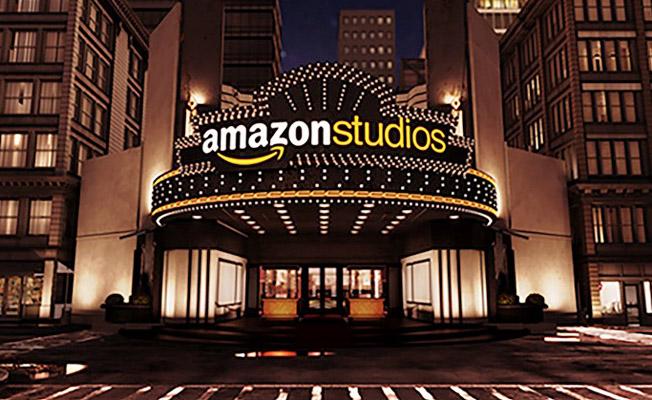
So, if the empirical data suggests that ticket sales will continue to fall, why would Netflix express a desire to throw its hat into the ring with established leaders AMC, Regal, and Cobb? Not to overly simplify it, but Netflix wants its chance at winning a Best Picture Oscar. In a recent interview with Vanity Fair, Steven Spielberg stated in that Netflix should compete for Emmys not Oscars. It wasn’t long after this interview that Netflix stated that it’s considering buying cinema multiplexes. In addition to Netflix making the headlines, Amazon Studios has quietly been making maneuvers that suggest that it may also be interested in buying a movie theatre chain. In order to mitigate the cost of going into the multiplex business, Netflix is not looking to build from scratch, but buy up the Landmark Cinemas that has been on the market for quite sometime now. Landmark is known for catering to arthouse films in much the same way Alamo Drafthouse does.

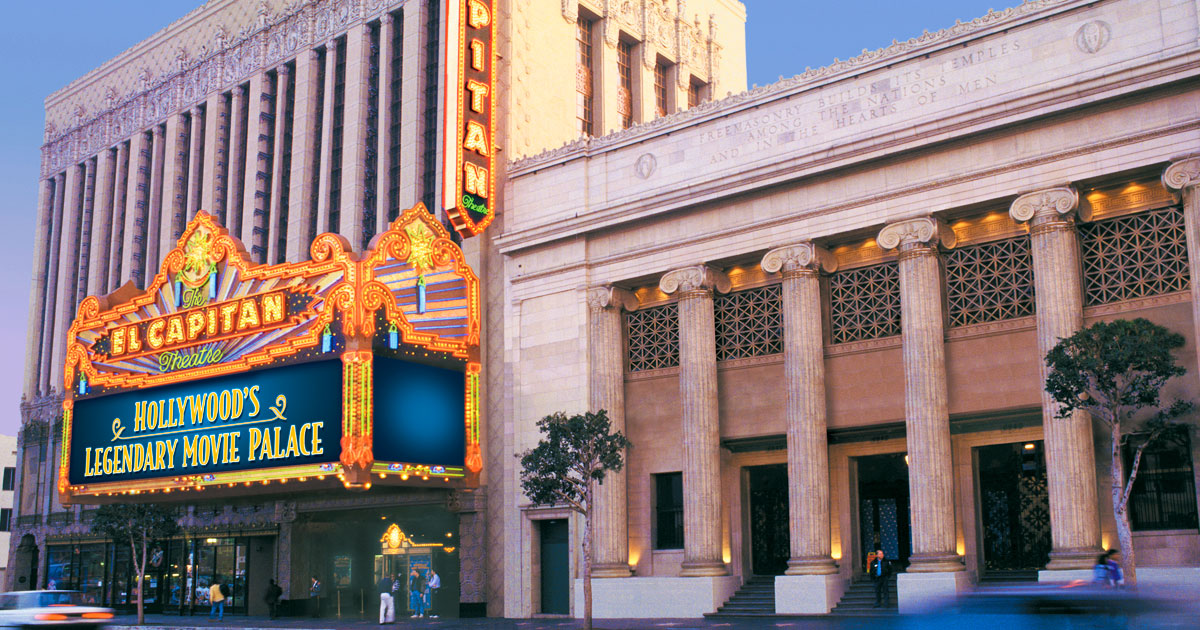
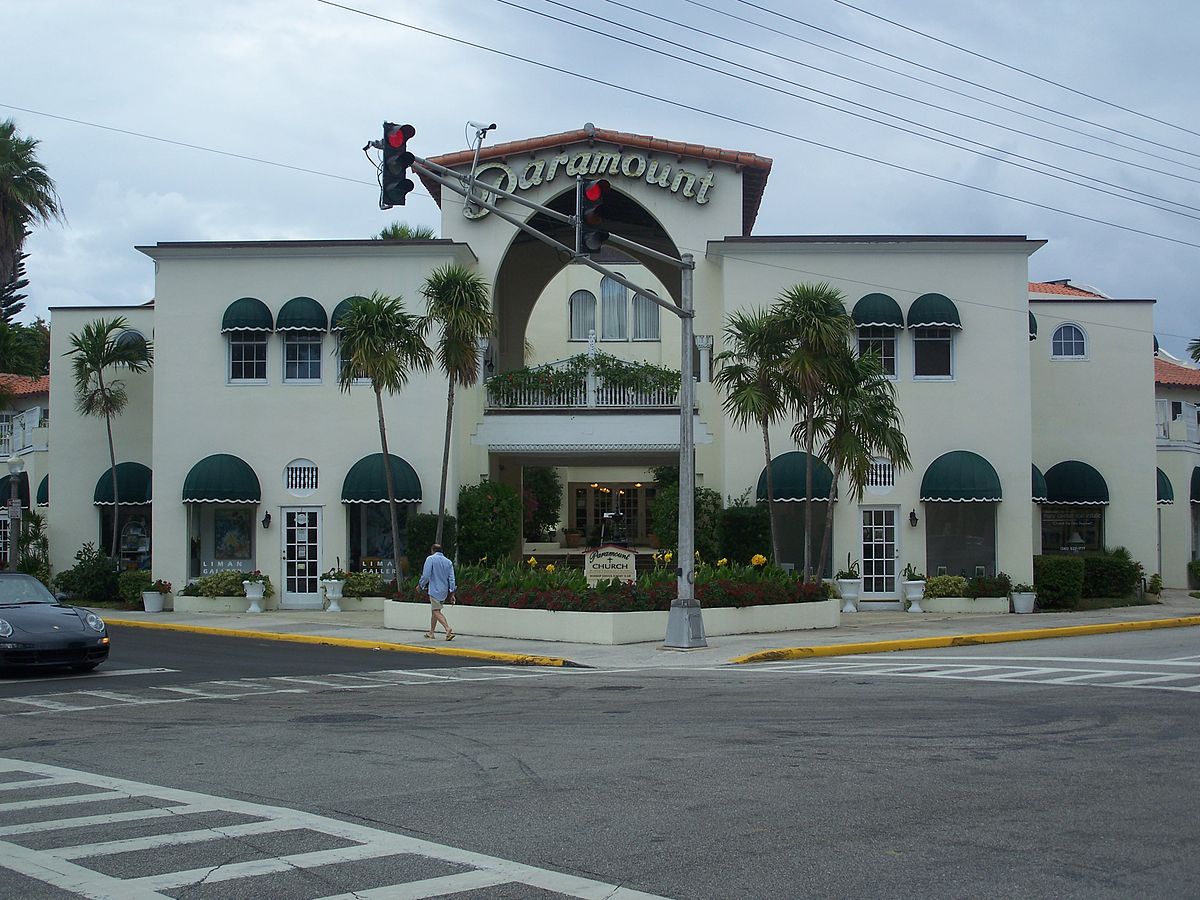
Ever since the landmark Paramount Decision in 1948, for reasons of violating anti-trust laws, movie studios (extending to distribution companies) are not permitted to own and operate chains of movie theatres. There are rare exceptions to this–Disney’s ownership of the historic El Capitan theatre across from TCL’s Grauman’s Chinese Theatre (the most famous movie palace in the world) being one of those. Since it’s not a chain and does run other company’s films, it is an exception to the ruling because it is a venue that anyone can rent, for the right price. Prior to the United States vs Paramount, it was customary for the studio to own and operate a chain of movie theatres that exclusively shows its movies. So, to see a Paramount movie, you’d have to go to a Paramount movie palace, for example. It was this gross lack of competition that violated anti-trust laws and led to the decision. With ticket sales slumping, large studios or distribution companies with deep pockets may find the best way to combat this is to own and operate theatres (that will have to be open to competition in order to remain within the confines of the law) that can be integrated into the branding, marketing, and promotion of a particular film.

A relationship between a studio and a movie theatre would allow for the production company or studio to forge a deeper relationship with the movie patron much in the same way Disney and Universal do with their theme parks. Not limited to Disney and Universal, Warner Pros, Paramount, Lionsgate, and DreamWorks have major theme park investments in Europe and Asia. The end result of owning a chain of movie theatres is the creation of an entire experience for the guest. For Netflix, this could mean premiering its successful series like Stranger Things, Black Mirror, and others at a movie theatre before it lands on the streaming service. Just like a homeowner can retrofit, remodel, and customize his or her home to benefit him, her, or the family, a movie studio could best custom design a completely immersive experience for the movie patron that creates an emotional connection that is sure to last and earn repeat business.

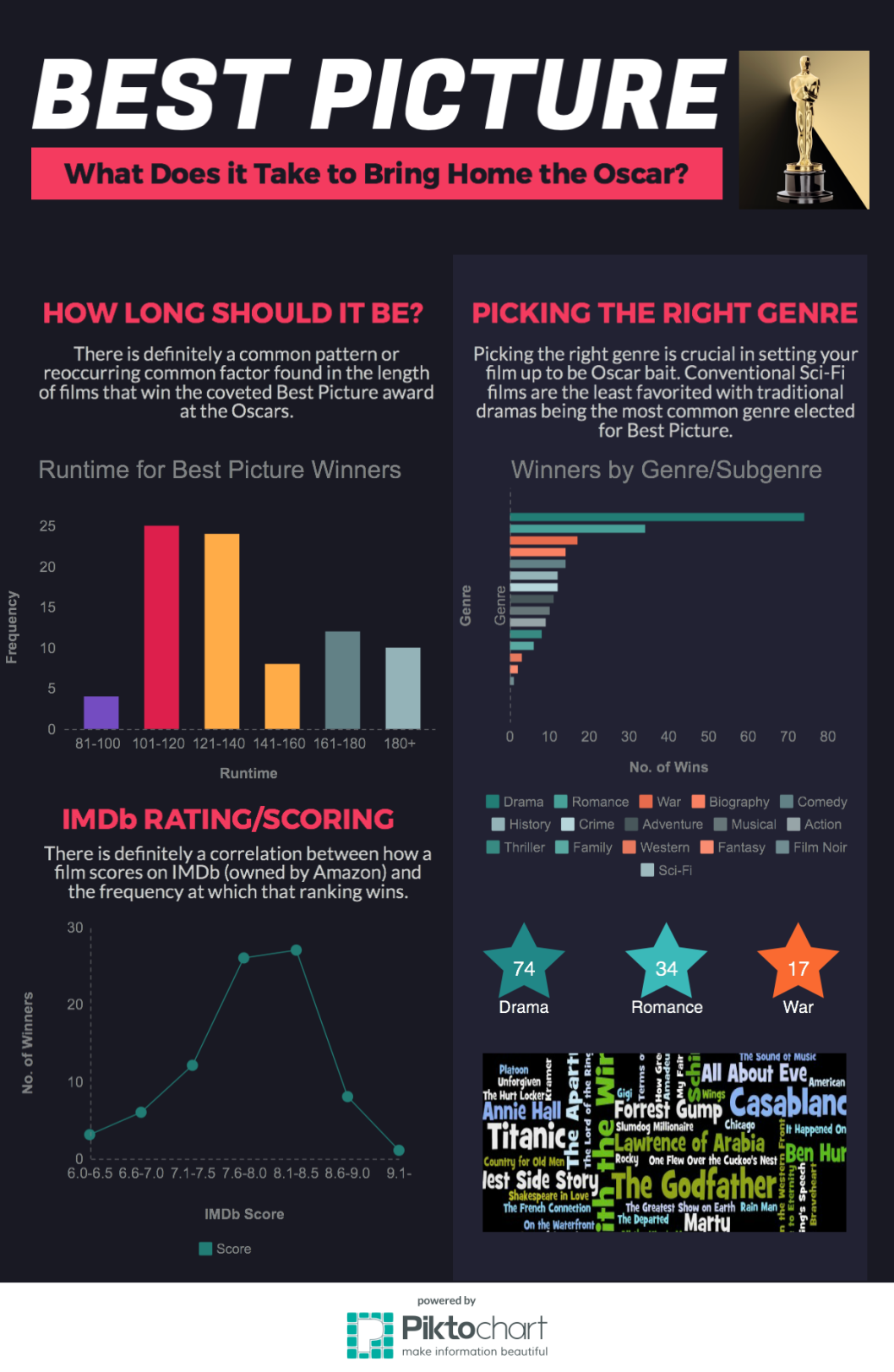
Aside from the cost and concept of creating a comprehensive experience for the movie patron, the standardization of start times and run dates should also be considered. Now, you can watch your Netflix, Hulu, and Amazon Prime programming whenever and wherever you so desire. No boundaries. After all, Netflix tore down those movie theatre walls and TV schedules. Is there a great enough interest from the typical consumer to buy tickets on a specific day at a predetermined time to watch Netflix original programming? Further research needs to be conducted in order to assess whether or not there is sufficient interest. Anecdotally, one can easily assess that Netflix’ original TV series are more popular than the original movies. But what does the empirical data show? According to a report at the Exstreamist, “the average rating on a Netflix original movie is markedly lower than what one finds with Hollywood movies.” Using IMDb ratings (note: Amazon owns IMDb), Toledo looked at a number of 2017 movie and TV releases across a variety of genres. Suffice it to say, Netflix consistently hits homers when it comes to original TV programming–their record is rather impressive at 8.1; however, their movies are ranked considerably lower than the TV series at 5.9. It would appear that there is sufficient interest in Netflix’ original series but not strong enough interest in the movies. And movies would be far easier to arrange into a schedule at a theatre than a TV series. Films win Oscars, series win Emmys. So, Netflix would have to rely upon its original movies in the theatre. Therefore, the quality has to increase significantly. Read my article on Best Picture criteria HERE.

Certainly, Netflix has proven that it can revolutionize media consumption and blaze new trails. Therefore, if Netflix makes the decision to acquire a chain of movie theatres, then reason stands that it must have a solid plan for success. While the data may suggest that this could be a risky venture for the entertainment giant, perhaps interested parties like Netflix and Amazon Studios know how to reinvent the multiplex experience to emerge as leaders of content creation and distribution. Who will the new owner of Landmark Cinemas be in the future? Only time will tell. But, it looks as if a Netflix or Amazon owned movie theatre chain may be in the near future.

#CorksAndCoasters: Full Review of Busch Gardens Tampa Food and Wine Festival

Delightful, delectable, delicious! It’s back, folks! And bigger, better than ever! Though only in its third year, Busch Gardens Tampa’s annual Food and Wine Festival demonstrates measurable growth in excellence in food, wine, brews, and entertainment. The number of kiosks and food and drink selection has increased, and the variety is outstanding. With a wide variety of sweet and savory foods as well as wine and beers from dry to sweet, you are sure to find multiple somethings to satisfy even the most discerning of pallets.

I highly recommend purchasing the punchable lanyard because it will speed up your time at the register and increase the enjoyment level of your experience. There is a sampler lanyard for every budget. Annual Passholders get the 15-item lanyard for the same price as the 12, and that’s what yours truly did. Every item I had last night was delicious! Used 8 of my punches so I can go back another weekend and sample some more. That’s right! If you do not use all your sample punches in one visit, you can bring your lanyard back another time. Pace yourself. There is so much to eat and drink that you’ll not want to overdo it in order to truly allow the unique flavor of every dish and delicacy to dance upon your taste buds.

Strolling along the main festival road in Gwazi Field, you’ll catch enticing aromas from the numerous kiosks aligning the meandering pathway past topiaries and vendors. If you have a question about anything at Food and Wine, incredibly helpful team members are always close by, and are eagerly awaiting to help direct you or offer suggestions to create a memorable experience that will earn your returned business. The printed festival guide makes locating what you want to eat and drink easy! In addition to food and drink listings, there is other helpful entertainment and park information as well. This is my third year at the festival, and I still pick up the guide because I want to make sure that I don’t miss a single opportunity for enjoyment. Since the concert last night was for a group that I am unfamiliar with and was mostly in Spanish (great for Spanish-speaking guests!), I did not take the time to chillax with the live music; however, I headed over to my favorite show at Busch Gardens and favorite theme park show period: Turn It Up: the Hottest Show on Ice.

So, what Food and Wine items did I select last night? I’m happy to share those with you! The first item on my list, which was recommended to me by a helpful team member, was the wine filled chocolate truffles! You heard me right. Two of life’s greatest enjoyments all rolled up into one amazing treat. If you love chocolate and wine like I do, you will not want to pass this item up. Following the chocolate truffles with wine, I went for the beef brisket on a spiced corn waffle with Amerbock BBQ sauce and paired that with Trapiche Oak Cask Malbec. Couldn’t ask for a better pairing of food and wine. I suppose I could’ve had the chocolate truffled filled with wine for dessert, but I just had to get those as soon as I found out about them.

Returning again this year is the wildly popular bison bacon sliders on a toasted brioche bun! Typically served with sriracha ketchup and a pickle, I don’t care for sriracha nor pickles, so the chefs in the food cabin were happy to modify my slider. I paired the slider with an Alexander Valley Merlot. After I finished my delicious bison slider, I headed over to the Moroccan Palace for Turn It Up! After the show, I made my way back over to the festival grounds to tickle my taste buds some more. For my final meal at the festival (for this visit anyway), I selected the Grilled Cheesecake Sandwich with raspberry drizzle and Short Rib and Brie grilled cheese on house-made brioche. Paired this savory and sweet offering with the William Hill Estate pinot noir. Scrumptious! Every item I selected during my first visit to the festival was a sheer pleasure!

I am looking forward to my next visit–I have 7 more punches on my sampler lanyard, after all. But will likely make a few more visits during the nearly two-month run of #CorksAndCoasters. If you are looking for some tips to enhance your experience, the festival is generally less crowded on Sunday than Saturday; however, the concerts can affect this. With the park hours extended until 9pm during the festival, you will have plenty of time for Busch Gardens’ famous coasters.

“The Greatest Showman” movie musical review

Stunningly sensational! Ladies and gentlemen, children of all ages witness the larger than life movie musical adaptation of the life of P.T. Barnum directed by Michael Gracey. Dazzling! 20th Century Fox’s The Greatest Showman is an incredible work of motion picture and performing arts magic. Never before has the magic of the American circus been captured so brilliantly. As the movie stares, “a man’s station is truly limited only by his imagination.” From the costumes to the music and choreography, this film is sure to inspire anyone who has a dream and wants to realize it. The music will have you singing along, clapping, and even tapping your toes because the emotions will get you right to the core. Ordinarily, a movie like this could generate an interest in budding performing artists and showbusiness enthusiasts to “run away and join the circus,” but the big top had its swan song earlier this year. One can only speculate that had this film been released last year that the circus that still bears his name Ringling Bros. and Barnum & Bailey would still be touring today. Sadly, the circus had its final performance in May 2017. From the moment the movie opens, you will be completely immersed in the world of P.T. Barnum, a world unfamiliar with the concept of shows that were sheer spectacle, illusion, and simply designed to put smiles on faces. It’s entirely possible that this may prove to be the greatest films of 2017, and certainly one of the greatest movie musicals ever made.

Simply stated, The Greatest Showman is the film adaptation of the life of P.T. Barnum (Hugh Jackman) and depicts how he was inspired to essentially create the very concept of showbusiness. From his successes to his failures, this movie showcases the very beginning of the American circus, a tradition that would last for nearly 150 years. Filled with incredible original music, this original movie musical displays how one man’s vision became a worldwide sensation.

My first observation of this film is just how polarizing it seems to be. On one hand, some critics and websites praise it for being an absolute delight while others are rating it rotten. Unapologetically, I feel strongly that this film musical is nearly flawless. As to how accurately it reflects the life of P.T. Barnum, I cannot speak to that because I have not spent hours researching his life; however, from what I do know about him, the movie seems to have captured the inspiration and vision accurately, as well as his faults and pitfalls. While standard holiday issue biopics are nothing new, what with The Darkest Hour also on the horizon this season, Gracey turns what could have been just another biographical film about an American icon into a larger than life dazzling display of precise choreography, effective montages, and just plain fun! Ringing Bros. may have closed the bigtop for the last time, but the soul of P.T. Barnum lives on in what Feld Entertainment (parent company to Ringling Bros and Barnum & Bailey) does. Without P.T. Barnum, we may not have the concept of showbusiness as we know it today. Despite staying away from the usual meaty themes found in Christmastime biopics, this film packs a powerful punch and supports the need for entertainment and the arts in our lives.

The high degree of passion Jackman displays for his character cannot be overstated. Though Gracey shows his directing prowess in this film, it is the labor of love of Jackman who has been trying to get this movie musical made for the better part of a decade. While the cliche underdog story may not be anything new, the method through which the story is told is a must-see spectacle. What works best in the movie are the extravagant and intricately choreographed musical numbers. The infectious and inspirational songs of The Greatest Showman were written by La La Land Oscar winners Benj Pasek and Justin Paul while the brilliant choreography was staged by Ashley Wallen. Each and every musical number is powerful and truly adds to the fantastic experience of this film. Moreover, this movie musical typifies the height of the visual and performing arts in terms of the ability to create an imaginative atmosphere that generates sheer delight in the minds and eyes of the audience.

In many ways, this movie is an extension of the circus that many of us grew up watching as kids and even adults. The circus was never about deep, complex stories; it was about entertaining audiences of all ages and bringing smiles to faces. And this film will certainly bring joy into your life this holiday season! Such a perfect movie for the week leading into Christmas because it is fun for the whole family.

Don’t Pass GO, Don’t Collect Your Oscar

Corporate monopoly is the enemy of creativity and variety. The biggest news in entertainment this week was the talks between Disney and Fox to sell most of 21st Century Fox to The Walt Disney Company. Whether the talks are still going on behind closed doors or not presents a fascinating topic to discuss! This deal, which would be the biggest film/media deal ever, has far reaching effects upon the industry. Some may even argue that it has danger written all over it. If there wasn’t already a rigid oligopoly amongst the studio/distribution companies, there will be if this goes through. Should this go through without the government swooping in to save the day with monopoly claims in the vein of the historic Paramount Decision, the lion’s share of the cinematic marketplace would be controlled by Disney, TimeWarner (Warner Bros.), and Comcast (Universal), with Sony (Columbia) and Viacom (Paramount) bringing up the rear. Five. That’s right. Five companies would essentially determine the future of the industry, and control the majority of the motion pictures released in theaters and the content on cable television (and the streaming services that access it). It’s a mirror image of the 1940s. Instead of The Big Five and The Little Three, we have The BIG Three and the Little Two.

From the big screen to the small screen, you will notice the effects in the programs you watch. When one company controls the majority of any marketplace, it usually spells disaster for the consumer; furthermore, it means that there will be a primary gatekeeper in future artists getting his or her work out there. Not to mention that the programming on FX and other Fox (non-broadcast) subsidiaries could begin to gradually feel and look more like ABC programming. Could this put shows like The Simpsons and Family Guy on an endangered species list of sorts? Not right now. The deal, in off-and-on talks, would sell off 21st Century Fox (movie studios) and not Fox or Fox Sports (an acquisition of that sort would not be permitted because it WOULD be illegal). So, even if this buyout were to happen, The Walt Disney Company would still continue to be the brunt of many jokes on The Simpsons and Family Guy. A buyout could mean, however, that program options will seem less varied and just more of the same ABC-schlock that already pervades the bandwidth. The two companies that have the most TV programming are Fox and Disney, with Sony (CBS), Viacom (non-broadcast Nickelodeon), Comcast (NBC), and TimeWarner (CW) trailing in original programming. That being said, TimeWarner has done very well with The CW, and I hope it continues to churn out programs such as Vampire Diaries, Supernatural, Riverdale, etc.

Beyond the negative impacts on content, which, in all honestly, can be quite subjective in nature, are there legal or ethical implications here? Is there perhaps a past precedent that could be used in the courts to stop such a buyout (or sellout rather–Fox)? Let’s look at the most famous suit brought against the major motion picture studios: The Paramount Decision [(U.S. V. PARAMOUNT PICTURES, INC., 334 U.S. 131 (1948)]. Prior to the Paramount Decision, the motion picture industry was controlled by a few companies that were heavily vertically integrated. The Studio owned the facilities, production companies, staff (under long-term contracts), the films themselves, distribution channels, and the movie theaters. When the studios were growing so large that they began infringing upon the free marketplace, the US Government forced the (then) eight major/minor studio players to end the practice of block booking (meaning, films would now be sold on an individual basis), divest themselves of their respective theatre chains (sell them off), and modify the practice of long-term employee contracts (though, this would continue until the 1960s). This marked the beginning of the end of the Studio System, AKA Hollywood’s decentralization. There are many similarities between the situation in the late 1940s and today. In fact, it’s a little worse today because the industry is mostly controlled by five (instead of eight) companies, and these companies have heavy investments in streaming and television programming.

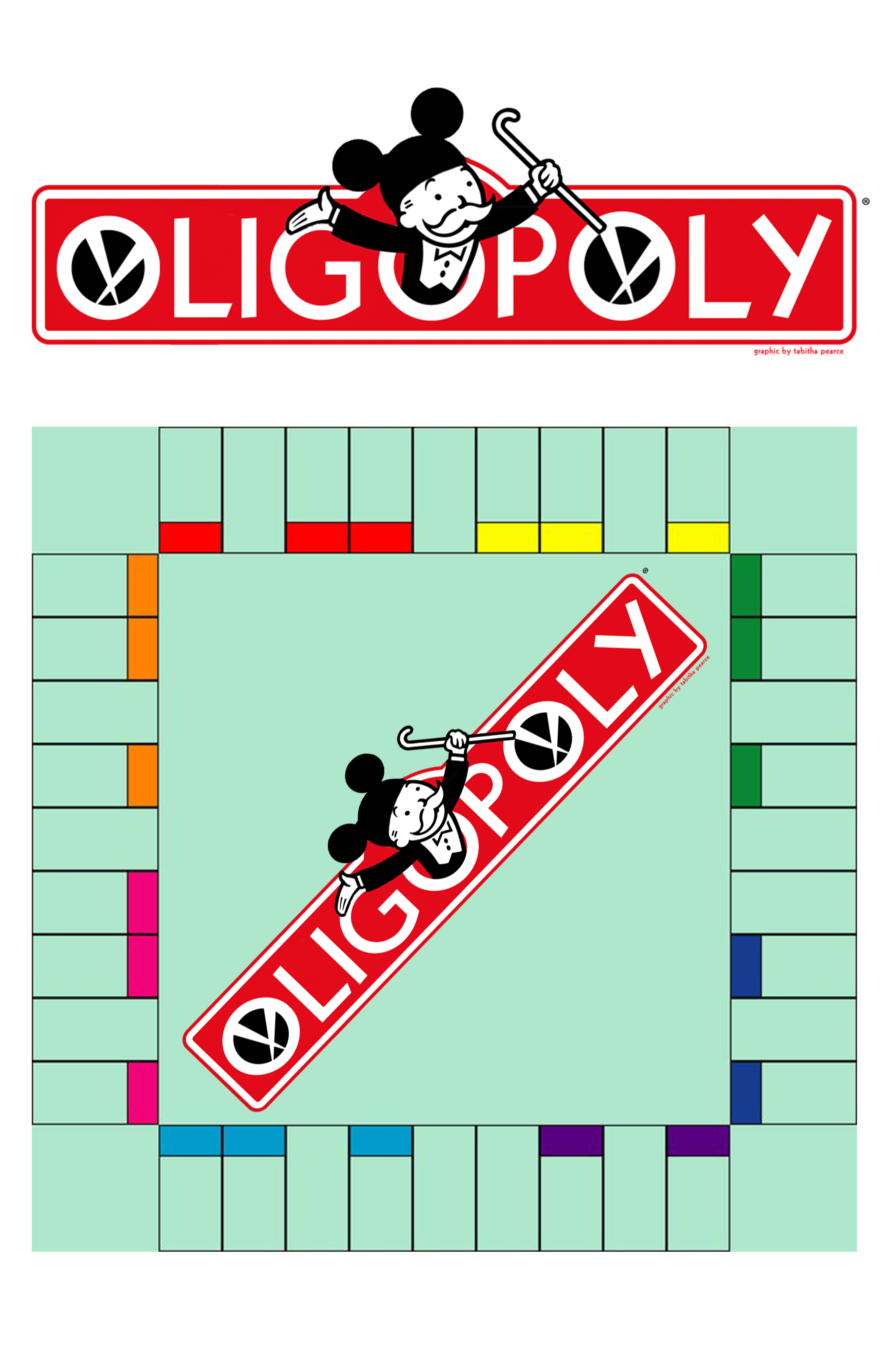
The problem with the current state of capitalism in the Unites States isn’t worries of monopolies but oligopolies (monopolistic practices between a few firms that essentially control a market). Certainly the state of the film industry already lends itself to an oligopoly because of the few companies; but the buyout of 21st Century Fox by The Disney Company would greatly increase this issue of a blatant oligopoly. If a monopolist (in many other industries) did what Disney is doing, neither the public nor the government would stand for it; but because it’s Disney, and because it’s the film industry, most of the general public is unaware of the negative consequences of such a buyout. Technically speaking, oligopolies are not illegal nor is monopolistic competition; however, this can be a slippery slope towards stifling creativity or making is increasingly difficult to break into any given industry as a newly emerging competitor. Incidentally, monopolistic competition causes the variety or level of differentiation of similar products (i.e. moves and TV shows) to become less heterogeneous and nearly come across as homogenous. For many, it will feel like there are only two primary companies controlling the majority of programming on TV and a few companies controlling a large portion of the movies that get released in movie theaters.

When a strong oligopoly exists within a specialized industry (for our purposes, media & entertainment), one of the side effects is a concept known as parallel exclusion. This concept can be described as the collective efforts of the few industry leaders who essentially act as the main gatekeepers to prevent or make it difficult for would-be newcomers to enter the arena. Parallel exclusion is nothing new, and has been in the news as recently as the last 2-3 decades within the airline and credit card industries. Throughout the eighties and nineties, Visa and MasterCard essentially blacklisted any bank that set out to do business with AmEx. Thankfully, the U.S. Justice Department stepped in when the manner in which the exclusionary rules were written crossed legal, fair trade boundaries. There were similar issues within the airline industry as well. When a few companies control the content or services in the marketplace, antitrust issues are raised.

Although we are not facing a technical monopoly with the possible acquisition of Fox by Disney, we are looking at an abuse of power that leads to anticompetitive conduct. If nothing else, the consumer should be worried about having fewer options for programming. Not that the number of programs or movies will shrink, but there will be little difference between what is released under the Disney banner and the Fox name (if it’s still even called that). In a deal like this, it’s the consumer who gets the short end of the stick. The consumer would be wise not to give Disney a pass just because there are a small group of big film studios instead of just one. While Marvel fans may be excited that the X-Men can join the MCU (Marvel Cinematic Universe), there is the possibility of a lack of competition between brands thus mitigating innovation and ingenuity. Competition is the mother of innovation just as necessity is the mother of invention.

Because the Walt Disney Company is primarily focussed on producing the biggest movies possible (after all, they made five of the 10 most successful films last year), the mid-budget dramas and comedies that used to thrive in Hollywood–you know, the ones that cause you to cry and laugh–would dwindle in number–there would be little room for them to make their respective ways into theaters in a predominantly Disney controlled industry. What we are essentially talking about here is a corporate cinematic monolith, the likes of which, has never been seen before.

Written by R.L. Terry

Graphic by Tabitha Pearce