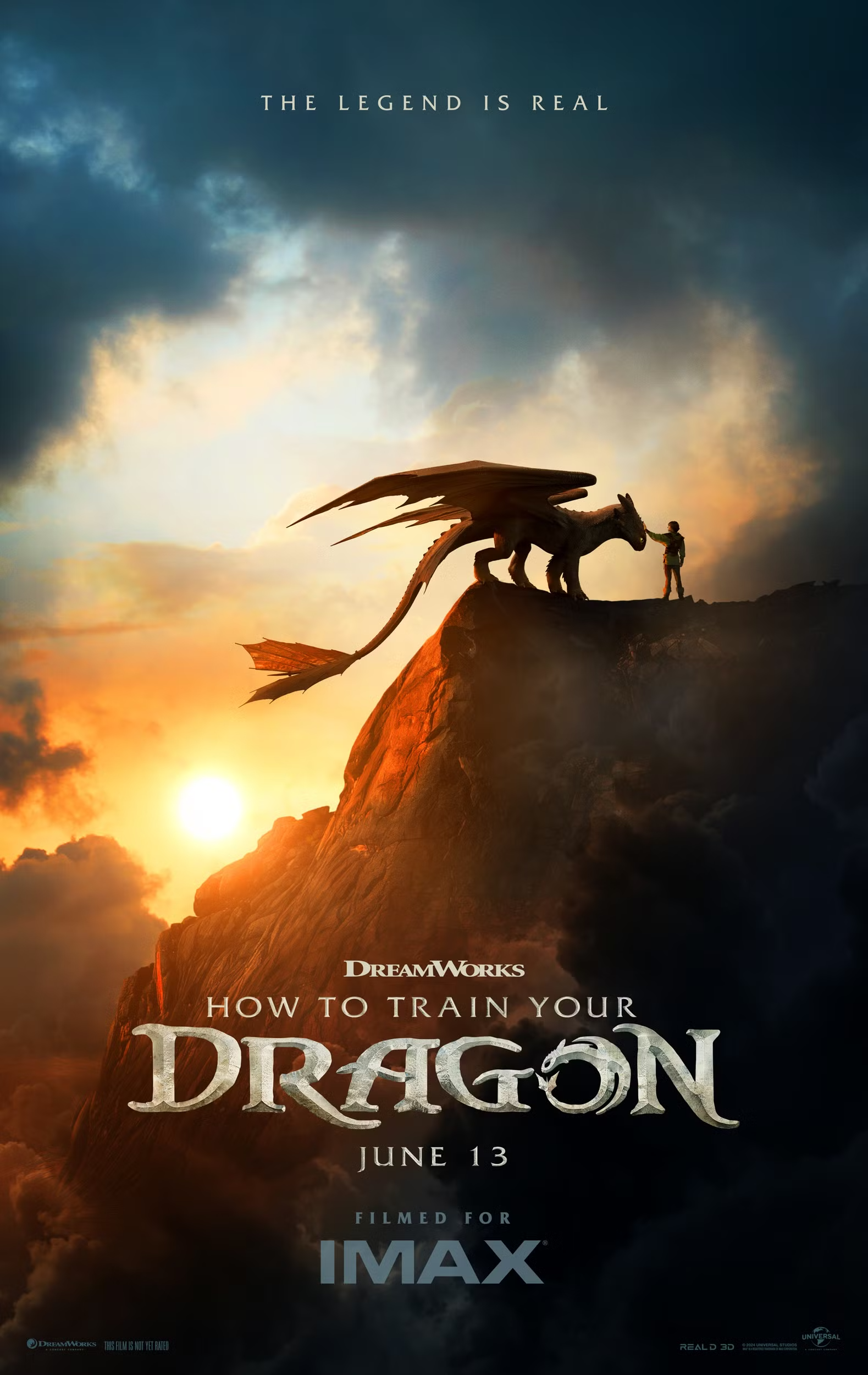
HOW TO TRAIN YOUR DRAGON (2025) movie review

Timeless. Universal and DreamWorks’ live-action remake of the Academy Award-nominated How to Train Your Dragon (2010) proves that some stories continue to resonate through the ages. Of course, “ages” in this context is only fifteen years. Returning to helm this project, HTTYD veteran writer-director Dean DeBlois crafts a fantasy world that’s incredibly tangible–even the dragons. His combination of puppetry, practical effects, and CGI give the dragons and the land of Berk a naturalism that feels connected to the world on screen. While this live-action remake plays it very close to the original, in terms of scenes and sequences, the heartfelt story will still capture your imagination and serve as a fantastic film for Father’s Day this weekend.

On the rugged isle of Berk, a Viking boy named Hiccup defies centuries of tradition by befriending a dragon named Toothless. However, when an ancient threat emerges that endangers both species, Hiccup’s friendship with Toothless becomes the key to forging a new future. Together, they must navigate the delicate path toward peace, soaring beyond the boundaries of their worlds and redefining what it means to be a hero and a leader.

While it would be easy to chalk 2025’s HTTYD up to an exercise in business theory, given that much of the movie is shot-for-shot of the original, it would be disservice to the audience experience for those that may be seeing this story on the big screen for the first time. Because anyone under the age of 18 (if not 21) either wasn’t yet born or doesn’t remember watching it in the cinema in 2010. And this is a BIG SCREEN movie. If fact, I’d argue that watching HTTYD in a premium format at your local cinema is the best way to return to Berk, particularly if you did see the original animated film in cinemas (as did I). I’ve read reviews that fill the spectrum from “lifeless and lazy” to “better than the original;” neither extreme reaction or interpretation is entirely accurate, in my opinion. Given that much of the story is the same, all the way down to shots, scenes, dialogue, and sequences, I’m choosing to review the film as if watching it for the first time, as many will be watching it for the first time on the big screen.

Since the story is largely unchanged from the original, I don’t want to spend a significant amount of time on it; however, there are themes that leapt off the screen this time even more than when I first saw the original. Perhaps its’ because a lot has happened in our country and around the world in the last fifteen years.

In true allegorical fashion, HTTYD crafts a parable of prejudice and reconciliation that resonates with our contemporary sociocultural landscape. Through its depiction of dragons as misunderstood creatures feared and vilified by Viking society, the film speaks directly to the way some cultures and communities are often dehumanized by dominant cultures. Initially framed as mindless beasts bent on destruction, dragons embody the constructed image of “the other”—not inherently evil, but made threatening through narratives rooted in ignorance and fear.

Through Hiccups’s hero journey, our own fears and prejudices are challenges. His character arc hinges on that pivotal moment with Toothless when he is about to kill him. Not only does Toothless challenge Hiccups’s prevailing ideology, but reframes his worldview of dragons and the people of Berk entirely. “I looked at him, and I saw myself,” he says, distilling the film’s core thesis: true empathy begins when we stop projecting monstrosity onto others and instead recognize shared sentience. In contrast, his father Chief Stoick represents the institutional stronghold of fear and tradition. His transformation from dragon-slayer to dragon-defender is a microcosm of generational reckoning—a character arc that underscores how systemic prejudice can begin to unravel when met with vulnerability and truth.

Thematically, the film’s narrative expands beyond simplistic binaries of good and evil to explore the broader existential anxieties that provoke violence and division. In doing so, HTTYD transcends fantasy and enters the realm of social commentary. It reminds us that the instinct to “other” those who are different is not innate but learned—and, crucially, unlearnable. At a time marked by cultural polarization and survivalist rhetoric, the film dares to imagine a world in which peace is possible—but only if we choose empathy over fear.

Writer-director DeBlois crafts a Berk that feels like a real place, perhaps a place from our own world history. Instead of layer upon layer and scene upon scene of blue and green screens, DeBlois opts to eschew the sterile sterility of digital backlots in exchange for a fantastical world grounded in the tactile weight of reality. Rather than relying on synthetic blue-screen environments, the production team committed to crafting full-scale Viking arenas, longhouses, and coastal villages—sets brimming with texture, history, and atmospheric weight. Filmed on location in Northern Ireland, the practical environments not only enhance the visual authenticity but immerse the audience in a world that feels as lived-in as it is mythic. These tangible structures blend seamlessly with the region’s craggy terrain, lending the film a geographic and cultural specificity that deepens the narrative.

Likewise, the film’s flight sequences are not mere visual spectacle—they are balletic displays of aerodynamic realism. Thanks to a synergy between practical rigging and digital enhancement, the VFX team captures the exhilarating sweep and dive of dragon flight with a physicality rarely achieved in CGI-heavy cinema. Specialized camera systems were deployed to trace every soar and swoop with kinetic precision, preserving the wonder and danger of airborne movement. The result is not just believable—it’s breathtaking. This nuanced and layered approach to the fusion of practical and CGI effects was also in part what made the dragons feel incredibly real. Dragon puppets were used to inform the CGI timing, lighting, and choreography. Later, CG animators seamlessly replaced the physical heads with digital models, preserving actors’ eye-lines and interactions. Mason Thames is rarely acting opposite a tennis ball on a boom pole; his Hiccup is interacting with a dragon set piece that is fully articulate.

Whether the original breathtaking animated film is one that you’ve seen a dozen times or you’ve never seen the original, the live-action remake of the critically acclaimed HTTYD is worth your time at the cinema. Furthermore, this film would make for an outstanding diversion for dads and their kids over this Father’s Day weekend, regardless of ages. Some stories, characters, and themes are timeless, and can still speak to us years later.
Ryan is the general manager for 90.7 WKGC Public Media in Panama City and host of the public radio show ReelTalk “where you can join the cinematic conversations frame by frame each week.” Additionally, he is the author of the upcoming film studies book titled Monsters, Madness, and Mayhem: Why People Love Horror. After teaching film studies for over eight years at the University of Tampa, he transitioned from the classroom to public media. He is a member of the Critics Association of Central Florida and Indie Film Critics of America. If you like this article, check out the others and FOLLOW this blog! Follow him on Twitter: RLTerry1 and LetterBoxd: RLTerry
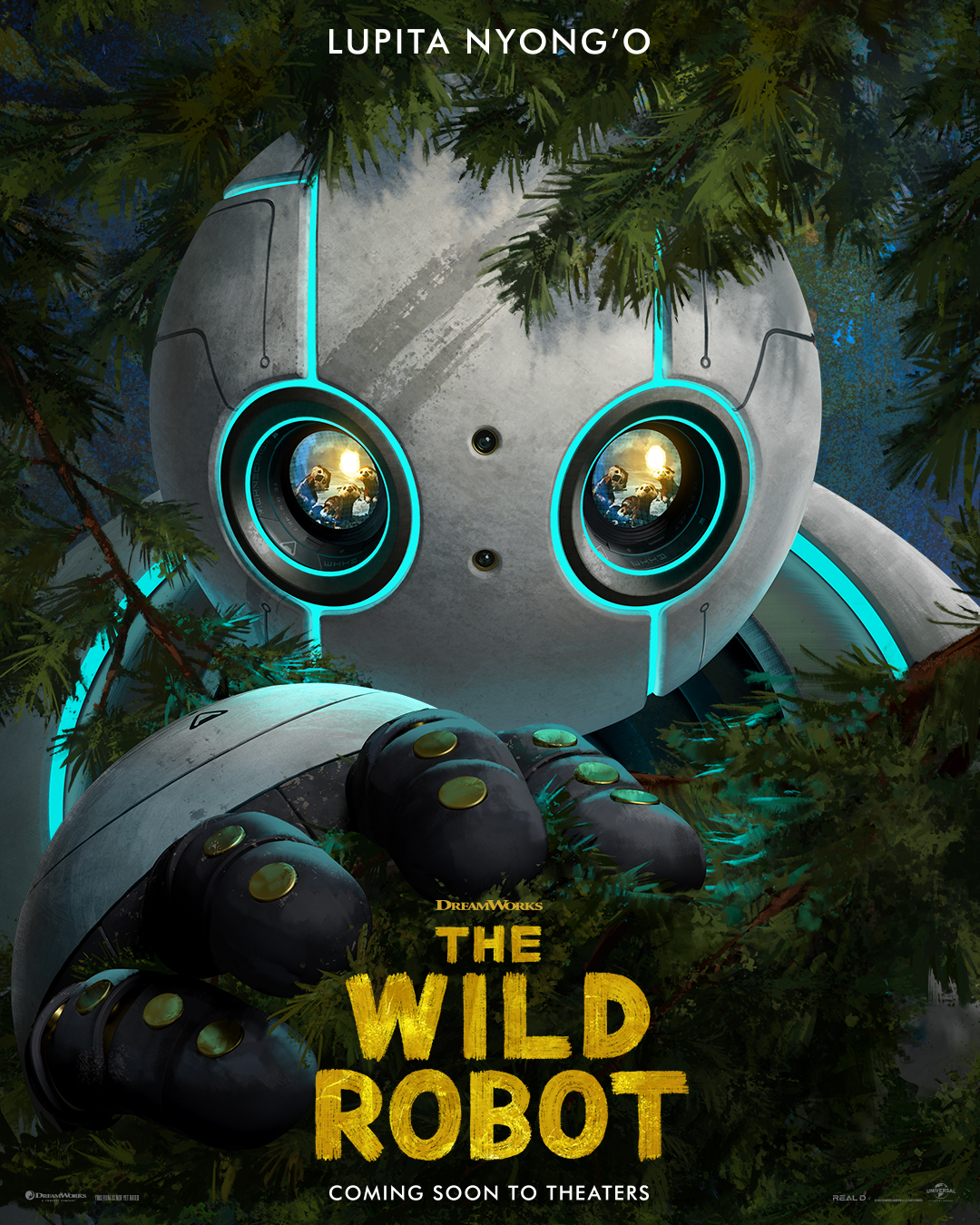
THE WILD ROBOT movie review

Wildly heartfelt and uplifting! Universal and DreamWorks Animation’s The Wild Robot is among the best films of the year, period. Director Chris Sanders delivers a truly compelling and smartly written fish-out-of-water story about found family and being more than the sum of our parts–or programming. Easily on track to make my Top 10 Films of the Year list. Based on the book by the same name, DreamWorks Animation hits a homerun with this outstanding animated motion picture that will challenge you, thrill you, and tug at your heartstrings.

Shipwrecked on a deserted island, a robot named Roz must learn to adapt to its new surroundings. Building relationships with the native animals, Roz soon develops a parental bond with an orphaned gosling.

I’ll admit it up front, I cried. It really is such a beautiful animated motion picture that likely rocketed its way into my best films of the year list. Not since The Iron Giant have we had an animated motion picture with such gravitas. While I still feel that 2016’s Kubo and the Two Strings remains the best animated motion picture in the last ten years, I must say that The Wild Robot is solidly my No.2 pick. The strength of this picture is in the compelling story, relatable characters, and efficient plotting (sometimes a little too efficient). My only real negative criticism of the film is the pacing in the first act; while refreshingly lean, some scenes and sequences needed a little more room to develop and breathe. Even though The Wild Robot shares little in common with The Iron Giant‘s plot, it shares Iron Giant‘s heart and soul.

Fish-out-of-water premises have been a staple of cinema for nearly as long as films have been around. So the real challenge for writers and directors is to find original ways of expressing these foundational ideas. And what is precisely what we have in this film. There are actually three fish-out-of-water narratives within the film, and the film is better for them because each of these layers adds personal and interpersonal complexities to character relationships with the world in which they finds themselves and amongst each other. The films provides thoughtful commentary on what it is like to both be in a world that is unfamiliar and have unfamiliar tasks thrust upon oneself.

Furthermore, this film depicts the importance of adapting to one’s environment and overcoming obstacles, even those that are innate. I also appreciate what the film has to say about self-determination and taking personal responsibility for one’s circumstances and one’s mistakes. Fish-out-of-water stories are some of the most relatable, because we have all been placed in an unfamiliar environment, and know how that can feel. It’s a terrifying prospect to be dropped into a world that is alien to us, and the film does not shy away from the challenges, joys, and even the tragedies that can befall us.

Another narrative area of strength in the film is challenging us not to quickly pass judgment on that fish-out-of-water when they find themselves in your world. Or to presume that one’s past behavior is always an indication of how that person (or animal, as it were) will always behave. Yes, past behavior can indicate predisposition to moral and ethical aberrations, but that does not mean that redemption is not to be considered a possibility. I love how the film paints a portrait that we can change, if we have the will and support to do so. It rarely comes naturally, we have to work at it. We have to work at overcoming natural behaviors that may not be constructive and ultimately selfish. We are more than the sum of our parts–or our programming.

To a lesser extent, there is come social commentary on the relationships between the work place and the employee and even cultures that decry the individual in exchange for group think. Without getting into spoilers, the film depicts imagery of how some, if not many, companies treat and feel about their employees. How a company does not view the employee as an individual; rather, as a means to an end, just another cog in the machine that will be disciplined for any individuality or unique expression. But not before the company assimilates the knowledge of that employee, particularly those that do think outside the box. Difference will not be tolerated. That is the feeling of many companies and even governmental systems. The film challenges these ideas by showing cooperation between diverse groups, even groups that are naturally enemies. Furthermore, the film demonstrates how differences can be overcome or even set to the side in order to serve, protect, and survive.

Lastly I’d be remiss not to touch on the global idea of the film, which is the concept of found family. Throughout the entire film there are images of the important role one’s found family fills in life. Found family is that family-like unit that may not be blood-related, but very much fill the same role as a more traditional family in one’s life. It’s a group of friends that have a relationship that goes beyond typical friendship, and includes family-like dynamics. Sometimes these are formed because someone feels rejected or neglected by their real family, and find family with a close group of friends. Other times, and I’d venture say most of the time, a found family can be formed out of the significant distance between you and your family of origin. So when in a new place because of school, work, or even military transfer, it’s important to form a strong bond with friends (or a friend’s family) to fill that important role even when separated from one’s family of origin. We are creatures that have an innate need for connection and companionship.

I cannot recommend The Wild Robot enough! Don’t miss seeing this incredible animated motion picture on the big screen.

Ryan teaches Film Studies and Screenwriting at the University of Tampa and is a member of the Critics Association of Central Florida and Indie Film Critics of America. If you like this article, check out the others and FOLLOW this blog! Interested in Ryan making a guest appearance on your podcast or contributing to your website? Send him a DM on Twitter. If you’re ever in Tampa or Orlando, feel free to catch a movie with him.

Follow him on Twitter: RLTerry1 and LetterBoxd: RLTerry

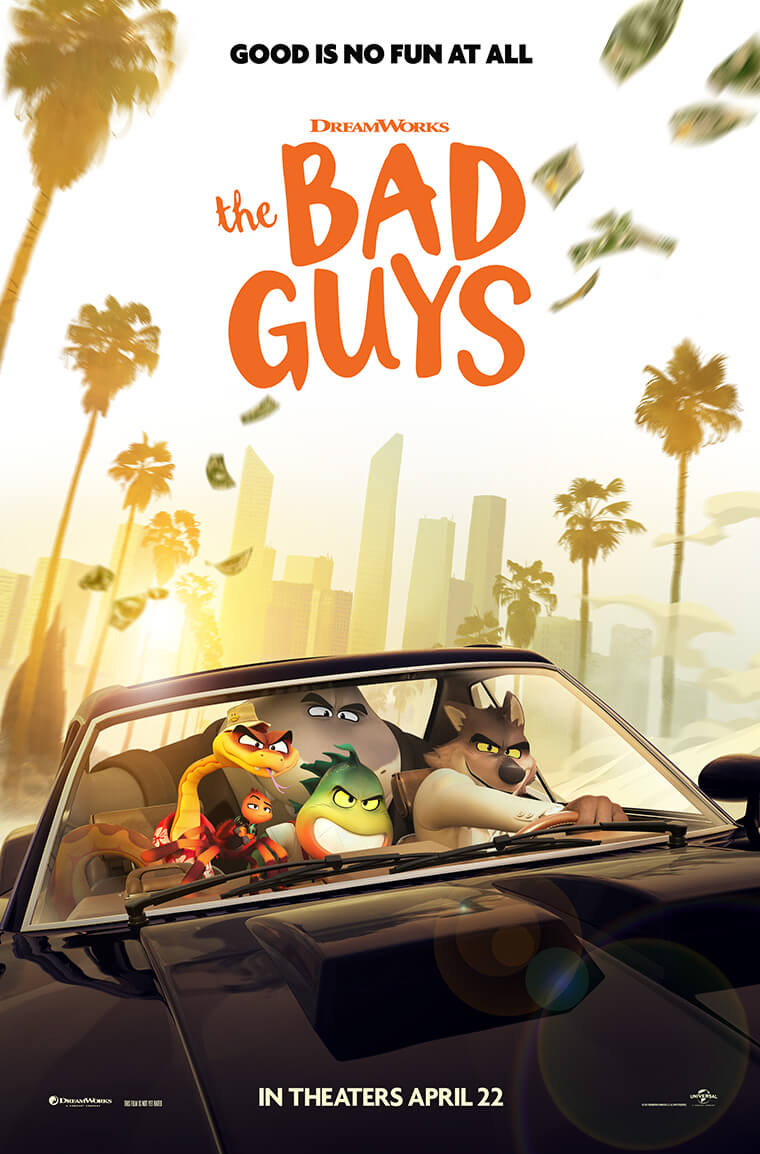
THE BAD GUYS animated film review

Highly entertaining with heart! Disney-Pixar, eat your heart out! Whether you’re typically interested in animated films or not, you don’t want to miss Universal-DreamWorks’ The Bad Guys opening this week only in cinemas. Prepare yourself for a refreshing, high octane Oceans 11 meets Zootopia heist comedy for the whole family. Honestly, this is the best animated film that I have seen in a long time. The Bad Guys delivers audiences a simple, lean plot with complex central characters that will completely delight you from beginning to end with its innate ability to find the humor in the smallest details. While the film borrows from Oceans 11 and Zootopia, it is crafted in an almost Tarantino for kids storytelling method. This atypical approach to animated film storytelling (popularized by Into the SpiderVerse), has opened the floodgates for subverting our expectations for styles we have long -since associated with animated films. Furthermore, films such as the remake of The Lion King have inspired CGI artists to go for more of a photorealistic aesthetic. What The Bad Guys does is paint a 2D world with some 3D enhancements, which demonstrates more of an affinity for stylization over realism–great! Too many animated motion pictures lean into realism therefore negating the magic of animation. In my opinion, if the animation is going to be so incredibly realistic-looking, then just make a live action picture. The advantage of the stylized approach is that there is very clearly a design to each and every frame. Perhaps it lacks the cinema stylo of hand-drawn frames, but it certainly delivers more style than anything released by Disney-Pixar in recent years. On a scale of Kubo and the Two Strings (the best animated film in the last decade) to The Lion King, I’d say The Bad Guys is much closer to a Kubo. With witty comedy and adrenaline-pumping action, you don’t want to miss seeing this film on the BIG SCREEN.

After a lifetime of legendary heists, notorious criminals Mr. Wolf, Mr. Snake, Mr. Piranha, Mr. Shark and Ms. Tarantula are finally caught. To avoid a prison sentence, the animal outlaws must pull off their most challenging con yet — becoming model citizens. Under the tutelage of their mentor, Professor Marmalade, the dubious gang sets out to fool the world that they’re turning good.

What a(n animated) picture. Seriously. It’s been a long time since I enjoyed an animated motion picture this much. Over the last decade, only Kubo, How to Train Your Dragon 2, and Onward stand out to me. As I was exiting the auditorium following the screening, I talked with the general audience members that were in attendance, and nearly every one with whom I spoke said variations of the same things: entertaining, fun, and thrilling. During the screening, I heard many kids (and their families) laughing along with the characters. Although it is clearly aimed at kids, there are comedic moments for adults too. What we have here is a good story! Remembering my Sunset Boulevard

Joe Gillis: “-Ah…one of those message kids. Just a story won’t do…”

Betty Schaefer: “I just think a picture should say a little something.”

I reference this exchange between the struggling screenwriter and the aspiring reader turned screenwriter because too many animated films (mostly from Disney/Pixar) suffocate their stories under oppressive, cynical social commentary; so much so, that the story suffers because the focus is on the sermon instead of the characters. You will find the absence of overt social commentary in The Bad Guys refreshing! Does that mean there is no depth or thoughtful elements? No. But the message of the film is that we are all capable of a redemption arc. Granted, it’s not as strong a redemption message as we have in A Christmas Carol, but for a kid’s movie, they will undoubtedly pickup on it.

The screenplay is well structured and paced. While the bones of the screenplay are rather paint by numbers, the the superstructure is creative and stylish! Furthermore, in a film that looks to be one that will throw a joke a minute at you, it holds back the cards, delivering the humorous dialogue and site gags in a method that allows them room to breath. The laughs are setup, reinforced, then twisted thoughtfully.

All around, this is a solid animated feature that should be on your watch list while it’s in cinemas.

Ryan teaches Film Studies and Digital Citizenship at the University of Tampa. If you like this article, check out the others and FOLLOW this blog! Interested in Ryan making a guest appearance on your podcast or contributing to your website? Send him a DM on Twitter or email him at RLTerry1@gmail.com! If you’re ever in Tampa or Orlando, feel free to catch a movie with him.

Follow him on Twitter: RLTerry1

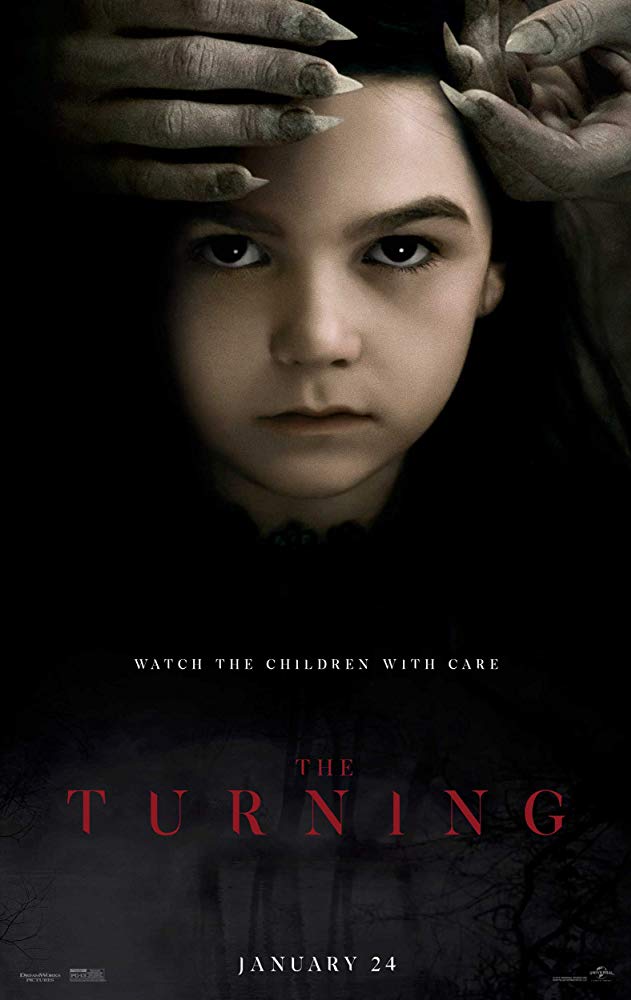
“The Turning” Horror Movie Mini Review

Turn around, every now and then I get a little discouraged at the January movies. Seriously tho, watch something else. My friend Derek had the perfect analogy for this quintessential January release horror movie. “The Turning is like having two gorgeous puzzles–only you have half of each puzzle–then you force all the pieces together.” Quite the apt analogy for this newest big screen adaptation of the Henry James novel The Turn of the Screw. With names like Universal, Amblin, and Dreamworks behind it, I haven’t a clue where things took a turn for the abysmal in the process from page to set to screen. Either the screenplay is to blame or–for whatever reason–the film couldn’t be finished properly in time for the release. That’s right, there is practically no ending. I mean, there is, but it’s so abrupt and confusing that it’s as if the film threw an ending on there because time or money ran out. Prior to the uncomfortably ambiguous ending, the movie had so much going for it. However, all the elements that were working so well never went anywhere. If I can point to a couple elements that were outstanding, it’s the brilliantly unsettling, creepy, ominous setting and production design. The gothic mansion and grounds are very much characters in and of themselves. Combining these two elements gave the film an excellent atmosphere for Henry James’ story. And the acting wasn’t bad either. No real stand out moments, but fairly solid performances all the way around. Perhaps what this movie is most guilty of (aside from the non-ending) is disregarding any rules of horror (or even logic) that it establishes for itself. So much happened out of sheer convenience, with no real consistent consequences. The conflicts and devices that were introduced were interesting, and I was looking forward to seeing how they were going to influence the action and characters. Unfortunately, nothing that was “foreshadowed,” alluded to, setup, or dangled as plot bait was ever revisited. Much like with Underwater, this movie also feels more like a series of plot points than it does a–even poorly developed–screenplay. While the trailers gave the impression that this was going to be an arthouse horror film, one with lots of ominous nuance and intrigue, it is simply just another January horror movie that was released here to die or serve as a tax write-off. One last item of mention: once you see a photo of Quint, you will be mind-blown as to how or why any parent would even think that this guy would be safe around kids–seriously–he is creepy alive. Still, how Universal, Dreamworks, and Amblin allowed this to happen, baffles me.

Ryan teaches screenwriting at the University of Tampa. If you like this article, check out the others and FOLLOW this blog! Interested in Ryan making a guest appearance on your podcast or contributing to your website? Send him a DM on Twitter or email him at RLTerry1@gmail.com! You can catch Ryan most weeks at Studio Movie Grill Tampa, so if you’re in the area, feel free to catch a movie with him!

Follow him!

Twitter: RLTerry1

Instagram: RL_Terry

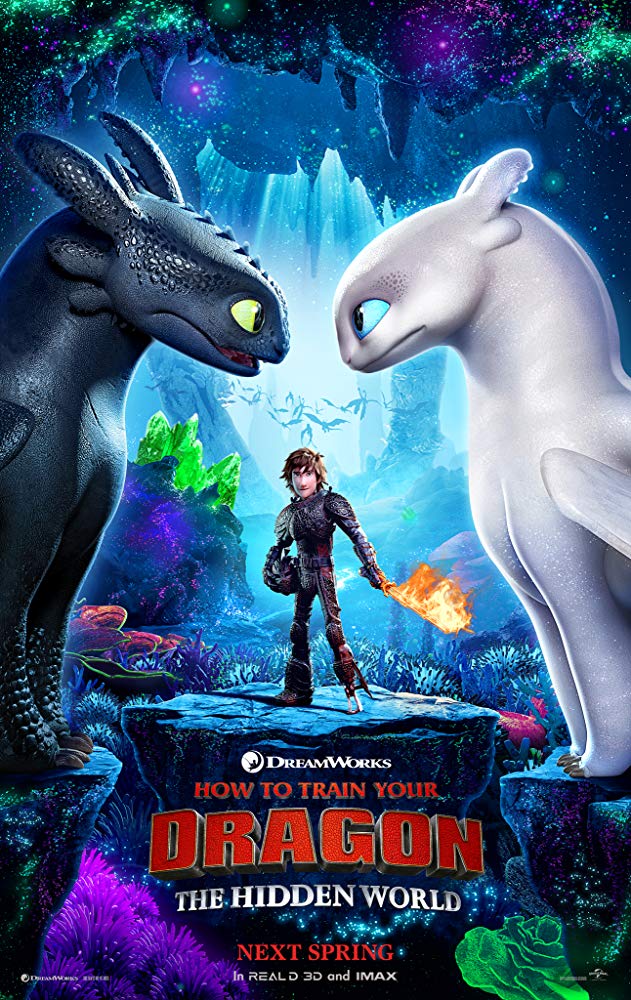
“How to Train Your Dragon: the Hidden World” review

Outstanding finale for the beloved franchise! Bring your tissues because you’re going to need them. Return to the colorful, immersive world of dragons for the final chapter in the How to Train Your Dragon trilogy. We were first introduced to Hiccup and his cat-like dragon Toothless–probably the most adorable dragon ever–nearly a decade ago, and Hidden World delivers a beautiful story that takes full advantage of Dean DeBlois’ epic fantasy world of highflying adventure and heart. Unlike franchises in the cinema or on television that depict the key characters the same age in perpetuity, HTTYD allows its characters to mature and grow in complexity. This growth enables the audience to identify and empathize with the animal and human characters thus giving the film incredible emotional weight. Not only do the characters demonstrate personal growth over the nine years we’ve been enjoy Berk and all its wonders, they exhibit tangible evidence of interpersonal societal growth as this Viking kingdom learns to love and cherish creatures they once feared. Toothless takes center stage as he too, along with our friends from Berk, must grow up. Both Toothless and Hiccup experience the powerful dynamic of love as it greatly affects one’s actions. While many were wondering if this trilogy could pull off a Toy Story 3, after the immense success of the first two, especially HTTYD2, suffice it to say, DreamWorks Animation delivers a superlative animated motion picture complete with all the feels.

IMDb Summary: What began as an unlikely friendship between an adolescent Viking and a fearsome Night Fury dragon has become an epic adventure spanning their lives. Welcome to the most astonishing chapter of one of the most beloved animated franchises in film history. Now chief and ruler of Berk alongside Astrid, Hiccup has created a gloriously chaotic dragon utopia. When the sudden appearance of female Light Fury coincides with the darkest threat their village has ever faced, Hiccup and Toothless must leave the only home they’ve known and journey to a hidden world thought only to exist in myth. As their true destinies are revealed, dragon and rider will fight together—to the very ends of the Earth—to protect everything they’ve grown to treasure.

As immersive and excellent as the film’s visuals are, the characters are even more complex and deep. In fact, the film depicts one of the best friendships of any film ever. The key characters, and even the supporting cast, demonstrate love, loss, maturity, growth, and more. Although this is the final installment in the franchise, the characters are still treated with finesse and given room to grow within the movie and to complete the arcs for the trilogy. Often, Toothless and Hiccup parallel one another; they possess traits that complement one another. This added complexity to their respective characters gives them so much depth. Making an emotional connection with and evoking empathy from the audience is such an important element of the character development process. Hidden World builds upon the previous stories of finding one’s destiny in a friendship with the most unlikely of creatures (chapter 1), external and internal complexities with the new friendship and changing familial dynamics (chapter 2), and coming of age by learning from the past and letting go of that which hinders freedom (chapter 3 Hidden World).

More than a commentary on independence or freedom, this film chooses to depict complex emotions such as love between friends, family, and romantic love. And these subjects are not just talked about–exposition would be too easy and lazy–there are many moments that are visually driven, thus increasing the level of emotional impact. One of my favorite moments that deals with both the letting go of the past in order to bloom and grow is the courtship dance scene between Toothless and the Light Fury. Love is not without sacrifice. And in the exploration of relationships and independence, we are reminded of the emotional cost associated with these concepts. Paralleling this exploration of relationships between lovers, family, and friends is the journey of rising to the call and becoming a leader of one’s people. It’s the ideal journey for this final installment because it completes the hero’s journey for Hiccup and Toothless. In the first movie, both Hiccup and Toothless are outcasts, nerdy, and childlike. In the secondary film, they go through both physical and emotional growth learning the complexities of life. And the tertiary film Hidden World builds upon the previous two films by us watching this teen and young dragon grow up to realize their respective places in the world to become the leaders of their people (or dragons). We go from kid to king. So simple, but so perfect.

It’s easy to get swept up into this epic fantasy because we spend so much time with these characters. Not only do we spend movie time with the key characters, but we spend some intimate time with them as well. We see these characters at their best and worst. The individual stories of the three films and the overarching story that exemplifies the three-act structure are not afraid to bloody your characters. As real like people and dragons are not perfect, neither are the characters in the How to Train Your Dragon trilogy. We are drawn to their flaws, the majority of which are in the second chapter but we continue this high level of humanity in the third film. Change is a big part of life, and the theme of change is witnessed in the individual lives plus in the Berkian and Dragonian communities. Utopia is not without its negative impacts. One of those for Berk is overcrowding with the side effects of being more of a target to those who are still hunting dragons. Hiccup must decide whether Berk is a place or a state of mind. But he must also consider the safety and future of the dragons. More complexity. There is no one solution that will benefit everyone. So sacrifices must be made. This motif of chance incorporates the overall theme of love and sacrifice.

The visuals are breathtaking! While some animated trilogies suffer the longer the franchise goes on, the quality of the animation in this film is outstanding! In many ways, it out-Pixars Pixar. Like with other films, if this one had a Pixar logo on it instead of DreamWorks, then more people would be singing its praises. With more dragons, there was certainly room to cut corners and for the quality of the visuals to suffer. Not true with this film! The attention to detail is superb! As beautiful as the dragon flight scenes were in the first and second movies, Hidden World delivers an even more epic flight scene in this film. Wish I had seen this movie in IMAX. During the flight sequence into the Hidden World of dragons, I was reminded of Navi River Journey and Flight of Passage in Pandora: the World of Avatar at Disney’s Animal Kingdom. Never felt like a ripoff, but certainly feels inspired by the attraction. We encounter three worlds in this film: Berk, the new island, and the hidden world of dragons. Each of these worlds is designed completely differently from the rest. And the commitment to the art of animated world creation reaches incredible heights! Every scene, every moment, every setting is completely immersive.

Ryan teaches screenwriting at the University of Tampa. If you like this article, check out the others and FOLLOW this blog! Interested in Ryan making a guest appearance on your podcast or contributing to your website? Send him a DM on Twitter!

Follow him!

Twitter: RLTerry1

Instagram: RL_Terry