A Short History of How the Cinema Shaped Theme Parks (part 2)

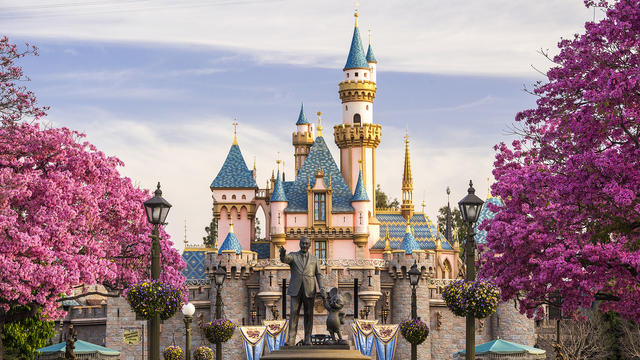
dlr_castleFollowing the ending of the Studio System, the now bankrupt motion picture studios were purchased by various conglomerates looking for new sources of income. One of the sources of income that studios began investing into was the concept of movie-based theme parks. With the opening of Walter Elias Disney’s Disneyland in 1955, Universal Studios made the decision to incorporate stand-alone attractions into its newly reopened studio tour. Both Disneyland and the future Universal Studios used their intellectual property (IP) as the basis for creating theme park rides, shows, and attractions. Although movie studios as a “park” began with Laemmle, in its current incarnation, the convergence of cinema and theme park began with Disneyland, and later was perfected by Walt Disney World and Universal Studios Florida. Since the movie studios already had dedicated movie-going audiences, it made sense to capitalize on the idea of incorporating the concepts from the movies into attractions that the general public could enjoy and be immersed in. This action both acts as advertising for the respective studios and generates income for the movies and park improvements…

For the full article on the Thrillz website, click HERE!


“A Monster Calls” movie review

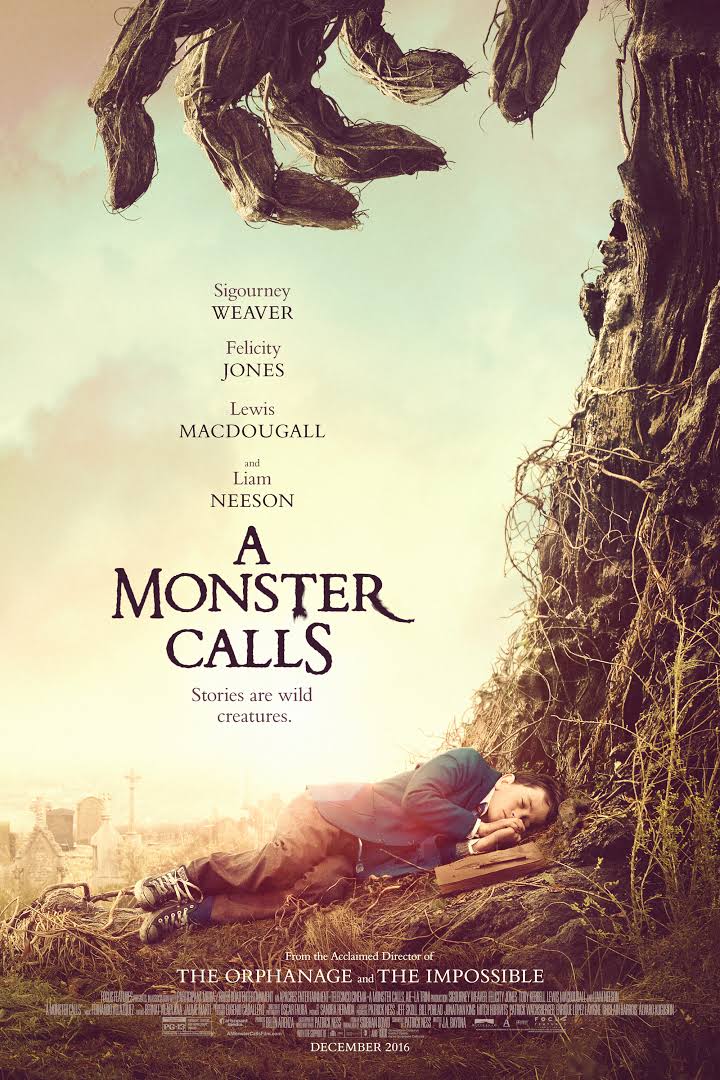
monstercallsA breathtakingly beautiful and dynamic film that typifies the art of visual storytelling in the gothic style. Focus Features’ A Monster Calls directed by J.A. Bayona is nothing short of a Terms of Endearment, in theme anyway, for a new generation. You are certain to laugh and cry your way through the film. Based upon the novel by the same name, written by Patrick Ness and illustrated by Jim Kay and conceptualized Siobhan Dowd, Bayona’s adaptation of the novel plays out to be a deep, rich story that will touch the hearts and minds of each and everyone in the audience. For anyone going through the stages of grief, this film will especially ring true and perhaps bring about comfort. Although the protagonist Connor, played by Lewis MacDougal, is twelve years old, this dark melodrama with a plot revolving around terminal illness is not typically something that will appeal to kids of Connor’s age. Despite the fantasy elements and the young protagonist, A Monster Calls is more suited for older teens and adults; however, by the same token, the movie isn’t entirely going to initially appeal to adults since the protagonist is quite young. I screened the movie last night in an auditorium filled with patrons of all ages and there was not one dry eye in the audience. Looking at the film from the outside and analyzing the plot and cast, it would appear that it may not attract droves of people because of the gothic fantasy nature, typically aimed at kids and young teens, with content and theming best suited for older audiences; however, the film truly transcends age barriers and stereotypes to touch those who are young or young at heart.

While most twelve year old boys are busy with school and learning to develop socially or even romantically, or just simply playing video games and having Stephen King type adventures, Connor (MacDougal) is dealing with far more than a kid should every have to deal with. Connor’s mother (Felicity Jones) is very ill and Connor is forced to grow in many ways kids should not quite quickly to take care of her. Not entirely going through this terminal illness alone, Connor has a grandmother (Sigourney Weaver) who looks in on him and his mother–a grandmother with whom he shares little in common. With Connor’s father settling down in Los Angeles, Connor feels very much alone while dealing with his mother’s illness. Expressing his emotions and thoughts through water color and sketch artwork, Connor uses his penchant for beautiful art as a form of therapy. Just when all seems lost, an unexpected ally in the form of a rather gothic tree-like monster (Liam Neeson) appears in his window one night. Apprehensive at first, Connor befriends the monster who guides him on a journey of courage, truth, and faith that combine in a powerful fusion of imagination and reality.

This is certainly a year for fantastic monsters and fantasy, isn’t it? However, A Monster Calls is definitely not your typical fantasy. It deals with deep emotions, dark themes, and material usually better suited for adults. Why then choose such a young protagonist? Perhaps the author Patrick Ness wanted to reach those kids who are going through tough times and who are dealing with situation that most kids won’t face until they are much older. Some kids are just forced to grow up more quickly than others. It’s important that cinema and literature not forget them because words on pages or moving pictures may be the only source of comfort, escape, or allegory. Director J.A. Bayona appears to have successfully translated the novel to screen–from what I know. Interesting that the movie opens with the narrator describing Connor as being too old to be a kid but to young to be an adult. By extension, that is precisely where this movie fits in. It’s too “old” to be a kid’s movie but too “young” to be an adult movie. And that’s okay. Growing up is hard, and when faced with a family member or close friend with a terminal illness, life is exponentially more difficult emotionally and even psychically. Unconventional as it may seem, this film is powerful and transcends the age spectrum to provide a strong emotional journey that audiences can appreciate and from which people may receive comfort. If for no other reason, having a kid starring in a melodrama brings audiences of all ages together–many who may be going through something similar as the child, parent, spouse, or lover of someone who is terminally ill. It’s okay to grieve and let go.

From the opening credits alone, I was confident that this was going to be a visually stunning movie. The water color animation and brushstrokes are reminiscent of the story of the three brothers in Harry Potter. Absolutely beautiful. Much in the same way Kubo and the Two Strings was an innovative animated film, A Monster Calls also contains unconventional and innovative methods of telling its story. Similar to how the animated story of the three brothers in Harry Potter was integrated into the diegesis of a live action movie, so it is with this film. The more I thought about the technical and emotional elements of A Monster Calls, it is clear that it’s truly a dynamic means of cinematic art. Dynamic in that there are three different types of storytelling methods used diegetically each highlighting a different form of art: (1) motion pictures (2) visual art (3) oral storytelling. It’s been said that the novel is an extension of oral storytelling, the play an extension of the novel, and motion pictures an extension of the play. At the root of all those methods of communicating through art is the very concept of storytelling. And A Monster Calls has the art of storytelling in spades. There are so many levels to the diegesis in this film; much like an onion or matryoshka doll, this film has a message of how to deal with grief at its core but there are many different routes to get to that central theme. Each layer teaches Connor and the audience something different and valuable. The cinematic storytelling elements of direction, cinematography, editing, and score are all equally beautiful.

Structurally, A Monster Calls is an intimate story reinforced and surrounded by artistic German expressionism calling attention to its own artifice. From the exterior shots to interior rooms, the various sets appear to be meticulously constructed on a stage and the wardrobe much like perfect costumes. The art tells the story effectively with little exposition required. Fernando Velazquez’ score is so incredibly moving that you may find yourself listening to the score as it too truly assist in the overarching means of telling this story. The design of the monster is brilliant and ominous all at the same time. Almost animatronic in nature, the tree plays out like there is a puppeteer on the inside articulating the movements. The monster feels just as much like an actor as the actors playing the human characters. Liam Neeson was a perfect choice to cast as the tree’s voice. His deep bass is comforting, warm, and wise-sounding. But just who is the tree (in the story)? Although we are never told whose spirit inhabits the tree that has seen thousands of years go by, there are a couple of hints as to who it might be if you pay close enough attention to subtleties in the film. At the end of the day, whether it’s the spirit of someone or the personified life of the tree itself, it is of little consequence to the movie. Still, its definitely fun and interesting to talk about as my friend and I did after the film.

If you enjoy movies such as The Iron GiantThe Giving Tree, or Terms of Endearment, then you will immensely enjoy this film. Presently in advanced screenings and limited releases, you may need to wait a few weeks before it is at a theatre near you. Although slated for a January wide-release, it may make its way through many markets before then. Originally set for an October release, it makes since to have held it until Oscar season since this is one of those films that could grab the attention of the academy. Definitely bring your tissues.

“Nocturnal Animals” movie review

nocturnalanimalsA meta-thriller that is equally shocking, seductive, bizarre, and beautiful all at the same time. Tom Ford’s adaptation of the best-selling novel Tony and Susan (1993) will either repulse or intrigue you from the opening credit sequence. There is definitely a pronounced shock value in this cinematic erotic mystery that includes an incredible amount of symbolism and theming just eager to be interpreted and dissected. Not typically found in mainstream cinema, the avant-garde seems to be the inspiration for many films this year. Nocturnal Animals is one of those films that is destined for discussion in a film or media studies graduate class. With solid acting, writing, and cinematography, you will be sucked into this twisted mystery within the world that the wealthy live in and the real world that most of us live in. You will likely find yourself thinking about what everything means, how it might apply to you, or simply appreciate non-linear storytelling. Although the film certainly rests upon the flashback as a chief storytelling method, Ford plays his cards right and creates a film in which all three stories are equally interesting. You may have heard it said–even by me–that some good movies are poor films; but, this is a case of a good film but a poor movie. That is usually the case with films that fall into the artistic or avant-garde stylistic way of conducting a visual story that contains a strong emotional impact.

Susan Morrow (Amy Adams) is an incredibly successful art gallery owner in Los Angeles. However, the marriage to her second husband is not nearly as successful. He’s often away on business trips to New York. One evening, Susan receives a manuscript written by her first husband (Jake Gyllenhaal)–a once struggling writer and graduate student turned college professor and now professional author. She finds the novel gripping and disturbing. As she continues to pour over the pages dripping with intrigue, she is impacted on a personal level as she uses the world of the novel as a mirror on her own life. Taking her to dark places in her past, Susan finds herself on a path of self-evaluation as she is presently going through emotional and financially hard times.

Cognitive cinema. Focus Features’ Nocturnal Animals is one of those films that requires higher thinking in order to truly appreciate the symbolism and theming. Not that it cannot be enjoyed as a beautifully dark and disturbing story, but there is so much that can be analyzed in this film. From the sequence of obese nude females dancing with sparklers, ringmaster hats, and cheerleader regalia to the reoccurring imagery of crosses and death–both in terms of emotional and physical–director Tom Ford provides audiences with a film that can only be characterized as a mystery that is meta-thriller meets hints of erotica. Even now, I am analyzing the symbolism and theming as I write this review. There are so many elements to talk about. And I think that is the best part about a movie like this. Don’t watch it alone. Not because it is too intense or scary but because you will want to talk to someone about the theming or emotional commentary. I find myself with a deep desire to analyze the film with someone, but none of my friends or colleagues have seen it yet. Visually driven. Even without the dialog, Ford’s Nocturnal Animals can be understood through the imagery in and of itself. Trace amounts of Tom Ford’s legacy as a high fashion designer can easily be seen in the design of this film. And I am not just talking about Adams’ stunning wardrobe and hair/makeup. In many ways, this film–as a whole–is symbolic of high fashion clothing. It can be read in some of the same ways fashion is read and appreciated. Because this is only the second feature length film from Ford, there are elements of the story that give the impression that his talent for visual storytelling is still in the development process as there are times that his method of directing is that of an observant student or scholar of cinema.

There are three distinct narrative threads in this film. (1) is the main story that we open up to at the interpretive and conceptual art exhibit establishing Susan, her gallery, her husband, and lavish lifestyle (2) is the narrative of her first husband Edward Sheffield (Gyllenhaal)’s novel Nocturnal Animals and (3) is the story of the rise and fall of the relationship between Susan and Edward. Juggling three plots is no easy task. Contrary to how it may appear, the narratives are not confusing or incoherent. Each plays an important role in the overarching theme and story of the film. The incoherency is found in the interpretation and analysis of what everything means. It’s as if the film is providing the audience with puzzle pieces that can be arranged to depict something different for everyone. Perhaps you want to read the film as commentary on the relationship between Susan and Edward. Maybe you view it as symbolic of the estranged relationship between Susan and her current husband. Or maybe the novel is self-reflexive of the life Susan has created for herself.

Each story is stylized in such a way that they complement one another–do not necessarily correlate or match each other, but the narratives are complementary. Although the audience is asked to draw their own respective conclusions to the story, presumably Susan’s once lavish and charmed life will continue to rot and crumble as her husband is likely cheating on her just like she cheated on Edward. Still, there is a lot left up to interpretation in the best possible way. The Roger Ebert website review of this film commented that there are parallels between this film and Alice Through the Looking Glass. Fascinating take on this film. That is probably the best analogical interpretation of Nocturnal AnimalsLooking at the film in such a way that Susan is Alice and the two other narrative threads are her adventures in Wonderland opens a whole new window through which to view the events as they unfold. On the surface level, there is a clear theme of revenge woven throughout the plot. This is indicated by a painting that catches Susan’s attention on her way to a board meeting. The metaphysical thrilling aspect to the subplot of revenge is the revenge the past has on the present and the present on the past. In a manner of speaking, Susan is listed by ghosts of her past, present, and future. Okay, perhaps not in the same way Scrooge was visited, but there are certainly some commonalities.

If you enjoy films that make you think, then this is definitely one to watch! As it was on a limited release until this weekend, you may not have heard of it but look for it at your local movie theatre. Fans of Blue Velvet will likely enjoy this film as well. Intriguing writing, solid acting, and beautiful cinematography make this a fascinating movie to prompt deep discussions afterwards.


Lights, Camera, MotionGate! A Look into Dubai’s Newest Theme Park

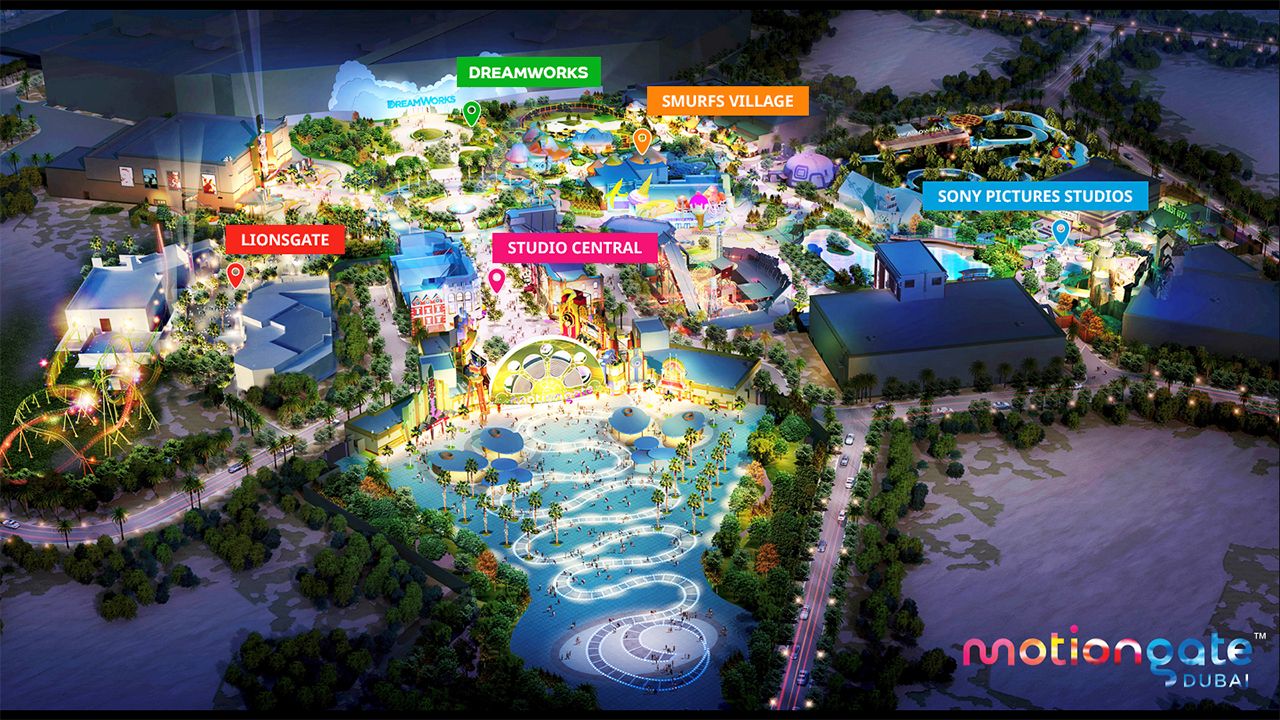
Dubai_Parks_mapWhile the themed entertainment industry continues to explode with new lands and attractions at the US’ biggest players, the luxury destination Dubai, UAE is throwing its hat into the ring. MotionGate may just be the competition that Disney and Universal were not expecting. Primarily including intellectual property (IP) from Sony Pictures, LionsGate, and DreamWorks Animation (now owned by Comcast), MotionGate will boast some of the most advanced attractions in the world. Starting out the gate with 27 attractions and shows based on some of the most well-known IP from the worlds of cinema and television, this brings the total attraction numbers to more than 100 when added to the existing offerings at Dubai Parks and Resorts (a government owned themed entertainment holdings company).

motiongate_image.fw_Unlike the public-private partnership of the parks in China, the government of UAE is uniquely positioned to capitalize on the wealth of the nation. That allure and wealth has driven millions of tourists from around the world to their nation as it is; factor in a world-class leading theme park, and those numbers will increase exponentially. This influx of revenue may actually pave the way for the non-wealthy classes of people to be able to enjoy the Dubai Parks and Resorts as additional flights, hotels, and transportation methods will be added. One of the biggest advantages that MotionGate has over its Disney and Universal competitors (Fox will soon be added to that as well) is that it is being constructed amidst digital, wireless, and multimedia technologies. Whereas the big boys have to modify existing technologies in attractions as they change, these parks are built with the latest technology which directly impacts efficiency of operation.  This same idea of being late to the game but a quickly asserted leader can be seen in nations like South Korea who only recently, relatively speaking, have had access to wireless internet technologies. As they did not have to adapt or modify existing legacy infrastructure, they built on current communications technologies and have a much faster, reliable, cheaper, and efficient ‘internet of things’ than the United States.

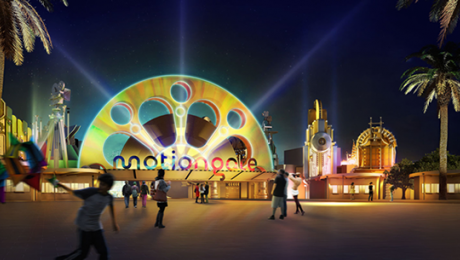
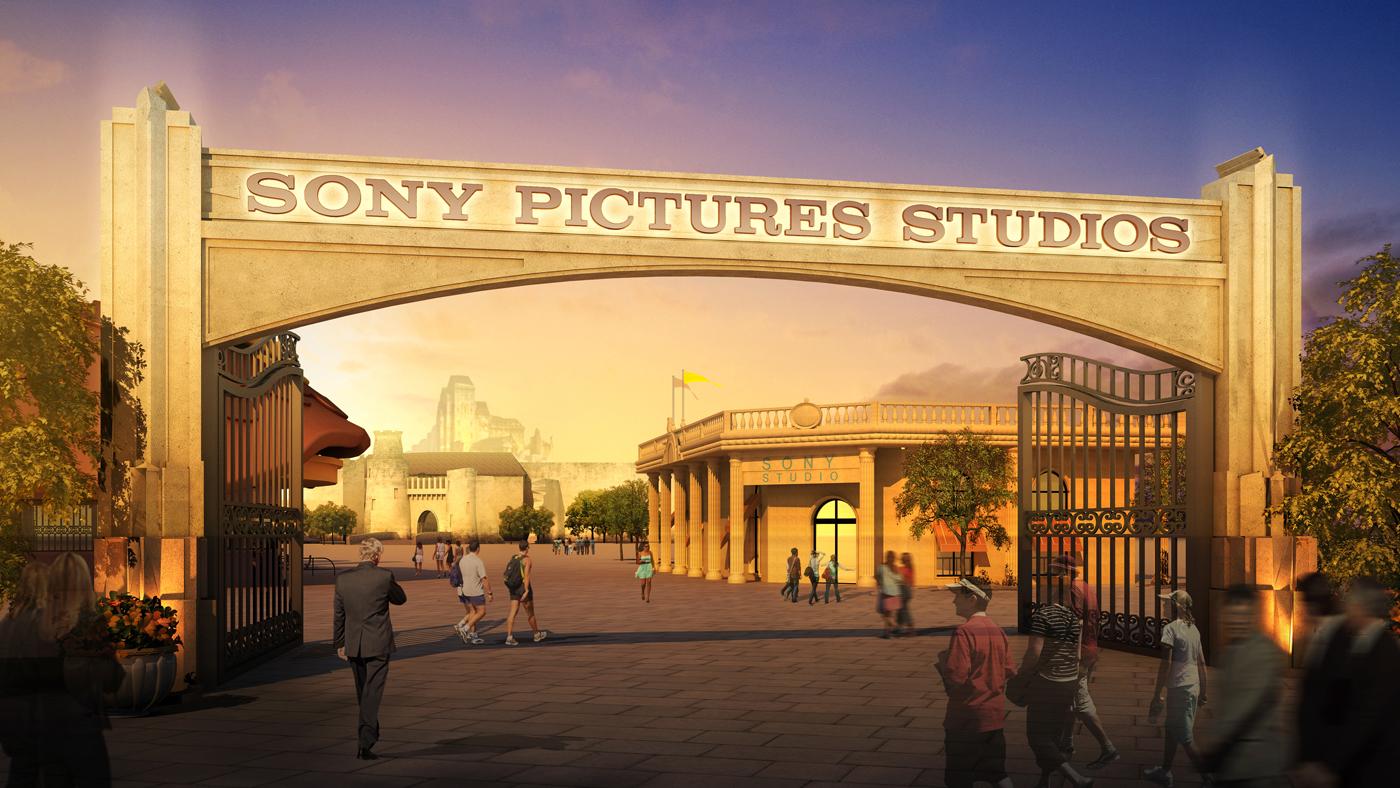
MotionGate_DubaiIn the vein of Walt Disney World and Universal Orlando, Dubai Parks and Resorts is a themed entertainment complex featuring separately themed parks. Specifically, MotionGate bares a striking design modeled after Magic Kingdom in that it is ONE theme park that contains five distinctly different themed lands that all center in and around the concept of motion pictures, filmmaking, and live entertainment. Each land, much like the ones at Magic Kingdom, has its own gateway, themed rides, restaurants, shows, and landmarks. Also, keeping with the Magic Kingdom layout, MotionGate contains the hub and spoke system. Unlike Universal Studios, Islands of Adventure, SeaWorld, or Busch Gardens, MotionGate employs the hub-and-spoke system in order to make maneuvering the park user-friendly and aesthetically pleasing to the eye. This provides opportunities for centralized entertainment offerings and landmarks. Prepare for the glitz, glamour, nostalgia, and excitement of the lands: Studio Central, LionsGate, DreamWorks, Sony Pictures, and the Smurfs’ Village. What makes this concept additionally interesting is the fact that MotionGate includes IP from different studios that are self-contained. Instead of taking the IP from the different companies and integrating them in more generically themed lands, each IP is contained within its respective land.

sony-motiongateOne cannot help but notice that the concept of Dubai Parks and Resort’s flagship theme park MotionGate resembles the original Universal Studios Florida or to a lesser extent Disney-MGM Studios. How so? If you are not familiar, both Universal Studios Florida and then Disney-MGM Studios were theme parks inspired by the idea of “what lies beyond the fifth dimension” (Tower of Terror, Disney); moreover, the story that exists outside of the frame–beyond mise en scene. In addition to attractions and shows inspired by filmmaking or theatre, both parks were also east coast counterparts to the Hollywood stages. Universal/Nickelodeon and Disney produced major motion pictures and television shows in the sound stages that are all but gone (or turn into conventional  attractions) in the 1980s and mid to late 90s. By 2000, most filmmaking and television production operations ceased because it was cheaper to move operations back to Hollywood and to other places like North Carolina and now Georgia. MotionGate goes back to the drawing board to resurrect a dying idea of turning filmmaking into an attraction. It truly holds up Geoff King’s studies and theories of “the cinema of attractions.” Universal founder Carl Leammle knew there was more to filmmaking than making movies. That’s why he opened his movie making ranch outside of Los Angeles to day guests to be entertained by special effects and stunt shows as well as watching the magic behind the camera.

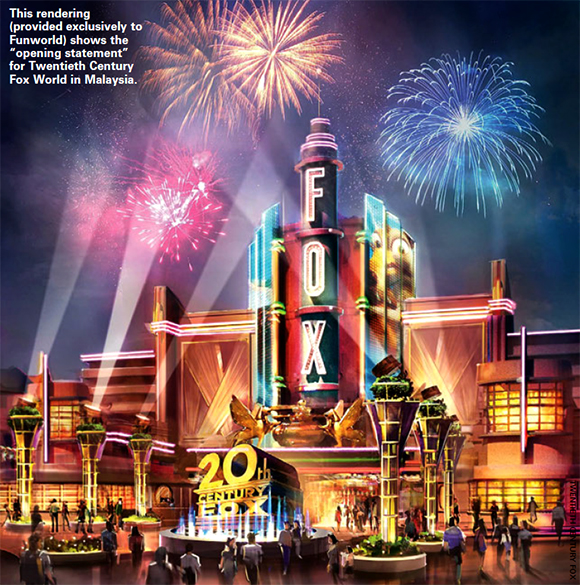
20thCenFoxWorldIt is an exciting time for the themed entertainment and motion picture industries. For the longest time, Disney and Universal (Comcast) were the kings of cinema and TV based theme parks. Now, Dubai is becoming a heavy hitter and once MotionGate opens in October, the landscape has the potential to shift drastically. Now, the parks in the US will not only be competing against each other, but against heavy competition on the other side of the world in an area with much deeper pockets. All the while the word is focussed on the Word of Pandora, The Reign of Kong, Cobra’s Curse, Mako, Star Wars Land, Toy Story Land, and the unnamed new theme park under construction for Universal’s third park (not counting the forthcoming water park), MotionGate will open and create a whole new atmosphere of innovation amongst the chief players. In addition to the parks in Dubai, Fox is also entering into the game with their 20th Century Fox World opening in Malaysia in 2017. Also on the books is the 20th Century Fox World expansion to Zoo Miami AND another indoor Sony theme park in Wisconsin. With all these parks opening, there are more and more opportunities for careers in either cinema or themed entertainment. Or, a career that spans both (which is what yours truly is trying to do). I just love all the new completion because it will drive continued innovation. However, it’s also nice to see that we have a new park that is getting back to the roots of what started it all: motion pictures.

The “Attraction” of Horror: a ‘Psycho’analysis (part 2 of 2)

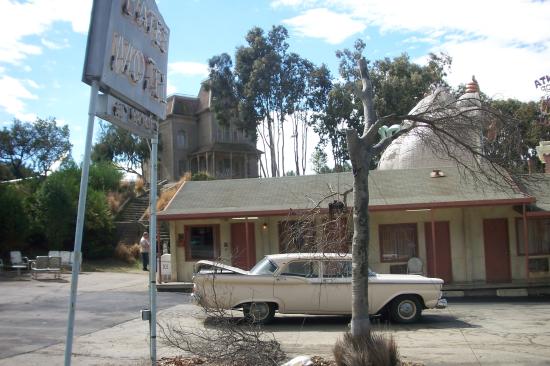
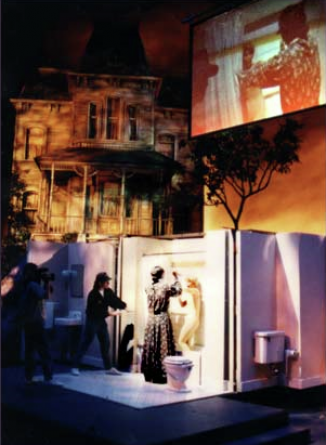
UnivHollywood_BatesMotelSuccessful movie-themed attractions (stage shows or rides) create an atmosphere that is often built upon a foundation consisting of confrontation and direct simulation rather than long, sustained narratives (King, 2000). This is true of the horror film as well. Horror is a genre nearly as old as cinema itself. The horror film, according to Linda Williams, contains three basic elements: narrative, character, and setting. These same elements can be found in movie-themed attractions at theme parks (2000).

Regarding Psycho in particular, the setting consists of very liminal* spaces such as the opening hotel, the Bates house, and bathroom. This same idea can be applied to a theme park attraction because the park guests are often corralled into smaller, intimate places that serve to advance the next element. Narrative is the foundation that both themed attractions and movies are built upon. The narrative, or diegesis, is the story. Diegetically, horror films contain a story that is segmented into the following sequence: order–>disorder–>order. Increasingly, the modern horror film is often left in disorder, or an order that is dissimilar from the original (2000). Movie-themed attractions usually introduce the park guests to a short-form story based on the original, and the ride is the vehicle that takes the guests through the story that can consist of threats and chases, followed by triumphs. In regards to the character element, the characters are those who are the instruments through which the plot is advanced. Normally, characters are people or animals, but can also be inanimate objects of significance (Williams, 2000). The park guests usually encounter characters from the source material along the journey of the ride.

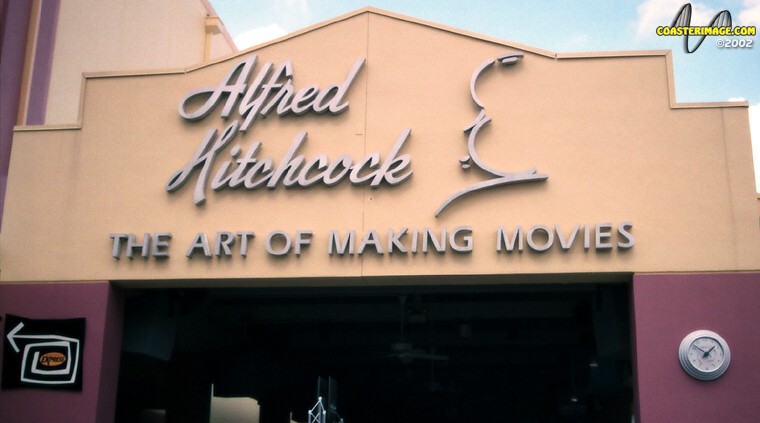
HitchcockBirds“Alfred Hitchcock: the Art of Making Movies” (Universal Studios Florida) was divided up into four distinct parts, with the famous shower scene being the central focus (ThePsychoMovies.com, 2014). Just like a horror movie is divided up into parts, or has a cinematic structure, so too did the Hitchcock attraction. Hitchcock: The Art of Making Movies was divided up into the following areas: preshow, 3D theatre, Psycho stage, and interactive area. There are may parallels between the famous shower scene and the live attraction. In the movie, the sequence leading up to the shower scene is very much a preshow in the same way the attraction contains a preshow area. The preshow in the movie is when Norman is gazing through the peephole into the room of Marion as she undresses. Just like Norman is visually gathering information about Marion, the park guests in the preshow area gather information about Hitchcock’s career. The preshow is the area that preps the audience for what they are too experience. By using the same principles of creating suspense that Hitchcock used, the preshow area reveals just enough to elicit feelings of anticipation and anxiousness.

Next, the park guests sit through clips of 3D versions of Dial M for Murder and The Birds. This preps the mind for experiencing the horror in the next room. Likewise, between the time Norman looked upon Marion through the peephole and puts on the wig and dress, he sits in the kitchen and presumably debates with mother on what to do. Following that scene, we return to the bathroom and enter the shower with Marion. After the 3D movie, the park guests enter the Hitchcock Stage and look upon recreations of the motel, shower, and house.
The main show at the attraction is the Hitchcock Stage where the infamous shower scene is reenacted before a live audience. In addition to the Bates House and Motel, there is a recreation of the tub/shower used by Hitchcock to film the scene. At this point in the movie, Marion is thoroughly enjoying her shower, and the audience gets both objective and subjective camera shots from inside and outside the shower. All of a sudden a shadowy figure approaches the opaque shower curtain and throws it open, wielding a knife. The sinister figure stabs Marion repeatedly and through more than fifty cuts (editing cuts), the scene is played before the people in the dark. Likewise, this same scene is brought to life for the studio audience at Hitchcock: The Art of Making Movies. Through mechanical engineering and film production techniques, the cast of the show reveals how the master of suspense filmed this iconic scene.
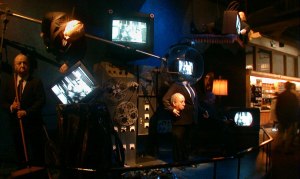
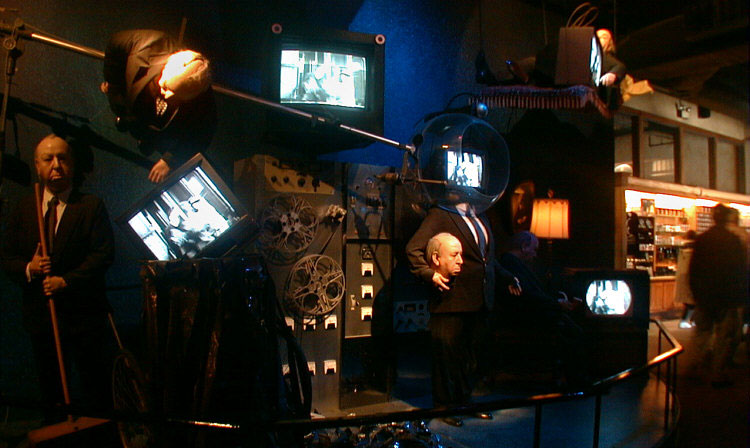
HitchcockAttractionFinalRoomFollowing the show on the Hitchcock Stage, the park guests walk into a museum-like interactive room revealing many of Hitchcock’s secrets and techniques in some of his most notable films. It parallels the end of Psycho when the psychiatrist is analyzing Norman and explaining how and why he did what he did. Just like Norman is the master of slasher films, so is Hitchcock the master of the art of suspense and horror cinema. A close reading of these areas reveals that they each take an element of the setting, narrative, or characters and use the tool of spectacle to bring them to life for the live audience. The preshow area acts as the prime for the horror/suspense pump that is gearing up. Watching the 3D scenes from The Birds and Dial M for Murder serves to generate feelings of ensuing chaos and acts as the big event that causes something to go wrong in the otherwise narrative that is in order (remember: orderdisorderorder). Following the 3D Theatre, is the central Psycho stage that takes any order and casts it to the wind and enables the horror of the shower scene to come to life for the naked eyes of the audience.
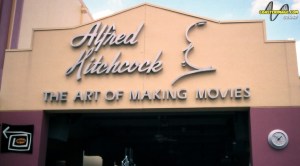
Hitchcock AttractionThis was a main attraction at the theme park until its dismantlement in 2002 to make way for the Shrek: 4D experience. From the aforementioned explanation by one of the producers of the attraction, the audience was completely immersed in the magic of bringing a Hitchcock thriller to life, and got to witness the most famous single scene in all of cinema history. This was all done with practical effects, just as Hitchcock would have done it. But, with the advent of computer generated imagery and incredibly accurate and time efficient non-linear video editing, most of the effects can be generated in other ways. Although it remained one of the most popular attractions at the theme park until its closure, Universal saw the future of attractions and decided to do away with nostalgia and pave the way for digital simulated attractions (Singer, 2013).

Click HERE for Part 1

*(adjective) 1. of or relating to a transitional or initial stage of a process; 2. occupying a position at, or on both sides of, a boundary or threshold