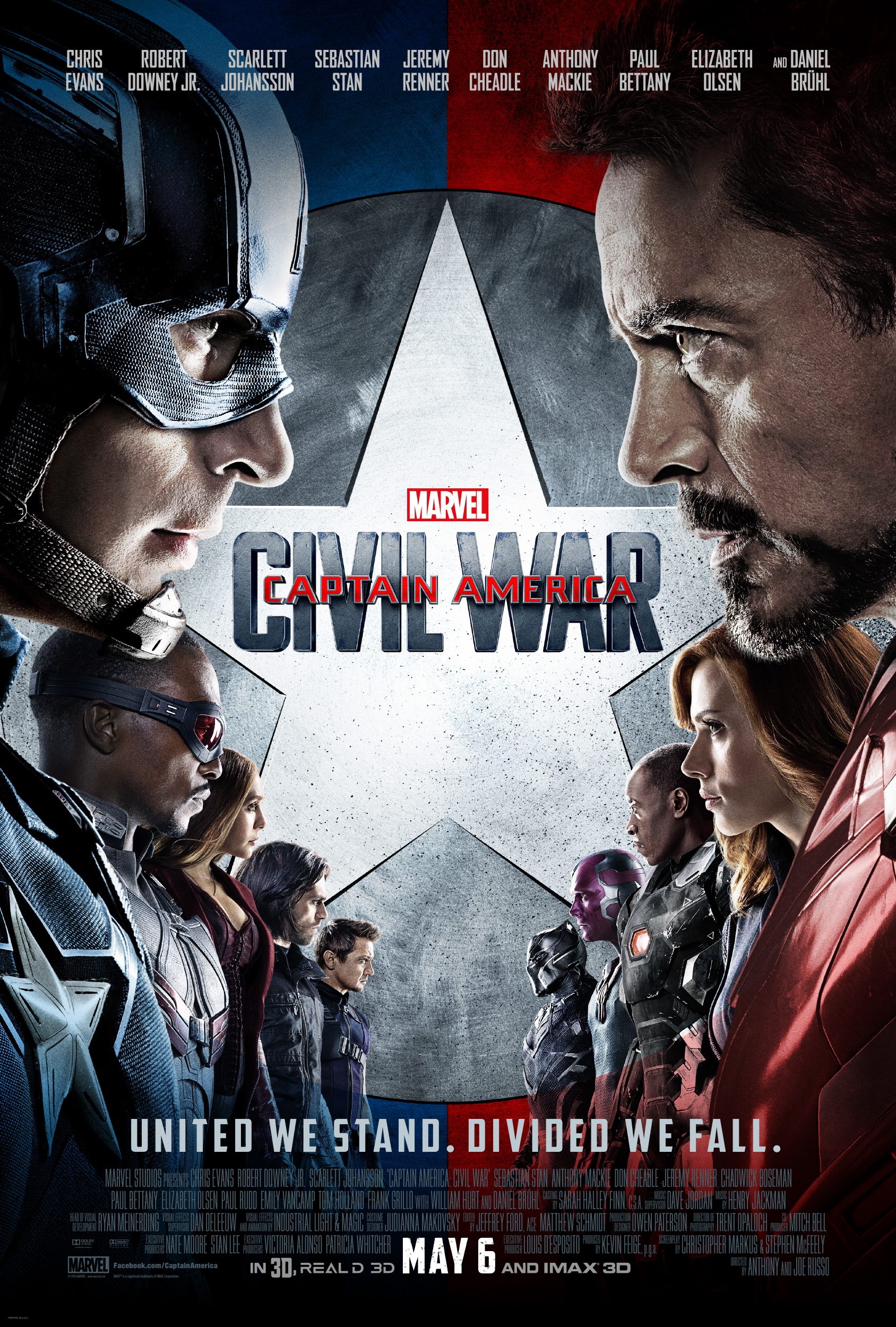
CIVIL WAR (2024) film review

A gripping, thought-provoking motion picture about the power and cost of capturing the human experience in a single frame during war. While it would be easy to describe Alex Garland’s Civil War as a thoughtful, if not painful, graphic warning of what happens when society is completely deconstructed and humanity is lost, this film is actually about the power of storytelling through a single frame. Specifically, the state of what remains of humanity and the cost thereof amidst war. Not for the faint of heart, this film takes you only where imbedded journalists have been during a war, complete with all the death and destruction. The film reminds us of the human cost on the battlefield, in the neighborhood, and those that are capturing the images that will tell the story of societies darkest days.

In a dystopian future America, a team of military-embedded journalists races against time to reach Washington, D.C., before rebel factions descend upon the White House.

A picture is worth a thousand words, or so we hold true, but a picture can come at great cost, particularly during wartimes. Instead of focussing on the backstory or who is fighting for whom and for what principles, Garland uses the apparatus of a dystopian warn-torn United States to explore the human dimension and cost of a polarizing, grizzly domestic war. And he does this through a group of imbedded journalists played by Kirsten Dunst, Wagner Maura, Cailee Spaney, and Stephen McKinley Henderson. Together, they face certain death as they strive to cover the war and reach the President for a one-on-one interview.

We aren’t given enough information about the reason for the Western Front (California+Texas) and Florida Alliance secession from the rest of the country, but that’s because Garland wants us to focus on a different story, the human story told through the power of a single frame and the lives that bring these photos before our eyes. Perhaps you’ve never thought of how these photos get from the battlefield to online and traditional magazines and newspapers, but you’ll think twice the next time you are viewing photographs from current or past wars.

But it isn’t simply a motion picture depicting the difficulties in working as a wartime imbedded journalist–that is incidental–this is a picture of the human lives on the battlefield and the places seemingly removed from the atrocities of war. We seldom think of all the different human reactions to war, and this film brings us face to face with those that are fighting for their respective causes, those documenting the various campaigns, and those that go about their daily lives as though the country isn’t ripping apart at the seems a few hundred miles away. Garland doesn’t offer any particular slant, neither does he steer the audience in agreement or disagreement with any faction involved in the war; rather, he crafts a mosaic, if you will, of a collection of metaphoric still images that capture each type of reaction to the war.

I often talk about the emotive difference between film and digital in my classes, and this film is a great example of that argument. It’s the argument that film is superior to digital because with film, there is a tangible relationship between the filmmaker and the film stock, and by extension, a relationship is developed between the editor and film stock. We particularly witness this relationship in Civil War between Jessie (Spaney) and her classic Nikon SLR (film) camera. Whether as depicted in this movie or in real life, there is far more value placed on and discernment in using film to capture people and events, because the photographer/filmmaker is limited to the number on frames on each roll/reel. Therefore, the photos won’t be of just anything, the artist is only going to take a photo that has meaning. Granted, the keeper may still be 1/30, but each was taken with explicit intent, creating immense value in each still frame.

Even after the shutter has opened and closed, imprinting the image on the 35mm frame, the relationship continues through the development process because the developer sends the film through a chemical process that reveals the full spectrum of light–something tangible, that the developed can see, touch, and feel. Digital cannot capture the full spectrum of light the way film can: one is a replicated process that actually cuts off the whitest of whites and blackest of blacks, whilst the other is a chemical process that captures the full range and spectrum of light as imprinted on the film cell. Film photography (or cinematography) creates an emotive dimension between the artist and image, there is a tangible relationship, so everything is done with immense care, consideration, and discernment.

Why is any of this important in discussing Alex Garland’s Civil War? Because to gain the full appreciation of the story he is telling, it is imperative that we understand the relationship between the photojournalist and tragic, devastating events in which they are working to capture the human dimension behind the atrocities of war. Neither Jessie nor Lee (Dunst) will take photos of just anything, every move is thoughtful, the people and events being captured by their respective cameras carry meaning, they carry the human story. That story is made up of those fighting for the Western Front, Florida Alliance (which we don’t see in the movie), or what’s left of the (former) United States’ armed forces.

Beyond what emerges as the main story, Garland’s film does contain a graphic warning of a possible future in which the United States becomes embroiled in domestic warfare (civil war) due to whatever the reasons were that lead to the secession by California, Texas, and Florida (the three most populous states, by the way). It’s to the film’s credit that Garland does leave the backstory vague, as it’s less important what led to this point, but rather the importance is found in the reactions to the war. Both sides of this war are being fought by those that believe they are right, and will fight for the principles in which they believe. The problem isn’t simply the divergence of opinion and belief as it is in the complete disregard or sacrifice of humanity in exchange for a manmade or arbitrary identity.

This is witnessed in an exchange between our journalists and a group of paramilitary civilians, led by Jesse Plemons). Our journalists state they are American journalists, and Plemons’ character reacts by demanding to know what kind of American. This represents those that discriminate or hold prejudice against those that don’t look or sound like they are originally from the United States. In his mind, being from the United States looks and sounds like a particular type, and if one does not fit into that type, then they are not welcomed and ultimately expendable.

Other reactions to the war are also witnessed by our journalists. Such as the lack of reaction to that which is tearing the country to shreds. On their way from New York City to Washington, D.C., our central characters stop in a West Virginia town that is seemingly removed from the war. When the citizens of this town are asked how can they behave as though a few hundred miles away that the very foundations of the country are being shattered, the town reacts in apathy to the war. They are certainly knowledgeable that there is a war, but they choose to stay out of it. Just as the front lines are a reaction to war, this too is a reaction that bares consideration. Garland leaves it up to each audience member where they fall along the full spectrum of the human dimension in war.

In addition to the writing, directing, and technical achievement demonstrated in the film, the performative dimension is outstanding. The genuine reactions to and emotions on display are dripping with authenticity. You will feel what these actors’ characters are feeling throughout the movie. And not just the gut-wrenching parts, the strategically placed moments of humor will stir your soul as well.

Garland crafts a motion picture that serves as cautionary tale of what happens when we stop thinking about one another as unique individuals, as children of God, and instead treat those that are different in some way as a threat to our very existence. What happens when we care more about someone’s identity (with whatever the ideal or principle) than we do about them as a person. There is a time to defend that in which one believes or when one’s life is in danger, but left unchecked, that defense can turn into an offense due to primal fears, anxieties, obsession, and selfishness. Perhaps this film will serve as a reminder of what can happen when we stop treating one another with respect as fellow humans (as fellow Americans) and instead merely treat one another as threats to our very existence. Treatment with respect and dignity does not equate to endorsement or agreement, but it does leave an opportunity to change open. We’ve seen throughout history that there is sometimes a cause for war, but it should always be the last resort.

Often times, I am negatively critical of the writing in the film’s A24 produces or distributes, because I find many of these films are poorly written; however, this film demonstrates the power of acknowledging storytelling/screenwriting conventions and guidelines. Why? Because they work! At first I was wondering why with such a fantastically written screenplay was the realization missing at the end. Then I realized that it is there in character, plot, and in myself. You’ll just have to watch the film to fully understand that which I am attempting to describe without giving away any spoilers.

Garland’s Civil War is unlike anything I expected. I expected a movie dripping with overt socio-political ideology and commentary, but what I got was an incredibly thoughtful motion picture about the human dimension of war, particularly a domestic war between the states. Garland does not hold back on the violence, so those with PTSD from war or uncomfortable with violent movies should be cautioned before watching this film.

Ryan teaches Film Studies and Screenwriting at the University of Tampa and is a member of the Critics Association of Central Florida and Indie Film Critics of America. If you like this article, check out the others and FOLLOW this blog! Interested in Ryan making a guest appearance on your podcast or contributing to your website? Send him a DM on Twitter. If you’re ever in Tampa or Orlando, feel free to catch a movie with him.

Follow him on Twitter: RLTerry1 and LetterBoxd: RLTerry

THE BANSHEES OF INISHERIN film mini-review

Thoughtful exterior, vapid soul. A gorgeous-looking film that fails to deliver any substantive meaning or motivation behind anything that occurs in this ominous snoozefest. The Banshees of Inisherin is another 2020s cinema example of what happens when filmmakers fail to follow screenwriting conventions like a clearly defined external goal for the central character, supported by an internal need or motivation, and clearly defined opposition to the external goal. Furthermore, “a [day] in the life of…” is neither a plot nor a goal. The first act of the film holds hostage nearly half the screentime. And when something finally happens, the motivation behind it lacks any logic or rational reasoning. The outside/action story is nearly non-existent. Filmmakers should remember that a film can have depth, dimension, and deeper meaning BUT those layers should never take the place of a clearly defined linear or nonlinear plot map. Diegetic accessibility is important, even in more thoughtful films. Undoubtedly, this will become one of those films that pretentious cinephiles defend by the cliche “you just didn’t get it.” While the film looks gorgeous and the attempt to parallel the civil war between two (former) friends to the real-world Irish Civil War of the 1920s is intriguing, writer-director Martin McDonagh struggles to establish a plot to support the story he wants to tell. None of the characters are likable nor are the performances exceptional. Extreme/manic behavior does not a compelling character make. In many ways, this film reminds me of a more coherent The Lighthouse. So, if you enjoyed The Lighthouse, then you may enjoy this movie. The Banshees of Inisherin feels like a vanity project that means something to the filmmaker, but holds little value or meaning for the audience. Contrary to the accolade associated with this film, it is one of the most boring break-up movies ever made.

Ryan teaches Film Studies and Screenwriting at the University of Tampa and is a member of the Critics Association of Central Florida. If you like this article, check out the others and FOLLOW this blog! Interested in Ryan making a guest appearance on your podcast or contributing to your website? Send him a DM on Twitter. If you’re ever in Tampa or Orlando, feel free to catch a movie with him.
Follow him on Twitter: RLTerry1

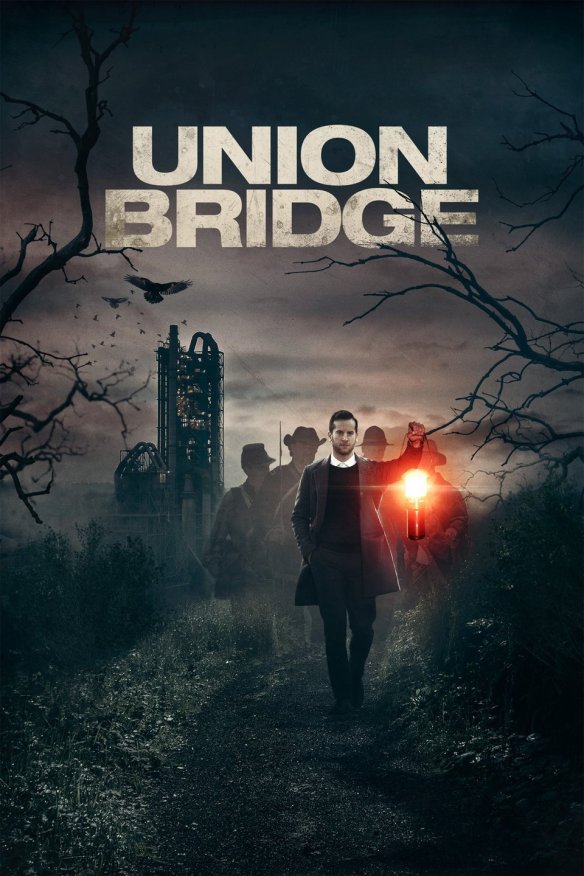
“Union Bridge” (2019) Indie Film Review

A neo-noir southern gothic directorial debut that delivers overwhelmingly on its foreboding sense of surreal dread, but underwhelmingly on its narrative substance in this slow-burn film. First-time writer-director Brian Levin showcases his command of atmosphere and world-building, but his screenplay lacks focus and direction. Levin certainly demonstrates his keen eye for crafting a haunting ambiance in the vein of David Lynch, but the overall experience suffers diegetically. While the premise is intriguing, the plot is all over the place. Following the central character who has returned to his hometown from the big city, the audience is taken on a surreal psychological journey into the darker side of this otherwise wholesome-looking town. Unfortunately, this journey lacks a destination and ultimately leaves the audience wondering why they should care about anything that happens in the film. Levin’s debut feature strikes the right tone for a neo-noir that teeters towards thriller-adjacency; but despite thriller being in the billing, it never quite reaches that goal. Perhaps screenwriting is not Levin’s strong suit; that said, there is much to be admired in his endeavor. All the mise en scene elements work together seamlessly to create an atmosphere that stimulates the senses and draws you in from the moment that the film opens. Union Bridge has everything else going for it in terms of casting, cinematography, score, editing, and production quality. Which tells me that Levin has what it takes to craft a visually compelling story for the screen, but needs to leave the writing to someone else. Should he pair up with a screenwriter that has a penchant for neo-noir or horror next time, then it is entirely possible that we may be having a different discussion.

Will Shipe (Scott Friend), the scion of a powerful family living near the Mason Dixon line, moves back home after years in the big city. His old friend Nick (Alex Breaux), who still lives in town, is feverishly digging in the land because of a vision he can’t escape. What is buried in this small town and the events around it have repercussions that effect many people. Most of all, Will Shipe, and the past and future of his legacy. Assisted by his high school sweetheart Mary (Emma Duncan), Will must uncover the long-kept family secrets buried beneath the fields of his hometown.

If you go into this expecting a southern gothic thriller, you will be disappointed. Not because it doesn’t feel like a gothic horror, but because it never delivers on the thrill. There really isn’t any suspense either, by Hitchcock definition, because the audience is never supplied with information. Incidentally, the audience will be desperately seeking information to make some sense of what is happening on screen. Levin introduces and sets up some potentially juicy plot devises and backstory, but never revisits any of them in a manner that pays off at any level. We never figure out what the family’s dark secret is, why Will has to return to his hometown (tho, it’s vaguely hinted at), or why Will’s mom’s despises her late husband. Will’s childhood sweetheart is said to be practicing a form of witchcraft, but Levin goes nowhere with that either. The family’s and town’s past and present are only connected because we are, in not so many words, told they are. So many ideas for a southern gothic thriller, but they come off as more of a stream of consciousness or outline than a coherent narrative. Even the romance between Mary and Will goes nowhere of particular interest. And when Will’s childhood friend Nick (spoiler alert) dies, you simply won’t care. This film deeply desires for you to give yourself over to it, but you won’t form an emotional connection with any aspect to the story. Perhaps this “story” can be characterized as the plot to nowhere–speaking of which–I’m still wondering where the “bridge” in the title even comes from; there is simply no bridge, past or present, in this landlocked town.

Okay, now that I got all the negative out of the way, I want to spend time on highlighting what I enjoyed in this picture. I’m often hesitant to be too professor-y or critical with a directorial debut, because I commend anyone, who for the first time, sets out to make a picture and get it distributed. So, I offer congratulations on a job well-done to Mr. Levin on completing something he set out to do. Thousands of people set out to shoot films that are often left incomplete for one reason or another. Where this film fails to deliver is the story–and no mistaking it–that is HUGE; however, Levin can use this as a learning opportunity that teaches him that he has director chops, not necessarily screenwriting chops. Should he choose to work with a different screenwriter, other than himself the next time, then he has what it takes to guide the production from page to screen.

I am a fan of David Lynch, and Muholland Drive and the TV show Twin Peaks are among my favorites of his. Even without knowing from press materials that Levin is also a fan of Lynch, I knew it within with first five minutes of the film. The cinematography, editing, and score are all reminiscent of Lynch, specifically Twin Peaks. Levin successfully blends the macabre and mundane nature of this town in a manner that reveals that the former is contained within the latter. Furthermore, Levin crafts an atmosphere that is familiar yet foreign to Will, and by extension, the audience. Although this story feels like it should have taken place in Georgia or South Carolina, the settings in Maryland were ideally suited for Union Bridge. The factories represent the past whereas Will represents the future (or let’s be real, the present), much in the same way that his mother lives in the past, and resists living in the present. When the past and present come face to face, the blurred area between the two is where this nightmare resides. Levin’s talent for direction is also witnessed in the actors’ performances. All the performances are generally fantastic, especially Breaux’s character of Nick. Each character is right out of a Lynchian film, and works perfectly in Levin’s surreal Maryland town. There are some beautiful nuances to the technical elements that work together to create this idyllic setting surrounded by an emanation of dread. Atmospherically, Levin knows precisely what to do, and I hope to see more of his craft paired with a better story in the future.

Union Bridge is available on a streaming service near you.

Ryan teaches screenwriting at the University of Tampa. If you like this article, check out the others and FOLLOW this blog! Interested in Ryan making a guest appearance on your podcast or contributing to your website? Send him a DM on Twitter or email him at RLTerry1@gmail.com! If you’re ever in the Tampa area, feel free to catch a movie with him!

Follow him!

Twitter: RLTerry1

“Little Women” (2019) Review

Authentic. If I had to sum up the experience of watching Greta Gerwig’s Little Women, then that’s the one word I would choose. Thankfully, I am not limited to simply one word to describe this brilliant adaptation of Louisa May Alcott’s best-selling, timeless novel. Being out of town visiting family for a couple of weeks, I do not have the same amount of time to watch movies at home or at the theatre, as my family isn’t nearly the film fan as I am. However, when my mom wanted to go to the movies, and asked me if I wanted to see Star Wars (again), I countered her idea with suggesting Little Women. She was utterly delighted to see the movie, and I am so glad that my mom and I got to watch this movie together. Just now, my mom walked through the living room (as my head is buried in my laptop) and exclaimed “I just loved that movie, the story is so familiar yet so fresh.” Sounds like something I would write. To my mom’s point, I feel strongly that the reason she feels that was is because this is modern story of the complex emotions, societal expectations, and ambitions of women masquerading around as a period drama. It feels both “of its time” and “today.” While to the casual observer, this may seem like a story for women, young and older alike, it is a powerful story for anyone that has dreams but feels trapped by whatever societal or familial forces. Little Women is incredibly heartfelt and uplifts the human spirit. Just the gift of the season we needed. There is something for everyone in this movie that remains committed to its literary roots, yet plants itself in a modern garden to be appreciated by and inspire all those whom choose to watch it. Greta Gerwig’s masterful storytelling is evident from beginning to end, and all the performances are excellent. You will undoubtedly fall in love with this story all over again, or will fall in love for the first time.

Following the lives of four sisters, Amy (Florence Pugh), Jo (Saoirse Ronan), Beth (Eliza Scanlen) and Meg (Emma Watson), as they come of age in America in the aftermath of the Civil War. Though all very different from each other, the March sisters stand by each other through difficult and changing times.

While the 1933 version starring Katherine Hepburn has long sense been seen as the gold standard, I will be so bold as to state that this may be regarded as the best adaptation of Alcott’s timeless novel. Ever since I saw Frances Ha, I’ve known that Gerwig is destined for cinematic greatness. Her trademark artistic expression and ability to disarm even the most hardhearted, is witnessed time and time again in this film. Furthermore, Gerwig possesses a unique gift that quickly establishes empathy from the audience and begins to develop a relationship between them and the central character(s) quickly and effectively. For those of you whom are familiar with Gerwig’s semi-autobiographcial debut of Frances Ha, you will undoubtedly pick up on hints of Frances in our central character of Jo March. Although Gerwig has demonstrated an uncanny ability to write and direct, the real power of this film comes form her knowing the novel from cover to cover; the only way to intertwine the original narrative with the journey of the author is to have known everything there was to know, and then some, about Little Women. Gerwig’s creative decision to meld the Jo’s struggles and joys of being our de facto Alcott with the original story allows the film to comfort audiences with the familiar while wowing them with a fresh, modern interpretation of the story.

I love the five primary archetypal characters we have in this film. Jo is the rebellious independent thinker but struggles with loneliness, Meg desires a more traditional life but has a strong will, Amy has a creative spirit but desires to be a kept woman, Beth is empathetic selfless and nurturing, and Laurie is a self-centered bachelor whom lacks direction and focus yet wants to love. These characters provide ample opportunity for the audience to connect with one or more of them. The relatively simple plot of the film paves the way for complex characters and prolific amounts of dramatic conflict. While the main plot is about Jo and her goal of publishing a novel, all the other character have their own respective goals that support the subplot and are the conduit through which the subtext flows. While the characters remark that domestic struggles and joys are not entertaining, the irony is that these are the very things that make for a strong film. Strength of character is witnessed in how a character responds to and is affected by conflict–we love to see the reactions. No two characters respond to the same stimulus in the same way, and they each speak with their own voice. Through these characters, we experience triumphs, struggles, love, and loss. No Mary Sues in this bunch, nothing comes easy for any of them; and they work diligently to achieve what they want, whether that is marriage or a career. Each and every goal is earned, the windup equals the payoff.

Before addressing the technical elements that worked flawlessly, I cannot ignore the one element that did not work for me, at least in the beginning. And even then, I merely got used to it as the film went on. The editing. There are times that I was taken out of the movie by the pacing and structure of the editing choices, but ultimately it did not greatly hinder my experience of watching this future classic. It took several scenes, before I realized that we had more then one concurrent timeline. As a matter of fact, I believe we had three (1) present day (2) seven years earlier and then (3) shortly before present day. I’ve read that there are only two timelines, but I truly feel that I was following three different ones. I wasn’t always sure where I was in the trifecta of timelines. Eventually, I realized that I could follow the color palette, hair styles, and costumes as my timeline token. If we were going to alternate between present day and the past, I would have preferred if Gerwig took a page out of the Fried Green Tomatoes handbook for two concurrent storylines.

Now that’s out of the way, I have to remark on how much I love the cinematography, costuming, and production design. The cinematography works in tandem with the tone of each scene; moreover, there are moments that the cinematography is snug and warm, and other times that it is distant and cold. The emotion of the scenes is communicated lowkey through the camera choices. Period dramas are known for great opportunity for costuming to shine, and this film is no exception. Much like one’s fashion choices, in real life, are often an expression of the soul, so are the costumes of the lead and supporting cast. The costumes are almost characters in and of themselves. We can read some into the personality of the characters by the choice in attire. Along those same lines, the production design is also an extension of these characters. The locations, sets, and set dressing communicate so much about where these characters are mentally and where they want to be. The various production design teams demonstrate a keen eye for even the smallest detail that communicates the right mood, texture, subtext, or atmosphere. Period dramas sometimes struggle with making the locations and settings feel like real places that the audience can smell, feel, and touch; but this isn’t true with this film.

Greta Gerwig’s Little Women is truly a wonderful Christmas gift this season. You will laugh and cry along with these endearing characters in this Civil War era world in which the story unfolds. Gerwig takes the timeless story and brings it into a modern world to entertain and inspire a whole new generation.

Ryan teaches screenwriting at the University of Tampa. If you like this article, check out the others and FOLLOW this blog! Interested in Ryan making a guest appearance on your podcast or contributing to your website? Send him a DM on Twitter or email him at RLTerry1@gmail.com! You can catch Ryan most weeks at Studio Movie Grill Tampa, so if you’re in the area, feel free to catch a movie with him!

Follow him!

Twitter: RLTerry1

Instagram: RL_Terry

“Captain America: Civil War” movie review

Civil_War_Final_Poster‘Marvel’ous! Nearly a complete departure from the conventional comic book superhero movie genre. Avengers 2.5 is a politically-charged superhero movie that will catch you off guard and provide you with a mostly non-cartoonish plot filled with well-developed conflict and character development. Witness some of your favorite Marvel superheroes secede from the Avengers and oppose those who they once fought side-by-side. Along the way, you also get to meet some new additions to the team that will provide some awkward comedic sequences in this otherwise serious movie. Deep dark secrets come to the surface that threaten the very possibility of the team ever having any hope of reunification. Captain America: Civil War is a brilliantly produced film that will have even those who typically do not care for most superhero films leaving the theatre satisfied and anticipating the next installment in the series. Although it is really an Avengers movie, there is still enough focus on the title character to support the choice of titles for this action-packed epic adventure.

Captain America: Civil War takes place not long after the catastrophic events at Sokovia and following another destructive battle, the United Nations and U.S. Government decide to intervene and put The Avengers in check. Opposing the team signing onto an international agreement defining how this group of “vigilantes,” Captain America (Chris Evans) falls away from the group and seeks his own destiny frocked with vengeance and misplaced allegiances. With the once unified team fracturing, a covert former Soviet operative is plotting the destruction of The Avengers from the inside out. Much in the vein of the American Civil War, The Avengers are split and Captain America forms his team while Iron Man (Robert Downey Jr) attempts to hold the team together and honor the agreement with the United Nations. The once inseparable Black Widow (Scarlett Johansson) and Hawkeye (Jeremy Renner) must choose sides and decide where allegiances truly lie.

It isn’t often that a genre typically filled with high concept, shallow plots can surprise you with a narrative radiating with anthropological and political themes and subtext. The brilliance of Captain America: Civil War is that it provides the audience with equal parts action-packed fight choreography and well-developed dramatic plot with prolific amounts of character conflict. Furthermore, the story will exceed your expectations of the ability to tap into one’s superficial response to action-packed stimuli and activate the deeper emotions of allegiance, betrayal, and self-preservation. For those who have not seen the previous movies in the Captain America series–another admirable element of this installment, is not causing those who have yet to watch the previous CA movies to feel left out of the excitement. Provided you have seen the preceding Avengers movies, this one will keep you trekking along with your favorite Avengers universe characters. There are certainly minor elements or past relationships that are introduced in the previous CA movies, but most likely you will be able to pick up on the aforementioned as you watch Civil War.

Another observation of this installment in the Captain America/Avengers franchises respectfully, is the movie’s success in both including current characters and introducing new ones without the film ever feeling too crowded, as it was with Batman v Superman. In addition to the Avengers minus Hulk and Thor, the audience is introduced to an adolescent Spider-Man (Tom Holland) and are re-acquainted with Ant Man (Paul Rudd). As I am not familiar with the comics, I cannot comment on this Spider-Man in respect to staying true to the comic, but I found this incarnation of Spider-Man to be on the verge of annoying. Perhaps that is how he is suppose to be, but it did not fit in with how he has been historically portrayed in cartoons and movies. However, the inclusion of both the respective characters did not feel forced as it so easily could have. Since the film primarily focussed on Captain America and secondly Iron Man, the large cast of characters was handled efficiently. The writers could include all these characters in one narrative, but shift the focus from character or character thus never overstimulating or overwhelming the audience with the development of such a dynamic ensemble cast.

Ordinarily, I do not speak so highly of superhero movies; but this film left me feeling quite satisfied and pleased with how well the film played off as a serious movie complete with plenty of opportunity for emotional connections. That being said, the one sequence of the movie that I did not find as entertaining or fitting is the elaborate “civil war” battle on the tarmac. Was it choreographed well? Yes. Was it instrumental in moving the plot forward? Yes. Did it effectively fit in with the rest of the mood and pacing of the film? No. Moreover, that entire sequence of scenes just felt awkward. And, that is mostly due to the inclusion of the naivety and immaturity of Spider-Man and witty/sarcastic/near-juvenile antics of Ant Man. Perhaps if only one adolescent-like character had been added, that part of the film would not have felt so awkward. As to not give away the reasons for the solemn mood of the film, I cannot go into much detail; but, the manner which this scene was written and directed just felt out of place and interrupted the otherwise excellent pacing and mood of the story. I agree that most serious movies need comedic relief in order to generate an emotional rollercoaster, but this was just a little too funny with respect to the rest of the film.

The summer blockbuster season is officially underway with the undoubtedly successful opening weekend of Captain America: Civil War aka Avengers 2.5. Unlike last year’s Avengers: Age of Ultron, this installment will take you on fantastic journey of emotional mountains and valleys of character and plot development. This film proves that a superhero movie can be both fantastically action-packed and dramatic. The political subtext will also provide friends and family countless hours of discussion and analysis. Although this is not an adult superhero movie in the way Deadpool was, there is still language and violence that may not be appropriate for young kids. Still, one of the earmarks of a summer blockbuster is a movie that can attract and please both teens and adults, and this is definitely a great example. Hopefully, this movie is an indicator of an exhilarating summer season at the cinema.

PS. Notice the nod to Disney’s D23 Club? I did!