The Art of BATMAN RETURNS (1992): a retrospective movie review

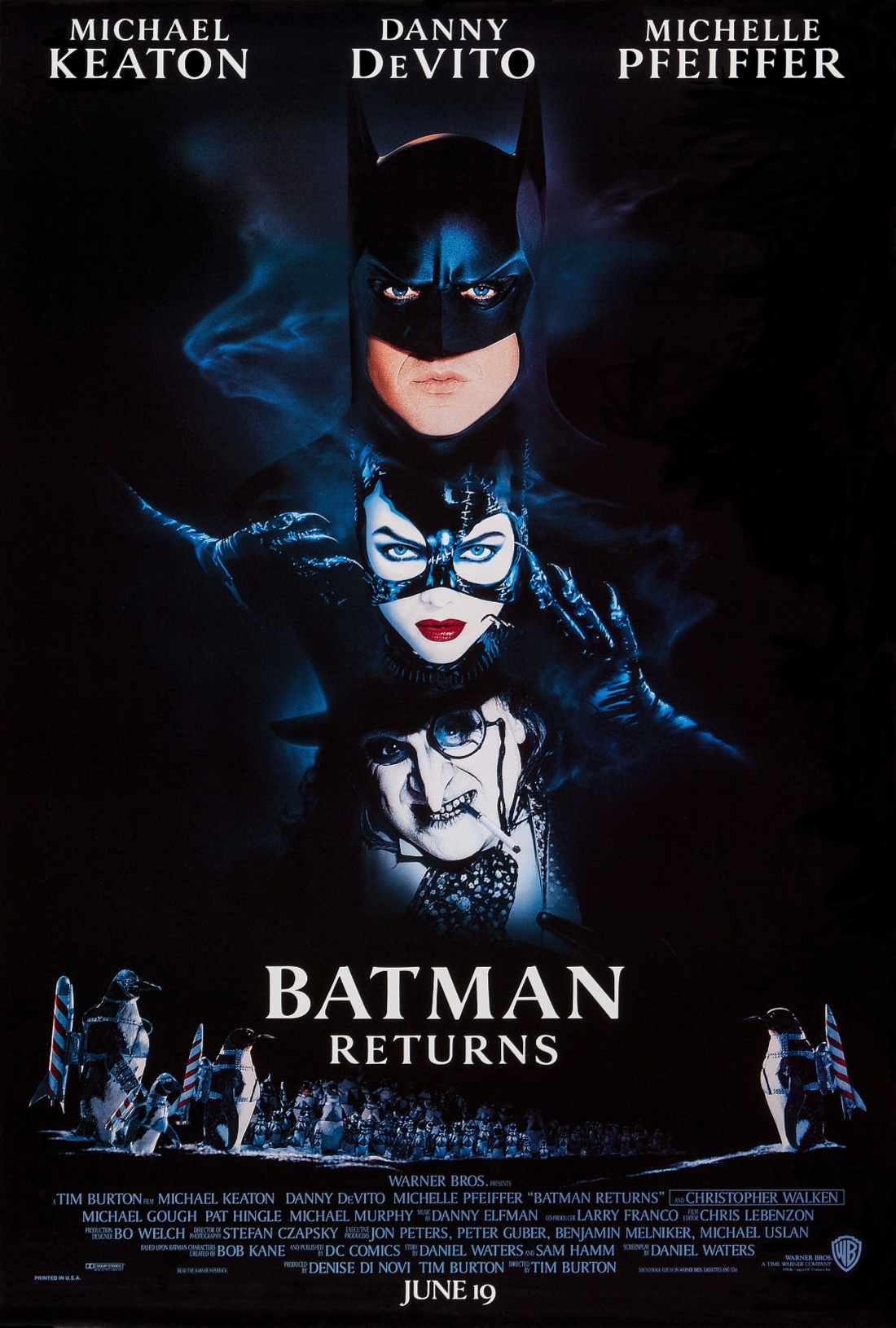
By far, still the sexiest Batman movie! With the reviews from fans and critics alike regarding this weekend’s release of the highly anticipated Suicide Squad ranging anywhere from horrible to moderately enjoyable, I decided to rewatch and review the Batman movie that is still considered by many, and yours truly, to be the most Batman out of all of them. Released in 1992, Tim Burton’s Batman Returns boasts a star-studded cast complete with the German expressionistic filmmaking style and gothic production design often associated with this iconic superhero franchise. The brilliance of Batman Returns can be witnessed in recognizing that Tim Burton provided audiences with an art house film masquerading around as a superhero Hollywood blockbuster. From the architecture to the costumes and cinematography, this Batman movie has more in common with art than a movie. Not that movies lack artistic appeal, quite the contrary–after all cinema is the art of visual storytelling; but there is a certain artistic charm that surrounds Batman Returns uncommon in other superhero movies. In other words, the focus was more on the art of a Batman story than the plot. Many comic book enthusiasts also regard this installment (as well as its predecessor) as very close to the comics in plot and visual design. Furthermore, hands down, the most memorable element of the movie is Michelle Pfeiffer’s Catwoman, and with good reason. Incredibly sexy, seductive, slightly psycho, playful, and conniving. Juxtaposed against Danny DeVito’s monstrous Penguin, Michael Keaton’s timeless Bruce Wayne/Batman, throw in the self-centered and ruthless Christopher Walken’s Max Shreck, and you have a brilliant cast bringing to life iconic characters under the direction of a then-visionary director before he became a parody of himself.

Beneath the streets of Gotham City lies a world of water, waste, and The Penguin. Abandoned by his wealthy parents, Oswald Cobblepot is raised by the Penguins of the former Gotham City Zoo. He grows to resent the world above and the blue bloods of society that cast aside those who they deem as undesirable. High above the sewers, Selina Kyle is nervously tending to her boss’ every need. Not the most meticulous secretary–oh sorry, assistant–she has failed her ruthless boss Max Shreck for the last time, and gets shoved out a window to be nursed back to life by cats. Both abandoned and left to die, but return to life with revenge and warped justice on the mind. During the annual tree lighting ceremony, The Penguin and his henchmen thwart the celebratory atmosphere with gunfire, looting, chaos, and violence. Valiantly defending the good citizens of Gotham, Batman fights off the havoc that The Penguin with which The Penguin is enveloping the city. However, all the public knows is the good, kindhearted Penguin with a love of public service? Although initially setting out to kill Batman, in an ironic twist of fate, sparks begin to fly between Batman and Catwoman AND Bruce and Selina. Revenge, love, violence, and trademark gadgets. This Batman movie has it all.

Even the most dedicated Batman fans will admit that this film certainly has cinematic problems. But why are the flaws in this movie somehow forgiven but the flaws in Batman v Superman or this weekend’s Suicide Squad held against them respectively? Rewatching this Batman movie reveals that it is likely held is such high regard by superhero movie buffs and fans of the comics alike due to of the A-list talent and the artistic or stylistic approach to this story. Because the focus of the film is definitely on the art versus the plot, narrative flaws can easily be overlooked as the experience of this film rests upon the feel and look of everything more so than the plot in and of itself. It is rare for a superhero film to also be so incredibly artistic. And that is why this particular Batman movie stands unique amongst all the others that have been produced over the decades. The passion for visual design is seen in every shot, every costume, and in the sexiness of the interpersonal relationships between the characters. Just like with interpretive art, various interpretations of tone, feel, message, and impression can be found throughout Batman Returns. Regarding the tone of the film, it repeatedly switches from a campy melodrama to tragic love story to action/adventure. In many ways, this film is representative or even self-reflexive of cinema from the 1930s to the 1950s. Paralleling the film’s repeated switches of tone and pace, the characters also change personalities, demeanors, and motives. Moreover, control over situations constantly changes hands throughout the movie. Whether as the audience or a bystander in the movie, it is difficult, at times, to discern the villain from the hero. The magic of this Batman movie is that it bridges the boundaries of so many different interpretations of the Batman universe over the years into a film that embodies the art of filmmaking.

Not a direct follow up to the successful 1989 Batman, this installment is often celebrated as the most Batman of the Batman movies; it’s the one that somehow manages to reflect more about the hero and his world than any other on-screen representation he’d enjoyed before or since. It’s a celebration of the Dark Knight that succeeds, in large part, by its refusal to go too dark, but remains off-kilter and uncomfortable, just enough, all the way through. Likewise, the villains are psychotic, larger than life, and legendary. From the tragic character of The Penguin thrown into the river in a warped Moses fashion on Christmas to the beaten down mousy secretary turned bondage clad 1990s feminist Catwoman, Batman Returns is a quintessential Tim Burton film before he just went way too bizarre in recent years. Both The Penguin and Catwoman can be seen as two different mirrors for our caped crusader. Penguin represents a child of wealth who was abandoned by his parents (not unlike our Bruce Wayne) and Catwoman represents the sensual side of Batman that we seldom get to see but we know it’s there because he is human. The combination of characters, settings, and behaviors makes this film a fun, erotic, and entertaining Batman movie. The stratified emotions, experiences, and interpretations provides audiences with a dynamic story that plays out beautifully on screen. In fact, the film is so entertaining to watch that you will likely forget that the pacing, plot, and structure of the film lacks critical value.

If you are leery about spending money to watch Suicide Squad this weekend, I suggest rewatching–or for some of you watching for the first time–Tim Burton’s artistic masterpiece Batman Returns. If for no other reason, you will enjoy the brilliantly sexy Catwoman, tragic monstrous Penguin, and the definitive Batman/Bruce Wayne as played by Michael Keaton. Such fantastic actors and characters!

Ryan teaches Film Studies and Screenwriting at the University of Tampa and is a member of the Critics Association of Central Florida and Indie Film Critics of America. If you like this article, check out the others and FOLLOW this blog! Interested in Ryan making a guest appearance on your podcast or contributing to your website? Send him a DM on Twitter. If you’re ever in Tampa or Orlando, feel free to catch a movie with him.

Follow him on Twitter: RLTerry1 and LetterBoxd: RLTerry

“On Cinema and Theme Parks” (part 12 of 12)

My BookThe world of the business of media convergence is a fascinating and rapidly changing world! And, the convergence of cinema and theme parks is a dynamic example of how one form of media can be integrated into another in order to create a new experience for audiences around the world. Media conglomerates with theme park investments are often exploring what to do in order to remain competitive and increase the number of guests through the turnstiles. Sometimes this means using their own IPs to develop new rides or attractions, maybe an entire new park altogether, or perhaps striking a deal with another media company in order to use another’s IP as the source material for new attractions.

The opposite is also true. Media conglomerates with theme park interests may look to their own respective parks for the inspiration for the next movie. This was definitely the case with Disney’s Pirates of the Caribbean and is the case in the film Tomorrowland, in which an entire section of a park is the basis for a movie. It is all storytelling. But the stories being told take different shapes and are told through various means. And, even video game companies are getting in on the action. On May 7, 2015 Universal Parks and Resorts and Nintendo announced a first-ever partnership. Universal Parks and Resorts acquired the theme park rights from Nintendo to include the legacy video game company’s characters and games in new attractions and character meet and greets (BusinessWire, 2015).

At their respective roots, both movies and theme park attractions (and even entire parks themselves) tell stories. The medium through which they tell their stories is very different, but nevertheless helps to support one another. Media conglomerates have demonstrated this concept by taking existing movie/TV IPs and translating them into attractions and taking existing theme park attractions and translating them into movies. At its heart, the purpose of this study is to develop recommendations for media conglomerates when making decisions that are potentially worth millions of dollars, and could be a major success or a big flop.

Despite the more artistic or niche films still being amongst the individual favorites of the participants, the shared favorite movies were high concept and aimed at broad audiences, and typically fell into the science-fiction or fantasy/adventure genres. Specifically, the movie Jurassic Park and the Jurassic Park ride were cited numerous times. If an attraction were too disconnected from the story or plot of the movie, serving as the basis for the ride, then it appears to be received negatively. On the contrary, when a movie-based theme park attraction combines the best of the plot or characters, in a given movie, with a conventionally thrilling ride design, then it is received very well and enjoyed immensely.  Furthermore, the attraction needs to tell a story within the length of the ride from queue to exit. Fluid, coherent stories are driving forces behind the likability of an attraction or movie. Prompting the generation of emotional connections or responses from audiences/guests, in respect to the story of a movie or attraction, is key to creating reflections that will evoke nostalgic memories down the road; and thus, compel the audience member or park guest to experience the movie or ride again—perhaps with friends, family, or their children.

Well-executed themed design to support the story of a theme park attraction based on a movie is just as important as the story or intellectual property themselves respectively.  Story is the plot or sequence of events that take place during the ride experience (again, this is from the queue to the exit). Theme encompasses the building design, audiovisual elements, physical movement, and special effects during the attraction. The goal of an attraction or park area’s theme should be to completely immerse the park guest into the world being used as the basis or inspiration for the ride or section of the park. Everything from the employees to the restaurants to the surrounding buildings needs to work together to create an experiential degree that essentially transports the guest from the real world into the world of the park or ride. When developing themed areas of a park, designers need to be careful not to allow the outside world into what should amount to an escape from reality. Not that iconic brands or companies cannot be integrated into the theming of a park at all; but it needs to be more indirect, thus allowing the theme to continue and the story not be broken by outside invaders, so to speak.

The reason many attractions at movie-based theme parks were originally developed was to take Tom Gunning’s (1986) idea of the cinema of attractions and translate it literally. However, with the increasingly digital climate of movie making, the practical, analog effects and techniques that once made for the basis of attractions, are no longer foundation enough for successful attractions in today’s marketplace of themed entertainment ideas. Simply stated, it just isn’t exciting to watch an editor sit behind a computer creating digital effects. Despite the making of a movie just not being as secret or magical nowadays, it is still important for a movie-based theme park to hold onto its roots and work to creatively develop new ways of exhibiting this art that still mystifies to this day—just in different ways than it used to. For movie-based theme parks that exist on studio lots or house sound stages, it is imperative that studio tours continue and build areas that can be rented out for current productions. Even though many people know how movies are made presently, the art, skill, and magic of how similar effects and shot sequences were accomplished before the aid of computers (at least to the extent they are instrumental today) in classic movies has a place in the modern movie-based theme park. Hitchcock: the Art of Making Movies was cited as an example of this type of offering guests want to see alive in the parks.

The goal of a movie or theme park attraction is to generate some type of pleasurable experience in the movie patron or park guest. For both movies and themed parks, the idea needs to be to craft a story that will stimulate physiological and psychological/emotional responses from the audience/guests. A movie should contain a story or sequence of events that generate fear, affection, anxiousness, or levity in the bodies of the patrons. These responses are very much physiological. In the environment of a theme park attraction based off a given movie, these same physiological responses need to be generated by the use of movement and special or visual effects. When generating these physical responses, the patron or guest will instinctively develop psychological or emotional responses to accompany the complementary physiological response. Even if the physiological strain placed on the bodies is by all accounts a negative one, the park guest will most likely be compelled to experience it again and again because studies have shown an attraction to or affinity for sensations of pleasurable un-pleasures.

The principal idea behind this study is to create a predictable model for producers and designers. And, there has been a prolific amount of information to supply the evidence that creative designers, producers, and project managers need in order to make well-informed decisions in the beginning stages of the themed entertainment or motion picture production process. Developing a model for creative decision-making is not as simple as ‘include these things and your idea will be successful,’ as the creative process can be very subjective. However, with enough supporting evidences, a media conglomerate or other company with theme park investments can make decisions with sufficient empirical evidence pertaining to the projected success of an attraction or theme park. This study has outlined a model that is grounded in scholarly research, anecdotal evidence, and first-person focus groups and interviews.

For the complete study, head over to AMAZON and purchase the book. These 12 sections merely touch on some of the main points from the study but by no means take the place of reading the whole book. Hopefully these sections prompt a desire to experience the book/study in its entirety. It’s written to be enjoyed by anyone who loves movies and theme parks. What good is a study if it’s written of that only academics can understand. I have uncovered fascinating knowledge and insight into the craft of the relationship between cinema and themed entertainment that I want to share with the world.

To return to the beginning of the series, click HERE


“On Cinema and Theme Parks” (part 11)

My BookThis is the second to last part for this series of excerpts from my peer-reviewed book and research study. So, if you’ve enjoyed reading and following, head over to Amazon to order a copy of the complete study with lots of added material from the focus groups and interviews.

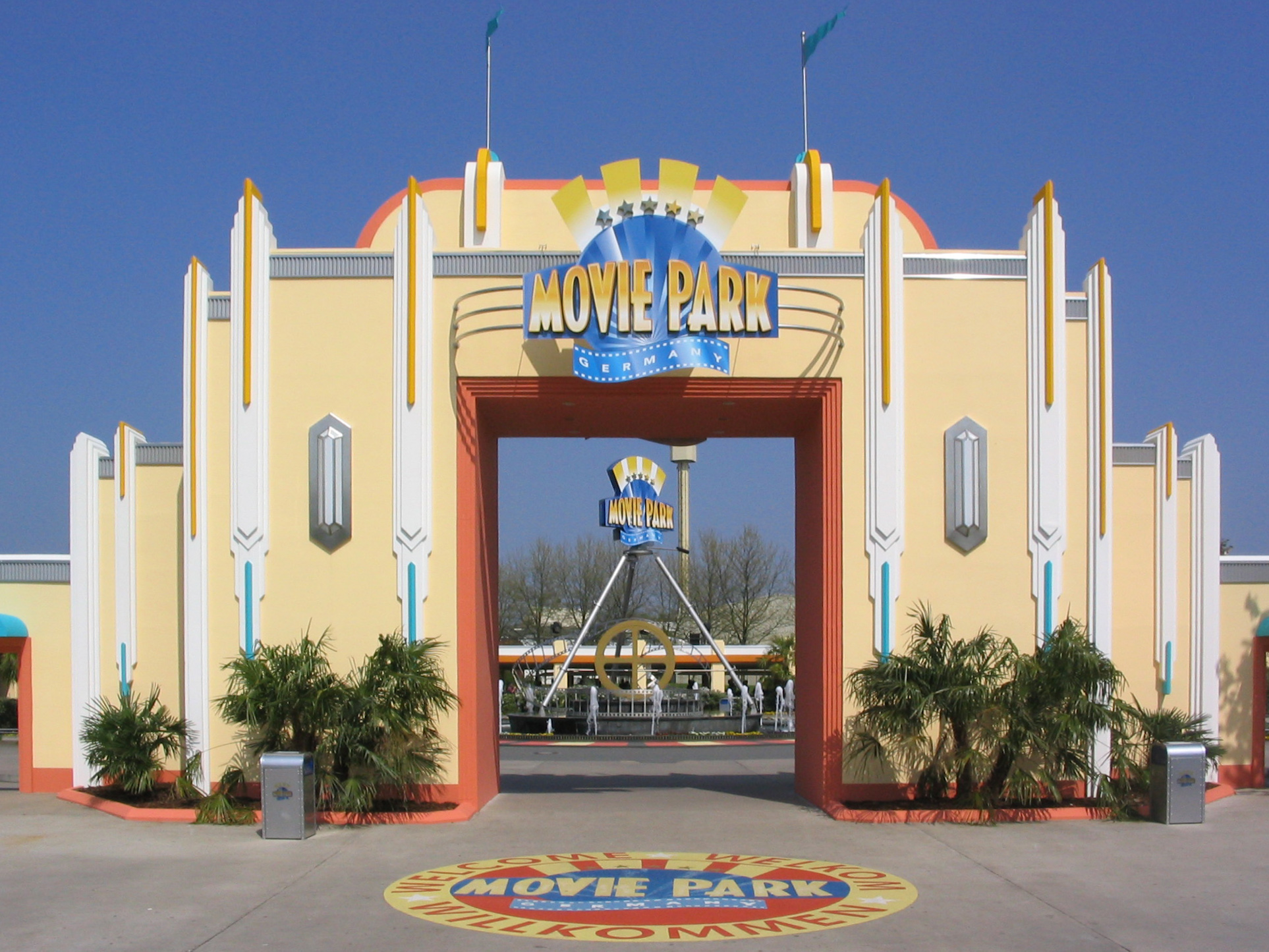
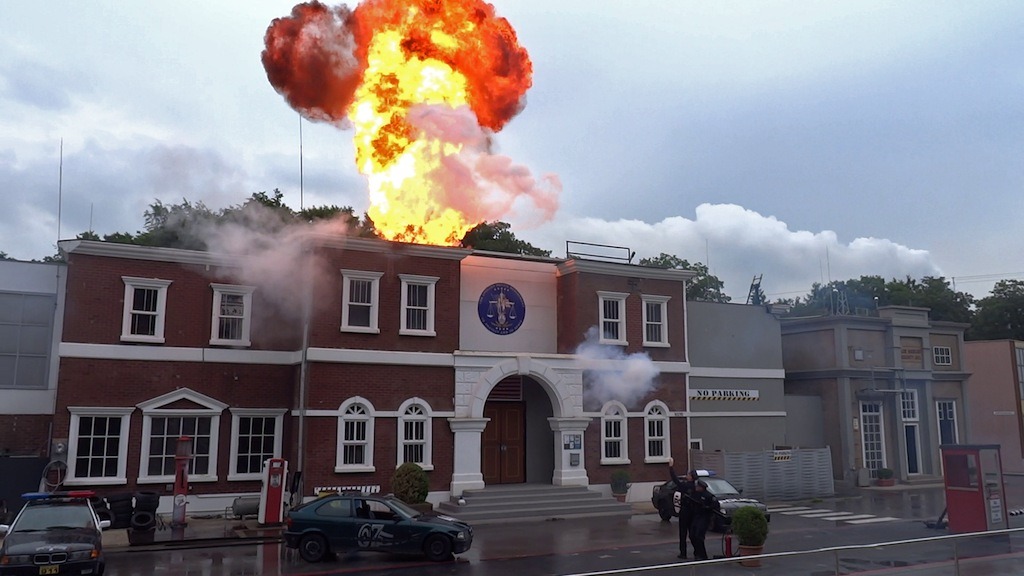
Away from hustle and bustle and bright lights of Hollywood, past the palm treelined streets and white sand beaches of Florida, and beyond the Roman ruins on a century-old Italian studio lot is another example of the convergence of cinema and theme parks. Movie Park Germany is a cinema-based theme park in Bottrop-Kirchhellen. It “is a unique theme park, which is devoted entirely to movies. The former Warner Bros Movie World has six theme areas and more than 40 attractions and shows. It will not take long before you feel like a movie star or cartoon hero!” (About Us, 2014).

Moviepark-TorMuch in the vein of Universal Studios Florida, Movie Park Germany blends both the benefits of an amusement park with movie-based themes throughout the whole park. Its motto is “Wow! I’m in the Movies.” According to the website, “Our visitors will not only have the opportunity to meet well-known series Heroes but also get to enjoy first class entertainment like an action-packed stunt show as well as two song and dance shows. For those guests who like it a bit more spooky, the park transforms itself at sunset into an extraordinaire chamber of horrors. In short: There’s a personal highlight for everyone!” (Movie Park Germany, 2014). Unlike Universal Studios parks which have a Halloween theme for two months a year, Movie Park Germany holds on to the very cinema theory that birthed out of Germany and found its way to Hollywood—German Expressionism. Some of the first movies were horror movies, and it is refreshing to see that this park is holding on to its horror heritage throughout the year (Movie Park Germany, 2014).

MovieParkGermanyTourClearly, the idea to create synergy between cinema and theme parks is at the forefront of media conglomerates and business holdings companies. It takes the best of 43 what each has to offer respectively and combines them to create a business entity that has the power to entertain, educate, immerse, and inspire all at the same time. For the guest this means that they can experience the magic of movies and TV in dynamic ways, and for the owners, this means unparalleled cash flows to fund movies, reinvest in the parks, or fund other ventures. But, one set of questions remains. How should a media company choose to theme the parks, what rides to make based on movies, and should a theme park attraction be in the minds of studio executives when looking at screenplays for future movies? At the end of the day, studio executives/media moguls who also run theme park divisions need to know what connections and moves to make in order to assure the mutual success of both the movies and the theme parks.

The final part in this series will be uploaded next week! It will include themes learned from the empirical research method used in this study. The focus groups were located in Florida, New York, Ohio, and California.

In order to return to the beginning of this series, click HERE!

“On Cinema and Theme Parks” (part 10)

My Book

The overall theme of movie-based theme parks has gone from exposure and education to simulation and immersion—much more experiential. Instead of seeing how Harry Potter movies are made, guests at the Studio-Parks want to feel like they are Harry and his friends. And, this is not something that could be achieved by the former models of original Universal Studios Parks or Disney’s Hollywood Studios. So, the parks have to change in order to remain relevant and viable tourist destinations. Concurrently, movie and television studios are going through their own evolutionary process. In many ways, a careful examination of modern cinema compared to its predecessors reveals that storytelling has been removed from its pedestal to play second fiddle to salesmanship.

As explored earlier, spectacle and visceral thrills are the principal drive for the modern (1990s-present) cinema-based theme park attractions, and, for some, they confirm the worst tendencies identified within the Hollywood blockbuster: the epitome of apparently vacuous rollercoaster experiences. According to King (2000), “the label ‘thrill ride’ is a term often used approvingly in Hollywood publicity and by some film reviewers in the press, presumably because a trill ride is precisely what many viewers want from modern cinema” (2000, P27). The late 1980s and the 1990s saw the arrival of theme park attractions that claim to allow the park guest to ride the movies; movies became theme park attractions. But now, theme park attractions are inspiring films. Beyond being the inspiration for films, the idea of being able to market a horror, action, or epic film or film franchise or the ability to create themed attractions from the narrative is at the forefront of studio executives’ minds, as cross-promotion is an important financial strategy (King, 2000).

CinecittaParkMapCreating attractions from cinema is not unique to the United States. The former Italian cinema powerhouse, from the early to mid twentieth century, Cinecittá Studios, known as the “Hollywood on the Tiber” is following suit with its American counterparts and converting the production lot(s) into a movie-based theme park. Located outside Rome, Cinecittá Studios, Italian for “Cinema City,” opened its gates this year (2014) to the public to experience the magic of movies on this side of the screen (Associated Press, 2014). According to Emmanuel Gout, president of Cinecitta, “Here, the idea is that people will also enter not only sets, but the confusion of a place where we are shooting movie. Everything will be illusion…the visitor will become a protagonist of the day, becoming a star, becoming involved in some fake movie” (Associated Press, 2014).

CinecittaStreetsThe model of this theme park appears to be more reminiscent of how the classic American movie-based theme parks were setup; however, there is one big difference. At the new Cinecitta Studios (theme park), park guests will actually don costumes and take hold of props to act in scenes from movies. So, in many ways, this park differs from its American counterparts because it is not defaulting to digital simulations and special visual effects; instead, it’s using practical technologies to create the illusion that the guest is actually on the set in the movie as a character in a given scene. Still, three-time Academy Award® winning production designer Dante Ferretti knows that audiences and guests want more than an immersive experience into movies, but want thrills as well. So, there are rollercoasters and water slides, amidst Roman and Egyptian ruins, to accommodate those guests seeking more conventional amusement park attractions (Associated Press, 2014).

Catch what you missed by buying the book on AMAZON!

Return to the beginning of the series by clinking HERE.

“On Cinema and Theme Parks” part 4

My Book

Continued from Part 3

One medium being the extension of, or exhibiting a direct connection to, another medium is not a new concept. In fact, this concept of media convergence has been around for as long as multiple mediums have existed. In order to better understand the convergence or synergy that exists between cinema, in particular horror film, and theme parks, it is crucial to understand how we arrived at this point. One thing that film and themed entertainment both have in common is that each tells a story—in a different manner. But, the narrative is often quite similar. Prior to theme parks and cinema (film), there were plays, novels, and oral stories/traditions. The novel is an extension of the oral story, the play is an extension of the novel, cinema is an extension of the play, and the theme park is an extension of cinema. According to Dr. Henry Jenkins, “there has been an alarming concentration of the ownership of mainstream commercial media, with a small handful of multinational media conglomerates dominating all sectors of the entertainment industry” (2004, p1). This is clearly seen in the acquisition, exhibition, and development of theme park attractions based upon movies and, to a lesser extent, television shows.

The first cinemas were setup more like attractions than actual theatres. Perhaps more than coincidentally, theatres began springing up at the same time Coney Island opened its turnstiles around the beginning of the twentieth century; and at this time, cinema itself was still very much viewed as an attraction (Gunning, 1986). According to Tom Gunning (1986), “it was precisely the exhibitionist quality of turn-of-the-century popular art that made it attractive to the avant-garde” (1986, p66). So this concept of the convergence of cinema and theme park (or attraction) is one that dates all the way back to the early 1900s. Since some of the earliest films were of a surreal or horror nature, it is of no surprise that horror played a large role in the development of the cinema attraction. Much in the same way that early cinema was essentially a variety show, in essence, lacked a continuous diegesis, or narrative, the convergence of cinema and theme parks offers a variety of cinema-based attractions that are, indirectly at best, connected to each other. However, instead of the film, itself, being the attraction, cinema-based theme parks and attractions use the narrative provided by a work of cinema and uses elements of that film that can be translated into a real-world experience.

But as with any media convergence, there are also pitfalls to such a synergy between two powerful media. In order to best understand the pitfalls and promises in such a meeting, it is imperative to discuss convergence of two media in and of itself. Understanding the concept of convergence will better prepare filmmakers and themed entertainment designers to select the best elements of films to translate into themed attractions based on movies, in particular horror or action. According to the leader of research into the area of media convergence Henry Jenkins (2004), “media convergence is more than simply a technological shift. Convergence alters the relationship between existing technologies, industries, markets, genres, and audiences. Convergence refers to a process, but not an endpoint” (P1). Over the years, the relationship between cinema and theme parks has shifted. Before, cinema was the attraction; and now, the attraction is infused with cinema. And the handful of multinational media conglomerates own both methods of the exhibition of creativity. With the exception of the Walt Disney Company, many of the other media conglomerates have prominent interests in theme parks and film and television studios; and some also have interests in Broadway productions (i.e. Universal Studios’ Wicked and Sony Pictures’ Spider-Man).

Crossing over into new arenas of revenue requires access to vast media libraries, and that is what many of media conglomerates have at their disposal. This ability to converge areas of media interest in order to generate more revenue is something that contrasts with old Hollywood. Jenkins (2004) remarks that “old Hollywood focused on cinema, [and] the new media conglomerates have controlling interests across the entire entertainment industry” (P34). This convergence greatly influences the way society consumes media and entertainment (everything from movies to theme parks to music to toys and games). More than a cross-promotion of entertainment and media products, the convergence of cinema and theme parks is “a reconfiguration of media power and a reshaping of media aesthetics and economics” (Jenkins, 2004, P35). This reconfiguration comes in many shapes and forms. And, the horror film has found a place within the new configuration of entertainment media synergy. Specifically, the horror film has been used instrumentally in this reconfiguration; evidence of this can be seen in the prolific number of television shows (most popularly zombie shows), movies, and horror/Halloween themed events at theme parks (e.g. Busch Gardens’ Howl-O-Scream and Universal Studios’ Halloween Horror Nights). In these events, horror films provide a vast heritage from which theme parks can draw characters and plots to create temporary attractions to generate more income for the media company. Looking at many of the opening day attractions at movie-based theme parks, horror films were the first films to be translated into themed entertainment.

Part 1

Part 2

Part 3