“The LEGO Batman Movie” movie review

legobatmanNonstop antics, action, and thrills! Warner Bros. and Ratpac Dune present a movie that is equally one-hundred percent Batman whilst still completely LEGO. From the moment the opening title sequence of logos appears under the voiceover of a self-aware Batman, this brilliant animated film will take captive your attention and draw you in with a batarang of perfectly choreographed fight scenes and incredibly well timed self-reflexive humor. The LEGO Batman Movie is an entertaining combination of a contemporary story on the backdrop of Batman nostalgia. Whether you are a fan of the show from the 1960s, the Burton universe (as I am), the dark world of Nolan, or Snyder’s, you will find strategically placed references that fit exceptionally well into this LEGO universe. While the film is aimed at a younger audience, there are humor, easter eggs, and allusions to the various Batman shows and movies for adults to appreciate. Underscoring the over-the-top high concept plot, is a heartwarming story of love, family, and friends. This Batman movie pulls out all the stops as most, if not all, Batman’s villains receive screen time as well as other members of the Justice League with Batgirl and Robin. Oh yeah, the Joker IS actually in this Batman movie! With a 90% on Rotten Tomatoes and an 8.1 on IMDb, this film is sure to be a huge success this weekend.

When after a failed attempt at a takeover of Gotham by the Joker (Zach Galifianakis) and his henchmen, Batman (Will Arnett) is all too happy to accept all the credit for stopping the squad of villains. However, this time is different. The Joker and his henchmen give themselves up to the new Commissioner [Barbara] Gordon (Rosario Dawson). When the law enforcement and people of Gotham conclude that there is no longer a need for a masked vigilante, Batman finds himself having an identity crisis. Meanwhile, at a party, Bruce Wayne accidentally adopts young Richard Greyson (Michael Cera), and now is faced with the challenge of balancing his newfound role as a parent with Batman’s penchant for crime fighting. With pressures from Alfred (Ralph Fiennes) and Barbara Gordon mourning in Batman’s personal and professional lives, he must work through these challenges in order to save the city. Only this time, he may not be able to do it on his own.

What’s not to like??? The LEGO Batman Movie is one of those animated films that is perfect for (1) the whole family and groups of friends, as well as (2) legacy and new Batman fans. Just the animation and production design are positively mind blowing. With few exceptions, every design in the film from people to buildings and vehicles can be created with those iconic plastic building blocks. Much like with the previous LEGO movie, other LEGO universes get screen time as well (some of which are mentioned by name and others are implied), such as Lord of the RingsHarry PotterJurassic ParkKing Kong and more. With all the characters in the film, the focus is never shifted from Batman and Joker. There are many rabbit trails the film could have gone down, but it always stays true to the central characters. Overstimulation is another risk in a film like this one; but, for all the action sequences and ensemble casts, never once does the film feel that it is way too much to take in and enjoy. On top of the brilliant animation and design, is solid writing with excellent character development. Crafting the vision is director Chris McKay. Selecting the right director to handle all the elements of a LEGO movie is no short order. And Warner Bros and Ratpac Dune made a killer choice in McKay who brought us Robot Chicken: Star Wars: Episode III.

One of my personal favorite elements from the movie is the nostalgia meticulously and strategically woven into the plot. If you grew up watching the show from the 1960s or even reruns with your parents, you will be surprised with the echoes of the past and how they fit in perfectly with this Batman world written by Seth Grahame-Smith et al. Even the pow, bam, zap sound effect bubbles make a cameo appearance. The LEGO Batman Movie offers the best of all the Batman stories over the years. As I am not familiar with the Batman comics, I imagine that there are comic book references in the film for the enjoyment of that audience as well. Not as self-aware as Deadpool, this film does contain a hint of self-awareness, but never takes the place of the foreground action; however, it supports the main story nicely. Even the costumes are representative of many Batman universes. For the most part, Batman’s costume is rooted in the one worn by Michael Keaton in Batman and Batman Returns, but Batgirl and Robin’s costumes, respectively, are more reminiscent of the show from the 1960s. Joker is an excellent combination of the, in my opinion, definitive Joker: Jack Nicholson but hints of the more recent Jared Leto and Heath Ledger Jokers are in his costume, makeup, and behavior. We even get a more accurate representation of Harley Quinn in this film. There is quite literally something for everyone in LEGO Batman.

Looking for a great film to watch this weekend that doesn’t involve some sappy victimized Stockholm Syndrome-esque warped love story? Then head to your local theatre to catch The LEGO Batman Movie on the big screen! What better way to spend the weekend leading up to Valentine’s Day than laughing with your date??? Even if you’re spending Valentine’s Batman style–flying solo–you will still have a great time at this movie.

A Short History of How Cinema Shaped Theme Parks (part 1)

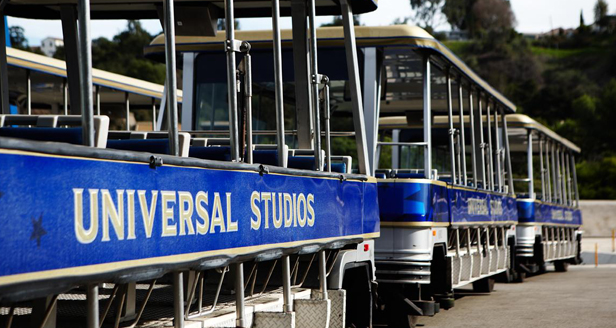
studiotourtramEver since the late 19th and early 20th centuries, audiences from around the world have been drawn to the temple of the height of the visual and performing arts, the cinema. In many ways, the early days regarded the cinema as an attraction, an amusement. In fact, many of the first silent films were shown in carnivals. Nickelodeons dotted the landscape in drug stores and clubs. Elaborate and ornate movie palaces housed some of the first big screens, and orchestras played along with the narrative. Over the last century, cinema has gone from existing in sideshows to achieving a dominant presence in our society that has evolved into the very rollercoaster to which many critics and lay people compare it; and, not only metaphorically…

For the full article, click HERE to be redirected to Thrillz! YOUR source for theme park news, reviews, and information from around the world!


Cinecittà World & Movie Park Germany: Placing Guests in the Magic of Movie Making

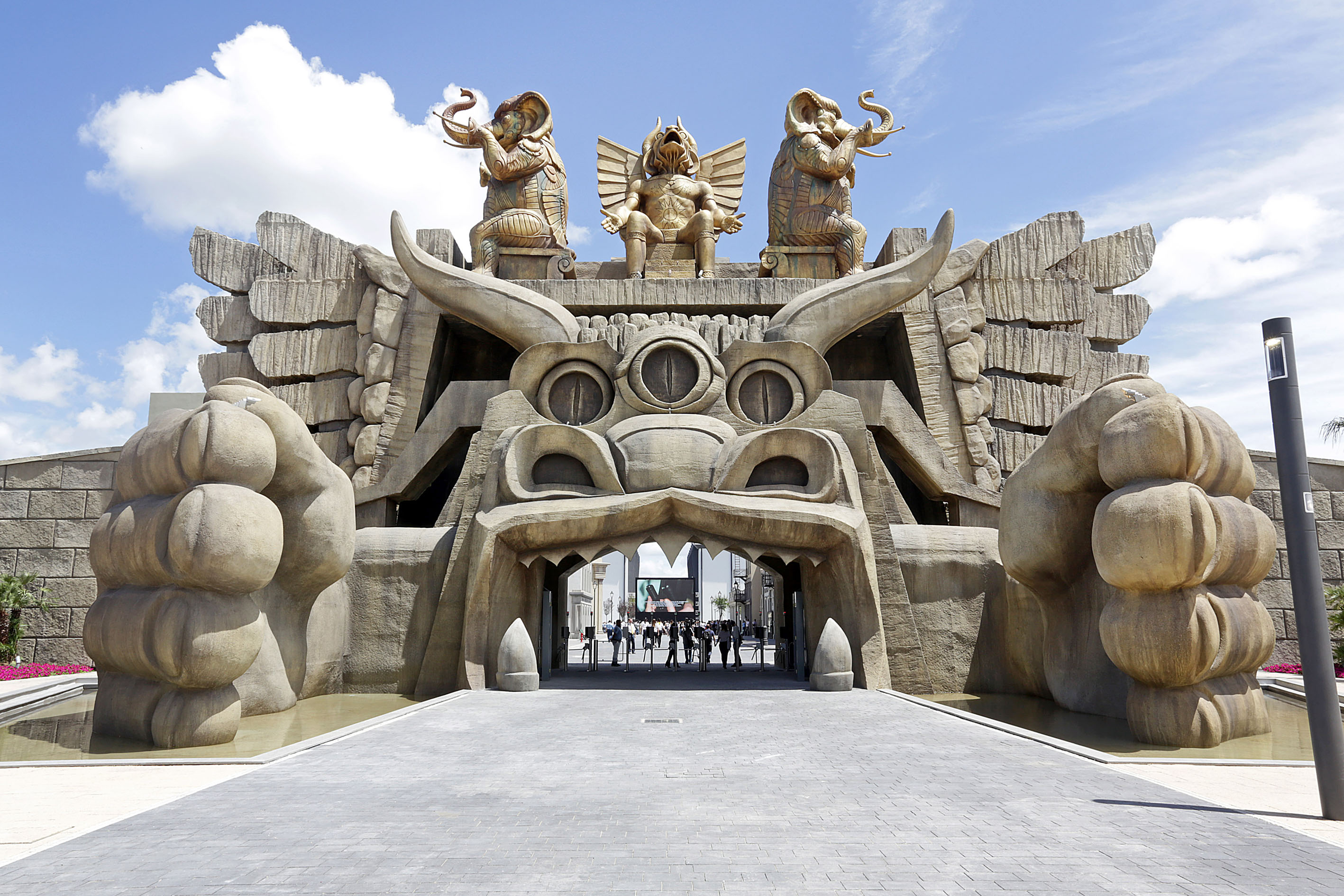
cinecittaworld1The overall theme of movie-based theme parks has gone from exposure and education to simulation and immersion—much more experiential. Instead of seeing how Harry Pottermovies are made, guests at Universal Studios (FL and CA) and other studio-parks want to feel like they are Harry and his friends. And, this is not something that could be achieved by the former models of the original concepts for Universal Studios Parks or Disney’s Hollywood Studios. So, the parks have to change in order to remain relevant and viable tourist destinations. Concurrently, movie and television studios are going through their own evolutionary process. In many ways, a careful examination of modern cinema compared to its predecessors reveals that storytelling has been removed from its pedestal to play second fiddle to salesmanship.

Spectacle and visceral thrills are the principal drive for the modern (1990s-present) cinema-based theme park attractions; and, for some, they confirm the worst tendencies identified within the Hollywood blockbuster: the epitome of apparently vacuous rollercoaster experiences. According to researcher Geoff King, “the label ‘thrill ride’ is a term often used approvingly in Hollywood publicity and by some film reviewers in the press, presumably because a thrill ride is precisely what many viewers want from modern cinema.” The late 1980s and the 1990s saw the arrival of theme park attractions that claim to allow the park guest to ride the movies; movies became theme park attractions. But now, theme park attractions are inspiring films. Beyond being the inspiration for films, the idea of being able to market a horror, action, or epic film or film franchise or the ability to create themed attractions from the narrative is at the forefront of studio executives’ minds, as cross-promotion is an important financial strategy.

Creating attractions from cinema is not unique to the United States. The former Italian cinema powerhouse, from the early to mid twentieth century, Cinecittá Studios, known as the “Hollywood on the Tiber” is following suit with its American counterparts and converting the production lot(s) into a movie-based theme park. Located outside Rome, Cinecittá Studios, Italian for “Cinema City,” opened its gates in 2014 to the public to experience the magic of movies on this side of the screen. President of Cinecitta World Emmanuel Gout states, “Here, the idea is that people will also enter not only sets, but the confusion of a place where we are shooting movie. Everything will be illusion…the visitor will become a protagonist of the day, becoming a star, becoming involved in some fake movie.”

The model of this theme park appears to be more reminiscent of how the classic American movie-based theme parks were setup; however, there is one big difference. At the new Cinecitta Studios (theme park), park guests will actually don costumes and take hold of props to act in scenes from movies. So, in many ways, this park differs from its American counterparts because it is not defaulting to digital simulations and special visual effects; instead, it’s using practical technologies to create the illusion that the guest is actually on the set in the movie as a character in a given scene. Still, three-time Academy Award® winning production designer Dante Ferretti knows that audiences and guests want more than an immersive experience into movies, but want thrills as well. So, there are rollercoasters and water slides, amidst Roman and Egyptian ruins, to accommodate those guests seeking more conventional amusement park attractions.

Away from hustle and bustle and bright lights of Hollywood, past the palm treelined streets and white sand beaches of Florida, and beyond the Roman ruins on a century-old Italian studio lot is another example of the convergence of cinema and theme parks. Movie Park Germany is a cinema-based theme park in Bottrop-Kirchhellen. It “is a unique theme park, which is devoted entirely to movies. The former Warner Bros Movie World has six theme areas and more than 40 attractions and shows. It will not take long before you feel like a movie star or cartoon hero!.”

Much in the vein of Universal Studios Florida, Movie Park Germany blends both the benefits of an amusement park with movie-based themes throughout the whole park. Its motto is “Wow! I’m in the Movies.” According to the website, “Our visitors will not only have the opportunity to meet well-known series Heroes but also get to enjoy first class entertainment like an action-packed stunt show as well as two song and dance shows. For those guests who like it a bit more spooky, the park transforms itself at sunset into an extraordinaire chamber of horrors. In short: There’s a personal highlight for everyone!.” Unlike Universal Studios parks which have a Halloween theme for two months a year, Movie Park Germany holds on to the very cinema theory that birthed out of Germany and found its way to Hollywood—German Expressionism. Some of the first movies were horror movies, and it is refreshing to see that this park is holding on to its horror heritage throughout the year.

Although many theme park enthusiasts first think of Florida and California, it is clear that there are many beautifully conceived and designed parks all around the world that are just beckoning for adventure to be had.

“Kubo and the Two Strings” movie review

kuboAbsolutely beautiful! A dazzling display of the best that cinema can be! Laika and Focus Features’ Kubo and the Two Strings is truly a testament to the art of motion pictures! Brilliantly animated in an eye-catching stylistic way, this film provides audiences with a simple and intimate journey through a dynamically epic world of adventure, laughter, and tears. Directed by Travis Knight, from the opening to the final fade to black, Kubo is arguably the best animated feature length film to hit theaters in a long time. It contains the incredible storytelling that few films, live-action or animated, strive for but often fail to accomplish. Rarely, do audiences witness a perfect film, but this one comes very close to being perfectly written, directed, acted, shot, edited, and produced. With an A-list of vocal talent behind the characters in this immaculately animated world, Kubo will surely impress all those who watch this fantastical story. In some ways, I could argue that this film displays signs of being self-aware. Self-aware in that this simple but effective visual story is all about the very concept of storytelling. Cecil B. DeMille said, “the greatest art is the art of storytelling;” and this film proves that, in a world of high concept blockbusters that are produced to simply generate revenue at the sacrifice of storytelling, there are films with beautiful imagery, writing, and even a great message that hold true to the very idea what launched more than 100 years of cinema.

Following a daring escape from an unknown enemy across a treacherous ocean of tsunami sized waves, a young women survives a nearly fatal crash and washes upon the shore of a beach in the shadow of an imposing mountain with her infant. Many years later, Kubo (Art Parkinson) has grown up to be a young man with a passion for storytelling that he learned from his mother. Never having fully recovered from the accident, so many years ago, Kubo has the responsibility to take care of his mother. Harnessing his talent for magical origami, a stringed instrument, and storytelling, Kubo makes a little money each day for him and his mother. Little did Kubo know that his mother’s warning to not stay outside of their home after dark was for good reason. Soon, Kubo will find himself on an epic journey to unlock a secret legacy that he could have only dreamed of. Along his journey, he meets up with a monkey (Charlize Theron) and a man-beetle (Matthew McConaughey) who protect and teach him along the way. Don’t blink, even for one second, because you may very well miss something of grave importance.

The first thing you will observe in this movie is the exquisite and stylistic combination of two different animation methods. Claymation, which most are familiar with, and the lesser used papermation. Although typically used by themselves to tell an animated story, the brilliant combination of both methods to concurrently tell this epic story will leave a lasting impression upon you. There is a beauty in this film unmatched by any other in recent times. In many ways, the visual appeal of this movie reminds me of the early Walt Disney and Pixar animated films. Audiences can easily witness the absolute passion in every movement, detail, and landscape. I was completely sucked into Kobo’s fantastic world of Japanese influence. In addition to outstanding technical achievements in animation, lighting, and cinematography, Kubo is a film that is equally outstanding in its ability to tell a simple but inspirational story. It is the epitome of an ideal relationship between artists and engineers. This film successfully combines an artisan handcrafted charm with the precision of sophisticated visual storytelling technologies in a dazzling display of cinematic art that will surely be cherished for a lifetime.

Simple. The plot is so simple but yet very much profound. While so many studios are cranking out franchises, adaptations, complex plots, and young adult dramas, the Laika production company chose a different route. It chose a route that proves that the mastery of visual storytelling that showcases the art of cinema is still alive. In a world of the business of moviemaking, Kubo returns us to the art of filmmaking. Not confined to art house theaters in Greenwich Village or West Hollywood, this film is evidence that truly artistic masterpieces are still desired by the American audience. “The art of making art, is putting it together” (Sunday in the Park with George). Knowing that just the leaf ship sequence at the turning point between the first and second acts took 19 months to create, design, and produce, it is clearly apparent that a tremendous amount of time, love, and energy went into every frame of this stunning movie. As someone who has a passion for the very concept of storytelling, this film brought tears to my eyes because of the sheer beauty of the film and the experience of watching it on the big screen. Although it is an endearing film filled with love and adventure, it is also quite scary during some of the intense conflict between Kubo and those who wish to do him harm. From Kobo’s magical origami birds and samurai warrior to the playful banter between Monkey and Beetle, I was awestruck at the brilliance of the film in both writing and visuals.

I highly recommend this film for those who have not seen it yet. I only wish I had made it to the movie before last night. After hearing what others have said and written about this movie, I have come to the same conclusion that many have voiced: this film is exceptional by any known measurable means of evaluating a film. If any animated film this year is destined for an Oscar nomination or win, this one is it.

Ryan teaches screenwriting at the University of Tampa. If you like this article, check out the others and FOLLOW this blog! Interested in Ryan making a guest appearance on your podcast or contributing to your website? Send him a DM on Twitter or email him at RLTerry1@gmail.com! You can catch Ryan most weeks at Studio Movie Grill Tampa, so if you’re in the area, feel free to catch a movie with him!

Follow him!

Twitter: RLTerry1

Instagram: RL_Terry

Innovative New Interactive “Harry Potter” Dark Ride Coming to Universal Orlando?

WWHP_LogoRecently, there have been rumors floating around regarding a possible new addition to Universal Orlando’s Islands of Adventure. Between the recent acquisition of the film rights to the Harry Potter franchise and the the newly uncovered patent, these evidences provide support that assists in substantiating these rumors; however, there has yet to be a formal announcement. This possible new addition brings up some issues to consider. Already, there are park regulars who are not welcoming this decision. Why not? Because Universal would tear down the Dragon Challenge (formerly Dueling Dragons) roller coaster in Hogsmeade and replace it with an interactive dark ride that would enable park guests to test out their technique and spells. Think Toy Story Midway Mania but perfected and with an increased experiential factor. Even before this rumor, Universal is increasingly being thought of as a theme park overrun with 3D screen attractions. Anecdotally, this is an accurate observation since the most recent additions to the park are all on similar ride platforms (just with different thumbing). One of the elements that I have researched is the requirement that the park guest experience physical movement and be emerged into a psychical atmosphere that transports the guest from the real world into a world of fantasy, adventure, or horror. Although this new ride sounds impressive and innovative, it bears a striking resemblance to many of the attractions that already exist. While no one would really complain about an indoor attraction, as Florida is notoriously hot and humid more than half the year, the concept of a ride moving in front of 3D screens does not appear to be eliciting the response that was intended.

CedarPointOne of the primary elements that separates a theme park from an amusement park is the concept of continuous storytelling complete with proprietary theming. While amusement parks build more rollercoasters and other visceral thrill rides, theme parks create thrilling atmospheres and experiences. It’s a fine line. Take Cedar Point v. Walt Disney World for instance (while ignoring the former’s seasonal operation). Both parks offer amusement, thrill, and entertainment; yet, they are both vastly different experiences. Remember in geometry: while both are polygons, every square is a rectangle but not every rectangle is a square? That principle applies to this analogy as well with WDW being the square and Cedar Point being the rectangle. What makes the difference? Intellectual property, theming, and story. If one were to total up the number of roller coasters or traditional thrill rides at both Cedar Point and WDW respectively, obviously Cedar Point’s numbers would dwarf WDW’s. That’s because the focus of the park experience is different at both places. The focus of Cedar Point is on the thrill while the focus at WDW is the experience (or immersion). The former does not adhere to any cohearant or continuous theming while the latter has built a vast empire on theming and story. A similar argument can be made with cinema. Literary and cinema researchers Linda Williams and Geoff King both write about narrative vs spectacle. Amusement Parks like Cedar Point are almost entirely focussed on the spectacle of the park experience while WDW concerns itself more with the narrative of the experience (although, WDW does strike a balance between the two). Much like WDW, Universal Orlando Resort (and Universal Studios Hollywood) seek to create a thrilling atmosphere complete with rides, shows, and a high caliber experiential factor. Whether it’s the story OF the movies or about the stories told by cinema, Disney and Universal Parks transport the park guest from reality into fantasy.

Dragon-Challenge-695x361So, what does all that have to do with this possible (but likely) new Harry Potter dark ride at Universal’s Islands of Adventure (IOA)? A lot, actually. The controversy or concerns seem to stem from Universal’s trend away from physical to virtual environments. Not that 3D/virtual environments aren’t accompanied by the physical. For example, Escape from Gringotts pairs simulated elements with physical production design; however, there is a measurable trend to relying heavily upon 3D IMAX screens as opposed to tangible production design. A great example of this trend is the new King Kong attraction at IOA. The outside of the show building and the queue are impressive. It looks and feels just like you are a character in the movie–cool right? After you pass through the massive gates to Kong’s jungle, the attraction is 75-80% 3D screens. Likewise, the Transformers attraction at Universal Studios Florida/Hollywood is also comprised of mostly 3D screens.

DragonChallengeLosing a traditional roller coaster in exchange for another 3D dark ride could likely rub some park guests the wrong way. Although park guests of the Disney and Universal Parks are there for the experience, story, and incredible themed design, this does not negate the desire for more traditional amusement within these worlds of fantasy. Looking at the parks of Central/West Central Florida, it is clear that Busch Gardens has the largest number of roller coasters, and there are many park regulars, including myself, who go there for the traditional thrill rides. On a side note: I also find the methods Busch Gardens integrates the animal encounters and experiences outstanding–best of what a zoo and amusement park offers. Anyway. With Universal possibly removing a roller coaster that can cycle guests very quickly (due to the two tracks of Fire/Ice) and replacing it with a greatly mitigated cycling attraction like a 3D dark ride, it could prompt longer waits for a similar experience (Transformers v Spider-Man) that can be had at the other 3D attractions. Another forecasted closure in the near future is Revenge of the Mummy. Again, this is a popular traditional (indoor) high speed roller coaster that may be replaced by a 3D style attraction. Even though Universal and Disneyland has to work around issue of being land-locked when planning expansions and improvements whereas WDW has geographic room for expansions, is replacing traditional roller coasters with 3D dark rides the way to go?

I am totally excited for expansions to the Wizarding World of Harry Potter (WWHP) in light of the film rights acquisition and the new movies. I am even more excited to see additions made to the parks that I frequent the most! However, I don’t believe it best planning to sacrifice more traditional rides. The best solution would be to design an attraction that would provide a platform for gusts to test out their magical skills while experiencing the visceral thrill of a coaster type ride. As with all industries, theme parks too have to change with time and with the desires of those who buy the tickets. Theme parks are a business model usually owned by media conglomerates. If the addition of 3D attractions is what increases revenue, then that is the decision that is to be made. The business of filmmaking is also very similar in that respect. I hope that the possible new attraction is one that breaks the mold of the typical 3D screen moving ride and reaches new innovative design heights! We will just have to wait and see and we learn more about these upcoming changes.