NETWORK 50th Anniversary Review

When satire ceases being satire–we’re living inside it.
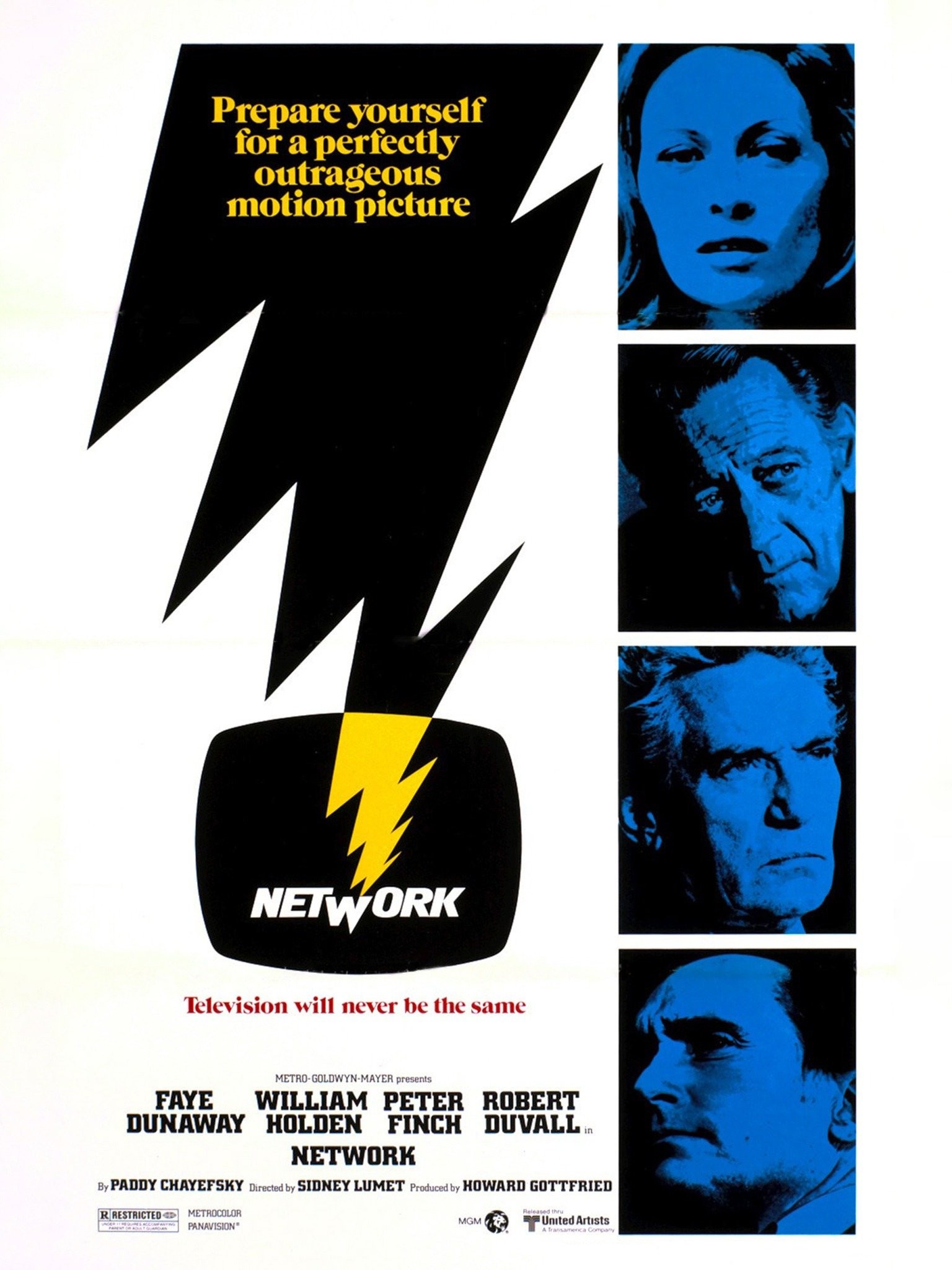
There are films that feel timely, films that feel dated, and then there is Network—a work so disturbingly elastic that it seems to recalibrate its relevance with each passing decade. What Sidney Lumet’s incendiary masterpiece offered in 1976 as provocation now functions as diagnosis. Network ceased being satire the moment we began living inside it. And at fifty years on, it is no longer prophetic so much as instructional—a grim field manual for the media ecosystem we willingly built.

On its surface, Network is a scathing critique of television news and the corrosive marriage between journalism and entertainment. But that reading now feels almost quaint. Today, the film operates as a far more expansive lens—one through which we can examine social media’s performative outrage, the collapse of editorial integrity, the rise of influencers over actors, and “content” replacing cinema as both commodity and aspiration. The film’s possibilities for interpretation are not merely endless; they are inescapable.

You can listen to the NETWORK episode of ReelTalk, which serves as a great companion piece to this article through your favorite podcast service. For your convenience, I’ve included some links that may work for you.

When I survey the contemporary media landscape—where outrage is currency, truth is malleable, and spectacle supplants substance—I often find myself echoing Howard Beale’s immortal lament: “I’m as mad as hell, and I’m not going to take this anymore.” The tragedy, of course, is that Beale’s righteous fury is swiftly commodified, packaged, and sold back to the public. In Network, that process is the warning. In 2026, it is the business model.

What Network ultimately offers is not just a critique of television news, but an elegy for every so-called Golden Age of legacy media—journalism, cinema, and serialized television alike. Watching it now, I am reminded of Norma Desmond’s aching declaration in Sunset Boulevard: “I am big. It’s the pictures that got small.” Substitute “pictures” for platforms, algorithms, and engagement metrics, and the lament lands with devastating clarity. In my view, social media and streaming have not merely disrupted cinema and television; they have delivered a mortal wound—one from which craft, patience, and collective cultural experience may never fully recover.

Network endures first and foremost because it is built on one of the most ferocious screenplays ever put to film. Paddy Chayefsky’s Oscar-winning script is not merely well-written; it is weaponized language—monologues that cut like scalpels, dialogue that oscillates between blistering satire and operatic tragedy, and ideas so densely packed they continue to unfold decades later. This is writing that trusts intelligence, that dares to be verbose, ideological, and confrontational in a way modern studio cinema rarely permits. Chayefsky understood that words—spoken with conviction—could be more explosive than spectacle, and he built Network accordingly.

What makes the screenplay extraordinary is its refusal to choose a single target. It indicts television news, corporate capitalism, religious fervor, political apathy, and audience complicity with equal venom. The famous “mad as hell” speech is not a populist rallying cry so much as a trap—an emotional release engineered to be monetized, emptied of meaning, and repackaged as programming. Chayefsky was not predicting outrage culture; he was anatomizing it. In an era where dialogue is often sanded down to algorithm-friendly soundbites, Network feels almost alien in its literary ambition—proof that cinema once trusted language to carry weight, risk, and consequence.

Sidney Lumet’s direction is the perfect counterbalance: disciplined, precise, and deliberately unflashy. Lumet stages the film like a moral courtroom drama, allowing performances and ideas to occupy the foreground while the camera observes with quiet authority. His restraint is crucial. Rather than amplifying the satire through stylistic excess, Lumet grounds the absurdity in realism—office spaces feel oppressive, boardrooms feel sterile, and television studios feel eerily sacred. The effect is chilling: the madness is not heightened by cinematic flourish; it emerges organically from systems that feel frighteningly familiar.

Together, Chayefsky and Lumet create a film that feels less like a movie and more like a controlled detonation. There is no indulgence, no wasted motion, no attempt to soften the blow. In contrast to today’s cinema—often drowned in visual noise, diluted themes, and studio-mandated ambiguity—Network stands as a reminder of what happens when writing and direction operate with absolute clarity of purpose. It is fearless, articulate, and devastatingly focused. And perhaps most damning of all: it proves that cinema once had the courage to tell audiences the truth, even when that truth was deeply uncomfortable.

Yet if Network endures as forcefully as it does, it is not solely because of its prescience. It endures because it is performed with astonishing precision and gravitas by one of the greatest ensembles ever assembled. Peter Finch’s Howard Beale remains one of cinema’s most unforgettable figures—a man whose breakdown is mistaken for authenticity, whose humanity is exploited until nothing remains. Finch’s posthumous Academy Award win feels less like recognition than inevitability.

William Holden, meanwhile, brings a weary, world-worn melancholy to Max Schumacher that resonates deeply with his earlier turn as Joe Gillis in Sunset Boulevard. Both characters are men who recognize the rot of the system even as they remain complicit within it—observers with just enough moral clarity to feel shame, but not enough power to stop the machine. Holden’s quiet resignation here serves as the film’s conscience, a reminder of what professionalism and restraint once meant.

And then there is Faye Dunaway, delivering a tour de force for the ages—one of those rare performances that does not merely dominate a film, but defines an era of acting. Her Diana Christensen is ambition incarnate: ice-cold, ferociously intelligent, and utterly unencumbered by empathy. Dunaway doesn’t soften the character or seek audience approval; she weaponizes Diana’s ruthlessness, allowing her to move through the film with the predatory calm of someone who understands power not as responsibility, but as leverage. The performance is so precise and so unflinching that it almost feels inhuman, as though Diana has already evolved into the algorithmic logic the film warns us about—ratings as morality, attention as currency, and human cost as an acceptable casualty.

It is no accident that Dunaway earned the Academy Award for Best Actress for this role. The Oscar was not simply recognition of a great performance; it was an acknowledgment of something rarer—a character so vividly realized that she became a cultural archetype. Diana Christensen is not just a television executive; she is the prototype for the modern media operator, the spiritual ancestor of today’s content strategists, brand architects, and engagement-obsessed executives. Dunaway plays her with surgical control, her clipped delivery and laser-focused gaze conveying a woman who has replaced conscience with metrics long before such thinking became normalized.

In the broader context of film history, Dunaway’s work in Network cements her status as one of the greatest actresses of all time—very much in the lineage of Bette Davis and Joan Crawford, yet operating outside the classical Golden Age of Hollywood. Like them, Dunaway possessed an unapologetic intensity, a willingness to embrace unlikable women, and a commanding screen presence that bent films around her gravitational pull. But unlike Davis or Crawford, her era offered fewer guardrails and less mythmaking; Dunaway emerged during a transitional moment in American cinema, when performances could be raw, confrontational, and morally untidy.

That makes her Diana Christensen all the more extraordinary. It is not a performance cushioned by studio glamour or softened by melodrama—it is sharp, modern, and terrifyingly plausible. Decades later, Dunaway’s Oscar-winning turn feels less like a relic of 1970s cinema and more like a warning label we ignored.

The supporting cast—Beatrice Straight, Ned Beatty, Robert Duvall—forms a devastating chorus, each representing a different facet of institutional decay. Straight’s Oscar-winning performance, in particular, remains one of the most remarkable achievements in Academy history. The fact that Straight’s Academy Award for Best Supporting Actress was won with comparatively limited screen time only underscores the magnitude of her presence. Every line, every glance carries weight. Gravitas is not measured in minutes.

It is impossible to discuss Network without reckoning with its unprecedented—and now unthinkable—Oscar performance. The film received ten Academy Award nominations, including Best Picture, Best Director, and an astonishing four acting nominations across all performance categories. Even more remarkable: Network won three of the four acting awards—Peter Finch (Best Actor), Faye Dunaway (Best Actress), and Beatrice Straight (Best Supporting Actress)—with Finch’s win occurring posthumously. That trifecta remains a singular achievement in Oscar history.

What makes this feat so haunting in retrospect is not merely its rarity, but what it represents: a time when the Academy rewarded performance-driven cinema rooted in language, ideas, and moral urgency. These were not roles engineered for “Oscar moments” clipped for social media circulation. They were fully realized characters inhabiting a screenplay that demanded intelligence, restraint, and theatrical rigor. Even Beatrice Straight’s win—earned with fewer than six minutes of screen time—speaks to an era when gravitas mattered more than exposure, and emotional truth outweighed narrative gymnastics.

Contrast that with the modern awards landscape, where performances are often subsumed by brand visibility, platform allegiance, and campaign machinery. Today’s Oscars frequently feel less like a celebration of cinema than a referendum on cultural relevance as defined by streaming metrics and algorithmic reach. In that context, Network’s acting sweep feels not merely impressive, but elegiac—another artifact from a period when cinema trusted adults to speak, listen, and think.

This is where Network dovetails uncomfortably with my broader reflections on the erosion of cinematic prestige and journalistic integrity. The film arrived at a moment when studios still believed movies could challenge audiences, when networks still pretended journalism was a public service, and when awards bodies still recognized craft over content. That ecosystem no longer exists.

Today, companies like Netflix and Disney—titans of scale and convenience—have played outsized roles in flattening the cultural landscape. Netflix’s content-first philosophy has blurred the line between cinema and disposable product, prioritizing volume over vision and treating storytelling as a data problem to be optimized rather than an art form to be refined. Disney, meanwhile, has transformed legacy filmmaking into brand maintenance, where risk is minimized, mythmaking is franchised, and even news-adjacent programming is filtered through spectacle and marketability.

In that environment, Network feels almost confrontational. It reminds us that journalism once aspired to truth rather than virality, that cinema once valued language over noise, and that performances once carried weight beyond their runtime. The film’s Oscar dominance is not simply a historical footnote—it is a marker of how far the industry has drifted from rewarding seriousness, substance, and moral clarity.

Ultimately, Network foresaw where we were headed with terrifying clarity. But perhaps its greatest sorrow is that it did not imagine how eagerly we would embrace that future. Our media landscape has not merely changed; it has lost its soul. Journalism has become performance. Cinema has become content. And authenticity—once a virtue—has been repurposed as branding. Half a century later, Network stands as both benchmark and indictment. It is proof that cinema once mattered enough to scare the powerful—and a reminder that somewhere along the way, we stopped demanding that it do so.
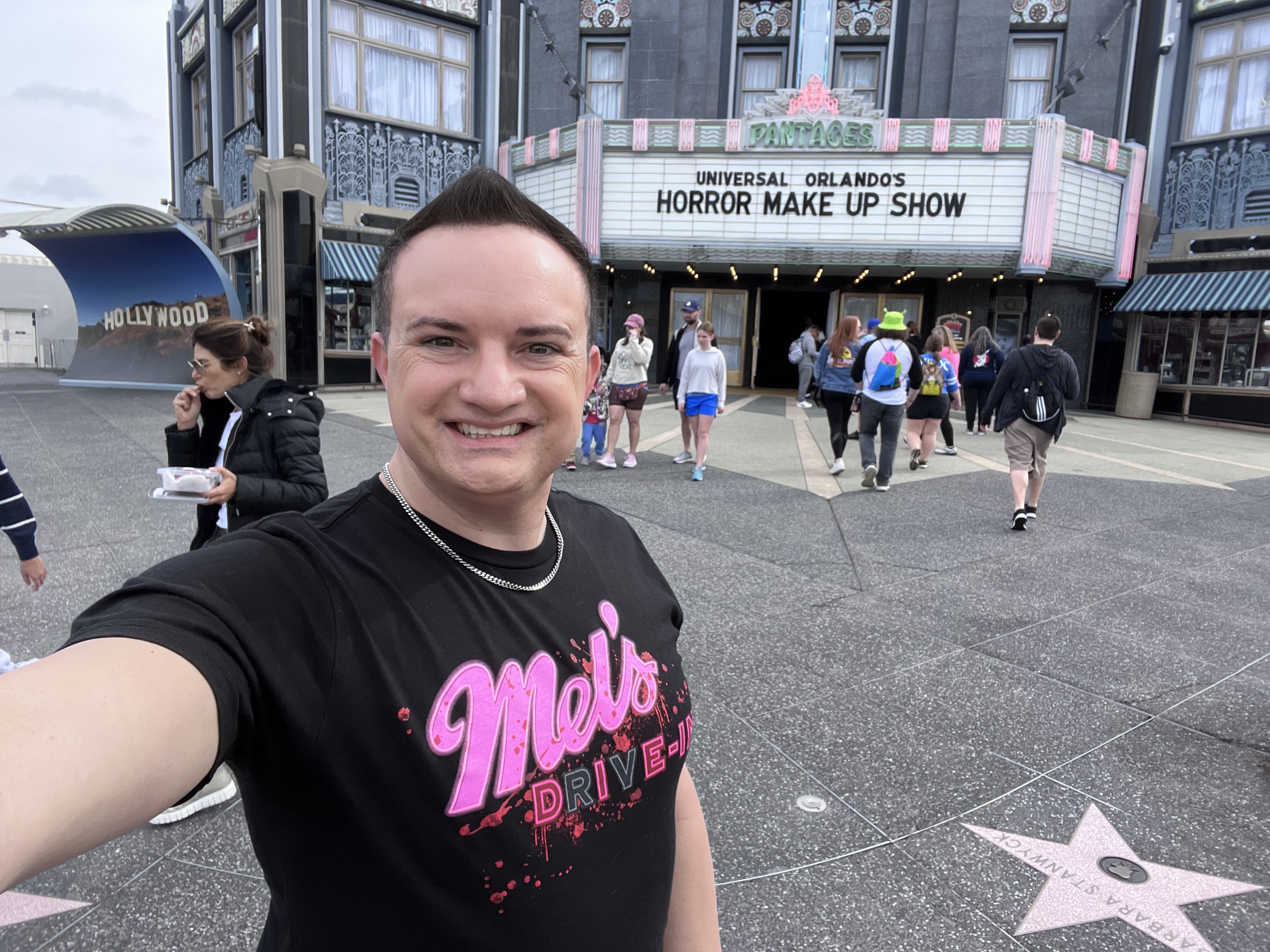
Ryan is the general manager for 90.7 WKGC Public Media and host of the show ReelTalk “where you can join the cinematic conversations frame by frame each week.” Additionally, he is the author of the upcoming film studies book titled Monsters, Madness, and Mayhem: Why People Love Horror. After teaching film studies for over eight years at the University of Tampa, he transitioned from the classroom to public media. He is a member of the Critics Association of Central Florida and Indie Film Critics of America. If you like this article, check out the others and FOLLOW this blog! Follow him on Twitter: RLTerry1 and LetterBoxd: RLTerry

40 YEARS OF FLASHDANCE…What a Feeling! a retrospective review

What a feeling! Grab your leg warmers and can of Aqua Net as we hit the dance floor to celebrate the cultural phenomenon that was and still is Flashdance.

The Oscar (and Grammy) winning dance movie Flashdance turns 40 this year on April 15th. Can you believe it’s been four decades since the iconic movie defined the music, dance, and fashion of the 1980s??? Forty years of electrifying music and dance that dazzles the senses. Winning the late Irene Cara and legendary composer Giorgio Moroder the Best Original Song Oscar and Grammy for Flashdance…What a Feeling! (Moroder was also nominated in the same year for his Scarface score) and earning Michael Sembello an Oscar nomination for Maniac, the titular 80s movie Flashdance remains an icon of music and dance that has transcended the decades and continues to be emulated in other media today. This is not a movie to be taken seriously; it’s a movie to be felt and experienced. And to its credit, it has remained popular. Take your passion and make it happen!

In case you are new to planet earth, Flashdance tells the story of Alex Owens (Jennifer Beals), a beautiful young woman who works a day job in a steel mill in Pittsburgh and dances in a bar at night. When Alex discovers that her handsome boss, Nick Hurley (Michael Nouri), is both interested in her and supportive of her performing career, she renews her efforts to get accepted into a prestigious dance conservatory. Although Alex is frightened of failure, she is cheered on by Nick, as well as by her mentor, former ballet performer Hanna Long (Lilia Skala).

More than a cultural smash hit, it was a tremendous success at the box offie too, because Flashdance is the third highest grossing film of 1983 behind Return of the Jedi and Terms of Endearment. In retrospect, this movie is veritably responsible for reviving the modern movie musical with its sexy complex dance sequences, bold fashion, and use of popular music.

Not many films can be recognized by a single shot, this is expressly true with those that may not have even seen the film, but Flashdance is instantly recognized by Beals’ silhouette leaning back on the chair with water dousing her. That cinematic moment has been parodied and paid tribute to in dozens of movies and TV shows from Elvira: Mistress of the Dark to Family Guy and even Deadpool 2. From Beals’ off-the-shoulder grey sweatshirt in the famous bra-removal scene to her knee-high leg warmers, bikini bottoms, and taut physique, many scenes in this movie will forever be engrained in our minds. It’s remarkable how this cheesy, low-budget dance film influenced the culture of an entire decade and continues to reassert itself in popular culture to this day. The incomparable footprint left by this movie can be felt everywhere.

It’s funny, whenever critics and fans talk about Flashdance, it’s almost never about the plot. Is there anything inordinately wrong with the plot–no–but there is nothing particularly remarkable or subversive about it either. It’s a simple variation of the rags to riches story or simply realizing a dream despite obstacles. At the intersection of performance art and motion pictures is where this movie lies, and lies there incredibly comfortably and confidently.

Flashdance is a movie which uses a paper-thin plot to connect sequences of montages and dance numbers, one right after the other–yet–somehow audiences, for forty years, are raptured by the music and dance. I cannot think of another movie that defied the odds of success and became a legitimate classic in the way Flashdance did.

It’s as if Bruckheimer and Adrian Lyne studied the elements of what makes a movie successful in the box office (and in popular culture), and then took those basic elements and loosely connected them together. Catchy music, bold fashion, sexy or provocative dances, mild/brief nudity, and relatable characters, these are the elements that Bruckheimer and Lyne put together in order to create movie magic and fantastic success. Then cap it all off with pure, unfiltered triumph in front of those that once looked down upon, and were skeptical of the central character.

Never once do you buy that Alex is a welder; furthermore, in retrospect, it’s clear that there are multiple people serving as the dancing Alex (which is something that is film is widely known and yet rocks it!). But it doesn’t matter. Why? Because it’s nearly impossible to watch this movie and not get drawn into its glitzy fantasy! But while we are on the topic of the Alex’ dancing in the film, I feel it’s important to highlight the talent that brought the exotic dancing to life! Working as Beals’ dancing body-doubles were accomplished dancers Marine Jahan, Sharon Shapiro, and breakdancer Richard “Crazy Legs” Colón.

Despite the contrived plot, the movie is not without deeper meaning. Some of the themes that can be closely read in Flashdance concern ideas such as identity, class, and cultural norms/expectations whether or not there is any absolution. Without stooping to pedantic commentary, the movie provides thoughtful content for those that seek a greater understanding of what the film has to say about the human experience. “When you give up your dream, you die.” A bit cliche perhaps, but still serves as the reminder that we do need our dreams in order to have something toward which we strive. We may never experience or realize that dream, but it’s the pursuit that is most meaningful.

We witness that there are many layers to Alex; she is a complex individual with multiple interests. She is just as confident and comfortable on a dance floor as she is welding as she is at a fine dining restaurant. This is such an important message that continues to be relevant–if not even more so–today! Flashdance is a reminder that diversity within a given group is so very important. Often times, popular culture projects prejudices, behaviors, and expectations onto a given group of people (or onto an individual within a group). Diversity of groups of people should never mean uniformity of thought within that group, it means there are a variety of individuals within any given group of people that have their own fears, beliefs, goals, and dreams. Alex may be a woman, but she is by no means obligated to only behave like a typical woman. Neither does she disparage those that would behave more typically; this movie celebrates variety! Variety of dance, variety of music, variety of people.

The degree to which this movie influenced virtually every area of popular culture is incalculable. Even exercise videos changed overnight. I posit that it’s entirely possible that 80s and 90s aerobics videos wouldn’t be the same if it wasn’t for Flashdance. For example, the footprint of this movie can be seen in the music, movements, and fashion of those Jane Fonda style aerobics videos. Even descendants of this stylistic athletic fashion can be observed in nearly every downtown and suburban area today; but we now refer to it as athleisure apparel.

Flashdance is the very definition of a crowd-pleasing film that defied the expectations of critics in 1983 and continues to be beloved by contemporary critics and audiences of all walks of life. The legacy of this movie is felt throughout media of all kinds! Even those that have never seen the movie recognize it by the music or iconic water dance shot. It’s a light-hearted melodrama that you cannot help but love. Just close your eyes, and feel the timeless rhythm of Flashdance!

Ryan teaches Film Studies and Screenwriting at the University of Tampa and is a member of the Critics Association of Central Florida and Indie Film Critics of America. If you like this article, check out the others and FOLLOW this blog! Interested in Ryan making a guest appearance on your podcast or contributing to your website? Send him a DM on Twitter. If you’re ever in Tampa or Orlando, feel free to catch a movie with him.

Follow him on Twitter: RLTerry1 and LetterBoxd: RLTerry

“Friday the 13th” Celebrates 40 Years

Ch ch ch, ah ah ah. Celebrating 40 years of terror! The sleepaway summer camp experience was forever changed in the summer of 1980 when a slasher slaughtered a bunch of horny teenagers along the shores of Crystal Lake. Spanning more than three decades and a dozen feature films (too bad it’s not a baker’s dozen, wink), the Friday the 13th franchise made us never look at a hockey mask in the same way after Part 3. Releasing in 1980, Friday the 13th helped shape the modern slasher along side Texas Chainsaw Massacre and HalloweenA Nightmare on Elm Street would arrive in 1984. With his trademark hockey mask and machete, very few have lived to tell the tale of their encounter with one of the most terrifying slashers to ever appear on the silver screen. His body count is in the triple digits! From screen to screen, Jason has gone from the cineplex to your TV and computer by way of interactive media. Unlike the campy-ness of Freddy or more focussed kills of Michael, Jason is by far the scariest of his iconic counterparts.

Variety! That is what you get with Jason as opposed to Michael. Although Leatherface and Michael began the teen slasher genre, it was Jason who revolutionized it by his variety of gruesome methods of killing his victims. Whereas Freddy, much like a cat, loves to toy with his victims before going in for the final kill, Jason is a death machine who wastes no time in taking out all those who stand in his way. Motivated by his death brought about by teenage lifeguards making love while he drown in the murky waters of Crystal Lake, Jason typically murders those who are engaging in promiscuous activities. Sometimes, he will throw you for a loop by taking out someone in a wheelchair or another passerby. He is relentless. And before universe crossovers were commonplace between franchises, Freddy vs Jason got together for a terrifyingly good time in 2003, and then again at Halloween Horror Nights in 2016. While installments 2–12 feature the mask-wearing (burlap sack followed by goalie mask) machete yielding hulking man, the first film features Mrs. Pamela Voorhees (Jason’s mom) as the killer. It’s because of this that the original film feels much different than the others. But it certainly inspired the rest of the franchise. Think of the first one as Hitchcock’s Psycho in reverse,  precisely how Norman thought it was happening. A killer mother who’s overprotective of her son. Although it’s not a “Jason” movie, it did lay the groundwork for the rest of the series and the ending of the film provides the haunting moment that gave birth to the lore and legend of Jason that would carry through the remainder of the films.

Keeping the identity of the killer a secret, until the very end of the film, sets this movie apart from its predecessors Halloween, Texas Chainsaw Massacre, and Jaws. Furthermore, Friday the 13th adds more gore, kills, and gruesome makeup effects that look cheesy today but were quite shocking, back in ’80, to up the ante against the competition. The news of the gruesome effects was so intriguing that horror fans turned out in masses to see the film. By all accounts the characters are not terribly memorable–we certainly don’t have a Laurie Strode–and the killer’s identity isn’t revealed long enough to truly form an opinion; but it’s that jump scare/twist at the end that gave birth to a mammoth of a franchise that has lasted for over thirty years on big and little screens alike.

The perspective of the killer. One of the most memorable elements from the original Friday the 13th is being in the shoes of our mysterious killer. Unlike other slashers that preceded, the identity is kept secret as I mention in the previous paragraph. But it’s HOW this is accomplished that still fascinates horror fans today. We are the killer, or at least, we see through the eyes of the slasher. By Miller writing this element into the screenplay, we are forced to see things from the killer’s perspective in order to relate to and empathize with the killer. Brilliant, really. Although we sometimes assume an objective position just before or during a kill, we spend enough time as the killer’s eyes that we begin to identify with the killer. Not only can we identify with the killer, but because the main characters are teenagers, and slasher horror films are particularly of interest to teens, teenagers can easily relate to the characters in the movie. Essentially, we have a perfect combination of relatability in this film. Audience members are forced, at times, to view characters and events from the killer’s perspective but many in the audience can and will concurrently identify with the main characters. A great way to scare the audience is to place them in a situation that is close enough to reality that the prospect of something similar happening is terrifying.

First appearing in Part II but not fully taking his iconic form until Part III, Jason Voorhees has endured as one of the most recognizable horror villains who still terrifies people today. Furthermore, he has evolved to represent various thematic symbols that provide ample opportunity for analyses and close readings. While Freddy’s motivation is clear–revenge, plain and simple but still solid–Jason’s motivation(s) is a bit more complex. His mother’s motivation is clear; much like Freddy, her motivation is revenge against the camp and those who represent the horny teenagers who allowed her son Jason to drown while “getting it on,” so to speak. Jason, on the other hand, demonstrates motivations that must reach beyond classic revenge. For starters, we cannot ignore his physiological deformities that undoubtedly affected his emotional and psychological health, predisposing him to atypical or abnormal behavior prior to his untimely drowning. Judging from the misty flashbacks in the original Friday the 13th while Mrs. Voorhees is delivering rushed exposition, we can gather from Jason’s shadowed body that he is likely afflicted with hydrocephalus, a condition that traps excess fluid in the cranial cavity that compresses the brain causing a significant loss of neural activity (essentially, born with brain damage). Beyond the internal problems from hydrocephalus, this abnormally developed cranium often causes the eyes to be widely spaced and the subject typically has an enlarged skull.

Now that we have established his cognitive and physiological disabilities, we can explore just how the aforementioned plus the persistent taunting, teasing, and physical abuse from the other campers in 1957 all formed the perfect storm to motivate Jason to be the unstoppable slasher we know today. If we follow the lore of the later films, we are prevued to Jason being forcibly thrown into the lake where he eventually drown while the camp counselors were engaging in the horizontal mamba. There is sufficient evidence from the cannon of Jason films that he likely suffers from schizophrenia. As many of us are aware, this emotionally and cognitively debilitating disease causes sufferers to hallucinate imagery and voices that are controlling their mind. Jason’s ability to communicate with his mother and Mrs. Voorhees’ ability to communicate with her son, is also evidence that the schizophrenia was passed from mother to son. In real life, this disease can be hereditary. So, it is not a far reaching plausible idea to hypothesize that Mrs. Voorhees passed her schizophrenia on to Jason. But unlike mother, Jason suffered from additional disabilities that increased the intensity of the cognitive disease.

Formerly known as multiple personality syndrome, dissociative identity disorder (DID) is another affliction that Jason demonstrates through his abnormal behavior. DID is a severe psychological disorder that fragments an individual’s personality into two or more distinct personalities (or identities) coexisting, switching from one to another. Think of it as two or more people inhabiting the same body. Although one can be predisposed to DID, as Jason likely was, this disorder is often brought on by repetitive childhood trauma (which Jason experienced). Perhaps sometimes “a cigar may only be a cigar” but in this case, a mask is more than a mask. The trademark hockey goalie mask! What is it? It’s a mechanism or tool that enables Jason to disconnect himself from the murders he commits. By wearing the mask, he figuratively dissociates himself from the gruesome murders. The wearing of the mask is a direct result of DID because the mind processes the mask as conduit through which to engage in abnormal behavior because the abnormal behavior cannot be reconciled against the true self. In a sense, the mask allows for active cognitive dissonance because the behavior is opposite of how the brain wants to process information or experiences. This dissociation with the violent behaviors, enables Jason to continue on his murderous campaigns without his conscience ever prompting him to question his choices. Without the mask, he is vulnerable and may even question what he is doing; but with the mask, he is a killing machine.

The setting of Friday the 13th is also something of note. Much like Hitchcock did with the privacy of one’s bathroom in Psycho, Miller set the events of the original at a summer camp in order to shock the mind because it’s an innocent place that is about to play host to something traumatic and uncanny. Kids and teenagers attend sleepaway summer camps every year. They are traditionally seen as places where you form platonic or romantic relationships with your fellow campers or counselors. They are places of innocence that get a violent treatment in this film. Unlike Psycho where we are not prevued to the violent past of the iconic location and thus proceed through the story with our guard down, we are immediately introduced to Camp Crystal Lake’s violent past between the opening scene and the townsfolk. So, we are primed to expect something macabre at the camp. This does one very important thing. The camp immediately possesses an eerie feel, a feeling of dread of what is about to happen. The once popular summer camp falls prey to something sinister that makes the grounds incredibly creepy. Loss of innocence can be read as a theme throughout the films because we have an innocent camp that is plunged into violence, camp counselors losing their virginity, or campers engaging in dangerous behaviors. When innocence is lost, that’s when the violence begins.

Violence and gore are commonplace today (perhaps to the detriment of horror films as it has become cliche), but back in 1980, most audiences were not expecting to see closeups of murderous acts, even after Halloween and Texas Chainsaw Massacre. Despite the cheesy nature of the practical effects with blood bags and prosthetics, the violence in Friday the 13th was unexpected. In many ways, this film revolutionized the genre. But the F13 franchise didn’t start out with overstuffing itself with gore. The body count in the original is the least of the series, but it is certainly the favorite in the series by a moderately wide margin, according to my personal poll and other polls online. Therefore, we have to draw the conclusion that it’s not Jason’s kills or the gore that prompt audiences to like one over the other. If seeing Jason kill people was what audiences were looking for, then the original would not be the favorite. Now, don’t get me wrong, Jason has some pretty awesome kills and he’s fun to watch; however, don’t assume that it’s the kills or violence themselves that make a horror movie a favorite. Interestingly, the original is quite tame compared to the rest, but it’s still regarded as the crowd favorite.

If you follow the horror community on #FilmTwitter and #HorrorTwitter, you’ve likely heard of the fight over the rights to the Friday the 13th name between the original writer Victor Miller and Sean S. Cunningham. As to not complicate this story with the details, the long and short of it is the copyright on the Friday the 13th title is expiring in 2020, and according to “Mickey’s Law” (an unofficial name for what I am about to describe because it was started by the Walt Disney Company in order to continually retain the rights to Mickey), it is time for the rights to be renegotiated or the name and original plot fall into the public domain. That’s right. This iconic name Friday the 13th is on the verge of belonging to the public. Miller urges that he has the rights to the name because the title along with the story was his original concept. Cunningham argues that Miller’s screenplay was work-for-hire. Under work-for-hire, Cunningham retains the rights and is able to make decisions with it. This is a classic IP lawsuit. But one that has major implications. Essentially, Miller wants to be (and in my opinion, rightly so) compensated for using the names Friday the 13th and Jason in future films and interactive media. While he does not have the rights to Jason’s trademark look, he could own the name itself. This legal battle surfaced after the launch of the recent Friday the 13th video game, and caused the next installment in the long-running franchise to be put on hold. The decision will likely boil down to whether Miller was hired to write the original screenplay or he developed it himself then sold/optioned it to Cunningham.

It’s been 40 years since we were first introduced to Camp Crystal Lake, and the horror landscape was forever changed. Mrs. Voorhees and Jason have been terrifying audiences since before I was born, and will continue to cause you or your kids to think twice about going to summer camp. I think summer camp was made more fun because there is a little piece of you that thinks Jason could be lurking outside your cabin. I don’t always ch, ch, ch but when I do, I always ah, ah, ah.

Happy Friday the 13th!

This image has an empty alt attribute; its file name is profile_pic.jpg

Ryan teaches screenwriting and film studies at the University of Tampa. If you like this article, check out the others and FOLLOW this blog! Interested in Ryan making a guest appearance on your podcast or contributing to your website? Send him a DM on Twitter or email him at RLTerry1@gmail.com! If you’re ever in Tampa or Orlando, feel free to catch a movie with or meet him in the theme parks!

Follow him on Twitter: RLTerry1