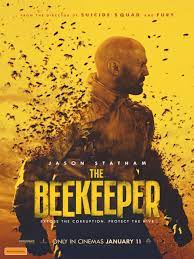
THE BEEKEEPER action movie review

UnBEElievably good! Jason Statham absolutely kills it in this explosive, roller coaster of an action movie! And like any good, balanced beehive, this movie balances high octane action with plenty of humor. And it’s not without its scathing commentary on crimes against the most vulnerable in society. The Beekeeper is here to save you from the January movie doldrums and one to catch on the BIG SCREEN!

One man’s brutal campaign for vengeance takes on national stakes after it’s revealed he’s a former operative of a powerful and clandestine organization known as Beekeepers.

Genre films are the foundation upon which so many other movies are built and by which they are inspired. And the action movie is one of those that is part of the periodic table of film elements. David Ayer’s latest demonstrates why genre movies should not be undervalued because they work! There is beauty in simplicity (regardless of genre), and what we have here is a classical 80s style action movie set in the present day. Furthermore, Statham delivers what he does best, fantastical fight sequences, gritty, sardonic humor, and unstoppable action.

Beyond genre itself, The Beekeeper also demonstrates the importance of crafting a movie around a movie star. We have so few movie stars anymore–Tom Cruise is the last true one–but there are others that are very much star-like–and Jason Statham is one of those. But the truth is, movie stars are dying.

For as long as cinema has been around, audiences have been drawn to that which is familiar–they already know what to expect. Delivering that which is familiar but in a new way, is the magic formula for cinema at its finest (and by extension TV, music, theatre, etc). And the classical star system of the studio system era was one of the man mechanisms for generating excitement and buzz surrounding the movie. Without going down a tangential road on why the death of the movie start is one of the reasons why cinema is dying, the long and short of it is that movie stars are a brand, moreover there were directors that were a brand, branding was a huge part of cinema for the longest time. And with the rise of franchises comes the fall of the movie star.

Why bring any of this up when talking about The Beekeeper? Because this movie shows the power of a genre film crafted around a movie star-like actor. We know what to expect with Statham, and we love the humor and action that Statham brings to most of his movies. He goes full Statham in The Beekeeper, and we are wildly entertained because of that! This movie woudl simply not work with anyone else. Much like without Bruce Willis and Allan Rickman, Die Hard would not be half as fun and timeless as it is, The Beekeeper would not be half as entertaining without the charisma of Jason Statham.

Amidst all the fantastically choreographed action sequences and explosions, is a surprisingly thoughtful core. Not only does The Beekeeper deliver on gritty impact, but it also delivers sufficiently enough on commentary spotlighting how the most vulnerable in our society are preyed upon by big tech, including toxic, criminal data mining. My sister and brother-in-law experienced a situation very similar to the big event that sets Adam Clay on his relentless rage against the machine that doesn’t stop until he reaches the Queen of the beehive.

Since it’s in the trailer, it’s not a spoiler. The big event consists of a kindly older lady whom has taken care of Adam Clay (Statham) and provided him with space to care for his beehives and make exquisite honey. Her computer is taken hostage by malware, and the support team she contacts is actually a criminal data mining company that steals money by way of a victim screensharing their computer and the company stealing/copying identity and password information. One the data mining company has some key information, then they are able to wipe out a victim’s entire finances. But the tragedy doesn’t stop there. When Adam’s hive has been attached, he stops at nothing to avenge his kindly neighbor.

I appreciate how the movie spotlights this real tragedy that truly impacts lives of the most vulnerable in our society. It also shows how deep the corruption goes and where it leads. Those at the very top may just be those that seem untouchable by the law and systems of justice. Perhaps this situation is exaggerated for purposes of making a movie, but it wouldn’t’ surprise me to learn that what we witness in the movie is similar to what truly happens in our real world.

The Beekeeper is a highly entertaining action movie that will completely thrill you! Between the electric fight sequences and Statham’s gritty charm, you are guaranteed to have a fantastic time at the cinema!
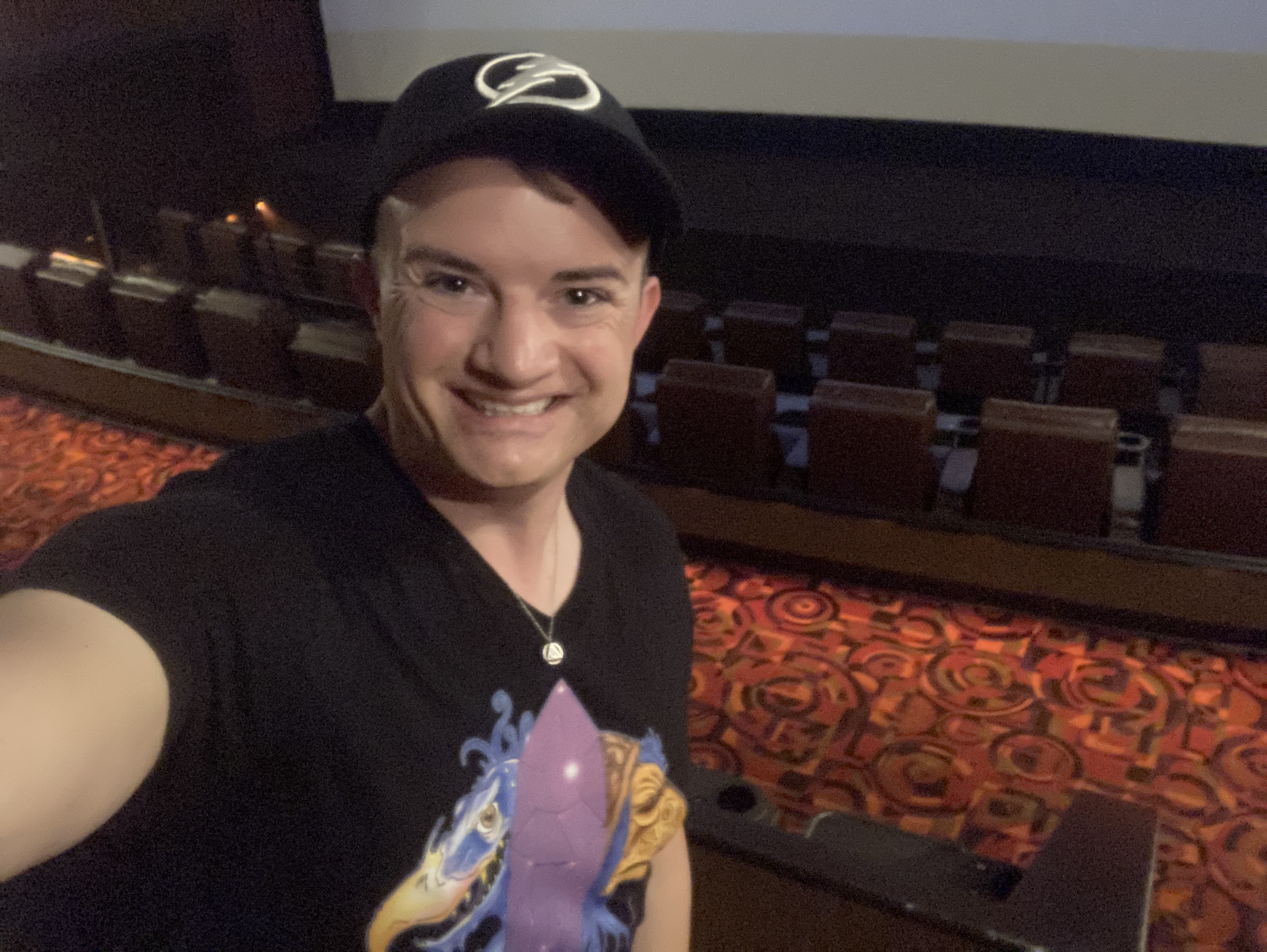
Ryan teaches Film Studies and Screenwriting at the University of Tampa and is a member of the Critics Association of Central Florida and Indie Film Critics of America. If you like this article, check out the others and FOLLOW this blog! Interested in Ryan making a guest appearance on your podcast or contributing to your website? Send him a DM on Twitter. If you’re ever in Tampa or Orlando, feel free to catch a movie with him.
Follow him on Twitter: RLTerry1 and LetterBoxd: RLTerry

SALTBURN film review

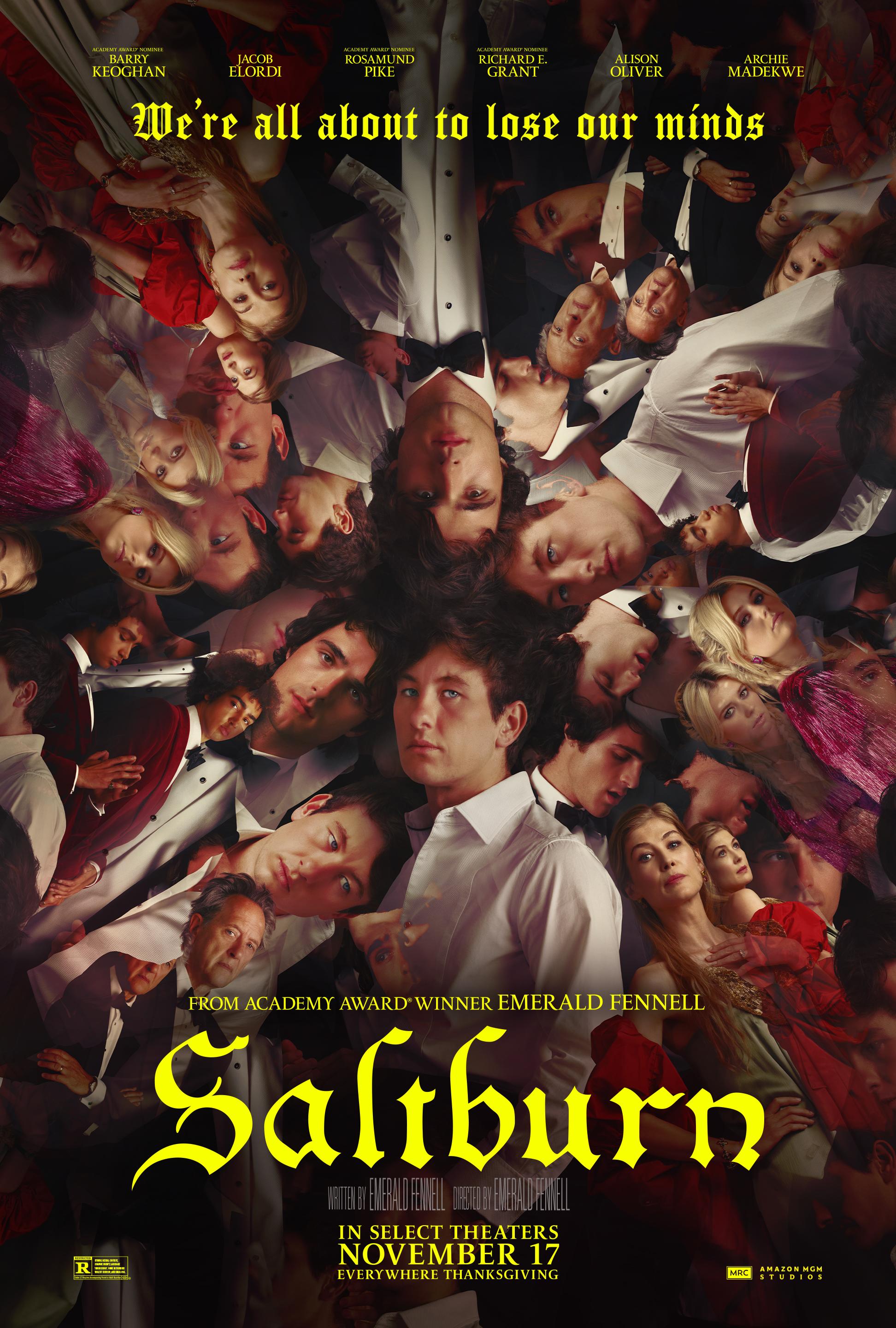
An intoxicating and provocative neo-gothic film that is tonally all over the place. Heathers meets Cruel Intentions meets Flashdance(?) in a film that is incredibly stylistic but lacks any lasting entertainment value, except for the very end. Emerald Fennel (Promising Young Woman) delivers a sensory explosion critique on the facades we project through a story of the shifting balances of power, obsession, and deception. Is it a dark comedy? Is it a psychological thriller? Answer: it’s both and neither, and to that end, it’s potential for motion picture excellence is hampered. The tone of the film is incredibly uneven; and not one single character is likable. Saltburn presented many opportunities for effective, intentional camp, but chose to go the more serious route and play it straight.

Oliver (Barry Keoghan), a freshman at Oxford, is invited by classmate Felix’s (Jacob Elordi) family’s country estate for an exciting summer, but things are not what they seem and soon the fantastical estate falls victim to deception and manipulation.

The aforementioned movie examples in the opening paragraph each feature an aspect of this film; but each of those three examples offers a great deal more in entertainment value, not to mention lasting impact upon popular culture. Even though the central character’s external goal doesn’t become clear until the end, it is a thoughtfully plotted film that you wish you had enjoyed more in order to watch it again. However, the very last scene of the film is one that takes direct inspiration from Flashdance, and will be what is likely talked about for years to come. Too bad the rest of the film wasn’t as fun and entertaining as the final scene. Saltburn is neither an uplifting story nor is it a cautionary tale; it’s uncomfortably somewhere in the middle.

Clearly Emerald Fennell has a fantastic eye for shot composition and a demonstrable talent for crafting environments that stimulate the senses and emote. And that is to be commended. Few directors have a gift for creating and capturing settings and environments that communicate a discernible mood, tone, or emotion. We witness this in German Expressionism, which is at the root of gothic and many horror films. No surprise then that this film is incredibly neo-gothic in story and setting. Saltburn embodies uses both the technical and performative dimensions of the mise-en-scene to challenge audience perceptions; moreover, gothic films concern themselves with sexuality and audience response thereto. The collective imagery in this film generate a kind of spectacle for the audience to draw us into a heightened state of unease or fear. Fennell’s Saltburn is an exemplary motion picture for the art of drawing the audience into the world inhabited by the characters, and beckons you to join them.

Sounds great, right? If there were any characters worth caring about, then Saltburn could indeed be the masterpiece that many have claimed it to be. Fennell nailed the neo-gothic aesthetic and further stimulated our senses with the film’s intoxicating sexuality, but there isn’t a single character that you care enough about whether they live or die. These characters will both attract and repulse you, but more repulsive than attractive. No doubt that Oliver will become the stuff of erotic fan fiction and dreams, but even he isn’t likable in the end. And when delivering a melodrama about facades, pretenses, obsession, and deception, whether the film ends on a high or low note, there should always be at least one character the audience can root for, can truly care whether they live or die.

The story of Saltburn is inspired by the narratives of both Heathers and Cruel Intentions. And I don’t mention this to in any way suggest that Saltburn is derivative–it’s not–but to draw parallels to similar films. While I feel that both of these movies are much more rewatchable than Saltburn, if you like those two movies, you will likely enjoy it, even if you watch it one time. Where Heathers and Cruel Intentions succeed and Saltburn fails is in the entertainment value and tonal consistency. It’s as if Fennell was so concerned with provoking and sensually stimulating the audience that she forgot that the film should still be entertaining. Just because a film contains dark comedy or scathing social commentary doesn’t mean that it’s excused from providing entertainment for the audience.

What I will remember most is the ending of the film, which I cannot talk much about because of spoilers; however, I know that Fennell must love Flashdance because the final scene of the film is clearly inspired by the audition and triumph scene when Alex (and the dancers portraying her, haha) dance to Flashdance…What a Feeling! by the late Irene Cara. Even though we love Flashdance, we all know the plot is honestly not very good, but what saves the movie that literally defined the music, dance, and fashion of the 1980s is the uplifting, inspirational story and the high degree of entertainment value, not to mention one of the best jukebox soundtracks of all time (it won both an Oscar and Grammy for best original song).

Even though the tone may be inconsistent and characters unlikeable, the film certainly delivers on immersive atmosphere and a spider-like web of deception and manipulation with a great cast.

Ryan teaches Film Studies and Screenwriting at the University of Tampa and is a member of the Critics Association of Central Florida and Indie Film Critics of America. If you like this article, check out the others and FOLLOW this blog! Interested in Ryan making a guest appearance on your podcast or contributing to your website? Send him a DM on Twitter. If you’re ever in Tampa or Orlando, feel free to catch a movie with him.
Follow him on Twitter: RLTerry1 and LetterBoxd: RLTerry

AIR movie review

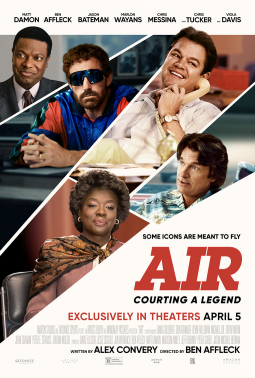
Nothin’ but net! “AIR” is an outstanding biographical drama that will inspire anyone with a gut feeling, that they’re onto something great, to ”Just Do It!” The allstar cast shines brilliantly, and the screenwriting is excellent! Definitely look for this high stakes, high energy underdog story next awards season.

Sonny Vaccaro and Nike pursue basketball rookie Michael Jordan, creating a partnership that revolutionizes the world of sports and contemporary culture.

Who would have ever thought that the origins of the single best known athletic shoe would have this much ‘sole.’ It’s funny, emotionally moving, and educational. More than the risky financial move that would either launch the struggling NIKE company to success or shutter the athletic division, this story is one of resilience. Resilience in business and in character. In many ways, this movie is “Mrs. Harris Goes to Paris” meets “The Social Network,” two films to which this one will undoubtedly be compared.

Every scene in this film exemplifies exceptional screenwriting and directing. The story snaps, crackles, and pops, and the vision for direction is consistently building to the end of the story, with every scene delivering a well-defined setup–>development–>resolution.

Highly recommend watching this heartfelt motion picture!

Ryan teaches Film Studies and Screenwriting at the University of Tampa and is a member of the Critics Association of Central Florida and Indie Film Critics of America. If you like this article, check out the others and FOLLOW this blog! Interested in Ryan making a guest appearance on your podcast or contributing to your website? Send him a DM on Twitter. If you’re ever in Tampa or Orlando, feel free to catch a movie with him.

Follow him on Twitter: RLTerry1 and LetterBoxd: RLTerry

BEING THE RICARDOS film review

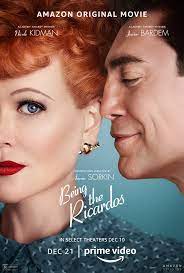
I Love Being the Ricardos. Whether you are a fan or scholar of I Love Lucy or not, this biographical motion picture is for you! Go behind the walls of 623 E. 68th St. (an address that in real life would be in the East River), and get up close and personal with one of the toughest weeks in Lucille Ball and Desi Arnaz’ careers and the run of the sitcom. Being the Ricardos also represents Aaron Sorkin’s directorial debut, and be brings with him his penchant for exploring the human condition through dialogue steeped in subtext, thus adding the dramatic dimension to the dialogue. What I appreciate about Sorkin’s approach is how he seamlessly layers two timelines and a meta narrative into one another, in a manner that is consistently driving the plot forward in terms of plot and character. While the central focus of the film is on Lucille Ball being accused of being a communist, there are ancillary stories on Desi’s affairs and Vivan Vance’s complicated relationship with Lucille Ball and her character Ethel Mertz. William Frawley is depicted as the most level-headed out of the whole cast. Other dynamics of the mother of all sitcoms include the the power dynamic between the writers Madelyn Pugh, Bob Carroll Jr., and executive producer Jess Oppenheimer. Throughout the film, one theme is clear: home. What does a home mean or look like to you? Lucy desires a home, and she will fight for it.

In 1952, Hollywood power couple Lucille Ball and Desi Arnaz face a series of personal and professional crises that threaten their careers, their relationship and their hit TV show.

With so many layers at play, it may have proven to be disastrous for many if not most writer-directors, but not Aaron Sorkin. Any reviews you’ve heard or read that suggest Being the Ricardos is too inside baseball are wildly exaggerated. Yes, there is a greater appreciation for the film by those that know I Love Lucy well, but even those that only know of the sitcom will appreciate it. The friend that attended with me had virtually no substantive knowledge of I Love Lucy, yet he laughed along with this film, and knew precisely what was going on and why it was so important. If you are a member of the creative economy that runs, writes for, or acts in a sitcom, then you will have a greater level of empathy and understanding for the ups and downs faced by writers, actors, producers, and sponsors in Being the Ricardos.

Being the Ricardos starts out “in the future” with interviews with the (late in real life) Jess Oppenheimer, Bob Carroll Jr., and Madelyn Pugh about I Love Lucy and that week–and they all had the same reaction. Although I thought the three comedy writers had passed away, I was completely convinced that Sorkin was interviewing the TV legends. I actually had to check Wikipedia for the death dates. Anyway. The illusion of a documentary layer added to the authenticity of this film. Periodically throughout the film, we return to our writers and executive producer for some retrospective commentary on the “past” or “present” story. These interview segments provide a more substantive context for the conflict to follow. Furthermore, it adds come comedic relief for the otherwise serious film.

Often times, these type of biographic motion pictures work to humanize or make relatable the central figure(s), and Sorkin’s film does just that. Even though the world knows that Lucille Ball and Desi Arnaz divorced in 1960 (following the final performance of the Lucy Desi Comedy Hour), we still think fo them as the madly-in-love couple at 623 E. 68th St (and later at their house in West Chester, CT). Going behind the scenes, we witness four actors with their own demons and flaws. Perhaps you can identify with the struggles experienced by Lucy, Desi, Vivian, or William (Bill). And not just them, but Madelyn, Bob, and Jess too. More than a historical biographical picture, this is a motion picture that is very much a story of what it means to be human that is paired with a deep dive into one of the most beloved TV shows of all time.

Kidman’s performance as Lucille Ball and Javier Bardem’s performance as Desi are excellent! While Bardem may not disappear behind the costuming, hair, and makeup to the degree that Kidman does, he had Desi’s mannerisms and body language down pat! Clearly, he spent a great deal of time preparing for a role that has major shoes to fill, or should I say bongos to play. From her voice to her appearance to her body language, Nicole Kidman will wow you with her portrayal of the Queen of Comedy Lucille Ball. Kidman’s preparation for this role of a lifetime paid off in spades. If I didn’t know any better, I’d almost believe that I was watching Lucille Ball on screen. It reminds me, in many ways, of Jessica Chastain’s outstanding performance as Tammy Faye in (my favorite film of 2021) The Eyes of Tammy Faye.

For fans of the show, you may notice some continuity errors. Now, these errors don’t detract away from the film, but may surprise you. The show is in the middle of the second season, but the apartment set is the apartment they would move into after Little Ricky was born in Season 3. The giveaway was the window in the back. And in the film when they are referring to baby the Ricardos will have, it’s actually Desi Jr. that would be born during the third season and not Lucie, which is what is depicted in the film.

While we get a flashforwards to the famous grape vat scene, we do not get the most famous scene from I Love Lucy of all time: Vitameatavegemin. It is referenced, but we do not get to see Kidman recreate this scene. Maybe it’s a bonus feature on the BluRay. I hope so anyway!

Ryan teaches American and World Cinema at the University of Tampa. If you like this article, check out the others and FOLLOW this blog! Interested in Ryan making a guest appearance on your podcast or contributing to your website? Send him a DM on Twitter or email him at RLTerry1@gmail.com! If you’re ever in Tampa or Orlando, feel free to catch a movie with him.
Follow him on Twitter: RLTerry1

Now Playing: Netflix at a Theatre Near You?

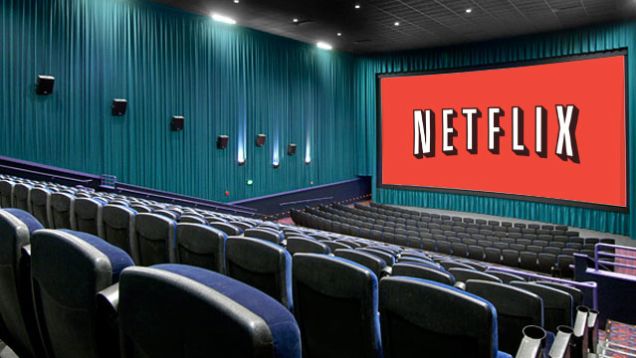
After pioneering the streaming service, is Netflix aiming to revolutionize the multiplex experience? Recently, the Twittersphere and blogosphere has been all abuzz regarding Netflix’ possible acquisition of multiplex cinemas. But what does that mean for the customer and for Netflix? Those questions have prompted me to explore the idea of a Netflix-owned chain of movie theatres. Who would’ve ever thought that the DVDs delivered-to-your-home distribution company would go on to essentially invent the streaming service concept, produce wildly popular original programming, would now possibly be in a position to own and operate multiplex cinemas. The irony here is that the company that tore down the brick-and-mortar walls of Blockbuster and whose system of delivering content put a huge dent into the bottom line of movie theatres would now look to build the walls it so effectively razed to the ground. Perhaps in how it completely demolished the legacy way of home video and original television content distribution for a more efficient system, it seeks to build a more cost-effective model of movie theatres to truly create a big screen experience for a Web2.0 universe.

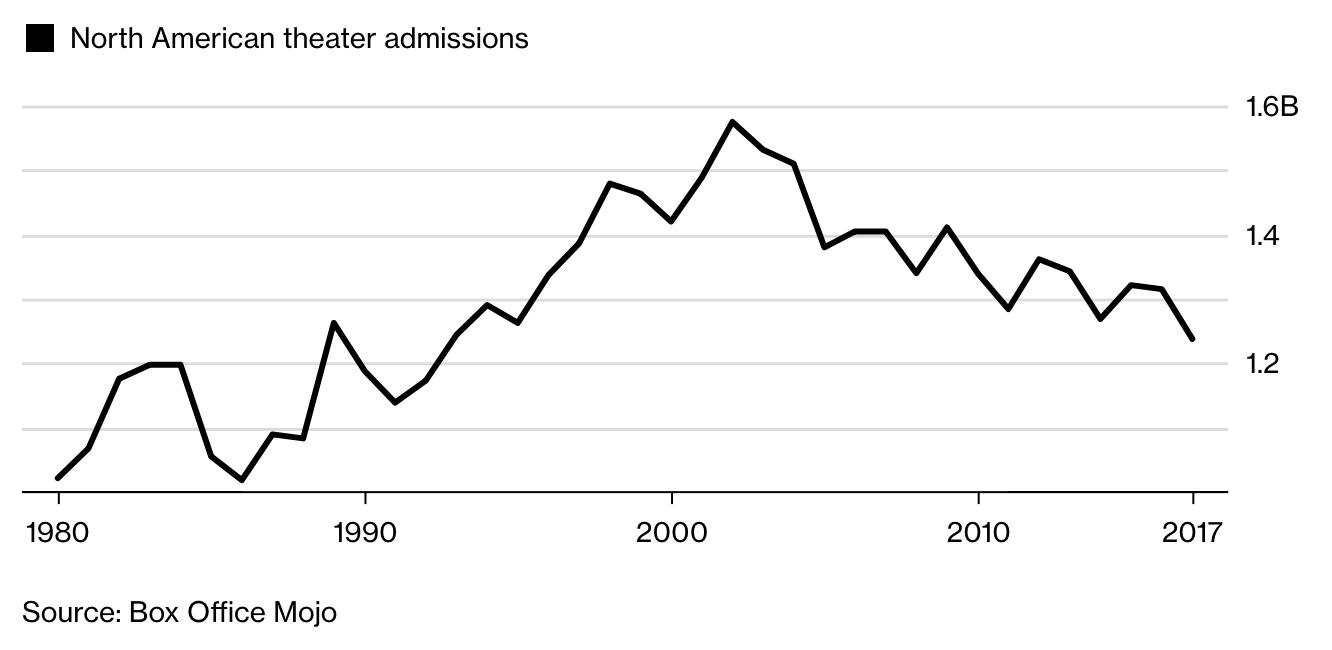
But, is going back to the brick-and-mortar model going to be lucrative for the entertainment giant? After all, Netflix virtually has no conventional overhead, in terms of how it now delivers content; but the addition of brick-and-mortar movie theatres would significantly increase the overhead cost of its business model. Just because there will be an increase does not necessarily mean that’s this may be a bad move for the company. However, it does beg for exploration of the effects of a decision like this. It’s no secret that fewer people attend the cinema now than before streaming became so prevalent. According to the Bloomberg Report citing a statistic from Box Office Mojo, movie theatre ticket sales have hit a 25 year low. After a high in the early 2000s, the number of ticket sales has overall been on a moderately steep decline. Although the the initial drastic drop could be contributed the tremendous growth of home theatre surround sound DVD systems and some recession from the aftermath of 9/11, the remaining downward trend from 2010 to today can be attributed to Netflix, Hulu, and other streaming services. Furthermore, many TV channels began allowing subscribed users to watch current and recent content on demand over the last few years.

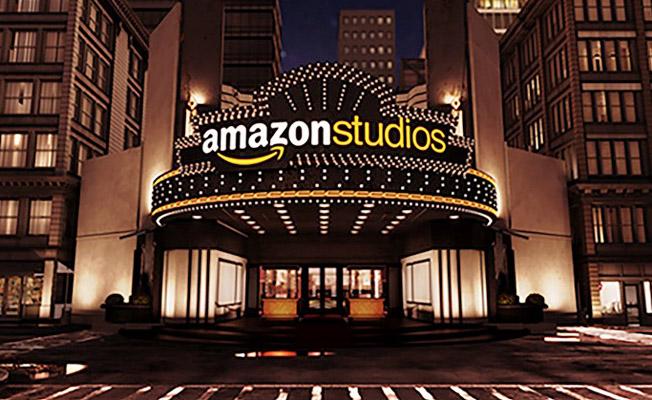
So, if the empirical data suggests that ticket sales will continue to fall, why would Netflix express a desire to throw its hat into the ring with established leaders AMC, Regal, and Cobb? Not to overly simplify it, but Netflix wants its chance at winning a Best Picture Oscar. In a recent interview with Vanity Fair, Steven Spielberg stated in that Netflix should compete for Emmys not Oscars. It wasn’t long after this interview that Netflix stated that it’s considering buying cinema multiplexes. In addition to Netflix making the headlines, Amazon Studios has quietly been making maneuvers that suggest that it may also be interested in buying a movie theatre chain. In order to mitigate the cost of going into the multiplex business, Netflix is not looking to build from scratch, but buy up the Landmark Cinemas that has been on the market for quite sometime now. Landmark is known for catering to arthouse films in much the same way Alamo Drafthouse does.

Ever since the landmark Paramount Decision in 1948, for reasons of violating anti-trust laws, movie studios (extending to distribution companies) are not permitted to own and operate chains of movie theatres. There are rare exceptions to this–Disney’s ownership of the historic El Capitan theatre across from TCL’s Grauman’s Chinese Theatre (the most famous movie palace in the world) being one of those. Since it’s not a chain and does run other company’s films, it is an exception to the ruling because it is a venue that anyone can rent, for the right price. Prior to the United States vs Paramount, it was customary for the studio to own and operate a chain of movie theatres that exclusively shows its movies. So, to see a Paramount movie, you’d have to go to a Paramount movie palace, for example. It was this gross lack of competition that violated anti-trust laws and led to the decision. With ticket sales slumping, large studios or distribution companies with deep pockets may find the best way to combat this is to own and operate theatres (that will have to be open to competition in order to remain within the confines of the law) that can be integrated into the branding, marketing, and promotion of a particular film.

A relationship between a studio and a movie theatre would allow for the production company or studio to forge a deeper relationship with the movie patron much in the same way Disney and Universal do with their theme parks. Not limited to Disney and Universal, Warner Pros, Paramount, Lionsgate, and DreamWorks have major theme park investments in Europe and Asia. The end result of owning a chain of movie theatres is the creation of an entire experience for the guest. For Netflix, this could mean premiering its successful series like Stranger Things, Black Mirror, and others at a movie theatre before it lands on the streaming service. Just like a homeowner can retrofit, remodel, and customize his or her home to benefit him, her, or the family, a movie studio could best custom design a completely immersive experience for the movie patron that creates an emotional connection that is sure to last and earn repeat business.

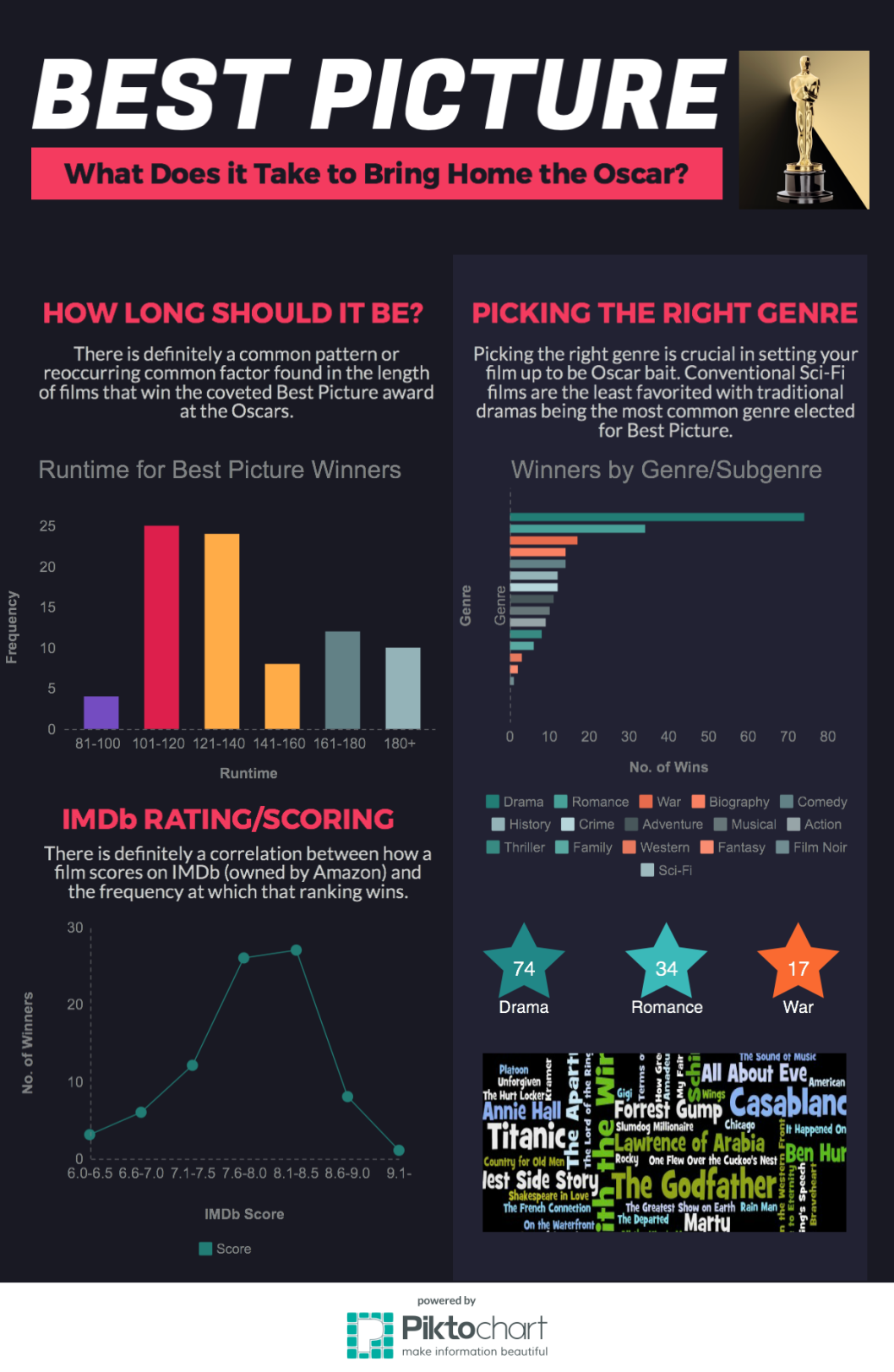
Aside from the cost and concept of creating a comprehensive experience for the movie patron, the standardization of start times and run dates should also be considered. Now, you can watch your Netflix, Hulu, and Amazon Prime programming whenever and wherever you so desire. No boundaries. After all, Netflix tore down those movie theatre walls and TV schedules. Is there a great enough interest from the typical consumer to buy tickets on a specific day at a predetermined time to watch Netflix original programming? Further research needs to be conducted in order to assess whether or not there is sufficient interest. Anecdotally, one can easily assess that Netflix’ original TV series are more popular than the original movies. But what does the empirical data show? According to a report at the Exstreamist, “the average rating on a Netflix original movie is markedly lower than what one finds with Hollywood movies.” Using IMDb ratings (note: Amazon owns IMDb), Toledo looked at a number of 2017 movie and TV releases across a variety of genres. Suffice it to say, Netflix consistently hits homers when it comes to original TV programming–their record is rather impressive at 8.1; however, their movies are ranked considerably lower than the TV series at 5.9. It would appear that there is sufficient interest in Netflix’ original series but not strong enough interest in the movies. And movies would be far easier to arrange into a schedule at a theatre than a TV series. Films win Oscars, series win Emmys. So, Netflix would have to rely upon its original movies in the theatre. Therefore, the quality has to increase significantly. Read my article on Best Picture criteria HERE.

Certainly, Netflix has proven that it can revolutionize media consumption and blaze new trails. Therefore, if Netflix makes the decision to acquire a chain of movie theatres, then reason stands that it must have a solid plan for success. While the data may suggest that this could be a risky venture for the entertainment giant, perhaps interested parties like Netflix and Amazon Studios know how to reinvent the multiplex experience to emerge as leaders of content creation and distribution. Who will the new owner of Landmark Cinemas be in the future? Only time will tell. But, it looks as if a Netflix or Amazon owned movie theatre chain may be in the near future.