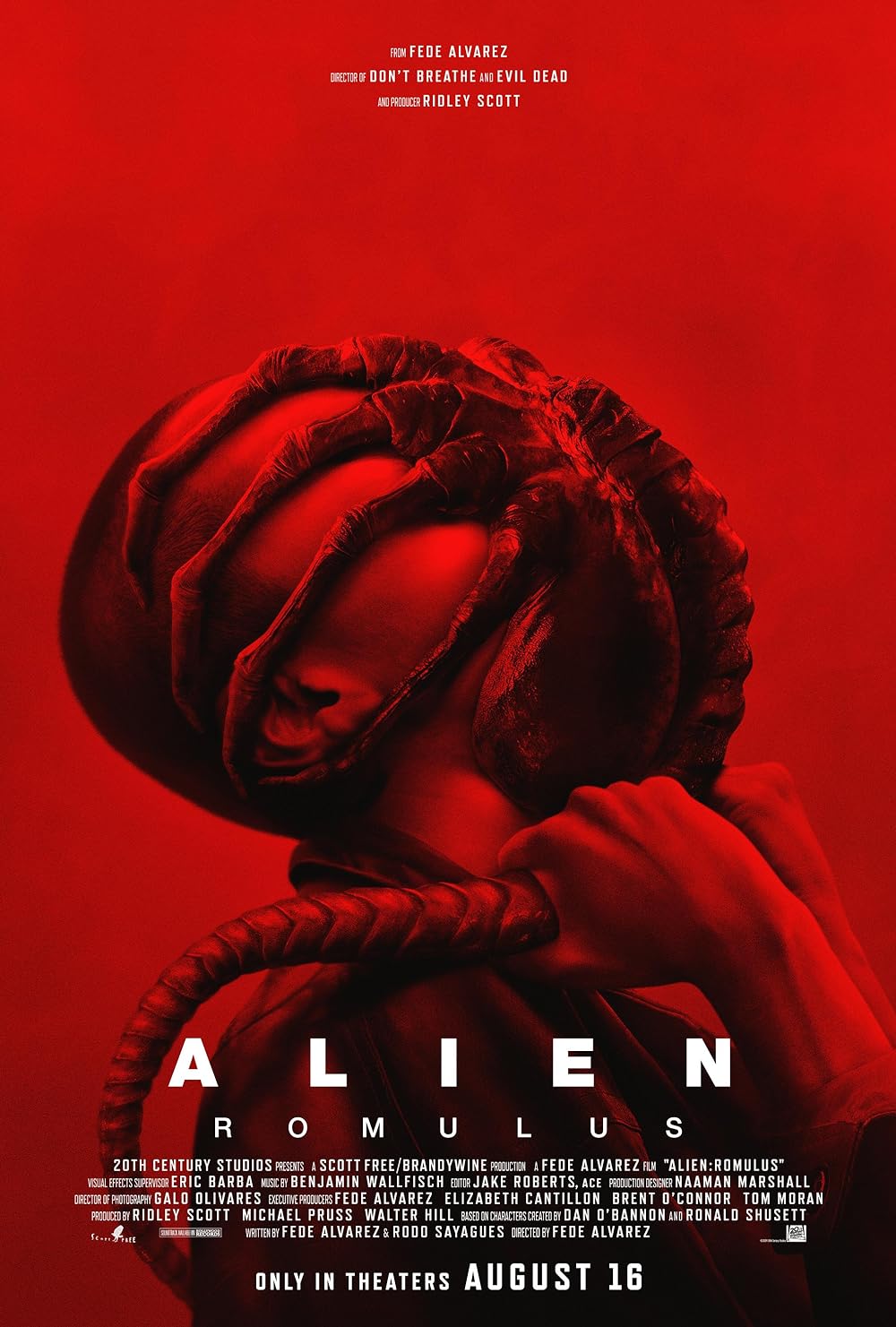
In space, these characters are screaming for dimension. Fede Alvarez’ Alien: Romulus is the closest in form that we have had since the masterful Alien (1979). And while the premise and plot are fairly solid, the plotting and exquisite design cannot compensate for the poorly written characters.
The most human character is a synthetic human, and he is the only character that is thoughtfully crafted. When characters struggle to connect with audiences, then the audience couldn’t care less whether they live or die–ostensibly mitigating any real stakes. The central character is mostly flawless and we never feel as though that they will be injured, much less die (I’m avoiding spoilers). The original Alien delivers incredibly well-written and developed characters that we want to survive. Alien: Romulus‘ characters–well–they should’ve all perished for lack of anything truly compelling. Additionally, this cast is way too young to be taken seriously in these roles that would be better suited for a cast that was at least 10–15 years older.
Where the film does succeed is the throwback design and feel of everything from beginning to end. Even the CG is integrated very well with the much-welcomed use of practical effects. Practical beats CG, nearly every time. Even though this movie is releasing more than forty years from the original, it feels very much connected to that iconic motion picture in form. Everything from the production design to the sounds to the music kept me from completely disengaging from the film. Alvarez has a fantastic eye for composition and atmosphere, but his screenwriting and character development are not on par with the technical achievement of the film. If you love the original Alien, then definitely see Romulus, and have fun with it. But I don’t imagine you will be rewatching this one over and over like the one that started it all. At least, it was way more meaningful than anything that released after Aliens.
Apologies for the short review of a movie that I highly anticipated. But Disney chose not to screen the film for all the critics in the CACF.
Ryan teaches Film Studies and Screenwriting at the University of Tampa and is a member of the Critics Association of Central Florida and Indie Film Critics of America. If you like this article, check out the others and FOLLOW this blog! Interested in Ryan making a guest appearance on your podcast or contributing to your website? Send him a DM on Twitter. If you’re ever in Tampa or Orlando, feel free to catch a movie with him.
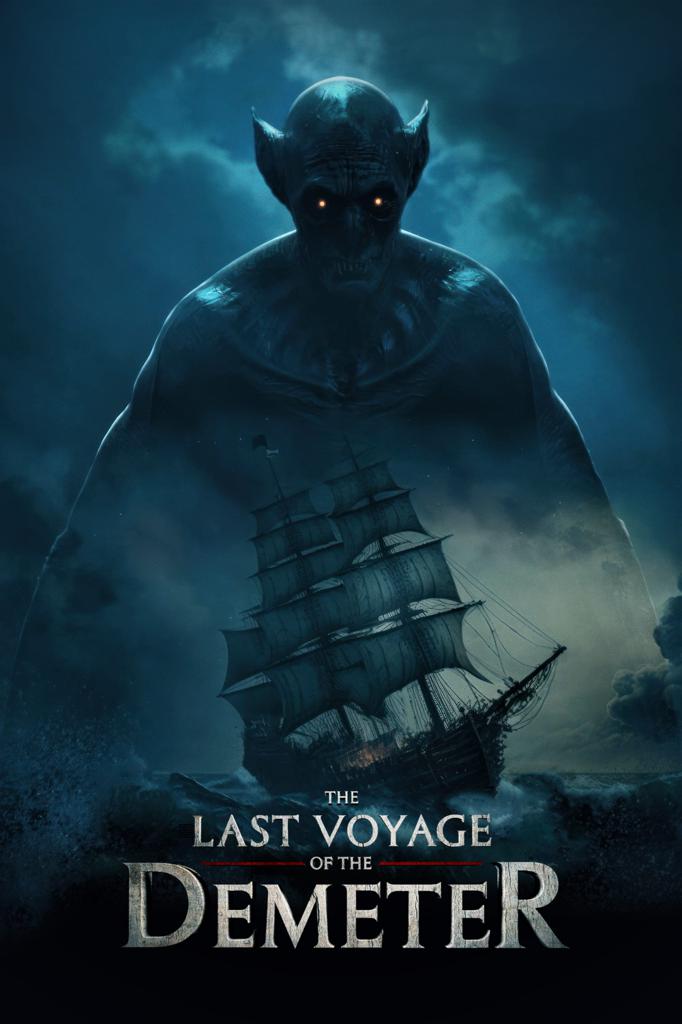
Fangtastic! Universal meets Hammer horror in a gothic tale that explores what may have happened on the domed Demeter carrying one thirsty passenger. While seemingly most contemporary horror movies take place in the real world, The Last Voyage of the Demeter transports us back in time to a fantastical world full of sailing vessels, ominous castles, and terrifying folklore. More than a backdrop on which the story unfolds, the atmosphere and sets are characters in and of themselves. If the gothic setting wasn’t enough, the score will certainly wrap you in the nightmare of this movie. If you love classic horror, this is right up your alley as it’s in the same ‘vein’ as such foundational early to mid 20th century horror motions pictures including Nosferatu and Dracula and even late 20th century horror pictures like the original Alien. While it remains to be seen if this is Universal’s second attempt at the defunct Dark Universe, between this movie and the Universal Monsters last at Epic Universe theme park (still under construction), the manner in which this movie ends certainly lends credence to an attempt to revive the dead Dark Universe.
After accepting mysterious cargo from an anonymous customer, the crew of The Demeter experience horrific events aboard the doomed sailing vessel as it makes it way from the harbors beneath the Carpathian Mountains to London.
Neither Bram Stoker, F.W. Murnau, nor Carl Laemmle included much information on the doomed voyage of the Demeter after it left the harbor beneath the Carpathian Mountains. All we know is that mysterious cargo (which we know is the coffin and/or dirt belonging to Count Dracula/Orlak) is dropped off and only the ghost of a ship arrives in London. And that’s the beauty of this movie, the filmmakers only needed to begin and end in the right places. Therefore, everything that unfolds on the ship is pure speculation and imagination. When adapting an existing IP, this is how it should be done. And while this is the best example in recent years of how to find new stories within an existing IP, Disney did something similar with Rogue One, which is my favorite in the Disney Wars movie universe.
We already know The Demeter and crew aboard are doomed, so the charm or terror in this movie isn’t what’s ultimately going to happen–rather–how is it going to happen. And director André Øvredal and writer Bragi Schut Jr. do an excellent job at making the events captivating and even surprising. No one is safe on the sailing cargo vessel, and I do mean no one. Our storytellers craft a narrative that is completely inspired by the past writings and movies yet it takes the story of Dracula to new levels, most of which I appreciate, though there are some elements of the story that I feel are not in line with established vampire lore.
Without getting into spoilers, it’s difficult to discuss what I would like to bring to to the discourse; however, I’d be remiss if I didn’t convey that there is a character we know from nearly all iterations of Dracule or Nosferatu that appears to be setup, but it’s never delivered. Without knowing the direction Universal is going with this movie, I must say that this was a missed opportunity to organically bring this character into what appears to be a relaunch of the Dark Universe.
Both Universal and Hammer horror are being channeled in this newest Dracula movie! You have the gothic stylings of early Universal horror coupled with the amped violence of Hammer horror. Working together, this two distinctly stylistic expressions of horror are used effectively in the crafting of the aesthetic and tone of this movie. Further evidence of the inspiration taken from early Universal and Hammer horror can be witnessed in the haunted house upon the sea concept. I am also reminded of Alien when I think of the setting, the claustrophobia, and the no escape dynamics of this movie. In Alien, it was a Xenomorph in space where “no one can hear you scream,” except we are in a sailing vessel at sea where no one can hear you scream.
As a huge horror fan, especially of the classics, I am eager to see where this movie takes Universal horror. Usually, I am not a fan of starting a franchise (when it is intentionally started), but this movie demonstrates that Universal may have learned its lesson from the failed launch of the last Dark Universe. I definitely see potential in this return to classic Universal monsters, and am along for the ride.
Ryan teaches Film Studies and Screenwriting at the University of Tampa and is a member of the Critics Association of Central Florida and Indie Film Critics of America. If you like this article, check out the others and FOLLOW this blog! Interested in Ryan making a guest appearance on your podcast or contributing to your website? Send him a DM on Twitter. If you’re ever in Tampa or Orlando, feel free to catch a movie with him.
Nope, no plotting here. With a sensory explosion of stunning shot composition, outstanding sound design, and unnerving score–combine those with a refreshingly original expression of the classic monster movie–and you should have a great horror film, right? That was almost the case here, had it not been for the meandering narrative and thoughtless plotting. Brilliant idea, but poorly mapped out. There is so much to like about NOPE, but the full potential of this beautifully looking film is ultimately held back by screenwriting mechanics. Peele’s NOPE feels like a combination of The Birds,Close Encounters of the Third Kind, and Signs. Unfortunately, it lacks the structure and substance of any of those. Clearly, Peele had a wonderfully original idea for his latest feature film, but his idea fails to deliver narratively. The plotting is all over the place; there are scenes that simply do not pay off dramatically. Individually, each scene is meticulously crafted, but many are not connected methodically to the rest of the film. What we have here is a film, that clearly demonstrates a love for horror cinema and film history, that pushes experiential boundaries, but the plotting leaves much to be desired. Moreover, there is a disconnect between the performative element of the mise-en-scene and characterization. Fantastic performances; but the characters, as they are written, are not very well developed. The pretense of the film is one exuding cinematic gravitas, but the pretense is the equivalent of a beautiful house with a shaky foundation and infrastructure.
To go into why this film’s plotting does not work would be incredibly spoilerific, so I cannot go into many details. All throughout the film, I thought to myself “I can tell that this is supposed to mean something, perhaps subvert something, but those idea are not being communicated effectively.” What this film will likely become is one of those that a pretentious cinephile or armchair critic will respond to those that express difficulty in following the plot with “it’s not for everyone” or “you just don’t get it.” Whenever I hear those remarks in defense of films that objectively fail to deliver narratively (plot+story), it makes me want to vomit. They are copouts for explaining away why a film doesn’t have to follow established storytelling conventions; furthermore, the “you just didn’t get it” is a tool for the cinephile to establish intellectual superiority over the individual rightly questioning the screenwriting of a film.
Caretakers at a California horse ranch encounter a mysterious force that affects human and animal behavior.
Where the film excels is in the very concept of the film itself and the technical achievement! Upon watching it, I was reminded of great films such as The Birds, Signs, and Close Encounters of the Third Kind. Moreover, I was also reminded of the sci-fi/horror movies of the 1940s and 50s. Because I was reminded of those, that demonstrates Peele’s love for classic horror cinema! And I applaud him for attempting to craft something for modern audiences that feels familiar yet fresh. To the best of my knowledge, there has yet to be a film (classic or more contemporary) that expresses the alien plot in the manner that Peele does. Where the films to which he’s harkening surpass NOPE is in the plotting. Original ideas are very much needed in 21st century cinema, but these ideas need to be paired with coherent plots.
Peele’s eye for shot composition is exceptional. He knows precisely how to frame and shoot a scene dramatically, even when the shot is largely static. What makes his shot compositions work so well is that the shot is a direct extension of the emotion of the scene. The camera isn’t merely documenting the course of events, but is ostensibly an active participant in how the scene unfolds.
The brilliant sound design and unnerving score work in tandem to draw the audience into the film, especially when watching the film in Dolby Cinema (which is what I did). No sound effect or bar of score is wasted. Every sound, every note is intentionally selected as an extension of the action or emotion of a scene. Although a film should not rely upon a great score to carry the story, sound and music are two very important tools in a filmmakers tool belt to increase the sensory stimulation of the film.
Peele is such a gifted director, but I hope he chooses to work with other screenwriters in the future to take his original ideas and map them out methodically and chronologically (whether linear or nonlinear) more soundly. We need refreshing ideas such as his, but we also need them executed in more conventional ways. Have the thoughtful subplot and subtextual theming that will inspire discourses, but make the outside/action plot more accessible because it’s the vessel through which the subplot and theming is communicated.
Ryan teaches Film Studies and Screenwriting at the University of Tampa. If you like this article, check out the others and FOLLOW this blog! Interested in Ryan making a guest appearance on your podcast or contributing to your website? Send him a DM on Twitter or email him at RLTerry1@gmail.com! If you’re ever in Tampa or Orlando, feel free to catch a movie with him.
Set your expectation meter for Emmerich, and you’ll find it sufficiently mindlessly entertaining; that is, until it takes a wackadoo alien turn that no suspension of disbelief, with a modicum of intelligence, can accept. It’s a patchwork of The Abyss, 2021, and Armageddon stitched together with sophomoric dialogue and slapdash plotting. When George Bailey told Mary that he would “throw a lasso around [the moon],” little did he know what that would mean for the earth. Roland Emmerich’s newest disasterporn movie is MOONFALL, starring Patrick Wilson, Halle Barry, and Game of Thrones‘ John Bradley. Emmerich’s offering is everything you typically expect from a disaster movie, and then some. And it’s the and then some that may lose your interest in anything that is going on. What works? The disaster porn and the chemistry between our three leads. What doesn’t? About everything else. But we don’t watch these melodramatic disaster movies for the story, plot, or characters; we watch them for the sheer ridiculousness of it all, and a chance to turn off our brains for a couple of hours. While you won’t care about any of the supporting characters, you will be interested in what fate has in store for our three leads. The press screening I attended was in IMAX, and a premium format is precisely how you should watch this movie. Do not wait to watch it on streaming (on which, it will likely soon be available), because most of the fun of this movie is the entertainment value of the larger than life disaster effects.
Oh, for my fellow Star Trek: the Next Generation fans, you’ll appreciate the Dyson Sphere reference.
Ryan teaches Film Studies and Digital Citizenship at the University of Tampa. If you like this article, check out the others and FOLLOW this blog! Interested in Ryan making a guest appearance on your podcast or contributing to your website? Send him a DM on Twitter or email him at RLTerry1@gmail.com! If you’re ever in Tampa or Orlando, feel free to catch a movie with him.
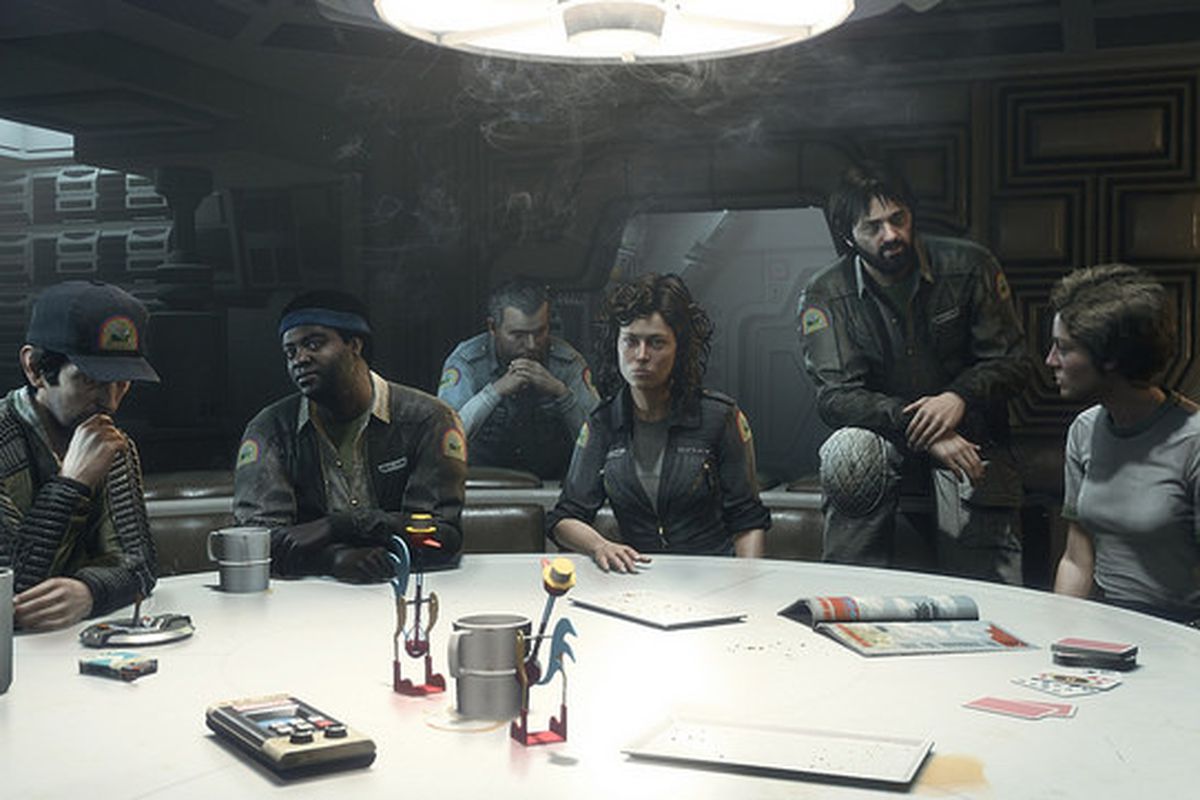
This. Is. ALIEN. You are with. Sigourney Weaver. Aboard the spaceship Nostromo. Caution. The area you are en-ter-ing is extremely dan-ger-ous. Something has gone wrong… If you get why I punctuated that the way I did, then you remember the ALIEN scene on the former Great Movie Ride at Disney’s Hollywood Studios (oh how I miss that attraction). Ridley Scott’s science-fiction horror masterpiece that convinced you that “in space, no one can hear you scream” is still the definitive science-fiction/space horror film. Furthermore, it reinvented the space-horror movies from the 1950/60s. Sitting between Halloween and Friday the 13th, this film came as a surprise for the horror genre because it countered the direction that the horror genre was going by reimagining the emerging slasher genre in a setting that is more terrifying and limiting than a house or town in which a serial killer is slaughtering teenagers. Just 10 years after the Apollo moon landing, this film takes on characteristics of that which is frightening about this new frontier that we are exploring. What if there is a killing machine monster out there? Scary stuff.
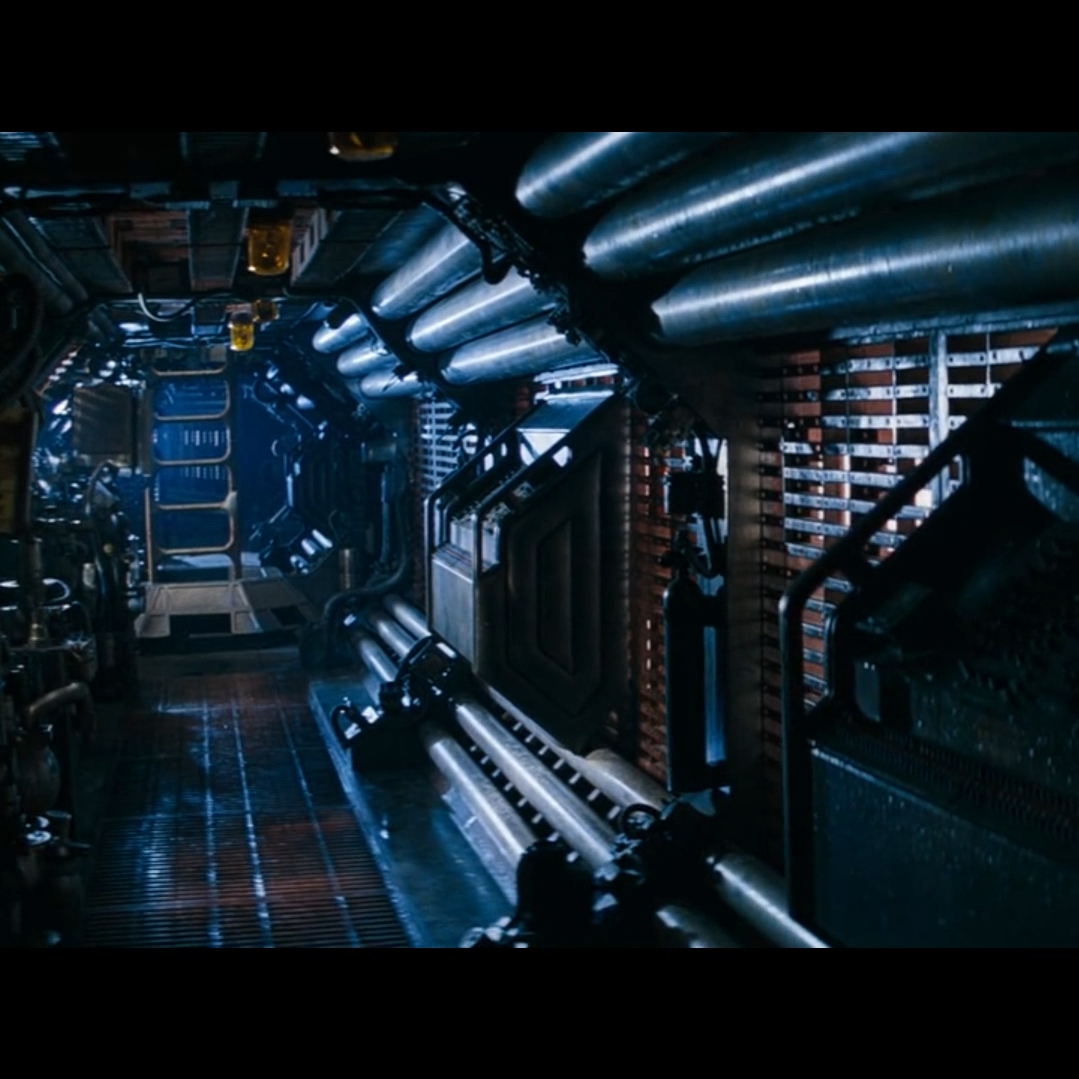
Until ALIEN, movies and TV shows set in space depicted a clean, optimistic, new world. ALIEN subverts this expectation by delivering a used, broken-in, aged space. The Nostromo was nothing like the U.S.S. Enterprise from Star Trek or the Star Destroyers from Star Wars. The design of the Nostromo communicated a dirty, dingy space that is far less appealing than the world of the United Federation of Planets. The effect of this upon audiences was fantastic because it made the future look far more realistic than anything that had come before it. The world of ALIEN truly felt like a future that was used. Indirectly, this intentional design also shows us that the passengers aren’t heroes, highly intellectual explorers, or uniquely skilled individuals. The rough design of the Nostromo parallels the roughness, lack of refinement in the characters. Again, they feel like real people, a people that we could connect with in ways that we could never connect with the characters from space-horror and monster movies in the past. The future, as illustrated in this film, is relatable. From the design of the Nostromo to the development of the characters themselves, audiences are invited into a world stepped in expressive meaning and emotion.
Beyond taking the horror genre into space and integrating some of the psychological horror and slasher elements outlined in Psycho, Halloween, and others, Scott’s Alien also provided horror audiences with a new type of final girl, social commentary on gender roles, heteronormativity, and human sexuality. Much like the Freudian components of Hitchcock’s Psycho, this horror film also explores the deep fears and desires that are often suppressed by the subconscious. Furthermore, the film also explores the fears associated with child birth by “impregnating” men resulting in body horror trauma. The counterarguments to heteronormativity is manifested in Ellen Ripley as an androgynous female who behaves in a very masculine way, the film provides an opportunity to talk about gender roles.
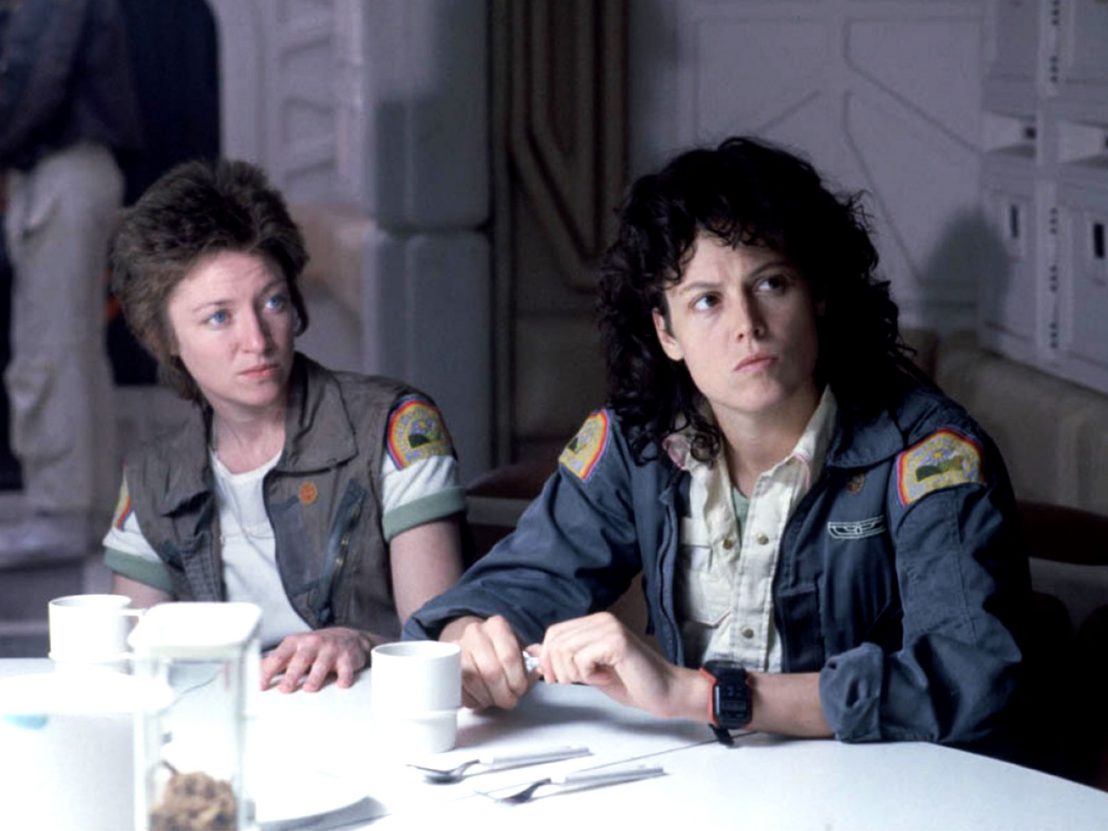
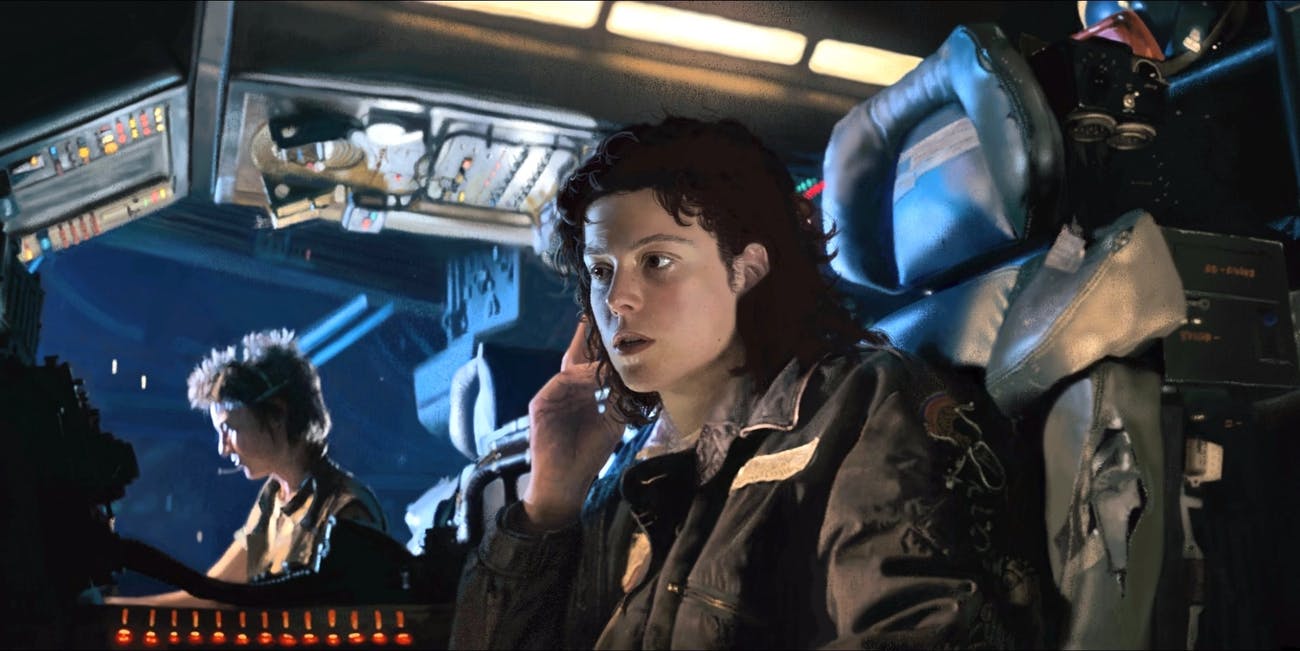
Although Ripley is, for all intents and purposes, not even on our radar for nearly 45mins into the film, following a tragedy, she is thrust into the forefront of this mission. Scott’s Alien dared to challenge the status quo in order to deliver the first female action hero, and place her in center stage. The long and short of it is that Ripley subverts the typical science-fiction hero trope to embody both the feminine and masculine to redefine what a hero is within the sci-fi/horror genre. Breaking gender norms for the time, she was neither arm candy, simply a side kick nor required rescuing by a male character. Her character and actions were not defined by gender. She is our final girl, and so much more. Not only did the character of Ripley contribute significantly to horror, she also broke ground for female heroines in the world of cinema at large.
Like Clarice Starling in Silence of the Lambs, Ridley is also someone who is equal parts female and male. In fact, you could argue that she takes on more masculine characteristics as the narrative plays. This playing with the roles of men, women, and their respective bodies and minds can be realized when viewing the character of the xenomorph as the “monstrous feminine.” The monstrous-feminine is a psychological construction generated by male anxieties about the female body and sexuality. Scott’s Alien depicts the maternal body as monstrous. More specifically, the film repeatedly examines the scene of birth or origin. Interestingly, there are three different representations of the concept of birth in the film. In terms of the production design, Alien can be likened to a gothic horror set in space. Scott’s brilliant design conveys to the audience the extreme isolation and claustrophobia. There is also an fascinating dichotomy in the worlds that are represented in this film by pitting the mechanization and technology of the organization for which our explorers work and the monstrous origin world of the alien, which we learn more about (whether you like the films or not in the prequels).
Your central character need not always be the first or second character we encounter in a screenplay. This is true with Ripley as she emerges as the central character midway through the film. However, we are given hints at her destiny throughout the first act in subtle ways. It was important to the plot to establish her as a woman in order to make her actions later on in the film so kickass and assumption shattering. Had she been seen as “masculine” or strong from the onset, then we would not be as impressed with her actions–we would expect them. Part of her power as a strong female character in horror is taking what we assumed about her (or a female character in general) and subvert our predisposition. Whereas Ripley is not the first female heroic character in a horror film, she is one that never becomes subjected to the male gaze or becomes some fantasy version of a woman. Even though female heroic characters who wear sexy clothes, wield phallic guns, or use their bodies as femme fatals can be strong characters, they are still some heteronormative fantasy for a male screenwriter or director.
Essentially, the aforementioned female characters lack an authentic humanity. Ripley is strong, vulnerable, independent, scared, mortal; these elements that make her believably human. There is so little suspension of disbelief in her character that she could nearly exist in real life. Furthermore, her character is incredibly complex; she exhibits strong intuition and intelligence, chutzpah, is brash, talks about PTSD, outspoken, rigidly wants to go by the book instead of saving a man’s life, has a natural beauty but doesn’t spend much time on hair or makeup. All these traits portray someone who has incredible depth and dimension. She is a survivor. No matter how grizzly, messy, constricting, or frightening her soundings become, she remains steadfast, collected, and brave. As the 1970s saw many changes in censorship, ratings, guidelines, etc., the ability to show gorier, more visceral body horror special effects, and on screen violence allowed Scott to confront the character of Ripley with cinematically innovative ways to test her resilience and survivorship.
The character of Ellen Ripley is also a strong pillar of the American horror film by virtue of her representation of gender politics. Even before it became popular, in more recent times, to use both male and female characters in motion pictures as a conduit to comment on the state of affairs for a particular group within our society, Ridley Scott crafted a visual masterpiece that did just that. Highly innovative, forward thinking, and progressive. The subtext of the film confronts us with a woman trying her best to fit into a man’s world. In addition to that subtext, research into the screenplay for this film shows that all the characters were written as gender neutral. Interesting stuff, right?!? Another gender-related observation in the character of Ripley, is her both metaphorically and physiologically clothing herself in masculinity all while remaining a women. In one scene, Ripley steps into a space suit. And this space suit can be read as Ripley playing the role of a man while remaining a women at her core in order to challenge the patriarchal system to prove that she is capable of anything that a masculine hero is.
Ripley is a highly intelligent character, realizes that about herself, and does not allow herself to be patronized or undermined. She does her job aboard the Nostromo like a legit boss. She knows procedure and protocol, and will follow it in order to protect her crew. Figuratively, she is protecting the ship from being willfully penetrated by a foreign object. This could be read as a commentary on rape. She is forcefully overruled, and we all know what happens next. Further commentary depicts male characters “forgetting” that Ripley is the senior officer. But because she is female, they feel they know better. I bet they wish they had followed her orders. Although much of what I’ve written deals with the masculine qualities of Ripley, her character would not have been as powerful a character if it wasn’t for her feminine side as well. When all hell is breaking loose, she soothes the nerves of the crew and offers comfort. Exemplary motherly qualities. Had a man been in her role, then he would most likely have not exhibited such love for the crew. Her success as a hero has as much to do with the touch of a women as it does the chutzpah of a man.
Another motherly quality found in Ripley is her persistent urge for the crew to function as a group. Through the brilliant cinematography, we are consistently shown a group that is fractures and continually fails to band together until it is too late. Interestingly, each character meets his or her demise because of a tragic flaw and failure to group together to function as ONE crew instead of self-centered individuals. Had the group functioned as one, then more may have survived. This hypothesis is witnessed in the Ripley in Act 3 because she essentially embodies all the good qualities found in the other characters (think Captain Planet). She combines what everyone did well into one character. That is why she is the final girl. Only by combining all the qualities of the crew was she able to go toe-to-toe with the Xenomorph killing machine.
There are actually three prominent female characters in Alien. Ripley, the Xenomorph, and The Nostromo. Although Ripley is our central character, I would be remiss to not mention the other two that could be analyzed individually themselves. Much like Ripley exhibits both masculine and feminine characteristics, so does the Xenomorph with a mouth that oscillates between vaginal and phallic in nature. And finally, The Nostromo ostensibly gives birth to all the astronauts at the beginning of the film; and therefore could be referred to as the mother ship. Playing around with gender does not stop there. The facegrabber impregnates a male character and he gives birth to the Xenomorph. Underscoring so many elements and conflicts in this film is this idea of subverting gender identity with the intent to horrify by tapping into primal heteronormative fears. And let’s face it, child birth is terrifying.
The extent to which the special effects still hold up terrifying well in this motion picture is just one of many reasons why CGI can never replicate the way real like bounces off real objects and into the camera lens. Practical effects have literal depth and dimension–nothing simulated or recreated here. Practical effects offer the actors the opportunity to engage and interact with the world in which their respective characters live, work, play, and sometimes die. The single scene that stands out to me, and remains one of the best of all time is the “chestbuster” scene.
What an entrance! In addition to terrifying the audience, it threw the cast for quite the loop too; furthermore, this scene represents the first good look we have at the alien creature, even though it’s in its infant stage. Interestingly, the actors were literally taken by surprise because they had a general idea of how the scene was going to play out, but they were not informed as to specifics. Suddenly, Kane begins thrashing around so violently that everyone has to hold him down on the table, requiring everyone to move in closely to the body (a prosthetic one at this point). Just as the crew is holding onto Kane tightly, the alien BURSTS through Kane’s chest! His innards and blood spew everywhere! The actors’ reactions are grounded in realism, because these are authentic, unrehearsed reactions, which only adds to the gravity of the entire scene. Genuine reactions. You cannot get that with CGI. I mean, how is one supposed to fear for their life when acting next to a tennis ball on the end of a stick or string???
Unfortunately, all the sequels failed to live up to the substantive nature of the original and devolve into a generic futuristic action-adventure series; but the original ALIEN delivered a nightmare-inducing “haunted house” meets Jaws movie set in the far reaches of space where “no one can hear you scream,” and provided us with the breakthrough character of Ellen Ripley.
Ryan teaches screenwriting and film studies at the University of Tampa. If you like this article, check out the others and FOLLOW this blog! Interested in Ryan making a guest appearance on your podcast or contributing to your website? Send him a DM on Twitter or email him at RLTerry1@gmail.com! If you’re ever in Tampa or Orlando, feel free to catch a movie with or meet him in the theme parks!








 R.L. Terry ReelView