The Predator (2018) Review

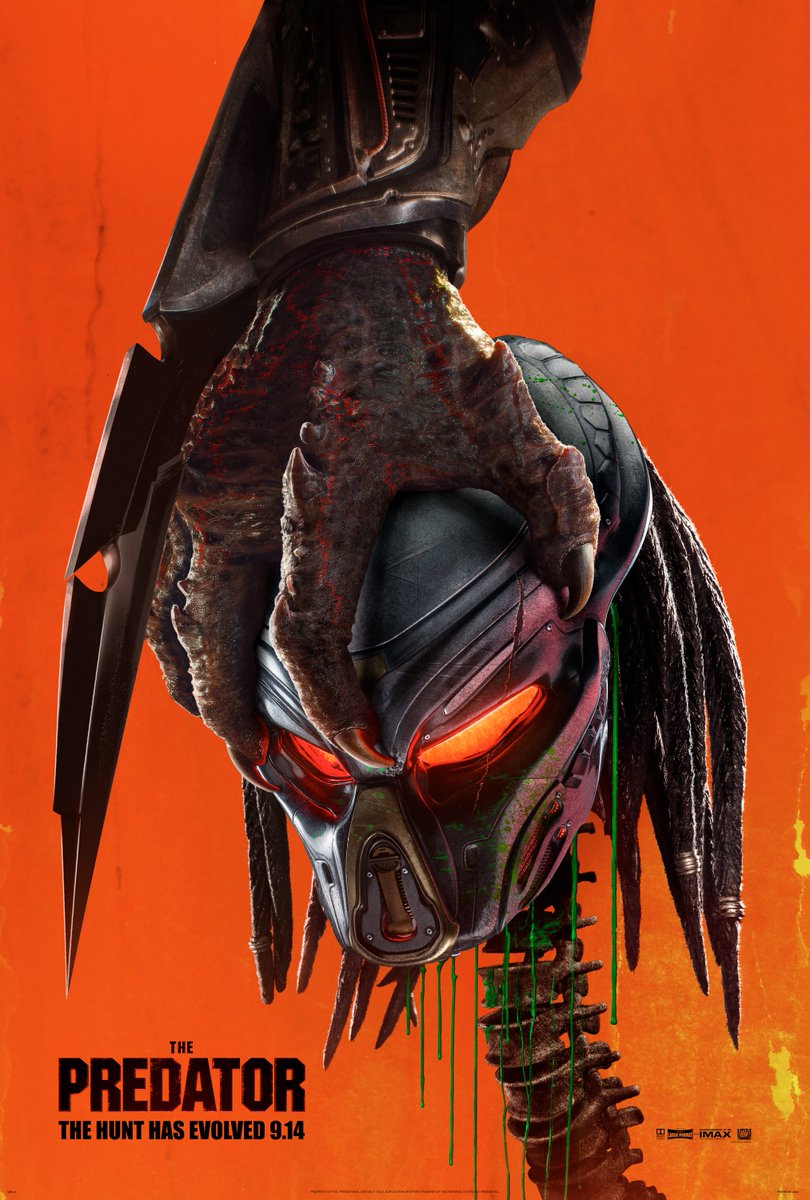
A solid reboot/sequel for the Predator franchise! Don’t pay attention to the plethora of reviews from critics who are hating on Shane Black’s The Predator. With an entertaining action-horror plot, fantastic cast, and excellent pacing, this is the Predator that we wanted and got! And I am not alone in this, several podcasts and even the Roger Ebert site agree on Black’s Predator. The tone of the movie feels like a throwback to the original, while acknowledging the other movies to maintain just enough continuity where you don’t question where this film falls of what has happened prior. I went into this movie with moderately low expectations because of what I read in the initial reviews, but I was completely surprised by how much I enjoyed it. And not only me, all of my friends who were with me between Rounds 1 and 2 of Halloween Horror Nights opening weekend. You get it all, grizzly action, humor, and entertaining kills. Unlike past movies that tried to “improve” on their 80s predecessors, this quintessential action-horror takes us back to what made the 80s horror endure the test of time. Instead of building the movie around the title character, it builds it around the lead human cast. And a memorable cast of characters, at that. Where some reviewers have found irreverence or offensiveness in the fact that many of the characters demonstrate cognitive and emotional disabilities, this is actually what works well for the film. Furthermore, it highlights how emotional, physiological, or cognitive disabilities do not determine someone’s degree of courage, determination, empathy, or sense of humor. Each of the lead and supporting characters in the ensemble cast overcome any obstacles that stand in their way, whether the obstacle comes from within or from the outside. It is a fun, exhilarating horror movie that will keep you entertained!

“From the outer reaches of space to the small-town streets of suburbia, the hunt comes home. The universe’s most lethal hunters are stronger, smarter and deadlier than ever before, having genetically upgraded themselves with DNA from other species” (IMDb). When US Ranger McKenna (Boyd Holbrook) discovers a crashed space ship and loses his crew to a mysterious alien with futuristic weaponry, he salvages what he can find from the wreckage and mails–in Dr. Henry Jones fashion–it in order for it to not be confiscated by the US government. Unbeknownst to McKenna, the US government is aware of these Predators, and has one sedated for testing in a secret facility. When the US government gaslights McKenna and believes him to be maliciously upholding an investigation, he is thrown onto a bus of other veterans, whom the government does not want to deal with, to be taken to a mental hospital. When the Predator escapes the facility, McKenna teams up with his fellow soldiers on the bus to take down the alien killer before more harm can be done. Meanwhile, the situation is complicated when a boy accidentally triggers the return to Earth of an even bigger Predator, and only McKennas’ ragtag crew of ex-soldiers and an evolutionary biologist can prevent the end of the human race.

Since there isn’t much to analyze here, I am going to keep this one short. What I find most interesting about The Predator, is what it was NOT more so than what it was. It wasn’t another reboot of a past franchise that overly injects vapid dialogue and self-aware humor or a complex plot. The Predator heeds the maxim “simple plot, complex characters.” Moreover, it also wasn’t a parody or satirical piece that was making fun of the genre or source material as if it was no longer relevant to audiences. It would have been far too easy for Black to have made a mockery of this franchise or wrote-directed something that was just complete schlock; but he did what many thought was impossible with this horror creature feature. He revived what we loved about the original, made a few tweaks, and gave us a strong reboot/sequel that was incredibly entertaining to watch.

After watching the movie, I am left with the conclusion that Black was able to recapture what made the first one work so well and actually repeat it, with some exchanges of grizzly violence for humor. But why does this movie work so well? Black started with characters, then derived a plot from those characters with incredible precision and strategic pacing. The tone and rhythm of this movie are remarkable. Yes, remarkable. Black was able to achieve what fans of great action movies love and take for granted, but is highly difficult to pull off effectively. The placement of dramatic beats. The reason the plot of this movie works so well is because Black knew where to place the emotional and action beats, and how to build up to them, and drive them home. He connects to these beats through character-driven development through which plot is derived.

For fans of the franchise, this truly IS the Predator movie that you were hoping for. Even those who are new to the franchise will enjoy the movie because it works as both an homage to and a pioneer in rediscovering the attraction of this iconic creature feature.

Ryan is a screenwriting professor at the University of Tampa. If you like this article, check out the others and FOLLOW this blog!

Follow him!

Twitter: RLTerry1

Instagram: RL_Terry

Thrillz (theme parks): Thrillz.co

Blumhouse’s “Upgrade” movie review

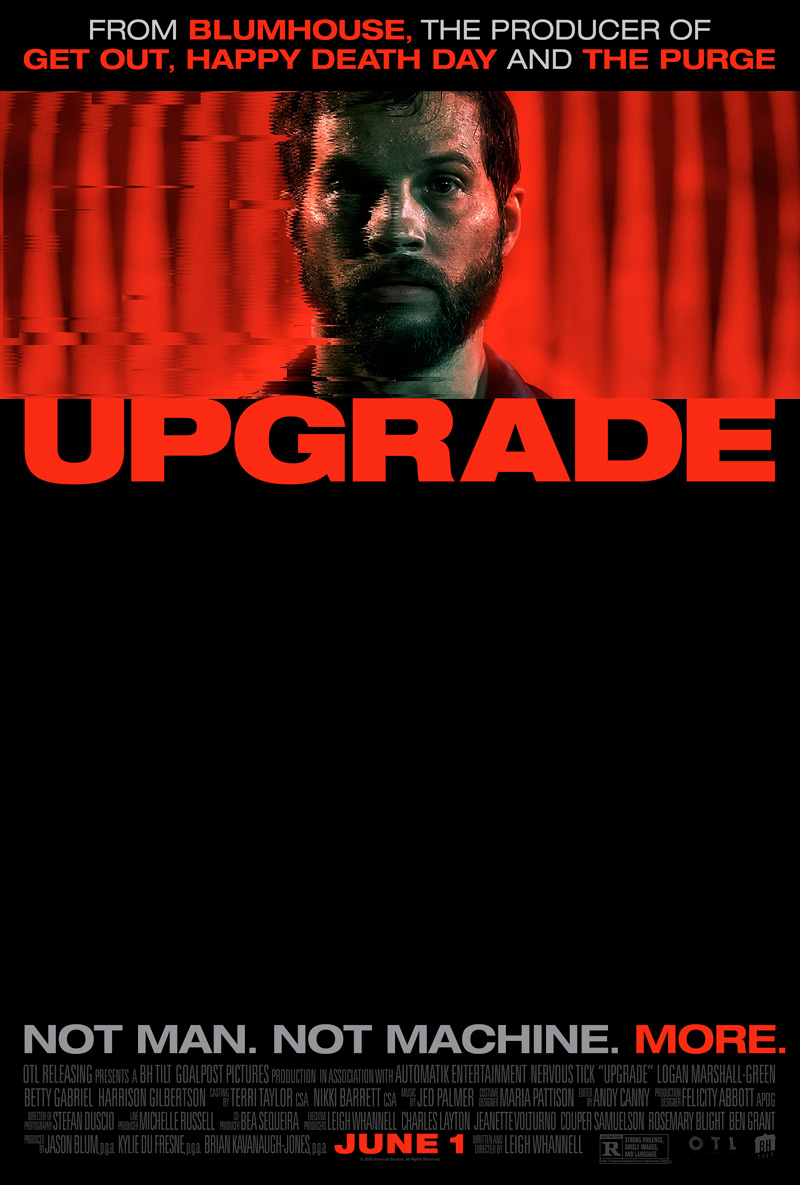
Black Mirror on crack. That is precisely what Blumhouse’s Upgrade can be likened to. Outstanding commentary on the convergence of humanity and technology that provides many thought-provoking moments. Best known for its horror, this action thriller from Blumhouse will have you on the edge of your seat the entire time. Rooted in classic science-fiction, this thriller will also deliver a healthy dose of dark comedy, heart-pounding action, and acutely shockingly violent scenes. Writer-director Leigh Whannel crafts a brilliant motion picture that is one part vigilante Robocop and another part Dr. Frankenstein’s Monster. On the surface, Whannel’s thriller comes across as a B-movie done well, but it contains prolific content that will likely inspire conversations about the relationship between humanity and technology. Perhaps it was not the intention of Whannel (co-creator of Insidious and Saw) to write a motion picture steeped with commentary on the human condition and a harbinger against allowing technology to fuse with our minds and bodies, but there is certainly material here to discuss those deeper topics. Bumhouse’s Upgrade is certainly a big screen experience, so catch it while it is there!

Set in the not-so-distant future, cars drive themselves, pizzas can be printed at home, and Alexa is built into your house. After dropping off a completely rebuilt 1980s Firebird Trans-Am at a client’s hosue, Grey Trace (Logan Marshall-Green) is left a quadriplegic following a brutal car accident and mugging that also leaves his wife dead. While recovering in the hospital, Grey is approached by a major tech company owner about an experimental surgery that is theorized to enable Grey to regain his motor skills. It worked! Only now, Grey’s realized that he has cat-like agility and reflexes as well as increased strength. With his newfound abilities, Grey seeks to assassinate those he blames for his wife’s death.

Better have an iron stomach in order to watch this thriller, because Whannel prefers shocking moments in abundance. Whereas this film is certainly not a horror–as the intent of the film is NOT to horrify audiences–it certainly contains elements borrowed from horror films in order in increase the level of threat. A director friend of mine from Germany characterized the film has having tones of a John Carpenter movie combined with Drive by Nicholas Winding Refn. Though set in a possible near-future, the cinematography, score, and lighting are quintessential 1980s. No surprise as 80s is en vogue in our movies and TV shows. Grey’s “everyman” character archetype enables audiences to identify with him quickly, thus root for him as he takes the law into his own hands to avenge the brutal death of his beloved wife. It’s the simple revenge plot that enables Whannel to build a complex character delivering dark humor and visceral violence.

Definitely an entertaining science-fiction thriller! If you enjoy TV shows like Netflix’ Black Mirror and movies like DriveHalloween, Frankenstein, and Robocop, then you’ll certainly like Blumhouse’s Upgrade.

“Deadpool 2” movie review

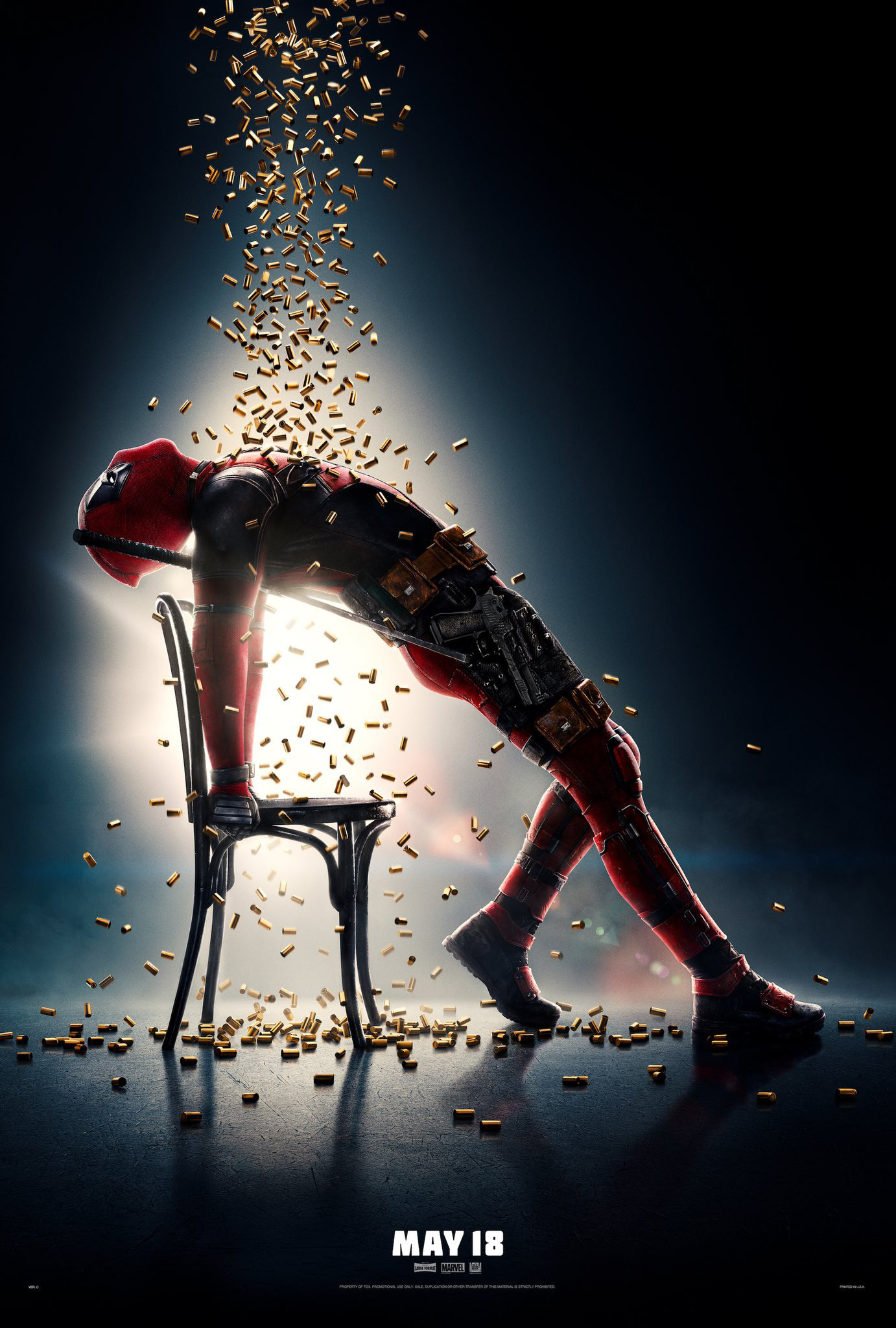
“Deadpool, can you hear me?” Subversive, irreverent, brilliant, meta. It very well may be better than the first. How often do we get to say that about direct sequels? Ryan Reynolds’ witty, crass, charmingly naughty superhero is back to take even the most unrelentingly serious movie patron, and drive them to complete laughter. The square peg of the X-Men’s round universe returns with non-stop action, antics, and fourth-wall breaking humor virtually deconstructing everything from the opening credits to the post-credit scenes. Nothing new there; however, Deadpool assures the audience that the story they are about to see is a family movie. And after watching it, it may be unconventional, but it’s a solid family film. Maybe not “family entertainment,” by the Disney definition, but about family nevertheless. Speaking of which, we may have just watched the final Deadpool as we know it before it gets the Big D sanitization treatment, should Comcast (NBC Universal) not swoop in to save 20th Century from the otherwise inevitable Disney acquisition. Deadpool 2 isn’t just better than the first one simply because it’s funnier, more risqué, or more clever; in measurable ways, it possesses stronger villain(s), stronger opposition to the goal, and a better plot overall. Not your everyday “family” film, but filled with emotional tugs at your heart strings, all the same. Just with a heaping helping of self-aware and self-deprecating bawdy humor.

For two years, Wade Wilson/Deadpool (Ryan Reynolds) has continued his mercenary work, taking down villain after villain, crook after crook; but, after he fails to kill one of his targets on an extra-special day to him, he is faced with tragedy. Through a series of bizarre events–yes, even bizarre for Wilson–Wilson finds himself in a maximum-security prison ran by the DMC (Dept of Mutant Control) along with a renegade 14yo mutant named Russell. When Cable (Josh Brolin), a high-tech assassin, arrives from the future to take out a target that he claims leads to total destruction, Wilson must battle inner and outer demons in order to get his heart into the right place. Knowing he’s facing the most dangerous villain he’s ever encountered, Wilson forms the X-Force, a diverse “superhero” group of many talents in order to apprehend the target to prevent the world from plunging into complete chaos.

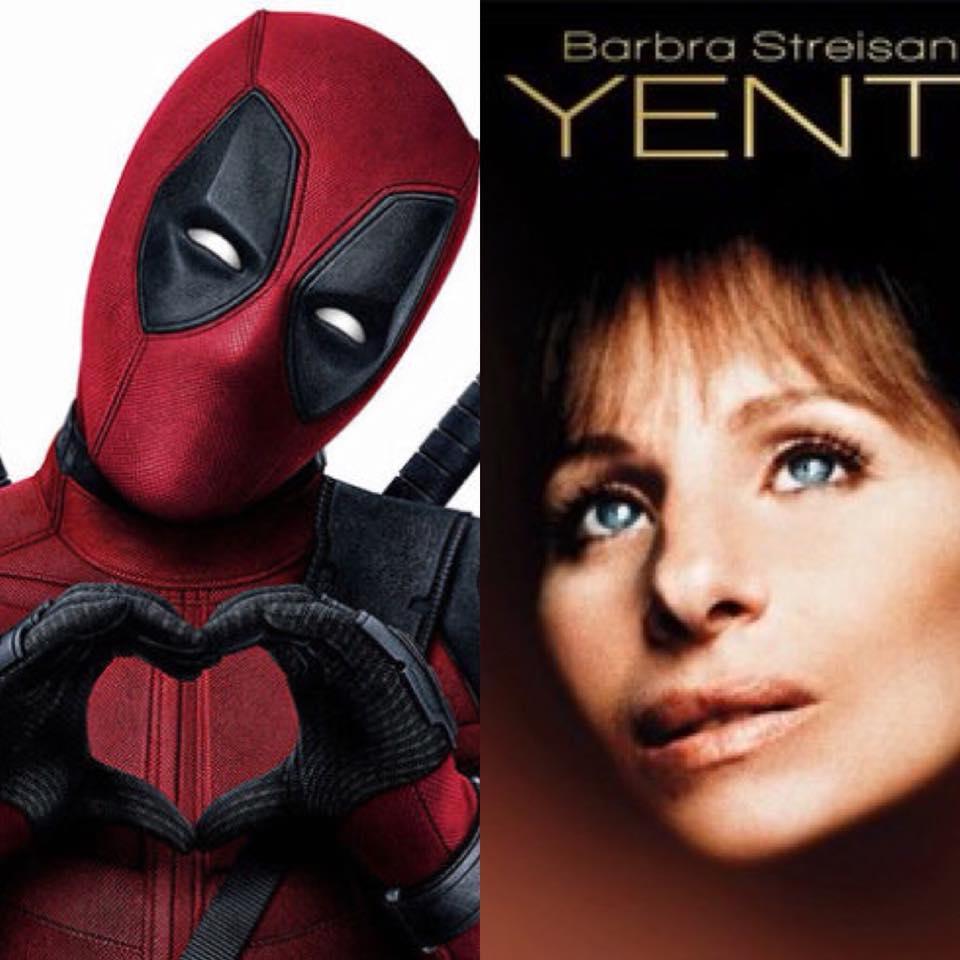
There is a comedic power in the plot of Deadpool 2 that invites the audience, at every turn, to laugh with the movie as it laughs at itself. There are a few running schticks throughout the film, but my favorite is the continued references to Barbra Streisand’s groundbreaking film Yentl featuring the iconic Streisand ballad Papa, Can You Hear Me? To which, Deadpool points out sounds an awful lot like Do You Wanna Build a Snowman from Disney’s Frozen. And it’s the implication of Disney appropriating Streisand’s song where the “Disney joke” was likely cut from the movie. Other jokes carry over from the first film such as the X-Men mansion with only Negasonic Teenage Warlord and Colossus roaming around. Some of the schticks from the first movie are transformed for this direct sequel. Contrary to the Wade Wilson from the first film, this one, this one diverts from his persistent aversion to companionship and a desire to be the “lone ranger,” as it were, and expresses a need for family. This desire for family serves as the backdrop of running jokes, gags, and extreme snark.

Streisand isn’t the only female vocal artist highlighted in the film, Dolly Parton’s 9 to 5, Pat Benatar’s We Belong, and Cher’s If I Could Turn Back Time are all featured, all that we were missing was Cyndi Lauper’s Time After Time. Unlike the completely unconventional opening credit sequence from the first Deadpool, this sequel’s opening credit sequence takes a page out of the James Bond handbook, complete with the new single Ashes by Celina Dion. Like the opening credit sequence from the first film, this one also replaces the names with jokes that certainly aid in setting the irreverent mood of the film. Although a film should never primarily rest upon the music, as the plot should stand on its own, the score and featured songs are incredibly important assets that can greatly enhance the experience. Deadpool 2 contains a few montages set to song that will certainly have you rolling over laughing. Sometimes it’s the complete contrast or juxtaposition that the lyrics provide against the action in the foreground that drive the audience to complete hysterical laughter.

For all the first film got right, one of the elements missing from it was a well-developed, dynamic villain (more specifically, opposition to the external goal). Deadpool 2 provides solid central opposition to the external goal (which, for spoiler sake, I won’t mention) flanked by two villains taken directly out of the X-Men comics (and X-Men: the Animated Series). Cable, mentioned earlier, and the Juggernaut. Not to pigeonhole Cable into the villain category, there is more to this villain than first meets the eye. He can be more accurately described as an anti-hero because of his reasons for returning to the past to stop Armageddon, so to speak. Knowing Cable’s backstory, his goals, and that which he sees as opposition to his goals, gives him a character depth seldom seen in many superhero villains. When a villain (or anti-hero) can get the audience to empathize with his or her plight, then the villain succeeds in being well-developed and complicated. Having a complicated villain enables the audience to love or love to hate the villain. But in both cases, the audience loves to see the villain (or anti-hero) on screen. Supplementing the cast of villains in Deadpool 2, is the iconic X-Men character Juggernaut. His introduction into the film comes at a strategic turning point that launches the plot into the showdown.

The film makes an important observation about the lack of plus-sized lead characters in superhero movies. Russell is a plus-sized mutant who wants so desperately to be a superhero, but sends the message to Wilson (and by extension, the audience) that there should be room for non-athletic types in the superhero universe. It’s an important message that I think would have played out more effectively had the actor not been so childish. I understand that the character is a 14yo mutant who is still struggling to find his place in this world and understand his powers, but I kept seeing the actor and not the character. The ability to bring a character to life without the actor showing is part of the art of acting. In most cases, the audience wants to see the character, not the actor playing him or her. I liked the character of Russell, just think he could have been portrayed by another actor who could have more effectively driven the message home that diversity in the superhero universe mans more than male, female, straight, gay, etc. It should also incorporate a diversity of body types. Having non-athletic body types represented in lead characters–superheroes specifically–is an element that I hope continues to improve.

There truly is so much to enjoy about Deadpool 2. Behind the ballsy jokes, suggestive poses, and hilarious meta observations, is solid writing and direction. With the Disney acquisition of 20th Century Fox all but complete, with the wild card of Comcast’s (NBC Universal) bidding 19% more than Disney in cash that could alter the direction of the deal, I hope that we did not witness the last Deadpool free of Disney sanitization. Knowing that they strong-armed Fox into cutting a Disney joke from the film during post-production, does not help matters any. Hopefully, the third installment of Deadpool will be just as funny, if not funnier than the first two. Oh yeah, it should go without saying but this NOT a superhero movie for kids.

“Ready Player One” movie review

A spectacular journey that will have you on the edge of your seat. Ready Player One is a throwback to the classic Spielberg blockbuster films from the 70s, 80s, and 90s that many of us know, quote, and love. You’ll do far more than wax nostalgic in this film, because the focus is on the conflict at hand and not the pop culture references. Spielberg’s adaptation of the best-selling novel, written by Ernest Cline, takes on the challenge of crafting a visually compelling narrative that shows the benefits of virtual reality (VR) and gaming, juxtaposing it against the harshness of a reality following socio-economic and natural disasters in the near future. Although the story highlights the benefits of VR and shows the wonders of the imagination through the exquisitely designed scenes, there is one element seen throughout the story that transcends the illusion of Oasis (the virtual world); and that is humanity. Generosity of spirit and integrity are showcased brilliantly through the various central characters. I found myself, at the end of the movie, thinking about how much it reminds me of the magic of Willy Wonka and the Chocolate Factory. Never once, will you find an opportunity for boredom to set in. And you’ll find yourself rooting for this open source of entertainment and information to remain available to all those who want to participate, and not regulate content based upon how much someone is willing to pay.

From filmmaker Steven Spielberg comes the science fiction action adventure “Ready Player One,” based on Ernest Cline’s bestseller of the same name, which has become a worldwide phenomenon. The film is set in 2045, with the world on the brink of chaos and collapse. But the people have found salvation in the OASIS, an expansive virtual reality universe created by the brilliant and eccentric James Halliday (Mark Rylance). When Halliday dies, he leaves his immense fortune to the first person to find a digital Easter egg he has hidden somewhere in the OASIS, sparking a contest that grips the entire world. When an unlikely young hero named Wade Watts (Tye Sheridan) decides to join the contest, he is hurled into a breakneck, reality-bending treasure hunt through a fantastical universe of mystery, discovery and danger. (IMDb)

Pop culture, geek-dom, and nerd-dom for everyone! Whereas the book primarily contains 1980s references, the movie adaptation spans pop culture from the 80s to today. This was an important and strategically solid move in order to appeal to a wide age-range of movie-goers. Not being a gamer myself, I am unable to comment on the various references in the film and how they are placed perfectly in the narrative; however, I LOVE movies and TV, so I can definitely comment on those references, and they were spot on! Loved every one of them. And not just because these references were in the movie–anyone can just shove references and product placements into a movie without thought of the meaning or contribution to the plot–each and every movie or TV reference was selected specifically to fulfill a larger purpose and placed precisely where it needs to be. It would have been far too easy for the pop culture references to steel attention away from the plot, but the structure and pacing of the movie is such that the references enhance the experience without becoming sheer spectacle that could have been interpreted and pandering to audiences.

Of all the references, my favorite is Stanley Kubrick’s The Shining. That’s right. Return to the infamous Overlook Hotel during one of the quests to search for the Jade Key. The Overlook Hotel from Kubrick’s horror masterpiece (that was, interestingly enough, disliked strongly by Stephen King) was incredible. I felt that I was legitimately transported to the macabre setting in which we encounter unimaginable terror. This referenced worked particularly well because I cannot imagine another setting that could have been used in such an instrumental fashion. There are times in films that a location could be swapped out for another similar setting and achieve the same result because the plot is not predicated on it–essentially, the plot would play out just as well and effectively through another comparable location. The Overlook Hotel and specific events from The Shining (that I won’t go into because of spoiling the experience) were nearly as integral to the advancement of the plot as the characters themselves. No sooner could you replace The Shining sequence than you could the main turning points between Acts I/II and II/III. Although there are many excellent sequences to choose from in the movie, the series of scenes during the time spent at The Overlook are definitely my favorite.

It’s not often that an action-adventure or fantasy movie is deep enough to provide social commentary on real issues facing us in the real world or what it means to be human; but Ready Player One contains fantastic material for philosophical discussions regarding the current trends and challenges facing present-day society. The subtext of this movie contains material on human values, equitable access to content online, and the dangers of falling victim to only “existing” in a virtual world. Man vs technology, greed vs generosity are ways to look at the story, not to oversimplify the subtext. Because of the present crisis of the ending of net neutrality facing the United States, there is clearly a message that everyone has the right to equitable access to the universe of entertainment and information online. When a greedy capitalist attempts to disrupt that access and determine someone’s access based upon how much someone is willing to pay, we see that the system runs the risk of breaking down and not allowing for the joy that was once ran through the very framework of the virtual world. The film also provides audiences with commentary on the importance of actively participating in the real world to form tangible, physical relationships with others in order to find love and forge friendships. Furthermore, if a society becomes so fixated on avoiding the problems of the real world by transporting to a virtual world, then the problems of the real world grow worse, bigger, and more devastating than if society takes the time and effort to combat that which seeks to destroy our world.

Such an excellent movie! If you are a fan of the Black Mirror series on Netflix for its Twilight Zone approach to tackling tough subject matter involving the degree to which technology permeates our lives, then you’ll enjoy Ready Player One. I find that many elements of this movie feel like the San Junipero episode, and the successful show at large, because of the terrifying visions of the near future distorted by the abuse of technology. Thoroughly enjoyed every moment on the more than two-hour runtime. I was initially afraid that the movie would feel too much like a video game, but that is not the case. The design is such that the virtual world and real world feel just as tangible. Being that I am not a gamer, I don’t want to attend the cinema and feel that I am watching cut scenes from a video game, so this was handed extremely well. You’ll easily find characters that you can identify with and root for, and the opposition forces are well-developed too.

“Jurassic Park” (1993), Sci-Fi Horror NOT Action-Adventure

In honor of Jurassic Park‘s 25th Anniversary, I want to revisit why the film works so incredibly well, and never gets old. Just like Dr. Alan Grant states at the beginning of the film, “raptors have far more in common with present day birds than they do with reptiles,” that same analogy can be drawn with the original Jurassic Park and its proximity to horror compared to action-adventure. Borrowing from Dr. Grant, the original Jurassic Park has far more in common with scifi-horror than it does with action-adventure, hence why it has held up over the years and continues to be a favorite film for many cinephiles and fans alike. While all the sequels, including Jurassic World are far more action-adventure than the original, Jurassic Park can be likened to Ridley Scott’s Alien. The latter is a quintessential space scifi-horror with action-adventure sequels just like the former. And like Jurassic Park, the original Alien is considered far superior to that of the sequels. But why is this? There are many reasons from script to director to cinematography; but at the end of the day, it’s the fact that both these critically acclaimed and admired films have their respective roots in the American horror film and not action-adventure movies. More so than any other genre, horror is (1) uniquely American and (2) the most time tested, given it can trace its roots back to the 1890s and was perfected by Universal Pictures in the 1920s and 30s.

So what separates Jurassic Park from the sequels? Both have life-threatening dinosaurs, both have action, both have adventure, etc. But, only the original carries with it social commentary, rich subtext, and well-developed themes told through a brilliant combination of horrific frights and believable sciences taking place within a world of fiction grounded in reality. Furthermore, the focus in both Jurassic Park and Alien is largely on the drama between the characters and the oppositional forces in the film. The sequels in both franchises place far less emphasis on well-developed conflict and drama, and instead sacrifice those golden elements of cinematic storytelling for high-concept CGI-filled adventure movies with lots of dinosaurs or aliens. The proliferation of gimmicks and effects is often used to hide a weak story. Fortunately, Jurassic Park provides audiences with a strong plot told through exceptional cinematic storytelling.

Jurassic Park‘s screenplay benefitted from being penned by the award-winning author Michael Crichton who also wrote the novel by the same name. Often times, when the author of the novel also writes the screenplay, the screenplay forms a stronger foundation upon which the technical elements can be build. A more recent example of a brilliant screenplay adaptation of a novel is Gone Girl, the author of the novel was the screenwriter. Although a screenplay is visually driven whereas a novel is internally driven, when a novelist with a penchant for visual storytelling writes the screenplay for the movie adaptation, the screenplay tends to contain better developed characters, strong subtext, effective conflict, and excellent dialogue. Crichton created incredibly memorable characters who each spoke with their own voice. Casting the right actors to portray the characters is obviously important–and the cast for Jurassic Park is exemplary–but even before the actor steps into the character’s shoes, the character has to be created. Each character in Jurassic Park possesses unique traits, strengths, weaknesses, dialect, and behaviors. Instead of the conflict being arbitrary, the conflict develops through the interpersonal relationships between the characters and the relationship between the characters and the opposition–human and nature.

I was in elementary school when the movie hit theatres in the summer of 1993; and although under 13, my parents allowed me to go see the movie. It was my first PG-13 film, and what an experience! Not unlike Dr. Grant’s reaction to his first encounter with a dinosaur in the film, my reaction to Spielberg’s masterpiece was eyes-wide-open, mouth gaping wide, and racing endorphins. And then comes the macabre contrast in Acts II and III. “Ooo, ahh–that’s how it begins, and then there’s running and screaming” (Dr. Ian Malcolm, The Lost World). Aptly stated. The opening scene hooks the audience with a disaster, but does not reveal much about the dinosaur in the secured transport–brilliant. Because this scene did not show a dinosaur, the audience’s curiosity is pricked which creates an eagerness to see a dinosaur and a degree of nervousness or apprehension accompanying that curiosity. We wanted to see more. If you’re familiar with Hitchcock’s bomb theory, he states “you must never let the bomb go off.” More than simply shock audiences with the death of that employee at the beginning of the movie, this scene serves as information more than a glimpse at that which would be horrific in real life. This delay of seeing a dinosaur forces the audiences to pay more attention to the characters, dialogue, and conflict than looking for the next dino. Furthermore, the delay in seeing a dinosaur, perfectly setup audiences for the grand reveal on the way from the helipad to the Visitors Center. Interestingly, if you add up all the screen time that dinosaurs receive in the film, you’ll find that they are only on screen for about 20-minutes. Just like Hitchcock transferred the terror from the screen into the minds of the audience after the Psycho “shower scene,” Crichton and Spielberg did the same with Jurassic Park.

It’s the soft introduction to the man-made dinosaurs that makes the horror of the dinosaurs feel so much more intense later on in the film–and make you scream! In terms of the type of science-fiction horror film Jurassic Park could be classified as, it shares many commonalities with man vs nature and man vs technology horror films. Crichton is known for his believable science within his works of fiction. It is obvious that genetics and paleontology were researched enough to use real, hard science to inspire a fictional science that feels just out of reach of the current trends in the science, technology, and engineering fields. Pair that with horror, and you have a solid cinematic film. The brilliance of horror films is how they can creatively comment on or provide a different perfective on a anthropological or psychological observation; moreover, it can be helpful when exploring philosophical questions. And these topics are visually explored through the movie and externalize the themes. One area that separates popcorn action-adventure movies from horror films is the cultural significance of the subtext and themes. Typically, action adventure movies do not carry with them social commentary nor significantly pull on our emotions and tap into our most primal fears. Jurassic Park contains all of this. There is something about horror films that beckons the audiences to find enjoyment in, that which in real life, would not be enjoyable—and not only see it once, but repeat it. And furthermore, find the unfamiliar and grotesque fascinating to behold as what should remain hidden comes to light. Certainly the dinosaurs in the movie should have remained “extinct,” but were brought back to life and engaged in violence in which we find enjoyment. 

Some of the themes found in Jurassic Park that are told through the visceral horror and tense dramatic moments are: man vs nature, foolishness and folly, greed, wisdom vs knowledge, man vs technology, and parenting. Why don’t the Jurassic films have the chache that the original does? You try to find to find rich themes such as these in the subsequent films. They don’t exist. Why? Because it is far more difficult to explore what it means to be human and social constructs in a scifi action movie than in scifi horror. An action movie would be ill-equipped to tackle questions of a philosophical nature because the focus is largely on the action itself and not necessarily the characters, and almost never the subtext and theme. For an action film to delve into that which causes the film to take on an intellectual nature, it would lose the attention of those who simply want a good popcorn movie. Don’t get me wrong, there are excellent action-adventure movies that contribute to the world of cinema in exceptional ways. Indiana Jones Raiders, Doom, and Last Crusade do that. Obviously, the inability to reconcile nature’s resistance to control is one of the most important themes of Jurassic Park. Dr. Ian Malcolm tells the group that “life finds a way,” and it immediately becomes the film’s mantra (and a quotable line), true in every demonstrable, measurable way; the dinosaurs survive outside their design and engineering, the lost children survive with the help of a kid-averted paleontologist who discovers his parental side, humanity survives despite meddling in the natural order of things by playing God because that’s what we do–we survive. Every character in the film either understands or is reminded of this–some of them, by force when it’s too late–through the course of events.

Jurassic Park uses horror film techniques in a brilliant fashion to force its audience into considering the larger philosophical questions mentioned in the previous paragraph. It reinforces those questions with clever parallels: Dr Grant’s way of paleontology is about to go “extinct” due to the rise of computer technology (the line “don’t you mean extinct” came from a comment behind-the-scenes regarding CGI encroaching upon animatronics, puppetry, and special effects); the power of the natural world is exponentially magnified when the park’s technology failure is combined with a disastrous tropical storm; money causes literally every ill in the film, even when it is being used for supposedly admirable purposes; and “you were so pre-occupied with whether or not you could, you didn’t stop to think if you should.” The inability to reconcile nature’s resistance to control is one of the most important themes of the film, of course. Ian Malcolm tells the group that “life finds a way,” and it abruptly becomes the tale’s rallying cry, true in every conceivable way; the dinosaurs survive outside their engineering, the lost children survive with the help of a paleontologist who discovers his paternal side, humanity survives despite its meddling because it’s what we do. Every character in the film either understands this, or is made to by the course of events.

Beyond exploring themes, it’s the intent of the film that determines whether is a thriller (suspense) or horror film. The films speak for themselves. If the intent is to horrify, then it’s a horror film; if the intent is to thrill, then it is a thriller. In all fairness, Jurassic Park is borderline; but it’s the level of shock, fear, and dread that may just be enough to tip the scale toward horror instead of thriller, and certainly evidence enough to prove that it is NOT simply a dark action-adventure movie. Much like Stanley Kubrick’s The Shining and Scott’s Alien, Spielberg’s Jurassic Park is also an intellectual film. Whereas an action-adventure movie would have provided audiences with a few minutes collectively of some surface-level chit-chat above ethics in order to technically give the film a theme, Jurassic Park provides audiences with an entire film about ethics that will have them talking about the various dilemmas and challenges facing the characters throughout the film. It’s brilliant! And quite the rarity these days. The hand of Spielberg’s penchant for horror (Jaws and Poltergeist) is seen in Jurassic Park from requesting that Crichton rewrite the original screenplay to be more cinematic and less internally driven because Spielberg desired to take the novel and adapt it to screen as a Jaws on land. If his intent was to make a sequel to Jaws, then we have to conclude that his intention was to horrify audiences in some measurable amount.

With a film as dynamic as Jurassic Park, it may be nearly impossible to prove that it is a horror film at its roots; but, the body of information provided in this article help to support the thesis that it is a horror film based upon the intention, conflict, themes, and visceral terror. “Well, there is it.”

You can catch Ryan most weeks at Studio Movie Grill Tampa, so if you’re in the area, let him know and you can join him at the cinema.

Ryan teaches screenwriting at the University of Tampa. If you like this article, check out the others and FOLLOW this blog! Interested in Ryan making a guest appearance on your podcast or contributing to your website? Send him a DM on Twitter!

Follow him!

Twitter: RLTerry1

Instagram: RL_Terry