WHEN CINEMA SANG: TOP TEN MOVIE SONGS OF THE 1980s

When we look back at the films of the 1980s, it’s impossible to separate the images on screen from the songs that scored them. This was the decade when movie music didn’t just underscore the action—it defined it. A single track could embody the spirit of a film while simultaneously capturing the mood of an entire generation. And remarkably, so many of those songs remain with us today. They’re still streamed on playlists, still belted out at karaoke, still instantly recognizable from their opening chords. The 1980s gave us movie songs that became cultural landmarks, and in many ways, they’ve never stopped playing.

Among the long arc of cinema history, the 1980s stand out as the high-water mark of the movie song. This was the era when a soundtrack single could leap to the top of the charts overnight, transforming into a cultural event in its own right. Whether it was an infectious pop hook or a soaring power ballad, these songs weren’t just background music; they were stitched into the fabric of the films and the culture itself. Think of the triumphant synth-drenched pulse of Flashdance…What a Feeling, the high-octane rush of Danger Zone, or the emotional catharsis of Wind Beneath My Wings. The decade leaned into the marriage of sound and image with unapologetic boldness, and in doing so created songs as enduring as the films they came from—sometimes even more so.

Why have they endured? Partly because they articulated universal experiences—ambition, risk, heartbreak, friendship—in melodies and lyrics that were at once sincere and unforgettable. The 1980s were an era of spectacle, melodrama, and unabashed emotion, and the songs mirrored that ethos. They became sonic shorthand for youth, energy, rebellion, and joy. In an age when MTV amplified every movie track into a visual pop event, these songs weren’t merely incidental—they were emotional anchors, marketing juggernauts, and narrative engines. Nothing’s Gonna Stop Us Now carried Mannequin’s optimism beyond the multiplex and into wedding halls. Dolly Parton’s 9 to 5 gave voice to working-class frustration while climbing the radio charts. And Don’t You (Forget About Me) is now inseparable from Judd Nelson’s raised fist in The Breakfast Club. These weren’t just songs in movies; they became shorthand for the decade’s imagination.

Why don’t we have these same kind of songs today? There’s been a cultural shift–most noticeably in the 2020s, but has its roots in the mid to late 1990s. By the 1990s and 2000s, the conditions that made such songs possible began to fade. Pop soundtracks increasingly licensed pre-existing hits rather than commissioning originals. Franchise filmmaking turned toward instrumental scores and brand cohesion rather than big, show-stopping anthems. And as music videos lost their central cultural role, so too did the symbiotic relationship between cinema and pop radio. The cultural machine that once elevated a movie song into a generational anthem simply no longer works the same way.

Reflecting upon more recent years, much of 2020s pop and movie music is created in a climate of deep cynicism and fragmentation. Songs today are often crafted for algorithms, for virality on TikTok, or as ironic counterpoints in film soundtracks rather than as emotional anchors. Other songs carry with them a tone of anger or polarization. Audiences, steeped in skepticism toward institutions, media, and even each other, tend to reward irony, detachment, or knowing self-parody over the kind of unguarded sincerity that defined the 80s. A song that earnestly belts out its hopes risks being labeled “cheesy” or “dated,” whereas in the 1980s, that very boldness was the point.

One of the most striking contrasts between the 1980s and the 2020s is the sense of permanence. The movies and music of the 1980s were made with a boldness that seemed intent on lasting—on making an impression that would outlive the decade itself. By contrast, much of today’s popular culture, both in film and in music, feels designed for rapid consumption rather than long-term resonance–its largely disposable.

Songs today are often crafted not for endurance but rather for algorithms—engineered to spike on streaming platforms, go viral on TikTok, or capture a brief window of attention on curated playlists. In that sense, music has become increasingly functional: it serves a moment, a meme, a mood, but rarely aspires to the kind of cultural monumentality that defined the best of the 1980s. The hooks are short, the structures lean toward repetition, and the lifespan of a hit can sometimes be measured in weeks rather than years. The same phenomenon is evident in today’s movies. Franchise blockbusters dominate the box office, but their cultural imprint often fades once the next installment arrives. Films are built as nodes in larger intellectual property ecosystems, not as singular artistic statements. Just as contemporary songs often feel interchangeable—quickly eclipsed by the next release—so too do many films function as disposable content, part of a cycle of endless consumption rather than enduring cultural landmarks.

By comparison, the movies and songs of the 1980s embraced scale and spectacle not just for immediate impact but for legacy. A hit song wasn’t simply filler for a soundtrack; it was an anthem meant to outlive its film, designed to thrive on the radio, MTV, and in the cultural memory. Similarly, films were often built as self-contained phenomena: E.T., Top Gun, Back to the Future—movies that carried an aura of event cinema and refused to feel like disposable installments. This is not to say that contemporary culture lacks quality (although that appears to be increasingly true, in the opinion of this scholar and critic), but rather that its structures encourage disposability. With so much “content” (the use of content versus film or music is intentional) being produced at such speed, both music and movies are often designed to capture attention briefly rather than to linger. The result is a cultural landscape that feels ephemeral, where few works are positioned to endure in the way that 1980s soundtracks and films continue to do.

Suffice it to say, the movie songs of the1980s sought to define a generation; today, music and movies often just try to define a moment.

It appears all too clear that in the 1980s, movies weren’t just stories we watched; they were songs we sang, dances we learned, and emotions we carried. It wasn’t simply a golden age of movie music—this era was the last time cinema’s soundtrack felt like the heartbeat of the culture. In our present times, wherein pop culture often reflects uncertainty and disillusionment, the 1980s (extending into the 1990s) stand as the last great era when music from movies felt larger than life, confident enough to aim for forever. Moreover, these songs transcend generations by speaking directly to universal desires—love, empowerment, joy, escape—modern songs often feel locked, chained to their cultural moment or fixated on a particular socio-political lament.

The 1980s–when cinema sang! What the 1970s did for cinematic scores, the 1980s did for music that wrapped us in the cinematic experience.

This week, on my show ReelTalk on WKGC Public Media, I sat down with returning guest and friend of the show music professor Dr. Steven DiBlasi to countdown our Top Ten Movie Songs of the 1980s. Our respective lists both aligned and diverged, covering the wide spectrum of great, memorable movie songs. This is where I am going to direct you to listen to the show (approx 1hr) to avoid spoilers, but if you’re more of a reader than a listener, then you can find our ranked lists below.

Listen

Top Ten Movie Songs of the 1980s

Mine (Ryan’s)

Dr. DiBlasi’s

  • 10. Stir It Up (Beverly Hills Cop)
  • 9. Trust (Batman)
  • 8. Danger Zone (Top Gun)
  • 7. Wind Beneath My Wings (Beaches)
  • 6. Nothing’s Gonna Stop Us Now (Mannequin)
  • 5. 9 to 5 (9 to 5)
  • 4. Goonies R Good Enough (The Goonies)
  • 3. Maniac (Flashdance)
  • 2. NeverEnding Story (The NeverEnding Story)
  • 1. Flashdance…What a Feeling (Flashdance)
  • 10. In Your Eyes (Say Anything)
  • 9. The Heat is On (Beverly Hills Cop)
  • 8. Don’t You Forget About Me (The Breakfast Club)
  • 7. Footloose (Footloose)
  • 6. Fight the Power (Do the Right Thing)
  • 5. Take My Breath Away (Top Gun)
  • 4. Purple Rain (Purple Rain)
  • 3. Eye of the Tiger (Rocky)
  • 2. The Power of Love (Back to the Future)
  • 1. Ghostbusters (Ghostbusters)

Ryan is the general manager for 90.7 WKGC Public Media and host of the public radio show ReelTalk “where you can join the cinematic conversations frame by frame each week.” Additionally, he is the author of the upcoming film studies book titled Monsters, Madness, and Mayhem: Why People Love Horror. After teaching film studies for over eight years at the University of Tampa, he transitioned from the classroom to public media. He is a member of the Critics Association of Central Florida and Indie Film Critics of America. If you like this article, check out the others and FOLLOW this blog! Follow him on Twitter: RLTerry1 and LetterBoxd: RLTerry

40 YEARS OF FLASHDANCE…What a Feeling! a retrospective review

What a feeling! Grab your leg warmers and can of Aqua Net as we hit the dance floor to celebrate the cultural phenomenon that was and still is Flashdance.

The Oscar (and Grammy) winning dance movie Flashdance turns 40 this year on April 15th. Can you believe it’s been four decades since the iconic movie defined the music, dance, and fashion of the 1980s??? Forty years of electrifying music and dance that dazzles the senses. Winning the late Irene Cara and legendary composer Giorgio Moroder the Best Original Song Oscar and Grammy for Flashdance…What a Feeling! (Moroder was also nominated in the same year for his Scarface score) and earning Michael Sembello an Oscar nomination for Maniac, the titular 80s movie Flashdance remains an icon of music and dance that has transcended the decades and continues to be emulated in other media today. This is not a movie to be taken seriously; it’s a movie to be felt and experienced. And to its credit, it has remained popular. Take your passion and make it happen!

In case you are new to planet earth, Flashdance tells the story of Alex Owens (Jennifer Beals), a beautiful young woman who works a day job in a steel mill in Pittsburgh and dances in a bar at night. When Alex discovers that her handsome boss, Nick Hurley (Michael Nouri), is both interested in her and supportive of her performing career, she renews her efforts to get accepted into a prestigious dance conservatory. Although Alex is frightened of failure, she is cheered on by Nick, as well as by her mentor, former ballet performer Hanna Long (Lilia Skala).

More than a cultural smash hit, it was a tremendous success at the box offie too, because Flashdance is the third highest grossing film of 1983 behind Return of the Jedi and Terms of Endearment. In retrospect, this movie is veritably responsible for reviving the modern movie musical with its sexy complex dance sequences, bold fashion, and use of popular music.

Not many films can be recognized by a single shot, this is expressly true with those that may not have even seen the film, but Flashdance is instantly recognized by Beals’ silhouette leaning back on the chair with water dousing her. That cinematic moment has been parodied and paid tribute to in dozens of movies and TV shows from Elvira: Mistress of the Dark to Family Guy and even Deadpool 2. From Beals’ off-the-shoulder grey sweatshirt in the famous bra-removal scene to her knee-high leg warmers, bikini bottoms, and taut physique, many scenes in this movie will forever be engrained in our minds. It’s remarkable how this cheesy, low-budget dance film influenced the culture of an entire decade and continues to reassert itself in popular culture to this day. The incomparable footprint left by this movie can be felt everywhere.

It’s funny, whenever critics and fans talk about Flashdance, it’s almost never about the plot. Is there anything inordinately wrong with the plot–no–but there is nothing particularly remarkable or subversive about it either. It’s a simple variation of the rags to riches story or simply realizing a dream despite obstacles. At the intersection of performance art and motion pictures is where this movie lies, and lies there incredibly comfortably and confidently.

Flashdance is a movie which uses a paper-thin plot to connect sequences of montages and dance numbers, one right after the other–yet–somehow audiences, for forty years, are raptured by the music and dance. I cannot think of another movie that defied the odds of success and became a legitimate classic in the way Flashdance did.

It’s as if Bruckheimer and Adrian Lyne studied the elements of what makes a movie successful in the box office (and in popular culture), and then took those basic elements and loosely connected them together. Catchy music, bold fashion, sexy or provocative dances, mild/brief nudity, and relatable characters, these are the elements that Bruckheimer and Lyne put together in order to create movie magic and fantastic success. Then cap it all off with pure, unfiltered triumph in front of those that once looked down upon, and were skeptical of the central character.

Never once do you buy that Alex is a welder; furthermore, in retrospect, it’s clear that there are multiple people serving as the dancing Alex (which is something that is film is widely known and yet rocks it!). But it doesn’t matter. Why? Because it’s nearly impossible to watch this movie and not get drawn into its glitzy fantasy! But while we are on the topic of the Alex’ dancing in the film, I feel it’s important to highlight the talent that brought the exotic dancing to life! Working as Beals’ dancing body-doubles were accomplished dancers Marine Jahan, Sharon Shapiro, and breakdancer Richard “Crazy Legs” Colón.

Despite the contrived plot, the movie is not without deeper meaning. Some of the themes that can be closely read in Flashdance concern ideas such as identity, class, and cultural norms/expectations whether or not there is any absolution. Without stooping to pedantic commentary, the movie provides thoughtful content for those that seek a greater understanding of what the film has to say about the human experience. “When you give up your dream, you die.” A bit cliche perhaps, but still serves as the reminder that we do need our dreams in order to have something toward which we strive. We may never experience or realize that dream, but it’s the pursuit that is most meaningful.

We witness that there are many layers to Alex; she is a complex individual with multiple interests. She is just as confident and comfortable on a dance floor as she is welding as she is at a fine dining restaurant. This is such an important message that continues to be relevant–if not even more so–today! Flashdance is a reminder that diversity within a given group is so very important. Often times, popular culture projects prejudices, behaviors, and expectations onto a given group of people (or onto an individual within a group). Diversity of groups of people should never mean uniformity of thought within that group, it means there are a variety of individuals within any given group of people that have their own fears, beliefs, goals, and dreams. Alex may be a woman, but she is by no means obligated to only behave like a typical woman. Neither does she disparage those that would behave more typically; this movie celebrates variety! Variety of dance, variety of music, variety of people.

The degree to which this movie influenced virtually every area of popular culture is incalculable. Even exercise videos changed overnight. I posit that it’s entirely possible that 80s and 90s aerobics videos wouldn’t be the same if it wasn’t for Flashdance. For example, the footprint of this movie can be seen in the music, movements, and fashion of those Jane Fonda style aerobics videos. Even descendants of this stylistic athletic fashion can be observed in nearly every downtown and suburban area today; but we now refer to it as athleisure apparel.

Flashdance is the very definition of a crowd-pleasing film that defied the expectations of critics in 1983 and continues to be beloved by contemporary critics and audiences of all walks of life. The legacy of this movie is felt throughout media of all kinds! Even those that have never seen the movie recognize it by the music or iconic water dance shot. It’s a light-hearted melodrama that you cannot help but love. Just close your eyes, and feel the timeless rhythm of Flashdance!

Ryan teaches Film Studies and Screenwriting at the University of Tampa and is a member of the Critics Association of Central Florida and Indie Film Critics of America. If you like this article, check out the others and FOLLOW this blog! Interested in Ryan making a guest appearance on your podcast or contributing to your website? Send him a DM on Twitter. If you’re ever in Tampa or Orlando, feel free to catch a movie with him.

Follow him on Twitter: RLTerry1 and LetterBoxd: RLTerry

EMPIRE OF LIGHT film review

Underwhelming. Sam Mendes’ Empire of Light tries to be too many things, and winds up being none of them sufficiently enough. Furthermore, it’s a story out of time that would have played better had it come out 30-40 years ago. Moreover, it’s poorly paced, and Olivia Coleman’s Oscar-reaching performance is simply not enough to save this film that so desperately desires your affection. Is it a story about the challenges of a mixed race couple in the 1980s? Is it a story about the love and healing nature of cinema? Is it a story commenting on and challenging ageism in romance? Or, is it a story about trauma and mental illness? It’s all of those subjects–and–none of those. None of them effectively enough, anyway.

A romance develops in a beautiful old cinema on the south coast of England in the 1980s.

In an age in which mixed-race couples are increasingly common, movies about the healing power of cinema have been done–and much better (ie Cinema Paradiso), and films about mental illness are common, the story that needed to be the central focus was the one on ageism in dating. And yet, that subplot takes the furthest backseat to the others. Empire of Light never lands on any one outside/action story paired with an inside/emotional story. Neither does Coleman’s character effectively go though a growth arc–she is largely the same at the end of the movie as she is at the beginning–save the healing power of cinema (which isn’t her chief struggle).

This film stands as another example of a director with an idea(s) that should have worked with a screenwriter, because any screenwriter with his/her weight in salt would’ve cautioned Mendes against the plethora of subplots and inner-needs. A closer look at this film suggests that Mendes desired to create this generation’s Cinema Paradiso, but the movie simply doesn’t deliver on that theme or subplot. Like with all the other themes and motifs, the narrative feels desperately forced. I’ll leave you with this: where the film does excel.

Empire of Light ‘shines’ best through the brilliant eye of director of photography Roger Deakins. It’s because of his incredible talent that the film looks as gorgeous as it does. Furthermore, the setting and production design shine brilliantly. I wish that the outside/action story included the renovation of the older auditoriums and ballroom. Would’ve made for a fantastic manifestation of one of the inside/emotional stories.

Ryan teaches Film Studies and Screenwriting at the University of Tampa and is a member of the Critics Association of Central Florida. If you like this article, check out the others and FOLLOW this blog! Interested in Ryan making a guest appearance on your podcast or contributing to your website? Send him a DM on Twitter. If you’re ever in Tampa or Orlando, feel free to catch a movie with him.

Follow him on Twitter: RLTerry1

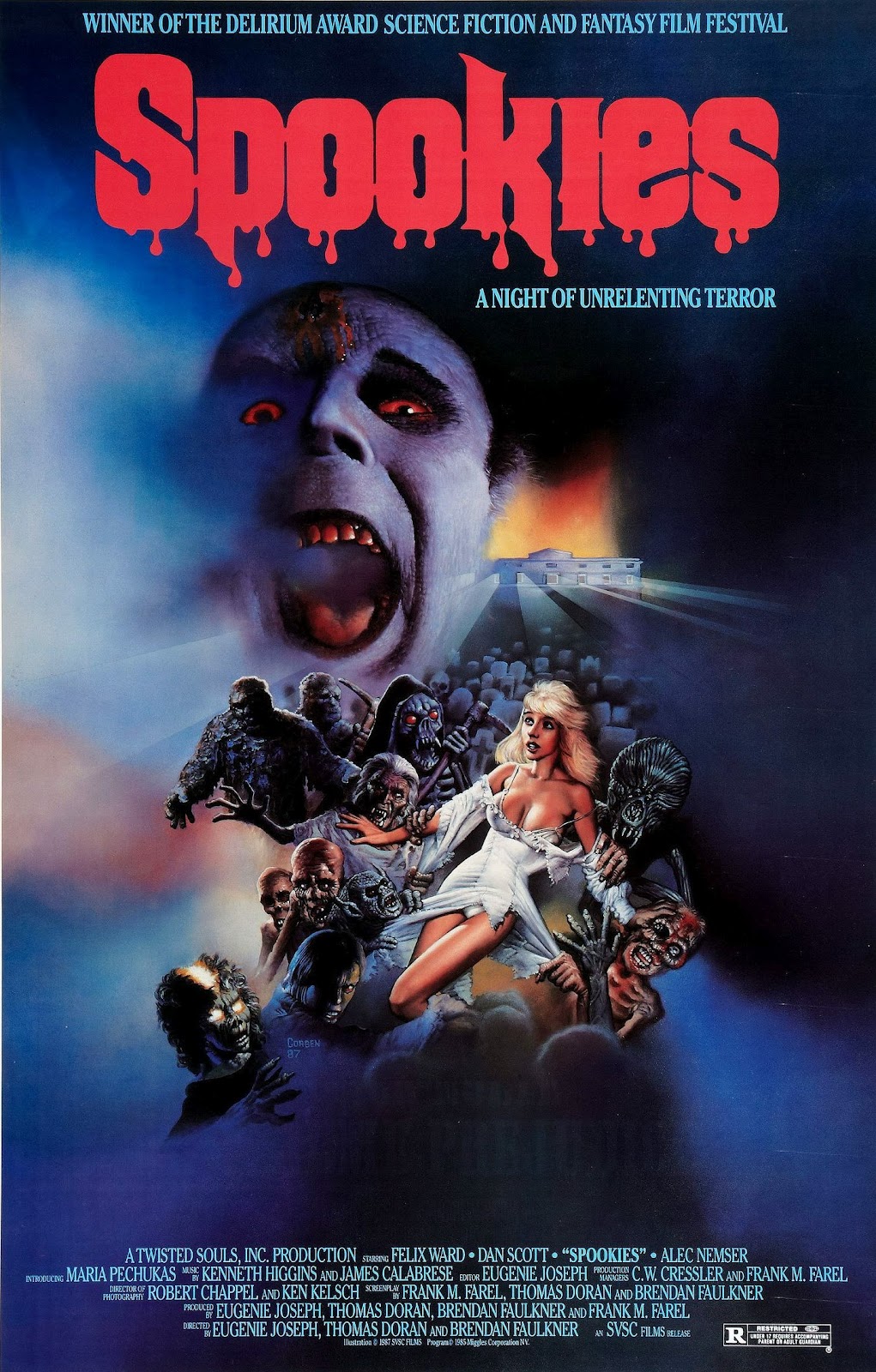
SPOOKIES (1986) Horror Review

The criminally underrated obscure schlocky movie that delivers everything you wanted (and even that which you didn’t know you needed) out of a horror B-movie! After the guys at the Cinema Speak Podcast featured a micro-review of Spookies (1986), I knew right then and there that I needed to seek out this movie for both my viewing pleasure and as a horror academic. After seeing a countless number of horror movies, over the years, ranging from junk to masterpieces, I love when a horror movie can surprise me! And that is certainly the case with Spookies. But why?

Does this movie do anything particularly innovative? No.

Does it provide thoughtful commentary on the human condition? No.

Well then, it must deliver underrated performances or a compelling story? Not at all.

What it does provide is an hour and a half of truly mind-blowing creature effects and entertaining kills! Spookies packs a punch in all the right ways, delivering the perfect amount of spookiness one wants to see in a movie that’s ostensibly a surreal combination of Disney’s Haunted Mansion attraction, Evil Dead, Night of the Living Dead, and even The Isle of Dr. Moreau. You don’t watch this movie for the story, although it is loads of fun; you watch it for the sheer spectacle of a no-holds-barred love of the American horror film.

A 13-year-old boy runs from home because his parents forgot his birthday. Making his way through the woods, he encounters a drifter who is subsequently slashed to death. The boy stumbles upon an old mansion where a room is decorated for a birthday celebration that he (for some bizarro reason) thinks is for him. Like the call of a siren, a group of partiers also stumble across what they think is an abandoned mansion in the middle of nowhere. No one has any idea that it is home to a powerful sorcerer. With the help of other-worldly creatures and a werecat-like sidekick, the sorcerer terrifies and threatens the unwelcome house guests with one horror after another, as he needs sacrifices to give eternal life to his beautiful but dead bride.

Spookies was originally shot by two first-time filmmakers, friends and horror fans Thomas Doran and Brendan Faulkner in 1984, with additional scripting, directing, and editing by Eugenie “Genie” Joseph. Originally titled Twisted Souls, the first incarnation of this film was met with conflict and chaos on and off set. So the long and short of it is, the original director was fired from Twisted Souls, and the movie’s financier gave what had been shot over to Doran and Faulkner, both of whom had a vision of an ethereal movie with a monster a minute that takes place at a haunted mansion! And they couldn’t have asked for a more ideal location. The new directors brought their highly skilled crew to the John Jay Estate, located in Rye, New York. This colonial manner was once the home of one of America’s founding fathers, John Jay, who co-authored the Treaty Of Paris and the Federalist Papers, and was the first Chief Justice of the Supreme Court.

As you already know, the horror genre is filled with immense, and often underrated or undervalued talent, imagination, and sheer excellence in craftsmanship that work together to bring our nightmares to life. The proliferation of A and B horror movies in the 1980s resulted in an explosion of creativity on screen that made us laugh and scream. Rarely have I found myself genuinely surprised by a horror movie, but I absolutely loved this one for feeling fresh yet familiar! When I was asked by another podcaster, what about Cinema Speak’s review made me immediately seek it out, I responded with the description of the practical effects as being cheesy and charming as the commentary that inspired me to locate this obscure 1980s gem! Anytime someone highlights the practical effects in (any, but especially in) a horror movie, I am compelled to check it out.

So much of this movie’s plot makes absolutely zero sense, but it somehow pulls off the impossible by making that work! From a random, isolated thirteen-year-old boy running around the woods to celebrate his birthday to a group of college-aged young adults hanging out with an older couple to a cat-like love child, the movie defies all screenwriting logic. And you know what? It’s perfectly fine. Because where this movie excels is in the art of the horror experience! You get it all, unlikable characters that you cheer for when they meet their demise, a stupid kid that gets what he deserves, a tragic and twisted love story, and a haunted mansion in the middle of the woods surrounded by a graveyard. Throw in a heaping helping of high-budget ambition on a low-budget wallet, and you get this phantasmagorical movie that will make horror fans gleefully smile at the high degree of entertainment value with heart.

The movie’s technical achievement is outstanding! And not just the monster/creature effects, the cinematography and score are also quite good! While the performances are nothing to particularly write home about, they deliver what you want to see and experience in a schlocky horror movie. But the real stars of this movie are the monsters and ghouls created by the puppeteers, makeup artists, and other technicians. This movie could be read as a love letter to creature effects and to the work of Jack Pierce, Tom Savini, Rick Baker, Stan Winston, and other behind-the-scenes stars of the screen! Every time a new spooky monster was introduced, I was left simultaneously with my mouth agape and hugely smiling at the originality of each and every creature. Sure you have zombies, but the zombies were all designed with the utmost care. Ken Brilliant (The Lost World: Jurassic Park), John Dods (Monsters TV series), Ken Walker (Frankenhooker) and Jon Mathews (The Deadly Spawn) were on the special effects crew, and they did a great job despite the low budget. Nothing was left to chance or hurriedly constructed–well, except for maybe the grim reaper monster costume that is from Spirit Halloween.

Not only are the monsterous creations in the house, but they are outside as well! Literally everywhere you turn, there is a nightmarish entity just waiting to stalk and attack you. This addition of monsters in the yard offers up a clever dynamic that isn’t seen often in these type of horror movies. Usually the monsters or ghosts are contained within the walls of the house. Cinematically, what this does is convey that there is no escape from the claws, teeth, and tentacles of the monsters. This proliferation of monsters actually plays quite well! Clearly the directors knew how to handle this spectacularly because it could’ve so easily been disastrous. The film’s success is attributed to the directors’ talented crew and ability to execute a grand vision on a limited budget. But why does this film succeed at it’s poorly written plot? It wasn’t intended to tell a thoughtful or even coherent story; the intention was to immerse the audience into a surreal nightmarish world of monsters, magic, and mayhem. A world WITH DIMENSION that is so incredibly impressive and entertaining that we forgive the story for not making any sense, because we can see and love the hands of the artisans in each and every scene.

Spookies is one hot mess of a horror movie, but it could quite possibly be the most phenomenal hot mess horror movie ever! Don’t try to make sense of the plot; you will go crazy trying. In a manner of speaking, the movie has to be experienced rather than understood or passively watched. After reading this review, you may be temped to think of this as just another B-movie that only ardent horror fans whom refuse to acknowledge the accomplishments of contemporary horror cinema enjoy; but if you think that way, you will be doing yourself a grave disservice because this movie is fantastic! And at a quickly paced 85-minutes, you will be surprised how much you enjoy it and will want to watch it again to get a better look at the creature effects. This is definitely one of the most insane low-budget horror movies out there. Prepare to witness the monstrous special effects extravaganza of a group of clueless people running around being killed in glorious fashion. So do yourself a favor and gather a group of your friends together with some drinks and popcorn, and turn the volume way up to experience the horror gem that is Spookies (1986). 

Spookies is available on BluRay from Vinegar Syndrome or by more nefarious means. But if you choose the more nefarious route, you will deprive yourself of the behind the scenes documentary and special featurettes ONLY AVAILABLE on the BluRay.

Ryan teaches screenwriting and film studies at the University of Tampa. If you like this article, check out the others and FOLLOW this blog! Interested in Ryan making a guest appearance on your podcast or contributing to your website? Send him a DM on Twitter or email him at RLTerry1@gmail.com! If you’re ever in Tampa or Orlando, feel free to catch a movie with or meet him in the theme parks!

Follow him on Twitter: RLTerry1

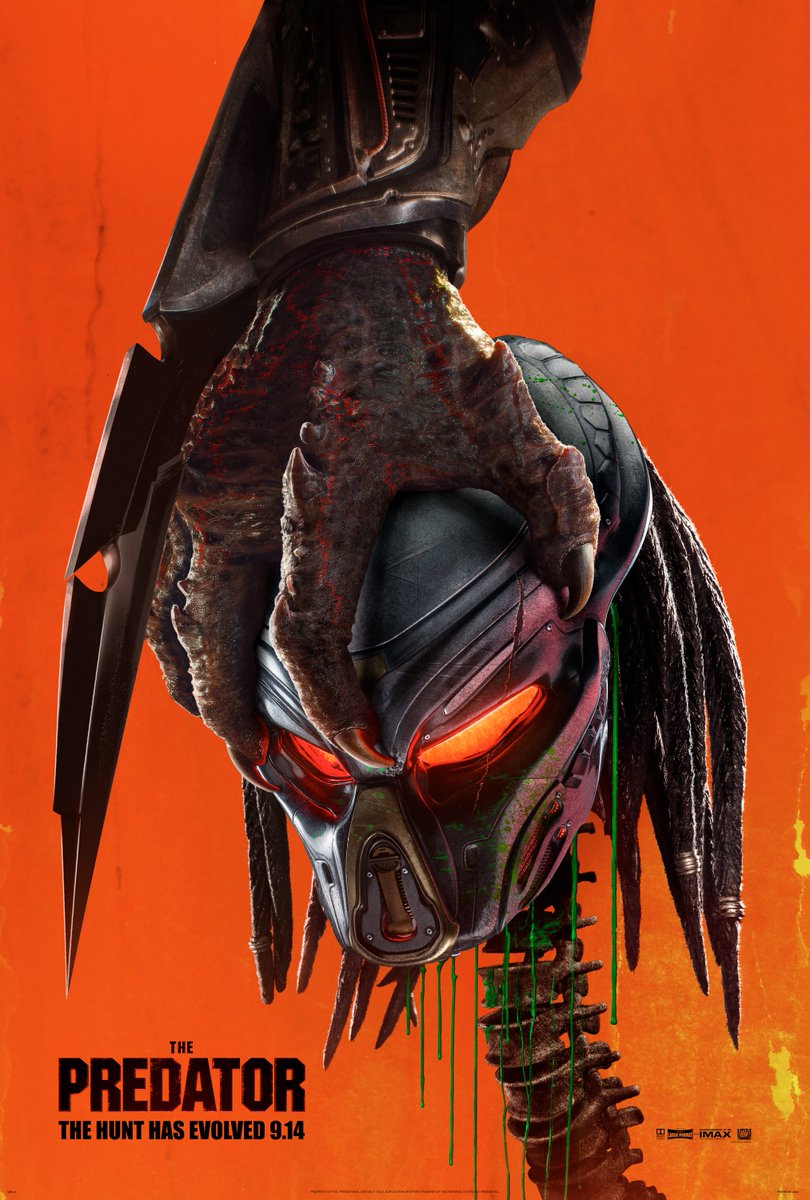
The Predator (2018) Review

A solid reboot/sequel for the Predator franchise! Don’t pay attention to the plethora of reviews from critics who are hating on Shane Black’s The Predator. With an entertaining action-horror plot, fantastic cast, and excellent pacing, this is the Predator that we wanted and got! And I am not alone in this, several podcasts and even the Roger Ebert site agree on Black’s Predator. The tone of the movie feels like a throwback to the original, while acknowledging the other movies to maintain just enough continuity where you don’t question where this film falls of what has happened prior. I went into this movie with moderately low expectations because of what I read in the initial reviews, but I was completely surprised by how much I enjoyed it. And not only me, all of my friends who were with me between Rounds 1 and 2 of Halloween Horror Nights opening weekend. You get it all, grizzly action, humor, and entertaining kills. Unlike past movies that tried to “improve” on their 80s predecessors, this quintessential action-horror takes us back to what made the 80s horror endure the test of time. Instead of building the movie around the title character, it builds it around the lead human cast. And a memorable cast of characters, at that. Where some reviewers have found irreverence or offensiveness in the fact that many of the characters demonstrate cognitive and emotional disabilities, this is actually what works well for the film. Furthermore, it highlights how emotional, physiological, or cognitive disabilities do not determine someone’s degree of courage, determination, empathy, or sense of humor. Each of the lead and supporting characters in the ensemble cast overcome any obstacles that stand in their way, whether the obstacle comes from within or from the outside. It is a fun, exhilarating horror movie that will keep you entertained!

“From the outer reaches of space to the small-town streets of suburbia, the hunt comes home. The universe’s most lethal hunters are stronger, smarter and deadlier than ever before, having genetically upgraded themselves with DNA from other species” (IMDb). When US Ranger McKenna (Boyd Holbrook) discovers a crashed space ship and loses his crew to a mysterious alien with futuristic weaponry, he salvages what he can find from the wreckage and mails–in Dr. Henry Jones fashion–it in order for it to not be confiscated by the US government. Unbeknownst to McKenna, the US government is aware of these Predators, and has one sedated for testing in a secret facility. When the US government gaslights McKenna and believes him to be maliciously upholding an investigation, he is thrown onto a bus of other veterans, whom the government does not want to deal with, to be taken to a mental hospital. When the Predator escapes the facility, McKenna teams up with his fellow soldiers on the bus to take down the alien killer before more harm can be done. Meanwhile, the situation is complicated when a boy accidentally triggers the return to Earth of an even bigger Predator, and only McKennas’ ragtag crew of ex-soldiers and an evolutionary biologist can prevent the end of the human race.

Since there isn’t much to analyze here, I am going to keep this one short. What I find most interesting about The Predator, is what it was NOT more so than what it was. It wasn’t another reboot of a past franchise that overly injects vapid dialogue and self-aware humor or a complex plot. The Predator heeds the maxim “simple plot, complex characters.” Moreover, it also wasn’t a parody or satirical piece that was making fun of the genre or source material as if it was no longer relevant to audiences. It would have been far too easy for Black to have made a mockery of this franchise or wrote-directed something that was just complete schlock; but he did what many thought was impossible with this horror creature feature. He revived what we loved about the original, made a few tweaks, and gave us a strong reboot/sequel that was incredibly entertaining to watch.

After watching the movie, I am left with the conclusion that Black was able to recapture what made the first one work so well and actually repeat it, with some exchanges of grizzly violence for humor. But why does this movie work so well? Black started with characters, then derived a plot from those characters with incredible precision and strategic pacing. The tone and rhythm of this movie are remarkable. Yes, remarkable. Black was able to achieve what fans of great action movies love and take for granted, but is highly difficult to pull off effectively. The placement of dramatic beats. The reason the plot of this movie works so well is because Black knew where to place the emotional and action beats, and how to build up to them, and drive them home. He connects to these beats through character-driven development through which plot is derived.

For fans of the franchise, this truly IS the Predator movie that you were hoping for. Even those who are new to the franchise will enjoy the movie because it works as both an homage to and a pioneer in rediscovering the attraction of this iconic creature feature.

Ryan is a screenwriting professor at the University of Tampa. If you like this article, check out the others and FOLLOW this blog!

Follow him!

Twitter: RLTerry1

Instagram: RL_Terry

Thrillz (theme parks): Thrillz.co