“Where are You Christmas?” A Review of “Jingle Bell, Jingle BAM” at Disney’s Hollywood Studios

img_7604One of my favorite times of the year at the Disney Parks is the holiday season. And not just November through December but September through October too. The autumn and winter holidays offer so much opportunity for seasonal offerings that make the Holidays a special time of year for friends, family, and lovers. Of all the holidays, Christmastime is the generally the highest attended and most looked forward to at the Disney Parks. Whereas Universal Studios Florida is the king with Busch Gardens Tampa Bay as Queen during Halloween, the big D is arguably king at Christmas–perhaps the Jingle King? Putting a Christmas spin on Pumpkin King. For years, hundreds of thousands of park guests flood the Disney Parks to enjoy everything from Cinderella’s Castle draped in icicle lights to Mickey’s Very Merry Christmas Party to the late Osborne Family Spectacle of Dancing Lights and even Holidays Around the World at Epcot’s World Showcase and Jingle Cruise (the holiday overlay at Jungle Cruise). Not to even mention the elaborate gingerbread houses and other creations at the Disney Resorts. Over the last few years, we have witnessed a slow mitigation of Holiday offerings. Most notably the Osborne Family Spectacle of Dancing Lights at Hollywood Studios (DHS) and Animal Kingdom’s Jingle Jungle Parade. Along with so many anxious park guests and Cast Members, I too was curious how DHS was going to adjust its Christmas offerings with the conspicuous absence of the Osborne Lights. Sunday night, I was finally able to watch the new Jingle Bell, Jingle BAM show at DHS, and if I had to sum up the experience in one word, it’d be a lukewarm “meh.” But as you know, I will provide you with many more words, haha…….

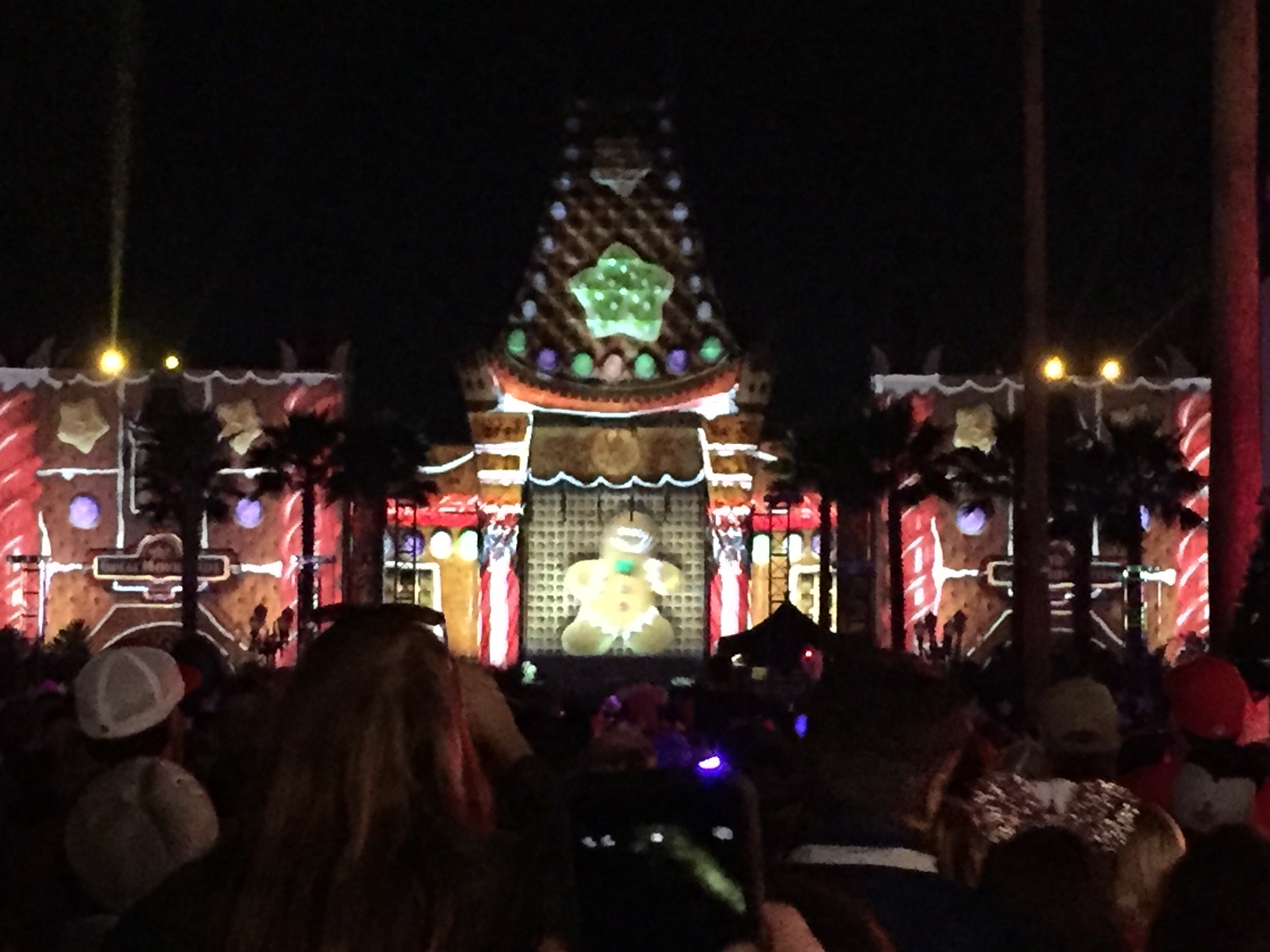
After the announcement of Jingle Bell, Jingle BAM as the special seasonal nighttime spectacular offering at DHS, I was still sad that there were no more dancing lights but I was looking forward to the new show and how it was going to play out. Taking place in the center of the park at the replica of the timeless Grauman’s Chinese Theatre serving as the show building for the opening day attraction The Great Movie Ride and icon of the park, Jingle Bell, Jingle BAM (Jingle BAM from hereon) is a colorful display of map projections, lasers, and pyrotechnics. Many of your favorite Disney and Pixar animated films are included as well as a sequence from Tim Burton’s The Nightmare Before Christmas. In addition to the familiar film clips, there is a loosely integrated narrative with Santa’s elves and then a message from the big man himself. Accompanying the outstanding map projections of gingerbread men, presents, snow, and other holiday iconic images are a vast array of lasers crisscrossing the sky adding an immersive effect to the courtyard and Hollywood Blvd. No nighttime spectacular at the Disney parks would be complete without pyrotechnics. Jingle BAM boasts a fantastic finale of fireworks that dazzle the sky.

For all the wonderful potential the show has, it unfortunately fails to leave even half the lasting impression that the Osborne Lights left in the hearts and minds of park guests for 20 years. There are a few key elements that contribute to the mediocre reception of Jingle BAM: (1) DHS is not designed/laid out for a nighttime hub show (2) narrative is weak (3) plays out very flat–lacks depth (4) the fireworks are nowhere close to being centered behind the Chinese Theatre (5) fails to elicit a positive emotional response from the park guests (6) Santa’s message is generic and forgettable and (7) there is very little “Christmas” to be found in the show, period. However, it’s not all bad. The show is an outstanding combination of programming, projection technology, and brilliant lasers. The lasers greatly enhance the experience when the snow falls along Hollywood Blvd. From a technical perspective, the show is an incredible spectacle of what happens when art and science are combined.

Unless you arrive one or more hours before showtime or purchase the special dinner/dessert package viewing area, you will quickly notice that your view is most likely obstructed by anything from palm trees, to tech booths, to light poles, shoppes, or even children on the shoulders of parents. Let’s face it, the latter is unavoidable. If you’ve ever been to DHS, you’ll remember that the courtyard in from of the stage in front of Great Movie Ride (GMR) is quite small. Possibly a 1/3 of the size of the one in front of the Tree of Life at Disney’s Animal Kingdom (DAK). So, there isn’t much physical space to work with when accommodating thousands of guests in the same location for a 15min show. Although Osborne Lights moved over the years, it was a staple to the local holiday celebrations, for sure, as well as those who would travel hundreds of miles. Very quickly, for those of you who do not know the history of Osborne Lights, the show was originally on Residential Street (a street of TV houses) until it was moved to its former location on Streets of America (production standing set). Families and friends could casually stroll through the millions of lights that danced every few minutes–synced to classic and contemporary holiday hits! No showtimes. Just continual twinkling and dancing from sunset to one hour after the park closed.

Much like the hub area, the backlot area was also unable to support the majority of the park guests at any one (1) time. So, the continual dancing was important because guests could attend at their leisure. Compounding the physical space dilemma, there are also new palm trees that were installed after the hat was removed, two giant towers that are tech/electrical/equipment booths for the “temporary” stage that sits where the hat was, and several light poles. Once you back up toward Hollywood Blvd, your view is also blocked by the other trees and shoppes. Unlike Magic Kingdom, which has a low grade incline from the train station to the castle, there is no incline from the entrance of DHS to GMR; therefore, the possibility of an obstructed view is greatly increased. Never mind that GMR is less than half the height of Cinderella’s Castle. Between the level surface from the entrance to GMR, the palm trees directly in front of GMR, and the tech booths blocking the view from Hollywood Blvd, it is clear that this park is not designed for a hub show. At least a hub show that runs only once. And you know what? There is little that can be done about the layout of the park. So. The Imagineers and entertainment leadership should recognize those shortcomings and develop a way that a decent view of the show is possible from the central area of the park.

I love the concept of storytelling–in all forms. So, naturally I was curious as to how a story was woven into Jingle BAM. Even now, I am attempting to piece together what the story was. Essentially, the elves are looking for Santa because he is missing. Turns out that he has been captured by Oogie Boogie from The Nightmare Before Christmas. After Boogie’s song number, Santa is rescued. Following Santa’s rescue, he has a message about friends and family. More specifically, he directs the message to the City of Orlando. But, it just doesn’t strike an emotional tone. It plays off as canned and generic. Tiny Tim’s closing remarks “God bless us, everyone” from Charles Dickens’ masterpiece A Christmas Carol packs much more meaning and impact. Interestingly, it is the other bookend and answer to the novel’s opening line “Marley was dead to begin with, there’s no doubt about that.” I think a holiday message about friends and family is very important, but this one just plays off as forced–like other elements of this show. There is definitely a story and message there, but it is weak. Perhaps it would have been more effective to include some holiday spirit or nostalgia in his closing remarks. I think the show would play out just as well–if not better–if the plot of rescuing Santa wasn’t present. Not that I think the show should be without a story, but the story should be more coherent. Stories, such as this one, should also attempt to elicit an emotional response from the audience but it does not extend its reach beyond the surface level.

The over all experience of the show lacked depth. It felt very flat–like a projected image, ironically enough. All surface level and spectacle but no substance. One of the major attractions to and benefits from Osborne Lights was the total immersion into a winter wonderland. Immersion is so incredibly important in themed entertainment. The Osborne Lights provided more than a show–an experience! Even more importantly than immersion is the concept of experiential attractions. And this was an experience like no other. Jingle BAM lacks these all too important elements of immersion and experience. Instead of experiencing the seasonal holiday offering, park guests watch as third party spectators. The only time it becomes mildly experiential is when the Florida snow begins to fall. One of the most important elements to the experience of the Osborne Lights was the park guests’ ability to go from spectator to participant. The transition from spectator to participant is a popular trend in themed entertainment attractions because it offers a much more visceral experience. But what about the other nighttime Disney shows??? Aren’t they more of a spectacle than experience? Short answer: yes. Wishes, Illuminations, Fantasmic, and the Tree of Life are all about the sheer spectacle of it all. And there’s nothing wrong with that…provided that is how it’s always been. However, Wishes is set apart because of the strong emotions the music and pyro evokes from the park guests. It truly is a magical experience. But the problem occurs when the park offers a participatory experience and replaces it with something more along the lines of a glorified short film.

Most Disney nighttime spectaculars offer a phenomenal dazzling array of pyrotechnics and fireworks. Keeping in line with the tradition of magical Disney fireworks, Jingle BAM also offers an impressive choreographed firework display and dynamic finale. Unfortunately, those fireworks are not behind the Chinese Theatre–not even close. The majority of the pyro and entire firework finale is way off stage left (house right). illuminating the sky above the Animation Courtyard, the fireworks cause the park guests to turn their heads 90-degrees (away from the center of the show). Although DHS would have to close the Pixar area during the Galactic Spectacular (Star Wars nighttime show) in order to keep guests safe from the falling debris, the fireworks shot off above the Chinese Theatre making for a phenomenal nighttime show that was truly spectacular whether you are a Star Wars fan or not. The show was incredibly impressive. With the fireworks way off to the side at Jingle BAM, it feels more like a distraction than the finale.

Lastly, the show simply does not have that holiday spirit. Other than Santa and a couple Christmas songs, the show has a very generic feel. So much so that, take away Santa and replace a few other elements and the show could silly be modified to run as part of daily operations. That certainly displays efficiency, but this is a seasonal offering during Christmastime and should feel special. Guests should have the impression that they cannot get this experience anywhere else. As it stands, this map projection show is not unlike the one at Magic Kingdom. Since Disney has two popular versions of A Christmas Carol as part of its IP, I was shocked that neither make appearances in the show. What is more Christmassy than the timeless classic??? The lack of Christmas music is compounded by the absence of Jack Skellington’s lyrics in the song What’s This? from The Nightmare Before Christmas. As part of the score for Jingle BAM, the accompaniment from What’s This? can be heard, but no lyrics. Although many people celebrate the holiday season differently and various elements are held more dearly than others, there should have been a mixture of classic and contemporary holiday hits to create a festive atmosphere. The magic of Christmas is very much lacking in this seasonal show. Where are you Christmas?

Over all, Jingle BAM is a cute show. Is it a replacement for the late Osborne Lights? No. Is it filled with holiday cheer? Not particularly. But perhaps this is the start of something that will grow to become nostalgic for guests that are just now experiencing the Disney parks for the first time. With map projection shows taking the place of more practical effect shows, we could simply we witnessing the next evolution of nighttime spectaculars at Walt Disney World. As I recognize the need to evolve and develop new ideas in order to keep the parks relevant to current generations, perhaps Disney Imagineers can find a way to combine both the Osborne Lights and the map projection concept in a new dynamic show–a new experience. In the short term, if Disney Imagineers could find a way to modify the current Jingle BAM to go from a one (1) showtime to something more continuous like the Tree of Life at Animal Kingdom, then that would quickly solve the physical space and adequate viewing dilemma.

 

“Allied” movie review

alliedQuite the duplicitous plot! Robert Zemeckis’ Allied released by Paramount Pictures is a thrilling tale of espionage and love. We have certainly seen a few different “spy” movies over the last couple of years; some more about espionage and others more about the drama that ensues afterwards. Fortunately, Allied feels like a genuine spy movie that actually contains espionage. The production design and costumes are a beautiful throwback to the fabulous 40s. You’ll find yourself reaching for a glass of champagne and swing dancing to Benny Goodman’s timeless big band jazz hit Sing, Sing, Sing. There is one city synonymous with WWII, espionage, and romance and you will appropriately return to that iconic city of Casablanca in Allied. This is definitely not a reimagined Casablanca but there are indirect references to that movie sprinkled throughout this new story. Films like this one require top notch talent, and both Brad Pitt and Marion Cotillard deliver outstanding performances to accompany this staple in film genres. Not limited to the love story between Pitt’s and Cotillard’s respective characters, the movie also includes some deadly shootout scenes and dangerously close encounters with the Nazis behind enemy lines.

Commander and intelligence officer Max Vatan (Pitt) is stationed in the famous city of Casablanca in French Morocco where he teams up with French resistance movement leader Marianne Beausejour (Cotillard). Impressed by her ability to so effectively blend in and create her authentic cover, Vatan soon finds himself falling in love with his partner. Following the assassination of a Nazi ambassador, Beausejour and Vatan flee to London to start their life together. Everything is going beautifully for the happy couple in their second year of marriage with a child when Vatan’s superiors confront him with the suspicion that Marianne is in fact a Nazi spy. Refusing to believe it to be true, Max must now conduct his own investigation into his wife’s history to protect the ones he loves so dearly.

I absolutely adored the look and feel of the film as it echoes the era of the Golden Age of Hollywood. Although this movie plays off a tad listless as a result of failing to elicit a strong emotional response from the audience, it is not without it outstanding elements. It benefits from solid acting and beautiful cinematography as well as some fantastic symbolism. Robert Zemeckis’ talent for visual storytelling is clearly visible in this period film. The weakness in the ability to successfully leave a lasting emotional impact on the audience is in the writing and executive producership of Steven Knight (Eastern Promises). For films that are not as much about the spectacle as they are the drama between characters and the challenges faced therein, it is vitally important that the personal/interpersonal relationships transcend the screen and directly impact the audience. All the makings were there for a deeply moving cinematic story, but it just doesn’t quite make that transition from the mostly superficial and distant.

Mirror, mirror, on the wall…(interesting fun fact: this misquoted line from Snow White is actually “magic mirror on the wall”). But, I digress. The strategic use of mirrors is an  incredible use of visual storytelling and symbolism. For those who have studied film or literary rhetoric, the mirror is a classic means of conveying duplicity (two sides, faces, etc of a character). Even without knowing that this was a spy movie, I would have been able to infer that from how the mirrors are shot and placed within the composition of the 24 frames a second. When using powerful symbolism as part of the visual story, it conveys so much more meaning in a scene than words could actually describe. Mirrors have long sense been a powerful metaphor even before moving pictures. But motion pictures allow for a greater use of the importance it plays in a cinematic story. Not limited to duplicity, mirrors can also be used as a metaphor for self-reflection. Whether talking duplicity or reflection, the mirror aids in conveying so much to the audience in this movie.

Ordinarily, I am not a fan of classic films getting remakes; however, there are always exceptions when the core or essence of the film is held in tact but the production design, direction, and cinematography are brought up to speed with contemporary cinema. If you’re a fan of WWII era films or the timelsss spy movie, then you will definitely enjoy Allied. After witnessing the significance of Casablanca in this movie, I am actually looking forward to a remake if there ever is one. Provided. That the overall look and feel of the movie is in line with classical motion picture storytelling. I could definitely see Robert Zemeckis directing a remake of Casablanca. Occasionally there are directors who can strike the balance between a classic tale told through contemporary technology, and Zemeckis definitely struck that balance in Allied.

Don’t allow the weak writing to dissuade you from watching it; there is actually a lot to enjoy in this film. After the slow burn during the first act, acts II and III are full of intrigue and suspense.

“Fantastic Beasts: and Where to Find Them” movie review

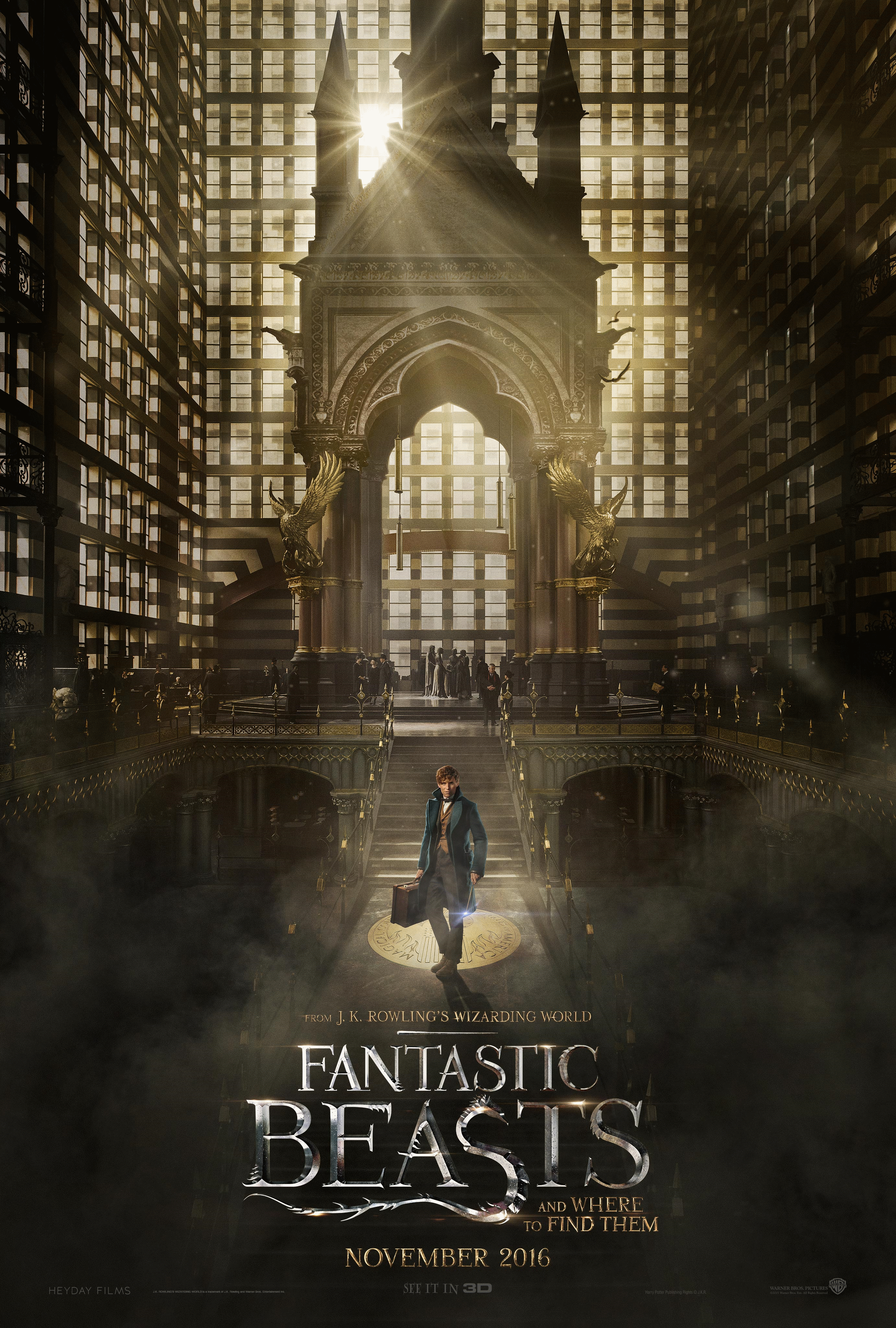
fantasticbeasts_1Spellbinding! Return to J.K. Rowling’s wizarding world in this fantastic film filled with phenomenal cinematic storytelling and mesmerizing magic. Warner Bros.’ Fantastic Beasts boasts incredible talent on and off screen that is sure to strike both a nostalgic cord with audiences as well as renew a sense of wonder in this new epic tale preceding the events of Harry Potter by more than six decades. From the flawless editing to the character dynamics, this film is definitely one to look for in the technical categories during awards season. Fantastic Beasts is also the first time that fans of Rowling’s wizarding world will witness a film based on an original screenplay and not a work of literature. After watching this movie that essentially extends a wildly popular and successful film franchise, it is clear that ‘the magic awakens’ in a manner that is destined to thrill the dedicated fanbase and ignite the passion of new fans. Whereas the last time a franchise was ‘awakened,’ it felt like a mashup of that which had been heard and seen before, Fantastic Beasts provides audiences with completely new characters in a new city facing all new challenges in a world that echoes the past but is clearly a new fantastical frontier.

Many decades before Harry Potter and Lord Voldemort would cross wands, across the pond a whole new world of witches, wizards, and fantastic beasts is beckoning for adventure. While on a rather academic expedition to locate, identify, and protect magical creatures, Newt Scamander (Eddie Redmayne) arrives in New York City to transport and collect the final creatures he needs to complete his zoologic study and publish his research. Unfortunately, this expedition is all but academic. After bumping into no-mag (no-maj/no magic) Jacob Kowalski (Dan Fogler) at the bank, Scamander mistakenly swaps briefcases with Jacob and unwittingly releases the magical creatures to roam about the big apple. With bizarrely unexplained events in the no-mag world causing people to pry into the magical world with risk of fully exposing it, Newt’s creatures become the target of the American magical congress. After bumping into an unlikely nemesis turned ally Porpentina Goldstein (Katherine Waterson) and her adorable sister Queenie (Fine Frenzy), teaming up with Jacob, Newt and his friends must capture all the magical creatures and solve the mystery of what is actually reeking havoc in both the magical and no-mag worlds.

Before analyzing the film’s content, I think it’s best to step back and look at the larger picture here. This is the first time that one of Rowling’s wizarding movies is not based on one of her novels, plays, etc. Furthermore, this also makes the fourth time, for all intents and purposes, in recent years that a popular film franchise with a highly dedicated fanbase is being extended (on the front and/or backside). The other three being: Star Wars, Jurassic Park, and to a lesser extent Star Trek; yes, there are other popular franchises that are being added to, but they are mostly perpetually continual ones like MarvelDC, or the Scary Movies, etc. Although Fantastic Beasts was highly anticipated upon the initial teaser trailers and social media traffic, the elephant in the room was whether or not it would go by way of The Phantom Menace and Jurassic Park III or The Force Awakens and Jurassic World. Thankfully, this return to the wizarding world appears to be going by way of the latter! Still too early to tell if it will truly reignite a fandom in the way the extensions did for the Star Wars and Jurassic Park franchises respectively, but the storytelling is solid and refreshing. Extending a wildly popular but essentially complete franchise is a dangerous road to go down, but Fantastic Beasts is successful in its endeavor to return audiences and fans to a world of magic and adventure.

The first cinematic element you will notice in the movie is the editing, inclusive of special effects. The prologue sequence was an incredibly brilliant way to reintroduce the audience to the wizarding world. I thoroughly enjoyed the innovative approach to integrating the magical newspapers into the opening sequence following the prologue. Although I am not a fan of 3D movies–ordinarily–I imagine that this sequence would provide quite the high degree of spectacle if watching the 3D version (which I did not do). It would not be surprising if this film gives Rogue One a run for its money in the visual/sound effects, editing, and score categories during award season. One element I was specifically looking for was the use of practical effects, props, and animatronics since it’s a film about magical creatures. I watched an advanced screening of Allied immediately before watching Fantastic Beasts; so, be honest, I need to watch it again to locate and identify uses of practical effects or animatronics. But I believe that, to a small extent, some of the scenes including interactions between the human characters and creatures used animatronics. When animatronics and CGI are used in a film–especially in the fantasy/adventure or sci-fi genres–the result is authenticity and a realness that cannot be achieved otherwise.

Eddie Redmayne delivers an outstanding performance as Newt Scamander. Absolutely flawless. From the lack of eye contact to the facial twitches to the over-all manner in which he carried himself, Redmayne does an exceptional job of bringing this character to life. Not having any books to base his characteristics off of, it was important to provide audiences with a protagonist who was both entertaining to watch and find a place in the hearts of fans in two hours. Both were definitely accomplished. Joined by an amazing cast of chief and secondary supporting players, the brilliant direction of David Yates is seen in all the character dynamics throughout the movie. I greatly appreciate the lack of developed physical romance or attraction between Newt and Porpentina and instead the mild romantic subplot involve the sexy Queenie and lovable Jacob. The villains are nicely developed as well. Of course, the best part is not quite knowing who the villains are. Going into that in more detail will give away too much; however, there are many options for villains, anti-heroes, and allies so sometimes you will not be certain who’s an ally, villain, or anti-hero or someone who was thought to be a villain turn out to be a possible ally. Although there are definitely some predictable elements in the movie, there is sufficient enough unpredictability that it will keep you guessing and engrossed in the storytelling.

Prepare to be whisked away to J.K. Rowling’s wizarding world! I cannot wait to see how Universal Orlando/Hollywood will integrate this new series into the Wizarding World of Harry Potter into their parks and resorts. The famous Harry Potter Studio Tour in England may have some new additions as well. Fantastic Beasts and Where to Find Them is a delight for the whole family and is sure to generate new fans while appealing to and satisfying legacy ones.

Cinecittà World & Movie Park Germany: Placing Guests in the Magic of Movie Making

cinecittaworld1The overall theme of movie-based theme parks has gone from exposure and education to simulation and immersion—much more experiential. Instead of seeing how Harry Pottermovies are made, guests at Universal Studios (FL and CA) and other studio-parks want to feel like they are Harry and his friends. And, this is not something that could be achieved by the former models of the original concepts for Universal Studios Parks or Disney’s Hollywood Studios. So, the parks have to change in order to remain relevant and viable tourist destinations. Concurrently, movie and television studios are going through their own evolutionary process. In many ways, a careful examination of modern cinema compared to its predecessors reveals that storytelling has been removed from its pedestal to play second fiddle to salesmanship.

Spectacle and visceral thrills are the principal drive for the modern (1990s-present) cinema-based theme park attractions; and, for some, they confirm the worst tendencies identified within the Hollywood blockbuster: the epitome of apparently vacuous rollercoaster experiences. According to researcher Geoff King, “the label ‘thrill ride’ is a term often used approvingly in Hollywood publicity and by some film reviewers in the press, presumably because a thrill ride is precisely what many viewers want from modern cinema.” The late 1980s and the 1990s saw the arrival of theme park attractions that claim to allow the park guest to ride the movies; movies became theme park attractions. But now, theme park attractions are inspiring films. Beyond being the inspiration for films, the idea of being able to market a horror, action, or epic film or film franchise or the ability to create themed attractions from the narrative is at the forefront of studio executives’ minds, as cross-promotion is an important financial strategy.

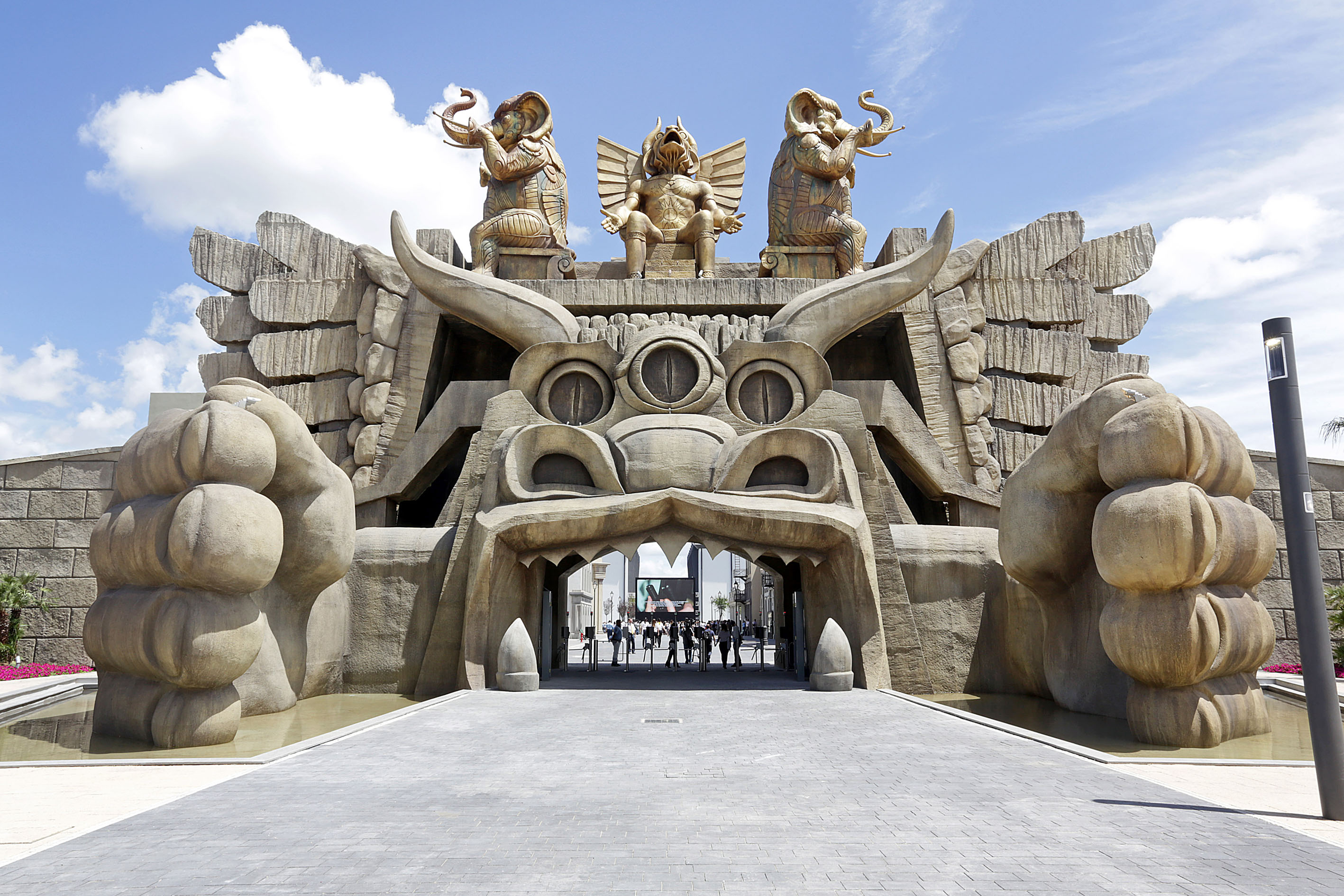
Creating attractions from cinema is not unique to the United States. The former Italian cinema powerhouse, from the early to mid twentieth century, Cinecittá Studios, known as the “Hollywood on the Tiber” is following suit with its American counterparts and converting the production lot(s) into a movie-based theme park. Located outside Rome, Cinecittá Studios, Italian for “Cinema City,” opened its gates in 2014 to the public to experience the magic of movies on this side of the screen. President of Cinecitta World Emmanuel Gout states, “Here, the idea is that people will also enter not only sets, but the confusion of a place where we are shooting movie. Everything will be illusion…the visitor will become a protagonist of the day, becoming a star, becoming involved in some fake movie.”

The model of this theme park appears to be more reminiscent of how the classic American movie-based theme parks were setup; however, there is one big difference. At the new Cinecitta Studios (theme park), park guests will actually don costumes and take hold of props to act in scenes from movies. So, in many ways, this park differs from its American counterparts because it is not defaulting to digital simulations and special visual effects; instead, it’s using practical technologies to create the illusion that the guest is actually on the set in the movie as a character in a given scene. Still, three-time Academy Award® winning production designer Dante Ferretti knows that audiences and guests want more than an immersive experience into movies, but want thrills as well. So, there are rollercoasters and water slides, amidst Roman and Egyptian ruins, to accommodate those guests seeking more conventional amusement park attractions.

Away from hustle and bustle and bright lights of Hollywood, past the palm treelined streets and white sand beaches of Florida, and beyond the Roman ruins on a century-old Italian studio lot is another example of the convergence of cinema and theme parks. Movie Park Germany is a cinema-based theme park in Bottrop-Kirchhellen. It “is a unique theme park, which is devoted entirely to movies. The former Warner Bros Movie World has six theme areas and more than 40 attractions and shows. It will not take long before you feel like a movie star or cartoon hero!.”

Much in the vein of Universal Studios Florida, Movie Park Germany blends both the benefits of an amusement park with movie-based themes throughout the whole park. Its motto is “Wow! I’m in the Movies.” According to the website, “Our visitors will not only have the opportunity to meet well-known series Heroes but also get to enjoy first class entertainment like an action-packed stunt show as well as two song and dance shows. For those guests who like it a bit more spooky, the park transforms itself at sunset into an extraordinaire chamber of horrors. In short: There’s a personal highlight for everyone!.” Unlike Universal Studios parks which have a Halloween theme for two months a year, Movie Park Germany holds on to the very cinema theory that birthed out of Germany and found its way to Hollywood—German Expressionism. Some of the first movies were horror movies, and it is refreshing to see that this park is holding on to its horror heritage throughout the year.

Although many theme park enthusiasts first think of Florida and California, it is clear that there are many beautifully conceived and designed parks all around the world that are just beckoning for adventure to be had.

“Arrival” movie review

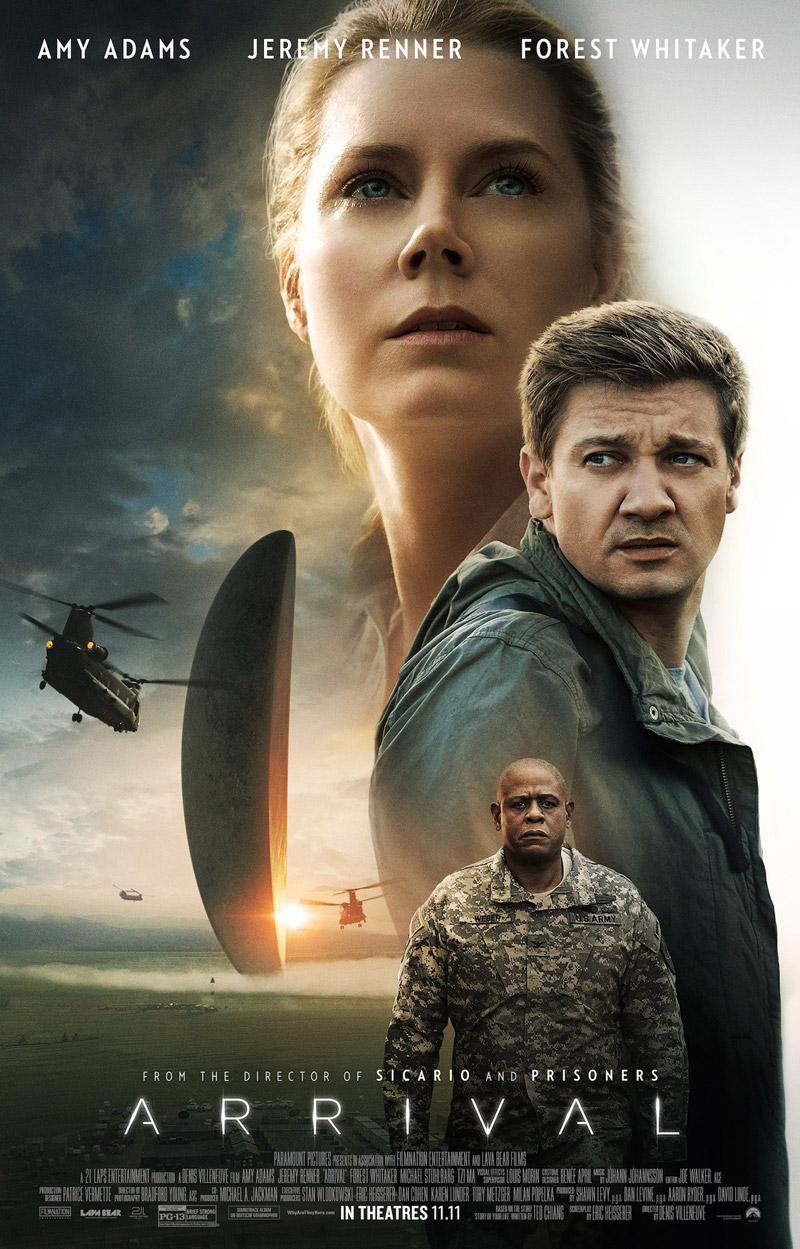
arrivalposterYou’ll want to see it again. Prepare yourself for an extraordinary cinematic journey in this science-fiction thriller complete with commentary on the human condition. From the exhilarating cinematography to the incredible awe-inspiring visual effects, Arrival will have you hooked from the very beginning. Based on the book Story of Your Life and Directed by Denis Villeneuve (SicarioPrisoners), Arrival boasts an outstanding cinematic experience that is as much cerebral as it is visceral. Your very perceptions of time and memory will be questioned and force you to open your mind to endless possibilities. Poignantly, this film takes you on a journey that will show you that we need to change and that we can change. On the verge of avant-garde, Arrival pushes the limits of traditional visual storytelling and creates an innovative method for conveying social commentary within the science-fiction genre. Following the final fade to black, you’ll want to discuss this film with your friends. Reignite your sense of wonder. Arrival is more than a story; it’s an experience!

After twelve egg-like unidentified objects land on earth, the U.S. Government calls upon expert linguist Dr. Louise Banks (Amy Adams) and theoretical physicist Ian Donnelly (Jeremy Renner) to crack the mystery and develop a means of communication with the homogenous alien species. While much of the world is on the brink of an all-out assault on the aliens, Banks is determined to establish a rapport and open communications with the species. Starting with basic words and working up to complex sentences, Banks knows she has to learn the aliens’ language in order to better understand why they have come. When things take a turn for the worst, Banks and Donnelly have precious little time to stop countries from engaging in battle with risk of war. With so little time to unravel the mystery of why the aliens are here and what they want, Banks will find herself on a mind-blowing journey of her own.

You’ve just got to see it. There is so much that I want to talk about, but it would spoil so much of the film. I’ve mentioned before that there are great ‘movies’ that are mediocre ‘films,’ but this is a prime example of an excellent movie AND brilliant film. The brilliance of this film is not in the stunning visuals, although that is certainly part of it; the brilliance lies within the cinematic and experiential storytelling. During the big reveal at the end of the film, your mind will be blown. You’ll find yourself wanting to watch it again to more clearly understand the strategic placement of the pieces of the puzzle. During a time in which the country appears so incredibly fractured, this film will provide audiences with a renewed sense of wonder and appreciation for that which one may not fully understand. Making the tough calls and putting one’s life at risk of what is right is also woven throughout this story. The theme of Arrival is not fully realized until the latter half of the film. More than a surface-level story about that which I cannot mention without giving it away, this film possesses a dynamic range of themes just beckoning for interpretation. As this film bares much similarity to avant-garde cinema in the reimagining of traditional storytelling, it will evoke a powerful emotional response.

Amy Adams and Jeremy Renner deliver outstanding performances in the lead roles. Taking center stage for most of the film, Adams breaks new ground as an actor in this role that is nearly a complete departure from most of her other roles. Both Adams and Renner display excellent chemistry in their respective characters. Although Adams is the central character and responsible for the drive of the plot, Renner is strategically placed to reinforce the affects Adams’ character has upon the plot. Forest Whitaker also plays a strong colonel and was an excellent choice for his role as well. The success of the cast can be attributed to both the outstanding direction from Villeneuve and the incredible screenplay by Eric Heisserer. Bradford Young’s cinematography is so simple but yet so beautiful and profound. It is of no surprise that this film is being touted as one of the best movies of the year and has a nearly unprecedented 100% on Rotten Tomatoes.

Whether you are a linguist yourself or just enjoy an exhilarating cinematic journey, Arrival is definitely the film to catch this weekend. For the Star Trek TNG or Voyager fans out there, you will find that Arrival possesses some of the same great content that sets Star Trek apart from other science-fiction shows due to the human condition being central to the overall plot. If you enjoy movies that prompt you to revisit how you perceive your life, time, or space, then you will not be disappointed. There are so many levels to this film. You’ll likely find yourself wanting to see it again after fully realizing the innovative plot. Hopefully this film receives some Oscar noms in the upcoming award season.