“The Divergent Series: Allegiant part 1” movie review

AllegiantPossibly a strong finish for the Divergent Games! Of course, we won’t know just how well it finishes until the second part. Surprisingly, The Divergent Series: Allegiant part 1 provides fans with a good start to a well-executed conclusion. After the weak sequel, it was quite unexpected that the series would begin to complete this YA series on such a high note. Unlike the disappointing conclusion of The Hunger GamesAllegiant brings back your favorite characters you love and love to hate in a very satisfying ending in the dystopian adventure to rescue a people from themselves. At the end of the day, the Divergent series will never be as successful or generate the same fandom as The Hunger Games; but simply comparing the last two films in both franchises, this is clearly the superior finish (or should be). Although Roth’s socio-political themes and subtext were fairly clear, all be it still weak, in the first two films, the message is a little vague and incoherent in Allegiant. Two YA franchises down and one to go. We will just have to see what lies in store for the Maze Runner series. Just like the Divergent series has a week middle, hopefully the weak sequel in The Maze Runner will pave the way for a strong conclusion as well. One thing is for sure, Allegiant contains far more action than the previous films which almost makes the weak and still completely explained plot worth the approximate 2-hour run time.

The first part of the final chapter in the Divergent Series takes us beyond the wall into a desolate wasteland. Follow Beatrice/Tris (Shailene Woodley), Four (Theo James), Caleb (Ansel Elgort), Peter (Miles Teller), and Christina (Zoe Kravitz) as they embark on a journey to seek help from the outside in order to stop the civil war in dystopian Chicago (or modern day Detroit). With newly asserted leader of the faction less system Evelyn (Naomi Watts) and Amity turned Allegiant leader Johanna (Octavia Spencer) at odds with one another, war is brewing in the streets and all hell is about to break loose. Barely escaping Evelyn’s security team, Tris and her band are rescued by a team from an organization of pure bloods who oversees the “Chicago Experiment.” This group of researchers and scientists led by David (Jeff Daniels) recruits Tris and her team to develop a plan to save Chicago, or so they think. When Four discovers what is really going on, he must convince Tris and the rest of her band of rebels to make right what is going incredibly wrong.

For me, and I am sure other critics, analyzing this particular series, The Hunger Games, and Maze Runner gets boring. Because, for the most part, they all have the same plot, same fallacies, and similar subtext. They are all extremely socio-political methods to spread the message that only teenagers are special and are capable of saving the world from corrupt adults. Although these movies are aimed at Generation Z (anyone born after 1995), they still attract attention from Y/Millennials (~1982-1994) and Generation Xers (~1965-1981). That is important because Generation Z does not have the spending power that generations X and Y do. In order to maximize the income potential of the films, the studios have to appeal to Generation Zers in such a way that it will also bring their Millennial friends and potentially Generation X parents. Since schools are constantly preaching the message that teenagers are the future, they are special, and uncontaminated by the greed of the world, it makes sense to create films based on books that carry that theme. The negative side effect to this approach is creating a generation(s) that automatically distrust adults and their respective decisions regarding the environment, politics, and society. Just as Allegiant depicts what happens when there is such great division among a people who view the approach to peace so very differently will devolve into a war-like state, it’s entirely possible that reinforcing this division between Generation Z and X/Y could symbolically arrive at the same precipice.

The production value and design in Allegiant definitely outshines the prior two installments. That is important due to the fact that Roth’s political subtext definitely becomes a little muddled in this last chapter. Although there is definitely way too much cheesy CGI, it is far less than the previous film. And other than some of the outlandish technology used in the story, for the most part, the defense, security, and surveillance technology used by the various characters makes sense and is perfectly believable in their universe. There is even a real reference to 21st century earth’s scientists experimenting with the human genome. That helps to create a sense of futuristic realism in the Divergent universe. One of the biggest problems I have with the plot is the still unexplained history of how exactly the Chicago experiment began. Perhaps the director and writers did not feel it was necessary to provide a clear history through character exposition, but I am still a little confused as to how the Pure Bloods and Damaged became so incredibly separate. Another thing, if there are thousands (if not millions) of Pure Bloods in existence, then why use the Chicago Experiment as a method to see if a Pure Blood can be born out of all of it??? I guess that is why it’s not worth overly analyzing films such as this one.

For what it’s worth, Allegiant is an exciting start to the last chapter in the Divergent Series! Far more entertaining than the last one. If you were disappointed by Mockingjay Part 2 than rest assured that you will definitely enjoy the conclusion of this franchise. Not a bad way to spend your Spring Break or an afternoon over the weekend. But, I wouldn’t bother seeing this film in IMAX or 3D. However, I can see some benefit to the experience of this film by watching it in a D-Box auditorium.

“On Cinema and Theme Parks” part 4

My Book

Continued from Part 3

One medium being the extension of, or exhibiting a direct connection to, another medium is not a new concept. In fact, this concept of media convergence has been around for as long as multiple mediums have existed. In order to better understand the convergence or synergy that exists between cinema, in particular horror film, and theme parks, it is crucial to understand how we arrived at this point. One thing that film and themed entertainment both have in common is that each tells a story—in a different manner. But, the narrative is often quite similar. Prior to theme parks and cinema (film), there were plays, novels, and oral stories/traditions. The novel is an extension of the oral story, the play is an extension of the novel, cinema is an extension of the play, and the theme park is an extension of cinema. According to Dr. Henry Jenkins, “there has been an alarming concentration of the ownership of mainstream commercial media, with a small handful of multinational media conglomerates dominating all sectors of the entertainment industry” (2004, p1). This is clearly seen in the acquisition, exhibition, and development of theme park attractions based upon movies and, to a lesser extent, television shows.

The first cinemas were setup more like attractions than actual theatres. Perhaps more than coincidentally, theatres began springing up at the same time Coney Island opened its turnstiles around the beginning of the twentieth century; and at this time, cinema itself was still very much viewed as an attraction (Gunning, 1986). According to Tom Gunning (1986), “it was precisely the exhibitionist quality of turn-of-the-century popular art that made it attractive to the avant-garde” (1986, p66). So this concept of the convergence of cinema and theme park (or attraction) is one that dates all the way back to the early 1900s. Since some of the earliest films were of a surreal or horror nature, it is of no surprise that horror played a large role in the development of the cinema attraction. Much in the same way that early cinema was essentially a variety show, in essence, lacked a continuous diegesis, or narrative, the convergence of cinema and theme parks offers a variety of cinema-based attractions that are, indirectly at best, connected to each other. However, instead of the film, itself, being the attraction, cinema-based theme parks and attractions use the narrative provided by a work of cinema and uses elements of that film that can be translated into a real-world experience.

But as with any media convergence, there are also pitfalls to such a synergy between two powerful media. In order to best understand the pitfalls and promises in such a meeting, it is imperative to discuss convergence of two media in and of itself. Understanding the concept of convergence will better prepare filmmakers and themed entertainment designers to select the best elements of films to translate into themed attractions based on movies, in particular horror or action. According to the leader of research into the area of media convergence Henry Jenkins (2004), “media convergence is more than simply a technological shift. Convergence alters the relationship between existing technologies, industries, markets, genres, and audiences. Convergence refers to a process, but not an endpoint” (P1). Over the years, the relationship between cinema and theme parks has shifted. Before, cinema was the attraction; and now, the attraction is infused with cinema. And the handful of multinational media conglomerates own both methods of the exhibition of creativity. With the exception of the Walt Disney Company, many of the other media conglomerates have prominent interests in theme parks and film and television studios; and some also have interests in Broadway productions (i.e. Universal Studios’ Wicked and Sony Pictures’ Spider-Man).

Crossing over into new arenas of revenue requires access to vast media libraries, and that is what many of media conglomerates have at their disposal. This ability to converge areas of media interest in order to generate more revenue is something that contrasts with old Hollywood. Jenkins (2004) remarks that “old Hollywood focused on cinema, [and] the new media conglomerates have controlling interests across the entire entertainment industry” (P34). This convergence greatly influences the way society consumes media and entertainment (everything from movies to theme parks to music to toys and games). More than a cross-promotion of entertainment and media products, the convergence of cinema and theme parks is “a reconfiguration of media power and a reshaping of media aesthetics and economics” (Jenkins, 2004, P35). This reconfiguration comes in many shapes and forms. And, the horror film has found a place within the new configuration of entertainment media synergy. Specifically, the horror film has been used instrumentally in this reconfiguration; evidence of this can be seen in the prolific number of television shows (most popularly zombie shows), movies, and horror/Halloween themed events at theme parks (e.g. Busch Gardens’ Howl-O-Scream and Universal Studios’ Halloween Horror Nights). In these events, horror films provide a vast heritage from which theme parks can draw characters and plots to create temporary attractions to generate more income for the media company. Looking at many of the opening day attractions at movie-based theme parks, horror films were the first films to be translated into themed entertainment.

Part 1

Part 2

Part 3

“10 Cloverfield Lane” movie review

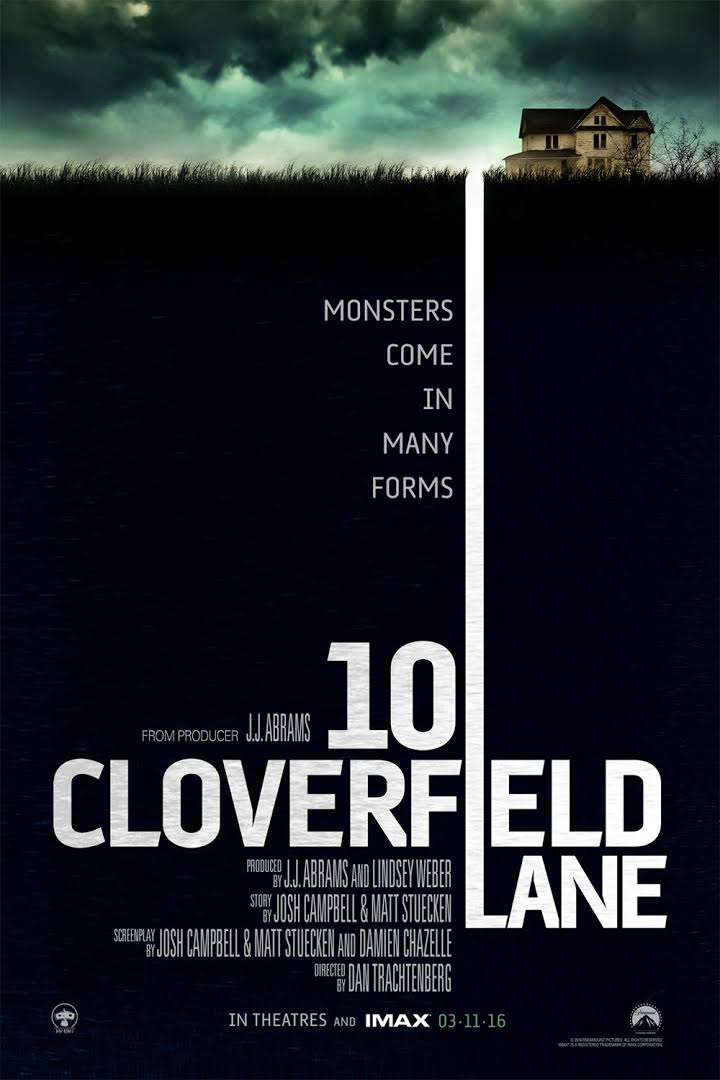
10CloverfieldExtremely suspenseful and enigmatic! Within minutes of the beginning of the movie, you will be sucked into the twisted and claustrophobic subterranean world at 10 Cloverfield Lane. Not directly connected to Cloverfield (2008), this film quite possibly takes us to a moment concurrent to or just before/after the events in New York City caught on the handicam. Director Dan Trachtenberg and Producer J.J. Abrams work together to shock the audience with a movie that will keep you guessing right up until the end. Brilliantly cast and written, 10 Cloverfield Lane is an excellent old-school feeling horror film that you have got to experience in IMAX. Just when you think you have it figured out, you will immediately begin to second guess yourself. Probably the most brilliant part of the film is the fact that three principle characters can keep your interest and attention the entire time without ever a feeling of boredom or annoyance. From the writing to the cinematography and visual effects, this film is sure to keep you on the tip of your toes.

Following a car accident, Michelle (Mary Elizabeth Winstead) wakes up with an IV in her arm and chained to a wall [wait, is this Saw?]. With no cell reception and no recollection of what happened, she begins to fear the worst. Upon meeting her capture Howard (John Goodman), she fears for her life. Not buying his story about saving her and keeping her from the hard during the fallout from the attack, Michelle attempts to escape. Failing to overcome Howard, she slowly begins to accept the worst. To her surprise, she is not the only one in Howard’s fallout shelter. Michelle meets Emmett (John Gallagher Jr). Thinking that Emmett’s injuries are from escaping, she learn that his broken arm is from fighting to get INTO Howard’s shelter. With this new revelation, Michelle begins to settle into life with Howard and Emmett. Still, something just isn’t right. From car noises to sunshine, Michelle has doubts of the alleged apocalypse and must solve the mysteries, puzzles, and covertly plan her escape.

One of the most intriguing elements of the movie is personally feeling the claustrophobia that the principle cast is experiencing in the movie. That is thanks to the excellent cinematography, production design, and lighting. That additional experiential element is not terribly common in films, even horror cinema. But it was very instrumental in generating the feeling of suspense, anticipation, and intrigue during the movie. Much like Super 8 and in the vein of other J.J. Abrams’ Bad Robot productions, the movie begins with a fantastic and blood curdling accident. Just like a rollercoaster, once that car accident hits the screen, the movie will take you up and down thrilling hills on a track that you will struggle to see 10 feet ahead. It’s difficult to talk about how the movie keeps you guessing and second guessing yourself without giving away a lot of what makes the movie thrilling. So, you will just have to take my word for it. Like with any good horror/suspense movie, it is necessary to include strategic comedic relief or lighthearted moments. And writers Drew Goddard, Daniel Casey, Matthew Stuecken, and Josh Campbell weave together a brilliant combination of terror and humor to keep the movie alive and dynamic.

John Goodman is absolutely brilliant in the film. Not that he has anything to prove. He is one of those actors who, with the slightest tweak of the face or shift of the eyes, can have you laughing one second and terrified the next. His ability to turn his character’s emotion on a dime makes him equally weird/quirky and frightening all at the same time throughout the story. Is he a weird old man who, in his own awkward and bizarre way, is keeping Michelle and Emmett from hard or his is a sadistic serial killer who forms inappropriate intimate bonds with his “guests”? That is for you to discover in the movie. Both Mary Elizabeth Winstead and John Gallagher Jr were perfect choices for their respective roles as well. Winstead brings that independent spirit and look to the character of Michelle and Gallagher provides the audience with a country boy charm. The ability for an actor to capture the emotion of extreme terror and sell it as a legitimate, believable emotion is tough. Selling that acute and powerful emotion can make or break a horror film–if the director’s intent is to make the story as real as possible and not a parody or satire of itself.

You may be wondering how this film is even loosely connected to 2008’s Cloverfield. And that connection isn’t really made until the end of the third act of the movie. Unfortunately, I cannot go into too much detail without giving away the climactic and over-the-top ending, but I can say that it does a great job of being connected just enough that it can essentially stand on its own but when you think of how it is or could be connected to Cloverfield, then the movie becomes all the more intriguing. Interestingly, the manner in which this installment in the Cloverfield universe was directed and produced, it definitely could begin a franchise with movies that are never directly connected to the previous film or even Super 8, but are taking place at or near the same time, each with it’s own respective story.

It isn’t often that I watch movies that are best seen in IMAX, but this is definitely one that is best appreciated and experienced in IMAX; however, if you want to take the old-school feel of the movie to a who other level, then you may want to consider watching the movie at a local drive-in. However you choose to watch the film, you are going to definitely enjoy the adventure.

On Cinema and Theme Parks (part 3)

Continued from Part 2My Book

Some of the most impressive and revolutionary changes to the movie-based theme parks came to fruition in the 1970s and 1980s. This is the time that horror became the chief source of inspiration for attractions at Universal Studios Hollywood (Riley, 1998). The ride that ushered in the plethora of attractions based on some of the best horror movies of all time was Jaws. JawsThe Jaws Ride was opened as part of the studio tram tour in 1975, and was an immediate hit with the park guests. It was quickly followed by Kongfrontation and Earthquake: Ride it Out (Murdy, 2002). Just as audiences are fascinated by horror movies and seek to watch that which would be repulsive in real-life, they are equally interested in immersing themselves into the experience by way of a theme park attraction. This phenomenon is not limited to horror movies, because rides like Jurassic Park the Ride (Jurassic Park River Adventure in Florida), Revenge of the Mummy, and Pirates of the Caribbean beckon millions of guests a year (IAAPA, 2014). In addition to attractions based on the movies, movie studio executives and theme park engineers created attractions that embody what Carl Laemmle first envisioned, by taking the audience behind the magic of the movies. This is the case with the (now closed) Backlot Tour at Disney’s Hollywood Studios and Hitchcock: The Art of Making Movies at Universal Studios Florida (Murdy, 2002). The relationship between the cinema and theme parks is a strong one and creates an energetic synergy that entertains millions of people each year.

Not every movie-themed attraction is a smash hit with the guests, just like not every big-budget movie is a hit with movie patrons. Although well-intentioned by the producers of both, or even the media conglomerate that has major investments in or owns both, may desire and believe they did what it took to create the next blockbuster ride or movie, sometimes the guests fail to view the movie or attraction with the same lens the designers and backers used to create the film or ride. In terms of movie or intellectual property-based attractions, major theme parks can make mistakes or lose out because of the ownership of some parks changing from one conglomerate to another.

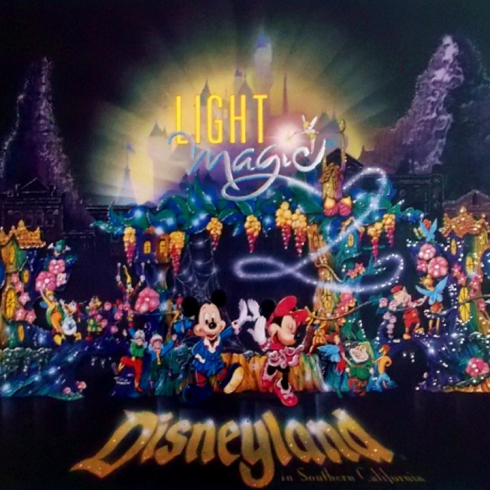
LightMagicNot every flubbed theme park attraction is a “ride;” sometimes it is a show or parade. The failure of a show/parade can be seen in the four month—yes, four—run of Disneyland’s Light Magic “street-tacular” (Krosnick, 2014).  More than another light parade, Light Magic condensed the number of parade floats ordinarily expected in a Disney parade to four large stages that, along the parade route, would burst into light, pyrotechnics, and digital projections. It was complete with a pantheon of Disney characters and music. Unfortunately, if you chose to stand in the wrong spot, all you get is darkness and vaguely familiar shapes of characters. Following a very poor reception by Disneyland passholders, the negative word of mouth was so severe that it effectively caused the closure of the new entertainment offering that sent $20MIL down the drain.

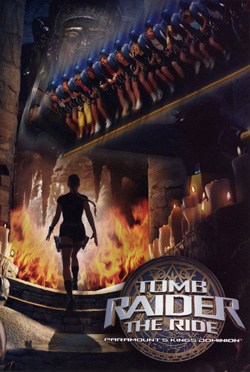
TombRaiderRideAccording to Theme Park Tourist (2014), popular seasonally operating Paramount’s Kings Island (purchased by Cedar Fair in 2007 and all Paramount property removed) spent $20MIL on a ride that lasted a mere five years. Based on the hit video game and blockbuster action movie Tomb Raider: The Ride was on par with Disney and Universal in respect to story, setting, and special audio/visual effects; however, after Paramount sold off its theme park investments to Cedar Fair, the ride got rebranded as The Crypt, a generic theme, and all direct associations with the movie and game Tomb Raider were removed following the 2007 operating year.  Interestingly, the ride attendance continually dropped following the rebranding, and the ride was eventually moved to Kings Dominion in Virginia in 2012. Although there may be other reasons as to why the ride became less popular and eventually moved to another park, it is conceivable to conclude that there is a special relationship between attractions and movies in a theme park. (Krosnick, 2014).

Continue to Part 4

Click here for Part 1

Click here for Part 2

“Whiskey Tango Foxtrot (or WTF)” movie review

WTFQuite the unexpected surprise from comedienne Tina Fey! Paramount Pictures’ Whiskey Tango Foxtrot is one part self-reflexive film on television news production and one part self-discovery. Unlike the feel of the previews, WTF is not really a comedy–not in the traditional sense anyway. There certainly are moments throughout the film that are funny and will cause you to chuckle, but it is definitely more of a drama. The brilliance of Fey’s acting in this movie is truly showcased by her ability to display that she can do serious just as well as funny. Most of the funny parts are given away in the previews, so don’t think you’re going to get more laughs during the movie. Based on actual events, WTF takes you behind the camera and behind enemy lines to depict what it is like for television news foreign correspondents in a war zone. Although the movie was not what I expected at all, I am very pleased with the story, all be it, slow burning. Beyond the self-reflexive subplot in the movie is the foreground story of self-discovery. Fey represents so many of us who just feel like we are spinning our wheels, treading water,  or even moving backwards. The inspirational elements of the movie come from her willingness to take chances, make mistakes, and get dirty (as the Magic School Bus‘s Miss Frizzle would say).

What would you do? You’re dissatisfied with your job as a television news writer/producer, have a mildly depressive boyfriend, small apartment, and just need to get away. If you’re Kim Barker (Tina Fey), then you head off to Kabul, Afghanistan to become a foreign correspondent during the early days of the War on Terror. After an expedited visa and passport, Barker embarks on her journey as a representative of the U.S. press in one of the most dangerous places on earth. Armed with her laptop, camera, notepad, and two staff members, she sets out to discover the real stories in Kabul and the surrounding areas. Thinking that she is the only girl in a military barracks, Barker is relieved to meet Tanya Vanderpoel (Margot Robbie) who takes Barker under her wings to show her the ropes of reporting the news amidst a war and hundreds of “thirsty” journalists and military personnel. While covering the stories of the war, Barker concurrently takes a journey of self-discovery that is filled with mountains and valleys.

Let’s be real here. Even if you analyze movies on a regular basis like me, you too were probably thinking that this would be a dramedy (drama/comedy). And yes, comedy is really drama in disguise; but I digress. The previews are certainly cut together in such a way that it looks like a very Fey-esque wartime comedy. I am not going so far as to saying that Paramount pulled a bait ‘n switch–because the movie is of a good quality and enjoyable–but the is no doubt that I went in expecting classic Fey and was presented with her more serious side. Still, through her witty quips and non-verbal dialog, she infuses conventional comedy and self-deprecating humor throughout the narrative. Like many dialog-driven dramas, even ones during a war, this movie has a very slow pace especially in the first act. Some additional comedy probably would have helped in the beginning to hook the audience. Speaking of the hook, that is probably what’s missing from the first few minutes of the movie. I think the studio sacrificed a traditional hook because the hook was Tina Fey herself. Fortunately, the film wastes no times in getting Kim Barker to Afghanistan, and that is definitely a good move. Although we are introduced to several chief characters in the movie, the focus is definitely on the character development of Barker with some minor development and introspect on the other principle players.

There are really two stories here: the foreground story of self-discovery and the background self-reflexive plot. Both are seamlessly married together in order to accurately tell both without sacrificing the other. Although we all know that there are foreign correspondents in war zones, we don’t always get to see what it’s really like to uncover stories, pitch to executives back in the states, and maintain sanity and safety; but through this film, we witness just how hard it really is to be a foreign television news correspondent. From networking, to interviewing, to shooting B-roll and stand-ups, Barker takes us on the journey from concept to delivery of producing news int he middle of a battle zone. Beyond the battle field, Barker is coping with her own personal and professional battles. If it isn’t the cheating boyfriend, it is the network who put her on the hourly plan and gives her no screen time. But, through it all, Barker never gives up and refuses to sit idly by and allow herself to be walked over. Fortunately, Barker does get her big break during the climax of the movie, but you’ll have to watch the movie to see what that is.

If you plan to see just one movie this weekend, I definitely encourage you to see this one. It’s gritty, funny, and inspirational. This is also a great opportunity to watch Fey in a more serious role and decide for yourself if she convinces you that she can play serious just as well as the comedy we all know and love her for. You may have seen other wartime movie, but this one plays out differently in that the focus is truly on the character development of the protagonist with the war merely being the backdrop and conduit through which we see her story of summits and pitfalls.