“Pawn Sacrifice” movie review

Pawn_SacrificeOf chess and men. Pawn Sacrifice is based on the true story of chess prodigy Robert “Bobby” Fischer and his quest to become the world’s greatest chess player. The game at the center of the movie takes place during the height of the cold war against the USSR. Director Edward Zwick crafts a gripping story complete with beautiful cinematography and a brilliant cast. Toby Maguire brings a neurotic charisma and acute anger to the infamous chess player that few could have done so successfully while staying true to the real life Bobby Fischer. Although watching a chess game sounds like it would make for a dreadfully boring and static story, screenwriter Steven Knight (et al) provides a screenplay reeling with intense psychological “chess” moves while remaining focussed on the game that “captured” the eyes of the world. Not surprisingly, the pretentious and unrevealing title kept general audiences from watching it, even though it was initially released during the autumn movie graveyard of September. If there was ever a mystery as to why Fischer’s mental stability greatly suffered as a result of the tournament, this movie sheds light on the obsessive compulsive struggles of a man who was focussed on beating the Soviets at their own game.

American and world-renown chess legend Bobby Fischer faces his greatest challenge yet: the world’s best chess grandmaster Soviet Boris Spassky. From the time he was 12 years old, Fischer began to capture the attention of the chess community of New York and soon the whole country. It was clear that Fischer was truly a prodigy who was destined for greatness in the strategic calculating game. In addition to having a brilliant mind for planning, predicting, and observation, he equally suffered because of his strength. Finding it nearly unbearable to tolerate anything that even slightly aggravated him, Fischer became as notorious as he was talented. Representing the United States, Fischer sees this as a strategic opportunity to outsmart and beat the Soviets, as the game is symbolic of the actual cold war that both countries were involved in. Follow his personal journey of triumph and defeat as he must play the most important game of his life with millions of people watching–some wanting him to succeed while others want him to fail.

The greatest strength in this bio pic is that it takes an otherwise boring game to watch; and creates an atmosphere of intrigue and suspense that parallels both the Cold War itself and the personal/interpersonal relationships between Fischer and his staff, family, and the public. What’s even more astonishing is that this somewhat fictional counterpart to the documentary on Bobby Fischer was able to be sourced for a feature-length narrative film. Unlike the documentary, Pawn Sacrifice goes back to the childhood and adolescent years of the prodigy in order for the audience to make a better connection with his character than can typically be done in a documentary. While the famous 21-match game takes up nearly half the screen time, there is still sufficient material, focussing on the development of Fischer, that it creates an atmosphere that draws you into the game in the latter half of the movie. Although the movie is about Fischer and chess, the degree to which Fischer shows dedication, immense passion, and uncompromising intellect can serve to make a connection with anyone who is passionate about a lifelong dream or aspiration.

One of the elements of Fisher’s upbringing that played a huge role in his anti-communistic paranoia is his mother’s communist activism. Sadly, that part of his life is merely touched upon and not explored very much. Spending more time on his mother’s activism and his hatred of anything remotely communistic could have provided more support for his bizarre behaviors during the tournament against the Soviets. While Fischer is at the center of the movie, he has two excellently written side kicks: (1) a patriotic attorney who attempts to keep Fischer on the right track as an American symbol and (2) a chess grandmaster priest who coached Fischer when he was younger and one of the only players to ever beat him. The character dynamics make the group intriguing to watch. Each so very different, but require the other in order to journey towards the chess world championship. It took amazing determination and long-suffering resilience to attempt to contain the unpredictable and extremely temperamental Bobby Fischer.

If you are looking for a movie to inspire you to be a better chess player, then you may be a little disappointed because you will see much more slapping of the time clocks than the movement of the pieces on the board; however, Zwick does cinematically work in some movements and strategy into the diegesis of the film. Thankfully the movie is shot beautifully and possesses an excellent pacing with strong diegetic structure. There is also some wonderful production and set design that will likely get overlooked since the game is really the focus and mostly occurs in very nondescript rooms. Pawn Sacrifice highlights one of the most famous chess games in all of modern history while getting a glimpse into the mind of a genius turned expat in the end.


Lights, Camera, MotionGate! A Look into Dubai’s Newest Theme Park

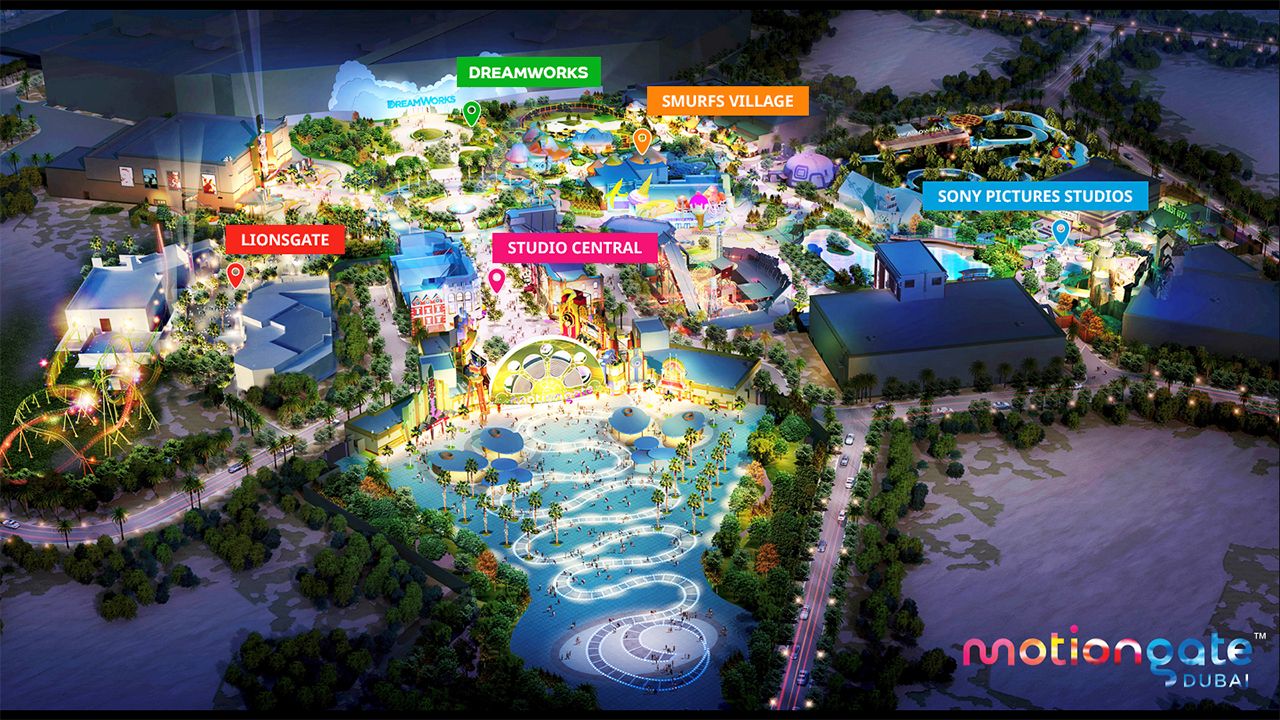
Dubai_Parks_mapWhile the themed entertainment industry continues to explode with new lands and attractions at the US’ biggest players, the luxury destination Dubai, UAE is throwing its hat into the ring. MotionGate may just be the competition that Disney and Universal were not expecting. Primarily including intellectual property (IP) from Sony Pictures, LionsGate, and DreamWorks Animation (now owned by Comcast), MotionGate will boast some of the most advanced attractions in the world. Starting out the gate with 27 attractions and shows based on some of the most well-known IP from the worlds of cinema and television, this brings the total attraction numbers to more than 100 when added to the existing offerings at Dubai Parks and Resorts (a government owned themed entertainment holdings company).

motiongate_image.fw_Unlike the public-private partnership of the parks in China, the government of UAE is uniquely positioned to capitalize on the wealth of the nation. That allure and wealth has driven millions of tourists from around the world to their nation as it is; factor in a world-class leading theme park, and those numbers will increase exponentially. This influx of revenue may actually pave the way for the non-wealthy classes of people to be able to enjoy the Dubai Parks and Resorts as additional flights, hotels, and transportation methods will be added. One of the biggest advantages that MotionGate has over its Disney and Universal competitors (Fox will soon be added to that as well) is that it is being constructed amidst digital, wireless, and multimedia technologies. Whereas the big boys have to modify existing technologies in attractions as they change, these parks are built with the latest technology which directly impacts efficiency of operation.  This same idea of being late to the game but a quickly asserted leader can be seen in nations like South Korea who only recently, relatively speaking, have had access to wireless internet technologies. As they did not have to adapt or modify existing legacy infrastructure, they built on current communications technologies and have a much faster, reliable, cheaper, and efficient ‘internet of things’ than the United States.

MotionGate_DubaiIn the vein of Walt Disney World and Universal Orlando, Dubai Parks and Resorts is a themed entertainment complex featuring separately themed parks. Specifically, MotionGate bares a striking design modeled after Magic Kingdom in that it is ONE theme park that contains five distinctly different themed lands that all center in and around the concept of motion pictures, filmmaking, and live entertainment. Each land, much like the ones at Magic Kingdom, has its own gateway, themed rides, restaurants, shows, and landmarks. Also, keeping with the Magic Kingdom layout, MotionGate contains the hub and spoke system. Unlike Universal Studios, Islands of Adventure, SeaWorld, or Busch Gardens, MotionGate employs the hub-and-spoke system in order to make maneuvering the park user-friendly and aesthetically pleasing to the eye. This provides opportunities for centralized entertainment offerings and landmarks. Prepare for the glitz, glamour, nostalgia, and excitement of the lands: Studio Central, LionsGate, DreamWorks, Sony Pictures, and the Smurfs’ Village. What makes this concept additionally interesting is the fact that MotionGate includes IP from different studios that are self-contained. Instead of taking the IP from the different companies and integrating them in more generically themed lands, each IP is contained within its respective land.

sony-motiongateOne cannot help but notice that the concept of Dubai Parks and Resort’s flagship theme park MotionGate resembles the original Universal Studios Florida or to a lesser extent Disney-MGM Studios. How so? If you are not familiar, both Universal Studios Florida and then Disney-MGM Studios were theme parks inspired by the idea of “what lies beyond the fifth dimension” (Tower of Terror, Disney); moreover, the story that exists outside of the frame–beyond mise en scene. In addition to attractions and shows inspired by filmmaking or theatre, both parks were also east coast counterparts to the Hollywood stages. Universal/Nickelodeon and Disney produced major motion pictures and television shows in the sound stages that are all but gone (or turn into conventional  attractions) in the 1980s and mid to late 90s. By 2000, most filmmaking and television production operations ceased because it was cheaper to move operations back to Hollywood and to other places like North Carolina and now Georgia. MotionGate goes back to the drawing board to resurrect a dying idea of turning filmmaking into an attraction. It truly holds up Geoff King’s studies and theories of “the cinema of attractions.” Universal founder Carl Leammle knew there was more to filmmaking than making movies. That’s why he opened his movie making ranch outside of Los Angeles to day guests to be entertained by special effects and stunt shows as well as watching the magic behind the camera.

20thCenFoxWorldIt is an exciting time for the themed entertainment and motion picture industries. For the longest time, Disney and Universal (Comcast) were the kings of cinema and TV based theme parks. Now, Dubai is becoming a heavy hitter and once MotionGate opens in October, the landscape has the potential to shift drastically. Now, the parks in the US will not only be competing against each other, but against heavy competition on the other side of the world in an area with much deeper pockets. All the while the word is focussed on the Word of Pandora, The Reign of Kong, Cobra’s Curse, Mako, Star Wars Land, Toy Story Land, and the unnamed new theme park under construction for Universal’s third park (not counting the forthcoming water park), MotionGate will open and create a whole new atmosphere of innovation amongst the chief players. In addition to the parks in Dubai, Fox is also entering into the game with their 20th Century Fox World opening in Malaysia in 2017. Also on the books is the 20th Century Fox World expansion to Zoo Miami AND another indoor Sony theme park in Wisconsin. With all these parks opening, there are more and more opportunities for careers in either cinema or themed entertainment. Or, a career that spans both (which is what yours truly is trying to do). I just love all the new completion because it will drive continued innovation. However, it’s also nice to see that we have a new park that is getting back to the roots of what started it all: motion pictures.

“X-Men: Apocalypse” movie review

XMenApocalypseEpic! It isn’t often that one word can sum up the screening experience of a movie, especially when going into the film, one had lots of hesitations that stemmed from the questionable trailers. Prepare yourself for the heaviest of the X-Men movies future or past. Probably the best feeling to take away from this one is the storytelling quality of the cartoon paired with Bryan Singer’s unparalleled handling of what is arguably the most successful Marvel franchise over the decades (that may be changing with the unprecedented popularity of The Avengers). While some may describe this movie as a failed attempt at reliving the glory days of the X-Men, I venture to say that there is enough evidence to support this being a strong third movie. As much as I enjoyed the movie–and do not mistake me, I did–there was a LOT going on in this movie and it came close to failing to effectively and successfully tell A complete three-act story. Just like in Batman v Superman, where Warner Bros bit off more than they could chew, 20th Century Fox came close to making the same mistake. Thankfully, the story was just strong enough to drive excitement and thrill through the minds and bodies of the audience.

X-Men: Apocalypse is the third movie in the Bryan Singer reboot (fourth installment if you count the original X-Men movie from 2000). The world of Ancient Egypt was once the center of the universe; and in that great empire, there lived the original mutant [Apocalypse] (Oscar Isaac). He grew in strength and power to the point that he ruled the world. After several of his fellow Egyptians betrayed him in attempt to bury him alive, he was cast into a deep sleep hundreds of feel beneath the surface. Due to a dedicated group of followers thousands of years later, Apocalypse was awaken and he has set out to reclaim the planet as his own and raise his children. Determined to build his mutant army, he begins to recruit the most powerful X-Men including Storm (Alexandra Shipp). When Professor Xavier (James McAvoy) encounters Apocalypse while in Cerebro and is captured, the still-fractured X-Men must go to great and nearly impossible lengths to rescue him and save the world. Teaming up with new student Scott (Tye Sheridan), Jean Grey (Game of Thrones’ Sophie Turner), and Nightcrawler (Kodi Smit-McPhee), Quicksilver (American Horror Story’s Evan Peters), Mystique (Jennifer Lawrence), Beast (Nicholas Hoult), and Havoc (Lucas Till) will battle Apocalypse and his four horsemen including Storm, Angel (Ben Hardy), Psylocke (Olivia Munn), and Magneto (Michael Fassbender).

What a cast! The quality of talent in and of itself is an outstanding accomplishment and is responsible for a great deal of the success of the film. Writers create characters and directors craft them, but it is the actor who ultimately brings the characters to life for the silver screen. Each and every actor is an excellent match to their respective characters. In addition to the actors we have been introduced to in past films, the newcomers quickly cement themselves in this and future movies. With so much material and less than three hours to deliver a movie that could be on par with the previous two and The Avengers films, it was vitally important to have an impressive cast that could win you over instantly. There simply wasn’t time for an actor to grow on you or to decide how you felt about a particular character. Each actor needed to his a homerun as soon as they stepped out of the dugout. I paid close attention to Sophie Turner because I was only familiar with her from Game of Thrones, and I just wasn’t sure how I would feel about her as one of the omega class X-Men (Jean Grey). Oh, I knew she looked the part, but could she pull it off??? And the answer to that is a resounding yes.

Much like Captain America: Civil WarX-Men: Apocalypse is nothing short of a superhero extravaganza. And although they are similar in many respects, there are two completely different tones in the respective movies. Are they both serious? Yes, but the former also includes comedic relief sequences and dialog (and yes, if you read my review, I found those to be poorly handled but I am not going to revisit that tarmac scene or the annoying Spider-Man in this article) while the latter retains the serious tone throughout the movie. However, it is successful in not becoming a parody of itself as was the case with Batman v Superman. I will state this: Civil War does boast a dynamic plot that flows smoothly the whole time, whereas Apocalypse flows smoothly most of the time, but at others, it does feel a mite bumpy. We could discuss symptoms of the problems all day, but the root of the problem is simply trying to tell too much story in one movie. To be honest, I have a felling that I am going to decide that I like X-Men more but that is likely because, in all fairness, I grew up with the cartoon. What works for X-Men, much like Captain America, is the fact that the audience does not need to be familiar with the comics in order to enjoy the movie. Singer makes sure that anyone who enjoys high concept comic book superhero action movies will enjoy this film. Well, that is, unless you happen to be a diehard comic book aficionado. This movie is simply exciting and visceral.

Memorial Day weekend will either be dominated by powerful mutants or charicatures from the other side of the mirror. Although X-Men will probably not perform as well as Civil War, I don’t think Alice has a chance of topping this quintessential summer blockbuster on the unofficial start to the summer. Unless you live here in Florida where summer started in March. Haha. Speaking of Florida, and in particular Orlando where MegaCon 2016 is being held, knowing that most of the theaters would be filled with cosplayers and enthusiastic fans, I had the challenge of finding a theatre in the area at which to watch the movie and not face cols out auditoriums and nose-bleed seats. I was successful in finding a small privately owned theatre in the vicinity and has the whole thing practically to myself. Running camera for a medical convention, so I am writing from the Rosen Shingle Creek instead of my condo in Tampa. It’s been quite nice to stay on site versus driving an hour here for the event each day. Happy Memorial Day!

The “Attraction” of Horror: a ‘Psycho’analysis (part 2 of 2)

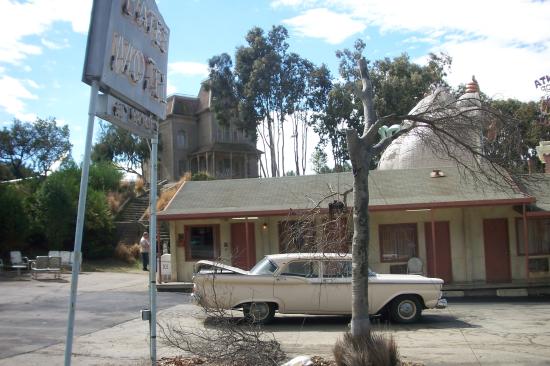
UnivHollywood_BatesMotelSuccessful movie-themed attractions (stage shows or rides) create an atmosphere that is often built upon a foundation consisting of confrontation and direct simulation rather than long, sustained narratives (King, 2000). This is true of the horror film as well. Horror is a genre nearly as old as cinema itself. The horror film, according to Linda Williams, contains three basic elements: narrative, character, and setting. These same elements can be found in movie-themed attractions at theme parks (2000).

Regarding Psycho in particular, the setting consists of very liminal* spaces such as the opening hotel, the Bates house, and bathroom. This same idea can be applied to a theme park attraction because the park guests are often corralled into smaller, intimate places that serve to advance the next element. Narrative is the foundation that both themed attractions and movies are built upon. The narrative, or diegesis, is the story. Diegetically, horror films contain a story that is segmented into the following sequence: order–>disorder–>order. Increasingly, the modern horror film is often left in disorder, or an order that is dissimilar from the original (2000). Movie-themed attractions usually introduce the park guests to a short-form story based on the original, and the ride is the vehicle that takes the guests through the story that can consist of threats and chases, followed by triumphs. In regards to the character element, the characters are those who are the instruments through which the plot is advanced. Normally, characters are people or animals, but can also be inanimate objects of significance (Williams, 2000). The park guests usually encounter characters from the source material along the journey of the ride.

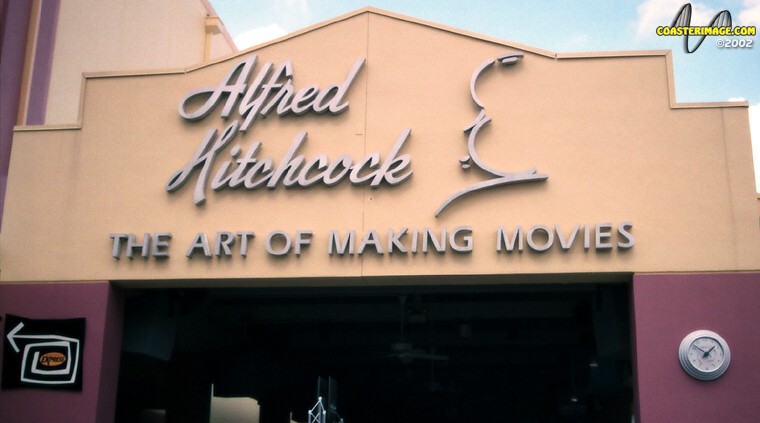
HitchcockBirds“Alfred Hitchcock: the Art of Making Movies” (Universal Studios Florida) was divided up into four distinct parts, with the famous shower scene being the central focus (ThePsychoMovies.com, 2014). Just like a horror movie is divided up into parts, or has a cinematic structure, so too did the Hitchcock attraction. Hitchcock: The Art of Making Movies was divided up into the following areas: preshow, 3D theatre, Psycho stage, and interactive area. There are may parallels between the famous shower scene and the live attraction. In the movie, the sequence leading up to the shower scene is very much a preshow in the same way the attraction contains a preshow area. The preshow in the movie is when Norman is gazing through the peephole into the room of Marion as she undresses. Just like Norman is visually gathering information about Marion, the park guests in the preshow area gather information about Hitchcock’s career. The preshow is the area that preps the audience for what they are too experience. By using the same principles of creating suspense that Hitchcock used, the preshow area reveals just enough to elicit feelings of anticipation and anxiousness.

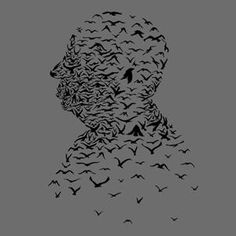
Next, the park guests sit through clips of 3D versions of Dial M for Murder and The Birds. This preps the mind for experiencing the horror in the next room. Likewise, between the time Norman looked upon Marion through the peephole and puts on the wig and dress, he sits in the kitchen and presumably debates with mother on what to do. Following that scene, we return to the bathroom and enter the shower with Marion. After the 3D movie, the park guests enter the Hitchcock Stage and look upon recreations of the motel, shower, and house.

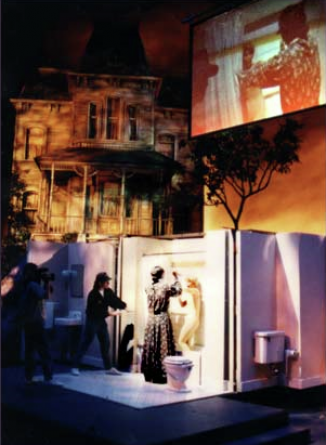
The main show at the attraction is the Hitchcock Stage where the infamous shower scene is reenacted before a live audience. In addition to the Bates House and Motel, there is a recreation of the tub/shower used by Hitchcock to film the scene. At this point in the movie, Marion is thoroughly enjoying her shower, and the audience gets both objective and subjective camera shots from inside and outside the shower. All of a sudden a shadowy figure approaches the opaque shower curtain and throws it open, wielding a knife. The sinister figure stabs Marion repeatedly and through more than fifty cuts (editing cuts), the scene is played before the people in the dark. Likewise, this same scene is brought to life for the studio audience at Hitchcock: The Art of Making Movies. Through mechanical engineering and film production techniques, the cast of the show reveals how the master of suspense filmed this iconic scene.

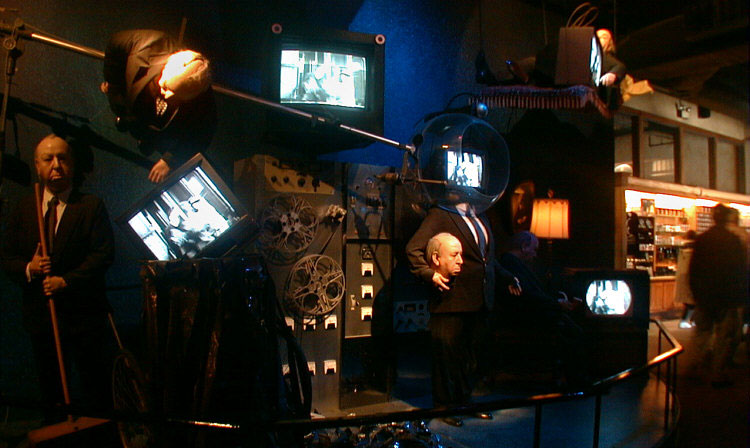
HitchcockAttractionFinalRoomFollowing the show on the Hitchcock Stage, the park guests walk into a museum-like interactive room revealing many of Hitchcock’s secrets and techniques in some of his most notable films. It parallels the end of Psycho when the psychiatrist is analyzing Norman and explaining how and why he did what he did. Just like Norman is the master of slasher films, so is Hitchcock the master of the art of suspense and horror cinema. A close reading of these areas reveals that they each take an element of the setting, narrative, or characters and use the tool of spectacle to bring them to life for the live audience. The preshow area acts as the prime for the horror/suspense pump that is gearing up. Watching the 3D scenes from The Birds and Dial M for Murder serves to generate feelings of ensuing chaos and acts as the big event that causes something to go wrong in the otherwise narrative that is in order (remember: orderdisorderorder). Following the 3D Theatre, is the central Psycho stage that takes any order and casts it to the wind and enables the horror of the shower scene to come to life for the naked eyes of the audience.

Hitchcock AttractionThis was a main attraction at the theme park until its dismantlement in 2002 to make way for the Shrek: 4D experience. From the aforementioned explanation by one of the producers of the attraction, the audience was completely immersed in the magic of bringing a Hitchcock thriller to life, and got to witness the most famous single scene in all of cinema history. This was all done with practical effects, just as Hitchcock would have done it. But, with the advent of computer generated imagery and incredibly accurate and time efficient non-linear video editing, most of the effects can be generated in other ways. Although it remained one of the most popular attractions at the theme park until its closure, Universal saw the future of attractions and decided to do away with nostalgia and pave the way for digital simulated attractions (Singer, 2013).

Click HERE for Part 1

*(adjective) 1. of or relating to a transitional or initial stage of a process; 2. occupying a position at, or on both sides of, a boundary or threshold

“The Kings of Summer” movie review

KOS-PosterA unique coming-of-age story in the vein of Stand By Me. However, unlike the more conventional coming of age stories, the subtext and themes of then first-time feature director Jordan Vogt-Roberts’ film, written by Chris Valletta, are merely touched upon but seldom followed through in any meaningful way. The deadpan comedy and one-liners are simply tossed around instead of providing deeper meaning or introspect that may have increased the emotions felt throughout the movie. It’s a very surface level movie that fails to substantially deliver the dynamic quality narrative that is typically expected of these films. That isn’t to say that it is without merit; quite the contrary, it is enjoyable and is successful in taking you back to that time when you felt that no one understood you and you wanted to be treated like an adult, but still clung to the reckless freedom of hormonal youth. Understanding the consequences of one’s behavior is a regularly visited theme in the movie. With gorgeous outdoor cinematography and relatable characters, The Kings of Summer contains a little something for everyone who has ever thought of running away and building a cabin in the woods for you and your buds.

The Kings of Summer is about three teenagers Joe (Nick Robinson), Patrick (Gabriel Basso), and Biaggio (Moises Arias) who run away from their respective dysfunctional families and make a life for themselves out in the woods by building a house and living off the land. Ever since Joe’s mother died, he just does not get along with his father Frank (Parks and Rec‘s Nick Offerman). In turn, his father has anger and resentment issues he too is working through with the untimely passing of his wife. Unfortunately, Frank takes out his anger on Joe and both have nearly become alienated from one another. Making valid points about Joe’s behavior but not delivering those points with understanding, Frank and Joe just do not get along. With Patrick also not getting along with his helicopter parents (Megan Mullally and Marc Even Jackson), Joe convinces him to join with their new friend Biaggio and rule their own lives and answer to no one except each other. Forming a friendship pact, the three seem inseparable. However, even this three-fold cord has struggles and disagreements, jealously and rage. The young men are forced to work through life’s problems while dealing with the chemical and psychological changes of growing up.

Have you ever just wanted to escape life? Just quit and run away to a tropical island or mountain valley? That is just what you will encounter in The Kings of Summer. Coming-of-age stories are usually some of the films that find their way onto favorite lists or those to which so many people can relate because they deal with issues many of us face while in that transitional time from teenager to adult. From lakeside high school parties to hormones and independence, this film includes some of the various turning points and learning opportunities one likely encounters while discovering who he or she is. Ordinarily, films such as this, deliver the content in such a way that it offers deeper meaning or emotional connections in the narrative. And although there are some themes and moderate introspect, the film does not go far enough in connecting the audience with the teenagers or adults in the movie. There were several lines of dialog that alluded to potential conflicts and personal struggles that could have been revisited to offer more substance in the film. That being said, the writer and director do provide relatable characters who are each very different from the other in an effort to provide audiences with a character to whom they can identify. It is important for coming-of-age movies to not only contain relatable characters but relatable situations as well. And this movie does that, just not to the extent it had the capacity to do.

One of the interesting themes that can be read in The Kings of Summer is questioning one’s sexual orientation. Much like in Wes Craven’s A Nightmare on Elm Street 2, in which the protagonist’s sexual orientation is questionable, you can find similar themes in this film. Throughout the movie, Joe is regularly making speeches on and offering up pithy comments about masculinity. Quite regularly, Joe lectures Patrick and Biaggio about what it means to me a man. At times, Joe even becomes defensive when his masculine ways are questioned. As Shakespeare penned, “…thou doth protest too loudly…” It is entirely possible that Joe is struggling to come to terms with his sexual preferences. This could explain why he would go to such drastic measures to escape his rigid father in order to discover who he is when he has to provide for himself. Other supporting evidence of this theme is simply the fact that he doesn’t get the girl even though he tried much more than Patrick. When Patrick winds up with the girl, Joe is outraged and never quite gets over it. There are also the frequent trips to Boston Market instead of truly “being a man” and hunting for food. Maybe he’s simply trying too hard to deny who he is developing to be? Perhaps. But, there are additionally also other themes that can be read in this unique coming-of-age story.

Although this film did not receive the national attention in 2013 that it really should have, it is definitely one that is worth a watch if you enjoy this sub-genre of Drama. Ordinarily, ensemble casts can hinder effective character development and excellent storytelling, but the cast in this film is handled moderately well. If there had been more focus on the personal struggles or if the film included an external goal, then it would have definitely been better and perhaps more popular. Stories in general–especially visual stories–require the principle characters to not only have internal goals, but a clearly defined external goal as well. Often the external goal can echo the internal one, but it is important to show a tangible goal. Unfortunately, the latter is lacking in the diegesis of The Kings of Summer. This movie won’t likely ever have the nostalgia or cache of Stand By Me, but it does offer up a fun story with an excellent cast and some personal growth that will keep you entertained for the hour and a half runtime.

You can catch Ryan most weeks at Studio Movie Grill Tampa, so if you’re in the area, let him know and you can join him at the cinema.

Ryan teaches screenwriting at the University of Tampa. If you like this article, check out the others and FOLLOW this blog! Interested in Ryan making a guest appearance on your podcast or contributing to your website? Send him a DM on Twitter!

Follow him!

Twitter: RLTerry1

Instagram: RL_Terry