License to Create: Theme Parks and Intellectual Property

ThemeParkHighAngleLicense and registration please. With 20th Century Fox, Sony Entertainment, and Paramount Pictures entering the themed entertainment game as potential heavy hitters, and to some extent Warner Bros. as well, questions about cinema, television, and video game intellectual property (IP) begin to rise. Only having really had two main players in the industry for the last couple of decades, unless you count CBS/Paramount before selling off the amusement park investments to Cedar Fair, Disney and Comcast (parent company to NBC Universal) utilize their own respective IP libraries as well as licensed properties from other media companies. Not having as vast an IP library as Disney, many of Universal’s theme park properties have come from companies like TimeWarner, Viacom, and Fox. Whereas Disney primarily uses their own extensive library, they too have licensed other companies’ IP such as MGM Holdings, 20th Century Fox, and CBS. Although some of the once-licensed properties by either Disney or Universal have now been officially procured (i.e. Disney’s LucasFilm and Universal’s DreamWorks Animation), a common practice in the themed entertainment industry is to license, borrow, barter, trade, etc. But, with these new players demanding a slice of the hospitality and tourism pie, could we see more original television programming or movies?
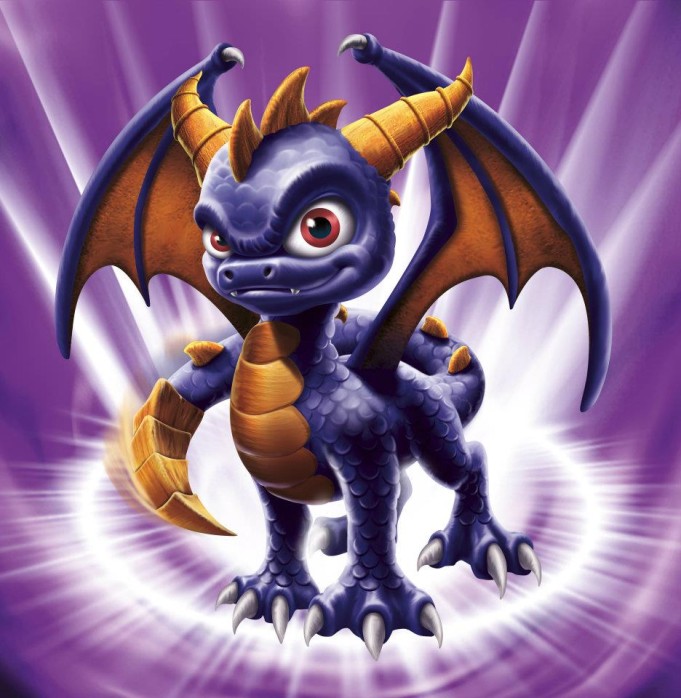
SpyroThink about it for a moment. Let’s look at some of the most well-known IPs from Sony, Fox, Paramount, and Warner Bros. Although there is a mild to moderate degree of subjectivity in what constitutes “well known,” I am going to go with commonly thought of properties. Starting with Sony. In no particular order, some of the most popular Sony properties include: James Bond (formerly MGM), Spider-Man, Men in Black, Smurfs, Terminator, Silence of the Lambs, Hotel Transylvania, Spyro, The Nanny, Wheel of Fortune, Jeopardy, Price is Right, Final Fantasy, and Crash Bandicoot. Switching gears to Fox. Some of the most well-known Fox properties include: Avatar, The Simpsons, Rocky Horror Picture Show, The X-Men, Bones, New Girl, American Horror Story, Alien, X-Files, Die Hard, Futurama, and Family Guy. Although not well known in the US, Warner Bros. operates a theme park in Australia and what is now called Movie Park Germany. Some of the most popular Warner Bros., IP are: Harry Potter, Game of Thrones, Looney Tunes, DC Entertainment, Lord of the Rings, A Nightmare on Elm Street, Friday the 13th, and Lego Entertainment. Viacom, parent company to Paramount Pictures, is one of the original Hollywood studios and owns IP such as: Mission Impossible, Titanic (partnership with Fox), Star Trek (films and TV shows), Forrest Gump, and the valuable Nickelodeon. Obviously the aforementioned lists are not exhaustive, but I wanted to try to paint as brief but effective a picture as possible to understand why IP is a hot topic.
JamesBondLogoRecognize some of those titles? You probably recognize most, if not all of them. Unfortunately, these companies have already licensed out some of those properties to Universal, Disney, and Six Flags. Avatar and Alien are licensed by Disney. Marvel Entertainment, Harry Potter, and Nintendo are licensed to Universal, DC Entertainment and Looney Tunes are licensed to Six Flags Parks, and the Nickelodeon IPs are split amongst different entities. Of course, when the licensing agreements were drawn up, it is unlikely that either Sony, Fox, Paramount, and to a lesser extent Warner Bros., thought that they would enter or re-enter into the themed entertainment industry. Now that this part of the tourism and hospitality (and live entertainment) is exploding, Sony, Fox, Paramount, and Warner Bros. need to rethink how to play catchup–and FAST. But, when you have licensed out some of your most valuable properties, how do you make up for it? The short answer is (1) refuse renewal when the license expires or (2) develop original content. Since some licenses run for decades, the former isn’t really an option unless the license is coming up for renewal in the next few years; so, we are left with one logical conclusion: pump out original content that is adaptable to a live experience. This is where research like mine comes into play since I have studied the relationship between cinema and theme parks, and moreover how to successfully translate a movie or TV show into an attraction. It’d be nice if one of these companies would snatch me up. But, I digress.
Film Strip BoardIt is entirely possible that Sony, Fox, Paramount, and Warner Bros. will be forced to generate new ideas for movies, tv shows, and video games. More specifically, original creative media content that can and needs to be able to be translated from the screen into a theme park near you. When developing original content that has the ability to be translated to a live experience, companies need to keep in mind that a high-concept plot with unique settings, characters, and action sequences are necessary for a movie turned attraction. There is a lot more to it than that, but at least this gives you an idea what is required and backed by empirical evidence. Although blockbusters are typically the sourced content for theme park attractions, not every blockbuster is appropriate. Take Titanic for example. It is a movie about the 20th century’s worst and most infamous maritime disaster. So, I don’t think Paramount or Fox will add “Titanic: Ride it Out” to its parks. The ability to cross-promote intellectual property is of great importance for the strategic exhibition and integration of movies, tv shows, or video games. One of the reasons why the Disney parks are so successful is because the Disney movies can be (1) seen in the cinema (2) character meet and greets in the parks (3) the platform for a video game (3) used in theming on the cruise line (4) A-list artists can record covers of the songs from musicals (and broadway musicals can be produced) and (5) the platform for attractions in the parks. Sony, Fox, Paramount, and Warner Bros. need to concentrate on producing movies and TV shows (and by extension video games) that can be used in strategic and creative cross-promotion.
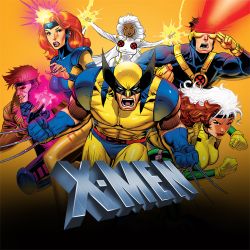
X-Men TASReturning to the present state of IP in the parks. Fortunately, some of those companies still–at least to the best of my knowledge–retain the theme park licensing for a few of the properties that were mentioned earlier; but for the most part, the most well-known movies, video games, and TV shows are already licensed by other companies. Viacom/Paramount operates the Nick Hotel near Disney in Orlando, so it still retains some licensing to its Nick IPs. However, since other parks use some of the Nick characters, there is probably some red tape to go through in order to fully use them in the Paramount park in the United Kingdom near London that is under development. Just like Disney wants to get their hands on Universal’s Marvel properties, Fox really needs to work on getting the X-Men back. On that note: since The Avengers is Disney’s heaviest of hitters and the same for Fox and the X-Men, perhaps eventually we will see that Disney has access to The Avengers and Fox the X-Men. Disney doesn’t really need The Avengers as much as Fox needs the X-Men. The X-Men is arguably Fox’s most successful film franchise in the last couple of decades and it is still going strong. Another Fox property that is licensed by Disney is James Cameron’s Avatar. As for Sony, they have not licensed out as many of their properties to themed entertainment companies, with the obvious exceptions of Terminator and Men in Black. Another area to explore is the reason why non Disney and Universal parks are mostly being built overseas. But that is the topic for another article; however, it is directly linked to IP and copyright.
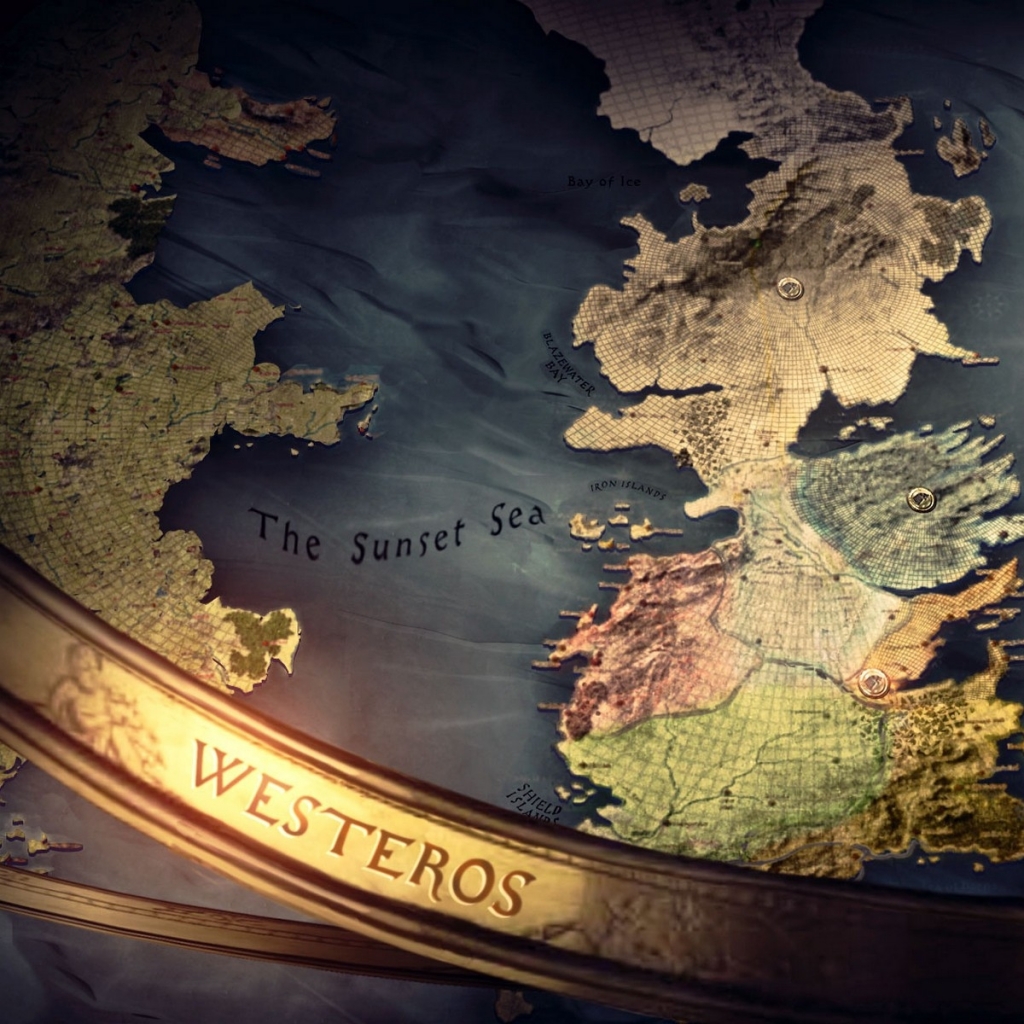
maps_game_of_thrones_a_song_of_1024x1024_wallpaperfo.comCurrent IPs that would make for great attractions in a U.S. Sony, Warner Bros., Paramount, or Fox theme park would be Game of Thrones, American Horror Story, X-Files, James Bond, Lord of the Rings (but that is a whole other discussion in and of itself), Hotel Transylvania, Spyro the Dragon, Maze Runner, Hunger Games (need to be licensed from Lionsgate), Ice Age, or Mission Impossible. Content is king. More innovative and original content from the big studios who also have theme park investments means that there will be more movies to see each year!! It will also open the door for new ideas from comics, literature, history, and legend. Instead of reboots and remakes, you will enjoy new ideas and narratives. So, the long and short of it is that media conglomerates with movie studio and theme park investments are at a crossroads. They can either not go full-force into themed entertainment and play around with the current IP in their respective libraries or can rise up to the challenge to develop original movies and tv shows that can also find their ways into theme parks in the U.S. and around the world.
Lights, Camera, MotionGate! A Look into Dubai’s Newest Theme Park

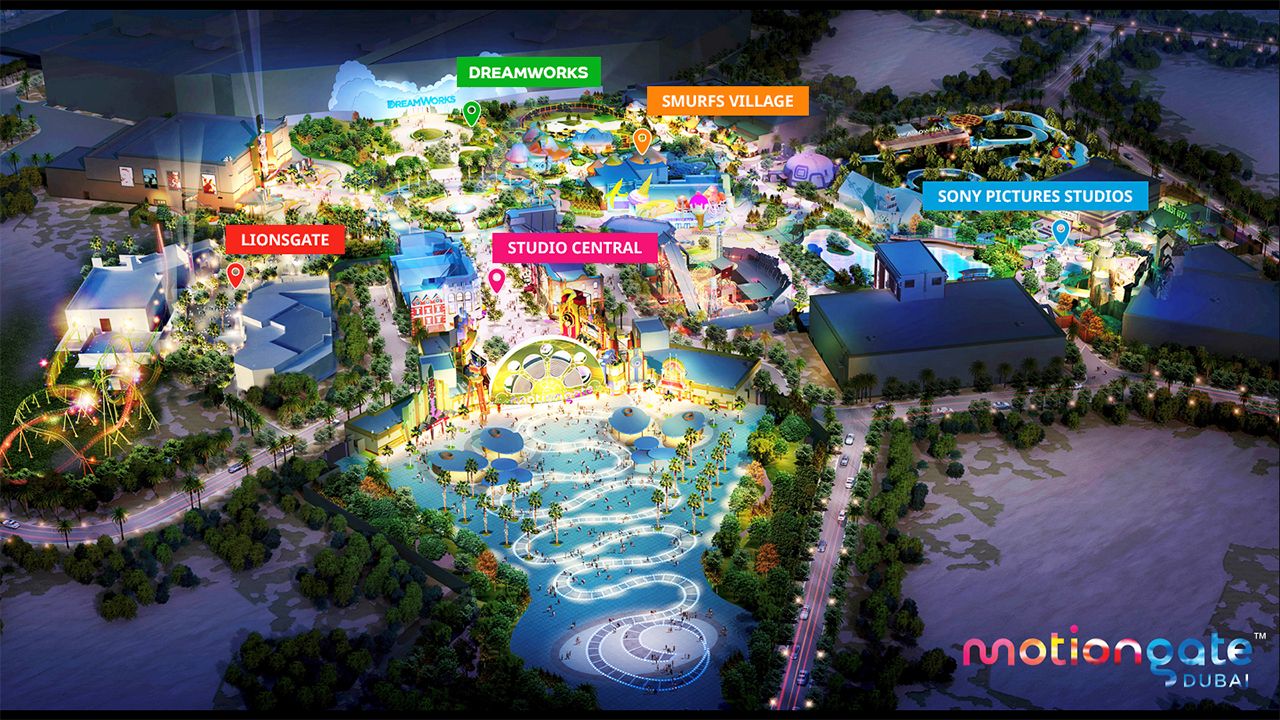
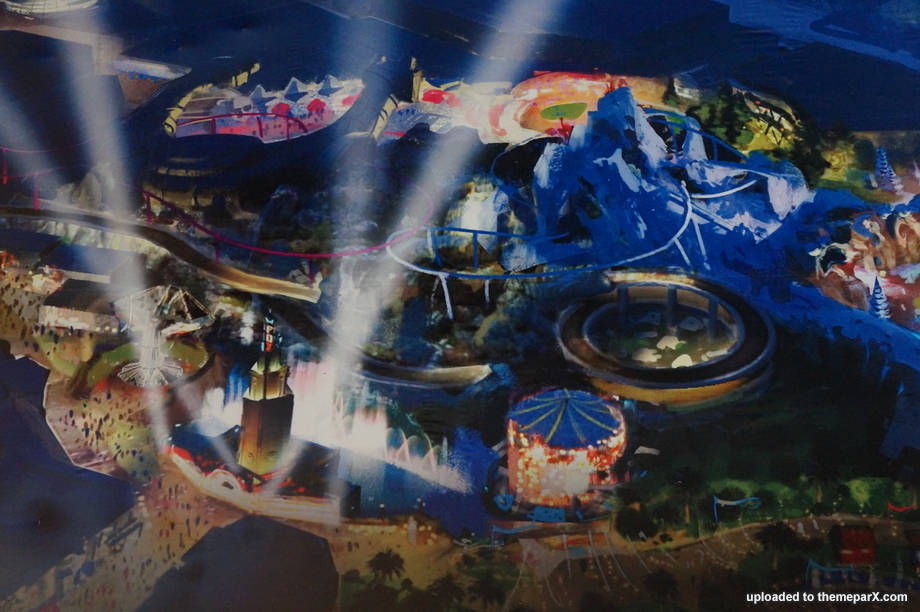
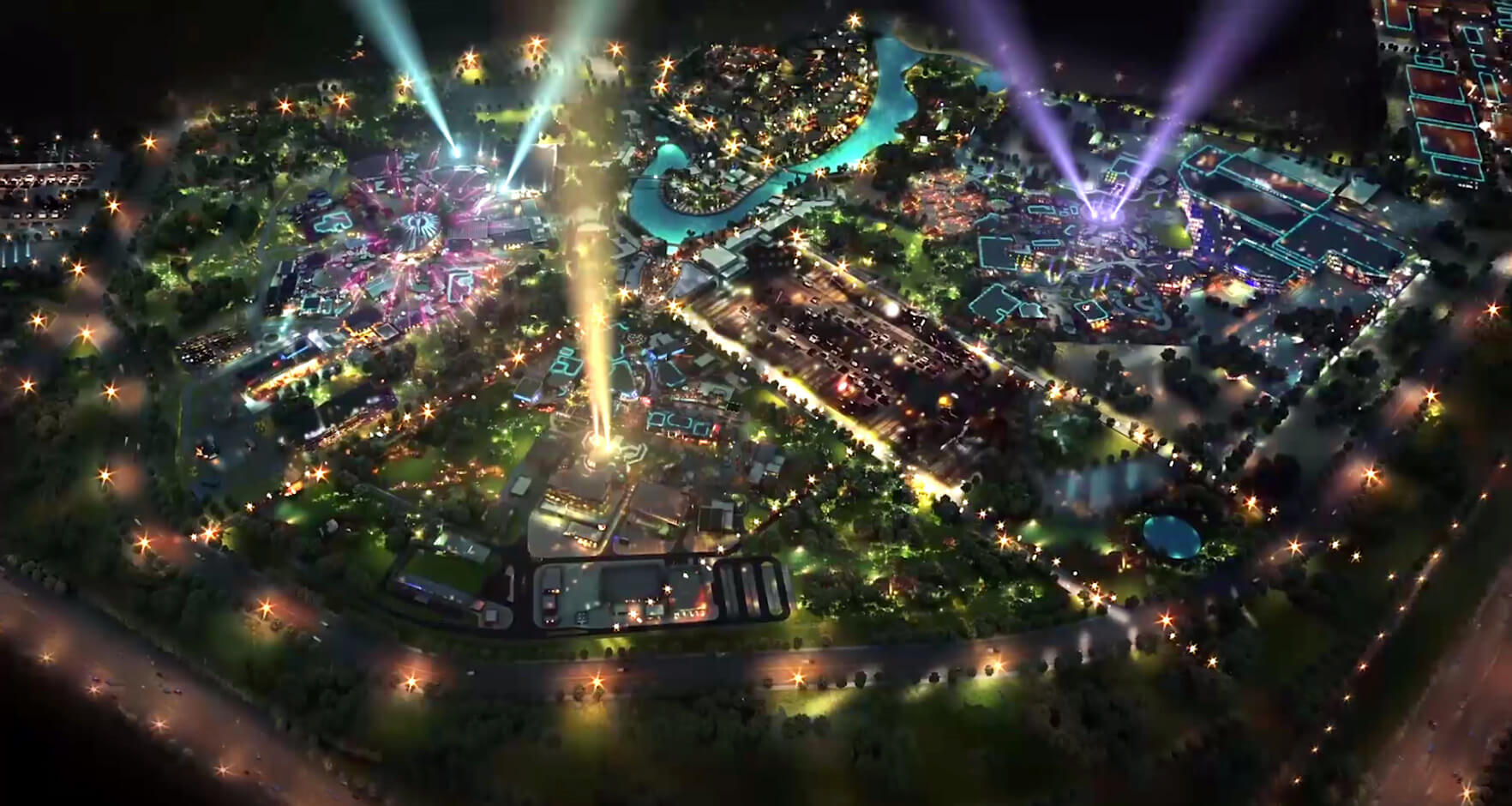
Dubai_Parks_mapWhile the themed entertainment industry continues to explode with new lands and attractions at the US’ biggest players, the luxury destination Dubai, UAE is throwing its hat into the ring. MotionGate may just be the competition that Disney and Universal were not expecting. Primarily including intellectual property (IP) from Sony Pictures, LionsGate, and DreamWorks Animation (now owned by Comcast), MotionGate will boast some of the most advanced attractions in the world. Starting out the gate with 27 attractions and shows based on some of the most well-known IP from the worlds of cinema and television, this brings the total attraction numbers to more than 100 when added to the existing offerings at Dubai Parks and Resorts (a government owned themed entertainment holdings company).

motiongate_image.fw_Unlike the public-private partnership of the parks in China, the government of UAE is uniquely positioned to capitalize on the wealth of the nation. That allure and wealth has driven millions of tourists from around the world to their nation as it is; factor in a world-class leading theme park, and those numbers will increase exponentially. This influx of revenue may actually pave the way for the non-wealthy classes of people to be able to enjoy the Dubai Parks and Resorts as additional flights, hotels, and transportation methods will be added. One of the biggest advantages that MotionGate has over its Disney and Universal competitors (Fox will soon be added to that as well) is that it is being constructed amidst digital, wireless, and multimedia technologies. Whereas the big boys have to modify existing technologies in attractions as they change, these parks are built with the latest technology which directly impacts efficiency of operation.  This same idea of being late to the game but a quickly asserted leader can be seen in nations like South Korea who only recently, relatively speaking, have had access to wireless internet technologies. As they did not have to adapt or modify existing legacy infrastructure, they built on current communications technologies and have a much faster, reliable, cheaper, and efficient ‘internet of things’ than the United States.

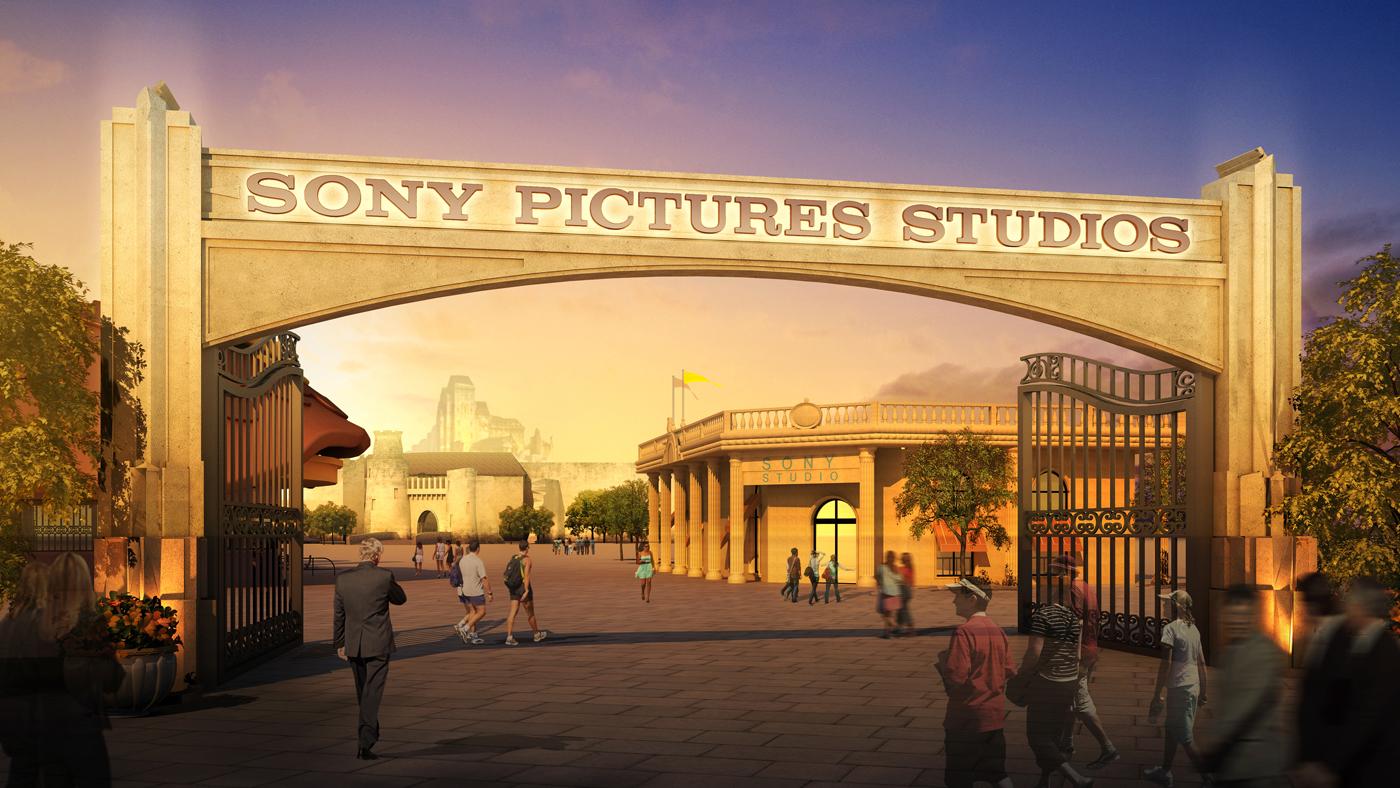
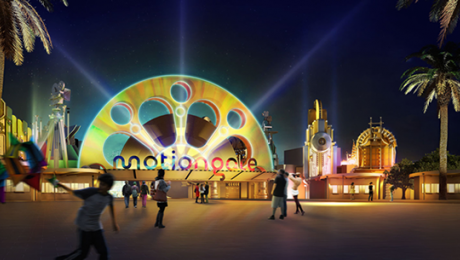
MotionGate_DubaiIn the vein of Walt Disney World and Universal Orlando, Dubai Parks and Resorts is a themed entertainment complex featuring separately themed parks. Specifically, MotionGate bares a striking design modeled after Magic Kingdom in that it is ONE theme park that contains five distinctly different themed lands that all center in and around the concept of motion pictures, filmmaking, and live entertainment. Each land, much like the ones at Magic Kingdom, has its own gateway, themed rides, restaurants, shows, and landmarks. Also, keeping with the Magic Kingdom layout, MotionGate contains the hub and spoke system. Unlike Universal Studios, Islands of Adventure, SeaWorld, or Busch Gardens, MotionGate employs the hub-and-spoke system in order to make maneuvering the park user-friendly and aesthetically pleasing to the eye. This provides opportunities for centralized entertainment offerings and landmarks. Prepare for the glitz, glamour, nostalgia, and excitement of the lands: Studio Central, LionsGate, DreamWorks, Sony Pictures, and the Smurfs’ Village. What makes this concept additionally interesting is the fact that MotionGate includes IP from different studios that are self-contained. Instead of taking the IP from the different companies and integrating them in more generically themed lands, each IP is contained within its respective land.

sony-motiongateOne cannot help but notice that the concept of Dubai Parks and Resort’s flagship theme park MotionGate resembles the original Universal Studios Florida or to a lesser extent Disney-MGM Studios. How so? If you are not familiar, both Universal Studios Florida and then Disney-MGM Studios were theme parks inspired by the idea of “what lies beyond the fifth dimension” (Tower of Terror, Disney); moreover, the story that exists outside of the frame–beyond mise en scene. In addition to attractions and shows inspired by filmmaking or theatre, both parks were also east coast counterparts to the Hollywood stages. Universal/Nickelodeon and Disney produced major motion pictures and television shows in the sound stages that are all but gone (or turn into conventional  attractions) in the 1980s and mid to late 90s. By 2000, most filmmaking and television production operations ceased because it was cheaper to move operations back to Hollywood and to other places like North Carolina and now Georgia. MotionGate goes back to the drawing board to resurrect a dying idea of turning filmmaking into an attraction. It truly holds up Geoff King’s studies and theories of “the cinema of attractions.” Universal founder Carl Leammle knew there was more to filmmaking than making movies. That’s why he opened his movie making ranch outside of Los Angeles to day guests to be entertained by special effects and stunt shows as well as watching the magic behind the camera.

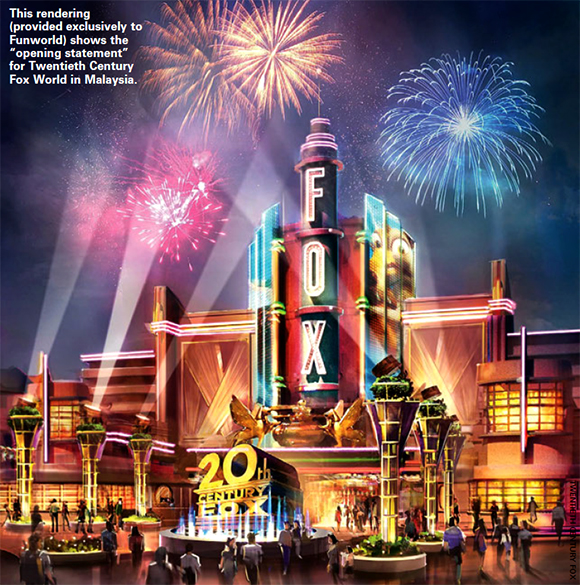
20thCenFoxWorldIt is an exciting time for the themed entertainment and motion picture industries. For the longest time, Disney and Universal (Comcast) were the kings of cinema and TV based theme parks. Now, Dubai is becoming a heavy hitter and once MotionGate opens in October, the landscape has the potential to shift drastically. Now, the parks in the US will not only be competing against each other, but against heavy competition on the other side of the world in an area with much deeper pockets. All the while the word is focussed on the Word of Pandora, The Reign of Kong, Cobra’s Curse, Mako, Star Wars Land, Toy Story Land, and the unnamed new theme park under construction for Universal’s third park (not counting the forthcoming water park), MotionGate will open and create a whole new atmosphere of innovation amongst the chief players. In addition to the parks in Dubai, Fox is also entering into the game with their 20th Century Fox World opening in Malaysia in 2017. Also on the books is the 20th Century Fox World expansion to Zoo Miami AND another indoor Sony theme park in Wisconsin. With all these parks opening, there are more and more opportunities for careers in either cinema or themed entertainment. Or, a career that spans both (which is what yours truly is trying to do). I just love all the new completion because it will drive continued innovation. However, it’s also nice to see that we have a new park that is getting back to the roots of what started it all: motion pictures.

The “Attraction” of Horror: a ‘Psycho’analysis (part 2 of 2)

UnivHollywood_BatesMotelSuccessful movie-themed attractions (stage shows or rides) create an atmosphere that is often built upon a foundation consisting of confrontation and direct simulation rather than long, sustained narratives (King, 2000). This is true of the horror film as well. Horror is a genre nearly as old as cinema itself. The horror film, according to Linda Williams, contains three basic elements: narrative, character, and setting. These same elements can be found in movie-themed attractions at theme parks (2000).

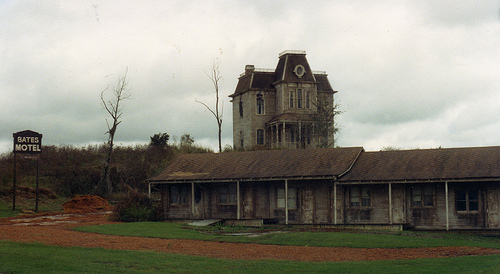
Regarding Psycho in particular, the setting consists of very liminal* spaces such as the opening hotel, the Bates house, and bathroom. This same idea can be applied to a theme park attraction because the park guests are often corralled into smaller, intimate places that serve to advance the next element. Narrative is the foundation that both themed attractions and movies are built upon. The narrative, or diegesis, is the story. Diegetically, horror films contain a story that is segmented into the following sequence: order–>disorder–>order. Increasingly, the modern horror film is often left in disorder, or an order that is dissimilar from the original (2000). Movie-themed attractions usually introduce the park guests to a short-form story based on the original, and the ride is the vehicle that takes the guests through the story that can consist of threats and chases, followed by triumphs. In regards to the character element, the characters are those who are the instruments through which the plot is advanced. Normally, characters are people or animals, but can also be inanimate objects of significance (Williams, 2000). The park guests usually encounter characters from the source material along the journey of the ride.

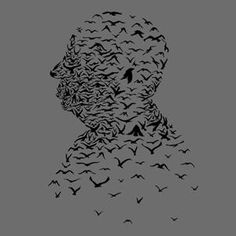
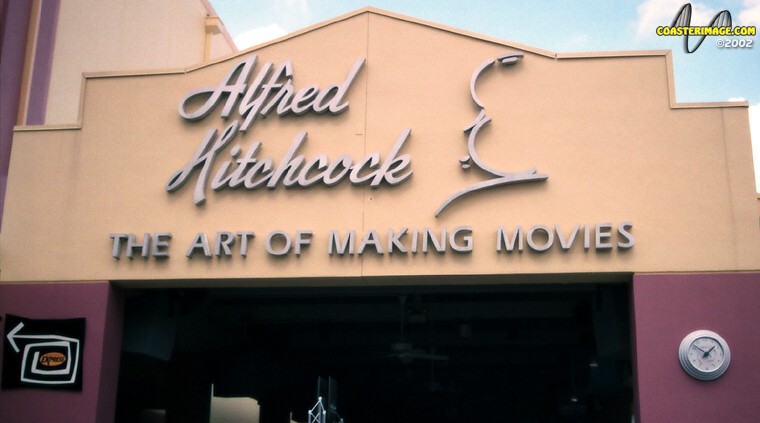
HitchcockBirds“Alfred Hitchcock: the Art of Making Movies” (Universal Studios Florida) was divided up into four distinct parts, with the famous shower scene being the central focus (ThePsychoMovies.com, 2014). Just like a horror movie is divided up into parts, or has a cinematic structure, so too did the Hitchcock attraction. Hitchcock: The Art of Making Movies was divided up into the following areas: preshow, 3D theatre, Psycho stage, and interactive area. There are may parallels between the famous shower scene and the live attraction. In the movie, the sequence leading up to the shower scene is very much a preshow in the same way the attraction contains a preshow area. The preshow in the movie is when Norman is gazing through the peephole into the room of Marion as she undresses. Just like Norman is visually gathering information about Marion, the park guests in the preshow area gather information about Hitchcock’s career. The preshow is the area that preps the audience for what they are too experience. By using the same principles of creating suspense that Hitchcock used, the preshow area reveals just enough to elicit feelings of anticipation and anxiousness.

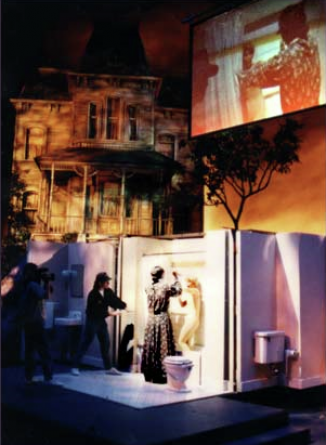
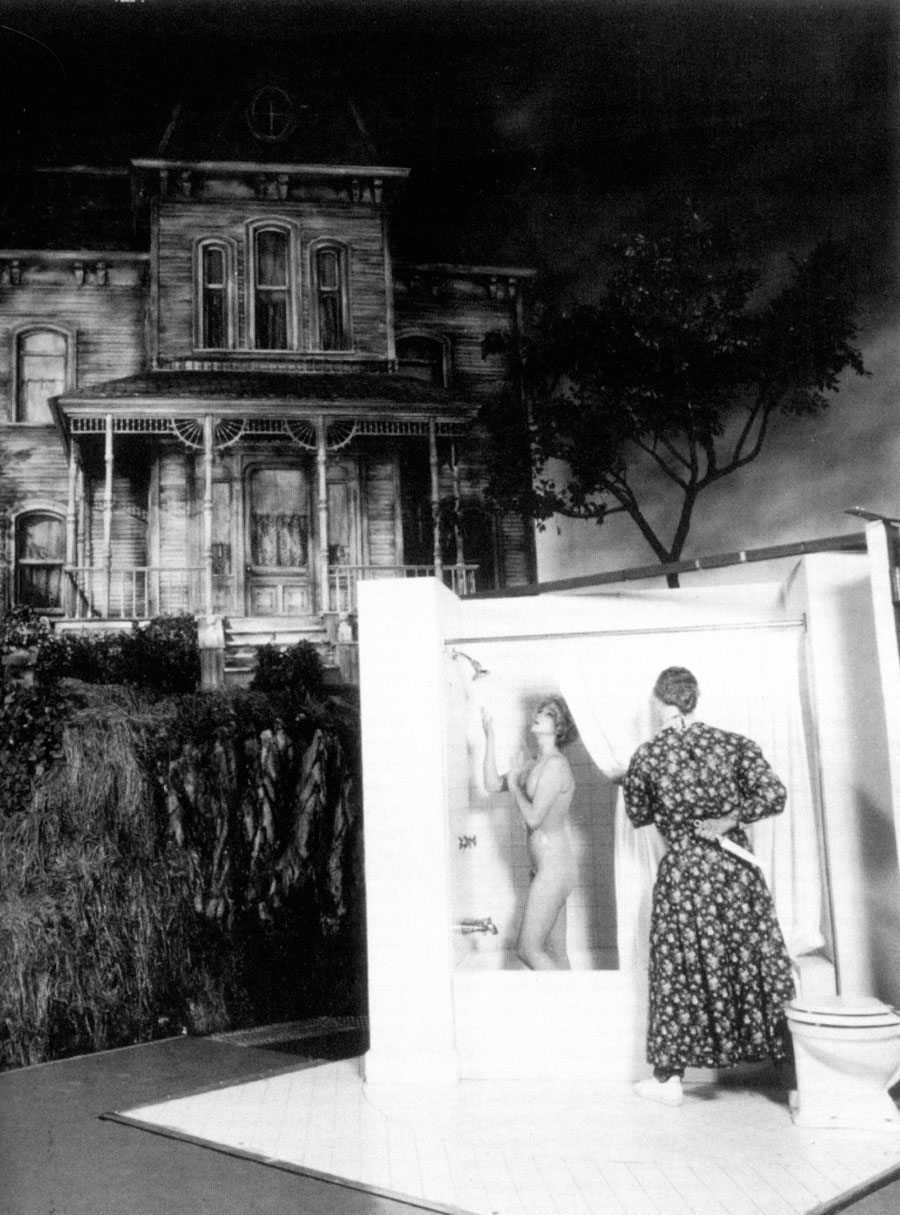
Next, the park guests sit through clips of 3D versions of Dial M for Murder and The Birds. This preps the mind for experiencing the horror in the next room. Likewise, between the time Norman looked upon Marion through the peephole and puts on the wig and dress, he sits in the kitchen and presumably debates with mother on what to do. Following that scene, we return to the bathroom and enter the shower with Marion. After the 3D movie, the park guests enter the Hitchcock Stage and look upon recreations of the motel, shower, and house.

The main show at the attraction is the Hitchcock Stage where the infamous shower scene is reenacted before a live audience. In addition to the Bates House and Motel, there is a recreation of the tub/shower used by Hitchcock to film the scene. At this point in the movie, Marion is thoroughly enjoying her shower, and the audience gets both objective and subjective camera shots from inside and outside the shower. All of a sudden a shadowy figure approaches the opaque shower curtain and throws it open, wielding a knife. The sinister figure stabs Marion repeatedly and through more than fifty cuts (editing cuts), the scene is played before the people in the dark. Likewise, this same scene is brought to life for the studio audience at Hitchcock: The Art of Making Movies. Through mechanical engineering and film production techniques, the cast of the show reveals how the master of suspense filmed this iconic scene.

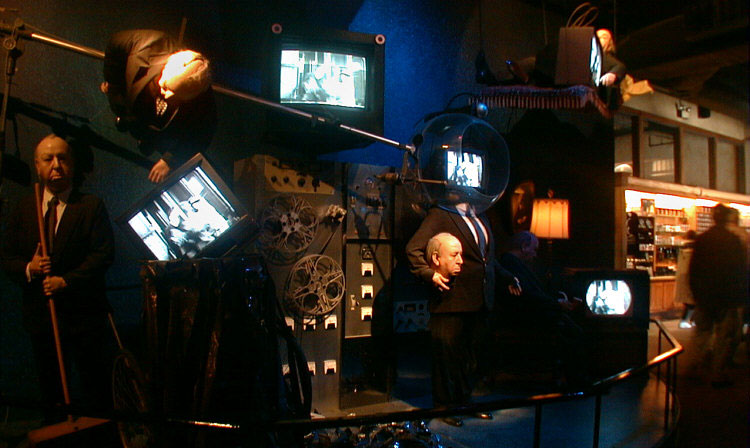
HitchcockAttractionFinalRoomFollowing the show on the Hitchcock Stage, the park guests walk into a museum-like interactive room revealing many of Hitchcock’s secrets and techniques in some of his most notable films. It parallels the end of Psycho when the psychiatrist is analyzing Norman and explaining how and why he did what he did. Just like Norman is the master of slasher films, so is Hitchcock the master of the art of suspense and horror cinema. A close reading of these areas reveals that they each take an element of the setting, narrative, or characters and use the tool of spectacle to bring them to life for the live audience. The preshow area acts as the prime for the horror/suspense pump that is gearing up. Watching the 3D scenes from The Birds and Dial M for Murder serves to generate feelings of ensuing chaos and acts as the big event that causes something to go wrong in the otherwise narrative that is in order (remember: orderdisorderorder). Following the 3D Theatre, is the central Psycho stage that takes any order and casts it to the wind and enables the horror of the shower scene to come to life for the naked eyes of the audience.

Hitchcock AttractionThis was a main attraction at the theme park until its dismantlement in 2002 to make way for the Shrek: 4D experience. From the aforementioned explanation by one of the producers of the attraction, the audience was completely immersed in the magic of bringing a Hitchcock thriller to life, and got to witness the most famous single scene in all of cinema history. This was all done with practical effects, just as Hitchcock would have done it. But, with the advent of computer generated imagery and incredibly accurate and time efficient non-linear video editing, most of the effects can be generated in other ways. Although it remained one of the most popular attractions at the theme park until its closure, Universal saw the future of attractions and decided to do away with nostalgia and pave the way for digital simulated attractions (Singer, 2013).

Click HERE for Part 1

*(adjective) 1. of or relating to a transitional or initial stage of a process; 2. occupying a position at, or on both sides of, a boundary or threshold

The “Attraction” of Horror: a ‘Psycho’analysis (part 1 of 2)

HitchcockAttractionJust as audiences are fascinated by horror movies and seek to watch that which would be repulsive in real-life, they are equally fascinated in immersing themselves into the experience by way of a theme park attraction. This phenomenon is not limited to horror movies, because rides like Jurassic Park the Ride (Jurassic Park River Adventure in Florida), Revenge of the Mummy, and Pirates of the Caribbean beckon millions of guests a year. In addition to attractions based on the movies, movie studio executives and theme park engineers created attractions that embody what Carl Leammle first envisioned, by taking the audience behind the magic of the movies. This is the case with the (now closed) Backlot Tour at Disney’s Hollywood Studios and Hitchcock: The Art of Making Movies at Universal Studios Florida (Murdy, 2002). The relationship between the cinema and theme parks is a strong one and creates an energetic synergy that entertains millions of people each year by eliciting laugher, screams, tears, and smiles.

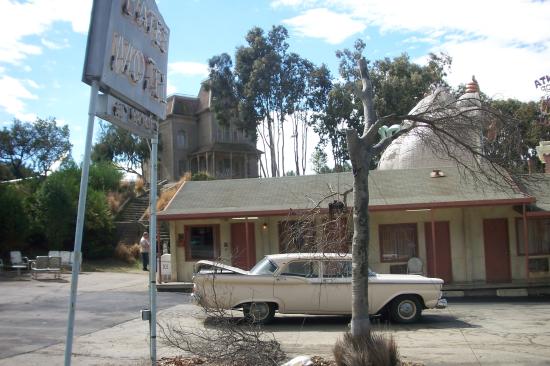
BatesMotelFloridaThe most admired and revered part on the famous studio tour at Universal Studios Hollywood is the Bates House and Motel. As the tram passes the iconic motel and house that set the bar against which all other slasher films would be judged, an actor portraying Norman Bates charges toward the tram wielding the famous butcher’s knife (Murdy, 2002). Even though the audience knows this is a tour behind the scenes of the most utilized backlot and studio in the world (Milman, 2001), there is something uniquely special about this chance encounter on the tour. And, that something is what the designers of the guest experience on the studio tour use to bring about the successful convergence combining both the original movie and the live experience. In order to successfully complete the transposition from the movie to the live experience, the attraction designers tapped into the uncanny or unheimlich (Freud, 1919) of Psycho and utilized the elements of terror and shock to facilitate the aura of horror that exists just by looking upon the timeless motel and house.

Psycho_SoundstageCentral to Psycho and the single most famous scene in cinema history (Cosgrove, 2013) is the groundbreaking shower scene. And, it is the highlighted element at the former Universal Studios Florida attraction Hitchcock: The Art of Making Movies. One of the opening day attractions located in the former Production Central area of the park (Singer, 2013), this attraction took park guests into the world of suspense and horror as meticulously crafted and defined by Alfred Hitchcock (ThePsychoMovies.com). Although it was replaced with a less critically important and pivotal movie themed attraction in 2002 (mostly to attract younger audiences), it is an excellent example of the fusion of horror cinema and themed entertainment attractions. In addition to the Art of Making Movies attraction, there was a recreation of the infamous motel and house in the park built for the filming of Psycho IV: The Beginning in 1989-90 (MovieMassacre.com, 2014). For those who have seen Psycho, the very sight of the motel and house is enough to strike fear into the mind and bloodstream. It is representative of the very best that horror cinema is able to offer society. In no attraction, based off a work of horror, is there a better example of the very essence of horror films than in the synergistic experience of beholding the four-fold elemental process of the Hitchcock: The Art of Making Movies attraction (Singer, 2013).

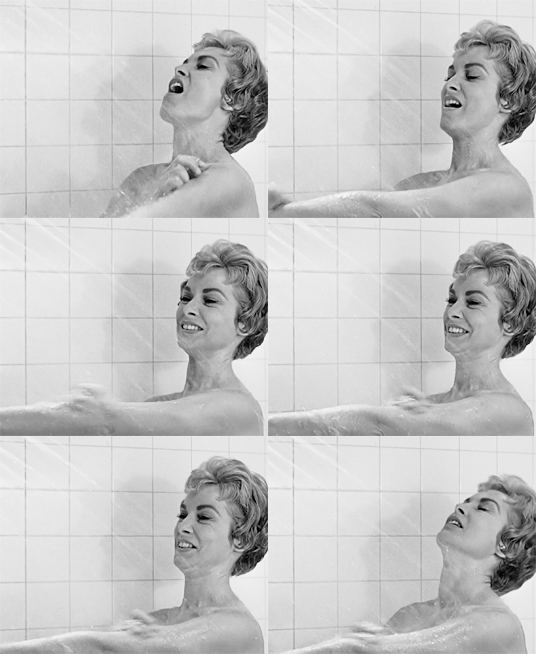
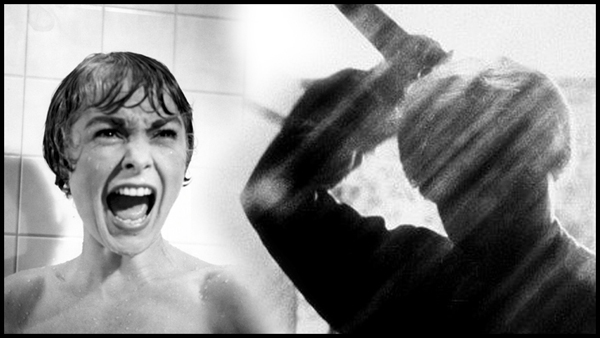
PsychoShowerClensePrior to ‘psycho’analyzing  the attraction of horror, it is imperative to understand why the shower scene is the single most famous scene in all cinema. The shower scene is a roller-coaster of emotions; and, in many ways, this scene in and of itself follows the basic structure of a story (introduction, rising action, climax, falling action, and denouement). The scene begins with Marion closing the shower curtain as we get a closeup shot of her face as the shower turns on.  Given this closeup, the facial expressions are easily denoted on her face. The flows of emotions on her face resemble the face of someone who is being cleansed from or baptized for their transgressions. This emotional transition is made more clear when comparing this scene to the earlier one with Marion and Norman in the office when she suddenly feels as if she “stepped into a private trap” and wants to see if she “can step back out of it” (Psycho, 1960). In addition to the metaphoric sin cleansing affect of the shower, Marion is also physically and emotionally exposed and vulnerable. And, what about that showerhead? Throughout the movie, there are eyes on Marion (real estate buyer, boss, police officer, mother’s eye, etc…). The frequent cuts to the showerhead essentially imply the showerhead as yet another eye watching Marion. Furthermore, the frequent cuts to the showerhead also help to create the sensation that something is not right.

Following the symbolic cleansing in the shower, the audience witnesses the shadowy figure emerging from the bathroom door and walking up to the infamous shower. Due to Hitchcock’s use of the cinematic rule of thirds, we are already expecting the entrance of someone before the door ever opens. Through the eyes of the camera, we see Marion’s private space is violated by this shadowy figure. The camera slowly zooms in to the figure through the opaque curtain until the moment when the shadow throws open the curtain and there is a closeup of Marion’s face exhibiting total terror as the knife is raised against her.

PsychoShowerScreamImmediately after the shots of Marion’s iconic scream and the knife, the speed of the cuts increases exponentially. Aside from having to creatively cut the film in such a way that neither Marion’s naked body nor a knife officially penetrating her body is seen, the speed was necessary to enhance the disorientation and violence of the relatively short montage. Through both objective and subjective shots, we are both mother and Marion within hundredths of seconds of one another. The precise cuts in the film give the illusion that Marion is being stabbed multiples times; however, there is only one shot that captures the knife barely penetrating Marion’s vulnerable and exposed flesh. The terrifying key to this scene is the fact that very little violence is actually seen; most of what is shock-inducing is what is not seen and implied through the artful use of music, cuts, and angles. Hitchcock once said, “there’s nothing more frightening than an unopened door.” This implies that there is a greater fear of what in unseen than that which is visible in the diegesis on the screen.

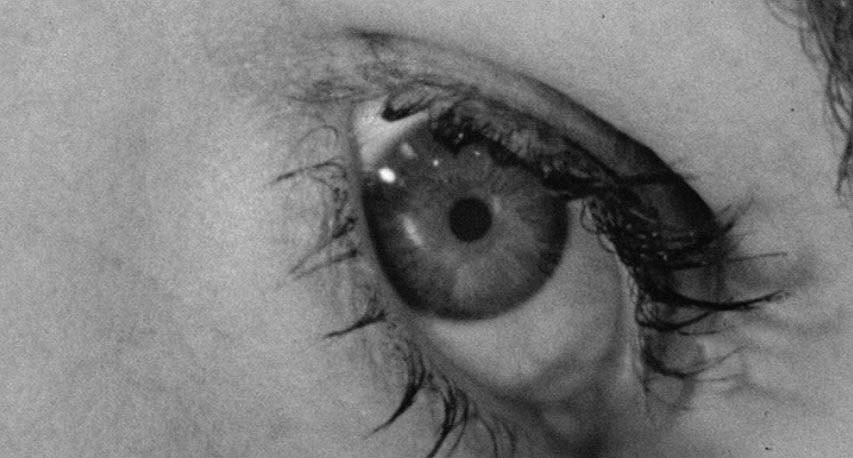
MarionCraneEyeIt is nearly impossible to closely read this scene without acknowledging the most famous orchestral screeches in cinema history. Those famous screeches greatly enhance the disorientation and terror of the scene. Coming out of nowhere, the terrifying sounds from the orchestra create the sound design for the knife penetrating Marion and slashing her to death. One could cut to black and allow the music to be heard throughout this iconic scene, and the audience would still feel anxious, macabre feelings and shock. Interestingly, this same action would also reveal how short the shower scene really is. Regarding the sound design, there is much more of the water heard than the sounds of murder. Following the murder, the score greatly slows down and deepens. This musical movement allows the audience to reflect upon what has just occurred and begin to contemplate the various consequences of mother’s actions.  Lastly, the camera slowly spirals out from Marion’s eyes symbolizing that everything Marion planned has just gone down the drain through this seemingly random act of violence, and then there is a cut to the drain of the bathtub itself cementing this metaphoric notion. Keeping with the reoccurring theme of eyes, this also reinforces the fact that the eye is the window to the soul and someone is always watching.

CONTINUED NEXT WEEK. Check back next Monday 🙂

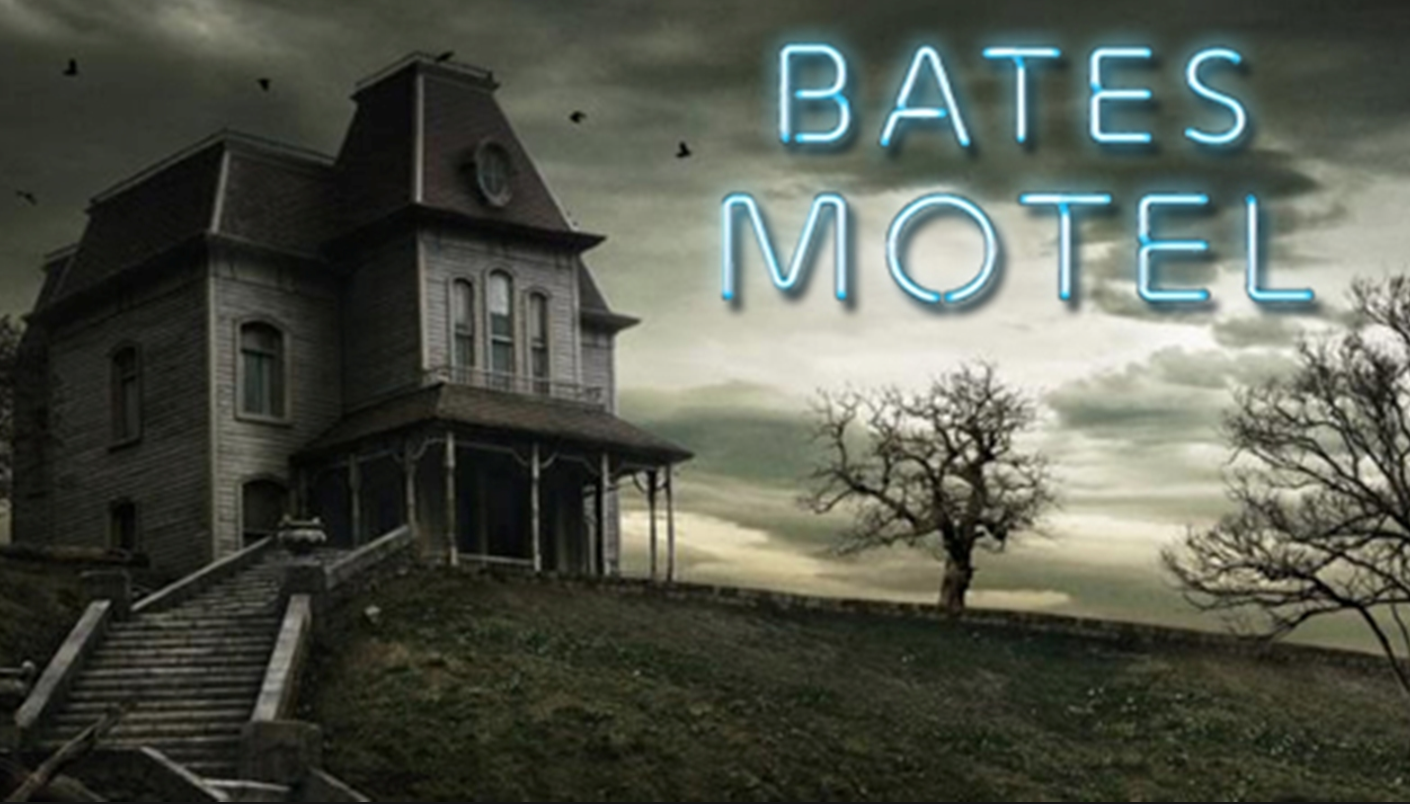
BatesMotelAETVDon’t forget to watch Bates Motel on A&E tonight! It’s the season finale and it’s going to be intense!

“On Cinema and Theme Parks” (part 12 of 12)

My BookThe world of the business of media convergence is a fascinating and rapidly changing world! And, the convergence of cinema and theme parks is a dynamic example of how one form of media can be integrated into another in order to create a new experience for audiences around the world. Media conglomerates with theme park investments are often exploring what to do in order to remain competitive and increase the number of guests through the turnstiles. Sometimes this means using their own IPs to develop new rides or attractions, maybe an entire new park altogether, or perhaps striking a deal with another media company in order to use another’s IP as the source material for new attractions.

The opposite is also true. Media conglomerates with theme park interests may look to their own respective parks for the inspiration for the next movie. This was definitely the case with Disney’s Pirates of the Caribbean and is the case in the film Tomorrowland, in which an entire section of a park is the basis for a movie. It is all storytelling. But the stories being told take different shapes and are told through various means. And, even video game companies are getting in on the action. On May 7, 2015 Universal Parks and Resorts and Nintendo announced a first-ever partnership. Universal Parks and Resorts acquired the theme park rights from Nintendo to include the legacy video game company’s characters and games in new attractions and character meet and greets (BusinessWire, 2015).

At their respective roots, both movies and theme park attractions (and even entire parks themselves) tell stories. The medium through which they tell their stories is very different, but nevertheless helps to support one another. Media conglomerates have demonstrated this concept by taking existing movie/TV IPs and translating them into attractions and taking existing theme park attractions and translating them into movies. At its heart, the purpose of this study is to develop recommendations for media conglomerates when making decisions that are potentially worth millions of dollars, and could be a major success or a big flop.

Despite the more artistic or niche films still being amongst the individual favorites of the participants, the shared favorite movies were high concept and aimed at broad audiences, and typically fell into the science-fiction or fantasy/adventure genres. Specifically, the movie Jurassic Park and the Jurassic Park ride were cited numerous times. If an attraction were too disconnected from the story or plot of the movie, serving as the basis for the ride, then it appears to be received negatively. On the contrary, when a movie-based theme park attraction combines the best of the plot or characters, in a given movie, with a conventionally thrilling ride design, then it is received very well and enjoyed immensely.  Furthermore, the attraction needs to tell a story within the length of the ride from queue to exit. Fluid, coherent stories are driving forces behind the likability of an attraction or movie. Prompting the generation of emotional connections or responses from audiences/guests, in respect to the story of a movie or attraction, is key to creating reflections that will evoke nostalgic memories down the road; and thus, compel the audience member or park guest to experience the movie or ride again—perhaps with friends, family, or their children.

Well-executed themed design to support the story of a theme park attraction based on a movie is just as important as the story or intellectual property themselves respectively.  Story is the plot or sequence of events that take place during the ride experience (again, this is from the queue to the exit). Theme encompasses the building design, audiovisual elements, physical movement, and special effects during the attraction. The goal of an attraction or park area’s theme should be to completely immerse the park guest into the world being used as the basis or inspiration for the ride or section of the park. Everything from the employees to the restaurants to the surrounding buildings needs to work together to create an experiential degree that essentially transports the guest from the real world into the world of the park or ride. When developing themed areas of a park, designers need to be careful not to allow the outside world into what should amount to an escape from reality. Not that iconic brands or companies cannot be integrated into the theming of a park at all; but it needs to be more indirect, thus allowing the theme to continue and the story not be broken by outside invaders, so to speak.

The reason many attractions at movie-based theme parks were originally developed was to take Tom Gunning’s (1986) idea of the cinema of attractions and translate it literally. However, with the increasingly digital climate of movie making, the practical, analog effects and techniques that once made for the basis of attractions, are no longer foundation enough for successful attractions in today’s marketplace of themed entertainment ideas. Simply stated, it just isn’t exciting to watch an editor sit behind a computer creating digital effects. Despite the making of a movie just not being as secret or magical nowadays, it is still important for a movie-based theme park to hold onto its roots and work to creatively develop new ways of exhibiting this art that still mystifies to this day—just in different ways than it used to. For movie-based theme parks that exist on studio lots or house sound stages, it is imperative that studio tours continue and build areas that can be rented out for current productions. Even though many people know how movies are made presently, the art, skill, and magic of how similar effects and shot sequences were accomplished before the aid of computers (at least to the extent they are instrumental today) in classic movies has a place in the modern movie-based theme park. Hitchcock: the Art of Making Movies was cited as an example of this type of offering guests want to see alive in the parks.

The goal of a movie or theme park attraction is to generate some type of pleasurable experience in the movie patron or park guest. For both movies and themed parks, the idea needs to be to craft a story that will stimulate physiological and psychological/emotional responses from the audience/guests. A movie should contain a story or sequence of events that generate fear, affection, anxiousness, or levity in the bodies of the patrons. These responses are very much physiological. In the environment of a theme park attraction based off a given movie, these same physiological responses need to be generated by the use of movement and special or visual effects. When generating these physical responses, the patron or guest will instinctively develop psychological or emotional responses to accompany the complementary physiological response. Even if the physiological strain placed on the bodies is by all accounts a negative one, the park guest will most likely be compelled to experience it again and again because studies have shown an attraction to or affinity for sensations of pleasurable un-pleasures.

The principal idea behind this study is to create a predictable model for producers and designers. And, there has been a prolific amount of information to supply the evidence that creative designers, producers, and project managers need in order to make well-informed decisions in the beginning stages of the themed entertainment or motion picture production process. Developing a model for creative decision-making is not as simple as ‘include these things and your idea will be successful,’ as the creative process can be very subjective. However, with enough supporting evidences, a media conglomerate or other company with theme park investments can make decisions with sufficient empirical evidence pertaining to the projected success of an attraction or theme park. This study has outlined a model that is grounded in scholarly research, anecdotal evidence, and first-person focus groups and interviews.

For the complete study, head over to AMAZON and purchase the book. These 12 sections merely touch on some of the main points from the study but by no means take the place of reading the whole book. Hopefully these sections prompt a desire to experience the book/study in its entirety. It’s written to be enjoyed by anyone who loves movies and theme parks. What good is a study if it’s written of that only academics can understand. I have uncovered fascinating knowledge and insight into the craft of the relationship between cinema and themed entertainment that I want to share with the world.

To return to the beginning of the series, click HERE