“Star Trek: Beyond” movie review

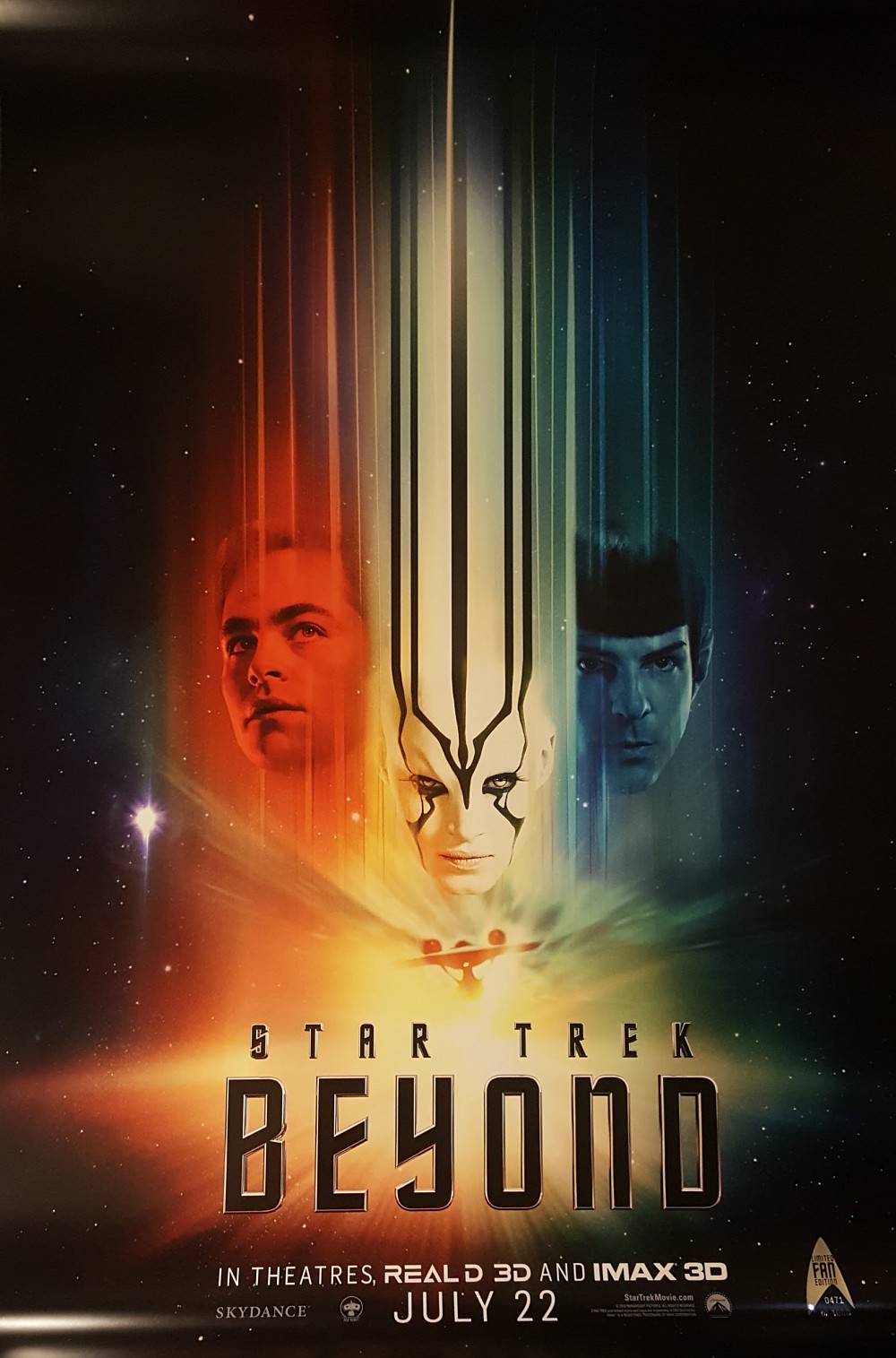
StarTrekBeyondOld school charm paired with impeccable visual storytelling! From Paramount Pictures and Bad Robot, Producer J.J. Abrams once again returns audiences to the world of Captain Kirk aboard the U.S.S. Starship Enterprise (NCC-1701) in a film that encompasses much of what was loved about the original series/movies, and combines that soul with the film production technology of today. Despite the subdued anthropological subtext, which is one of the primary differences between the Star Trek and Star Wars universes respectively, this story will definitely keep you entertained with brilliant writing and a nostalgic feel. For long-time fans of the franchise that’s been around since the 1960s, you will find that Abrams handles the settings and characters with care and respect. The third film in this reboot series, Star Trek: Beyond is one roller coaster of a ride that boasts a narrative pace that moves at warp speed. If there is one fallacy in the storytelling of this installment, in the Abrams reboot of the Gene Roddenberry classic, it is the lack of social commentary on the human condition that has been at the core of Star Trek since its creation. With a fantastic cast, incredibly strategic direction, and beautiful cinematography and visual effects, Star Trek: Beyond will whisk the audience away to the final frontier and “boldly go where no one has gone before.”

Following an encounter with an alien species at the York Town space station and colony, Captain Kirk (Chris Pine) is requested by Starfleet leadership to investigate the causes of distress in order to render help. With the possibility of accepting a Vice Admiral commission from Starfleet, Kirk sees this as his potentially final mission aboard the Enterprise. Concurrently, Mr. Spock (Zachary Quinto) is also at a crossroads in his life when he receives word that Ambassador Spock has passed away, as he contemplates picking up where Ambassador Spock left off. Gathering the crew together for what may be the final mission of Kirk and Spock, the Enterprise sets out to uncharted deep space to evaluate the problems and bring about peace. Unknown to the Enterprise crew, they are about to encounter their darkest times yet and a villain named Krall (Idris Elba) who seeks an artifact in the possession of Kirk and has a mission to destroy the Federation and bring about his own version of peace–called chaos.

As a long-time Star Trek fan myself (TNG & Voyager), one of the very first elements I picked up on at the beginning of this installment was the trademark bridge sound effects from the original Star Trek TV series. Employing a little suspension of disbelief, what with all the flat panels and touch screen displays and all, the bridge of the NCC-1701 Enterprise still boasts the old soul of the bridge that started a universe of adventures that continue to this day. Fortunately, visionary producer J.J. Abrams, director Justin Lin, and writers Simon Pegg & Doug Jung craft a story that mostly takes what made the franchise so endearing and channel it into an exciting story for audiences today. From the characters to the dialog, and from the interpersonal interactions to the settings, this Star Trek movie effectively leads the reboot of the franchise in the right direction. Having just watched Abrams’ Star Wars: the Force Awakens back in December, I was very curious as to how similar Beyond would look and feel as compared to the aforementioned. Forced to decline the director’s chair for Star Trek: Beyond, Abrams turned the reigns over to Lin while still serving as the creative producer. Directing Star Wars and producing Star Trek could have left audiences with similar cinematic experiences; however, both movies are vastly different but provide fans with excellent additions to the respective universes.

Prior to screening the movie, I was very skeptical going into it since the various trailers for the film were disappointing–looked like the film was going to be cheesy. To my surprise, the film was definitely not hokey and played out exceptionally well. Compared to the previous two films, I definitely like this one much more. That is mostly attributed to the fact that Beyond felt like a Star Trek movie. The previous two installments felt like a Star Trek movie taking place inside a Star Wars-esque universe. Hopefully, this film will redirect the reboot of the motion pictures in a direction more closely aligned with the original series and movies. With Star Wars and Star Trek trying to find their respective places in today’s culture of media, entertainment, and gaming, it is important for both series to be distinctly different from one another. Now, I don’t mean different stories or characters–obviously, that’s a given by default–but I mean the feel of the stories needs to be unique. Star Wars is an action-adventure mostly concerned with good v evil and Star Trek is science-fiction that concerns itself, traditionally anyway, with the human condition. Both take place in the future, but are different experiences. There is demonstrable evidence in Star Trek: Beyond that the franchise is seeking to stay true to its roots in anthropology and psychology; whereas Star Wars: the Force Awakens is staying true to its roots in futuristic good v evil in a galaxy far, far away.

From a technical perspective, the film is flawless; however, it would have been nice to have seen more practical effects and miniatures more so than digital effects, albeit, the effects were impressive. I appreciated the focus on the interpersonal relationships between the characters, and how it upstaged the actual conflict. Yes, the conflict in the story is important and is what drives the action, but it’s the characters themselves that are the most important element in the narrative. Does this film shift the dominant focus off Star Wars and onto Star Trek? Not particularly. But does this movie pave the way for the Star Trek movies to be on par with the Star Wars movies? I believe that we could begin to witness that trend. Star Wars has the massive advantage of being owned by the Walt Disney Company; and therefore, TWDC is integrating that IP into the parks, cruise line, and merchandise. That is HUGE. Unfortunately, Star Trek does not benefit from being owned by a distribution company and legacy studio with theme park investments in the United States, anyway. Paramount did have amusement park investments, but sold them off to Cedar Fair many years ago. Perhaps the interest in the Star Trek movies and upcoming TV series in 2017 will generate a desire for this IP to become part of a themed entertainment property as well.

With so many choices this weekend for movies it is hard to decide what to see! I am looking forward to watching Lights Out now that I have watched Star Trek: Beyond. Whether you are a fan of the original series or movies OR you are a new fan to the Star Trek universe, I feel confident that you will find much to enjoy in this newest installment in the Abrams reboot. Hopefully the film will perform well over the weekend and begin to generate an interest in the upcoming TV series as well.

Reimagining Halloween in the Parks this Year: the Mind of Horror v. the Eye of Terror

After taking break from posting last week, as it was a holiday, I am happy to provide you with another stimulating article once again on the themed entertainment industry! All week long, I have been thinking about what to write this week. I’ve covered some of the recently opened or previews of attractions and theme parks opening soon; but, I thought that I would take a slightly different approach this week. Over the last year, the United States and other countries have been experiencing a rise in violence. Whether that violence has (1) always been there, but because of the great mediation of society (a proliferation of media capturing devices and distribution outlets), we simply see it more often or (2) if there truly is a signifiant rise in mass violence compared to past decades, is not what I am here to discuss. I would, however, like to discuss the upcoming Halloween events in the parks this year, and specifically, how they might have to adapt or change as a result of the recent mass shootings.

HHN2016Already, Universal Orlando has alluded to the fact that it may be revisiting some of its offerings for this year’s Halloween Horror Nights (HHN), and it would not surprise me if Busch Gardens Tampa Bay makes a similar decision with Howl-O-Scream (HOS), as both parks primarily draw from the Central Florida area and of course tourists still flock to the parks for the annual celebration of the macabre. The recent massacre at the Pulse Night Club will undoubtedly have an affect upon the planning and logistics of primarily HHN followed by HOS to a lesser extent. Since the horror film, and by extension the haunted house attraction (or scare zone) are both grounded in the same anthropological (inclusive of sociology) and psychological theories, there is definitely an opportunity to explore this area of themed entertainment. As Disney’s Mickey’s Not So Scary Halloween Party and SeaWorld’s Spook-tacular do not include glorified violence or death, I will not spend time analyzing how those events may change, because they are mostly benign. Suffice it to say, there will likely be some changes coming to HHN and HOS this year. What are those changes? Well, I am not prevued to those decisions; but can extrapolate from logic and theory what may happen in light of recent events in Orlando and beyond. It is important to note that both Universal Orlando and Busch Gardens Tampa Bay mostly likely have to revisit some of the scare zones or houses this year but not implement changes that may have a negative affect upon drawing from guests outside the Central Florida area. Striking a balance between curtailing some of the violence in respect to those who died and still satisfying those who were not emotionally or psychologically impacted is the key.

HOS2016The events certainly still have to feel like Halloween but perhaps reimagining some of the offerings will aid in finding that delicate balance. It is entirely possible that many who have enjoyed going to HHN and HOS in the past may back off this year in an effort not to come face-to-face with violence as it has greatly impacted many people. Here’s an interesting question: does horror have to be violent? Yes and no. Some of the greatest horror movies of all time are not terribly violent at all, but the eye witnessing violent acts certainly creates terror in the minds and bodies of the audience (or park guest). Alfred Hitchcock once said, “there is no greater threat than an unopened door.” This is indicative of the master of suspense’s ability to generate the fear of something or someone that may not even be a threat. There is another Hitchcock quote (or, at least I believe it’s Hitch) to the effect of “greater is the fear that’s in the mind than on the screen” (if you know of this exact quote, please let me know). That being said, likewise, seeing Freddy, Jason, Leatherface, or Michael is equally terrifying because of the trademark violence they have displayed on the screen over the years. It is important to year-round or seasonally operating Halloween-themed attractions to include both the physical and psychological/emotional aspects of horror in order for the guests to have a dynamic and full experience facing that which terrifies them and from which guests would otherwise run away.

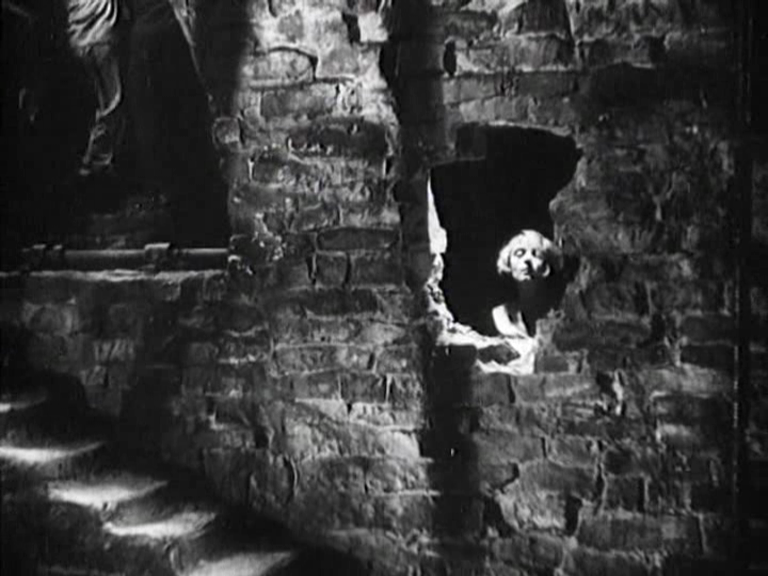
unheimlichThroughout history, from the fights in the Roman Coliseum to Michael Myers’ slaying of people in Halloween, audiences have been both entertained and repeatedly drawn to stories and shows that highlight horrific acts of violence or feelings of terror and anxiety. Perhaps there is a deep seeded reason as to why millions of people find entertainment value in horror films. This question has been tackled by many psychiatrists and psychologists, each has come up with a different explanation as to “why horror?” Most notably, famed psychiatrist Sigmund Freud provided great insight into an explanation of why people find horror films fascinating in his essay on the Uncanny.  In his study on the uncanny, Freud takes on the literary imagination (this same literary analysis can and is used to analyze film and themed entertainment) by dividing his theory up into three sections. He first defines the concept of the uncanny, then performs an examination of the context required for understanding the experience of the uncanny, and finally explores the affects of the uncanny on the psyche through literature and fiction. Some of the running themes throughout his essay are loss of eyes, castration, the double-ego, and self-reflexivity. Through the framework laid out by Freud, scholars and film critics can explore the themes in horror film as it relates to the human subconscious; and for purposes of our discussion, the horror attraction.

Freud explains the realm of the uncanny as the place at which aesthetics and psychoanalysis merge, because it deals with a particular feeling or sensation combined with emotional impulses. The substances or manifestations of the uncanny are elements that are fearful and frightening. Proceeding with Freud’s definition of the uncanny being a class of frightening elements, plaguing the psyche, ushering an individual back to what is familiar (heimlich) and known (as opposed to what is unknown). Freud refers to the uncanny as that “which should have remained secret and hidden, but has come to the light.” Furthermore, he goes on to further describe the uncanny as the “mark of the return of the repressed.” The concept of the uncanny is a type of unwilling or mistaken exposure to something surprising, unexpected, or horrific. Freud claims that the source of the uncanny in literature is the recurrence of something long forgotten and repressed. However, not everything that returns from the psychic depths of repression is uncanny. The mere return of repressed feelings and experiences is not sufficient for the uncanny to occur. It requires something repressed having returned but represented by an unexpected and outside the realm of reality. This is easily accomplished in literature (and by extension, movies, theme park attractions, and plays) because fantasy is different from reality.

Just because something works as uncanny in a work of literature doesn’t mean it can work in real-life as well. During times of tragedy felt by an entire group of people or nation, the same concepts which work in literature and film may not work as well, for a period of time anyway, in themed entertainment. Within literature, if the author makes a pretense to realism, then he or she opens the door to supplying the story with the uncanny. Often times, the uncanny in literature and film is the projection of the psyche of the central character on another object or person combined with a warped view of the objective and subjective of a given situation. It’s like something within the fictional world creeps into the real world. Within the horror genre, there are many different stories or narratives that exist. And, each type of horror film tells its story in different ways; however, they are all concerned with getting the same emotional response from the “people out there in the dark,” as famously stated by Norma Desmond in the timeless film noir classic Sunset Blvd. Sometimes the audience will go on a journey into the crazed mind of a psychopathic serial killer or they may witness a supernatural monster terrorizing a small Bavarian village. In either case, Freud believes that the writers of horror, and by extension themed entertainment designers, are concerned with exposing the audience to “other” scenes. And, these “other” scenes are rooted in the subconscious.

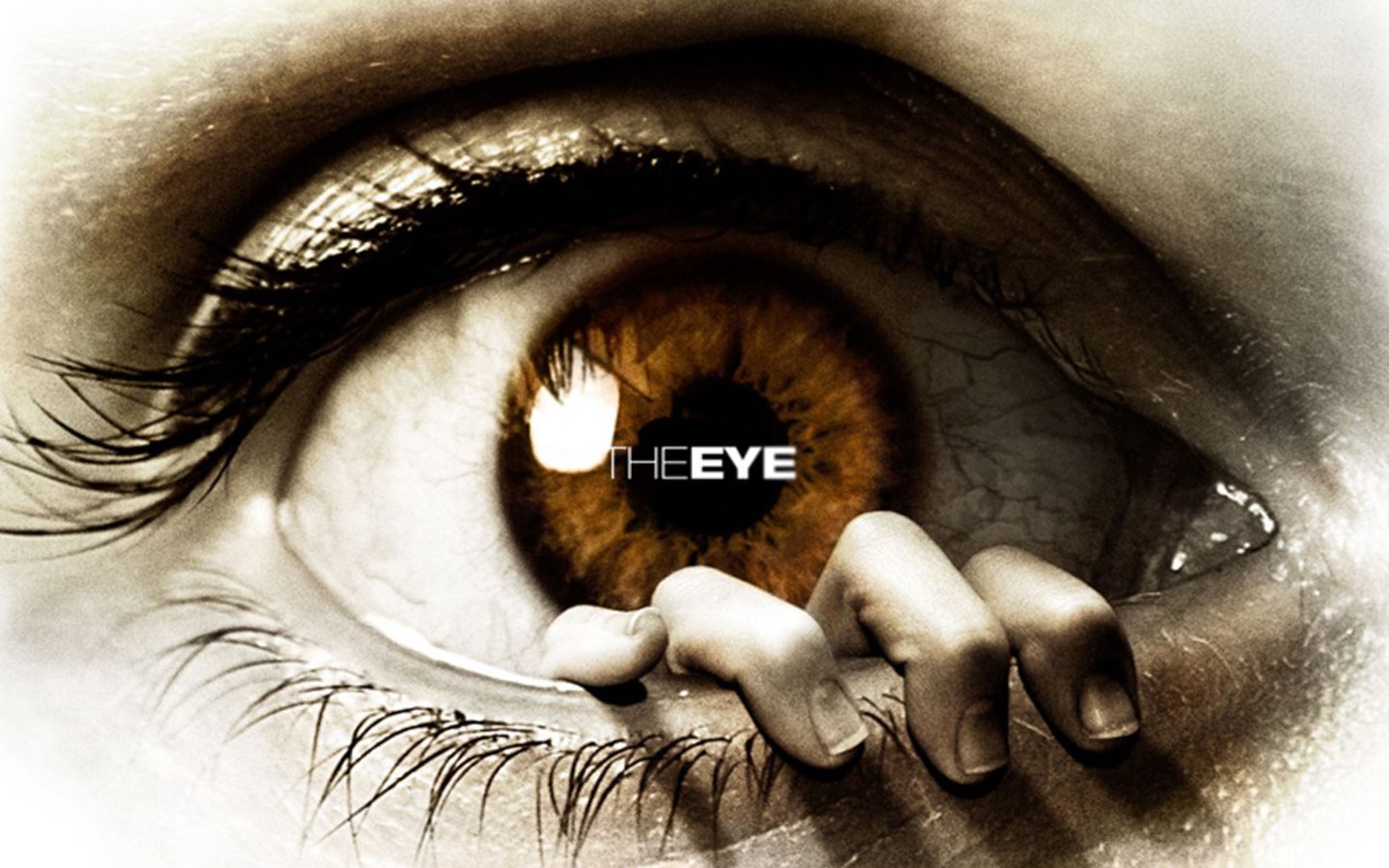
eyeofhorrorMoreover, Carol Clover also provides insight into the fascination with the horror theme park attraction. After all, horror films and theme park attractions are mostly concerned with what you actually see. Horror attractions, much like their movie counterparts, are visual stories that are translated into experiential narratives. The Halloween themed attractions in the parks have to include different eyes. The three principle types of eyes used in horror attractions are the assaultive gaze (active, penetrating), reactive gaze (passive, penetrated, the most common in horror storytelling), and repeated gaze (masochism for characters and spectators alike). This is one reason why extreme closeups (ECU) of the eye are popular in horror films turned attractions. The eye is extremely symbolic in narratives driven by fear. The design of horror attractions and films is extremely fascinating because of the convergence of visual storytelling and engineering. It’s more than blood, gore, screams, and knives; there is almost a poetry behind it. A brilliantly insightful quote from Clover is, “Inasmuch as the vision of the subjective camera calls attention to what it cannot see–to dark corners and recesses of its vision … and what might be … just off-frame–it gives rise to the sense not of mastery but of vulnerability.” At the end of the day, both HHN and HOS highlight our vulnerability and prey on our fears of that which assaults the eye and should remain hidden.

corridorBut what about HHN and HOS this year? Looking to the past, and how Universal Orlando handled mass violence in society that had a profound impact on a group or whole culture of people may help shed light on what might be expected this year. During HHN XI (2001), Universal Creative pulled Eddie, the chainsaw wielding maniac with a complex and fascinating backstory, from the lineup after the attacks on 9/11/2001. It was decided that the mood of the United States was such that it would have been in poor taste to include such a violent icon in the theming. In addition to the removal of the HHN icon, most signs of blood, gore, and the glorification of violence were removed–even names of characters and zones were modified. Because of the recent deaths of nearly 50 people (some of whom were connected to the parks as employees, bloggers, or past performers), we might witness a similar reimagination of events at Halloween Horror Nights and Howl-O-Scream this season. Hopefully, I have been able to open a discussion on how things could be reimagined at the annual Halloween events this year. An attraction can be equally terrifying even if there is no violence to be seen. However, the inclusion of cliche horror film violence is an integral part of the modern Halloween attraction experience. Even Carol Clover explores the importance of men, women, and chainsaws in horror storytelling. Perhaps the creative engineers and designers at the parks will look beyond what has typically been a staple of these events and embrace other avenues of terror that will still prompt screams. In all likelihood, we will probably see the dial turned back on the knives and guns during HHN and HOS but that certainly does not mean that the attractions will be any less terrifying. It’s entirely possible that the mind of horror will outweigh the eye of terror in the theming, planning, and design of HHN and HOS this year.

“The Secret Life of Pets” movie review

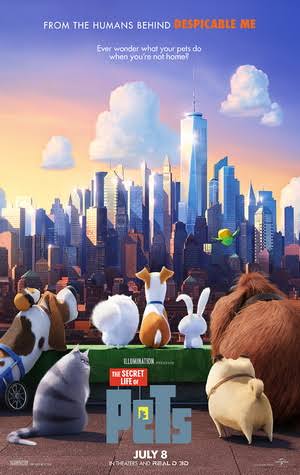
SecretLifePetsWhen well-developed setups lead to brilliantly executed gags, throw in some adorable house pets and endearing street animals and you get Universal Pictures and Illumination Entertainment’s answer to what toys do when the owners aren’t around, The Secret Life of Pets. More precisely, this movie could be described as Toy Story meets Oliver and Company meets Homeward Bound. Backed by an exquisitely talented cast of voice actors and excellent writing, The Secret Life of Pets could be what ushers Illumination Entertainment (an NBCU company) into the ring with Disney-Pixar. Prior to this movie, Illumination/Universal certainly created some fantastic animated films including The LoraxDespicable Me, and others; but this film is the first to really be on par with the Disney-Pixar quality that many of us have come to love and expect. Fast-paced and comedically timed very well, this movie is sure to entertain and warm the hearts of anyone who sits down to watch it. Is it quite as endearing as Toy Story? Not exactly; but it is very close and serves as evidence that we should come to expect this quality and higher of animation from Universal/Illumination. Although the movie is marketed to kids and teenagers, there is certainly enough comedic subtext, easter eggs, and nods to films that adults will greatly appreciate as well. One of my personal favorites is in the Millions short film before the feature. One of the minions is wearing a hat that states “let it grow” while he’s cutting the grass.

When Max (Louis C.K.), a spoiled terrier living in a New York City apartment building with a beautiful view meets his new roommate, his perfect world is rocked. New roommate Duke (Eric Stonestreet), a giant rambunctious dog, mixes as well with Max as oil does with water. They are complete opposites in nearly every way. Max soon gets the idea to set Duke up for failure by sabotaging the house. Unfortunately that idea backfires and just serves to stoke the fire of animosity. After a prank in the park takes a turn for the worst, both Max and Duke are lost in the seedy underbelly of New York City. One step forward and two steps back is exactly the pace of the journey home for both canines. Following a run-in with a street gang led by the ferocious but cute bunny Snowball (Kevin Hart), Max and Duke find themselves in Brooklyn after escaping the hoard of animals bent on their destruction. Along the journey home, Max and Duke are forced to work together and support one another in order to have any hope of returning to their comfy apartment.

The Secret Life of Pets‘ success is in-part due to the successful setup and payoff of gags. This can be a dangerous platform on which to build an animated comedy because there is a high risk of the narrative primarily resting upon the gags instead of the gags enhancing the diegesis. Fortunately for audiences, this film successfully pairs a well-developed and paced narrative that will keep your attention and deliver laughs for the entire runtime. Sometimes comedies, whether animated or live action, can spend too much time in the development of gags rather than on the visual storytelling. For instance, some movies write the gags first and then try to integrate a story that attempts to tie all of them together. What I appreciate about The Secret Life of Pets is the strong story inclusive of sight gags and double entendre humor to satisfy a diverse audience from different backgrounds and ages. In addition to the writing, the vocal talents are also instrumental in the success of this animated feature. Leading the “pack” are of course comedians Louis C.K. and Kevin Hart, but the entire cast is perfectly pairs with his or her animated persona. For the cat lovers out there (and yes, I am one of them), there are deftly come good comedic jabs at dogs. But the dogs also get in some good ones on the cats. Haha.

The setting of the movie is New York City, or an idealistic surreal New York City slightly augmented to fit the pacing, genre, and feeling of the film. I’d like to know what job Katie has to be able to live by herself in an apartment with such a beautiful view. But I suppose it’s just as well that we don’t since the focus is on the dogs. On the view from the apartment, though. Much like the view from Frasier’s upscale urban trend-setting apartment in Seattle faced a view of the Seattle skyline that doesn’t actually exist, unless you are looking at downtown from the surrounding mountains and hills, I am not entirely sure the view from Katie’s Manhattan apartment exists either. The view of the city seen from Frasier’s apartment was selected in order for the Space Needle to have a prominent placement in the skyline. In the same vein, I believe that the unrealistic view from Katie’s apartment was selected in order for the Freedom Tower to have a strong presence. I know, I am analyzing an element that doesn’t really have an affect upon the film; but since the film is actually very well done, I thought it would be fun to look at the setting of the movie.

Although I can almost guarantee you that his film won’t see an Oscar nom in the animated feature category, much less a win, since the Academy believes that only Pixar can create Oscar-worthy animated films, I find The Secret Life of Pets to be a fantastic animated feature filled with action, adventure, comedy, and some touching moments as well. All around, it is enjoyable for the whole family and will cause many owners to wonder what their pet does while he or she is away at work. One of my favorite parts of the movie is the musical sequence at the sausage factory. So much symbolism to discuss. Haha. So, yes. This movie even includes a musical number worthy of–I am sure–many memes to come over the next few months.

“The Purge: Election Year” movie review

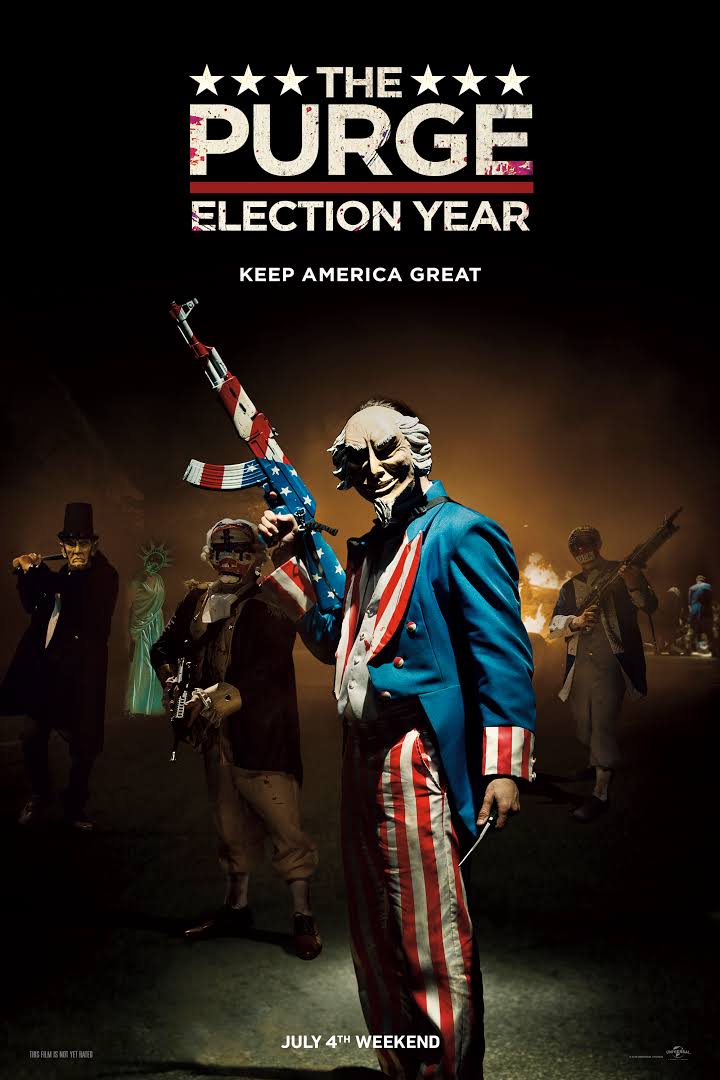
PurgeElectionElection results are in! Get ready once again for this year’s annual purge. From Universal Pictures and Blumhouse, The Purge: Election Year is a cinematic rollercoaster of espionage, action, revenge, campaigns, and of course the trade mark unbridled violence. Horror is one of my favorite genres to discuss because this genre often includes fantastic themes and subtext that act as social commentary on gender, politics, religion, economics, sex, or technology. Going into this movie, I was already prepared for the political themes, but there are many more themes for one to discuss with this film. In many ways, I am not even sure how to proceed with analyzing it. Cinematically, or from a technical perspective, the movie is fantastic. Yeah, a little campy at times but that is par for the course. Contains just the right amount of comedy, albeit dark, to balance out the darker or heavier elements. The fact that this movie is truly prompting me to think about its content is fascinating. Often times, I have a good idea of how I am going review a movie while I am driving home from the theatre; but this one is definitely requiring me to think about it more than I typically need to. I suppose that entire articles could be written on any one theme in the movie, but I only have 1000-1500 words to analyze it. Haha. The biggest question is whether or not this movie is actually counterproductive.

Two ideas of how life should be in the United States are at war, or at least that’s how it plays out on the debate stage. Minister Edwidge Owens (Kyle Secor) and Senator Charlie Roan (Elizabeth Mitchell) are going head to head over the purpose and necessity of the annual purge as started and supported by the reigning New Founding Fathers of America (NFFA) regime. Just two days before the annual event, the NFFA makes the decision not to exempt anyone, not even government officials ranking 10 or higher, from this year’s purging. After an inside job threatens the life of Senator Roan in her own home, she and her trusted chief of security bodyguard Frank Grillo (Leo Barnes) must seek safety. With only Senator Roan standing in the way of the NFFA winning another election, the NFFA and hires assassins will stop at nothing until she is defeated. After a chance meeting with supporters of Roan, Frank and Senator Roan team up with the small band of rebels to survive the night at an attempt to end the chaos and win the election.

Although the first movie did not exactly have much in the way of social commentary themes beyond greed, Purge: Anarchy and this present installment are certainly drenched with rich themes that could fuel discussions for hours. One could surmise that the principle theme of the second installment in this thriller franchise was rich v poor. A very apropos theme considering the US economy was only-then emerging and beginning to grow from the worst financial crisis since the Great Depression. Walking into this movie, I was prepared for political themes; but politics was only a principle element in the plot by extension and used as a highway to get from beginning to end. Not even in subtext, but the predominant theme of Purge: Election Year is clearly white v black. I find this concept and theme is dangerously and carelessly carried out because it really serves to perpetuate the idea that there is a difference between whites and blacks in the Unites States. Instead of the movie showing audiences what could, albeit unlikely, happen in a future America if not challenged or changed, it serves to add fuel to the fire that there is a difference. Furthermore, I find that the movie is unfair to both whites and blacks. It’s unfair to whites because it shows most of them having a hatred from blacks and nearly unanimously in favor of the purge while it depicts the predominant demographic of violent offenders as blacks. Now, I am sure the intention of the movie is not to be counterproductive or perpetuating a negative idea, after all it is produced to be entertaining; however, it’s difficult to watch the movie without wondering if it really is counterproductive in message and theme.

Beyond the social commentary on white v black, the movie also spent a lot of time on the perversion of organized religion. Although the religious aspect to the NFFA was included in the previous installment on a minor level, Purge: Election Year spends a great deal of time connecting a perverted organized version of warped Christianity (very much Catholic or Anglican in structure) to the driving forces behind the NFFA’s passion for and dedication to the annual purge. Just like I feel that the producers and writers of this movie crossed the line with the white v black violence, I feel that this version of organized religion only serves to perpetuate the idea that those in organized relation (mostly Christianity) are hate mongers. Obviously, most people know that this isn’t the case; however, that idea is certainly out there because of differing views on some socio-political areas of community and life in general. Perhaps the movie is commenting on how different groups of people may perceive one another. If that is the case, then the groups of people depicted in the movie can gain a better understanding of how an opposing side views them. Sometimes seeing your actions through another’s eyes helps to ignite positive change. I think that is a beauty in a film like this. It can be read in so many different ways and dissected to support one theme or another.

Quite the antithesis of the U.S. holiday most will be celebrating in one way or another this weekend, The Purge: Election Year paints a picture of a fractured country. In light of the recent massacre at Pulse in Orlando and other massively violent acts around the world, I am not entirely sure how well this movie will do over the weekend. Certainly around here, it may not be well-attended since I live in the Central Florida area and have been there many times myself. Universal Studios Florida is even revisiting the inclusion of The Purge as a house at this year’s Halloween Horror Nights. If for no other reason, this movie stirs may emotions whether they are motivated by race religion, or socio-economics. Like with most horror movies, I suggest watching this one with a friend or two. That way you can have fun discussing it afterwards.

“Rat Race” movie review

RatRaceTalk about a throwback movie this week! Ordinarily, most Mondays each week are reserved for Macabre Movie Monday with some friends of mine. We screen a horror movie and talk about it. It’s a tradition that began with an American Horror Film graduate class I took as part of my M.A. at the University of South Florida. However, my roommate is not terribly fond of horror movies and I know he grows tired of them week after week. Haha. So, we agreed to watch a comedy this past Monday. I cannot remember how, but when we thought of a fun comedy to watch, my friend Dani and I almost in unison shouted Rat Race. Such a star-studded comedy. And other than SmashMouth, it really still holds up today. Well, SmashMouth and the fact that airport security is vastly different than it was when this was shot. Although I watched it when I was a kid, it’s amazing to look at it now and wonder why my parents allowed my sister and I to watch it. Well, I am glad they did because I have always thought of this comedy as one of my favorites. If you have never seen it, and enjoy watching comedies for which you can turn off your brain and laugh until you cry, then definitely watch this one. Let’s go back to 2001 and talk about Paramount Pictures’ Rat Race.

What do you get when you combine greed, money, Las Vegas, manipulation, the ticking time bomb plot, and a star-studded ensemble cast? You get Rat Race! Eccentric casino tycoon Donald Sinclair (John Cleese) selects 6 ordinary people (and by extension, their families) to race against each other for great fortune in Silver City, New Mexico. $2Mil is stashed in a locker in an old train station and there is only one rule for the lucky 6, “no rules.” Unknown to the lucky six, Sinclair is monitoring their every move with some of the biggest high rollers in the world who love to bet on any and everything. From the famous Venetian to Silver City, this group of people will stop at nothing to get their respective hands on the money first. Whether it’s commandeering a rocket car or crashing a WWII memorial service dressed as Hitler, there is little that will come between a contestant and the fortune that awaits!

Ensemble cast films are nothing new. They’ve been around as long as the medium itself. So, the fact that Rat Race is an ensemble movie is nothing unique or special; however, the fact that it is so incredibly successful in combining the subplots and individual adventures of the six racers with the main plot is something to be admired about this film. Each of the six (and their families) have a story within the main story of the film. The writers did an excellent job at spending just the right amount of time with the individual stories without sacrificing time spent with the main plot of the film. As I have mentioned in reviews before, whether film or television, no story exists without conflict; likewise, no comedy exists without “drama.” Many film scholars and writers describe the comedy genre as drama in disguise. Let me clarify a little bit. When the casual movie-goer thinks of drama, they typically think of a film that is rather heavy, primarily dialog driven, and mostly serious. Those same casual movie-goers would likely describe comedy as funny movie with lovable characters, witty dialog, lots of laughable moments, with little degree of seriousness about it. Well-developed and written comedies are those films who integrate humor into the conflict-driven drama between two or more people. In other words, a drama is primarily focussed on the drama of a situation whereas comedy is primarily focussed don the humor of a situation. The best comedies are those that have prolific conflict between characters, but a humorous twist is added to the mix. Why did I say all this? Because in order to understand the brilliance of Rat Race it is important to recognize that it holds up so well because it’s full of drama that has irony, satire, and facetiousness thrown into the mix.

Besides the writing, this film also successfully continues to cause uncontrollable laughter because of the fantastic cast. Just look at this list of leading talent: Rowan Atkinson, John Cleese, John Lovitz, Whoopi Goldberg, Cuba Gooding Jr, Breckin Meyer, Seth Green, and Kathy Najimy. In addition to that amazing list, you also have a great group of chief supporting players and an A-list cameo: Amy Smart, Wayne Knight, Dave Thomas, Dean Cain, Vince Vieluf, Paul Rodriguez, and Lanei Chapman, and special appearance by Kathy Bates as the squirrel lady. There were also many others extras and atmospheric players that helped pull together this brilliant comedy including the performance by 90/2000s hit band SmashMouth. All the elements are here for a successful comedy! Between the writing, directing, and this phenomenal cast list, how could this movie not do well??? On that note, the movie did not fair so well with critics then and even now; scores poorly on MetaCritic, Rotten Tomatoes (no surprise there), and IMDb. However, I argue that any comedy that can still hold up and significantly create a room full of laughter over and over, is a successful comedy. Comedies are seldom going to win awards, significantly contribute to the world of the arts, or serve as inspiration for someone; but Rat Race offers an escape from the doldrums of reality and whisks you away to an over-the-top world of money, hookers, gambling, crazy exes, a buss full of Lucys, and Nazis. It offers an incredibly entertaining journey that still has a heartwarming ending.

I think it’s the utter unashamed ridiculousness of the whole plot that keeps me entertained. Furthermore, it does such a good job of telling a funny story that is both clever and well-paced. One of the best parts of watching this movie is getting to feel like at least one of the leading or supporting characters. Each have a unique set of traits that can identify with someone of a similar personality. You’ll probably also see some of your friends as one or more of the characters. These characters are so much fun to watch and just when you think it can’t get anymore ironic, unfortunate, or satirical, it surprises you. Trying to remember the first time I watched it, and even to some extent this time, I remember thinking that it really isn’t that predictable. Not predictable in that it is so ridiculous! But that’s what I love about this comedy film. It sticks to a tried and true ticking-time-bomb plot with characters that are unconventional and unpredictable in every way. Well, mostly anyway. Haha. I think my favorite part of the movie is the Pear family crashing onto the stage at the WWI Vets convention in Hitler’s car with Randy (Lovitz) trying to speak but the cigarette lighter burnt his tongue and he has a Hitler mustache caused by Eva Braun’s dark lipstick. I know, right?!?

If you are ever looking to just kick back and enjoy a comedy that is guaranteed to make you laugh hysterically, then check out Paramount Pictures’ Rat Race (2001). Whether you just want to see some of your favorite Oscar, Golden Globe, or Emmy winners in an over-the-top comedic race to the finish or just a fun movie that will keep you entertained, this one is a winner!