
Disney’s “Beauty and the Beast” (2017) movie review

Prepare yourself for “a tale as old as time” that is ultimately better told through its animated counterpart. Director Bill Condon’s live-action remake of Beauty and the Beast, the first animated film nominated for Best Picture at the (1992) Academy Awards, is an extravagant display of visual effects and digital imagery necessary to animate a live-action motion picture. Essentially, he took an animated movie, made it live-action, just to make it animated again. Sure, this new version of the “song as old as rhyme” can certainly stand on its own and is demonstrably well-directed, but 2017’s Beauty and the Beast largely comes across as unnecessary. In terms of the storytelling (or diegesis), the film’s effort to nearly shot-for-shot translate the most memorable parts of the film from animation to live-action pays off nicely! It’s when the film tries to be different that it falls short in its delivery. There are sufficient moments that beautifully recreate that which caused you to fall in love with this movie more than two decades ago; although, with this version, you may find yourself exhausted and over-stimulated by the constant waves of computer-animated figures in a live-action world. Oh yeah, you’ll likely miss hearing the legendary Angela Lansbury as the iconic Mrs. Potts. The film does its very best to justify its existence, but begs the question whether or not this was the movie for which you were waiting.

Belle (Emma Watson) is a young lady with a longing for adventure and a great big imagination, but she lives in a rather provincial French town. But, Belle is about to get more adventure than even she, in her wildest imagination could have dreamt. For through a series of strange circumstances, she finds herself trapped inside a dark foreboding castle, surrounded by a very odd collection of characters. It’s in this castle that she finds her father who she feared injured or dead imprisoned by a Beast (Dan Stevens). Against her father’s wishes, she reluctantly exchanges herself for her father’s release. After the Beast sets him free, Belle is to remain a permanent resident of the castle. Fearing the worst, Belle’s father seeks the help of the misogynistic village heartthrob Gaston (Luke Evans) and his band of goofs and thugs to rescue her. During this time, however, Belle begins to feel “something there that wasn’t there before” as she learns more about the Beast of the castle.

Can this film stand on its own? Sure. There is no question in that. Moreover, is it enjoyable and magical? That, it is. But when most of the campaign, leading up to the highly anticipated release, was primarily built upon how similar the live-action film would be to its animated counterpart, therein a problem arises. Because most people going into the movie will have seen the animated version, Broadway show, or even the show at Disney’s Hollywood Studios (which, in full disclosure, is a show that I worked when I was a Cast Member at Walt Disney World), you are predisposed to looking for and eagerly awaiting the nostalgic references and memories. And there is nothing wrong with that. In fact, I was looking forward to reliving the experience of when I first saw the animated movie. For the most part, if you are like me, then you will be pleased with the live-action translation–truly. However, it’s when the live-action version departs from or adds in material not found or referenced in the animated classic that you may be disappointed or simply ask “why?” You may find yourself wondering why was a live-action remake even necessary?

One of the most memorable elements of Disney’s Beauty and the Beast (1991) is the music! Still to this day, millions of people love hearing the classic music and lyrics by Alan Menken and Howard Ashman. Both the Beauty and the Beast and Be Our Guest can be heard as part of other shows at Walt Disney World and of course are included in the stage show at Hollywood Studios. Fortunately, the most iconic songs from the animated version are largely untouched; however, with a couple of the songs, there are breaks for diegetic dancing, fighting, or other material that essentially interrupts the organic flow of the music from the buildup to the climax and denouement. Again, the question “why” will likely pop into your head. We are introduced to a few new songs, and in and of themselves, are beautiful! Every note and lyric has that Disney magic that many of us have come to expect and appreciate. Unfortunately, the songs just don’t fit in with the original numbers in terms of pacing, lyrics, and score. Furthermore, here’s something quite interesting and odd: the song [To Be] Human Again was written for but deleted when it originally hit theatres in 1991. It was, however, added back in for the Broadway show and in the 2010 (and Diamond Edition) re-release of the movie. Although it was seen as important enough to include in the Broadway show and add back into the animated version, it is conspicuously missing from the live-action remake.

With the exception of Emma Thompson replacing the legendary Angela Lansbury, the cast was well-selected and demonstrated excellent chemistry between one another. Although Emma Watson is not a singer by trade, she was able to capture a Belle-like essence in her delivery of the various songs throughout the film. There was something uniquely organic in her voice that is seldom captured by other Disney “princesses” (note: Belle is not a princess). I greatly appreciate the dynamic range of characters that Watson has demonstrated that she can play over the years. Dan Stevens wows audiences with his vocal prowess especially in his solo number as we transition from the second to third acts. I appreciate how he stuck a fantastic balance between his human and beast sides respectively. Luke Evans was a perfect choice for Gaston, and his vocal talent matches his muscles–big, bold, and flawless. The rest of the cast, which includes some A-list talent itself, was ideally suited for the enchanted objects in the castle and the village.

Okay, now for the white elephant in the room: Josh Gad’s Lefou. Unless you have been completely disconnected from social media and the news, you’ve undoubtedly heard or read about the first ever Disney “gay moment” in this film. Suffice it to say, the whole thing has been blown way out of proportion. In fact, more attention is likely being paid to Lefou now than had the story never grown to the size of Gaston’s ego. For the most part, the subtext and subtitles of Lefou’s are largely just that–subtle–unless you are looking for them. But, in doing that, you may miss some of the more important and impressive parts of the movie. Moreover, there is nothing in Lefou’s actions that come across as offensive or obnoxious. Before audiences begin accusing Disney of pushing their ideals on those eager to attend this film, it is likely that the entertainment and media giant is simply delivering what audiences already expect or want. As a film and media professor, I can tell you that by in large, media simply delivers what audiences and investors are telling them to produce–not the other way around. Looking back at the animated film, it is pretty obvious that Lefou has a thing for Gaston anyway. Although most of the hints at his sexual orientation are more-or-less winks or nods at the audience (winks or nods that you have to be looking for), there is a moment that is a trifle more obvious at the end of the film. Diegetically, there is nothing bizarre about Lefou’s behavior and it suits his character well.

Prepare to be whisked away to an enchanted castle in a remote part of France. So remote is this province in France, that most everyone speaks with a British accent. Bill Condon’s film will take you back to when you first saw this magical tale of falling in love with someone based upon what’s on the inside and not allowing a beastly outward appearance to detract from the gentle soul. Relive the music that you may still listen to in the car or eagerly look forward to when visiting the Disney Parks and Resorts. Ultimately, this film may not capture the magic of the original for you, but there is a lot to enjoy! Looking for a great date movie this weekend, then this is definitely it! Hopefully a side effect of this film may remind producers and audiences that some stories are better suited for an animated motion picture.

Written by R.L. Terry

Edited by J.M. Wead

“KONG: Skull Island” movie review

“Hold onto your butts;” Warner Bros. and Legendary Entertainment’s KONG: Skull Island is full body KONG with just a hint of story. Wait. Isn’t that a line from Jurassic Park??? Sure is. And guess who delivers it? None other than Samuel L. Jackson himself–reprising his famous line from one of the most iconic films in the American cinema library. It’s rather fitting since there are many shared elements between KONG and the Jurassic Park franchise. Both take place on an island and deal with science vs. nature and pit man against ancient creatures. King Kong is no stranger to most people, considering he’s been a fixture in the cinema and theme park universes respectively for many decades. From silver screen to Universal Studios, he remains an icon to which few “monster” movies compare. Although the previous KONG films followed a very similar narrative, this newest incarnation of the king of Skull Island takes a modified route to the classic story. It shares many of the same elements or themes with its predecessors, but through the echoes of the past comes a reimagined story. Diegetically, the film certainly suffers; furthermore, it attempts to integrate social commentary on war, Captain Ahab allegory, and conservation, but none of those themes are effectively carried out. Due to the enormous “King Kong” sized cast, there lacks any real connection to any of the characters and development is certainly obscure, if any at all. Films such as this one can sometimes run into the danger of waxing nostalgic too often and forgetting that audiences want a new movie (i.e. Star Wars: the Force Awakens); and like the aforementioned, Jordan Vogt-Roberts’ KONG: Skull Island provides audiences with connections to past King Kong movies in a new approach, but ultimately crafts generic experience.

When an uncharted island shows up on U.S. satellites, Bill Randa (John Goodman) and Houston Brookes (Corey Hawkins) approach a prominent senator, seeking clearance and funding for a mapping expedition and exploration of the mysterious island resembling a skull. Begrudgingly, the senator clears Randa’s MONARCH for one last mission before the U.S. pulls out of the south Pacific following the Vietnam War pull-out. Partnering with Colonel Packard’s (Samuel L. Jackson) military troop and attaching ex-British special forces Captain Conrad (Tom Hiddleston) and photo journalist Mason Weaver (Brie Larson) to the group, the expedition lays out plans to penetrate the severe storms surrounding the island to explore the island. What the group encounters on Skull Island will give them nightmares for the rest of their respective lives. Beginning as a glorified mapping excursion, this expedition turns into a game of survival as the group makes its way across the island.

At the end of the day, this movie accomplishes what it set out to do: revive Kong, thrill people for a couple hours, and setup KONG v. Godzilla. Action-adventure films are typically not expected to contain brilliant writing, character development, and strategically placed themed and subtext. What I respect about this movie is that is unashamedly pretends not to be anything other than a larger than life adventure centered around one of cinema’s most iconic “monsters.” Clearly, there are attempts in the movie to include some deeper themes such as anti-war, nature/conservation, and even a little Moby Dick; but those themes appear to have been great thoughts that were not fully executed. That being said, there is clearly a Captain Ahab figure in the film and there are many similarities between King Kong and Moby Dick–size just being one of them. For fans of Jurassic Park you’ll appreciate not only Jackson’s “hold onto your butts” line at the beginning of the film, but also several similar scenes, camera angels, and even the helicopter entry onto the island. Lots of nostalgia, but not so much that it feels like you’ve seen it all before.

In many ways, Kong is bigger than ever, but hardly better than previous Kong films. Ironically, this same thing can be said about the former Kongfrontation attraction at Universal Studios Florida. Much like the new attraction Skull Island: Reign of Kong at Universal feels far more generic than its predecessor, today’s Kong lacks the magic and innovation that the original Kong did in 1933. Despite an attempt to successfully launch a series of “creature features,” the script and human characters certainly suffer. Little can be said about the dialog except that occasionally there are lines that move the story along instead of stating the obvious or predictable. The dialog is cumbersome and never seems to remain focussed very long. Of course, that is hard to do considering that Kong boasts an extremely large ensemble cast. At the forefront of the cast are Hiddleston, Larson, Jackson, Goodman, and Reilly’s respective characters. Of all the characters, John C. Reilly’s Hank Marlow steels the screen about as often as Kong does. One might even be able to say that this is as much a John C. Reilly film as it is a Kong movie. Part of the magic of the previous Kong films, the 1933 version to be more specific, is the setting and characters themselves. Much like the new KONG attraction at Universal took physical sets, animatronics, real fire, etc and crafted a virtual 3D experience, the special effects artists and set designers did the same thing in KONG: Skull Island. The film comes across as less Kong and more Pacific Rim. In other words: generic.

KONG: Skull Island will certainly keep you entertained the whole time as action-adventure films are supposed to do. You’ll enjoy the fight scenes and the whole “creature feature” approach this film takes. If you’re looking for moments taken right out of the previous Kong movies, then you’ll mostly be satisfied. There are few scenes taken directly from the previous movies, but there are certainly allusions and nods to classic moments. You won’t spend much time with the natives nor will you get to witness the famous Empire State Building scene, but you’ll likely enjoy the film nevertheless. Just because a film takes a reimagined approach to a classic character that ultimately plays off as generic, doesn’t mean that there isn’t anything to enjoy. For action junkies, there is plenty to grab your attention and hold it for the duration of the movie.

Written by R.L. Terry

Edited by J.M. Wead

“Logan” movie review

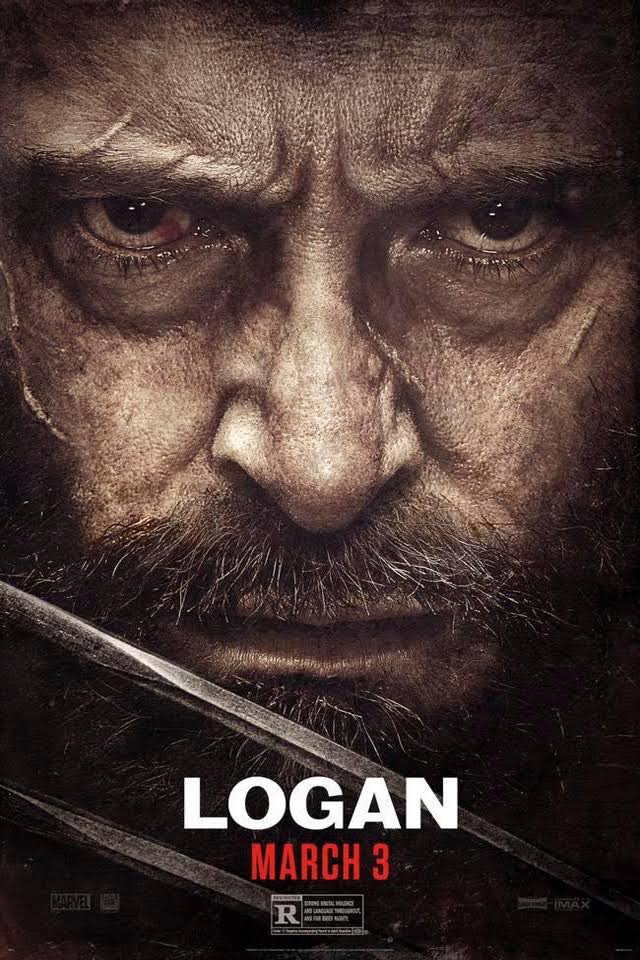
loganUncanny! 20th Century Fox, Marvel, and TSG Entertainment’s Logan is a compelling, grizzly, organic superhero movie that is the last to feature Hugh Jackman as Logan (Wolverine) and Patrick Stewart as Professor Charles Xavier. Prepare to have your mind blown as the action unfolds in such a way that your heart will be pounding, racing, and pumping adrenaline through your body and then tug at your heartstrings as emotions run high. Logan is quite possibly the most comprehensive and diegetically dynamic superhero movie ever, and perhaps best X-Men film in the long, successful franchise. With a penchant for thrilling, action, and even horror films, director James Mangold pulls out all the stops in the last chapter in the story of The Wolverine. While there have been several films about Logan/Wolvervine outside of the main X-Men films, this cinematic adventure will have you on the edge of your seat with anxiety and holding back tears simultaneously. Some of the responsibilities of the final chapter of a character or an actor portraying a long-standing character are striking a delicate balance between nostalgia, closure, but still providing audiences with a new story; overwhelmingly, this film delivers the absolute best as we bid farewell to Hugh Jackman and Patrick Stewart from the X-Men universe and exceeds any and all expectations.

In the not too distant future, an aging Logan (Jackman) is caring for an increasingly ailing Professor X (Stewart) near the US/Mexican border. With the professor’s cognitive health in a downward spiral, Logan illegally acquires medications that ease the Professor’s seizures…seizures that are telekinetically powerful enough to leave devastation in their wake–and have. Logan is challenged to hide the Professor from the world in an effort to shield him from those who seek to kill him. While operating as a limo driver, Logan encounters a bizarre woman at a funeral who begs for his help. As Logan has always been the solitary type who mostly cares for himself, he ignores her cry for aid. In a bizarre turn of events, he finds himself caretaker of her daughter when she is found dead in her hotel room. After she follows Logan to the hideout, Professor X pleads with Logan to take her to a place called Eden. This soon becomes a bloody road trip as the three of them hide from and attempt to outrun those who want to kill Logan, the Professor and take the girl back to Mexico.

What do James Mangold’s 3:10 to Yuma and Logan have in common? They are both grisly western films. Evidence of this is not only seen in the character development, pacing, and overall tone of the film, but can also be seen within the film itself as Professor X and Laura (Dafne Keen), the young girl traveling with Logan and Xavier, watch a western film on TV–a film that Xavier references several times as he reminisces about films from his childhood. While many think that the American Western film died out with Hollywood Golden age, it has certainly not retreated from cinemas. In fact, many of Quinten Tarrantino’s films are westerns, the original Star Wars: A New Hope was a post-modern western, and Mangold’s Logan is yet another example of a reimagination of the American Western film. Reading the film as a western enhances the visceral experience of the film. Although directors seldom pit cowboys against indians anymore, there are subtle references to that relational dynamic from early western movies within this film. Much like the Lone Ranger and many of John Wayne’s characters, Logan is also a solemn solitary character being pulled into a world built upon the idea of relationships but his baggage makes it incredibly difficult. Emotions run high in Logan; and it’s these emotions that provide audiences with a comprehensive experience that fulfills the desire for gritty action plus moments that may stir you to tears.

Although we are just coming out of this year’s award season, it’s entirely possible that Logan may be the first superhero motion picture to be nominated and even win Best Picture at next year’s Oscars. All the elements that make up a Best Picture nominee can be found in Logan. It has drama, romance, a little humor, feels organic, deals with prejudice (by extension), and is based on a book–a comic book that is. The R rating is also important because it (1) serves as further evidence in the direction Fox is going to proceed with films like Deadpool and X-Force–gearing toward an adult audience (2) it allowed for audiences to see the Wolverine at full bloody force, which has been a desire for quite sometime and (3) the degree to which the film can deal with real adult problems physiologically and emotionally. The financial success of Logan will depend on adult audiences speaking the word about the outstanding nature of the film and even bringing more mature younger superhero fans to see the movie. Since most of the film contains disturbing imagery in regards to both the bloody violence and with Professor X’s debilitating cognitive disorder (most likely a severe form of dementia), I would not recommend bringing those under 13 to the film until you have screened it for yourself. It’s an incredible, film; but, there is content that may not sit well with those that are quite young.

Before Logan begins, fans of Deadpool will be excited to know that there is a short film (glorified promo, really) for Deadpool that does a successful job at promoting the highly anticipated sequel to last year’s blockbuster. Its placement is also important to Logan in that it provides some levity before the rather somber tone of the feature film that follows Ryan Reynolds’ offensively endearing witty charm as Deadpool. Logan is proof that superhero films can take the more serious route without sacrificing the art of the story. Both Jackman’s and Stewart’s acting is on point, and probably some of the best of their respective careers. Stewart, more specifically, delivers a command performance as Professor X and demonstrates that an accomplished actor who was primarily first known as Captain Picard can excel in both the horror (Green Room) and superhero genre films, all the while continually adding the touch of class that comes with his formal Shakespearean training as a performing artist.

This is NOT repeat NOT a kids superhero movie. Unless you have screen the film first, I would not recommend bringing anyone under the age of 13 with you to the cinema for Logan. There may not be “adult” content in the conventional sense; but, there are themes, subtext, and some violent content that may not be suitable for a younger audience who typically flock to superhero genre movies. Over all, Logan is an outstanding film, not just of the superhero variety, but also in general. From the writing to the directing and technical elements, this movie is a fantastic example of a superhero film that attempts to be and successes at breaking the mold and cementing itself as serious cinema.

“Get Out” movie review

getoutThe epitome of the American horror film. Jordan Peele’s Get Out is an outstanding work of horror cinema, in that the American horror film is the best genre for creatively commentating on the various social, economic, and psychological constructs of life in such a way that can be visually thought-provoking. And the best part about this film is Peele does not pull out any of the usual horror tropes or clichés until the showdown. Before you begin to think that Universal Pictures and Blumhouse are pulling a bait-n-switch–selling you a psychological thriller when the film is really a heavy drama–think again. Get Out is every bit a horror film as its more traditional counterparts. In terms of its contribution to the library of horror films, the movie is flawless. From the writing to directing to acting and even the score, editing, and cinematography, Get Out is a film that you should definitely “get out” to watch. With a current 100% on Rotten Tomatoes, this film is certain to grab prolific attention from movie patrons, film studies, and social studies professors alike. It’s a brilliant film to discuss in future American horror film classes. Never before has a film been used in such a creative and visceral way to comment on how one culture appropriates the best of another for purposes of exploitation or simply because it has something that you want, and then attempt to change, assimilate, or remove altogether because that which you want is seen as wasted on the originator. “A mind is a terrible thing to waste.”

Most romantic relationships between two people enter the anxious “meet the parents” stage, and Chris (Daniel Kaluuya) and Rose’s (Allison Williams) 5-month relationship is no different. Rose takes Chris out of the city to visit her parents’ lavish country home along a peaceful lake. Rose’s parents Missy (Catherine Keener) and Dean (Bradley Whitford) are eager to meet their daughter’s boyfriend and welcome them with open arms, hugs, and tea. When her parents begin to be overly accommodating, Chris begins to think that there is a little more than meets the eye at Rose’s parents’ place. Whereas Chris’ first impression of Rose’s family and friends was just their nervous attempt to work through Chris and Rose’s interracial relationship, now he dreads that there is something unsettling going on. After encountering an old acquaintance of his who has changed to be quite peculiar, Chris’ goal is to get himself and his girlfriend to safety. During his investigation into her family and the uncomfortable actions of the hired help, Chris could never have imagined what he comes to find out. Truth can be scarier than fiction.

It is difficult to explore some of the themes and subtext of this film without giving too much away, but I’m going to try my best to analyze what I can without spoiling anything for those who plan to see the movie. The first element I took note of in the film was the choice of music. Not so much a score (although, there is a score to the film), the music selections in the film serve as an allusion to the overall message and theme in the film. For those who know a little something about music history, you may pick up on the strategic selection and placement of the various songs and musical scores used throughout the film. There are moments in which the music does not seem to match up with the mood or tone of the film–at least, at face value. However, as you delve deeper into the film, you will realize that the music fits in all too well with the plot. I’ll give you this: think about the origins of the music in the film when you watch it. Before music, such as jazz and hiphop, became popular amongst a predominantly white society, it originated amongst the black community.

Another aspect of the film that hints at the big reveal in the turning point just before the third act is the physique, athletic talent, and sexual stereotypes of black males. You’ll notice that clues are dropped here and there, albeit subtly, at the relationship between Rose’s family & friends and members of the black community. The worship of Chris’ body by many of Rose’s family friends makes for an incredibly uncomfortable sequence of encounters at the outdoor picnic. The unsettling weird encounters between Chris and all the people he meets at Rose’s family home each work to grow the level of tension and terror in the film–the fear of something dreadful looming on the horizon. Without relying upon a proliferation of jump scares and visceral horror, Peele successfully increases the level of anxiety to terrifying levels in the film. Reminiscent in the ways that Hitchcock or Kubrick may have directed this film–in terms of relying upon the fear of something not visible to the naked eye–Peele incorporates the feeling of uneasiness every moment he can without over saturating the plot. Perfect amount of all the elements that make up the American horror film can be found in this deeply disturbing narrative.

**Spoiler Alert** (you can skip to the last paragraph to avoid it)

In an effort to truly appreciate this brilliance of this film, it is necessary to disclose information that could potentially spoil the big reveal. Early in the film when Chris asked Rose if she ever dated a black guy before, she said that he was her first. This was in preparations for the trip to meet Rose’s parents. While on the tour of the home, Rose’s father mentioned a story of his dad losing in the Berlin Olympics to now famous Jesse Owens and commenting on how a black man beat a white man. Chris finds the commentary a little peculiar. Furthermore, during the first night there, Rose’s mom hypnotizes Chris to quit smoking–this sets up a plot device used later. Just before the third act, as tensions are extremely high (oh but don’t worry, they get higher), Chris stumbles across a box of photos of what look to be Rose and previous people she dated. He was not the first black guy she dated. Piecing together the fact that one of the picnic guests was an acquaintance of his from back in Brooklyn who no longer looked or acted the same way–much more white now–Chris urges Rose to leave with him.

Skipping ahead. Chris finds himself strapped to a chair and watching a video that is clearly meant to brainwash him. Many years ago, Rose’s family discovered a way to neurologically alter individuals to take what they want and leave that which was undesirable: malicious appropriation of bodies in order to serve as a vessel for individuals who saw themselves as elite. This is social commentary on how back males are often exploited for economic gain in areas such as football, basketball, track, and even music and fashion too. So, Peele was using this horror film to comment on how many in the white community have stolen from or appropriated elements from the black community in order to further their own gain or develop ways of entertaining the masses without proper acknowledgement, formal recognition, or even payment. For example, the jazz music at the beginning of the film. That style of music came out of black culture before it was rebranded high class white music for nightclubs, shows, and weddings. Further evidence of this social commentary can be found in other areas of talent that many want to steel for their own and then reprimand the black community or not being ‘more white.’ I could go on and on. Fascinating stuff!

**End Spoiler Info**

If you enjoy psychological thrillers that do not rely upon the usual tropes found in horror films similar to this one–on the surface level anyway–then “get out” to see Get Out this weekend. Although the runtime is a little longer than typical horror films (2hr 10min), the time will fly right by as you are glued to the seat and mesmerized at the combination of horror and deep sociological theming. Thought provoking, this film will prompt hours of discussions between friends and family who choose to go to the film together. As it is a horror film, do not plan to see it alone. Horror is the one genre that is best experienced in a group setting.

Written by R.L. Terry

Edited by J.M. Wead
Best Picture: What Does it Take to Bring Home the Oscar?

oscar_criteriaI created this infographic using Piktochart for the Media Writing class I teach at the University of Tampa. This infograph outlines some of the correlating criteria in respect to the films that win the Best Picture Oscar at the Academy Awards.