
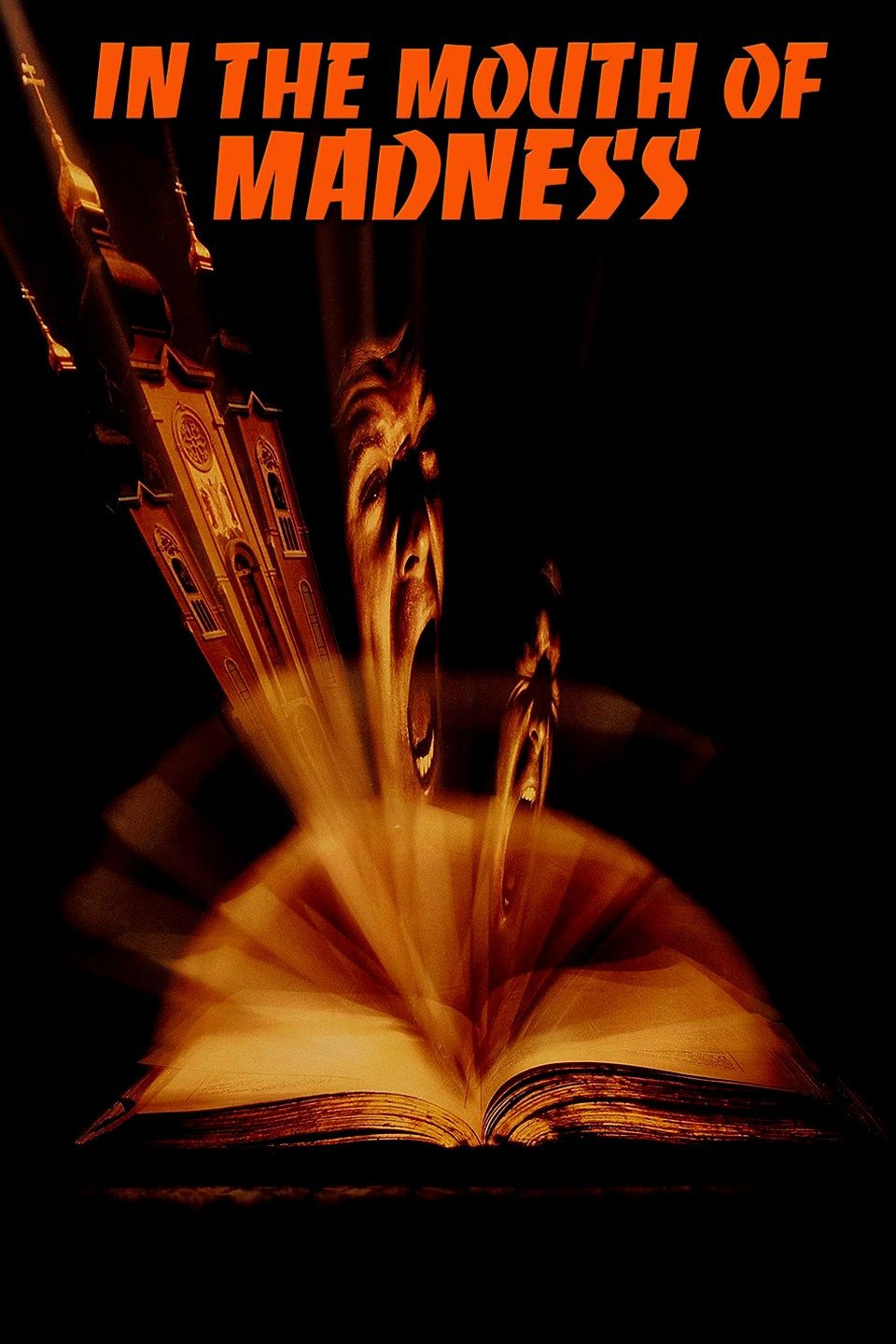
John Carpenter’s “In the Mouth of Madness” full review

Stephen King meets The Twilight Zone in this underrated Carpenter film! It isn’t often that I am introduced to a, what should be a well-known, horror film that is completely unknown by me. There are certainly many indie and obscure horror films that I am unfamiliar with; but because this is a Carpenter film in my lifetime, I should have known about it! Thankfully my penpal, fellow cinephile, and friend Leon in Germany selected this gem for our weekly film screening. Each week we take turns selecting a different film for us to watch. Sometimes it’s a movie that one of us likes and wants to share, other time, it’s a film that neither of us have seen but want to. This was the former. When Leon asked if I’ve seen In the Mouth of Madness, I replied with I haven’t even heard of it. When he told me it was John Carpenter in 1994, I was shocked! And is stars Dr. Alan Grant and Damian himself, Sam Neil! You may be wondering why you have not heard of this film, and that is most likely because it performed poorly at the box office and was panned by critics. Fortunately, a small cult following has developed over the years, but it’s largely still an obscure mid-90s horror film. The reason for this is likely because the film has been accused of difficult to follow, but I do not believe that to be true. It’s true if you need to be held by the hand through the plot, but this film is one of those that has so much depth that you will want to be fully engaged in every minute, every frame. In the Mouth of Madness contains many Stephen King, and Twilight Zone elements that truly make this incredibly rewatchable. The cinematography and score are beautiful, and I find the screenwriting fascinating! I’d even venture to conclude that this is Carpenter’s final masterpiece. Carpenter’s vision of John Trent’s (Neil) descent into madness is terrifyingly spine-chilling.

Summary: When horror novelist Sutter Kane (Jürgen Prochnow) goes missing, insurance investigator John Trent (Sam Neill) scrutinizes the claim made by his publisher, Jackson Harglow (Charlton Heston), and endeavors to retrieve a yet-to-be-released manuscript and ascertain the writer’s whereabouts. Accompanied by the novelist’s editor, Linda Styles (Julie Carmen), and disturbed by nightmares from reading Kane’s other novels, Trent makes an eerie nighttime trek to a supernatural town in New Hampshire. (IMDb)

Go into this movie with an open mind. I highly recommend this because I still do not fully understand everything. But. That is the beauty of this film. There are so many layers that you can peel back and do a close reading. Perhaps this film was ahead of its time in that there is a meta nature to the experience of watching this film. The central character of Trent must discern what is fantasy and what is reality; and by extension, we are challenged, as the audience, to very much the same task. We must decide if the imagery before our eyes is reality or fantasy, to be taken literally or figuratively. While meta films are much more popular now, it was highly experimental back in 1994/95. The beauty of horror is its ability to force us into uncomfortable places in which we come face to face with that which terrifies us–sometimes to our very core. And what is more terrifying than the possibility you may be crazy or a hoax is attempting to gaslight you? When our very psyche feels under attack, it’s fight or flight.

We are drawn into the story because we are naturally drawn to the repulsive, because there is a subconscious masochistic desire to experience a pleasurable unpleasure. Much like in Sunset Boulevard where we are not concerned or preoccupied with what happens to Joe Gillis (since we know he’s dead from the opening scene), we are profoundly curious about HOW he winds up floating facedown in a swimming pool. We can liken that to In the Mouth of Madness because we know Trent, whether sane or insane (though, that is a legal term), is institutionalized and placed in the padded room. Once we flash back to a few weeks earlier, we are morbidly curious as to how this otherwise intelligent, rational man winds up a prisoner of his own mind.

Another question that the film confronts us with is the power of literature. Is it possible for a writer to be so incredibly popular, and enough people become engrossed in the words that the line between fantasy and reality becomes blurred to the point that people begin to believe that the “fictional” characters and setting are a real place? That is certainly a powerful concept to tackle in a low-budget horror film. But Carpenter was never one to shy away from a bold concept or statement. It’s clear that the film is a commentary on the prolific writing and power of the words of authors like King or Lovecraft. Furthermore, the film suggests that there is a transcending power of the text to nest in the subconscious to tap into primal fears and carnal actions. Trent slowly comes to realize that the readers of Kane’s works have been placed under a spell, of sorts, that predisposes them to taking on the characteristics of the literary characters and giving themselves over to behaving like the monsters that are written about in Kane’s novels.

Kane likens his books to the Bible in a sacrilegious attempt to prove that if you convince enough people to read your books that you can control them, and ostensibly become a god. Kane certainly displays signs of a god-complex; he seeks to be in control over not only his fictional Hobbs End but the whole world. And instead of taking over the world by physical force, he seeks to take over the world through the power of the written word. It’s a fascinating concept to think about, and perhaps you can think of books that have greatly influenced society to the point that behavior changed. Can a book truly spark widespread delusions and paranoia? Trent certainly believes so. I love how this feels like an episode of the Twilight Zone on crack. The power and success of The Twilight Zone is due in large part to the show’s ability to comment on societal behavior through the use of bizarre or shocking imagery. Pose a big question grounded in reality, then use science-fiction, fantasy, or horror as a vehicle to explore various perspectives and possible outcomes.

John Carpenter provide us with a fantastic score that will penetrate you all the way down to the bone. It’s both shocking and beautiful all at the same time. Originally Carpenter desired to have Metalica score the film, but the combination of not fitting into the budget and an unwillingness to license the rights left John to compose his own score that mimicked what he wanted from Metalica. The score of In the Mouth of Madness was not intended to be spooky but to keep the audience ever so slightly off-balance. The cinematography is also an element to take note of when analyzing this film. The lighting, camera movement, and shot selections convey a neo-noir tone. Similar tones can be found in Mulholland Drive and Pulp Fiction. Although there are many horror elements in this movie, it bares a lot of similarities to neo-noir in how it handles the central character and the conflict he’s been thrown into that leaves him in over his head. And of course, it ends badly for Trent.

I am surprised that not more horror fans know of, much less, like this movie. It really seems to have two camps: one that loves this film and the other that hates it. Honestly, it appears to be one of the more polarizing films within the horror library. It’s one that I will certainly rewatch because of the highly intellectual component. There is tremendous depth to the narrative and it strikes me as the type of film that will give the viewer something different to think about every watch. It’s visually stunning and the imagery is macabre. Definitely one that I will recommend to fellow horror fiends like me.

Ryan teaches screenwriting at the University of Tampa. If you like this article, check out the others and FOLLOW this blog! Interested in Ryan making a guest appearance on your podcast or contributing to your website? Send him a DM on Twitter or email him at RLTerry1@gmail.com! If you’re ever in the Tampa area, feel free to catch a movie with him!

Follow him!

Twitter: RLTerry1

Instagram: RL_Terry
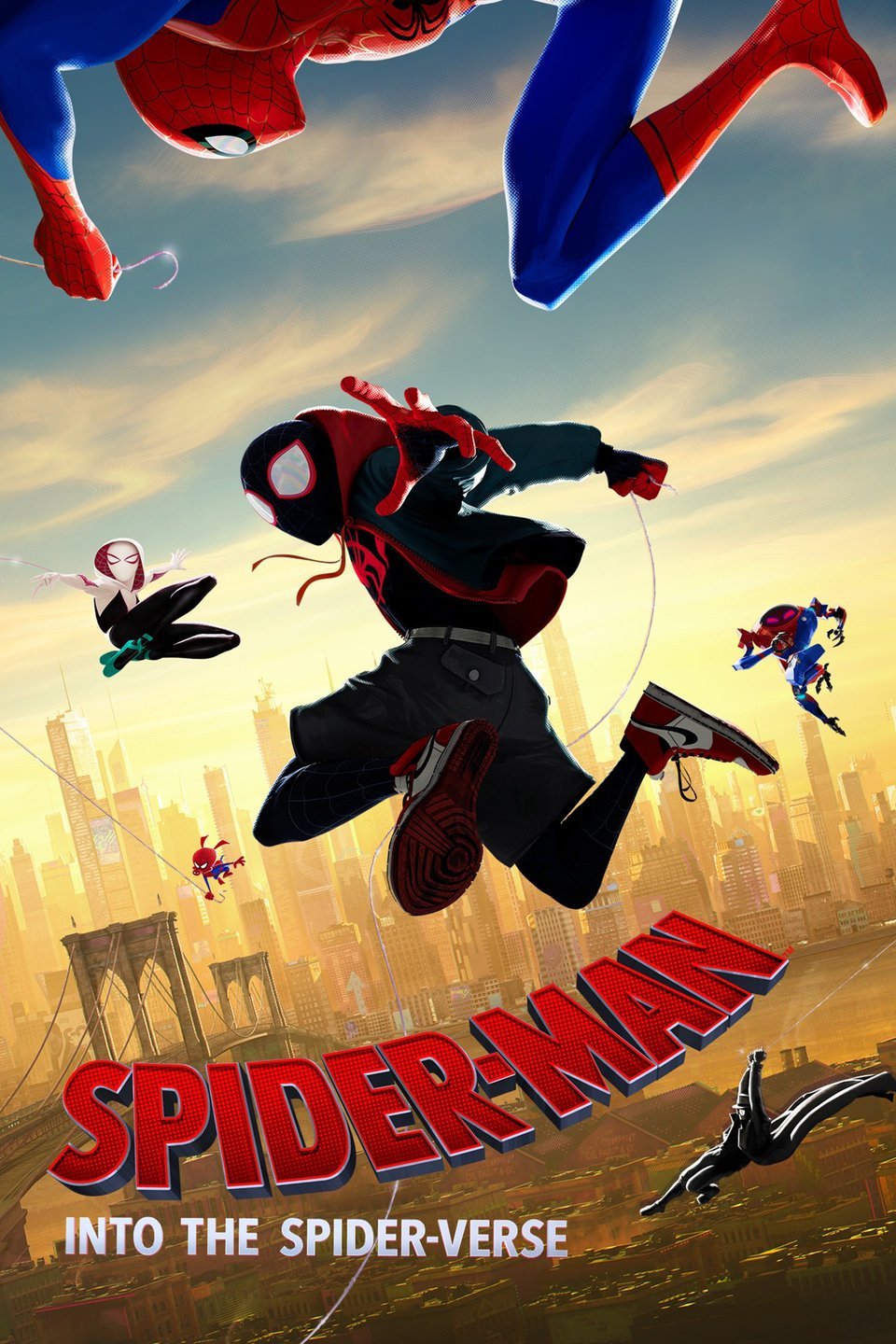
“Spider-Man: Into the Spider-Verse” brief film review

Now THIS is the amazing Spiderman! Eat your heart out Tom Holland and move over Incredibles and Ralph for the best animated feature of 2018. Even if you do not care for comic book or superhero movies, by in large, but love excellent motion pictures (animated or live-action), then I can almost guarantee that you will thoroughly enjoy and greatly appreciate Sony’s Spider-Man: Into the Spider-Verse. Although there have been a handful of animated films that I have liked in recent years, I have not felt emotionally and physiologically engaged with an animated feature to this degree since Kubo and the Two Strings. What both these animated features have in common is groundbreaking artistic precision that typifies the art of animated visual storytelling. Not only does Spider-Verse blow all other animated films out of the water this year, in terms of its contribution to the art and science of motion pictures, I put it on par with Kubo. The attention to production design details and mindblowing editing set the bar incredibly high for animated features moving forward. While the visuals have been likened to an acid trip, do not allow that to dissuade you because never once did I find the avant-garde artistic expression dizzying or obnoxious. It was completely immersive. There was genuine, tangible emotion felt in every frame. And the Stan Lee cameo was priceless. Underscoring everything on screen is the phenomenal screenplay upon which this mesmerizing animated feature is built. Undoubtedly, you will find yourself emotionally invested in the central character of Miles and the chief supporting cast, including the fantastic villain King Pin. There is so many layers to this story, and it works on several levels such as: family, love, self-sacrifice, and more. Highly recommend this film!

Ryan teaches screenwriting at the University of Tampa. If you like this article, check out the others and FOLLOW this blog! Interested in Ryan making a guest appearance on your podcast or contributing to your website? Send him a DM on Twitter or email him at RLTerry1@gmail.com! You can catch Ryan most weeks at Studio Movie Grill Tampa, so if you’re in the area, feel free to catch a movie with him!

Follow him!

Twitter: RLTerry1

Instagram: RL_Terry
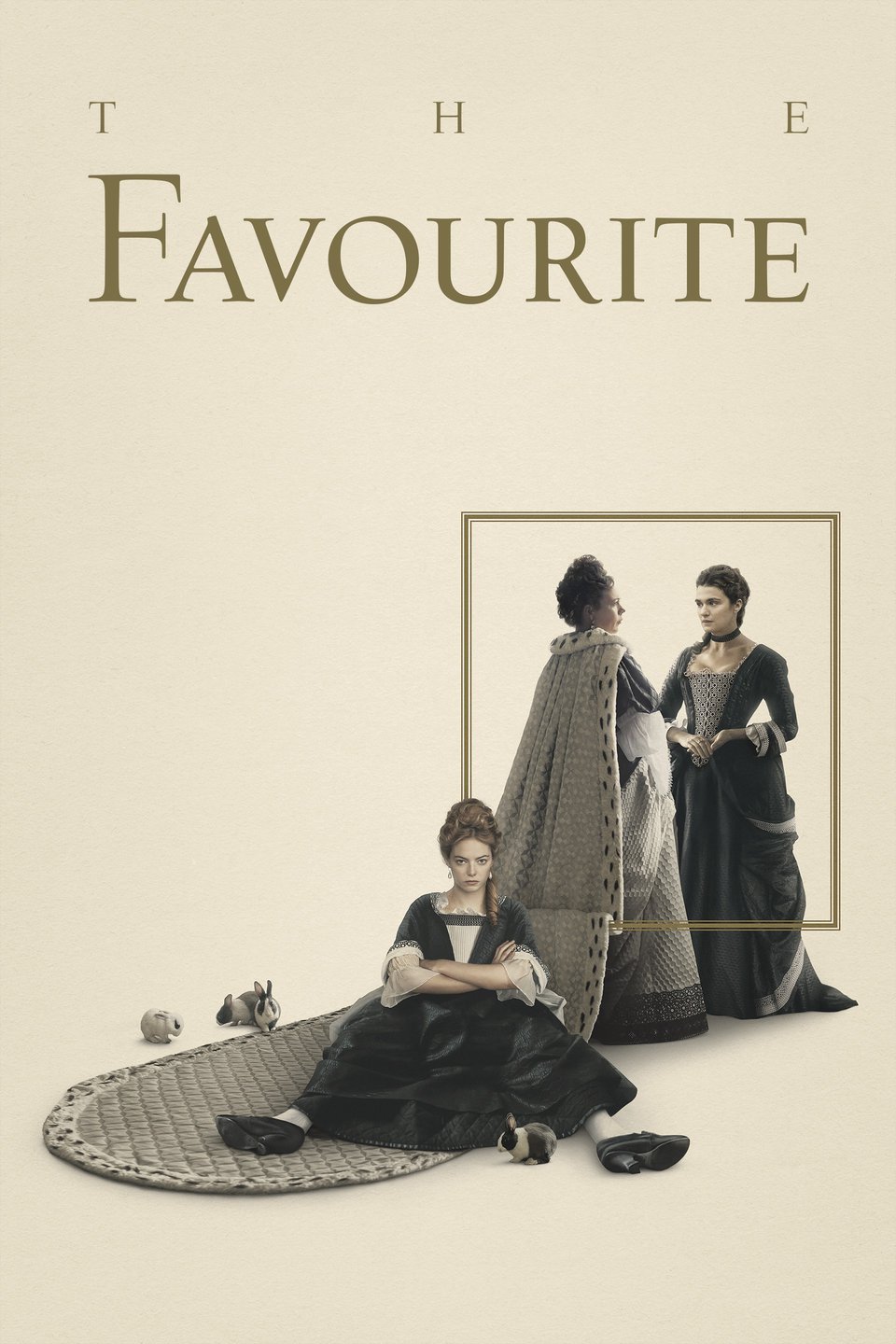
“The Favourite” full film review

A brilliantly entertaining satirical dramedy! Not your history channel biopic. Yorgos Lanthimos’ The Favourite is a motion picture inspired by the reign of 18th century Queen Anne of England. Even if Lanthimos has not previously won you over with his renown commitment to auteur filmmaking, The Favourite may just be the film to draw you into his penchant for dark dramedies that mock the absurdities of the world in which the story exists. Personally, I did not care for either Lanthimos’ The Lobster or Killing of a Sacred Dear, nor did I like last year’s highly stylized artistic film Phantom Thread directed by Paul Thomas Anderson. However, I truly enjoyed every second of The Favourite. A screenwriter’s dream, this film is built upon one of the year’s (if not THE) best screenplays, and brought to life by an incredible lead and supporting cast. And the degree to which this outstanding film impresses the audiences does not stop there. The costumes, locations, and set design are incredible. Upon watching this film, I was reminded of another worldclass period drama where each scene felt like it was an oil painting. I am talking about Stanley Kubrick’s Barry Lyndon. Never before have I seen a film come so close to delivering the experience that the Kubrick masterpiece did. Another film of note that this one reminds me of is All About Eve. When you’re comparing a film to some of the best films to ever be made, you know that is a good sign. This no-holds-barred dramedy provides audiences with a story about a twisted love triangle within the royal court of Queen Anne that is anything but prim and proper. You will be instantly sucked into just how bizarre and brilliant this film is because of the seductive visuals and razor-sharp wit.

In the early 18th century, England is at war with the French. Nevertheless, duck racing and pineapple eating are thriving. A frail Queen Anne occupies the throne, and her close friend Lady Sarah governs the country in her stead while tending to Anne’s ill health and mercurial temper. When a new servant, Abigail, arrives, her charm endears her to Sarah. Sarah takes Abigail under her wing, and Abigail sees a chance to return to her aristocratic roots. (IMDb)

With so much to love about this film, it is difficult to know precisely where to begin. Visually, this film is stunning. Between the cinematography executed with impeccable precision and the set design lit with a combination of natural lighting and candles, each scene is as if it was a commissioned painting by a Baroque artist. Not quite to the levels of Barry Lyndon but certainly encroaches upon that territory. The use of wide angle and fish eye lenses, the creative use of camera positioning to convey the tone of a scene or a subjective view of a character was masterfully directed. While the palace where we spend most of the time is already immense, the camera makes everything look even larger to convey the relationship between a character and the royal court or the emotion of a scene. Under most circumstances, it’s difficult to pull off a fish eye lens but Lanthimos does so excellently! The unconventional camera placement and angles reflect the emotional beat or warped nature of the scene. While this film is heavy on the dialogue, it is also equally heavy in the visual storytelling. There are moments in the movie that assault the eyes and others that are so hilariously candid that you are glad the camera allows us to get a glimpse into the twisted world of 18th century royal England. More than any other film I’ve seen this year, this one exemplifies the ability for the camera to be an extension of our own eyes to bring us even closer–intimately close–to the narrative.

A screenwriter’s dream! The writing in The Favourite is some of the best that I have seen in a long time. We’ve had many great screenplays this year, but there are usually flaws here and there–something that could have been streamlines, expanded upon, or reworked in order to make better. However, there is literally nothing about this screenplay that I would change. Every scene of a screenplay should begin as close to the end of the scene as possible and every scene needs to point to the realization at the diegetic conclusion. And this screenplay does precisely that. Even the development of the characters can be witnessed through the physical movement and dialogue of the characters. Not that commitment to the guidelines of screenwriting means the screenplay lacks imagination–definitely not. There is plenty of imagination in this story but it delivers every emotional beat, every turning point, every action with a powerful punch. The characters contain multiple layers and each scene reveals something new to add to these multidimensional characters. Sometimes it may be a subtle nuance that we learn about a character or it could be a big reveal that was hinted at earlier in the story. At times, your senses are assaulted with a sequence of actions that are wildly erotic or offensively contemptible. It’s that oscillation between extremes that keeps this drama titillating.

More than a satire on the 18th century British royal court, this film is about the lengths one goes to change one’s life or situation and all the costs associated with that. Screenwriter Tony McNamara worked with Lanthimos to adapt Deborah Davis’ original script into the outstanding script that serves as the foundation for this film. It’s also a grim reminder that you can change your surroundings, title, clothes, and job but you may still be selfish, power-hungry, lonely, and unfulfilled on the inside. Perhaps you think you’ve won one game, but you were completely unaware of all the rules or that you were actually playing a difference game altogether. Perhaps you are trying to rise up in a capitalist company or culture, and when you almost reach the top, you are reminded that you are just a lowly pawn in a greater scheme or plan. So many ways to read this film. There is depth to this film that Phantom Thread did not have (hence why I did not like it). It’s not just pretty to look at and listen to, but there is diegetic depth and dimension to this narrative brought to the screen. One of the most brilliant aspects to the story is how you feel about Abigail, Queen Anne, and Sarah. Because you will definitely change how you feel as the story unfolds. No spoilers, but you will witness a course of events that truly reveal who these characters are, what motivates them, and where allegiances lie. The character whom you think you should be rooting for, may actually be the very one who is the most deceptive of all. It’s been a long time since I’ve heard dialogue that is this vicious and beautiful all at the same time. And yet, nothing ever feels forced, fake, or annoyingly on-the-nose. The subtext of what is being said is rich and intriguing. Not only do these characters do and say some of the very things that we either do or imagine we would do but they execute it with razor sharp precision and in an organic manner. You will see it all and hear it all–that is certain. Be prepared to gasp, laugh, cringe, and more. Never before has cruelty, power, and desire been so delicious.

Yorgos couldn’t have asked for a better cast. The ensemble that makes up The Favourite is stellar. And there is lots of eye candy to go around. Whether we are talking the royal court, parliament, or even the servants, there are lots of pretty guy and gals whom make up this phenomenal cast. Beyond the look of the cast, the talent is breathtakingly good. Delivering figuratively sucker-punches one moment and conveying something seductive through the use of subtlety the next, the breadth of talent on display in this film is remarkable. Heavy dramedies like this one require chemistry levels near perfection. Because it is a character driven story that is supplemented by actions; therefore, it’s imperative that the actors work well together in order to never allow the audience to slip out of the story. Everything about this film works flawlessly.

Now that you’ve watched Bird Box, you need to head to your local cinema to experience one of the most audacious motion pictures of the year. You are certain to be entertained by the witty dialogue, picturesque locations and production design, and magnificent cast. Not your typical Jane Austen-esque period drama; it artistically pushes the envelop and holds nothing back. This film definitely ranks within my Top 10 films of 2018, and look forward to see how well it does at the major award shows coming up.

Ryan is a screenwriting professor at the University of Tampa. If you like this article, check out the others and FOLLOW this blog!

Follow him!

Twitter: RLTerry1

Instagram: RL_Terry

Thrillz (theme parks): Thrillz.co

“Black Christmas” full horror film review

Move over Ralphie for Bob Clark’s original Christmas story. Released in 1974 and predating John Carpenter’s Halloween by four years, Clark’s Black Christmas is actually the the first modern slasher film. In fact, many have argued that Carpenter’s iconic holiday horror film, that made Michael Myers a household name, is an unofficial sequel to Black Christmas. Bob Clark laid the groundwork for Michael to terrorize Haddonfield; but, both Black Christmas and Halloween along with 1979’s When a Stranger Calls collectively created the foundation upon which the 1980s slashers were built. Although I had heard of this film prior to this year, I did not make time to watch it until many of my podcast friends talked about it. So, for the weekly film screening with my cinephile penpal a couple of weeks ago. Originally, I had not intended to review it since so many others have covered it this Christmas season; however, after being encouraged to review it by a few of my friends in the #PodernFamily community, I’m going to talk about my opinions on this film. In short, it is one of the most terrifying horror films that I have ever watched. And it’s not because it’s particularly violent or gory, but because of its incredibly unsettling atmosphere caused by the mysterious, vulgar phone calls and the creepy POV of the slasher entering the sorority house during the Christmas party. That bit of dramatic irony paired with the sequence of disturbing events, work together to generate nightmare-inducing thoughts and imagery in the mind of the audience.

Now for the IMDb summary before we dive deeper! As winter break begins, a group of sorority sisters, including Jess (Olivia Hussey) and the often inebriated Barb (Margot Kidder), begin to receive anonymous, lascivious phone calls. Initially, Barb eggs the caller on, but stops when he responds threateningly. Soon, Barb’s friend Claire (Lynne Griffin) goes missing from the sorority house, and a local adolescent girl is murdered, leading the girls to suspect a serial killer is on the loose. But no one realizes just how near the culprit is.

The first moment in the movie to truly catch my attention was the POV of the serial killer. Before watching this, I was under the impression that the first horror film to open with a POV in this fashion was Carpenter’s Halloween. It was at that moment that I looked up the release year and shocked to find that Black Christmas was released four years prior. The unnerving atmosphere of dread is generated in part by the dramatic irony of the killer being in the house and the vulgar mysterious phone calls that consistently plague the sorority girls. Although there are scenes that take place outside of the house, the horrific events largely take place inside a house. A house–more specifically–a home–where you should be and feel safe. The invasion, the penetration of safety is a terrifying prospect for anyone who has ever walked into their home alone wondering if someone may be there. The idea that someone may be in your house sticks with you long after the movie ends. And that is the power of the unnerving horror of Black Christmas. I argue that the level of terror is higher in this movie than Halloween because of just when this story takes place. Both Halloween and Black Christmas concern themselves with a serial killer sneaking inside the home unbeknownst to the owners but Black Christmas takes place at the time of year that we should feel the warmest and safest. It’s that stark contrast between the magic of Christmas and the horror befalling the sorority house that impacts us more than the events in Haddonfield on Halloween. Halloween is a time that we expect to be scared, whereas Christmas is a time that we expect to be warm and safe.

Unlike the merciless or meta-kills of Jason or Freddy, the killer only known as Billy specializes in psychological horror. Although there is more to Jason than just killing teens and college students, he essentially seeks to rack up as many kills as possible. Much in the same way, Freddy enjoys increasing his kill count too. However, Billy stands in contrast because he is not merely concerned with racking up a body count as he is truly terrifying the girls and their house mom. The actions of Billy are a vehicle for the fears of the audience. His victims and methods of execution, if you will, comment on the character types that he’s going after. Moreover, the beauty of Billy’s true identity remaining mysterious is that he can be whomever you want him to be. Furthermore, the victims can be whomever you want them to be. It’s the type of horror film that provides the audience with the ability to place themselves in the shoes of the killer. But Billy isn’t the only star of the film, we spend sufficient time with each of the characters to understand their personalities and desires. This makes them more than just eye candy for Billy or the audience. We can empathize with each of the victims and those with him they have friendships or a relationship. There are few moments that we get to see Billy. For the most part, we are always looking through Billy’s eyes. Billy has nothing distinct about him. No motive, mask, backstory, proprietary weapon–nothing. And it works so incredibly well! It’s this lack of anything in particular that would make him out to be someone unique that terrifies us. He can literally be anyone who is simply terrifying these girls because “they were home” (where have we heard that before?) or they left the door unlocked or a window open.

Hitchcock stated stated on more than one occasion that (and I am paraphrasing) there is no greater fear than that of an opened door. Bob Clark takes a queue from Hitch in that he relies heavily upon that which in unseen or unknown. Relying upon that which is unseen forces the audience to engage the film on a personal level by creating scenarios for the violence off screen. Another quote of Hitchcock is related to Clark’s approach in this film, “always make the audience suffer as much as possible.” And there are plenty of scenes in Black Christmas that will induce suffering in the minds of the audience. We aren’t given a backstory on or motives of the killer, but evidence suggests that he has a preoccupation with the idea of pregnancy or motherhood. Moreover, there are different types of mothers or maternity examples in the film from a sorority house mother to a knocked-up college student contemplating an abortion. Interestingly, this is where Black Christmas refuses to conform to the morality play underscoring many horror films in which teen and college students engaging in deviant or indiscriminate sexual behaviors are the ones killed off. The point-of-view movements and kills take you out of your seat and into the narrative as a quasi accomplice to the murders. Of course, we are not prevued to all the murders as there is a rape and murder in the same area that is said to be linked to Billy but we never truly learn the origin of these murders or even the true identity of Billy.

Although Black Christmas is a serious slasher, it is not without its comedic moments. The sorority mom and her booze will keep you laughing while one of the police officers will have you rolling over in your chair with his complete incompetence and lack of knowledge of fellatio. The film never falls into the area of self-aware or parody, but it does successfully balance out the dark narrative with the more lighthearted elements.

If you’re looking for another holiday horror movie to add to your list of Christmas films to watch, then you definitely want to add this one to your lineup. It’s perfectly dark and sinister, takes place in an ominous sorority house that provides us with an incredibly creepy atmosphere, and infamous ending. Instead of shelving it until the holiday season each year, it should be treated like Halloween and other slashers. It’s good year-round! It’s an important film in the horror library because it was the first to give us so many of the tropes that would show up later, and even thought to be originally attributed to later films.

Ryan is a screenwriting professor at the University of Tampa. If you like this article, check out the others and FOLLOW this blog!

Follow him!

Twitter: RLTerry1

Instagram: RL_Terry
Thrillz (theme parks): Thrillz.co

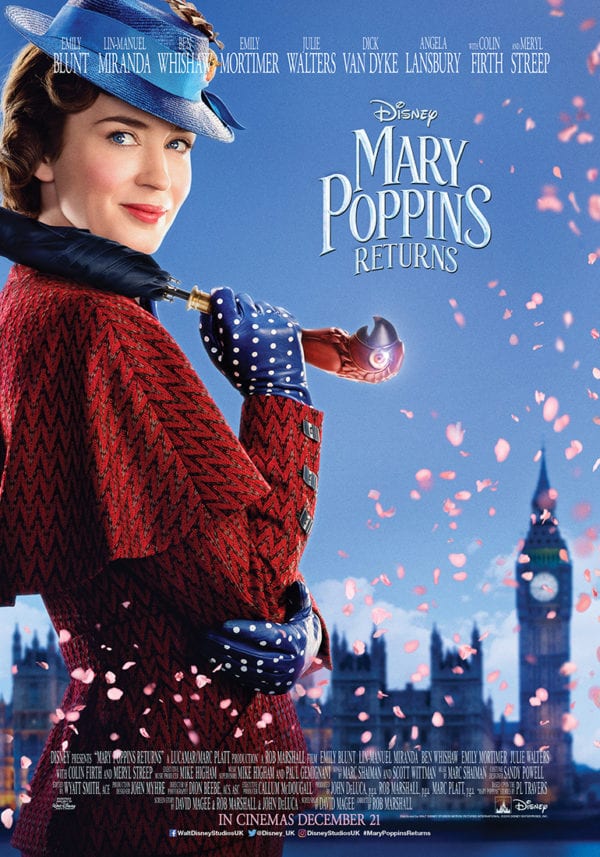
“Mary Poppins Returns” full film review

A spoonful of nostalgia isn’t enough to make the narrative go down. The highly anticipated Mary Poppins Returns hits theatres this week. Unfortunately, this film gets lost in nostalgia, neglecting the need to tell a new story. Instead, we get more than half a movie full of frivolity that lacks any coherent meaning or substance that is more concerned with hitting the same plot beats with similar songs at the same moments in this version as it was with the original. Visually, the movie is flawless and the animation sequences were a welcomed visit from the past. Reminded me of, if the animation from Bedknobs and Broomsticks and Mary Poppins got together, this is what you’d get. When creating a sequel that doubles as a remake, connections to the original are important but should not be at the diegetic forefront. Mary Poppins Returns exists in a gray area that is neither a sequel nor a remake. Had Mary Poppins Returns been a full-on sequel or remake, then perhaps the narrative would have faired better. As it stands, it sits uncomfortably in the middle and suffers from a bit of an identity crisis. Perhaps this version is lacking in critical value and complex characters, but it ranks highly in entertainment value. There isn’t anything particularly memorable about it except for the special appearances by Dick Van Dyke and Angela Lansbury, but the movie offers a couple hours of whimsical fun.

In depression-era London, the Banks family faces one of the greatest hardships a family can face–losing their home. Compounding the present state of affairs, the family is also coping with the recent loss of Michael Banks’ wife and mother of their three children. With help from the family’s longtime maid/cook Ellen and Michael’s sister Jane, the family hopes for the best while planning for the worst. With only five days until the house is repossessed, Michael remembers that his father left him shares of that infamous bank from his childhood; but when certificates of shares in the Fidelity Fiduciary Bank turn out to be missing, all hope seems lost until Michael, his children, and Jane get the surprise of a lifetime. Mary Poppins returns! Michael and Jane’s beloved nanny from their childhood returns to look after the family during this crisis. In true Mary Poppins fashion and accompanied by the lamplighter Jack, she whisks Michael’s children into a fun-filled adventure through the streets of London and into a world of imagination.

At the bedrock of the original are these lessons that must be learned. In many ways, Mary Poppins was a teacher to both Jane, Michael, and George. Although the lessons varied by character, they had one common denominator: life’s priorities. And there were no true villains–that is–evil or villainous out of malcontent or cruelty. And the songs had strong meaning, not just fun, creative lyrics to a show-stopping accompaniment. Furthermore, there was strong character development in the central characters. The character arcs of George and the kids were measurable. Even Mr. Dawes Sr. demonstrated measurable change. There are the elements of substance that make the original a timeless classic that transcends the decades and generations to remain a beloved film. Mary Poppins Returns fails to deliver any of these elements to the audience. Instead, chooses to get lost in the nostalgia of the original. Relying on the abstract of nostalgia to carry this remake-sequel.

While Michael’s lesson is clearly to learn to be a child again, his children learn the lesson to be quasi adults by teaching their father and working to solve the family’s financial crisis. Those two idea are in direct contradiction. Mary Poppins is no longer acting like a teacher but she seems more concerned with being an actual nanny moreso than the governess that was the original. If the lesson to be learned was to have the imagination or hope of a child, then that should have been taught, not two different lessons in direct contrast. George Banks may have been had his priorities in the wrong place, but he was not evil, nor was Mr. Dawes Sr. evil–he too had his priorities all askew. In Mary Poppins Returns, Colin Firth’s Mr. Wilkins is downright cruel for no reason other than simplistic greed. Simple motivators are a good place to start but should be developed to be more complex to add to the conflict. Firth’s character is completely uninteresting.

Talk about memorable songs in the original; I imagine you can recite most lyrics by memory, unlike this version with lyrics so convoluted and complex that they are largely forgettable. At the time of listening, the lyrics are poignant and work at the given emotional or plot beat, but then they are mostly forgotten. The songs in this one seem to exist only for the amusement of the audience. And the vaudeville number. Let’s talk about that for a moment. For starters, I love Mary’s wig that she borrowed from Catherine Zeta Jone’s Chicago costume. The music and lyrics in that number were incredibly entertaining–but–these same lyrics are quite risque in places. I was shocked that they were in a movie aimed at kids (despite the PG rating). And comparing the songs from the original to the ones in this version, each and every song in Mary Poppins Returns sounds similar AND comes at precisely the same beat as they did in the original. Each and every song in this one is an answer to the counterpart in the original. With one conspicuous exception, there is no equivalent for the Sister Suffragette. With Jane’s heavy involvement in workers’ rights (much like her mother’s women’s rights), it seems odd that she was not given a song since were were giving everyone else songs equivalent to the original. Yes, I am aware that Sister Suffragette is not in the Broadway musical, but it should have had a place in Mary Poppins Returns.

Structurally, the first two acts are all over the place. Fortunately, the film finishes with a strong third act. Everything seems so forced, rushed. Pacing matched the original. It’s as if the emotional beats and plot points from the original were mapped out and a “new” story was conformed to fit the old diegesis. There are even moments that can be completely removed from the story and not effect the outcome. For example, the entire Meryl Street scene has no impact on the realization of the narrative. Screenwriting 101 teaches us that each and every scene should point the audience toward the end–each scene should culminate in something important. Think of each scene as a paragraph in a larger story and each line of dialogue as a sentence in a larger paragraph. Each paragraph has a beginning, middle, and end; just like a story has a beginning, middle, and end. If a scene does not advance the plot, then it should be reworked or removed. We never revisit the cracked pot or truly embrace the idea of giving oneself a new perspective from which to view life. The song is fun, but that is all I can say about that scene. And there are other scenes in the movie that do little to advance the plot, but this is the most obvious one.

The movie is not without its entertainment value. If you are looking to escape reality for a couple of hours, then you are in the right place. You will be delighted with the whimsy and magic of this story. Perhaps the screenplay is poorly conceived, but everything else (from a technical perspective and performance perspective) works very well. If you enter the film with a heavy heart or some degree of sadness, the movie will help you forget your troubles for a moment and put a smile on your face and maybe even a tear or two in your eyes. Emily Blunt may not be a perfect Mary Poppins but she is practically perfect as the beloved nanny.

Ryan is a screenwriting professor at the University of Tampa. If you like this article, check out the others and FOLLOW this blog!

Follow him!

Twitter: RLTerry1

Instagram: RL_Terry

Thrillz (theme parks): Thrillz.co