“Midsommar” Art House Film Review

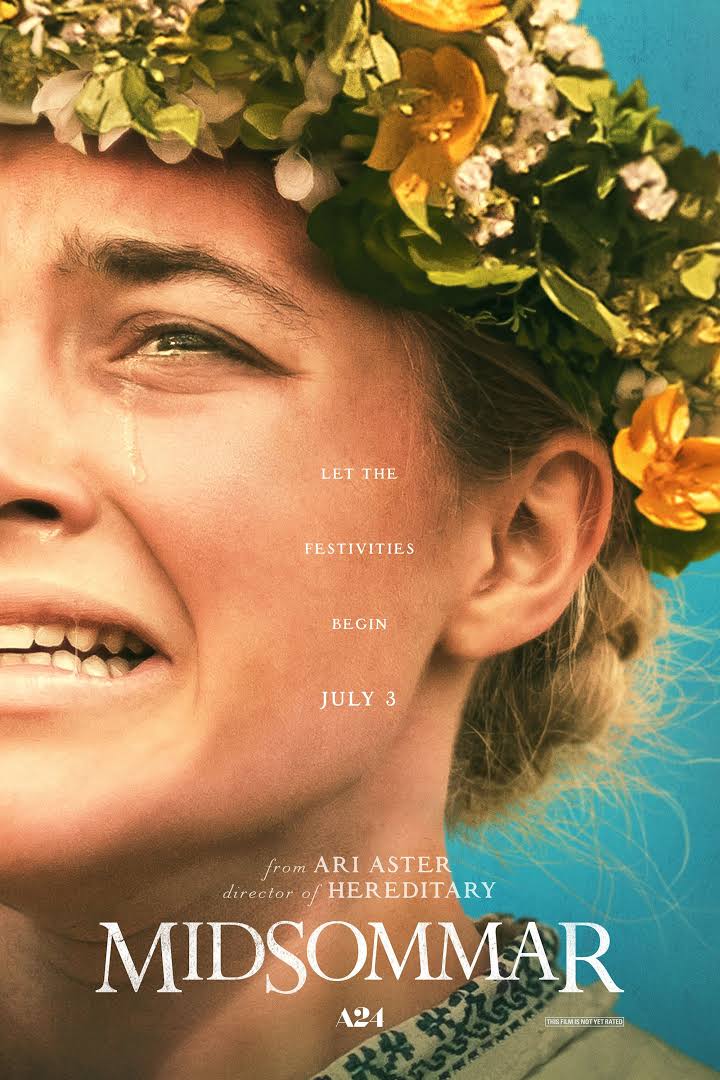
Ars gratia artis. The latin inscription around MGM’s Leo the Lion is the best way I can describe Ari Aster’s Midsommar. The highly anticipated companion followup horror piece to last year’s Hereditary arrived in theatres nationwide last night–to a packed house, I might add. Although even I use the terms movie and film interchangeably in casual conversation, this is a motion picture that I will refer to as a film not a movie. For fellow cinephiles, this is the type of film that reminds us of the power of the moving image and the art of visual design. Film is a visually driven medium, and Midsommar exhibits that in spades. Although it was predicted to be then confirmed by the director to be a companion piece to Hereditary there is little similarity except for one important point: the theme of grief. Furthermore, Midsommar also comments on relationship revenge and drug culture. I’ve heard this film described as one long acid trip by folks on Film Twitter, and that is not entirely inaccurate. From edibles to cocktails, many of the scenes are viewed through the lens of a drug-induced reality that creates a fever-dream-like state of being. Trippy, is putting this cinematic experience lightly. And it is that. A cinematic experience unlike any other that I have ever witnessed. Whereas, in my opinion, this film’s greatest flaw is the lack of a compelling plot–and that’s a big deal, no mistaking it–the film excels at typifying film as art. More specifically, this film is like a work of art in a museum that confronts the viewer with thought-provoking imagery that elicits a plethora of interpretations. And the ability for an art film to prompt us to interpret it differently gives the film the added dimension that doesn’t come to cinemas often.

Dani (Florence Pugh) and Christian (Jack Reynor) are a young American couple with a relationship on the brink of falling apart. But after a family tragedy keeps them together, a grieving Dani invites herself to join Christian and his friends on a trip to a once-in-a-lifetime midsummer festival in a remote Swedish village that is the home of one of their graduate school friends. The carefree summer holiday in a land of eternal sunlight takes a sinister turn when the insular villagers invite their guests to partake in festivities that are increasingly disturbing.

Juxtaposition. There is a brilliant contrast in the imagery of this film. While much of the film is brightly lit and colorful, within that serene landscape and color pallet are acutely disturbing moments that will stick with you long after the film ends. And the nightmare-inducing imagery is not limited to body horror, there are times that unnerving images are of a surreal nature, or perhaps an otherwise warped perspective that keeps you on the edge of your seat. From carefree atmospheres filled with laughter and positivity to depictions of suicide, murder, and mutilation, you will find it all in Midsommar. There is a rich, immersive nature in this film that is inescapable. You will be instantly sucked into the beautifully twisted visually stunning story. Every scene is crafted with such a commitment to the art of visual storytelling that the plot takes a backseat, which oddly enough suits this film nicely. If I was to compare this film to literature, then it would be a poem versus prose. Both poems and prose tell stories, but poems are emotionally driven whereas prose is plot-driven. This is clearly an emotionally driven motion picture that will have you along for the pleasurable unpleasure ride for the rather lengthy runtime. Each frame is an artful expression of the emotion of the moment, and it my delight or rock you to your core.

With it being such a unicorn amongst horror films, if you’re searching for film to compare it to (which can be unfair), for all intents and purposes, I feel that you will find elements of Eyes Wide ShutThe Wickerman, and Requiem for a Dream. It also appears that Aster took inspiration from directors such as: Kubrick, de Palma, and Friedkin. It is difficult to talk about the thought-provoking content without getting into spoilers, but there are many ways to interpret the content and intention of the film. I found the film to creatively express, through the art of the moving image, the ideas of dealing with the (1) PTSD of untimely death and the grief that follows (2) relationship revenge and (3) the effects of a drug-induced state of consciousness. The beginning of the film opens with witnessing the broken relationship between Dani and her boyfriend Christian followed soon by the death of Dani’s sister and parents (this is right at the beginning, so this isn’t really a spoiler). Although Christian begrudgingly keeps the relationship alive (in all fairness, he’s finished with it), he keeps Dani at an emotional distance from him and his friends. At the same time, Dani is suffering from the PTSD brought on by the untimely death of her family that has truly taken a toll on her psycho-social stability. Just like in real life, drugs (both Rx and recreational) are used as ways to both cope and attempt to rise to a higher level of consciousness to deal with the positive and negative elements of life. However, augmenting reality can lead to a dangerous path from which sometimes a return is unlikely or impossible. All three of these themes in the film inspire the mindblowing images through the story.

While I have spent the bulk of this article talking about the macabre nature of this film, it is not without its comedic elements. In fact, some have characterized it as a dark comedy. I’m not ready to refer to it as a horror comedy, but it certainly contains many absurd, laughable lines and images. To get into them would reveal some important spoilers, so I won’t do that to you. But just the very idea of these typical American graduate students in this completely foreign commune of mystic Sweeds in a surreal landscape is enough to make you laugh. And the humor is not limited to the dialogue or setting, but even the very nature of a single image is enough to bring about laughter. Again, more playing around with the contrast that juxtaposing images and music brings to a film. All throughout the film, you will be disgusted one moment and laughing the next. Still, the amount of comedy isn’t enough to bring this into the horror comedy subgenre, but it’s more or less an art house horror film with comedic moments. And I’d be remiss if I didn’t mention the hauntingly beautiful score that becomes a character in and of itself during the film.

This is not a film for general audiences. Personally, I am shocked that this cut of the film even got a theatrical release. It strikes me more as the director’s cut that you would get on the BluRay. It is a hard R. So if you’re a parent or an older sibling, think before taking your child or younger sibling who loves horror as much as you. In addition to the drug use in the film (and it’s all within context), there is full male and female nudity and even a rather explicit sex scene. Nothing is in the film for simple shock value (tho, there are shocking scenes for sure), there is an intentional purpose behind element in this film to deliver the emotionally-driven story that Ari Aster has created.

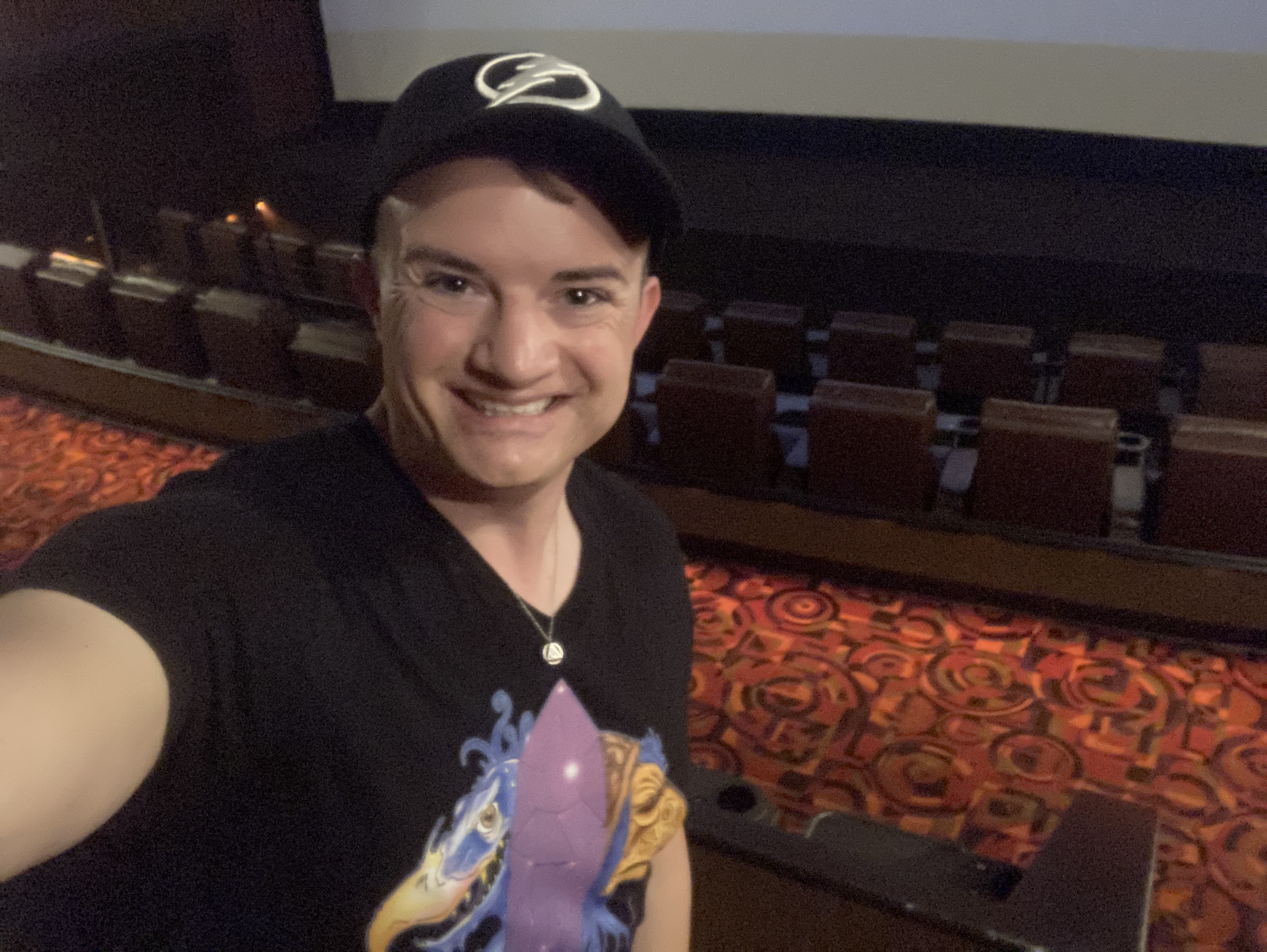
You can catch Ryan most weeks at Studio Movie Grill Tampa, so if you’re in the area, let him know and you can join him at the cinema.

Ryan teaches screenwriting at the University of Tampa. If you like this article, check out the others and FOLLOW this blog! Interested in Ryan making a guest appearance on your podcast or contributing to your website? Send him a DM on Twitter!

Follow him!

Twitter: RLTerry1

Instagram: RL_Terry
“Annabelle Comes Home” horror movie review

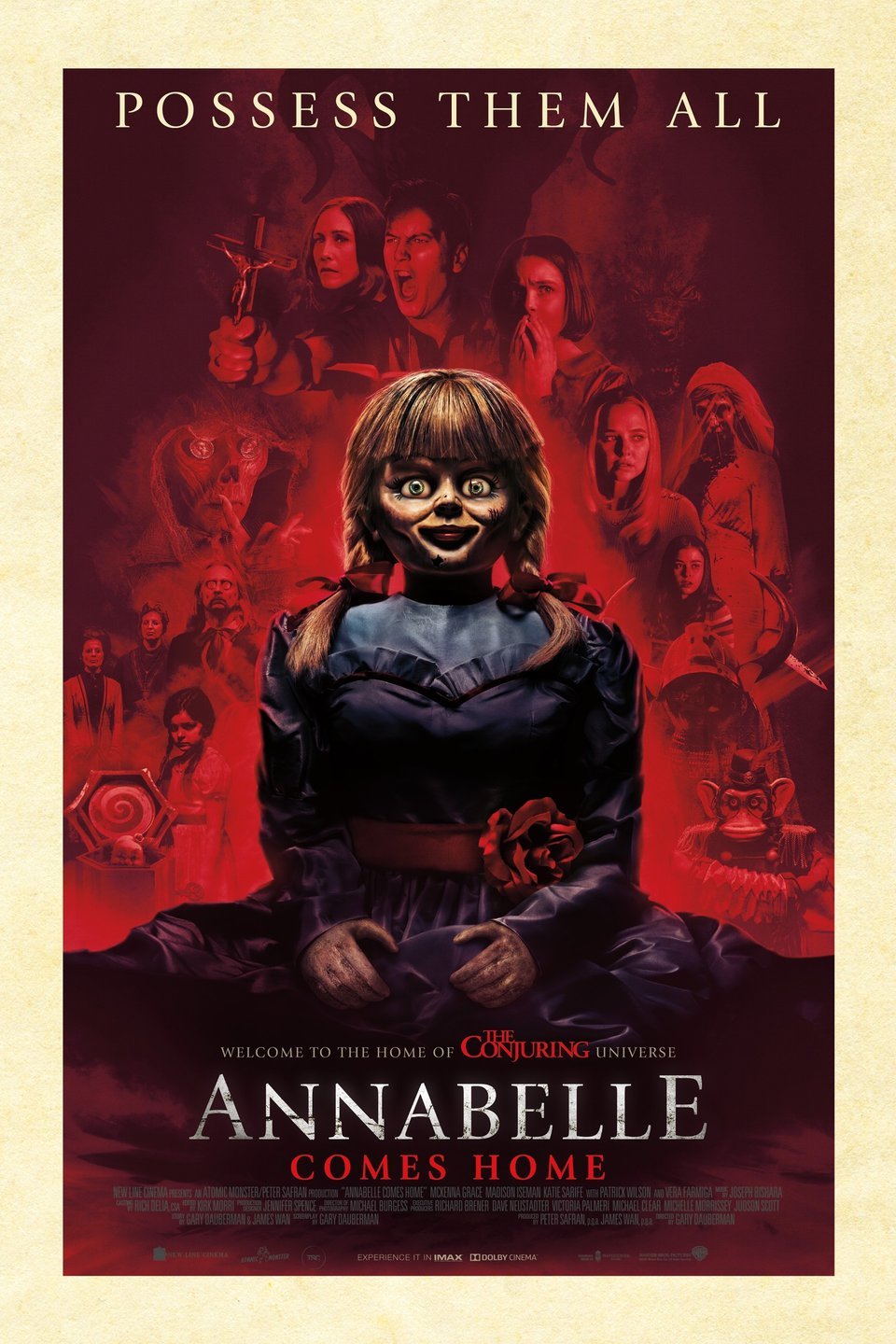
“Miss me?” Adventures in Babysitting meets The Conjuring Universe. Well it’s not bad, but not as strong as Creation. Still, it’s better than the first one. Annabelle Comes Home hit theatres Tuesday, June 25th with a new story to further develop the WarrenVerse. Inspired by the documented paranormal investigations of Ed and Lorraine Warren, the third installment in the Annabelle franchise follows on the heels of the first Annabelle. From the very first shot to the last, this installment delivers a highly atmospheric horror movie that is not built upon jump-scare after jump-scare, but instead focusses on suspenseful windups. Unfortunately, therein lacks a substantive delivery following the engaging windup. Central to the movie is a small cast of three leading characters, so there was such a fantastic opportunity to develop these characters; regrettably, even within this intimate setting with a small group, the characters mostly fall flat. The movie has a strong first act, and transitions into the second act very well; however, we spend most of our time in that second act going in circles until the anticlimactic showdown. Because of the terrifying atmosphere created in the film, there is an excellent haunted house feel to it that I liked a lot. I generally prefer atmosphere to jump scares, although both are important and should be included in the right amounts. Ultimately, the movie fails to provide a compelling story but makes for a mostly fun horror movie.

Following the bizarre events and exorcism at the nursing students’ apartment, Ed and Lorraine Warren place Annabelle in the backseat of their car to take to their cursed artifact room at their house. To protect the world from the evil conduit Annabelle, they place her on a chair in a glass case made from glass from Trinity Church. On the eve of the Warren’s daughter Judy’s birthday, Ed and Lorraine leave for an overnight trip and leave their daughter under the care of a babysitter. While Judy and her babysitter are baking a cake, the babysitter’s friend shows up and offers to watch the cake and house while Judy uses her new rollerskates. When in the house alone, she breaks the house rule and enters the Warren’s occult museum. In this room, she unleashes an evil that will stop at nothing until it claims a soul.

Although this installment in the Annabelle franchise is better than the first one, the story is weak compared to the second one, which met with both highly positive audience and critic reviews. Like with so many horror movies, this one also suffers from an underdeveloped plot and flat characters. The plot is so underdeveloped that there is ostensibly no plot at all. It’s as if the screenwriters (James Wan and Gary Dauberman) took the premise and wrote five principle characters for it, but then forgot that the screenplay should (1) follow the three-act structure (2) include characters with well-defined external goals and internal needs and (3) start each scene as close to the end of the scene as possible. While most of the characters lack any kind of real emotional development, the character of Daniella is the only one that goes on any kind of emotional journey that allows her to grow as a result of the conflict with Annabelle. Leading and chief supporting characters in a screenplay need to have an external/measurable goal motivated by an internal need. The external goal is aligned with the action plot and the internal need is aligned with the subplot. But when your story seems to be plotting along aimlessly, therein lies a problem because it’s difficult to support character goals when there is no real end in sight. Once we are in the second act, the story just moves in circles until the anticlimactic, forced showdown lacking in any true realization.

What this movie lacks in story, it makes up for in atmosphere, production design, and non-repetitive scares. There is a sense of foreboding from the moment that the movie begins, and continues throughout. Essentially, it becomes a haunted house movie complete with all the lighting, music, and entrapment. Even before I thought much about the story and characters, when the credits began to roll, my first thought was “this would make for a great HHN house.” The atmosphere of terror is achieves though lowkey lighting, harsh shadows, the cinematography, and haunting score. The movie is not overstuffed with scares, and when there are jump scares, they are never repeated. It also helps that we only have three main characters that are all trapped in this haunted house and act as our conduit through which we also experience the evil entity in the house. If you wanna feel transported to a haunted house, then this movie does an excellent job of making you feel like you are right there with the characters. In the past, we have spent some time in the Warren’s house, but this is the first time that we spend nearly the entire movie in their literal house of horrors. The manner in which the camera movies and the music rises and falls assists in the creation of suspense, and the movie will hold you in suspense nearly the whole time. Unfortunately, the problem is that the payoff after the windup is lackluster at best. Great suspense, pool payoff. When crafting suspense in plot or with the camera, remember that the payoff should equal the windup.

If you are a horror fan, then I definitely recommend watching it in the cinema; but for general audiences, it’s one that can be enjoyed just as well at home when it hits Amazon Prime or other streaming services.

You can catch Ryan most weeks at Studio Movie Grill Tampa, so if you’re in the area, let him know and you can join him at the cinema.

Ryan teaches screenwriting at the University of Tampa. If you like this article, check out the others and FOLLOW this blog! Interested in Ryan making a guest appearance on your podcast or contributing to your website? Send him a DM on Twitter!

Follow him!

Twitter: RLTerry1

Instagram: RL_Terry

“Child’s Play” (2019) brief horror movie review

“Hi, I’m Chucky, wanna play?” It’s a fun horror movie, flaws and all. Let’s address the white elephant in the room. This is not as good as the original; however, instead of primarily focussing on what did not do right, I’d like to highlight what it did well. At the end of the day, this is a highly entertaining horror movie that brings Chucky’s origin into the 21st Century. Unlike the trajectory of the Child’s Play franchise after the original sequel that embraced the camp effect, 2019’s Child’s Play attempts to go full-on horror. Unfortunately, it should have gone the camp route, because I feel that would have been received more favorably. There are moments that you question whether or not they are supposed to be funny. And it’s that ambiguity that leaves us uncomfortably in the middle during many moments in the movie. Although each problem can be individually dissected to determine why it didn’t work, the long and short of it can be attributed to a weak screenplay. While the screenplay is responsible for many of the movie’s problems, the idea or premise is solid; it’s a fresh interpretation of the original premise. For the gore fans out there, the movie ups the ante quite a bit! There aren’t many kills, but the ones that we get are creative, painful, and gruesome. Whereas all the human characters are flat, lacking in anything truly redeemable, this movie does provide more time in developing the relationship between Andy and Chucky that allows us to empathize with Andy’s dilemma when confronted with Chucky’s violence. Contrary to the hype going into the anticipated voice acting of Mark Hamill as Chucky, the performance lacks anything memorable. Aubrey Plaza does a very Plaza job as Andy’s mom, and Gabriel Bateman delivers little more than a mediocre performance as Andy. You might be thinking that you could say some of these same things about 80s horror movies; however, 80s slashers were (1) a product of their time and (2) originated so many characters and ideas and (3) were largely built upon the idea of campy horror. Had the new Child’s Play went the camp route or stayed true to a serious, thought-provoking horror movie route, then it could have been received much more favorably. But hey, that marketing campaign inspired by Toy Story 4 was brilliant.

You can catch Ryan most weeks at Studio Movie Grill Tampa, so if you’re in the area, let him know and you can join him at the cinema.

Ryan teaches screenwriting at the University of Tampa. If you like this article, check out the others and FOLLOW this blog! Interested in Ryan making a guest appearance on your podcast or contributing to your website? Send him a DM on Twitter!

Follow him!

Twitter: RLTerry1

Instagram: RL_Terry

Sinister Summer: “The Birds” Retrospective Review

“You’ll never look at birds the same way again” (Jurassic Park). Although Dr. Grant was referring to velociraptors, you can say the very same thing about Alfred Hitchcock’s The Birds. Hitchcock directed more than fifty feature length films, only two of which are horror (Psycho and The Birds). However, he is widely credited, and rightly so, as the director who ushered in the modern horror film, with Psycho being regarded as the first modern horror film. On the heels of the success of Psycho, a film that revolutionized so much about the movie-going experience from movie start times to “not spoiling the ending” (now where have we recently heard that???), Hitch set out to deliver another horror film at the height of his powers.

But what would it be about? He turned to past collaborator Daphne du Maurier, author of Rebecca, Hitch’s first American film. Her best-selling novella The Birds had previously been adapted for radio and stage (I’ve actually seen the stage adaptation, and incidentally I prefer the film), but Hitch decided to adapt it (loosely I might add) for the small screen. That’s right, small screen. He originally intended The Birds to be adapted for his wildly popular and successful series Alfred Hitchcock Presents. But like Jordan Peele did with Us, which I am convinced started out as an idea for his Twilight Zone series, Hitch decided to take the idea from TV to the cinema! So with the decision to adapt du Maurier’s novella into a cinematic experience, Hitch made history.

Not only is it one of the most famous films in cinematic history, it sowed the birdseed for all the “when nature attacks” movies to follow including Jaws and Jurassic Park. This film was also influential in John Carpenter’s The Fog and Stanley Kubrick’s The Shining. With the question of why did the birds attack never being answered, it leaves the events of this movie lingering in our minds as a possible reality.

To hear a conversation with me on the CineMust podcast chatting about the must-see status of The Birds and Jaws, click HERE.

When wealthy well-known socialite Melanie Daniels (Hedron) finds herself to be the brunt of a practical joke played by lawyer Mitch Brenner (Taylor) at a bird shop while searching for a gift, she decides to return the favor by buying a couple of birds and dropping them off at his apartment. Upon finding that he spends the weekends with his younger sister and mother (Jessica Tandy) north of San Francisco in the small community of Bodega Bay, she drives to the remote town in order to deliver the birds. Soon after her unannounced arrival, the birds of the town begin to act incredibly strangely.

Following a seagull attacking Melanie, and Mitch’s mother discovering her neighbor dead from an apparent bird attack, the town realizes that the birds are a real threat. Eventually birds, in the thousands are attacking anyone without reason or explanation as to why this is happening. Trapped in the Brenner household, survival becomes the number one priority for not only our central characters but everyone in the town.

At the heart of The Birds is relationships. Relationships ranging from romantic to familial and then between an outsider and the natives of a close knit town. Paranoia is a common theme in this film as well. The characters and their relationships between one another are so incredibly strong and well–developed that you can ostensibly remove the birds from the equation and the movie still works. Now, it doesn’t work as a horror film, but it works as a drama.

The strength of this screenplay, written by Evan Hunter, lies in the complex characters and simple plot. Although the plot is largely changed from du Maurier’s novella, the setting, character dynamics, and the idea of the home invasion are extrapolated from the source material. Outside of the terrifying element of the attacking birds, the film’s subplot is about an outsider invading a close knit community and a de facto love quadrangle between Mitch, his mother, his sister, and his ex. Essentially, Melanie upsets the normal order of the town much in the same way that the birds upset the pecking order of humans vs nature.

The screenplay also delivers some outstanding tonal shifts that are seamlessly woven together. Way before the first bird attacks, The Birds begins as a screwball comedy right out of the 1930s, then changes into a soap opera, then suspense, followed by horror. Lastly, the movie takes one final tonal shift from horror to apocalyptic, complete with dead bodies, foreboding birds, and a lack of resolution. This movie has legitimately inspired the real fear of birds (ornithophobia) in how the scenes were shot and the lingering possibility that this could happen in your own town.

There is a brilliant lack of explanation of why the birds are attacking not is there any real means of escape for the townsfolk of Bodega Bay, all while chaos reigns supreme in this otherwise innocent seaside landscape. Yet, this cinematic work is a permanent resident of our sociological zeitgeist. Even those who have not seen the film are aware of its existence. And it has gone from screen to live experience at the former Universal Studios Florida attraction Alfred Hitchcock: the Art of Making Movies. The reason why we don’t focus on the lack of an explanation for the birds bizarre and violent behavior is for the same reason that we don’t ask why Bruce (Jaws) is attacking people. We accept it because the film is more concerned with its theme than points of origin expositional dumps. We don’t care about why the birds are doing what they are doing–that’s part of the horror. It’s the same reason why it’s important that we don’t know too much about Michael Myers; if we knew too much about him, why he ticks, then he would cease to be the boogeyman. These birds would cease to be terrifying if there was some sort of natural or supernatural explanation. The unknown is frightening.

There have been many hypotheses over the years as to what the birds represent. The most popular one is rooted in the red scare or communism. And perhaps that is true, but the real villain (character of opposition) is not the birds but the townsfolk of Bodega Bay. The birds are the personification of the mistreatment of and unwelcoming attitudes of the residents toward Melanie. In a similar fashion, the villain of Jaws is the mayor because he is the personification of the folly of man.

When the true oppositional character in a screenplay is an entity, force, or idea, that component has to be personified in a character(s) because film is a visual storytelling medium, so the outdated, nationalistic attitudes of the locals is personified in the birds. Moreover, the ornithologist in the diner stated that if birds of different species flocked together, then all hope would be lost for humanity as we couldn’t stand a chance against them.

That foreboding prediction came to pass as both crows and seagulls (who do not mix together in real life) massed together and terrorized the town and its people. As the birds are the original inhabitants of Bodega Bay, the humans represent the outsiders. This symbolism is also witnessed in how the townsfolk banned together to force Melanie out of the town and in how Mitch’s mother urges him to send Melanie back to San Francisco. All through the movie, there are images and sequences of the way outsiders can be marginalized by the majority of the native inhabitants. Human civilization has long sense been guilty of stigmatizing or marginalizing outsiders.

At the root of the symptoms of intolerance is fear. So, Hitchcock took that root cause of unwelcoming attitudes and mistreatment and adapted it into a timeless horror film. It holds up so well because fear is still evident in how certain groups of people treat another in our lives today. Hitchcock used a combination of blue screen and practical effect technologies to bring the terror to life. And of those two approaches, it’s mostly practical-effect driven, all the way down to the real birds that were used during the production (with proper bird trainers/wranglers).

Three scenes that I want to highlight are the birthday party, downtown attack scene, and the upstairs room at the showdown. Nowadays, these scenes would be full of CGI and other post-production work. The actors would be acting with no birds on set, or very few anyway. For authenticity, puppets, mechanical, and real birds were used for these scenes to increase the realness and give the actors something to truly be afraid of. In fact, so many real birds were used that there were multiple large bird enclosures on the set that used as the temporary home of the stars of the film. In addition to bird wranglers, the American Humane Society was on set every day to monitor the treatment of the birds.

The birthday party scene was composed of rotoscoping birds, blue screen shots of birds, papier-mache birds, and birds that were tied to actors and even more birds that were freely flying within the enclosure built around the set. Although most of the birds remained in the aviary, a few got out. And to this day, there are decedents of those birds living in the rafters of that sound stage on the Universal lot. In much the same way, the students fleeing the schoolhouse and down the hill to the town center–that scene–was accomplished in very much the same way. However, with this one, the added pyrotechnics were incorporated.

The iconic phonebooth was covered in birdseed and shrimp to get the birds to go completely crazy. The upstairs bedroom scene at the end of the movie was completely constructed inside a giant aviary with hundreds of birds. In addition to the birdseed and shrimp that was strewn about the room, real birds were thrown at Hedron. The terror in her eyes that you see in the scene is all too real. No amount of acting can replicate that authentic fear. Despite the very real attack of the birds, Hedron is eternally grateful to have been a part of cinematic history.

The single scene that find is the most fascinating and shows the power of Hitchcock’s innate ability to create suspense with a camera is the scene immediately preceding the schoolhouse evacuation–the scene with Melanie sitting on the park bench with the jungle gym int he background.

Ryan teaches Film Studies and Screenwriting at the University of Tampa and is a member of the Critics Association of Central Florida and Indie Film Critics of America. If you like this article, check out the others and FOLLOW this blog! Interested in Ryan making a guest appearance on your podcast or contributing to your website? Send him a DM on Twitter. If you’re ever in Tampa or Orlando, feel free to catch a movie with him.

Follow him on Twitter: RLTerry1 and LetterBoxd: RLTerry

“The Dark Crystal” Throwback Thursday Review

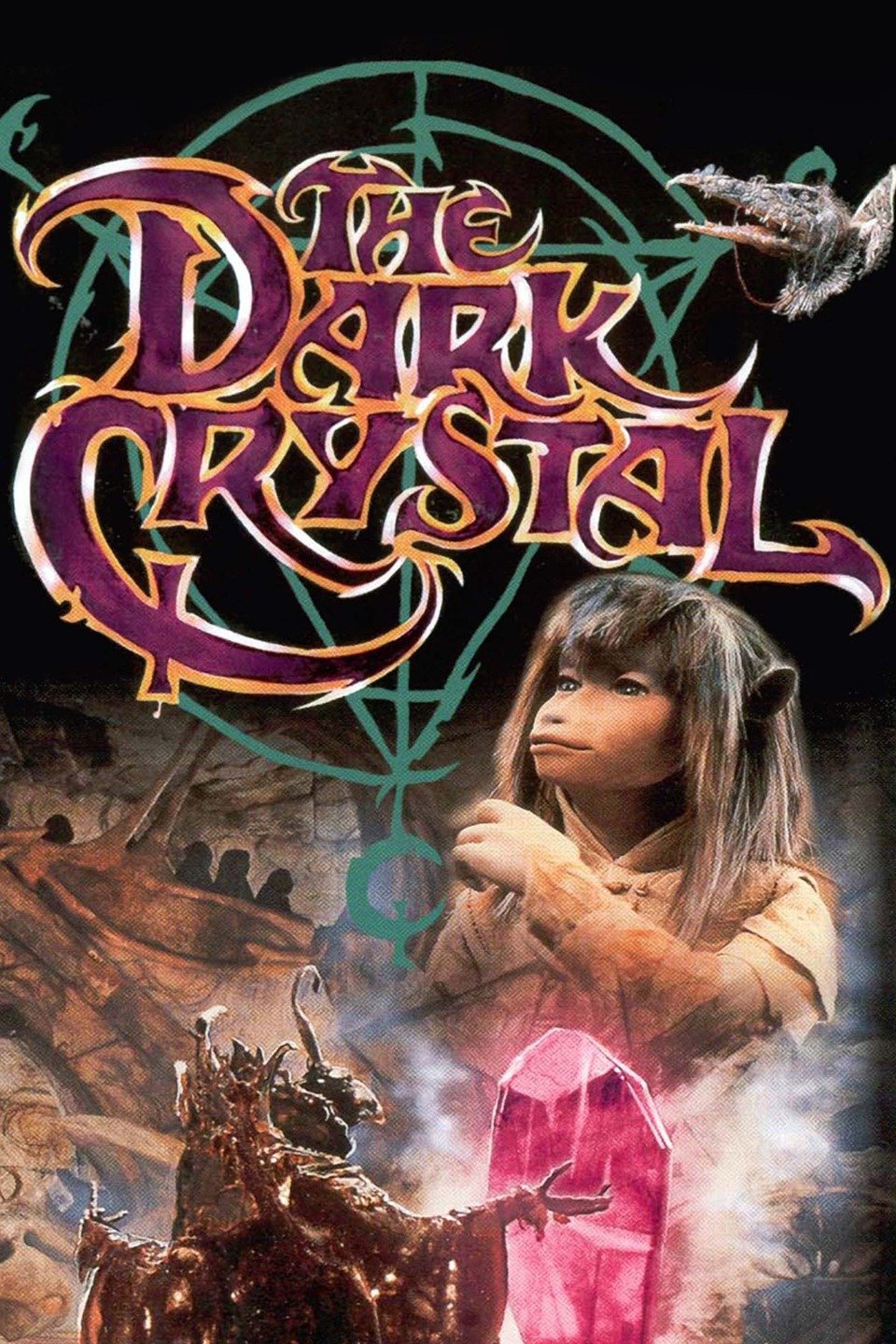
With the highly anticipated The Dark Crystal: Age of Resistance releasing on August 30th, I want to revisit the cult classic that is still equal parts beautiful and terrifying to this day. A couple of years ago, Fathom Events brought The Dark Crystal to the big screen, so I was able to watch this outstanding motion picture on the big screen for the first time ever. Despite the very macabre nature of many parts of the movie, my parents showed this movie to my sister and I at a young age. From the very first time we watched it, my sister and I became fans. As kids–back when kids played outside, in the woods, and in abandoned buildings using their imaginations to role play–we created characters that were ostensibly taken from the world of the movie, and spent hours imagining we were in Thra. As a kid, I was mesmerized by the spectacular production design and puppetry. I can only speculate the degree to which kid-me appreciated the artistic elements of the now iconic motion picture, but I imagine that it completely captured my imagination, otherwise I would not have rewatched it as many times as I did. As an adult, I am shocked that my parents allowed me to watch it at such a young age because there are moments that terrify first-time adult audiences today. Sometime last year, I introduced this movie to my penpal, and he was blown away by how dark this fantasy movie was. Of course, this movie came out at a time that fantasies were dark (case and point, The Neverending Story). On the surface, this may be a common premise of good triumphing over evil despite adversity, but there is so much more that makes this the timeless classic that it is. Jim Henson was an incredible genius who truly knew how to combine form with function to create a fantastical masterpiece.

What stands out more than the plot itself (which is pretty straight forward), is the fantastical practical effects that give the film incredible depth–levels of dimension that CGI-heavy movies with they had but won’t ever achieve. Why? Simply because you cannot replicate the way real light bounces off real objects and into the camera lens. The atmosphere that the setting and characters combine to make is a level of movie magic that only the genius of Jim Henson could have created. Frank Oz stated that children should not be sheltered from darkness because it is just as much a part of their lives as joy and laughter. There are some truly terrifying and sad moments in this movie. And it looks as if this sentiment is going to be channeled into the new series. The story does not shy away from topics such as torture, death, gender roles, independence, and courage. Whereas the plot itself is simple, the characters are highly complex. Moreover, each of the Skeksis represents one of the seven deadly sins, and each Mystic is the good counterpart. The gelflings represent the “human” or emotional component in the narrative, so they serve as the conduit through which we experience the plot. Aughra is our logical character whom provides the diegetic exposition to understand the gravity of the encroaching Great Conjunction. There is a beautiful poetry in how the characters all complement one another and their respective surroundings.

Although all Jim Henson movies feature muppets (Henson’s patented puppets) and other movies have puppetry, The Dark Crystal stands alone as the only film of his that is entirely puppets! Yes, you could argue that the few longshots are human actors, but that is splitting hairs. For all intents and purposes, only puppets appear in this movie. And these puppets were the most advanced to ever hit the screen, and still the most advanced puppets to have ever been witnessed on the silver screen. Fewer than 20yrs after The Dark Crystal, virtually all puppetry would be replaced with CGI to save money and time. Sacrificing experiential art for technical marvel and efficiency. These advanced puppets inspired the ones that have made appearances in Disney and Universal parks over the years. Some of the puppets had to be operated by multiple people, yet when you watch them on screen, you forget that they are a puppet because they truly exist within the fantastical world. I love how the design of each and every kind of puppet is an extension of the world in which they live. So much dimension in each and every creature. There are lines, shadows, textures, and more that CGI could never replicate. These are three-dimensional creatures that exist within a four-dimensional world that exemplify the absolutely peak of a combination of technical design, costuming, and articulated performance that the camera natively captures without need for post-production to create a significant effect after the fact. Very seldom do we get to witness such an attention to detail in the design of a character (we will get to the set soon). These puppet characters do not feel or look artificial, the manner in which the light reflects off them and they interact with the world around them gives them an outstanding ability to make us forget that there is someone pulling the strings. We emotionally connect with these characters in such a way that can so often only be done with human or animal actors.

The production design of the set is an outstanding, dazzling artistic achievement by standards then and now. You’ll be hard pressed to find another set that is created with such a high degree of tangible detail. No amount or quality of CGI can even hold a candle to the wildlife, plant life, and landscape of Thra. I absolutely love how the homes of each of the groups of characters (Skeksis, Mystics, Podlings, Gelflings, and everyone’s favorite Aughra), are designed to be an extension of the inhabitants themselves. Because there is nothing generic about any of the settings, the degree to which the lands feel real is astonishing. One of the reasons for that is because it IS real! Blue/green screen technology was still in its infancy so there was thankfully no real desire to integrate it into the set for most of the movie. However, the final scene of the movie does feature some green screen work that does not hold up today. Without a screen able to fill in the gaps for most of the movie, the artisans and craftsmen had the daunting task of bringing this world of fantasy in the age of wonder to life. And their tireless efforts pay off in spades. Diversity runs strong all through the story both visually and figuratively. No two landscapes or settings look alike, just as no two characters (even the podlings) look identical. Every line, corner, and texture radiates art. More than simply a backdrop for the scenes of the plot, the settings are essentially characters themselves. The way the characters interact with their surroundings holds the audience in an incredible suspension of disbelief as to the believability of the world that is on screen.

Although it was not a blockbuster in the US, as it was up against E.T. that same year, it was the highest grossing box office hit in France and Japan. Not being an initial box office success has not stopped the film from aging well and remaining an impressive work of art even by today’s audiences. Perhaps it is best known for being a cult classic, but that cult following has remained strong through the years. So much so that we have the Netflix prequel series with an all-star cast debuting in August. It’s refreshing to see that a prequel (or sequel) strives to embody the soul of the original in order to inspire a new generation of fans and future visual storytellers. We fell in love with the original because of the puppetry and production design, the unique characters, and fantastical elements that make it an exemplary motion picture.

You can catch Ryan most weeks at Studio Movie Grill Tampa, so if you’re in the area, let him know and you can join him at the cinema.

Ryan teaches screenwriting at the University of Tampa. If you like this article, check out the others and FOLLOW this blog! Interested in Ryan making a guest appearance on your podcast or contributing to your website? Send him a DM on Twitter!

Follow him!

Twitter: RLTerry1

Instagram: RL_Terry