Sinister Summer: Wes Craven’s “New Nightmare”

Before “meta horror” became commonplace, to the point that the once innovative concept has become all too cliche, Wes Craven wrote and directed his triumphant return to the Nightmare on Elm Street franchise (although, he did co-write Dream Warriors). Made, not only for horror fans but also for general horror audiences, New Nightmare is a horror film within a horror film that successfully dances the line between reality and fantasy. One can easily liken that to the very character of Freddy Krueger who exists in our dreams but can inflect real pain. A fascinating parallel! Craven’s revolutionary approach to one of the most iconic franchises in horror history begs the question asked of horror filmmakers whether the effects of the diegesis on screen cross over into the real world, affecting the actions and thoughts of people who love to watch horror films. Beyond the meta nature of the plot of New Nightmare, there is also a self-reflexive element to the plot because the story, lore, and movies of Freddy loops back on itself by confronting the creators of A Nightmare on Elm Street. Wes, Robert “Bob” Shaye, Robert Englund, Heather Langenkamp, and even future horror star Lin Shaye (Robert Shaye’s sister) are all playing themselves, and even referencing the Nightmare movies in the same way we do. Heather even references all the movies in the franchise, not just the one’s she’s in.

While other franchises force a reboot or revival in order to bring back an iconic horror icon–by way of just chalking the return up to being a superhuman, resurrected, or supernatural with little to no reasoning–New Nightmare provides evidence (albeit supernatural) for why more Freddy films need to be made. Therefore, Freddy will appear in one more movie (two more, if you count this one). One more, because we do not count the 2010 remake (it does not exist). While few will dispute that the original A Nightmare on Elm Street is the best, it is quite possible that this self-reflexive entry is the second best. During graduate school, when studying horror films, I used Carol Clover’s pleasurable unpleasure and Freud’s uncanny often when exploring the subtext and themes of horror. Both of these theoretical approaches to reading and understanding horror films are clearly visible in this brilliant story. We get pleasure out of and attracted to that which should repulse us. Therefore, we do not want Freddy to be dead. In many ways, we need Freddy to live, and New Nightmare brings Freddy back for an encore in the present story and Freddy vs Jason. Of course, we’ve had the first appearance of Robert Englund as Freddy in last year’s Halloween episode of The Goldbergs and there is massive social media support for Englund to play Freddy one last time.

It had been ten years since Freddy made his debut in cinemas worldwide! The once near-bankrupt New Line Cinema rose up from the ashes to become a powerhouse of films and distribution. While the first three Nightmare on Elm Street movies are solidly horror, the franchise took a different route than Halloween or Friday the 13th by relying upon comedy to the point that the franchise became a parody of itself. The worst offender being Freddy’s Dead. We watch them because we love Englund as the iconic horror villain, but the movie’s plot and other characters were complete garbage. Fun garbage, but garbage nevertheless. With the downward trajectory of the franchise heading to “direct to TV or DVD” territory, why make another Freddy movie? Simply stated, Bob Shaye said “because the public wants it.” This line is from a Shaye cameo in New Nightmare, referencing the Nightmare movie that is being produced within the film we are watching, but is also very much why New Nightmare was made. Although I have no empirical data to back up this statement, I imagine that Freddy has more fans than Jason or Michael. From his self-deprecating humor, memorable one-liners, and creative kills (despite a low body count), he has found his way into our cinemas, homes, and dreams.

New Nightmare represents a return to true horror for the franchise. Not that Freddy doesn’t have some funny lines, but the focus of the film is on the horror of Freddy manifesting in the real world. Under the direction and writing of the brilliant Wes Craven, the Nightmare franchise was about to get a heaping helping of genuine horror infused back into the series. The strength of this movie is in the script and direction that was about to take horror to new frontiers by pioneering the largely untapped sub-genre of meta-horror. Whereas Craven’s Scream is the definitive meta-horror, he used New Nightmare as the training ground. Therefore, we can consider New Nightmare as the proto-meta-horror film. Upon a close reading of New Nightmare, the groundwork can be witnessed that would support what would become Scream. In addition to exploring a new sub-genre, this film delivers the horrifying, murderous, Freddy that we were first introduced to in 1984 instead of the sinister clown that he became in Freddy’s Dead. Once again, he becomes the centerpiece, only this time his claws are sharper and he’s been given a more sinister makeover. None of this could come together if Englund wasn’t reprising his iconic role. But instead of more blood, Freddy and Craven deliver quality scares, kills, and drama versus shallow kill after kill gore fests.

The central question in this film is: where does the line between fantasy and reality lie? Moreover, is it a dark, bold line or it is one that is blurred or delineated? The first movie was inspired by the series of real articles in the Los Angeles Times that chronicled people who claimed to have been nearly scared to death in their nightmares, but then they actually died. This film takes the idea of a dream-like killer to the next level by using the past Freddy movies as a springboard, as a source of energy for the idea of Freddy to cross over into our reality. What’s crazy is that we have witnessed this IN real life. Here’s a great example: in Se7en, the film never actually shows Gwyneth Paltrow’s head in the famous box; however, countless people report to have seen her head in the box. It is an idea that is so largely collectively shared that it becomes part of our reality. So, Craven is taking that same idea and applying it to A Nightmare on Elm Street. The fascination I have with this particular installment in the franchise is just how brilliantly Craven dances that line between fantasy and reality; he does it in such a way that it comments on our fascination with horror movies. Much like Craven’s line I referenced earlier is both about the movie within the movie and about us (the audience), Heather Langenkamp questions “don’t you people ever think about the effect your movies have on the people who watch them? A question for (1) Craven and (2) Shaye in the film and (3) by extension, a question to us (the audience). Deep, right?

The concept of Freddy crossing over from the screen to our world is a fascinating approach to take in this film that laid the groundwork for Craven to forever change the landscape of the American horror film just two years later in Scream. Craven’s masterful grasp of horror storytelling is highlighted in his speeches within the film. Furthermore, his years as a humanities professor certainly provided a critical lens through which he analyzed what makes horror special. There are few other writers/directors who understand the genre as well as Craven did. I absolutely love the idea Craven posits in the film that when a horror story dies that an evil force is released upon the world because it needs to live somewhere. And if not in its story, in our world. A terrifying prospect. Furthermore, once can extrapolate from Craven’s monologues in the film that we need horror films to contain as much of the evil in the world as possible. These films keep nightmares from consuming us in real life. He urges us to keep these stories alive because they are how we work through so many of life’s perils, traumas, and conflicts that tap into our most primal fears.

You can catch Ryan most weeks at Studio Movie Grill Tampa, so if you’re in the area, let him know and you can join him at the cinema.

Ryan teaches screenwriting at the University of Tampa. If you like this article, check out the others and FOLLOW this blog! Interested in Ryan making a guest appearance on your podcast or contributing to your website? Send him a DM on Twitter!

Follow him!

Twitter: RLTerry1

Instagram: RL_Terry

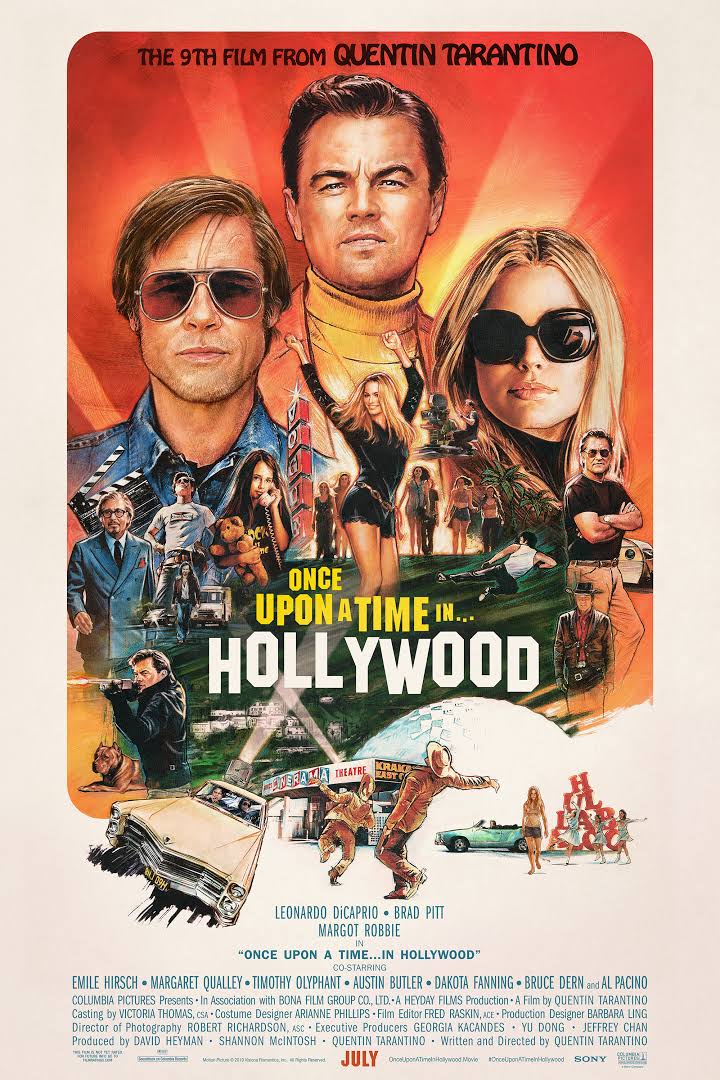
“Once Upon a Time in… Hollywood” Film Review

“The Hollywood that never was, and always will be” in this QT film that subverts expectations and delivers in spades. The ninth film from writer-director Quentin Tarantino is a brilliant historical fiction inspired by real events and people in film/television and Hollywood history. If you’ve been to Disney’s Hollywood Studios, you’ll recognize the opening quote. For the cinephile or film/TV/Hollywood history geek, this film will sweep you up in the story and setting; however, general audiences may find it difficult to connect to the otherwise fantastic story. Thankfully, the performances from the three leads DiCaprio, Pitt, and Robbie and strong supporting cast will keep you entertained for the rather lengthy runtime regardless if historic Hollywood is of interest to you or not. The characters also add a high degree of relatability, which may come of a surprise to audiences. While the film kept me engaged the entire time, I can see where more casual movie fans–even fans of QT–may find the first act sluggish. While the first two third of the film may not seem like a traditional QT film, the third act (specifically the showdown) goes full on Tarantino! If you pay particularly close attention to the view outside of the windshield of Dalton’s car, you may even notice the Alto Nido apartment building, that Joe Gillis lived in, in Sunset Boulevard. Suffice it to say, if you are up on your Hollywood history, you will find lots of Easter Eggs and references to film and television of that post studio system era. Once Upon a Time in… Hollywood represents a brilliantly entertaining homage to what is largely considered the end of the Golden Age in Hollywood.

Quentin Tarantino’s Once Upon a Time in… Hollywood visits 1969 Los Angeles, where everything is changing, as TV star Rick Dalton (Leonardo DiCaprio) and his longtime stunt double Cliff Booth (Brad Pitt) make their way around an industry they hardly recognize anymore. Concurrent to their struggle to find their place in a Hollywood that is changing so rapidly, the film also follows Sharon Tate (Margot Robbie) and Roman Polanski as the fateful night of August 8, 1969 approaches. The ninth film from the writer-director features a large ensemble cast and multiple storylines in a tribute to the final moments of Hollywood’s golden age.

I went into this film with moderately high expectations, which can be dangerous, but the film met and surpassed any preconceived notions that I had. Despite the more than 2.5hr run time, I could have easily watched it for another half hour. Compared to his other eight films, Once Upon a Time in… Hollywood is, what I would consider, to be the most accessible of his films; however, some of the magic of the film will be lost on those whom are not film/TV and Hollywood history geeks. And it’s as if QT knew this, so he wrote two incredibly entertaining fictional characters (Dalton and Booth) in this mostly historically accurate setting. Our third lead is based on the real person Sharon Tate married to then respected director Roman Polanski (Rosemary’s Baby). The three lead performances captivate the audience and keep you along for the ride as the tension increases as we approach August 8, 1969 (the night the Manson cult murdered a pregnant Tate along with four of her friends) on the quit street Cielo Drive.

For the first 2/3 of the film, you may be wondering if it’s even a QT film. And that’s because he subverts his usual approach to plot and character development, gritty violence, and non-linear storytelling is largely absent in the film. Students of QT’s work (even if you aren’t a huge fan despite respecting his cinematic work like myself) will pick up on the QT tropes and moments, but they will likely go missed by general audiences. Interestingly, everything that QT loves about old Hollywood is in this film, but never becomes the focus. Rather the setting, characters, and plot devices work to provide context, effective development of character and plot, and immersing the audience in the changing world that was Hollywood 1969. The historic events of August 8, 1969 (and other times, dates, movies referenced in the film) are an important element in the film to ground this fictional story in history; but it’s the fictional foreground of Rick Dalton and Cliff Booth that is the A-Story that moves the action plot along. Although the film does contain the character of the now infamous Roman Polanski, the focus remains on his wife, the late Sharon Tate; however, QT does an excellent job of separating the man from the art, and the pre-pedo versus post-pedo. Essentially, he is a means to an end. Horror fans will love hearing Rosemary’s Baby referenced and movie musical fans may notice the giant movie poster ad for Funny Girl outside of Columbia Pictures

What makes the characters of Dalton and Booth relatable to audiences is conflict, both internal and external, faced by these two men whom are aging out of and find their career tool bags are increasingly not compatible with the changing landscape of Hollywood at the time. The foreground takes us back to when the American Western genre of Film and TV was on its way out, which leaves Dalton and Booth an icon of the past. Come to think of it, they are experiencing a small degree of what Norma Desmond experienced in Sunset Boulevard. The struggle to find one’s place in the world, when the very foundation upon which you built your life and career is cracking and breaking a part, is something with which we can all identify. You can apply this to career or even romantic relationships (if you’re still single like me), you feel that no matter how hard you try or what you do to change that you cannot realize what you desire. There is a real pain that exists when looking upon a world that doesn’t want what you have to offer anymore, and you can only hang your laurels on the past for so long before it becomes a hindrance to living in the now. Booth represents a person whom experiences prejudice based upon past incidents, and hindered from being able to learn from the past and grow as a person. Both characters use alcohol as a coping mechanism, but we learn that dulling your senses to the past does not allow you to address it, learn from it, and develop a plan of action moving forward. Adapt or get left behind. Both Leo and Brad deliver outstanding performances that should catch the attention of The Academy when it comes time to nominate. There exists two layers to the performances because they are actors playing actors playing characters. Using the American Western as the conduit through which to explore a disappearing past was an excellent choice that also allowed for QT to work with a favorite genre of his. For a retrospective on the Western, check out Classic Movie Musts.

While QT has received negative criticism for his (what some have considered) underuse of Margot Robbie’s Sharon Tate, I don’t find that to be the case. Her character may not have been given a significant amount to do in the film, but she is not the central character, despite being an important part of the overall story. She portrays a real life actress and soon-to-be new mother who’s promising career was cut short by the Manson cult. When she is on screen, she truly lights it up with an infectious energy and delivers an excellent performance/portrayal in those moments. Whereas she may not have been the central character, in the scenes that we do see her, she is given important direction and reminds us that Sharon Tate was more than the late wife of Polanski or a murder victim, but was a person with dreams, friends, and a life outside of her career. For fans of Polanski’s Fearless Vampire Killers, you’ll recognize that it’s the movie that is referenced when we are given the story of how Tate came to leave Jay Sebring to become engaged to Polanski during the filming of that movie in the UK. Her story is the historical background upon which the fictional foreground of Dalton and Booth was built. Furthermore, she represents the optimistic innocence that once was before being cruelly ended. Playing around with the ideas of innocence and corruption is a running secondary theme to the primary one of the past versus present.

If you go into this movie with the expectation that it will be a quintessential QT film from start to finish, then you may be disappointed until the third act. He subverts our expectations by approaching this film in a more “Golden Era” of Hollywood way. He takes the best moves out of his playbook and integrates them into the story. Think of it as a kaleidoscope of the end of the Golden Age of Hollywood and QT’s best hits. While the film does have a slow burn through much of it (no mistaking it, it worked for me), the third act is gripping, suspenseful, and truly pays off the tension that was slowly wound through Acts I and II. Of all his films, this is probably my favorite one for fun factor and nostalgia. It doesn’t ground it self in nostalgia, but it’s a great accessory to the story. Film/TV and Hollywood history geeks will likely love this film while more casual movie fans will enjoy it well enough. It’s a film for film fans, and that’s perfectly fine!

You can catch Ryan most weeks at Studio Movie Grill Tampa, so if you’re in the area, let him know and you can join him at the cinema.

Ryan teaches screenwriting at the University of Tampa. If you like this article, check out the others and FOLLOW this blog! Interested in Ryan making a guest appearance on your podcast or contributing to your website? Send him a DM on Twitter!

Follow him!

Twitter: RLTerry1

Instagram: RL_Terry
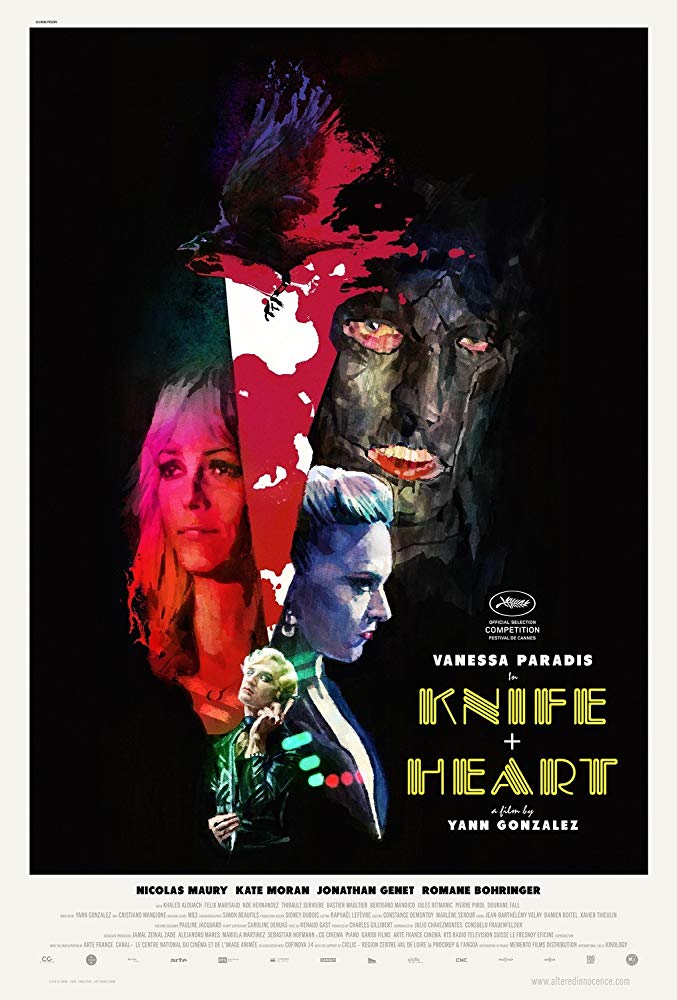
“Knife + Heart” French Horror Review

As heard on One Movie Punch

Brian de Palma’s Dressed to Kill meets William Friedkin’s Cruising in this 1970’s inspired French slasher. Throw in a splash of Black Christmas and the concept of dealing with the heartbreak of loss, and you have this spectacularly haunting slasher. To the casual observer, this film might seem like an auteur’s masturbatory dream; but upon closer examination, the many layers to the story reveal a motion picture that is just as concerned with its messages as it is the medium through which it expresses the narrative. At the center of this film is one poignant message of social commentary: the panic of being gay in a potentially hostile world. While the killings are explicitly violent, the sexuality is not. Gonzalez keeps the focus on the mystery of the identity of the serial killer preying on the actors of the blue films within this film instead of the sexuality being in the forefront of the plot. It’s just as much a whodunit as it is a campy slasher movie.

For the podcast review, click HERE.

It’s Paris, summer of 1979, and gay porn producer Anne finds herself suddenly single when her editor and lover Lois leaves her. To win her back, Anne sets out to produce her most ambitious film yet with her assistant producer, the flamboyant Archibald. Following the brutal murder of one of Anne’s stars, she gets caught up in a bizarre “Black Dahlia” like investigation that turns her life upside-down. When more and more of her stars wind up victims of the sadistic killer, she finds herself in a whodunit of cinematic proportions.

There is also a time capsule of sorts in this film as it takes place in 1979, just before the AIDS crisis, much like Cruising. But this — what could have so easily been simple a throwback gay exploitation horror film — is a comprehensive motion picture that uses the setting of Paris 1979 to reflect upon the present state of affairs for the queer community, and the world in which they live today. As the content of this film is extremely dark, there was need to inject some comedic relief into it in order for it not to become too heavy. So while you may be cringing at the kills, especially the first few ones, you will have moments of levity that keep the emotional rollercoaster going. Moments of comedy are very important to a horror film. If a heavy horror film lacks moments that make you laugh, then it becomes too heavy and off putting.

Clearly inspired by the films of Argento, de Palma, and even Kubrick, Gonzalez shows a command of the screen and the power of the moving image coupled with emotion communicated through colors, shapes, and angles. Despite being made in the 21st century, the film has an exquisitely recreated vintage sound, look, and feel. The dream-like colors, horror tropes, and synth score composed by M83 work together to create a film that is truly “dressed to kill”. In terms of the screenwriting, the film’s opening is extremely strong and expertly hooks the audience. Following the shocking opening, the plot and characters seem to take a backseat to the imagery, emotion, messages, and directorial style.

Gonzalez may look similar to de Palma and Friedkin, but he lacks their emphasis on a narrative that showcased exemplary character drive supported by the action plot. Evidence of this lack of direction and plot can be witnessed in the film’s repetitive scenes in acts two and three. After such a terrific first act, the second and third acts don’t play out as effectively, and often feel like they’re in a holding pattern. Even the kills eventually lose shock value because the uniqueness fades after a while. While the film successfully depicts the horrors of being gay in a world that wants to see you dead, the plot feels thinly stretched.

However, holding the film together, and keeping it gripping, is the character of Anne, because her performance is outstanding. We may not fully buy into why she does what she does, because so much seems to be so unrealistic even for that time; but she definitely comes across as a real person through whom we connect to the story. We’ve all been heartbroken, so we can identify with her trauma following being dumped by Lois.

In short, “Knife + Heart” does so many things very well, but the plot is not executed with the same caliber as the film’s visuals. Perhaps it is due to having bits and pieces of so many different genres and even plots. Essentially, Gonzalez tries to balance a tormented lesbian love story against a homophobic serial killer movie. Both point to the message of being gay in a hostile world; but had the focus been on one or the other, instead of both, then narratively, the film would have worked better. Thankfully, the artistic achievement of this film works to compensate for the lack of proper pacing and plot development. For fans of immersive artistic horror or erotic whodunit films like the original Suspiria, The Black Dahlia, Cruising, or Muholland Drive, this is definitely one to check out.

Knife + Heart is included with Shudder (highly recommended for horror fiends like me) or available for rent on Amazon Prime.​

  • Rotten Tomatoes: 82% (Certified Fresh)
  • Metacritic: 69
  • IMDb: 6.3
  • One Movie Punch: 6.0/10

Podcast: onemoviepunch.libsyn.com/episode-542-knife-heart-2018

Ryan teaches film studies and screenwriting at the University of Tampa. If you like this article, check out the others and FOLLOW this blog! Interested in Ryan making a guest appearance on your podcast or contributing to your website? Send him a DM on Twitter!

Follow him!

Twitter: RLTerry1

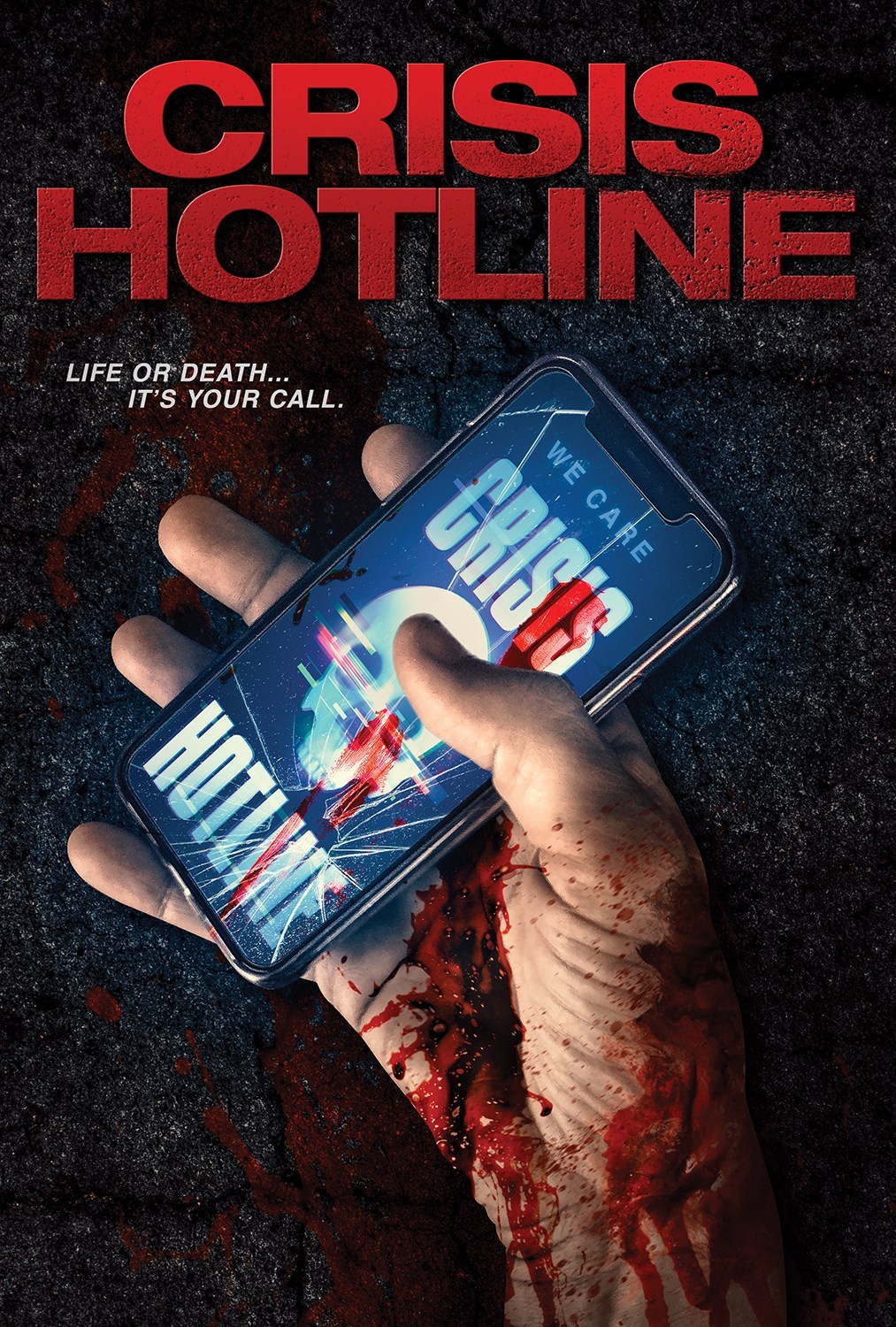
“Crisis Hotline” (2019) Indie Film Review

Erotic thriller with a shocking twist. Mark Schwab’s Crisis Hotline is an indie film that is reminiscent of Psycho IV, yet is budding with originality. It’s not often that we see fresh or original interpretations of past premises, but this film provides audiences with a new lens through which to explore heartbreak, guilt, and abuse of power. The small cast and two primary locations allow audiences to focus on the conflict between the crisis hotline operator and the caller. But down the rabbit hole the audience goes as the caller elaborates on why he is making a decision to harm himself and others. Despite the excellent hook provided by the opening scenes that setup the intriguing premise, the tone of the film shifts back and forth from heavy drama to psychological thriller to an erotic love story. Thus, leaving the film searching for what it wants to be. The screenwriting suggests that the writer was experimenting with genre, but didn’t commit to any one to a signifiant level, so there are tropes of all the aforementioned. What sets this film a part from many others that possess some of the same characteristics is that it features a predominantly gay male cast. What I appreciate about the characters is that their sexuality isn’t the focus of the story; truthfully, you could replace this cast with a heteronormative cast, and the story could play out similarly. However, the choice to make the characters gay does allow Schwab to explore relationship dynamics not often seen in films. While the premise may be intriguing, the execution lacks precision brought on by the underdeveloped plot and mostly flat characters.

A race-against-time thriller that highlights the potentially darkest sides of the social media phenomenon. Jaded by the job of managing an LGBT crisis line, Simon (Corey Jackson) finds that most of his callers are using the service for reasons that would qualify as being certainly less than a crisis. That all changes when he gets a call from Danny (Christian Gabriel) who says he is in the process of killing himself. Instantly gripped by his first real case, Simon does his best to connect with Danny and find out why he has come to consider such a drastic action. As the tale of Danny’s journey is unraveled through the use of flashback sequences, we discover a young romance, a troubling network of individuals, and a dark secret. (IMDb)

Although the characters are mostly flat, that doesn’t mean that they lack relatability. In fact, the characters of Simon and Danny are highly relatable. We’ve all been jaded over something in our lives. Maybe it’s failed relationships or perhaps it’s work related. Whatever the case, we’ve all been there. Simon goes into this shift with the same feelings that some of us may have experienced in our own jobs. Those in the service industry can definitely relate to that. Maybe you’re a Danny; you know what it’s like to be the new guy in town without a system of established friends and trying to date. Or you’ve been betrayed by someone you loved after having gone a long time just going through the motions of dating to the point you can provide an analytical breakdown of the steps, rises, and pitfalls. When Danny calls Simon to explain why he is intending to do himself and others harm, we can place ourselves in Danny’s shoes because perhaps we have been extremely heartbroken over a terminated relationship. He is our conduit through which we experience the plot of the film. He is a de facto narrator, and as such, because he is expressing suicidal and homicidal ideas, he is established as an unreliable narrator. But we have no choice but to listen to him because he must provide “the context” for Simon to process the severity of the call. Simon must establish the legitimacy of the call before contacting the authorities because there have been many false crisis claims in the past. In many ways, we are like Simon, listening to every word and trying to piece together the puzzle. There is no dramatic irony in this film, so we learn as Simon learns. The scenes of Simon listening to Danny are the scenes that I feel work best because that is when tension is at its highest.

Without getting into spoiler territory, I want to touch on how the film explores heartbreak, guilt, and abuse of power. Heartbreak is evident from the onset because the caller speaks to his broken relationship with Kyle. But when Simon suggests that the caller is going to extremes over a bad breakup, the caller draws Simon in closer to reveal the sordid, disturbing context of the broken relationship. Though Simon listens to a soft spoken Danny on the phone, it is clear that he is experiencing immense psychological pain. The heartbreak is more than sadness over a relationship that is over, it goes much deeper because of the sadistic betrayal that is slowly revealed over the phone call exposition. In addition to the exhibited heartbreak, the caller hints at the guilt he feels for some of his decisions, but the full extent of the guilt is not realized until the end of the film. I appreciate the film exploring not only the heartbreak of relationship loss, but the guilt parties feel in the aftermath. Lastly, the film comments on gross abuse of power. Through the conversation on the phone, Simon learns that Kyle’s employment may not be on the up and up, despite Kyle explaining to Danny that his employers were not involved in anything illegal–just sleazy. But Danny slowly begins to understand the degree to which Kyle’s employers hold him a captive employee. While the focus is on Danny and Simon, the film provides context for the audience to realize that the love of money is the root of all evil, and can reduce people to zeros and ones. Evaluating persons as a commodity is a dangerous slope that can lead to one’s destruction.

Thematically, the film works very well. The premise feels fresh, and the character setups are interesting. The weakness in this film falls on the screenplay that lacks direction. Although the plot is initially interesting and starts out gripping, it was stretched too thin to fill a 90min run time. Thankfully, the twist at the end helps to justify having sat through the poorly paced scenes. Not that this needed to be a quickly paced film; on the contrary, this is a story that needed to be a slow burn. But a slow burn does not mean that scenes should be poorly paced or longer than they need to be. Alfred Hitchcock stated, “start your scene as close to the end as possible.” And to Crisis Hotline’s credit, some scenes are tight and effective. But there are many that feel like they could have moved the plot along more efficiently. While I may be coming down hard on this film for it’s weak plot and lack of character development (when there was such an opportunity to explore these characters further), it provides audiences with a some great atmospheric scenes, a believable love story, and some rather suspenseful moments. I appreciate the film for not including explicit sex scenes, because then it’s entirely possible that it may have felt too close to a porno with a loose storyline. It has a good story idea with relatable characters and an intriguing premise.

You can catch Ryan most weeks at Studio Movie Grill Tampa, so if you’re in the area, let him know and you can join him at the cinema.

Ryan teaches screenwriting at the University of Tampa. If you like this article, check out the others and FOLLOW this blog! Interested in Ryan making a guest appearance on your podcast or contributing to your website? Send him a DM on Twitter!

Follow him!

Twitter: RLTerry1

Instagram: RL_Terry
Sinister Summer: “The Exorcist” Retrospective Review

Pea soup anyone? Not only one of the most profitable horror films of all time, William Friedkin’s The Exorcist remains timeless. Celebrating its 45th anniversary last year, this truly is the definitive possession horror film. Thematically, it takes the concept of the external “monster” and moves it into the mind and body (of a little girl). In many ways, Linda Blair’s Regan takes the psycho-social horror of Psycho and combines it with a classic monster and adds in a Rosemary’s Baby spin. This trifecta of excellence works together in order to provide the plot and characters of The Exorcist with substance. Much like Psycho was the first modern horror film and proto-slasher, The Exorcist is widely regarded as the first modern possession film. There are elements of possession in Rosemary’s Baby, but I don’t technically consider it a possession film. This film also takes the idea of the “home invasion” to the next level by having the innocent Regan’s body invaded. There are many past horror films that were once viewed as terrifying, but over the course of time, do not evoke the same degree of fear in contemporary times; however, this is a film that remains nightmare-inducing for many who are brave enough to watch it. Furthermore, adjusted for inflation, it remains among the top 10 highest grossing films of all time.

For more than 40 years, this was highest grossing horror film of all time (until 2017’s IT), this is the one that started the possession film sub genre of horror. A visiting actress (Ellen Burstyn) in Washington, D.C., notices dramatic and dangerous changes in the behavior and physical make-up of her 12-year-old daughter 9Linda Blair). Meanwhile, a young priest (Jason Miller) at nearby Georgetown University begins to doubt his faith while dealing with his mother’s terminal sickness. When the little girl begins to spiral violently out of control, lashing out at her mother and everyone in the Georgetown manner, and even levitating, her worried mother seeks medical help, only to hit a dead end. The young priest, however, thinks the girl may be possessed by a demon. The priest makes a request to perform an exorcism, and the church sends in an expert (Max von Sydow) to help with the difficult job.

While many films prior to The Exorcist depicted the occult, few (if any) have endured like this icon of horror has. Perhaps what frightens us most about this film is the fact of how close to home it hits. The MacNeil family could be our own or our neighbors. By default, the very setting and atmosphere of the film is relatable and realistic. There is a high degree of vulnerability on display. Not only can our homes be invaded, but our bodies can too. Whereas some may only see the effects of the demonic possession and focus on them (the vomiting, masochistic behaviors, or focussed vulgar profanity), these are all incidental. The point of The Exorcist is to provide social commentary on dehumanization and how evil forces and behaviors can affect us in such a way that we feel like animals unworthy of God’s love. But no matter how dark times get, redemption is possible. Whereas demonic possessions are not a daily part of our lives, by extension, this can be explored as a metaphor for the dehumanization witnessed today such as sexual assault, physical/emotional abuse, and other ways in which people are devalued.

There are few films that I would say this about–The Exorcist is a perfect film. Other examples are AlienPsycho, Sunset Boulevard, and The Shining. Compared to the schlock-fest horror movies that we often get today (until more recently with films such as Hereditary, Midsommar, and Us), this is a beautiful, bold work of cinema that pushed the envelop then, and even pushes the boundaries by today’s standards. There is a sense of prestige about this film; and not just a classy for the sake of pretense–there is a sense of purpose in this motion picture. Do all horror films need to mean something deep or provocative? Certainly not. Some have the purpose to simply entertain, frighten us, or even make us laugh. But The Exorcist is a special horror film in that there is immense depth to the story that takes us to incredibly dark places–to the point of no return if you will. Then in a brilliant fashion, turns it into a story of sacrifice and redemption. Not only was this one of the most frightening movies of all time when it was release din 1973–commonplace as possession movies may seem now–this was groundbreaking back then, it was also nominated for multiple Academy Awards including Best Picture! This was the first time that a horror film had ever been nominated for this most prestigious award. Furthermore, there are few other films that come with such an infamous status inspiring legends, curses, and more. Much like with Poltergeist, this film has also spawned macabre rumors. Everything about this film: direction, screenwriting, cinematography, cast, set design, score, and the editing work flawlessly to combine to become one of the greatest films ever made.

In screenwriting, there are two types of plots: action-driven and character-driven. That isn’t to suggest that an action movies don’t have great characters (Die Hard certainly has great characters) nor does a character movie lack gripping action (Nightcrawler has great action sequences), but the principle focus is on one or the other. Look to see wherefrom the conflict is derived. In a character-driven film, the conflict is derived primarily from characters, whereas in an action-driven movie, the conflict is primarily derived from the action. The characters of The Exorcist are utterly fascinating and relatable. We might remember Regan the most from the movie, but the other lead and supporting characters are also incredibly interesting. Part of the reason why this film resonates with us so, and is the material of nightmares, is because of how realistic it is, despite the supernatural element; this realism is brought to life by the incomparable performances. There is so much more to this movie besides the spinning head, spiderwalk (in the director’s cut), and the famous pea soup scene. Those scenes, and others, contribute to the overall experience of the film, but it’s the character-driven conflict and relationships that keep us coming back. Not only do we come back to the film over and over for the character, but we were able to experience memorable scenes and action sequences for ourselves at Halloween Horror Nights 26 at Universal Orlando.

Before we talk about the most famous character from the film Regan, let’s analyze the other two leads and chief supporting character: Regan’s mom Chris MacNeil (Ellen Burstyn), the young priest Damian Karras (Jason Miller), and the exorcist Father Merrin (Max von Sydow). Both Burstyn and Miller were nominated for Academy Awards for their respective performances.

Chris MacNeil is first and foremost a mother, but her acting career is also important to her. But when her daughter needs her, she is willing to put her career to the side to go to great lengths to help her. Beyond her role as a mother, she represents a person whom does not have faith in God. She is also faced with the life crisis of growing frustrated with her divorce and career as a mainstream actress. Father Karras is a highly educated man of faith, but his faith is strained because of his mom’s illness and death, causing a crisis. He is struggling with what many of us struggle with: if God is love, then why do bad things happen to good people? Furthermore, he represents the qualities of self-sacrifice and redemption, as well as personifies the empathy of psychiatry and a pragmatic priesthood. By extension, Father Karras can also be read as someone whom exemplifies that “science” and “faith” are not independent of nor negate one another. Lastly, Father Merrin is not only the very silhouetted image that is engrained in your mind when you think of this movie, but he is the inverse of Father Karras in that–whereas Karras is a pragmatic priest, Father Merrin is a zealous priest. Because Merrin was unable to defeat the demon Pazuzu (the one that possesses Regan), he is faced with his own redemption story. He is also going through the life crisis of failing health.

All three adults are each faced with their own respective crises that are explored through the possession of this little girl whom is also facing her own biological life crisis of puberty. Without knowing much about any of these characters during the first act of the film, we know that each one is vulnerable and doubts their own abilities and the direction they are going in life.

Central to The Exorcist is Regan (played by Linda Blair). Regan is both our central character and our character of opposition. Technically the character of opposition is Pazuzu, but the demon is manifested in Regan. Much like with her adult counterparts, Regan is also facing a crisis. She is experiencing what every young person goes through (to a greater physiological extent, girls)–puberty. As we know, at that stage in life, the human body undergoes what can be equated to psychological and physiological trauma. This trauma is manifested in the behaviors that we witness on screen from Regan’s explicit language and masochistic sexual assault. Regan can also be read as a home that has been invaded by an external monster, but this monster has not only defiled a home but has gone further, and more intimate to defile an innocent girl. Essentially, we’ve taken the idea of the external monster and placed it in the mind and body to exponentially increase the level of trauma and terror. Through another lens, we can witness the conflict that exists between parents and adolescents in which parents may view their kid(s) as a monster that has taken over the previously agreeable, obedient child, and how both parties must work through the conflict in order to emerge healthier and closer.

From page to screen, the cinematic excellent continues. The Exorcist is full of nightmare-inducing special effects that stick with you for the rest of your life. Not only does the very image of the transformation terrify the eyes of the audience, the minds of the audience are also confronted with the frightening realization of what the demon is doing to Regan’s body. From swearing at the central characters every chance it gets to displaying severe traumatizing masochistic behavior, the brutality is intense as you have sympathy for this young girl that you established a connection with from the beginning of the movie. One of the elements that I find particularly interesting, given the extent to which special effects are used, is just how real the movie feels. The supernatural elements of the story could have very easily pushed the film into the unbelievable category (like many others), but William Friedkin’s cinematic masterpiece stays grounded in reality. Looking to the characters themselves, the performances are so genuine that you feel that you are going through the very same crises that are on display. For those whom believe possession is real, it hits scarily close to home; and for those whom are skeptical, it is an equally terrifying possibility.

The showdown and realization of the film are just as deep as the first and second acts by playing around with the externalization of that which was internalized and the physical and mental journeys of the characters. Not only is duality and possession shown through the context of demon possession, but the film also comments that internalized physical and psychological trauma can be a powerful force that ostensibly takes control on ones body. And that is another reason why it still terrifies audiences to this day.

You can catch Ryan most weeks at Studio Movie Grill Tampa, so if you’re in the area, let him know and you can join him at the cinema.

Ryan teaches screenwriting at the University of Tampa. If you like this article, check out the others and FOLLOW this blog! Interested in Ryan making a guest appearance on your podcast or contributing to your website? Send him a DM on Twitter!

Follow him!

Twitter: RLTerry1

Instagram: RL_Terry