2019: the Year of the Park

2019 is shaping up to be quite the year for U.S. theme parks in Florida and California. Many major theme parks have made announcements in the last few weeks that are of out-of-this-world Jurassic proportions! Looking to history, it feels as if we are in a “space race” of sorts. Except, instead of the United States and Russia vying to be the first in space or one the moon, major US theme parks are breaking new ground, pushing boundaries, and innovating new experiences to vie for your money. Arguably, the biggest expansion is Galaxy’s Edge at Disney’s Hollywood Studios (DHS) and Disneyland, followed by Lego Movie World and Sesame Street Land at Legoland Florida and SeaWorld Orlando respectively, the new Harry Potter themed rollercoaster at Universal Orlando’s Islands of Adventure, Jurassic World replacing Jurassic Park at Universal Studios Hollywood, and lastly Mickey & Minnie’s Runaway Railway also at DHS. Just one of any of the aforementioned announcements would be big news, but collectively it is quite possibly the most massive collection of openings at any given time in recent years.

The sheer economic impact of these attractions on each of their respective parks will be of epic proportions. Beginning with Universal’s Islands of Adventure (IOA) in 1999, the last decade has seen a colossal convergence of cinema and theme parks like no other! And even more so since the opening of the Wizarding World of Harry Potter (WWoHP) at IOA in 2010. From the original concept of the movie park immersing guests into the magic of filmmaking to creating immersive environments that place the park guest into the world of the movie itself, the movie park has grown by leaps and bounds. As the process to make a film became less magical, the parks compensated by wowing guests with the ability to feel as if they are characters in the film itself. Attendance at theme parks took a dramatic downturn after the housing collapse and financial crash of 2007; and with theme parks being a vacation destination or luxury for many, they had to innovate new ways to attract guests–give them new reasons to return to the parks. By creating new experiences that were unlike any other, the parks knew they could increase their bottom line and share of the marketplace. Universal’s addition of Harry Potter and Disney’s addition of Pandora were major impacts. Moreover, the addition of Galaxy’s Edge (Star Wars land) at Disney’s Hollywood Studios & Disneyland Resort and the eventual Nintendo expansion at Universal Orlando Resort will each likely bring unprecedented numbers of guests into the parks.

News from Disney and Universal on new lands is not exactly groundbreaking–the news anyway–but when SeaWorld and Legoland are tossing their hats in, for a piece of the 2019 action, then you know that a wave of innovation is sweeping through the parks of Florida and California. California is interesting. For the longest time, the majority of the big theme park news came out of Florida but more recently the California Disney and Universal parks have made big expansions and announcements. Most recently, Radiator Springs at Disney’s California Adventure and WWoHP at Universal Hollywood opened to rave reviews and dramatically increased park attendance. Next year is bringing about an unprecedented number of additions to theme parks that will even more greatly increase the revenue and attendance than we’ve seen in the last several years. And it’s not just the parks that are going to feel the impact of all the 2019 openings. The local hotels, resorts, beaches, and secondary attractions (zoos, aquariums, museums, etc) will also feel a huge boost from the new theme park lands and rides.

More people than ever will be flocking to the parks next year. And let’s face it, the majority of those numbers will be boarding the Millennium Falcon and Mickey & Minnie’s very first attraction, but the numbers heading to experience their favorite Lego movies, Harry Potter, or your furriest friends at Sesame Street land will be impressive. Local hotels and resorts need to start planning on the massive influx of theme park guests, some of which may be visiting for the first time in a long time or for the first time ever. Although a tourist may spend most of their time at the parks, beach, etc when coming to Florida, the hotel stay can play an important role in the over all experience of the trip. Often times, it’s the hotel (whether on or off property) that sets the initial tone of the trip. So, I hope that non-Universal/Disney/Lego hotels are keeping up with the news because they are about to see crowds likely never seen in any other year, except for when a new park opens.

So far, we’ve heard big news from most the major theme parks of Florida and California, but Busch Gardens Tampa seems to be the wallflower this time around. It’s entirely possible that we will hear of a new attraction offering at Busch Gardens in 2019 but so far there do not seem to be any indicators for that. Fortunately, Busch Gardens may continue the complimentary beer promotion in order to not get completely left behind in 2019. But who knows, 2018 is only about halfway done, so there is still time for Busch to make a 2019 announcement as well. If so, hopefully it will revolve around the space occupied by the former Gwazi wooden coaster.

Okay so here’s a breakdown of what’s coming to theme parks in 2019, so far.

Walt Disney World

Star Wars Galaxy’s Edge– a new land with a 14 acres expansion, transporting guests to a never-before-seen planet, a remote trading port and one of the last stops before wild space where Star Wars characters and their stories come to life. And yes, you’ll be able to fly the Millennium Falcon!

Mickey & Minnie’s Runaway Railway– After screening an exclusive cartoon in the theatre, Mickey & Minnie’s Runaway Railway will put you inside the wacky and unpredictable world of a Mickey Mouse Cartoon Short where you’re the star and anything can happen.

Universal Studios Florida

Harry Potter rollercoaster– The all-new attraction will take guests on a journey that incorporates the characters, creatures and transportative adventures of the wildly successful book and movie series when it opens in 2019. In its announcement, Universal positioned the ride as one of the most “highly-themed coaster experiences” they’ve ever created — which is major, considering The Wizarding World of Harry Potter is already known for immersive attractions utilizing ride systems and technology in ways rarely seen at other theme parks.

SeaWorld Orlando

Sesame Street Land– “We are excited to transport our guests into the colorful and creative world of Sesame Street through immersive theming, character interactions and interactive play,” said SeaWorld Orlando President Jim Dean in a statement. Sesame StreetLland also brings with it SeaWorld’s firs daily parade!

Legoland Florida

Lego Movie World– Based on “The LEGO Movie” and the upcoming sequel, the new world puts guests in the middle of Bricksburg, the city where Emmet lives in the movie. The area will feature two new rides, character meet-and-greets, and a giant themed playscape.

Universal Studios Hollywood

Jurassic World the Ride– Details of the “Jurassic World Ride” are being kept under wraps. But a press release release describes the plans as “epic,” featuring “never-before-seen dinosaurs, enhanced storytelling, lush scenic design, an entirely new color scheme and unparalleled state-of the art technology.”

Disneyland Resort

Star Wars Galaxy’s Edge– As of now, there are only two new rides in development. There’s the Millennium Falcon ride, where players are ranked on how well they perform their mission (if you bang up the ship, expect trouble at the cantina). There’s also one in the works where guests are inside a Star Destroyer hanger bay during a major battle between the First Order and the Resistance, though there isn’t a lot of information available on that one yet.

“Life of the Party” movie review

Positively uplifting! Melissa McCarthy and Ben Falcone’s comedy Life of the Party releasing everywhere today is a quintessential Mothers Day flick that you can take your mom to and enjoy together this Sunday afternoon. McCarthy shines as the brilliant comic she is in this film. Whereas she is typically the brunt of the jokes in the film’s she and her husband often cowrite together, this film provides McCarthy with a platform to truly showcase her talents as a comedic actor who can not only play the butt of the humor but also the vixen who’s captured the eye of a hot frat guy as she sets out to complete her education. McCarthy’s brand of comedy–that authenticity, candidness, optimism–that we have come to know and love, will have laughing and empathizing throughout the movie.

Although themes such as inspiration, determination, and resilience are not uncommon for a comedy, I appreciate many tropes often associated with fish-out-of-water plots were abandoned for something more unconventional yet infectiously charming. Instead of ultimately changing herself for the world around her or changing the world to fit her, she finds her place in the world and creatively directs it to make room for her. Whatever your age, you will likely find yourself connecting with one or more of the characters in this film as it proves that you are never too old to learn something new or complete that which you chose not to earlier in life. From acoustic guitar tunes to Cyndi Lauper and even a surprise performance by Christina Aguilera, the music will have you dancing in your seat. Watch as nervous, scared girls who are afraid of unknown elements in school, grow to become incredible women who form meaningful relationships and heal from tragedy. Each of the principle cast is unique in some way, and it’s these traits that setup conflict and allow the comedy to flow from the conflict naturally. From McCarthy’s Deanna’s endearing vampire-like roommate who low key longs for a friendship to the girl who is also a non-traditional student because of being in a coma for eight years, the film is filled with a colorful cast of likable characters and of course Deanna’s ex and mistress who we love to hate.

McCarthy is joined by comedienne Maya Rudolph and the pair of them dominate any scene they are in together. It never feels overwhelming because they are both saying precisely what you and I are thinking. The two of them exhibit kind of friendship that perhaps your closest friend and you desire to have. Although there is a mild degree of suspense, the film derives most of its energy from the brilliant cast’s reactions to the varying conflicts throughout the film. As there is not much to analyze in this film, you’ll find this review far shorter than my usual ones. But, I desired to write up a piece on it because it’s been largely panned by most critics. Variety and I seem to be among the few who find so much that’s “right” with this film as opposed to what’s “wrong.” Maybe it’s not terribly deep, but it boasts a simple plot with complex characters that provides McCarthy with an opportunity to show a different side to her trademark comedy. With honors!

“Tully” film review

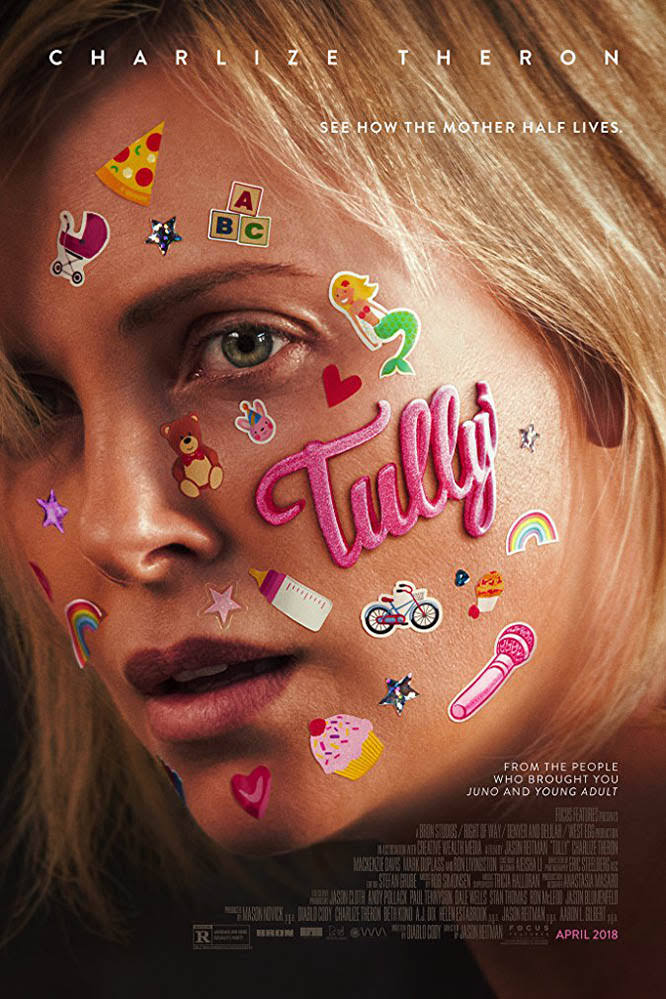
A no holds barred, unapologetic story of the realities of motherhood. Focus Features’ Tully starring Charlize Theron is a brilliant film that shies not away from what being a mom is truly about during postpartum depression, a subject seldom touched on in film or TV. Directed and written by Juno’s Jason Reitman and Diablo Cody respectively, this film represents the best work of Reitman and Cody since the groundbreaking Juno which was followed up by the outstanding Young Adult, and showcases just how incredibly diverse an actor Theron is. See her in a role unlike her typical roles as she so incredibly authentically brings to life a middle-class working mother who is faced with many obstacles as she rears her three kids, one of which is a newborn. As a male, I cannot begin to fathom just how difficult it is to be a mother (or by extension, a single father); but after watching this film, I have a whole new respect for the many hats that a mom has to wear in order to manage a household. Some might even say that this film is so incredibly effective at laying out the hardships of being a mom, that it may work better than more conventional birth control. However, the film is not only about the trials of motherhood, but it also spends time on the joys. Tully is what I characterize as a dark comedy that has some truly terrifying moments.

Already the working mother of two kids, one of which displays signs of a developmental disorder, Marlo (Charlize Theron) is not pregnant with baby number three, in what her brother identifies as an “unplanned pregnancy.” Marlo’s wealthy brother desires to help his sister by gifting her a night nanny in order to help Marlo through the rough transition of a newborn in an already chaotic house. Marlo’s husband is hardworking, makes lunches, and assists his oldest daughter with her homework, but fails to understand that Marlo needs to be taken care of as well. In order to not go completely insane during postpartum depression, Marlo reluctantly decides that she could use the night nanny that her brother offered to pay for. Hesitant to the extravagance of having a nanny at first, Marlo forms an unexpected bond with the unconventional, challenging hipster Mary Poppins named Tully.

No pretense about this story of motherhood. Cody’s brilliant penchant for self-deprecation, dry humor, and stark naked emotion is witnessed once again in Tully. I cannot think of a present screenwriter that could have created such a compelling story. Unlike her timeless modern classic Juno, Cody shies away from the comedy you may be accustomed to seeing from her, and focus on the darker side of being a mother. And it works superbly. I laughed, cringed, and cheered during the film, and so did many of the others in the audience. There is an authenticity in this story that is seldom seen in other melodramas. Possessing a raw, gritty narrative, Tully will have you empathizing quickly with the struggles Marlo continues to face throughout the film. There is so much that is praiseworthy in this story; but unfortunately the sharp, precision that supports the first two acts becomes a little dull during the realization (or resolution) on the third act–the same chutzpah that was in the DNA of the majority of the movie is not as apparent at the end. What Tully lacks is a well-defined external goal. The weak end game is uncharacteristic of Cody, as both Juno and Young Adult had solid realizations. As I tell my screenwriting students, dealing with life is not a goal (it’s incidental). Still, everything else about this film is effectively compelling.

Theron displays a genuine, uncompromising commitment to character in this motion picture. Aside from the fact she literally put on 50lbs for the role (that’s right, no fat suit), she provides audiences with a fearless portrayal that is both vulnerable and fiery. Coupled with waves of mania, anger, and complete exhaustion, Theron delivers a razor-sharp performance that will leave you breathless and bleeding from the unbridled intensity and emotional rawness. In this slice of life story, there was certainly the room to demonize Marlo’s husband, the sister-in-law, the former roommate, and school principal, but Cody includes these individuals that many moms actually have in their lives but chooses to focus on the physiological and emotional struggle of Marlo as she recovers from her unplanned pregnancy. Of course, there is a brilliantly funny scene of Marlo confronting the pretentious private school principal. It’s the kind of encounter that many of us want to have with those who refuse to shoot straight and annoyingly avoid confrontation because they are so afraid to be candid, and it just comes off as a facade. Theron’s ability to completely sell a mother on the verge of a breakdown who’s constantly facing situations in which she asks herself how-the-hell-am-I-going-to-get-through-this is unparalleled. I cannot think of another movie that has a character quite like Marlo in Tully.

The film’s title character is a Mary Poppins of sorts that comes to the aid of Marlo when she is at her wits’ end. You may be wondering why the film is named after the night nanny instead of Marlo. For the same reason Mary Poppins is the name of the story that is really about Mr. Banks. Marlo may be the central character, but Tully (Mackenzie Davis) is so incredibly instrumental in supporting Marlo through this time. Furthermore, she opens her mind to new possibilities and the joys of being a mom, even when Marlo isn’t feeling it. Tully embodies that free spirit that many of us have or had in our 20s that somehow gets lost as we get older. Tully enables Marlo to channel her younger self in an effort to be emotionally healthier for her kids. Taking care of yourself first so you can be there for your kids, is one of Tully’s many messages to Marlo. There is a whimsy about Tully that is contagious, and will put smiles on the audience’s faces amidst the majority of the film’s darker moments.

You’ll encounter all the different kinds of people that an emotionally struggling mom has to deal with on a regular basis. From an out-of-touch snobby sister-in-law to a husband who just doesn’t get you, from a pretentious and absurdly conflict aversive school principal to a former roommate, the film provides commentary on how each of these kinds of relationships affect a mom who’s trying her best to keep sane and not murder everyone. The film even touches on how having a kid with a developmental disability is physiologically and psychologically draining, even though you love your kid unconditionally. It’s important to note that Marlo’s husband is shown to be an active participant in his family by way of, not only his financial support, but being there for his kids in the evening and helping to make lunches. However, he does withdraw to playing video games after the kids have gone to bed; but that’s because he is like many fathers that are unaware that their spouses need to be comforted, cared for, and shown appreciation during this rough transitional time. Hopefully, after watching this movie, fathers will have a better idea of what their spouse may be going through. One of the strongest themes one can write into a film is a commentary on what it means to be human–the human condition–but seldom has a film been so specific to comment on what it means to be a mother. In this respect, Tully is provocatively groundbreaking.

Such a perfect film for the upcoming Mothers Day weekend. Even if you are not a mom or (let’s not forget) single father, there is something to learn from this film because you may have a mom or single father in your circle of friends or family. Never before has a film stripped away all the magic of motherhood at the time when your kids are little. No frivolous, ostentatious gender reveal parties, gym moms-to-be, or ridiculously lavish baby showers for this mom. Why? Because those are events and experiences typically found on Pinterest, in the movies, or reserved for upperclass society that is hasn’t a clue what it’s like to be a struggling mother balancing her full-time career and being a full-time mom. Tully tells it like it is for so many, and why it is such an outstanding motion picture.

Ryan is a screenwriting professor at the University of Tampa. If you like this article, check out the others and FOLLOW this blog!

Follow him!

Twitter: RLTerry1

Instagram: RL_Terry

Thrillz (theme parks): Thrillz.co

Now Playing: Netflix at a Theatre Near You?

After pioneering the streaming service, is Netflix aiming to revolutionize the multiplex experience? Recently, the Twittersphere and blogosphere has been all abuzz regarding Netflix’ possible acquisition of multiplex cinemas. But what does that mean for the customer and for Netflix? Those questions have prompted me to explore the idea of a Netflix-owned chain of movie theatres. Who would’ve ever thought that the DVDs delivered-to-your-home distribution company would go on to essentially invent the streaming service concept, produce wildly popular original programming, would now possibly be in a position to own and operate multiplex cinemas. The irony here is that the company that tore down the brick-and-mortar walls of Blockbuster and whose system of delivering content put a huge dent into the bottom line of movie theatres would now look to build the walls it so effectively razed to the ground. Perhaps in how it completely demolished the legacy way of home video and original television content distribution for a more efficient system, it seeks to build a more cost-effective model of movie theatres to truly create a big screen experience for a Web2.0 universe.

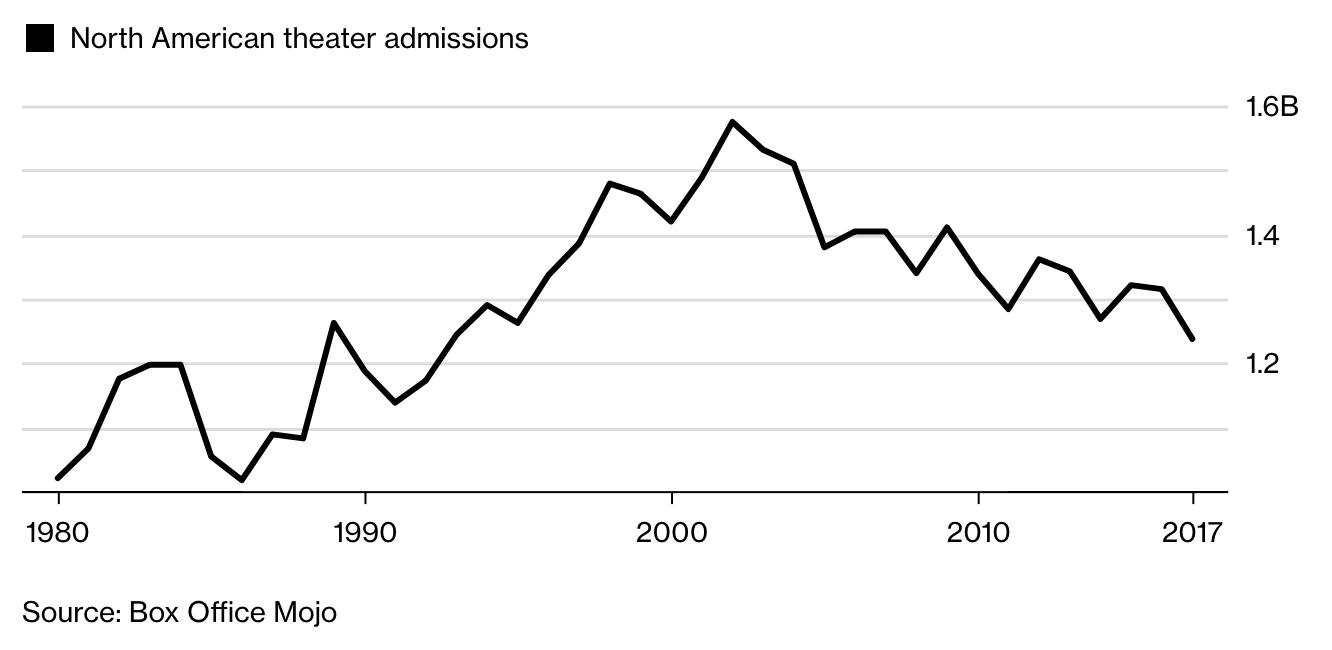
But, is going back to the brick-and-mortar model going to be lucrative for the entertainment giant? After all, Netflix virtually has no conventional overhead, in terms of how it now delivers content; but the addition of brick-and-mortar movie theatres would significantly increase the overhead cost of its business model. Just because there will be an increase does not necessarily mean that’s this may be a bad move for the company. However, it does beg for exploration of the effects of a decision like this. It’s no secret that fewer people attend the cinema now than before streaming became so prevalent. According to the Bloomberg Report citing a statistic from Box Office Mojo, movie theatre ticket sales have hit a 25 year low. After a high in the early 2000s, the number of ticket sales has overall been on a moderately steep decline. Although the the initial drastic drop could be contributed the tremendous growth of home theatre surround sound DVD systems and some recession from the aftermath of 9/11, the remaining downward trend from 2010 to today can be attributed to Netflix, Hulu, and other streaming services. Furthermore, many TV channels began allowing subscribed users to watch current and recent content on demand over the last few years.

So, if the empirical data suggests that ticket sales will continue to fall, why would Netflix express a desire to throw its hat into the ring with established leaders AMC, Regal, and Cobb? Not to overly simplify it, but Netflix wants its chance at winning a Best Picture Oscar. In a recent interview with Vanity Fair, Steven Spielberg stated in that Netflix should compete for Emmys not Oscars. It wasn’t long after this interview that Netflix stated that it’s considering buying cinema multiplexes. In addition to Netflix making the headlines, Amazon Studios has quietly been making maneuvers that suggest that it may also be interested in buying a movie theatre chain. In order to mitigate the cost of going into the multiplex business, Netflix is not looking to build from scratch, but buy up the Landmark Cinemas that has been on the market for quite sometime now. Landmark is known for catering to arthouse films in much the same way Alamo Drafthouse does.

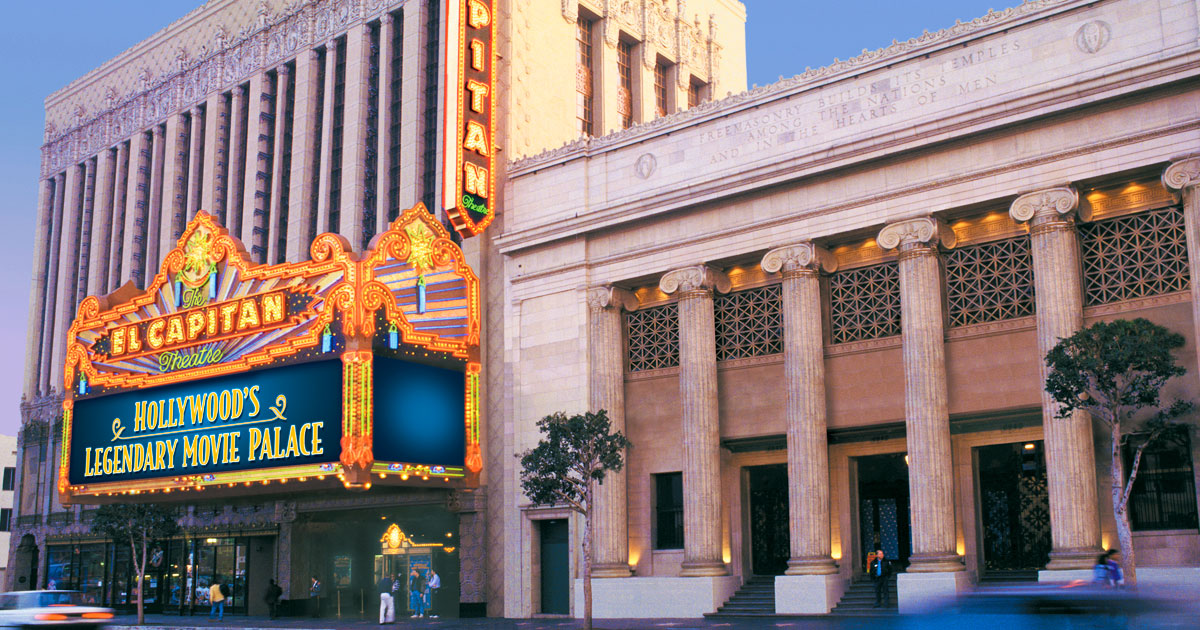
Ever since the landmark Paramount Decision in 1948, for reasons of violating anti-trust laws, movie studios (extending to distribution companies) are not permitted to own and operate chains of movie theatres. There are rare exceptions to this–Disney’s ownership of the historic El Capitan theatre across from TCL’s Grauman’s Chinese Theatre (the most famous movie palace in the world) being one of those. Since it’s not a chain and does run other company’s films, it is an exception to the ruling because it is a venue that anyone can rent, for the right price. Prior to the United States vs Paramount, it was customary for the studio to own and operate a chain of movie theatres that exclusively shows its movies. So, to see a Paramount movie, you’d have to go to a Paramount movie palace, for example. It was this gross lack of competition that violated anti-trust laws and led to the decision. With ticket sales slumping, large studios or distribution companies with deep pockets may find the best way to combat this is to own and operate theatres (that will have to be open to competition in order to remain within the confines of the law) that can be integrated into the branding, marketing, and promotion of a particular film.

A relationship between a studio and a movie theatre would allow for the production company or studio to forge a deeper relationship with the movie patron much in the same way Disney and Universal do with their theme parks. Not limited to Disney and Universal, Warner Pros, Paramount, Lionsgate, and DreamWorks have major theme park investments in Europe and Asia. The end result of owning a chain of movie theatres is the creation of an entire experience for the guest. For Netflix, this could mean premiering its successful series like Stranger Things, Black Mirror, and others at a movie theatre before it lands on the streaming service. Just like a homeowner can retrofit, remodel, and customize his or her home to benefit him, her, or the family, a movie studio could best custom design a completely immersive experience for the movie patron that creates an emotional connection that is sure to last and earn repeat business.

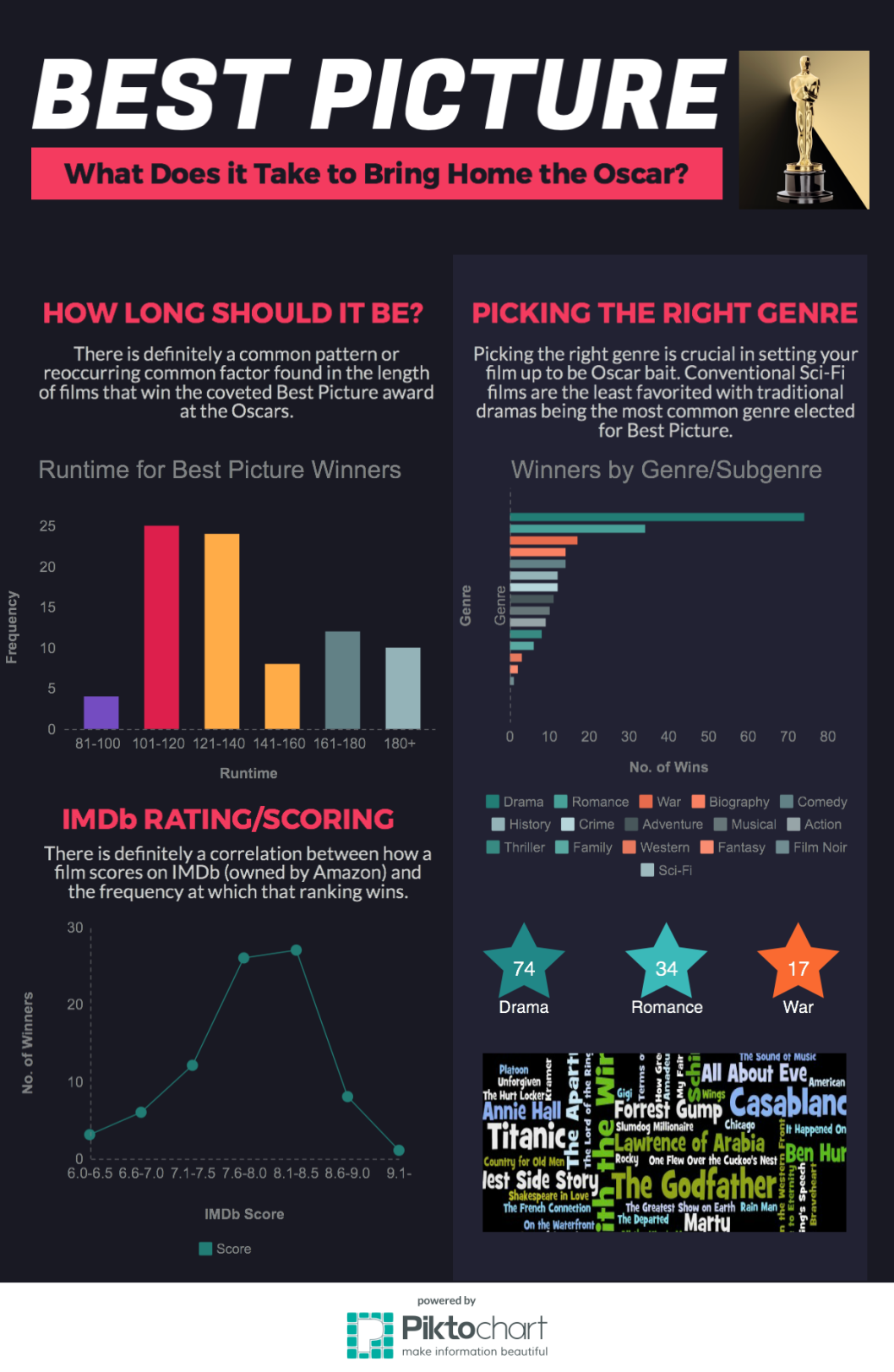
Aside from the cost and concept of creating a comprehensive experience for the movie patron, the standardization of start times and run dates should also be considered. Now, you can watch your Netflix, Hulu, and Amazon Prime programming whenever and wherever you so desire. No boundaries. After all, Netflix tore down those movie theatre walls and TV schedules. Is there a great enough interest from the typical consumer to buy tickets on a specific day at a predetermined time to watch Netflix original programming? Further research needs to be conducted in order to assess whether or not there is sufficient interest. Anecdotally, one can easily assess that Netflix’ original TV series are more popular than the original movies. But what does the empirical data show? According to a report at the Exstreamist, “the average rating on a Netflix original movie is markedly lower than what one finds with Hollywood movies.” Using IMDb ratings (note: Amazon owns IMDb), Toledo looked at a number of 2017 movie and TV releases across a variety of genres. Suffice it to say, Netflix consistently hits homers when it comes to original TV programming–their record is rather impressive at 8.1; however, their movies are ranked considerably lower than the TV series at 5.9. It would appear that there is sufficient interest in Netflix’ original series but not strong enough interest in the movies. And movies would be far easier to arrange into a schedule at a theatre than a TV series. Films win Oscars, series win Emmys. So, Netflix would have to rely upon its original movies in the theatre. Therefore, the quality has to increase significantly. Read my article on Best Picture criteria HERE.

Certainly, Netflix has proven that it can revolutionize media consumption and blaze new trails. Therefore, if Netflix makes the decision to acquire a chain of movie theatres, then reason stands that it must have a solid plan for success. While the data may suggest that this could be a risky venture for the entertainment giant, perhaps interested parties like Netflix and Amazon Studios know how to reinvent the multiplex experience to emerge as leaders of content creation and distribution. Who will the new owner of Landmark Cinemas be in the future? Only time will tell. But, it looks as if a Netflix or Amazon owned movie theatre chain may be in the near future.

Are Theme Parks Pricing Millennials Out of the Ability to Experience the Magic?

If you’re a Millennial like me, then you may have asked yourself the same question. In fact, I read an article recently on another Theme Park website that explored how changing demographics are changing the theme park business. Fascinating article. However, there was an item of mention that troubled me. When commenting on the observation of the addition of food and wine festivals, expensive up-sell experiences, and line-skipping passes to appeal to adults without kids, it was stated in the form of this development being great for Millennials. And that got me to thinking. Is it, though? Considering the current economic climate and the career status of those who are in their early 20s and to early to mid 30s, are these new trends truly accommodating of this group?

Instead of limiting this topic to the changing population (baby booms versus baby busts), I think it’s more effective to explore this topic of how changing demographics are changing the theme park business with the addition of the income criteria coupled with population. This is an important element to add to the discussion because it’s no surprise that it’s taking much longer to land a full-time position earning a truly livable wage for us than it did for our parents (see images 1-3). In fact, the Pew Research center (image 4) shows that our parents had far more purchasing power when they were rearing us than we do today. Essentially, non high-level mangers or non-executives have exponentially less disposable income correlating to the cost of living than our parents did in the 1980s, 90s, and early 2000s. Furthermore, it’s much harder to get a mortgage than it was 10-20yrs ago, rent rates are way up, and student loans enter repayment. When theme parks keep adding expensive up-sell experiences in order to capture the young single adult or young couple without kids (as we are currently in a baby bust that doesn’t look like it will change with GenZ), I am not entirely sure they are considering the financial burdens and increasing cost of living that 20 and 30-somethings currently face. Our parents COULD afford more vacation than we can today.

Whenever I see a Twitter, Instagram, Facebook, or blog post about a new experience at Disney Parks especially, but also Universal Parks, lesser so at Busch Gardens and SeaWorld (who DO tend to cater to where current finances are for Millennials), I wonder who is actually paying for these experiences? Most of these special tour and dining experiences are in excess of $100/person and often much more. After paying for either day tickets or annual passes, hotel nights (if applicable), plane tickets or fuel for the car, I find it difficult to believe that the typical Millennial is able to afford these experiences. Therefore, if the typical Millennial possesses an inability to afford all the increases and special experiences in the parks, then perhaps this “changing of the theme park business” is actually not a good thing for those of us who are in our 20s and 30s. Seems to me, that the more logical course of action would be to follow the median economic status of the biggest group of park guests.

According to the the article that inspired me to write mine, the largest group of park guests is trending toward late GenX and Millennials (with GenZ not being too far behind) without kids. It makes perfect sense for the parks to add in “adult” activities in order to entice Gen-Xers and Millennials such as food and wine festivals, line-skipping passes, and special events, but the prices of these events is outpacing the income of the group that the theme parks know will soon surpass the number of “families” that are guests at the parks. The disadvantage of a proliferation of high-priced up-sells is alienating the very group of current and potential park guests that is outpacing the more traditional families that have been the main source of income for the parks. More than anything else, in terms of spending money on entertainment, Millennials are looking for a good deal–more than our parents–because we have much higher overhead and less purchasing power than they did when they were out ages taking their kids (us) to the parks. Therefore, it’s important for the current theme park business model to recognize the desire for Millennials to continue to support and enjoy the parks as more traditional families get smaller and Baby Boomers getting older with currently empty or soon-to-be-empty nests.

Although it seems common sense for the parks to adapt their respective business models to accommodate the finances of Millennials, the opposite appears to be coming to pass. Instead of packing better deals for young professionals without kids, the trend seems to be catering to only upper-middle and upper class individuals and families. The antithesis of what should be done in order to capture the next generation planning vacations to the parks. If the trend of continuing to add expensive additions to your park ticket continues, then theme parks will become as exclusive a destination as a European vacation or exotic cruise. “This park wasn’t built to cater only to the super rich, everyone in the world has a right to enjoy…” as Dr. John Hammond countered the lawyer’s desire to charge exorbitant prices during the lunchtime debate scene in Jurassic Park (one of my favorite scenes from the iconic film)Disney and Universal should borrow a line from Hammond and modify the business model to create magic for Millennials–especially Disney Parks, as they are increasingly catering to only the super rich.

So yes, we are experiencing theme parks changing their business models to adjust for fewer families and more singles/couples without children. And Food and Wine festivals are a huge hit! I truly enjoy them. But, in developing offerings that attract adults without kids, the parks are in danger or pricing Millennials out of enjoying the magic. Millennials are looking for those after-hours events, food and wine fests, and line-skipping passes but not at the cost of not being able to go to begin with. Theme parks should reevaluate the pricing structure and take the current economic times facing millennials into question. Millennials represent the majority of folks soon to be going to the parks as young professionals, with the traditional families of 3-5 becoming less common. But, Millennials are burdened by rising rental costs, rising student loan repayment cost, lower salaries than our parents, and rising cost of transportation.